Free Printable Future Tense Verbs Worksheets for Year 5
Enhance Year 5 students' understanding of future tense verbs with Wayground's comprehensive collection of free worksheets, printables, and practice problems complete with answer keys in convenient PDF format.
Explore printable Future Tense Verbs worksheets for Year 5
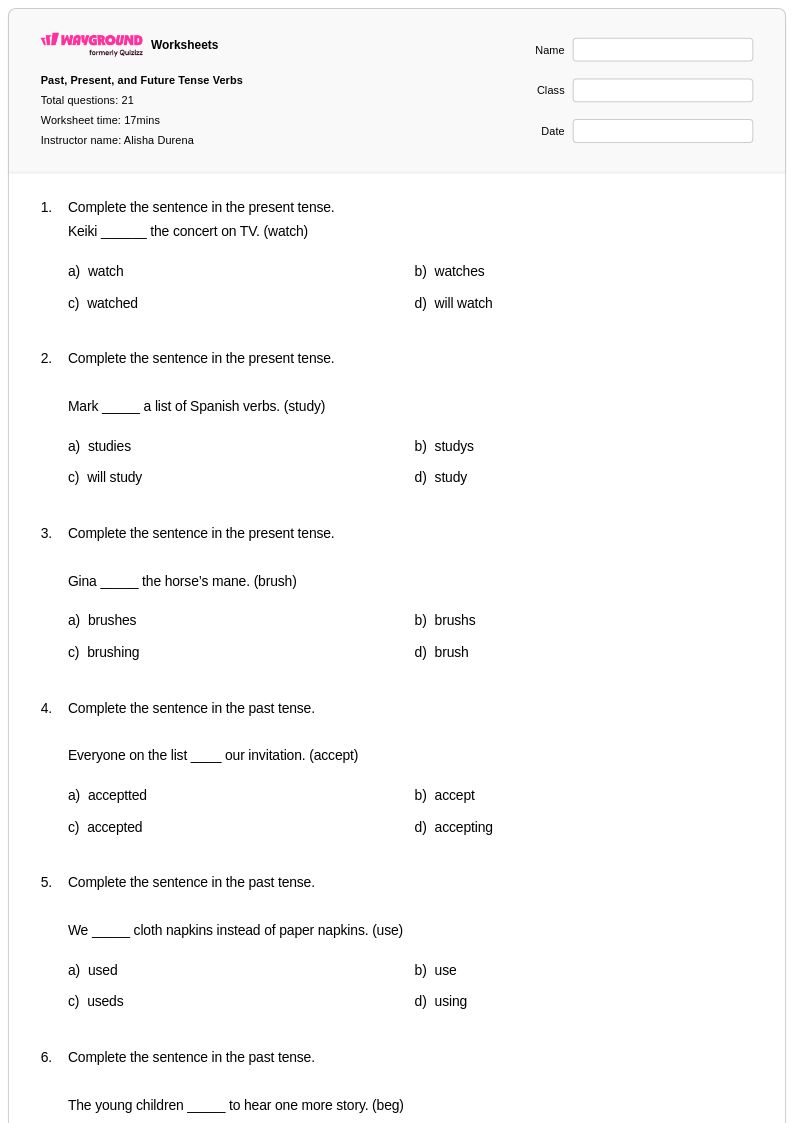
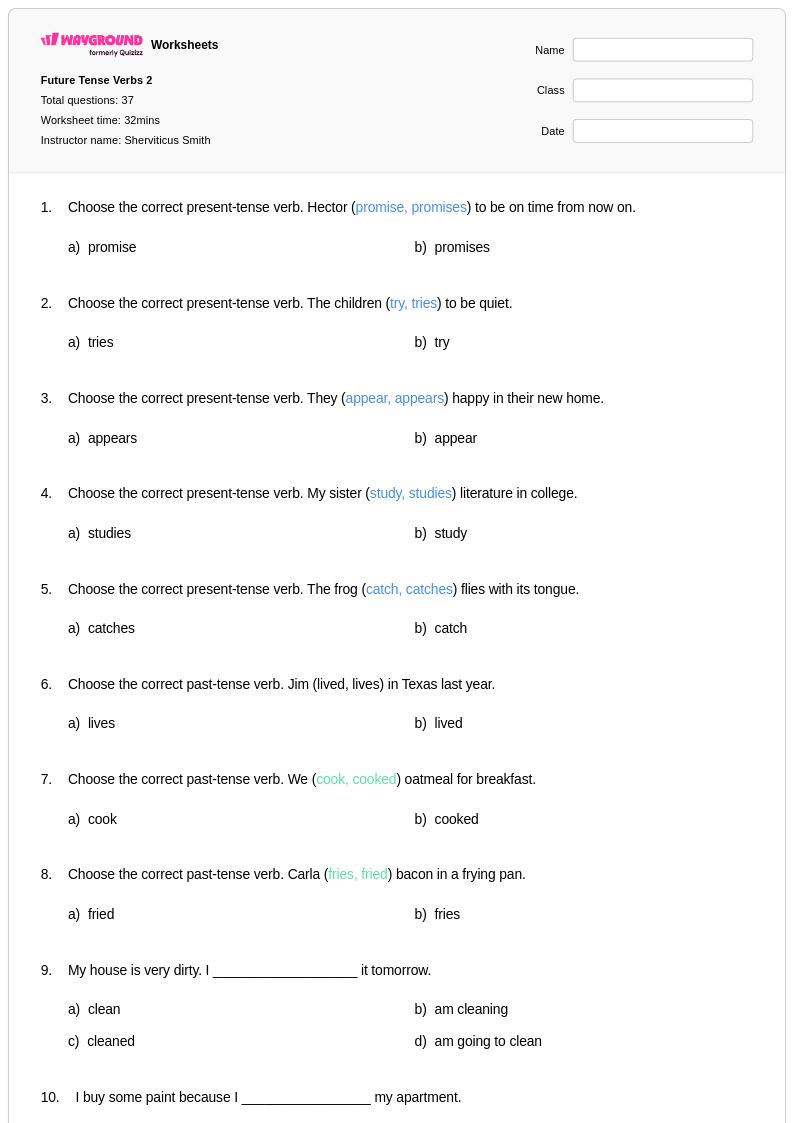
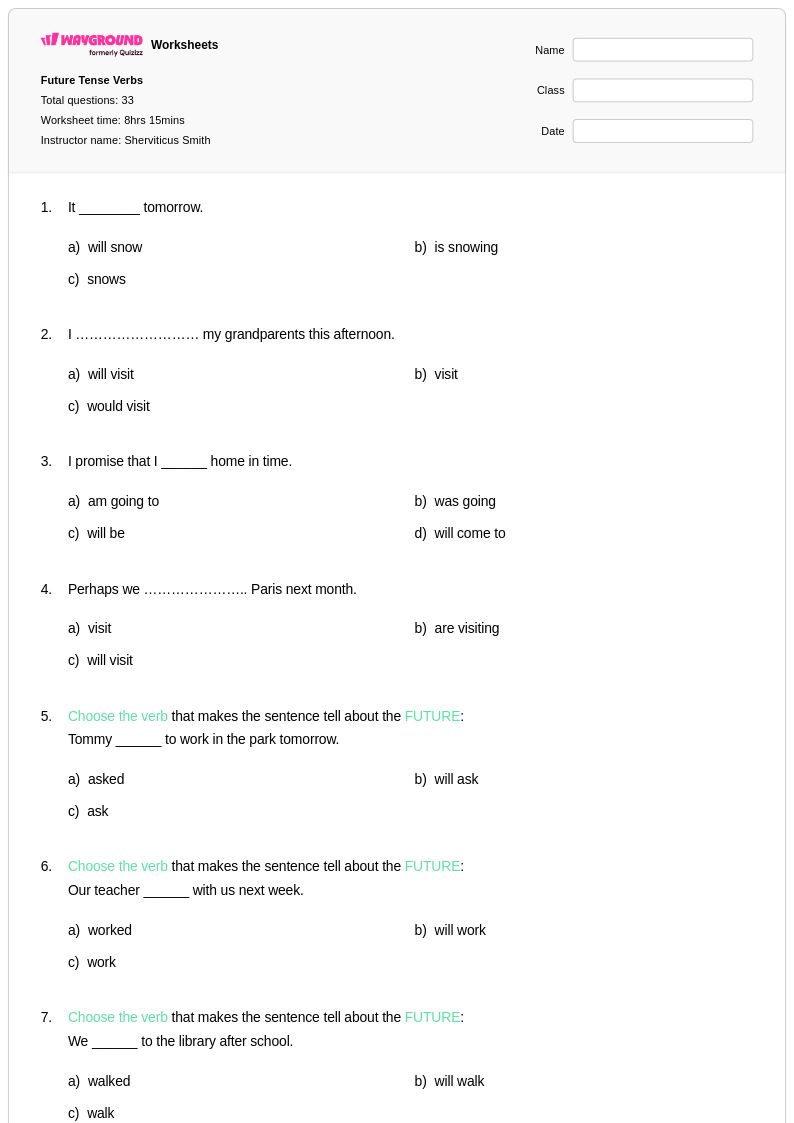
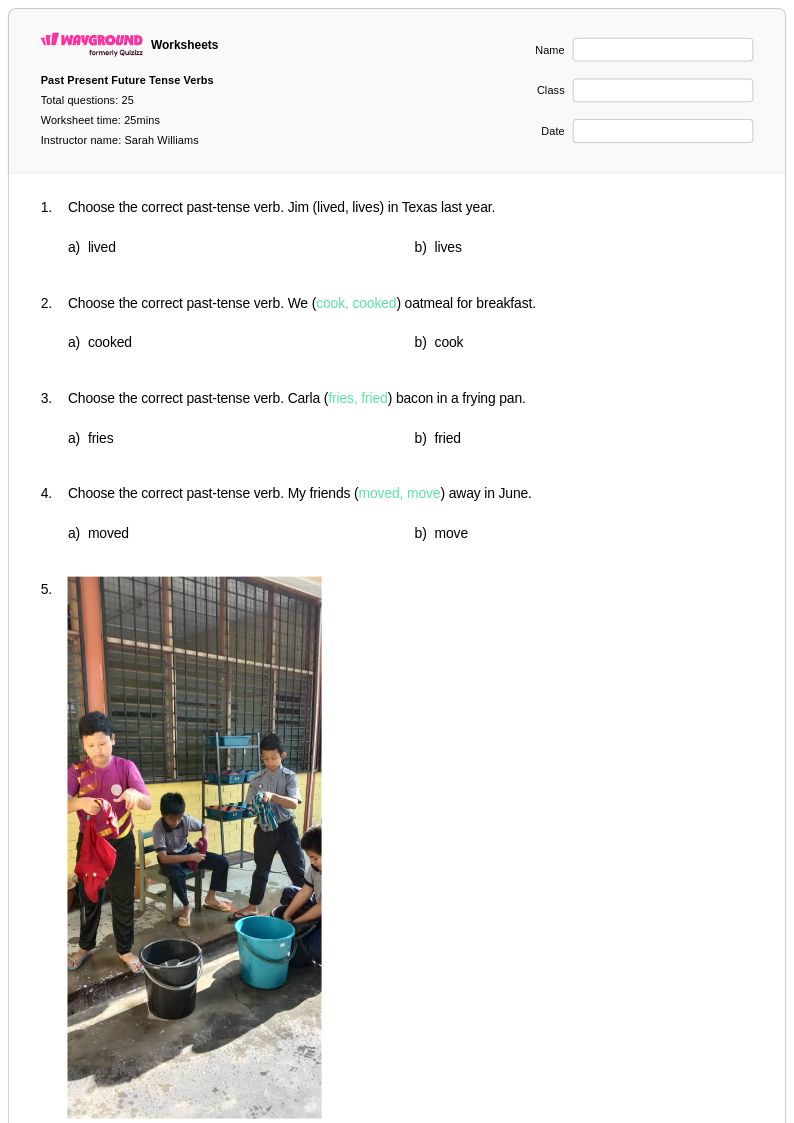
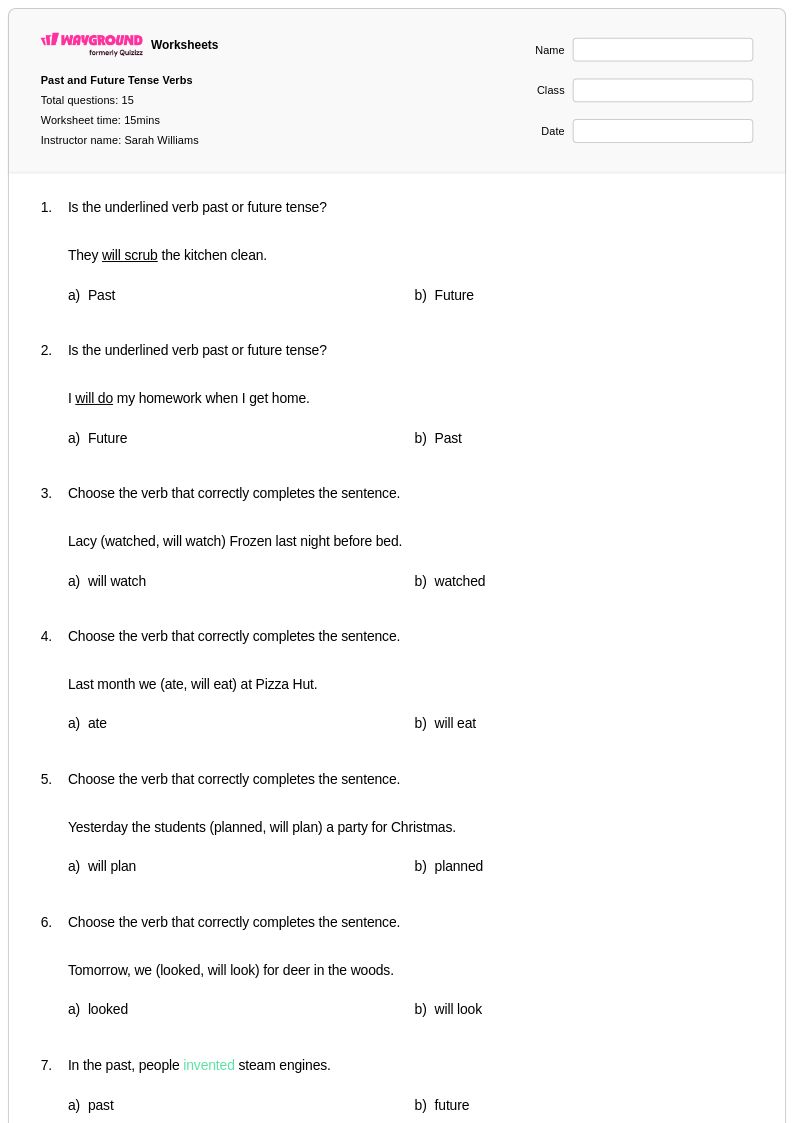
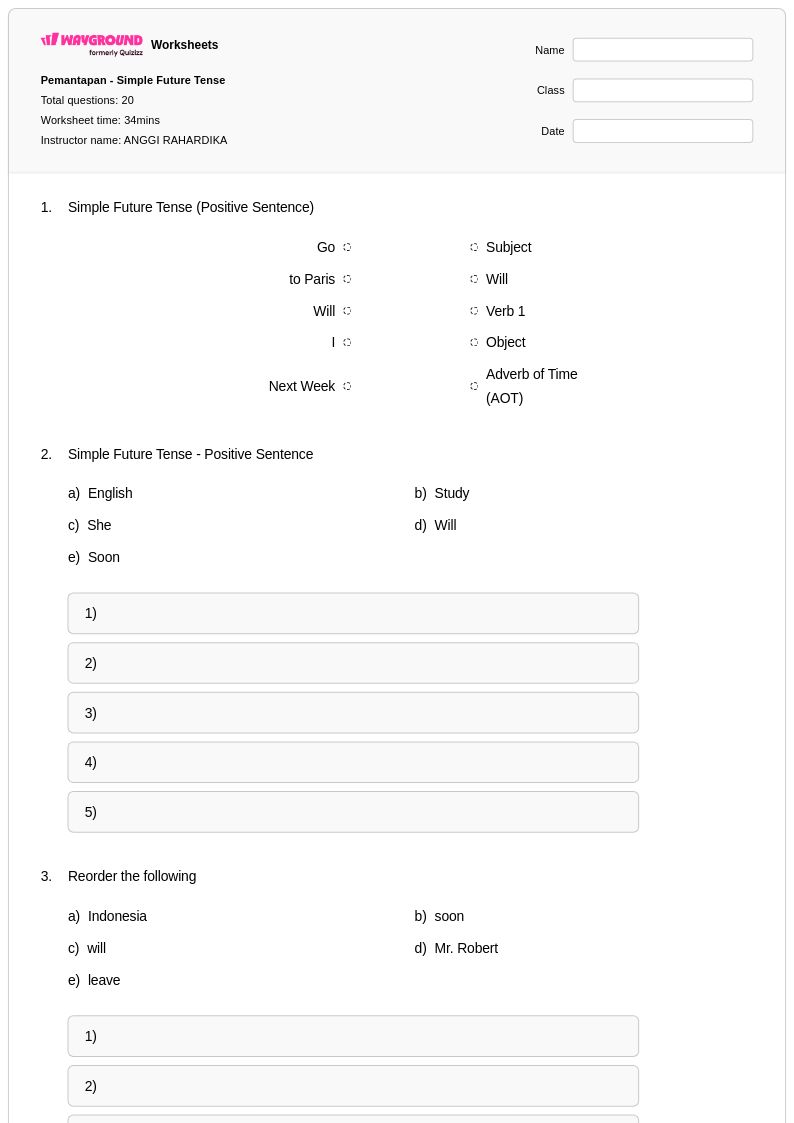
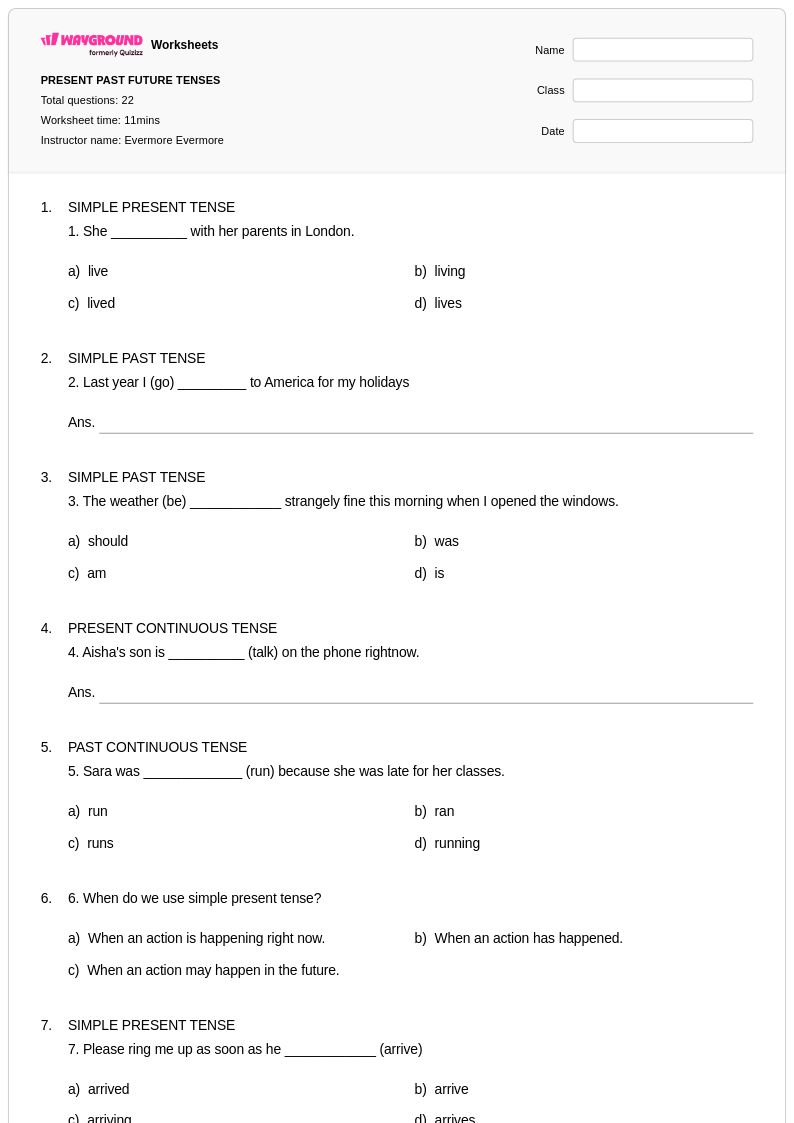
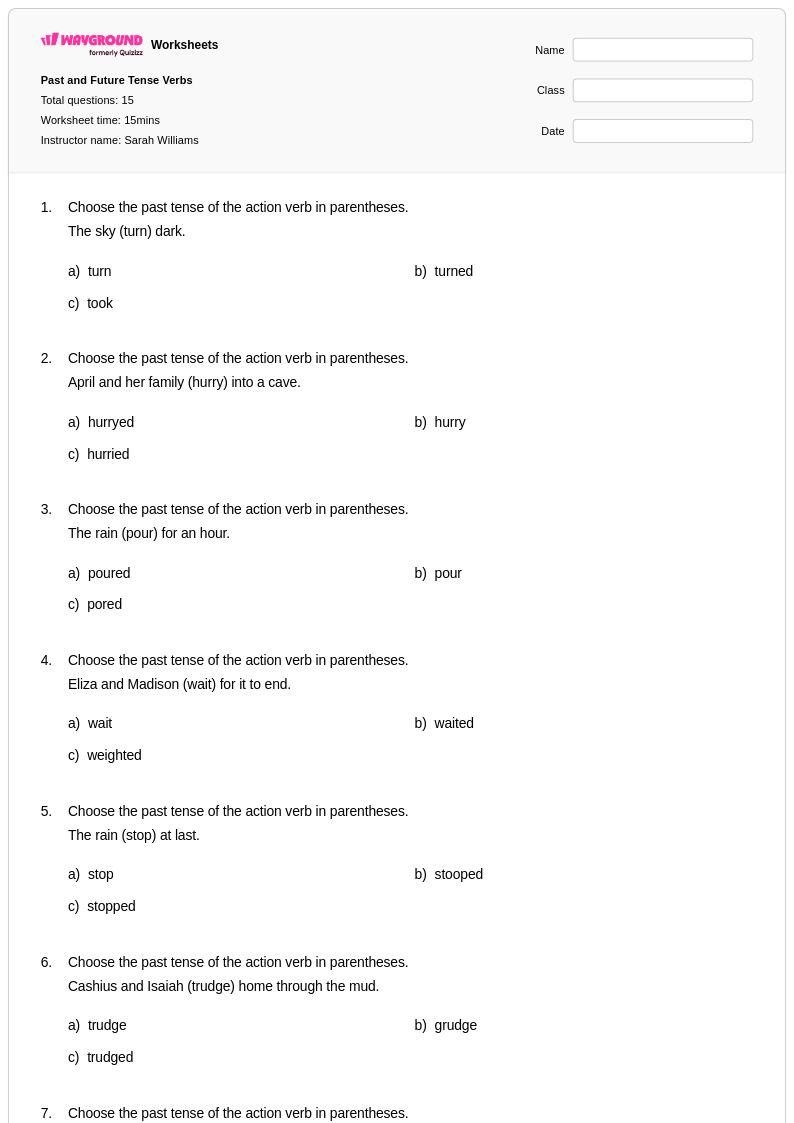
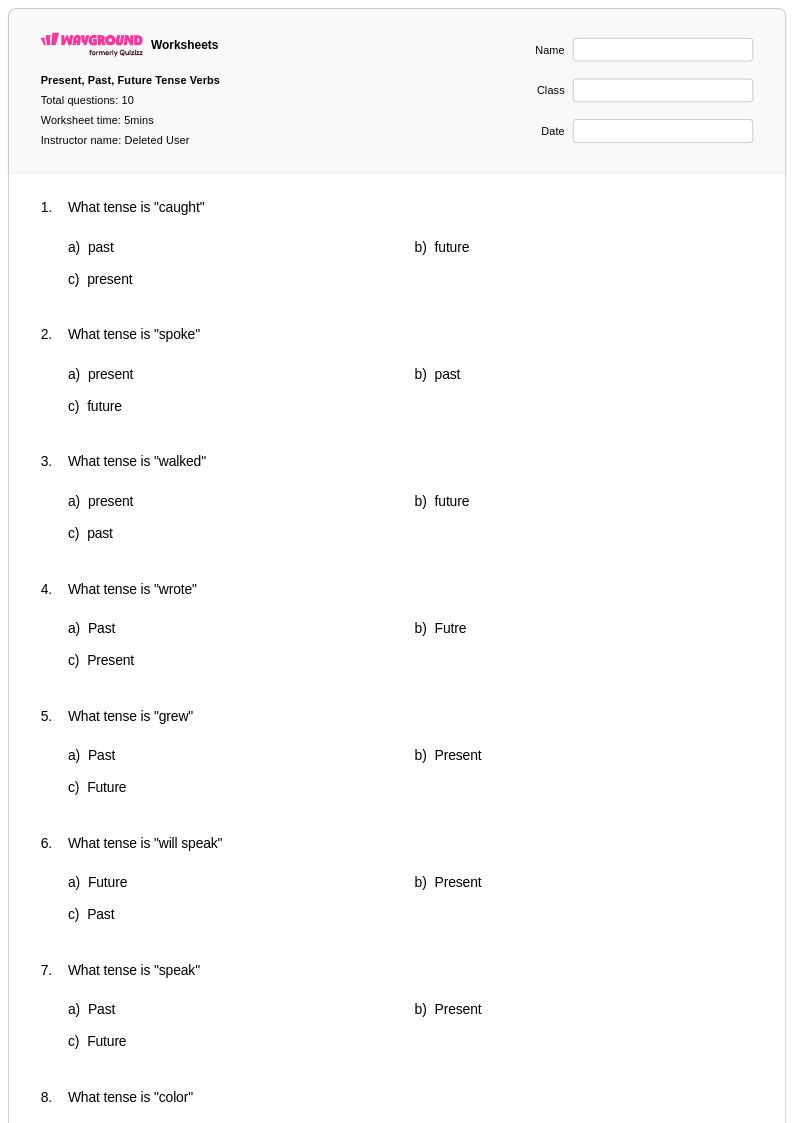
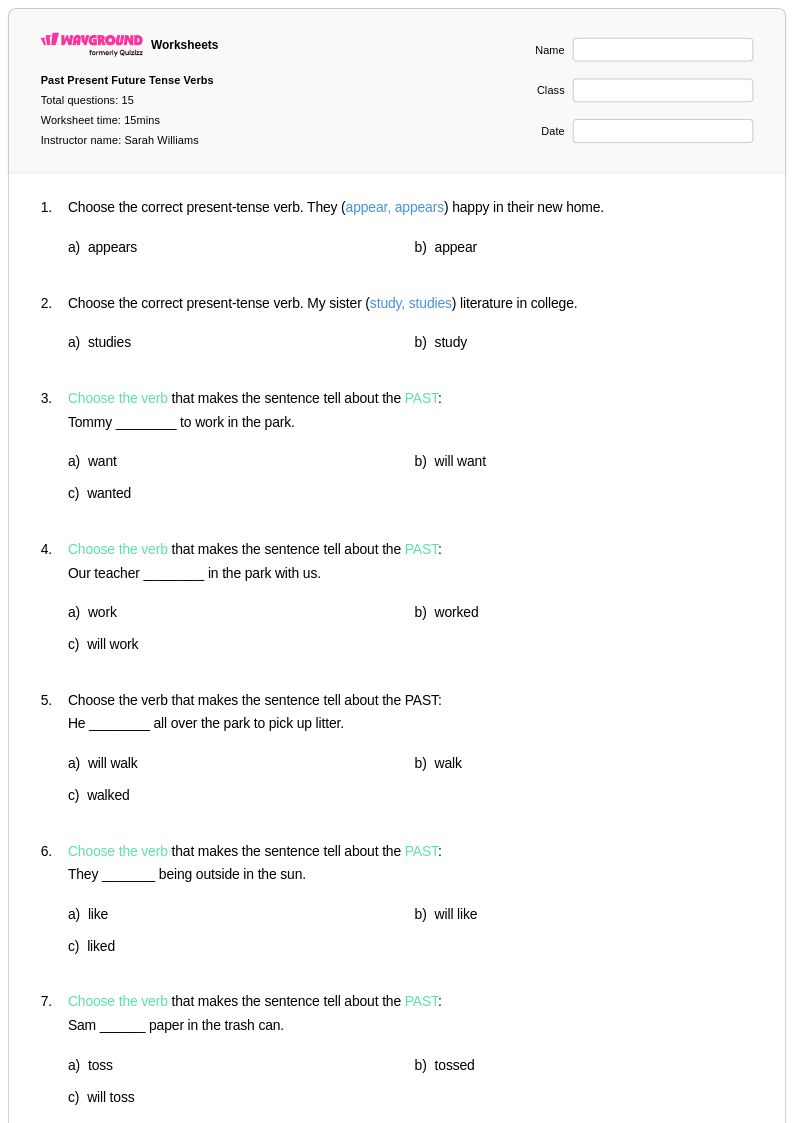
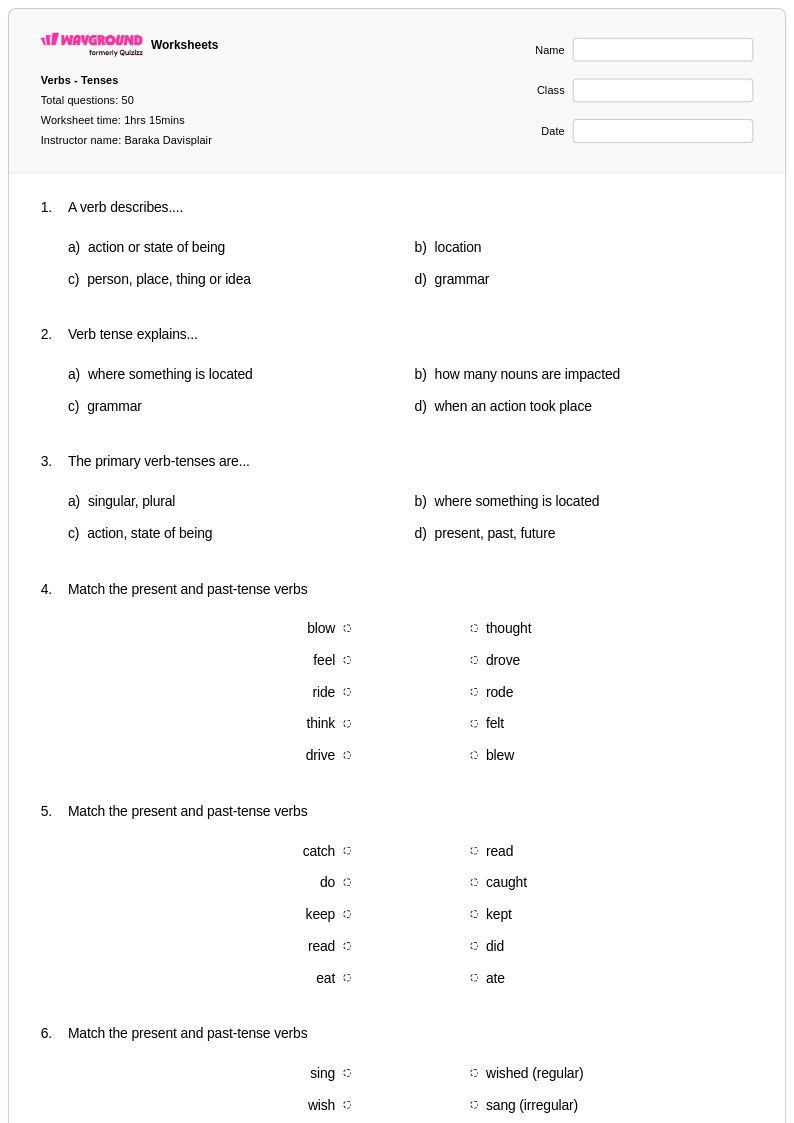
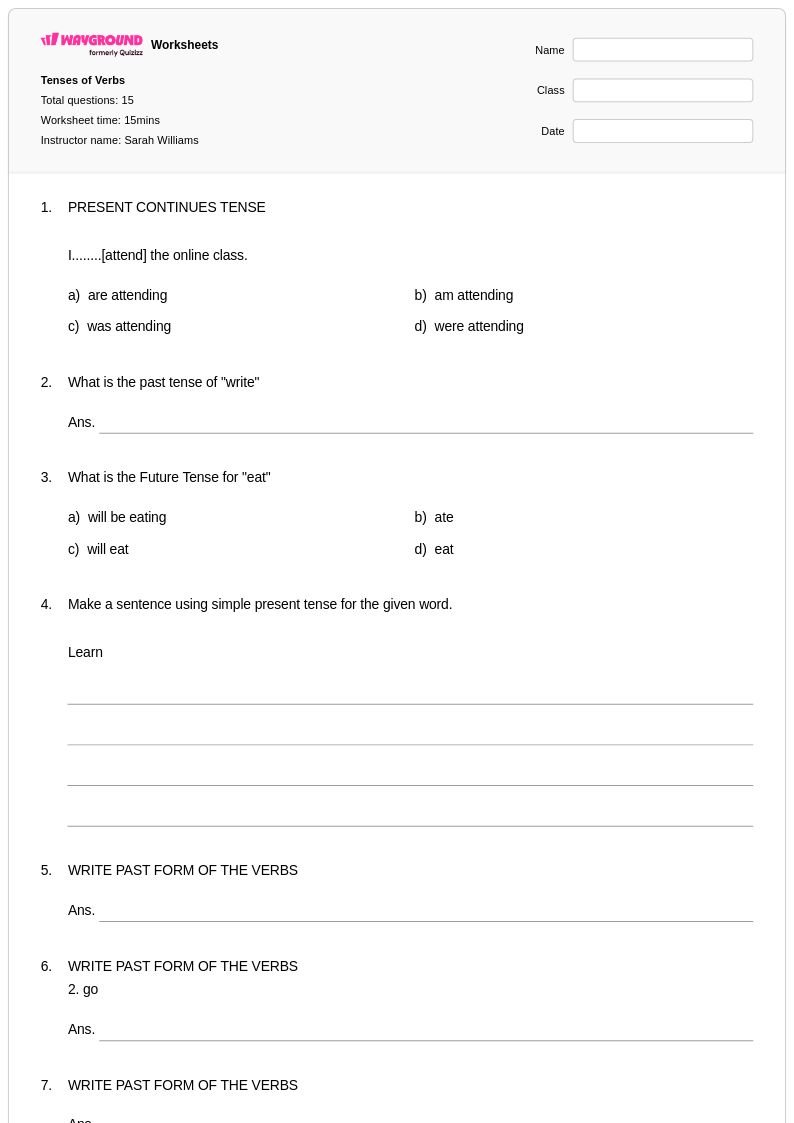
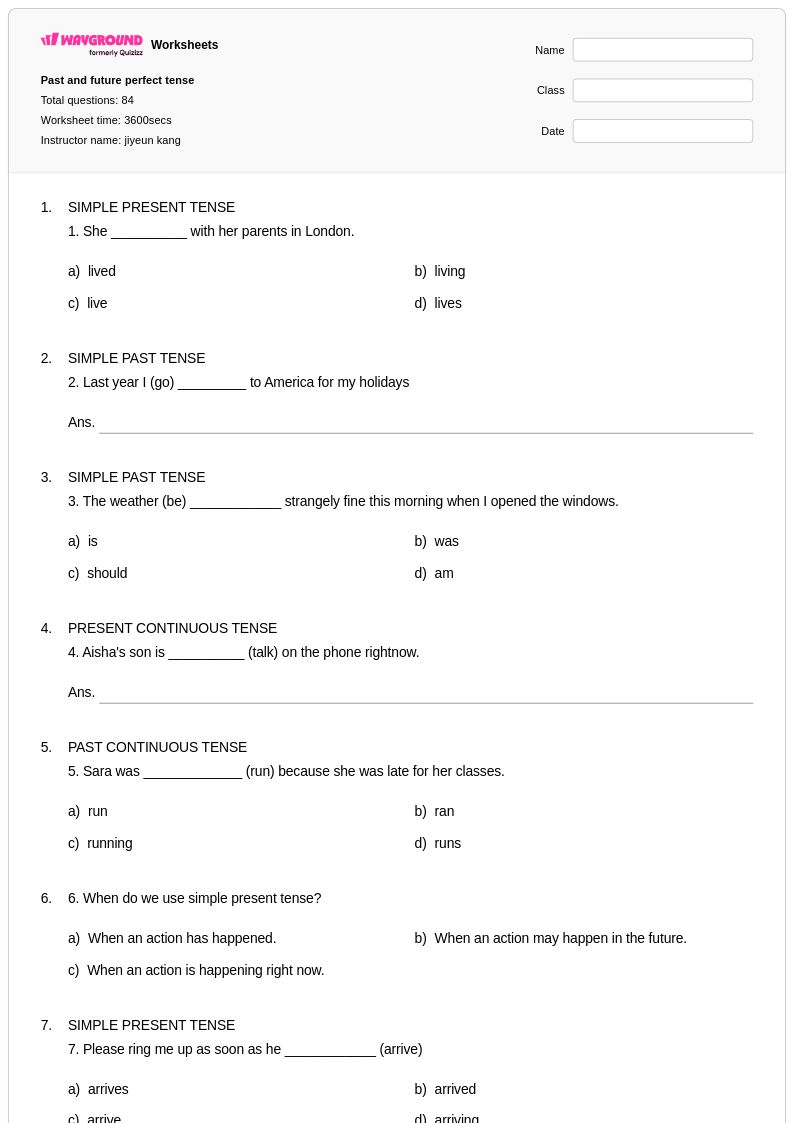
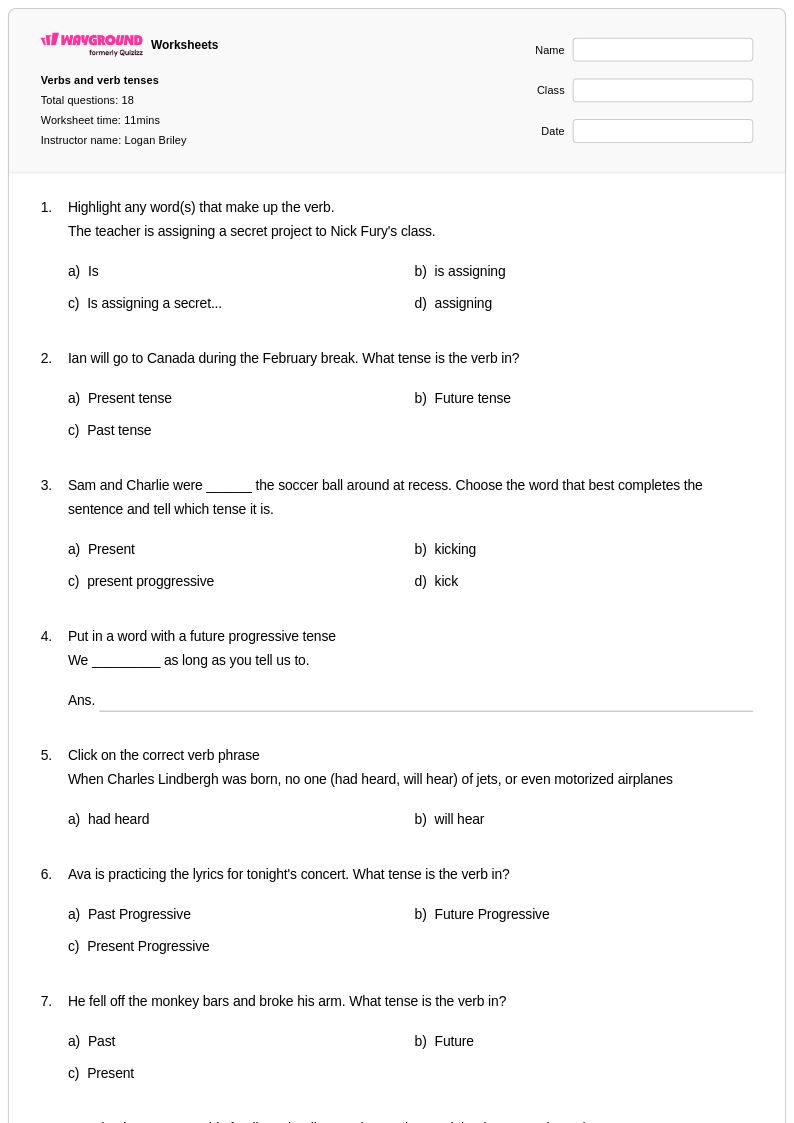
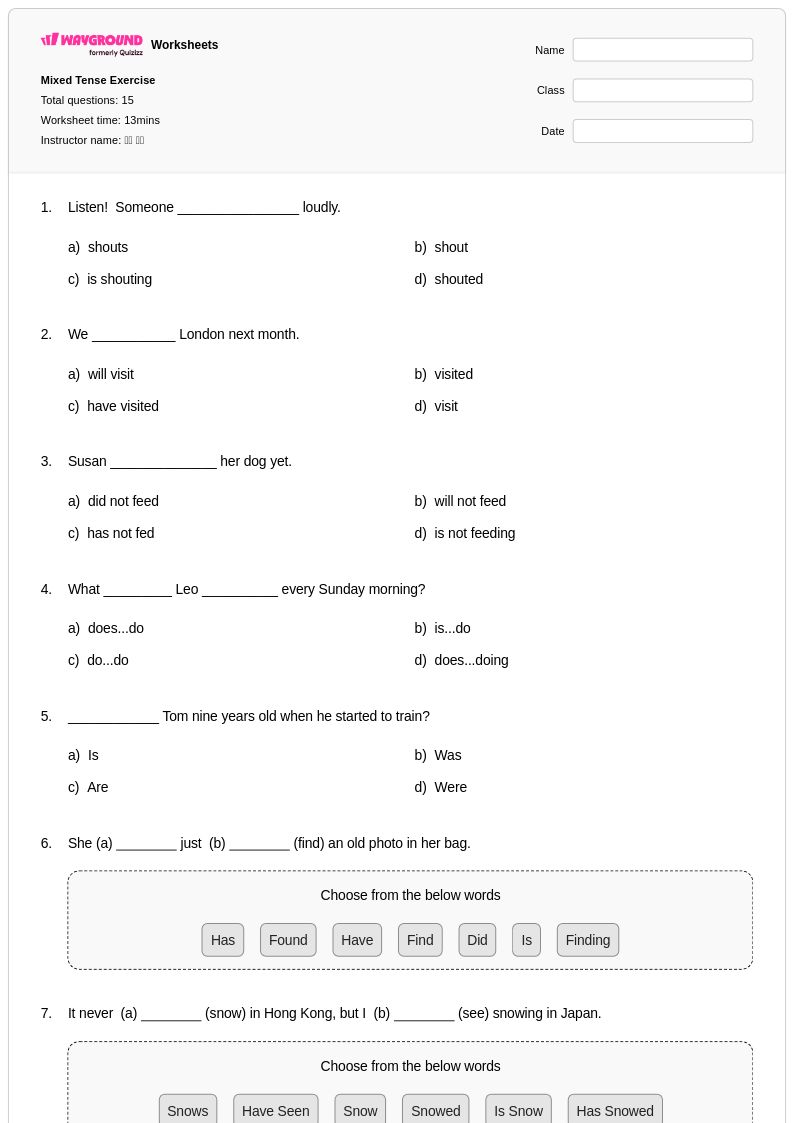
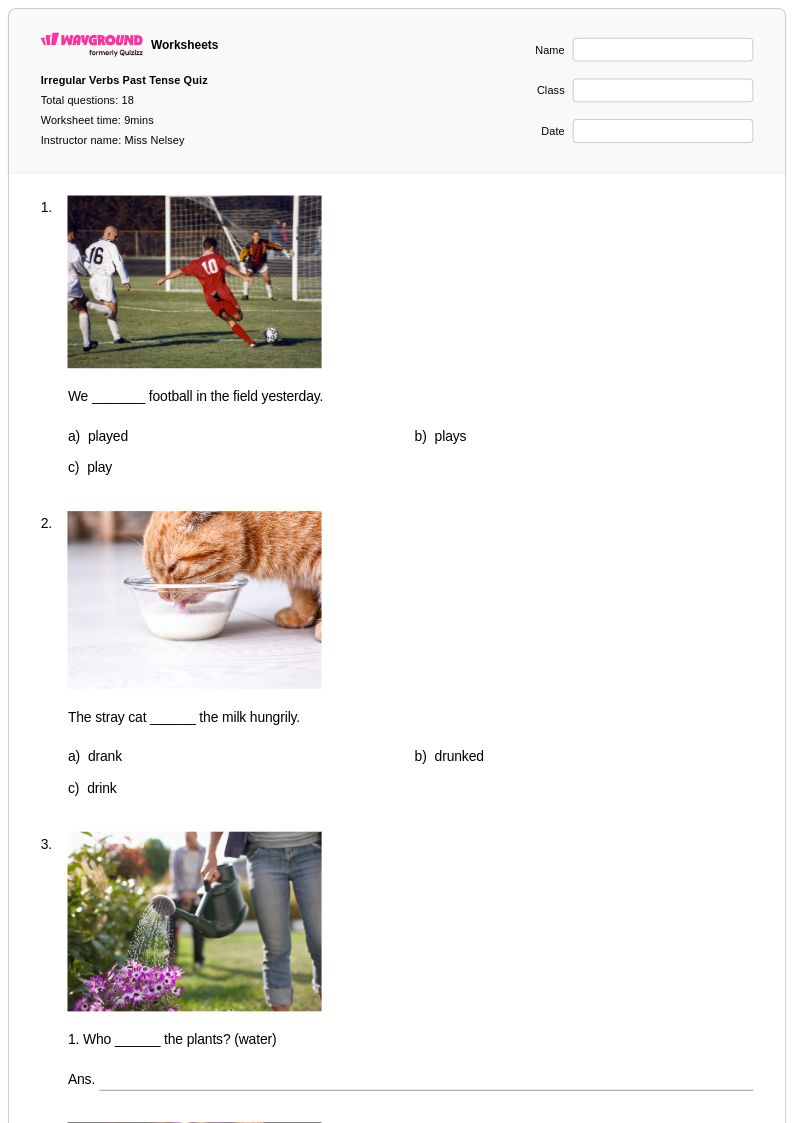
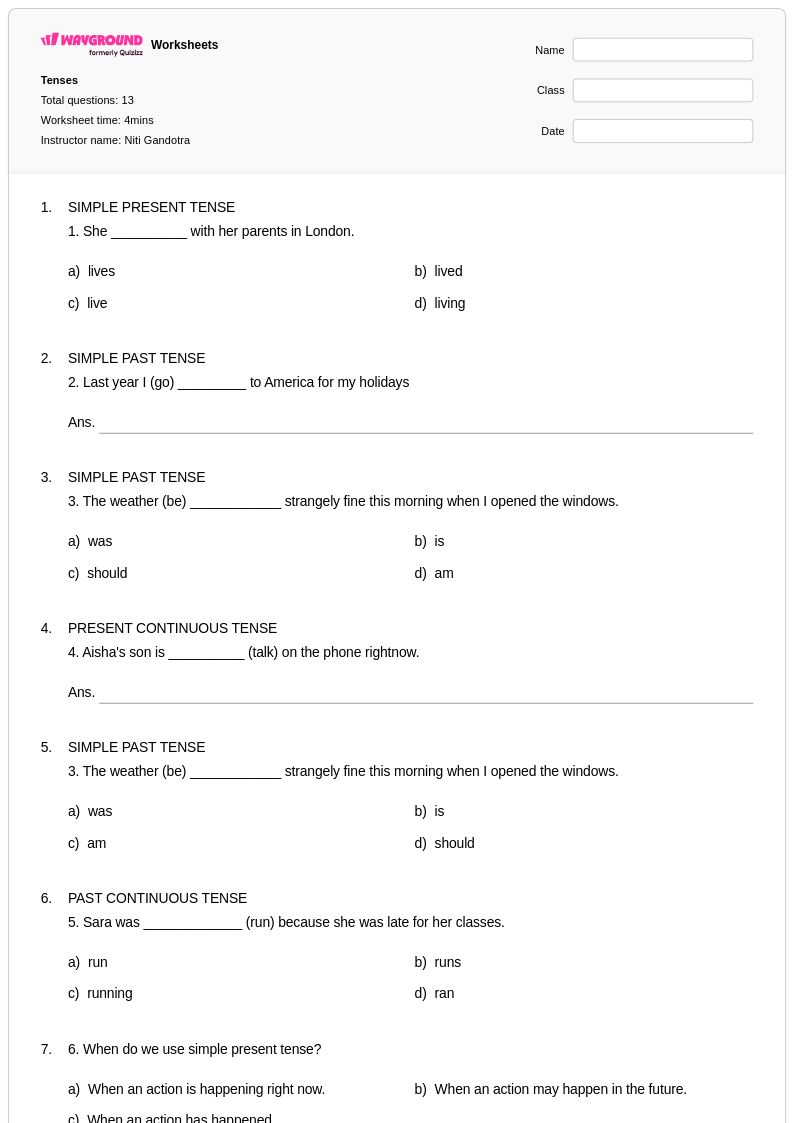
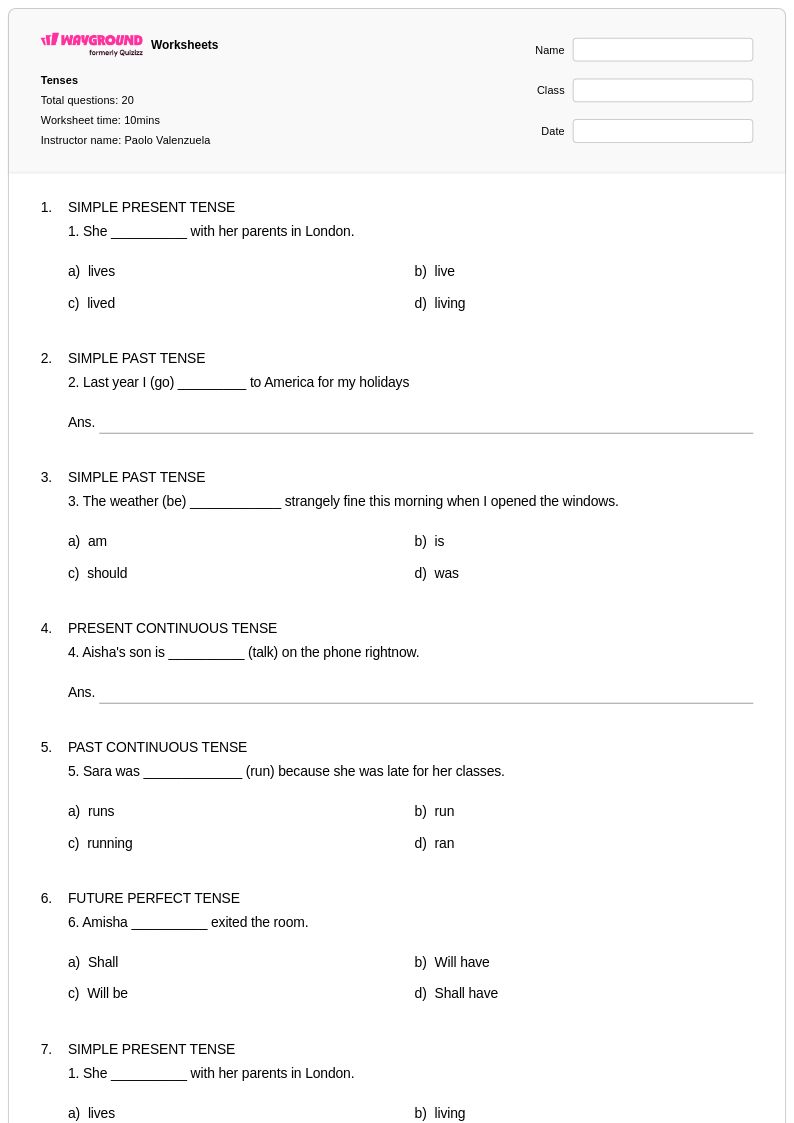
Future tense verbs present Year 5 students with an essential grammatical concept that builds upon their foundational understanding of verb conjugation and temporal expression. Wayground's comprehensive collection of future tense verb worksheets provides targeted practice opportunities that help students master the formation and usage of will-based constructions, going to structures, and present progressive forms used for future meaning. These carefully designed printables strengthen students' ability to recognize future tense patterns, construct grammatically correct sentences, and apply appropriate verb forms in various contexts. Each worksheet includes structured practice problems that progress from basic identification exercises to more complex sentence construction tasks, with complete answer keys provided in convenient pdf format to support independent learning and efficient grading.
Wayground's robust platform, formerly known as Quizizz, empowers educators with millions of teacher-created resources specifically focused on future tense verb instruction for fifth-grade learners. The advanced search and filtering capabilities allow teachers to locate materials that align with specific standards and learning objectives, while differentiation tools enable seamless customization for diverse student needs and proficiency levels. These future tense verb worksheets are available in both printable and digital formats, providing flexibility for classroom instruction, homework assignments, remediation sessions, and enrichment activities. Teachers can efficiently modify existing materials or combine multiple resources to create comprehensive practice sets that address individual student gaps, reinforce classroom lessons, and provide ongoing skill development opportunities throughout the academic year.
FAQs
How do I teach future tense verbs to students?
Start by distinguishing between the three core future tense constructions: 'will' for spontaneous decisions and predictions, 'going to' for planned intentions, and the present progressive for scheduled events. Introduce each form with clear, real-world examples before asking students to produce their own sentences. Consistent exposure through both reading and writing tasks helps students internalize when each construction is appropriate rather than just memorizing rules.
What exercises help students practice future tense verbs?
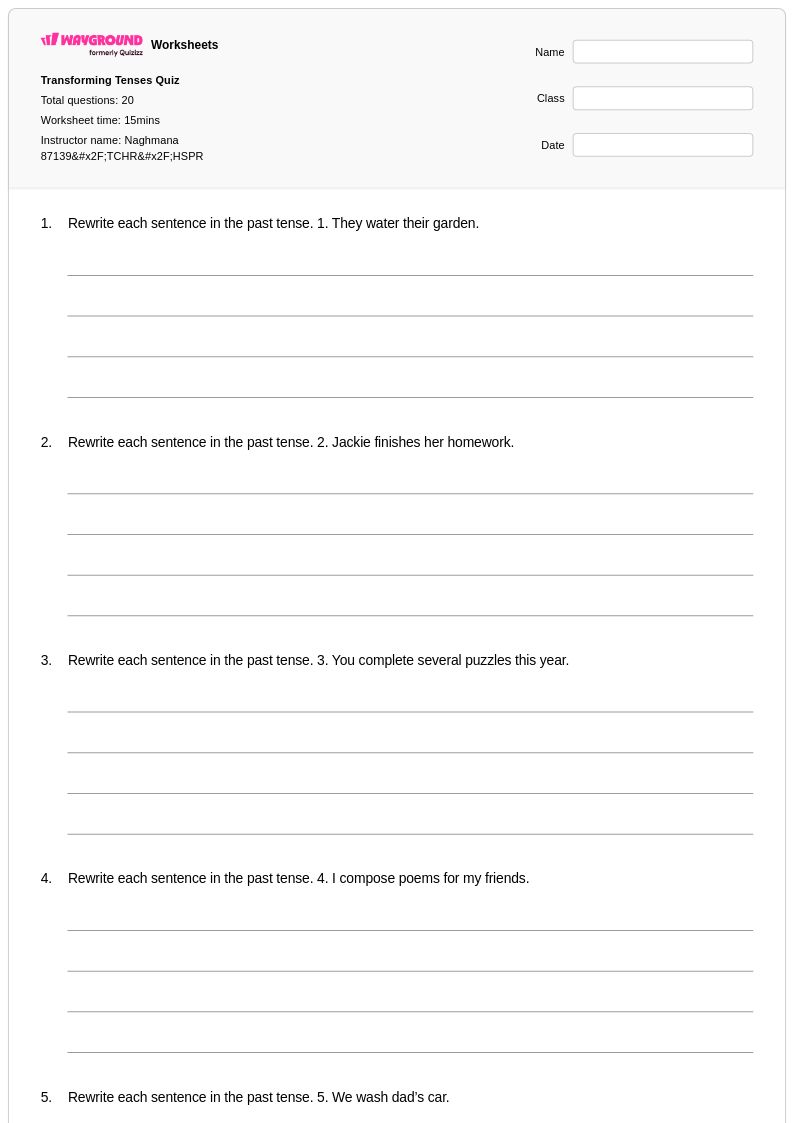
Effective practice exercises include sentence completion tasks where students choose between 'will' and 'going to', verb transformation drills converting present tense sentences to future tense, and error correction activities that target common misuse patterns. Writing prompts asking students to describe plans or predictions also build functional fluency because they require choosing the correct future form in context rather than in isolation.
What mistakes do students commonly make with future tense verbs?
The most frequent error is interchanging 'will' and 'going to' without regard for meaning, treating them as identical synonyms rather than distinct constructions. Students also frequently omit the auxiliary verb entirely, writing 'She go tomorrow' instead of 'She will go tomorrow.' Another common mistake is incorrectly forming the future progressive by dropping the 'be' auxiliary, such as writing 'I will running' instead of 'I will be running.'
How do I differentiate future tense verb instruction for students at different proficiency levels?
For lower-proficiency students, begin with 'will' and 'going to' in simple declarative sentences before introducing progressive and conditional future forms. Advanced students can be challenged with tasks that require selecting the most precise future construction based on context and nuance. On Wayground, teachers can apply accommodations such as reduced answer choices for students who need lower cognitive load, or enable Read Aloud so that question text is read to students who benefit from audio support.
How can I use future tense verb worksheets in my classroom?
Future tense verb worksheets work well as structured practice after direct instruction, as independent work during grammar centers, or as a review tool before assessments. Wayground's future tense verb worksheets are available as printable PDFs for traditional classroom use and in digital formats for technology-integrated environments, and teachers can also host them as a quiz directly on Wayground. Every worksheet includes a complete answer key, making them practical for self-paced independent study or quick teacher review.
How do I help students understand the difference between 'will' and 'going to'?
The clearest way to explain this distinction is through context: 'going to' signals a pre-existing plan or visible evidence, while 'will' is used for decisions made at the moment of speaking or for general predictions. A useful classroom exercise is presenting pairs of scenarios and asking students to justify which form fits each situation. Repeated exposure to authentic examples, such as dialogues and short texts, reinforces the distinction more effectively than rule recitation alone.