
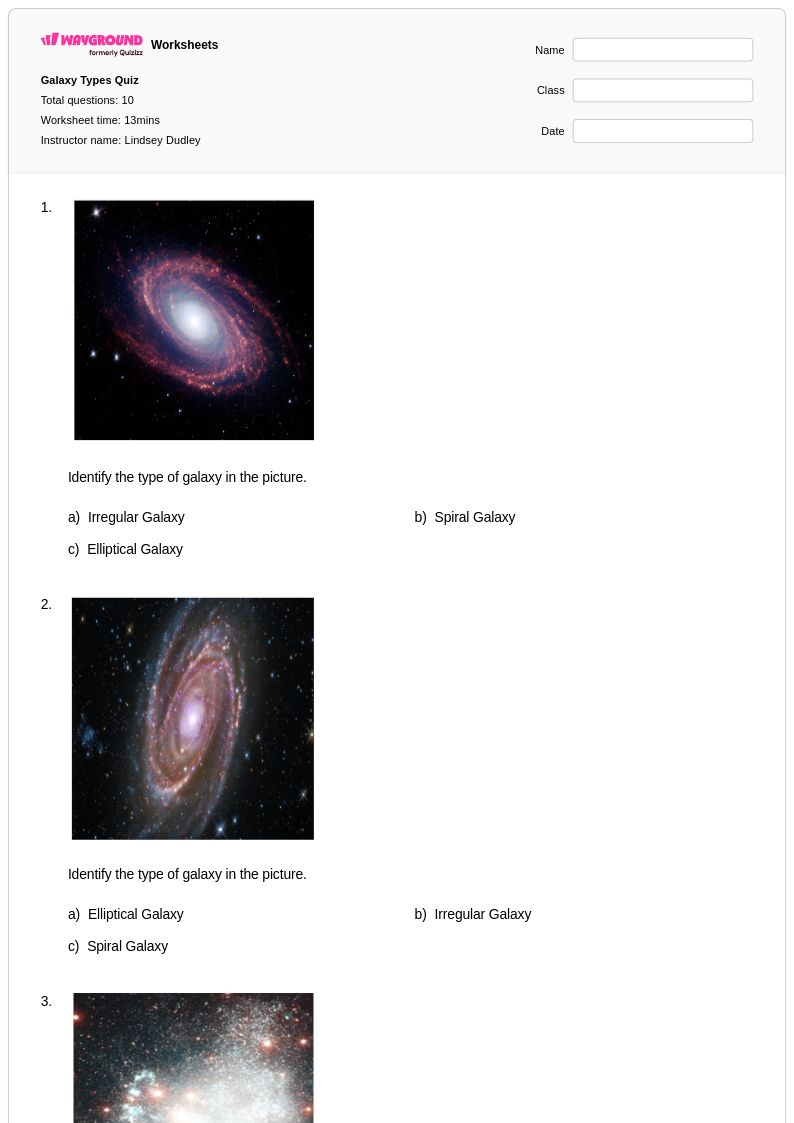
10 Q
11th
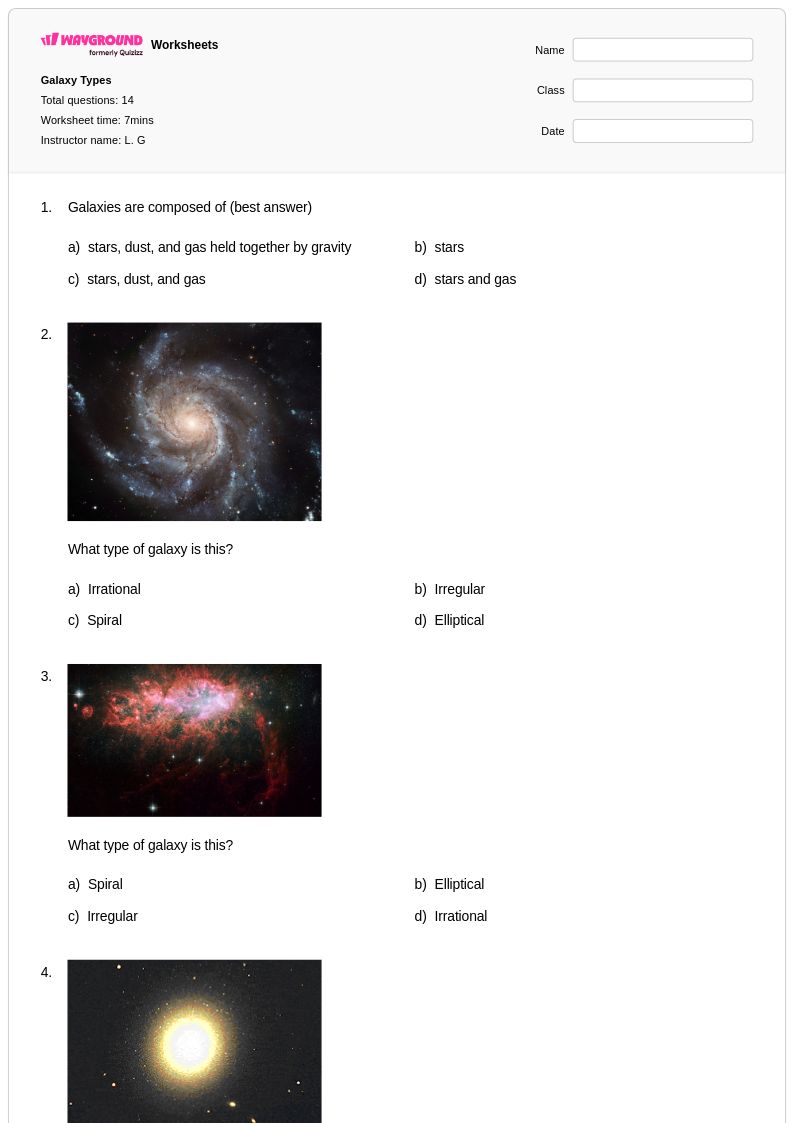
14 Q
11th
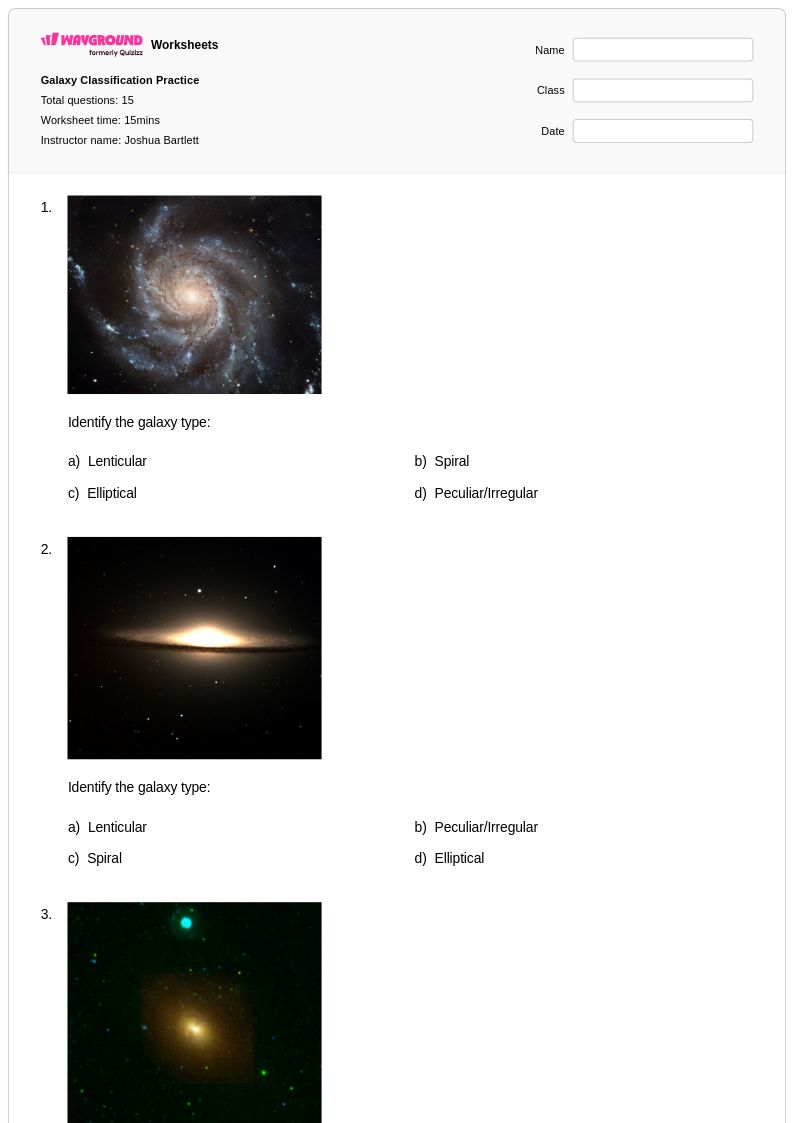
18 Q
11th
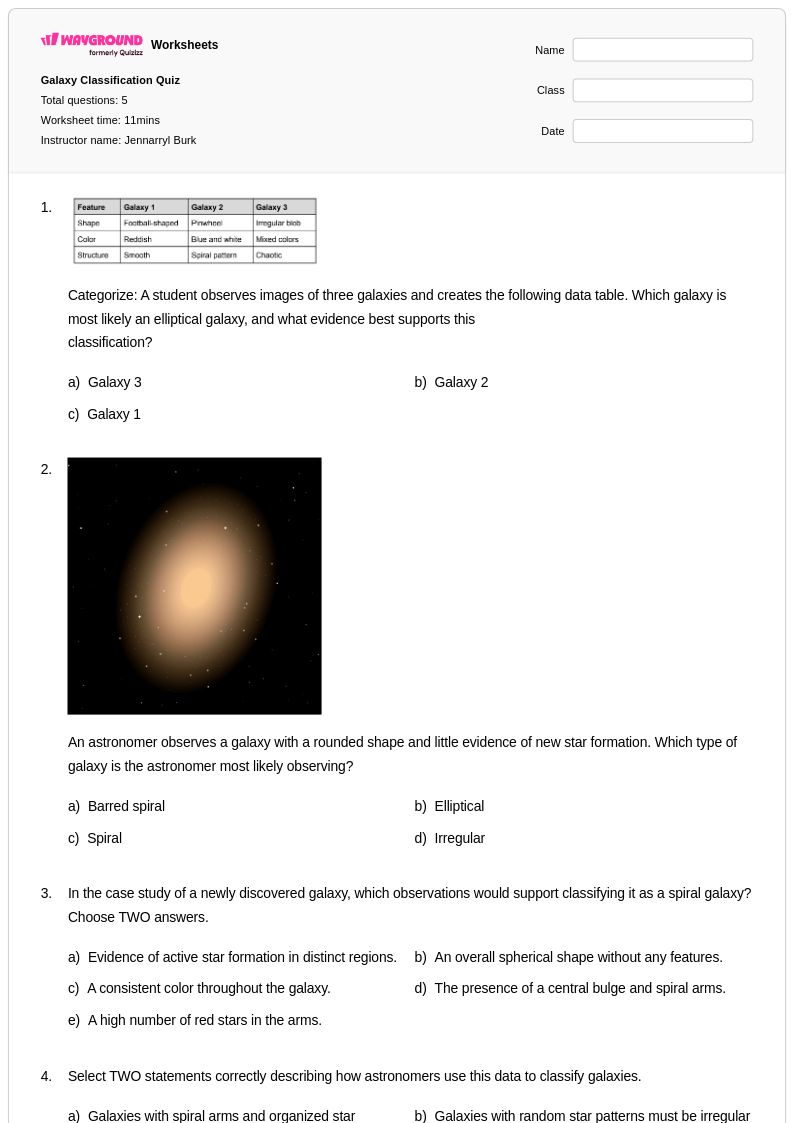
5 Q
8th - Uni
25 Q
10th - 12th
16 Q
9th - 12th
7 Q
6th - Uni
13 Q
9th - 12th
20 Q
11th - 12th
25 Q
8th - Uni
21 Q
10th - 12th
25 Q
8th - Uni
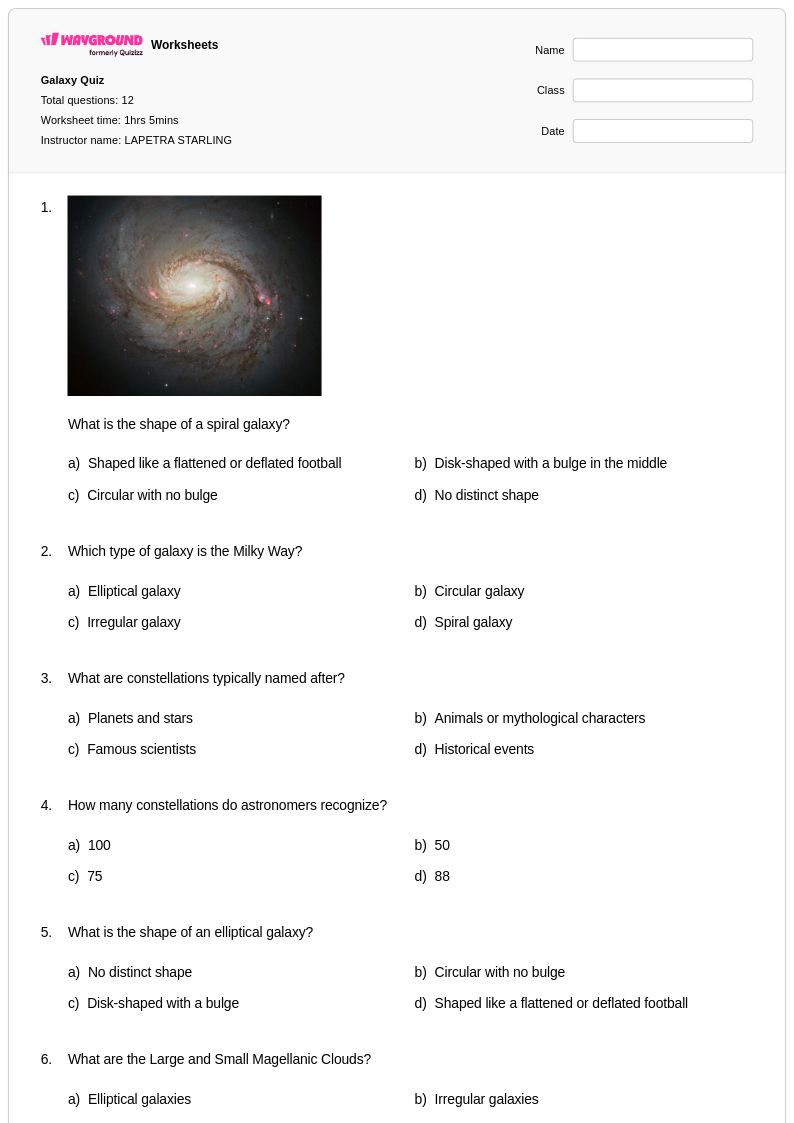
12 Q
11th
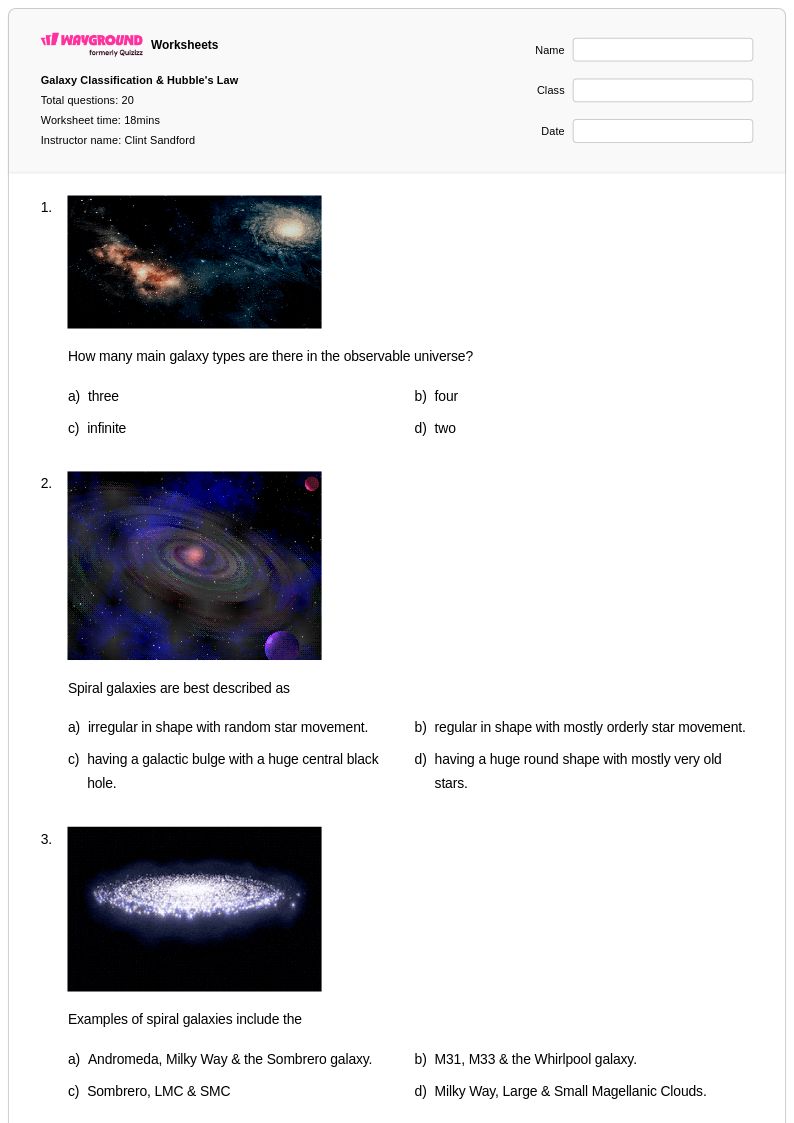
20 Q
9th - 12th
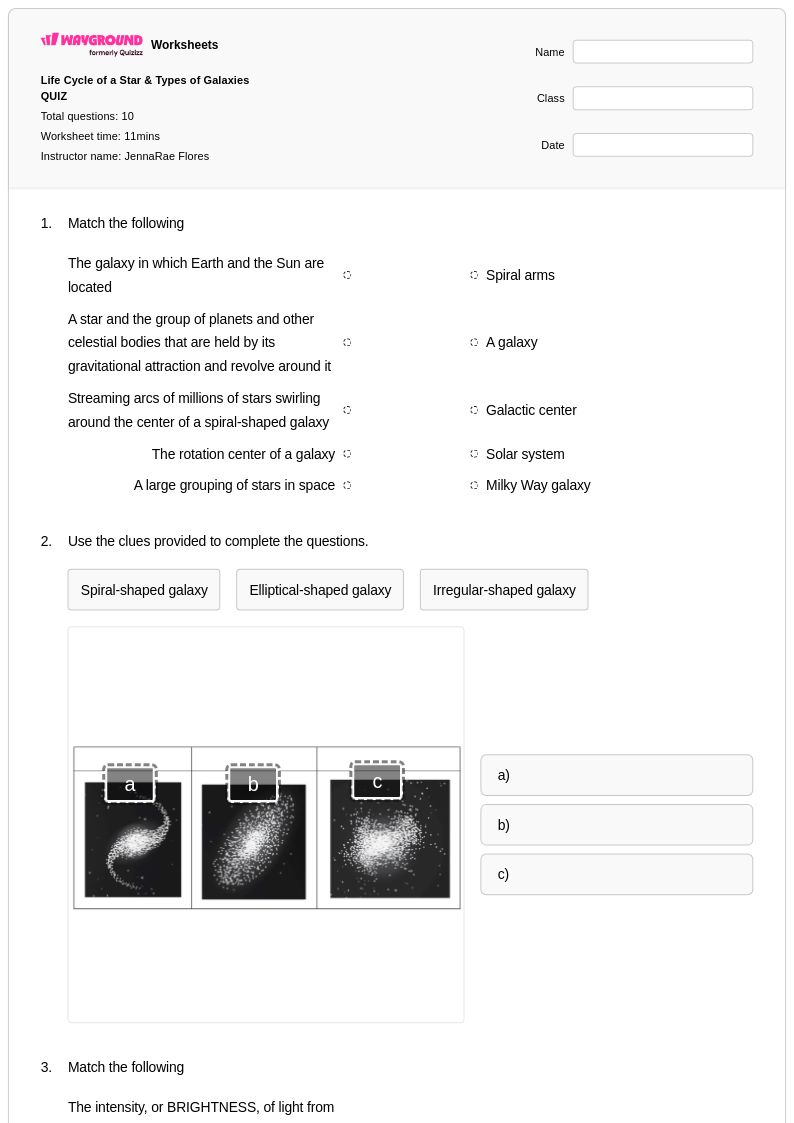
10 Q
8th - Uni
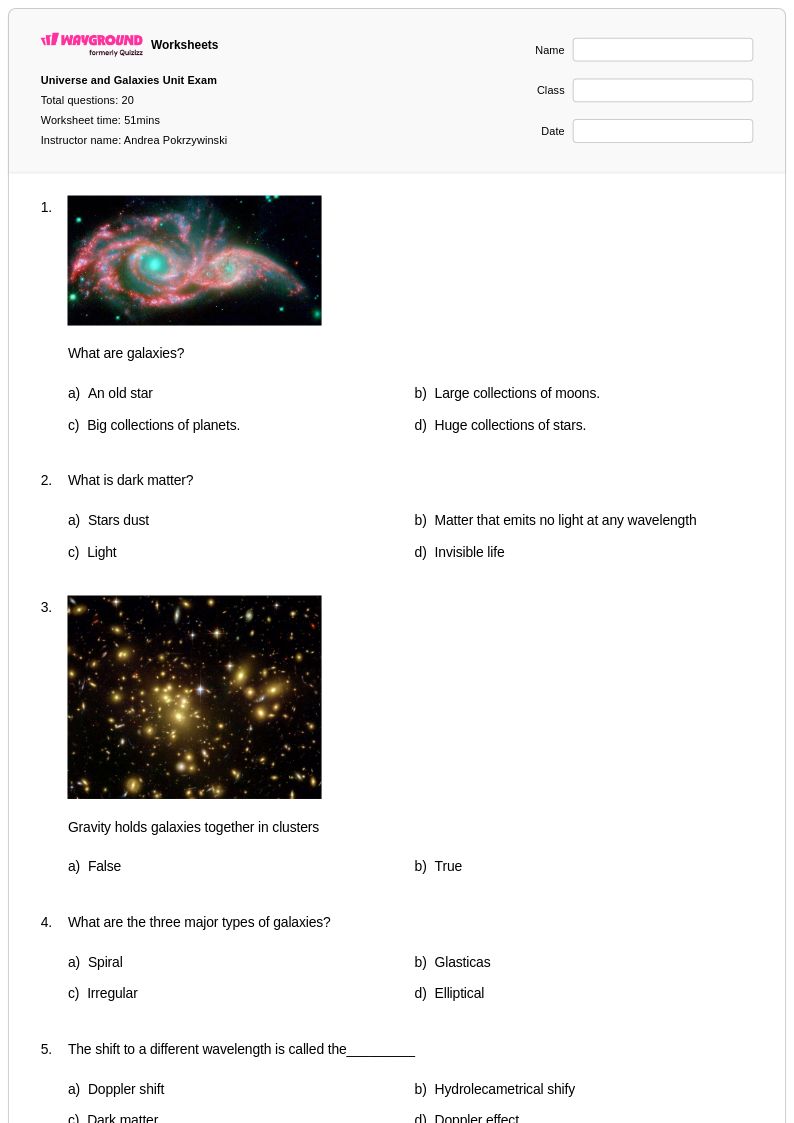
20 Q
10th - 12th
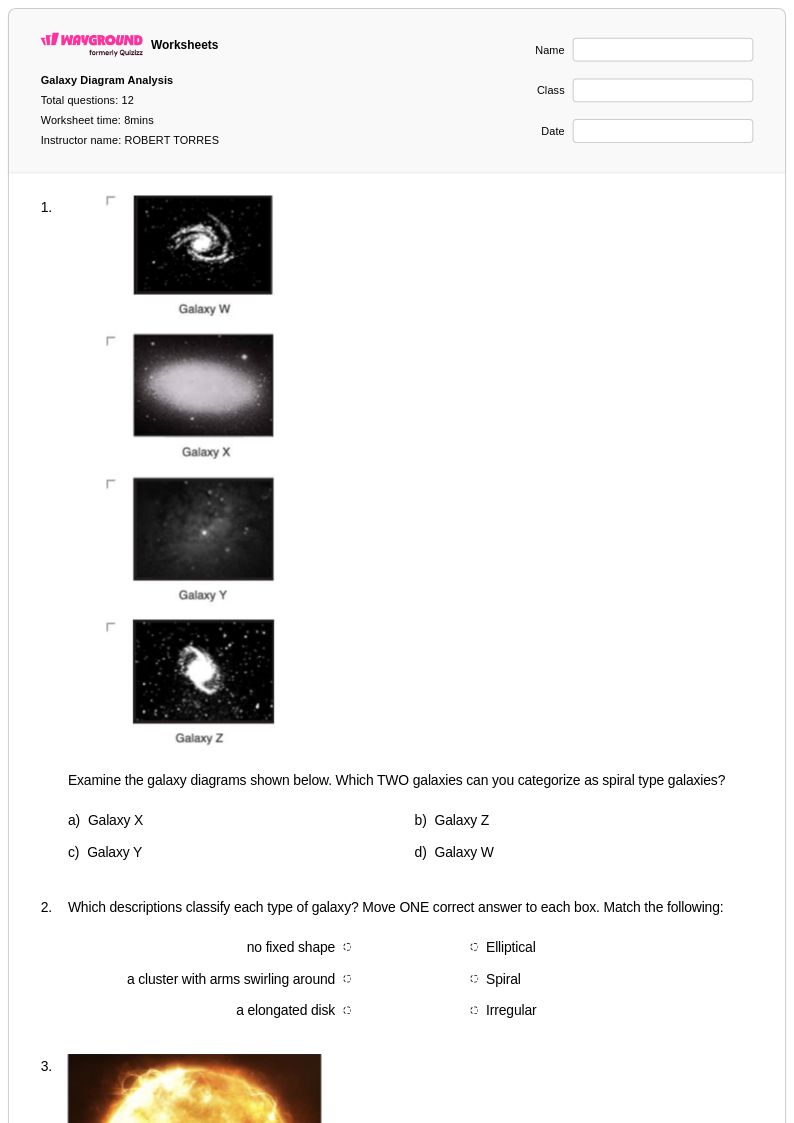
12 Q
8th - Uni
15 Q
7th - 12th
15 Q
8th - Uni
15 Q
8th - Uni
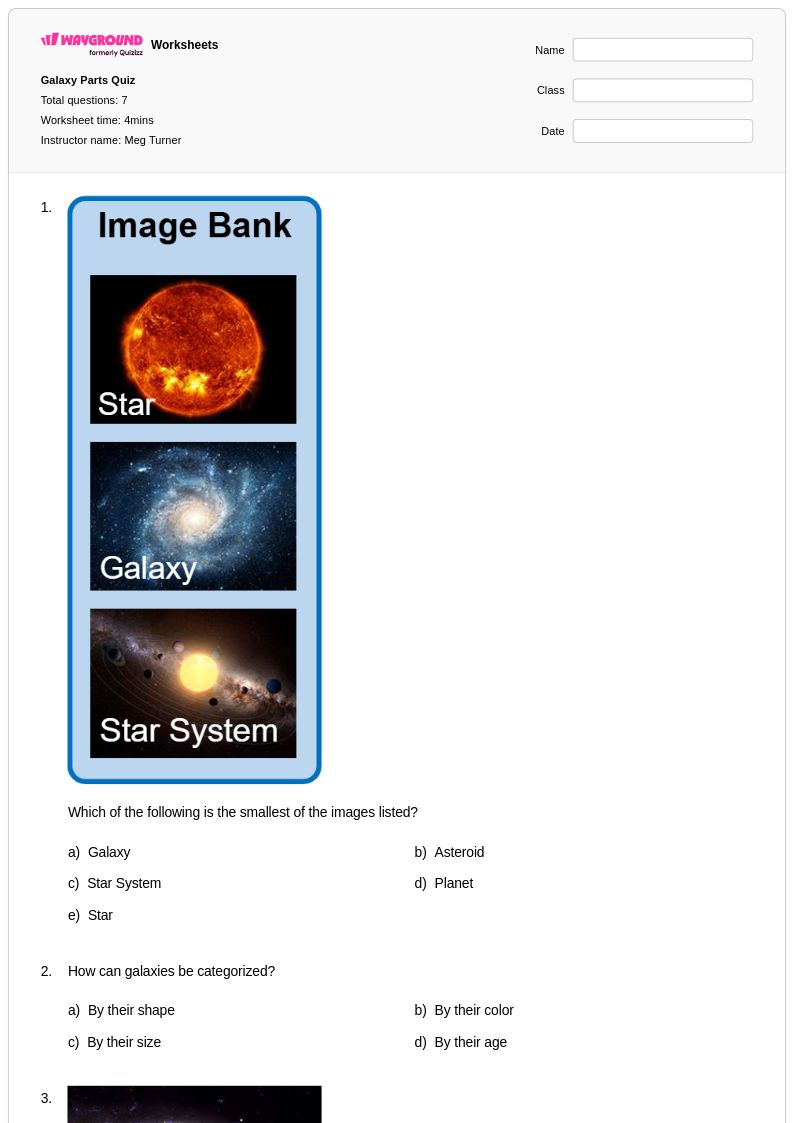
7 Q
8th - Uni
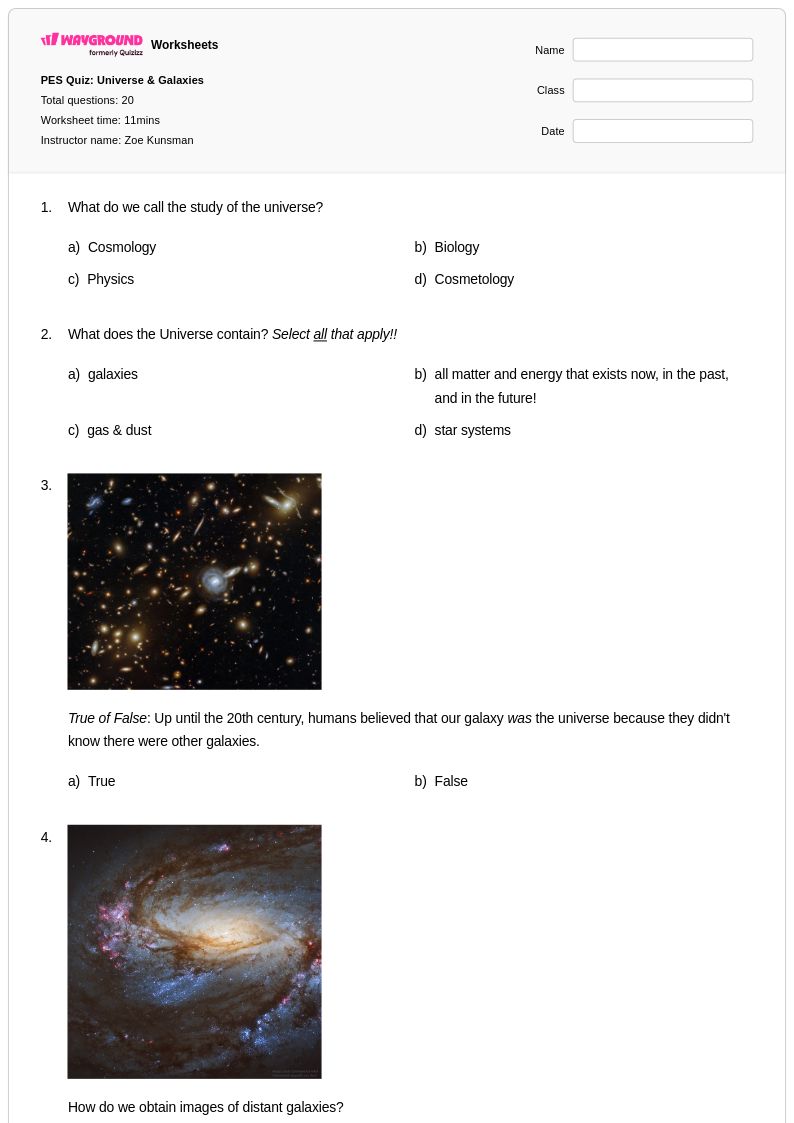
20 Q
9th - 12th
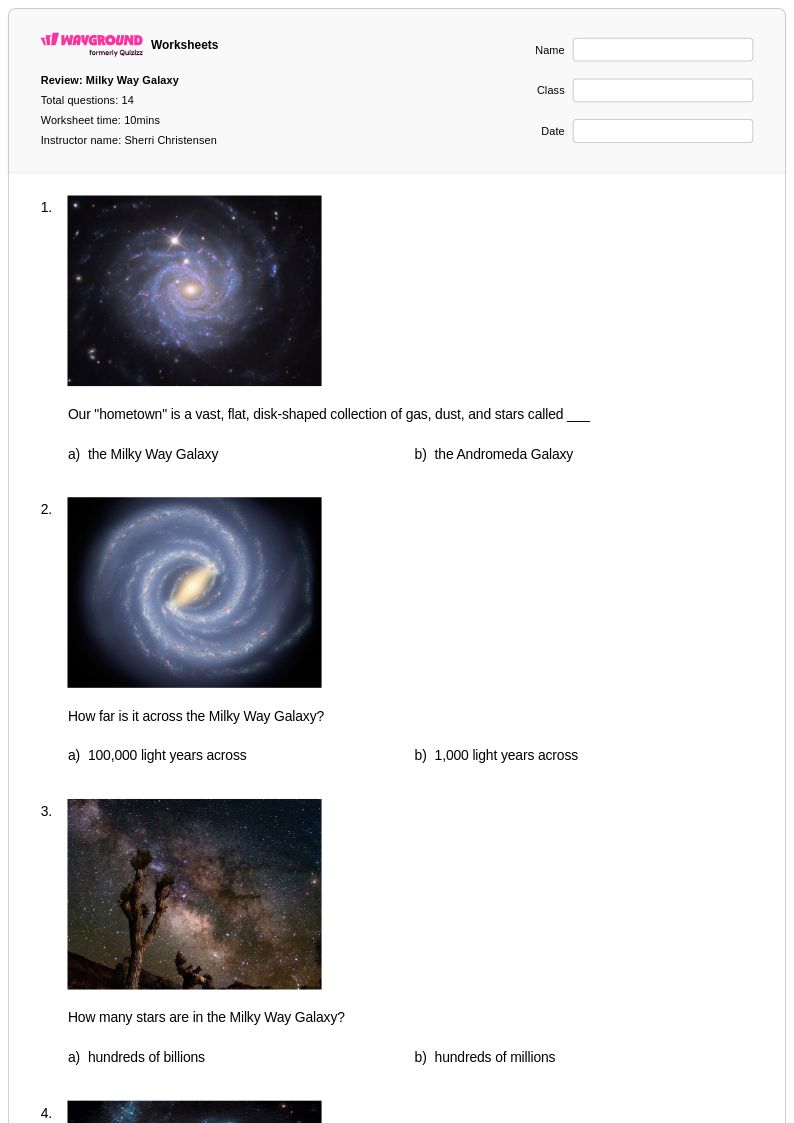
14 Q
9th - 12th
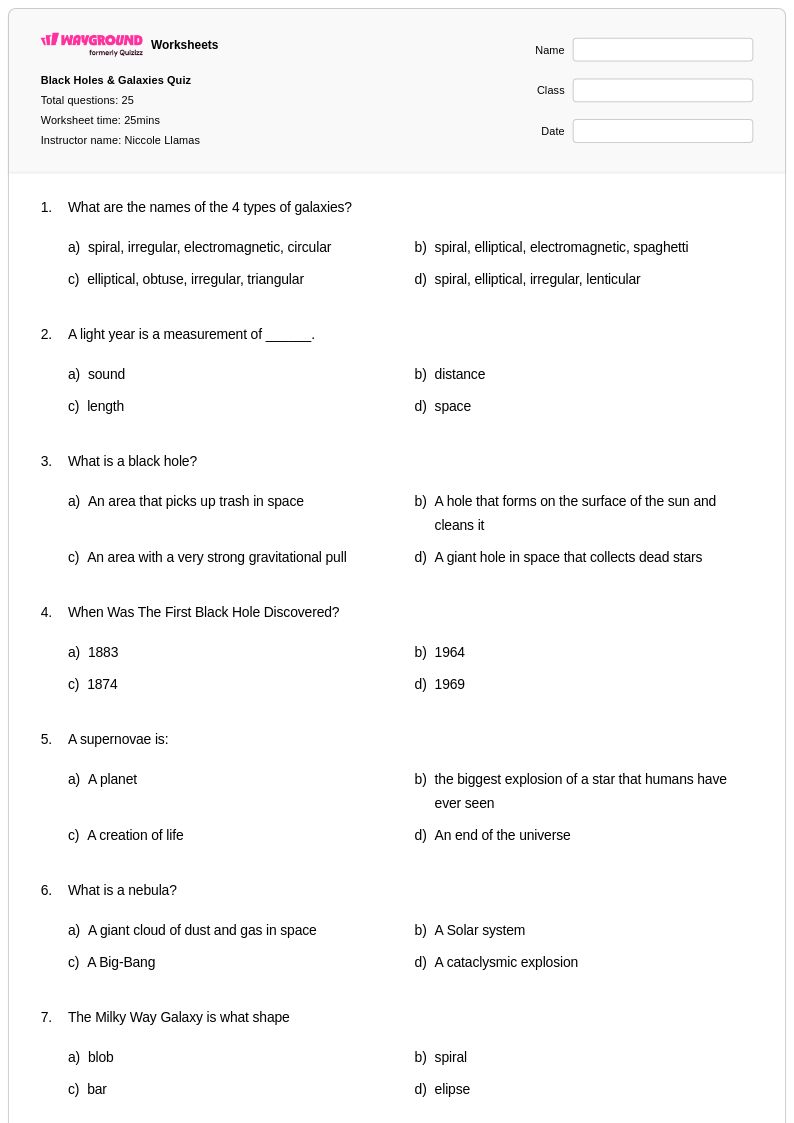
25 Q
8th - Uni
Explore Other Subject Worksheets for year 11
Explore printable Galaxy Types worksheets for Year 11
Galaxy types worksheets for Year 11 students available through Wayground (formerly Quizizz) provide comprehensive exploration of the fundamental classification systems astronomers use to categorize galaxies throughout the universe. These educational resources strengthen students' understanding of elliptical, spiral, and irregular galaxy classifications, including the detailed Hubble sequence that subdivides these major categories based on morphological characteristics such as spiral arm structure, central bulge prominence, and stellar population distributions. The worksheets incorporate practice problems that challenge students to identify galaxy types from observational data, analyze the relationship between galaxy structure and stellar formation rates, and examine how environmental factors influence galactic evolution. Each printable resource includes detailed answer keys that support independent learning and self-assessment, while the free pdf format ensures accessibility for diverse classroom environments and homework assignments.
Wayground's extensive collection of teacher-created galaxy types worksheets draws from millions of educational resources, offering robust search and filtering capabilities that align with astronomy and earth science curriculum standards. The platform's differentiation tools enable educators to customize worksheet difficulty levels, accommodating students with varying levels of prior knowledge in stellar astronomy and cosmology concepts. Teachers can seamlessly transition between printable pdf versions for traditional classroom use and digital formats for interactive learning experiences, supporting both in-person and remote instruction scenarios. These versatile resources facilitate targeted skill practice in astronomical observation techniques, support remediation for students struggling with spatial reasoning concepts, and provide enrichment opportunities for advanced learners ready to explore connections between galaxy morphology and cosmic evolution, ultimately streamlining lesson planning while ensuring comprehensive coverage of galactic classification principles.
FAQs
How do I teach galaxy types to students?
What exercises help students practice identifying galaxy types?
What mistakes do students commonly make when classifying galaxy types?
How can I use galaxy types worksheets to support students with different learning needs?
How do galaxy types fit into the Earth and Space Science curriculum?
What is the difference between spiral, elliptical, and irregular galaxies?