
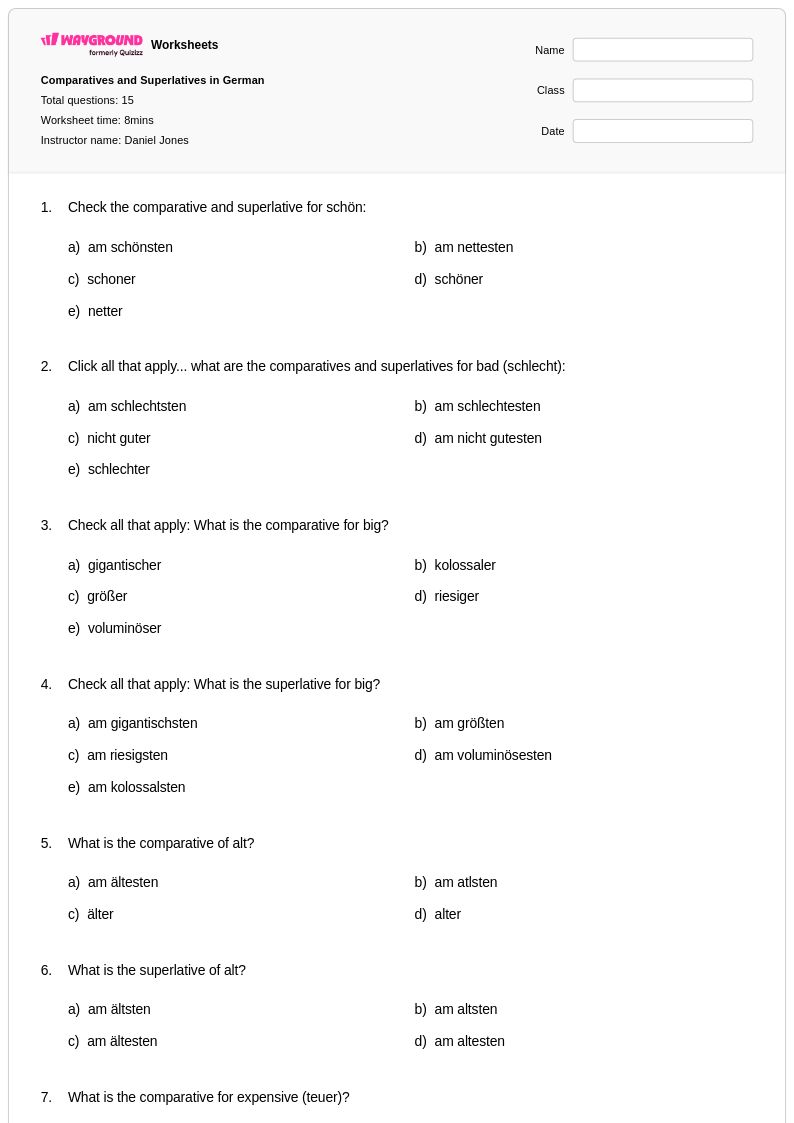
15 Q
9th - 12th
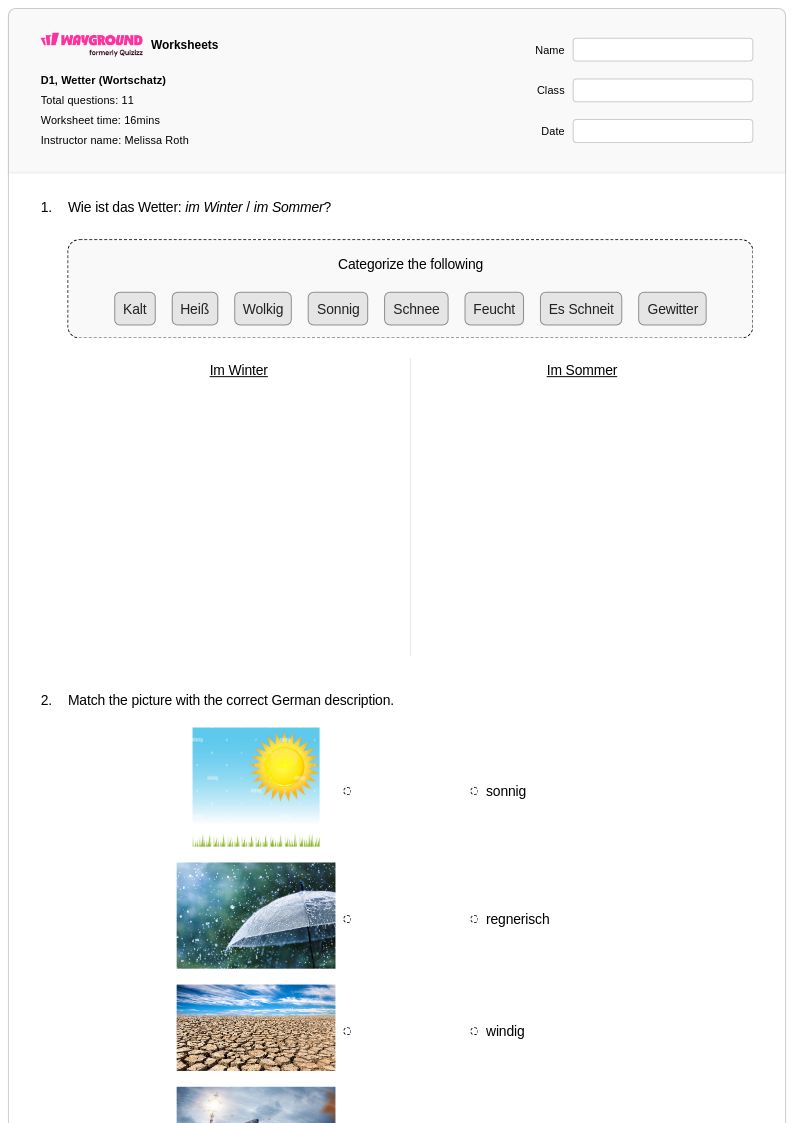
11 Q
9th - 12th
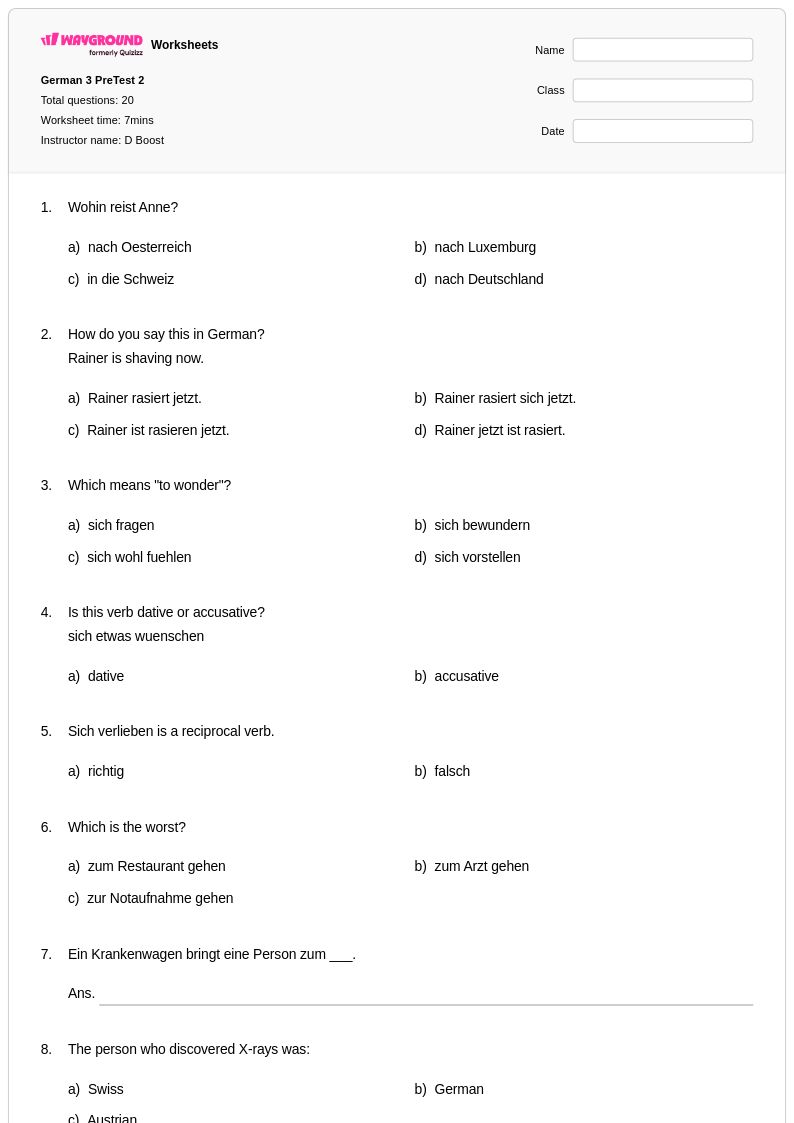
20 Q
9th - 12th
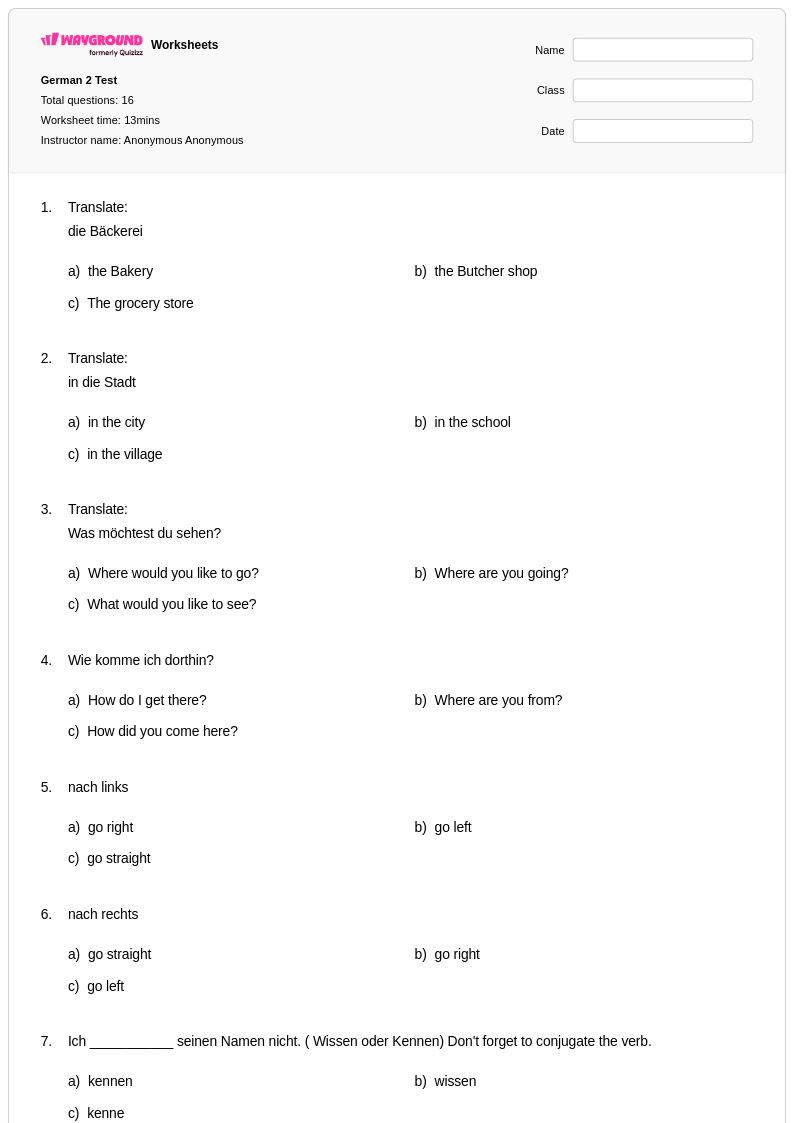
16 Q
9th - 12th
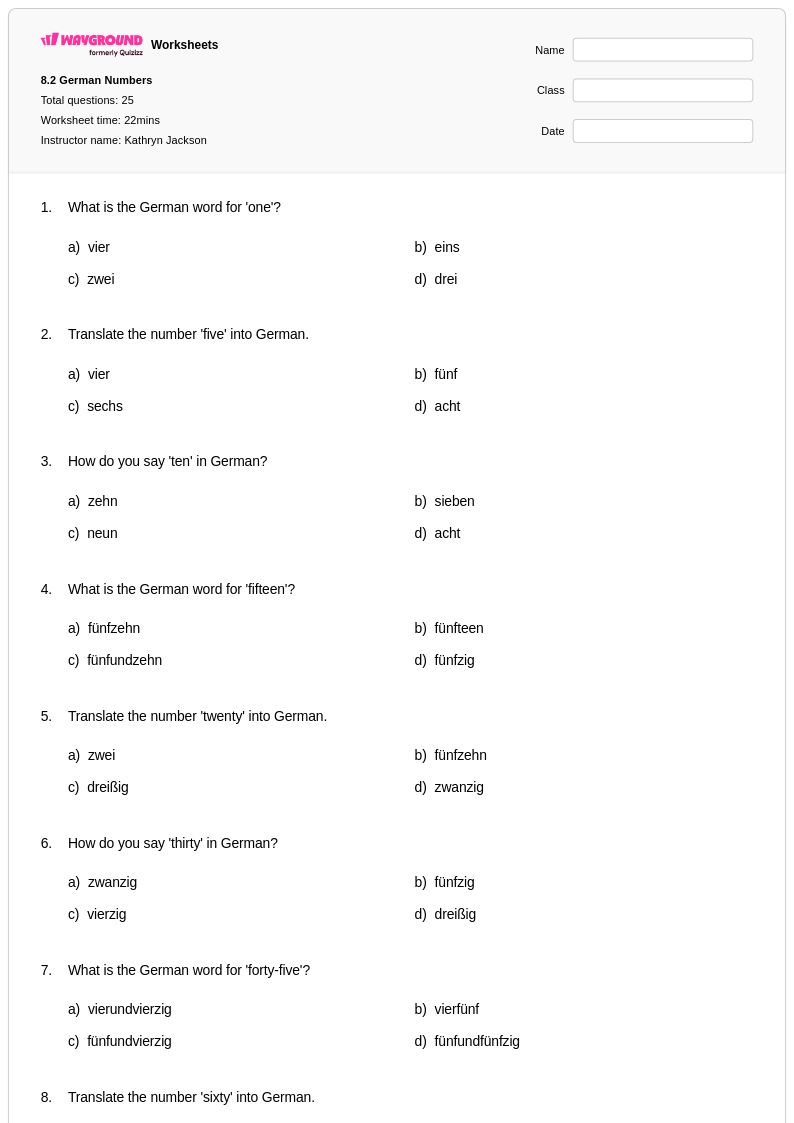
25 Q
9th - 12th
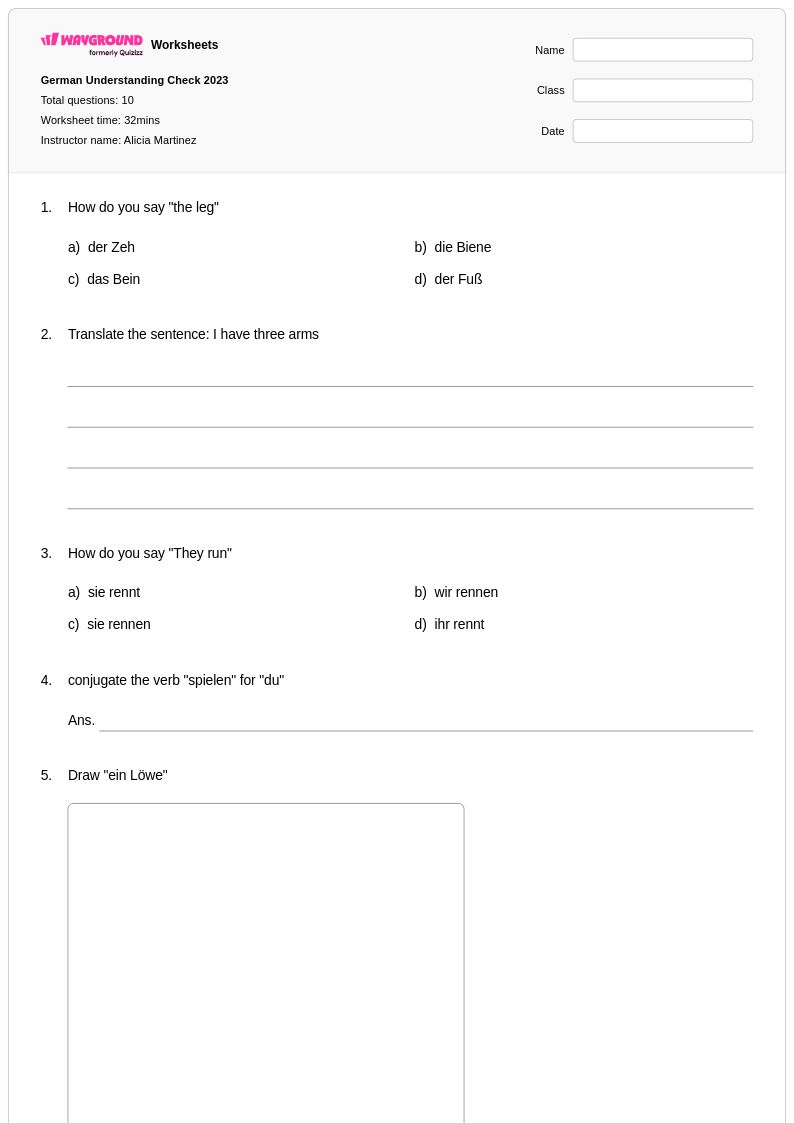
10 Q
9th - 12th
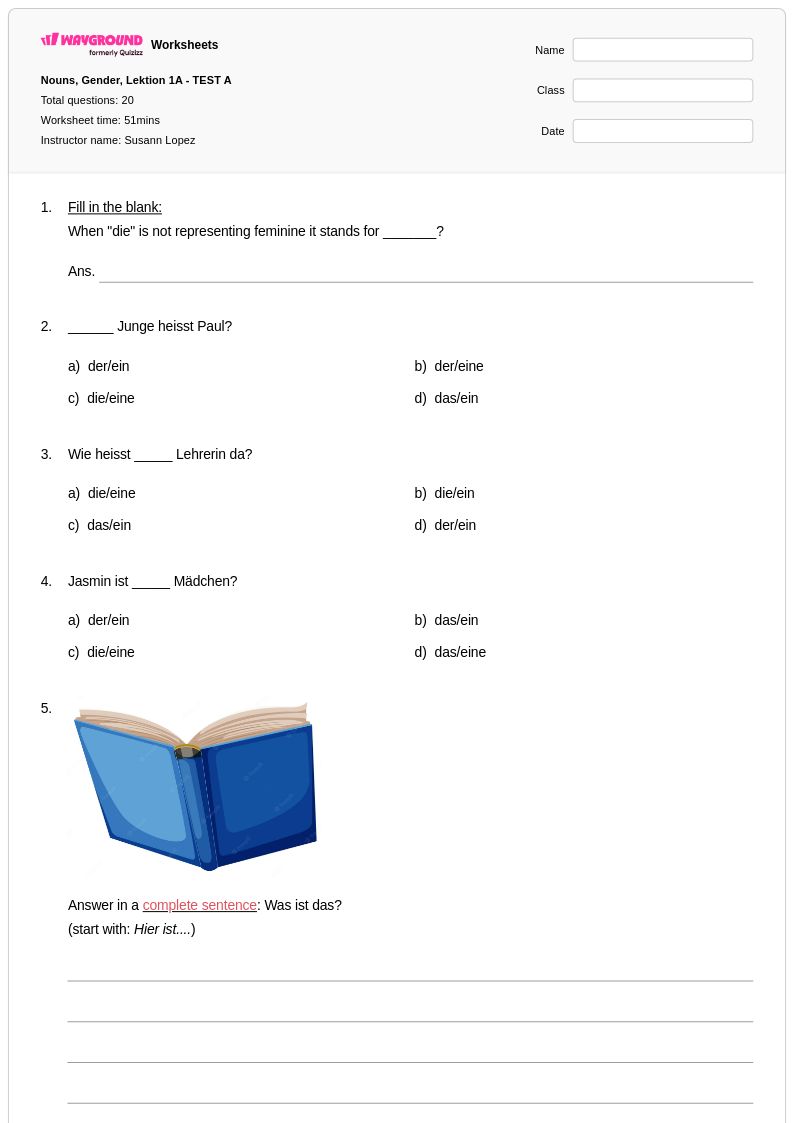
20 Q
9th - 12th
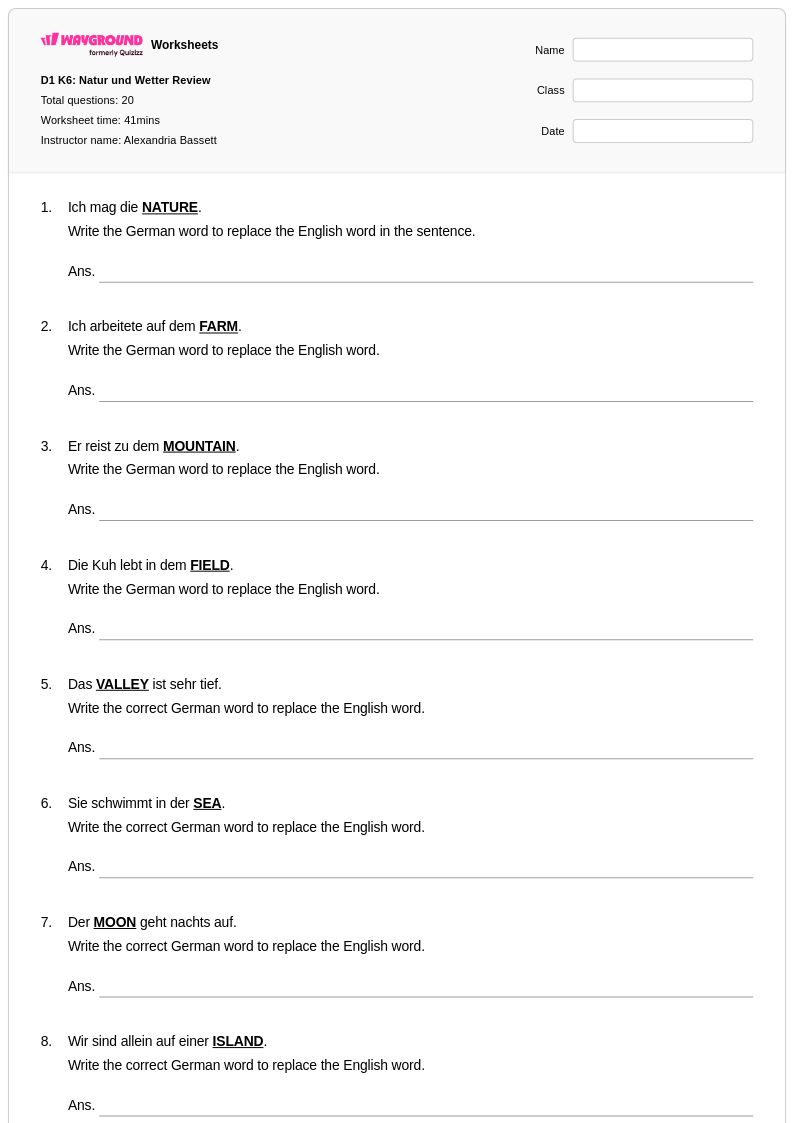
20 Q
9th - 12th
13 Q
9th - 12th
15 Q
KG - 12th
30 Q
9th - 12th
12 Q
7th - 12th
28 Q
6th - Uni
13 Q
11th
15 Q
9th - 12th
14 Q
9th - 12th
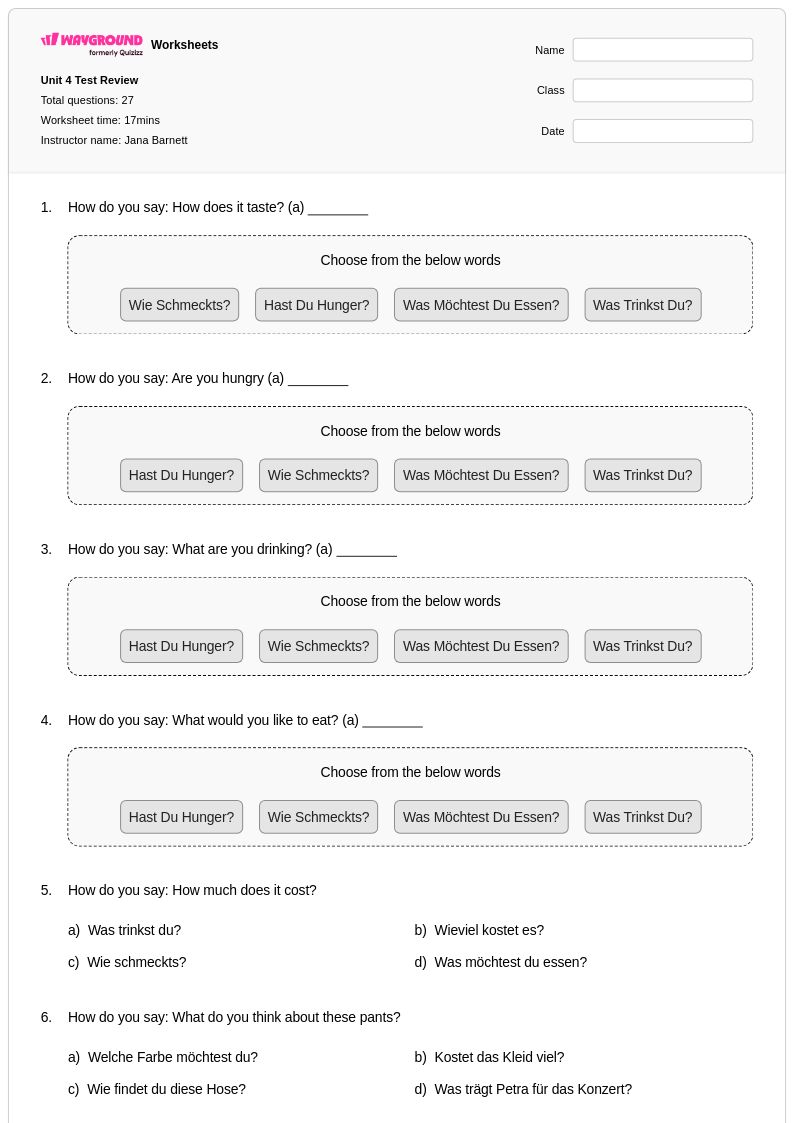
27 Q
9th - 12th
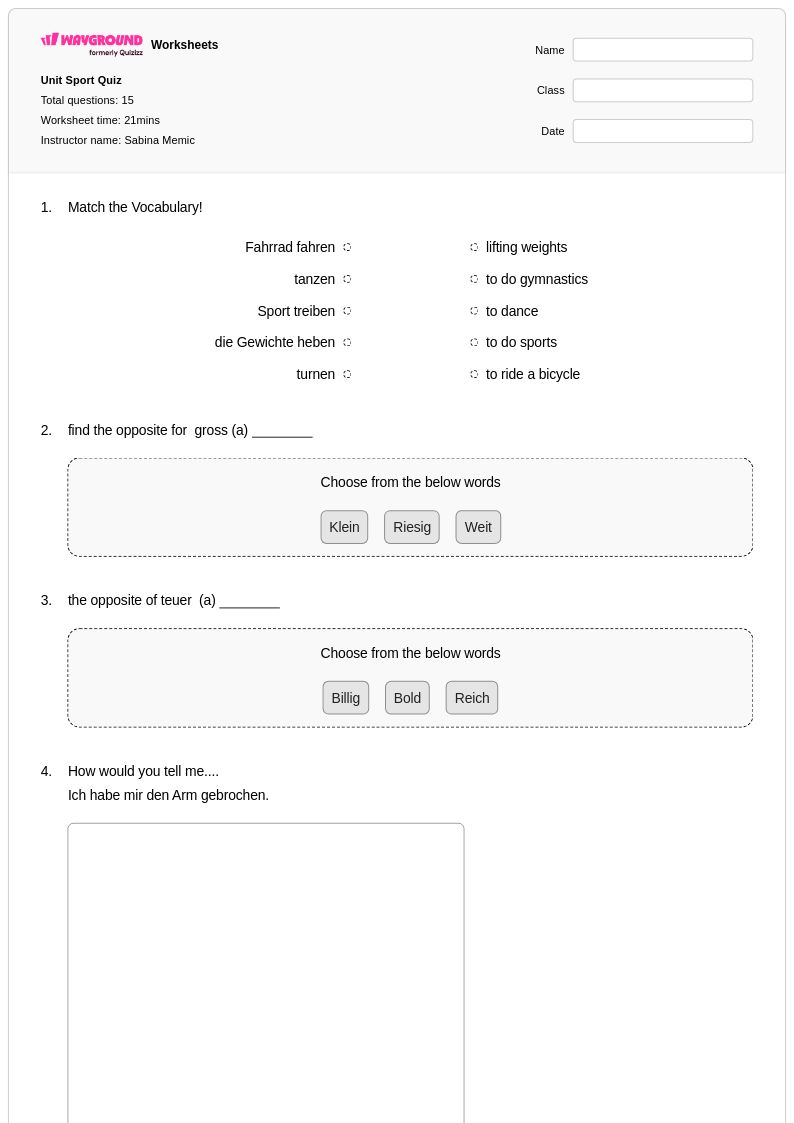
15 Q
9th - 12th
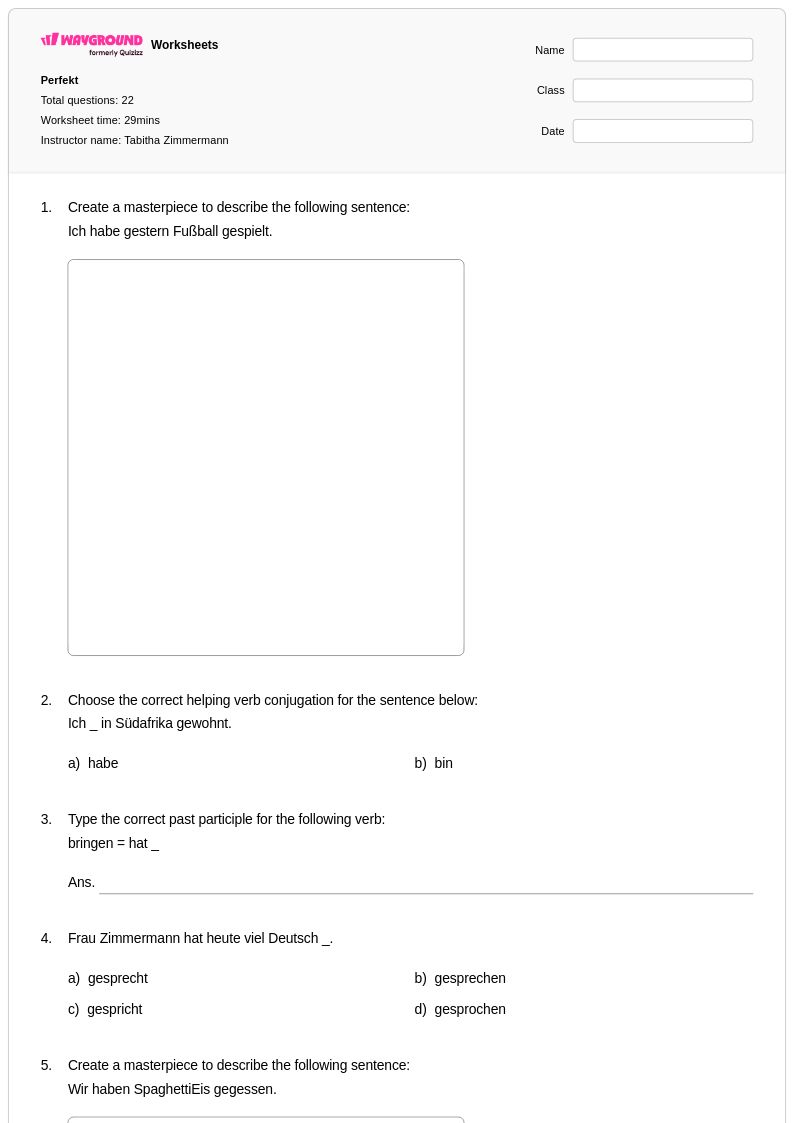
22 Q
9th - 12th
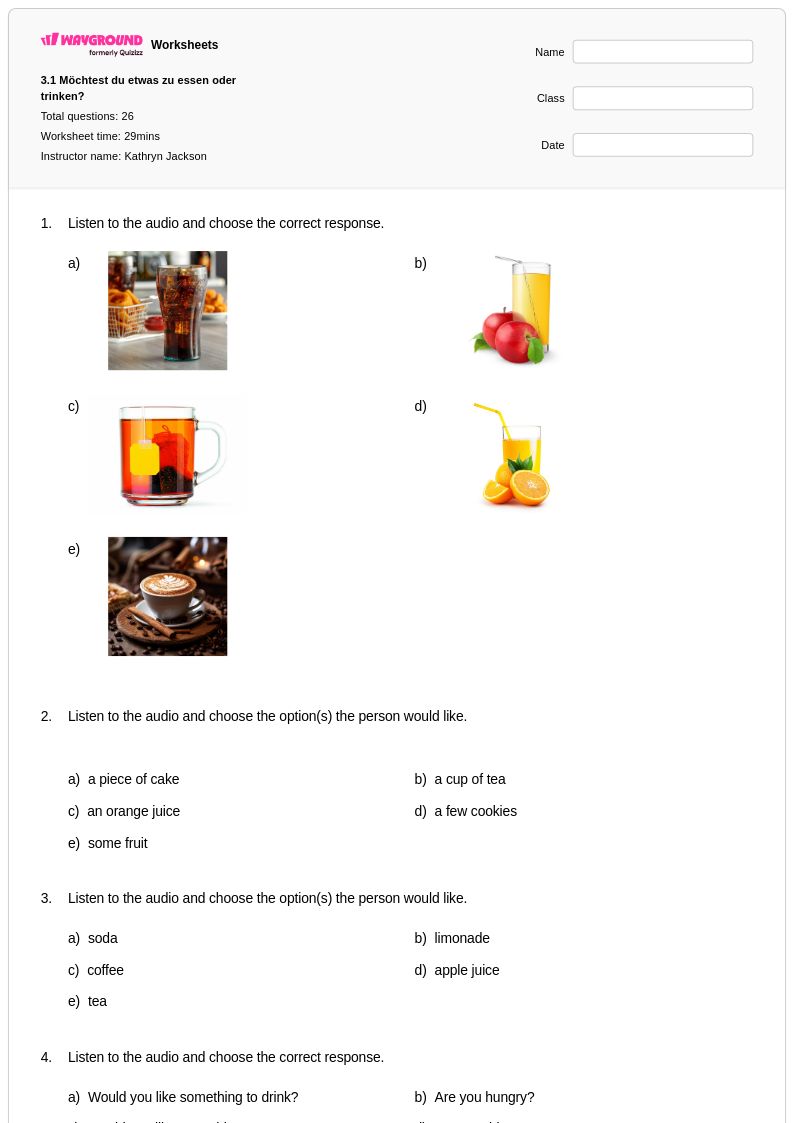
26 Q
9th - 12th
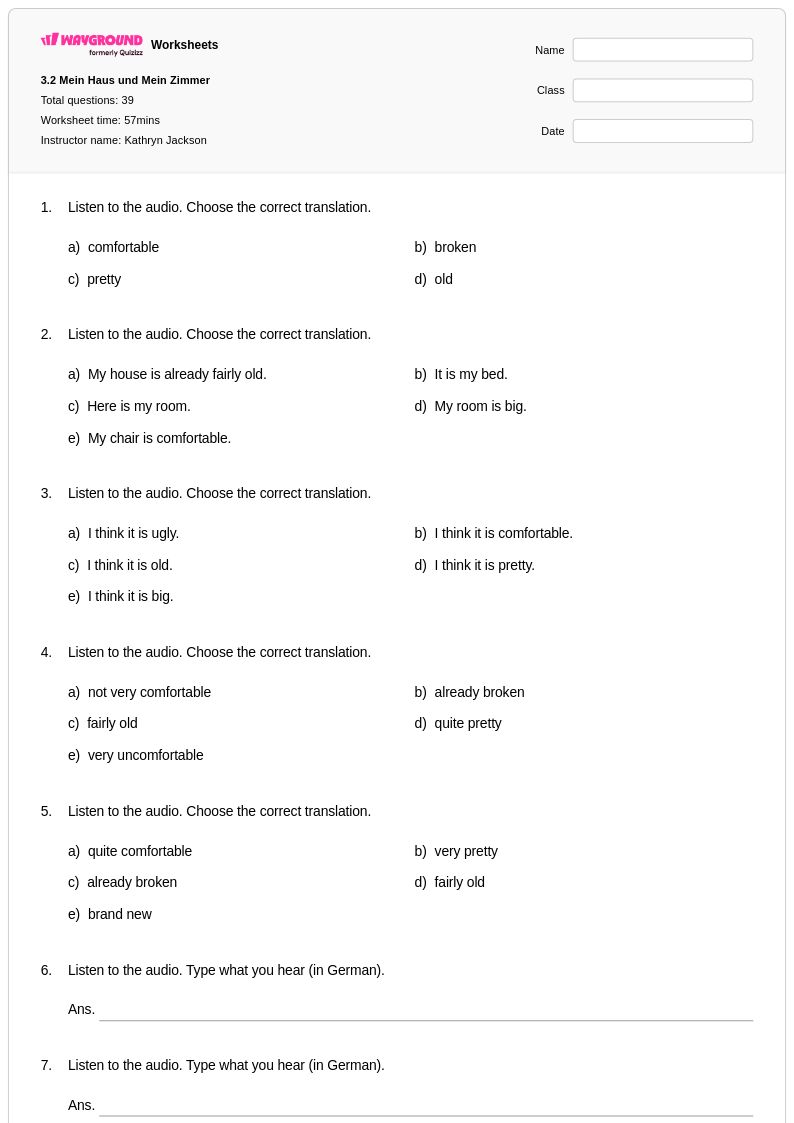
51 Q
9th - 12th
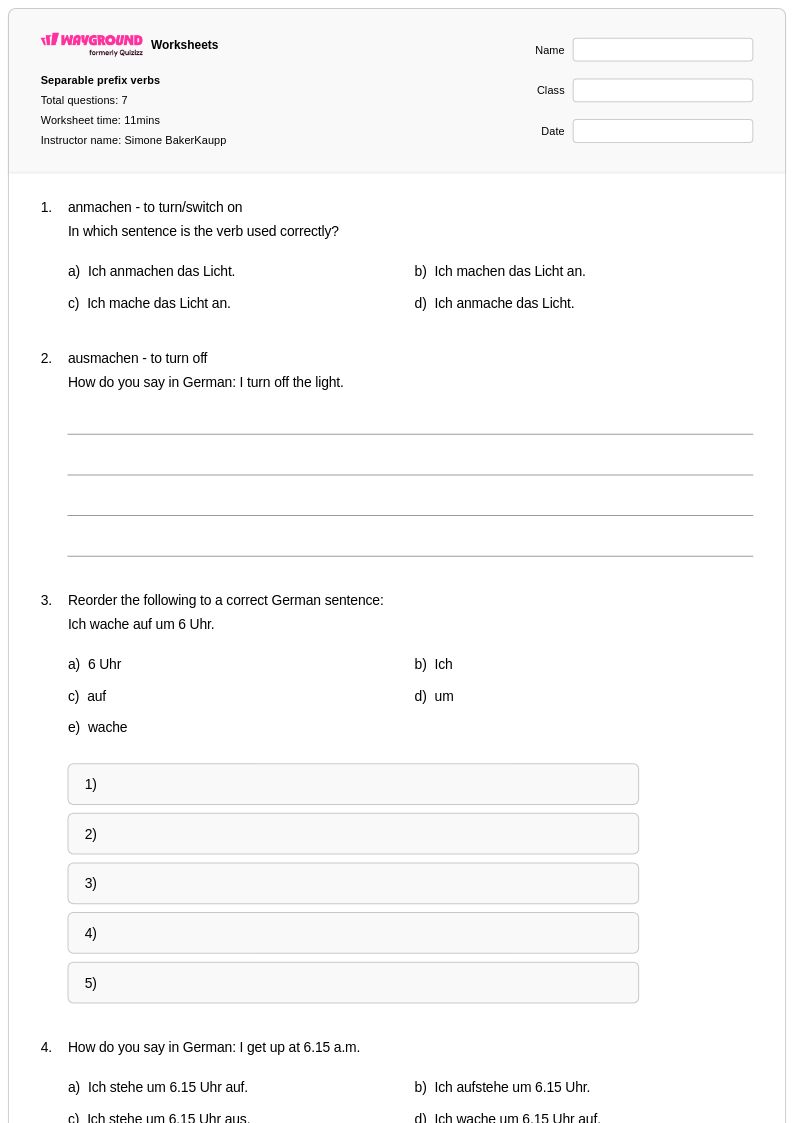
7 Q
9th - 12th
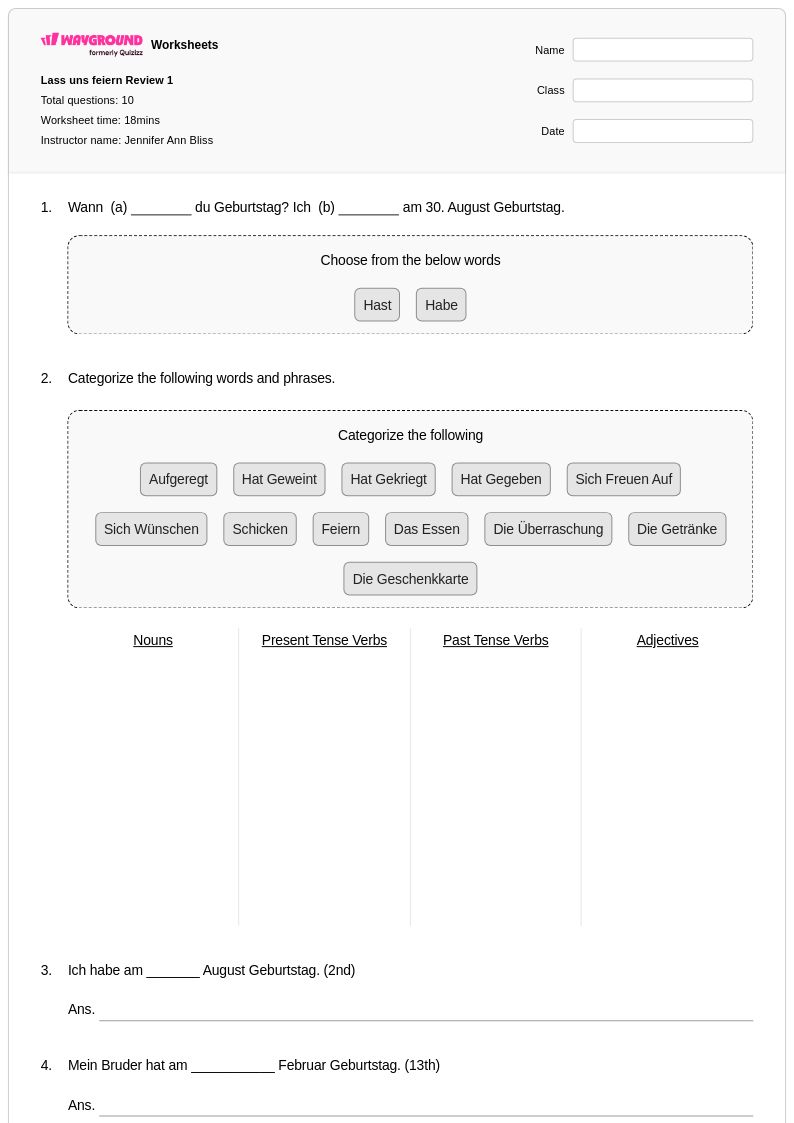
10 Q
9th - 12th
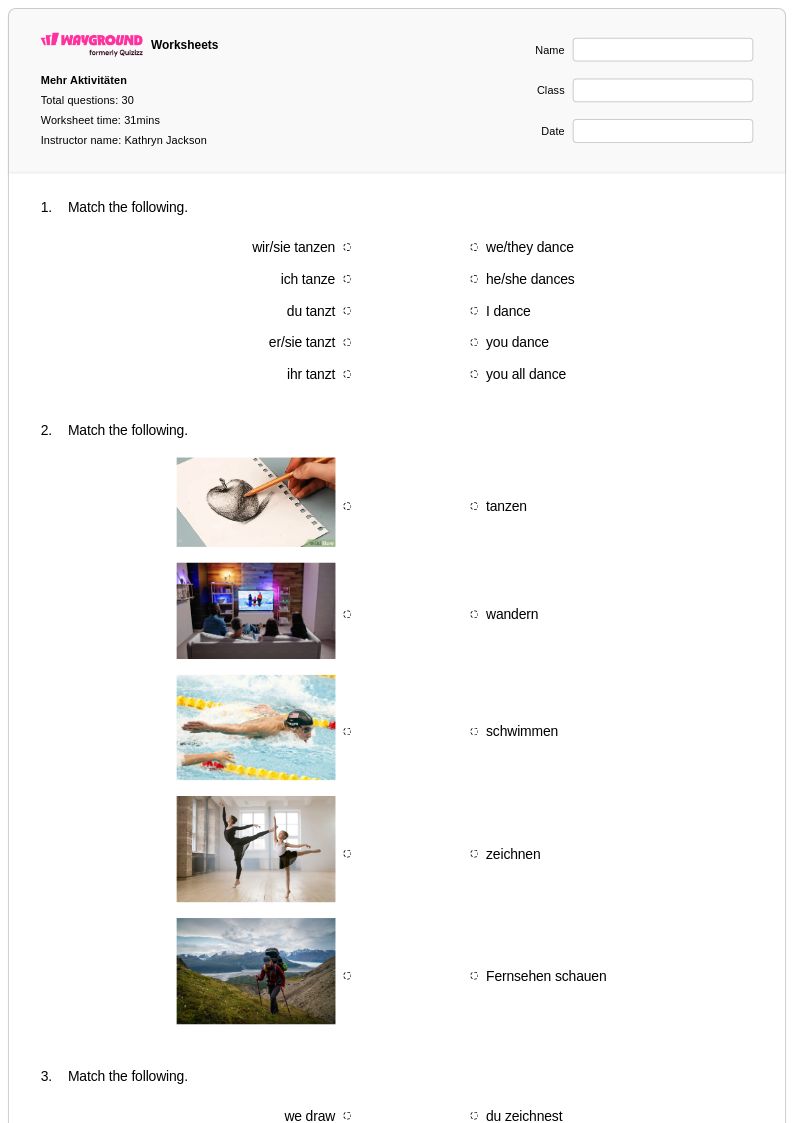
30 Q
9th - 12th
Explore German Worksheets by Grades
Explore Other Subject Worksheets for year 11
Explore printable German worksheets for Year 11
Year 11 German worksheets available through Wayground (formerly Quizizz) provide comprehensive language learning opportunities that target advanced grammatical structures, complex vocabulary acquisition, and sophisticated communication skills essential for upper-level proficiency. These expertly designed resources strengthen students' mastery of subjunctive mood constructions, advanced syntax patterns, idiomatic expressions, and cultural competency through authentic reading passages and real-world scenarios. The collection includes practice problems covering conditional statements, reported speech, advanced verb conjugations, and nuanced vocabulary usage, with each worksheet featuring detailed answer keys that facilitate both independent study and guided instruction. Teachers can access these high-quality printables in convenient pdf format, allowing for seamless integration into classroom activities, homework assignments, and assessment preparation while supporting diverse learning styles and pacing needs.
Wayground's extensive repository of teacher-created German resources empowers educators with millions of professionally developed materials that can be easily located through robust search and filtering capabilities designed specifically for language instruction needs. The platform's standards alignment ensures that Year 11 German worksheets correspond to national and state proficiency benchmarks, while sophisticated differentiation tools allow teachers to modify content complexity, vocabulary levels, and task requirements to accommodate varying student abilities within the same classroom. These customizable resources are available in both printable and digital formats, including downloadable pdf versions, enabling flexible implementation for traditional classroom instruction, hybrid learning environments, or remote education settings. This comprehensive support system streamlines lesson planning while providing targeted materials for remediation of specific grammar concepts, enrichment activities for advanced learners, and systematic skill practice that builds toward authentic German communication proficiency.
FAQs
How do I teach German grammar to beginners?
What exercises help students practice German vocabulary?
What mistakes do students commonly make when learning German?
How can I differentiate German instruction for students at different proficiency levels?
How do I use Wayground's German worksheets in my classroom?
How do I help students improve German pronunciation?