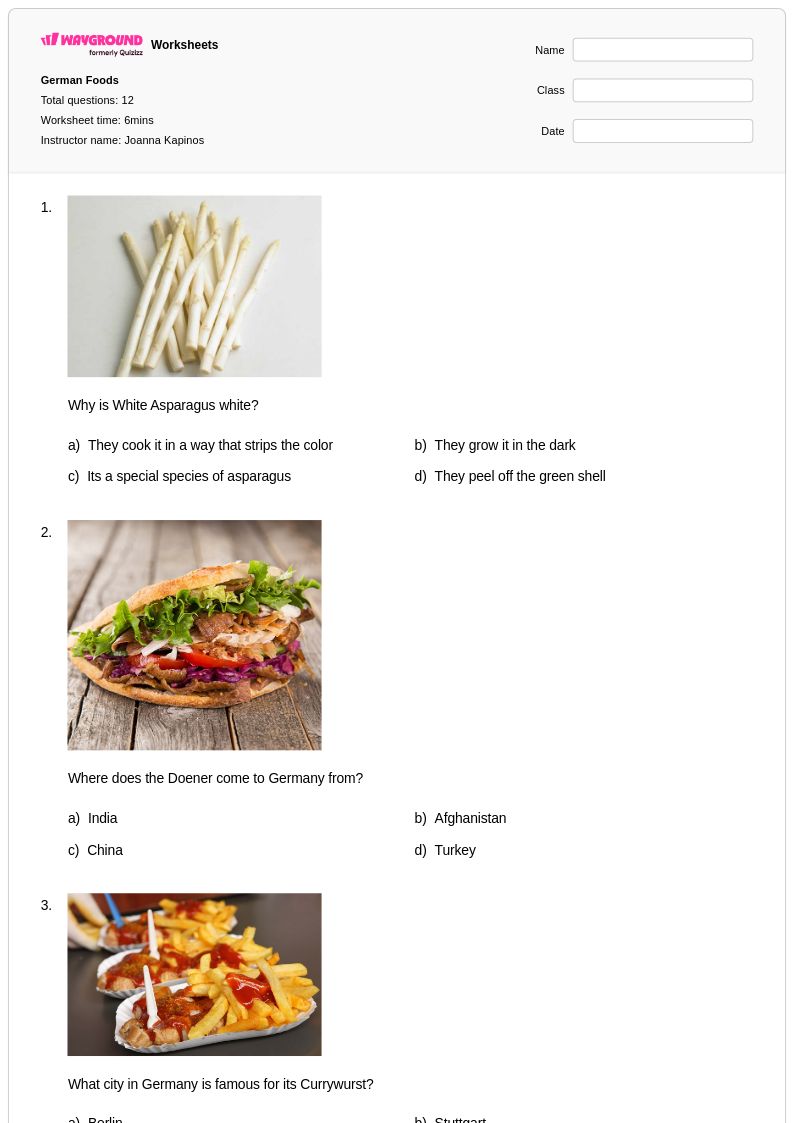
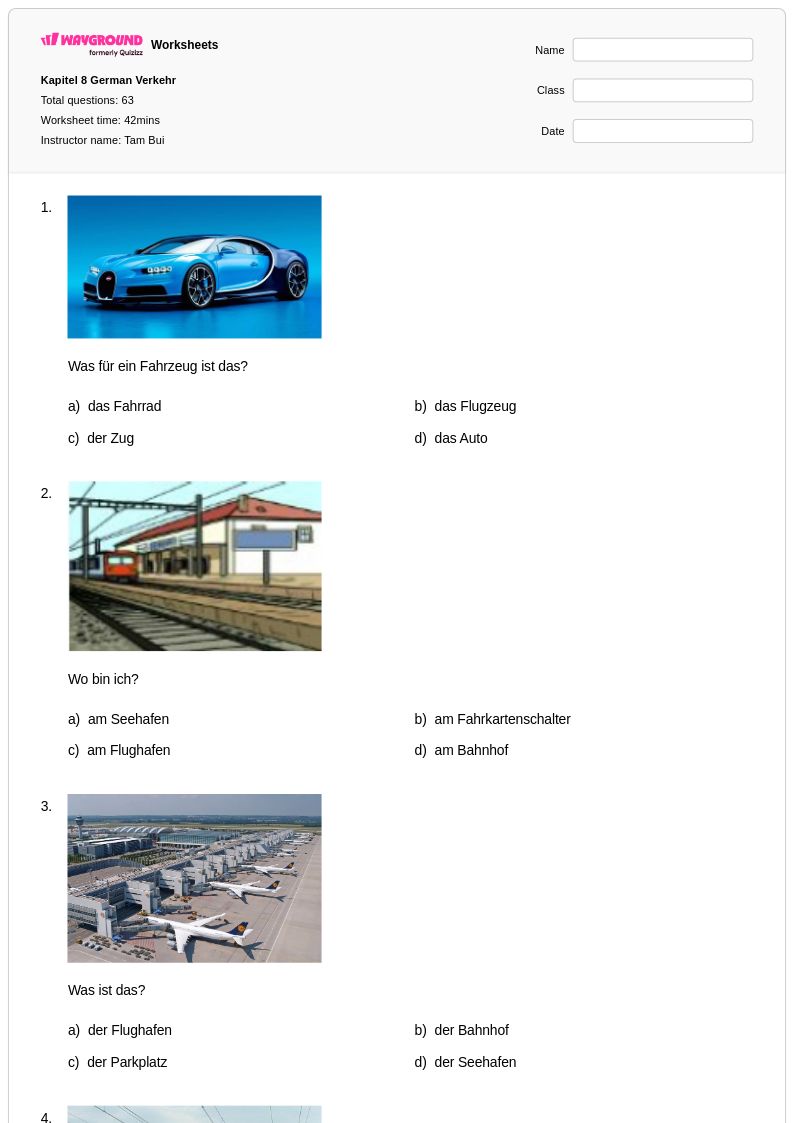
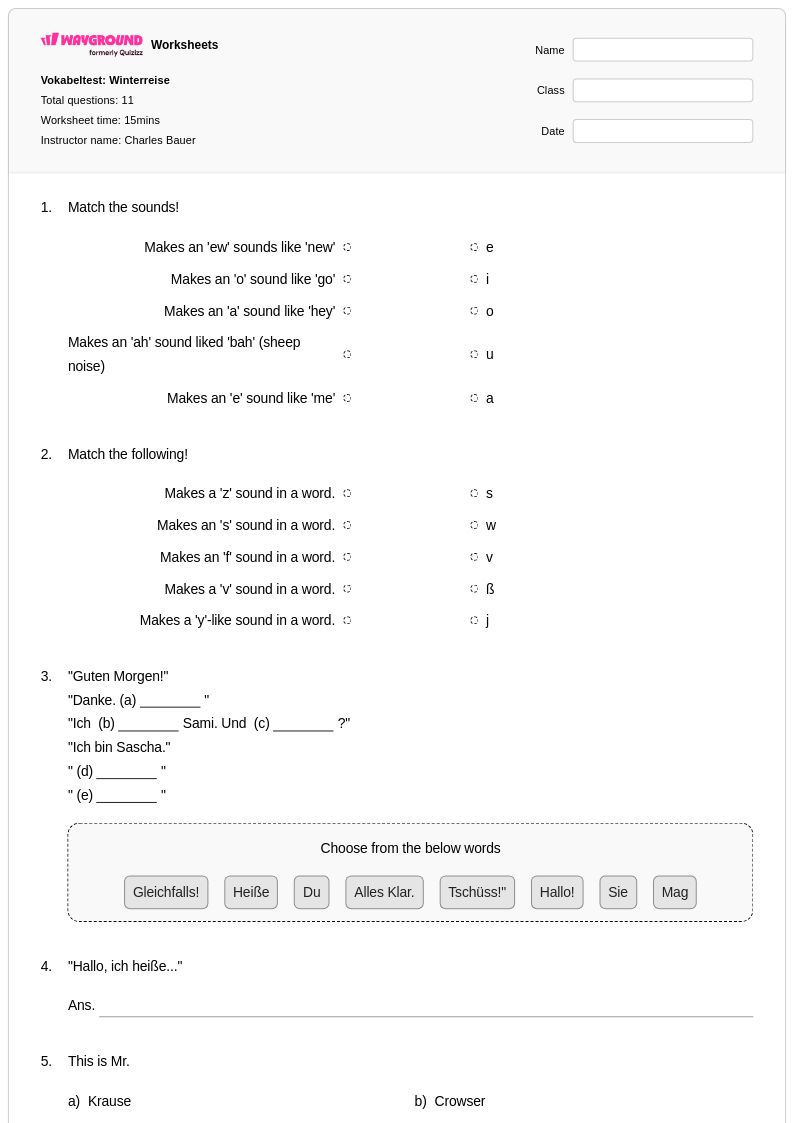
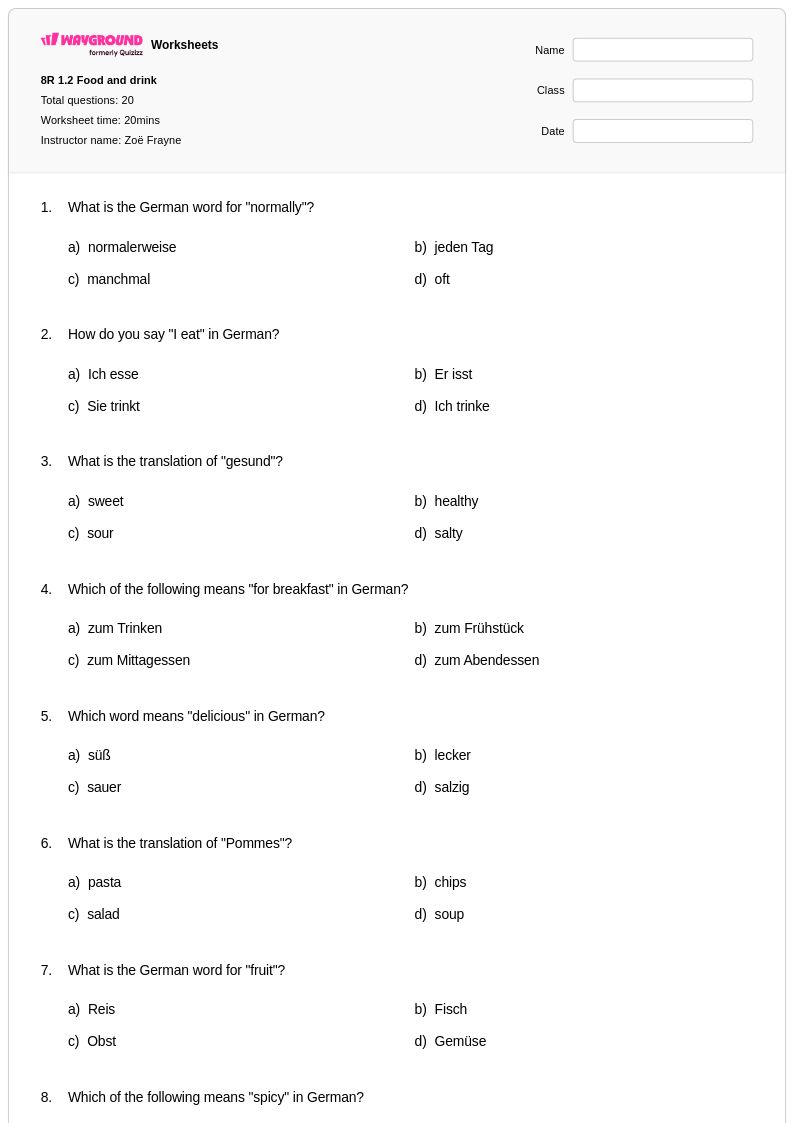
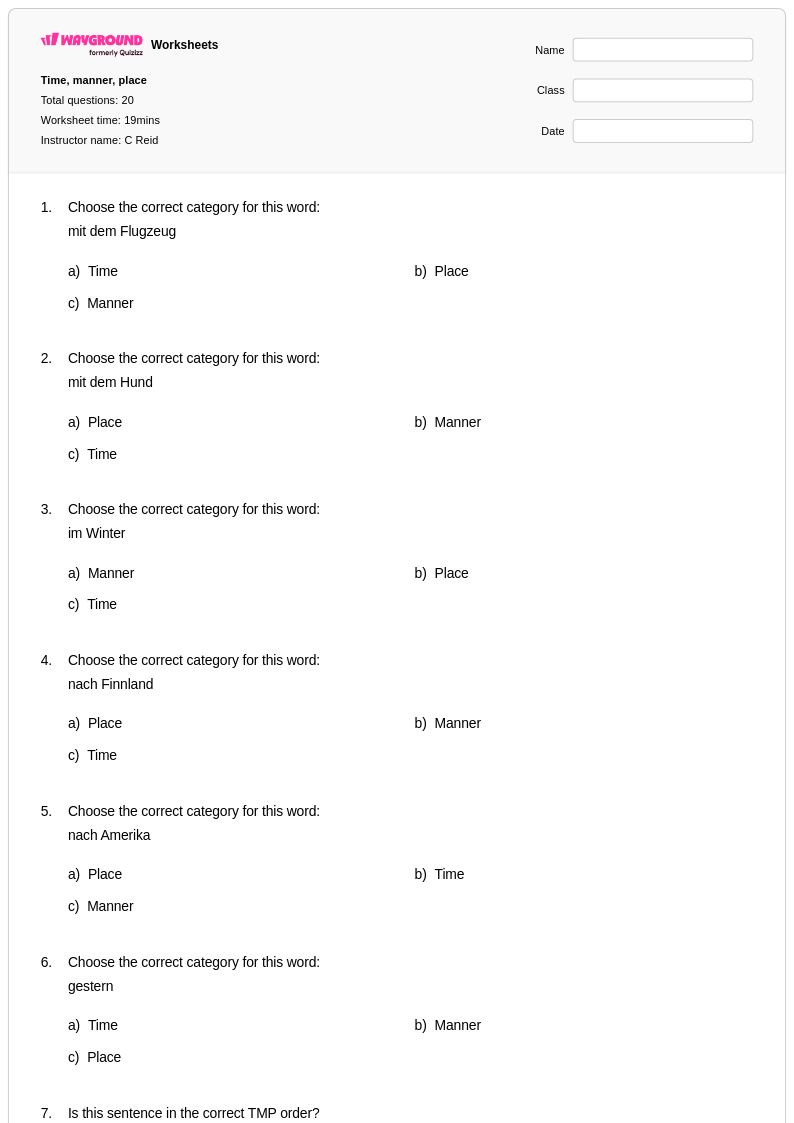
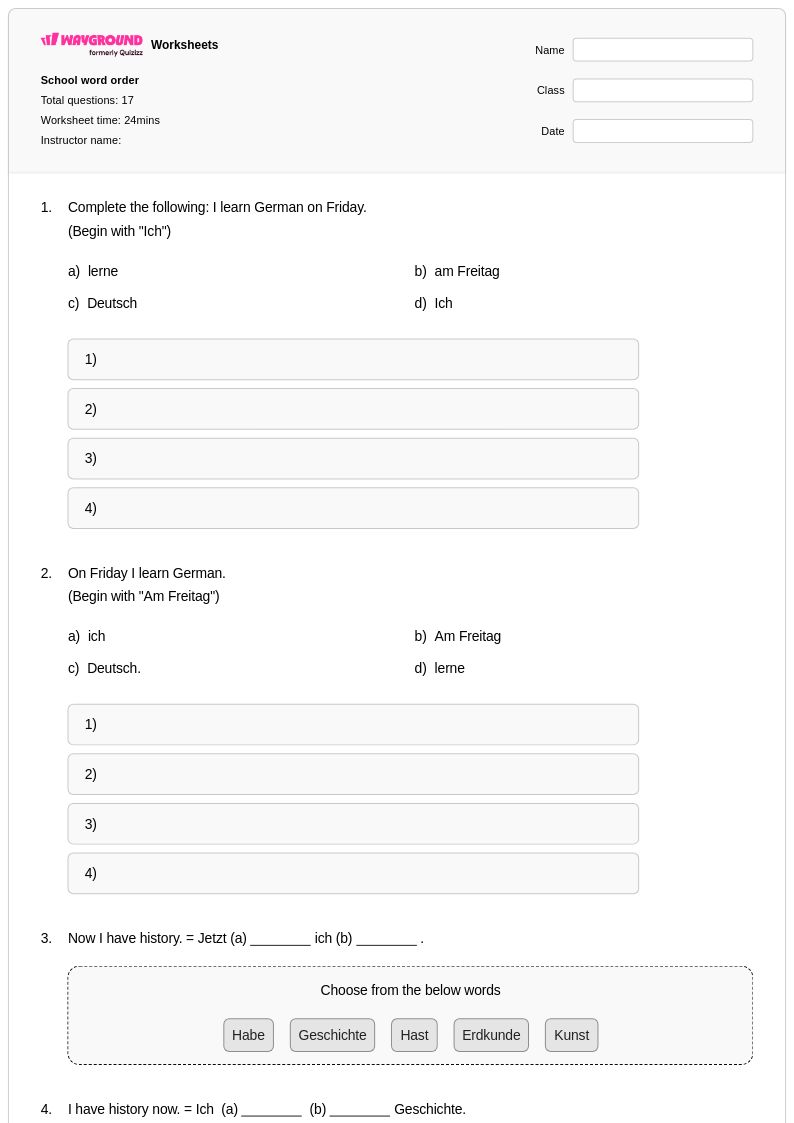
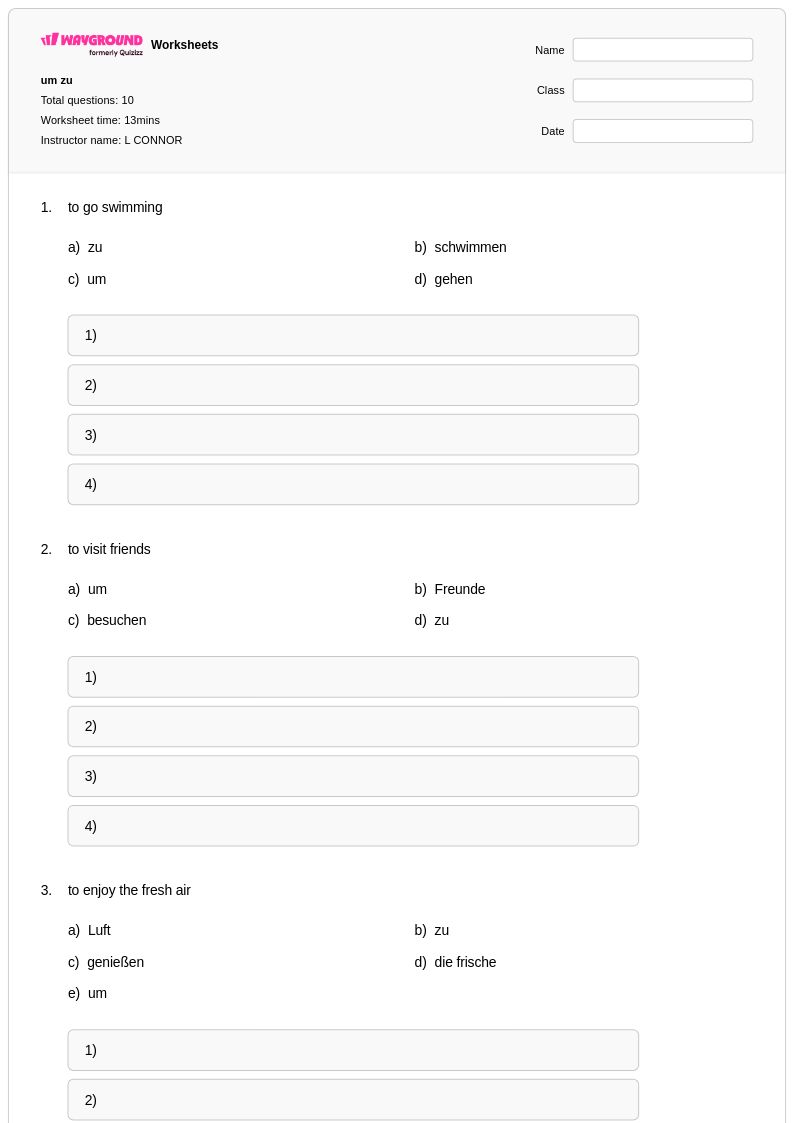
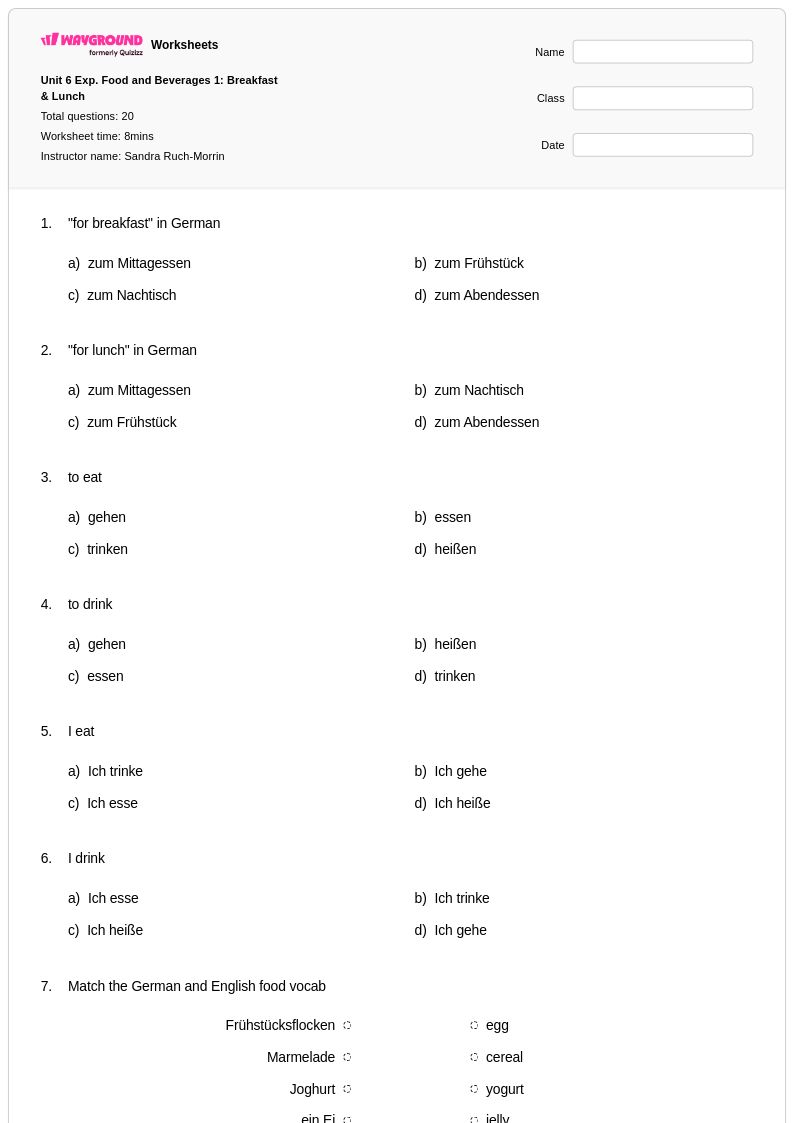
Year 7 German worksheets and printables from Wayground help students practice essential vocabulary, grammar, and conversational skills through engaging free PDF exercises with comprehensive answer keys.
German language worksheets for Year 7 students available through Wayground (formerly Quizizz) provide comprehensive practice materials designed to strengthen fundamental language acquisition skills during this critical intermediate learning phase. These educational resources focus on essential German concepts including vocabulary building, basic grammar structures, verb conjugations, sentence construction, and introductory conversation patterns that seventh-grade students need to develop proficiency in their second language studies. The worksheets feature carefully structured practice problems that progress from simple recognition exercises to more complex application tasks, with accompanying answer keys that enable both independent study and teacher-guided instruction. Teachers can access these materials as free printables in convenient PDF format, making them ideal for classroom distribution, homework assignments, or supplemental practice sessions.
Wayground (formerly Quizizz) empowers educators with an extensive collection of millions of teacher-created German language resources specifically curated for middle school instruction, featuring robust search and filtering capabilities that allow teachers to quickly locate materials aligned with curriculum standards and individual student needs. The platform's differentiation tools enable instructors to customize worksheet difficulty levels and content focus areas, ensuring appropriate challenge levels for diverse learners while supporting both remediation for struggling students and enrichment opportunities for advanced language learners. These versatile resources are available in both printable and digital formats, including downloadable PDFs, giving teachers the flexibility to seamlessly integrate German practice materials into their lesson planning whether for in-class activities, remote learning assignments, or targeted skill practice sessions that reinforce specific language concepts and accelerate student progress in German proficiency.
FAQs
How do I teach German grammar to beginners?
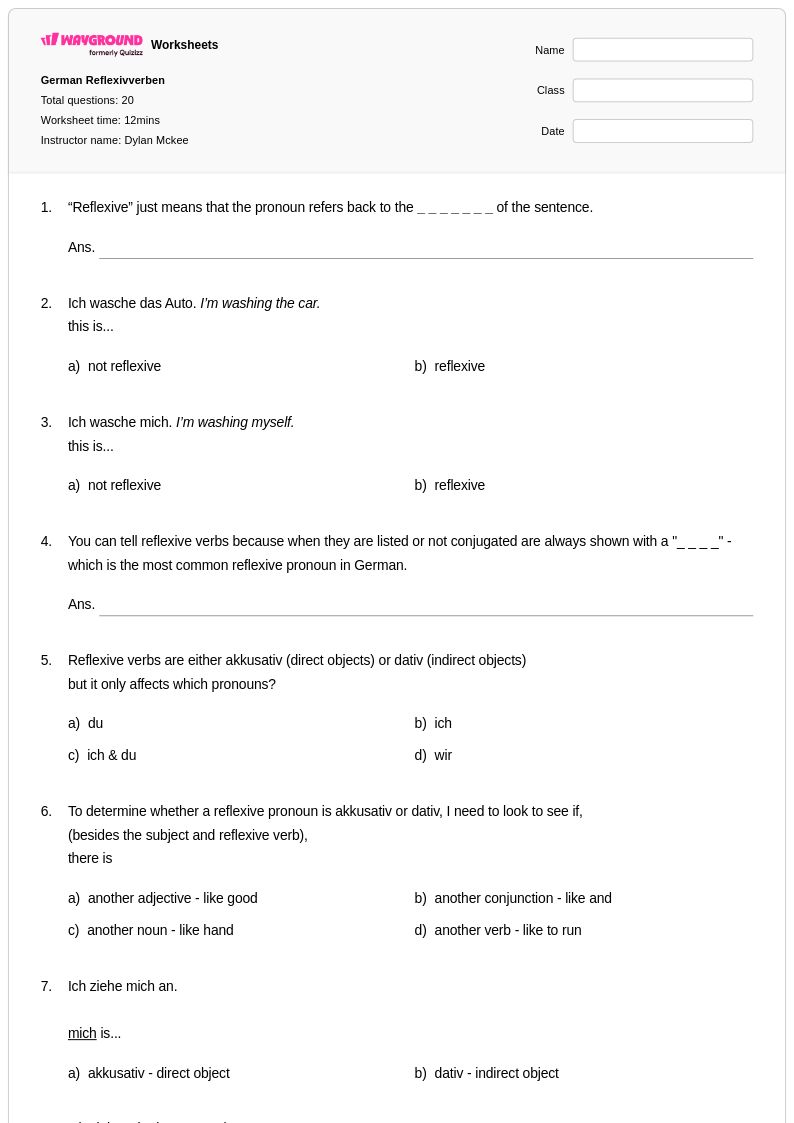
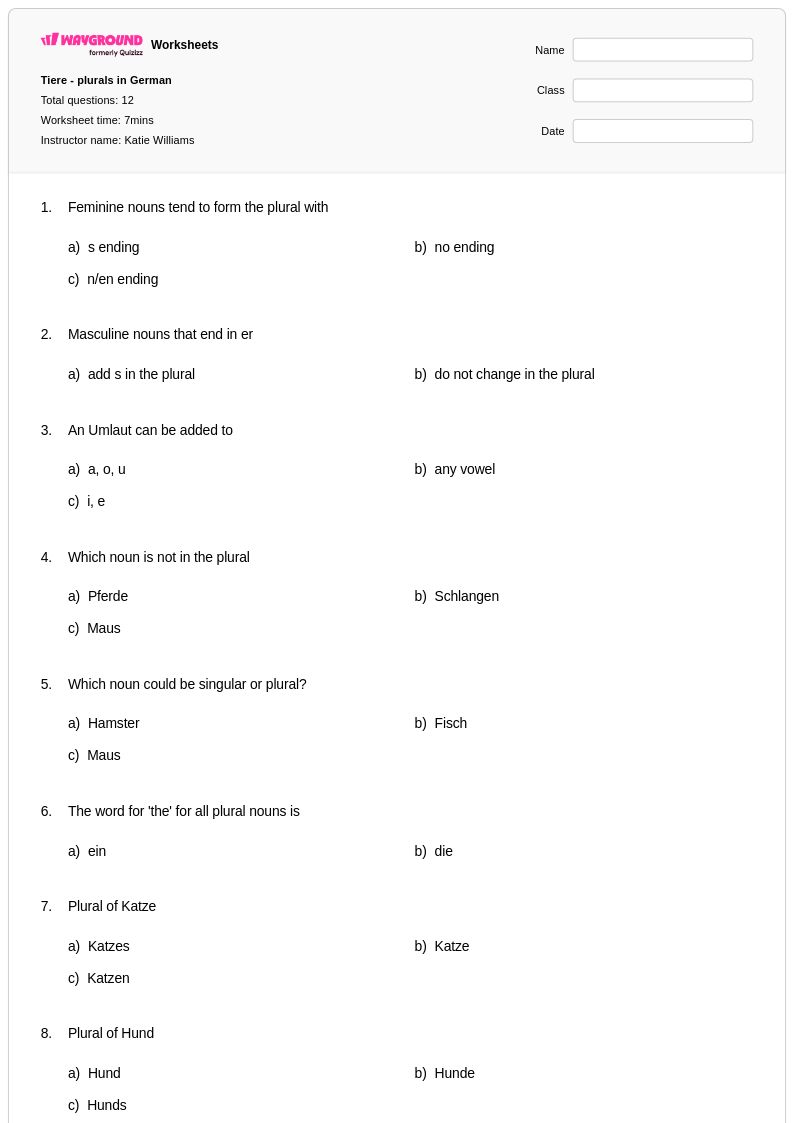
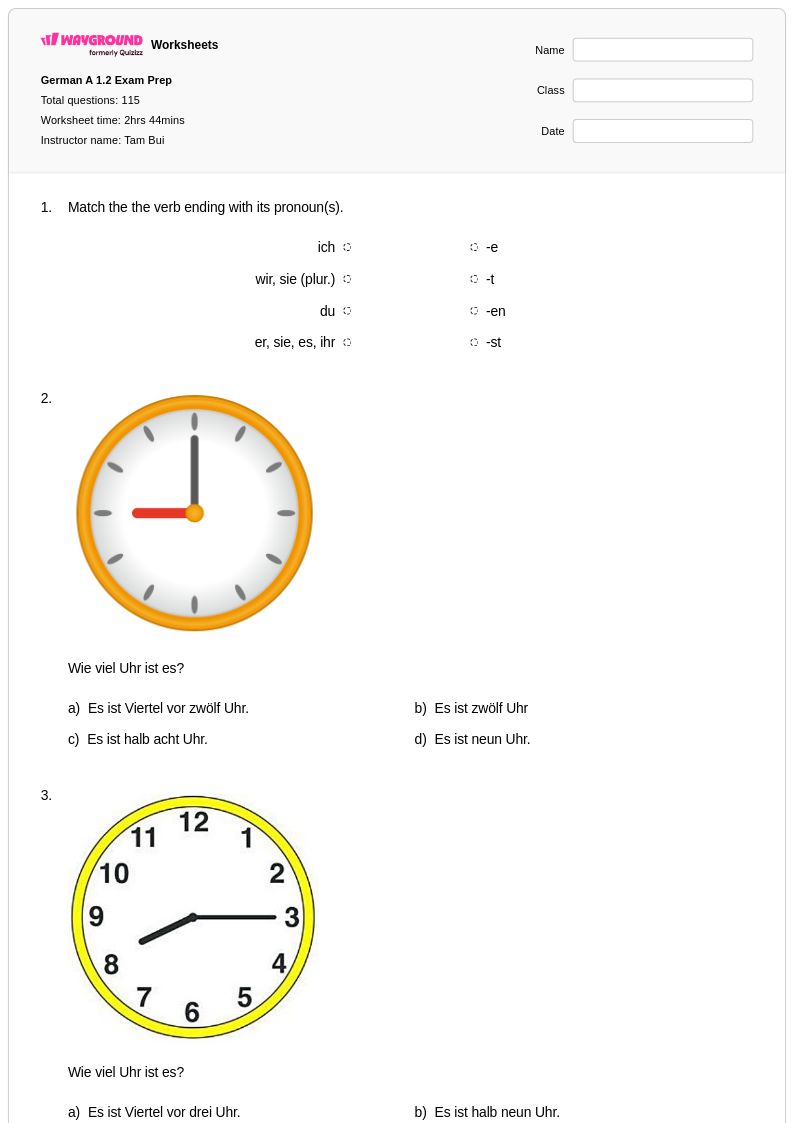
Start with high-frequency vocabulary and simple sentence structures before introducing German's case system (nominative, accusative, dative, genitive). Focus on noun gender early, since der, die, and das affect adjective endings and pronoun agreement throughout the language. Repetitive, structured practice with noun declensions and verb conjugations builds the pattern recognition students need before tackling more complex grammar rules.
What exercises help students practice German vocabulary?
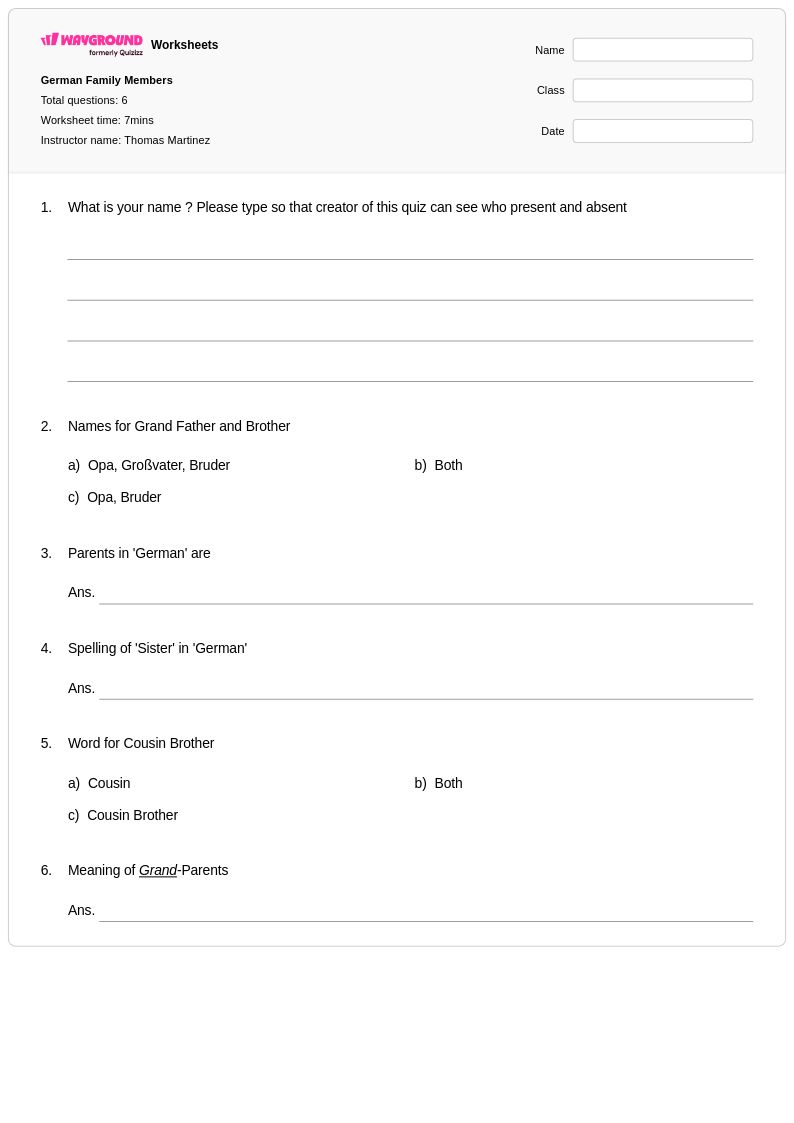
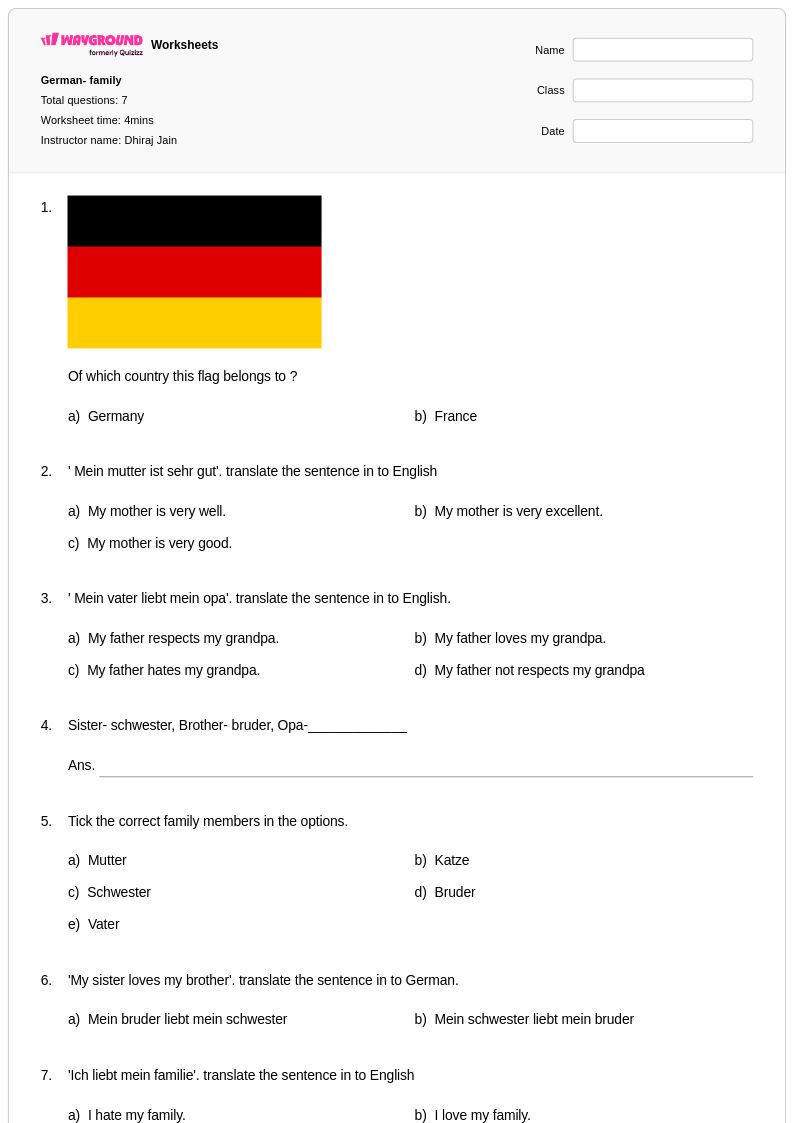
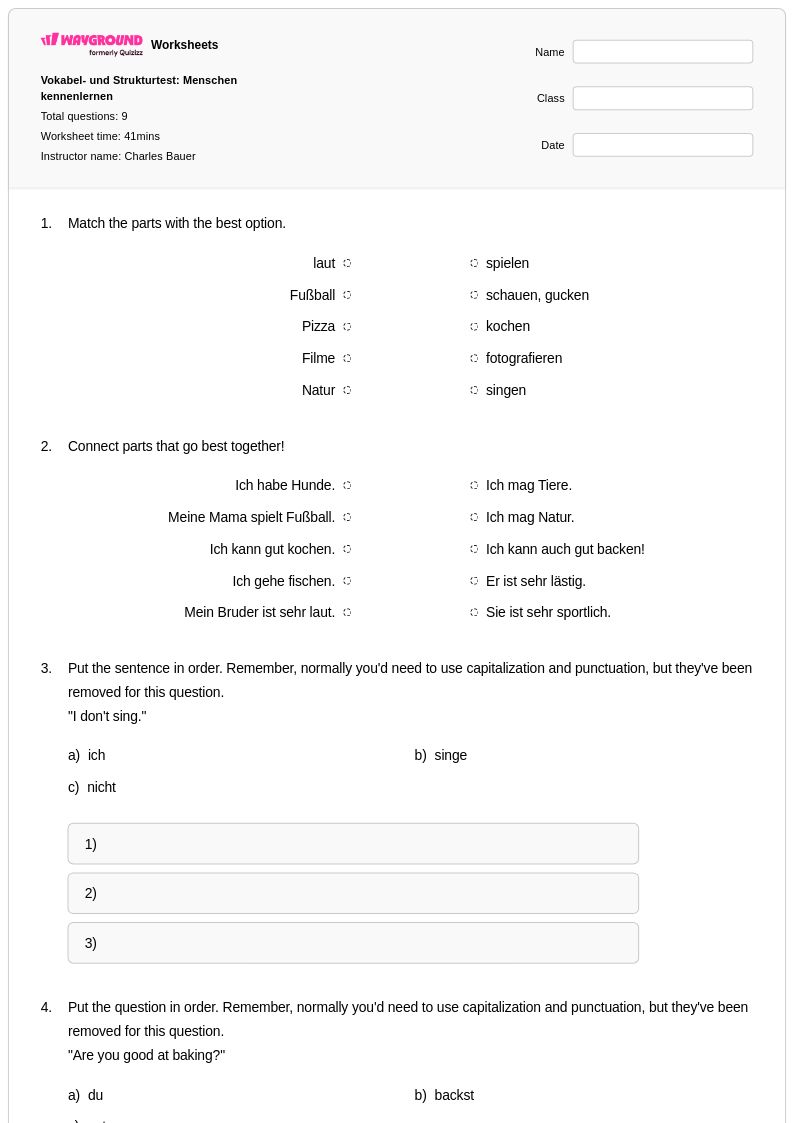
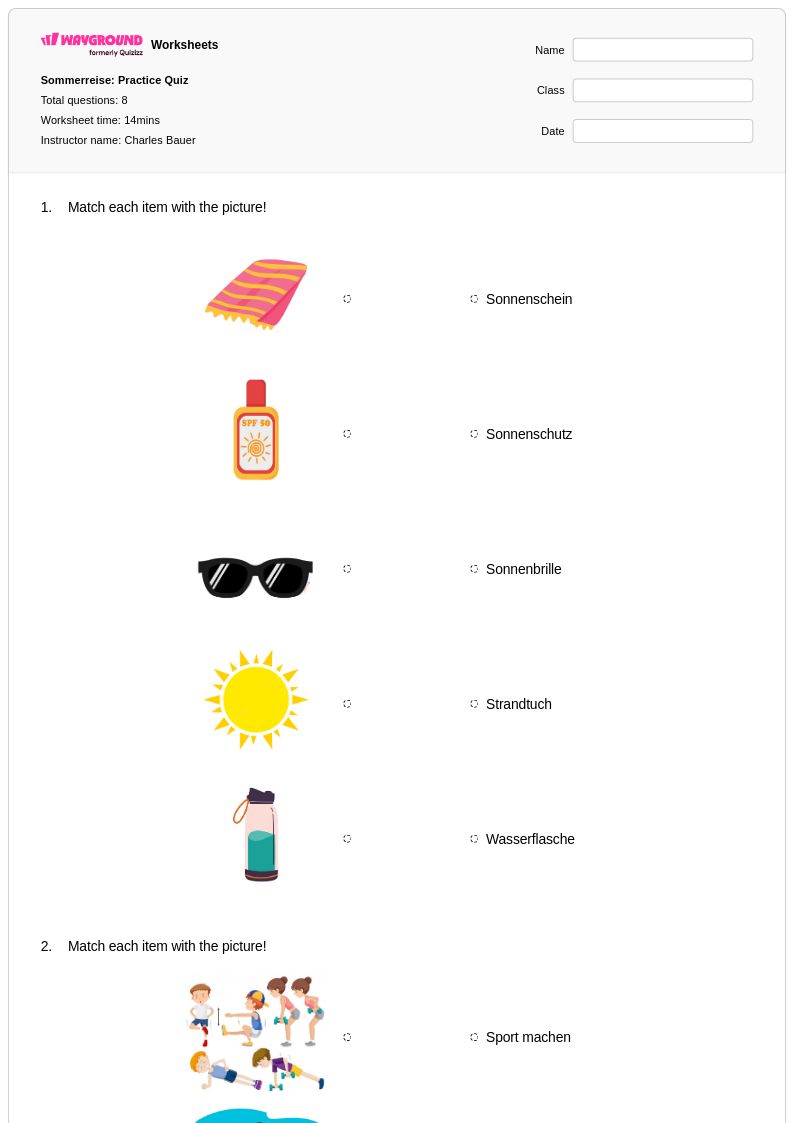
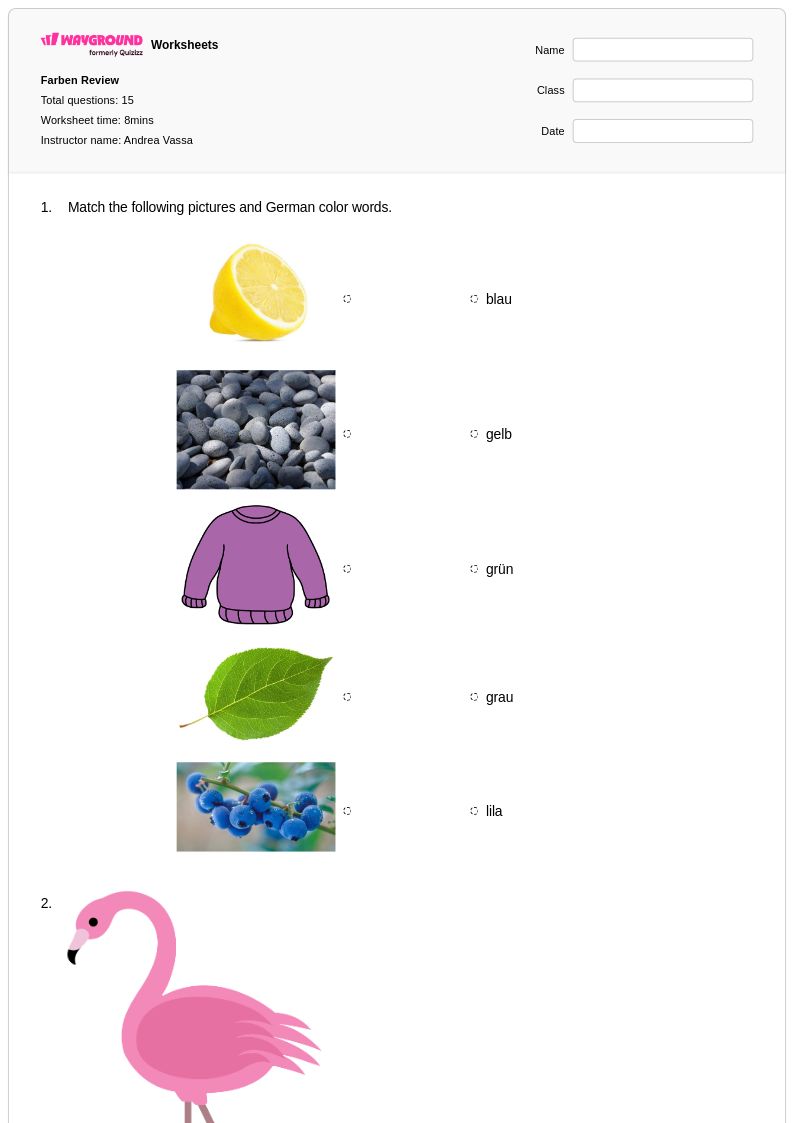
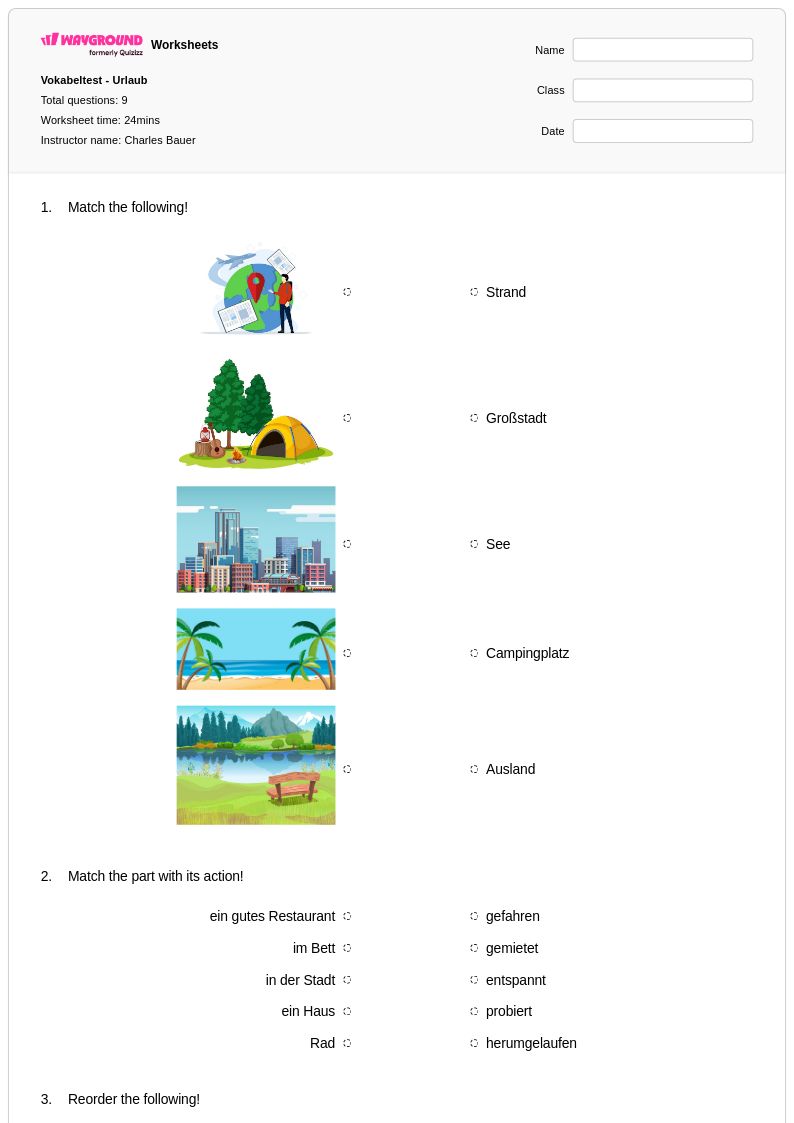
Matching exercises, fill-in-the-blank sentences, and translation tasks are highly effective for building German vocabulary because they require students to retrieve and apply words in context rather than passively recognize them. Thematic groupings, such as household items, food, or school vocabulary, help students organize new words into meaningful categories. Pairing vocabulary practice with conversational phrases reinforces real-world application and improves retention.
What mistakes do students commonly make when learning German?
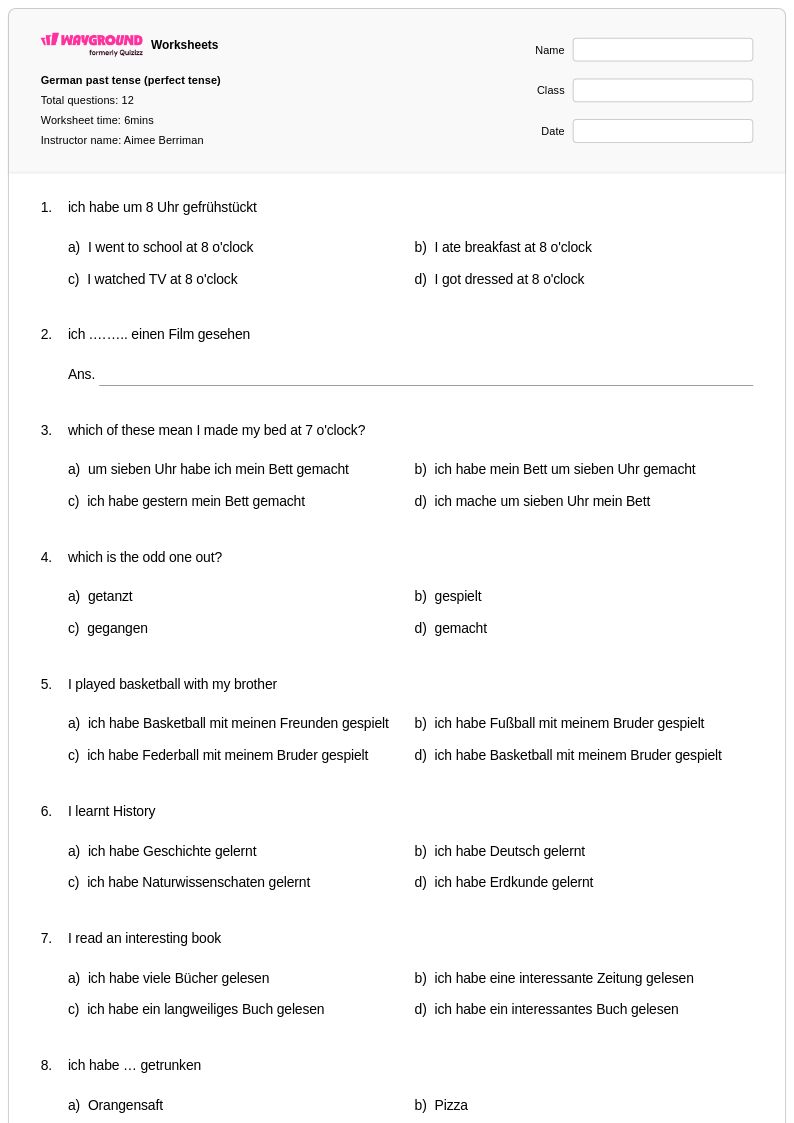
The most common errors involve noun gender, verb conjugation, and word order, particularly the verb-second rule in main clauses and verb-final placement in subordinate clauses. Students frequently apply English word order to German sentences, which leads to grammatically incorrect constructions. Misassigning grammatical gender to nouns is also persistent, which is why learning der, die, or das alongside each new noun from the start is critical.
How can I differentiate German instruction for students at different proficiency levels?
Use tiered tasks that adjust complexity without changing the core topic, for example, beginners label vocabulary in images while intermediate students write full sentences and advanced students compose short paragraphs. On Wayground, teachers can apply individual student accommodations such as reduced answer choices to lower cognitive load for struggling learners, or enable Read Aloud to support students who need audio support for German pronunciation. These accommodations are saved per student and apply automatically in future sessions without disrupting the rest of the class.
How do I use Wayground's German worksheets in my classroom?
Wayground's German worksheets are available as printable PDFs for traditional classroom use and in digital formats for technology-integrated environments, giving teachers flexibility depending on their setup. You can also host any worksheet as a quiz directly on Wayground, which allows for real-time student responses and built-in answer key grading. Each worksheet includes complete answer keys, making them practical for independent practice, homework, or in-class review.
How do I help students improve German pronunciation?
German pronunciation is rule-governed, which means consistent phonics instruction pays off quickly. Focus early on sounds that don't exist in English, such as the umlaut vowels (ä, ö, ü) and the ch phoneme, which varies depending on surrounding vowels. Pairing pronunciation practice with written exercises helps students connect spelling patterns to sounds, reinforcing both reading and speaking skills simultaneously.