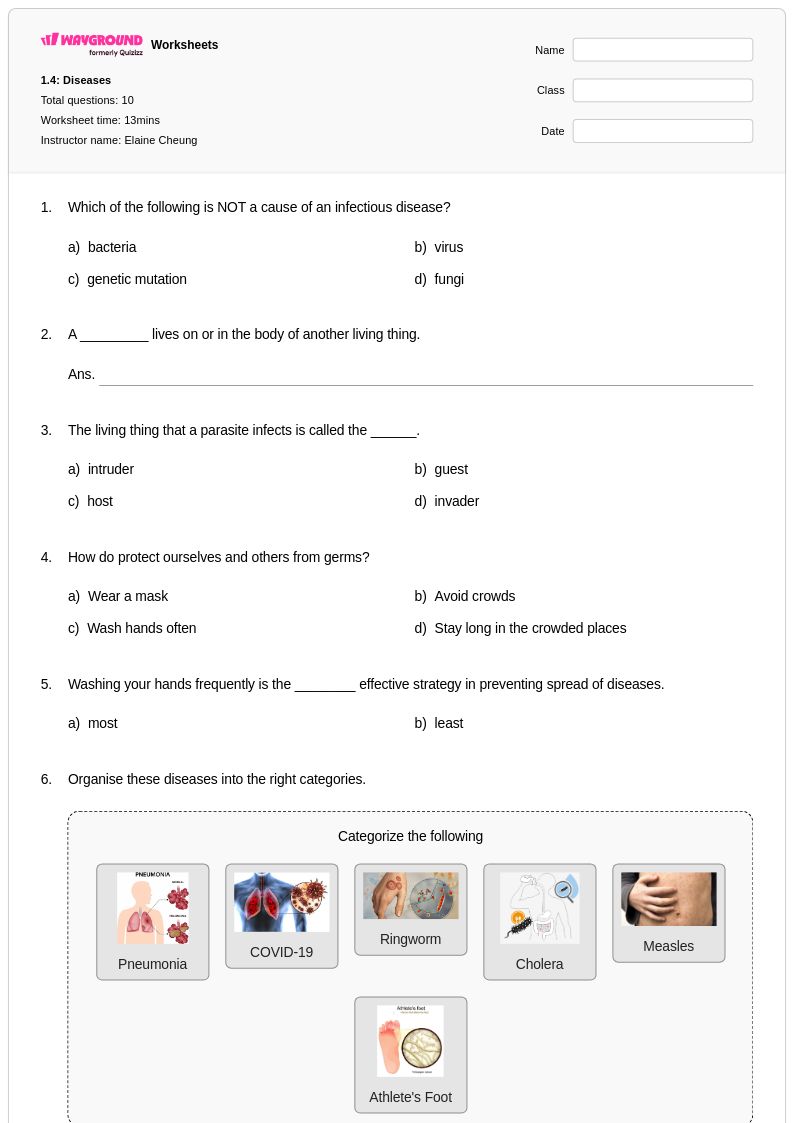
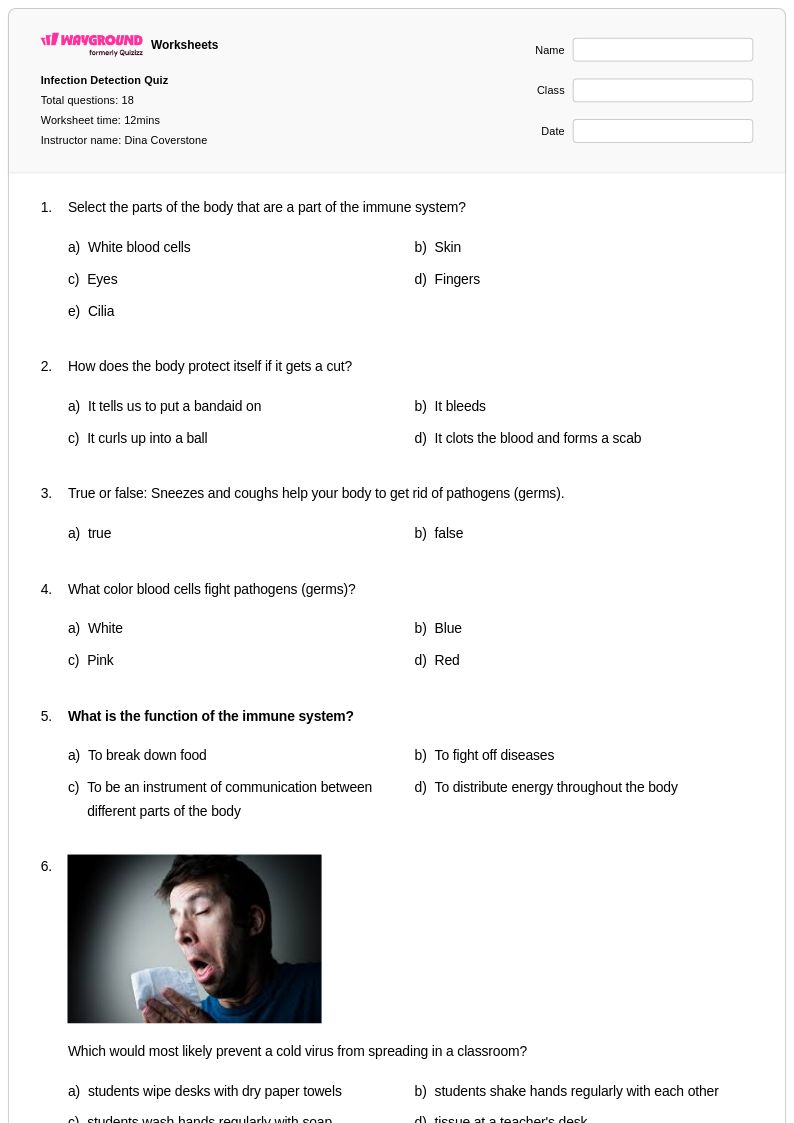
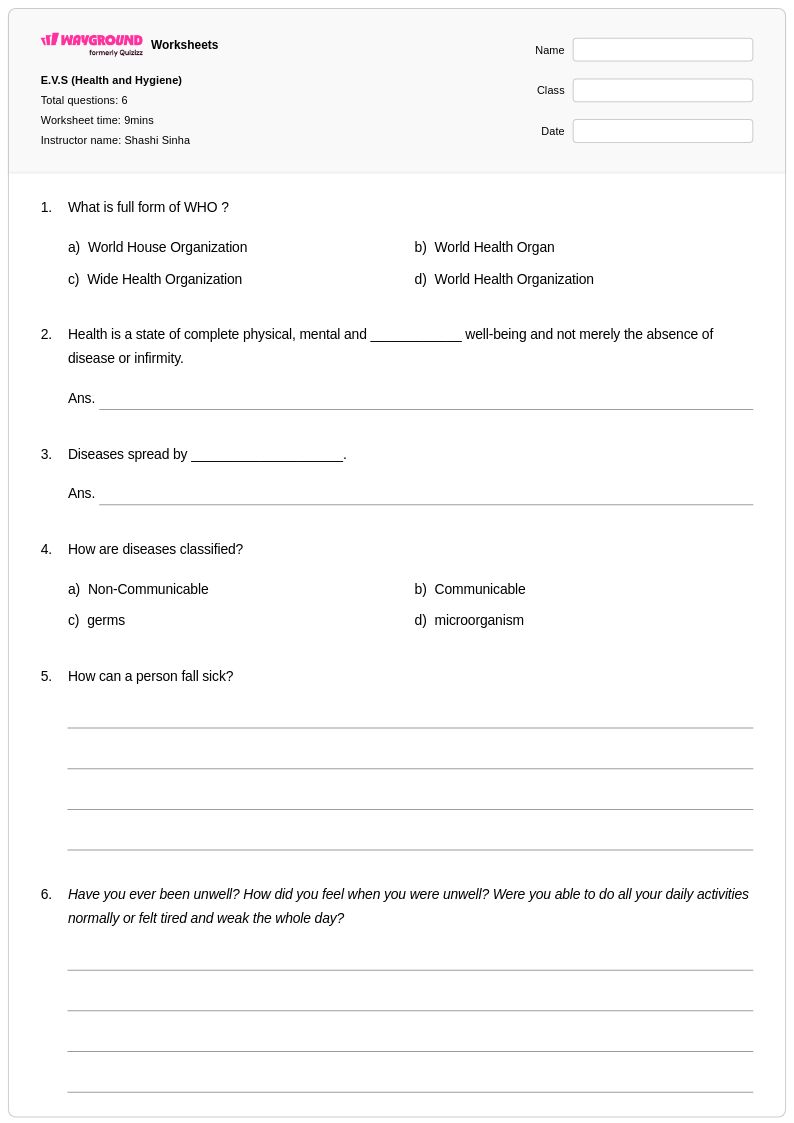
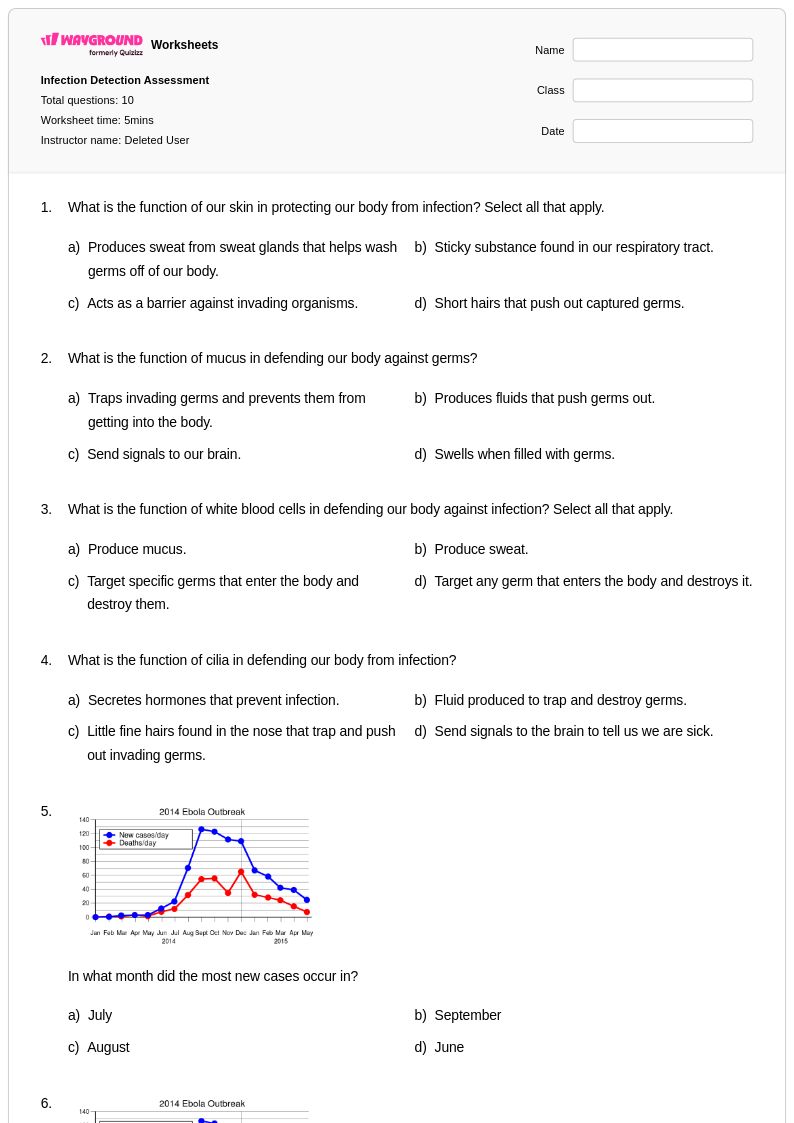
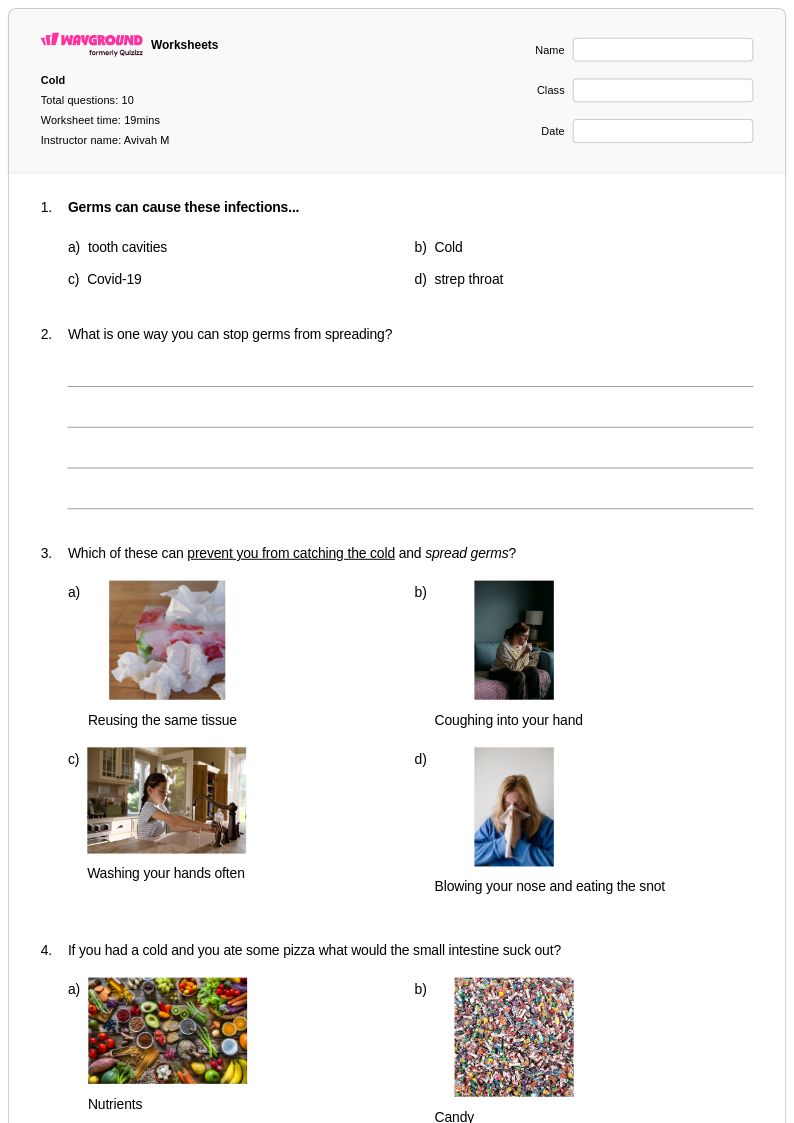
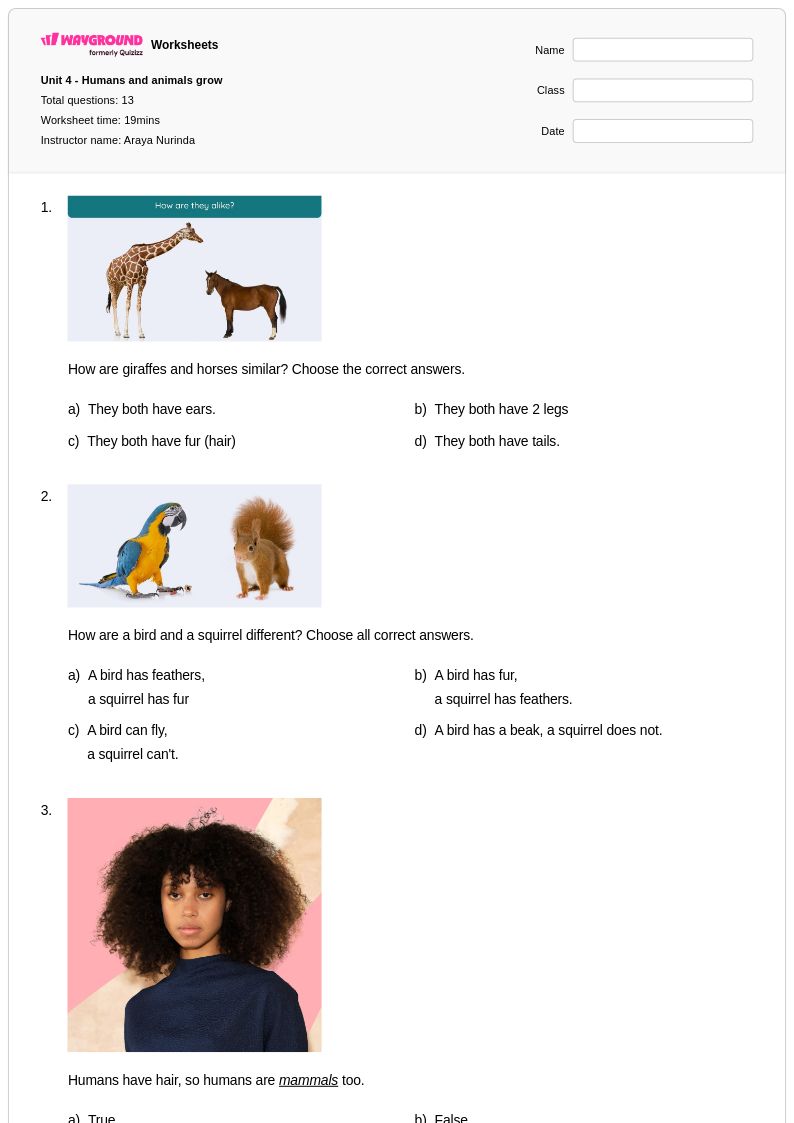
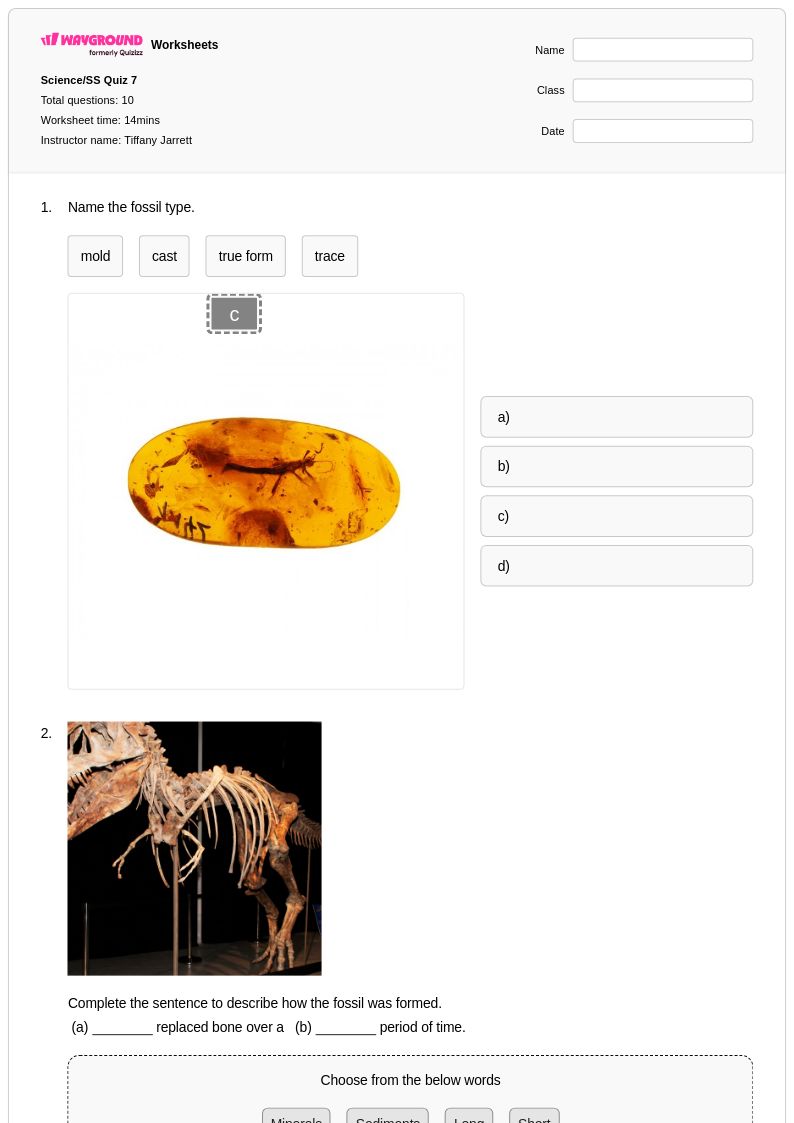
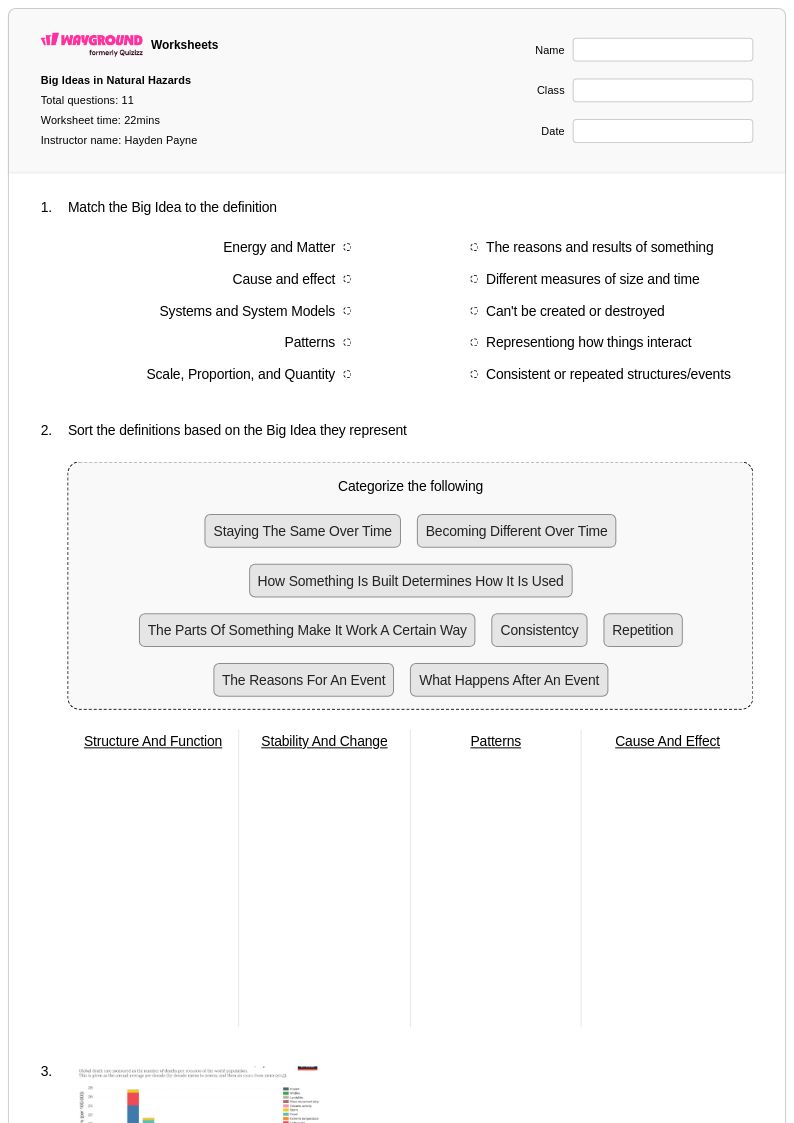
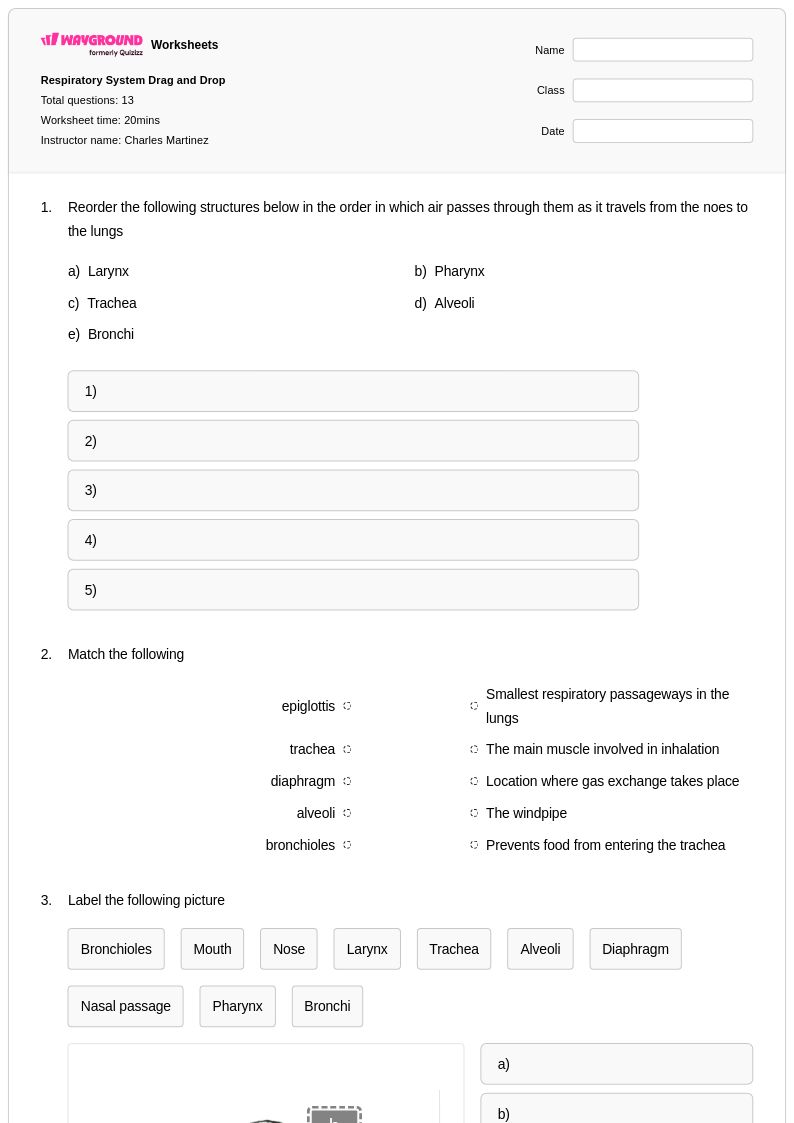
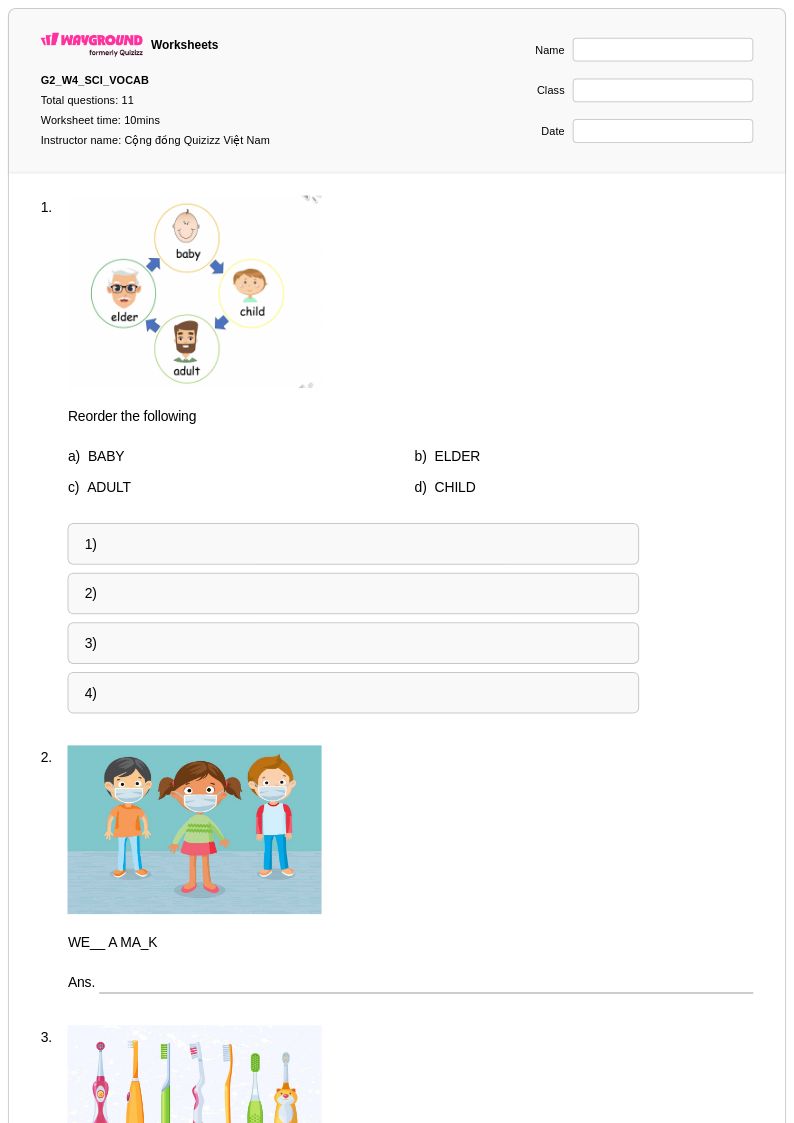
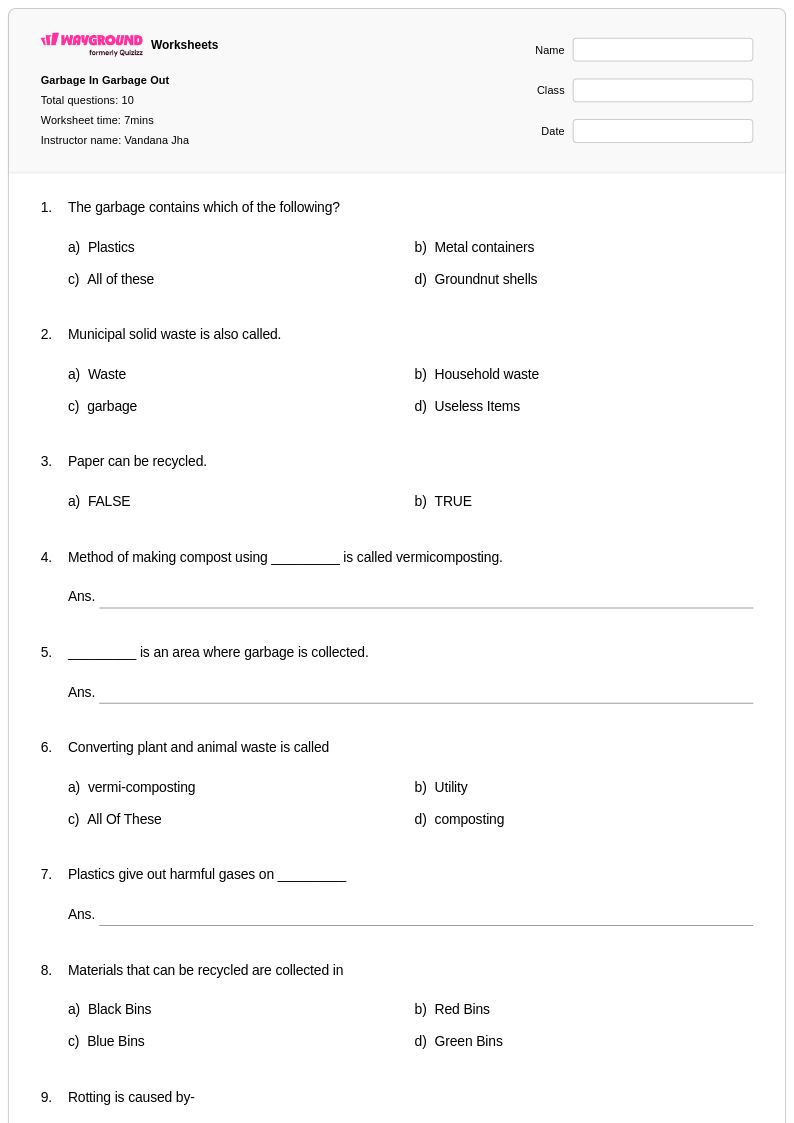
Wayground's free kindergarten germs worksheets and printables help young learners understand basic hygiene concepts through engaging practice problems, complete with answer keys and downloadable PDFs.
Explore printable Germs worksheets for Kindergarten
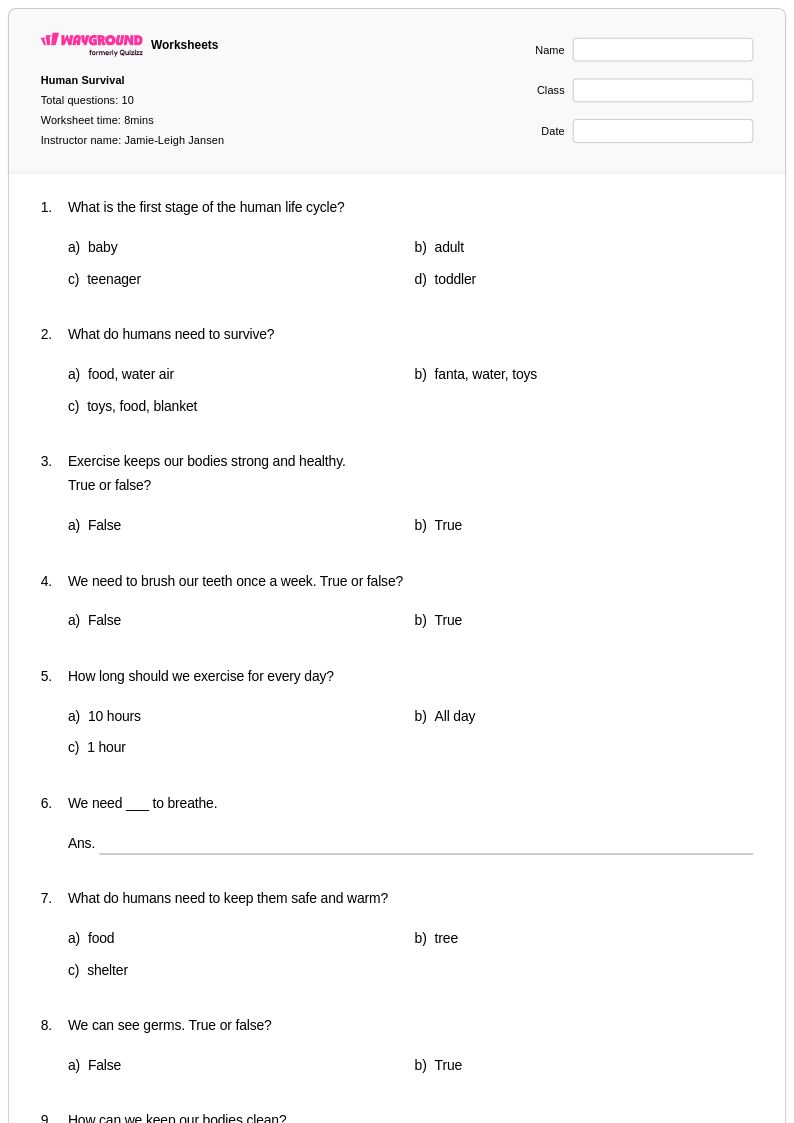
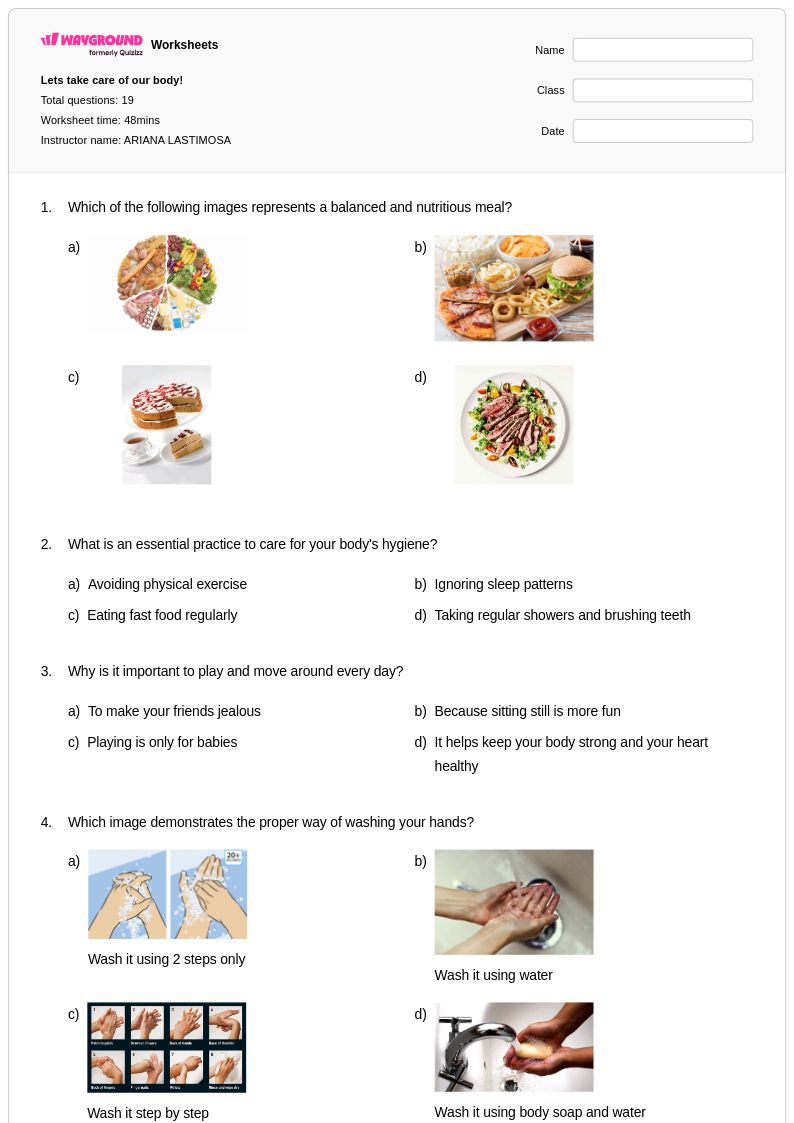
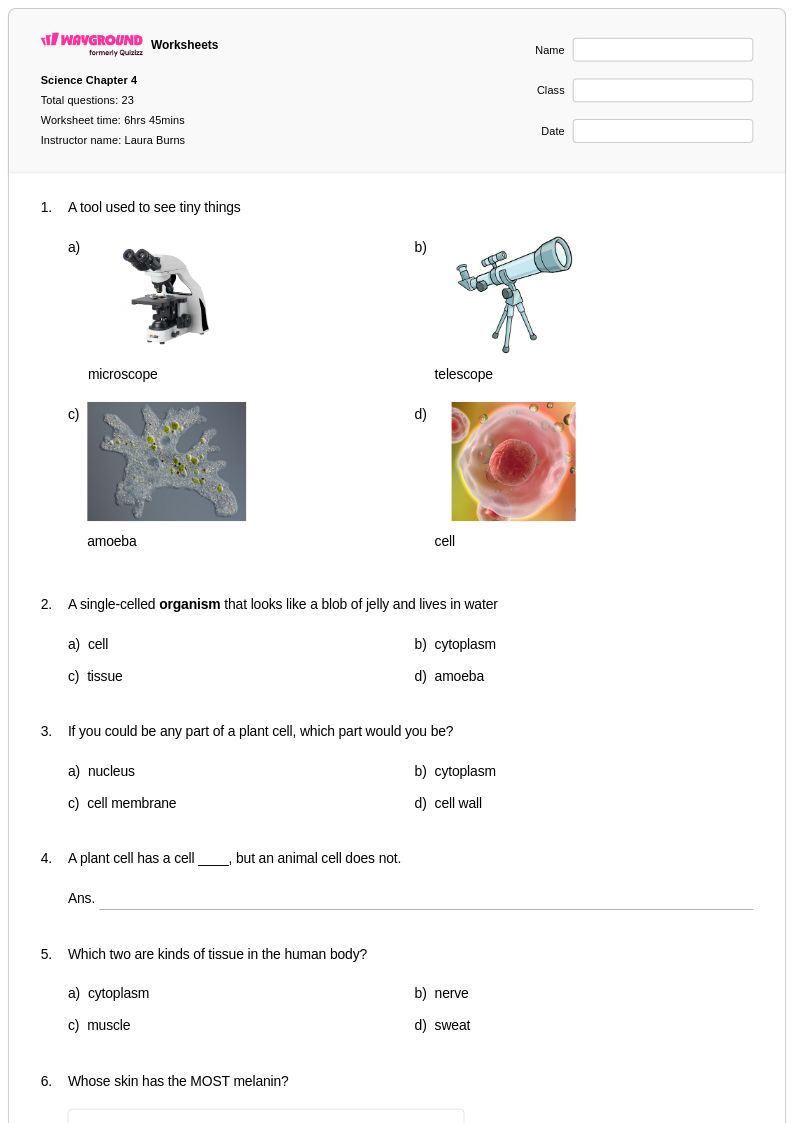
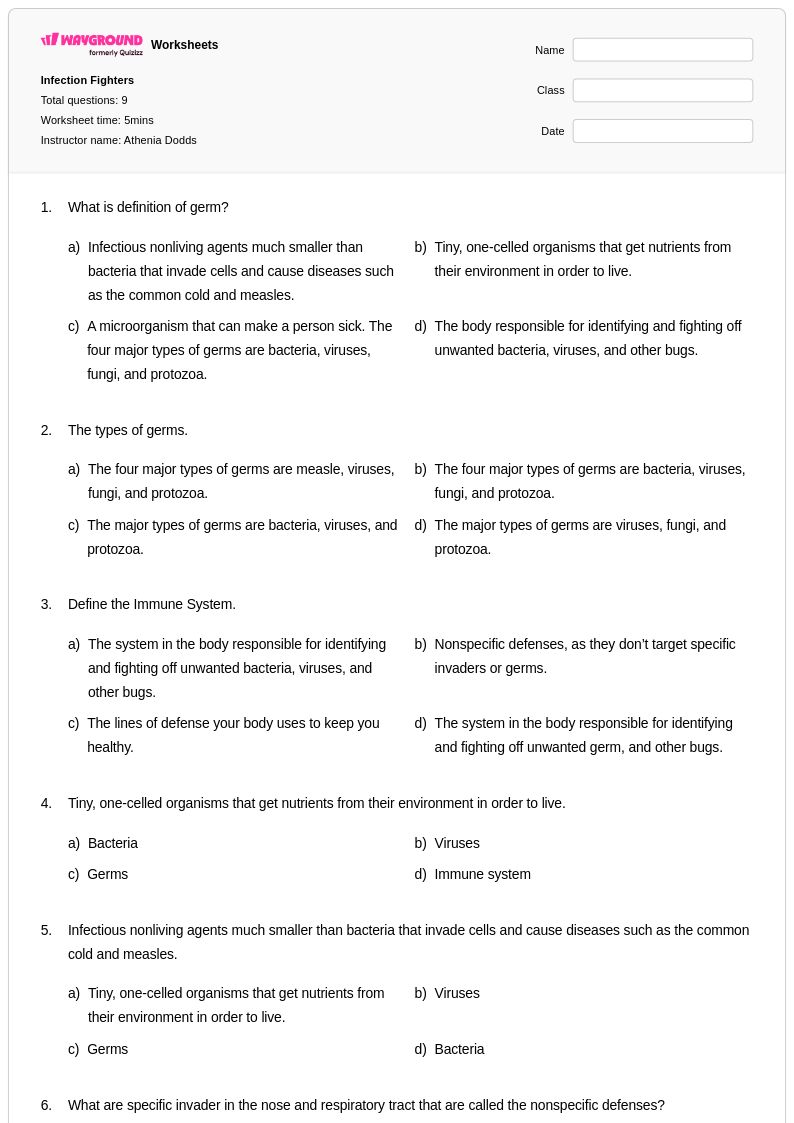
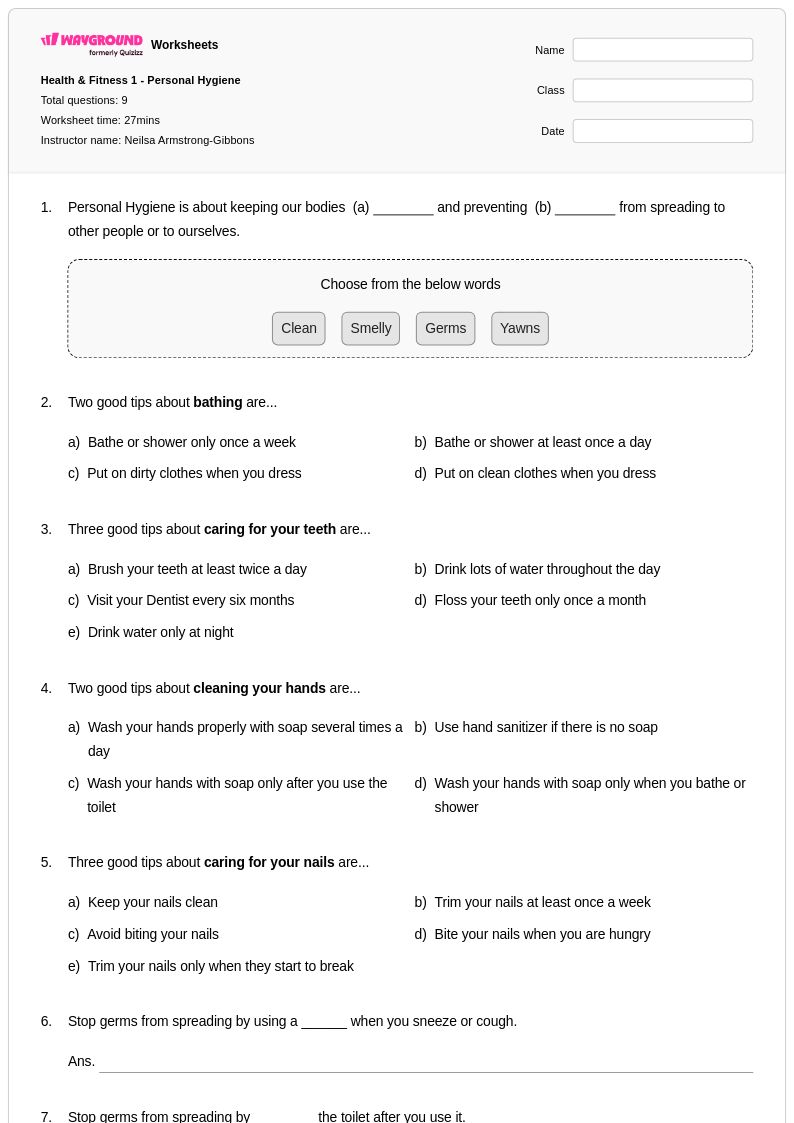
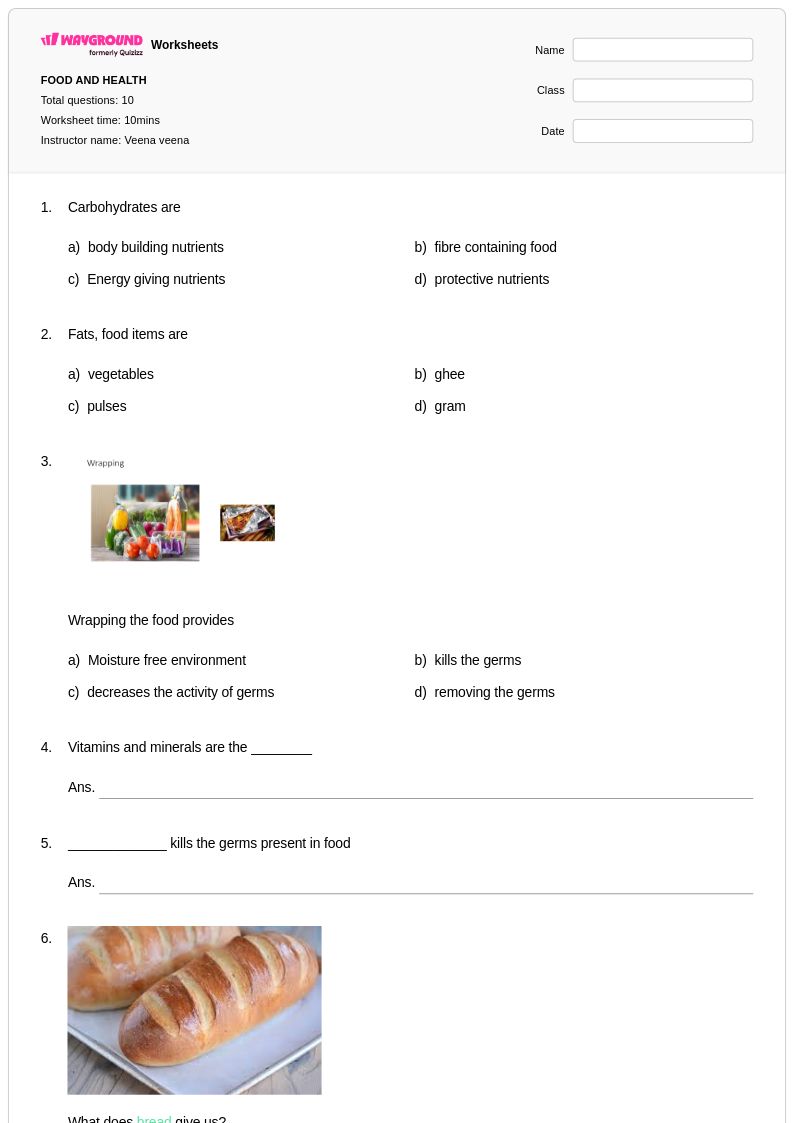
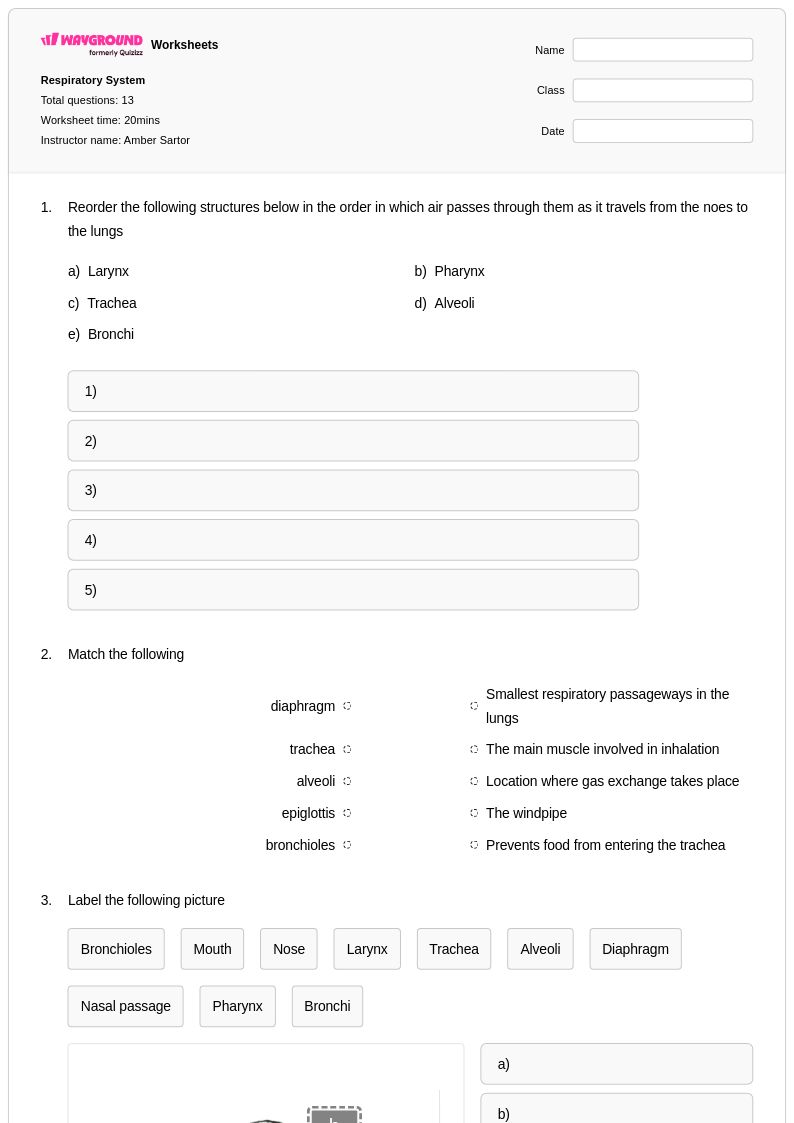
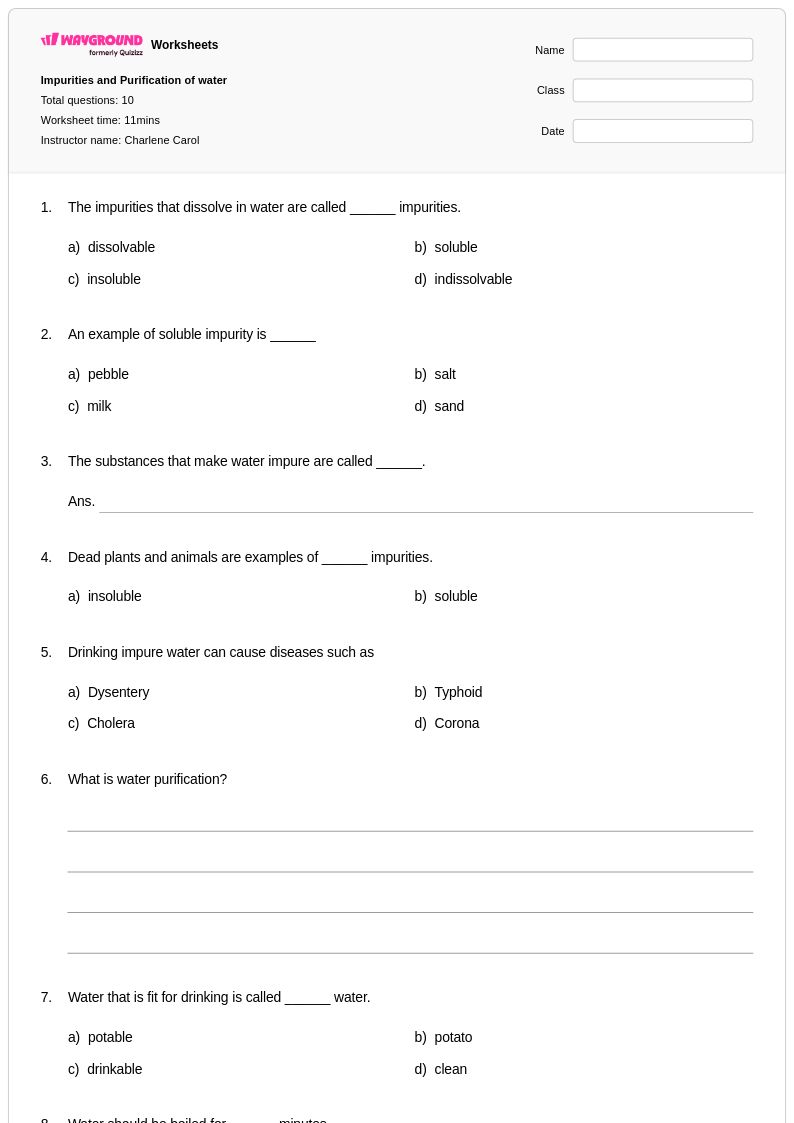
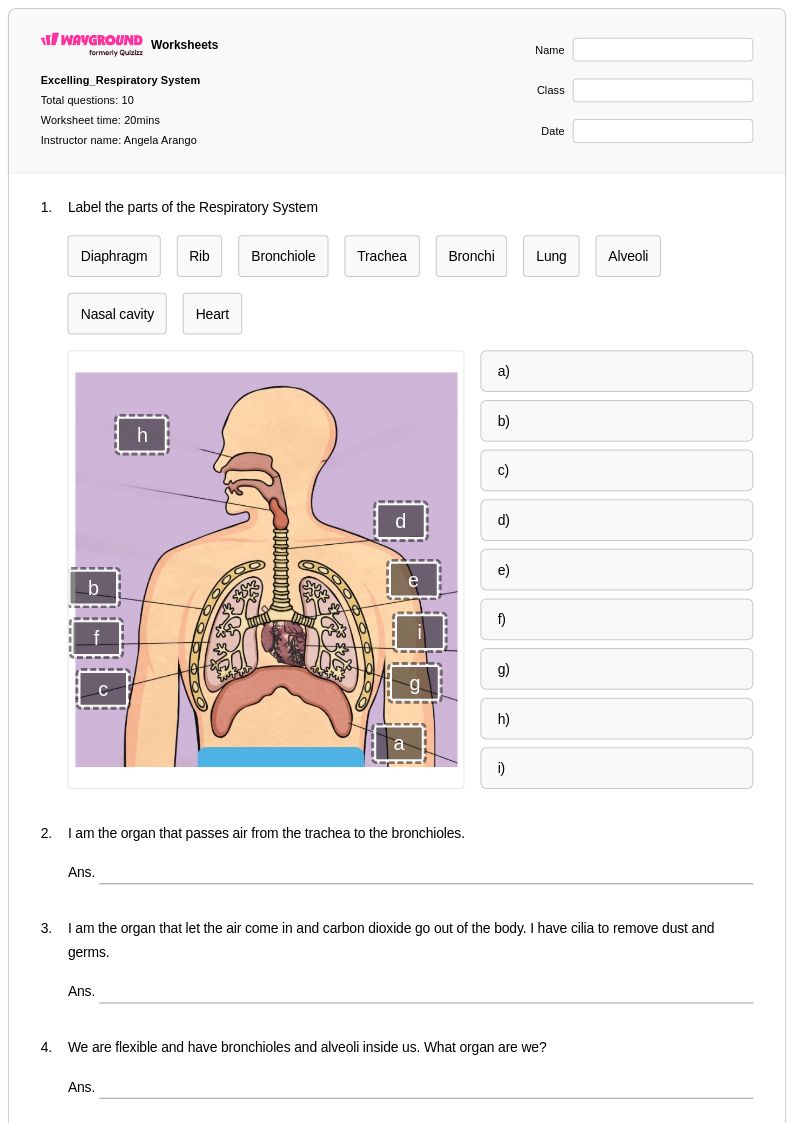
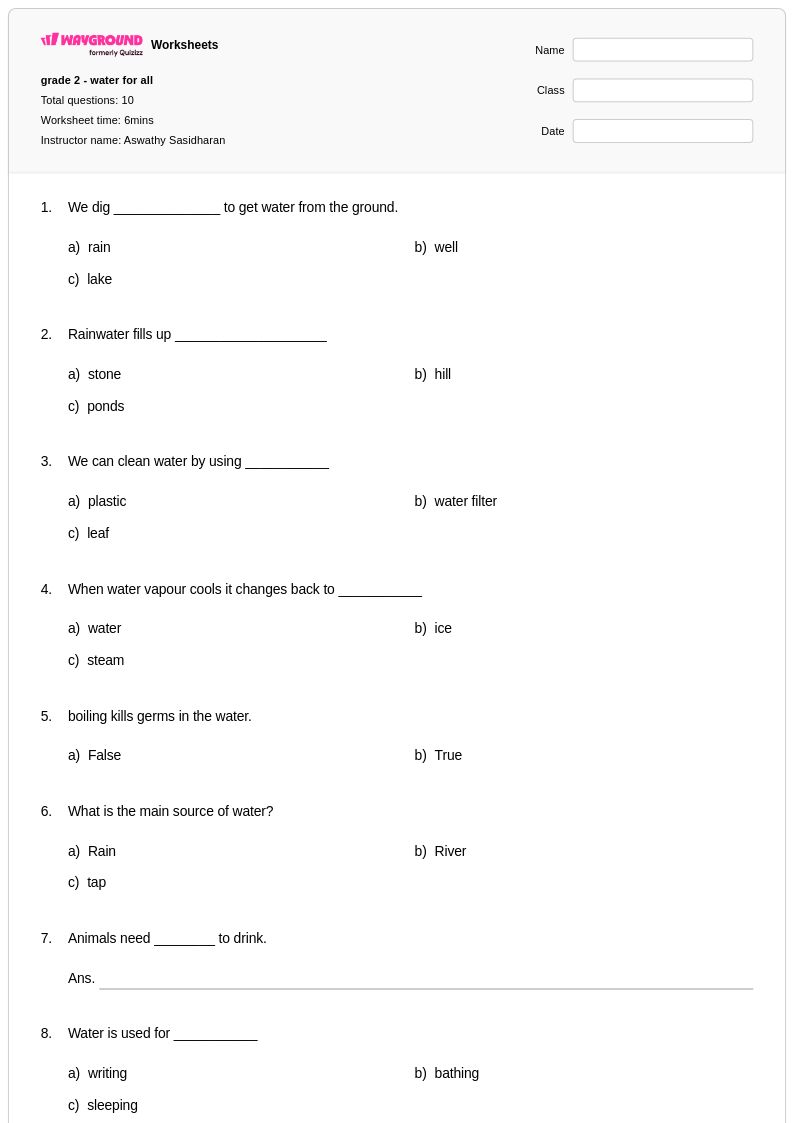
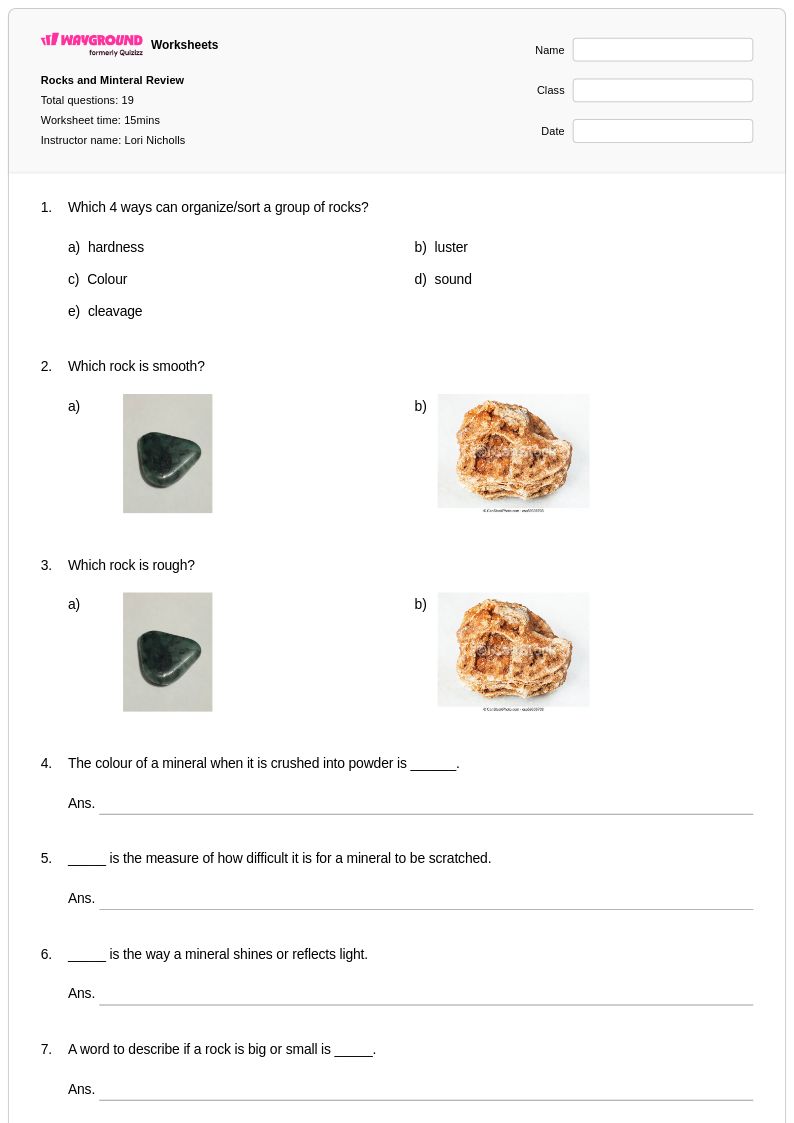
Germs worksheets for kindergarten students available through Wayground (formerly Quizizz) provide essential early science education focused on basic hygiene concepts and health awareness. These carefully designed printables introduce young learners to fundamental concepts about germs, including where they come from, how they spread, and simple prevention methods like handwashing. The worksheets strengthen critical thinking skills, observation abilities, and healthy habit formation through age-appropriate activities such as identifying clean versus dirty objects, sequencing proper handwashing steps, and recognizing situations where germs might spread. Each worksheet includes comprehensive answer keys and practice problems that allow teachers to assess student understanding while reinforcing key learning objectives. These free pdf resources make abstract concepts tangible for kindergarten students through visual aids, simple matching exercises, and interactive elements that build foundational knowledge about personal health and hygiene.
Wayground (formerly Quizizz) supports educators with an extensive collection of teacher-created germ worksheets specifically designed for kindergarten classrooms, drawing from millions of high-quality educational resources. The platform's robust search and filtering capabilities enable teachers to quickly locate materials that align with health and science standards while meeting diverse student needs. Built-in differentiation tools allow educators to customize worksheets for various learning levels, ensuring both struggling learners and advanced students can engage meaningfully with germ-related concepts. These versatile resources are available in both printable and digital pdf formats, providing flexibility for in-person instruction, remote learning, or hybrid classroom environments. Teachers can efficiently plan comprehensive health education units, implement targeted skill practice sessions, and provide remediation or enrichment opportunities that reinforce proper hygiene habits and basic scientific understanding about germs and cleanliness.
FAQs
How do I teach students about germs in a way that actually sticks?
Start with the concrete before moving to the abstract — use visual demonstrations like the glitter-spread activity to show how quickly germs travel from person to person before introducing bacteria, viruses, and fungi as distinct categories. Anchoring the science in everyday hygiene decisions (why we wash hands, why we cover a cough) gives students a personal stake in the content. From there, worksheets that ask students to classify germ types and trace transmission routes help solidify the conceptual framework.
What are the most common misconceptions students have about germs?
One of the most persistent misconceptions is that all germs make you sick — students are often surprised to learn that many microorganisms are harmless or even beneficial, such as the bacteria in the digestive system. Another common error is conflating bacteria and viruses, leading students to assume antibiotics work on viral infections. Worksheets that specifically require students to distinguish between germ types and match prevention strategies to each help surface and correct these errors directly.
What kinds of practice problems help students understand how germs spread?
Effective practice problems ask students to trace transmission pathways — identifying whether a germ spreads through direct contact, airborne particles, contaminated surfaces, or bodily fluids — rather than simply recalling definitions. Scenario-based exercises, where students analyze a situation and identify the infection route and appropriate prevention strategy, build the kind of applied reasoning that pure recall questions miss. These problem types also map well to health literacy goals beyond the science classroom.
How do I use Wayground's germs worksheets in my classroom?
Wayground's germs worksheets are available as printable PDFs for traditional classroom use and in digital formats for technology-integrated environments, making them flexible for in-person, hybrid, or remote instruction. Teachers can also host them as a quiz directly on Wayground, which adds an interactive layer to practice and review. Each worksheet includes a complete answer key, so they work well for independent practice, homework, or guided instruction with minimal prep time.
How can I differentiate germ instruction for students at different skill levels?
For students who need additional support, Wayground's platform offers accommodations such as Read Aloud (audio reading of questions), reduced answer choices to lower cognitive load, and extended time settings — all configurable per student without alerting the rest of the class. Advanced learners can be directed toward enrichment-oriented worksheets that go deeper into germ theory and immune system responses. These differentiation tools can be saved and reused across sessions, reducing the planning burden on teachers.
At what grade level are germs worksheets most appropriate?
Germs as a topic spans a wide instructional range — foundational hygiene and basic microorganism identification are appropriate for early elementary, while germ theory, immune system responses, and disease transmission pathways suit upper elementary through middle school science. The right entry point depends on the depth of the standard being addressed. Wayground's filtering tools allow teachers to locate worksheets aligned to specific standards, making it easier to match resources to the appropriate grade-level expectations.