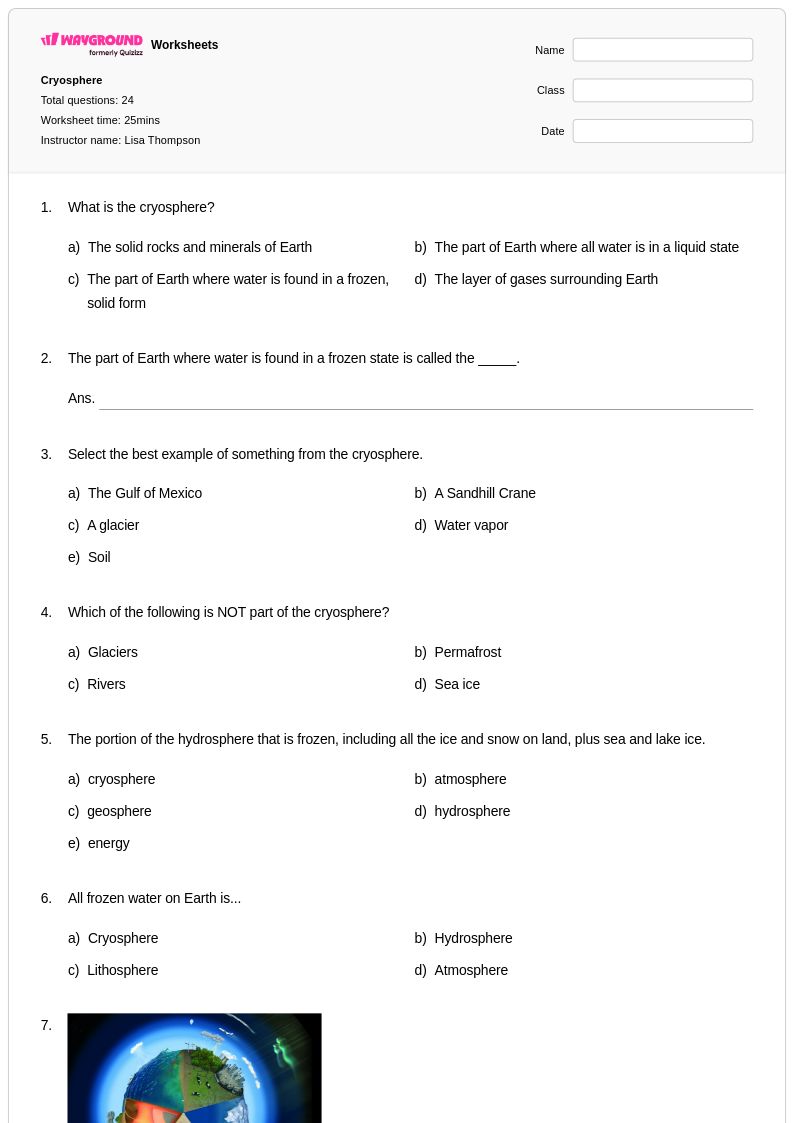
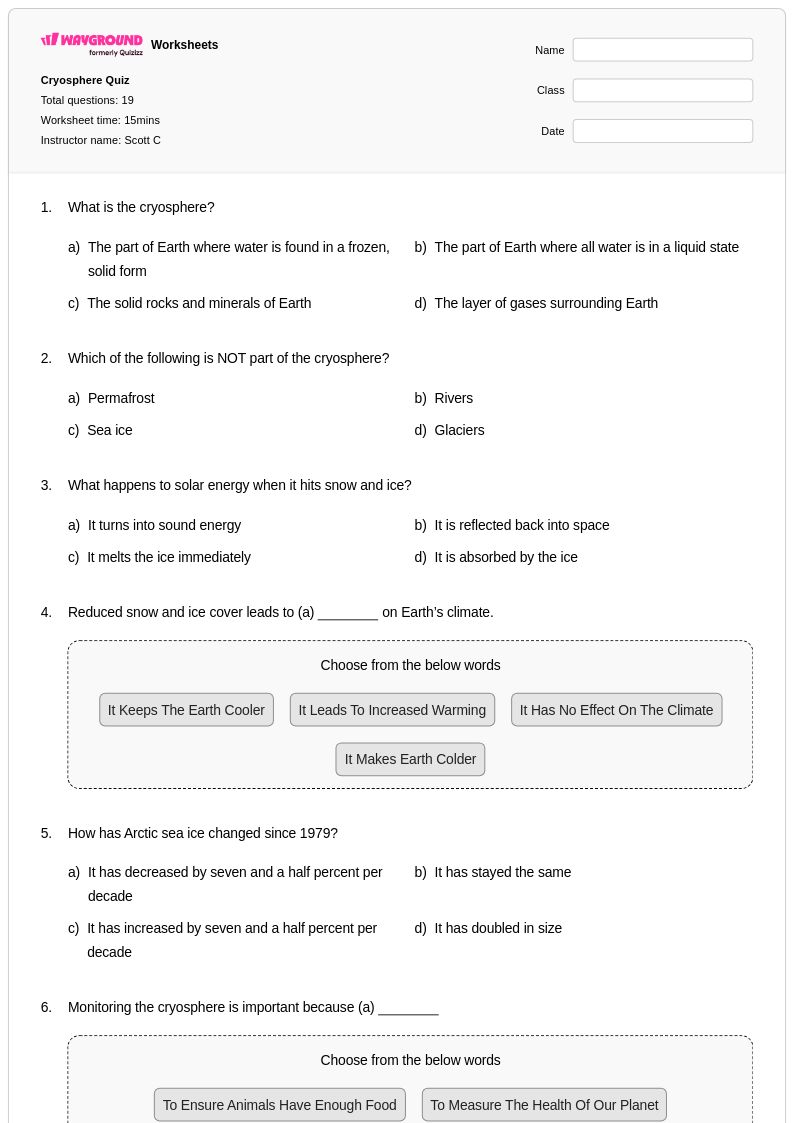
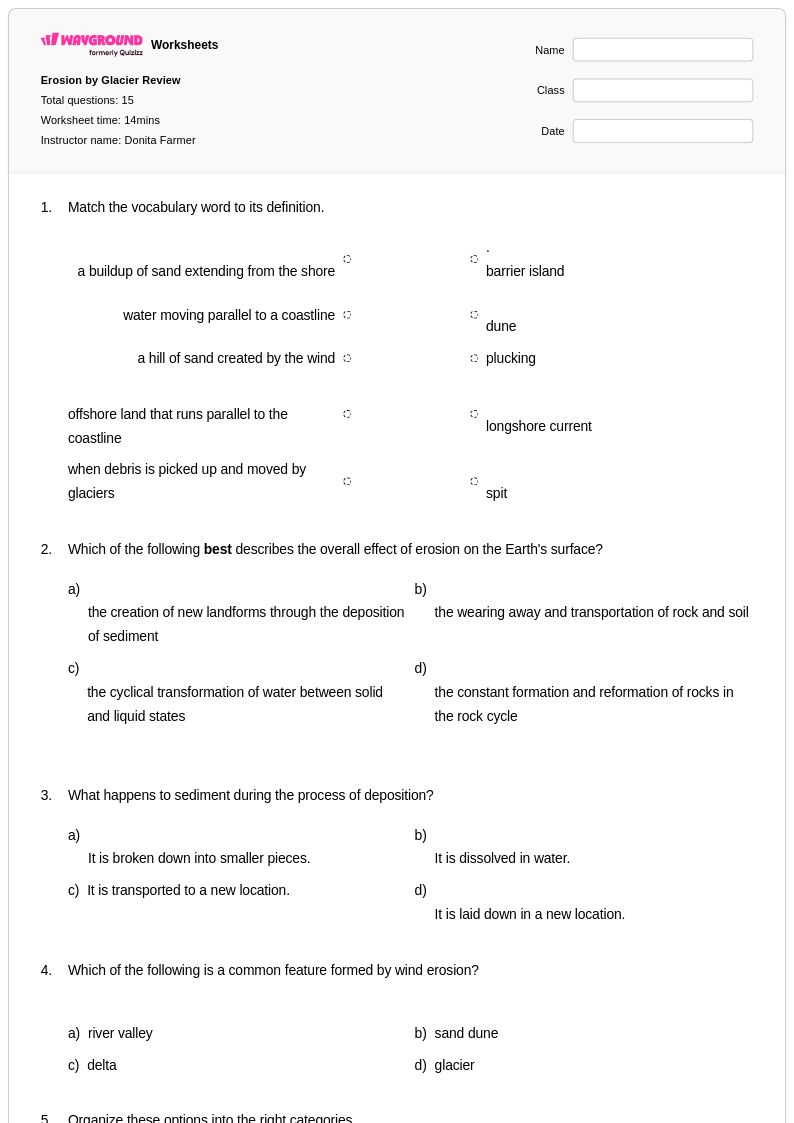
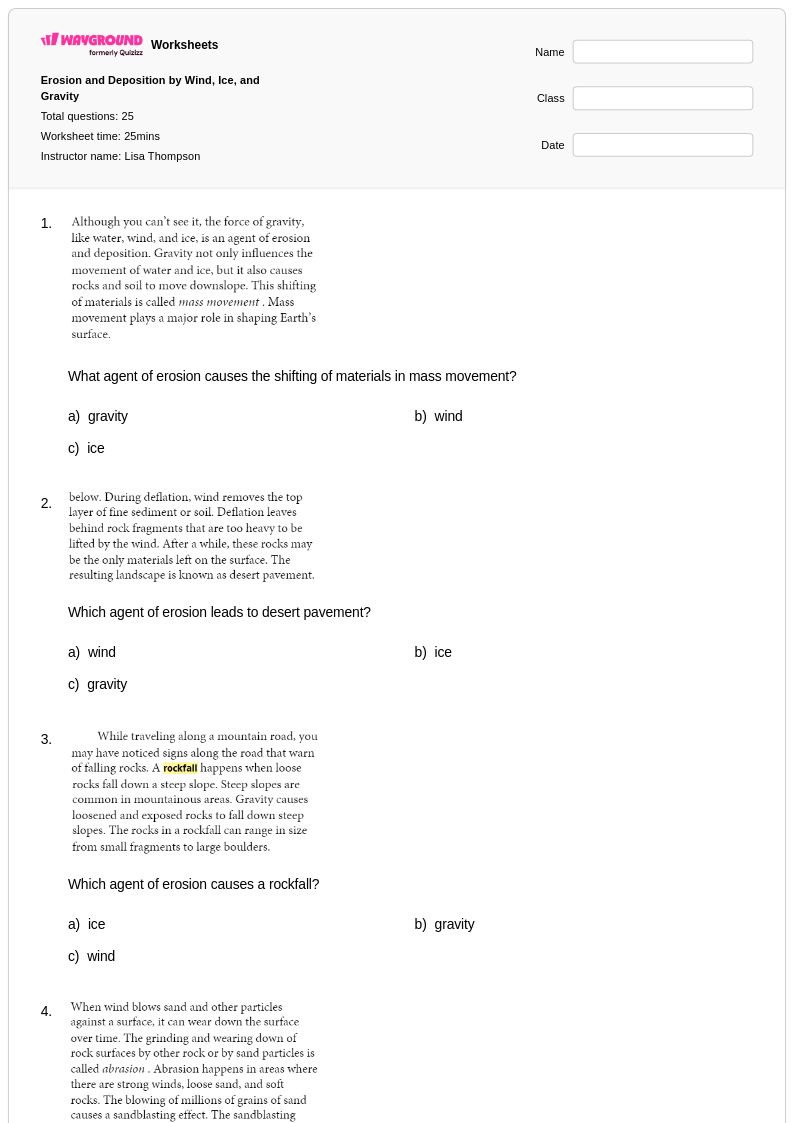
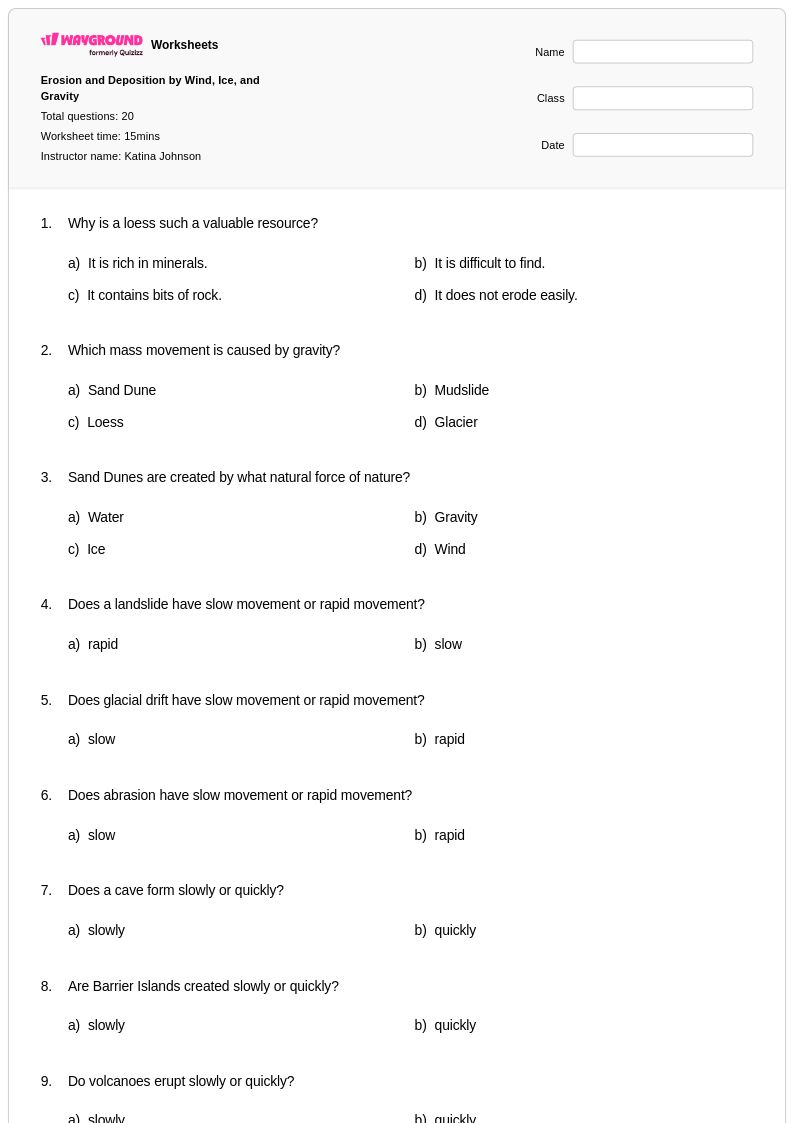
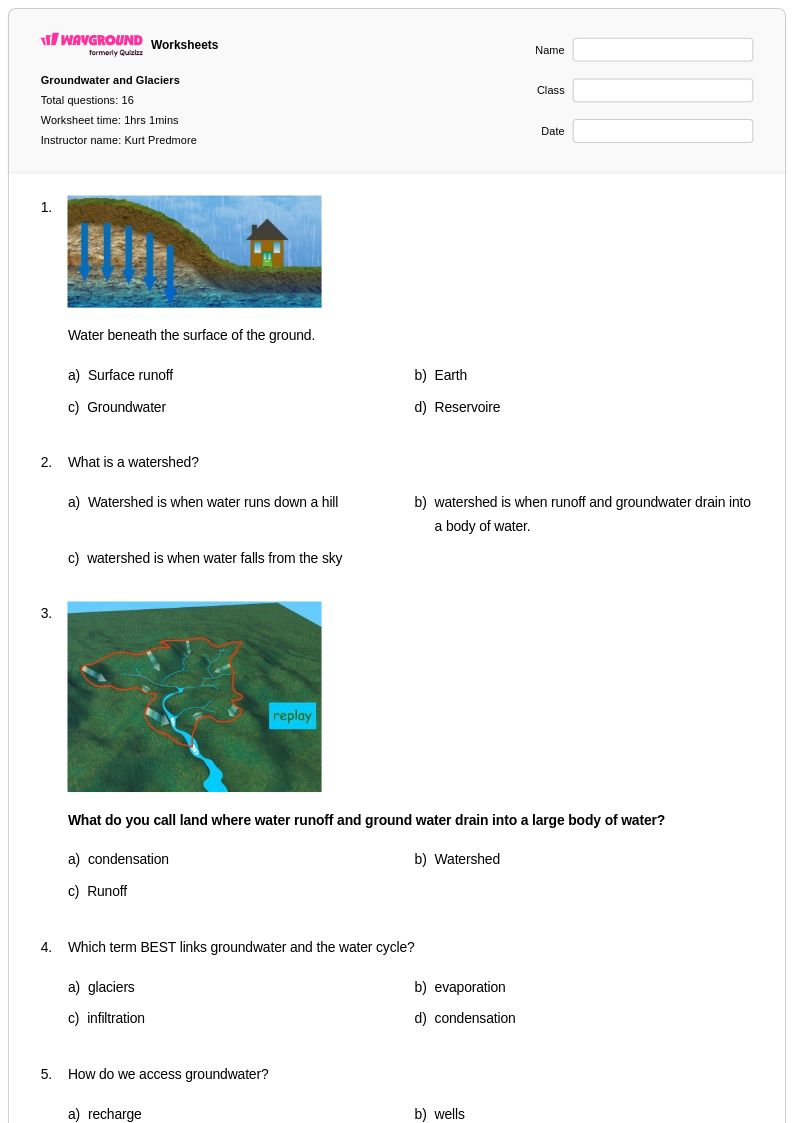
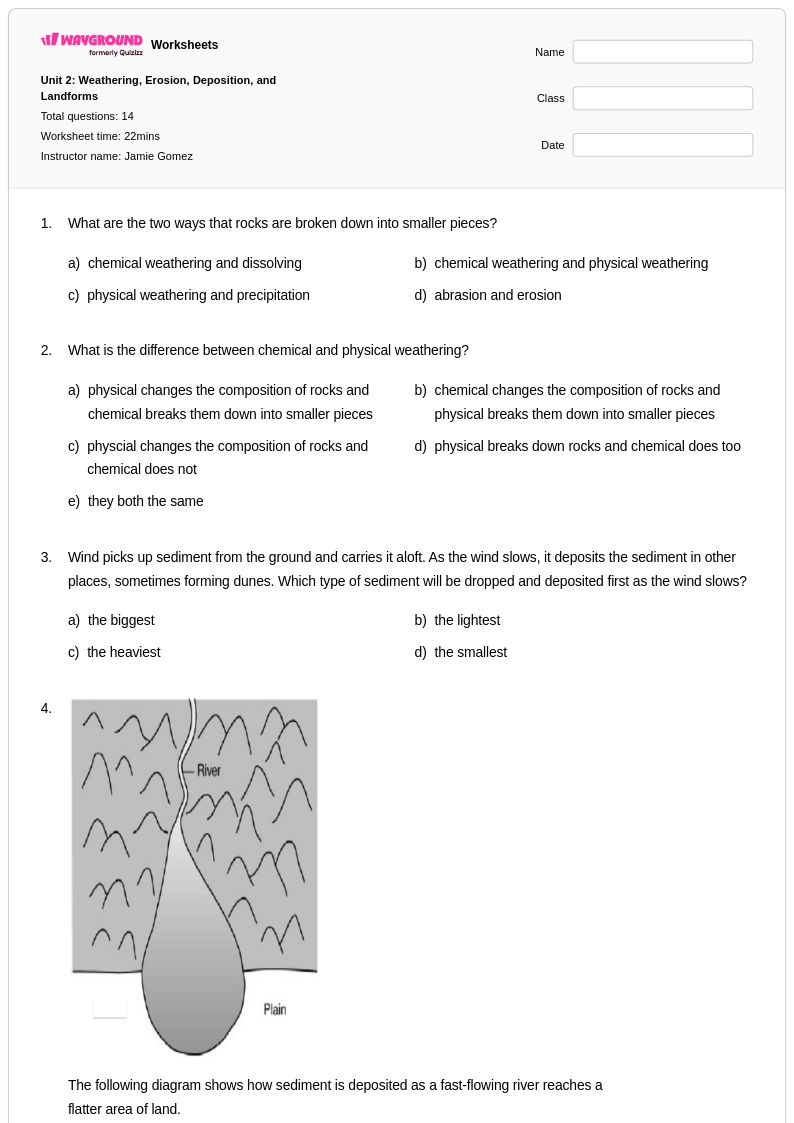
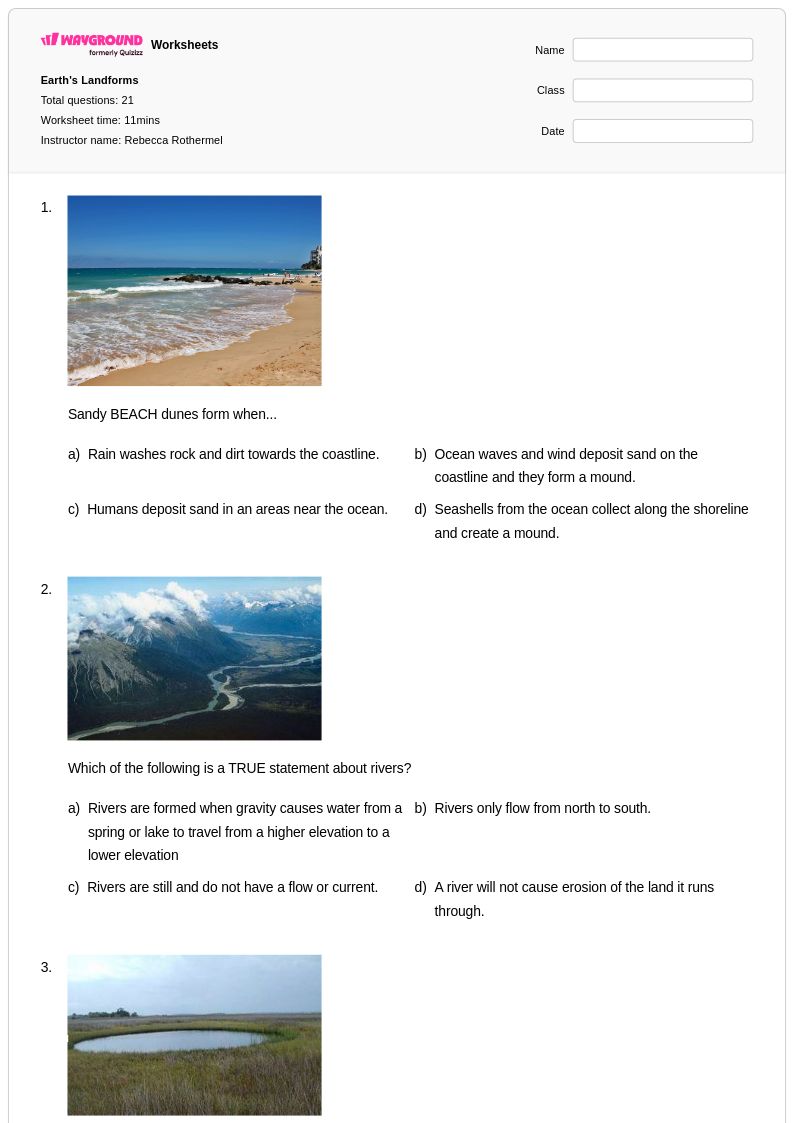
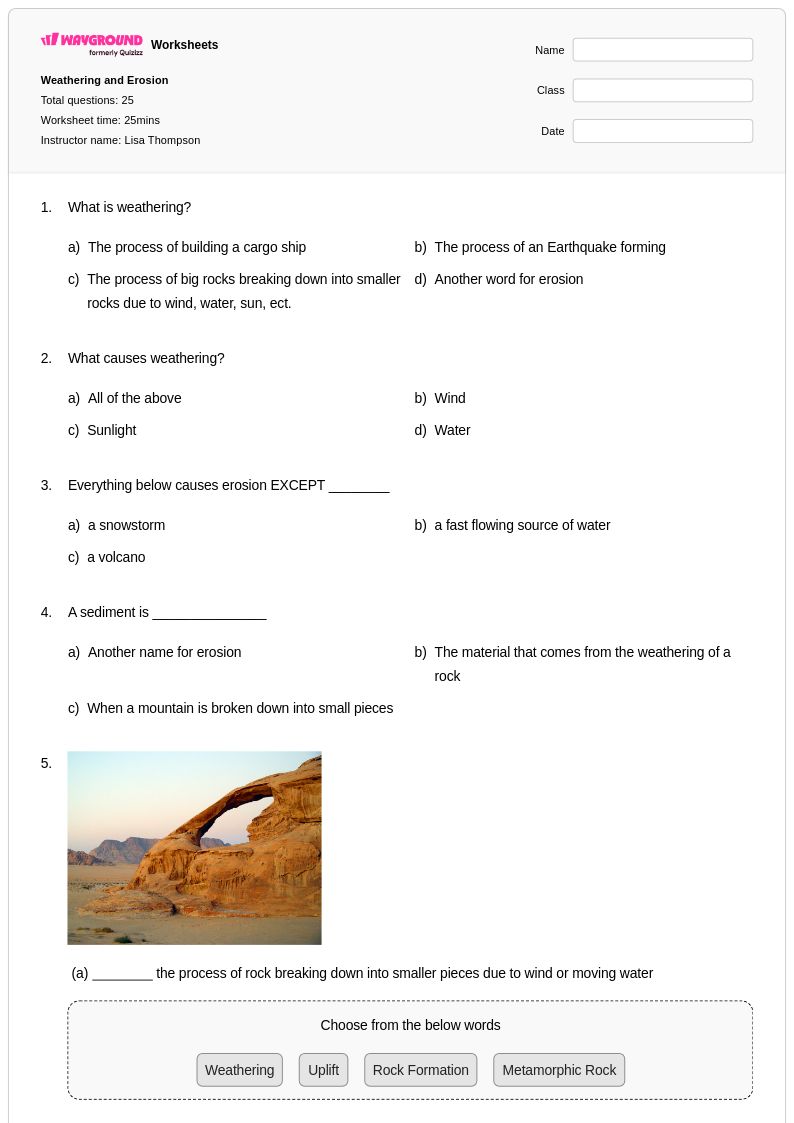
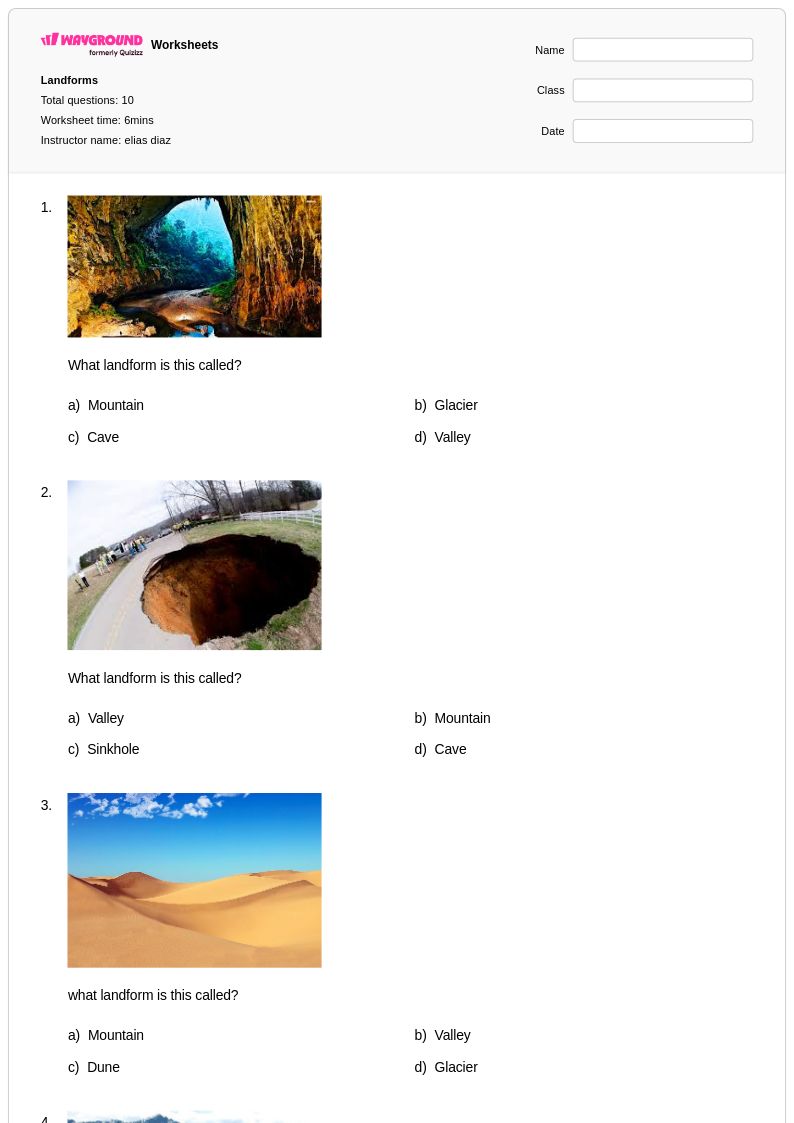
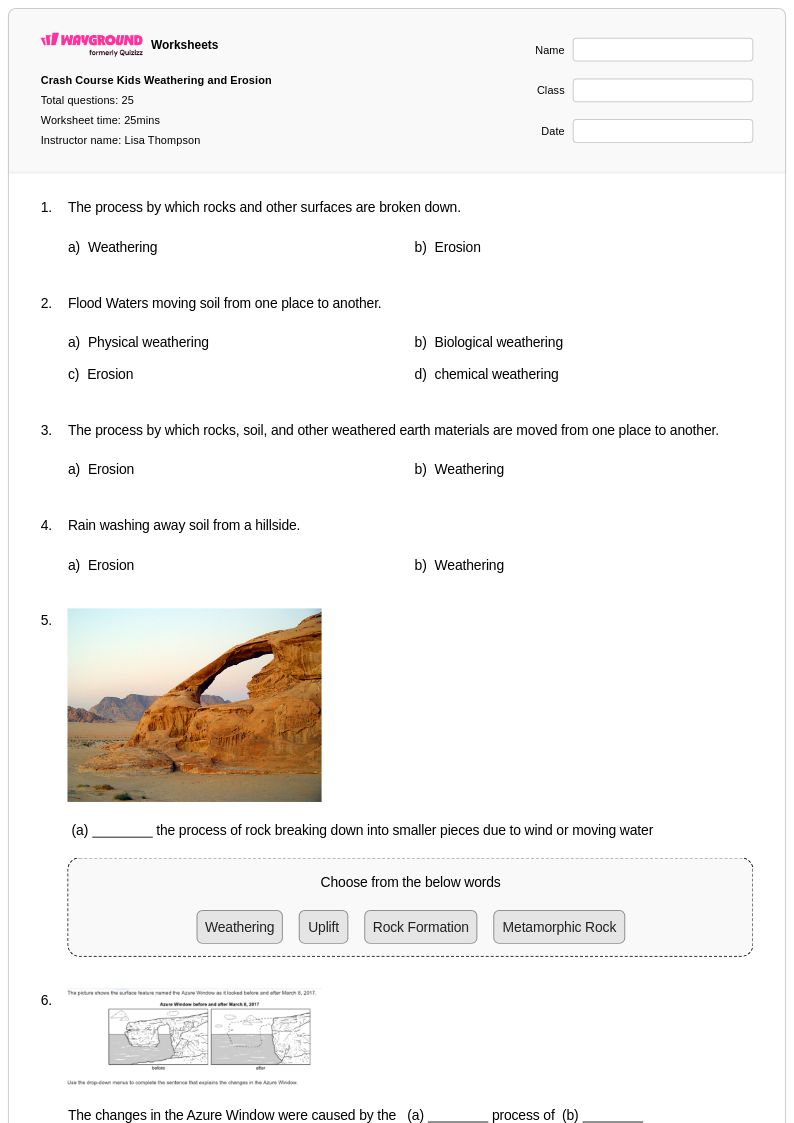
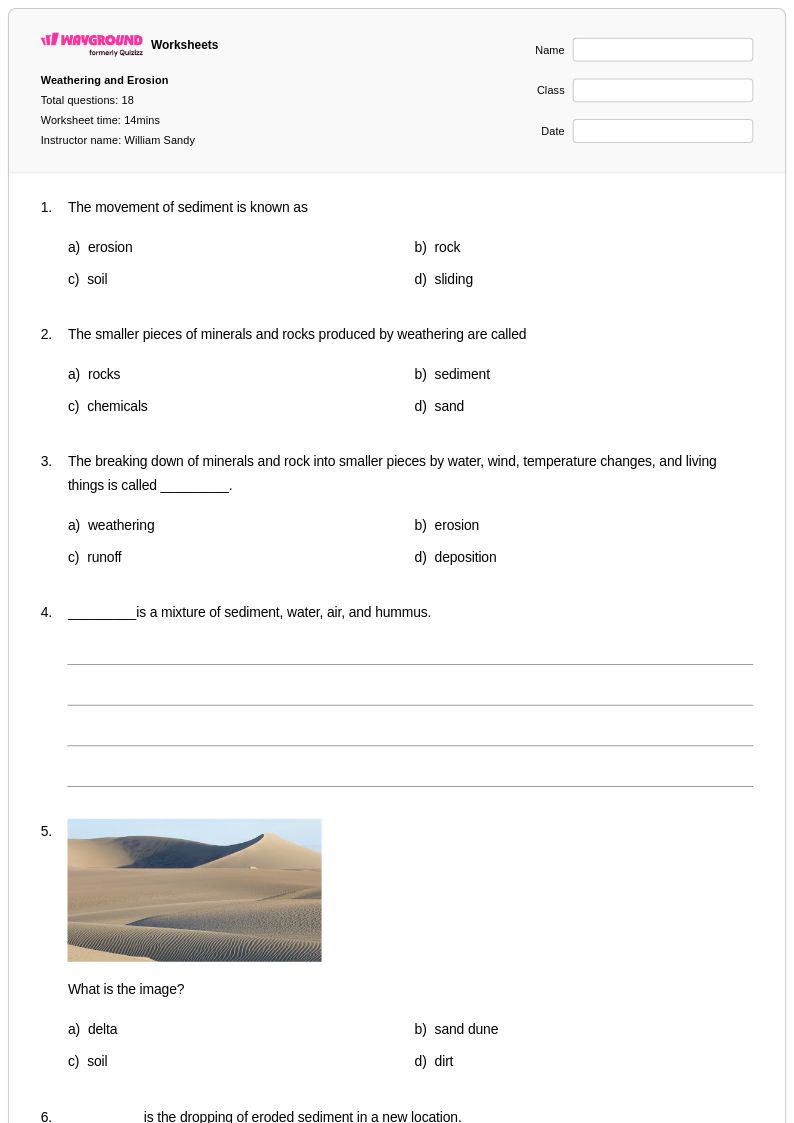
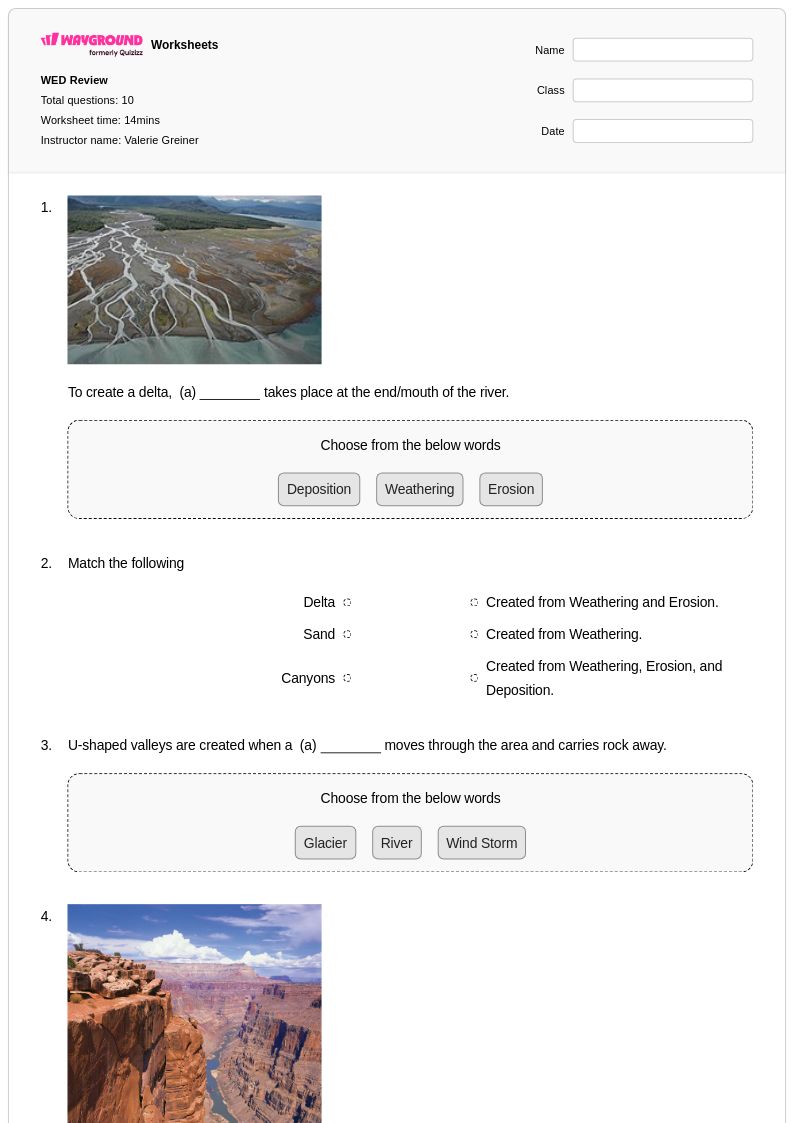
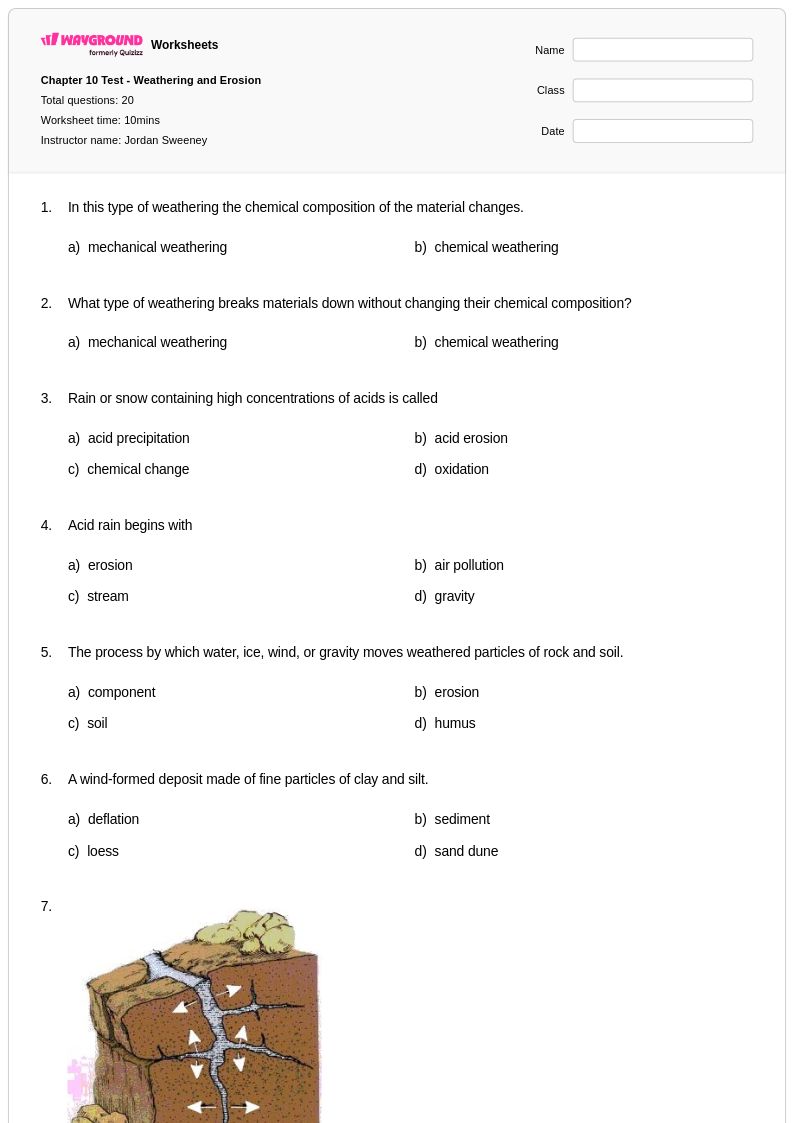
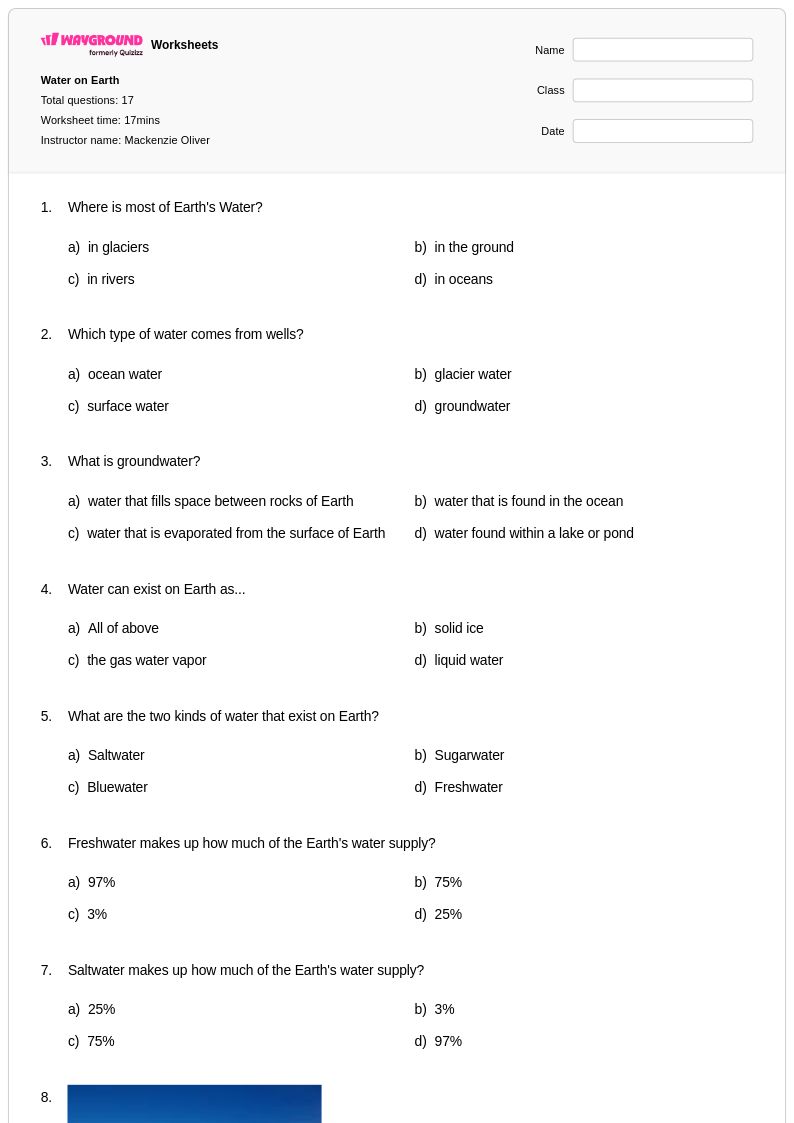
Year 6 glacier worksheets and printables help students explore ice formation, movement, and erosion through engaging practice problems, free PDF resources, and comprehensive answer keys for effective Earth science learning.
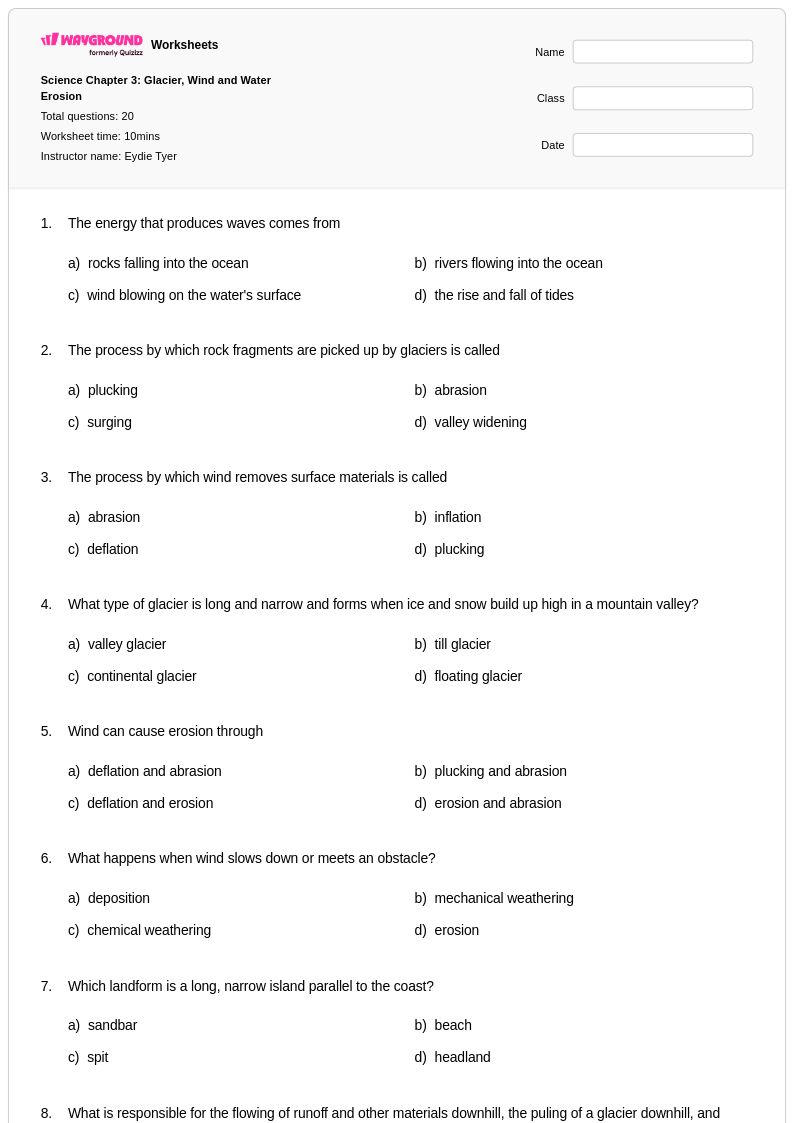
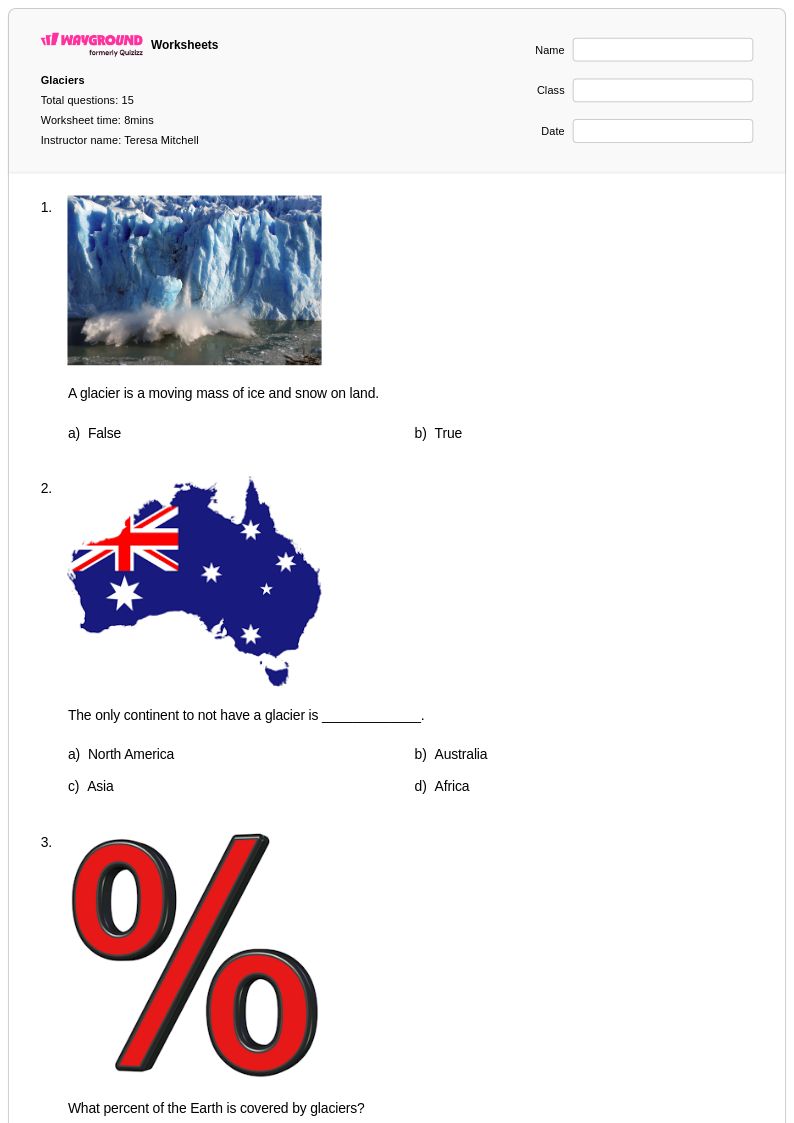
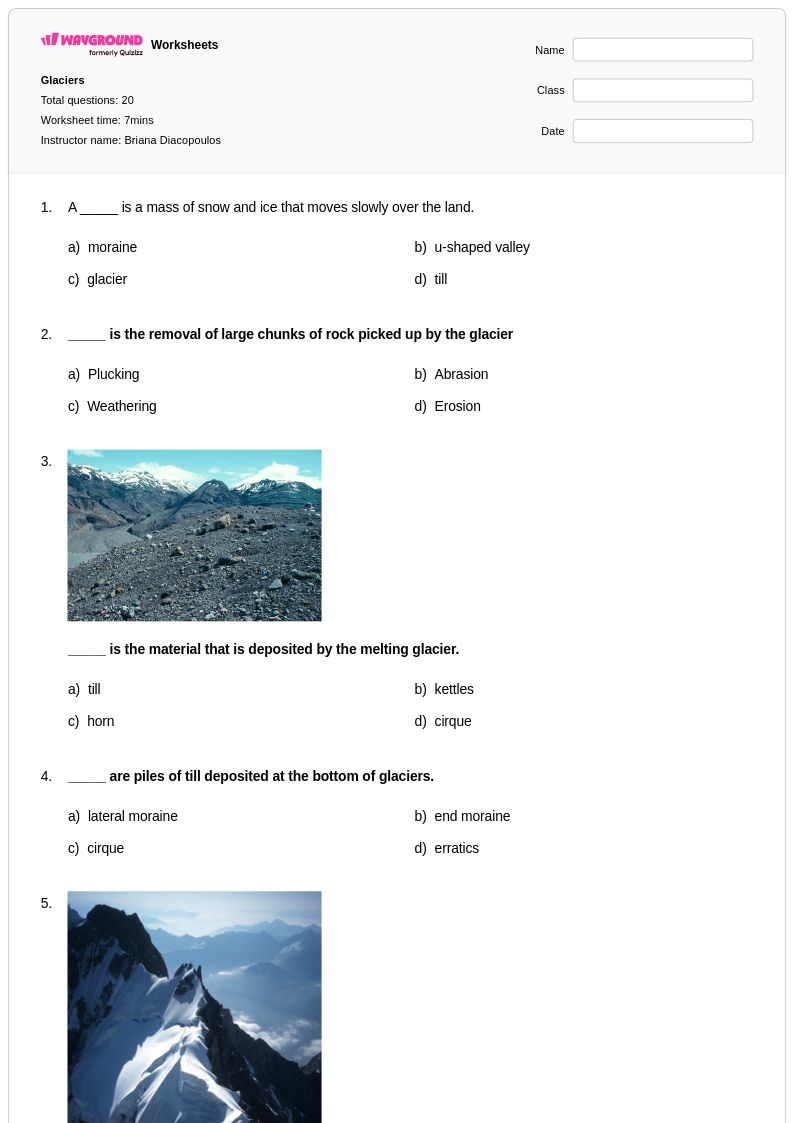
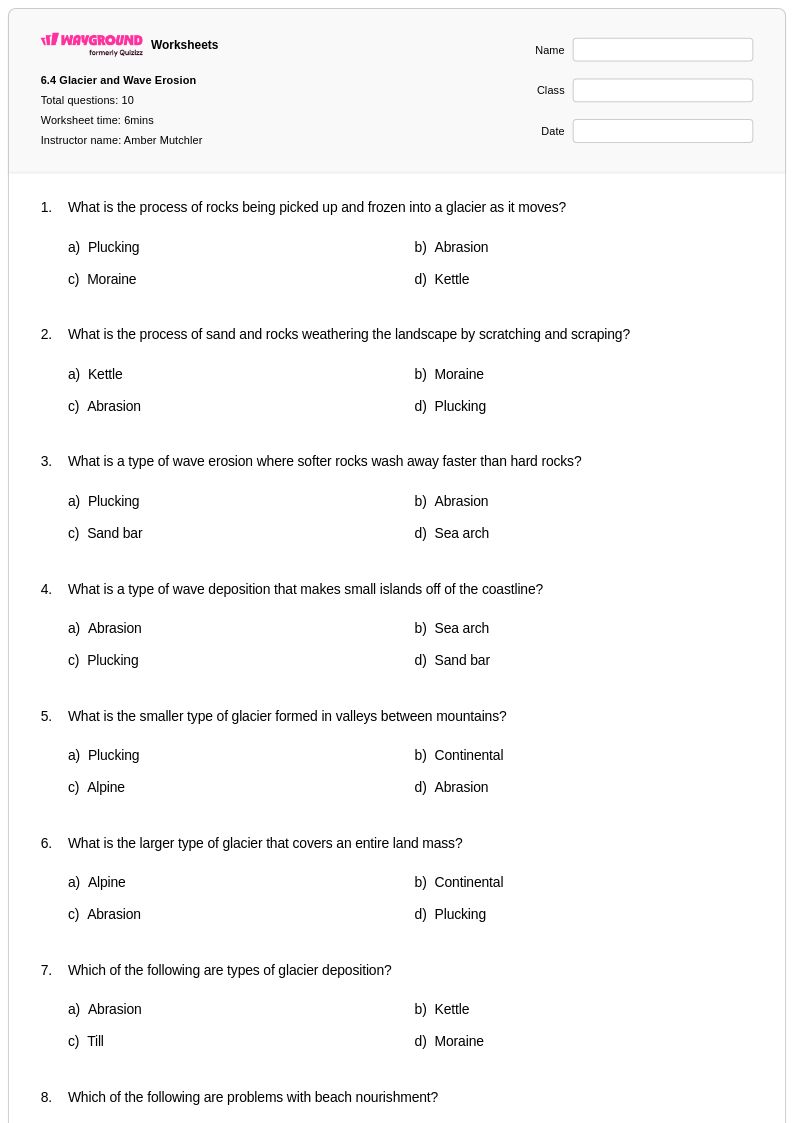
Glacier worksheets for Year 6 students available through Wayground (formerly Quizizz) provide comprehensive educational resources that help young learners understand these massive ice formations and their critical role in Earth's systems. These carefully designed worksheets strengthen essential scientific skills including observation and data analysis, cause-and-effect reasoning, and understanding of geological processes over time. Students engage with practice problems that explore glacier formation, movement, and erosion patterns while developing vocabulary related to glacial features like moraines, crevasses, and till. The collection includes free printables with complete answer keys, allowing educators to seamlessly integrate glacier studies into their Earth and space science curriculum through structured pdf resources that support both independent learning and collaborative classroom activities.
Wayground (formerly Quizizz) empowers teachers with millions of educator-created glacier worksheets specifically tailored for Year 6 Earth and space science instruction. The platform's robust search and filtering capabilities enable teachers to quickly locate resources that align with specific learning standards while offering differentiation tools to meet diverse student needs. These glacier worksheet collections are available in both printable and digital formats, including downloadable pdfs that facilitate flexible lesson planning and accommodate various classroom technologies. Teachers can customize existing materials or create entirely new practice sets, making these resources invaluable for initial instruction, targeted remediation, and enrichment activities that deepen students' understanding of how glaciers shape landscapes and influence global climate patterns.
FAQs
How do I teach glaciers to middle or high school students?
Start by grounding students in the conditions required for glacier formation — sustained cold temperatures and annual snowfall that exceeds melting. From there, move into glacial movement, distinguishing between internal deformation and basal sliding, before connecting glacial activity to real-world outcomes like erosion, landform creation, and sea level change. Using visual models, ice core data, and topographic maps helps students build conceptual understanding before applying it analytically.
What exercises help students practice understanding glacial processes?
Effective practice exercises include interpreting glacial advance and retreat graphs, analyzing ice core sample data for climate patterns, and labeling landforms created by erosion and deposition such as moraines, drumlins, and cirques. Practice problems that ask students to connect glacial activity to sea level changes or global temperature trends build the analytical skills required for Earth Science assessments.
What misconceptions do students commonly have about glaciers?
A common misconception is that glaciers are stationary — students are often surprised that glaciers move continuously, even if slowly, through internal deformation and basal sliding. Another frequent error is conflating glacial retreat with melting in place rather than understanding it as an imbalance between accumulation and ablation. Students also tend to underestimate the timescales involved in glacier formation and the scale of their impact on landforms.
How do glaciers affect sea level, and how do I help students understand this connection?
Glaciers store roughly 69 percent of Earth's fresh water, so as they retreat due to rising temperatures, meltwater flows into the ocean and raises sea levels. Students often struggle with this connection because the process is gradual and indirect. Providing data sets that compare glacier mass loss over decades with measured sea level changes — and asking students to identify trends — makes this relationship concrete and analytically accessible.
How can I use Wayground's glacier worksheets in my classroom?
Wayground's glacier worksheets are available as free printable PDF resources for traditional classroom use and in digital formats for remote or hybrid learning environments, including the option to host them as a quiz directly on Wayground. Each worksheet includes a comprehensive answer key, so teachers have full instructional support from distribution through grading. Wayground also offers differentiation tools that allow teachers to customize materials for struggling students or advanced learners, making the same resource usable across varied skill levels.
How do I differentiate glacier instruction for students at different skill levels?
For students who need support, focus first on concrete vocabulary — glacier, accumulation zone, ablation zone, moraine — before introducing process-based questions. Advanced learners can be challenged with ice core analysis tasks that require inferring past climate conditions from data. On Wayground, teachers can apply individual accommodations such as read aloud, extended time, or reduced answer choices for specific students, ensuring each learner engages with the material at an appropriate level.