
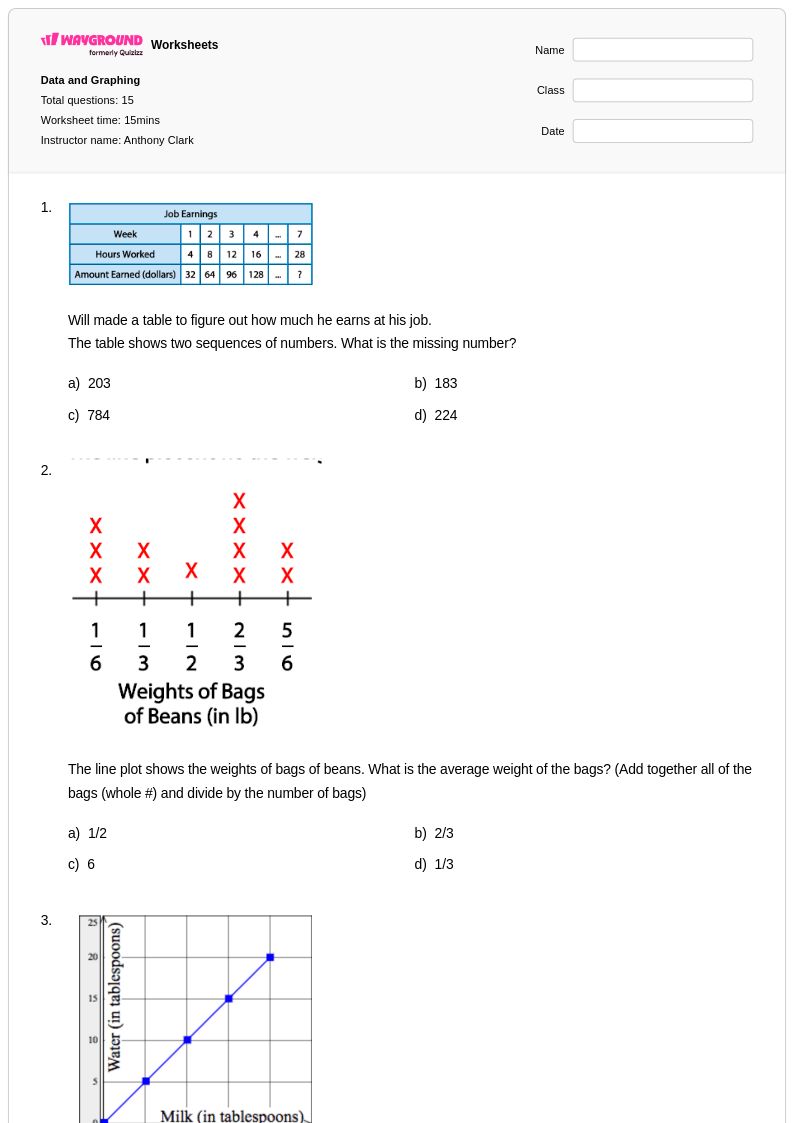
15 Q
5th - Uni
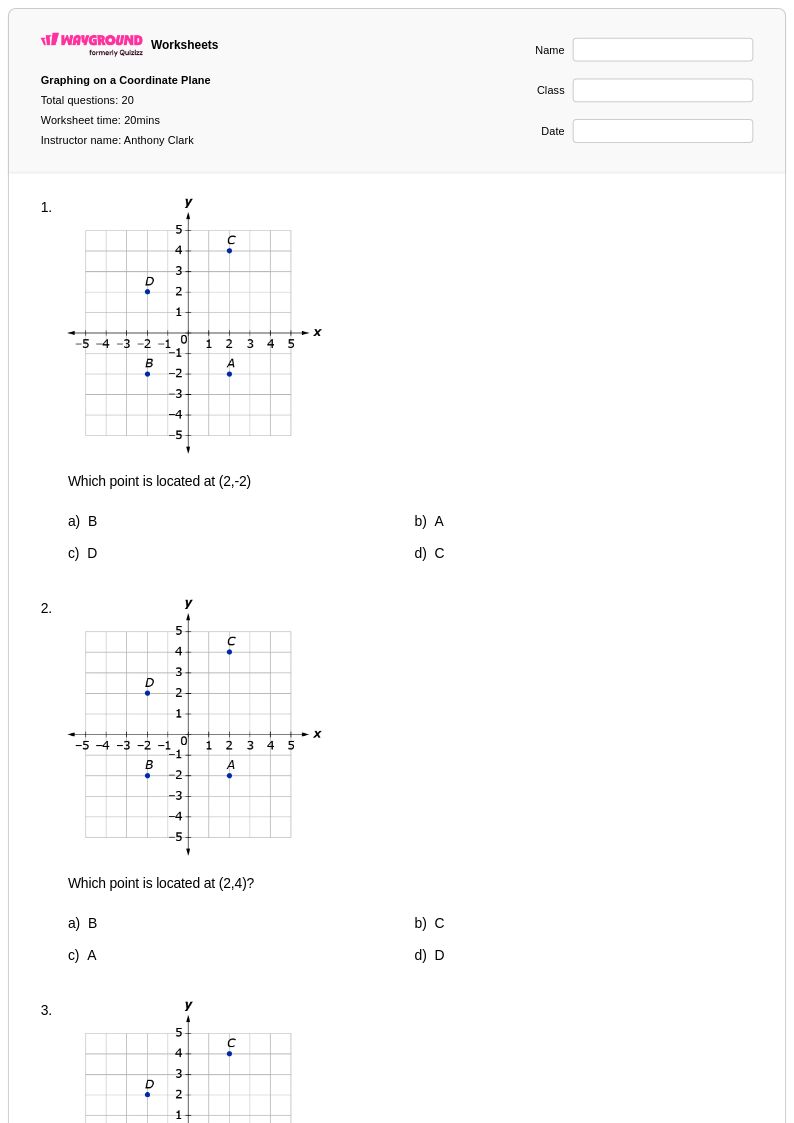
20 Q
6th - Uni
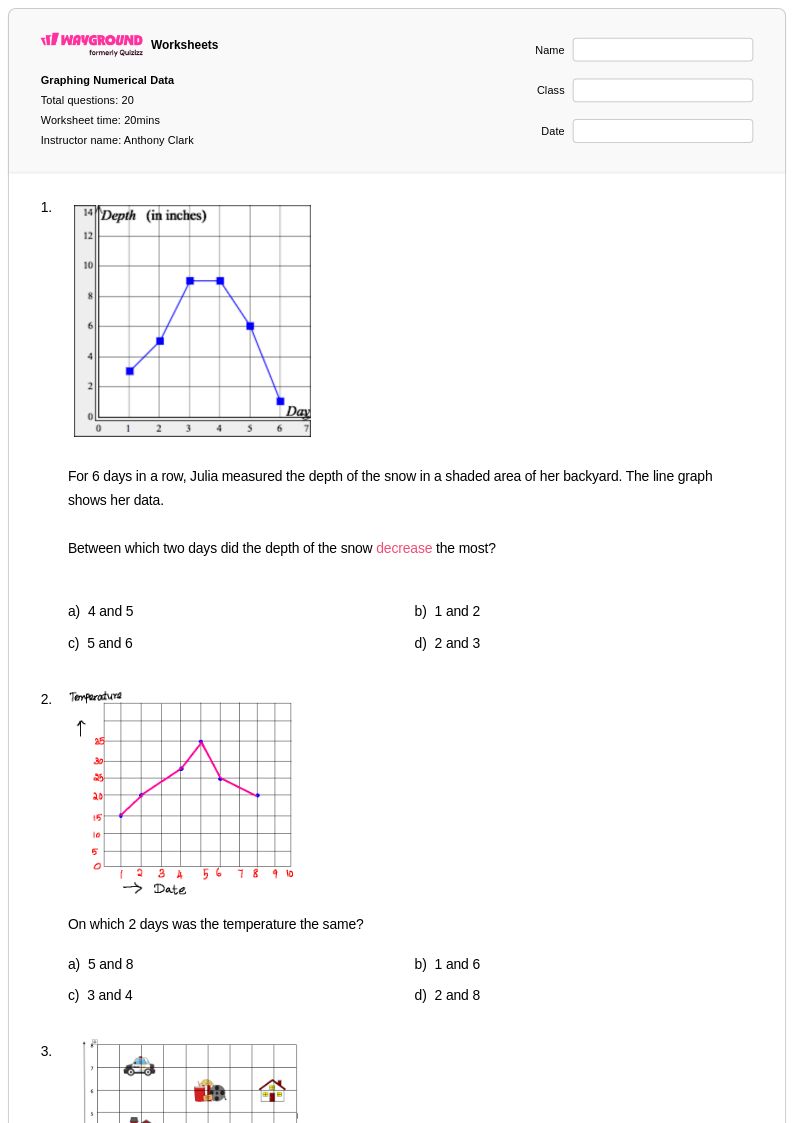
20 Q
5th - Uni
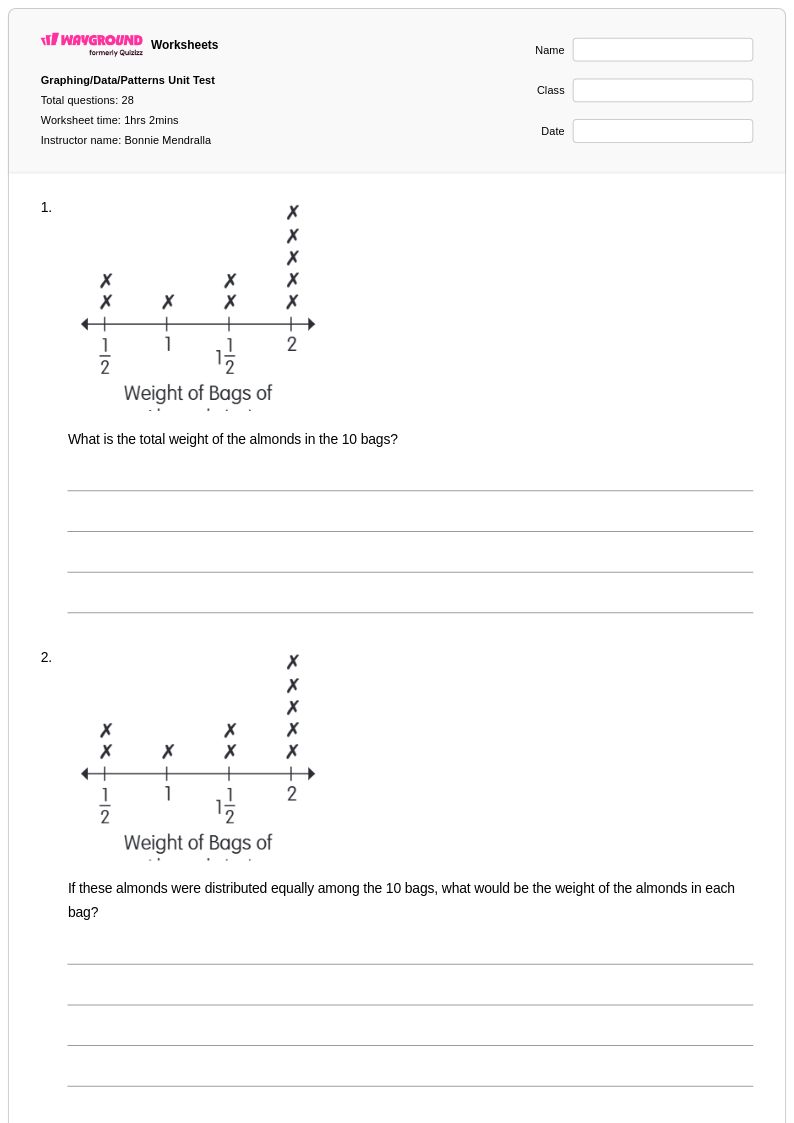
28 Q
5th - Uni
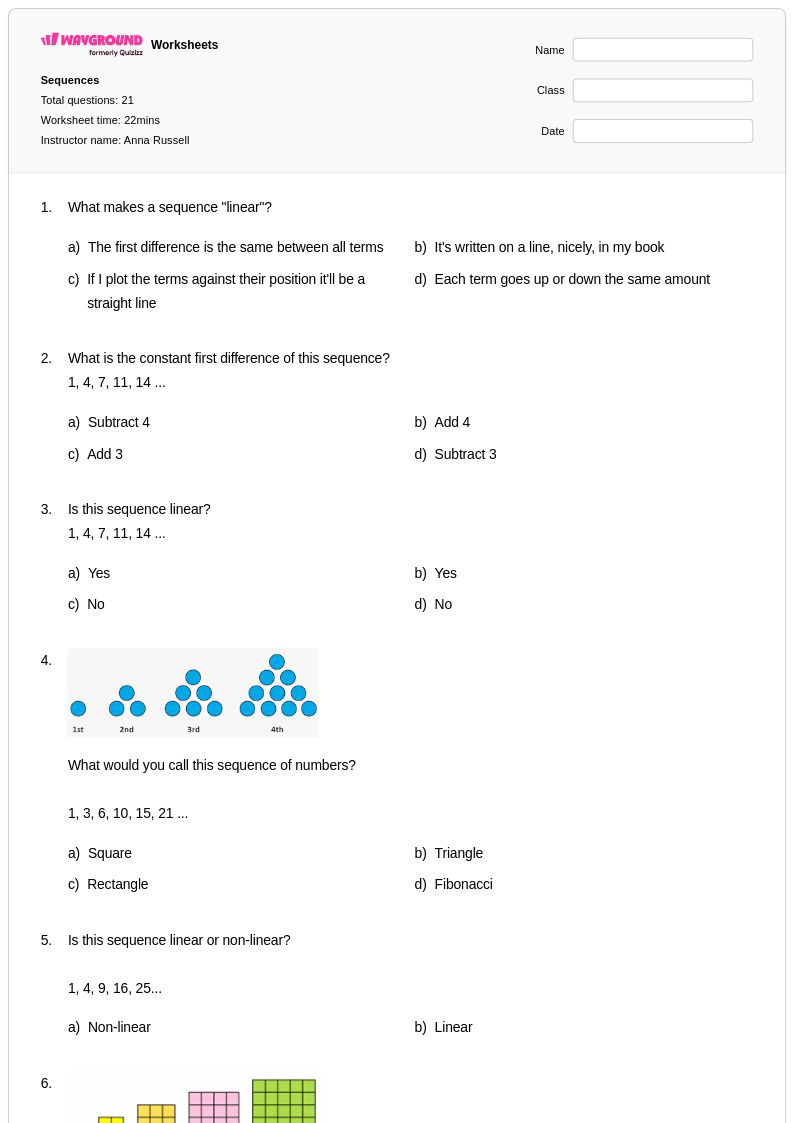
21 Q
4th - 7th
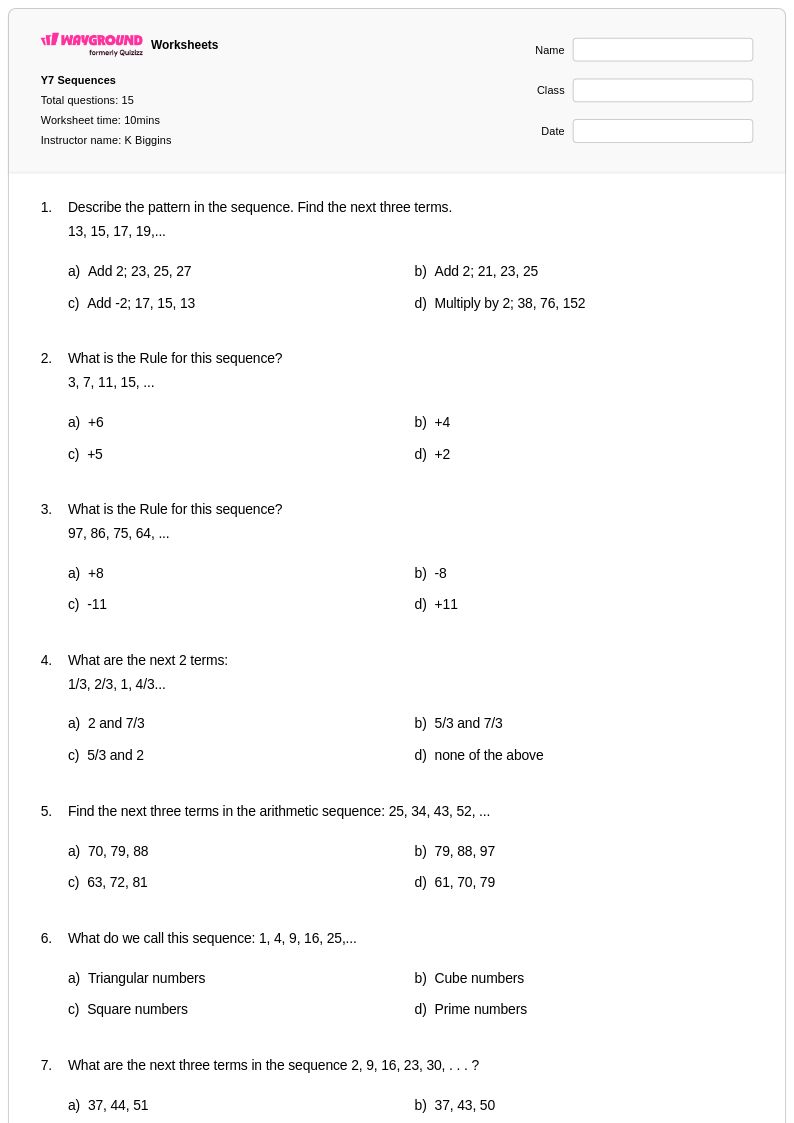
15 Q
6th - 7th
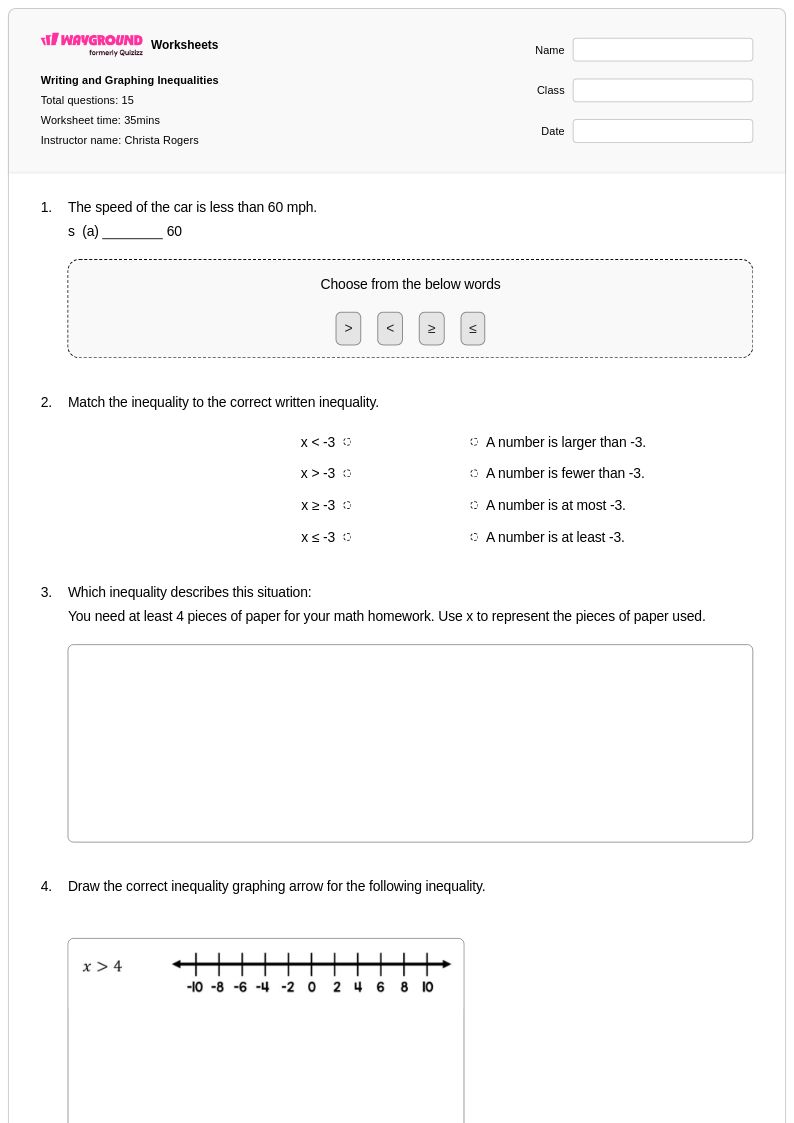
15 Q
6th
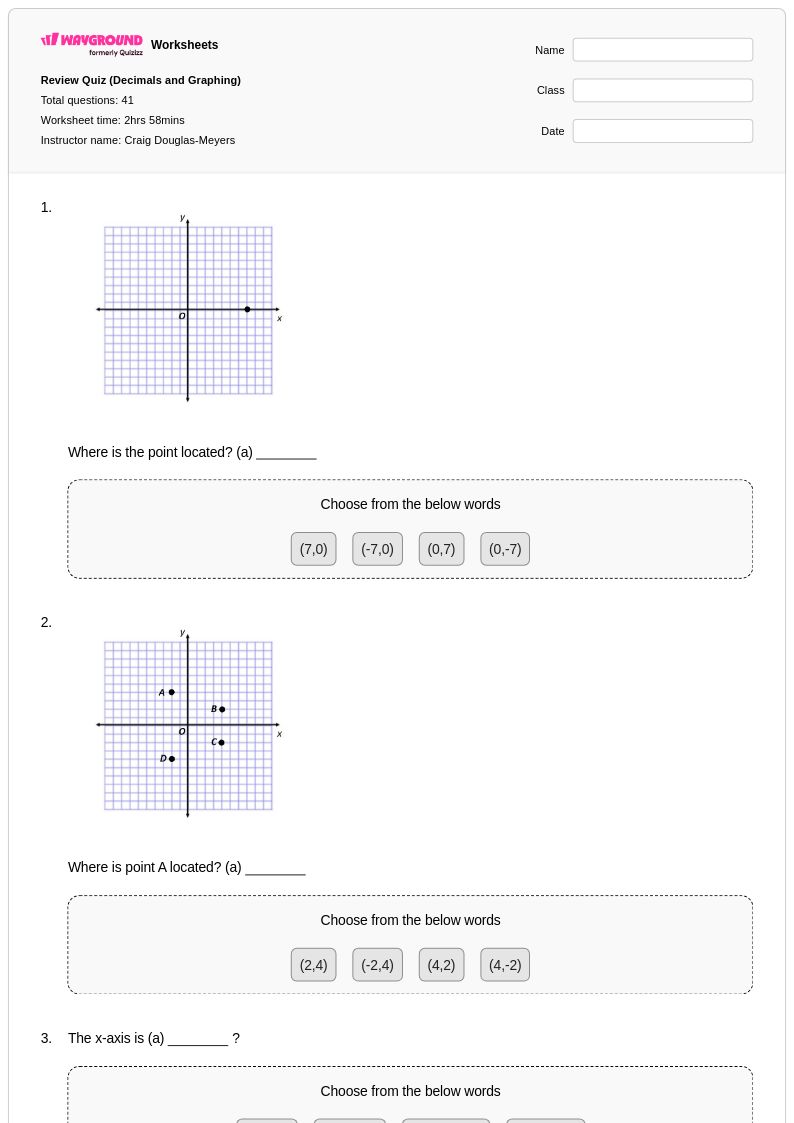
41 Q
6th
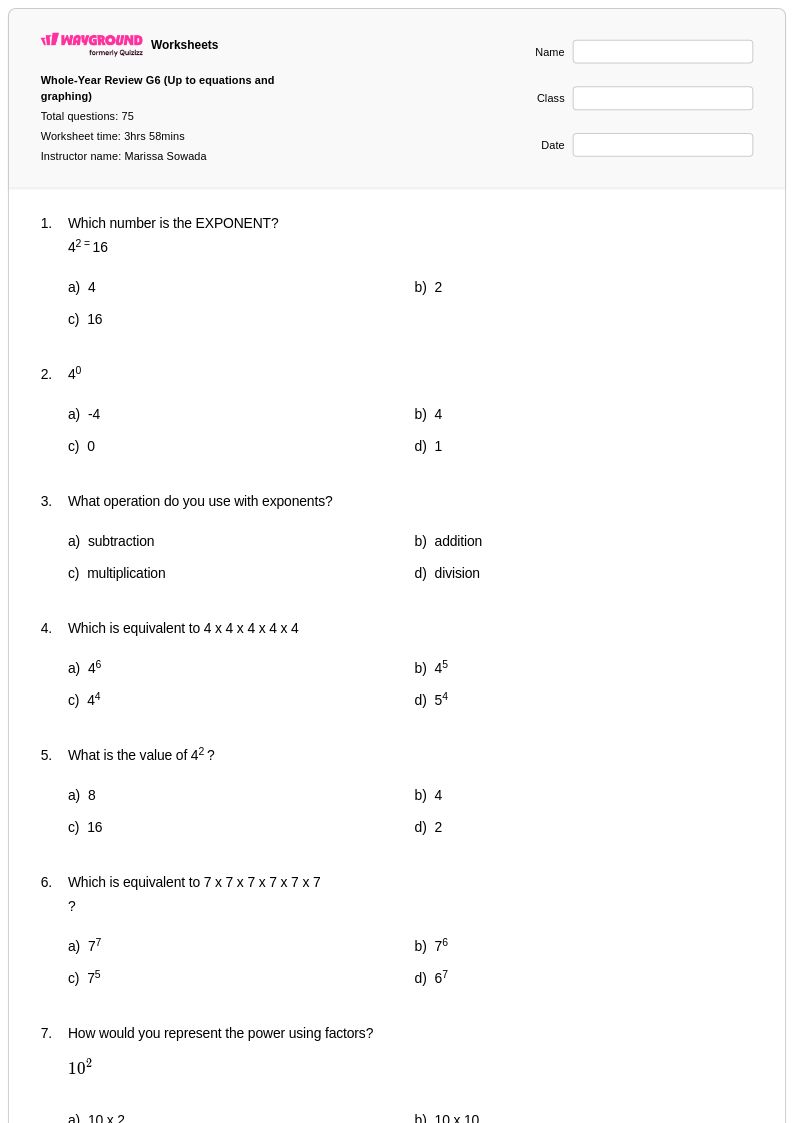
75 Q
6th
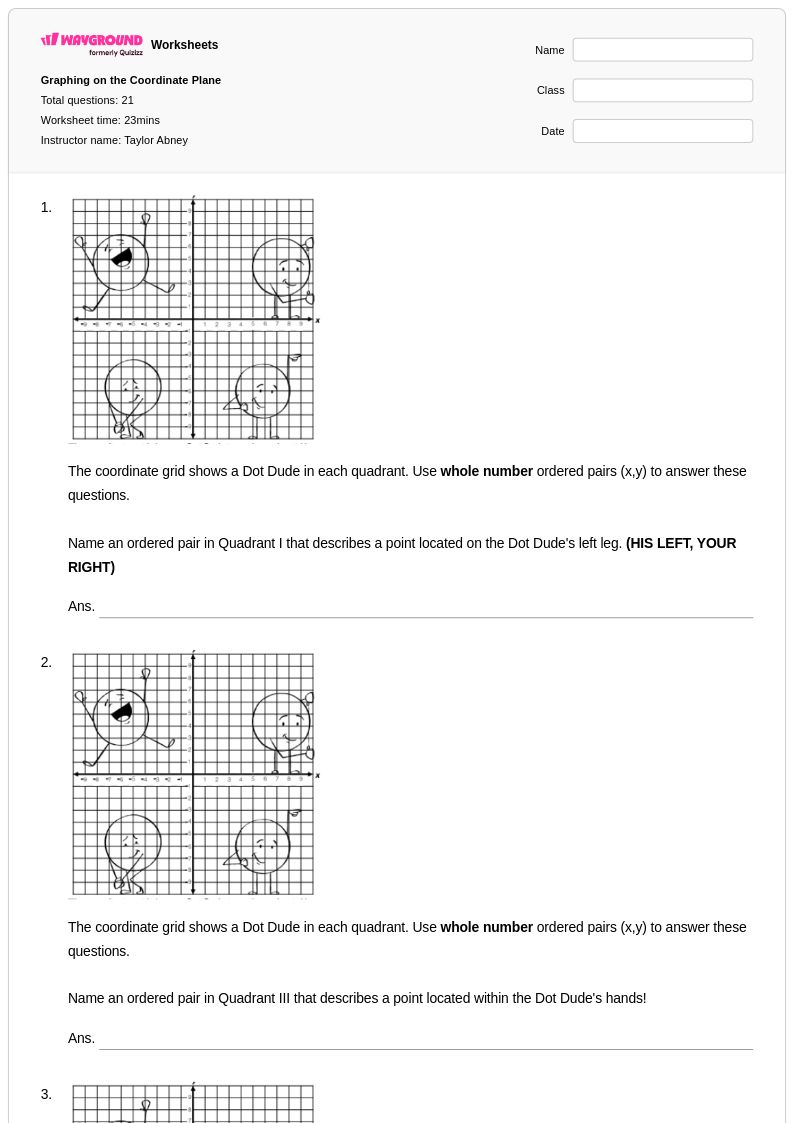
21 Q
6th
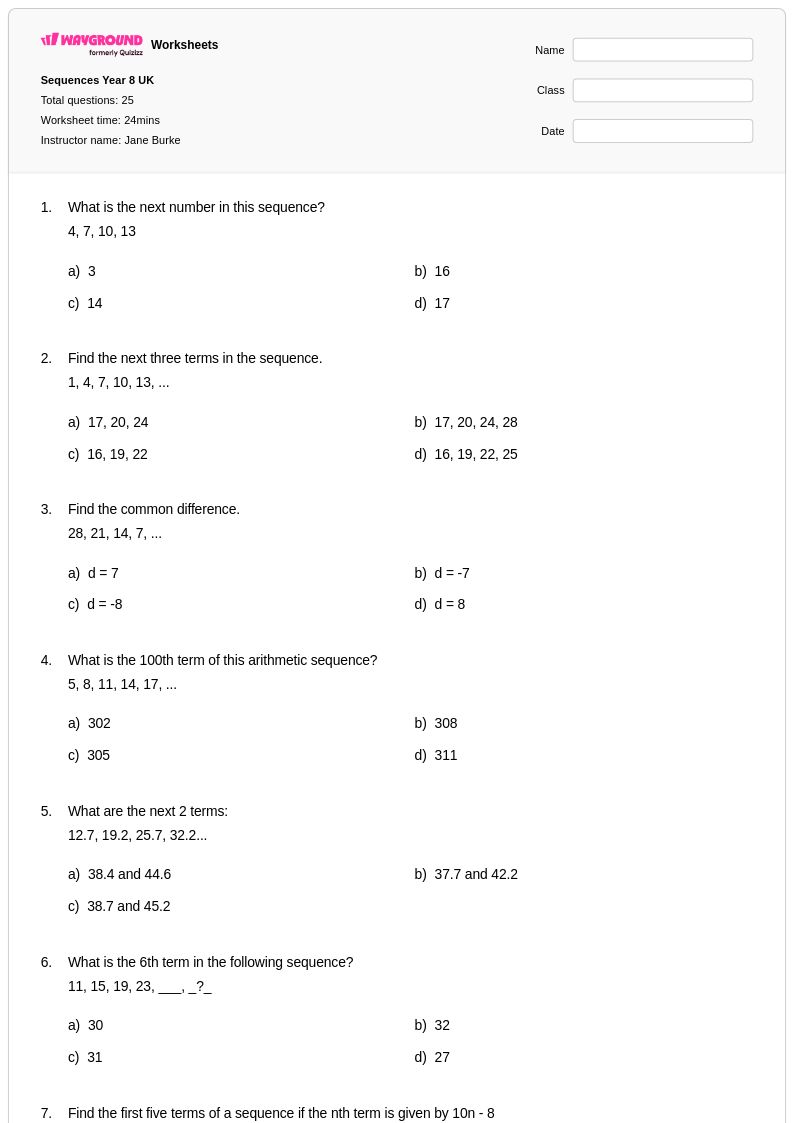
25 Q
6th - 8th
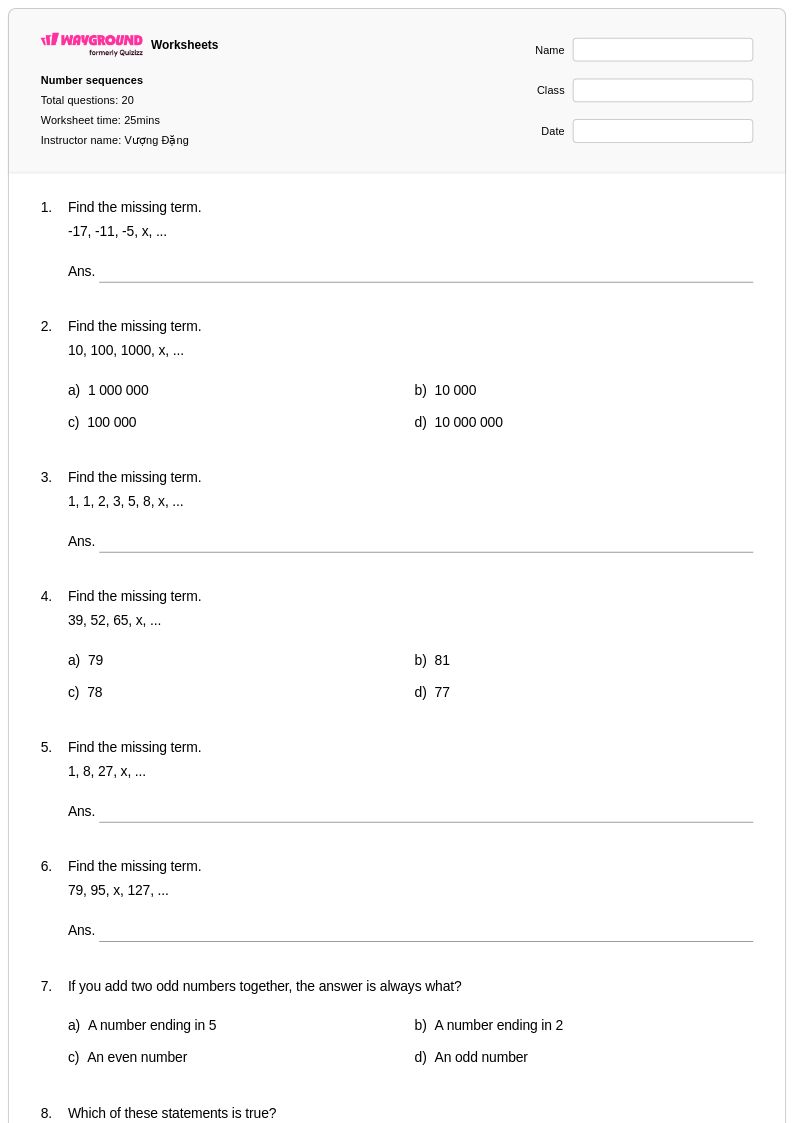
20 Q
5th - 8th
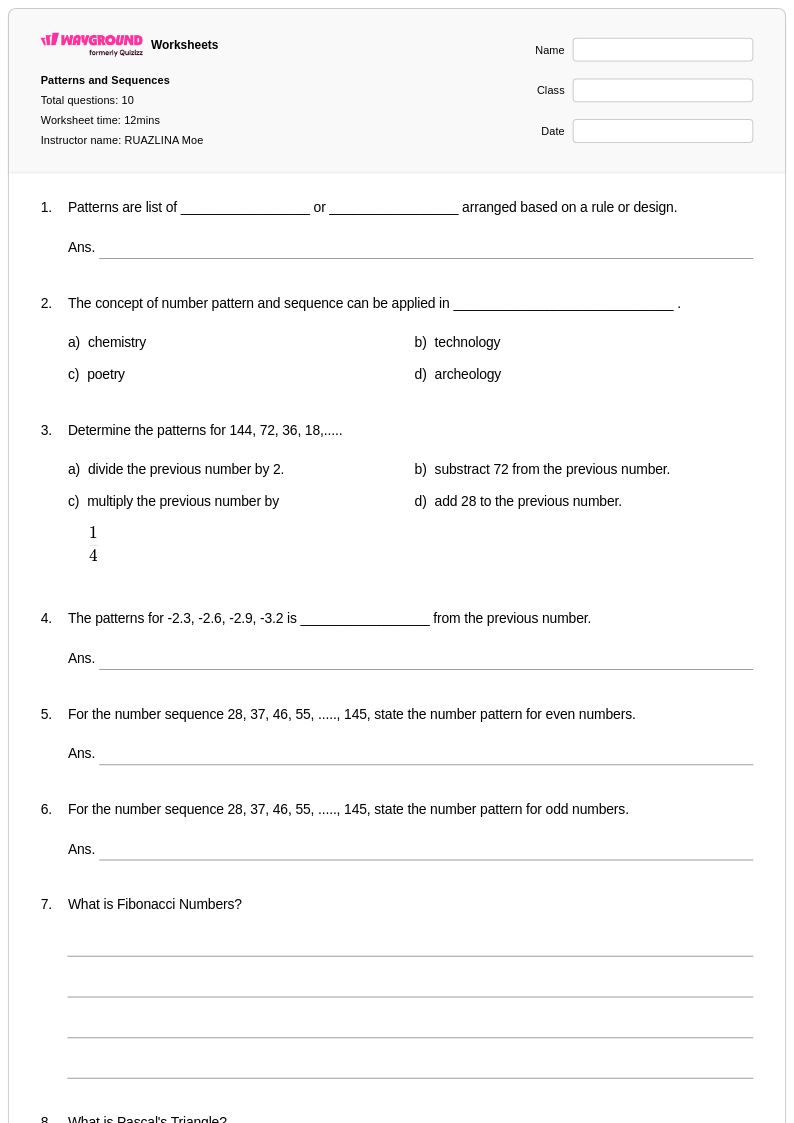
10 Q
1st - 12th
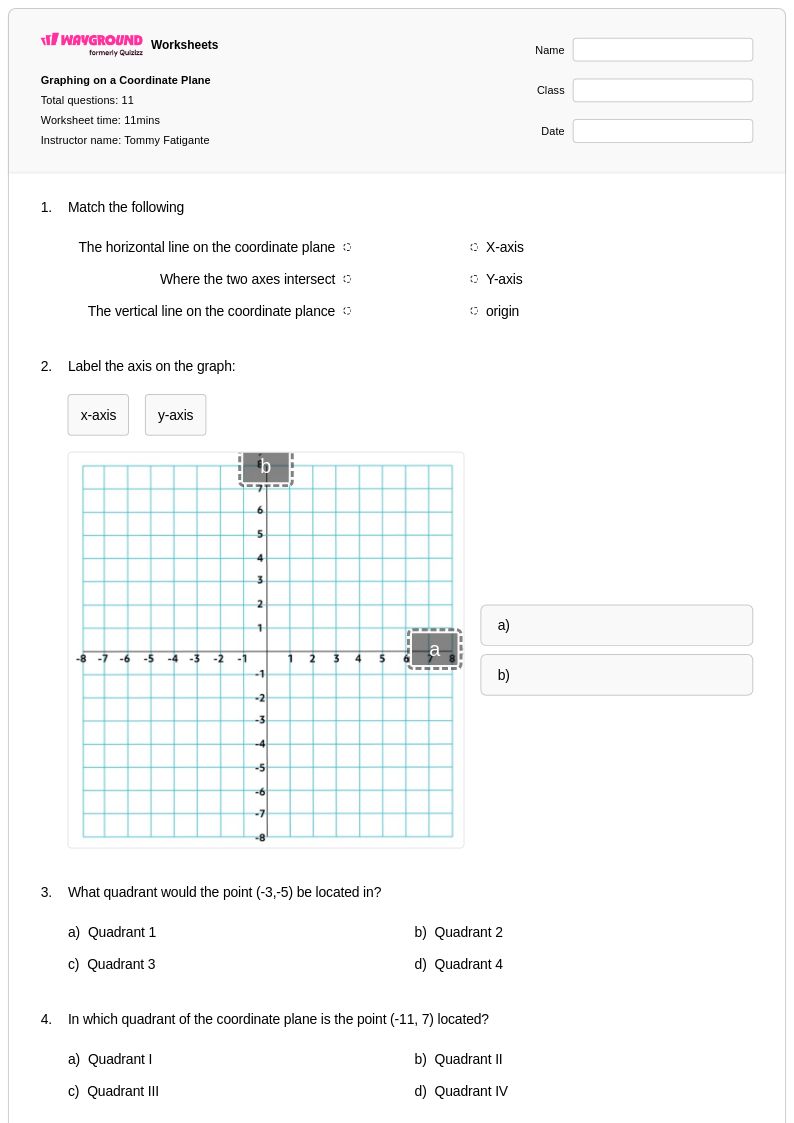
11 Q
6th
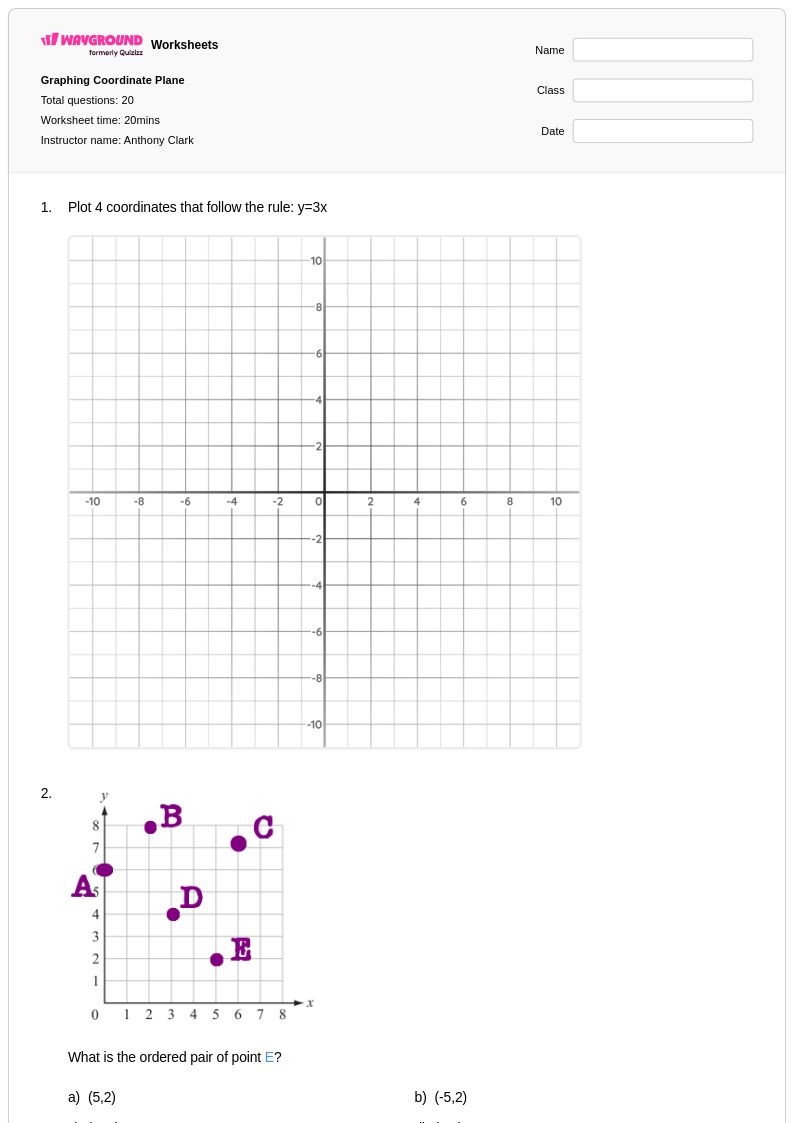
20 Q
5th - Uni
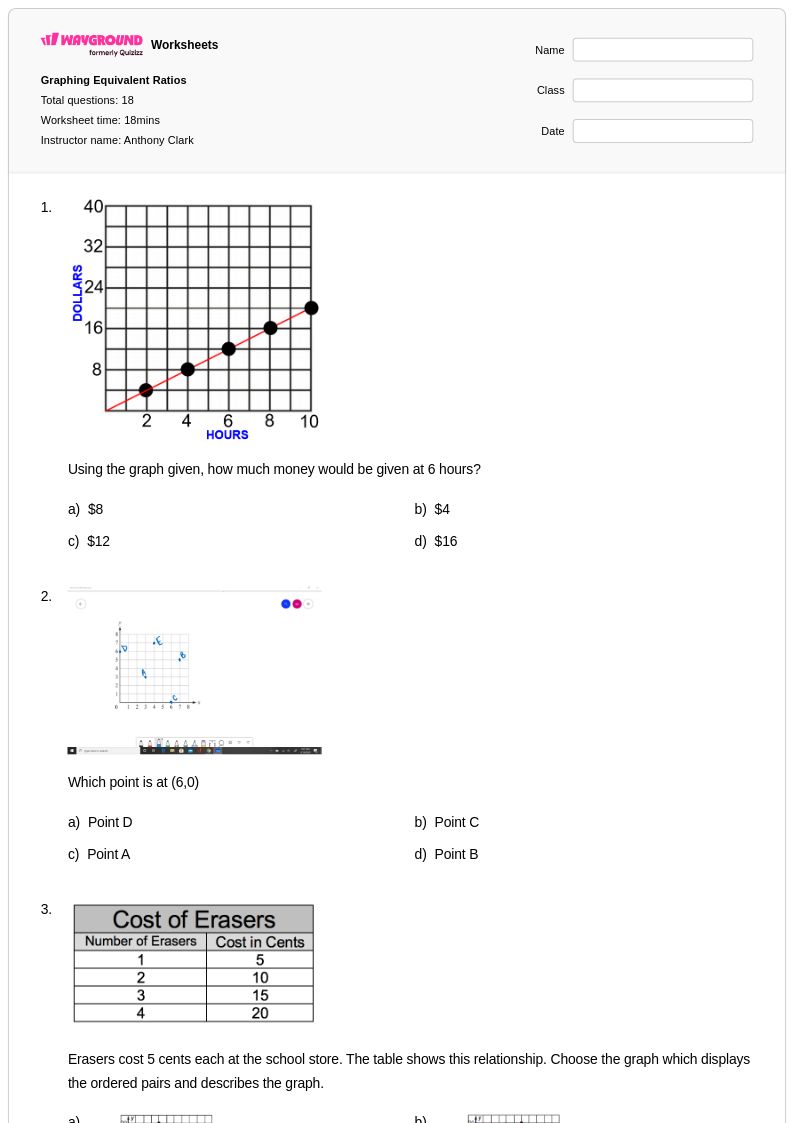
18 Q
6th - Uni
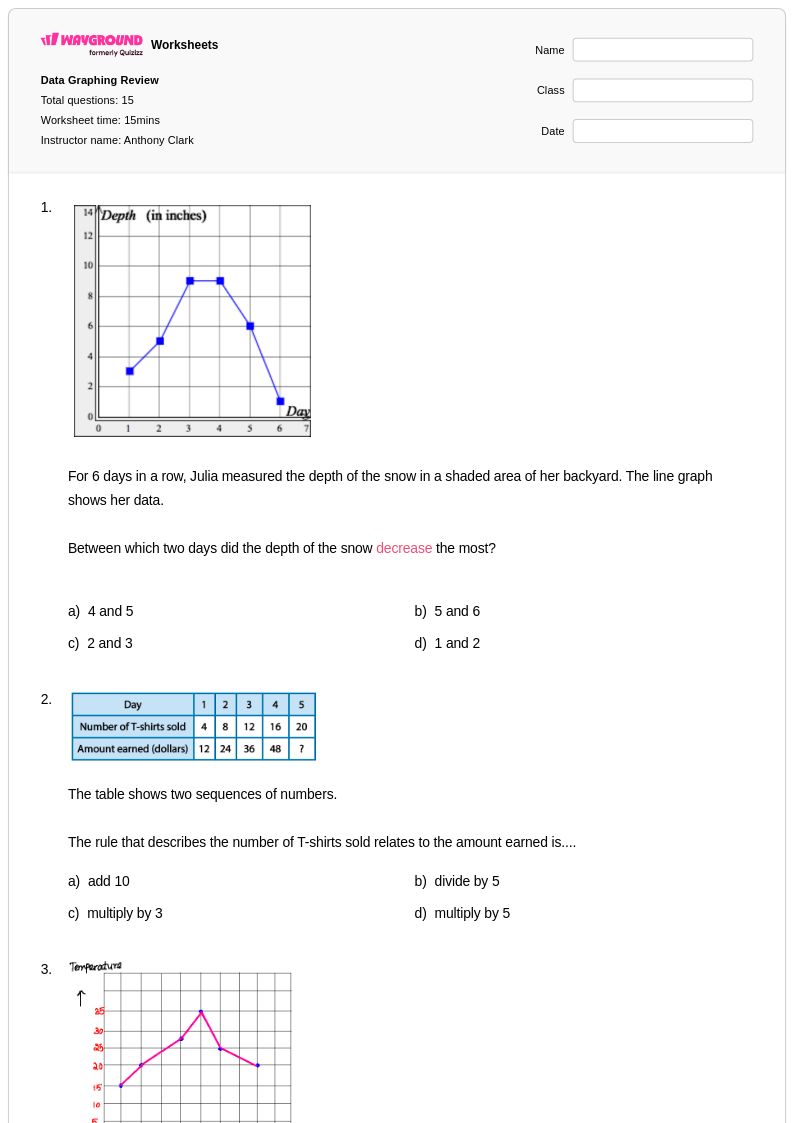
15 Q
5th - Uni
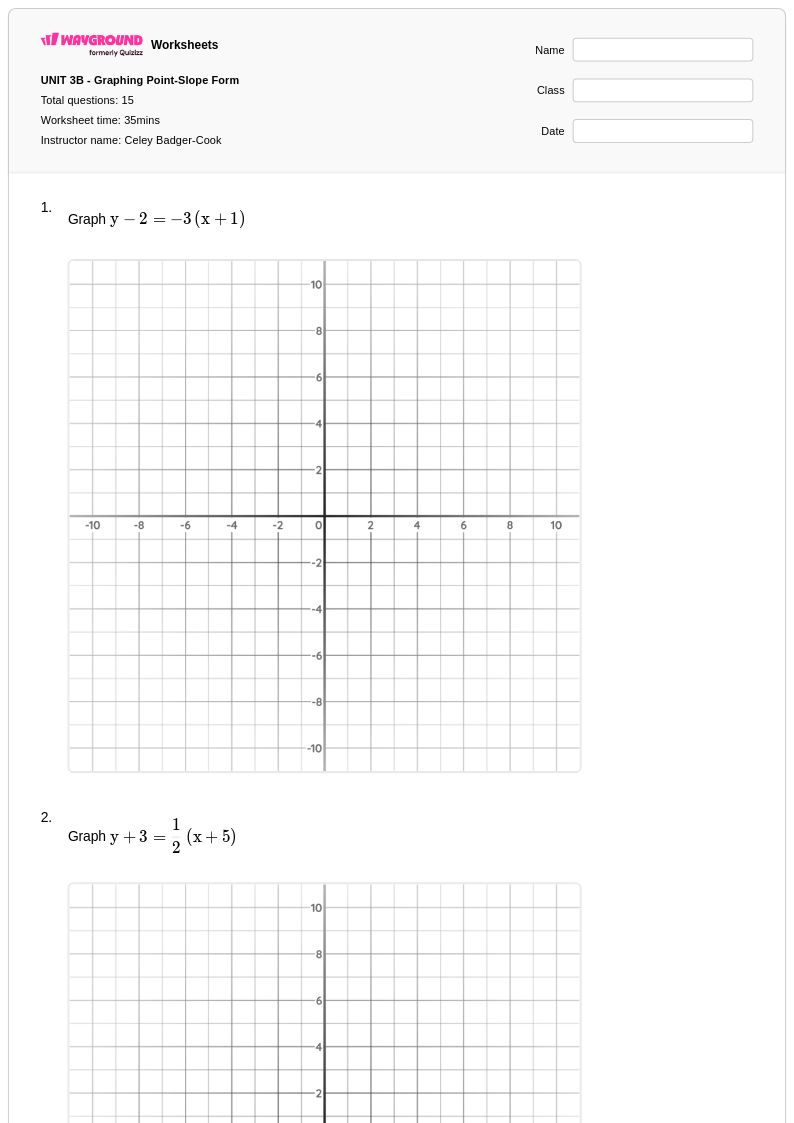
15 Q
6th - 8th
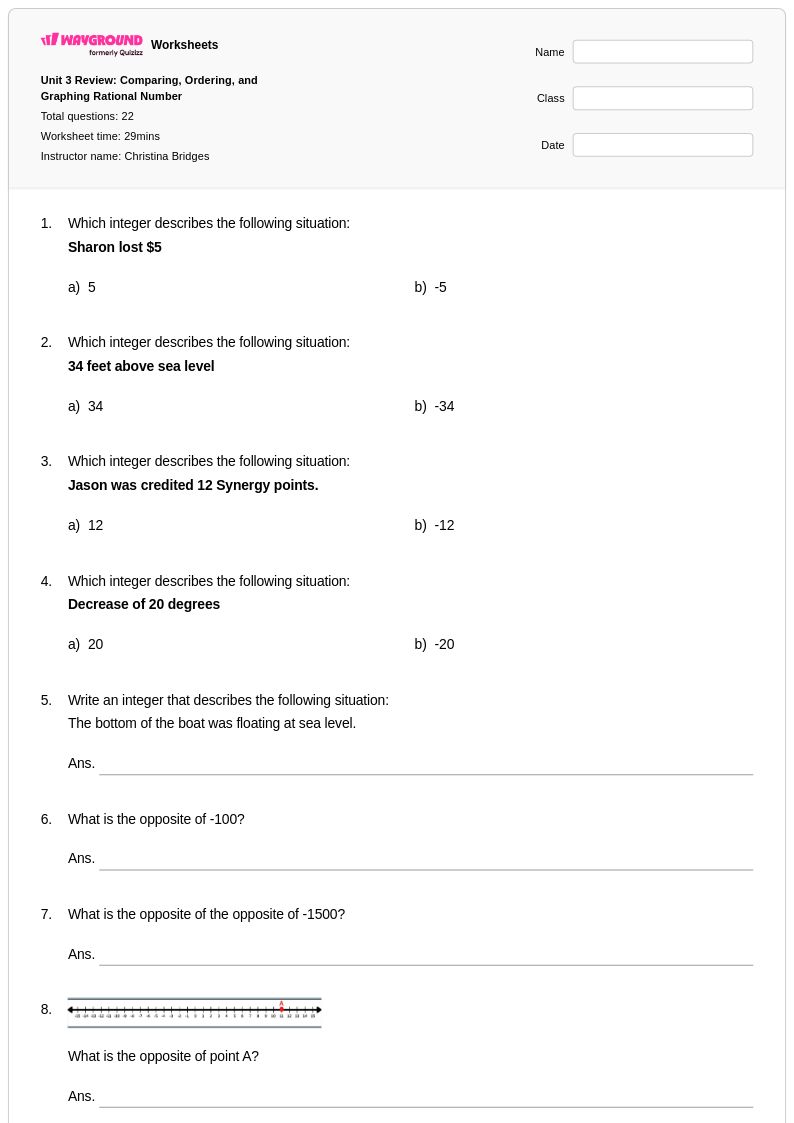
22 Q
6th
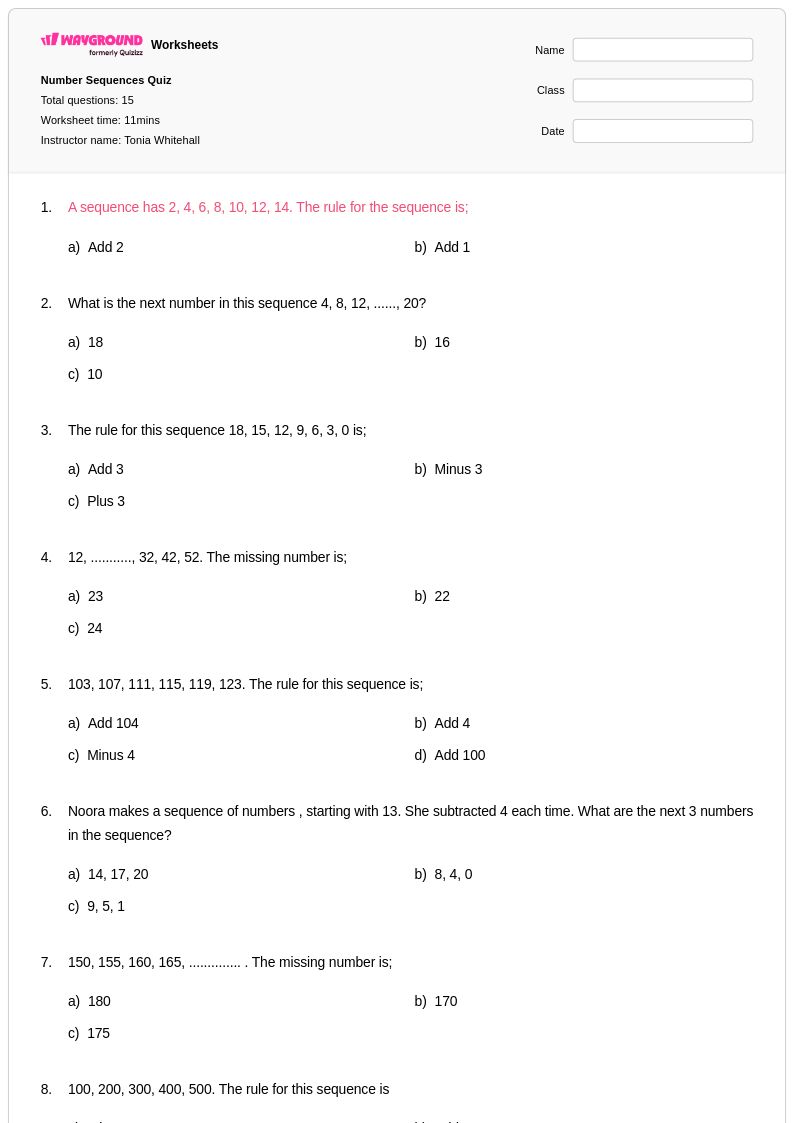
15 Q
6th - 9th
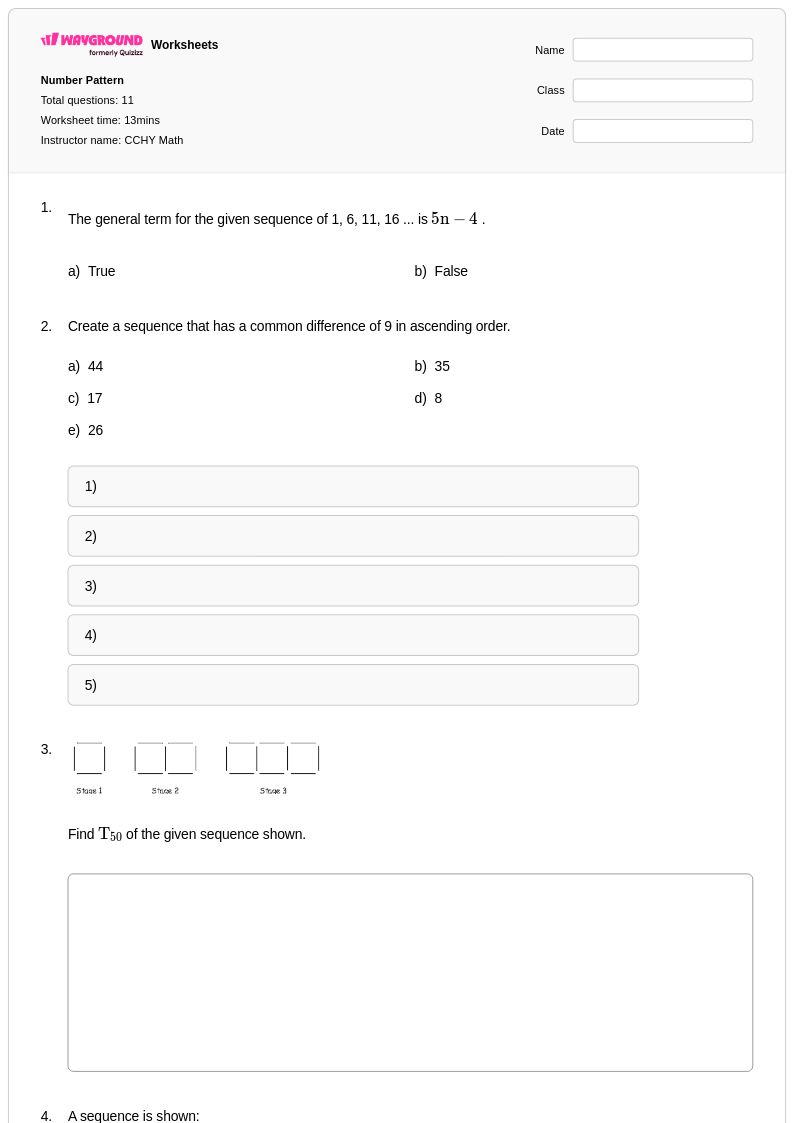
11 Q
5th - Uni
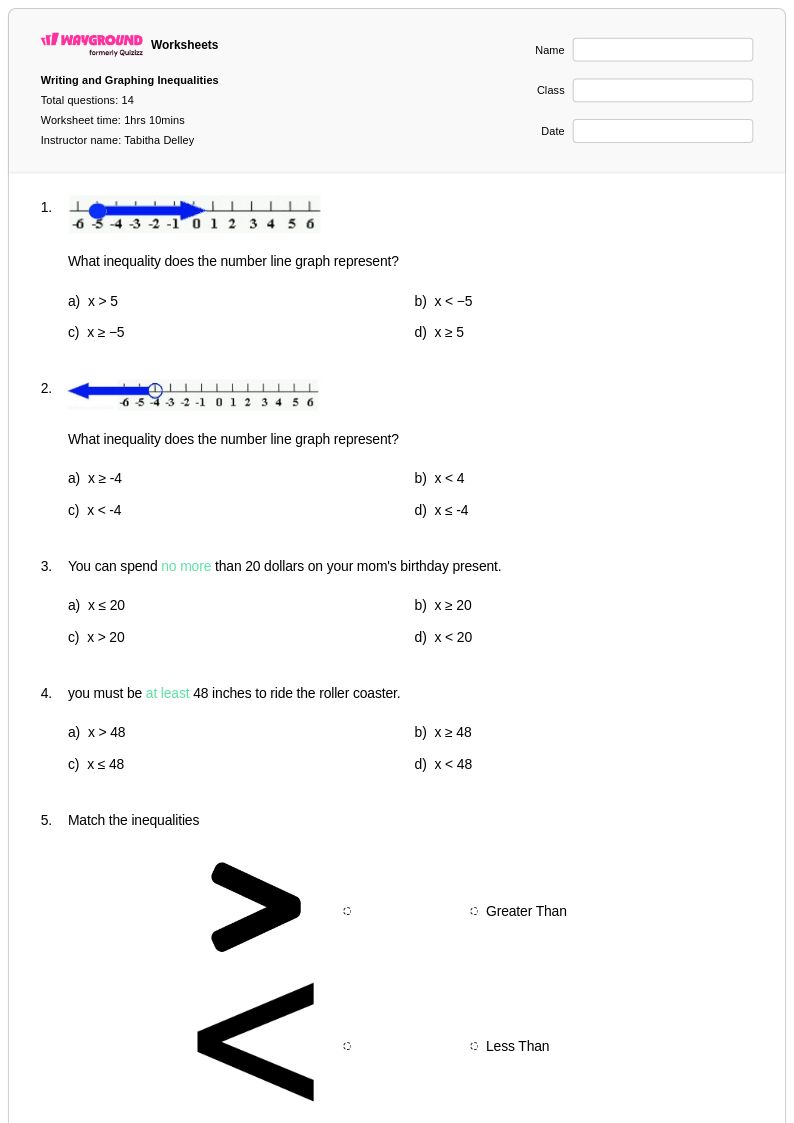
14 Q
6th - 8th
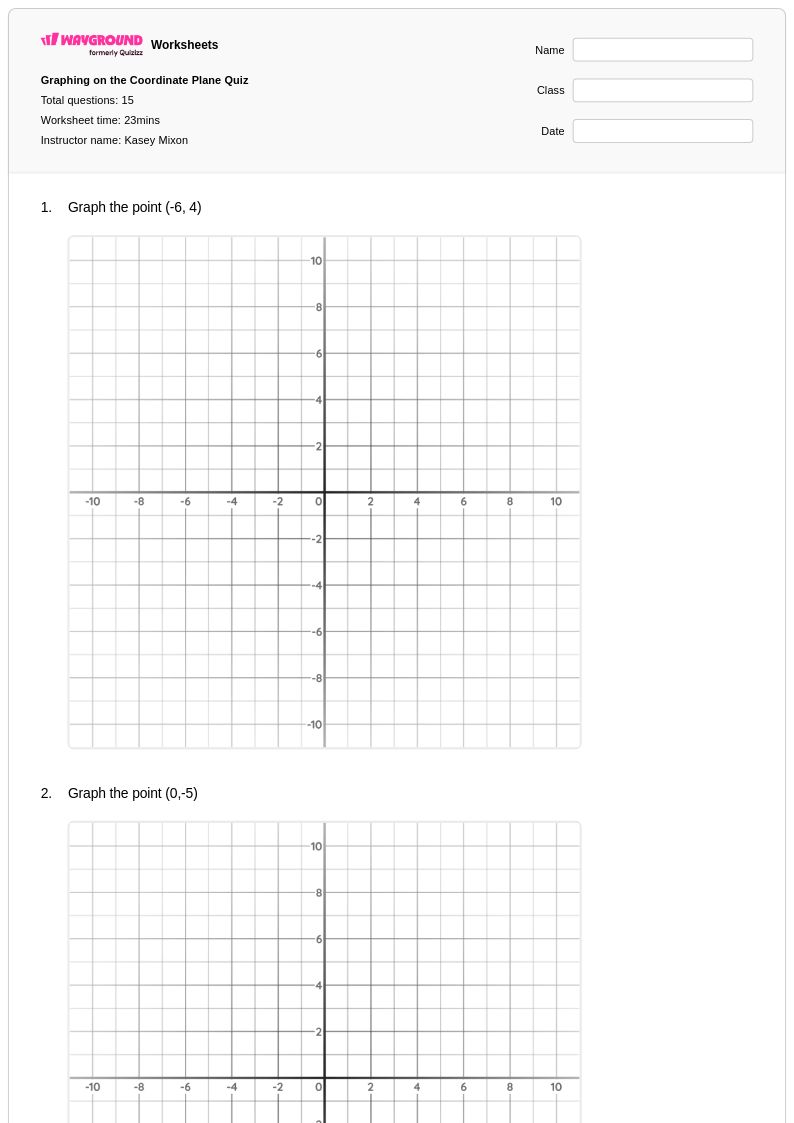
15 Q
6th
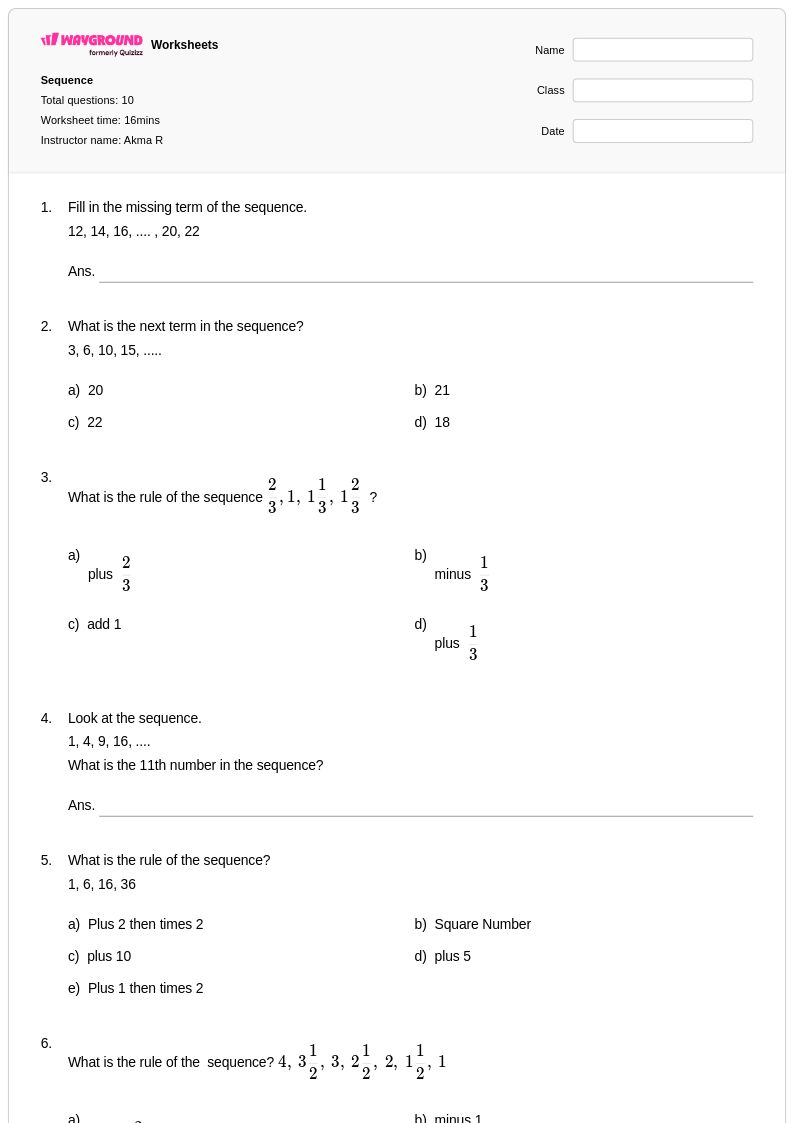
10 Q
6th
Explore Other Subject Worksheets for year 6
Explore printable Graphing Sequences worksheets for Year 6
Graphing sequences worksheets for Year 6 students available through Wayground (formerly Quizizz) provide essential practice in visualizing mathematical patterns and understanding the relationship between sequence terms and their positions. These comprehensive worksheets strengthen students' abilities to plot ordered pairs, interpret coordinate planes, and recognize linear and non-linear patterns within sequences. Each worksheet comes with a detailed answer key, making it easy for educators to assess student understanding and identify areas needing reinforcement. The free printables include a variety of practice problems that progress from simple arithmetic sequences to more complex patterns, helping sixth-grade students develop crucial graphical literacy skills while building confidence in both algebraic thinking and coordinate geometry.
Wayground (formerly Quizizz) supports mathematics educators with millions of teacher-created resources specifically designed for graphing sequences instruction, featuring robust search and filtering capabilities that allow teachers to quickly locate materials aligned with their curriculum standards. The platform's differentiation tools enable educators to customize worksheets based on individual student needs, while flexible formatting options provide both printable pdf versions for traditional classroom use and digital formats for online learning environments. These comprehensive worksheet collections facilitate effective lesson planning by offering varied approaches to skill practice, targeted remediation for struggling learners, and enrichment opportunities for advanced students, ensuring that all sixth-grade students can master the fundamental concepts of representing sequences graphically while developing their mathematical reasoning abilities.
FAQs
What grade do students learn to graph sequences?
How should I teach graphing sequences to 6th graders?
What types of problems are on a 6th-grade graphing sequences worksheet?
What's a common misconception for 6th graders with this topic?
How do I use this worksheet with my students?
How does this topic align with 6th-grade Common Core math standards?