
10 Q
7th
14 Q
7th - Uni
11 Q
5th - Uni
20 Q
6th - Uni
48 Q
6th - 8th
20 Q
6th - Uni
20 Q
6th - 8th
20 Q
7th
18 Q
6th - 8th
![Interpreting Visuals [7.SP.4] - Printable Graphs-of-sequences Worksheets Year 7 - Wayground](https://quizizz-static.s3.amazonaws.com/_media/worksheets-new/632321f8bc6a79001d175365-interpreting-visuals-7sp4)
15 Q
7th
30 Q
6th - 8th
13 Q
6th - 8th
22 Q
7th
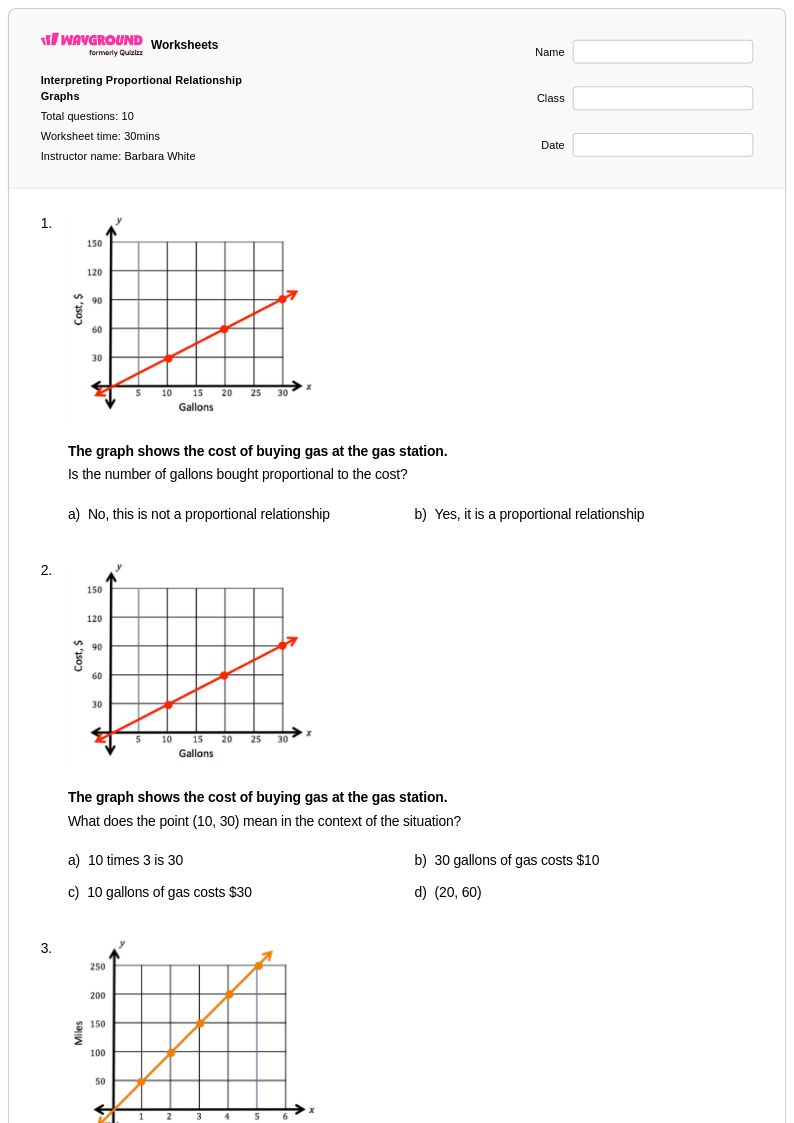
10 Q
7th
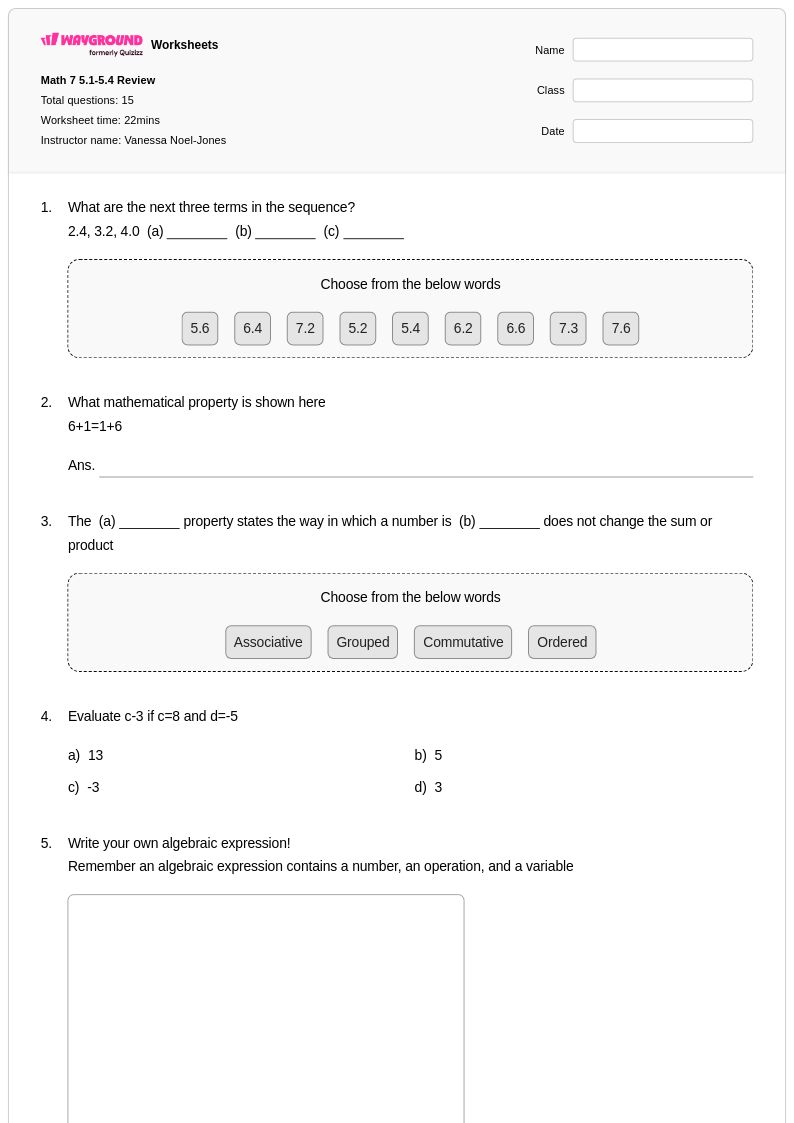
15 Q
7th
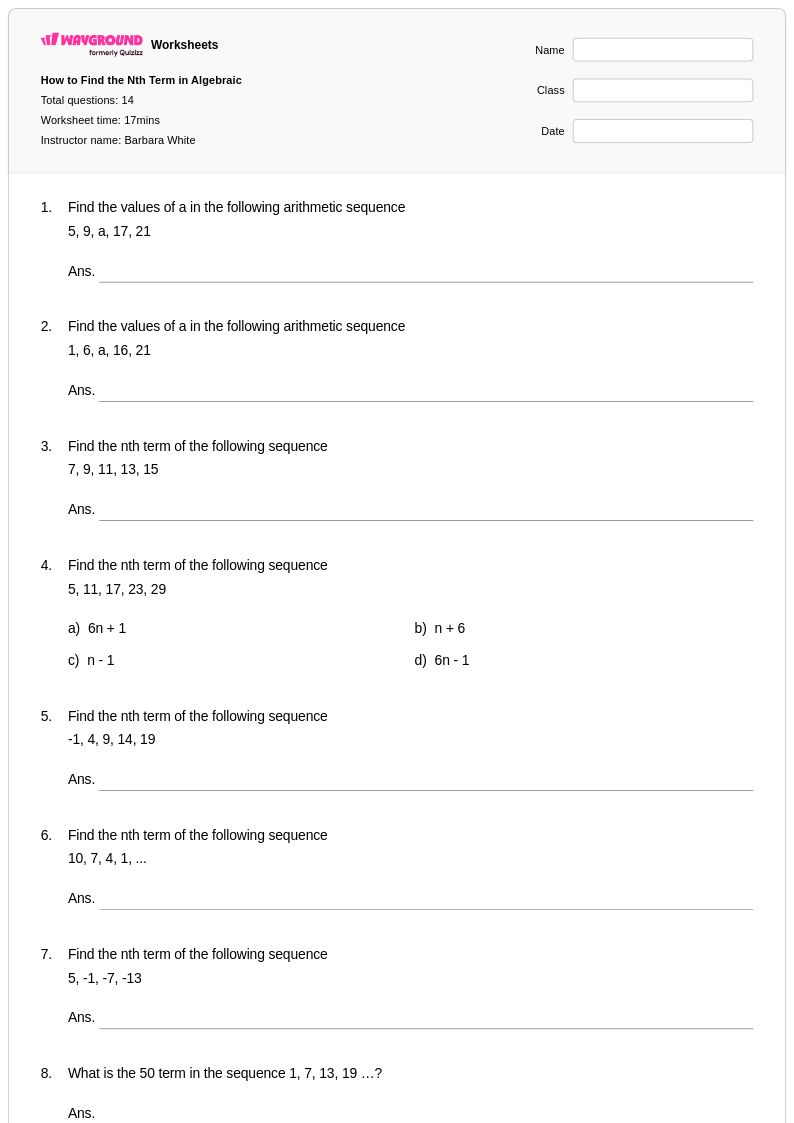
14 Q
7th - 9th

10 Q
7th
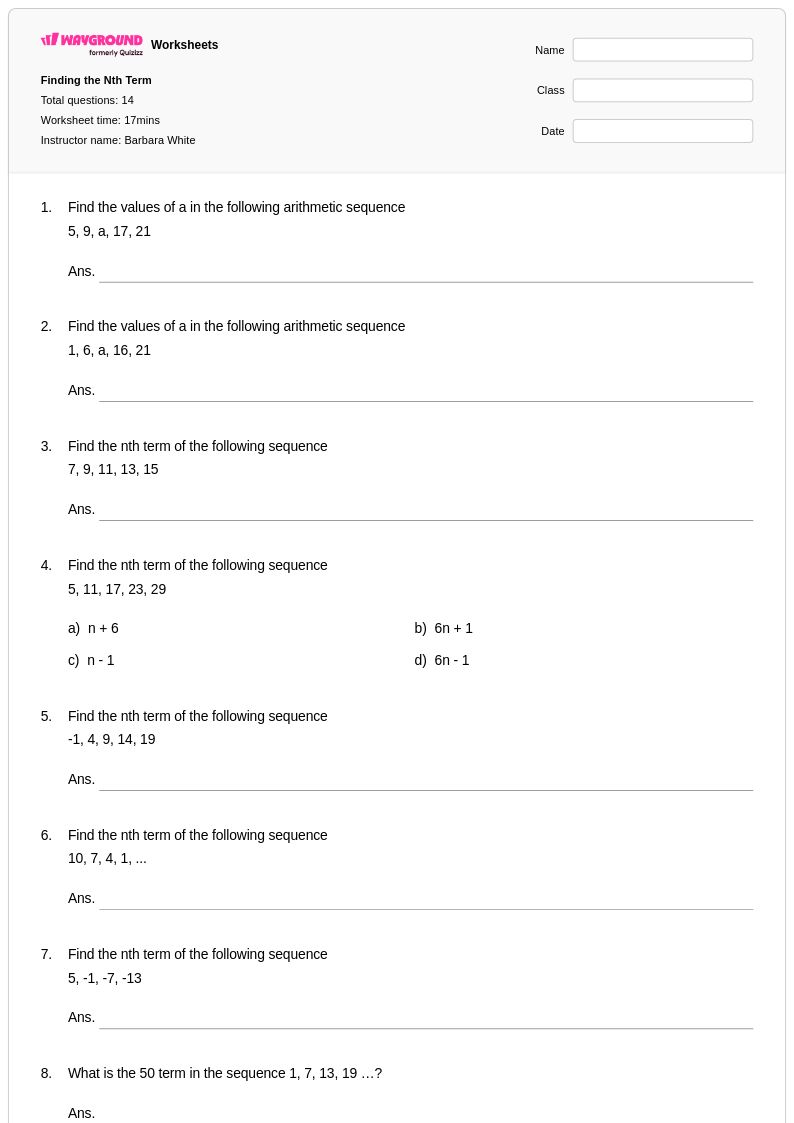
14 Q
7th - 9th
14 Q
7th - 9th
16 Q
7th
16 Q
6th - Uni
10 Q
7th
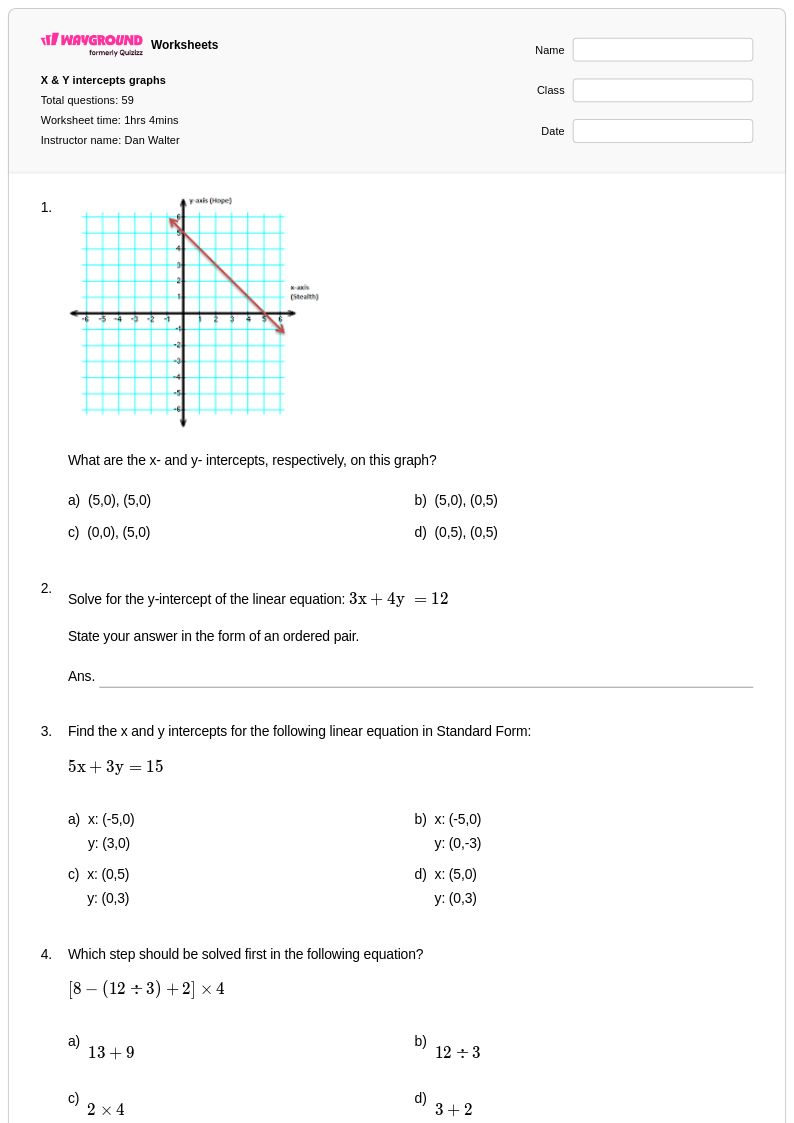
59 Q
7th
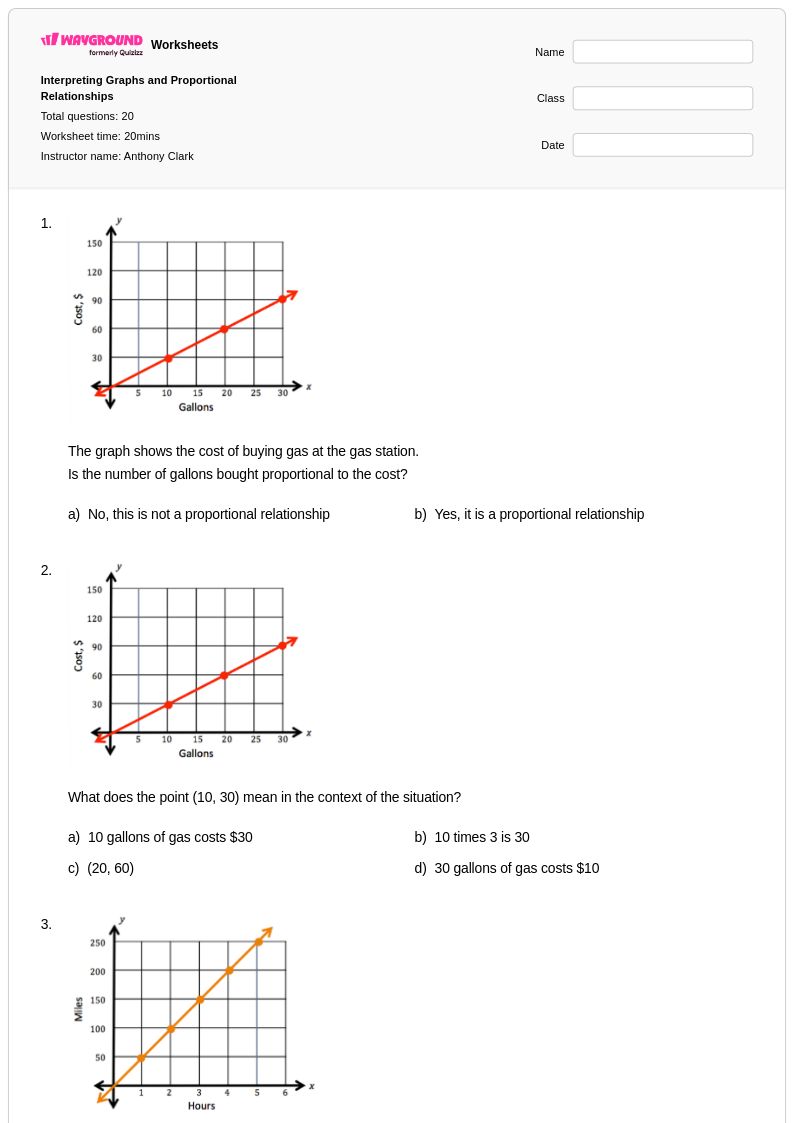
20 Q
7th - Uni
Explore Other Subject Worksheets for year 7
Explore printable Graphs of Sequences worksheets for Year 7
Graphs of Sequences worksheets for Year 7 students available through Wayground (formerly Quizizz) provide comprehensive practice in visualizing and interpreting sequential patterns through coordinate graphing. These expertly designed resources strengthen students' ability to plot arithmetic and geometric sequences on coordinate planes, analyze the relationship between term position and term value, and identify patterns in graphical representations of numerical sequences. The worksheets include detailed practice problems that guide seventh graders through creating scatter plots from sequence data, interpreting trends in graphed sequences, and connecting algebraic expressions to their visual representations. Each printable worksheet comes with a complete answer key, allowing students to verify their understanding of how sequences translate into coordinate points and graphical patterns, while the free pdf format ensures accessibility for both classroom instruction and independent study.
Wayground (formerly Quizizz) empowers educators with millions of teacher-created worksheet collections specifically designed for graphs of sequences instruction, featuring robust search and filtering capabilities that allow teachers to locate resources perfectly matched to their Year 7 mathematics curriculum standards. The platform's differentiation tools enable instructors to customize worksheets based on individual student needs, adjusting complexity levels for both remediation support and enrichment challenges while maintaining focus on essential graphing and sequence analysis skills. Teachers benefit from flexible formatting options that include both printable pdf versions for traditional paper-and-pencil practice and digital formats for interactive classroom engagement, streamlining lesson planning and providing versatile resources for skill practice sessions. These comprehensive collections support effective mathematics instruction by offering standards-aligned content that reinforces the critical connection between algebraic thinking and graphical representation in sequence analysis.
FAQs
What is the focus of graphing sequences in 7th grade?
How can I teach the difference between arithmetic and geometric sequence graphs?
What skills do these 7th-grade worksheets build?
What's a typical error for 7th graders when graphing sequences?
How can I use this specific worksheet?
How does this topic connect to the 7th-grade curriculum?