Free Printable Healthy Habits Worksheets for Year 7
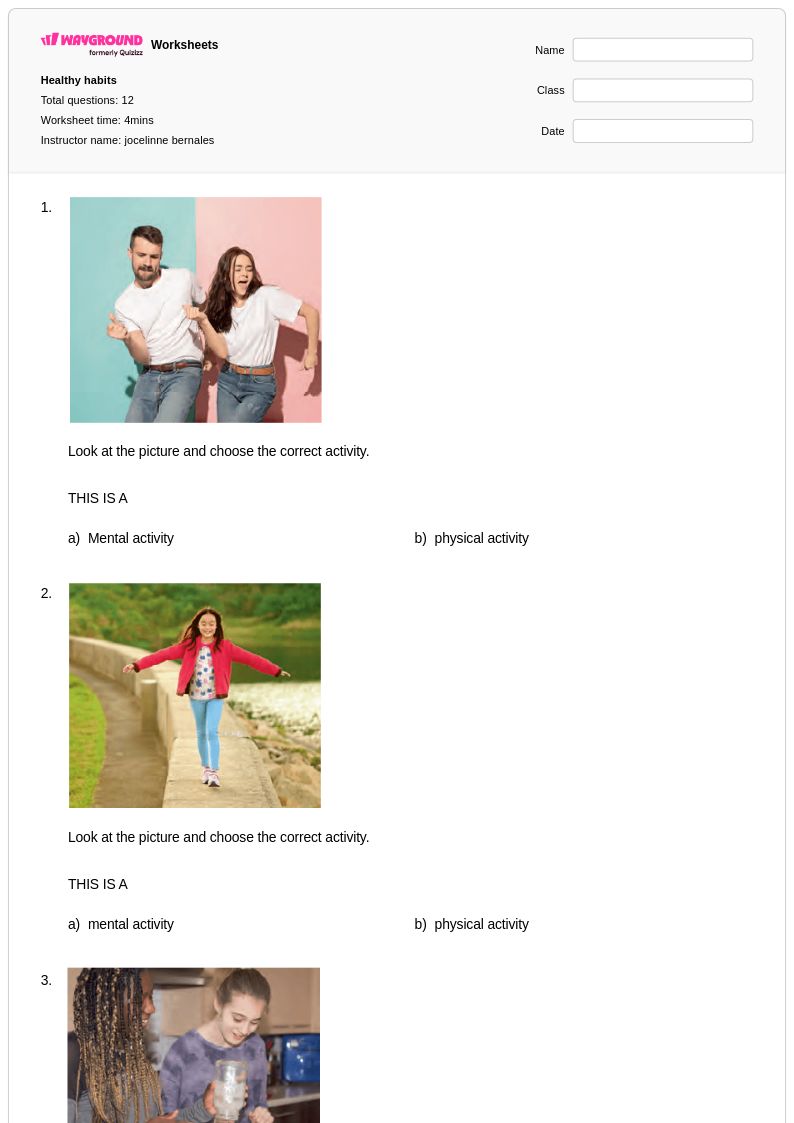
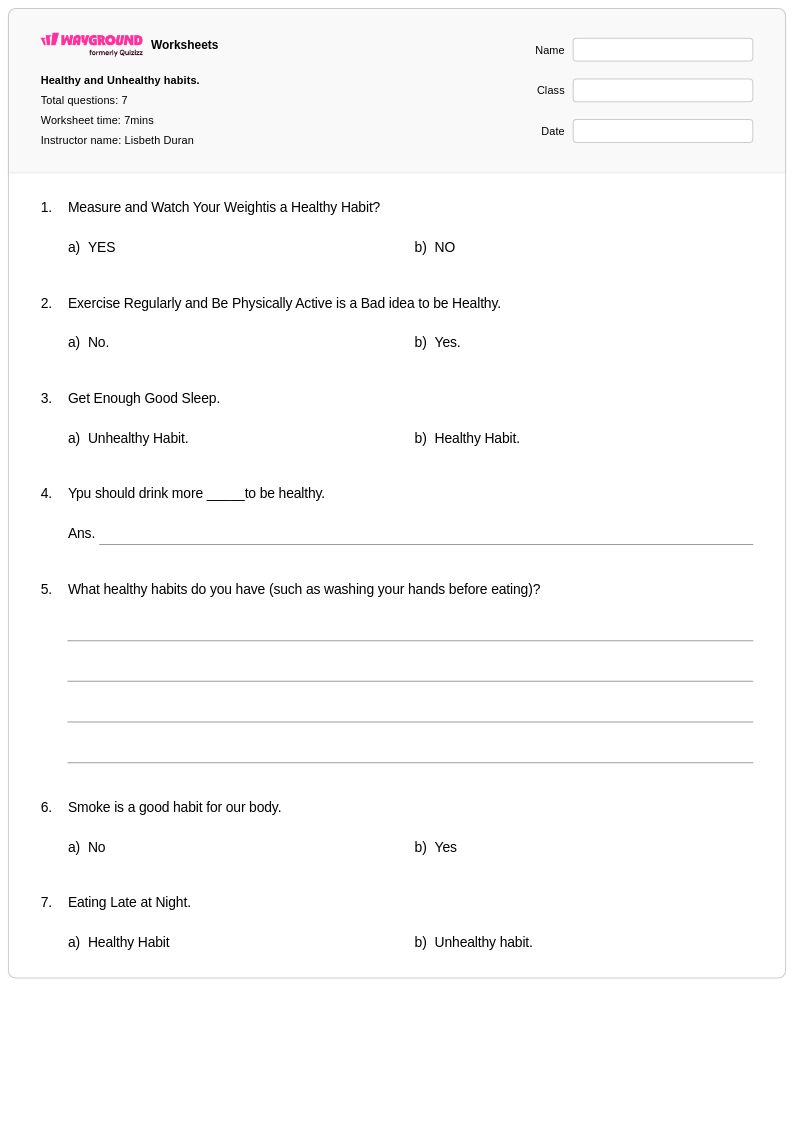
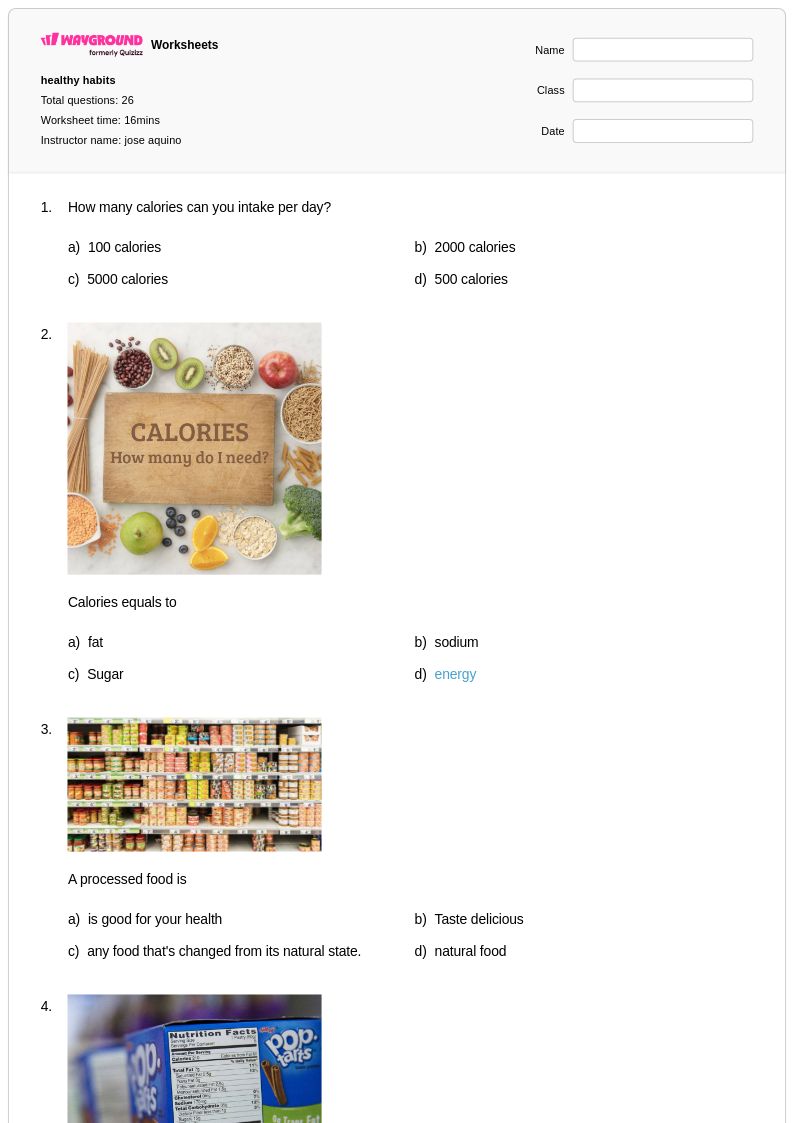
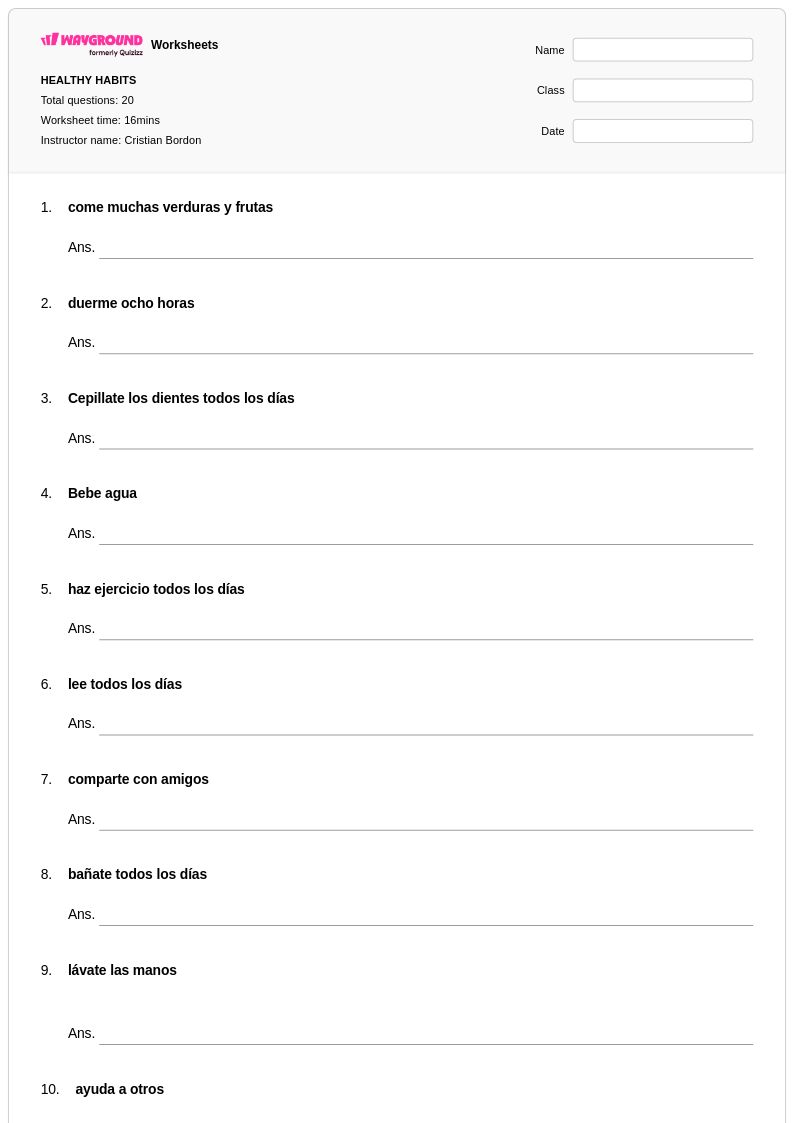
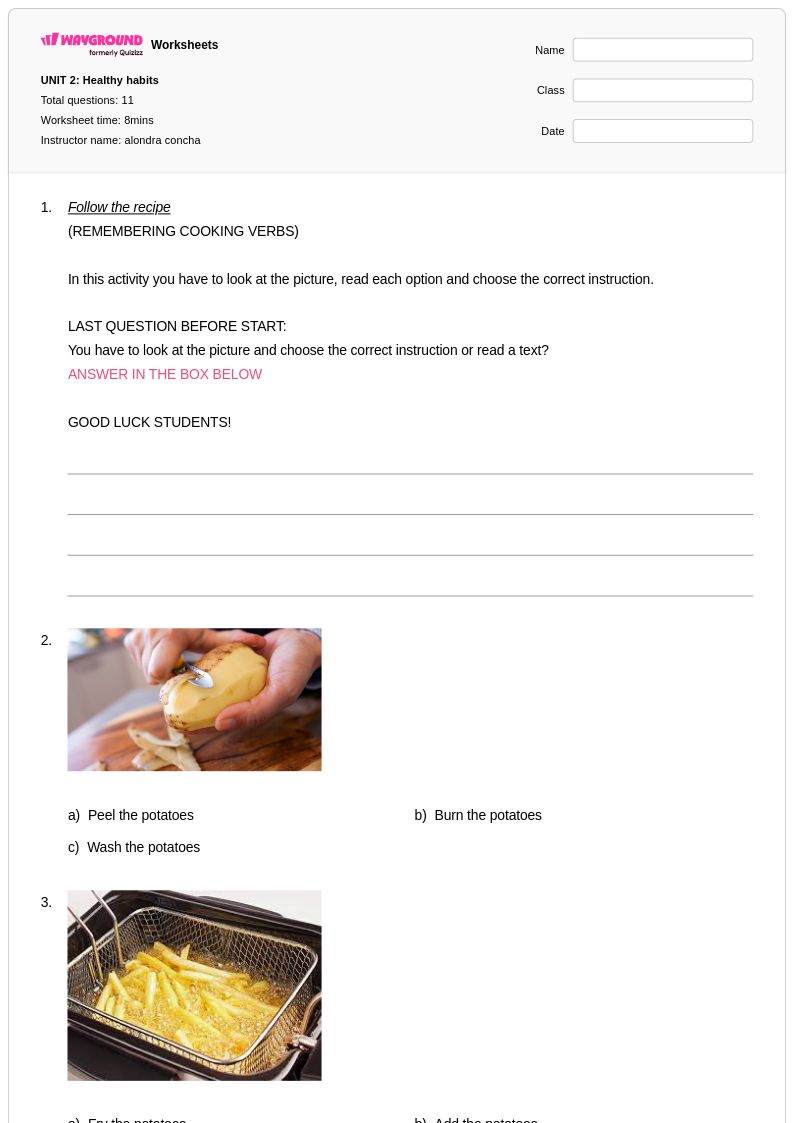
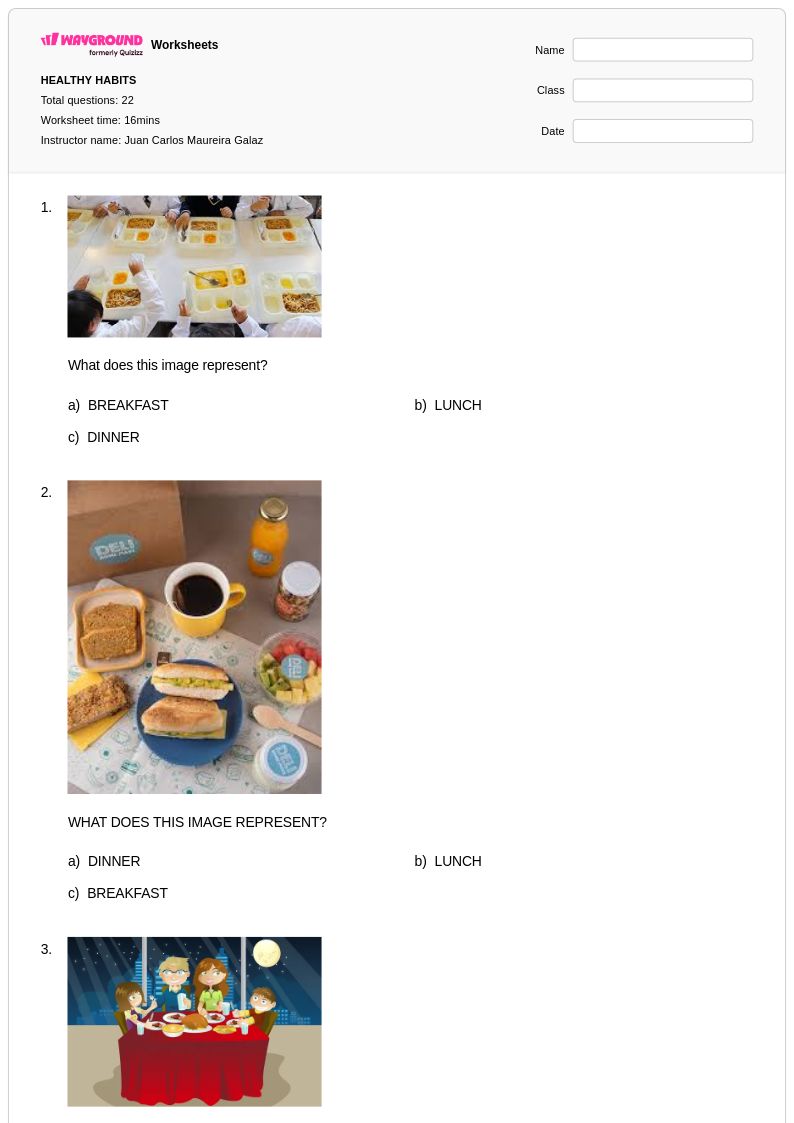
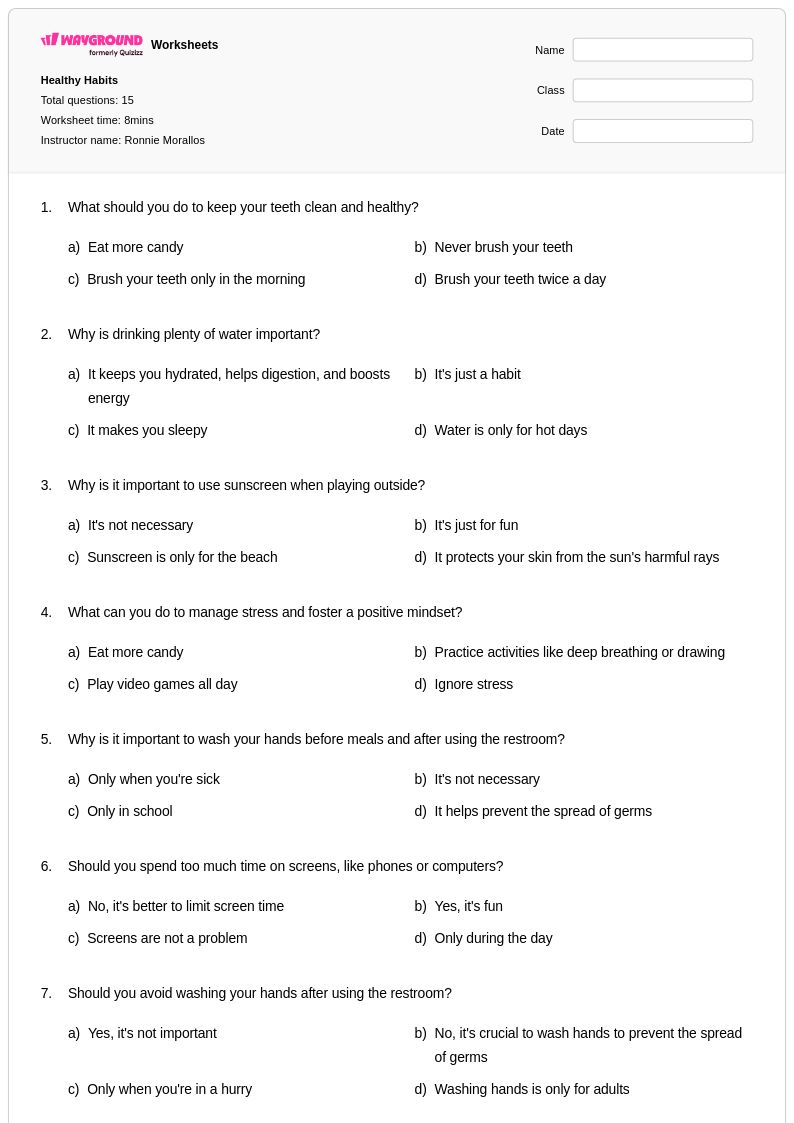
Year 7 students can explore healthy habits through our comprehensive collection of Physical Education printables and free worksheets, featuring practice problems and answer keys to reinforce wellness concepts and build lifelong fitness knowledge.
Explore printable Healthy Habits worksheets for Year 7
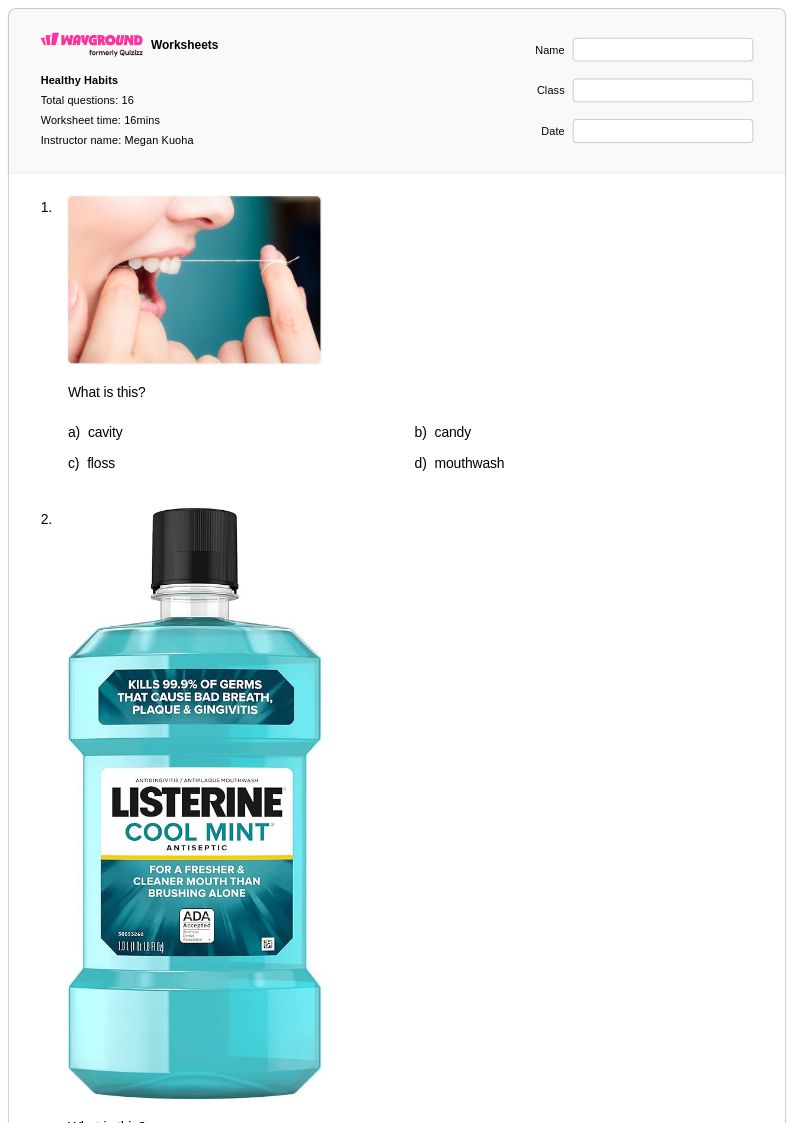
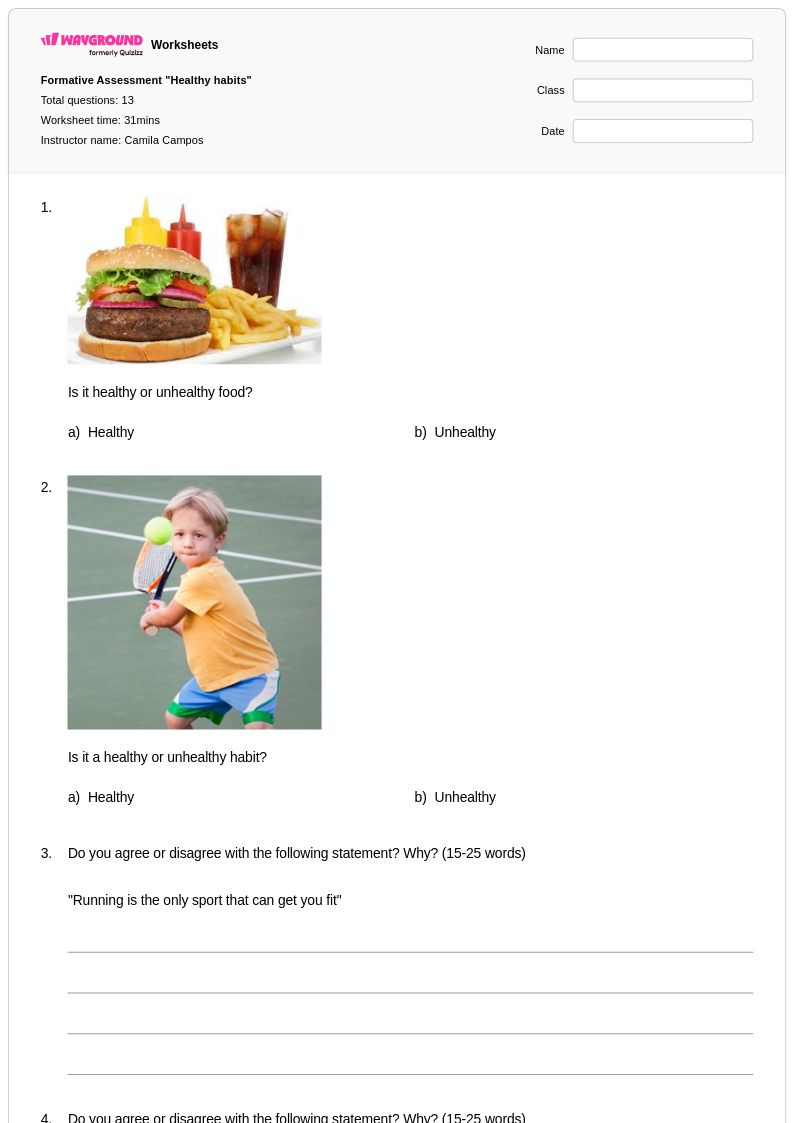
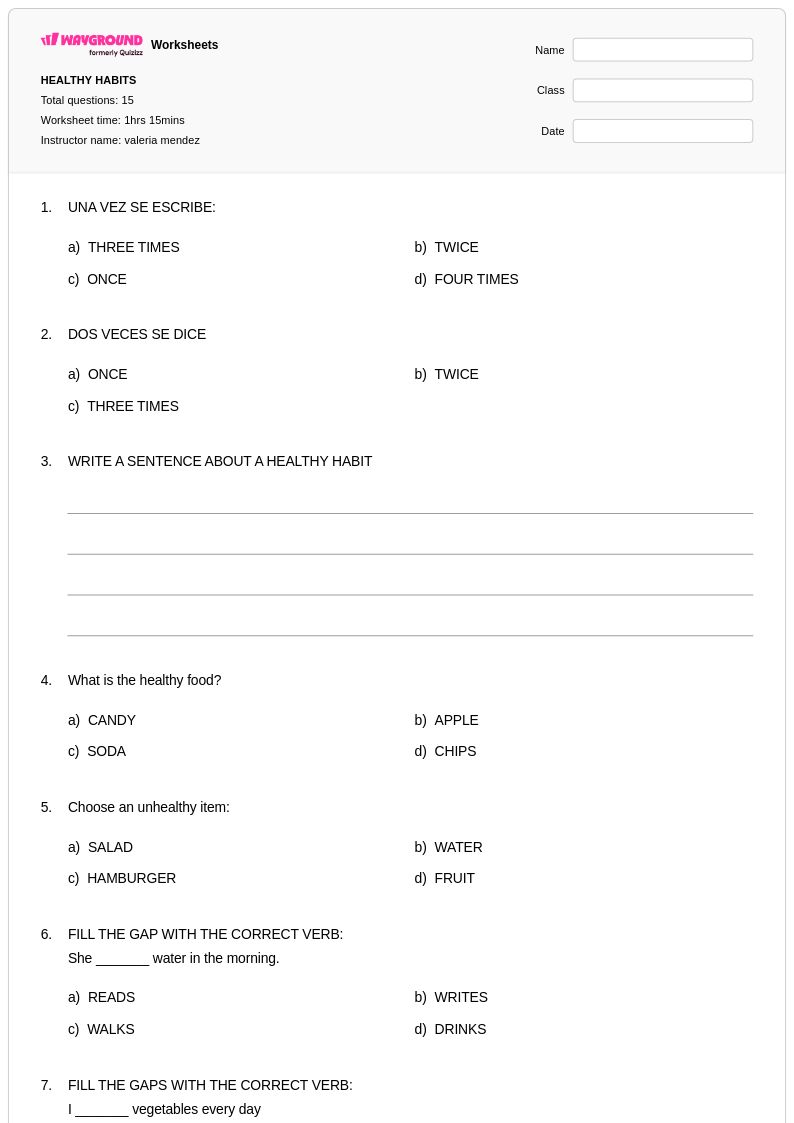
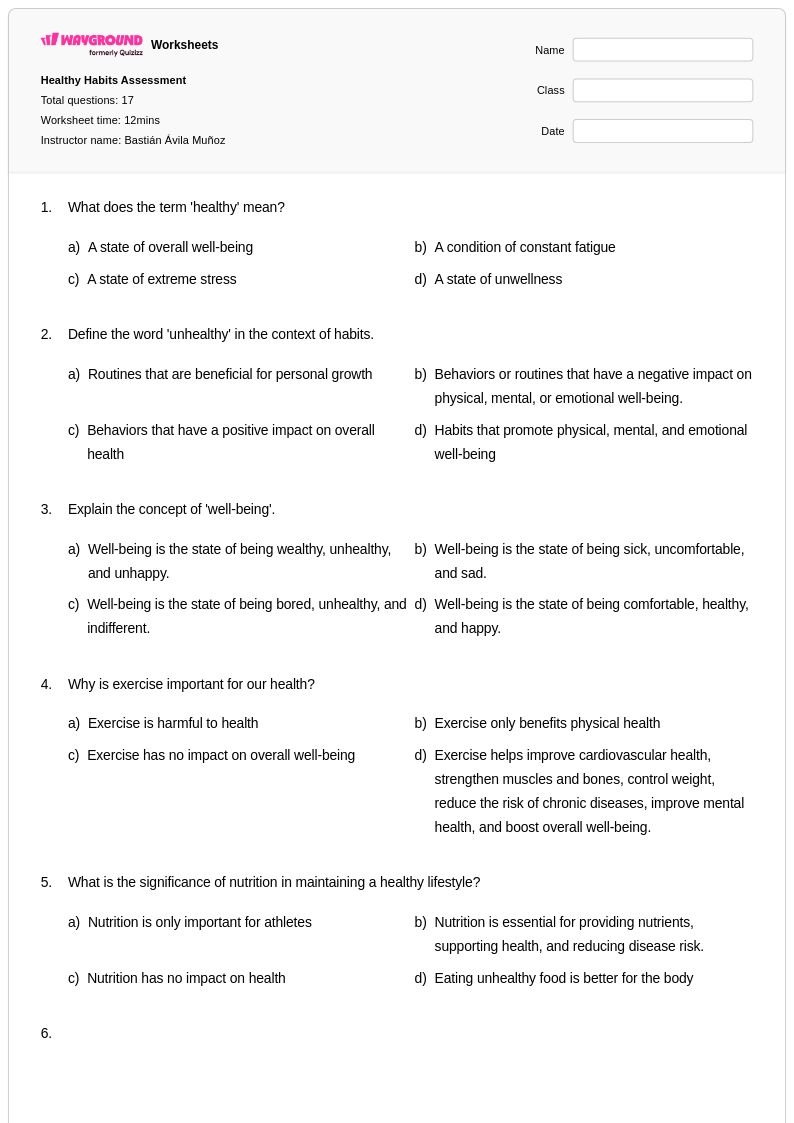
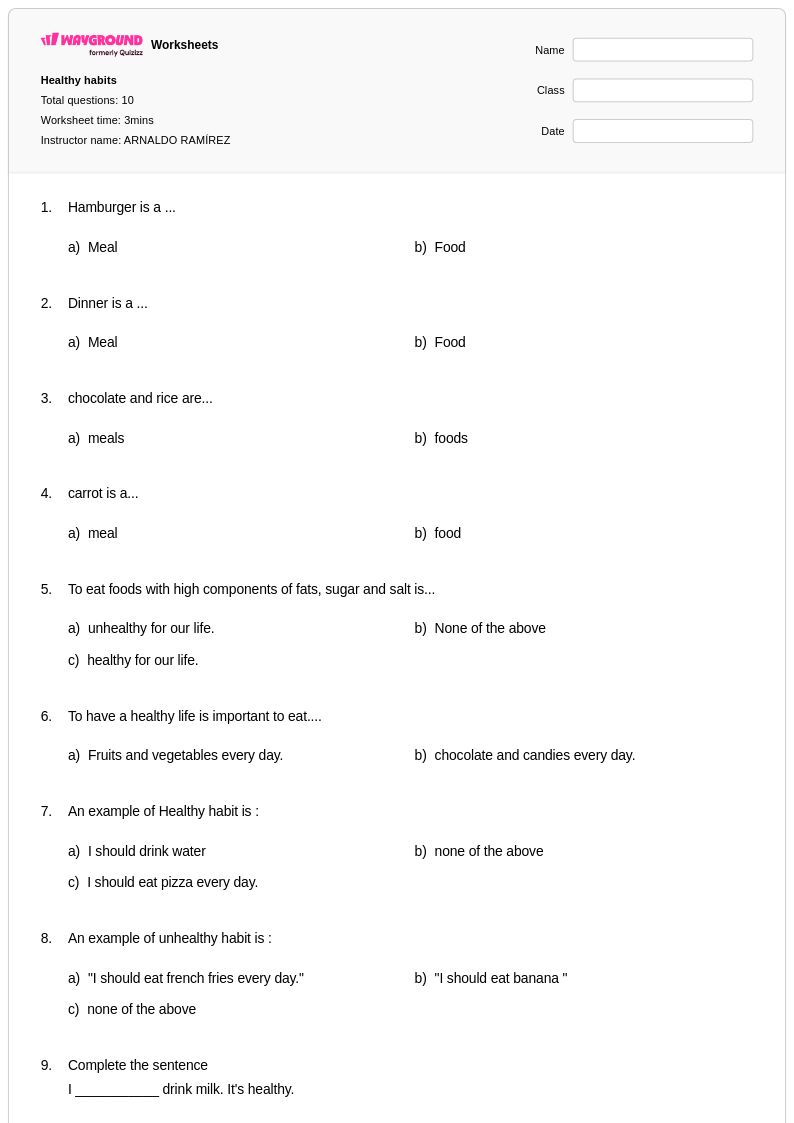
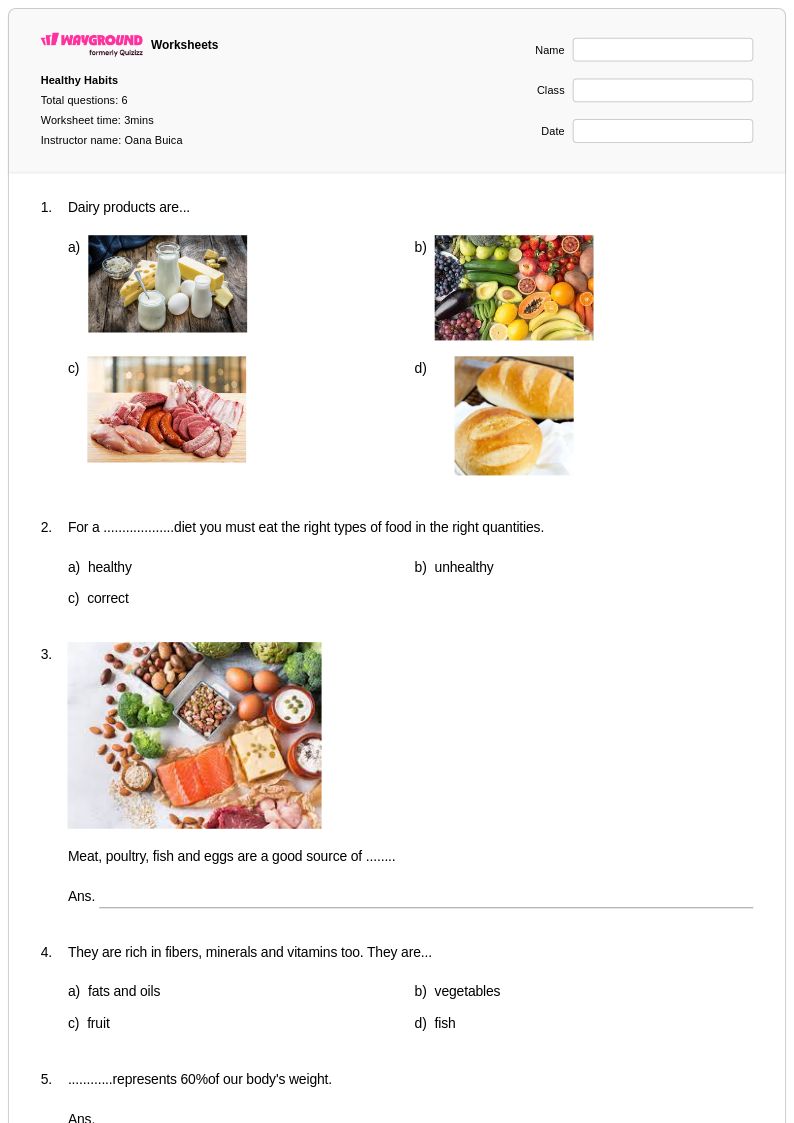
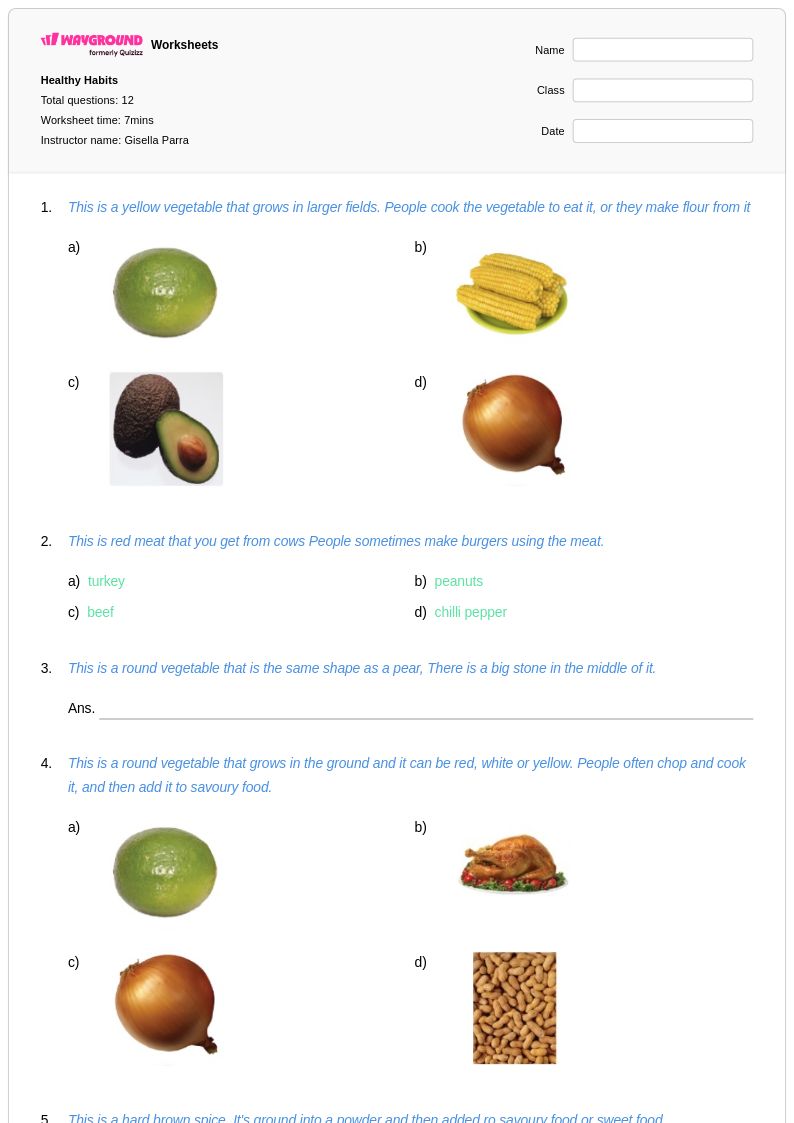
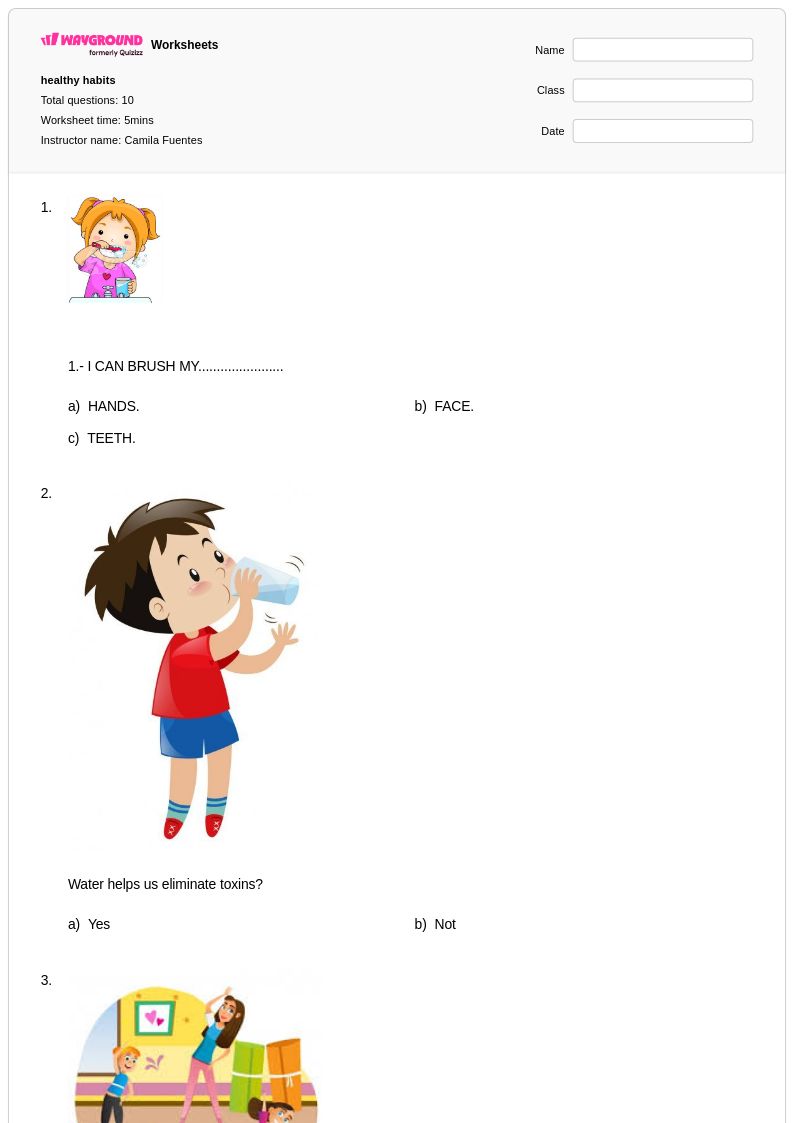
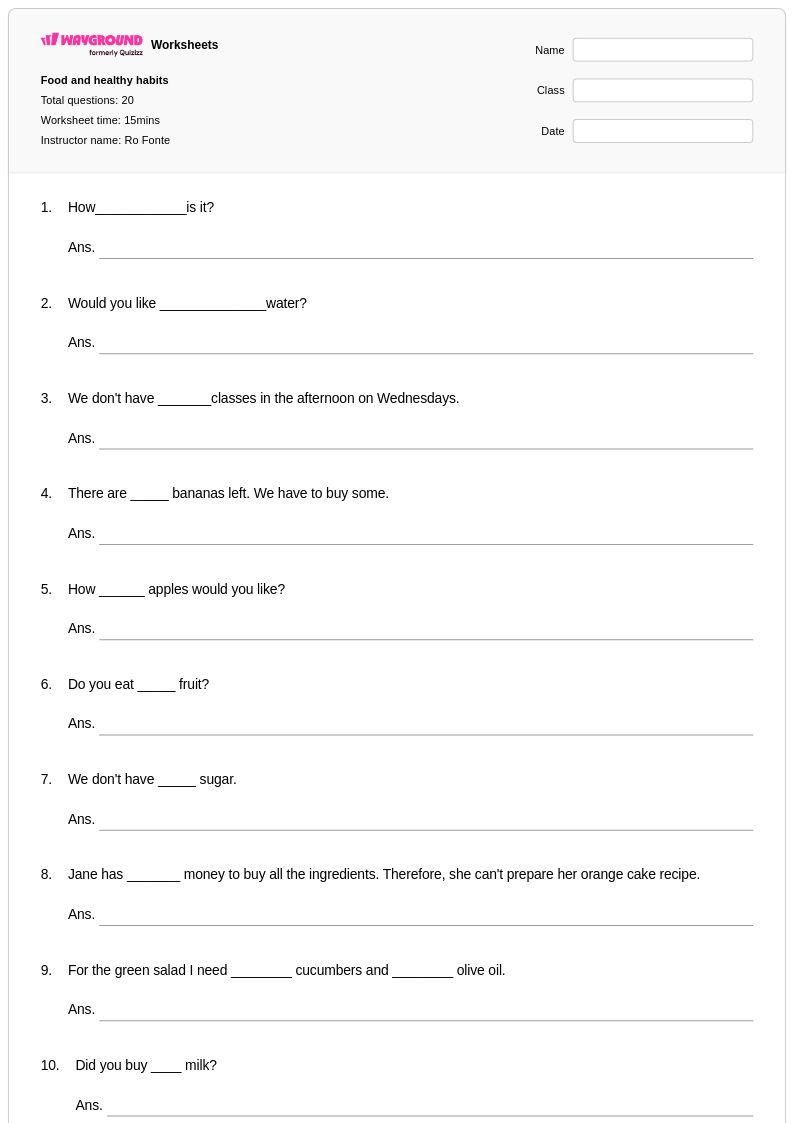
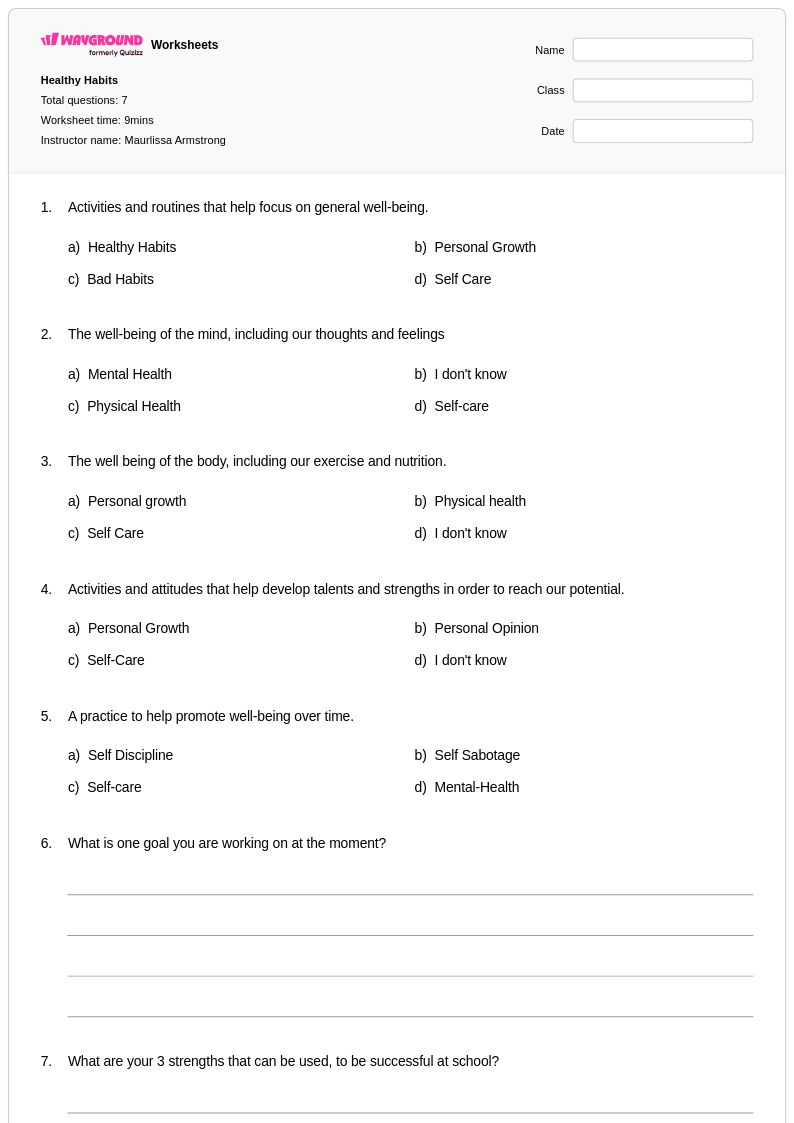
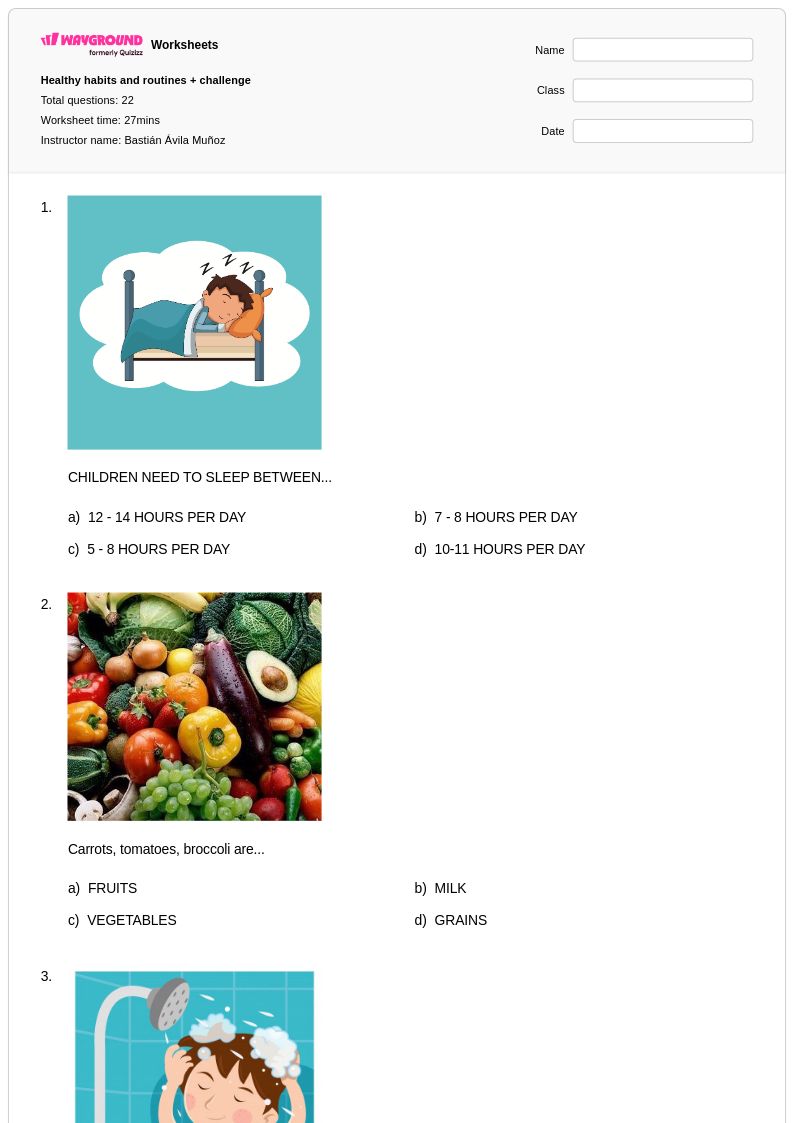
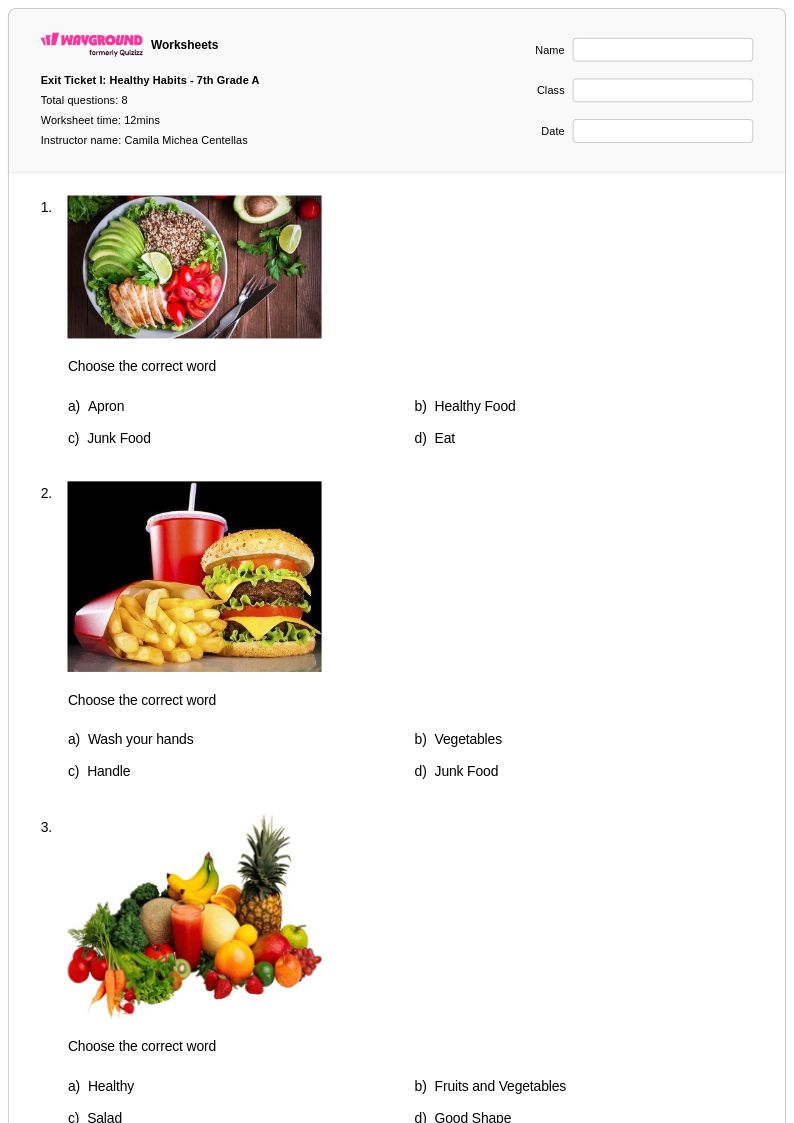
Healthy habits worksheets for Year 7 students available through Wayground (formerly Quizizz) provide comprehensive resources that help seventh-grade students develop essential life skills for maintaining physical and mental wellness. These carefully designed worksheets focus on building understanding of nutrition principles, exercise planning, sleep hygiene, stress management techniques, and personal goal-setting strategies that form the foundation of lifelong wellness practices. Students engage with practice problems that require them to analyze daily routines, evaluate lifestyle choices, and create personalized action plans for improving their overall health outcomes. Each worksheet includes a detailed answer key that allows educators to provide immediate feedback and supports independent learning, while the free printable format ensures accessibility for all classroom settings and home study environments.
Wayground (formerly Quizizz) empowers Physical Education teachers with millions of teacher-created healthy habits resources that streamline lesson planning and enhance student engagement across diverse learning needs. The platform's robust search and filtering capabilities enable educators to quickly locate worksheets aligned with specific health education standards and differentiate instruction based on individual student readiness levels. Teachers can customize these digital and printable pdf materials to address particular wellness topics relevant to their Year 7 curriculum, whether focusing on remediation for students struggling with basic health concepts or enrichment activities for advanced learners ready to explore complex wellness relationships. This flexibility supports systematic skill practice while providing educators with reliable assessment tools that track student progress in developing critical health literacy competencies essential for adolescent development.
FAQs
How do I teach healthy habits to students in a meaningful way?
Effective healthy habits instruction connects daily behaviors to long-term health outcomes rather than presenting rules in isolation. Teachers should anchor lessons in real-life scenarios, asking students to evaluate lifestyle choices around nutrition, sleep, physical activity, stress management, and personal care. Habit-tracking activities and goal-setting exercises help students internalize concepts by making wellness personal and measurable rather than abstract.
What kinds of worksheets help students practice healthy habits skills?
Practice worksheets for healthy habits work best when they ask students to analyze scenarios, complete habit trackers, and apply evidence-based health principles to real-world situations. Activities that require students to set realistic wellness goals or compare lifestyle choices build critical thinking alongside health literacy. Covering multiple dimensions such as nutrition, sleep hygiene, and stress management within a single practice set reinforces how these habits interconnect.
What misconceptions do students commonly have about healthy habits?
A frequent misconception is that healthy habits require dramatic lifestyle overhauls, which leads students to dismiss small, consistent behaviors as insignificant. Students also tend to treat health topics as separate silos, failing to recognize how poor sleep, for example, directly affects nutrition choices and stress levels. Worksheets that present integrated, scenario-based problems can surface and correct these flawed assumptions directly.
How can I use healthy habits worksheets to support students at different skill levels?
Healthy habits worksheets can be differentiated by adjusting the complexity of the scenarios students evaluate or the depth of reflection required in goal-setting tasks. On Wayground, teachers can apply student-level accommodations such as read-aloud support for students who need audio access to content, or reduced answer choices to lower cognitive load for learners who need additional scaffolding. These settings are saved per student and can be applied across future sessions without disrupting the rest of the class.
How do I use Wayground's healthy habits worksheets in my classroom?
Wayground's healthy habits worksheets are available as printable PDFs for traditional classroom use and in digital formats for technology-integrated learning environments. Teachers can also host worksheets as a live quiz on Wayground, making them suitable for whole-class instruction, independent practice stations, or asynchronous homework assignments. Each worksheet includes a complete answer key, which supports both self-paced student review and efficient teacher-led correction.
How do healthy habits worksheets support health education standards?
Healthy habits worksheets aligned to health education standards typically address competencies around analyzing health information, practicing health-enhancing behaviors, and setting personal health goals. Activities that ask students to evaluate scenarios involving nutrition, physical activity, and stress management directly target these standard skill areas. Using worksheets that include answer keys also allows teachers to assess whether students can apply health principles accurately, not just recall them.