Enhance Year 8 Hebrew language skills with Wayground's comprehensive collection of free worksheets, printables, and practice problems featuring detailed answer keys to support effective foreign language learning.
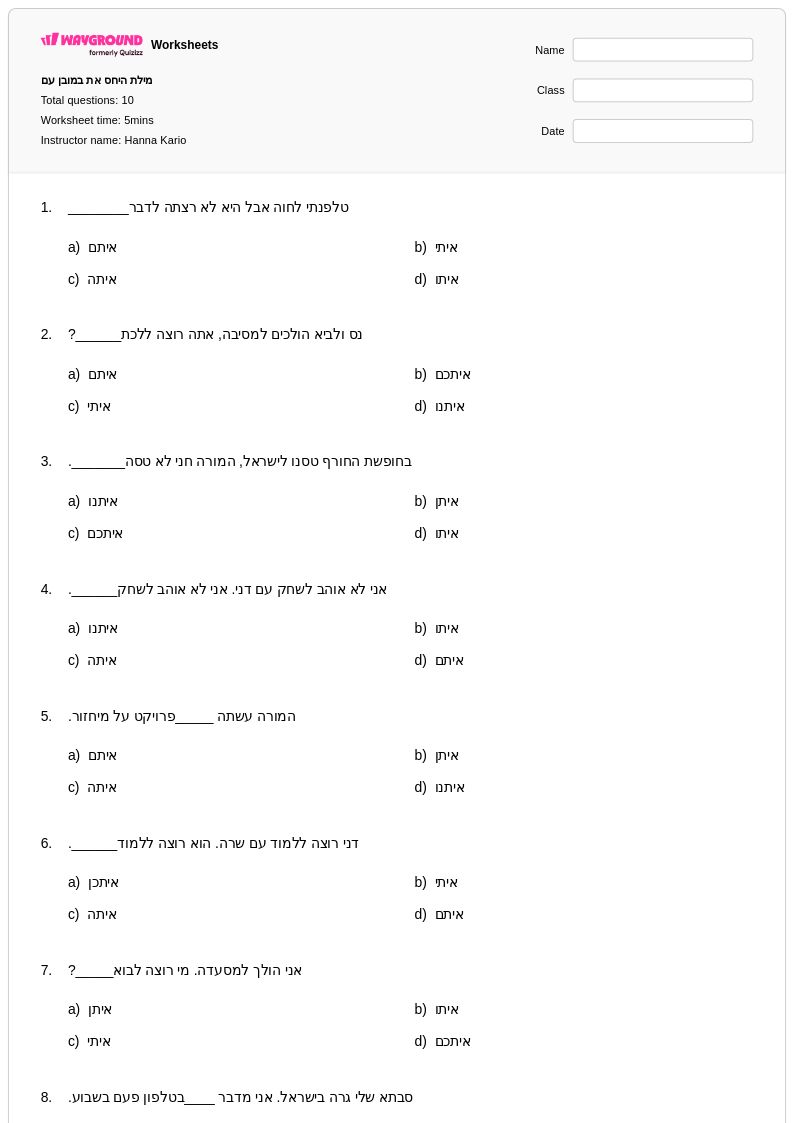
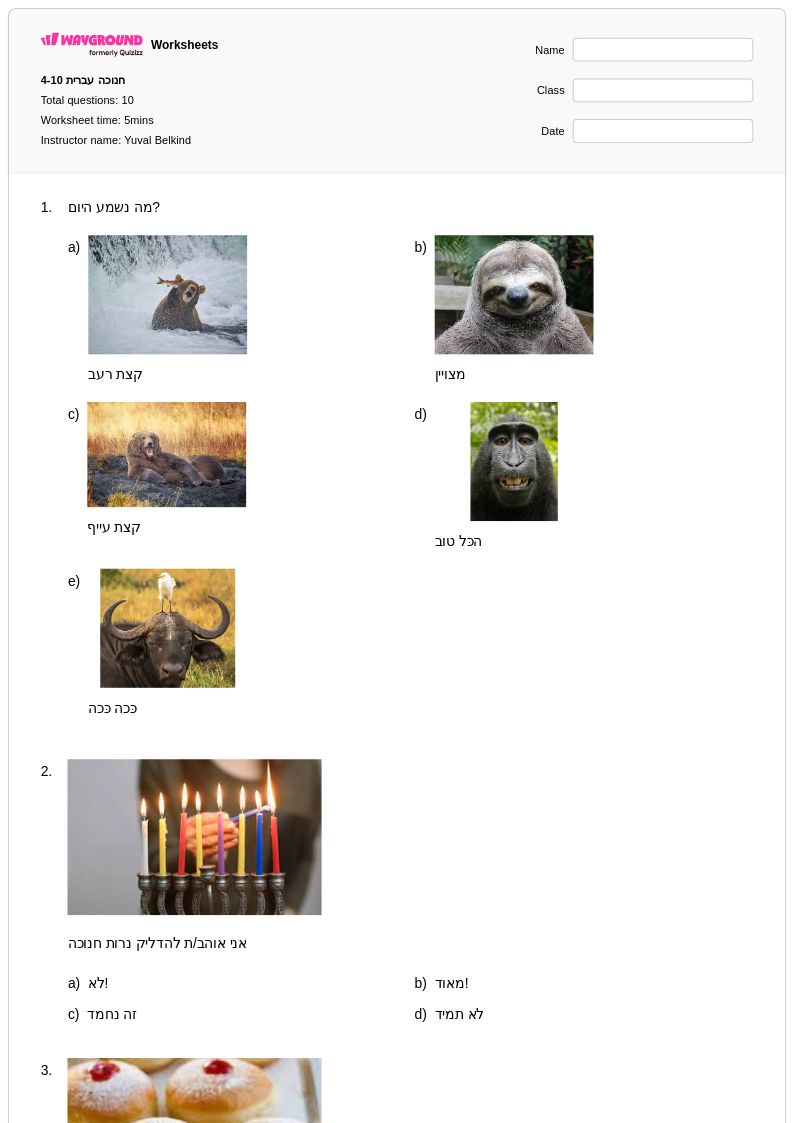
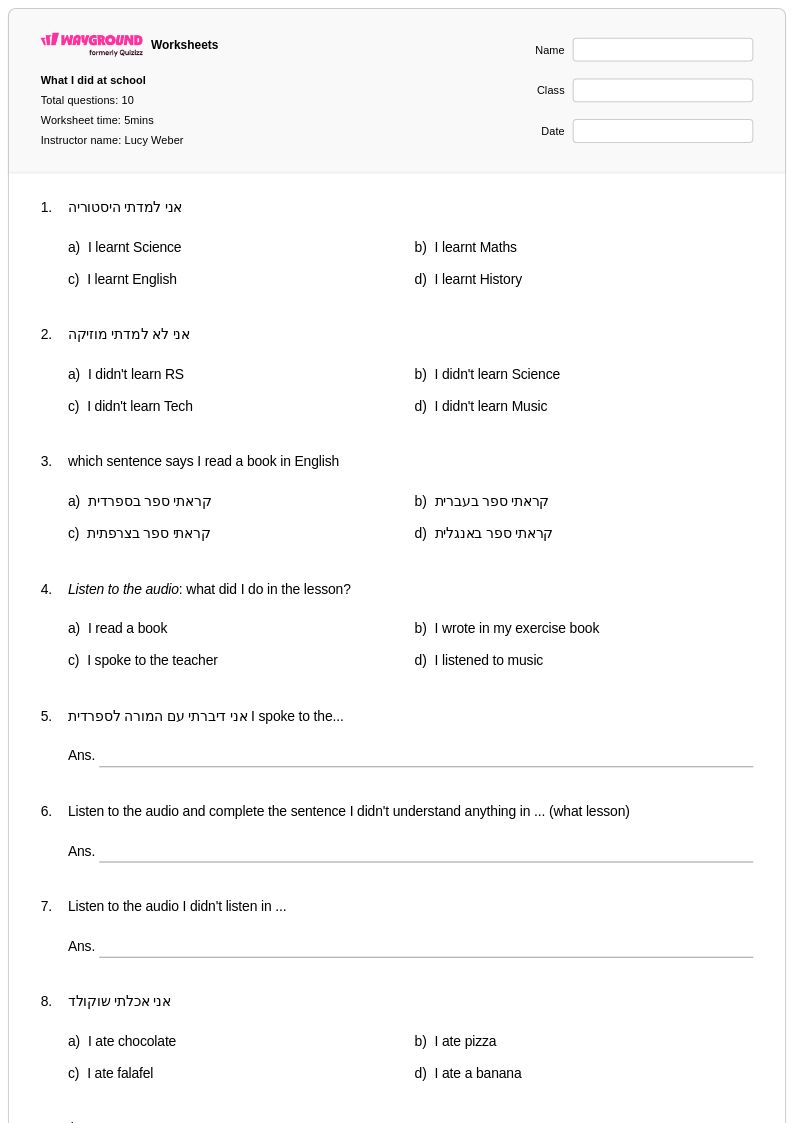
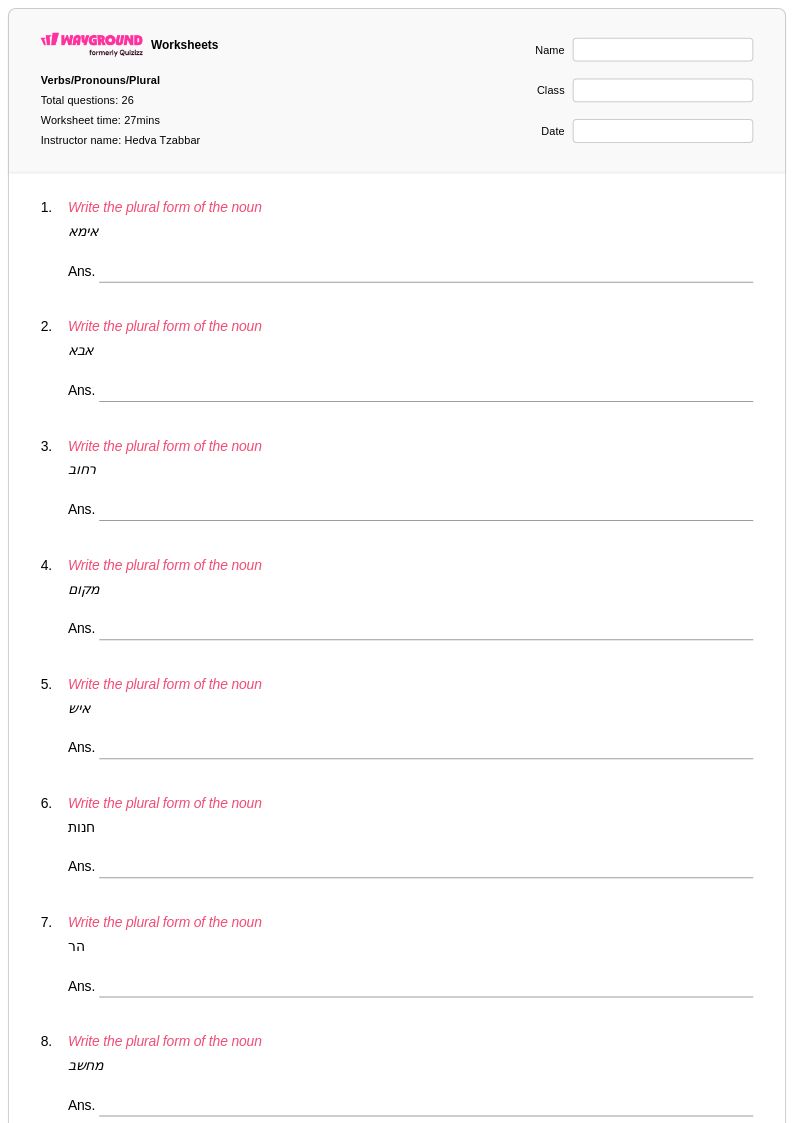
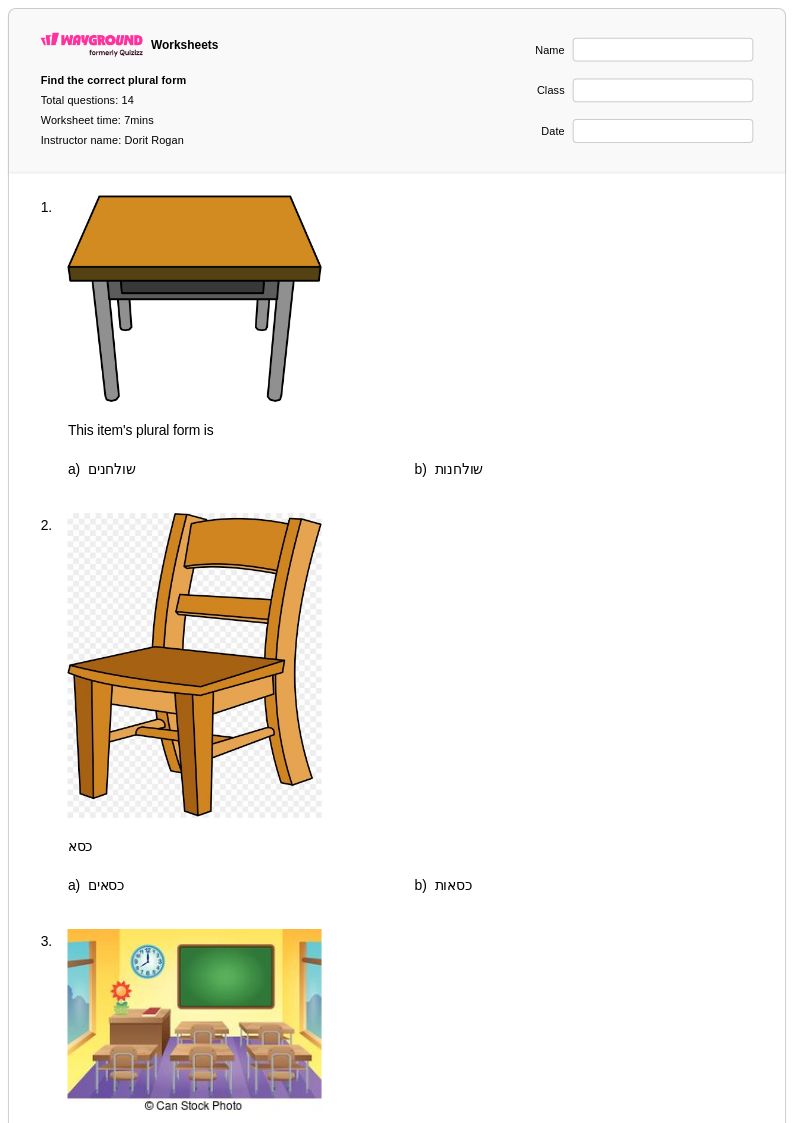
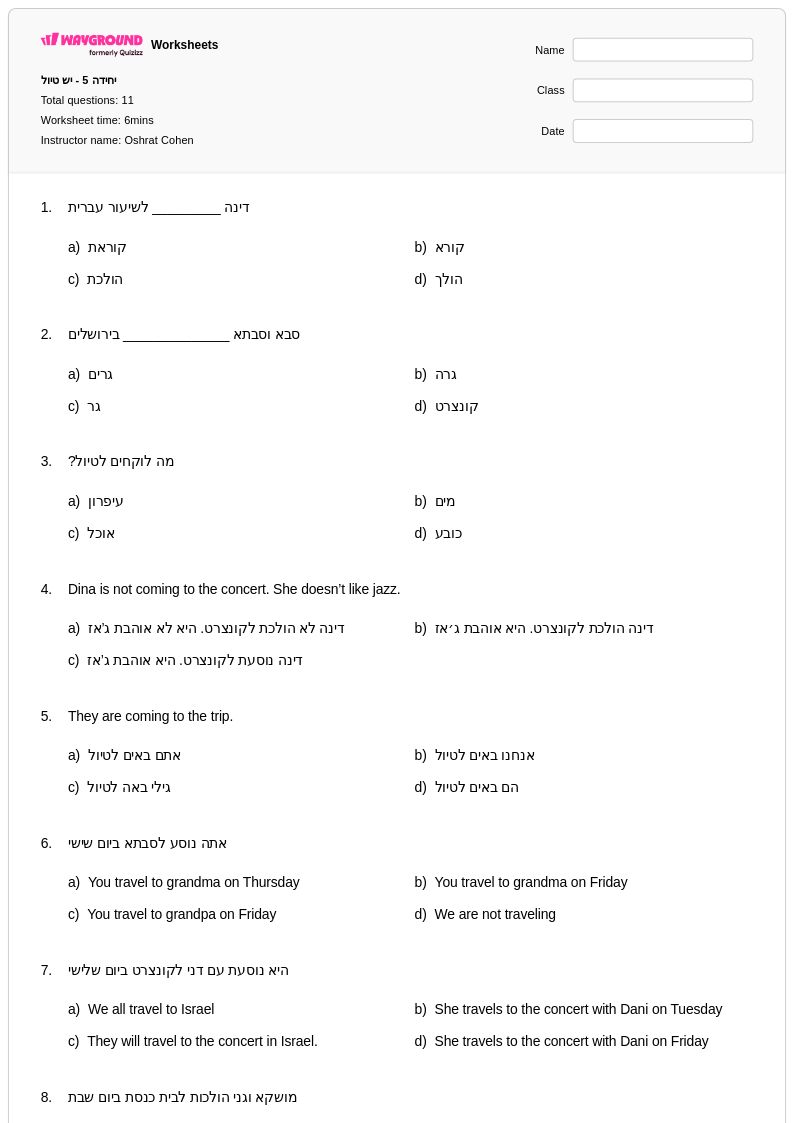
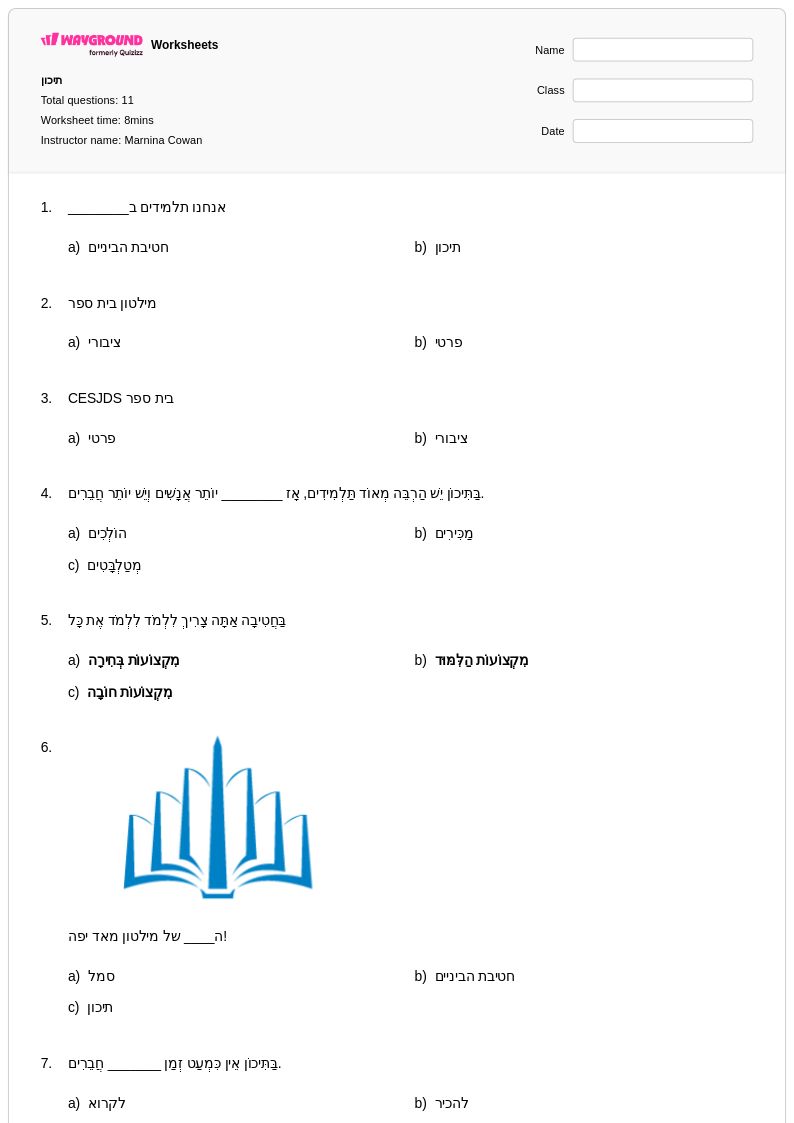
Hebrew worksheets for Year 8 students through Wayground (formerly Quizizz) provide comprehensive language learning resources that develop essential skills in reading, writing, speaking, and comprehension of modern Hebrew. These carefully crafted materials strengthen students' understanding of Hebrew alphabet recognition, vocabulary expansion, basic grammar structures, and sentence formation while building confidence in this ancient yet vibrant language. The collection includes diverse practice problems covering Hebrew script mastery, phonetic pronunciation guides, cultural context exercises, and interactive activities that make language acquisition engaging and effective. Teachers can access complete answer keys alongside each worksheet, with free printable pdf formats that support both classroom instruction and independent study, ensuring students receive consistent practice opportunities that reinforce their Hebrew language foundation.
Wayground's extensive Hebrew worksheet library draws from millions of teacher-created resources, offering educators powerful search and filtering capabilities to locate materials perfectly suited to Year 8 Hebrew instruction needs. The platform's alignment with world language learning standards ensures that worksheet content meets educational requirements while providing differentiation tools that accommodate diverse learning styles and proficiency levels within the classroom. Teachers benefit from flexible customization options that allow modification of existing worksheets or creation of entirely new materials, with seamless availability in both printable and digital pdf formats for maximum instructional versatility. These comprehensive features support effective lesson planning, targeted skill remediation, advanced student enrichment, and consistent language practice opportunities that help educators deliver high-quality Hebrew instruction that meets every student's learning journey.
FAQs
How do I teach Hebrew alphabet to beginners?
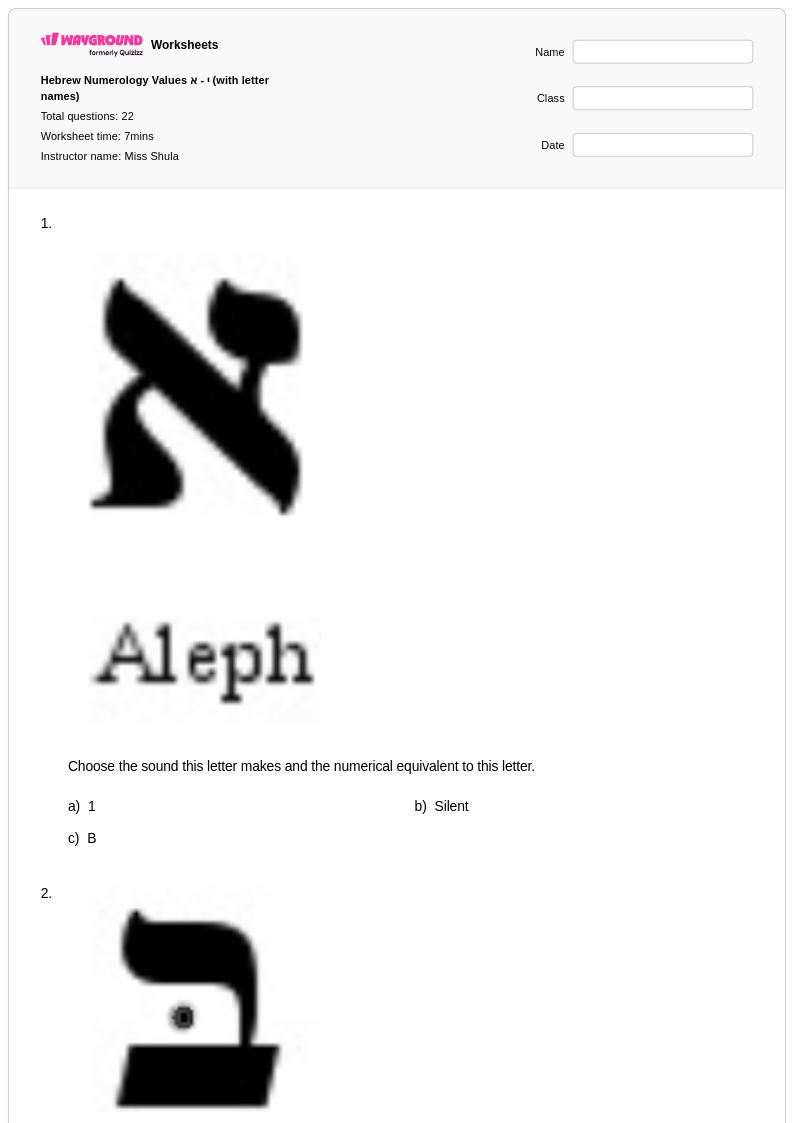
Start by introducing the 22 Hebrew letters in small groups, pairing each letter with its name, sound, and a familiar vocabulary word. Consistent handwriting practice with letter formation drills builds muscle memory, while vowel pointing (nikud) should be introduced gradually once students can recognize consonants. Pairing visual flashcards with oral repetition helps learners internalize both print and script forms of each letter.
What exercises help students practice Hebrew vocabulary and grammar?
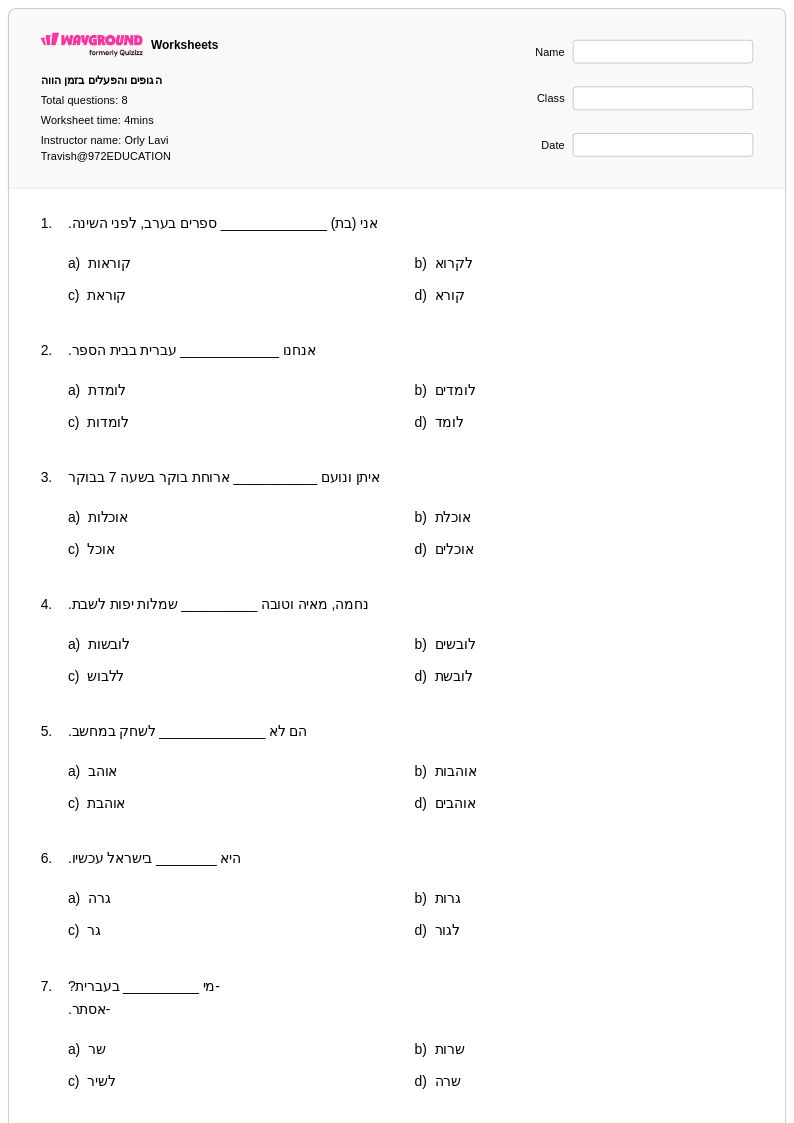
Effective practice exercises include fill-in-the-blank verb conjugation drills, translation tasks moving between Hebrew and English, and vocabulary matching activities organized by root families. Because Hebrew is a root-based language, exercises that group words by their three-letter roots (shorashim) help students recognize patterns rather than memorizing each word in isolation. Reading short biblical or modern Hebrew passages and identifying grammatical structures also reinforces both vocabulary and syntax simultaneously.
What mistakes do students commonly make when learning Hebrew?
The most common errors involve vowel pointing confusion, particularly distinguishing between similar-looking nikud symbols such as kamatz and patach. Students frequently struggle with gendered nouns and adjective agreement, often defaulting to masculine forms regardless of context. Reading direction is another early challenge — students accustomed to left-to-right scripts need deliberate practice to build automatic right-to-left reading fluency.
How do I differentiate Hebrew instruction for students at different proficiency levels?
For beginners, focus on letter recognition, basic vocabulary, and simple sentence construction before introducing verb conjugation or complex grammar. Intermediate learners benefit from reading comprehension exercises that use both voweled and unvoweled texts, while advanced students can work with authentic biblical or modern Hebrew sources. On Wayground, teachers can apply accommodations such as reduced answer choices or read-aloud support to individual students, allowing the same worksheet to serve a mixed-proficiency class without disrupting other learners.
How can I use Hebrew worksheets from Wayground in my classroom?
Wayground's Hebrew worksheets are available as printable PDFs for traditional classroom use and in digital formats for technology-integrated learning environments, including the option to host them as a quiz directly on the platform. Teachers can assign worksheets to the whole class or to individual students depending on the lesson objective, and built-in answer keys allow for immediate feedback without additional grading preparation. This flexibility makes them practical for independent practice, homework, small-group instruction, or warm-up activities.
How do I teach Hebrew verb conjugation effectively?
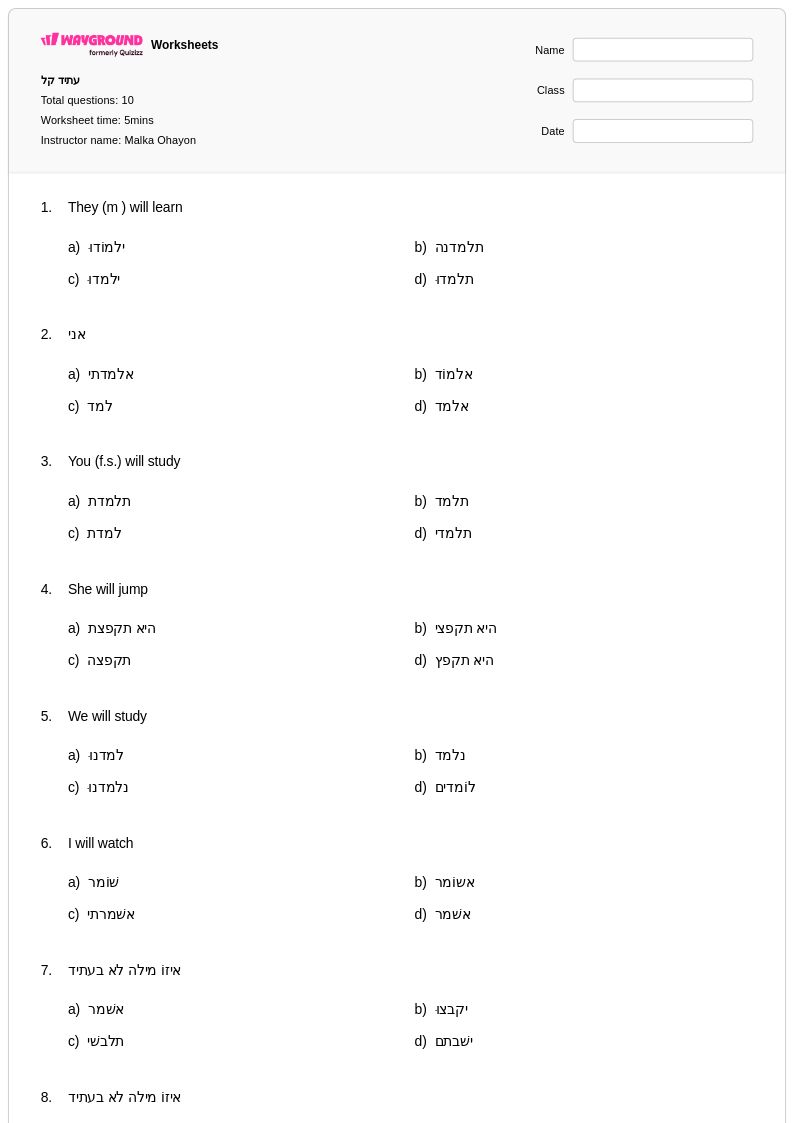
Hebrew verbs are organized into conjugation patterns called binyanim, and teaching these systematically — starting with Pa'al before introducing Nif'al, Pi'el, and others — gives students a structural framework they can apply broadly. Conjugation charts and pattern-based drills are more effective than rote memorization because they help students predict unfamiliar verb forms. Regular practice with common verbs in context, such as through short reading passages or sentence-building exercises, reinforces conjugation rules in a meaningful way.