Explore Wayground's comprehensive collection of Year 10 hip stretch worksheets and printables that help students master proper stretching techniques through structured practice problems, free PDF resources, and detailed answer keys.
Explore printable Hip Stretch worksheets for Year 10
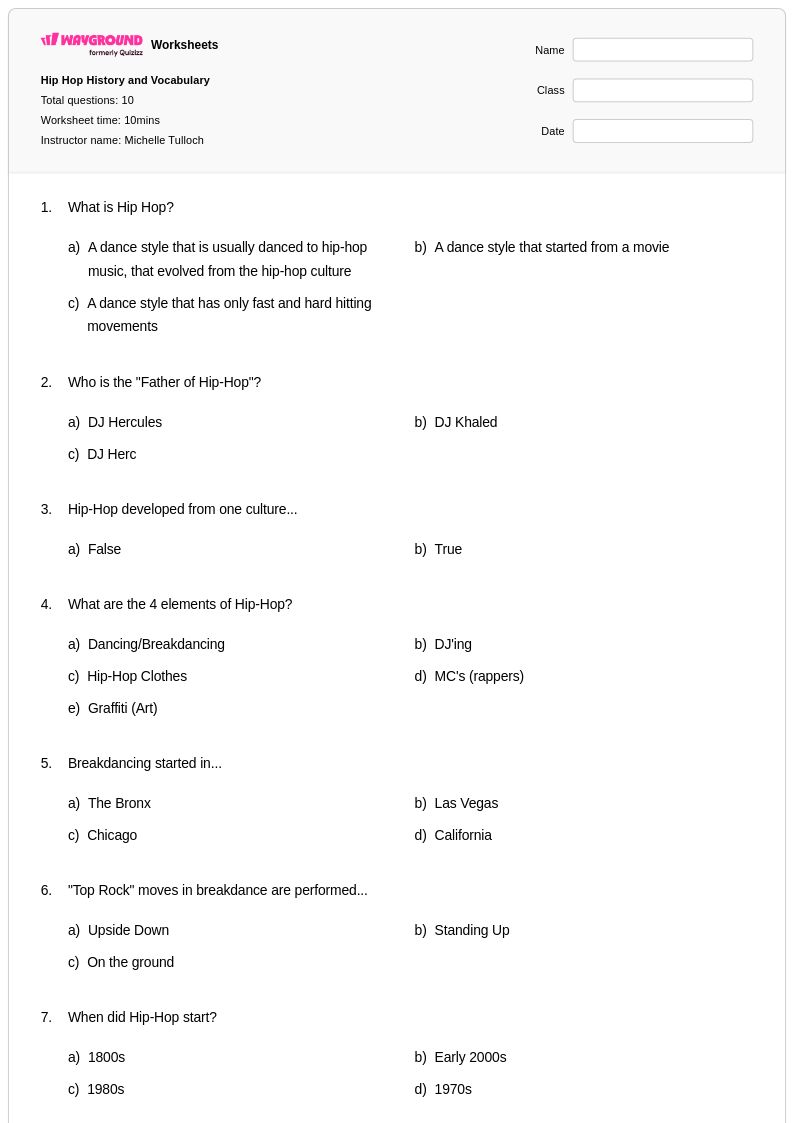
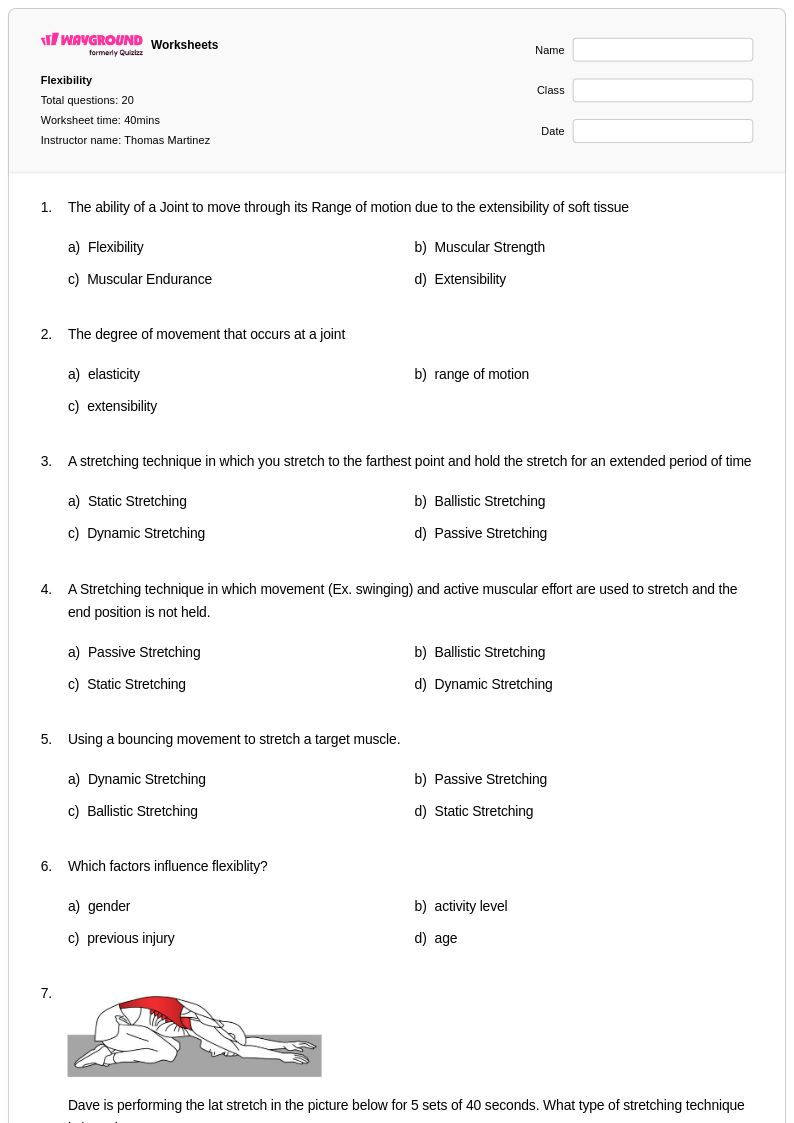
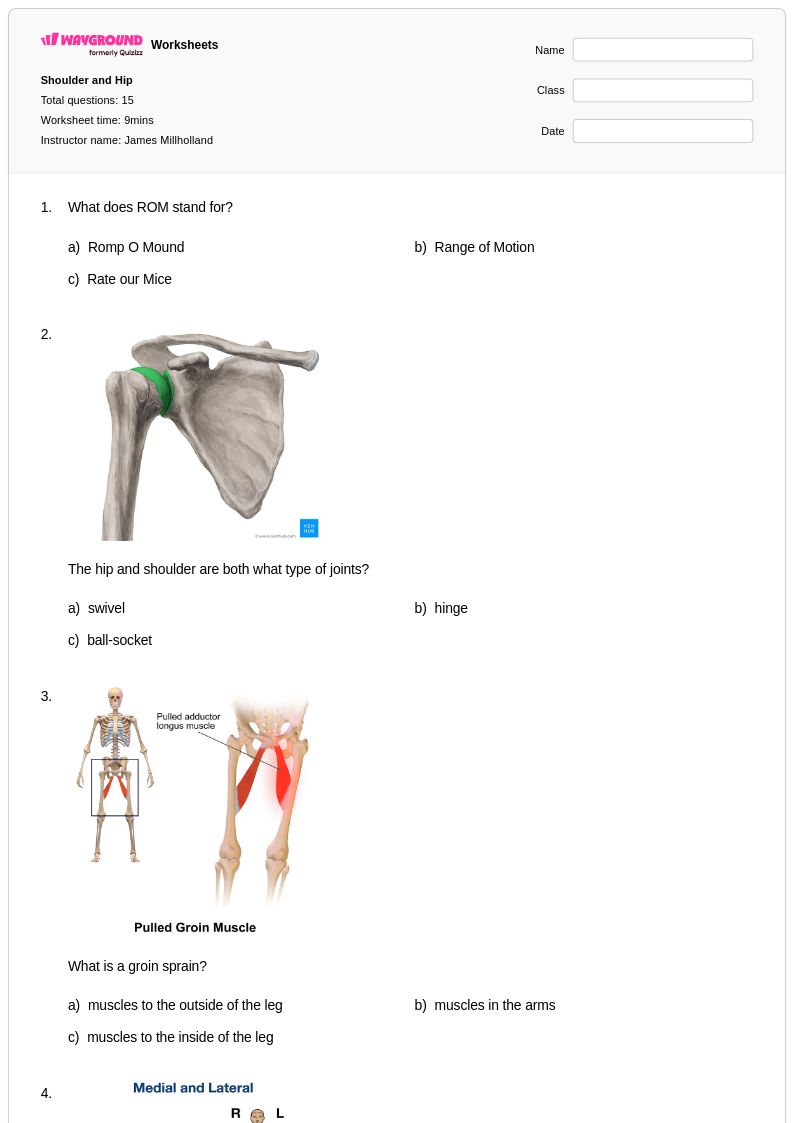
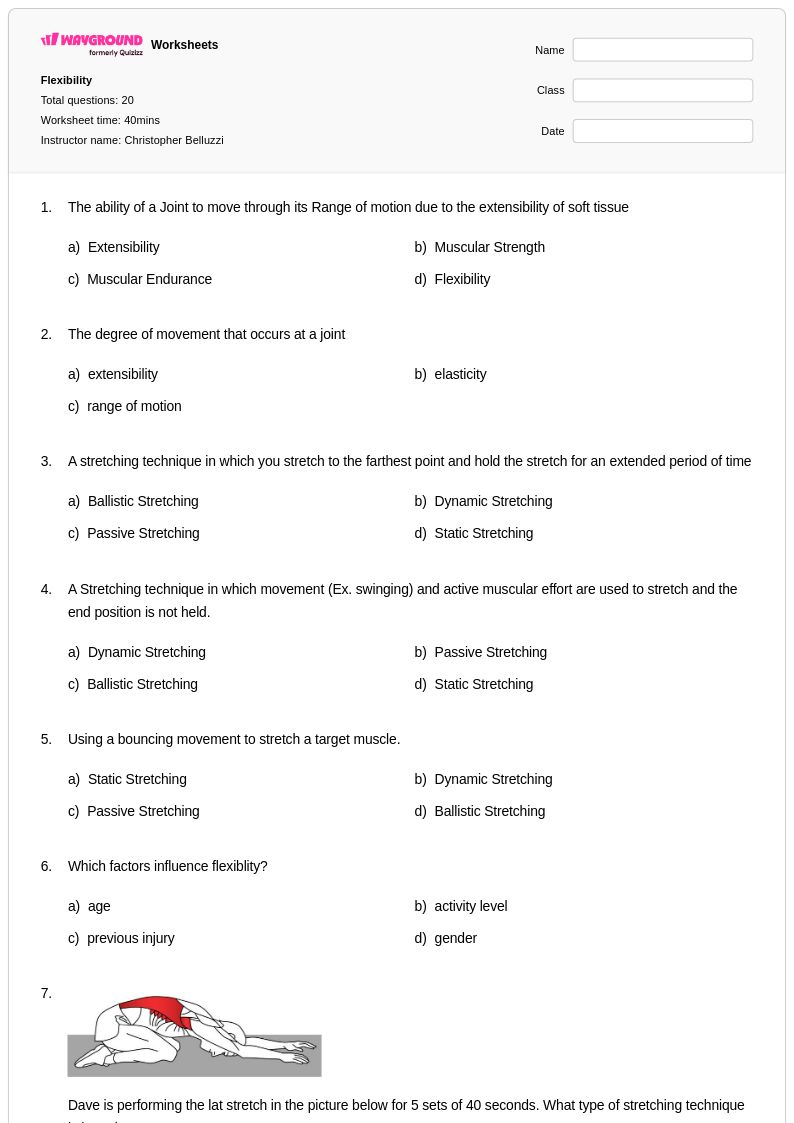
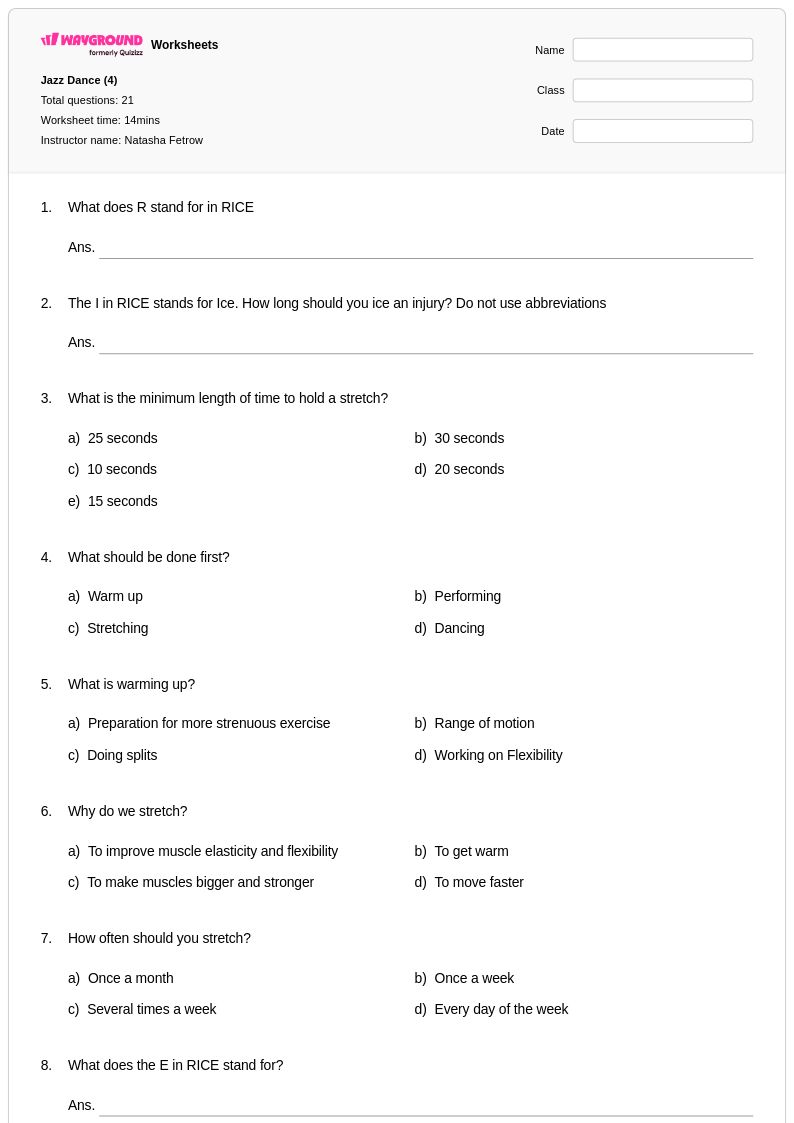
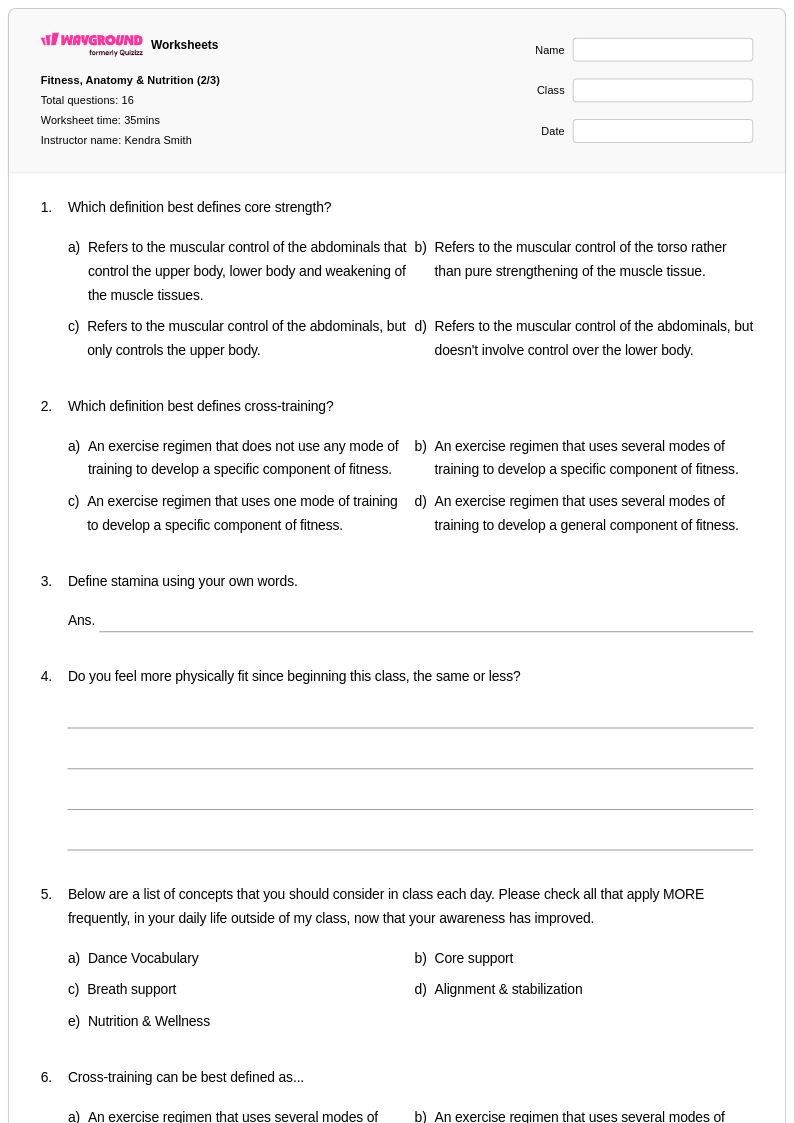
Hip stretch worksheets for Year 10 Physical Education students available through Wayground (formerly Quizizz) provide comprehensive educational resources that focus on proper hip flexibility techniques and biomechanical understanding. These expertly designed worksheets strengthen students' knowledge of hip anatomy, stretching protocols, injury prevention strategies, and the physiological benefits of maintaining hip mobility for athletic performance and daily activities. The collection includes detailed practice problems that challenge students to identify specific hip muscles, analyze stretching sequences, and evaluate the effectiveness of various hip flexibility exercises. Each worksheet comes with a complete answer key and is available as a free printable pdf, making it easy for educators to incorporate evidence-based hip stretching education into their physical education curriculum.
Wayground (formerly Quizizz) supports physical education teachers with an extensive collection of millions of teacher-created resources specifically designed for hip stretching instruction at the Year 10 level. The platform's robust search and filtering capabilities allow educators to quickly locate worksheets that align with physical education standards and match their specific instructional goals for hip flexibility education. Teachers can easily differentiate instruction by selecting from various difficulty levels and customizing worksheets to meet individual student needs, whether for remediation of basic stretching concepts or enrichment activities that explore advanced hip mobility techniques. The flexible format options, including both printable and digital pdf versions, enable seamless integration into lesson planning while supporting diverse learning environments and helping students develop essential knowledge about hip flexibility, injury prevention, and movement optimization.
FAQs
How do I teach proper hip stretching techniques in physical education class?
Effective hip stretch instruction begins with teaching students the anatomical basics of the hip joint, including which muscle groups are targeted by stretches like the hip flexor stretch, pigeon pose, and butterfly stretch. Teachers should model each stretch with correct form, emphasizing safe stretching protocols such as controlled breathing, appropriate duration, and avoiding bouncing or overstretching. Pairing visual demonstrations with written step-by-step instructions helps students internalize proper technique before practicing independently.
What exercises help students practice hip flexibility and mobility?
Structured worksheet-based practice helps students identify the correct form, breathing techniques, and muscle engagement required for key hip stretches such as the hip flexor stretch, pigeon pose, and butterfly stretch. Practice problems that ask students to identify common stretching errors reinforce proper execution and build body awareness. Progressively sequenced exercises, from beginner stretching routines to advanced hip mobility sequences, allow students to build flexibility incrementally and safely.
What mistakes do students commonly make when performing hip stretches?
The most common errors include holding their breath during a stretch, overstretching by forcing range of motion beyond their current flexibility, and misaligning the hips or knees during poses like the pigeon pose or butterfly stretch. Students also frequently neglect stretch duration, releasing too early before the muscle has had time to lengthen. Worksheets that ask students to identify these error patterns help build the self-awareness needed to correct form in real time.
Why is hip flexibility important for physical education students?
Hip flexibility plays a central role in athletic performance, supporting efficient movement patterns in running, jumping, and change-of-direction activities. Maintaining hip mobility also reduces the risk of injury by allowing surrounding muscles and connective tissues to absorb force more effectively during physical activity. Teaching students the connection between hip flexibility and daily movement prepares them to prioritize stretching as part of a lifelong fitness routine.
How can I differentiate hip stretch instruction for students at different fitness levels?
Select worksheets that target different skill levels, beginning with foundational stretches and basic anatomical vocabulary for beginners, and progressing to advanced hip mobility sequences and biomechanical principles for more experienced students. On Wayground, teachers can also apply individual accommodations such as Read Aloud for students who benefit from audio support, or reduced answer choices to lower cognitive load for students who need additional scaffolding. These settings can be configured per student and reused across future sessions without affecting the experience of other students in the class.
How do I use hip stretch worksheets on Wayground in my classroom?
Wayground's hip stretch worksheets are available as printable PDFs for traditional classroom or gymnasium use, as well as in digital formats for technology-integrated learning environments. Teachers can also host these materials as a quiz directly on Wayground, enabling interactive practice with built-in answer key support. Both formats are suitable for skill instruction, formative assessment, and remediation, making them flexible enough to fit warm-up routines, full lessons, or independent practice assignments.