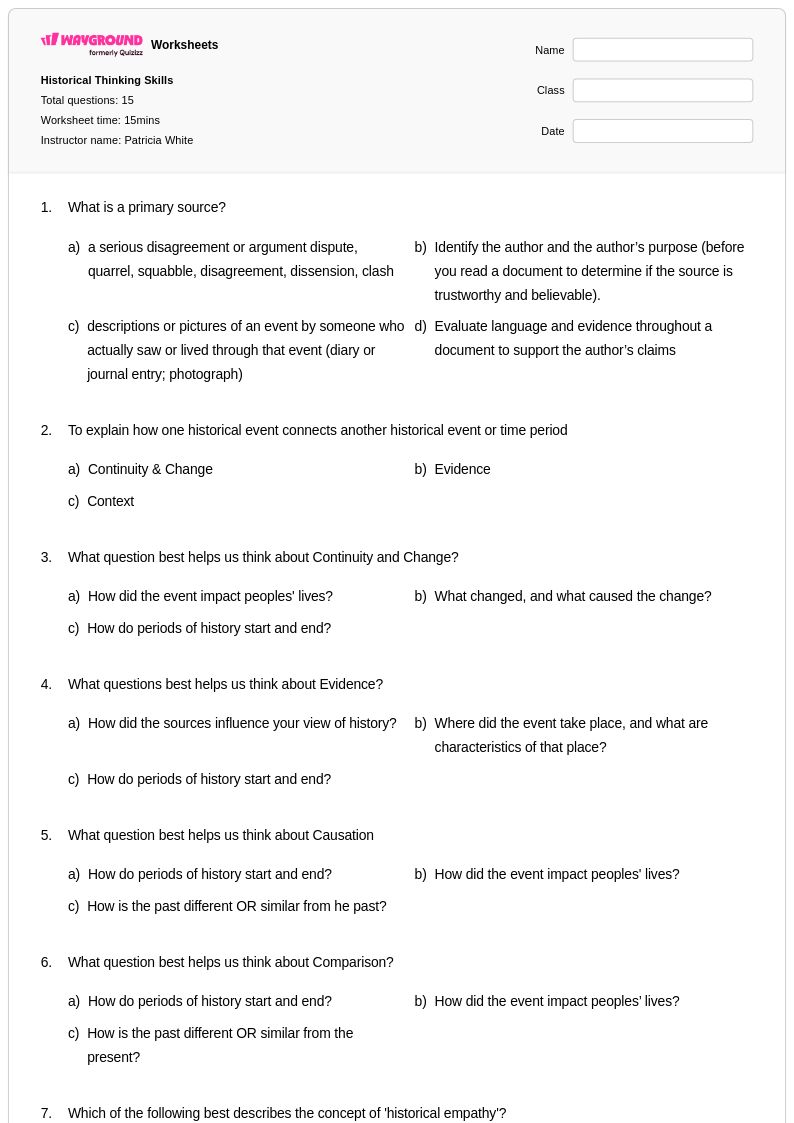
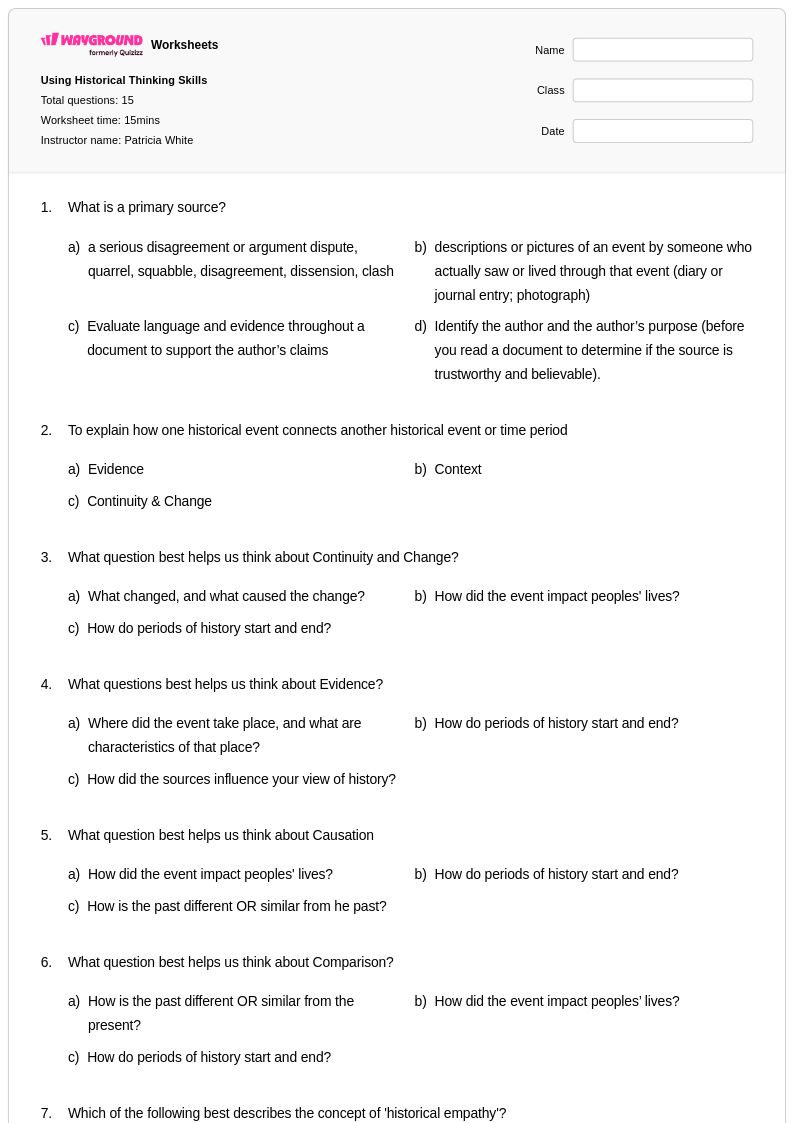
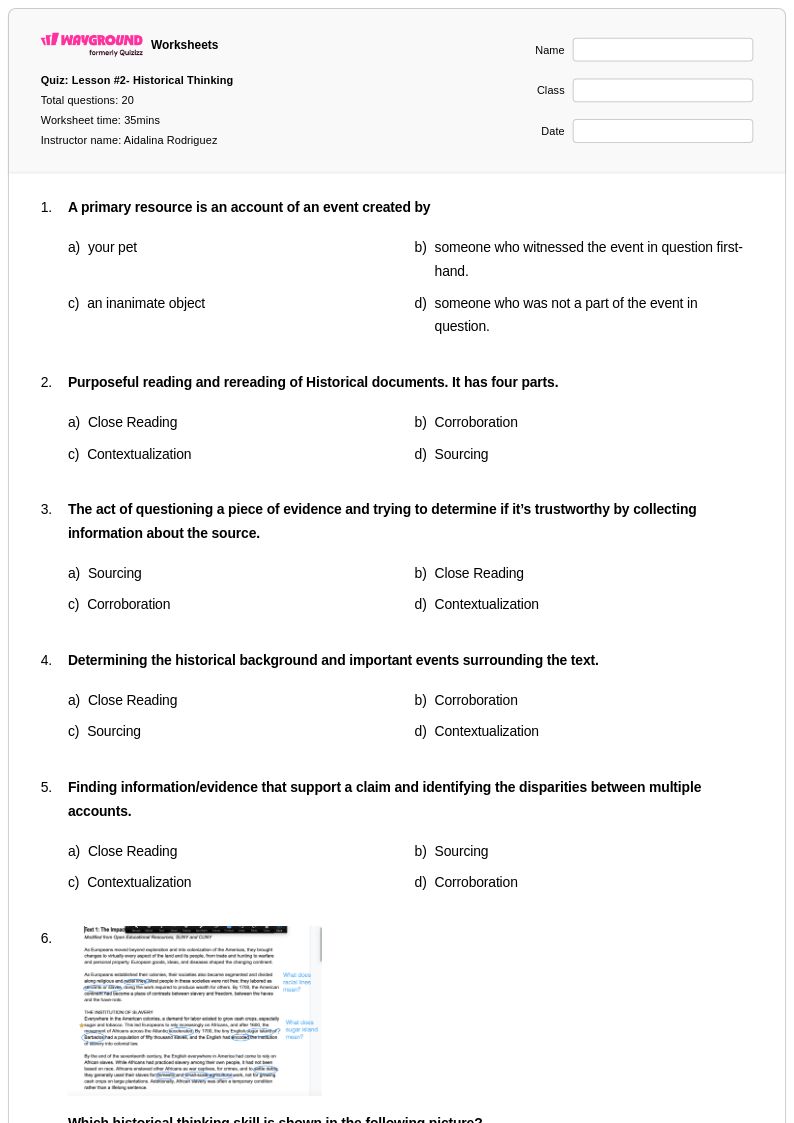
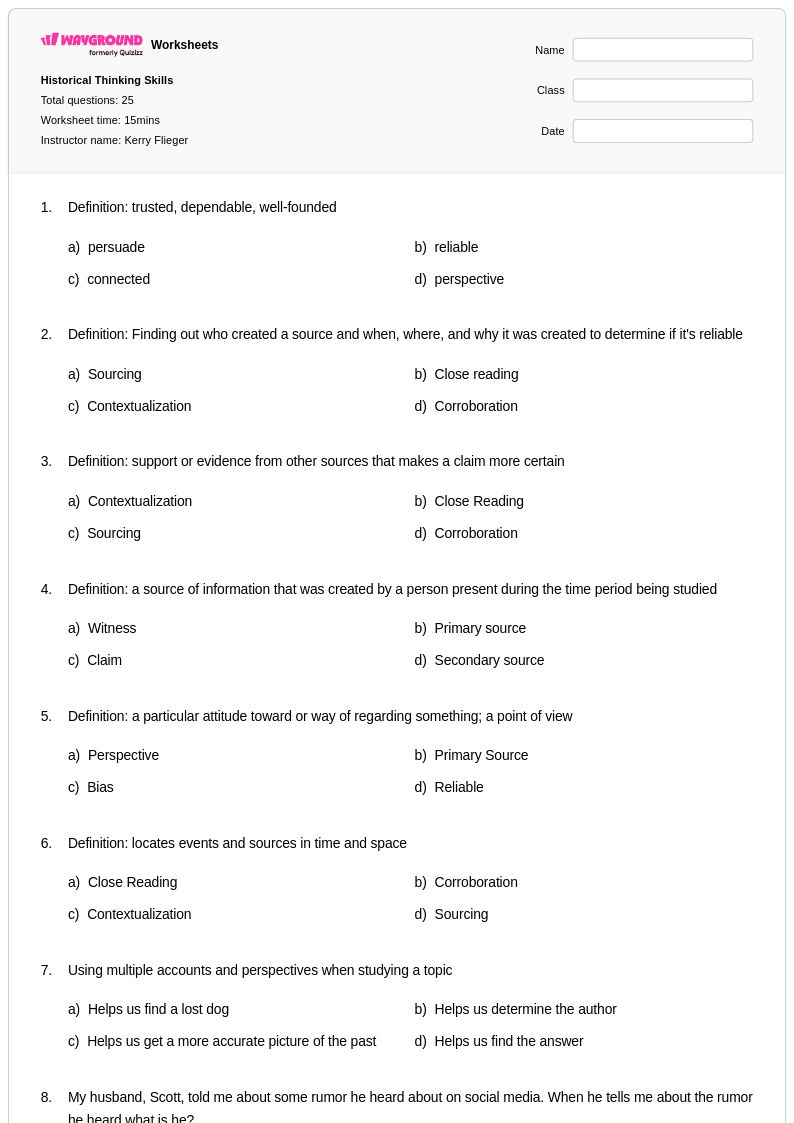
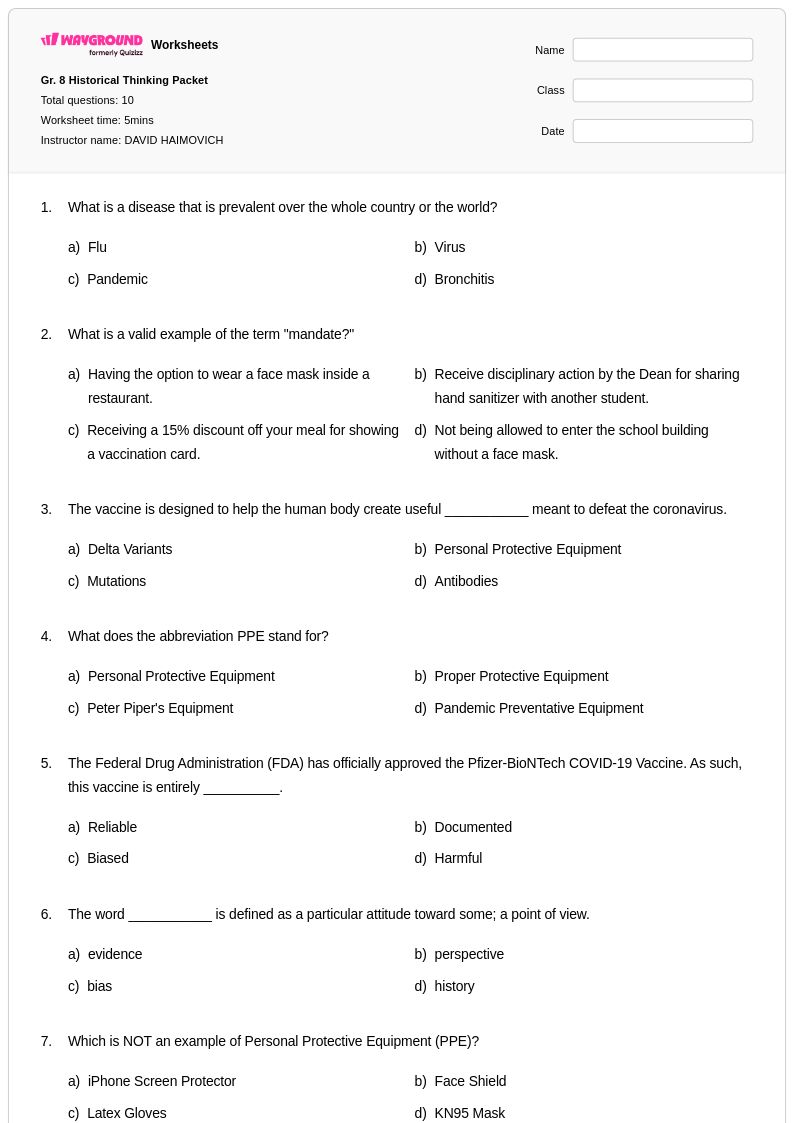
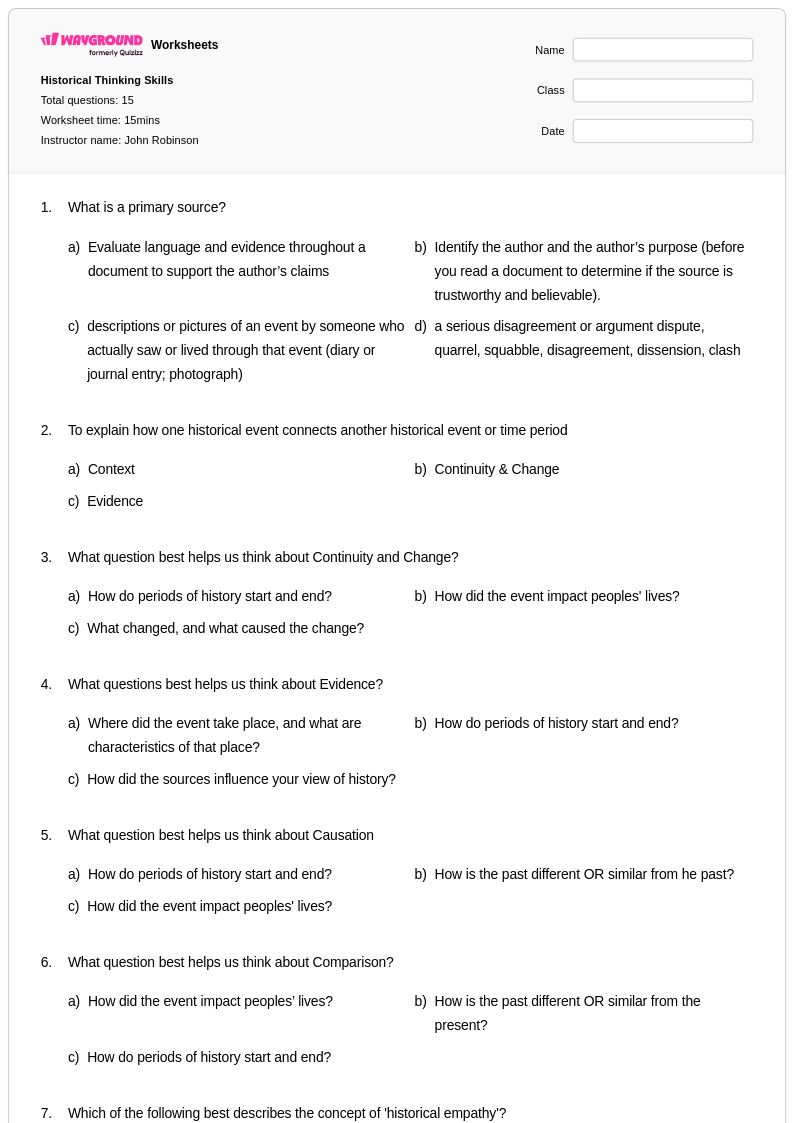
Free Printable Historical Thinking Worksheets for Year 8
Year 8 Historical Thinking worksheets from Wayground provide free printables and practice problems with answer keys to help students develop critical analysis skills for evaluating primary sources, understanding cause and effect, and interpreting historical evidence.
Explore printable Historical Thinking worksheets for Year 8
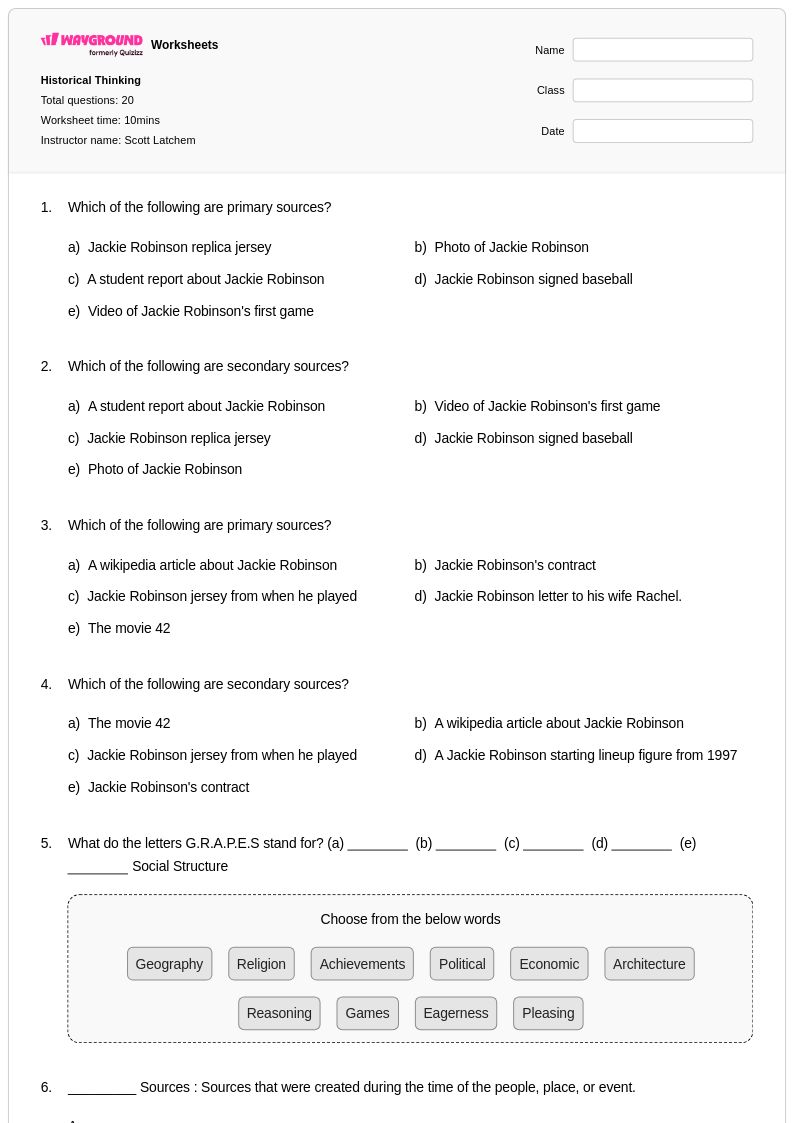
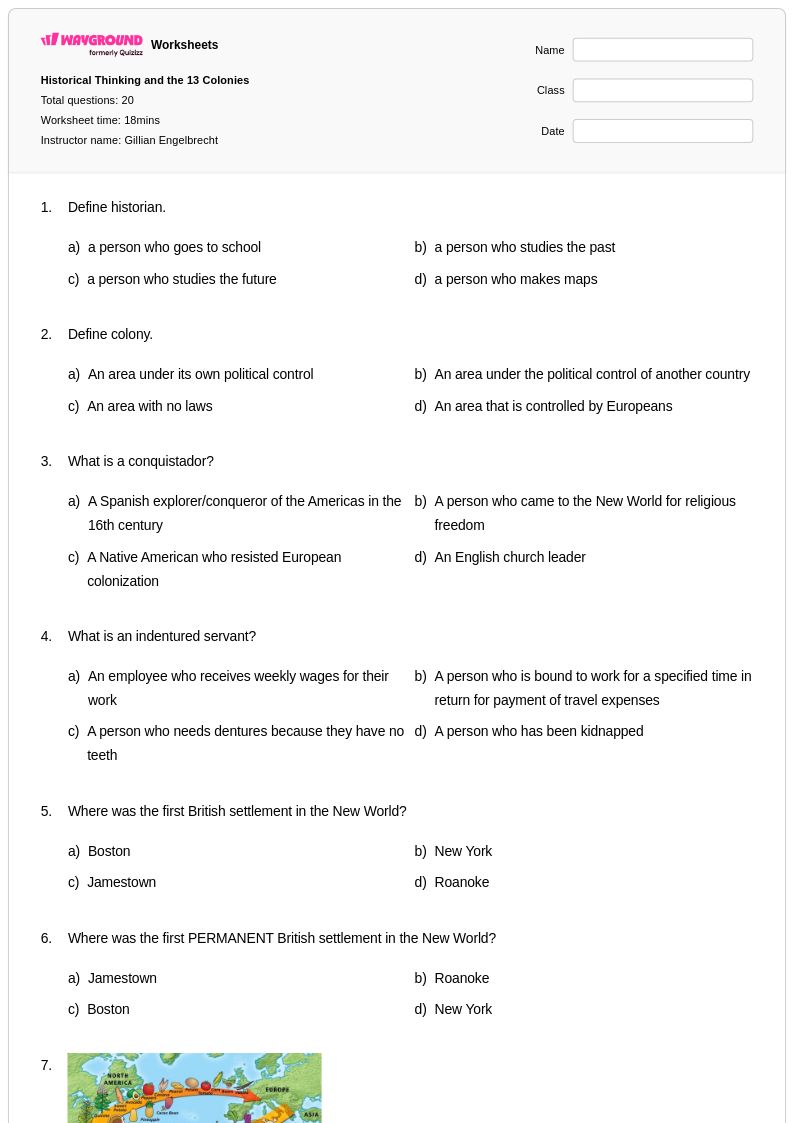
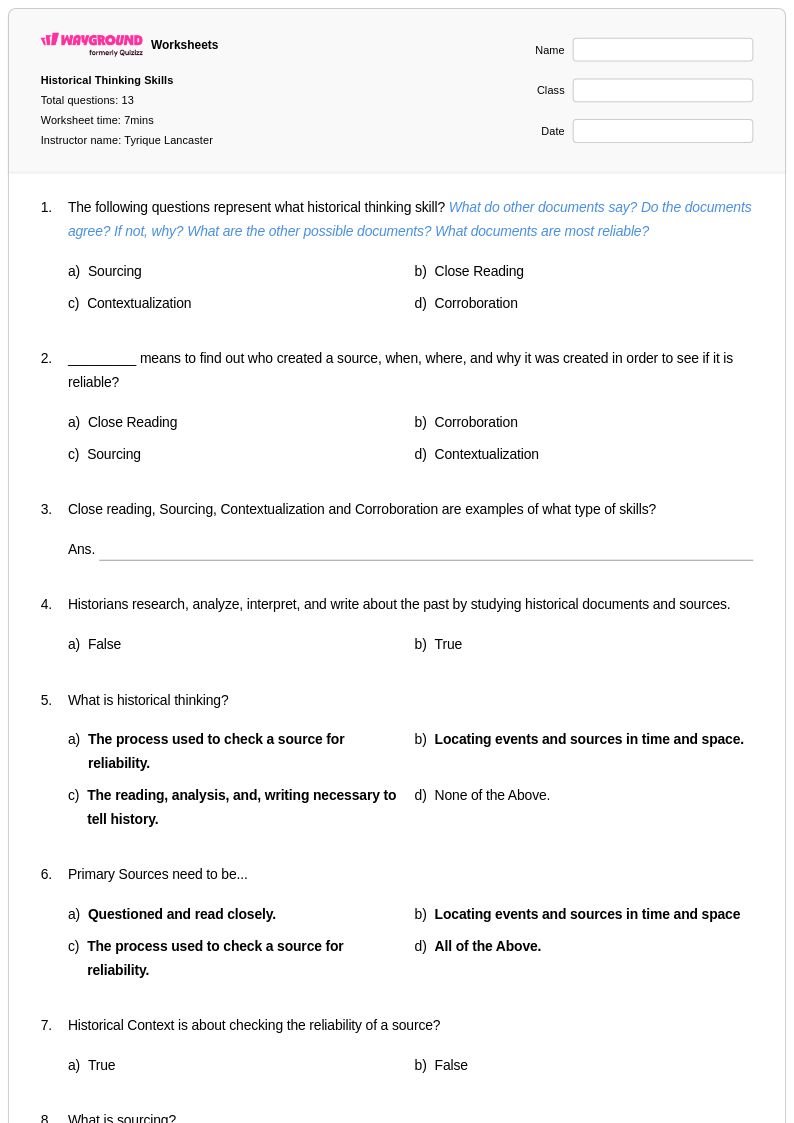
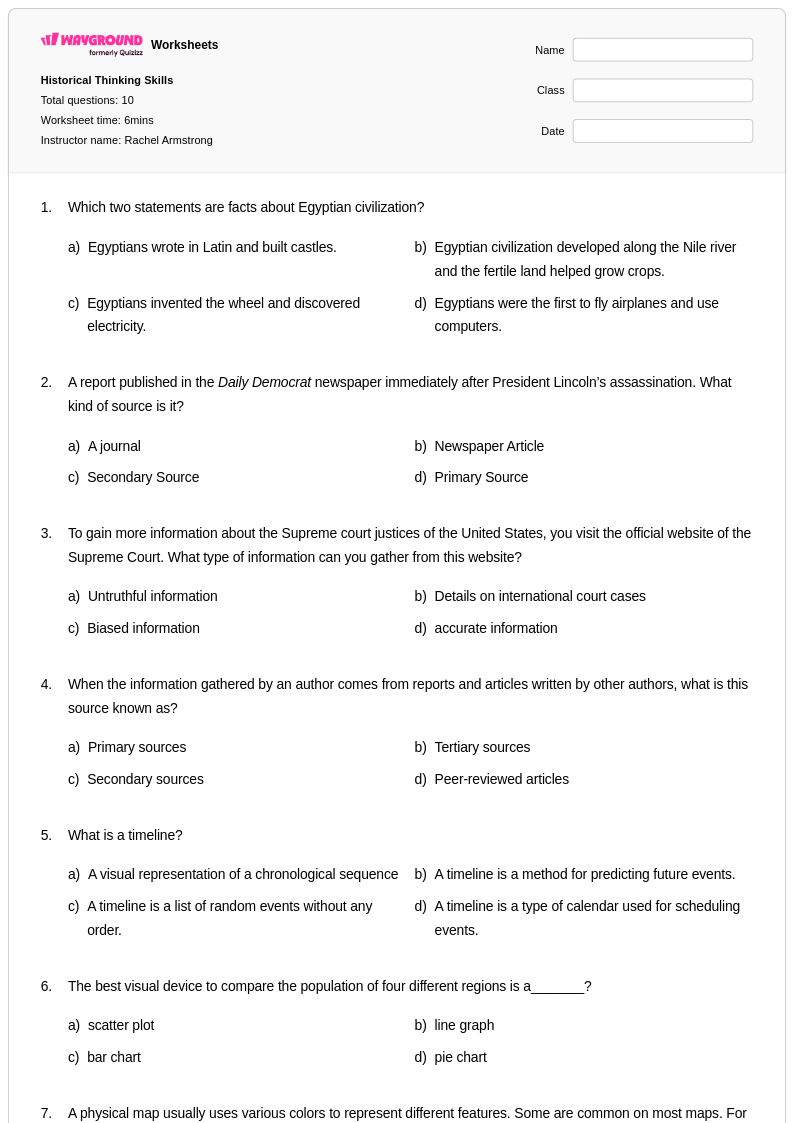
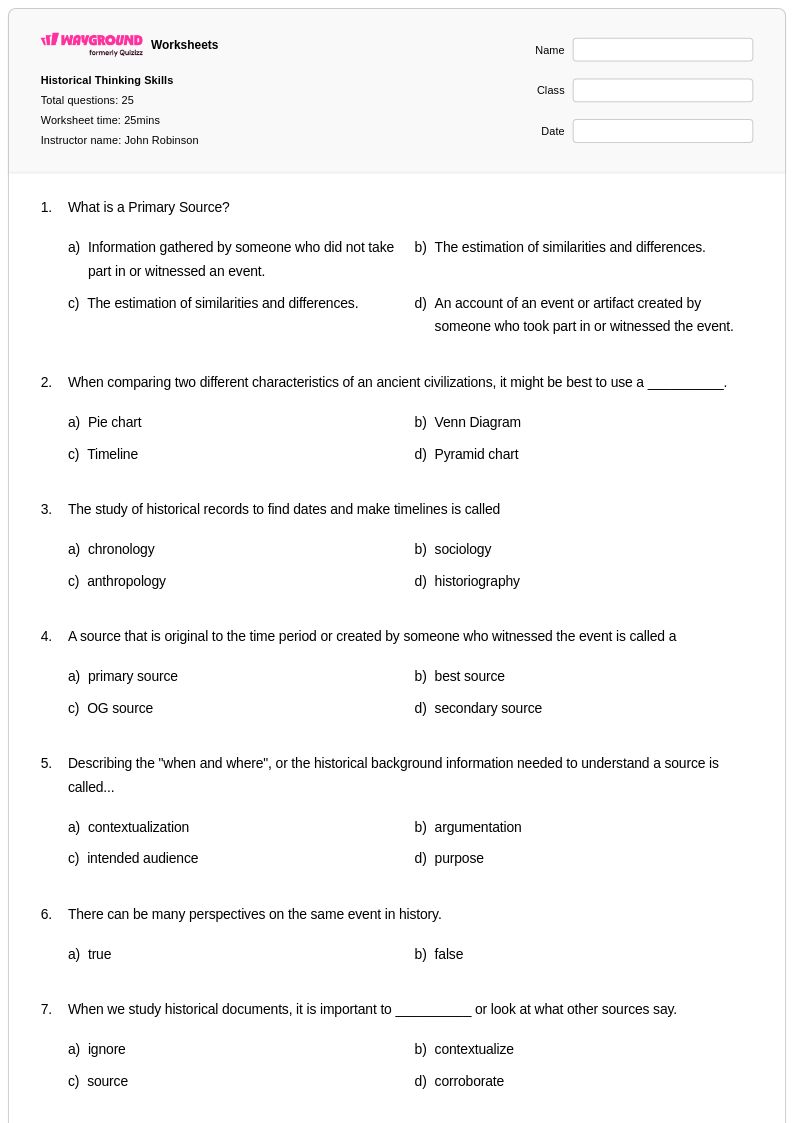
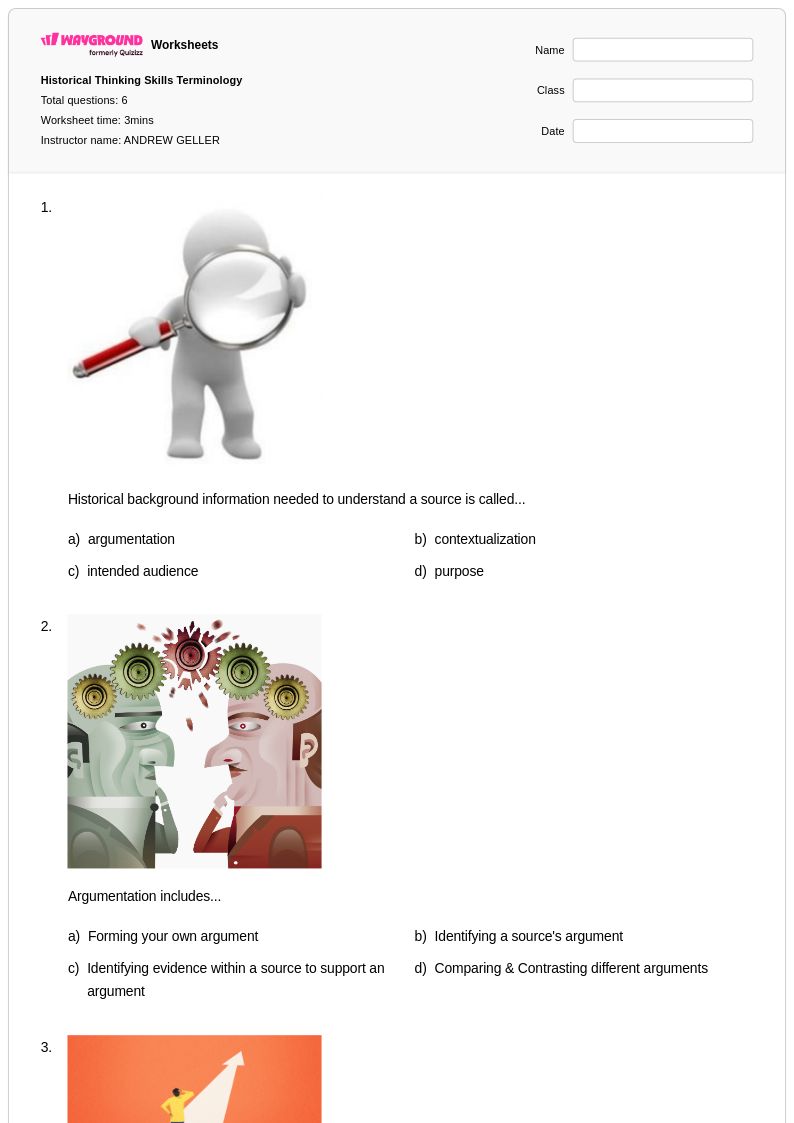
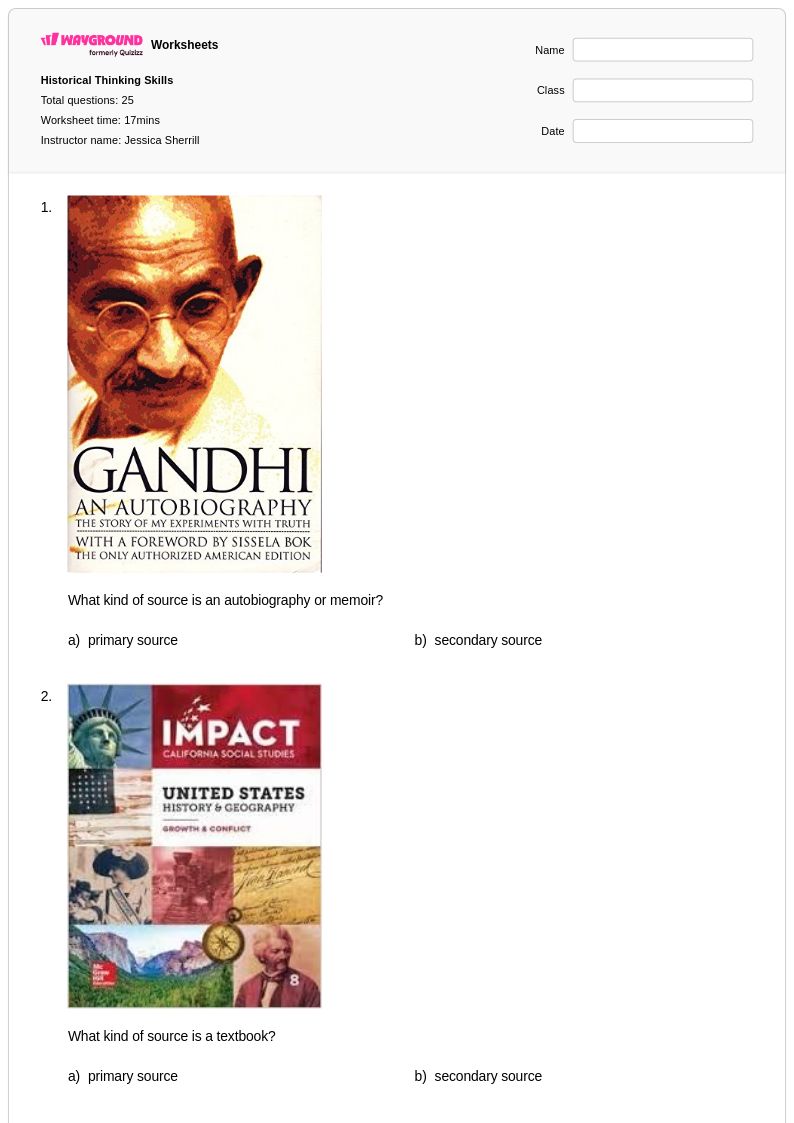
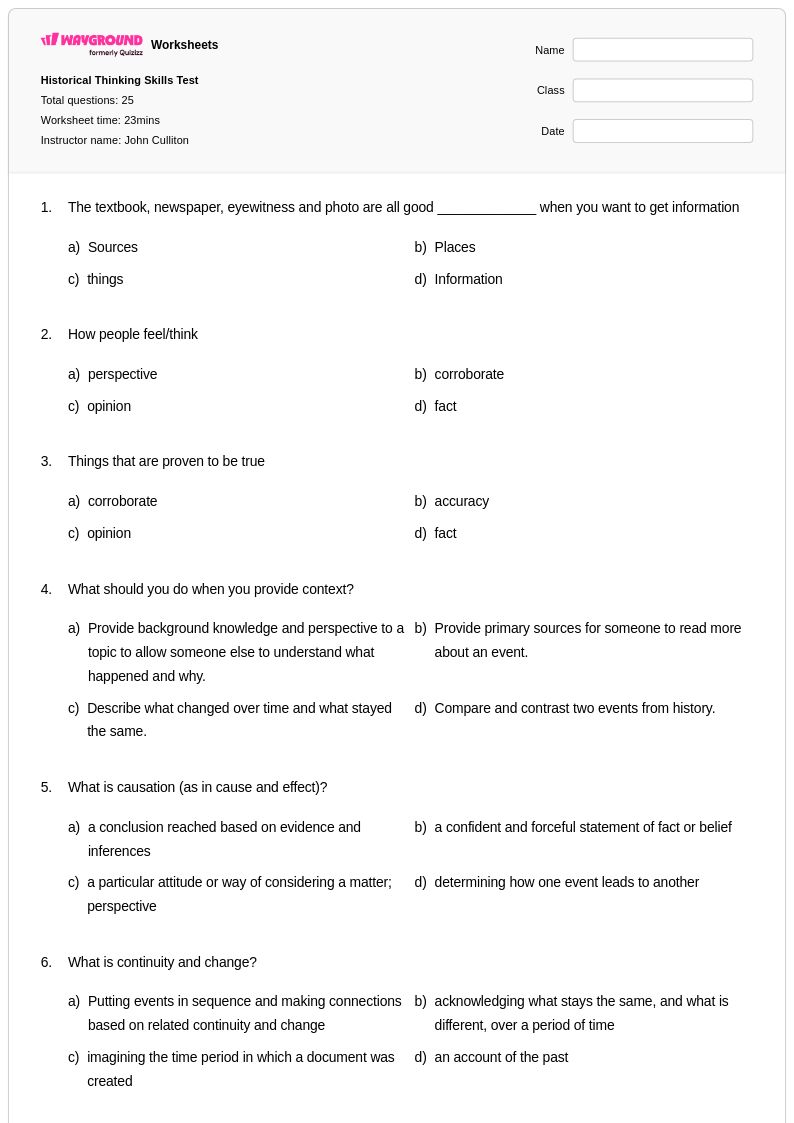
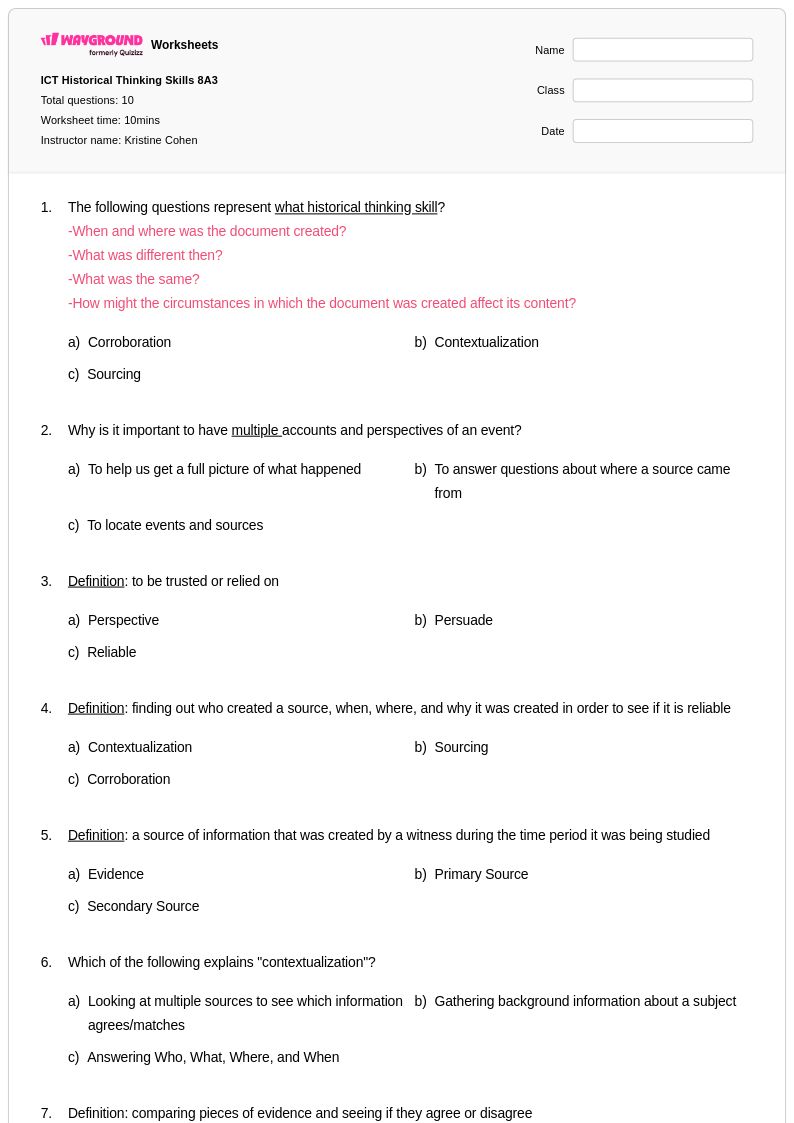
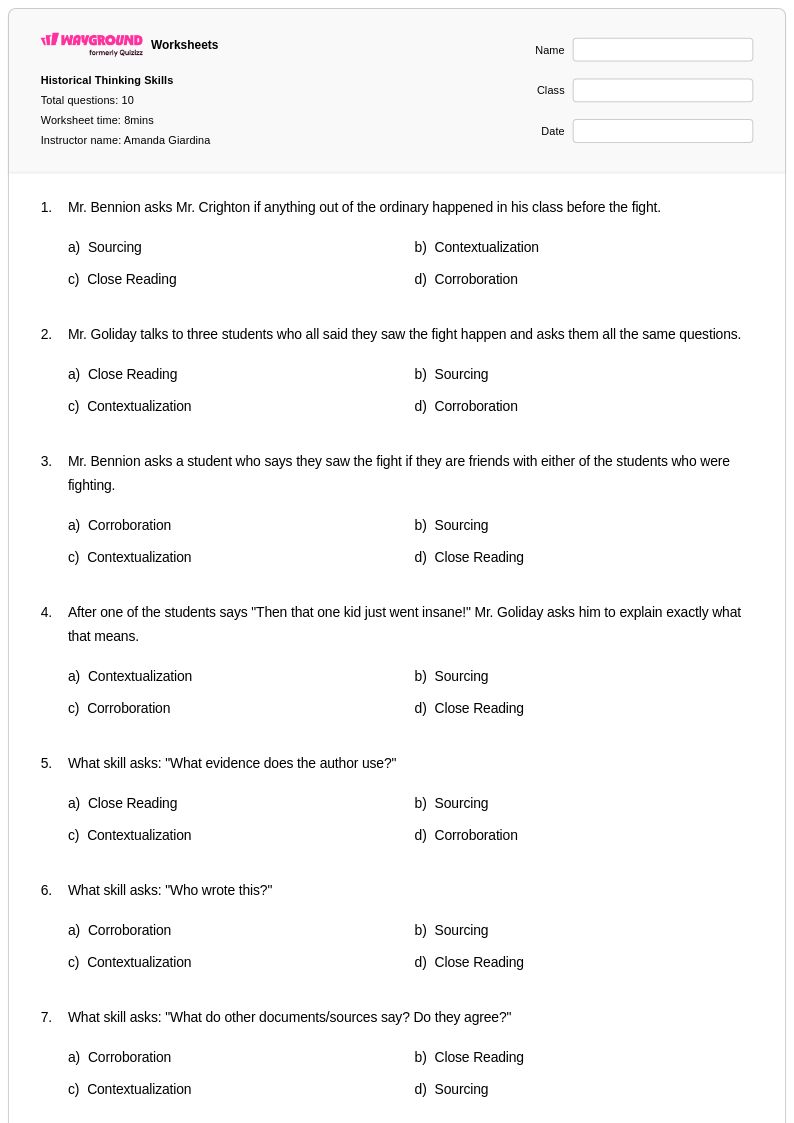
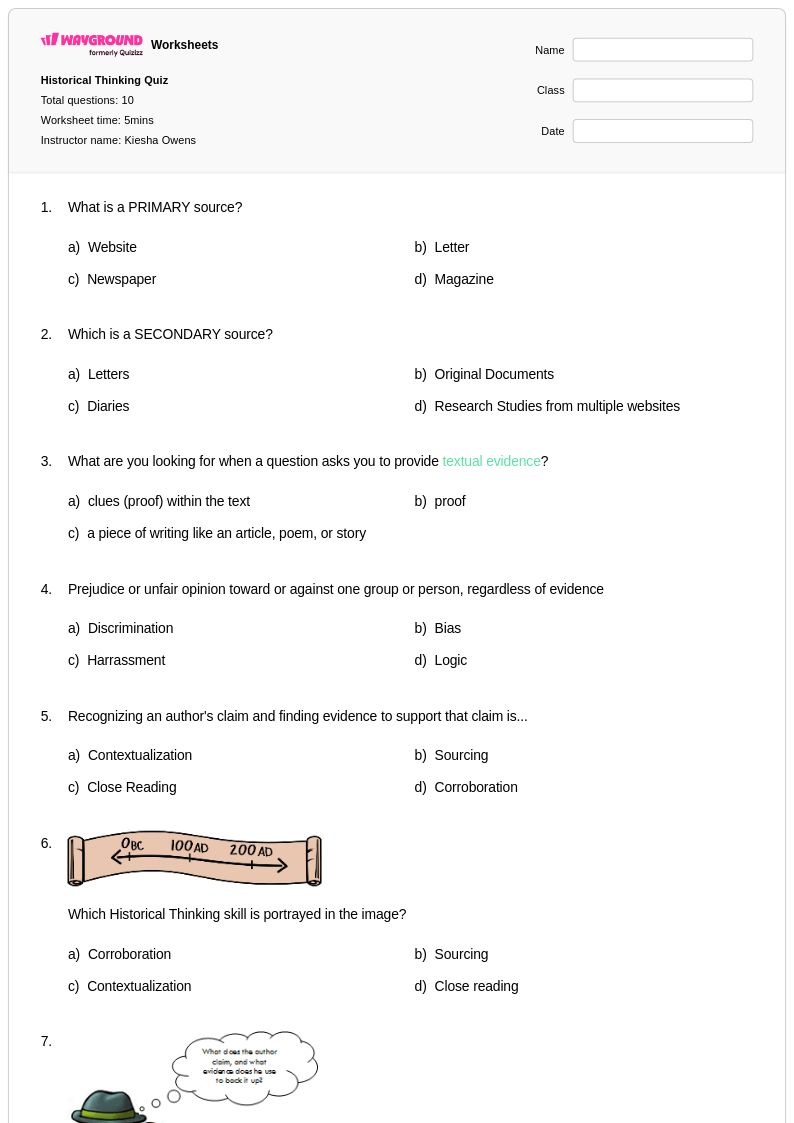
Historical thinking worksheets for Year 8 students available through Wayground (formerly Quizizz) provide comprehensive practice in the essential analytical skills that form the foundation of historical study. These carefully designed resources help eighth-grade students develop critical abilities including chronological reasoning, crafting historical arguments from evidence, analyzing primary and secondary sources, and understanding historical context and significance. The worksheet collection strengthens students' capacity to interpret historical documents, evaluate competing narratives, and construct well-supported conclusions about past events and their lasting impact. Each printable resource includes detailed answer keys and practice problems that guide students through the complex process of thinking like historians, moving beyond simple memorization to engage in sophisticated historical analysis that prepares them for advanced coursework.
Wayground's extensive collection of historical thinking materials supports teachers with millions of educator-created resources specifically designed to meet the diverse needs of Year 8 classrooms. The platform's robust search and filtering capabilities allow teachers to quickly locate worksheets aligned with specific curriculum standards and learning objectives, while built-in differentiation tools enable customization for varying skill levels and learning styles. Available in both printable PDF format and interactive digital versions, these resources provide flexible options for lesson planning, targeted remediation, and enrichment activities. Teachers can seamlessly integrate these historical thinking worksheets into their instruction to provide consistent skill practice, assess student progress in analytical reasoning, and ensure that all learners develop the critical thinking competencies essential for success in social studies and beyond.
FAQs
How do I teach historical thinking skills in the classroom?
Teaching historical thinking means moving students beyond memorizing facts toward analyzing how and why events unfolded. Effective strategies include modeling source analysis using primary documents, guiding students through cause-and-effect mapping, and structuring discussions around competing historical interpretations. Regularly asking students to evaluate source reliability and construct evidence-based arguments builds the core competencies historians use. Scaffolded practice with a mix of primary and secondary sources helps students internalize these skills over time.
What exercises help students practice historical thinking?
Strong historical thinking practice involves exercises that require students to do something analytical with information rather than simply recall it. Effective practice types include source comparison tasks, chronological sequencing activities, document-based questions that ask students to argue a historical claim using evidence, and perspective-taking exercises that examine multiple viewpoints on the same event. Repeated exposure to these formats builds fluency in the skills historians rely on, including contextualizing sources, identifying bias, and reasoning across time periods.
What are the key historical thinking skills students need to develop?
The core historical thinking skills include chronological reasoning, sourcing and contextualizing primary and secondary documents, corroborating evidence across multiple sources, and constructing evidence-based historical arguments. Students also need to recognize that historical accounts are interpretations shaped by perspective, not neutral records of fact. Developing these skills requires deliberate, structured practice rather than passive reading, because analytical habits only solidify when students actively apply them to real historical material.
What mistakes do students commonly make when analyzing historical sources?
One of the most frequent errors is accepting a source at face value without considering the author's purpose, audience, or context. Students often conflate a source being old with it being reliable, or assume that an eyewitness account is more accurate than a secondary synthesis. Another common mistake is using a single source to make sweeping historical claims rather than corroborating evidence across multiple documents. Students also tend to summarize what a source says rather than analyzing what it reveals about the time period, the author's perspective, or the limits of the historical record.
How can I differentiate historical thinking instruction for students at different skill levels?
Differentiation in historical thinking instruction typically means adjusting the complexity of sources, the amount of scaffolding provided, and the depth of analytical writing expected. Struggling learners benefit from partially annotated documents, graphic organizers that structure the analysis process, and reduced source sets that limit cognitive load. Advanced students can work with more ambiguous or contradictory sources and be asked to construct extended historical arguments. On Wayground, teachers can apply student-level accommodations such as Read Aloud, reduced answer choices, and extended time, all configurable per student and reusable across future sessions.
How do I use Wayground's historical thinking worksheets in my classroom?
Wayground's historical thinking worksheets are available as printable PDFs, making them easy to distribute in traditional classroom settings, and in digital formats suited for technology-integrated or remote learning environments. Teachers can also host worksheets as quizzes directly on Wayground, enabling interactive student completion and instant results. The platform includes robust search and filtering tools so teachers can locate worksheets aligned to specific standards or skill areas, and each worksheet comes with a complete answer key to support grading and independent student review.