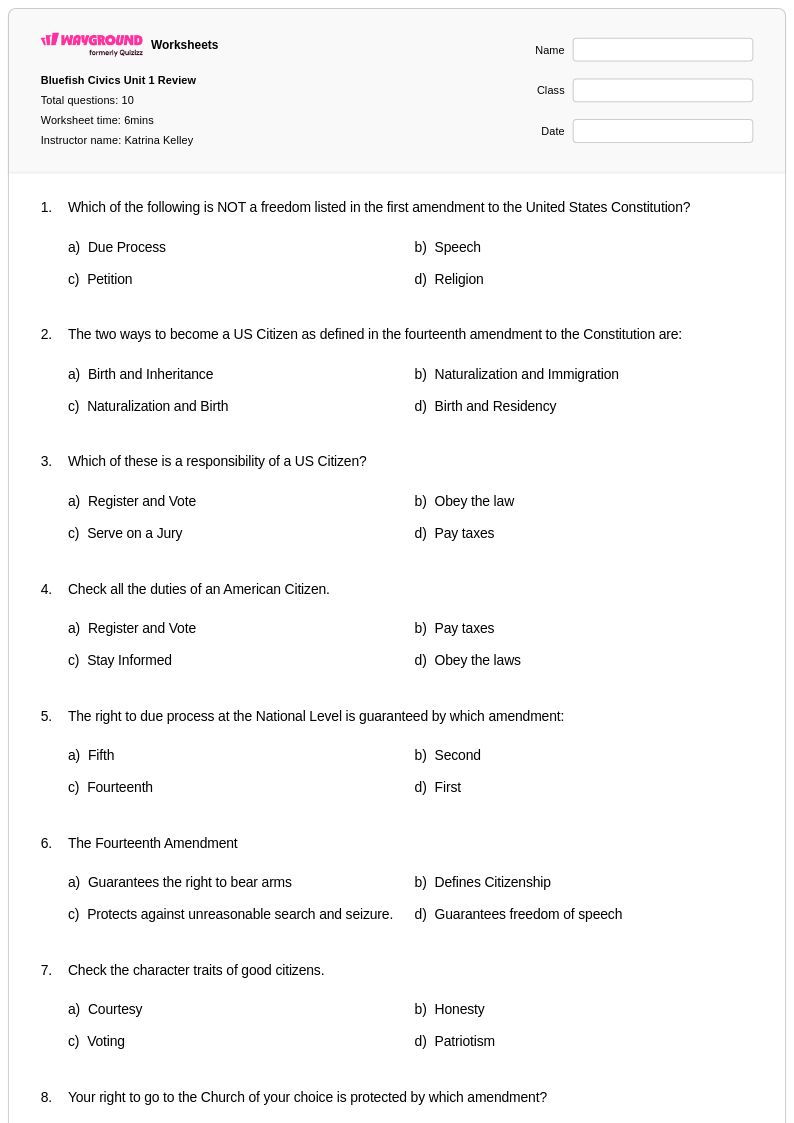
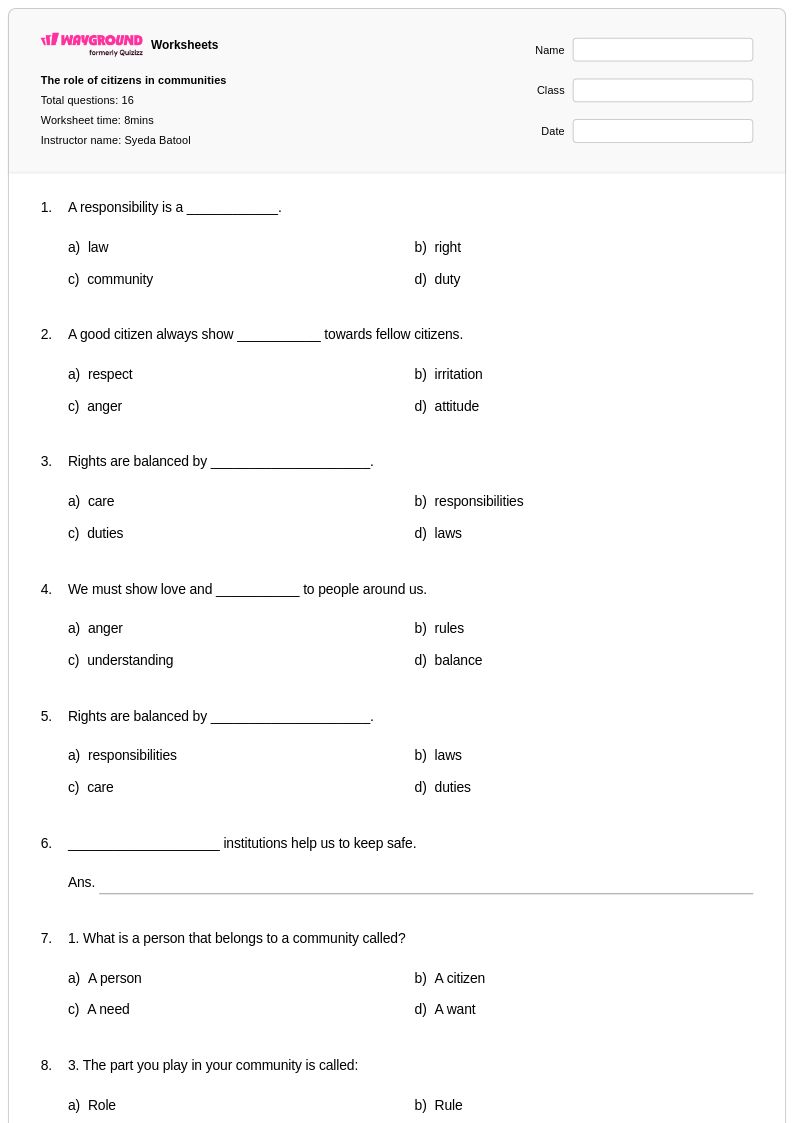
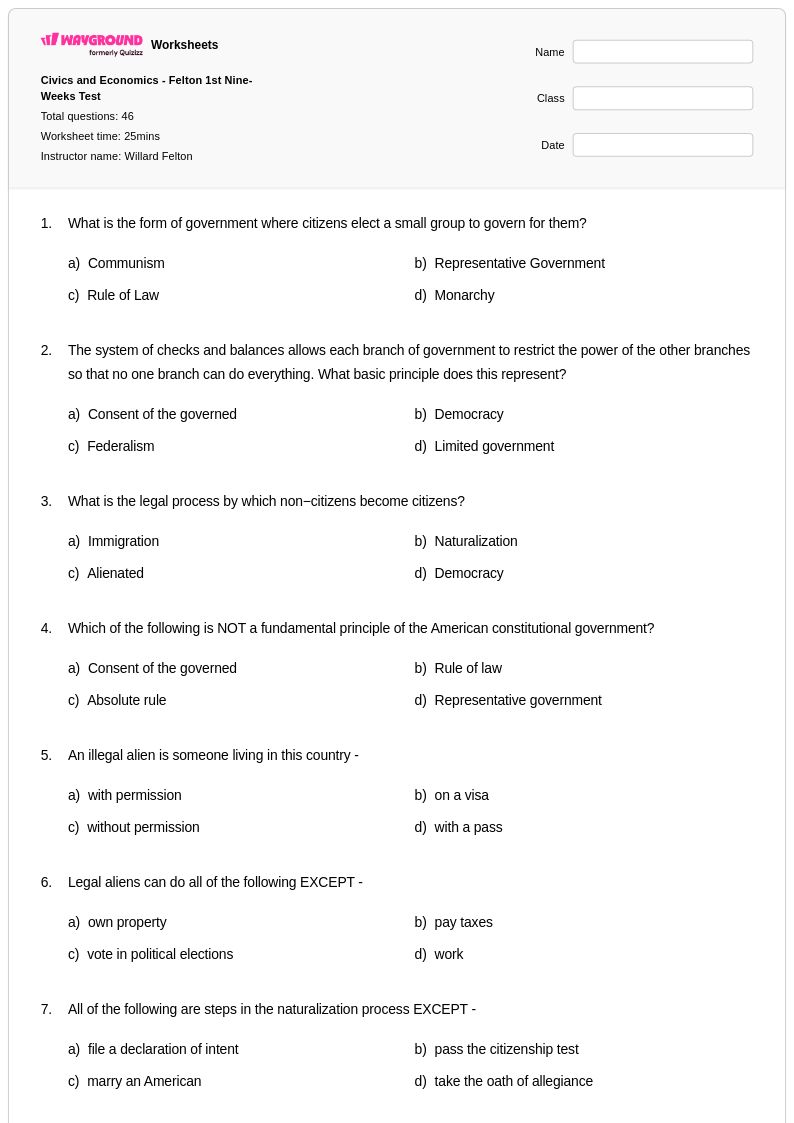
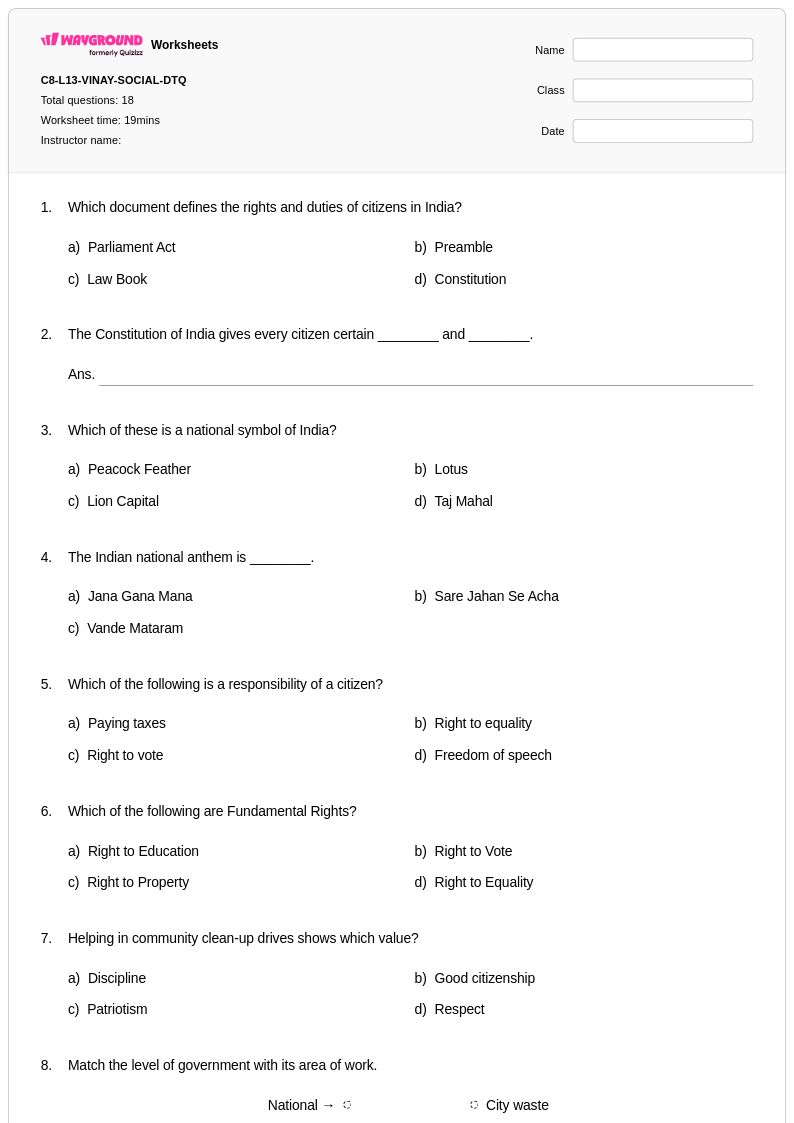
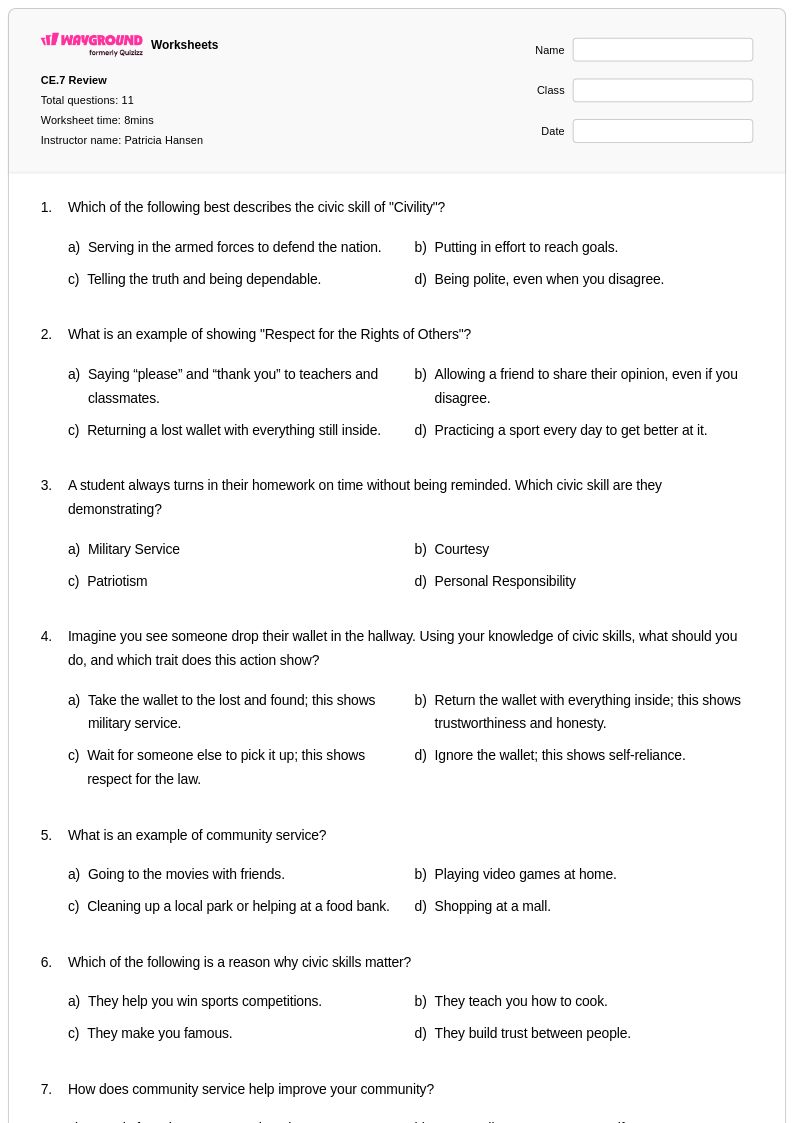
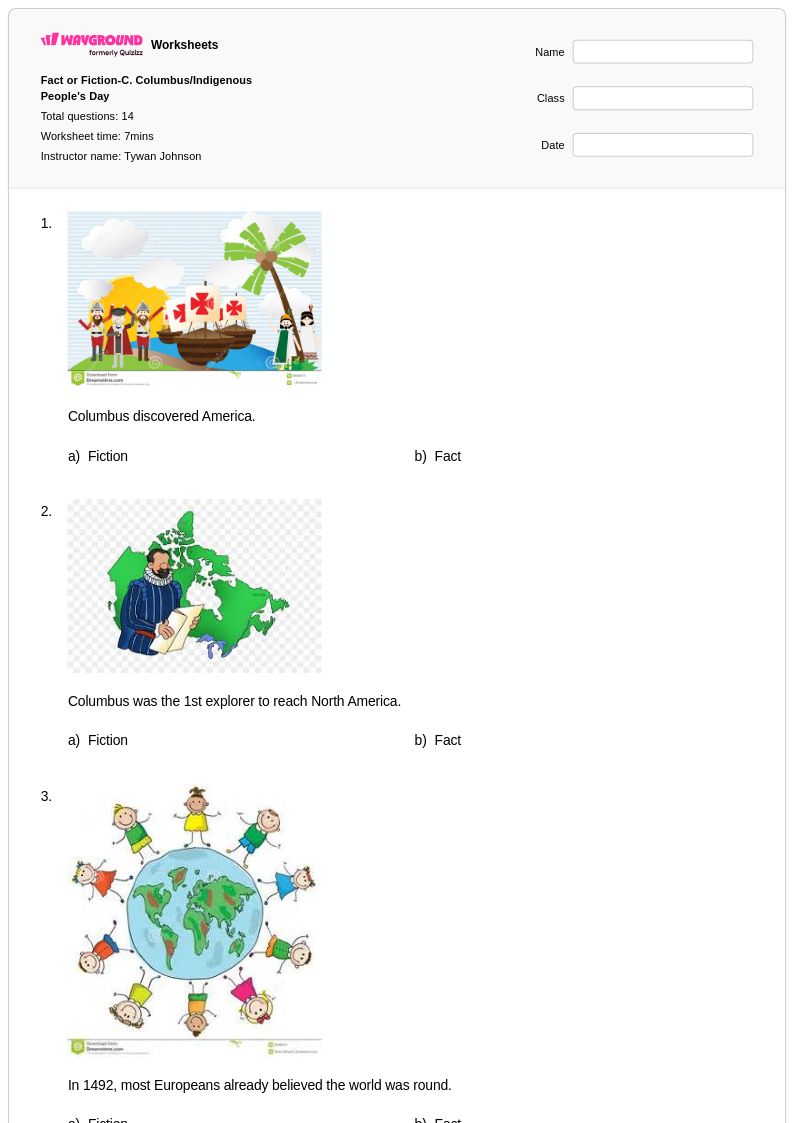
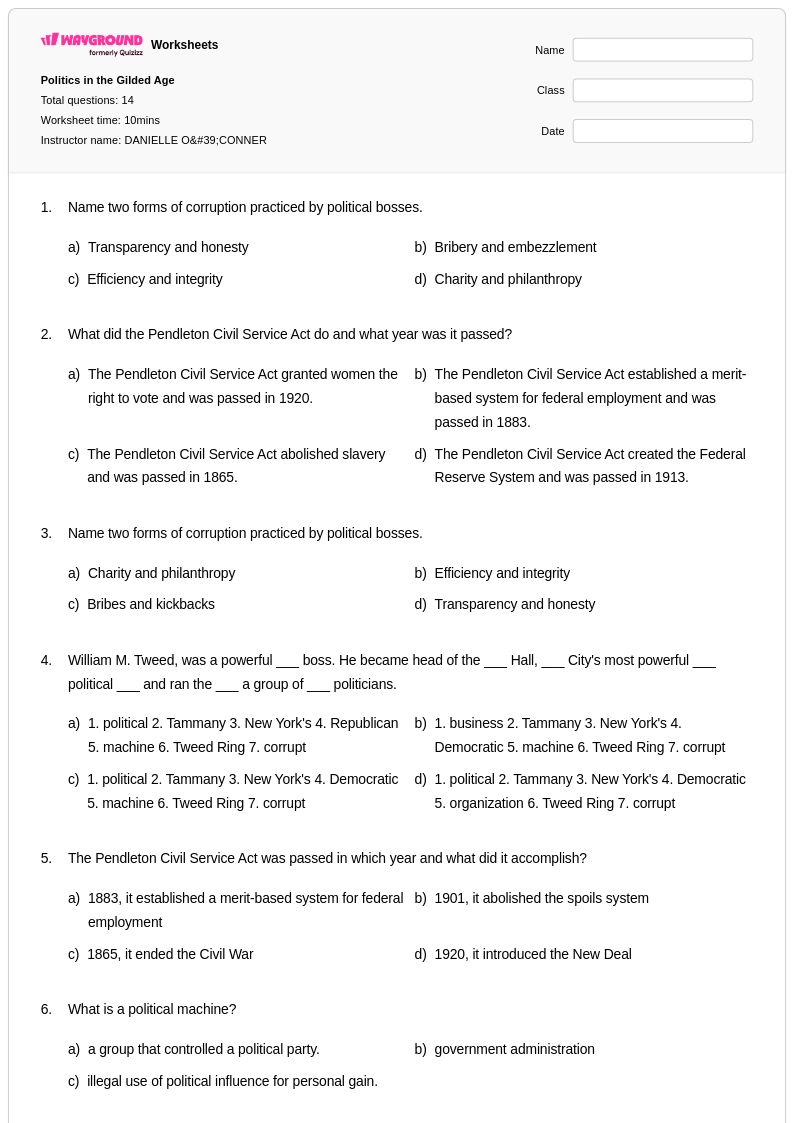
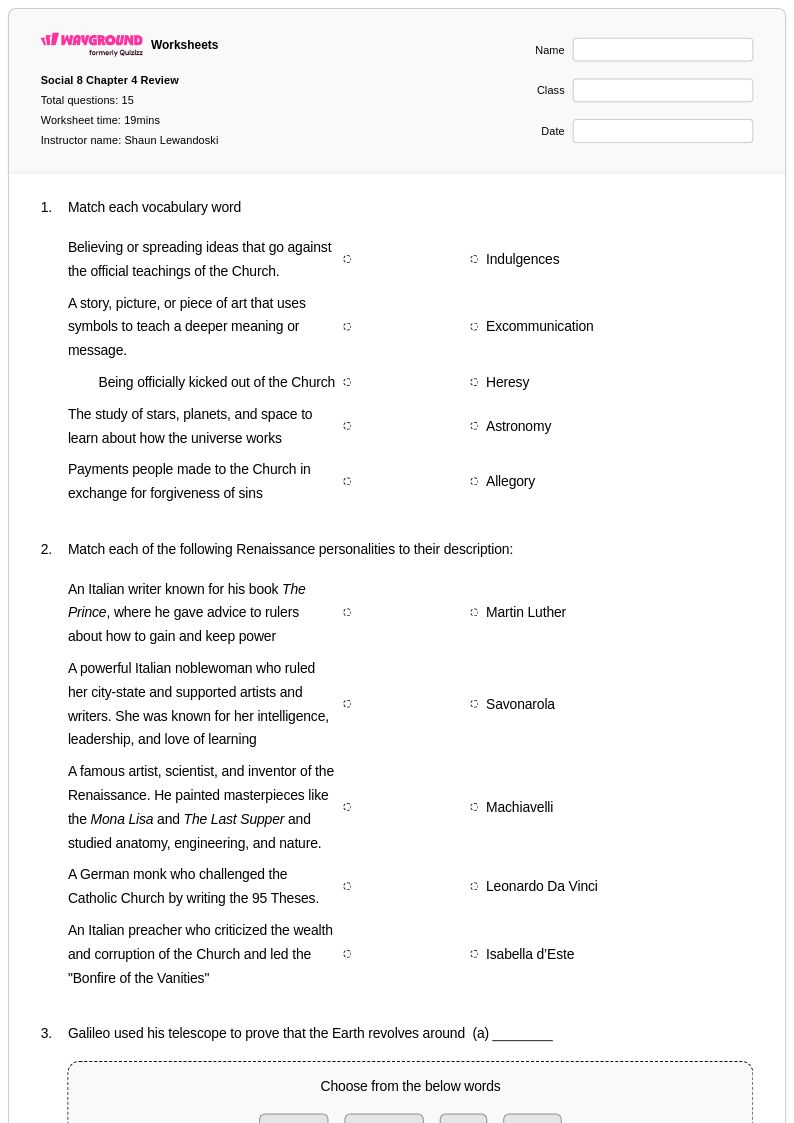
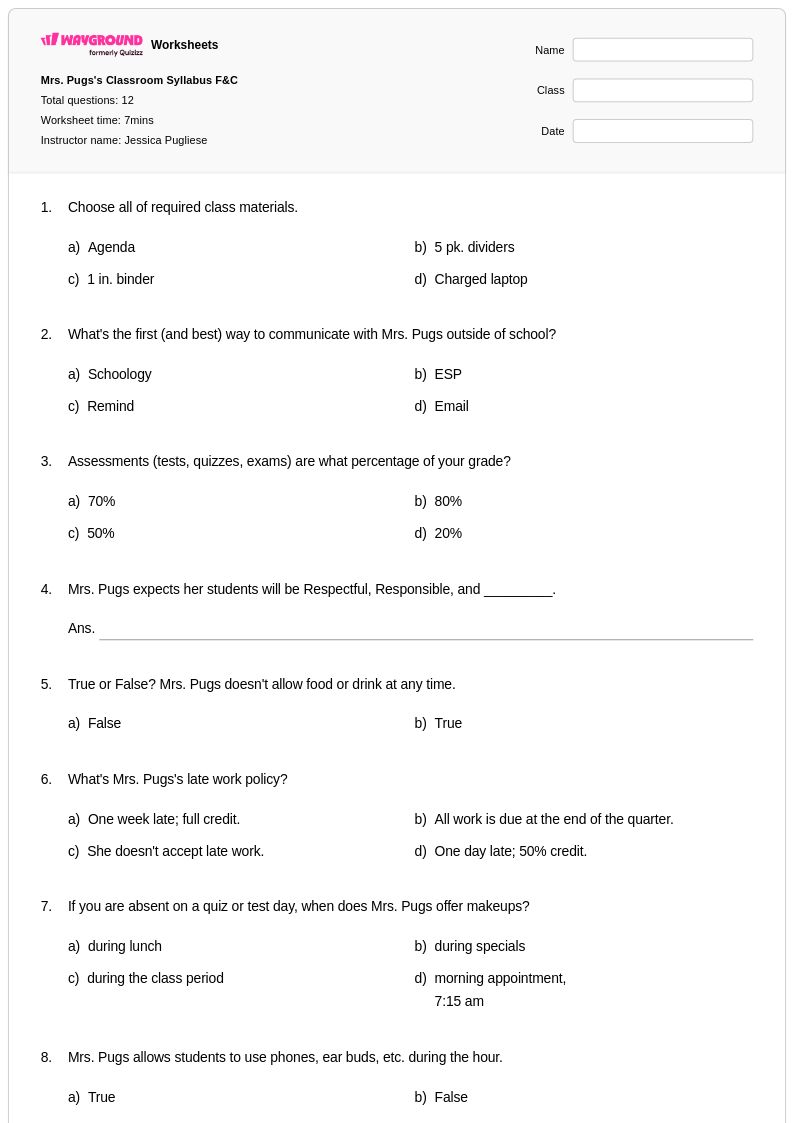
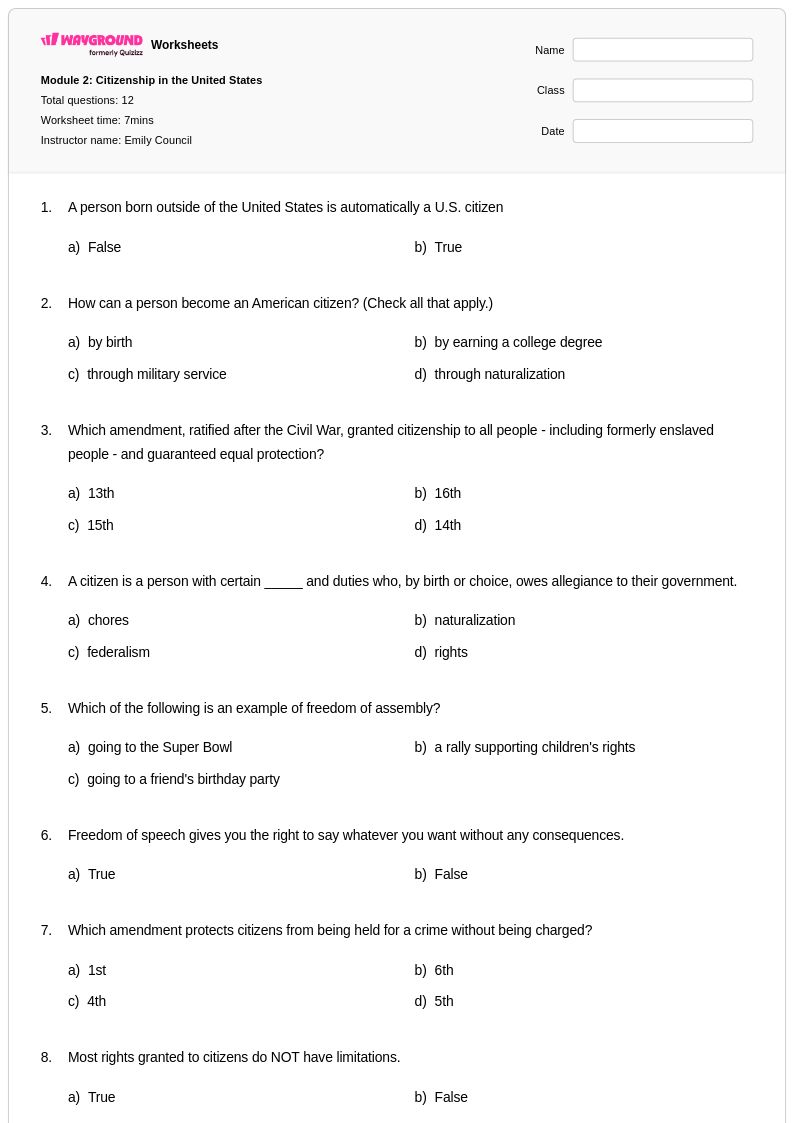
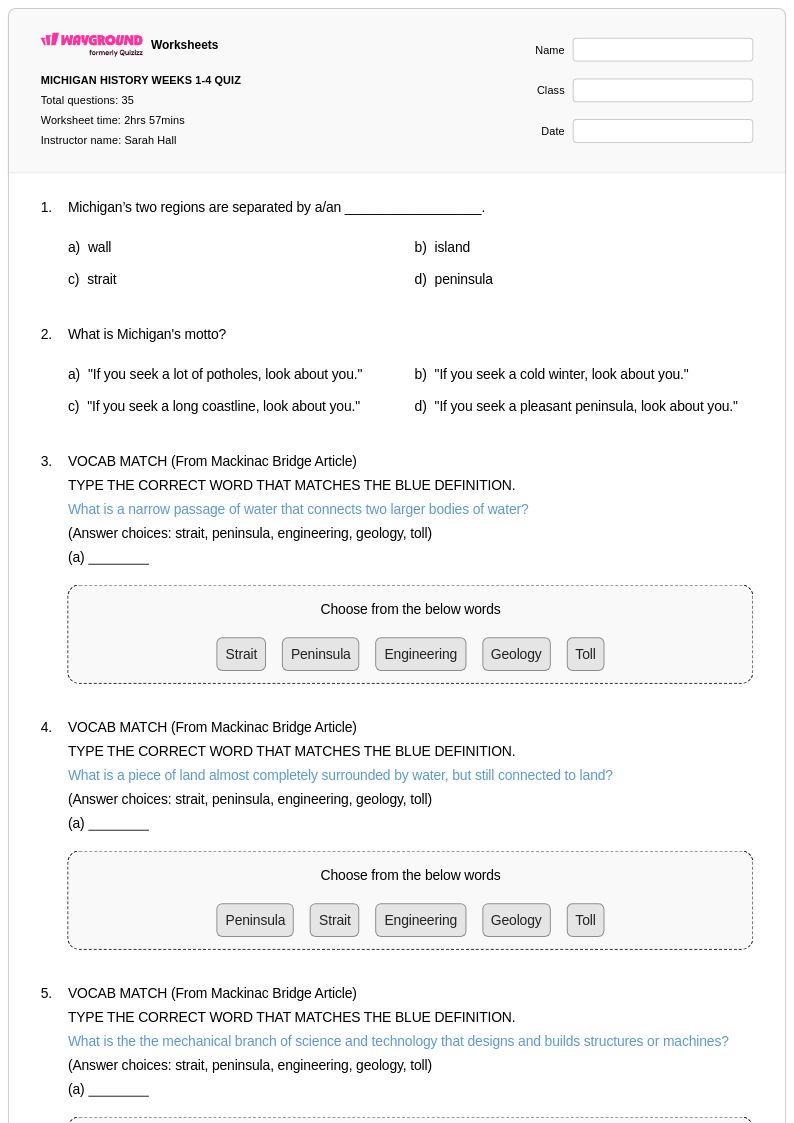
Year 8 honesty worksheets and printables help students develop crucial integrity skills through engaging practice problems, free PDF resources, and comprehensive answer keys for effective social studies learning.
Year 8 honesty worksheets available through Wayground (formerly Quizizz) provide comprehensive resources for developing ethical reasoning and character education within social studies curricula. These carefully designed materials help eighth-grade students explore the complexities of truthfulness in various social contexts, from personal relationships to civic responsibilities. The worksheets strengthen critical thinking skills by presenting real-world scenarios where students must evaluate the consequences of honest versus dishonest choices, analyze the impact of integrity on community trust, and examine historical examples of honesty in leadership. Each resource includes detailed answer keys and practice problems that guide students through moral reasoning processes, while free printables ensure accessibility for diverse classroom environments and individual study sessions.
Wayground (formerly Quizizz) supports educators with an extensive collection of teacher-created honesty resources drawn from millions of professionally developed materials. The platform's robust search and filtering capabilities allow teachers to quickly locate grade-appropriate content that aligns with character education standards and social-emotional learning objectives. Advanced differentiation tools enable instructors to customize worksheets for varying ability levels, while flexible formatting options provide both printable pdf versions for traditional classroom use and digital formats for interactive learning experiences. These comprehensive features streamline lesson planning by offering ready-to-use materials for skill practice, targeted remediation for students struggling with ethical concepts, and enrichment activities that challenge advanced learners to explore deeper philosophical questions about honesty and moral decision-making.
FAQs
How do I teach honesty as a character trait in the classroom?
Teaching honesty works best when students encounter real-world scenarios that require them to weigh the short-term discomfort of truth-telling against the long-term consequences of deception. Start by grounding the concept in familiar situations — a friend cheating on a test, finding a lost item, or making a mistake on an assignment — and use guided discussion to help students articulate why honesty matters beyond rule-following. Pairing scenario analysis with reflective writing helps students move from abstract understanding to internalized values.
What activities help students practice ethical decision-making around honesty?
Scenario-based exercises are among the most effective tools for practicing honesty as an ethical skill, because they require students to apply moral reasoning to specific situations rather than simply defining the concept. Activities that ask students to identify the difference between truth-telling and deception, predict the consequences of dishonest behavior, and reflect on how honesty affects relationships build both critical thinking and empathy. Reflective writing prompts that connect honesty to students' own daily interactions reinforce these skills beyond the classroom.
What misconceptions do students commonly have about honesty?
A frequent misconception is that honesty only matters when someone is watching or when the stakes are high, which leads students to treat truthfulness as situational rather than as a consistent character trait. Students also often conflate honesty with bluntness, not recognizing that honest communication can still be kind and considerate. Worksheets that examine the consequences of dishonest behavior in low-stakes social situations help correct these patterns by showing that integrity operates in everyday interactions, not just in dramatic moments.
How can I use honesty worksheets to support students who struggle with social-emotional learning?
For students who find abstract ethical concepts difficult to access, scenario-based honesty worksheets provide concrete anchors that make moral reasoning more approachable. On Wayground, teachers can enable Read Aloud so that questions and scenarios are read to students who need audio support, and Reduced Answer Choices can lower cognitive load for students who are overwhelmed by complex options. These accommodations can be assigned to individual students without notifying the rest of the class, allowing differentiated support within a shared activity.
How do I use Wayground's honesty worksheets in my classroom?
Wayground's honesty worksheets are available as printable PDFs for traditional classroom use and in digital formats for technology-integrated or remote learning environments. Teachers can also host these worksheets as a live or self-paced quiz directly on Wayground, making it easy to track student responses and facilitate whole-class discussion around ethical decision-making scenarios. Complete answer keys are included, so grading is efficient and teachers can focus discussion time on the reasoning behind student responses rather than on scoring.