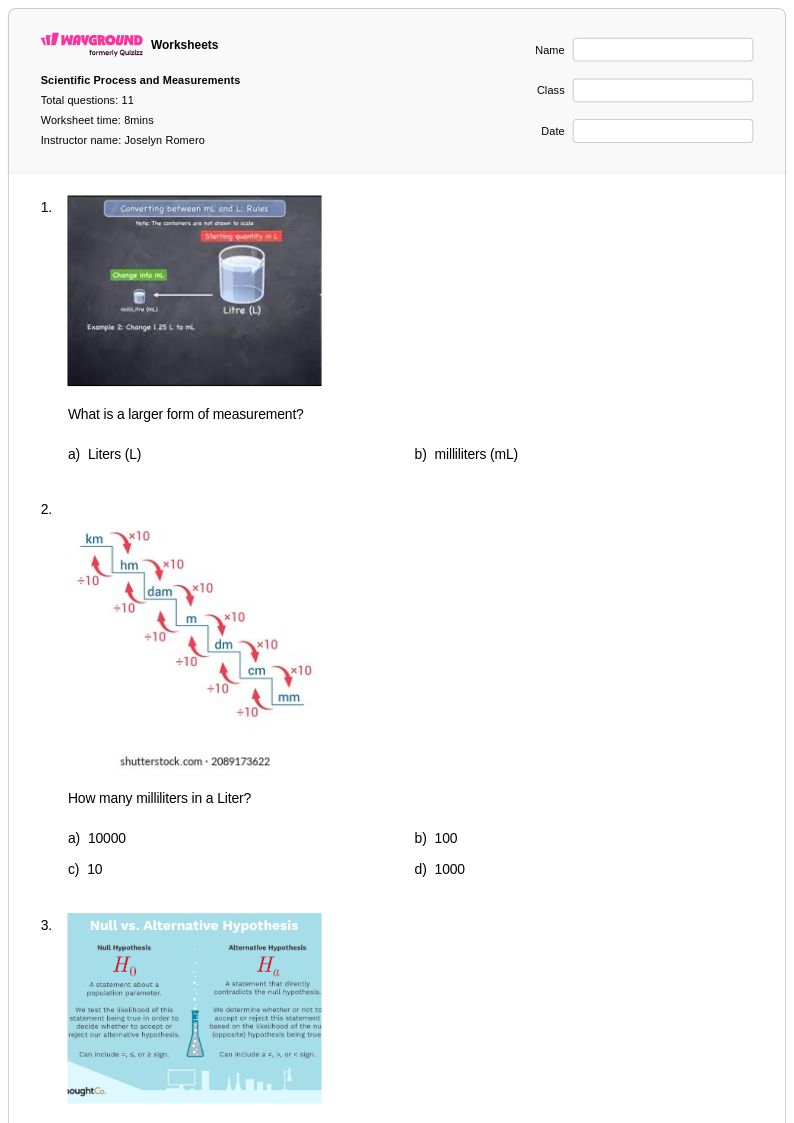
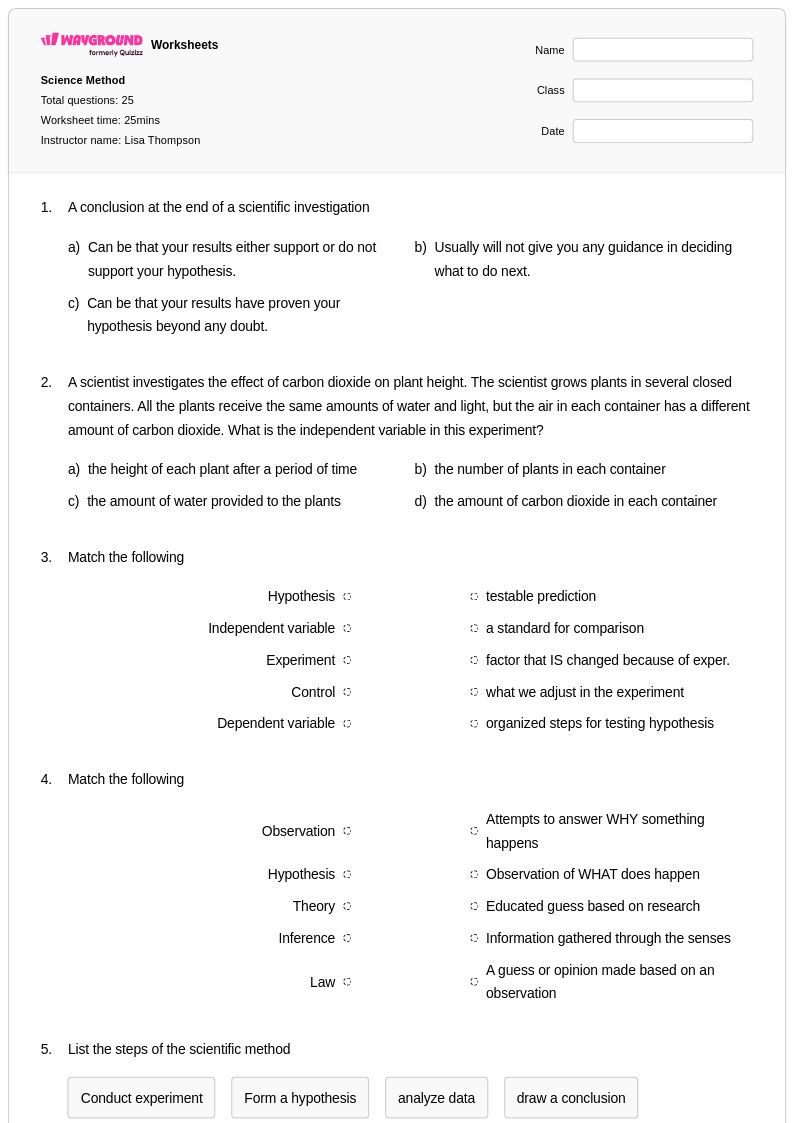
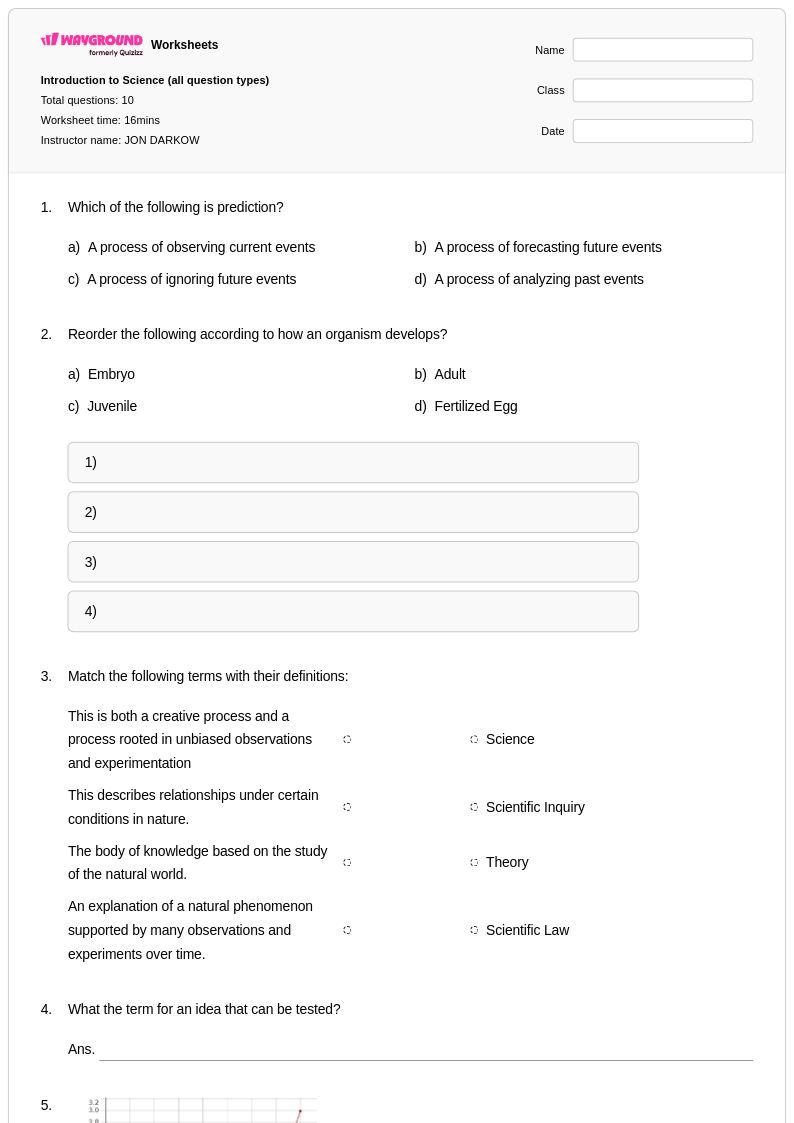
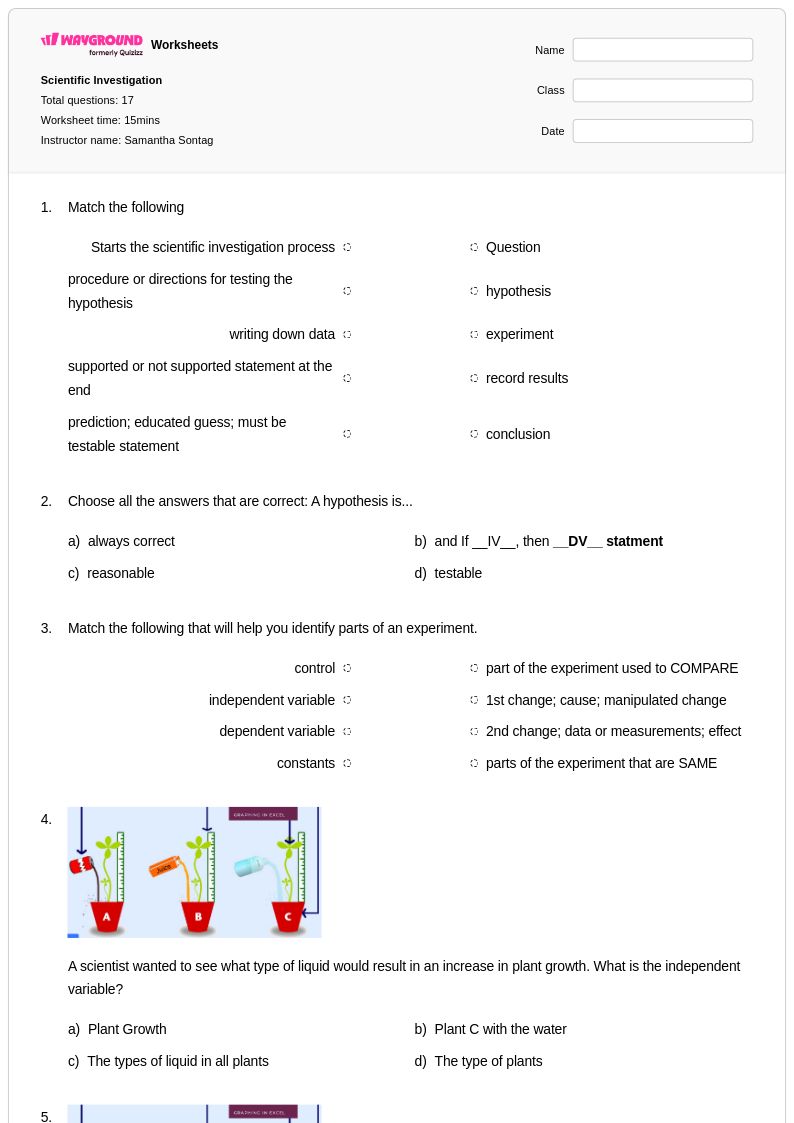
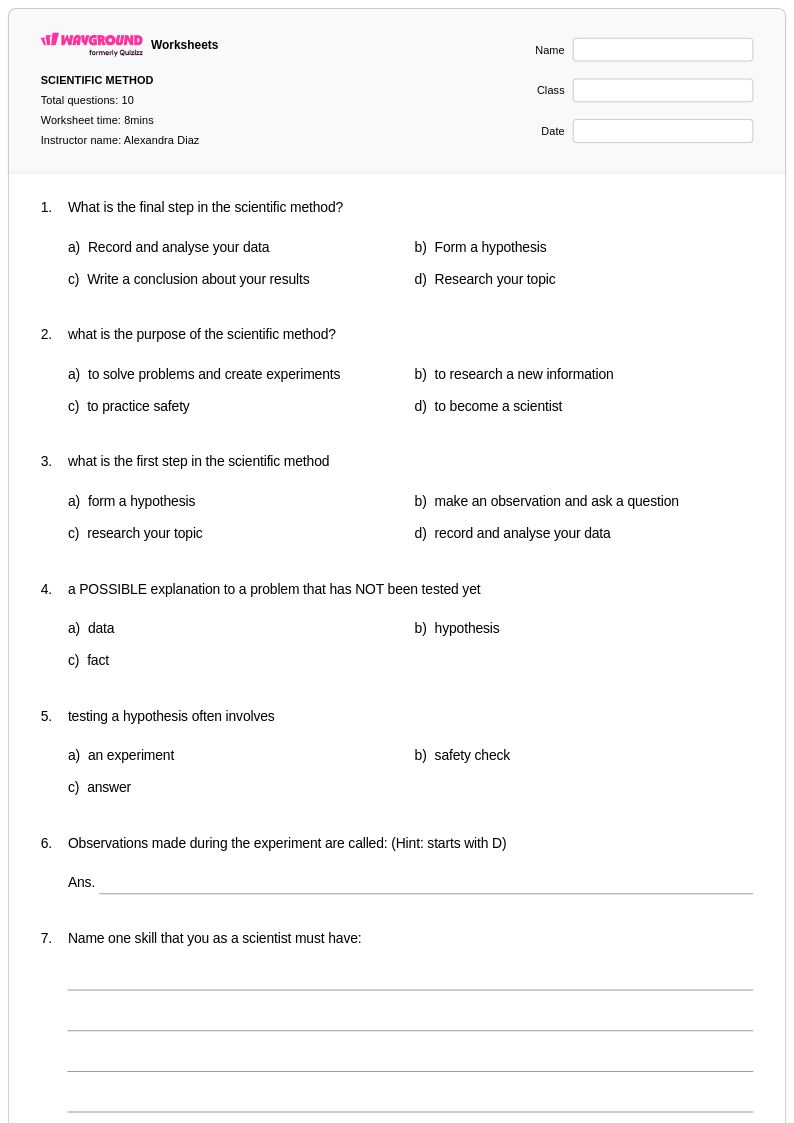
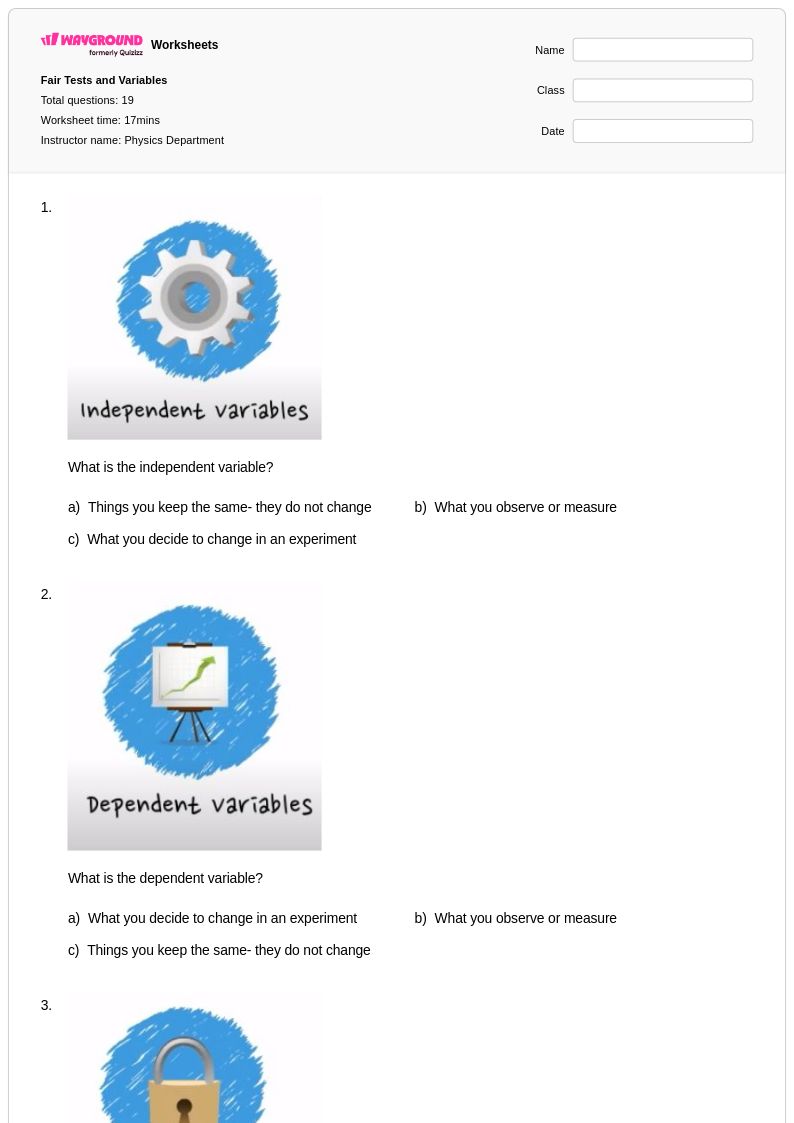
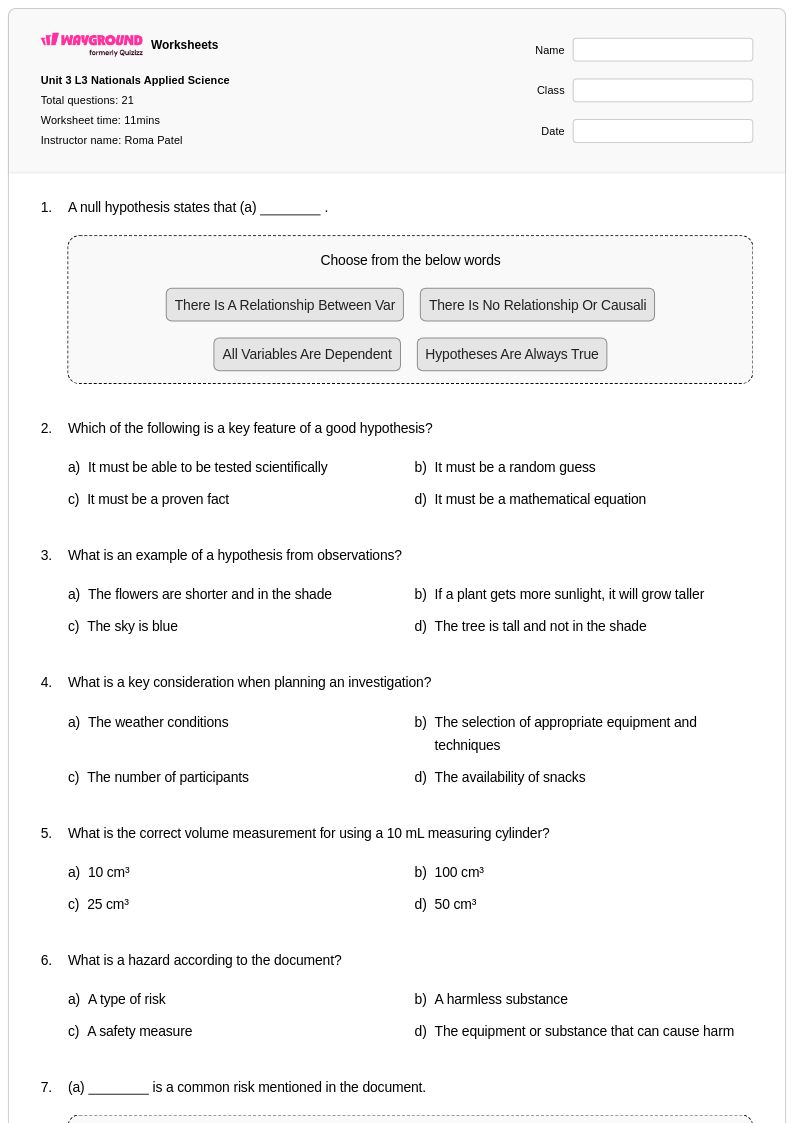
Explore Wayground's free Year 11 hypothesis worksheets and printables that help students master scientific hypothesis formation, testing, and analysis through engaging practice problems with comprehensive answer keys.
Explore printable Hypothesis worksheets for Year 11
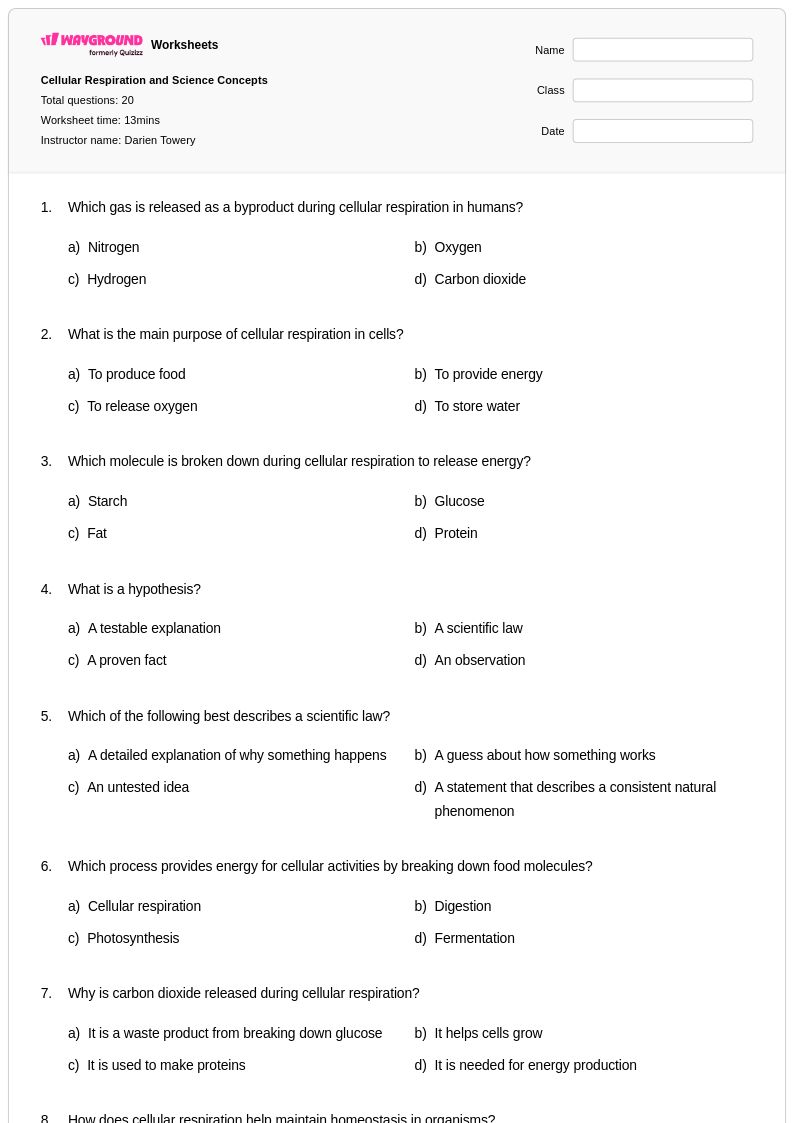
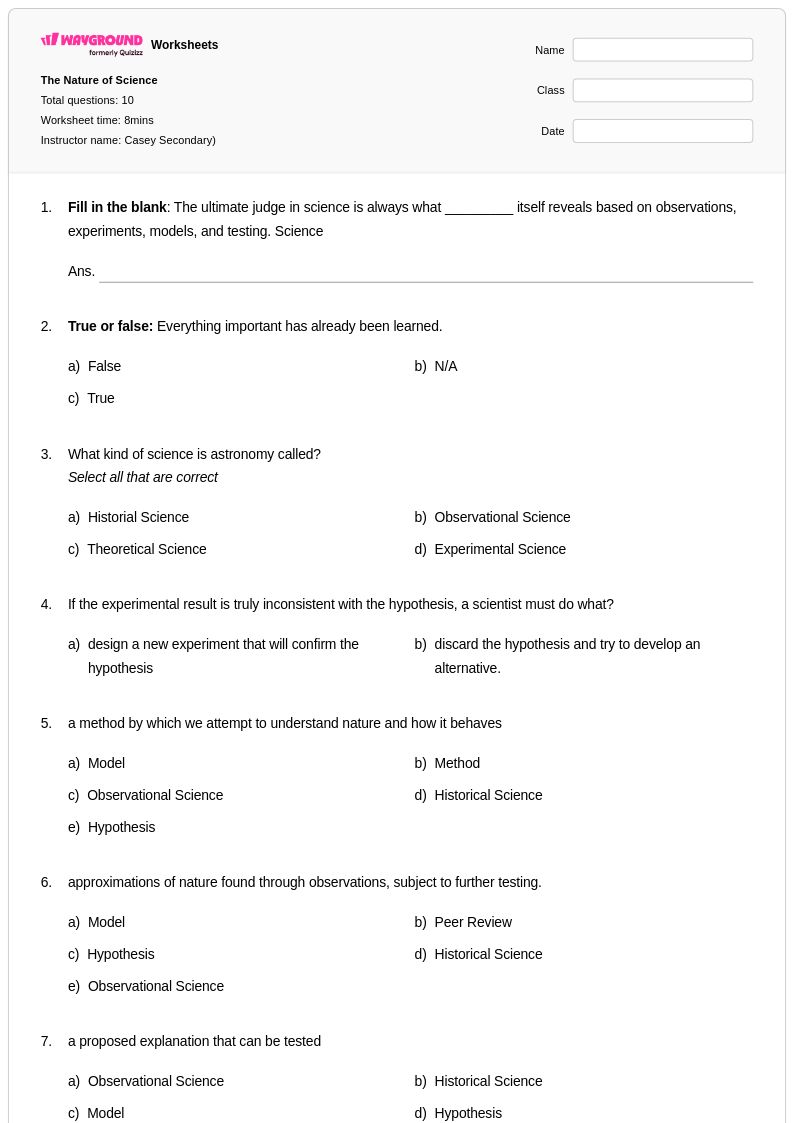
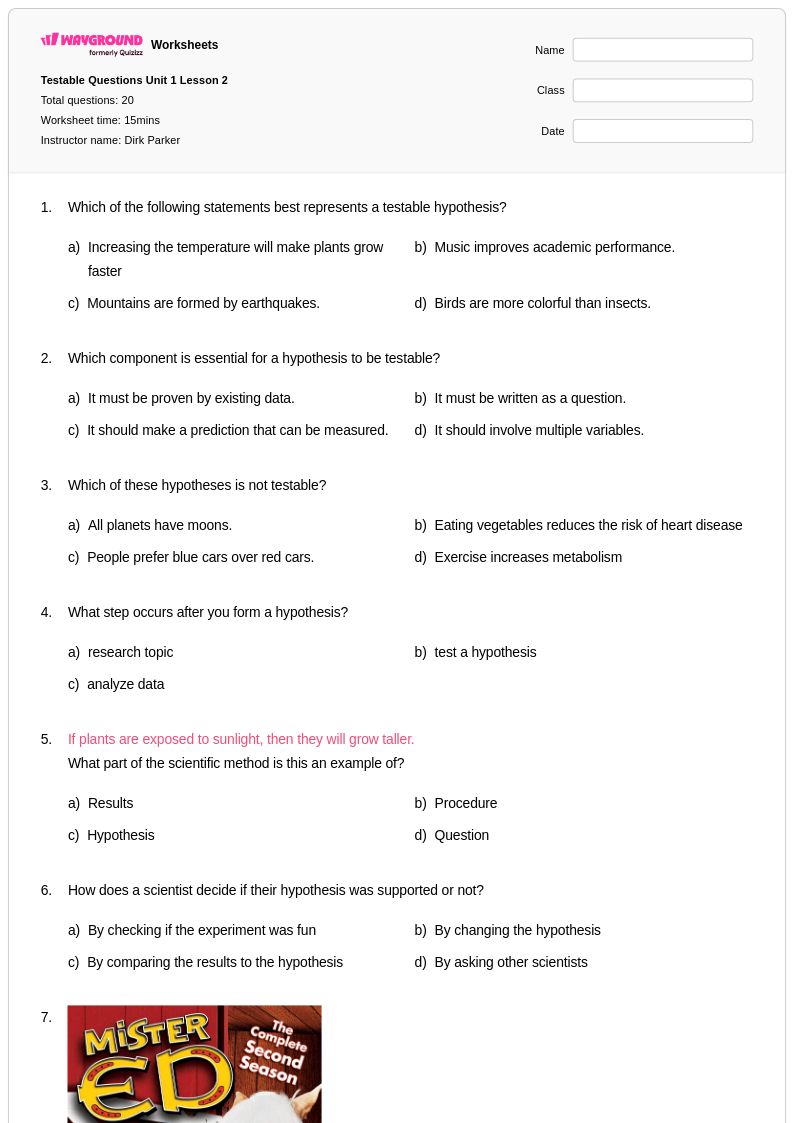
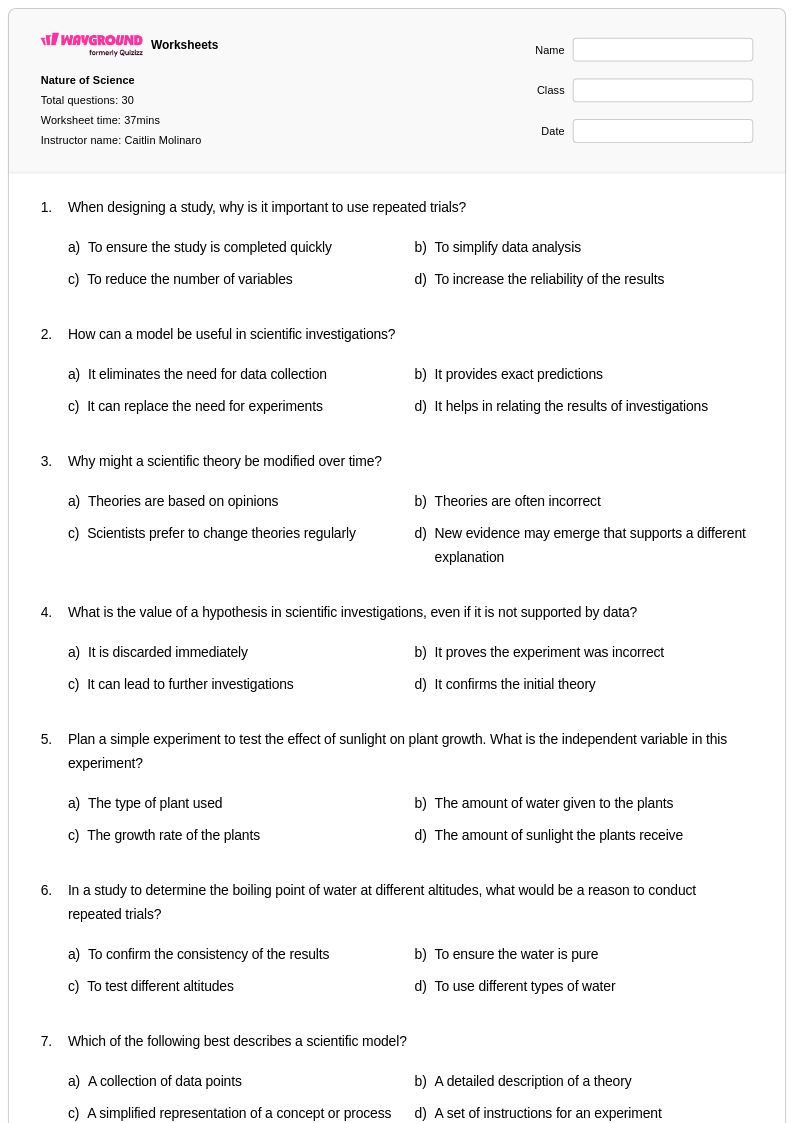
Hypothesis development and testing represent fundamental skills in Year 11 science education, forming the cornerstone of scientific inquiry and experimental design. Wayground's comprehensive collection of hypothesis worksheets provides students with structured opportunities to practice formulating testable predictions, identifying variables, and understanding the relationship between observations and scientific reasoning. These carefully designed printables guide learners through the systematic process of creating well-constructed hypotheses using proper scientific language and format. Each worksheet includes detailed answer keys that help students understand the reasoning behind effective hypothesis construction, while practice problems range from basic hypothesis identification to complex scenarios requiring students to analyze experimental setups and propose alternative explanations. The free pdf resources cover diverse scientific contexts, ensuring students can apply hypothesis-writing skills across multiple disciplines while building confidence in their ability to think like scientists.
Wayground's platform empowers teachers with access to millions of educator-created hypothesis worksheets specifically aligned to Year 11 science standards and learning objectives. The robust search and filtering system allows instructors to quickly locate resources that match their curriculum requirements, whether focusing on biology experiments, chemistry investigations, or physics inquiries. Teachers can easily differentiate instruction by selecting worksheets with varying complexity levels, from guided hypothesis templates for struggling learners to open-ended scenarios that challenge advanced students to design complete experimental frameworks. The platform's customization tools enable educators to modify existing materials or combine multiple worksheets to create comprehensive assessment packages, while the availability of both digital and printable pdf formats provides flexibility for classroom implementation, homework assignments, and remote learning environments. These resources prove invaluable for lesson planning, targeted remediation of scientific thinking skills, and enrichment activities that extend learning beyond basic hypothesis memorization to authentic scientific practice.
FAQs
How do I teach students to write a hypothesis?
Teach hypothesis writing by first distinguishing it from a guess or opinion — a hypothesis must be testable and falsifiable. Model the if-then format explicitly: 'If [independent variable] is changed, then [dependent variable] will [predicted outcome].' Have students practice by observing a simple phenomenon and writing a prediction before moving to full experimental design. Connecting hypothesis writing to variable identification helps students understand why the format matters, not just how to replicate it.
What exercises help students practice writing and evaluating hypotheses?
Effective practice exercises include rewriting weak or opinion-based statements into proper hypothesis format, identifying the independent and dependent variables within a given hypothesis, and evaluating whether a hypothesis is testable based on a described scenario. Comparing strong and weak examples side by side is particularly effective because it builds evaluative judgment, not just recall. Hypothesis worksheets that present real-world scientific scenarios give students meaningful context for these skills rather than abstract drills.
What mistakes do students commonly make when writing a hypothesis?
The most common error is writing a hypothesis as a question rather than a predictive statement. Students also frequently write hypotheses that cannot be tested — such as predictions involving opinions, values, or unmeasurable outcomes. Another common mistake is confusing the hypothesis with the conclusion, particularly when students work backward from a known result. Worksheets that ask students to identify and correct flawed hypotheses help surface these misconceptions before they become ingrained habits.
How do I help students understand the difference between a hypothesis and a prediction?
A hypothesis is a proposed explanation for an observed phenomenon, while a prediction is a specific, testable statement derived from that hypothesis. Teach the distinction by showing that a hypothesis answers 'why' (based on reasoning or prior knowledge), while a prediction answers 'what will happen' in a specific test. Students often conflate the two because both involve anticipating outcomes — using concrete examples from familiar scenarios, like plant growth or temperature effects, helps make the difference concrete.
How can I use hypothesis worksheets to support different skill levels in my class?
For students who are just beginning, worksheets that provide sentence frames or partially completed hypotheses offer scaffolding without removing the cognitive work of forming predictions. More advanced students benefit from open-ended scenarios where they must identify variables and write a hypothesis independently before evaluating its testability. On Wayground, teachers can apply accommodations such as read aloud support or reduced answer choices for individual students, allowing the same worksheet to serve different learners without requiring separate materials.
How do I use Wayground's hypothesis worksheets in my classroom?
Wayground's hypothesis worksheets are available as printable PDFs for traditional classroom use and in digital formats for technology-integrated environments, including the option to host them as a quiz directly on Wayground. Each worksheet includes a complete answer key, making them suitable for guided practice, independent work, homework, or remediation. Teachers can use Wayground's search and filtering tools to locate worksheets aligned to specific learning objectives, then assign them digitally or print them depending on the lesson context.