Free Printable Identifying Problems and Solutions in Fiction Worksheets for Year 4
Enhance Year 4 students' reading comprehension with Wayground's free printable worksheets focused on identifying problems and solutions in fiction, complete with practice problems and answer keys in convenient PDF format.
Explore printable Identifying Problems and Solutions in Fiction worksheets for Year 4
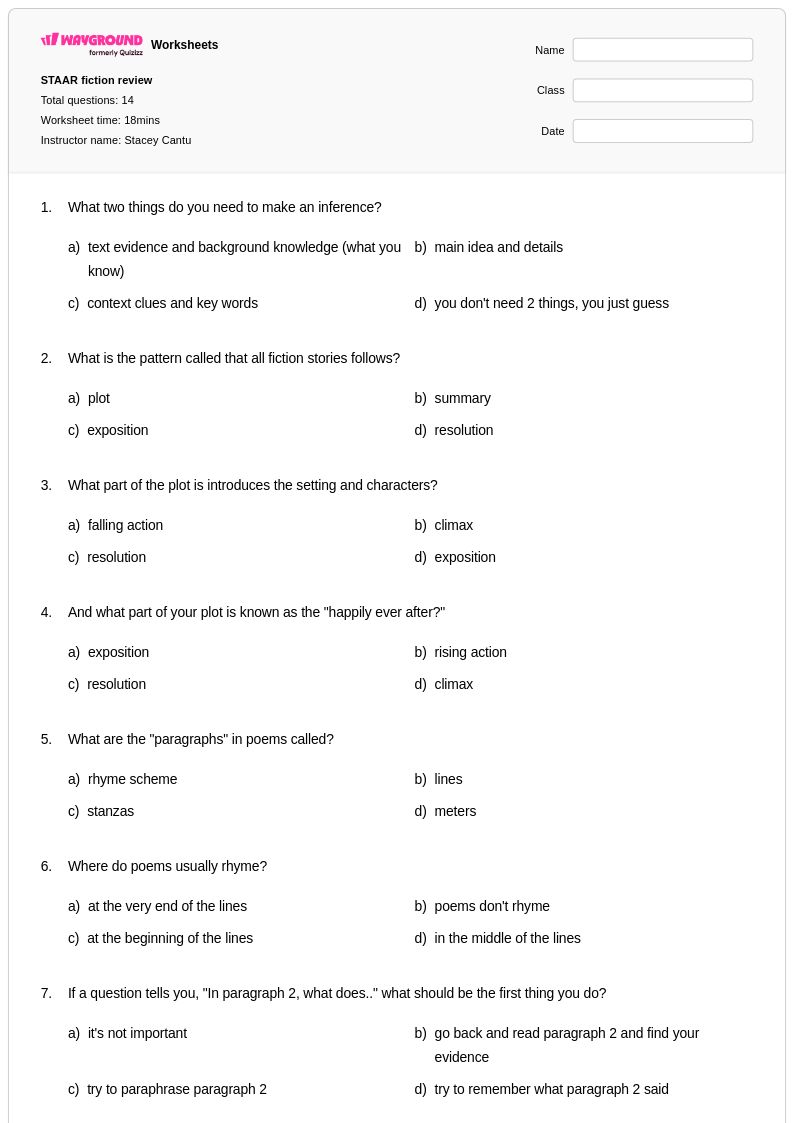
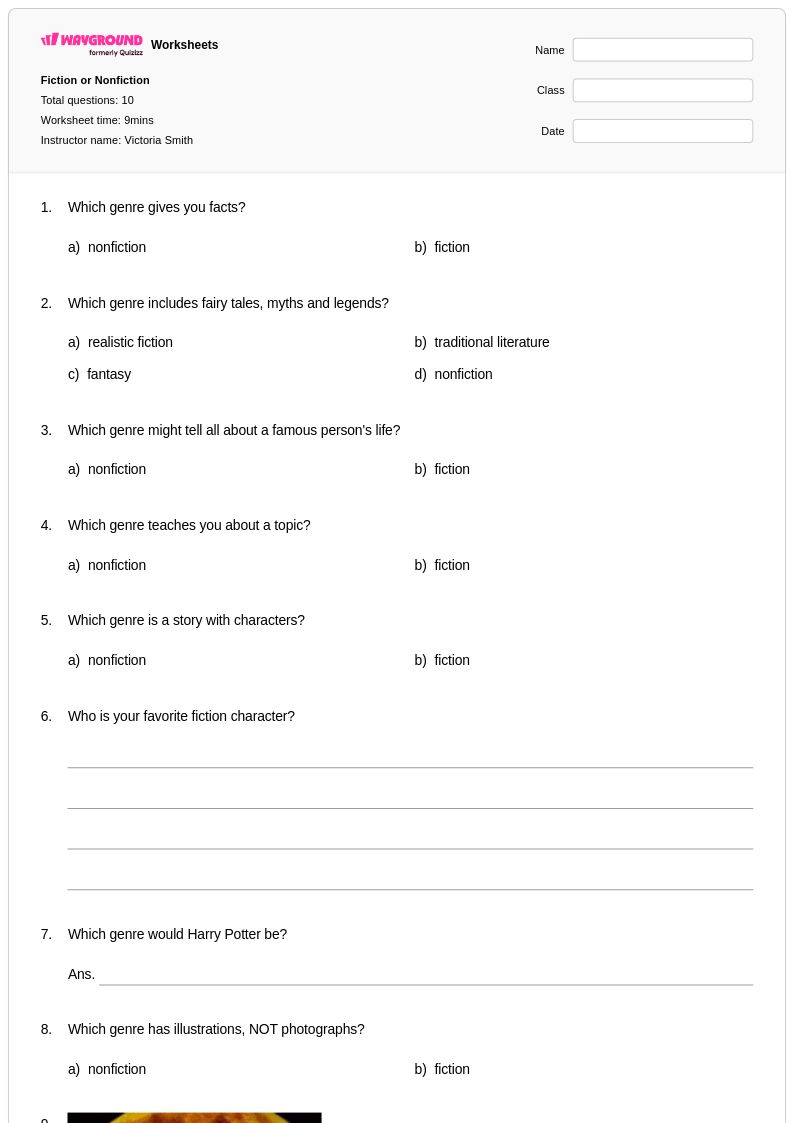
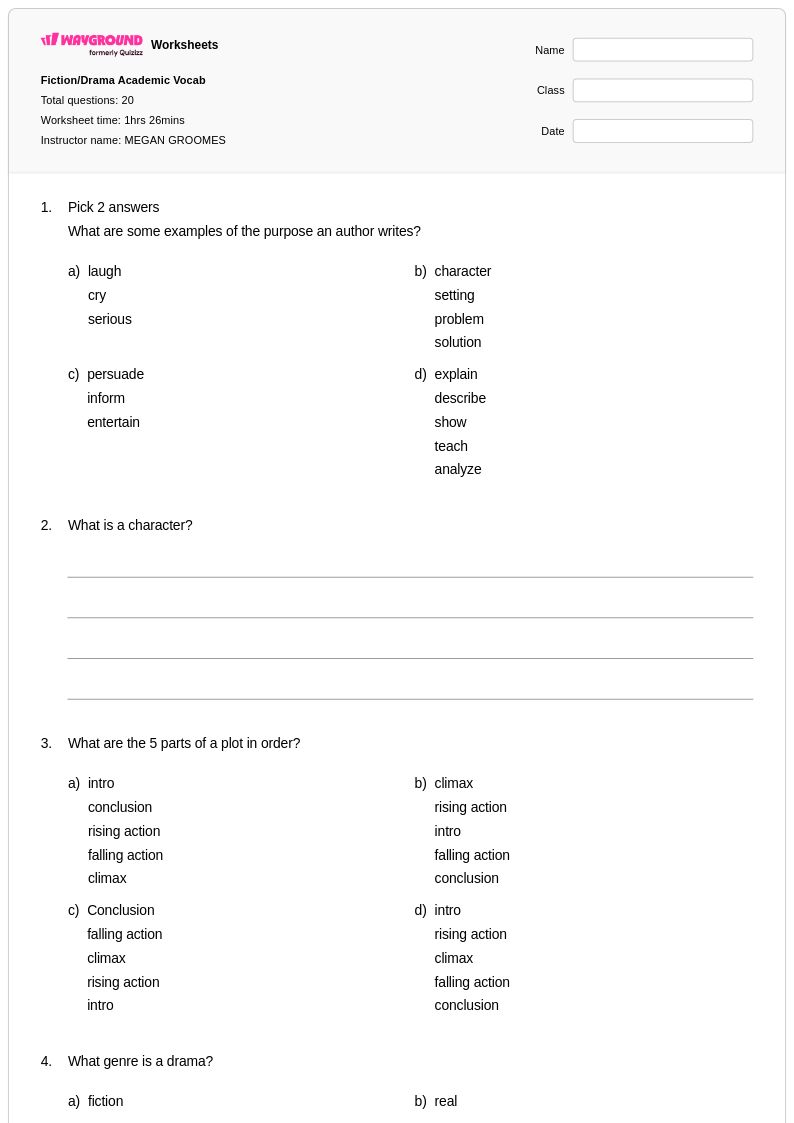
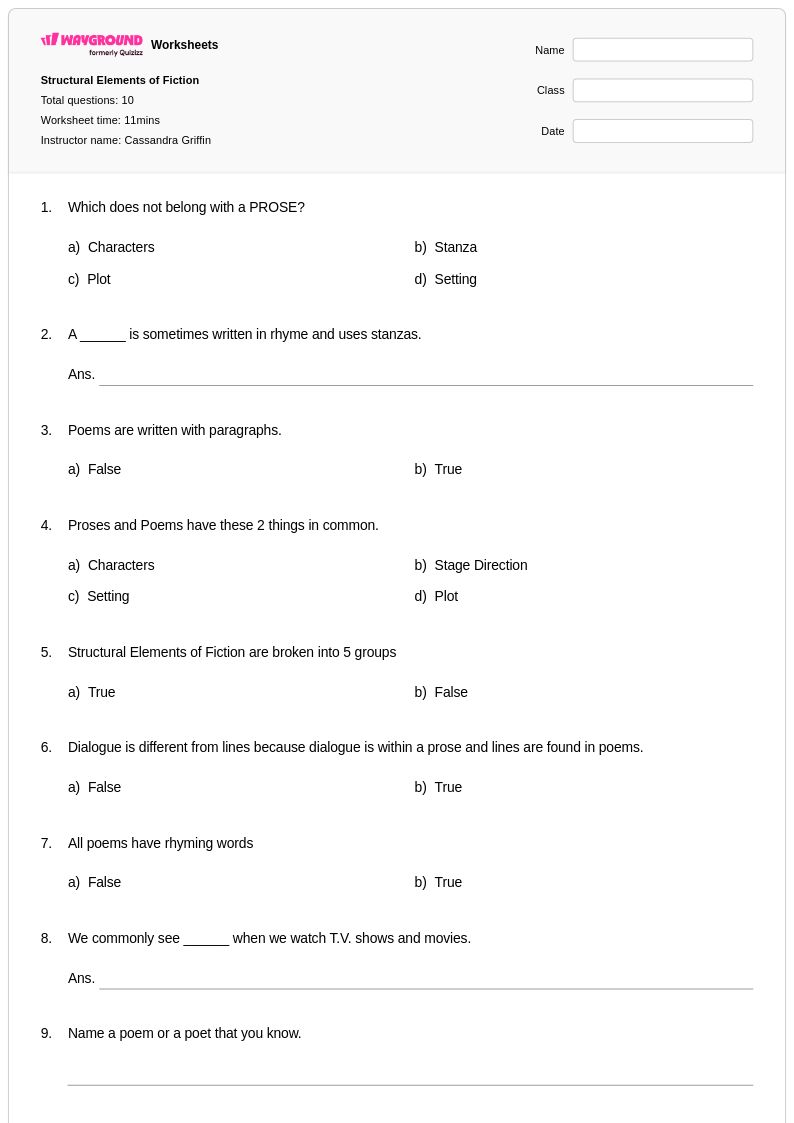
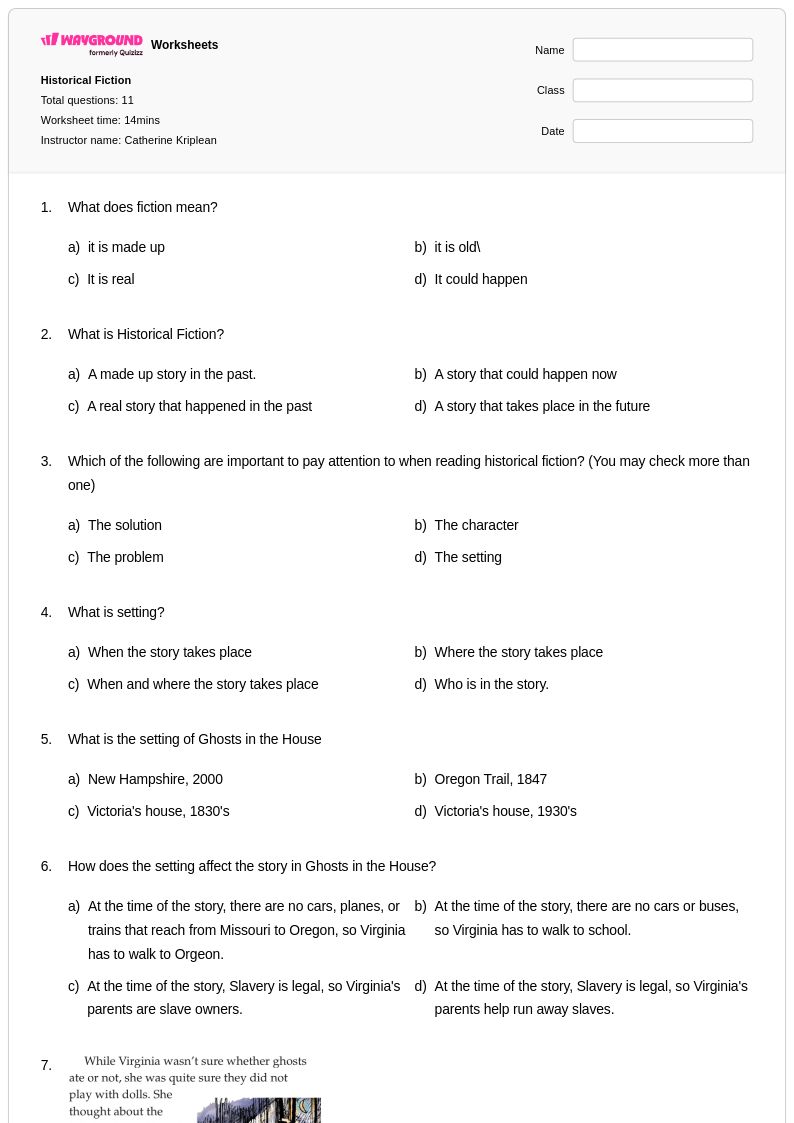
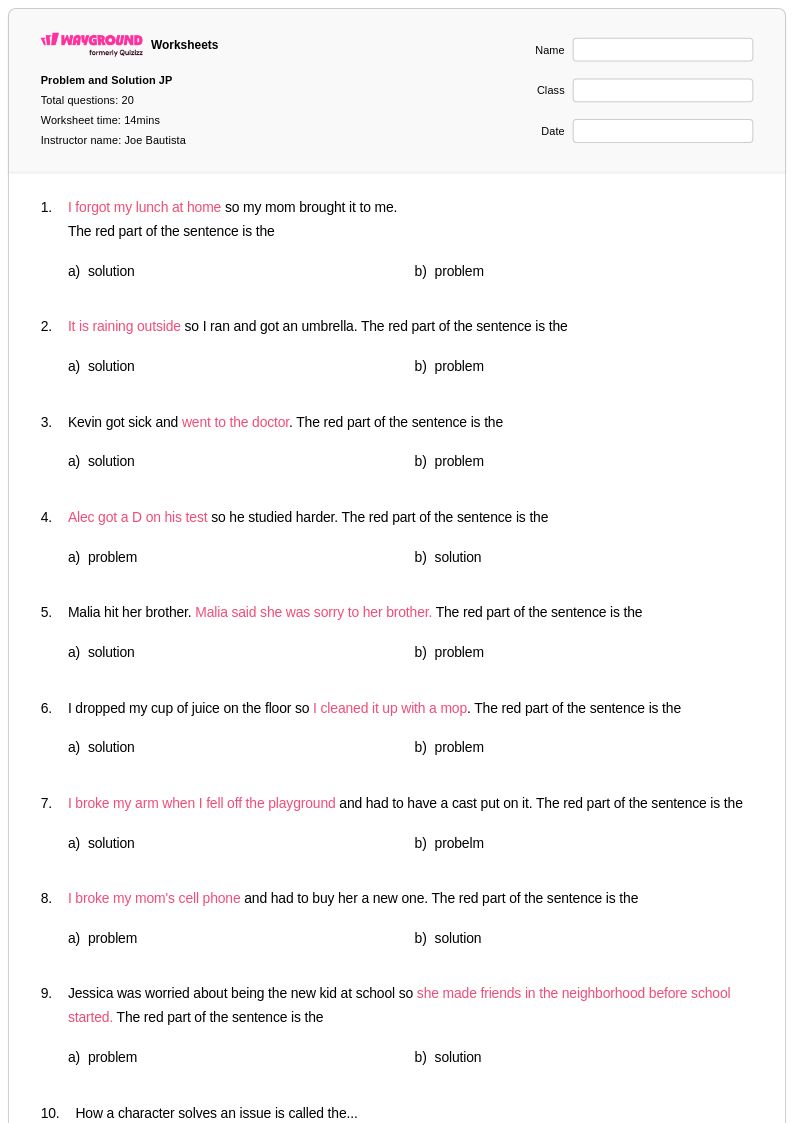
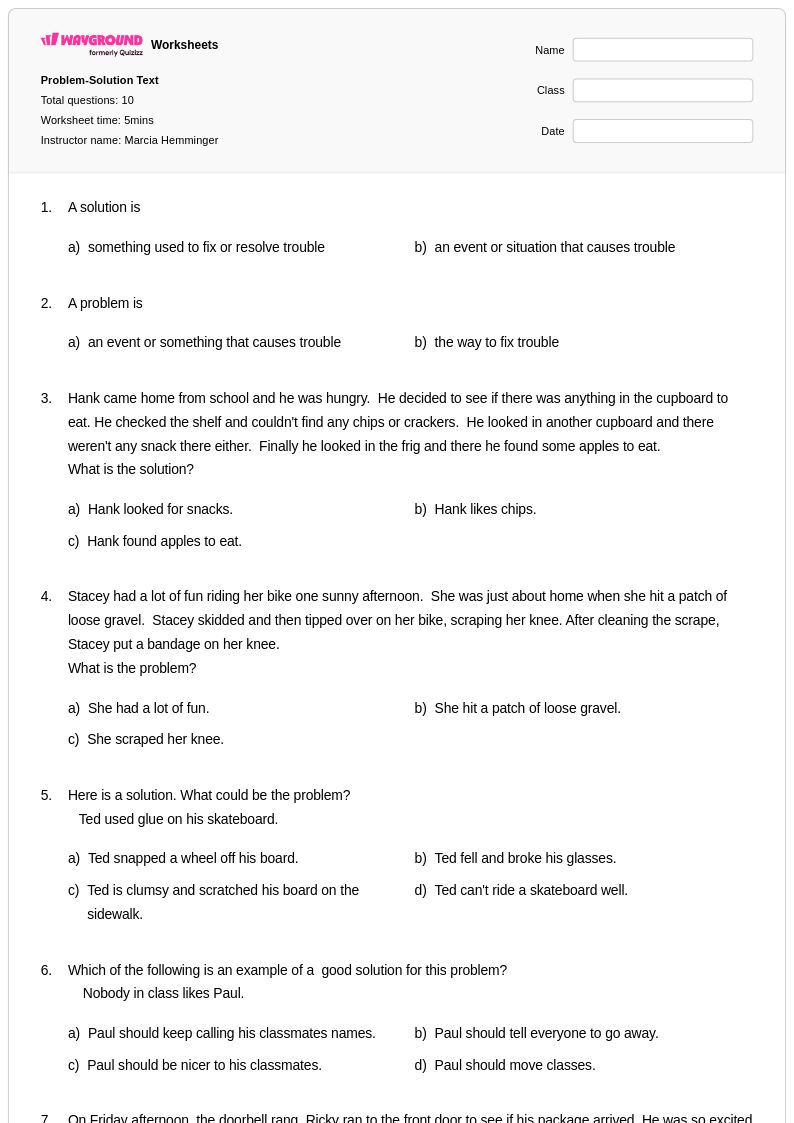
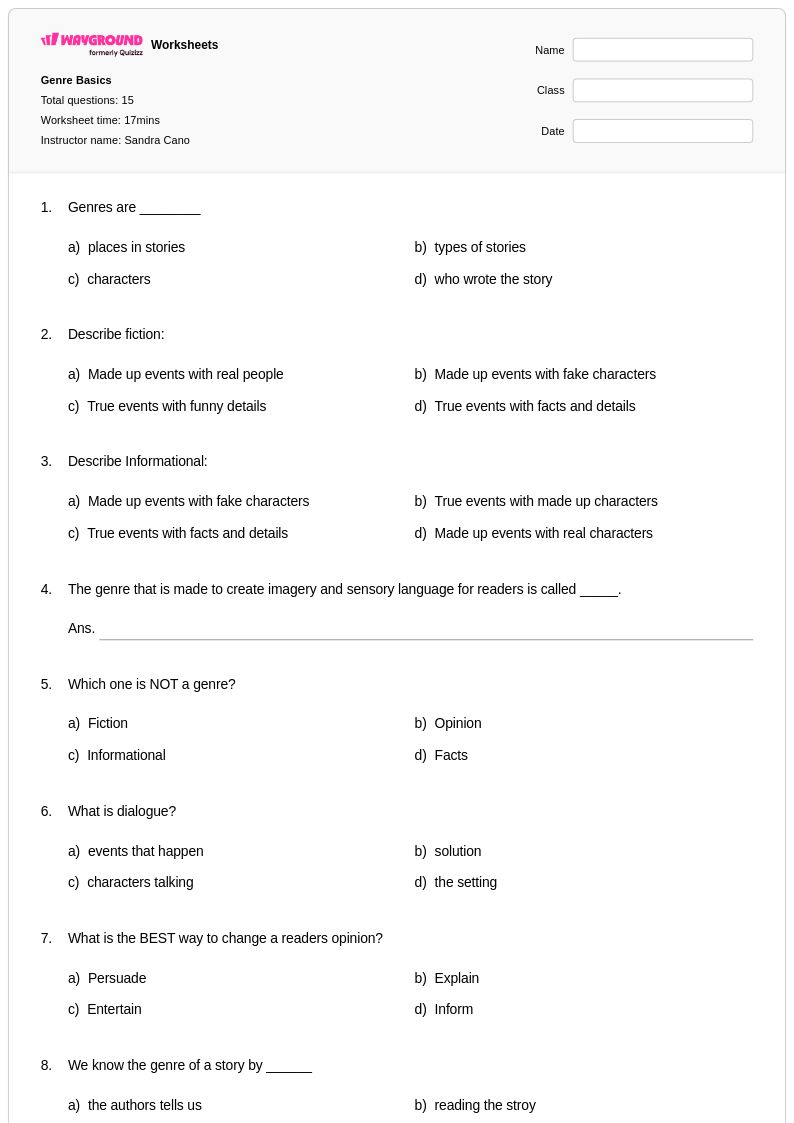
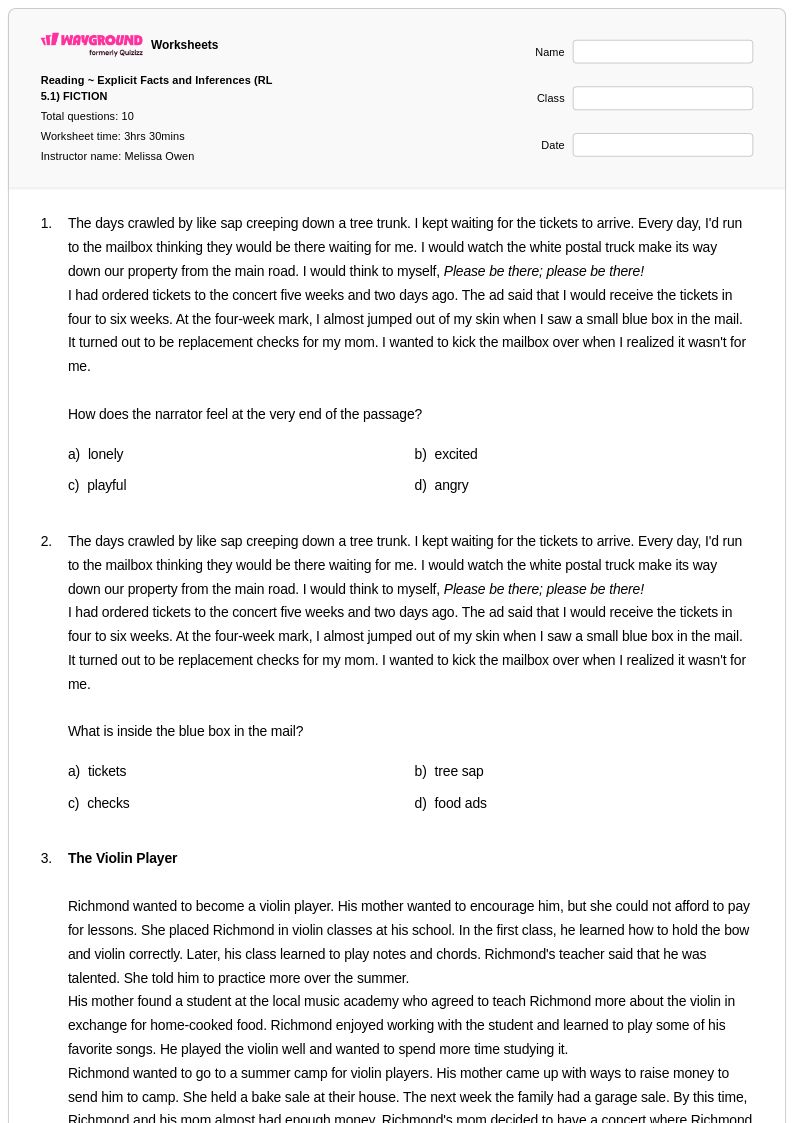
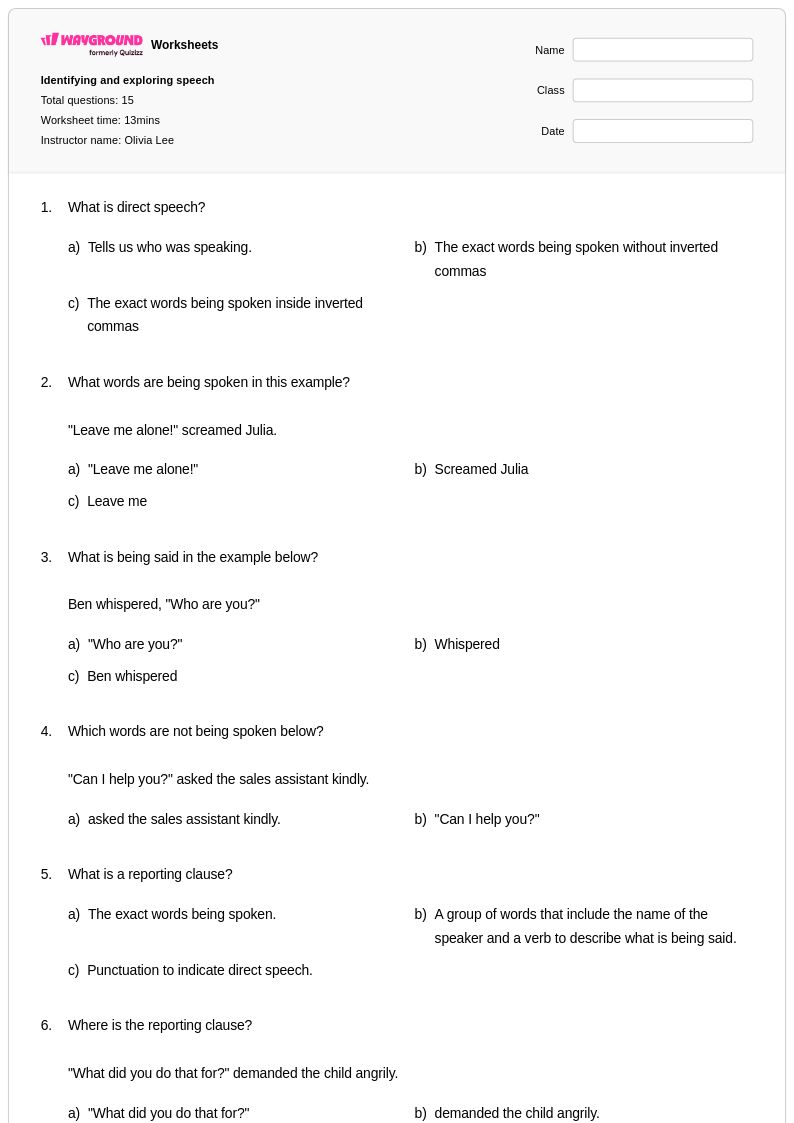
Identifying problems and solutions in fiction represents a fundamental reading comprehension skill that Year 4 students must master to become proficient literary analysts. Wayground's comprehensive collection of worksheets focuses specifically on helping fourth-grade learners recognize story conflicts and their resolutions across various fictional texts. These practice problems guide students through the process of pinpointing character dilemmas, plot complications, and the methods authors use to resolve narrative tensions. Each worksheet includes detailed answer key materials that enable teachers to provide targeted feedback, while the free printable format ensures accessibility for all classroom environments. Students engage with diverse fictional scenarios, from simple character conflicts to more complex plot-driven challenges, building their analytical thinking skills through structured practice that strengthens their overall reading comprehension abilities.
Wayground, formerly Quizizz, empowers educators with millions of teacher-created resources specifically designed for fiction analysis instruction, featuring robust search and filtering capabilities that allow quick identification of materials targeting problem and solution identification skills. The platform's standards-aligned worksheet collections support differentiated instruction through customizable difficulty levels, enabling teachers to address varying student readiness levels within their Year 4 classrooms. These versatile resources are available in both printable pdf formats for traditional classroom use and digital formats for technology-integrated learning environments, providing flexibility for diverse teaching situations. Teachers utilize these comprehensive materials for initial skill introduction, targeted remediation for struggling readers, enrichment activities for advanced students, and ongoing practice to reinforce literary analysis concepts, making lesson planning more efficient while ensuring systematic skill development across all learners.
FAQs
How do I teach students to identify problems and solutions in fiction?
Start by teaching students to locate the central conflict first — asking 'What does the main character want or need, and what is standing in the way?' helps anchor the problem. From there, guide students to trace how the character responds to that conflict across the story and evaluate whether the resolution was effective. Using think-alouds with short mentor texts before asking students to work independently builds the analytical habit before applying it to longer fiction.
What exercises help students practice identifying problems and solutions in stories?
Structured graphic organizers that prompt students to record the problem, the character's attempts to solve it, and the final resolution are highly effective for building this skill. Worksheets that include a range of fiction excerpts — from simple explicit conflicts to more layered narratives where the problem shifts over time — give students practice at multiple levels of complexity. Repeated exposure across different text types helps students internalize the structure rather than memorize a single example.
What mistakes do students commonly make when identifying problems and solutions in fiction?
A common error is confusing a minor obstacle or plot event with the central problem of the story — students often latch onto the first conflict they encounter rather than the overarching one. Another frequent misconception is treating any action the character takes as 'the solution,' even when the resolution hasn't yet occurred. Teaching students to ask whether the conflict has been fully resolved by the end of the text helps them distinguish between attempts and actual solutions.
How can I differentiate problem and solution worksheets for readers at different skill levels?
For struggling readers, simplify the task by using shorter texts with explicit, single-layer conflicts and provide sentence starters for written responses. On Wayground, teachers can apply accommodations such as reduced answer choices to lower cognitive load for specific students, or enable Read Aloud so the text and questions are read to students who need it. Advanced readers benefit from texts where the problem is implicit or evolves throughout the narrative, pushing them to analyze character motivation and evaluate whether the resolution was satisfying or realistic.
How do I use Wayground's identifying problems and solutions in fiction worksheets in my classroom?
These worksheets are available as printable PDFs for traditional classroom use and in digital formats for technology-integrated environments, and can also be hosted as a quiz directly on Wayground. Each worksheet includes a complete answer key, making them practical for independent practice, small group work, or whole-class instruction. Wayground's search and filtering tools allow teachers to quickly locate materials aligned with specific learning standards or student needs, streamlining lesson preparation.
How does understanding problem and solution structure improve overall reading comprehension?
Recognizing problem and solution structure gives students a framework for understanding why characters act as they do and how narrative tension builds and resolves — skills that apply across virtually all fiction genres. When students can identify what is at stake for a character and trace how that conflict moves toward resolution, they read with greater purpose and retention. This analytical habit also transfers to non-fiction texts that use problem-solution as an organizational structure, making it a high-leverage comprehension skill.