Enhance Year 7 students' understanding of idioms with Wayground's comprehensive collection of free worksheets, printables, and practice problems that include detailed answer keys to master figurative language skills effectively.
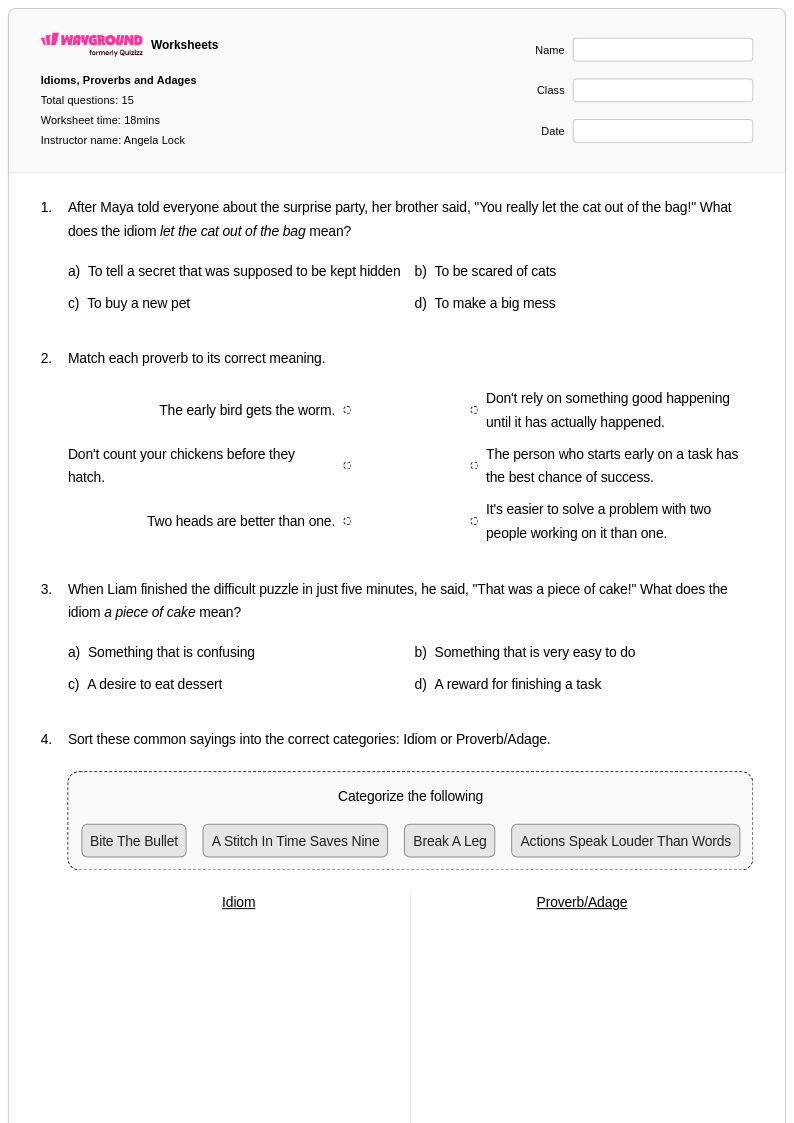
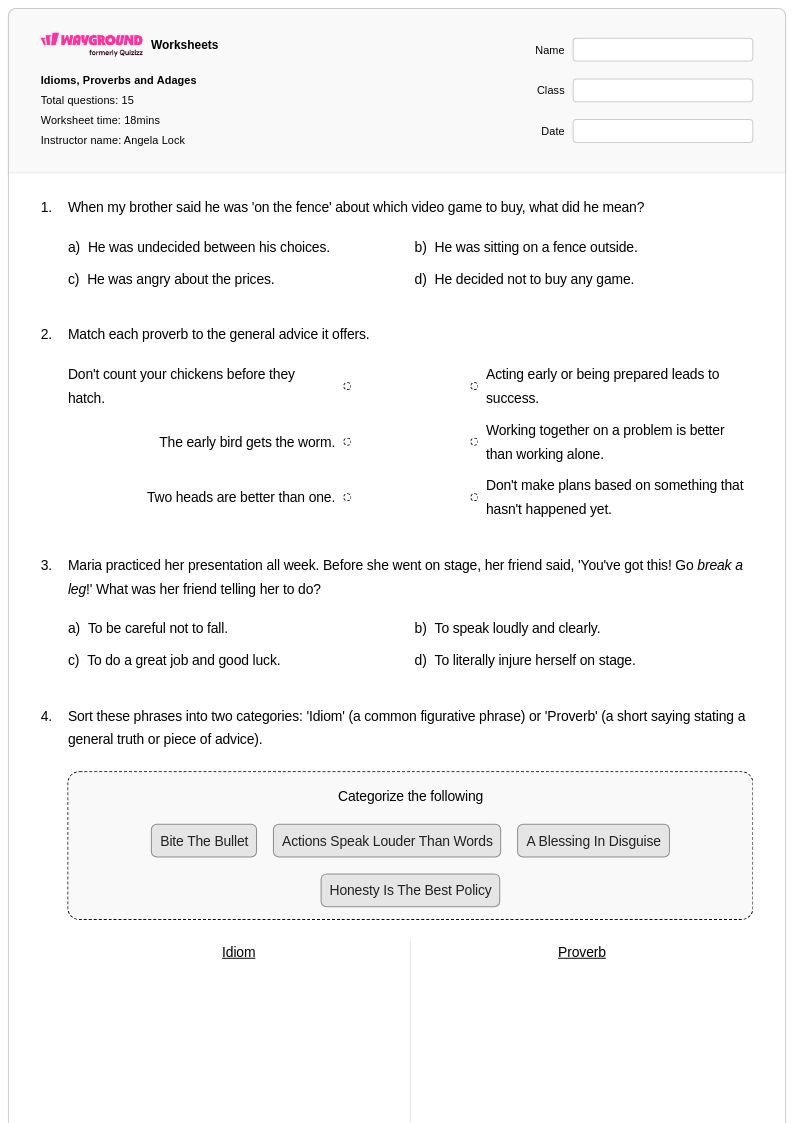
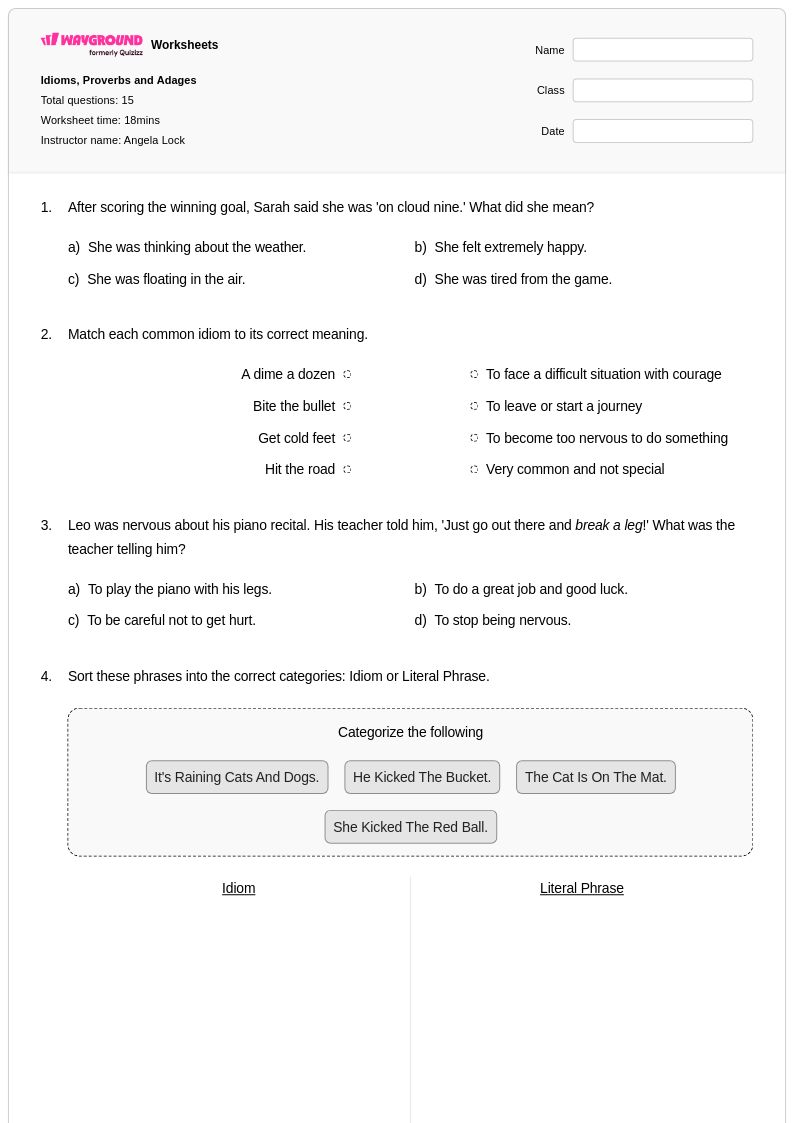
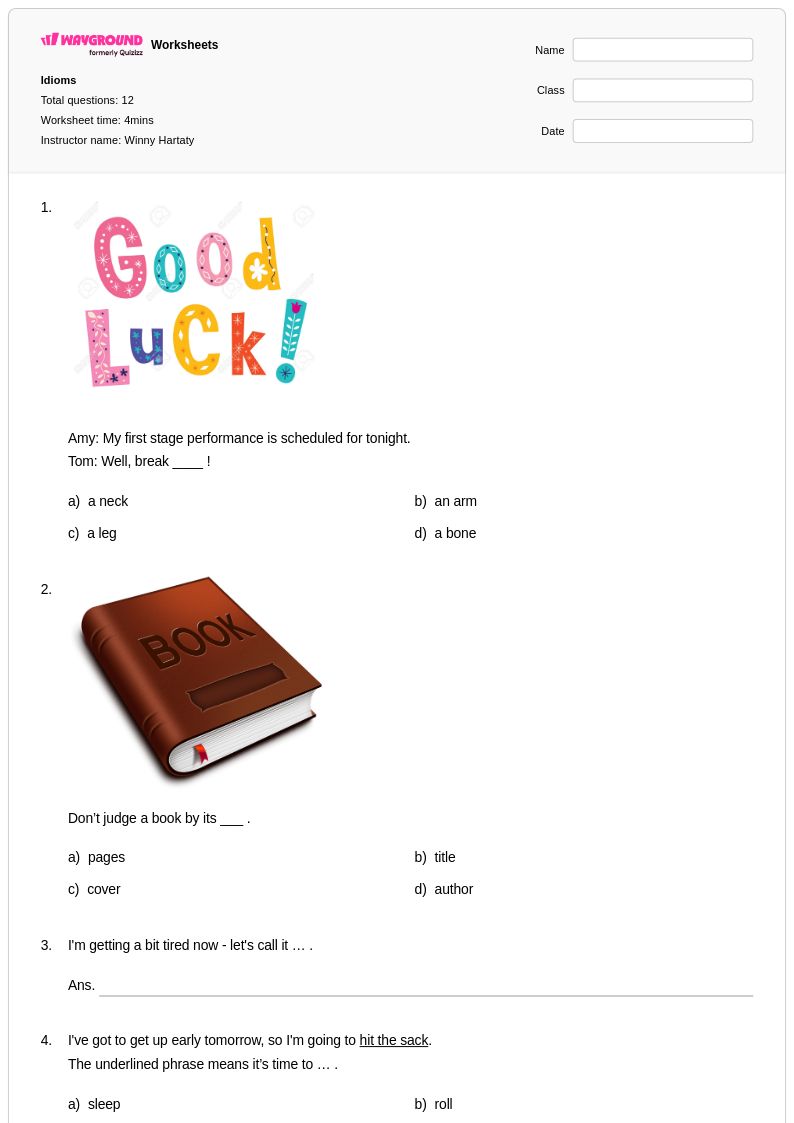
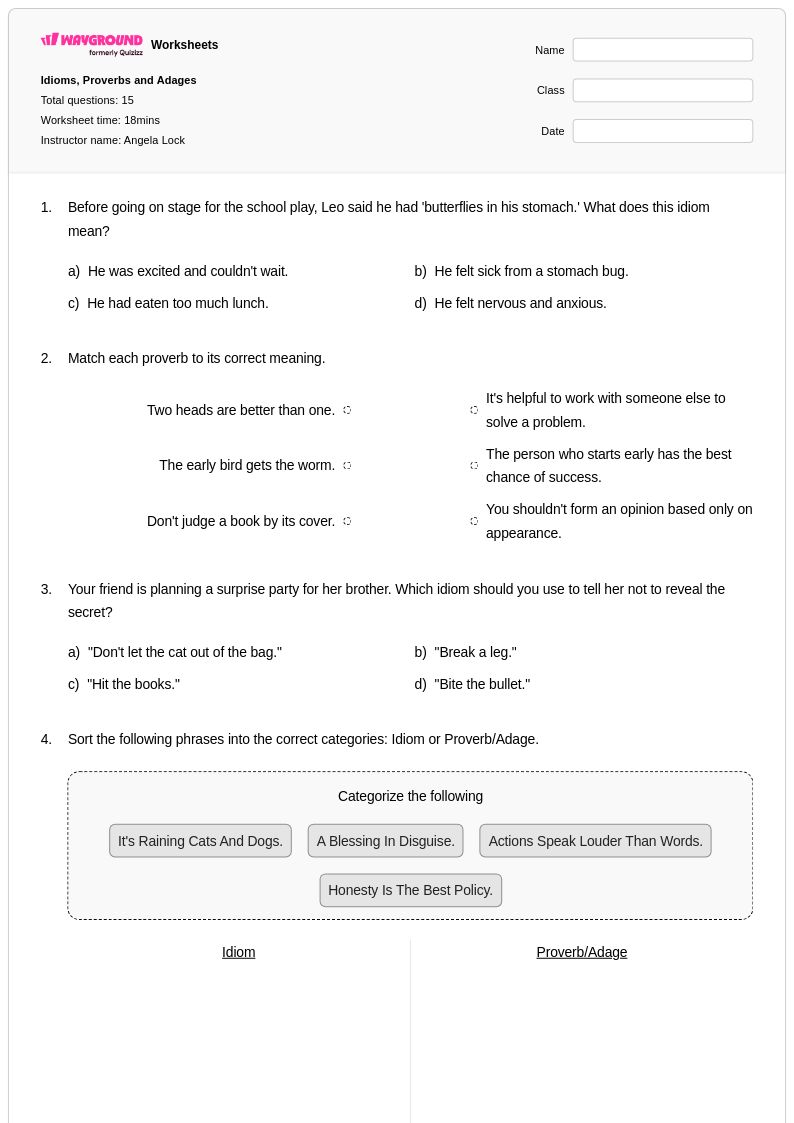
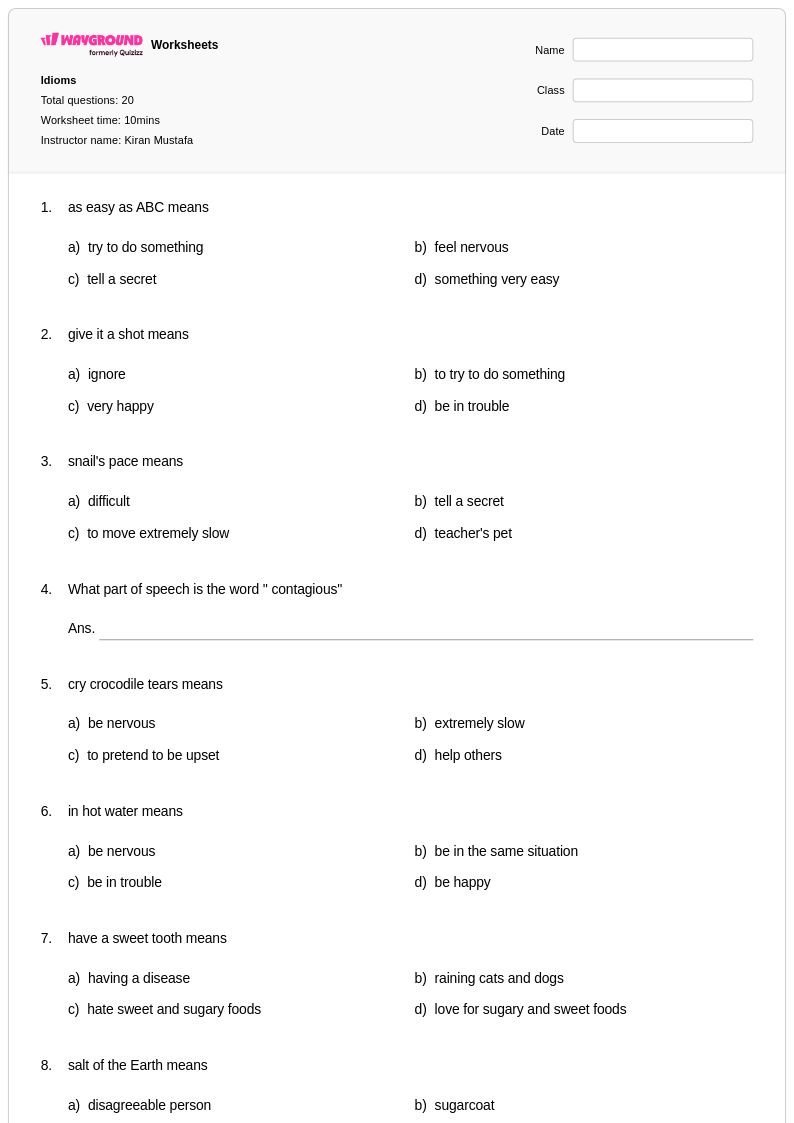
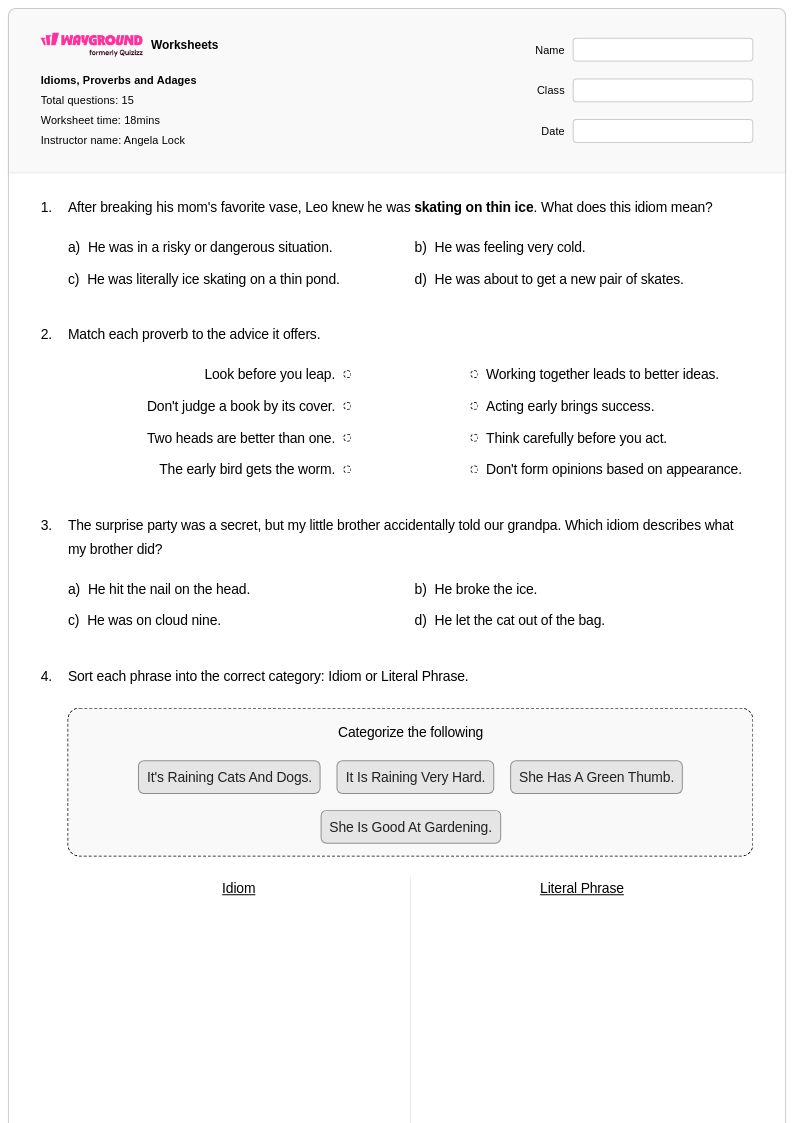
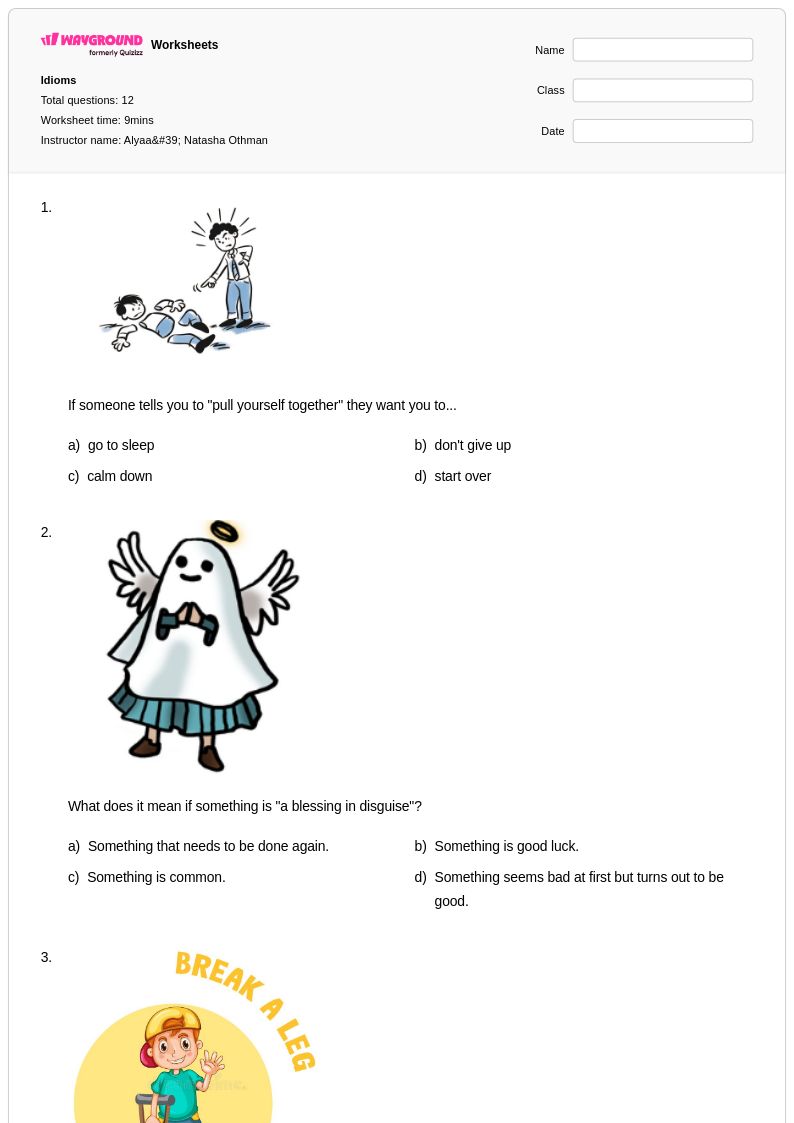
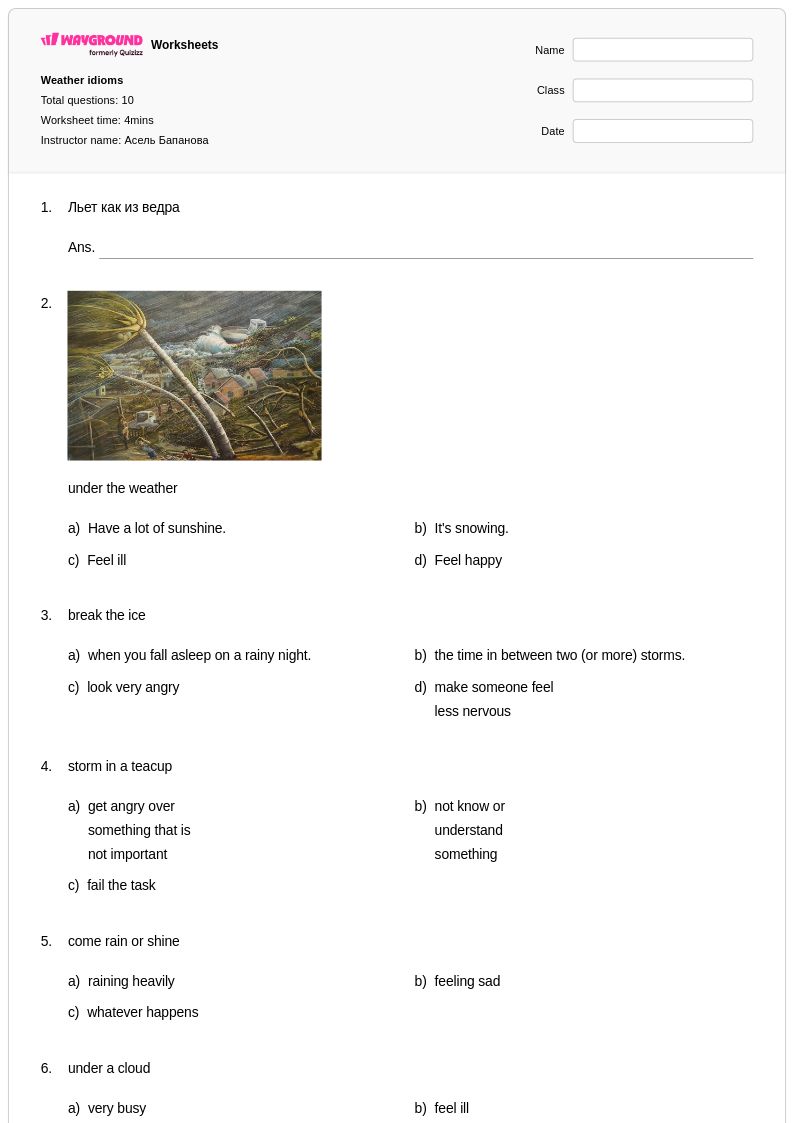
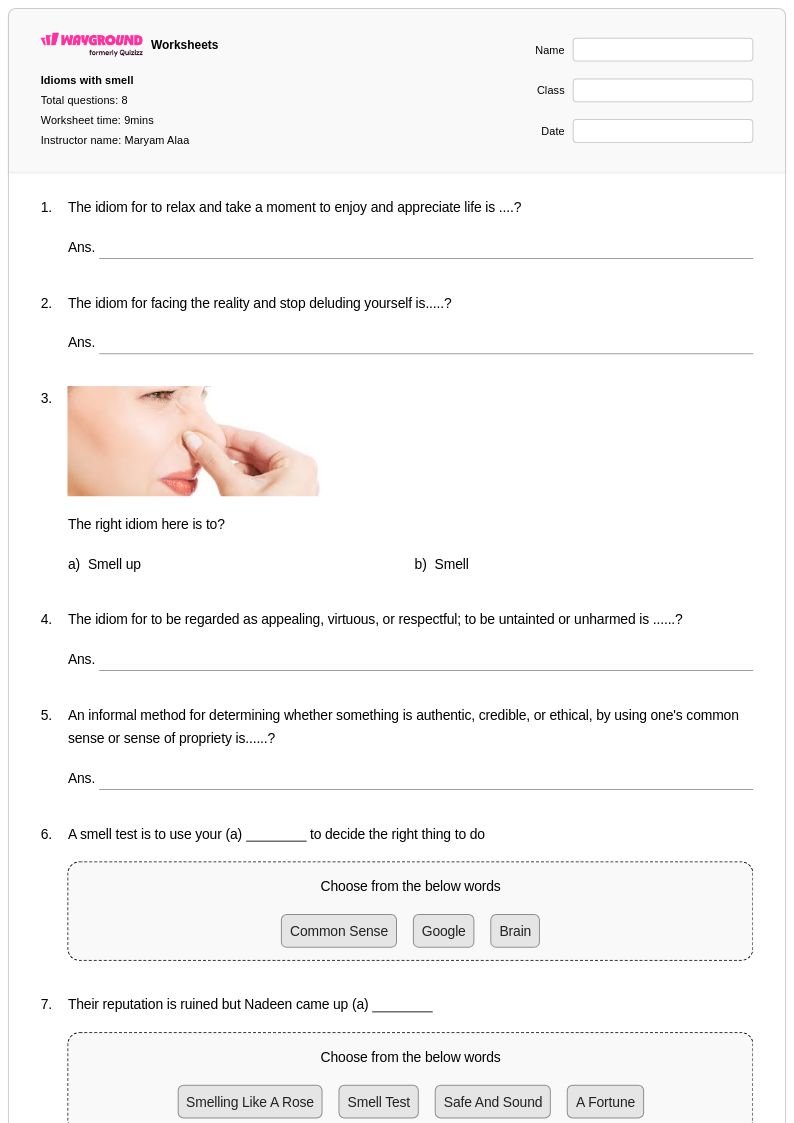
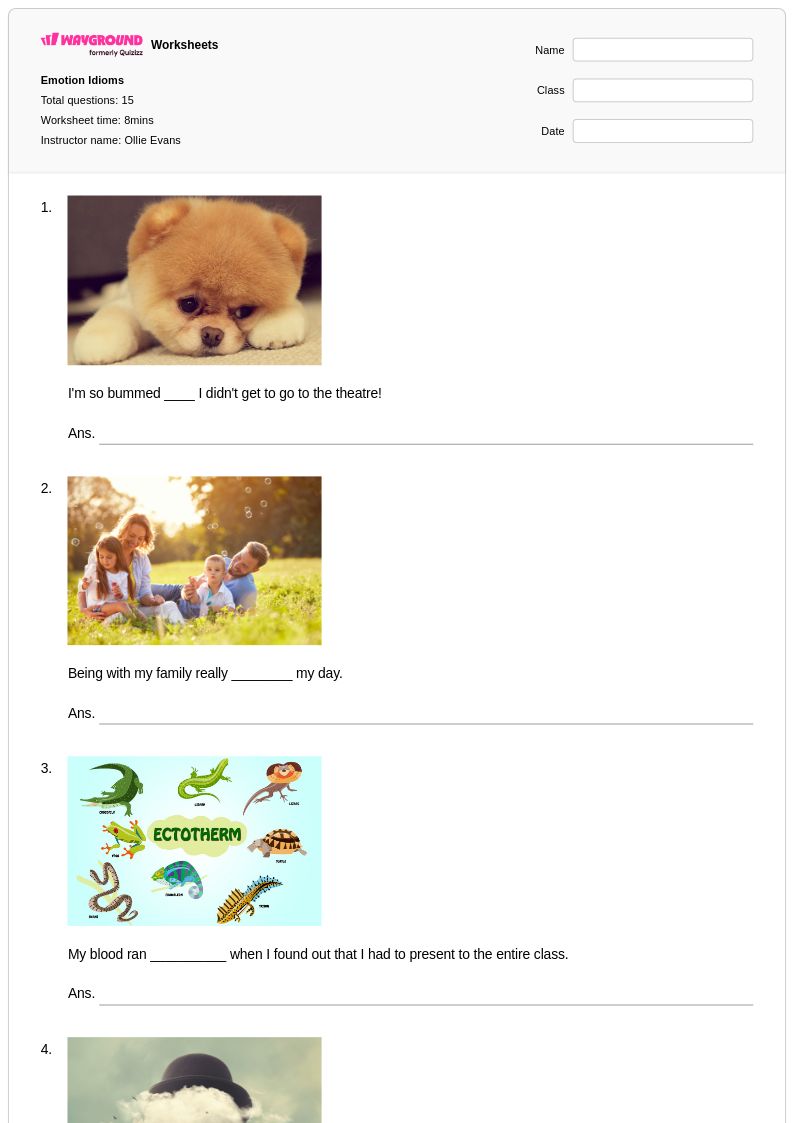
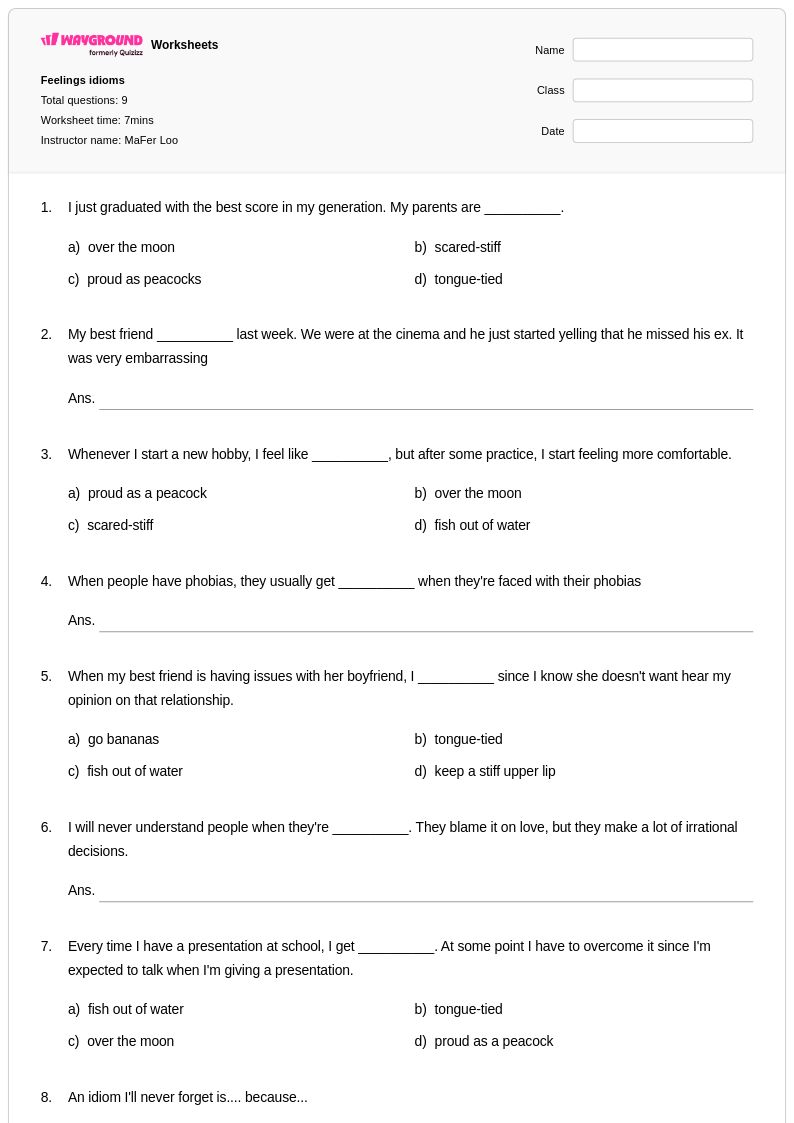
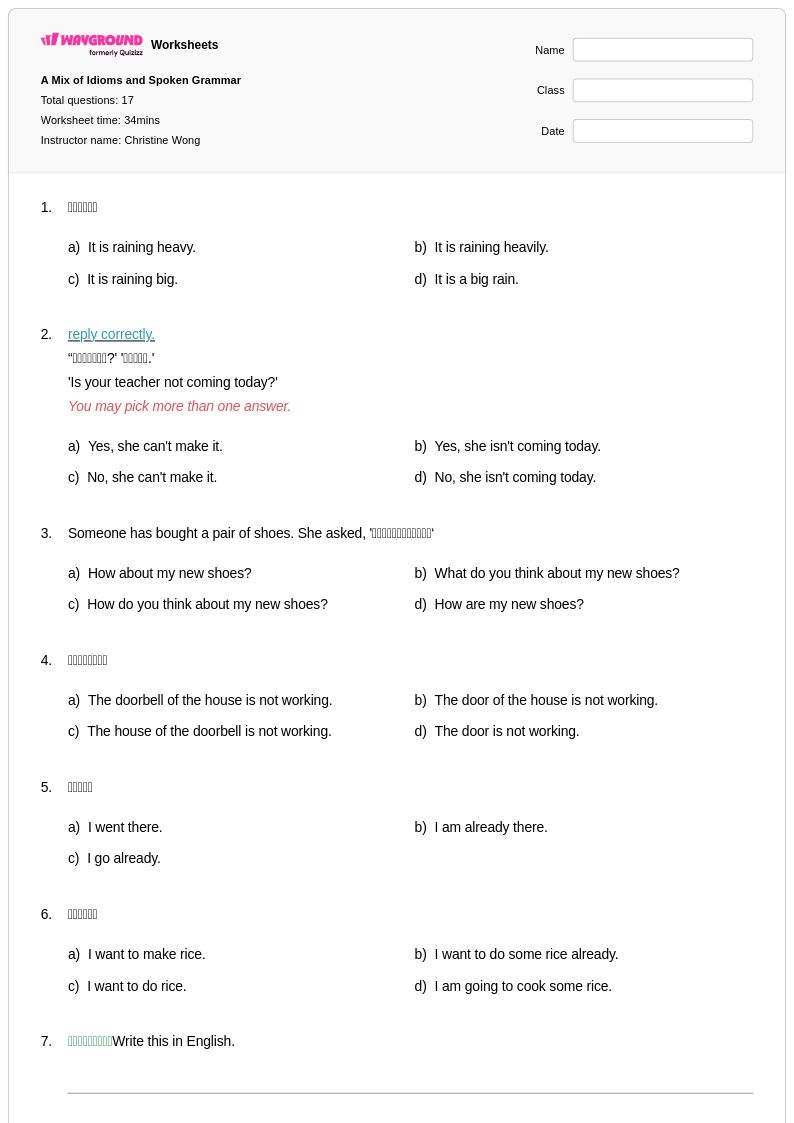
Idioms worksheets for Year 7 students available through Wayground (formerly Quizizz) provide comprehensive practice with these colorful figurative language expressions that often confuse young learners. These carefully designed educational resources help seventh-grade students decode the hidden meanings behind common idiomatic phrases like "it's raining cats and dogs" or "break a leg," building essential reading comprehension and communication skills. Each worksheet collection includes varied practice problems that challenge students to identify idioms in context, match expressions with their literal meanings, and apply idiomatic language appropriately in their own writing. Teachers can access complete answer keys alongside these free printables, ensuring efficient grading and immediate feedback opportunities that reinforce student understanding of how idioms function as non-literal expressions in everyday English communication.
Wayground (formerly Quizizz) empowers educators with an extensive library of millions of teacher-created idioms worksheets specifically tailored for Year 7 instruction, featuring robust search and filtering capabilities that allow quick identification of resources matching specific learning objectives and standards alignment requirements. The platform's differentiation tools enable teachers to customize worksheet difficulty levels, accommodating diverse learning needs within the same classroom while maintaining focus on idiomatic expression mastery. These versatile resources are available in both printable pdf formats for traditional paper-and-pencil activities and digital formats for technology-integrated lessons, supporting flexible lesson planning approaches. Whether used for initial skill introduction, targeted remediation for struggling readers, enrichment activities for advanced learners, or regular practice to solidify figurative language concepts, these idioms worksheets provide the structured repetition and varied contexts necessary for Year 7 students to confidently navigate the complexities of non-literal language in academic and social settings.
FAQs
How do I teach idioms to students who are learning English?
Start by introducing idioms in context rather than as isolated phrases, so students can use surrounding text to infer meaning before you confirm the definition. Grouping idioms thematically — such as idioms about animals or body parts — helps students notice patterns and retain meaning more reliably. Pairing reading activities with speaking or writing tasks that require students to use each idiom in an original sentence reinforces both comprehension and production.
What kinds of practice activities help students learn idiom meanings?
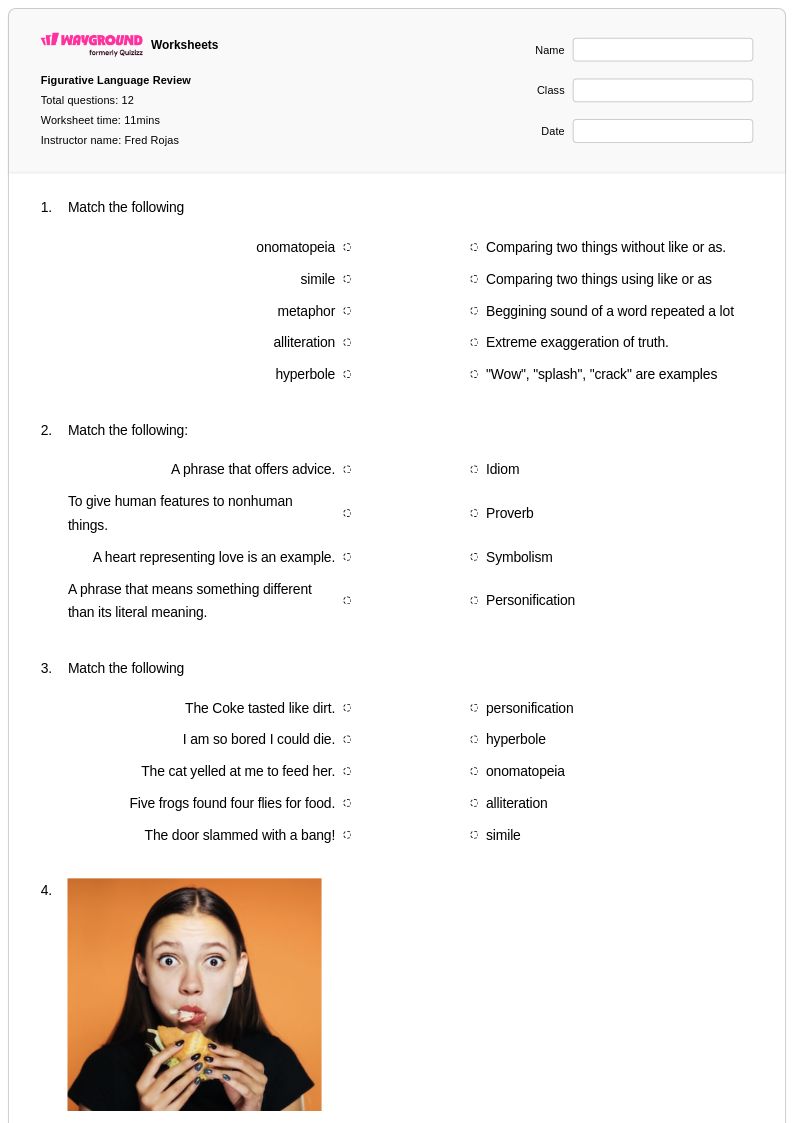
Effective idiom practice includes matching exercises that pair expressions with their definitions, gap-fill sentences where students select the correct idiom from context, and activities that ask students to identify idioms within a passage and explain what each one means. Creating original sentences using assigned idioms pushes students beyond recognition into genuine application, which is where retention tends to solidify.
What mistakes do students commonly make when working with idioms?
The most common error is interpreting idioms literally — a student who reads 'spill the beans' and pictures an actual spill has not yet made the shift to figurative thinking. Students also frequently confuse similar idioms with overlapping words, such as mixing up 'bite the bullet' and 'bite off more than you can chew.' ELL students in particular may apply direct translation from their home language, which rarely maps onto English idiomatic meaning.
How do I use Wayground's idioms worksheets in my classroom?
Wayground's idioms worksheets are available as printable PDFs for traditional classroom use and in digital formats for technology-integrated learning environments, giving you flexibility based on your setup. You can also host the worksheets as a quiz directly on Wayground, which allows for interactive practice and faster feedback. Each worksheet includes a complete answer key, so they work well for independent practice, small-group review, or remediation sessions without requiring additional prep.
How can I differentiate idiom instruction for students at different reading levels?
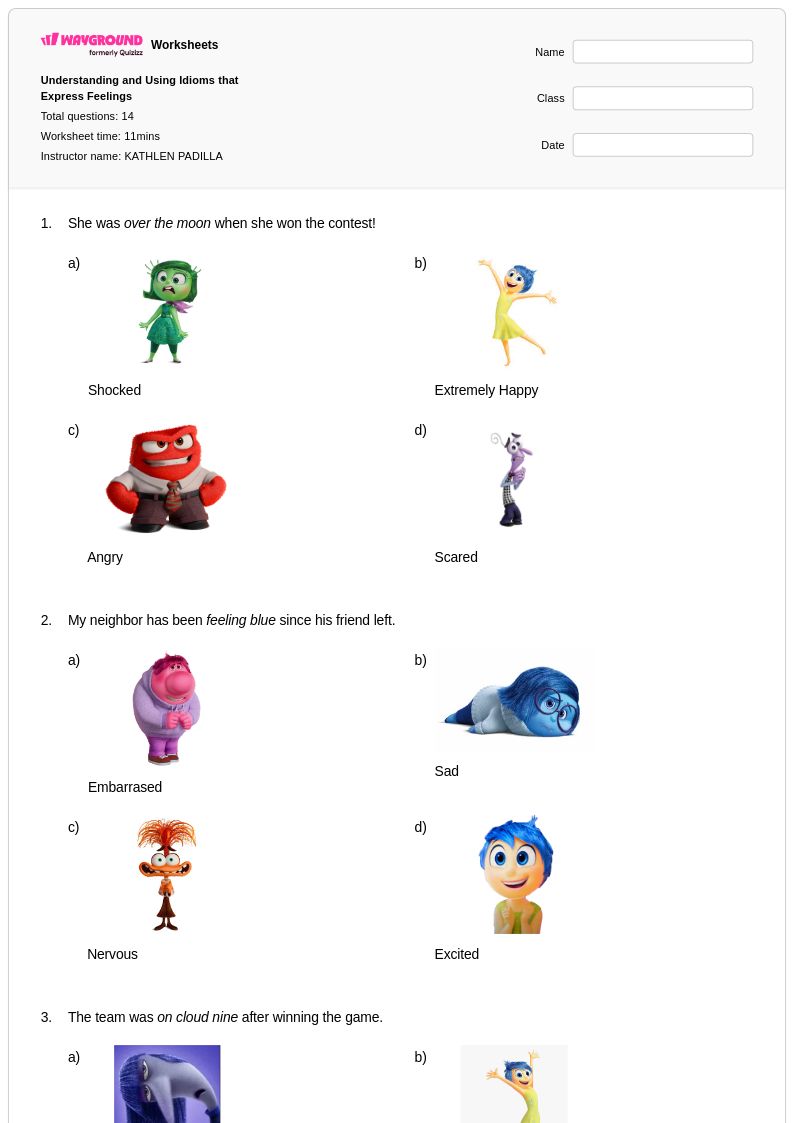
For struggling readers, limit the set of idioms being introduced at one time and use image or context clues alongside the text to scaffold meaning. Wayground supports student-level accommodations including Read Aloud, which can help students who have difficulty decoding written questions, and reduced answer choices, which lowers cognitive load during practice. Advanced students benefit from tasks that ask them to explain why a particular idiom is effective in a given context or to research the historical origin of an expression.
Why is teaching idioms important for reading comprehension?
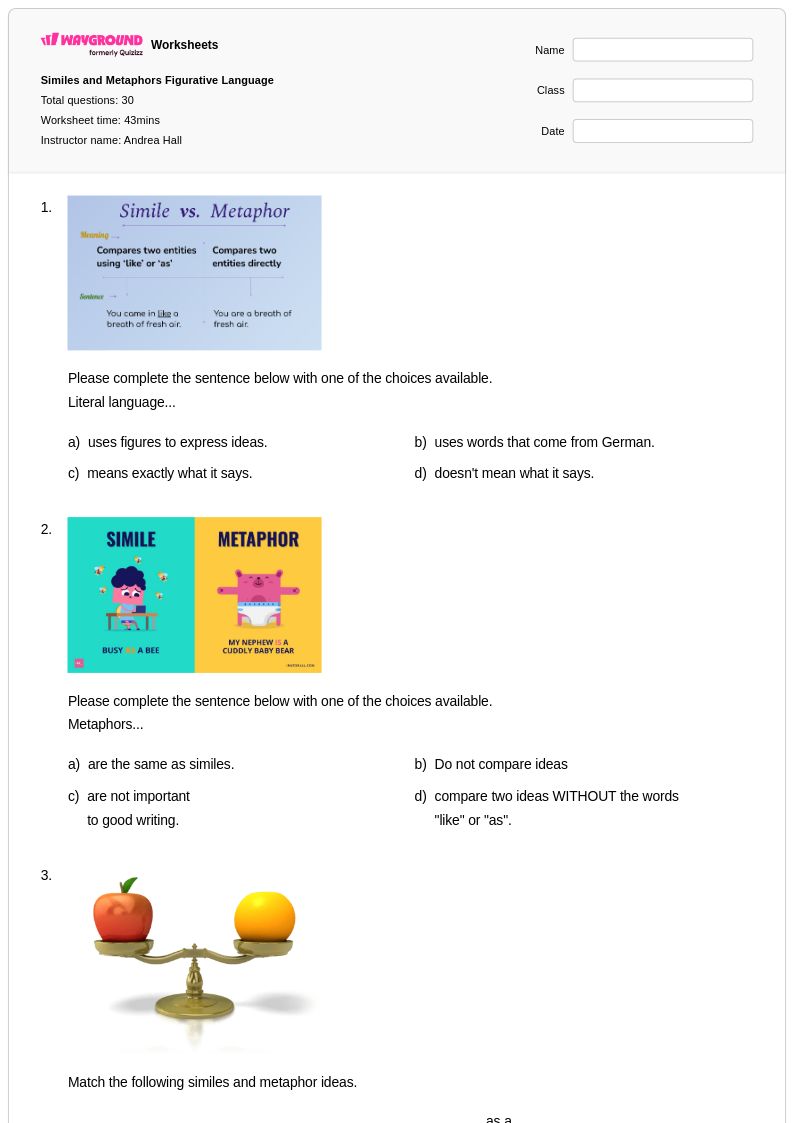
Idioms appear frequently in both literary and informational texts, and a student who cannot recognize figurative language will often misread the author's intended meaning entirely. Because idioms are culturally embedded, understanding them also builds the cultural literacy students need to engage with texts written for native English speakers. Instruction in idioms strengthens the broader figurative language skills — including metaphor and simile recognition — that are tested at most grade levels.