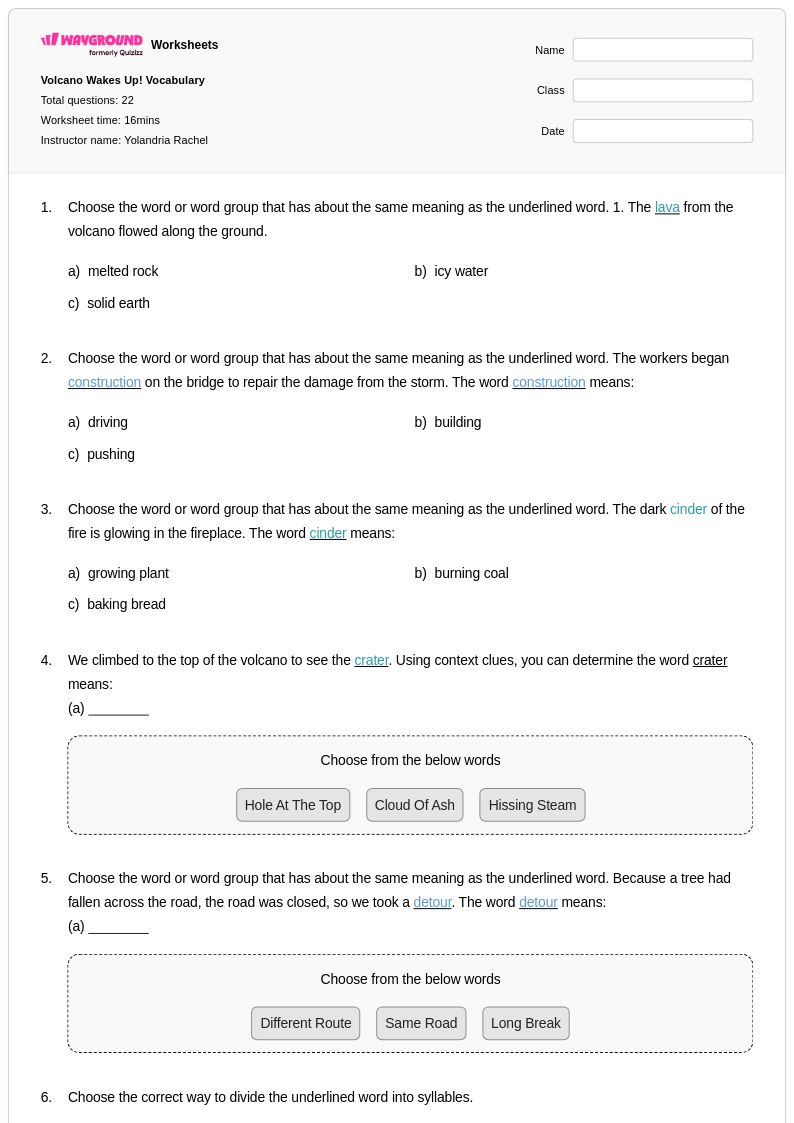
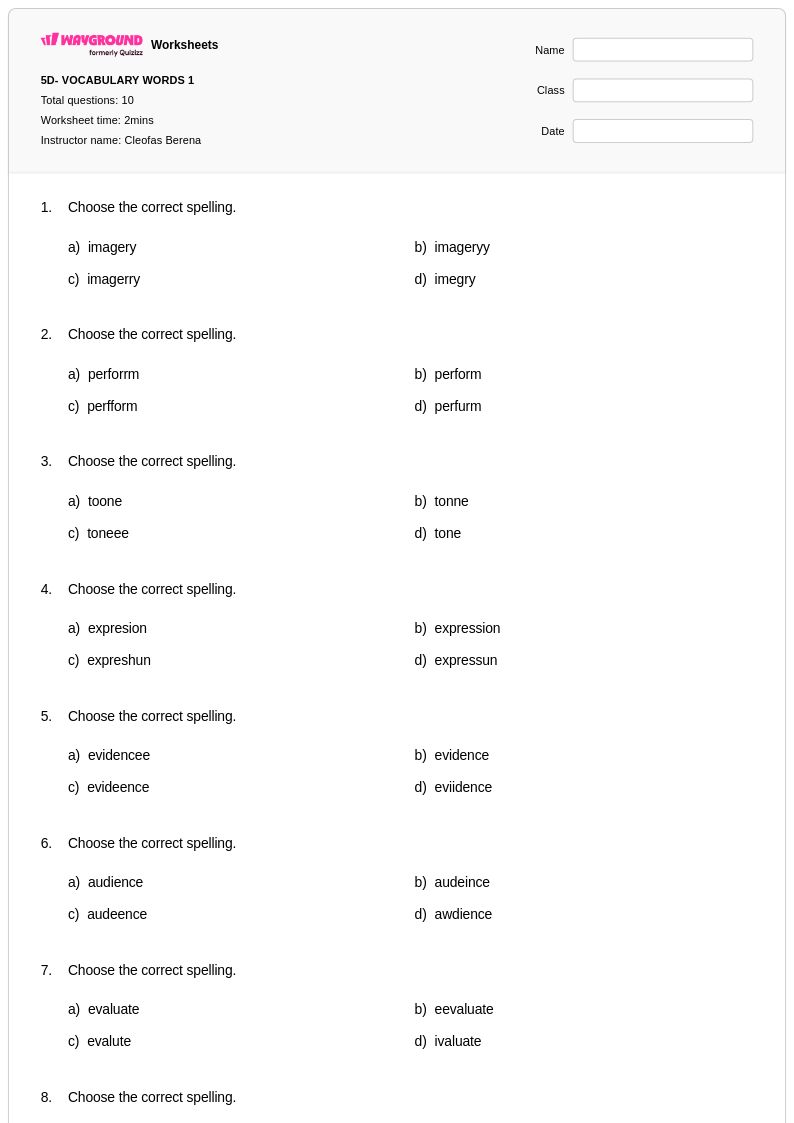
Enhance Year 5 students' understanding of imagery through Wayground's comprehensive collection of free printable worksheets and practice problems with answer keys that develop vivid descriptive writing skills.
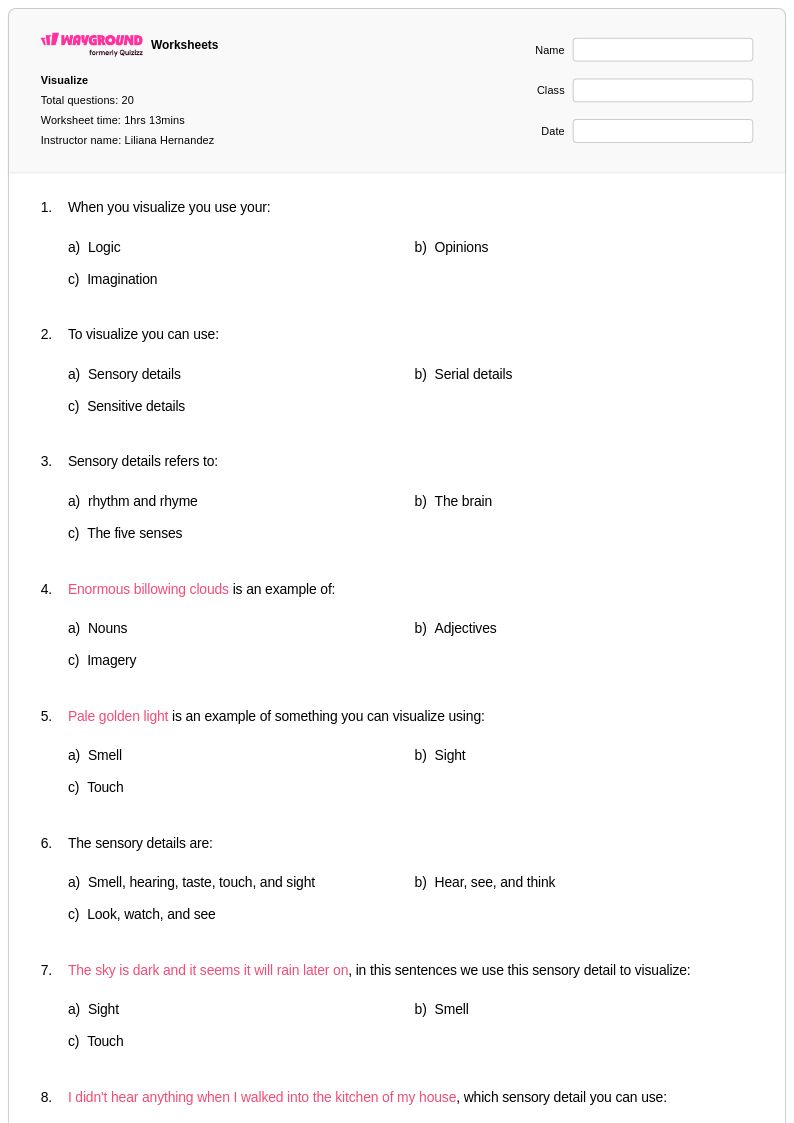
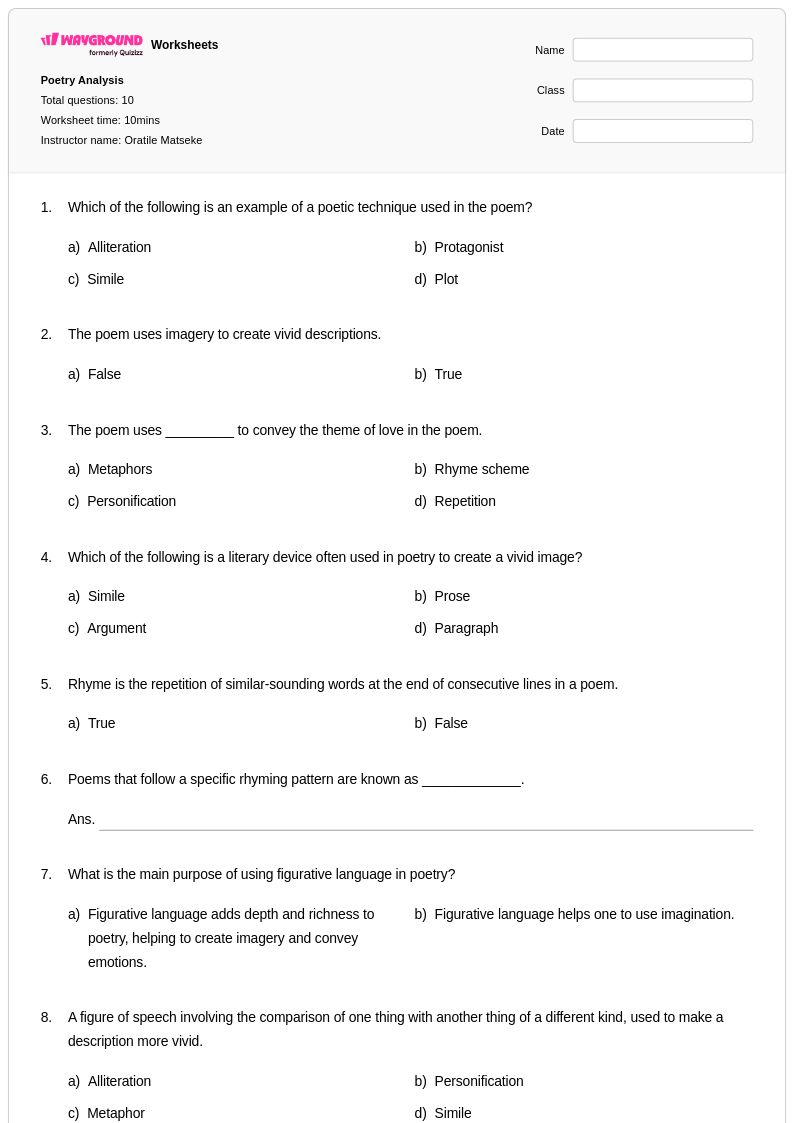
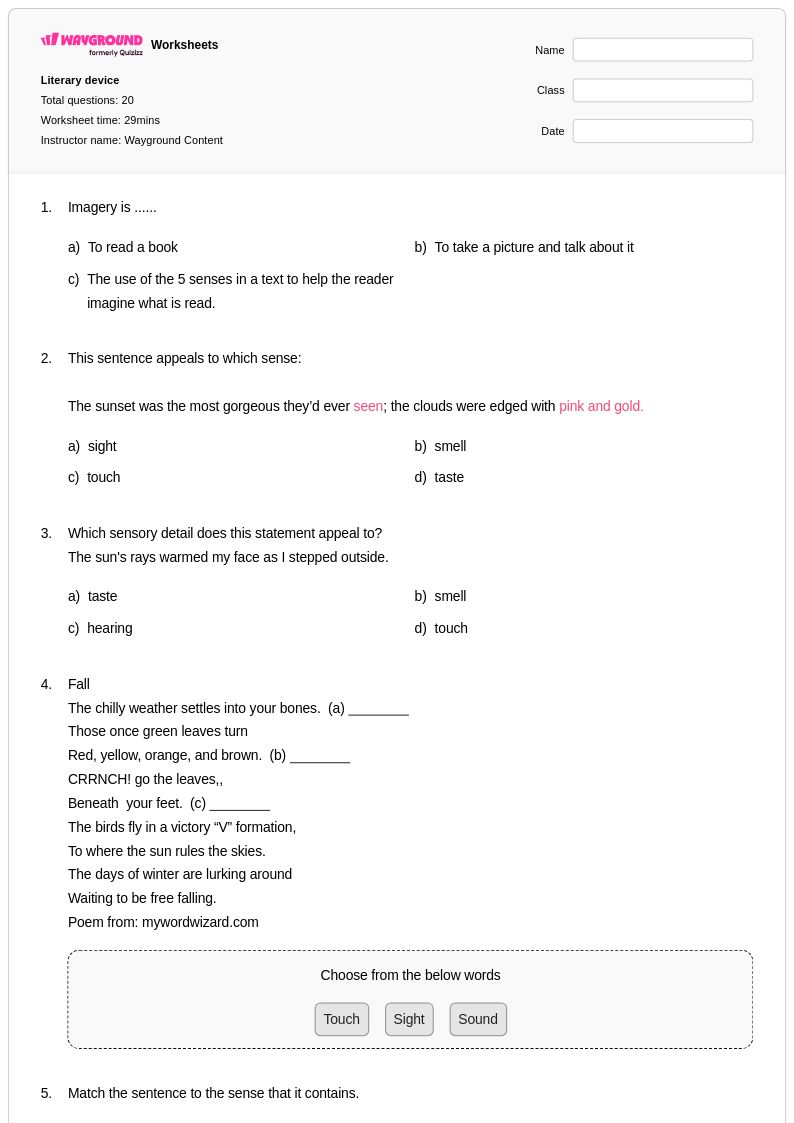
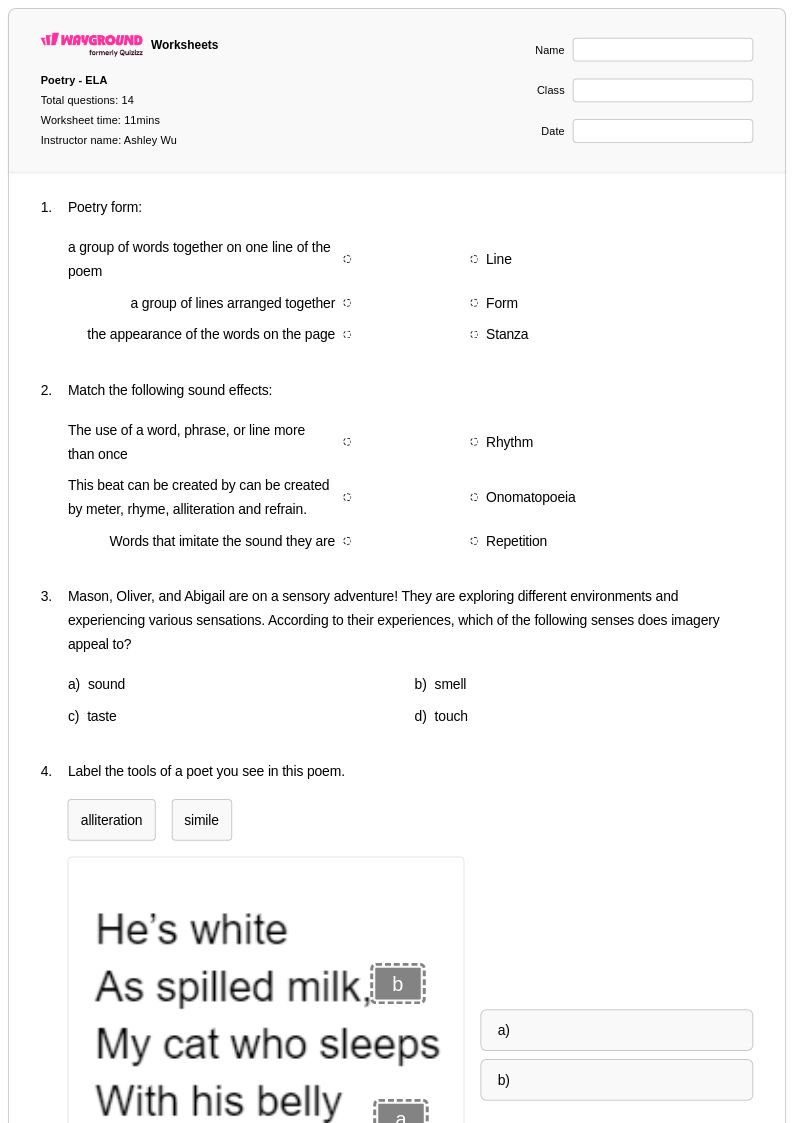
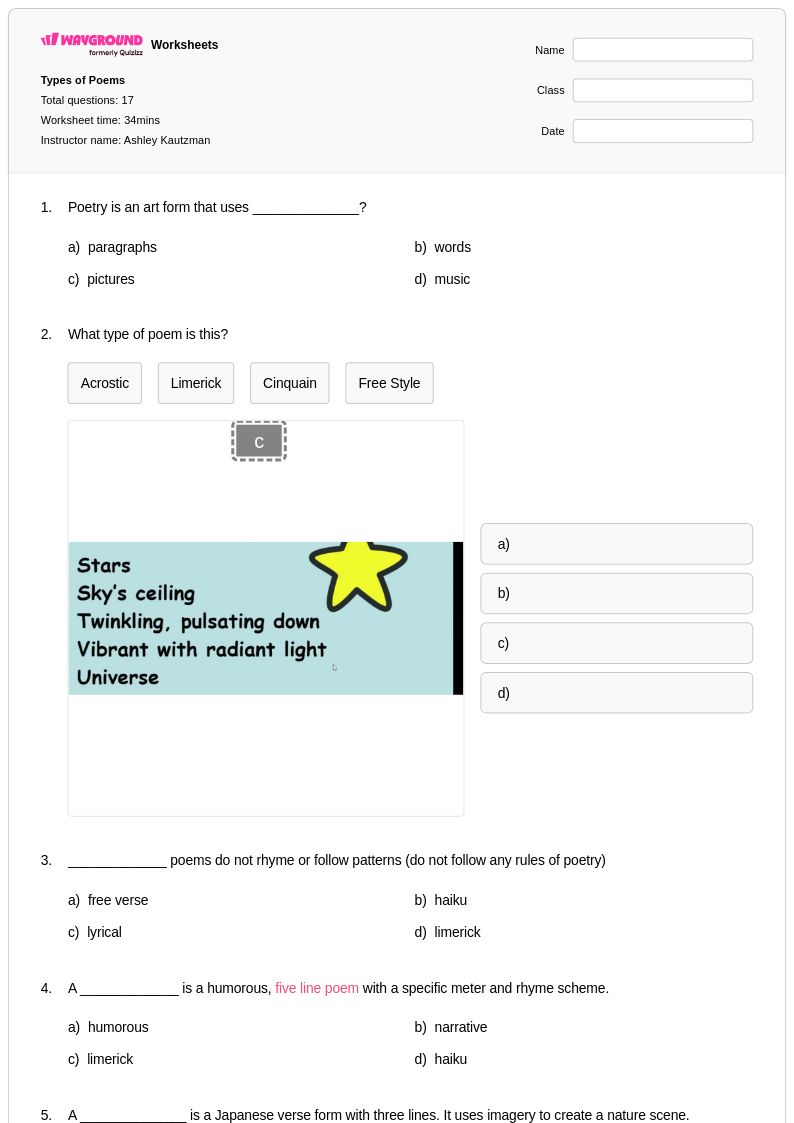
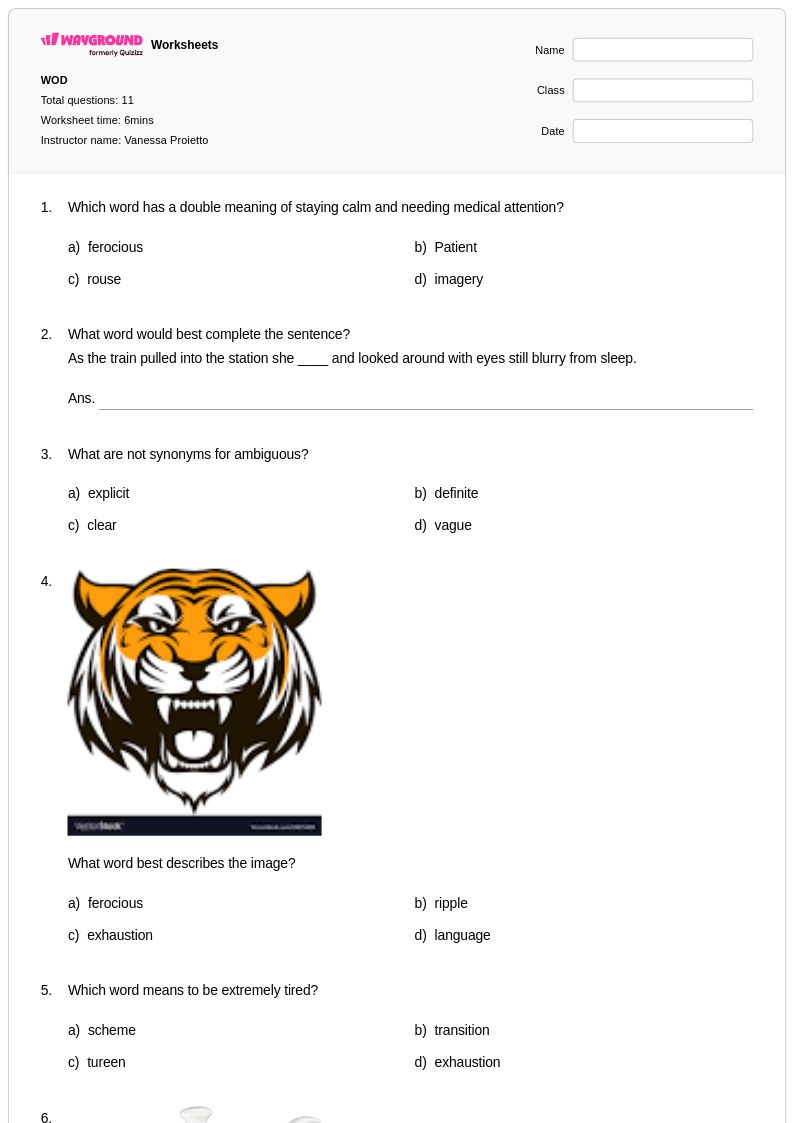
Imagery worksheets for Year 5 students available through Wayground (formerly Quizizz) provide comprehensive practice in identifying and analyzing descriptive language that appeals to the five senses. These educational resources strengthen students' ability to recognize how authors use vivid sensory details to create mental pictures, enhance comprehension, and develop deeper connections with literary texts. The worksheets feature diverse practice problems that guide fifth graders through examining visual, auditory, tactile, olfactory, and gustatory imagery across various genres including poetry, fiction, and descriptive writing. Each printable resource includes detailed answer keys that support both independent learning and classroom instruction, while the free pdf format ensures easy access and distribution for educators seeking to reinforce this essential figurative language skill.
Wayground (formerly Quizizz) empowers teachers with an extensive collection of millions of teacher-created imagery worksheets specifically designed for Year 5 instruction. The platform's robust search and filtering capabilities allow educators to locate resources aligned with state standards and customize materials to meet diverse learning needs through differentiation tools. Teachers can seamlessly integrate these worksheets into lesson planning for initial skill introduction, targeted remediation for struggling learners, or enrichment activities for advanced students. The flexible format options include both printable pdf versions for traditional classroom use and digital formats that support interactive learning environments, enabling educators to provide consistent skill practice across multiple instructional settings while maintaining alignment with curriculum objectives for figurative language development.
FAQs
How do I teach imagery in ELA?
Start by grounding students in the five senses and explaining that imagery is descriptive language designed to create mental pictures by appealing to sight, sound, touch, smell, and taste. Introduce each sensory type separately using mentor texts, asking students to identify what sense is targeted and what emotion or mood the description creates. Once students can recognize imagery, move to analysis — asking why an author chose a specific image and how it shapes meaning. From there, have students write their own sensory descriptions, beginning with concrete subjects like food, weather, or places before applying the technique to their own narratives.
What exercises help students practice identifying imagery?
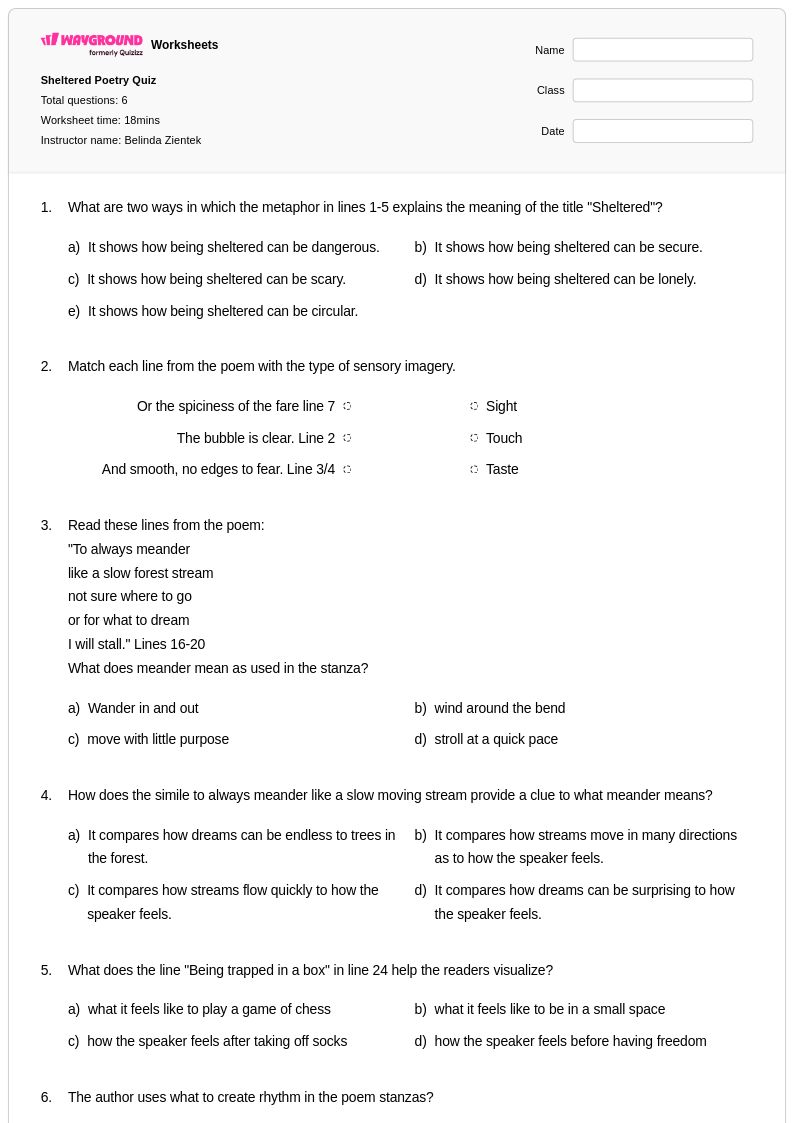
Effective practice starts with recognition tasks where students read short passages and label each example by sensory type — visual, auditory, tactile, olfactory, or gustatory. Sorting activities, where students categorize imagery examples by sense, build fluency before moving to analysis questions that ask how the imagery contributes to mood or meaning. Writing prompts that require students to revise flat, literal sentences into vivid sensory descriptions are especially useful for reinforcing both recognition and application skills.
What mistakes do students commonly make when analyzing imagery?
The most common error is confusing imagery with other figurative language devices, particularly simile and metaphor. Students often identify a simile or metaphor and stop there, without recognizing that these devices frequently function as imagery by appealing to the senses. A second frequent mistake is treating all descriptive language as imagery — students need to understand that imagery specifically works by activating sensory experience, not just by being vivid or detailed. Requiring students to name the specific sense being engaged in every answer helps correct both errors.
How can I use imagery worksheets to support students who struggle with figurative language?
For students who find figurative language abstract, imagery is often an accessible entry point because it connects directly to personal sensory experience. Worksheets that present imagery examples alongside guiding questions — such as 'what sense does this activate?' or 'what picture does this create in your mind?' — scaffold the analytical process without removing the cognitive challenge. On Wayground, teachers can apply accommodations such as Read Aloud so passages are read to students who need it, or reduced answer choices to lower cognitive load for students who need additional support, with these settings applied individually so other students receive the standard experience.
How do I use Wayground's imagery worksheets in my classroom?
Wayground's imagery worksheets are available as printable PDFs for traditional classroom use and in digital formats for technology-integrated environments, including the option to host them as a quiz directly on the platform. Teachers can use them for initial skill introduction, targeted remediation with struggling readers, enrichment for advanced learners, or regular figurative language practice. The worksheets include complete answer keys, making them practical for both independent student work and whole-class instruction.
At what grade level should imagery be introduced?
Imagery as a concept can be introduced as early as second or third grade through simple sensory description activities tied to creative writing. Formal literary analysis of imagery — examining how authors use sensory language to establish mood, evoke emotion, and develop theme — is typically taught in grades 5 through 10 as part of figurative language and reading comprehension units. The depth of analysis expected should scale with grade level, moving from identification in lower grades to evaluation of authorial intent and effect in middle and high school.