Explore Year 4 immigration worksheets and printables that help students learn about U.S. History through engaging practice problems, free PDF resources, and comprehensive answer keys available on Wayground.
Explore printable Immigration worksheets for Year 4
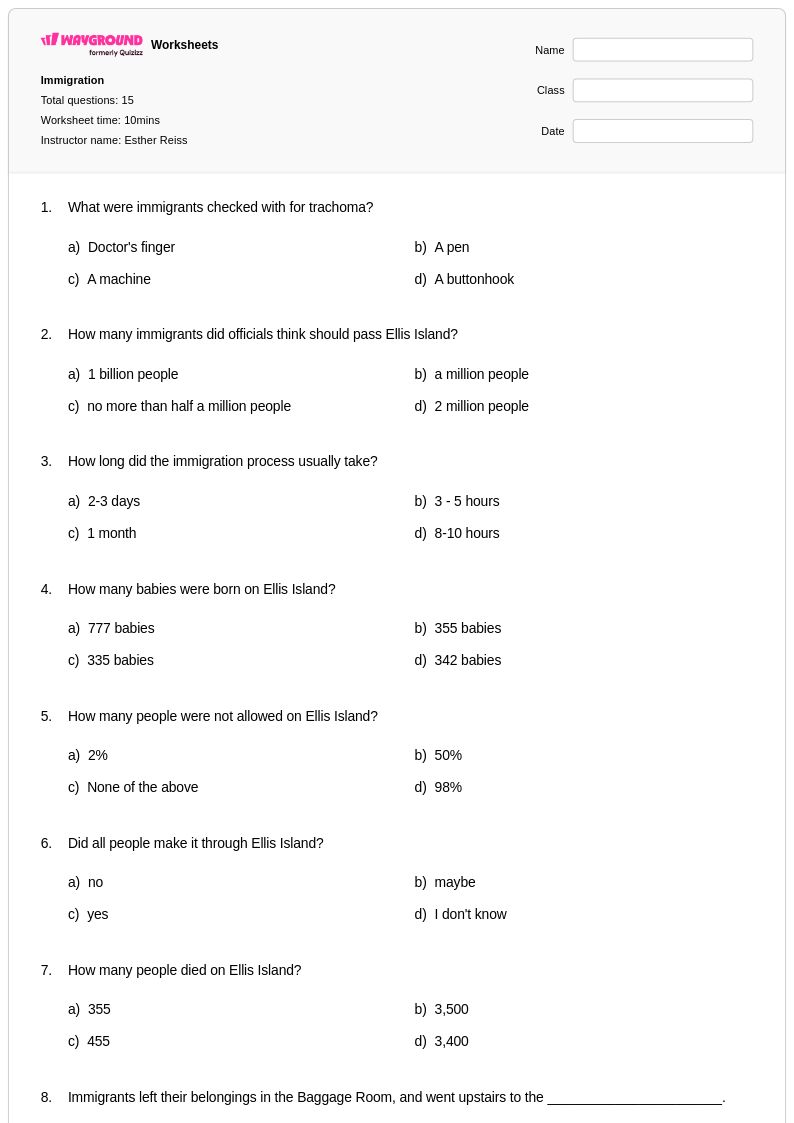
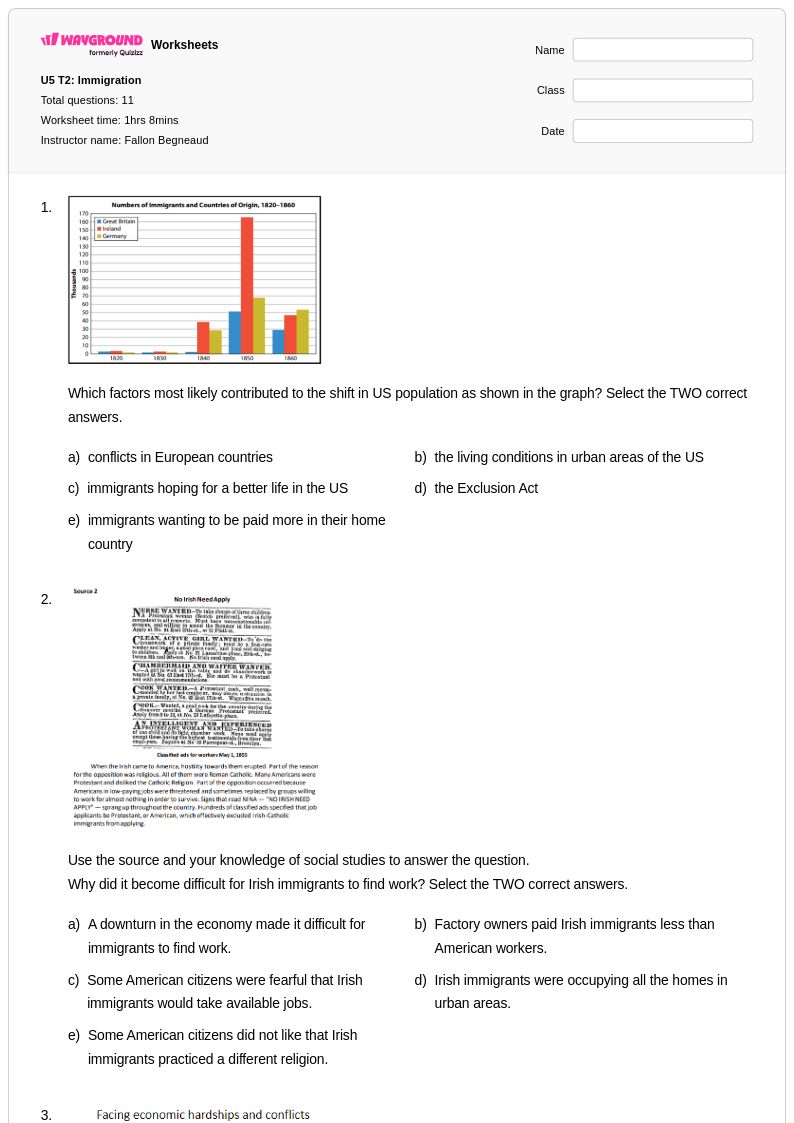
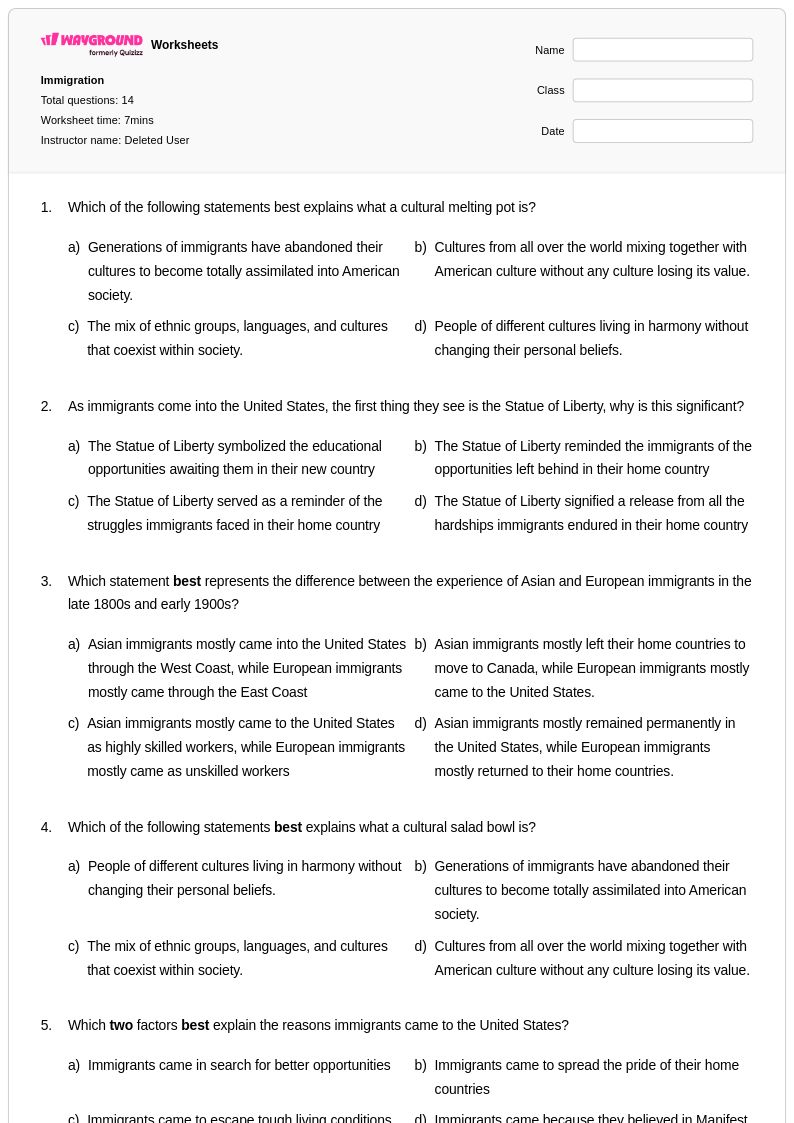
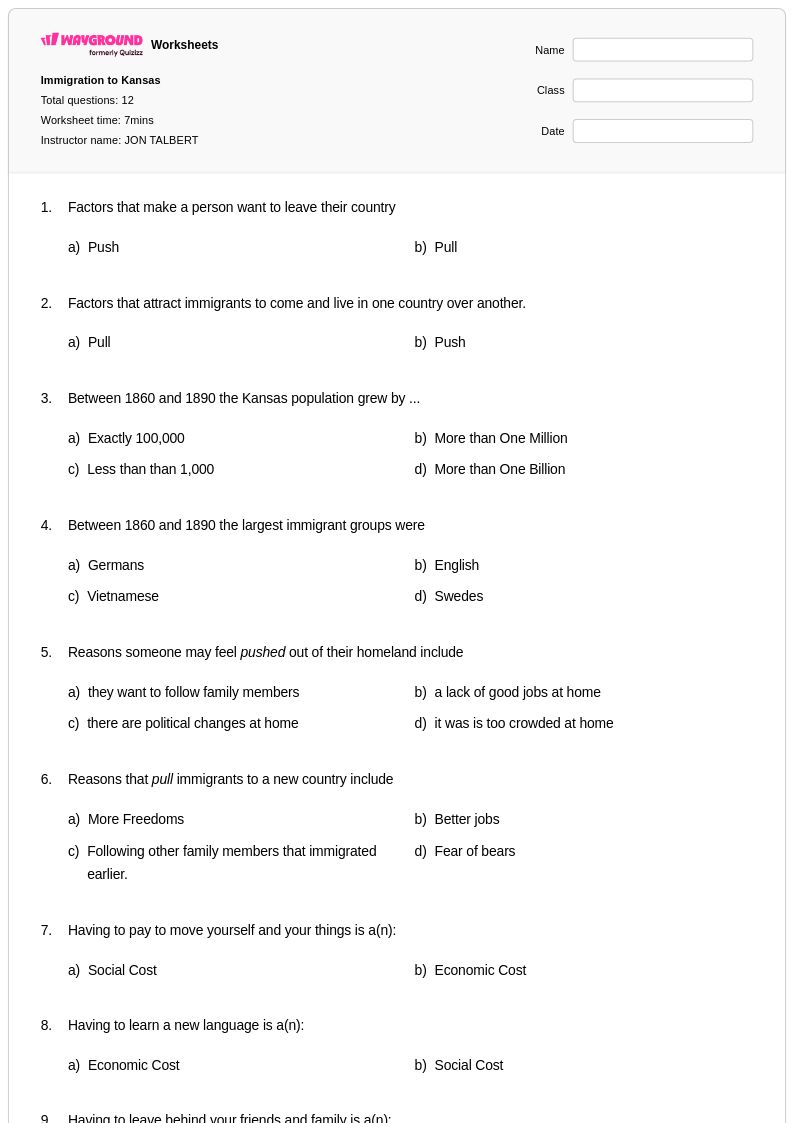
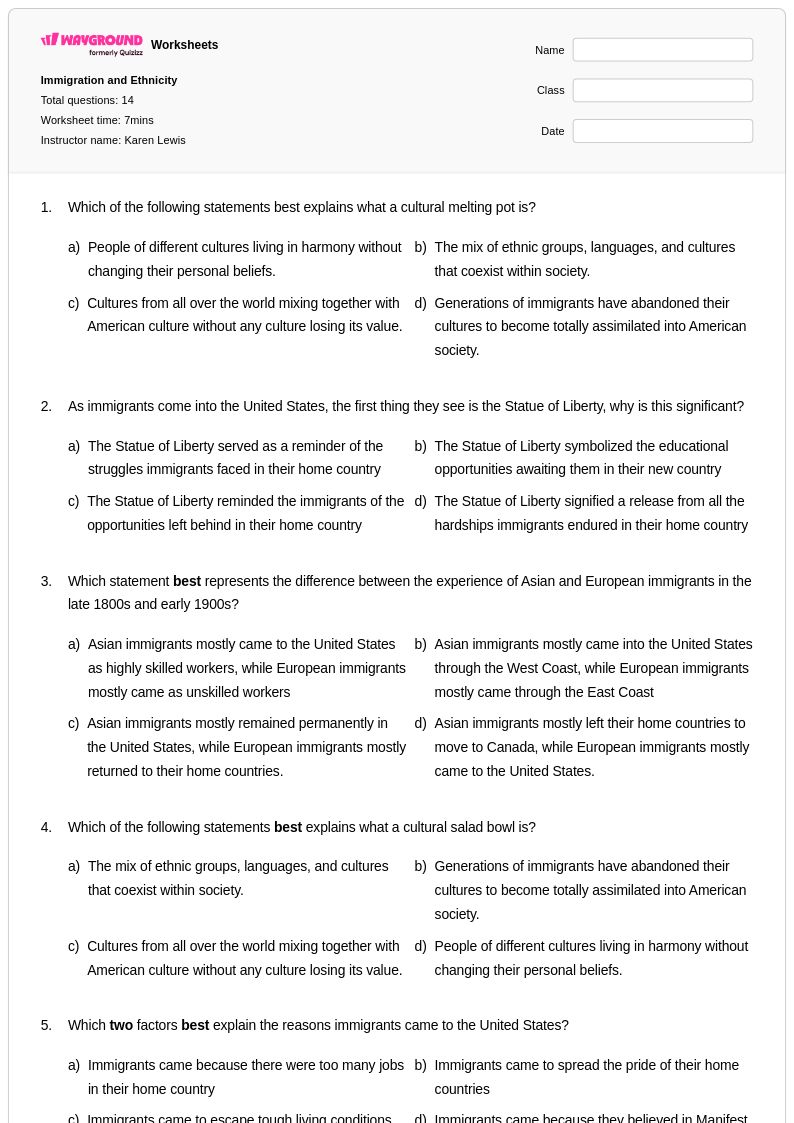
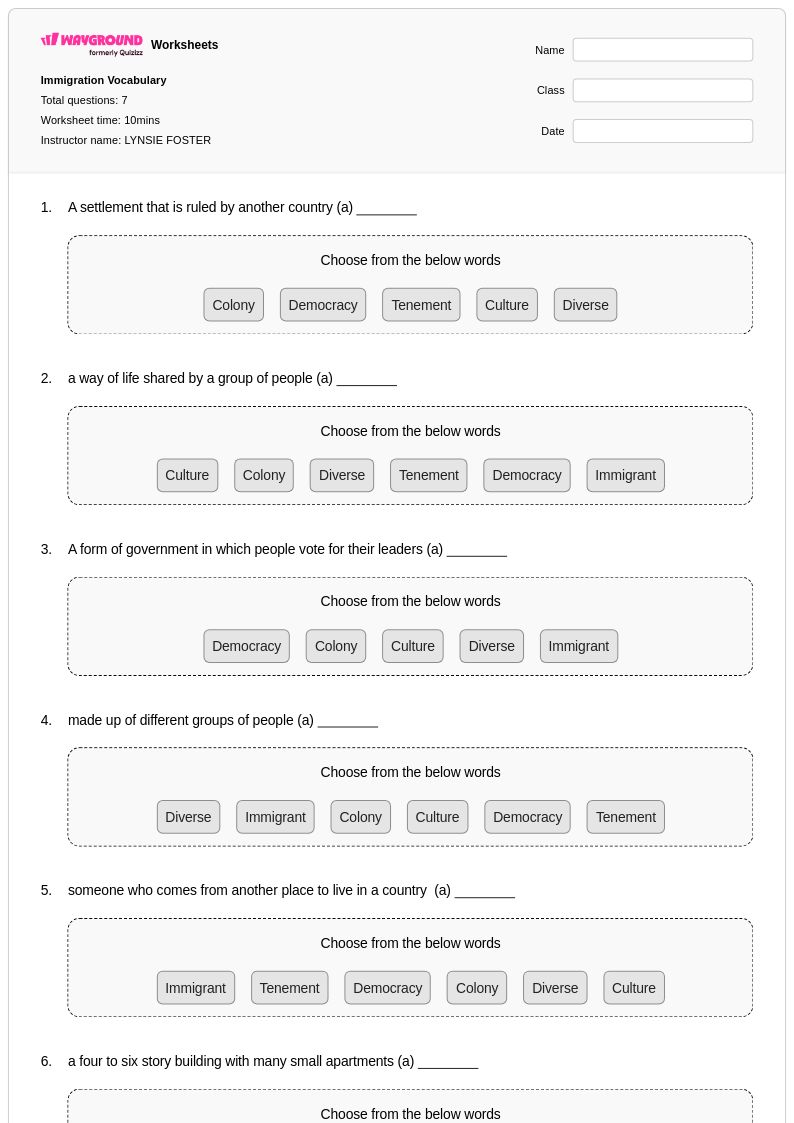
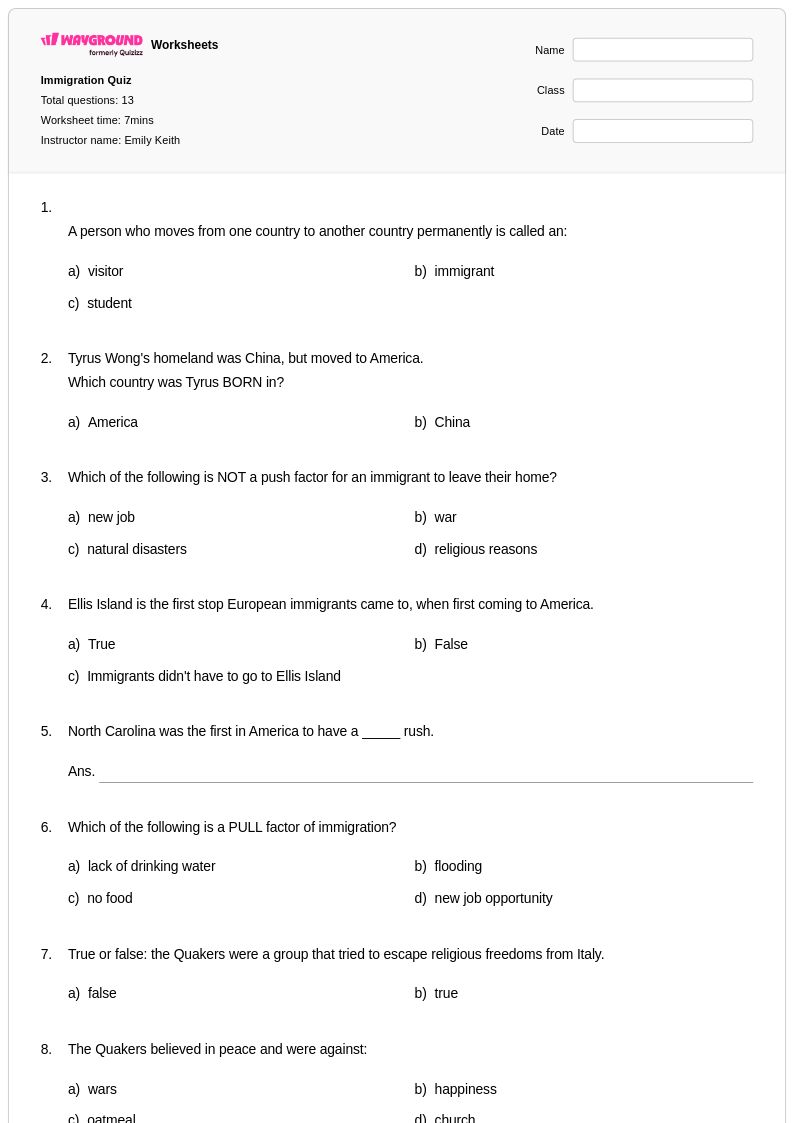
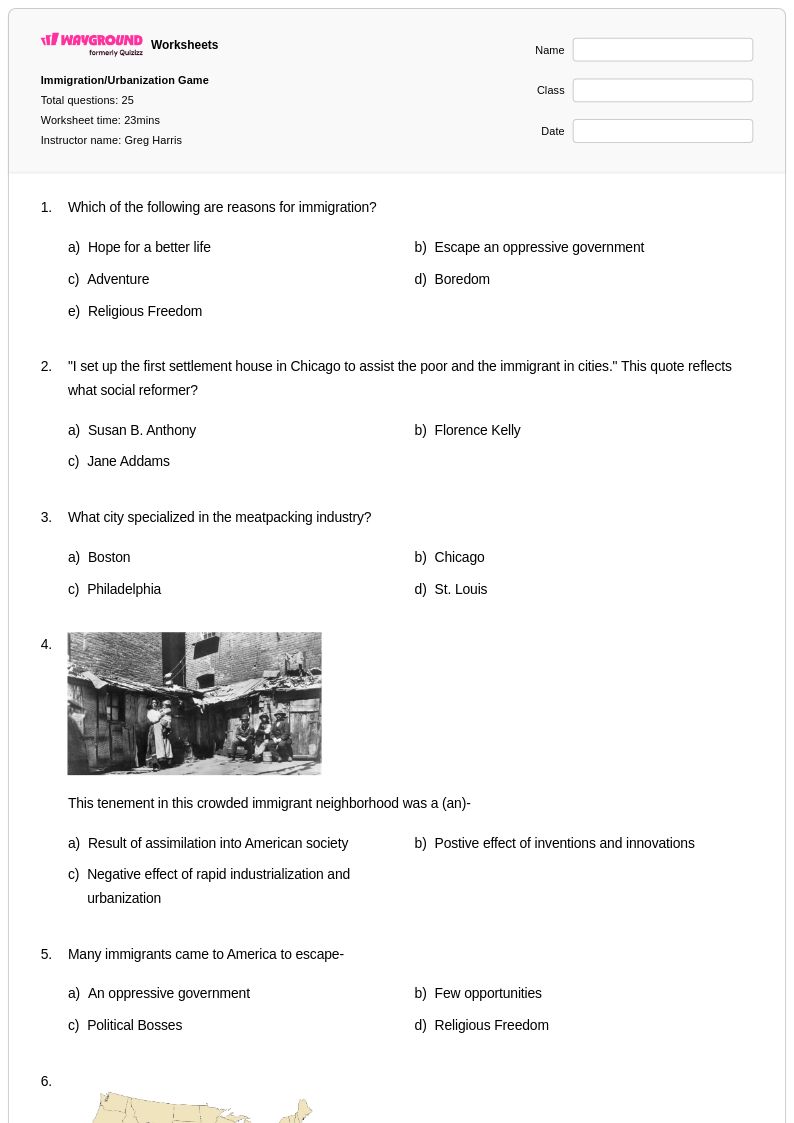
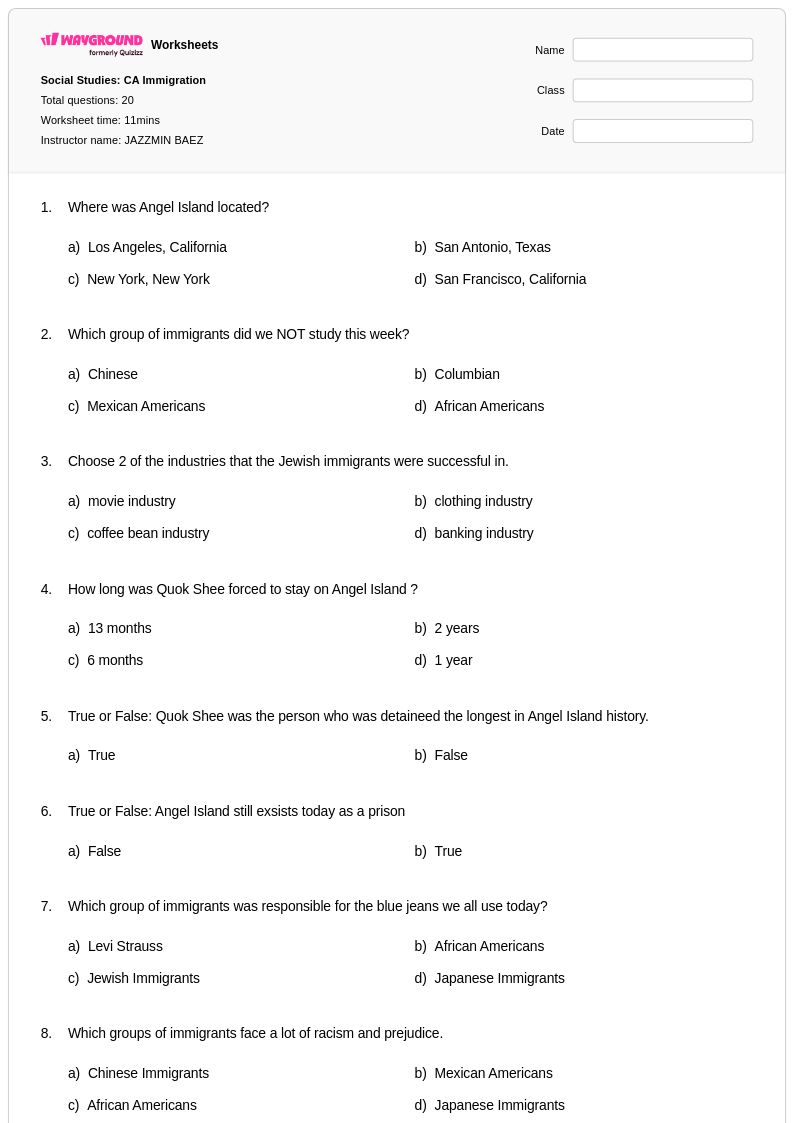
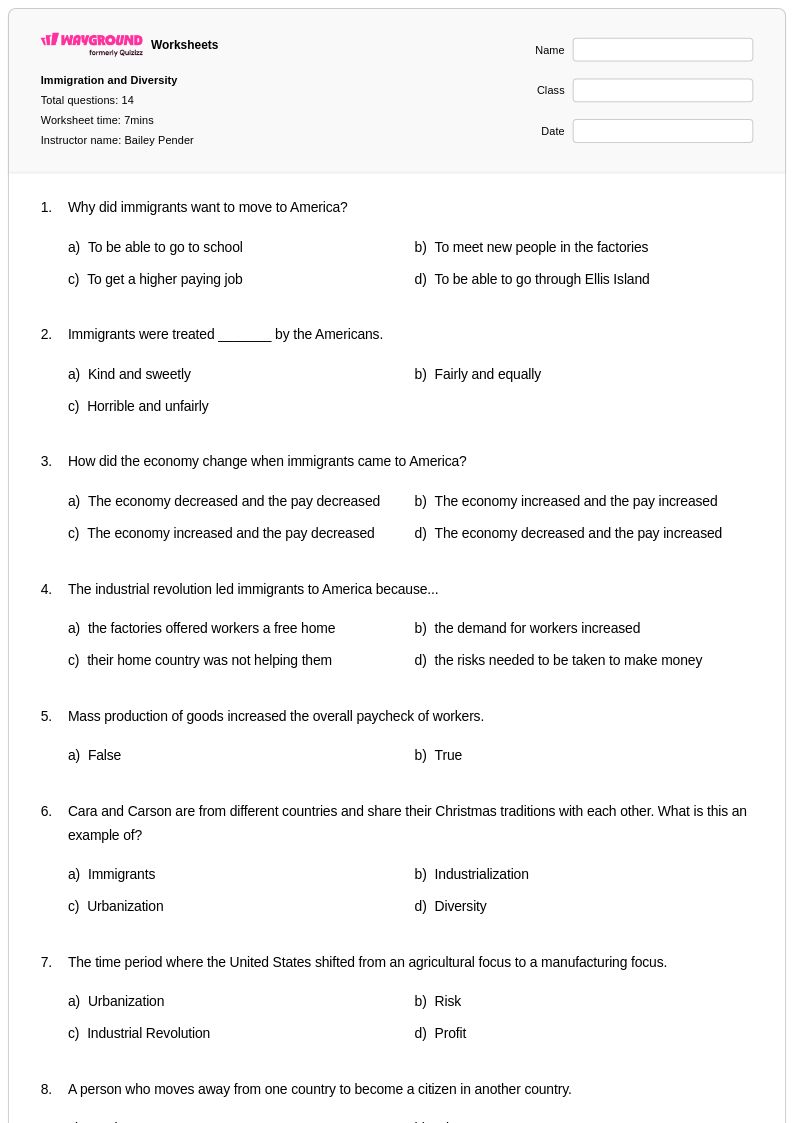
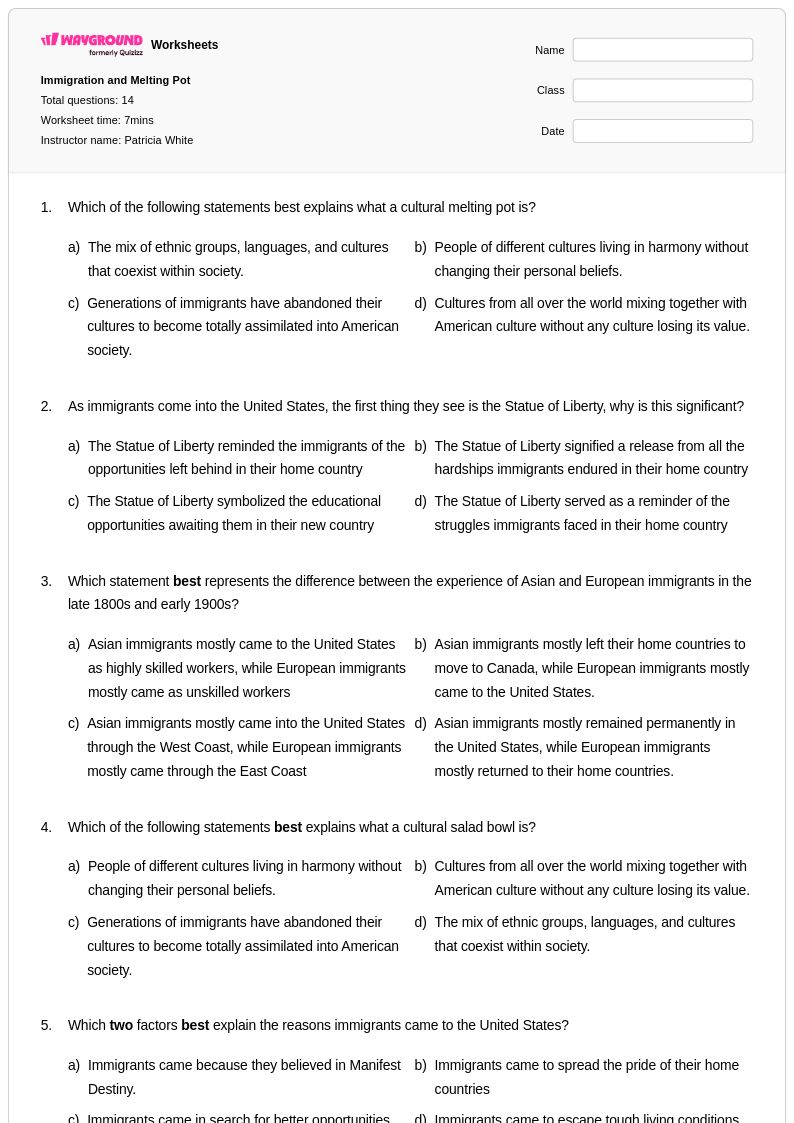
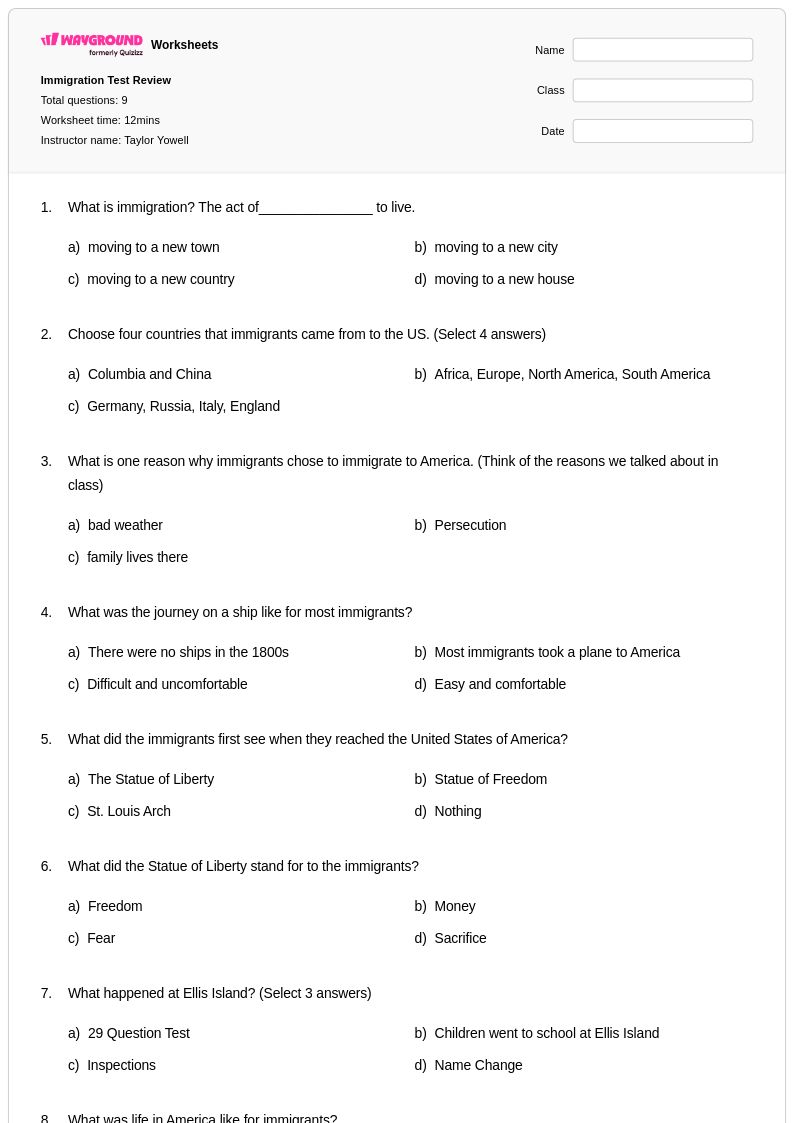
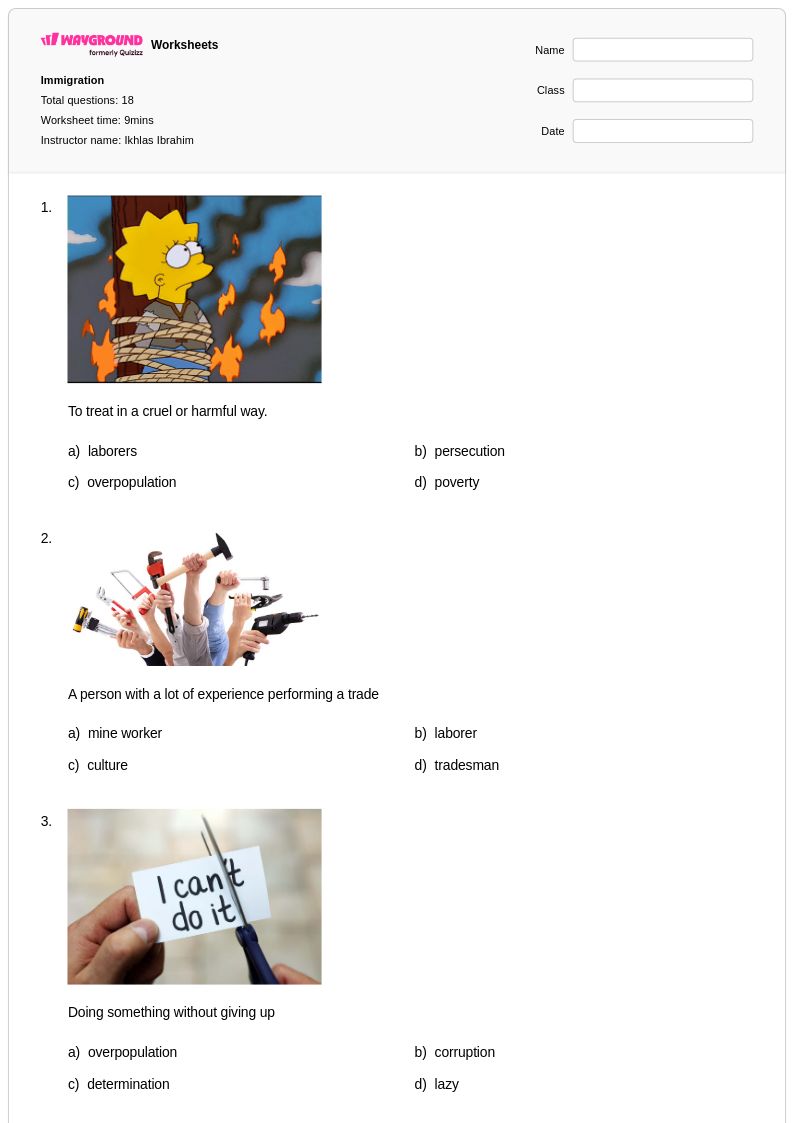
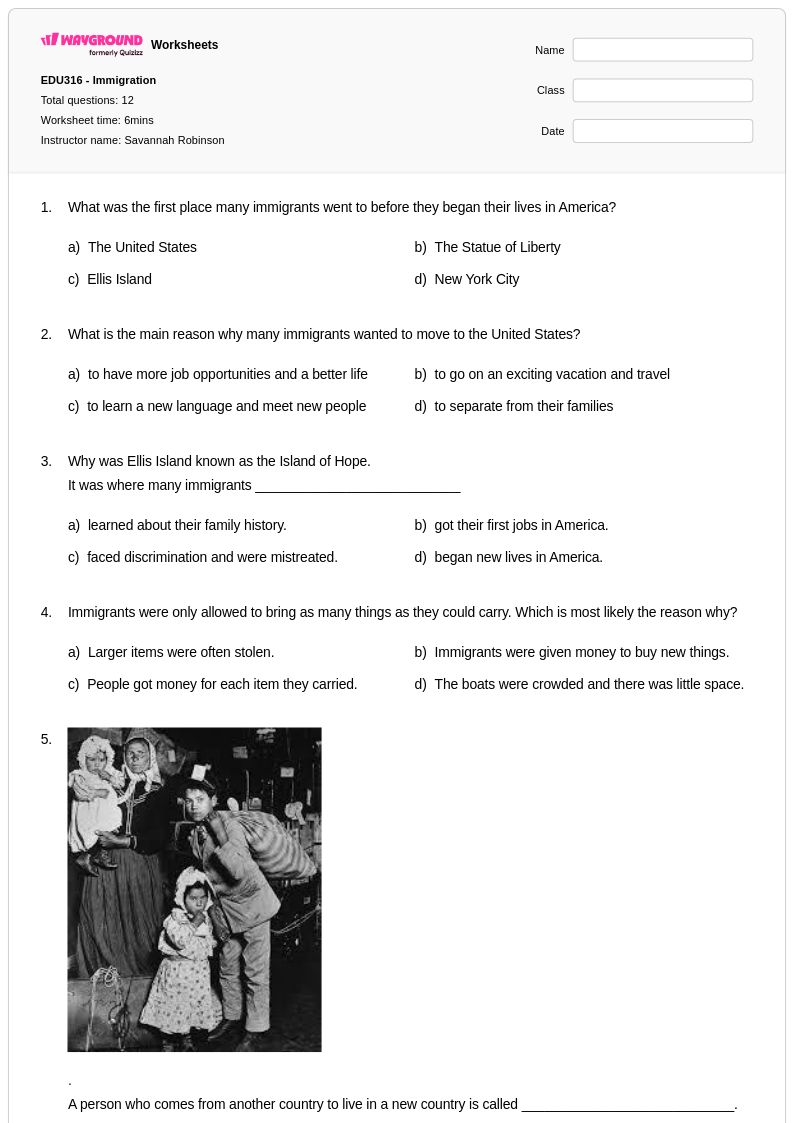
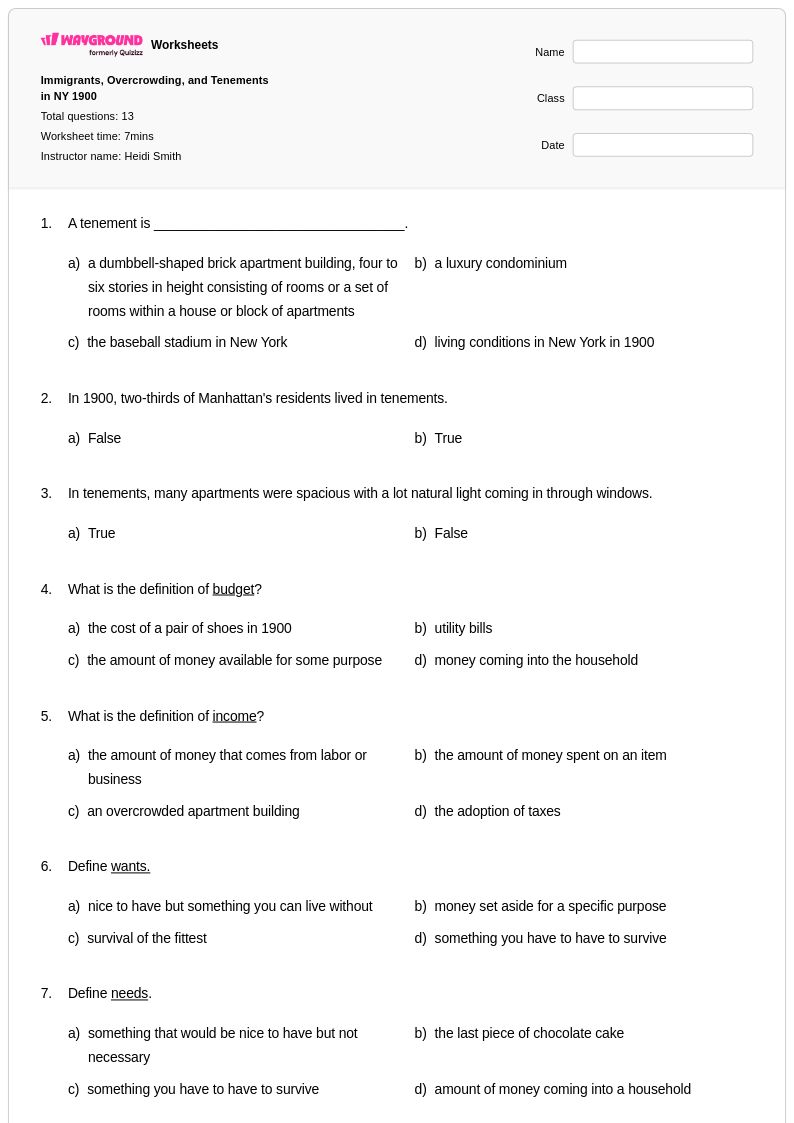
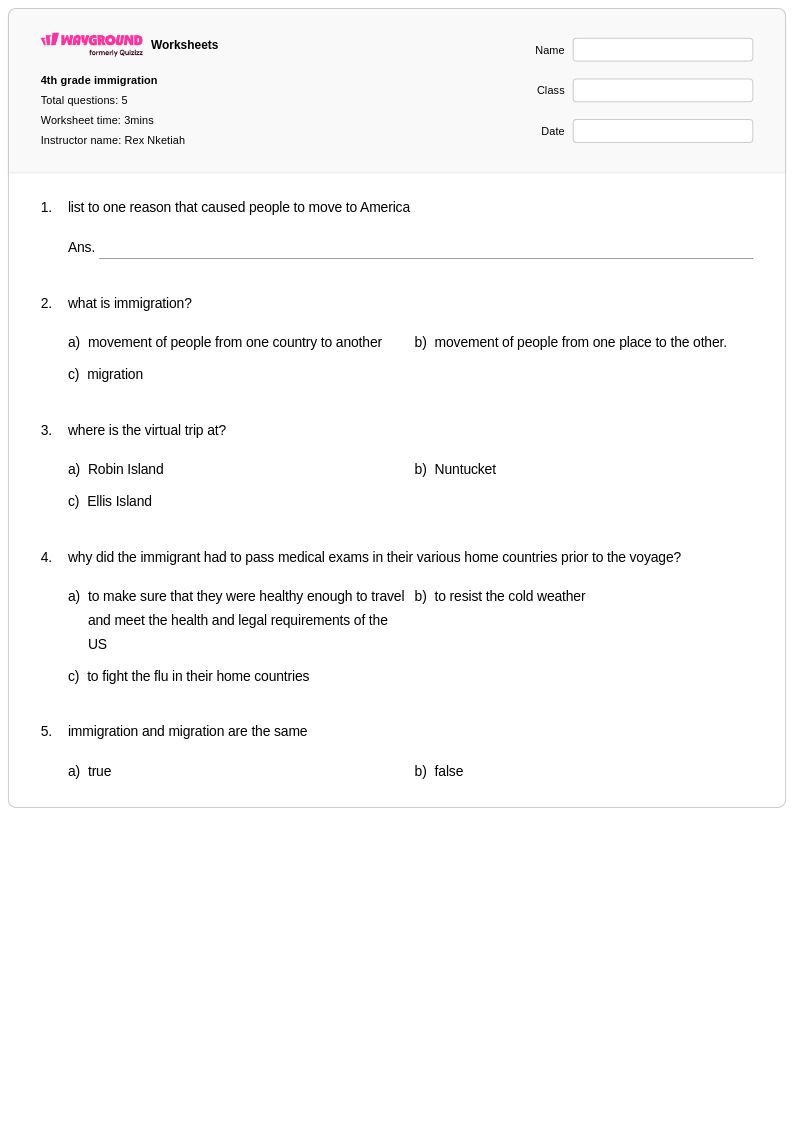
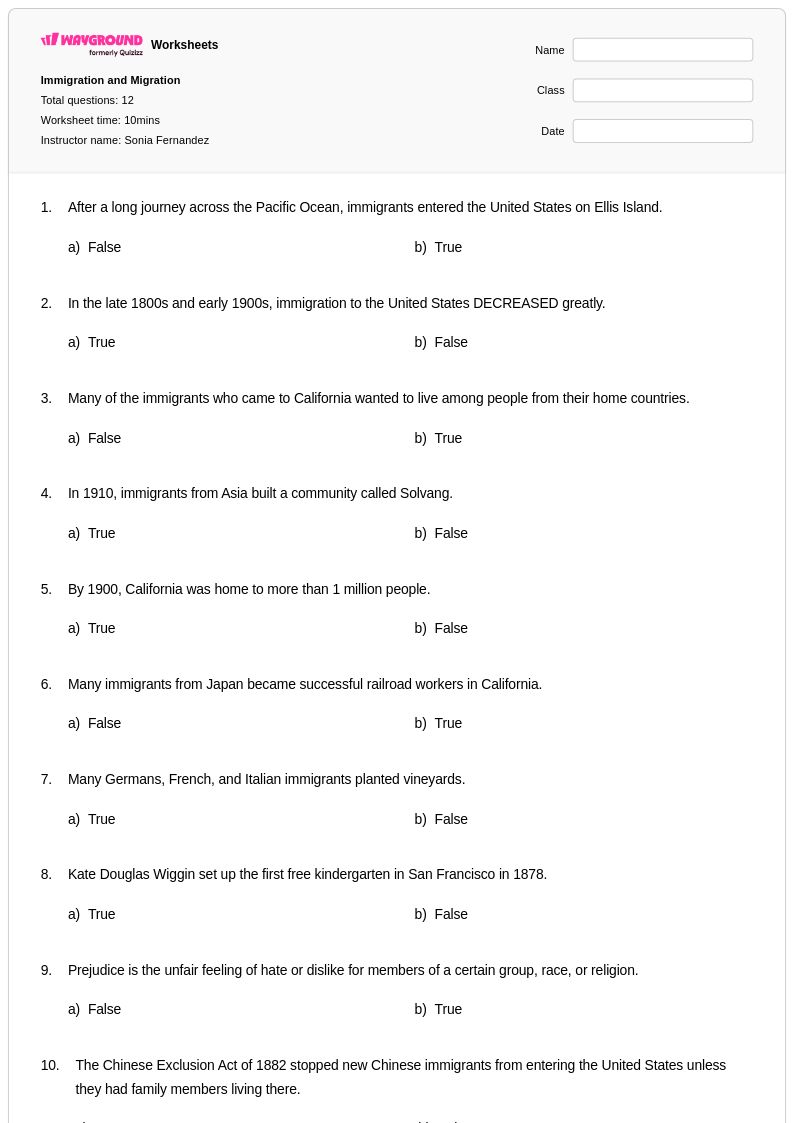
Immigration worksheets for Year 4 students available through Wayground (formerly Quizizz) provide comprehensive resources to help young learners understand America's rich history of immigration and cultural diversity. These carefully crafted educational materials strengthen critical thinking skills as students explore the reasons why people immigrated to America, the challenges they faced, and the contributions they made to building our nation. The worksheets include engaging practice problems that encourage students to analyze primary sources, maps, and historical photographs while developing their ability to compare different immigration experiences across various time periods. Teachers can access complete answer keys and free printables that support structured learning about Ellis Island, the journey to America, and how immigrant communities shaped American culture and society.
Wayground's extensive collection of immigration-focused resources draws from millions of teacher-created materials specifically designed to meet Year 4 social studies standards and learning objectives. The platform's robust search and filtering capabilities allow educators to quickly locate worksheets that align with their curriculum requirements, whether they need materials for whole-class instruction, small group activities, or individual student practice. Teachers benefit from built-in differentiation tools that help them customize content for diverse learning needs, while the availability of both printable pdf formats and interactive digital versions provides flexibility for various classroom environments. These comprehensive resources support effective lesson planning and enable teachers to provide targeted remediation for struggling learners or enrichment opportunities for advanced students exploring America's immigration heritage.
FAQs
How do I teach immigration history to middle and high school students?
Teaching immigration history effectively means grounding abstract concepts in personal stories and primary sources. Start with push and pull factors as an analytical framework, then move into case studies like Ellis Island processing, the Chinese Exclusion Act, or modern refugee experiences. Using demographic data and historical narratives alongside first-person accounts helps students connect policy to human experience and builds the document analysis skills central to social studies standards.
What exercises help students practice analyzing immigration patterns and policies?
Students benefit most from exercises that ask them to interpret real immigration statistics, trace demographic shifts across time periods, and evaluate the causes and consequences of specific policies. Practice problems that require students to compare push and pull factors across different waves of immigration — colonial, late 19th century, early 20th century, and contemporary — build both content knowledge and analytical reasoning. Document-based tasks using primary sources like ship manifests, photographs, or political cartoons add authenticity and reinforce historical thinking skills.
What misconceptions do students commonly have about U.S. immigration history?
A common misconception is that immigration has always been open and welcoming — students are often surprised to learn about restrictive policies like the Chinese Exclusion Act, the Emergency Quota Act of 1924, or the internment of Japanese Americans. Students also tend to conflate all immigrant experiences, missing how race, national origin, and economic status shaped very different trajectories. Addressing these misconceptions directly with policy analysis and comparative case studies strengthens historical accuracy and critical thinking.
How can I use immigration worksheets to support students with different learning needs?
Wayground allows teachers to apply individualized accommodations directly to worksheet assignments, including Read Aloud for students who need audio support with dense historical text, reduced answer choices to lower cognitive load for struggling learners, and extended time for students who need it. These settings can be configured per student and carry over across future sessions, so differentiation requires minimal extra setup. Students receiving accommodations work within the same assignment as their peers, maintaining classroom consistency.
How do I use immigration worksheets from Wayground in my classroom?
Wayground's immigration worksheets are available as printable PDFs for traditional classroom use and in digital formats for technology-integrated instruction, including the option to host them as a quiz directly on Wayground. Each worksheet includes a complete answer key, making them practical for in-class instruction, homework assignments, or assessment preparation. The platform's search and filtering tools let teachers locate materials by specific topic — such as Ellis Island, the Chinese Exclusion Act, or modern refugee policy — so content can be matched to a precise unit focus.
What primary sources work well when teaching immigration in a social studies class?
Ship manifests, Ellis Island registry records, political cartoons, newspaper editorials, and photographs from immigration processing centers are all effective primary sources for this topic. For policy-focused lessons, the text of the Chinese Exclusion Act, the Immigration Act of 1924, or executive orders related to refugee admissions give students direct access to legislative language. Pairing these with demographic data — such as immigration statistics by decade or country of origin — helps students move from document analysis to broader historical interpretation.