
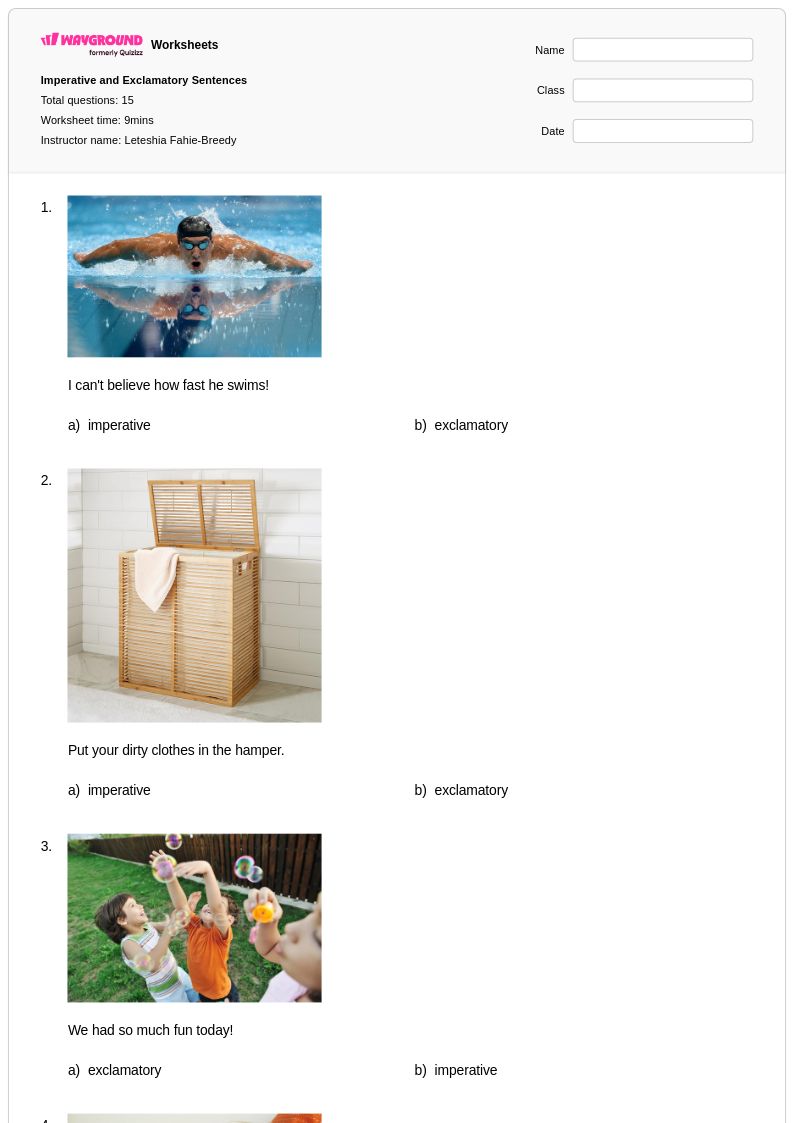
15 Q
2nd - 4th
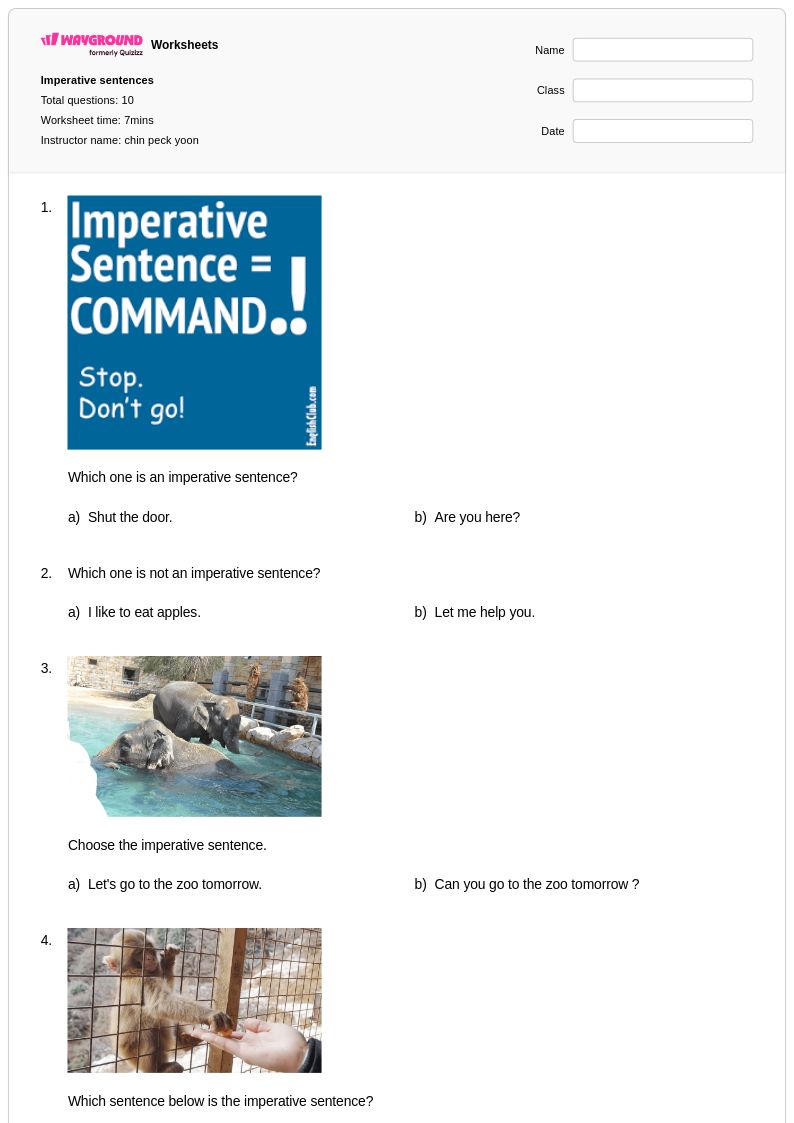
10 Q
1st - 3rd
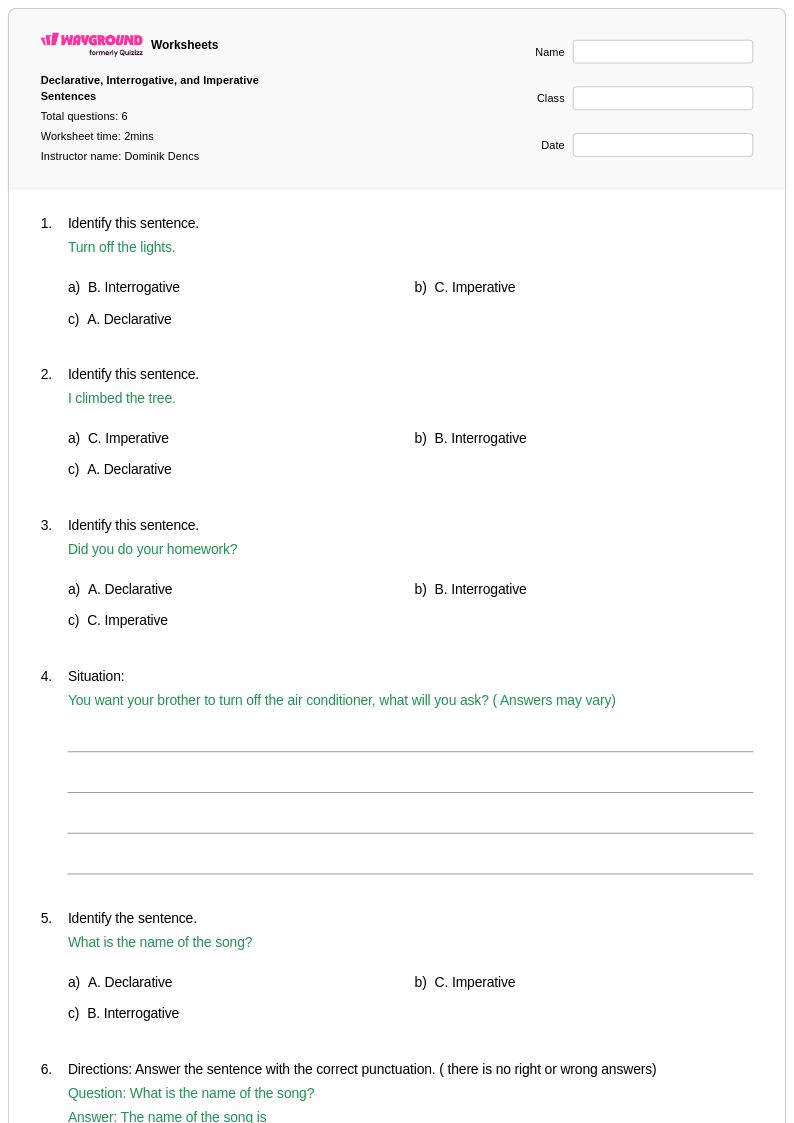
6 Q
2nd
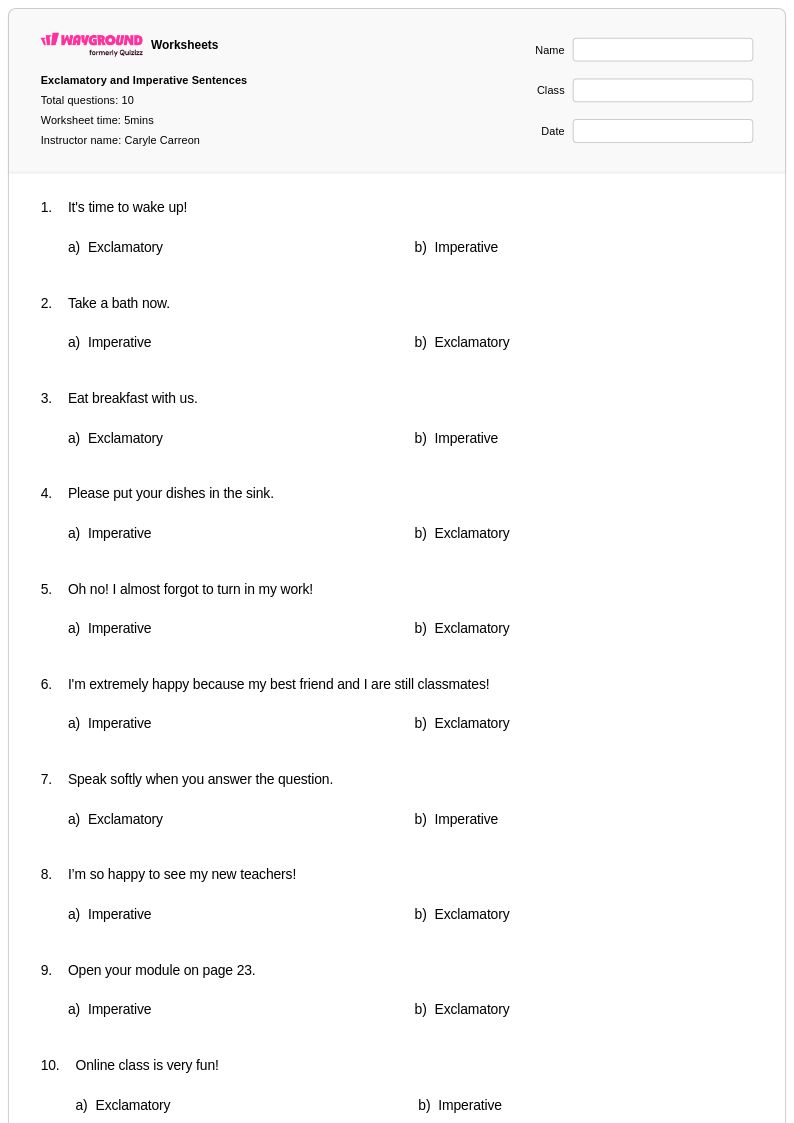
10 Q
1st - 3rd
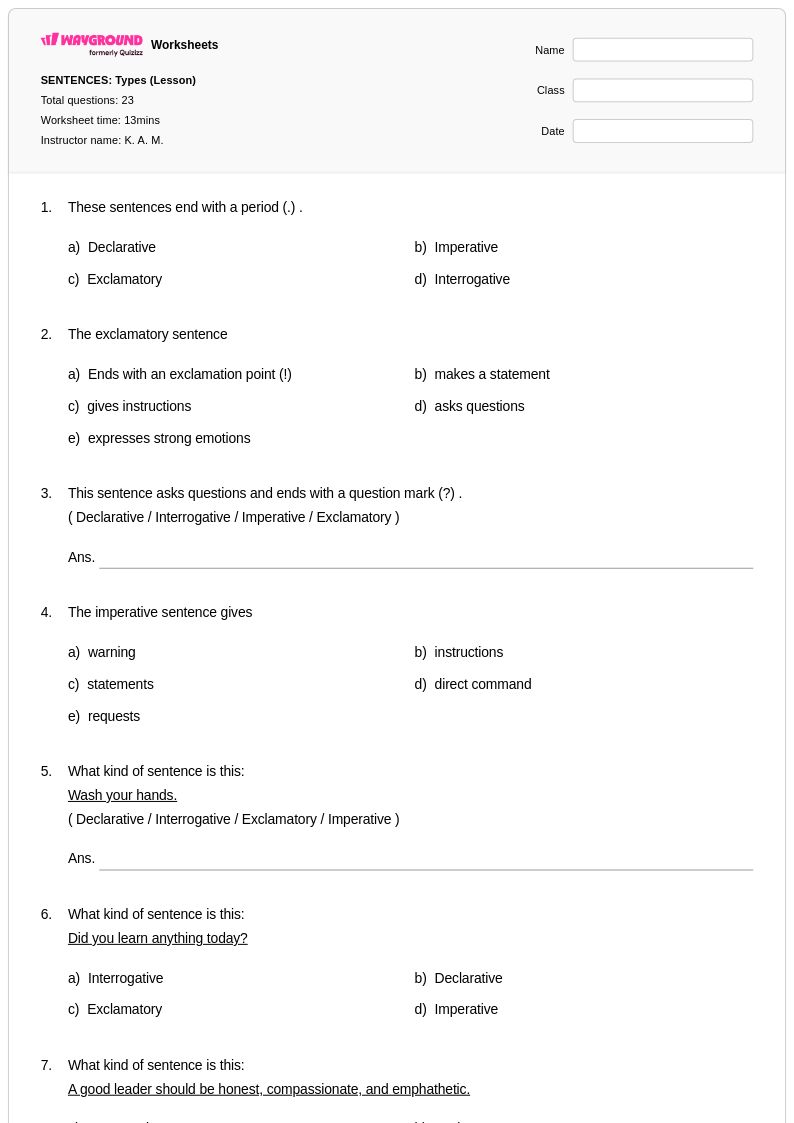
23 Q
2nd - 3rd
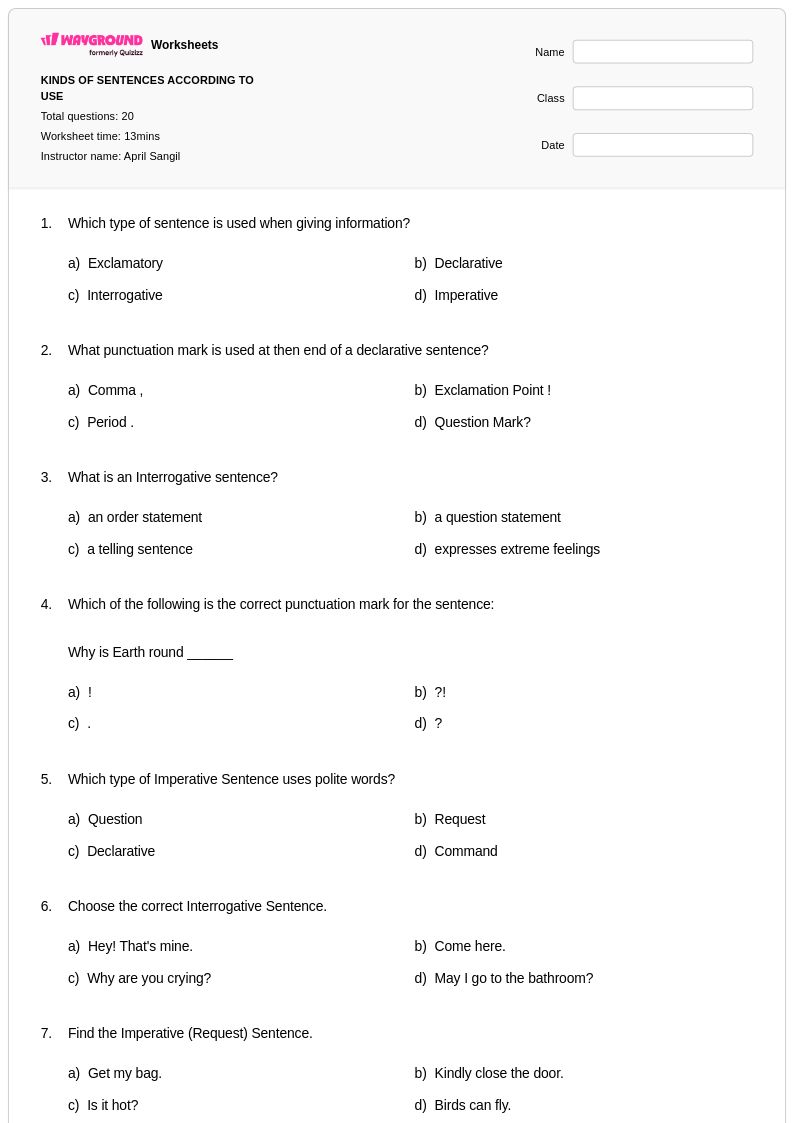
20 Q
2nd - 6th
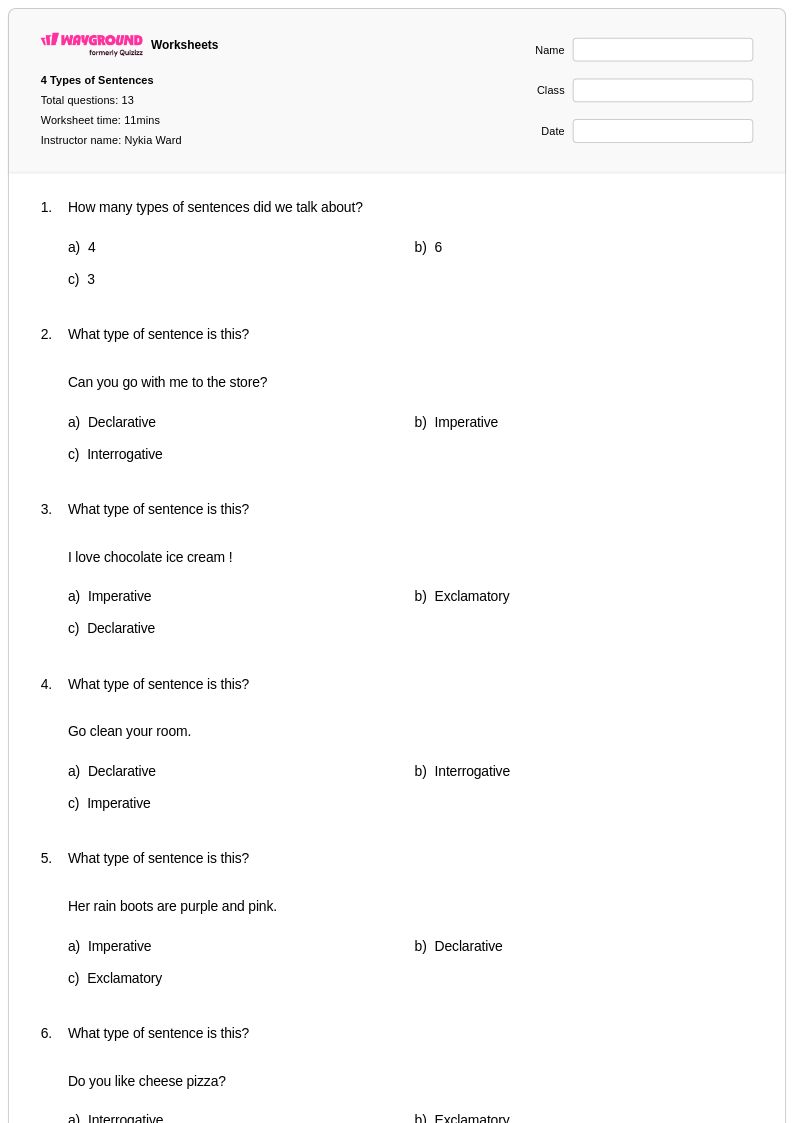
13 Q
2nd - 6th
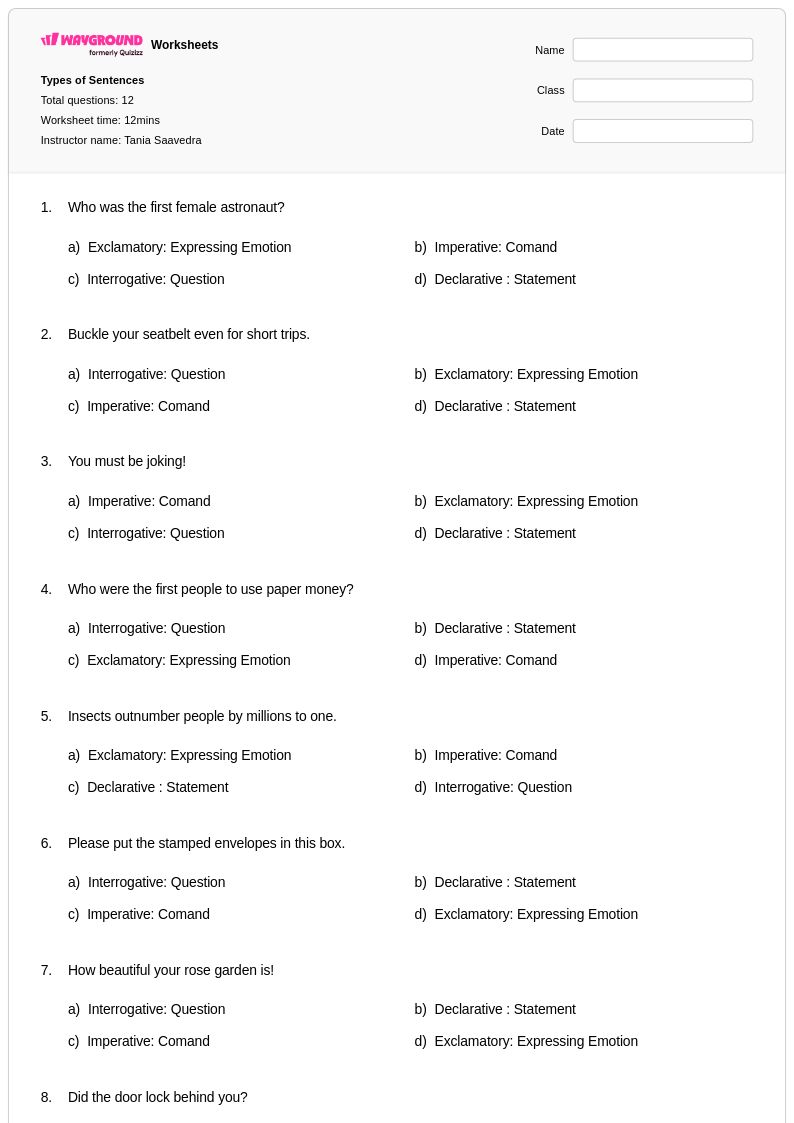
12 Q
2nd - 3rd
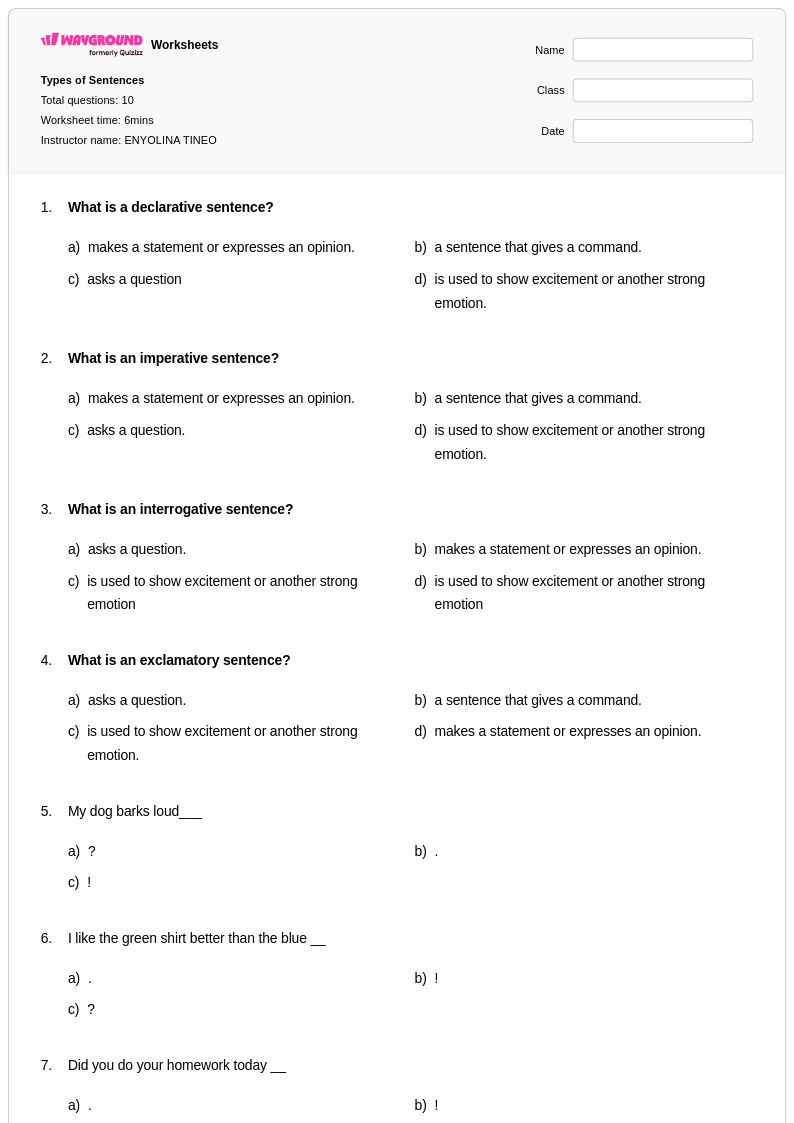
10 Q
1st - 4th
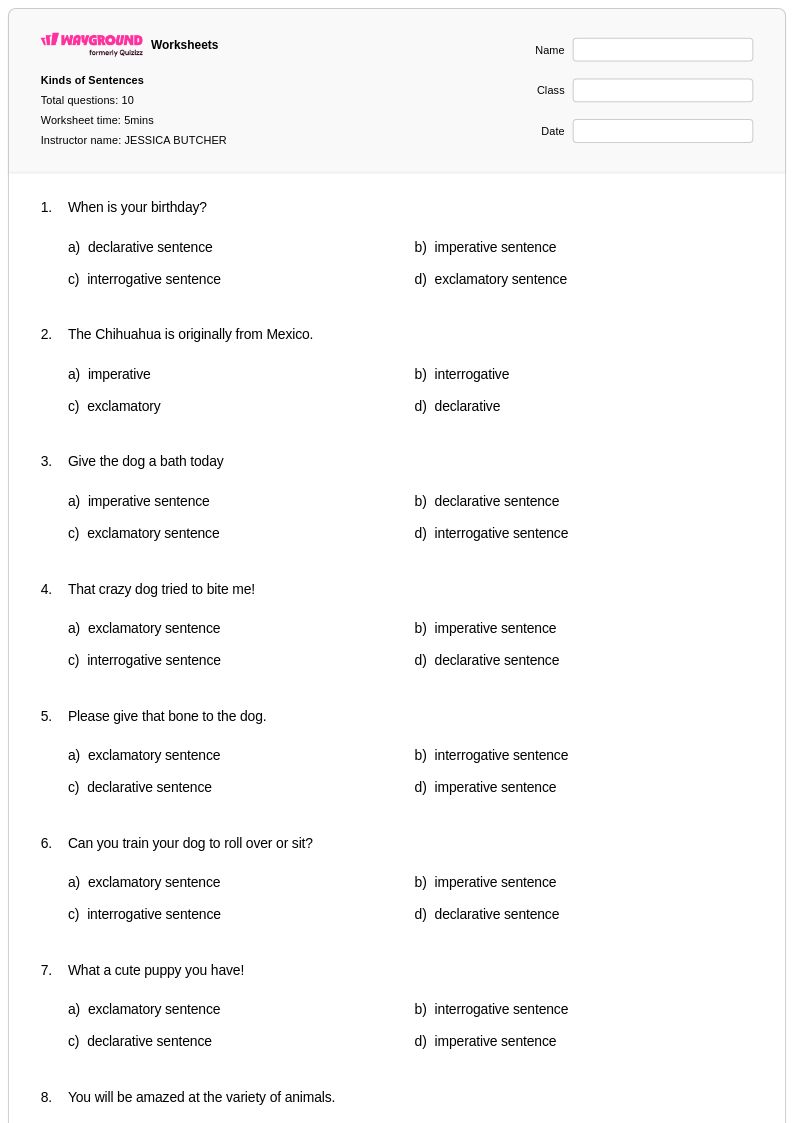
10 Q
2nd
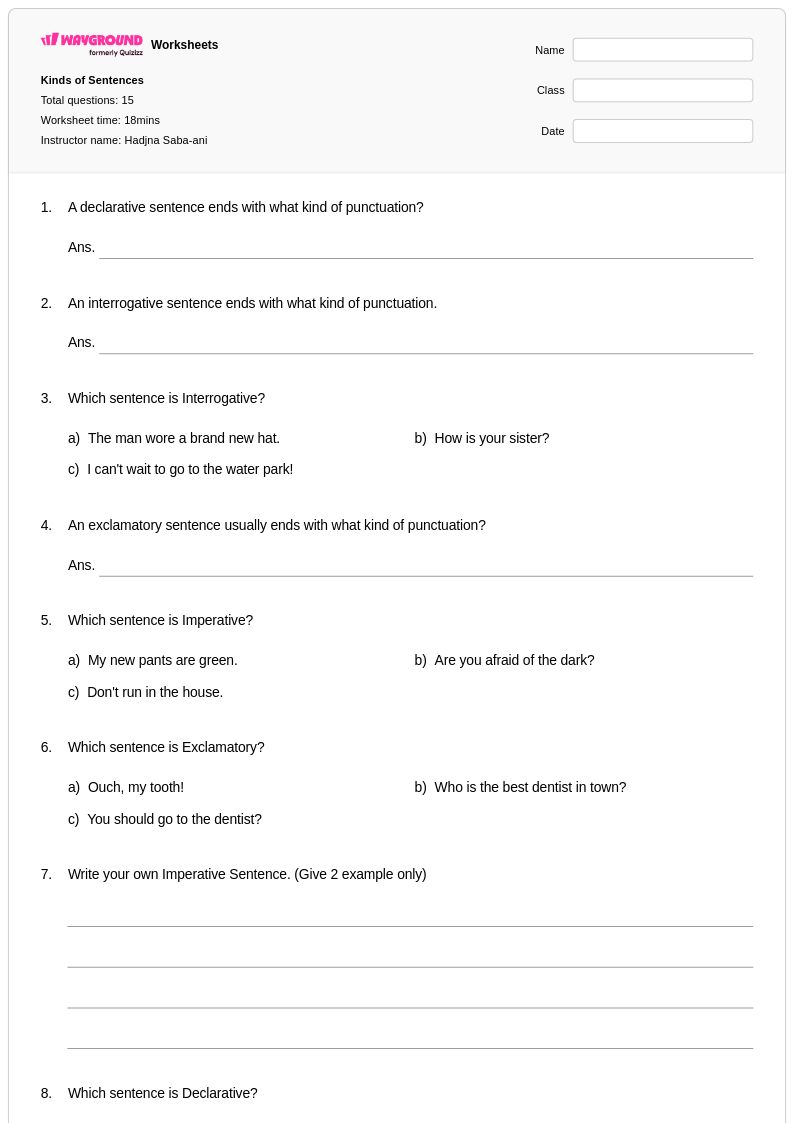
15 Q
2nd
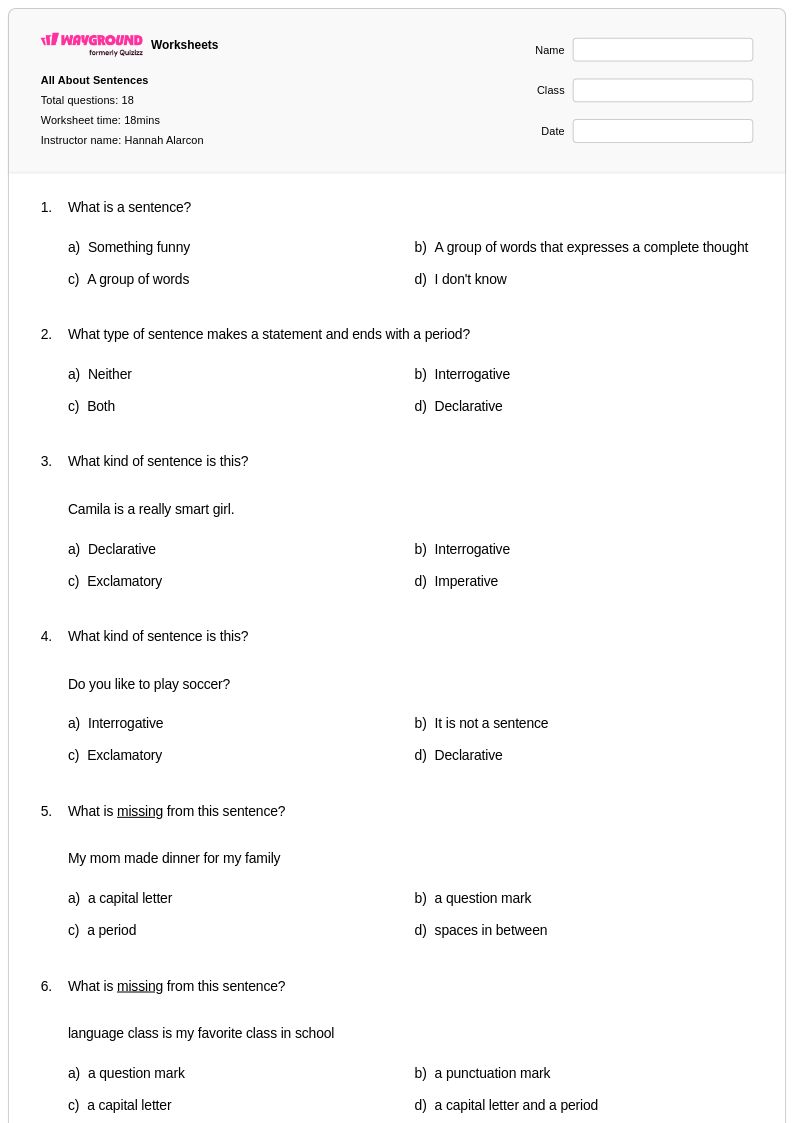
18 Q
2nd - 4th
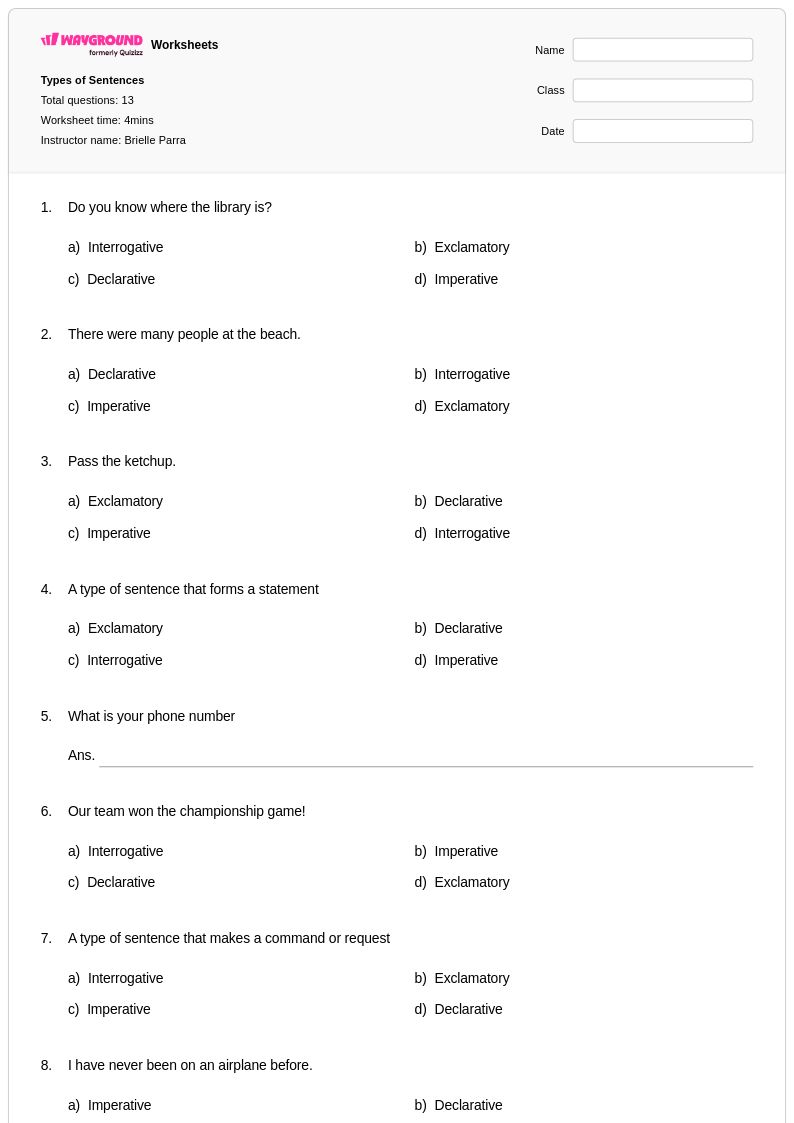
13 Q
1st - 4th

63 Q
1st - 5th
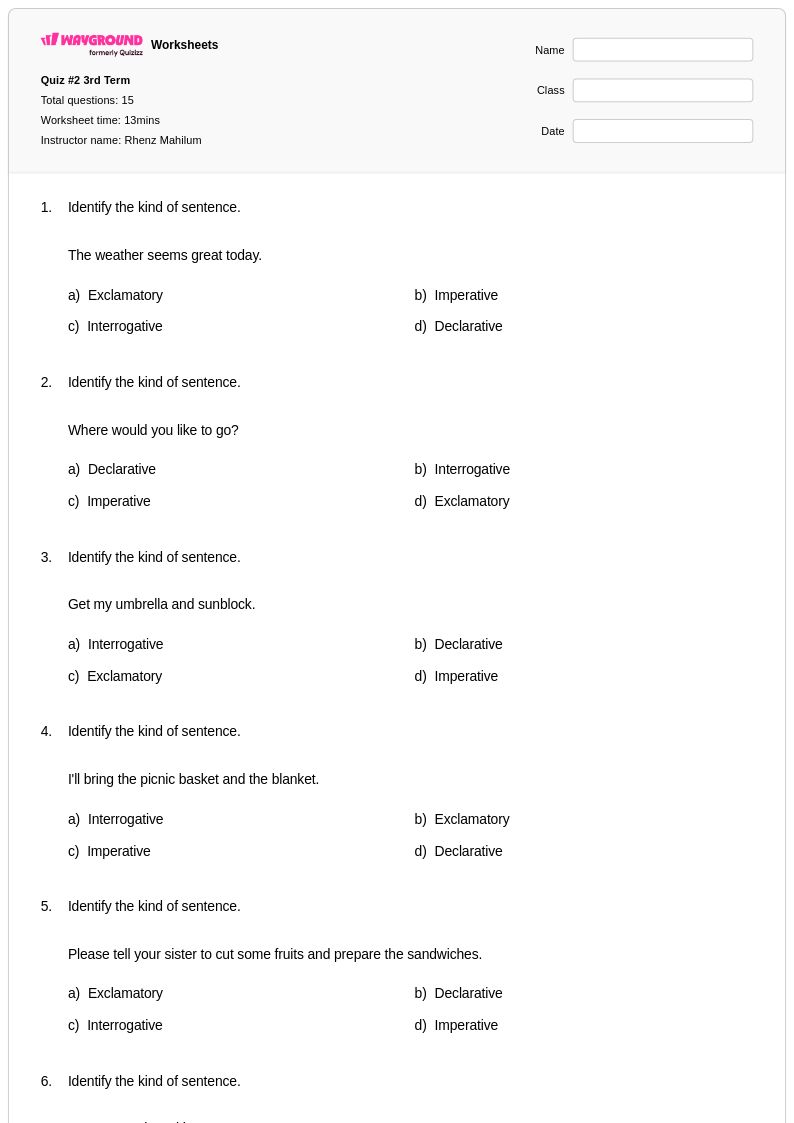
15 Q
2nd
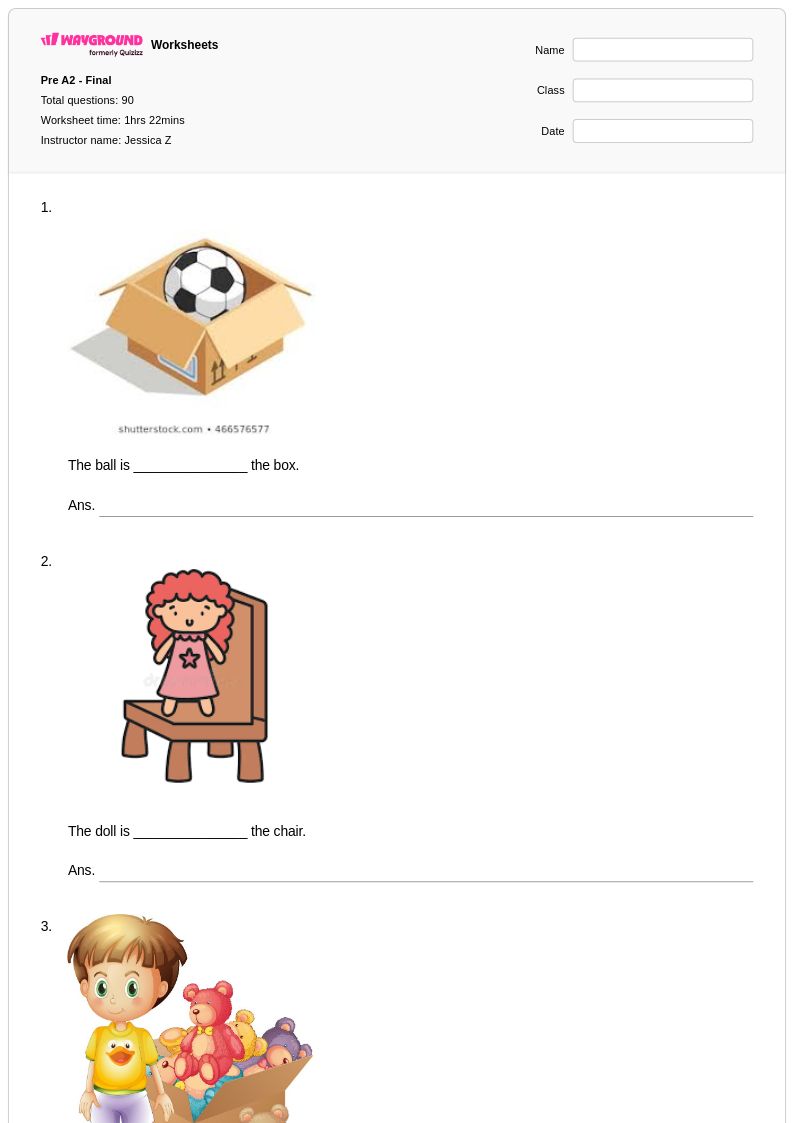
90 Q
1st - 5th
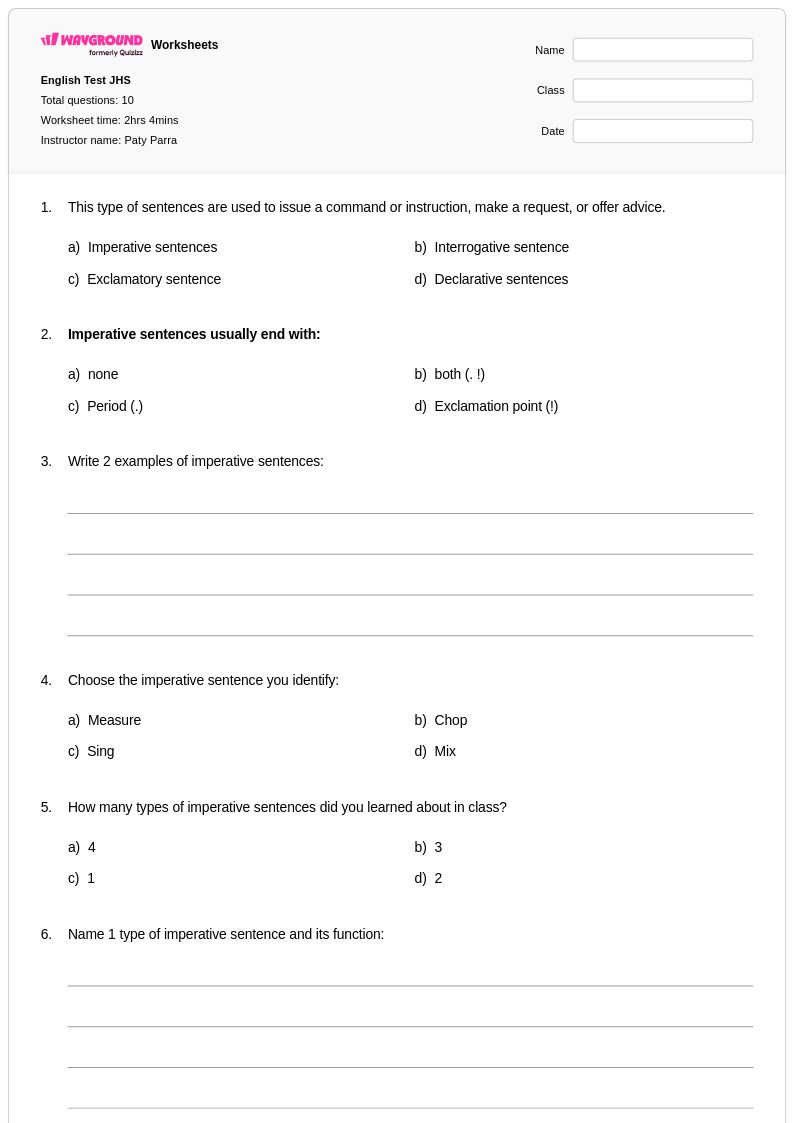
10 Q
2nd - 3rd
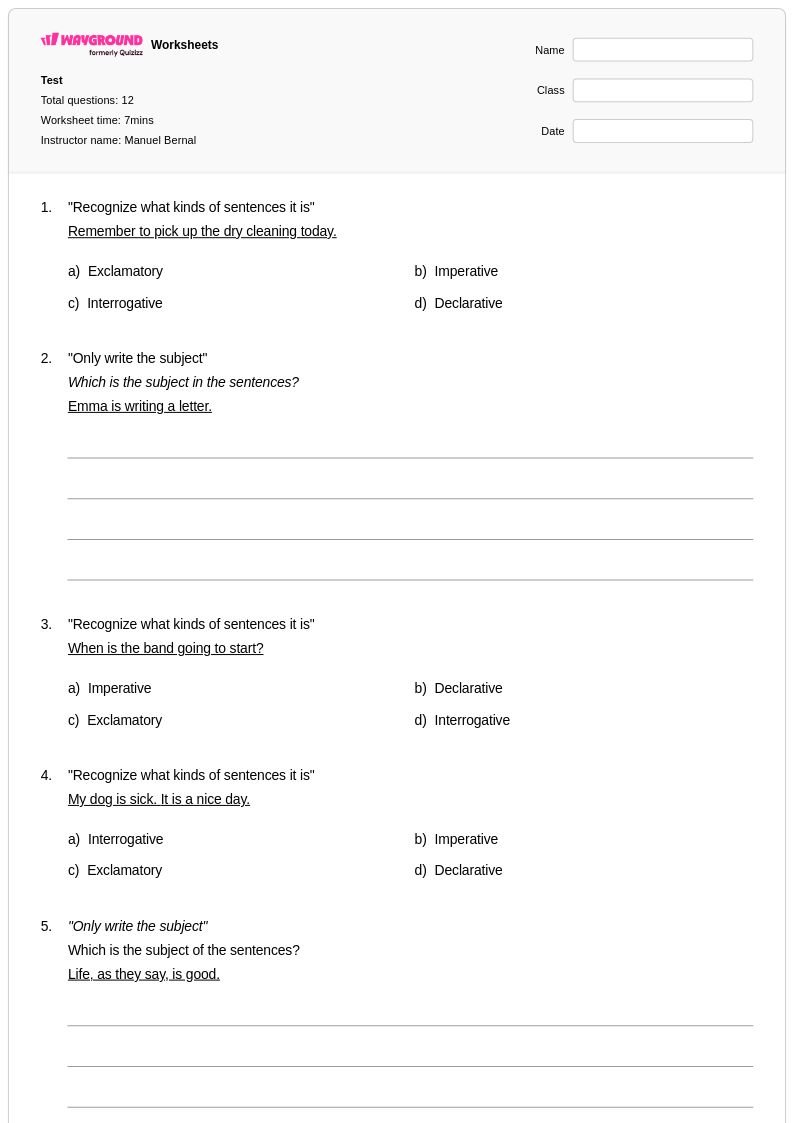
12 Q
1st - 5th
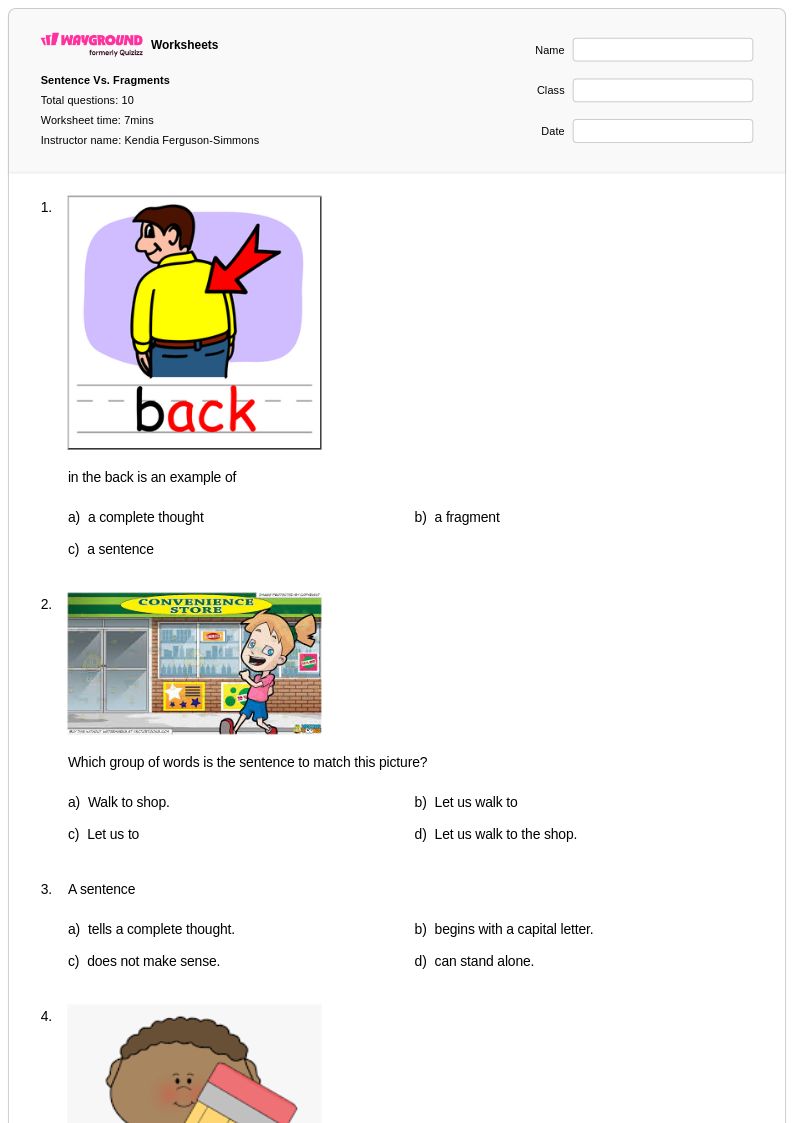
10 Q
KG - 2nd
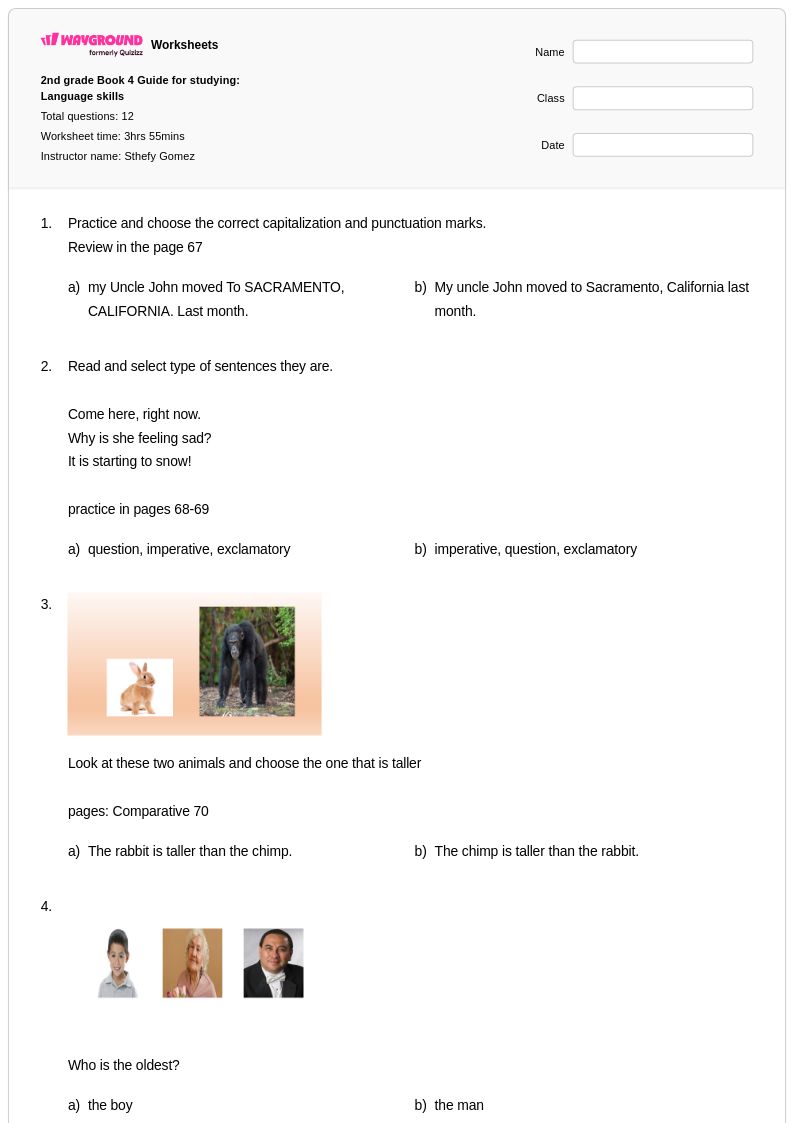
12 Q
2nd
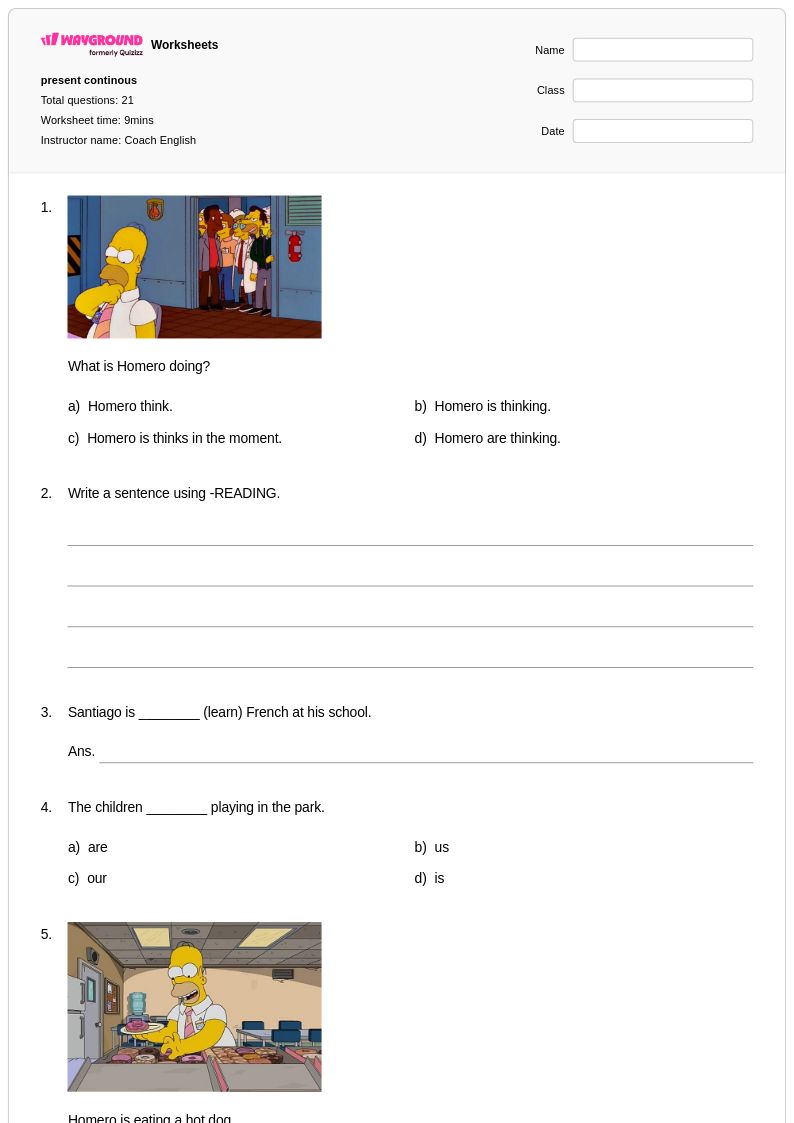
21 Q
1st - 3rd
Explore Other Subject Worksheets for year 2
Explore printable Imperative Sentences worksheets for Year 2
Year 2 imperative sentences worksheets available through Wayground (formerly Quizizz) provide young learners with essential practice in understanding and using commands, requests, and directions in their writing and speech. These carefully designed educational resources help second-grade students recognize imperative sentences as statements that tell someone to do something, strengthening their ability to identify the implied subject "you" and understand how these sentences function differently from declarative, interrogative, and exclamatory sentences. The comprehensive collection includes engaging practice problems that guide students through examples like "Close the door," "Please sit down," and "Stop running in the hallway," with accompanying answer keys that support both independent learning and teacher assessment. These free printables offer structured exercises where students can practice writing their own imperative sentences, transforming declarative statements into commands, and recognizing imperative sentences within paragraphs and stories.
Wayground (formerly Quizizz) empowers educators with millions of teacher-created imperative sentence worksheets specifically designed for Year 2 grammar instruction, featuring robust search and filtering capabilities that allow teachers to locate materials aligned with specific learning standards and classroom objectives. The platform's differentiation tools enable instructors to customize worksheet difficulty levels, ensuring that both struggling learners and advanced students receive appropriate challenges while mastering this fundamental grammar concept. Teachers can access these resources in both printable pdf formats for traditional classroom use and digital formats for interactive learning experiences, making lesson planning more efficient and responsive to diverse learning environments. These versatile worksheet collections support targeted skill practice, remediation for students who need additional support with sentence types, and enrichment activities for learners ready to explore more complex imperative sentence structures, ultimately helping educators create comprehensive grammar instruction that builds strong foundational writing skills.
FAQs
How do I teach imperative sentences to students?
What exercises help students practice imperative sentences?
What are common mistakes students make with imperative sentences?
How do I differentiate imperative sentence instruction for struggling learners?
How do I use Wayground's imperative sentences worksheets in my classroom?
How is an imperative sentence different from a declarative sentence?