
10 Q
7th - 9th
20 Q
6th - 10th
24 Q
6th - 8th
10 Q
7th - 8th
20 Q
6th - Uni
10 Q
6th - 8th
22 Q
8th
15 Q
8th - 9th
15 Q
8th
12 Q
8th
10 Q
7th - Uni
17 Q
8th
19 Q
4th - Uni
6 Q
8th - Uni
12 Q
8th
19 Q
4th - 9th
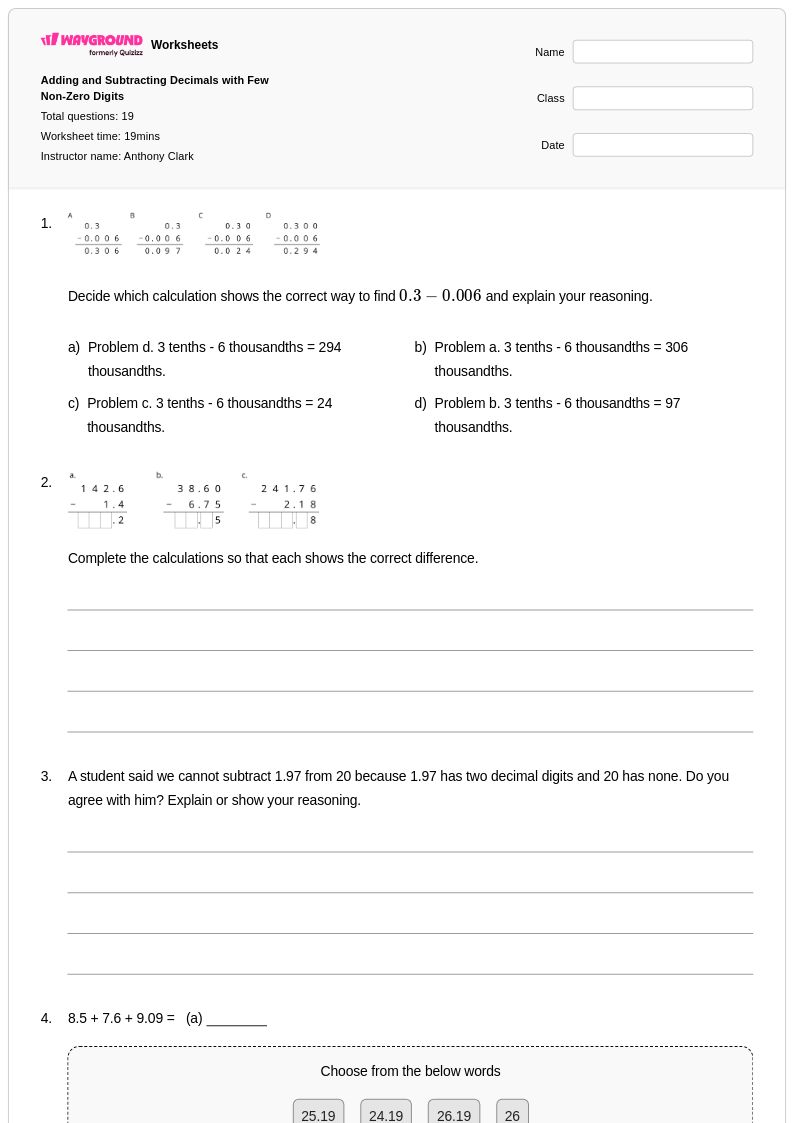
19 Q
5th - Uni
13 Q
1st - PD
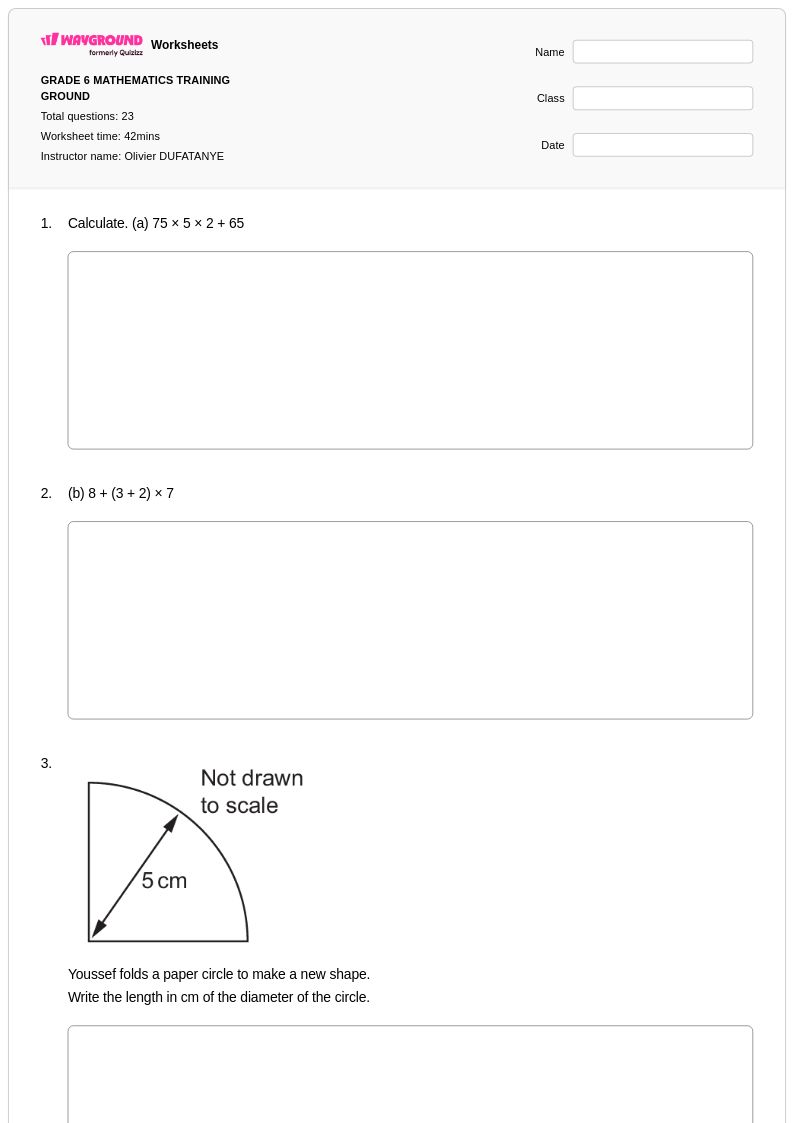
23 Q
6th - Uni
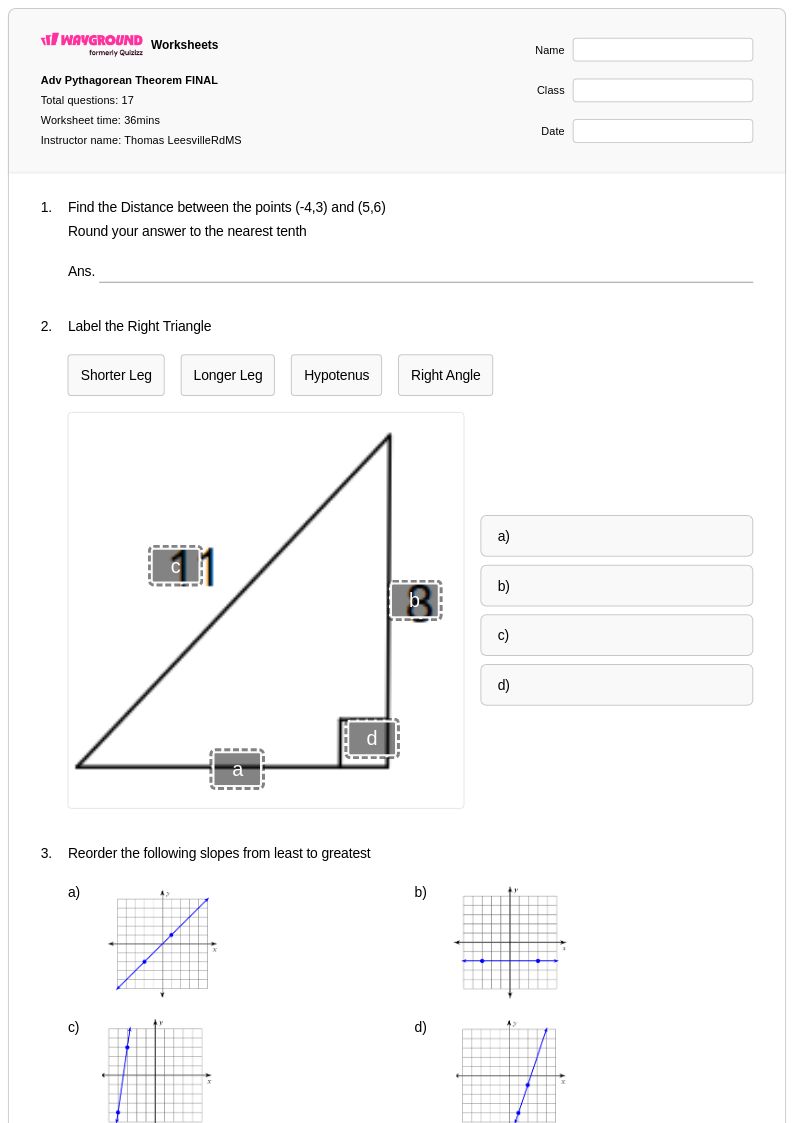
17 Q
8th

20 Q
2nd - Uni
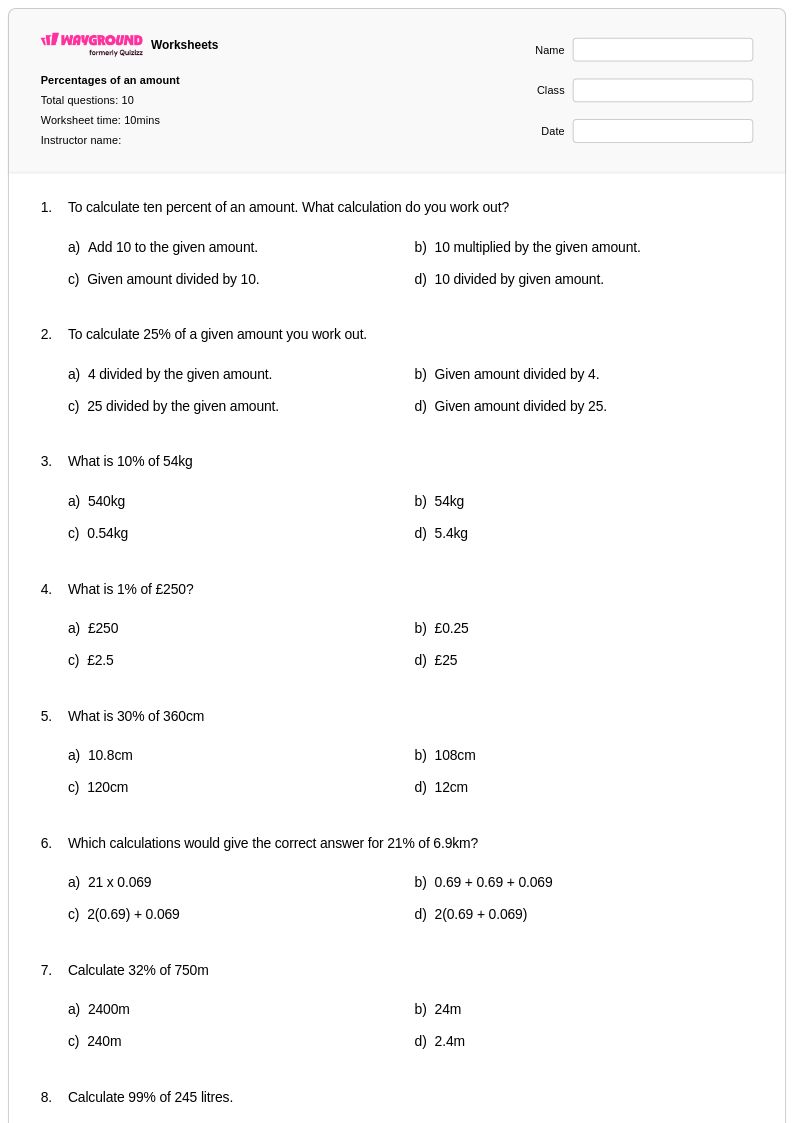
10 Q
5th - 8th
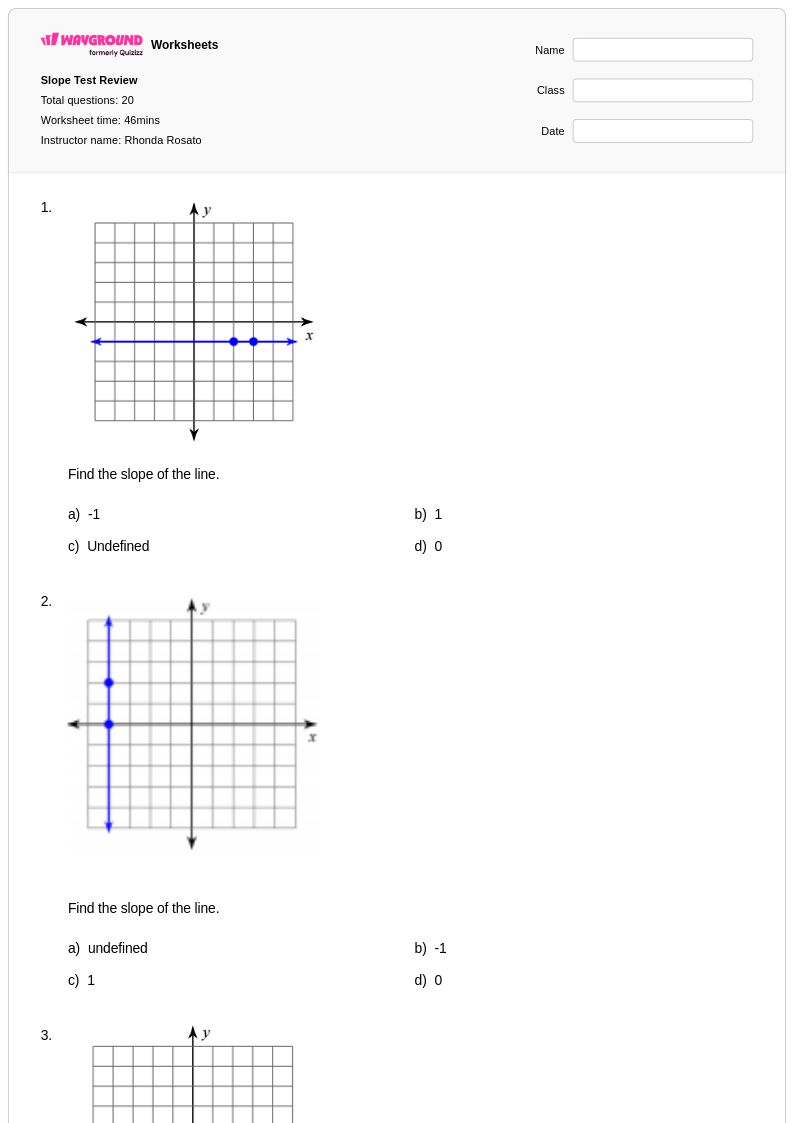
20 Q
8th
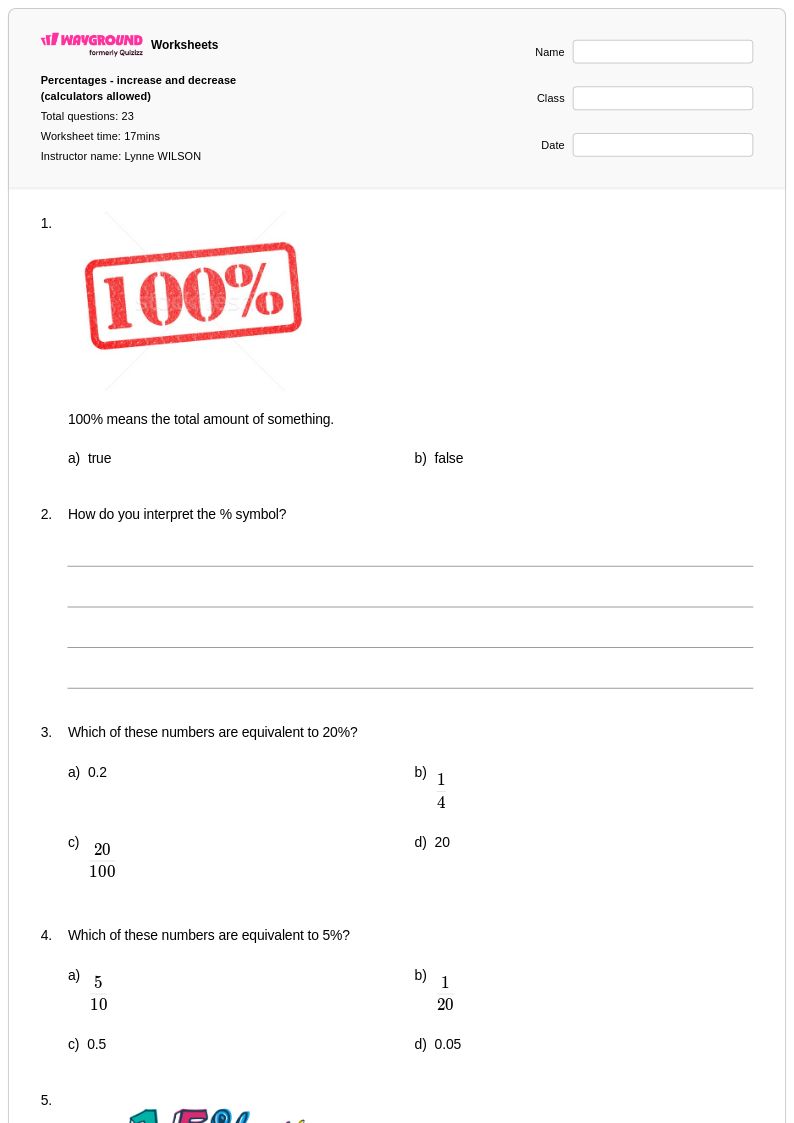
23 Q
8th
Explore Other Subject Worksheets for year 8
Explore printable Income Calculation worksheets for Year 8
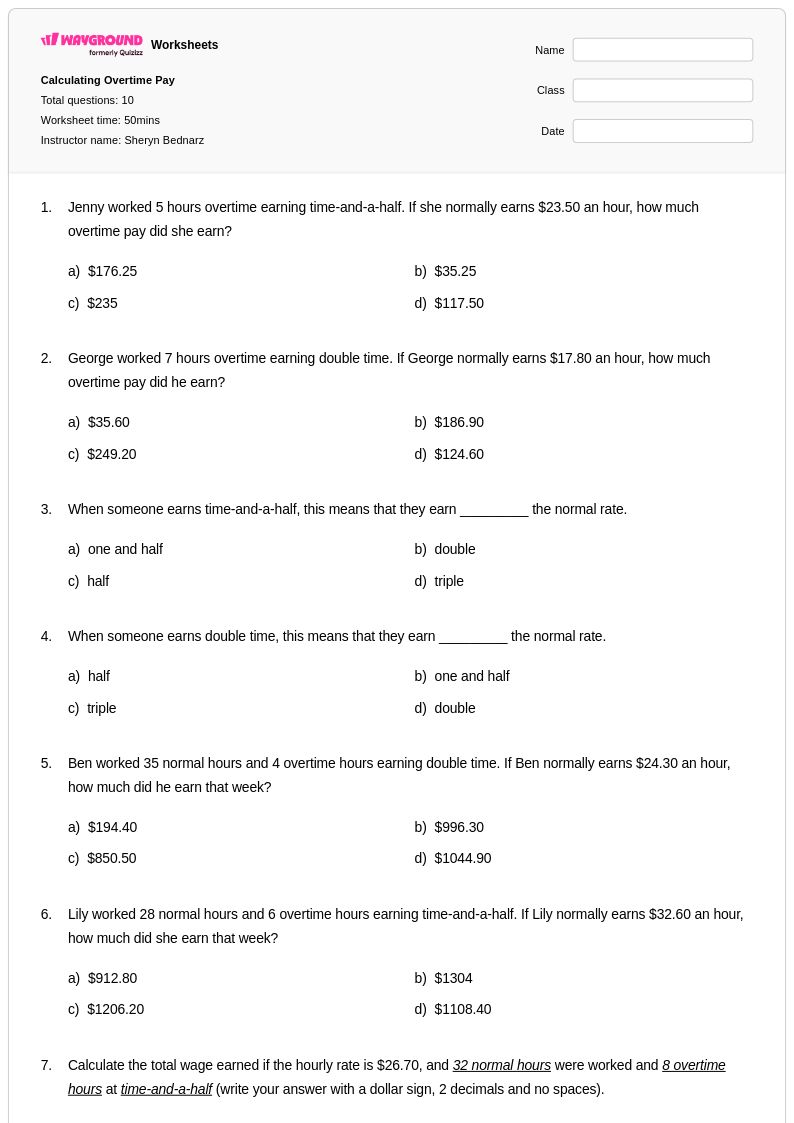
Income calculation worksheets for Year 8 mathematics provide essential practice for students developing financial literacy skills through hands-on problem solving. These comprehensive resources from Wayground (formerly Quizizz) focus on teaching students how to calculate various forms of income including hourly wages, salary computations, commission structures, and overtime pay scenarios. Students work through practice problems that mirror real-world situations, learning to determine gross pay, net pay, and understand deductions while strengthening their mathematical reasoning and decimal operations. Each worksheet collection includes detailed answer keys and is available as free printables in convenient pdf format, allowing students to master income calculation concepts through repeated practice and self-assessment.
Wayground (formerly Quizizz) empowers educators with millions of teacher-created income calculation resources specifically designed for Year 8 financial literacy instruction. The platform's robust search and filtering capabilities enable teachers to quickly locate worksheets aligned with curriculum standards and customize materials to meet diverse learning needs through built-in differentiation tools. These flexible resources are available in both printable and digital formats, including downloadable pdfs, making them ideal for classroom instruction, homework assignments, remediation support, and enrichment activities. Teachers can seamlessly integrate these income calculation worksheets into their lesson planning to provide targeted skill practice, assess student understanding, and ensure all learners develop the mathematical competencies necessary for real-world financial decision making.
FAQs
What new income concepts are introduced in 8th grade?
How can I teach complex income scenarios like overtime pay?
What kinds of practice problems are suitable for 8th graders learning about income?
Where do 8th graders typically get stuck when calculating income?
How can I use this 8th-grade income worksheet in my classroom?
How can I differentiate this topic for an 8th-grade class?