Free Printable Informational Stories and Texts Worksheets for Year 12
Enhance Year 12 students' comprehension of informational stories and texts with Wayground's collection of free worksheets, printables, and PDFs featuring practice problems and answer keys to develop critical reading and analysis skills.
Explore printable Informational Stories and Texts worksheets for Year 12
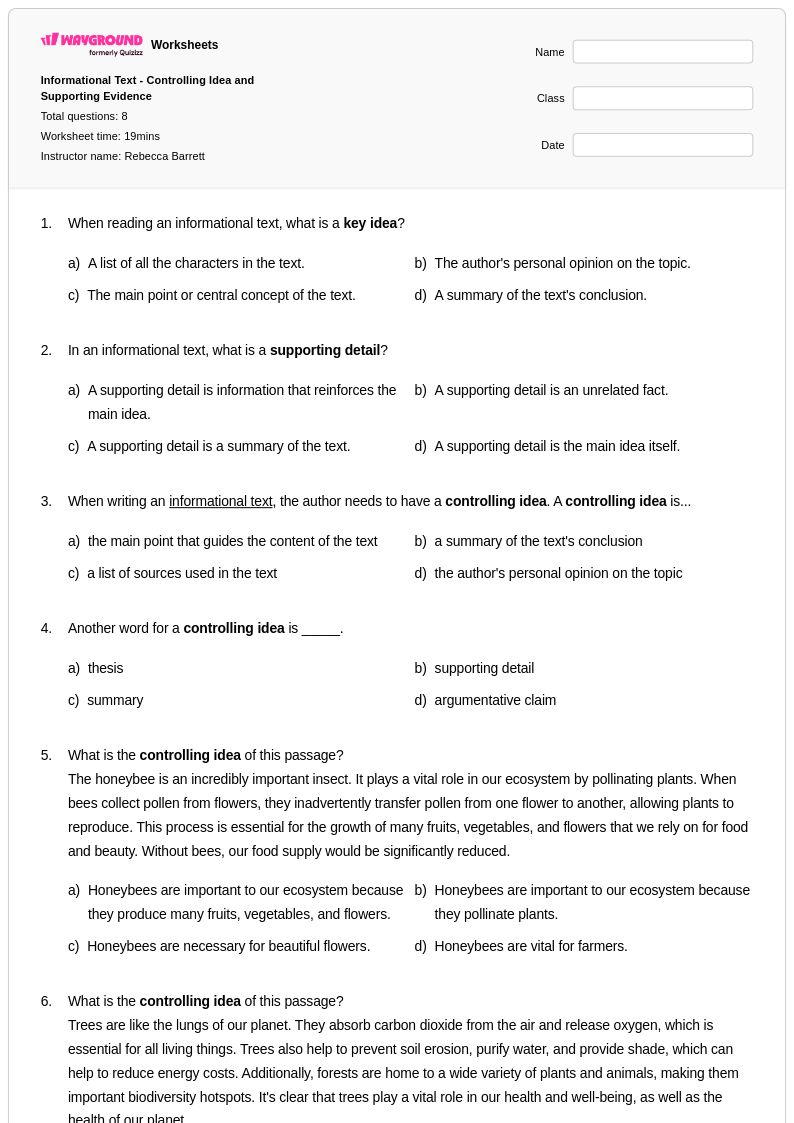
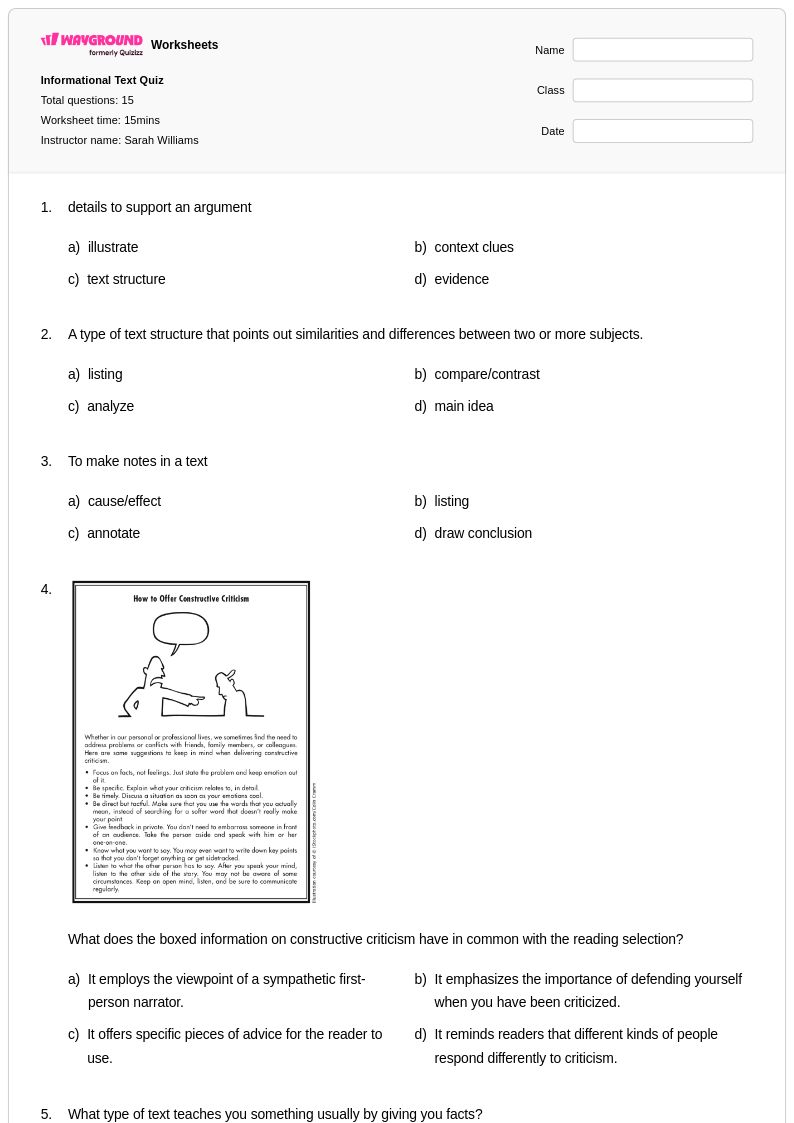
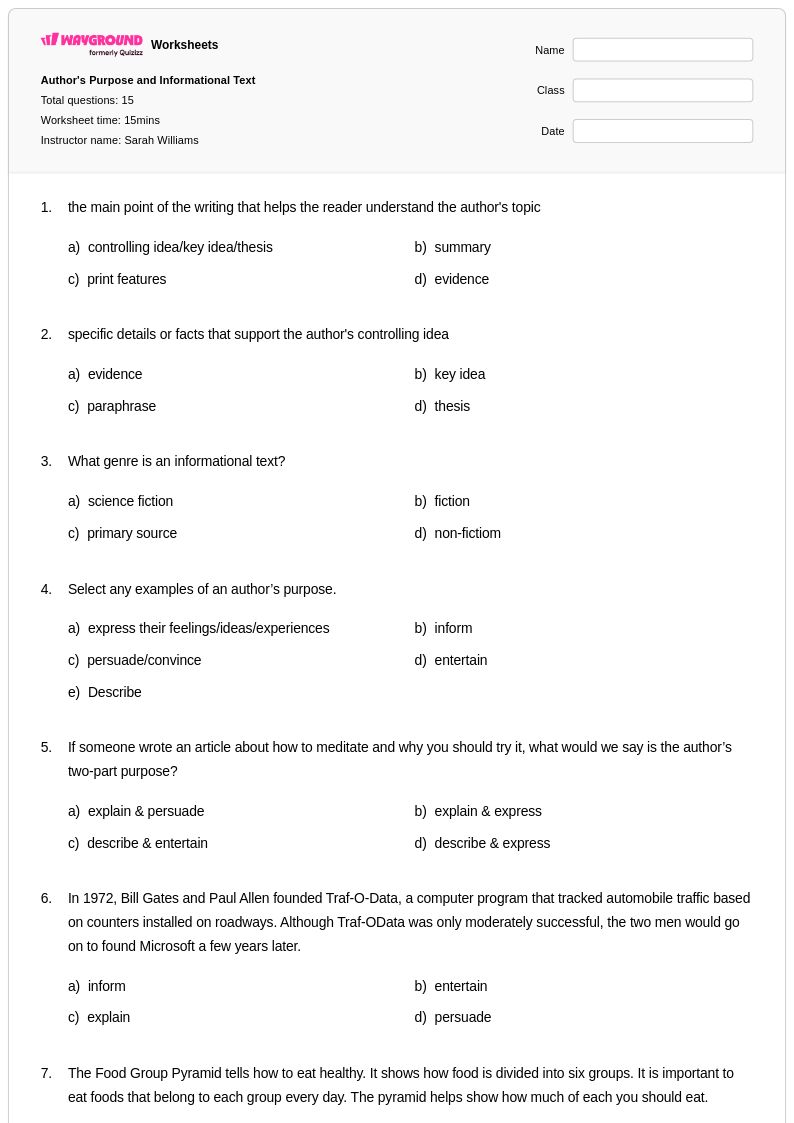
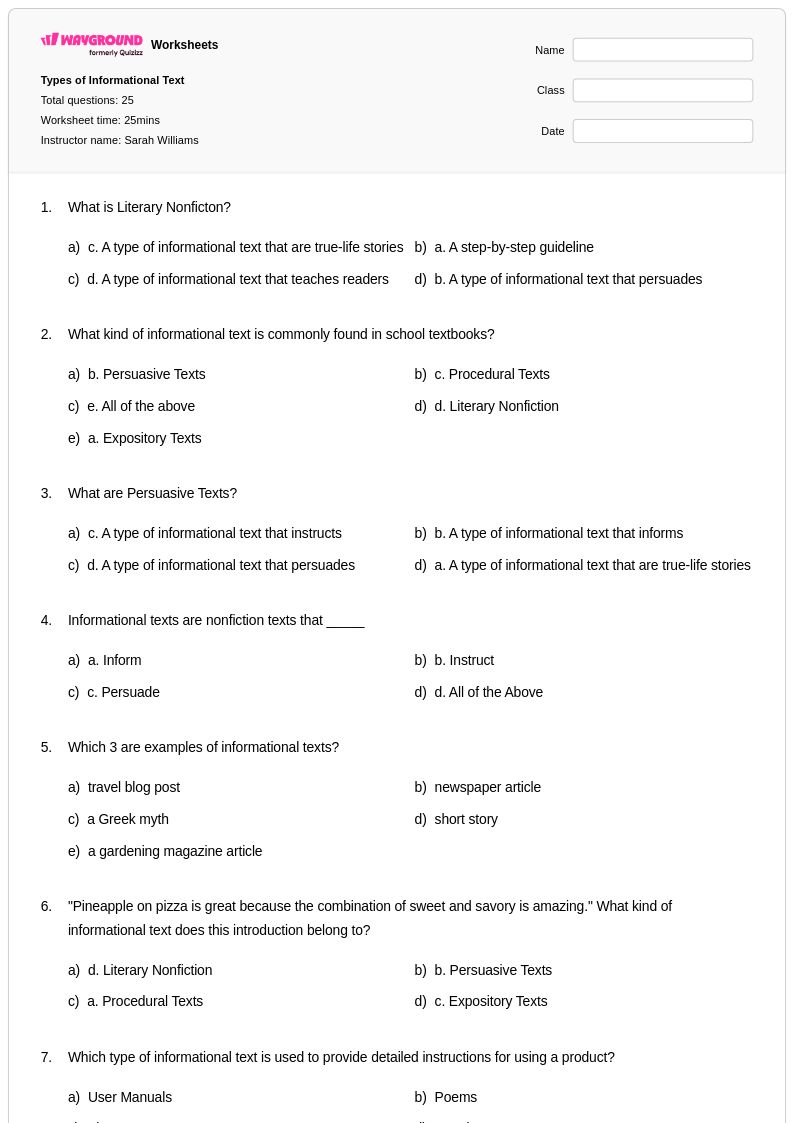
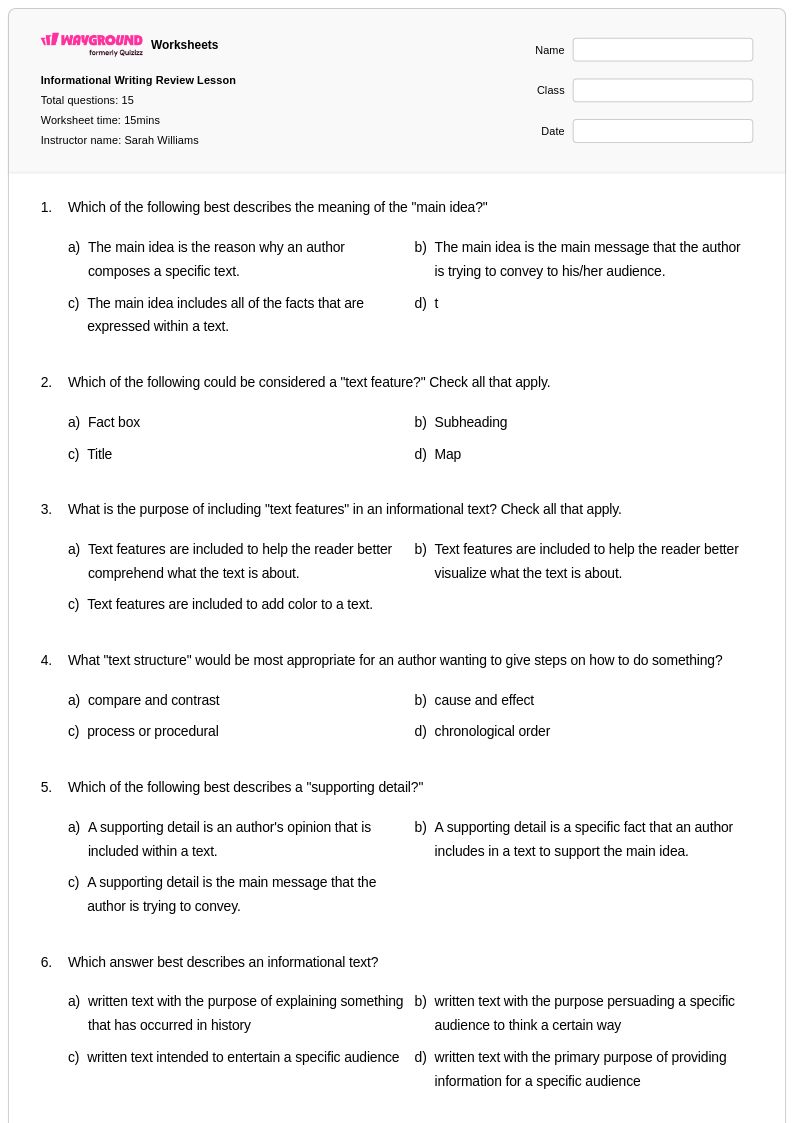
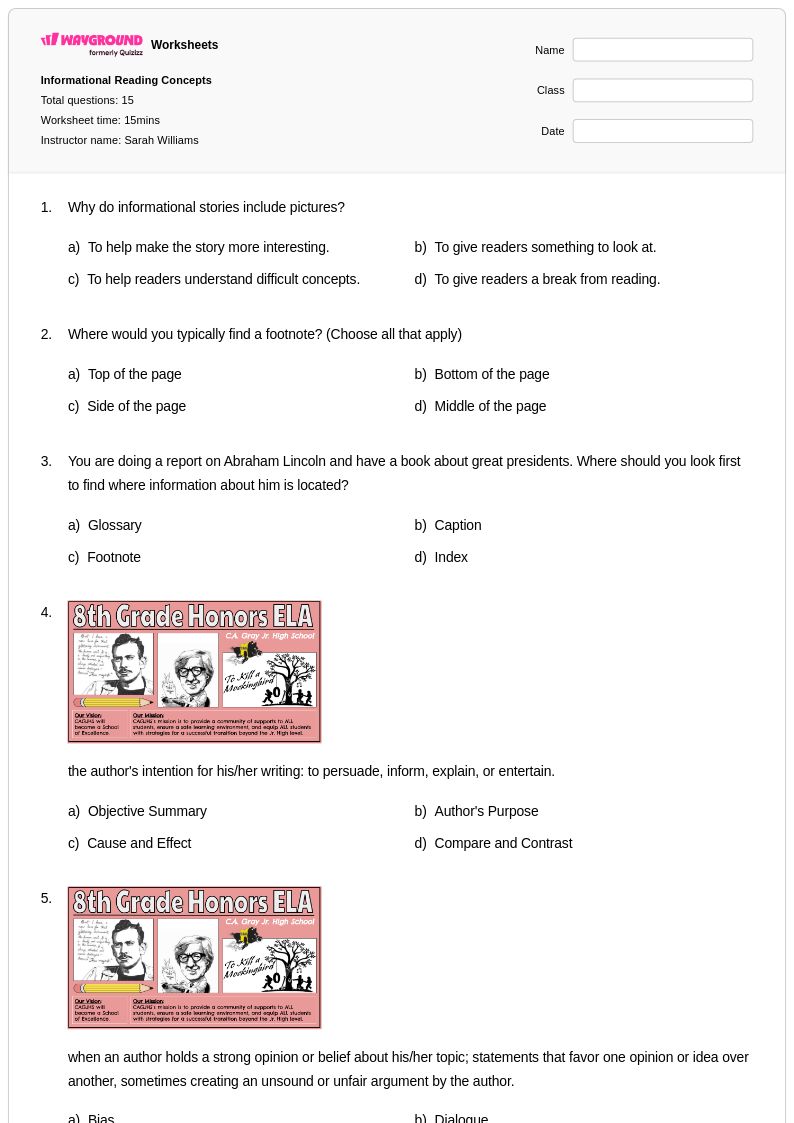
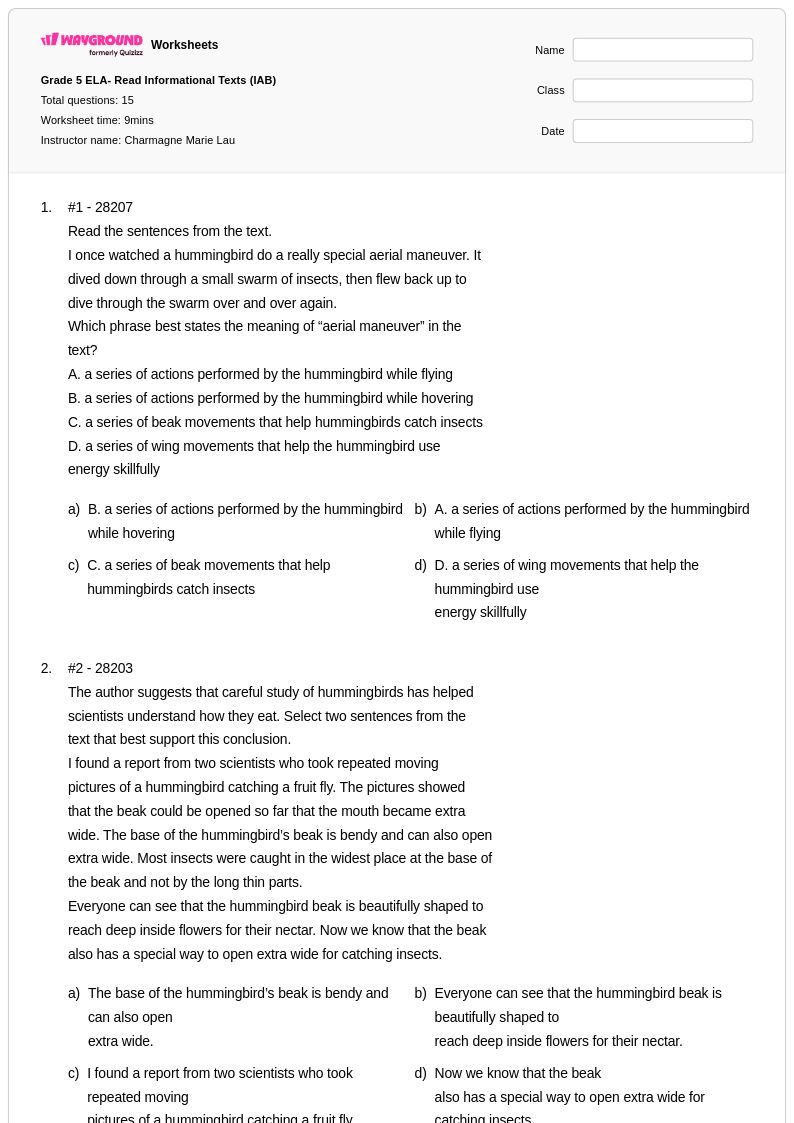
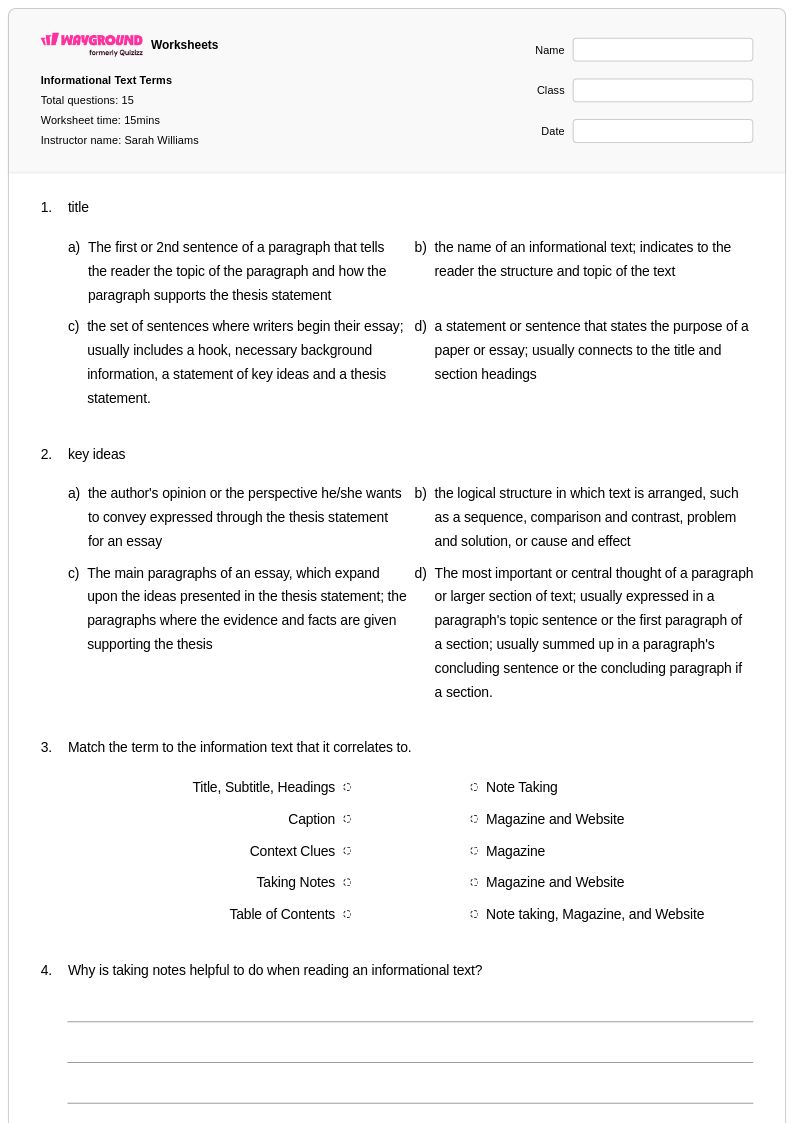
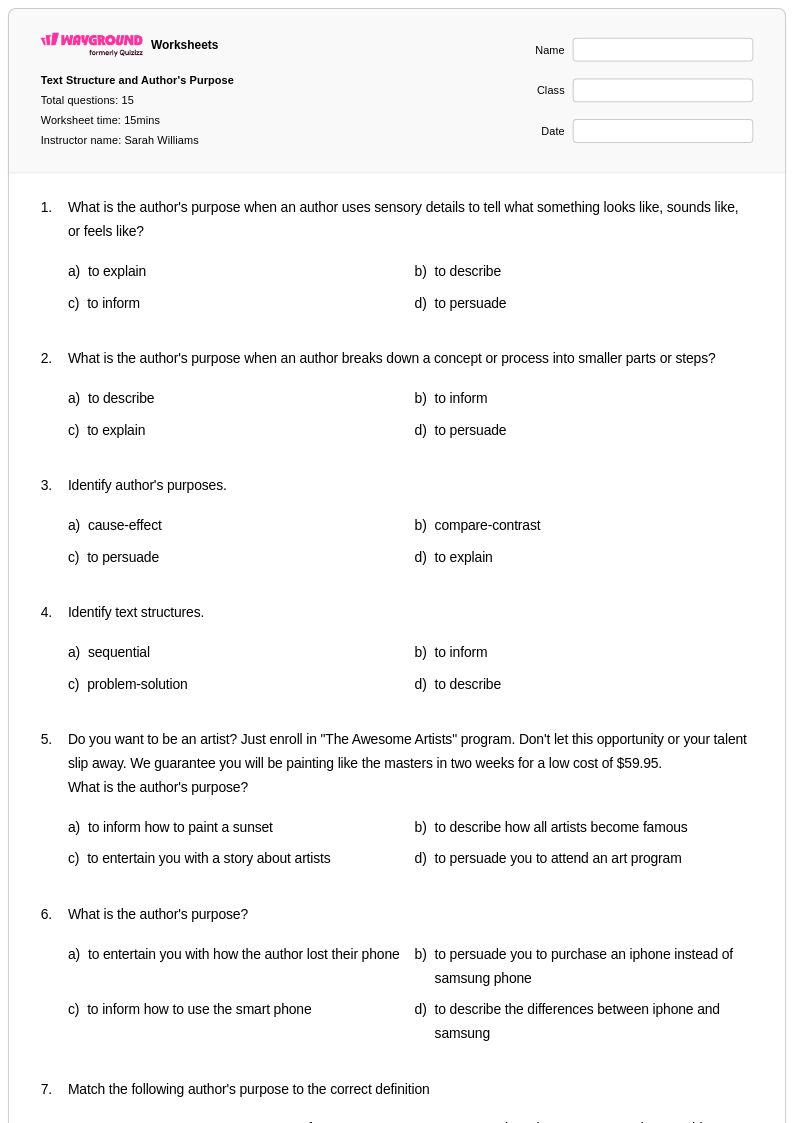
Year 12 informational stories and texts worksheets available through Wayground provide advanced practice with analyzing, interpreting, and evaluating complex nonfiction materials that prepare students for college and career success. These comprehensive worksheets strengthen critical reading skills including identifying author's purpose, evaluating evidence and reasoning, analyzing text structure and organizational patterns, distinguishing between fact and opinion, and synthesizing information across multiple sources. Students engage with diverse informational formats such as scientific articles, historical documents, technical manuals, research studies, and multimedia presentations while developing sophisticated literacy competencies. Each worksheet includes detailed answer keys and practice problems designed to build analytical thinking, and the free printables offer structured opportunities for students to demonstrate mastery of informational text analysis at the twelfth-grade level.
Wayground supports English teachers with an extensive collection of teacher-created resources spanning millions of informational text worksheets that can be easily searched and filtered by specific skills, standards alignment, and difficulty levels. The platform's differentiation tools enable educators to customize materials for diverse learning needs, while flexible formatting options provide both printable pdf versions and interactive digital alternatives suitable for various classroom environments. These comprehensive worksheet collections facilitate efficient lesson planning by offering ready-to-use materials for skill practice, targeted remediation for students struggling with informational text comprehension, and enrichment activities for advanced learners ready to tackle more sophisticated analytical tasks. Teachers can seamlessly integrate these resources into their curriculum to ensure students develop the critical reading abilities essential for success in academic and professional contexts.
FAQs
How do I teach informational text structures to students?
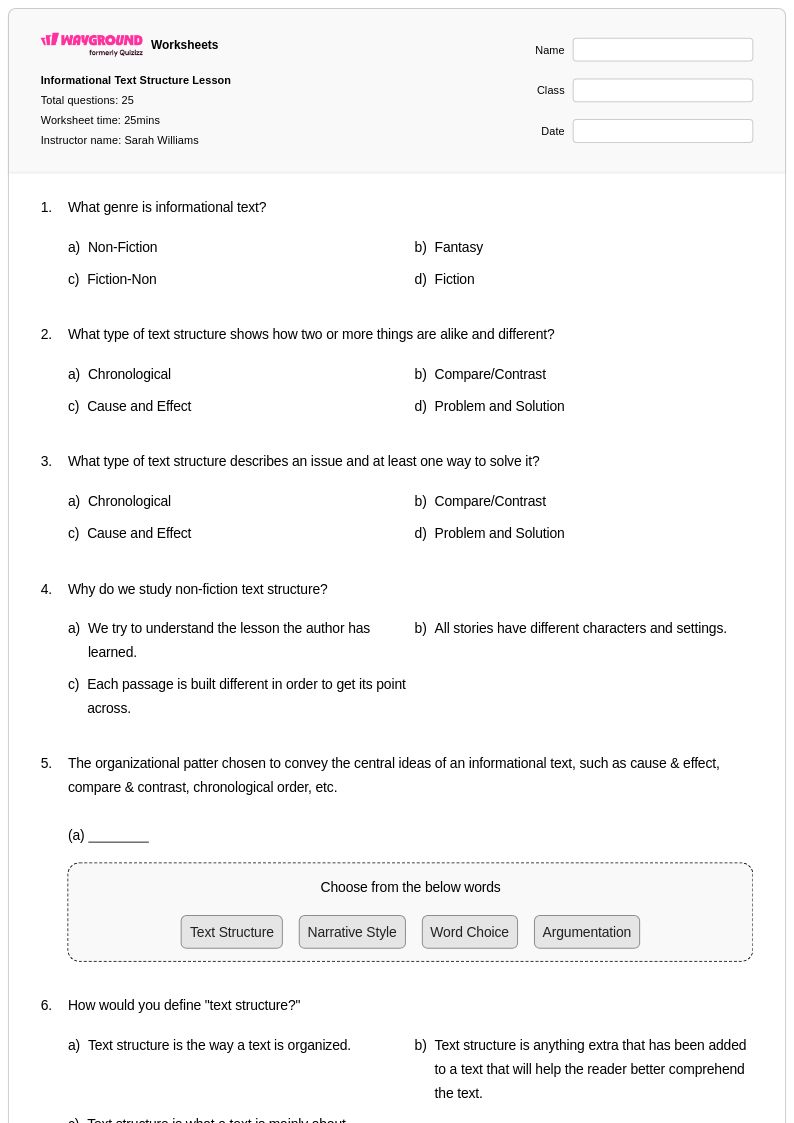
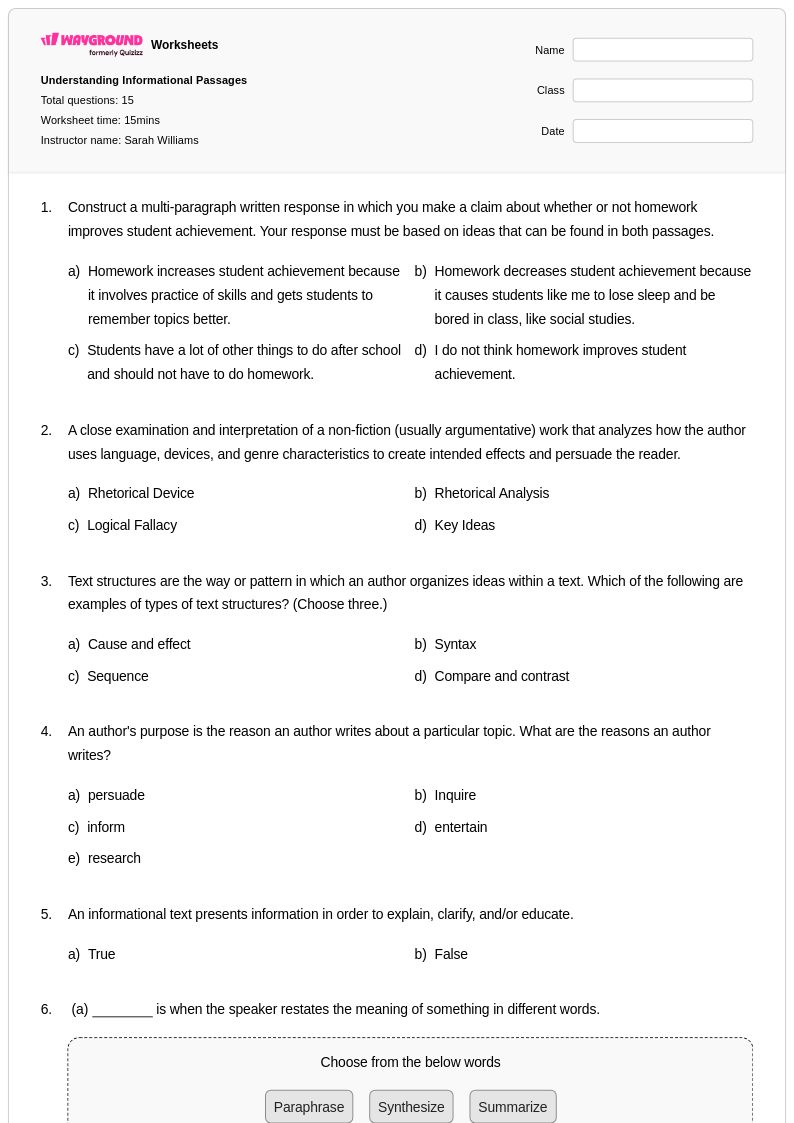
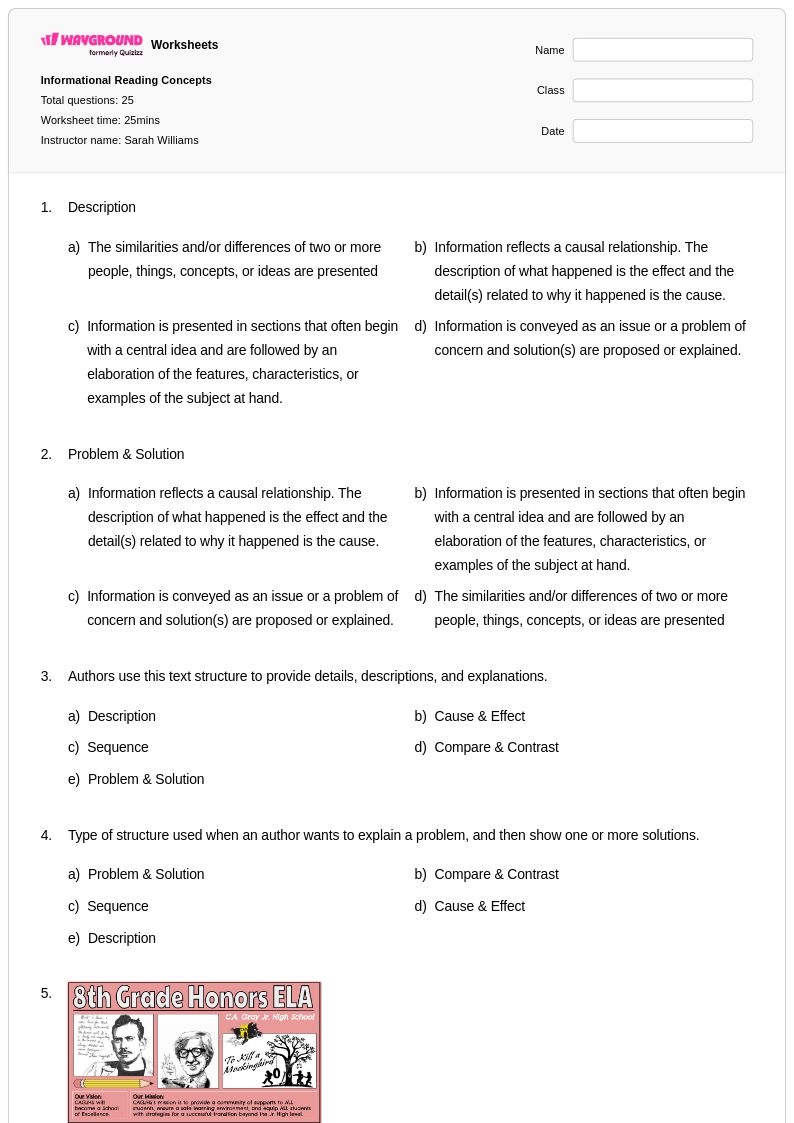
Start by explicitly modeling the five core structures — description, sequence, compare-and-contrast, cause-and-effect, and problem-solution — using short, familiar nonfiction passages. Teach students to identify signal words associated with each structure, such as 'because' and 'as a result' for cause-and-effect, or 'similarly' and 'however' for compare-and-contrast. Graphic organizers that visually map each structure help students internalize the patterns before applying them independently to longer texts.
What exercises help students practice nonfiction reading comprehension?
Close reading exercises that require students to annotate a passage for main idea, supporting details, and author's purpose are among the most effective practice formats for informational texts. Pairing these with structured graphic organizers reinforces how ideas are organized within the text. Practice problems that ask students to distinguish fact from opinion or evaluate the strength of evidence build the analytical skills most commonly assessed on standardized reading tests.
What mistakes do students commonly make when reading informational texts?
One of the most frequent errors is confusing the topic of a passage with its main idea — students often restate what the text is about rather than identifying the central claim the author is making. Students also struggle to distinguish supporting details from incidental information, leading to weak summaries and inaccurate responses to text-dependent questions. Targeted practice identifying how details connect back to a main idea directly addresses both of these patterns.
How can I help struggling readers access informational texts?
Breaking longer passages into shorter sections and pre-teaching content-specific vocabulary significantly lowers the barrier for struggling readers engaging with nonfiction. Providing text with clear headings, bolded terms, and visual supports gives students structural cues to navigate meaning. On Wayground, teachers can enable the Read Aloud accommodation for individual students, which provides audio reading of questions and content, and can also reduce answer choices to decrease cognitive load without altering the assignment for the rest of the class.
How do I use Wayground's informational texts worksheets in my classroom?
Wayground's informational stories and texts worksheets are available as printable PDFs for traditional classroom use and in digital formats for technology-integrated or remote learning environments. Teachers can also host any worksheet as an interactive quiz directly on Wayground, allowing for real-time student responses and built-in progress tracking. The worksheets include complete answer keys, making them practical for independent practice, homework, or small-group instruction without requiring additional teacher preparation.
How do I teach students to identify an author's purpose in informational writing?
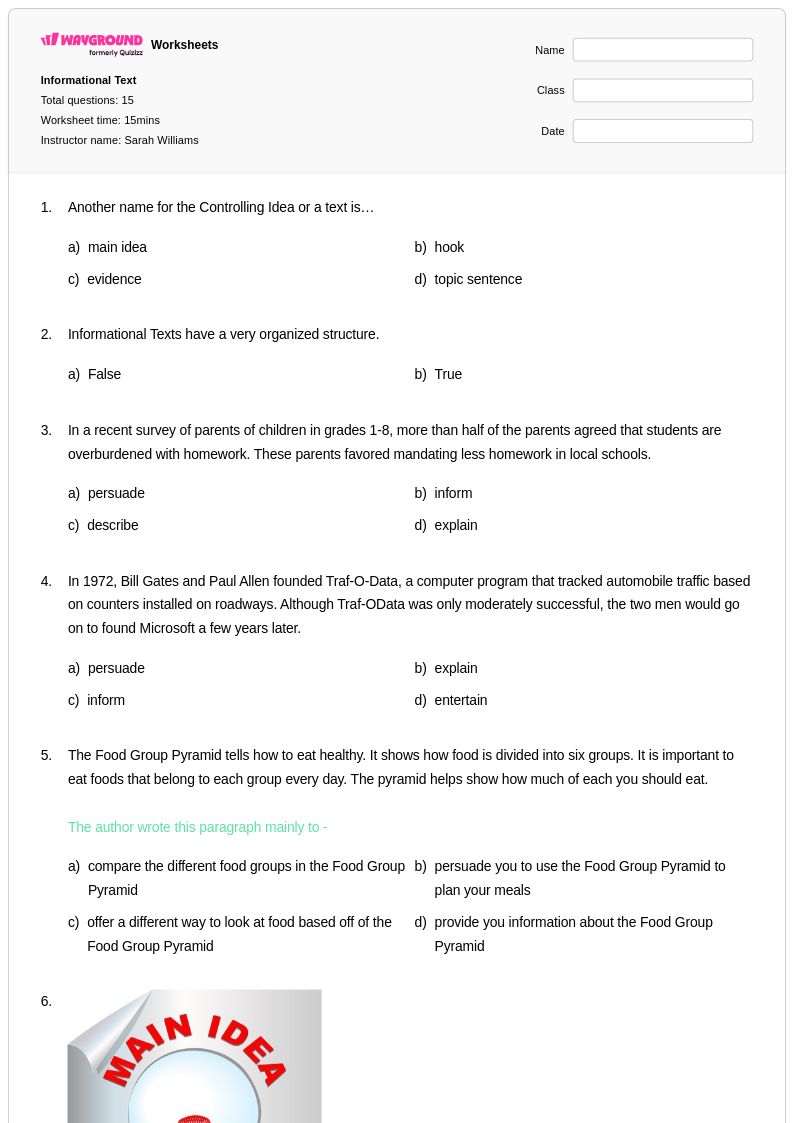
Teach students the PIE framework — Persuade, Inform, Entertain — as a starting point, then push them to be more specific by asking what evidence in the text supports their choice. Comparing two passages on the same topic written for different purposes helps students see how word choice, tone, and structure shift depending on the author's goal. Regular practice with a variety of informational genres, including science articles, historical accounts, and procedural texts, builds the flexibility students need to apply this skill across contexts.