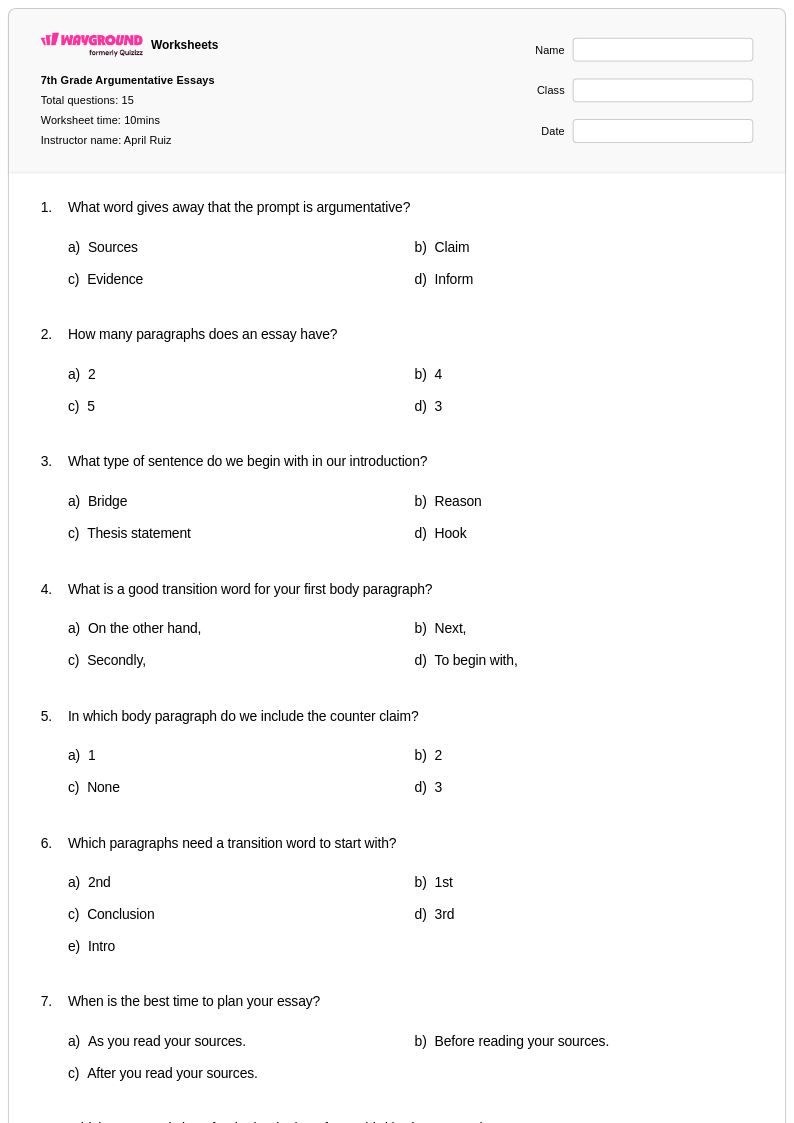
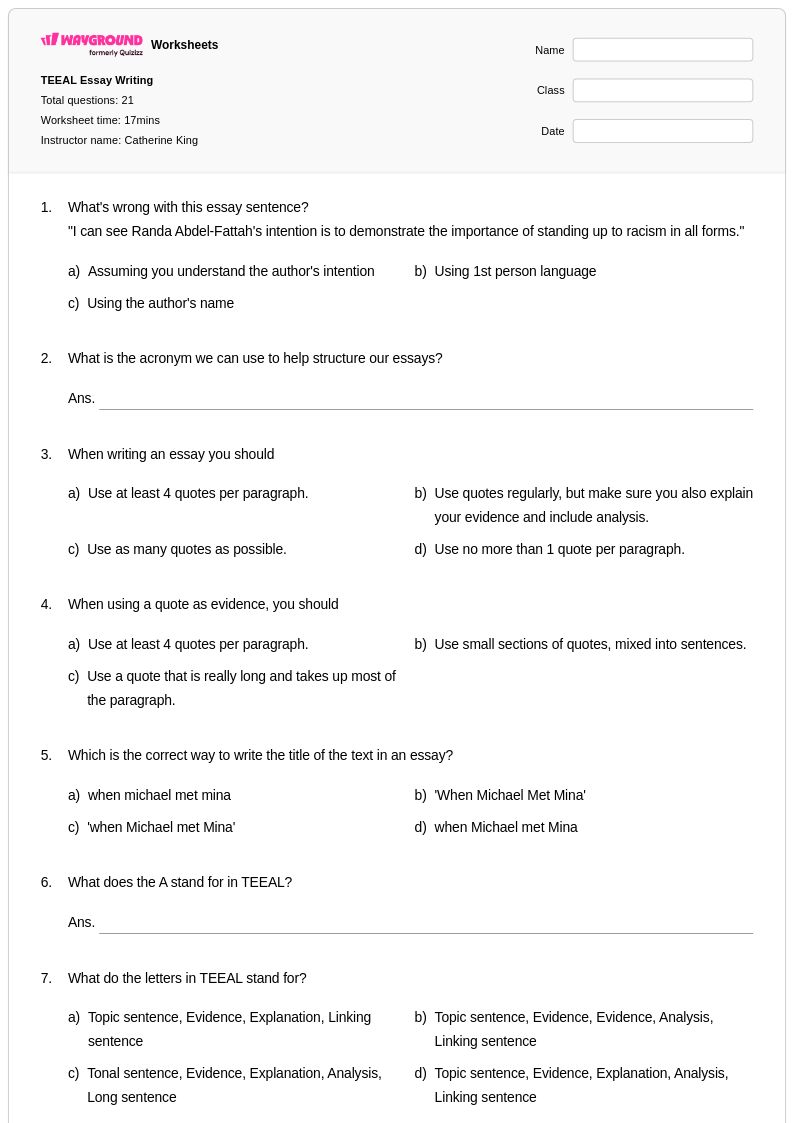
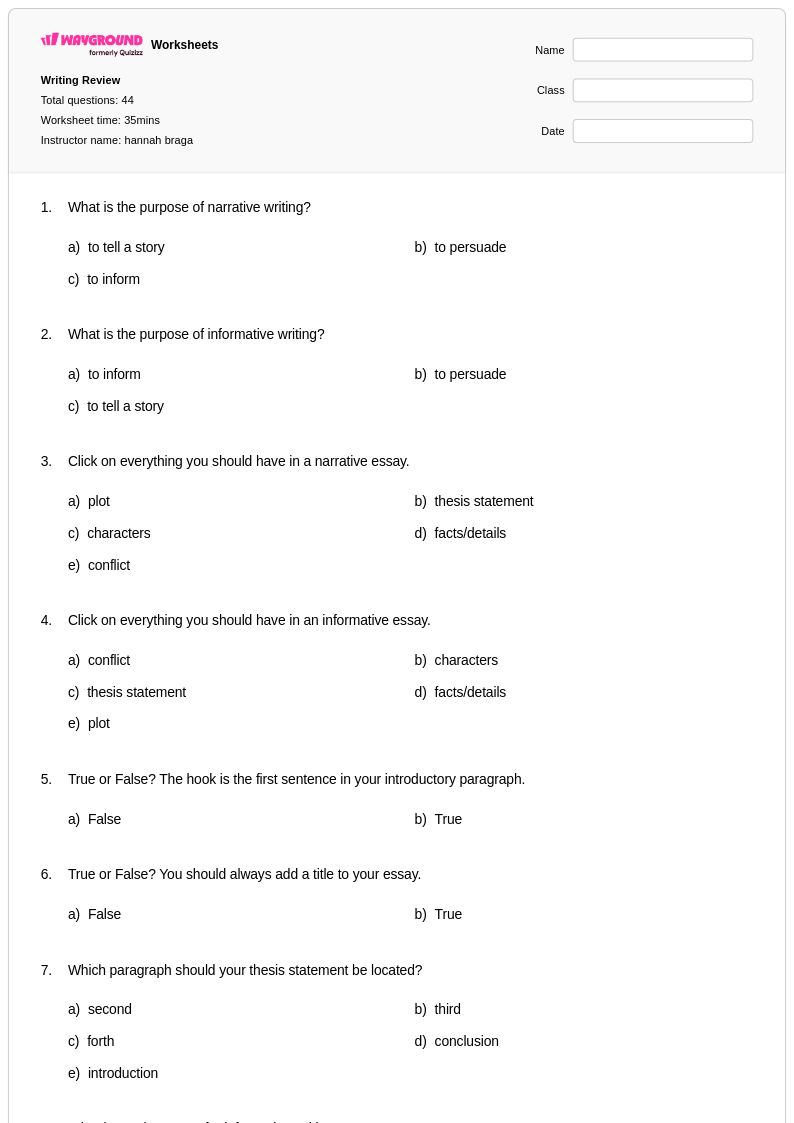
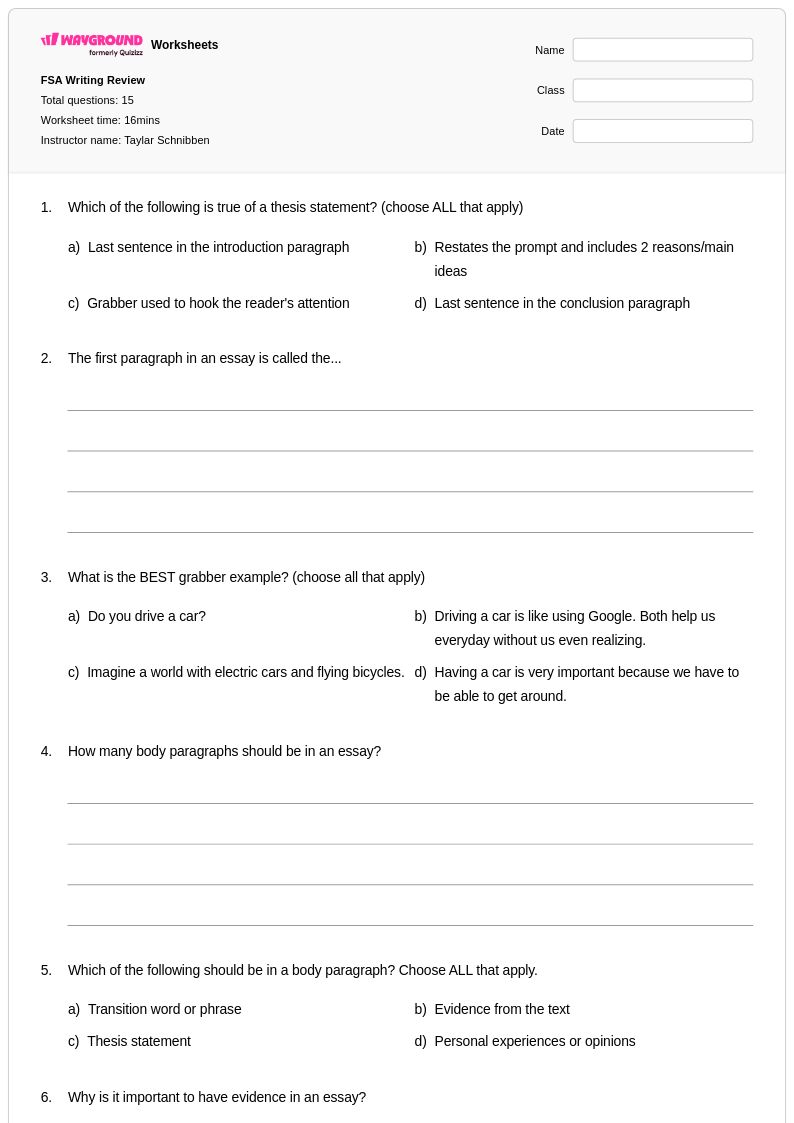
Free Printable Informative Essay Structure Worksheets for Year 7
Year 7 informative essay structure worksheets from Wayground help students master organizational techniques through engaging printables and practice problems, complete with answer keys and free PDF resources.
Explore printable Informative Essay Structure worksheets for Year 7
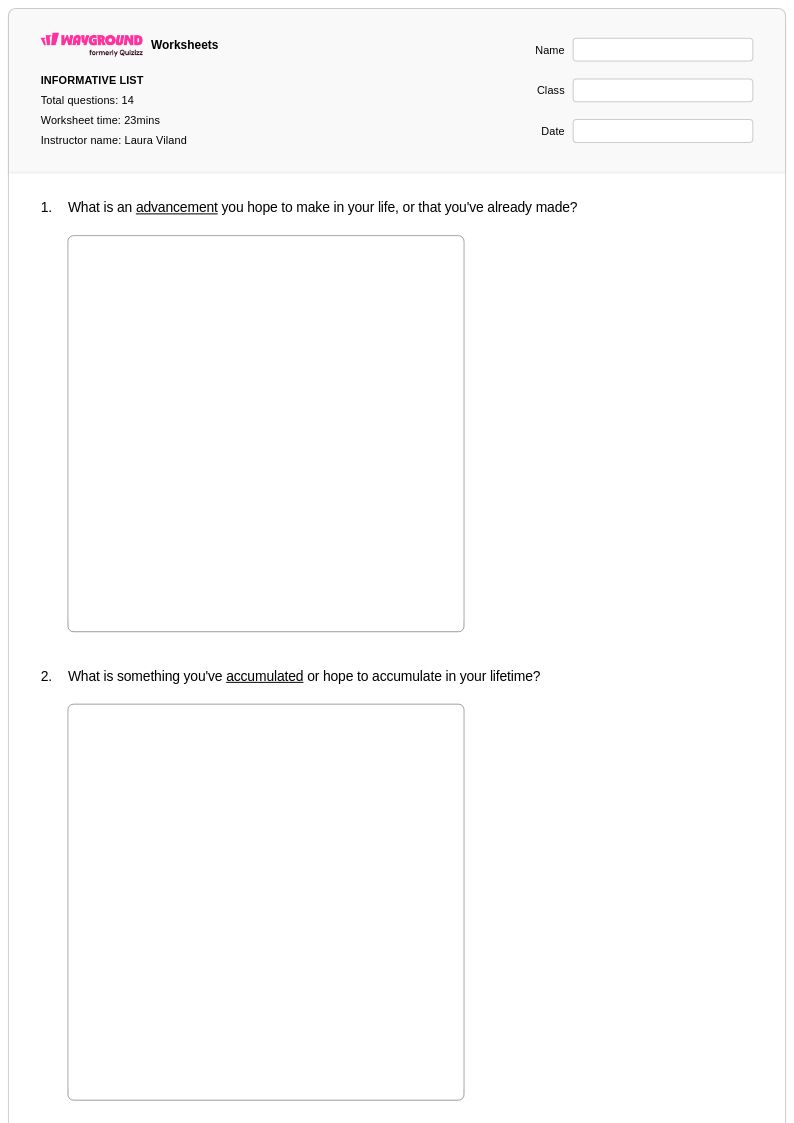
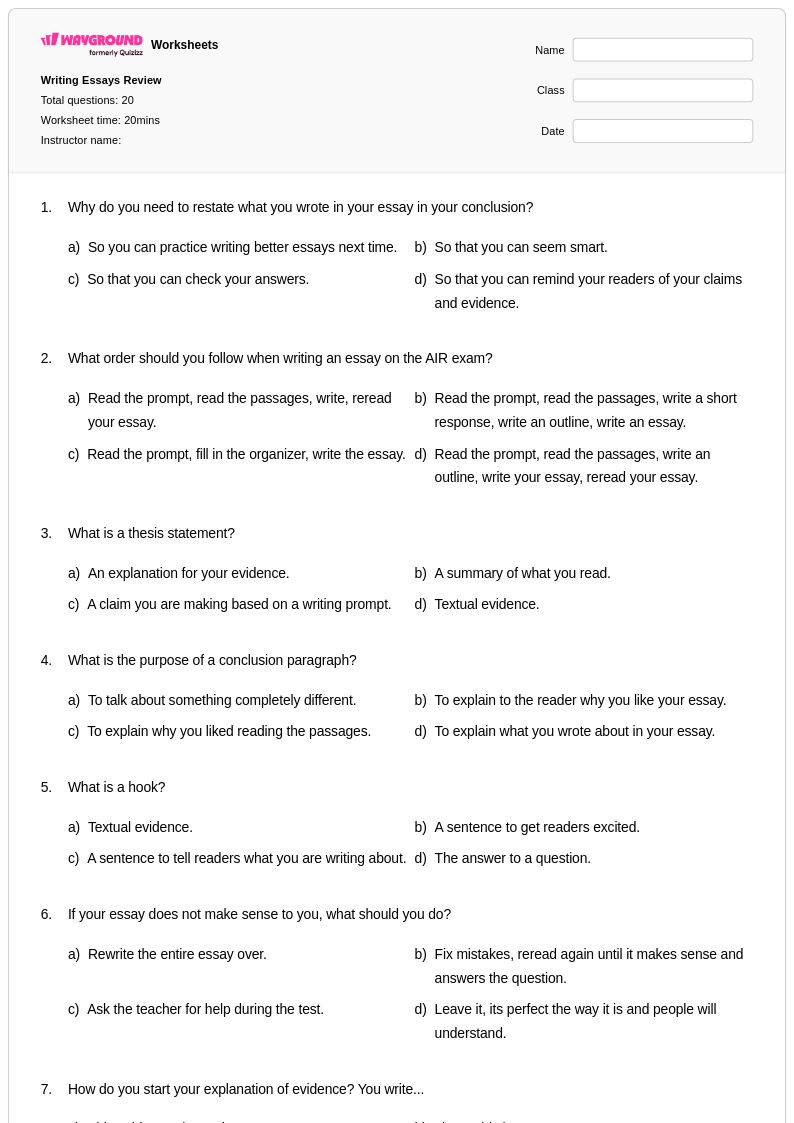
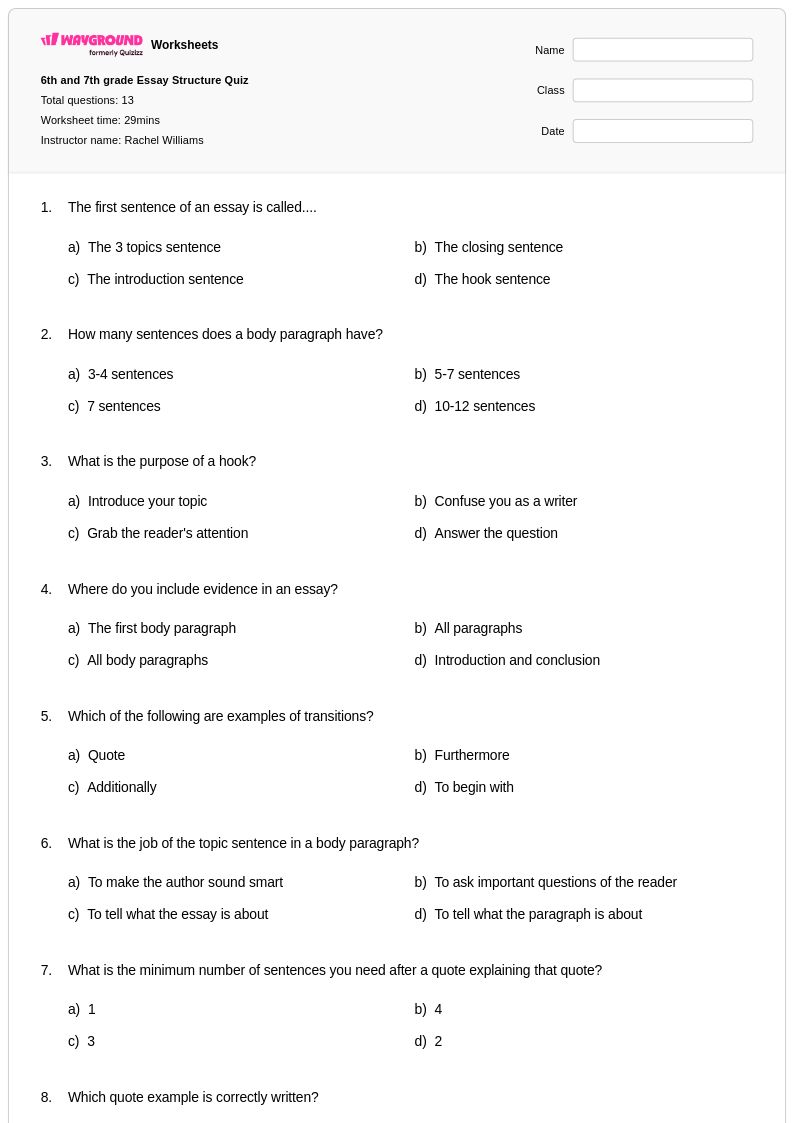
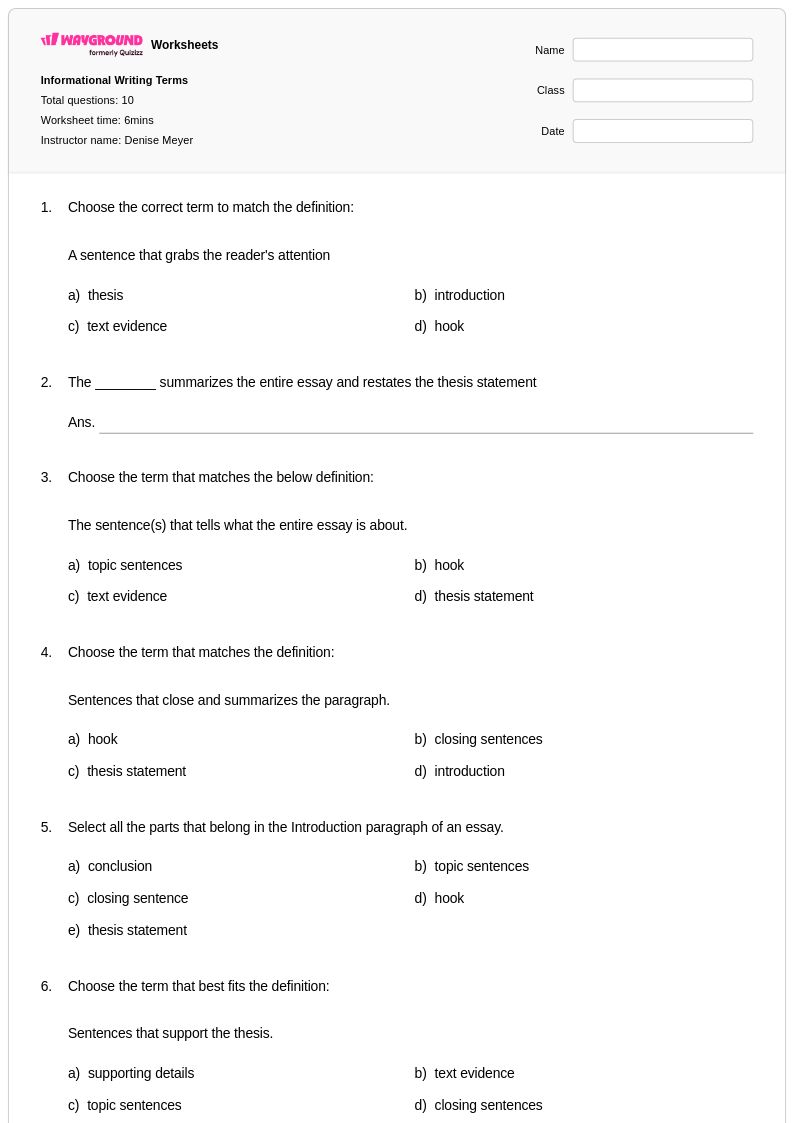
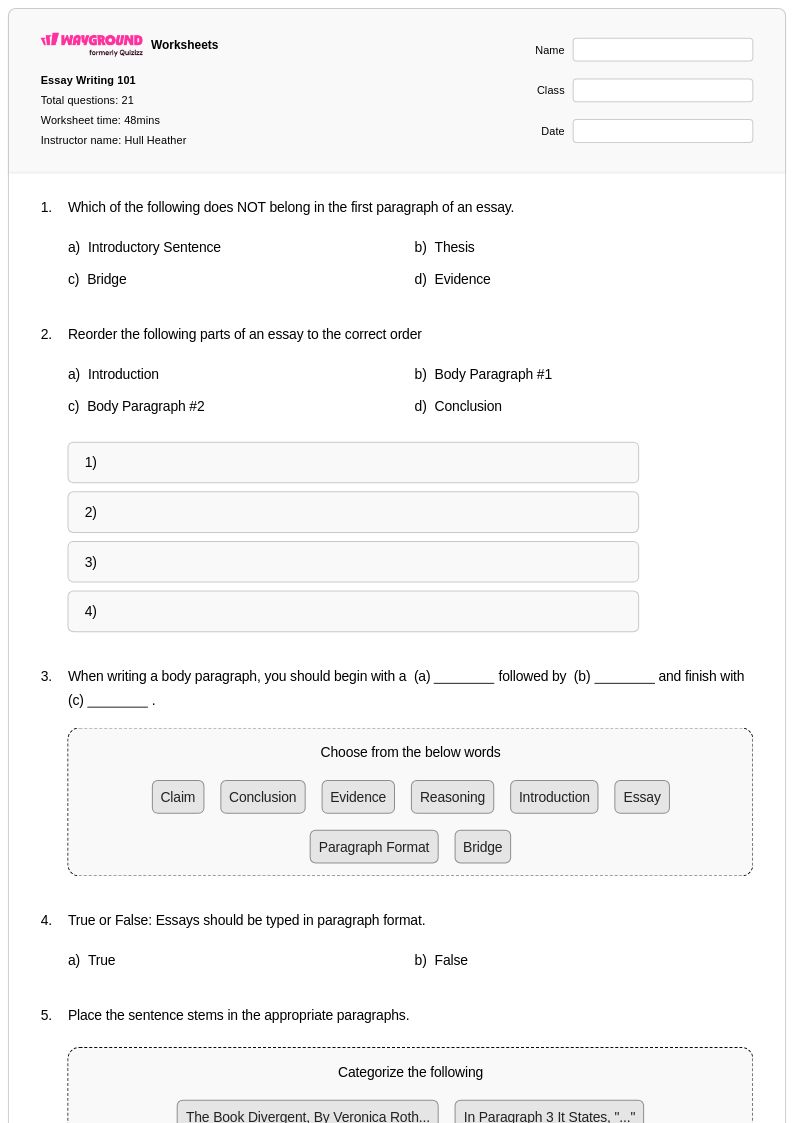
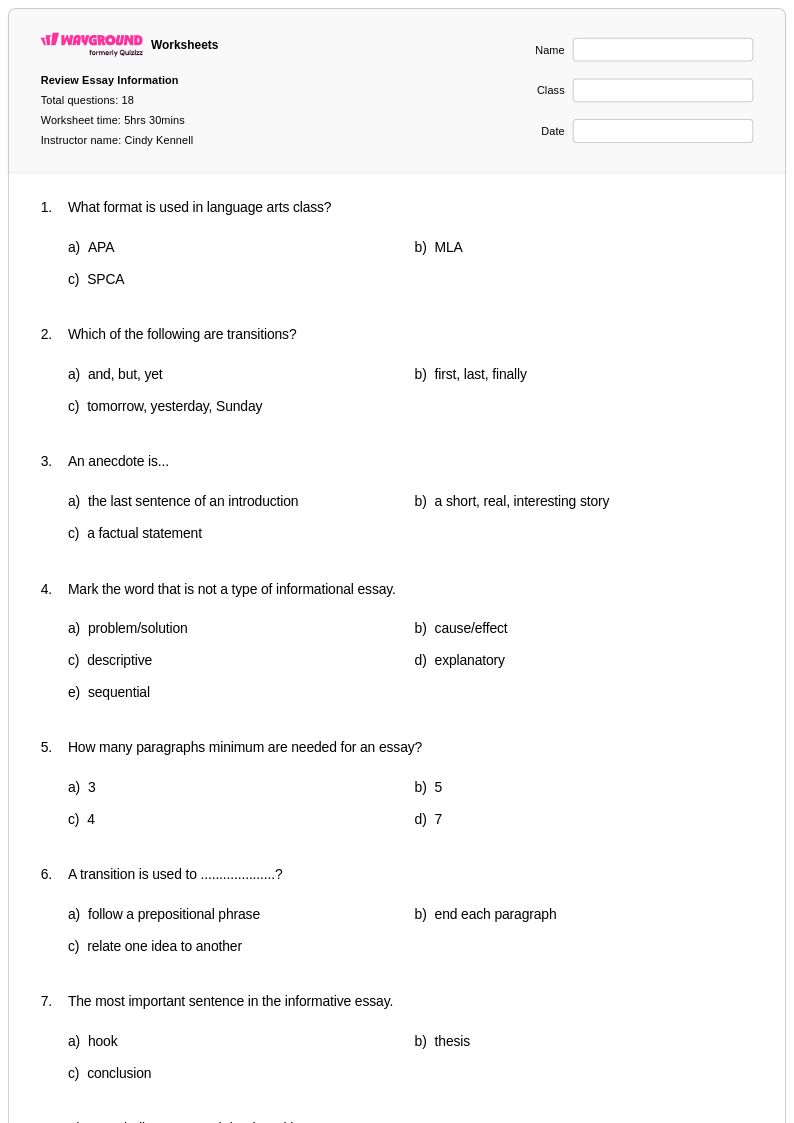
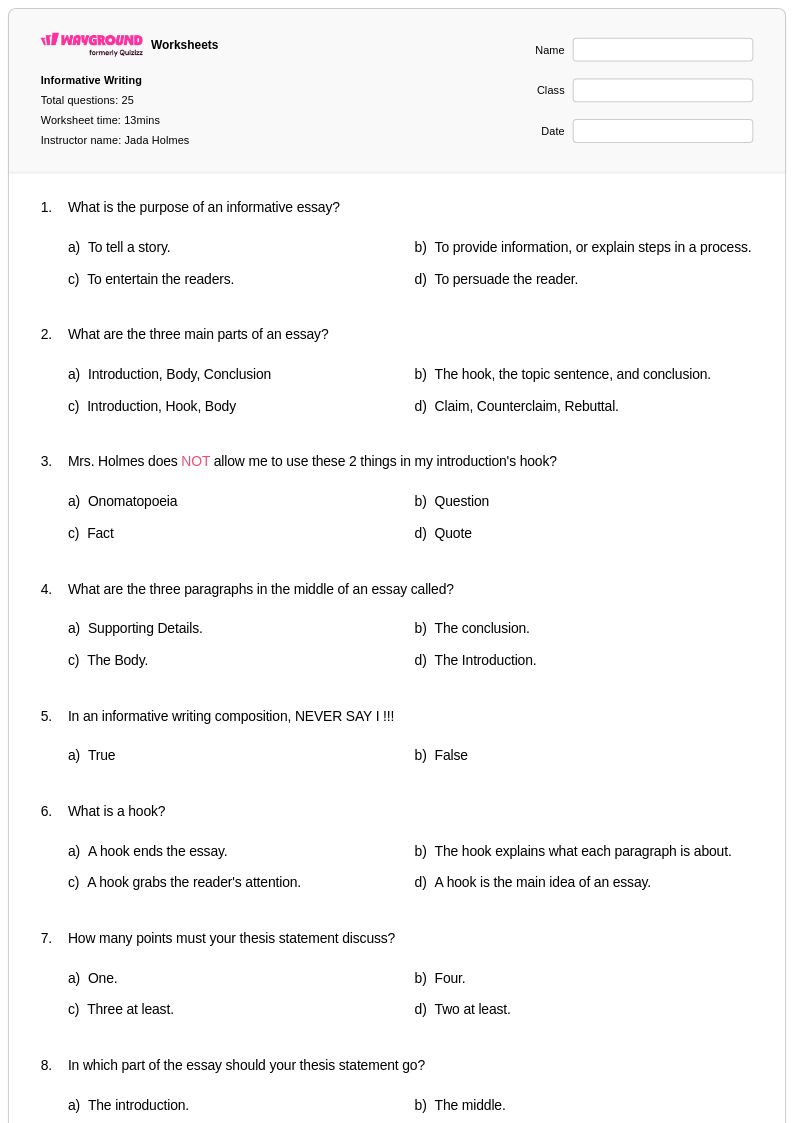
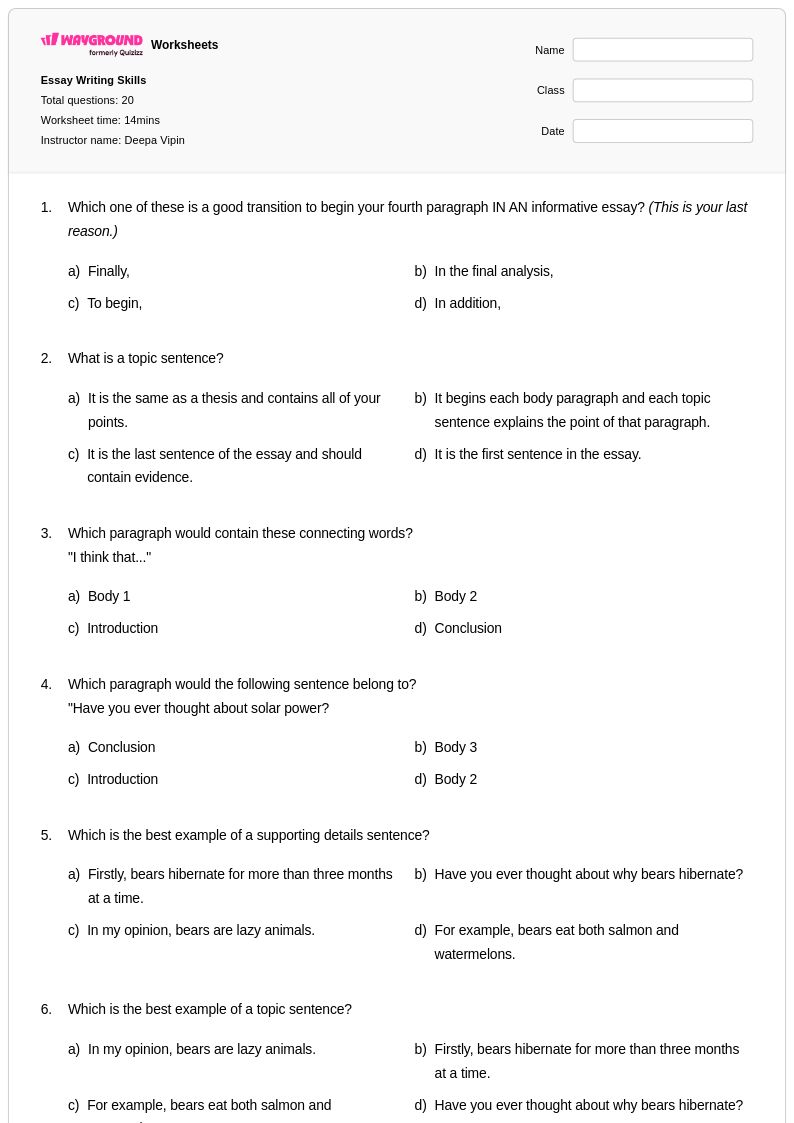
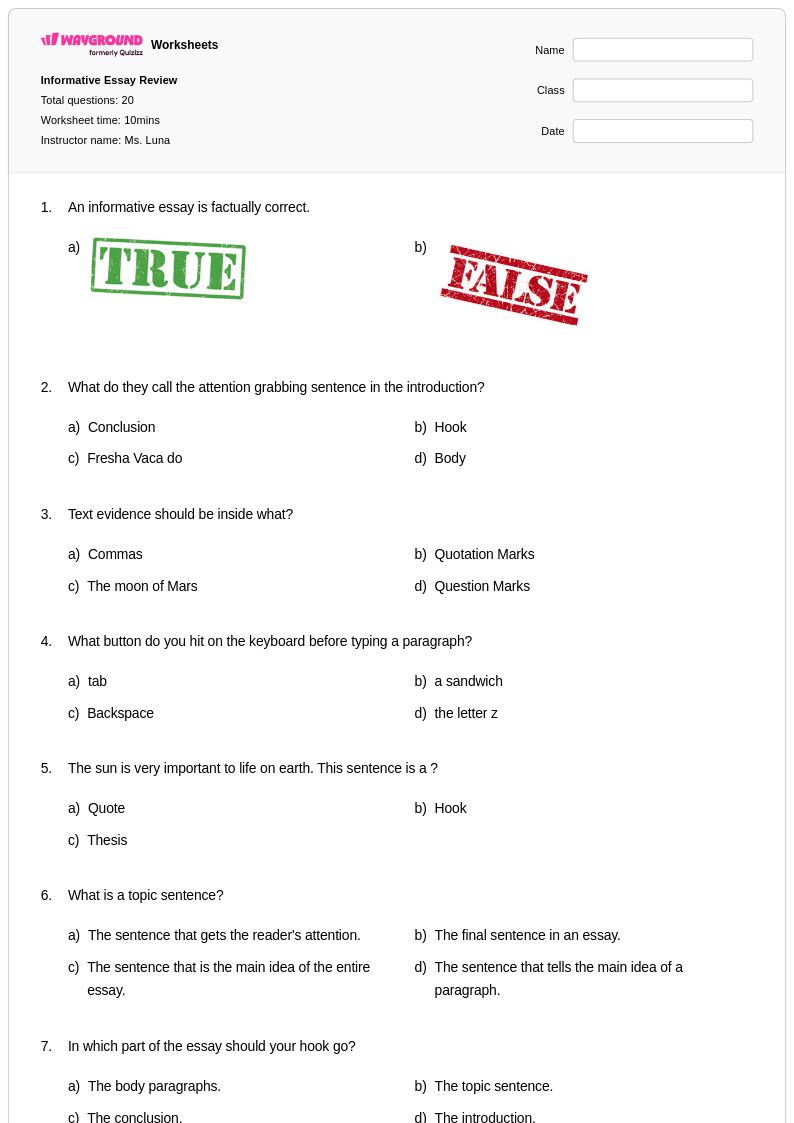
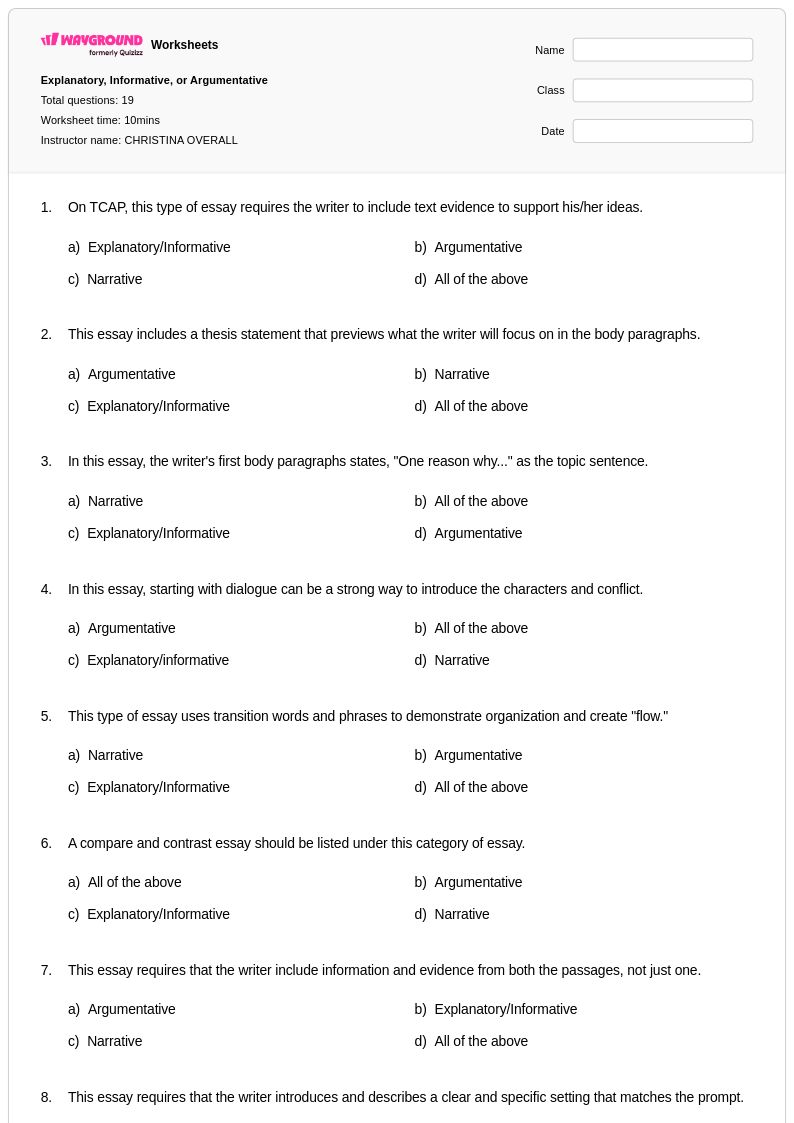
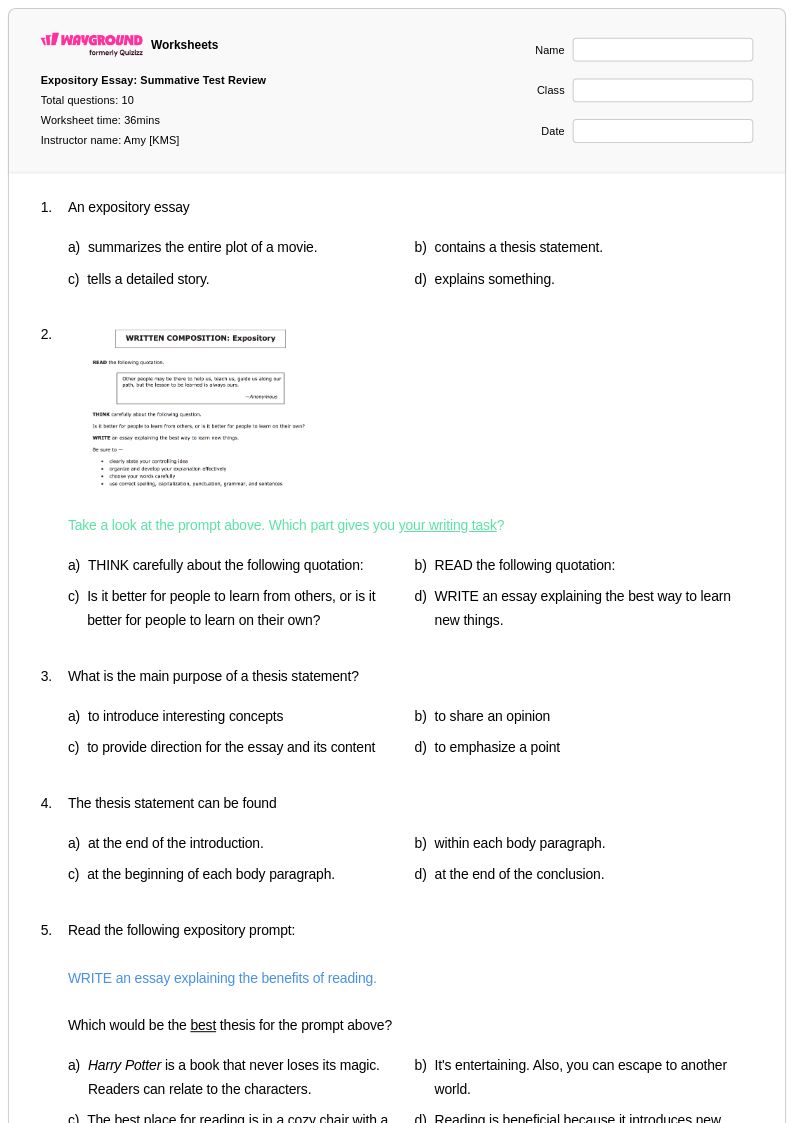
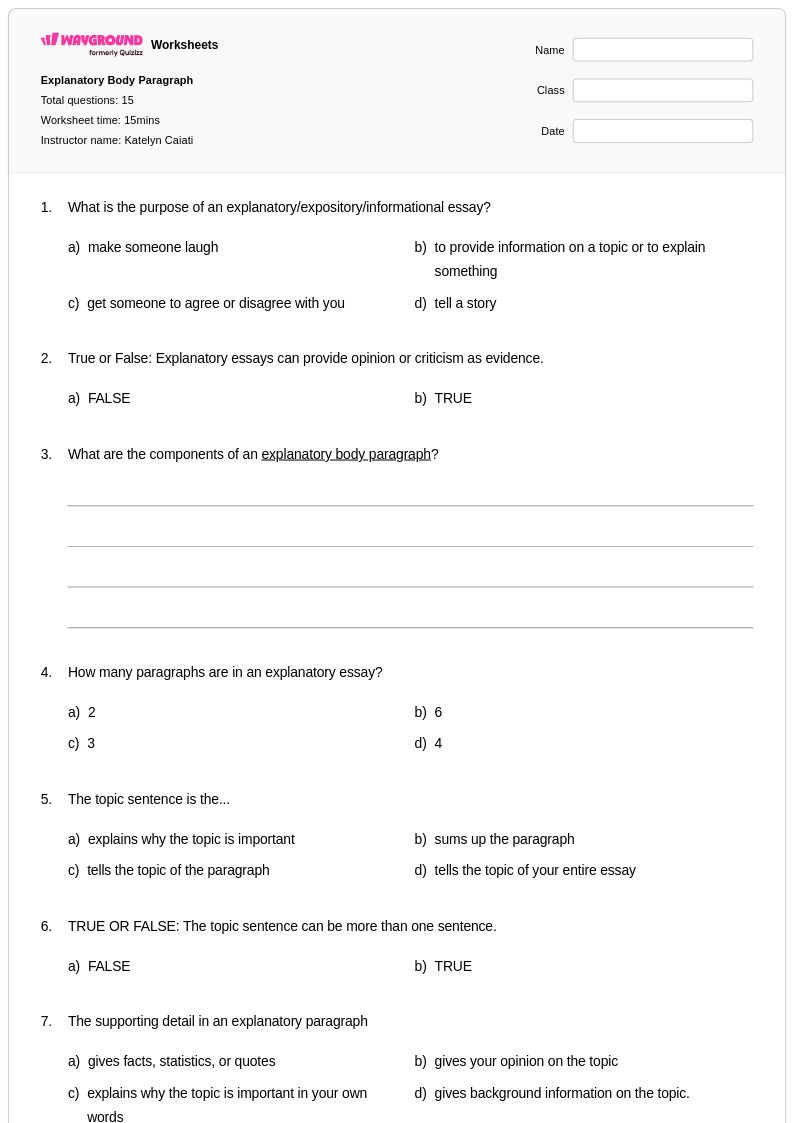
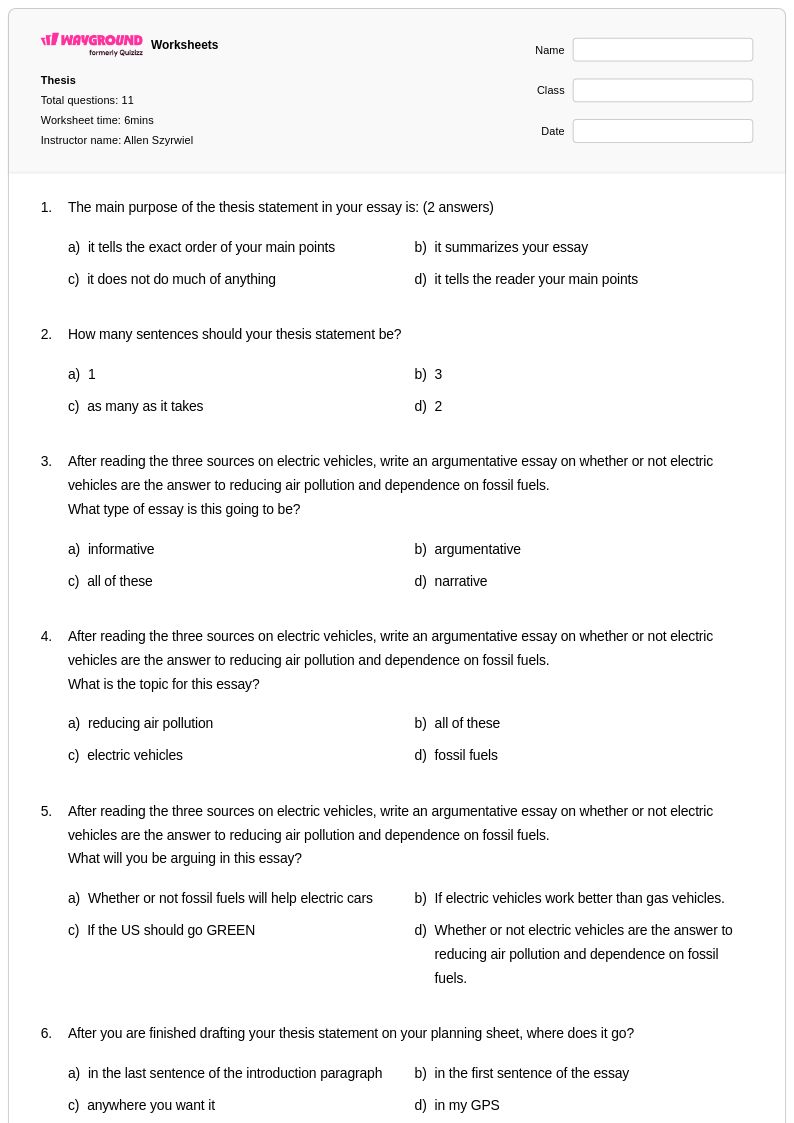
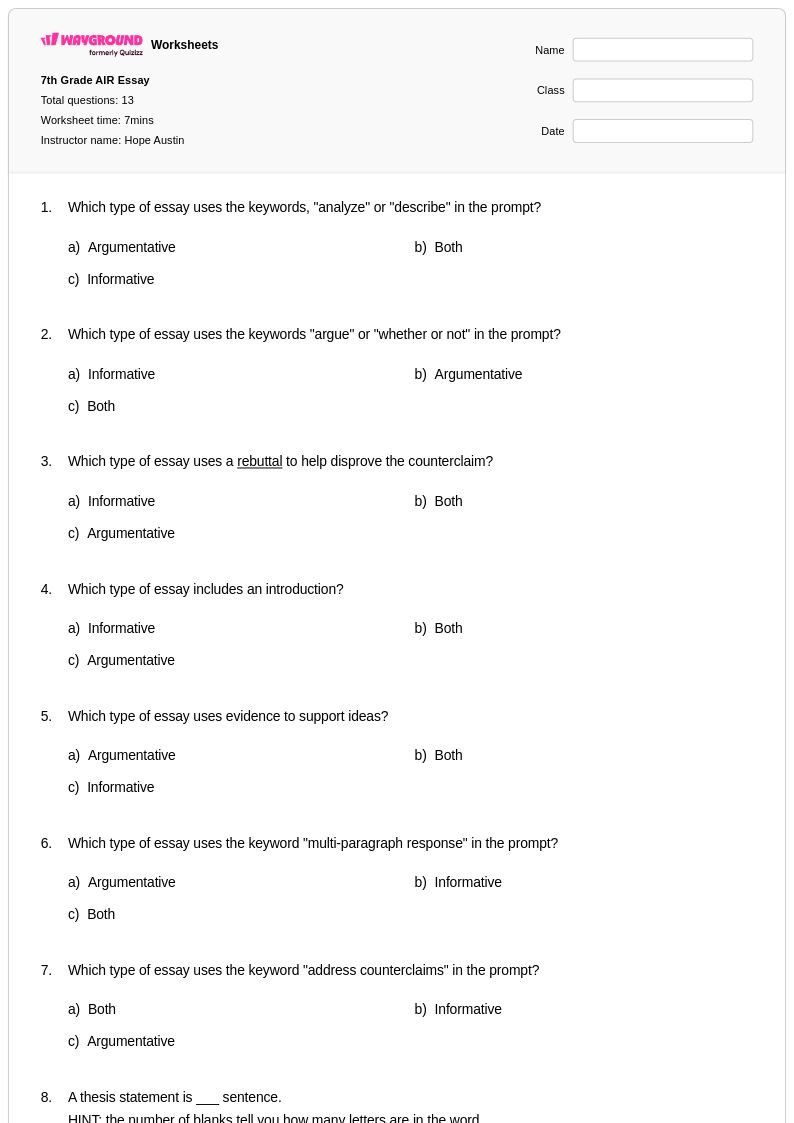
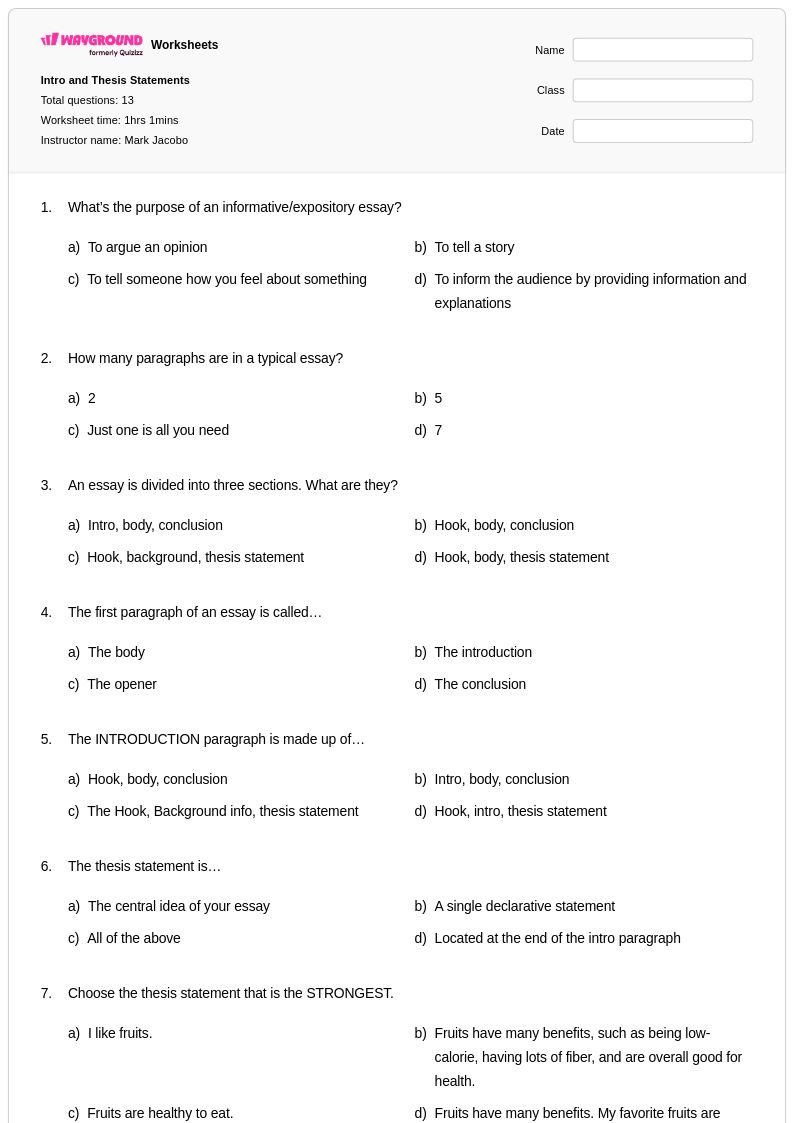
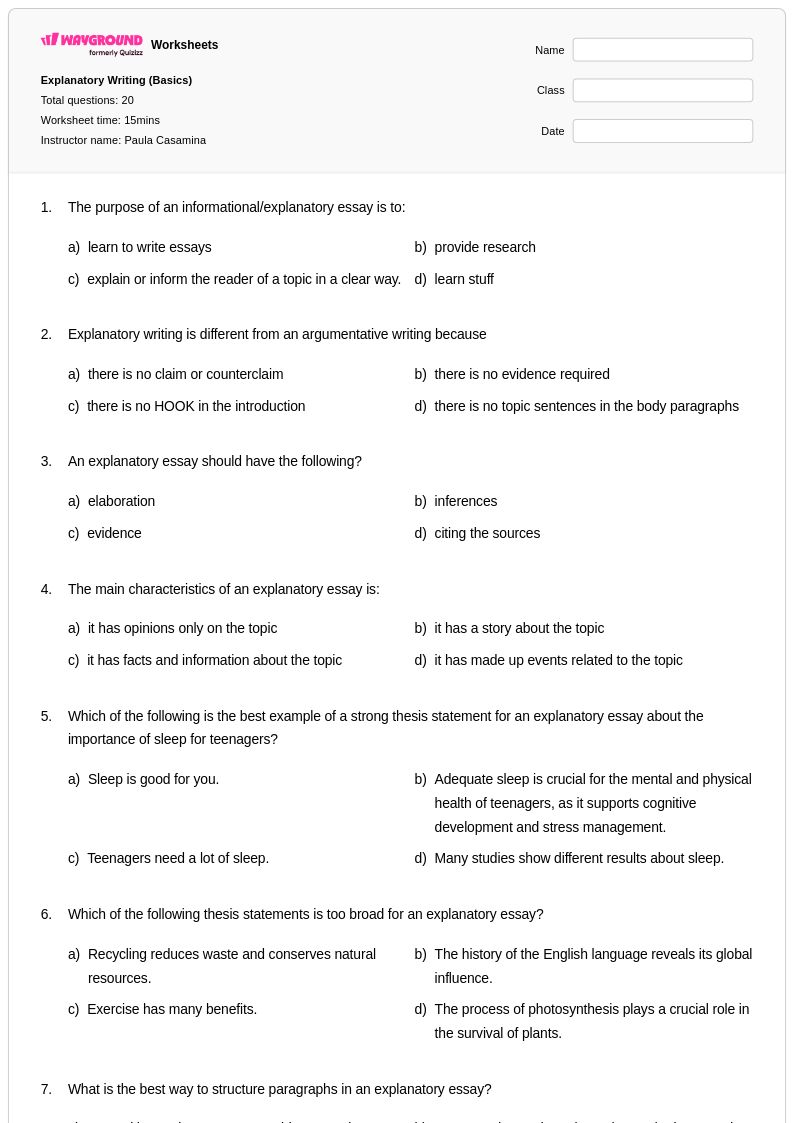
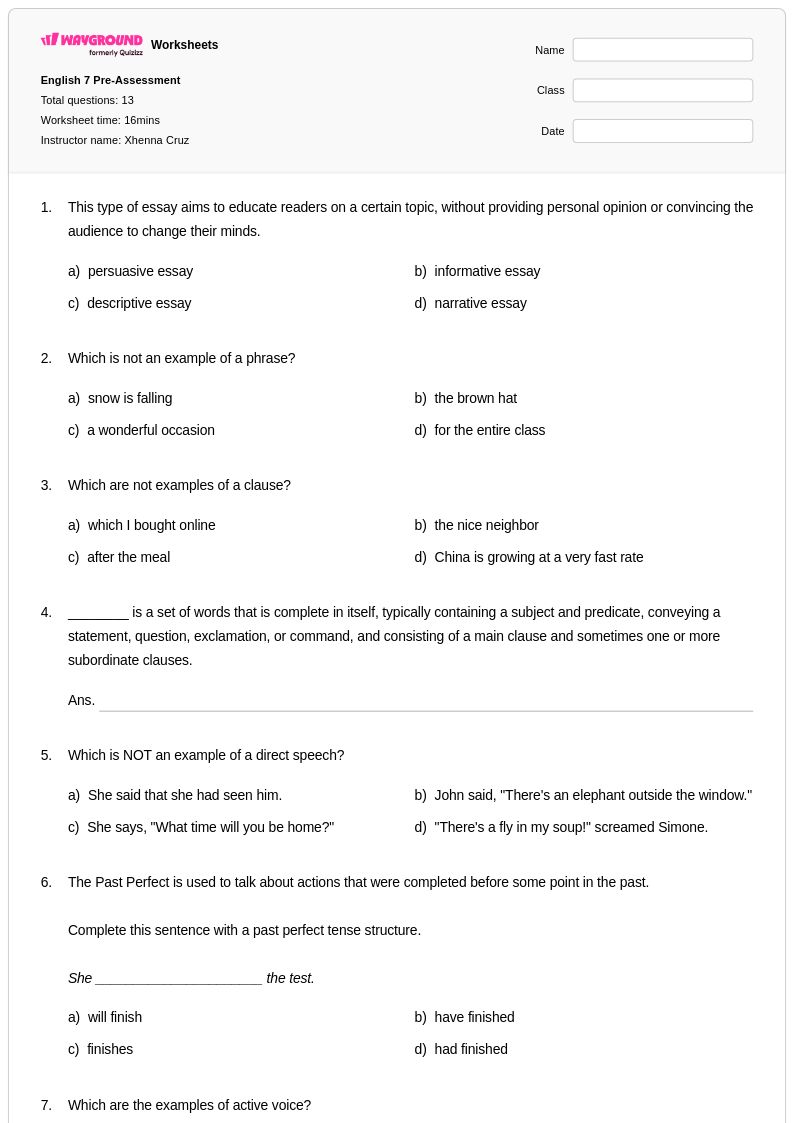
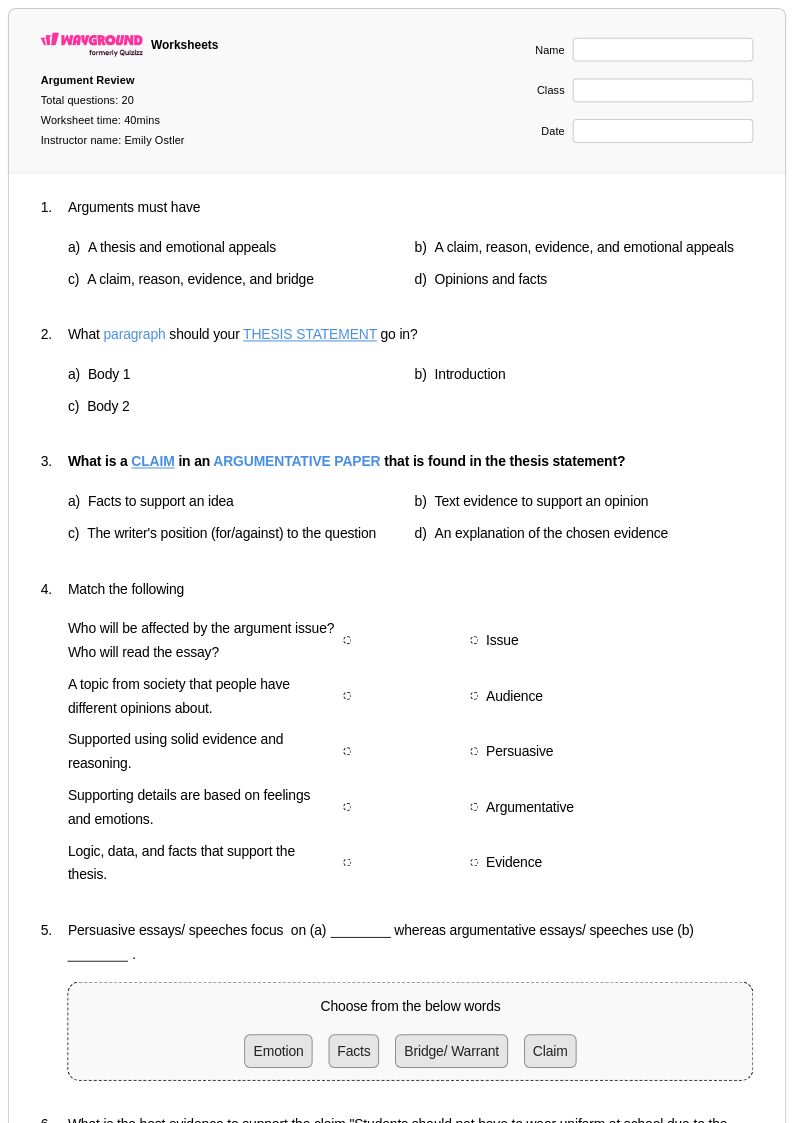
Informative essay structure worksheets for Year 7 students available through Wayground (formerly Quizizz) provide comprehensive practice in organizing and presenting factual information effectively. These educational resources focus on teaching seventh-grade writers the essential components of informative essays, including crafting compelling introductions with clear thesis statements, developing well-structured body paragraphs with supporting evidence, and creating strong conclusions that reinforce main ideas. Students work through practice problems that emphasize logical sequencing, appropriate transitions between ideas, and the integration of research and citations. Each worksheet comes with a detailed answer key to support independent learning and self-assessment, while the free printables in PDF format make these valuable resources easily accessible for both classroom instruction and homework assignments.
Wayground (formerly Quizizz) empowers educators with millions of teacher-created worksheets specifically designed to strengthen informative essay writing skills at the seventh-grade level. The platform's robust search and filtering capabilities allow teachers to quickly locate materials that align with curriculum standards and match their students' specific learning needs. These differentiation tools enable instructors to customize worksheets for various skill levels, ensuring that advanced learners receive appropriately challenging content while struggling writers get additional scaffolding and support. Available in both printable PDF format and interactive digital versions, these resources seamlessly integrate into lesson planning for initial instruction, targeted remediation sessions, and enrichment activities, giving teachers the flexibility to address diverse learning styles and provide consistent skill practice throughout the writing curriculum.
FAQs
How do I teach informative essay structure to students?
Start by breaking the essay into its core components: introduction with a thesis statement, body paragraphs with supporting evidence, and a conclusion that reinforces the main idea. Teach each section explicitly before asking students to write independently, using mentor texts and graphic organizers to make the structure visible. Focusing on one organizational pattern at a time, such as cause and effect or problem and solution, helps students internalize the logic behind how informative essays are built.
What exercises help students practice informative essay structure?
Effective practice exercises include paragraph sorting activities where students reorder scrambled paragraphs into logical sequence, thesis statement identification drills, and outline-completion tasks that require students to slot evidence into the correct body paragraph. Transition word exercises are also valuable because they push students to think about how ideas connect across paragraphs, not just within them. Worksheets that target each structural component separately before asking students to write a full essay give struggling writers manageable entry points.
What mistakes do students commonly make when writing informative essays?
The most common errors are writing thesis statements that are too broad or simply restate the prompt, and body paragraphs that include evidence without explanation or analysis. Students frequently forget to use transitions between paragraphs, causing the essay to read as disconnected sections rather than a cohesive piece. Weak conclusions are also typical, with students either repeating the introduction word for word or ending abruptly without synthesizing the key ideas.
How can I help students understand different organizational patterns in informative writing?
Teach organizational patterns, such as compare and contrast, chronological sequencing, and cause and effect, as distinct structures with their own signal words and paragraph logic. Use short, focused passages that clearly demonstrate each pattern and ask students to identify which structure is being used before writing in that pattern themselves. Explicitly connecting each pattern to a real-world writing purpose, for example, chronological sequencing in how-to writing, helps students recognize why structure choices matter.
How do I use Wayground's informative essay structure worksheets in my classroom?
Wayground's informative essay structure worksheets are available as printable PDFs for traditional classroom use and in digital formats for technology-integrated or hybrid learning environments, and teachers can also host them as a quiz directly on Wayground. Each worksheet includes a detailed answer key, making them suitable for independent practice, guided instruction, or targeted remediation sessions. The platform's search and filtering tools allow teachers to locate materials aligned with specific writing standards quickly, reducing lesson planning time.
How do I differentiate informative essay instruction for students at different skill levels?
For struggling writers, provide sentence starters, partially completed outlines, or reduced-complexity prompts that limit the number of body paragraphs required. Advanced students can be challenged with multi-source synthesis tasks or asked to evaluate and revise a flawed sample essay. On Wayground, teachers can apply individual accommodations such as read aloud support or reduced answer choices for specific students, allowing the same worksheet to serve the full range of learners in one class without disrupting others.