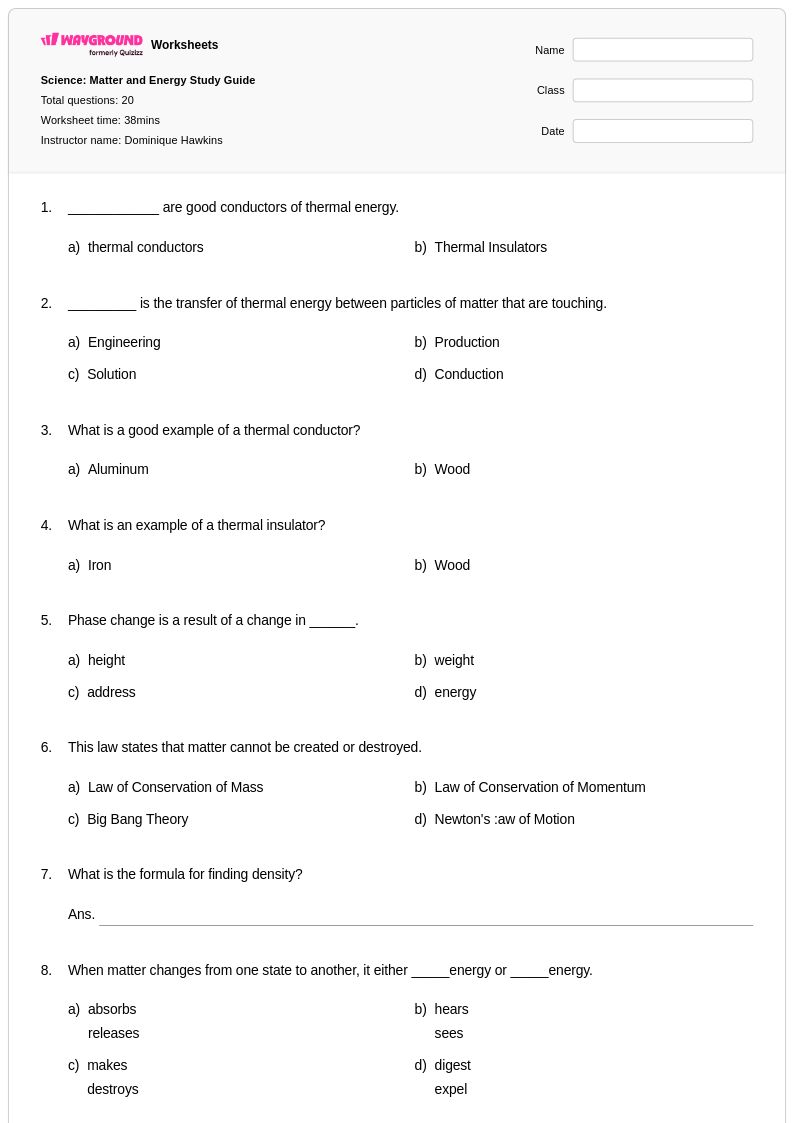
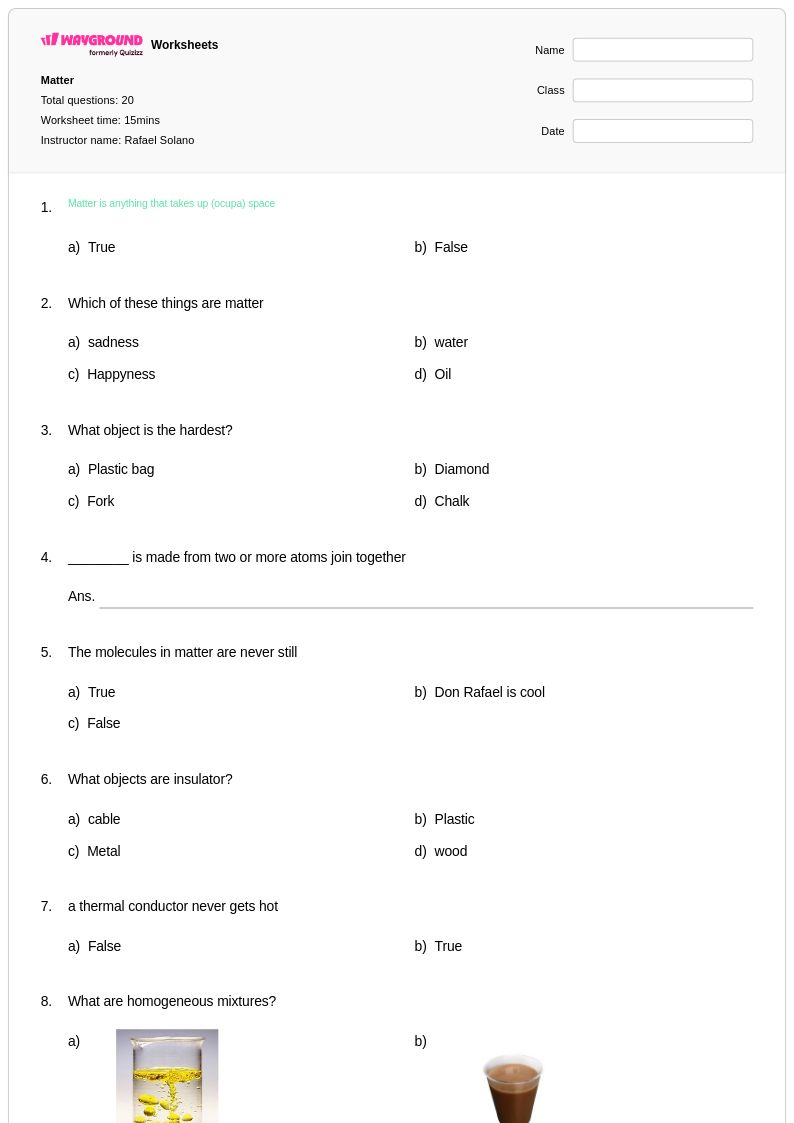
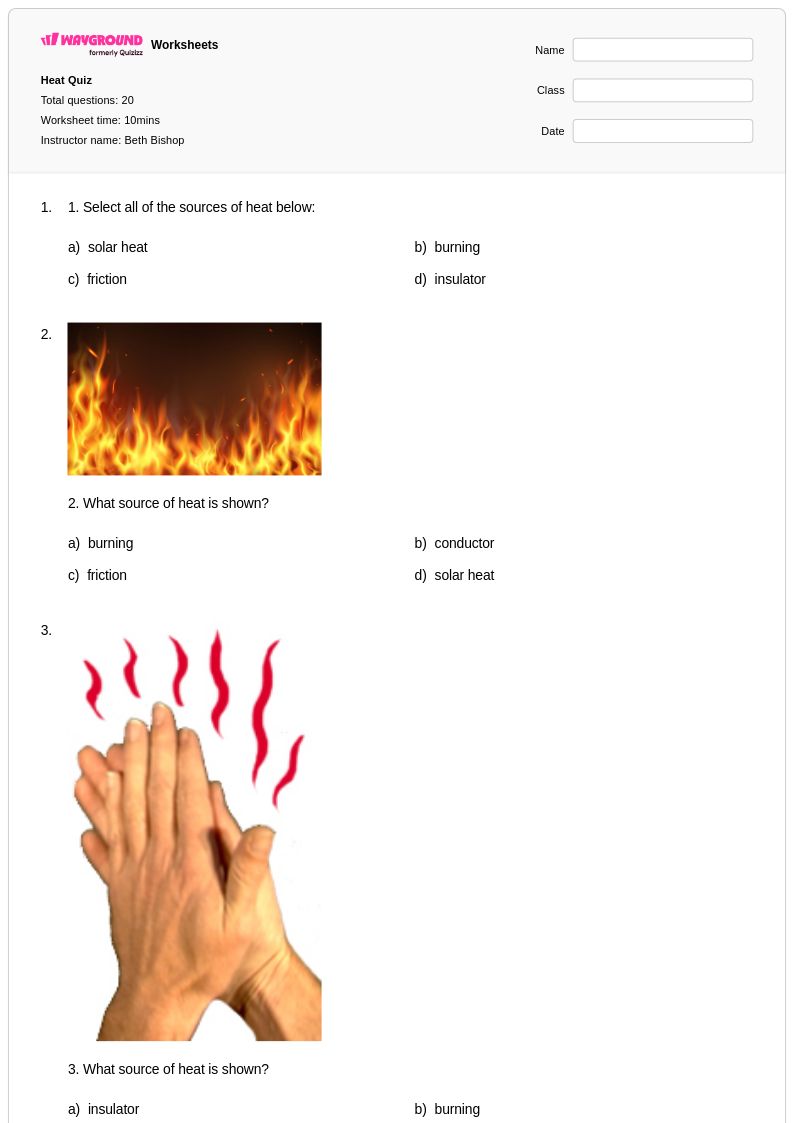
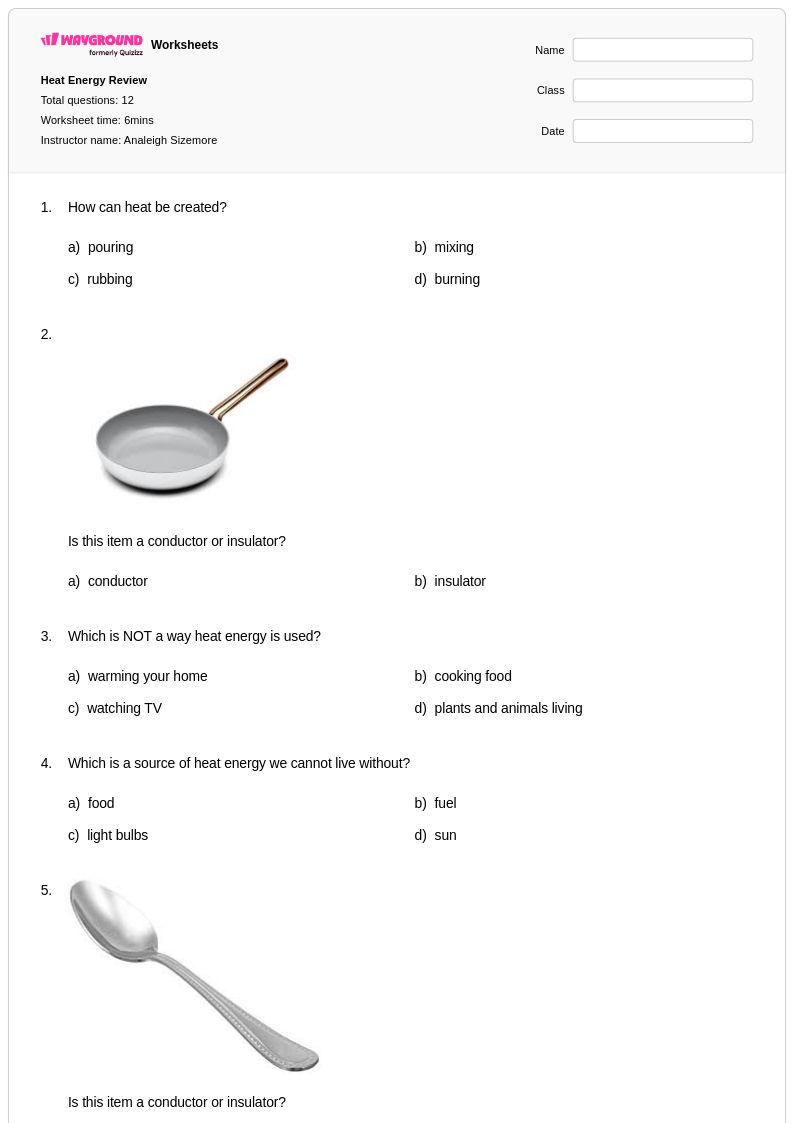
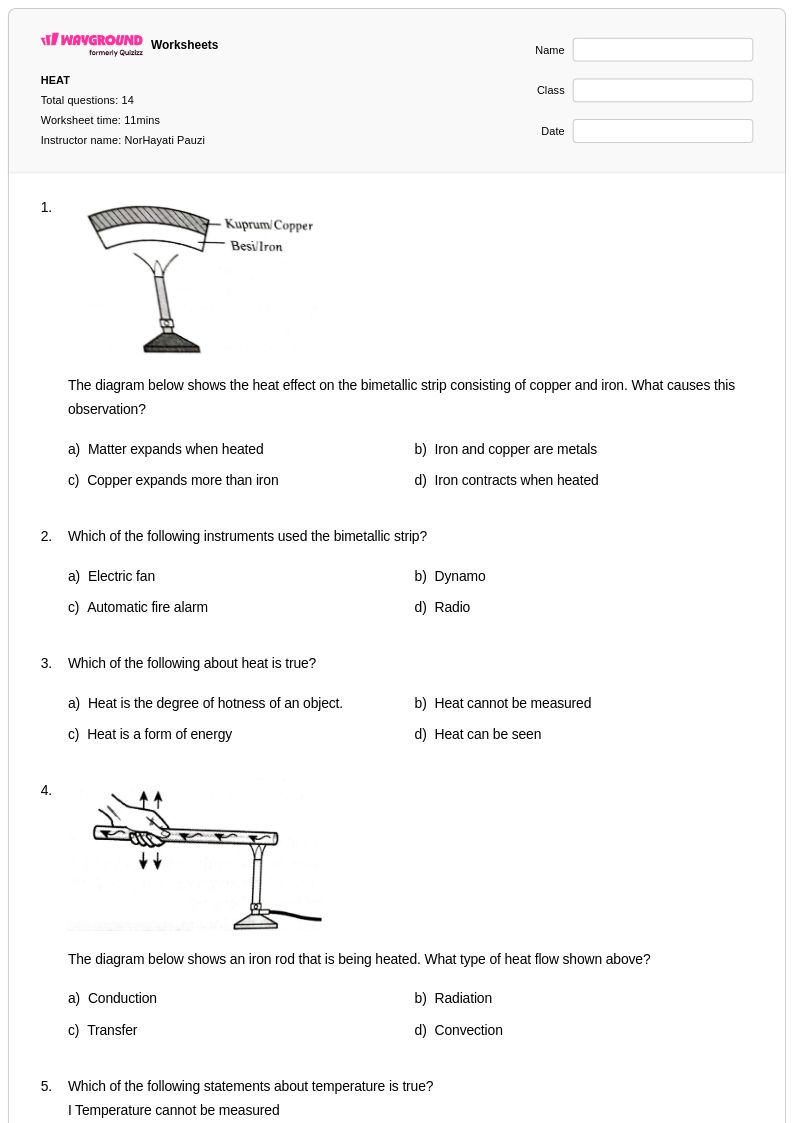
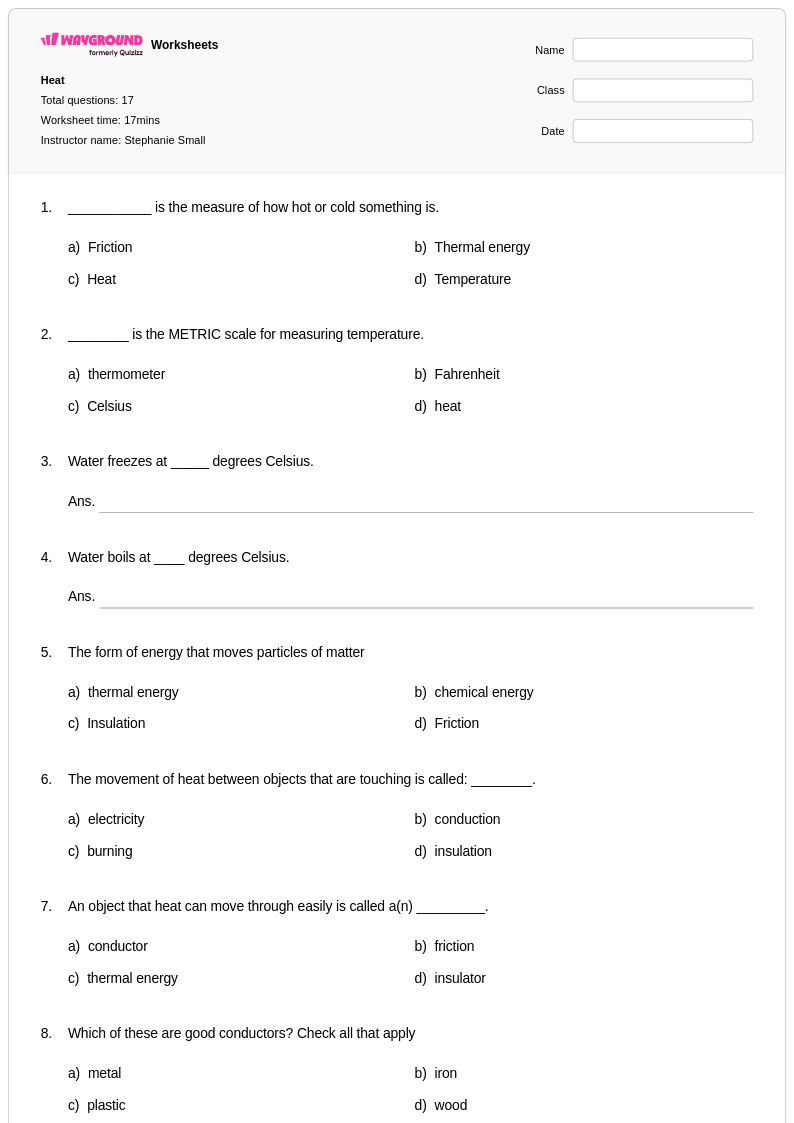
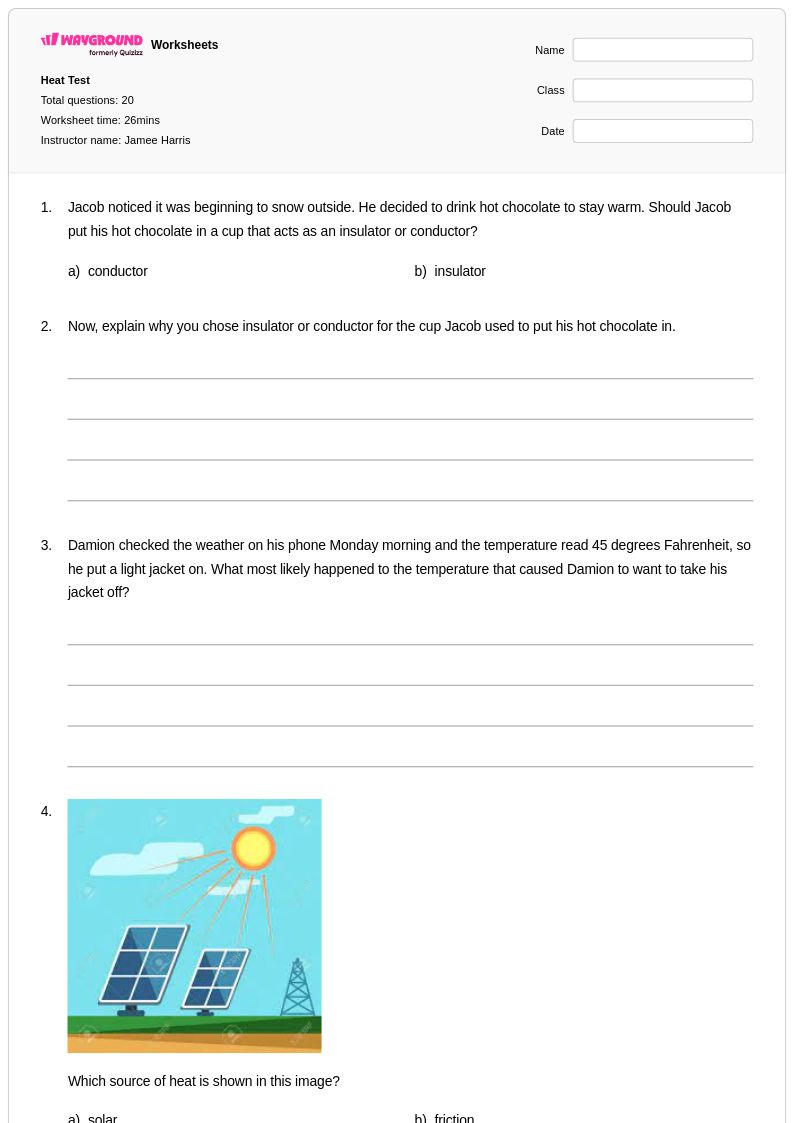
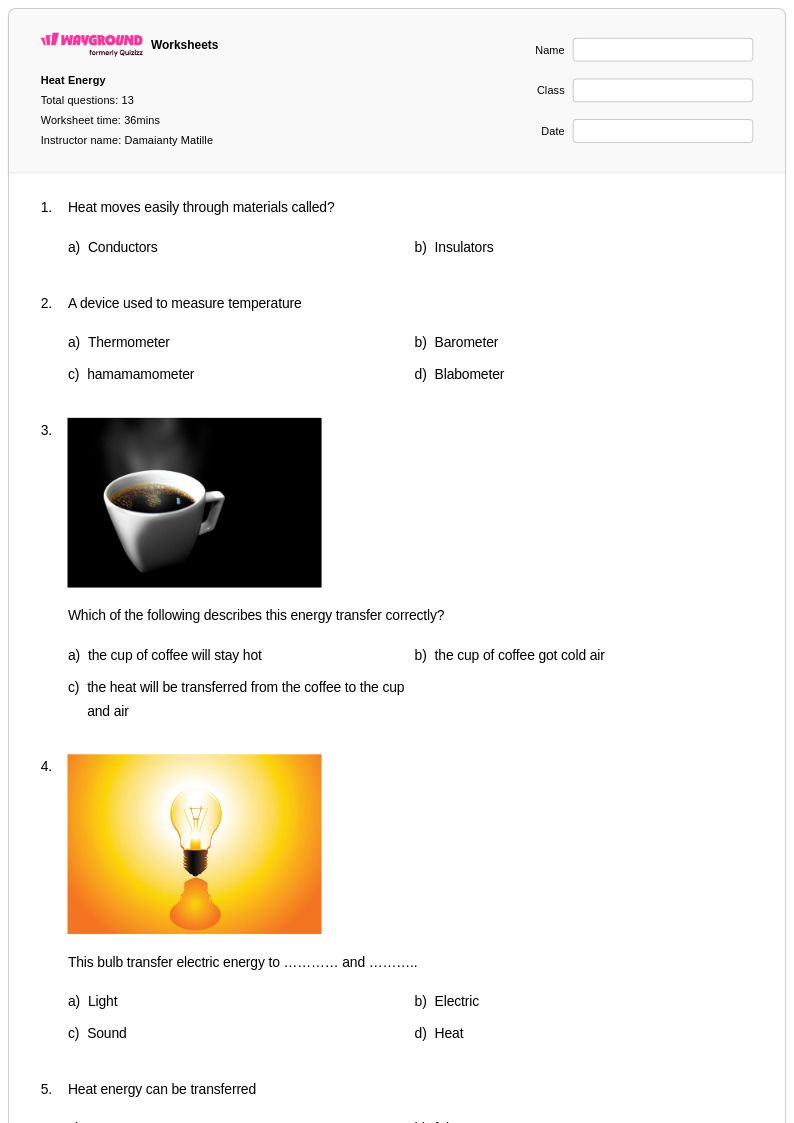
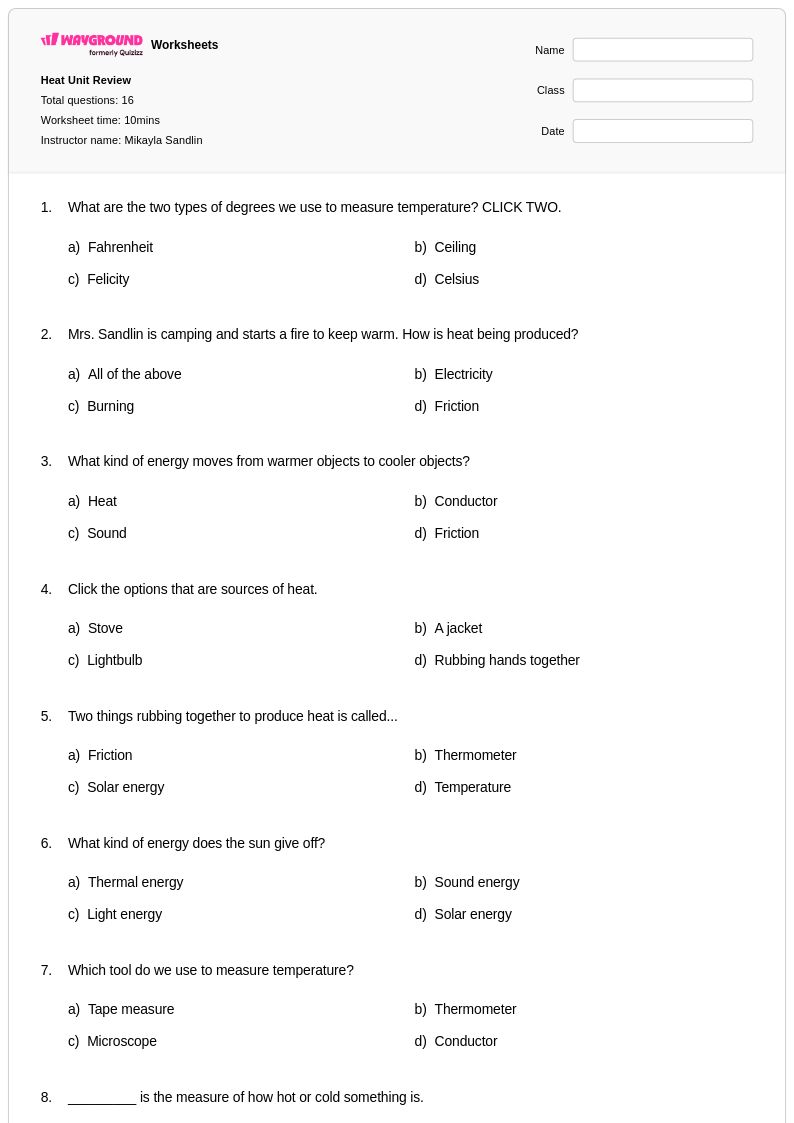
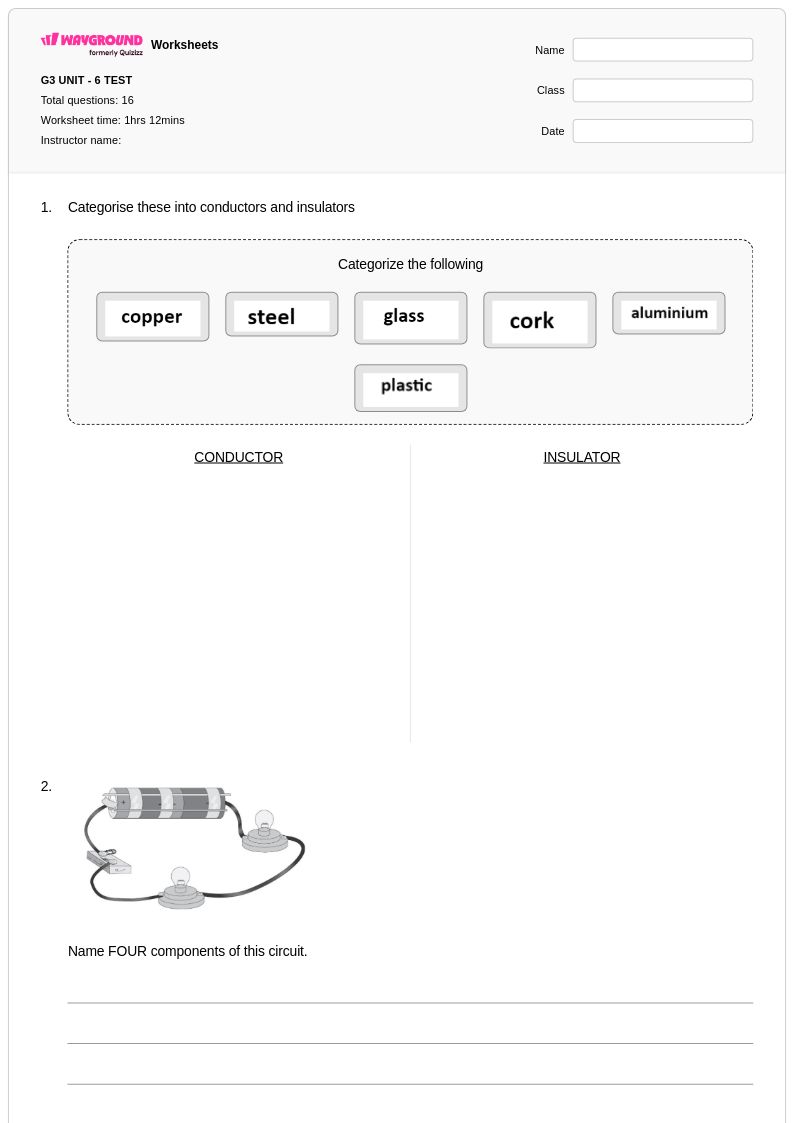
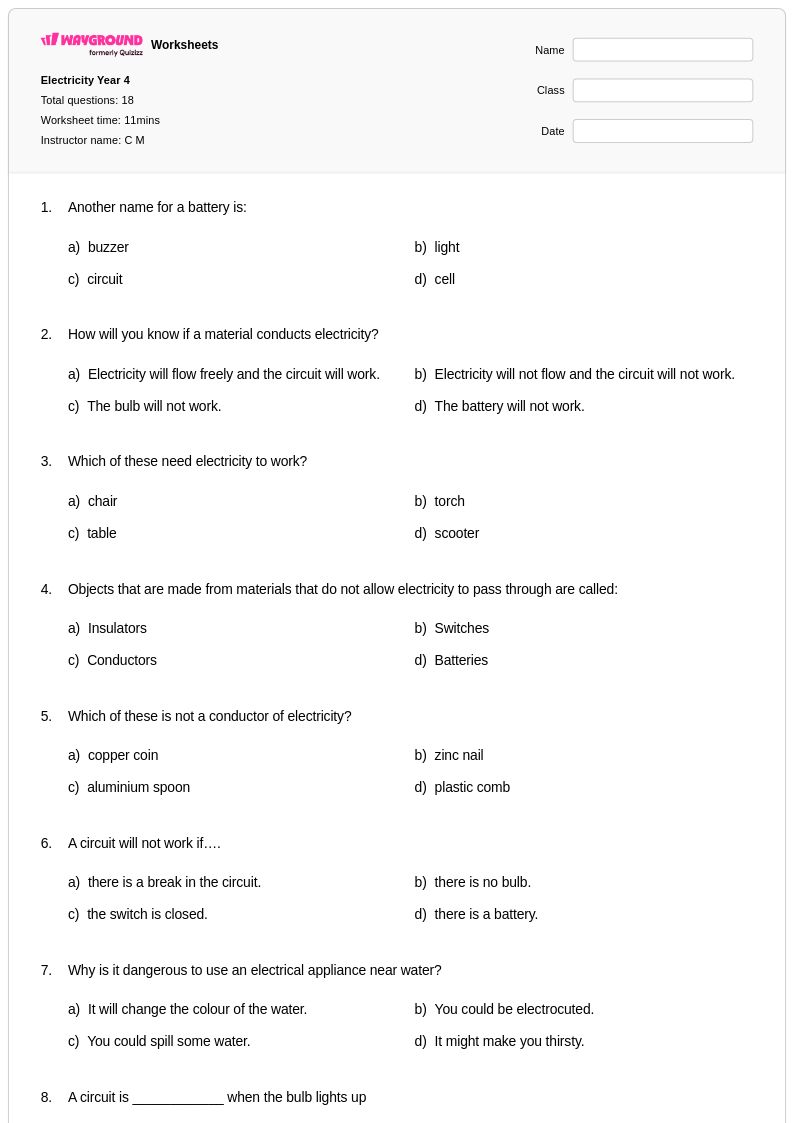
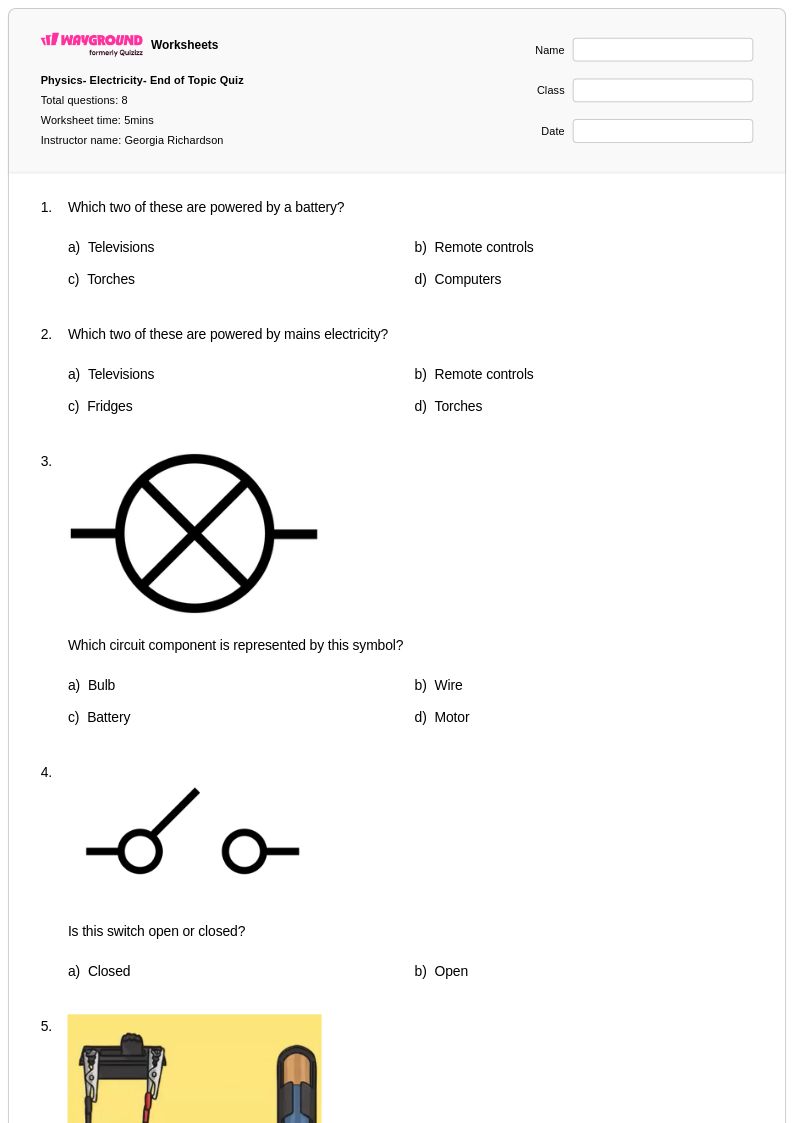
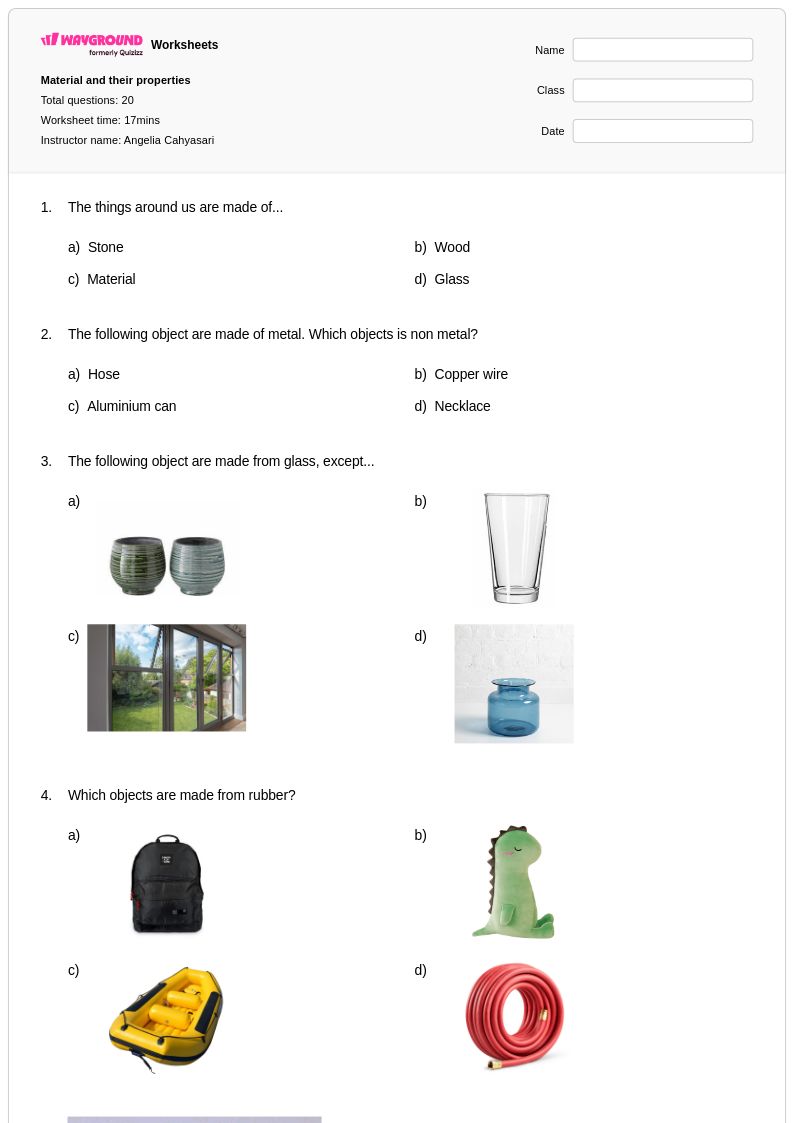
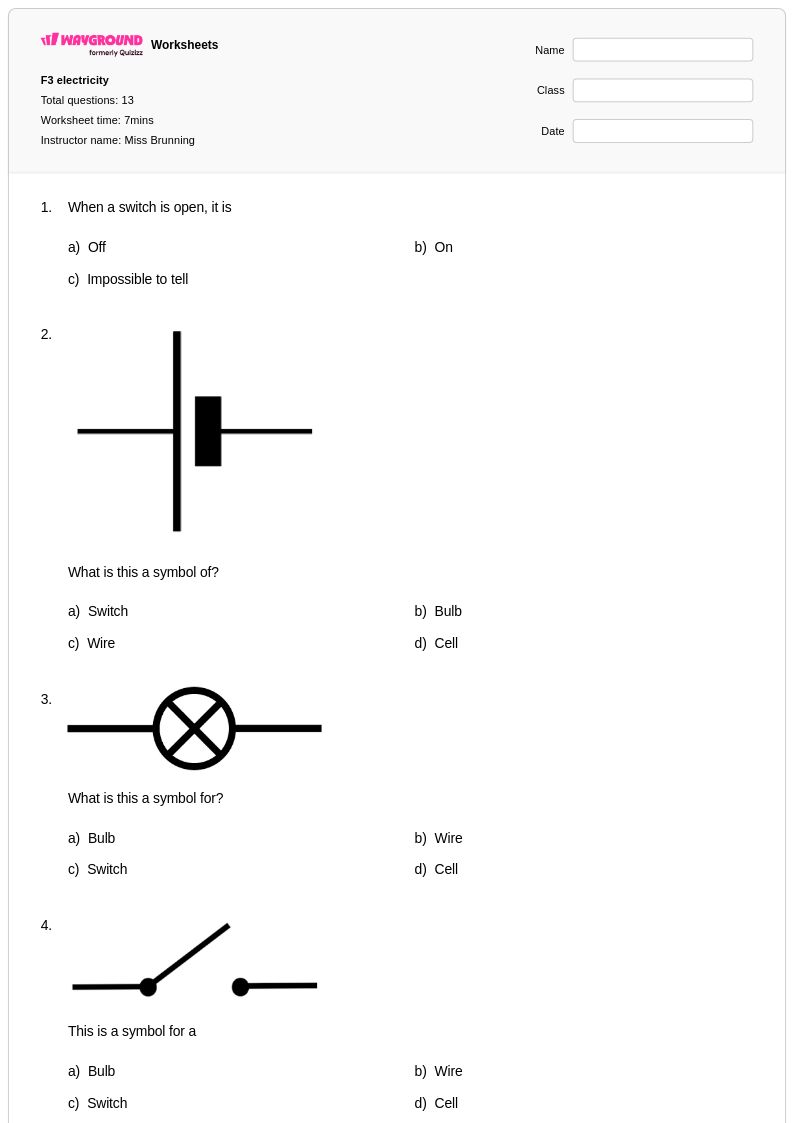
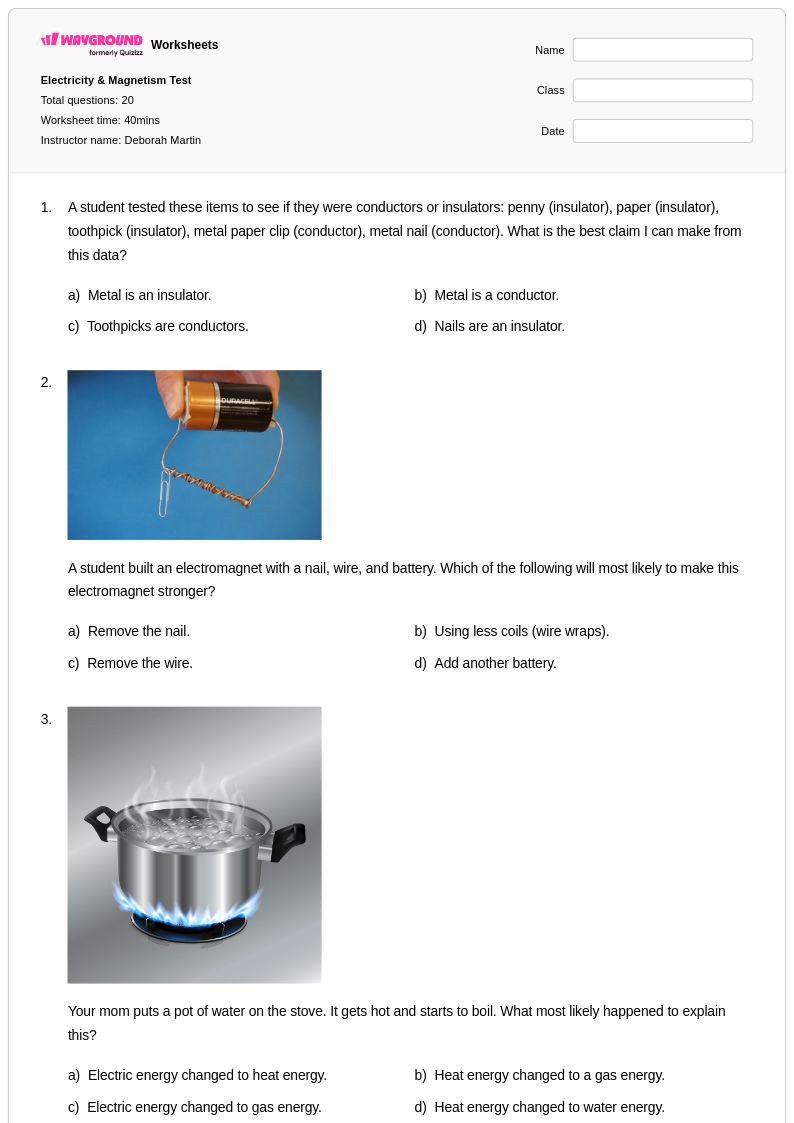
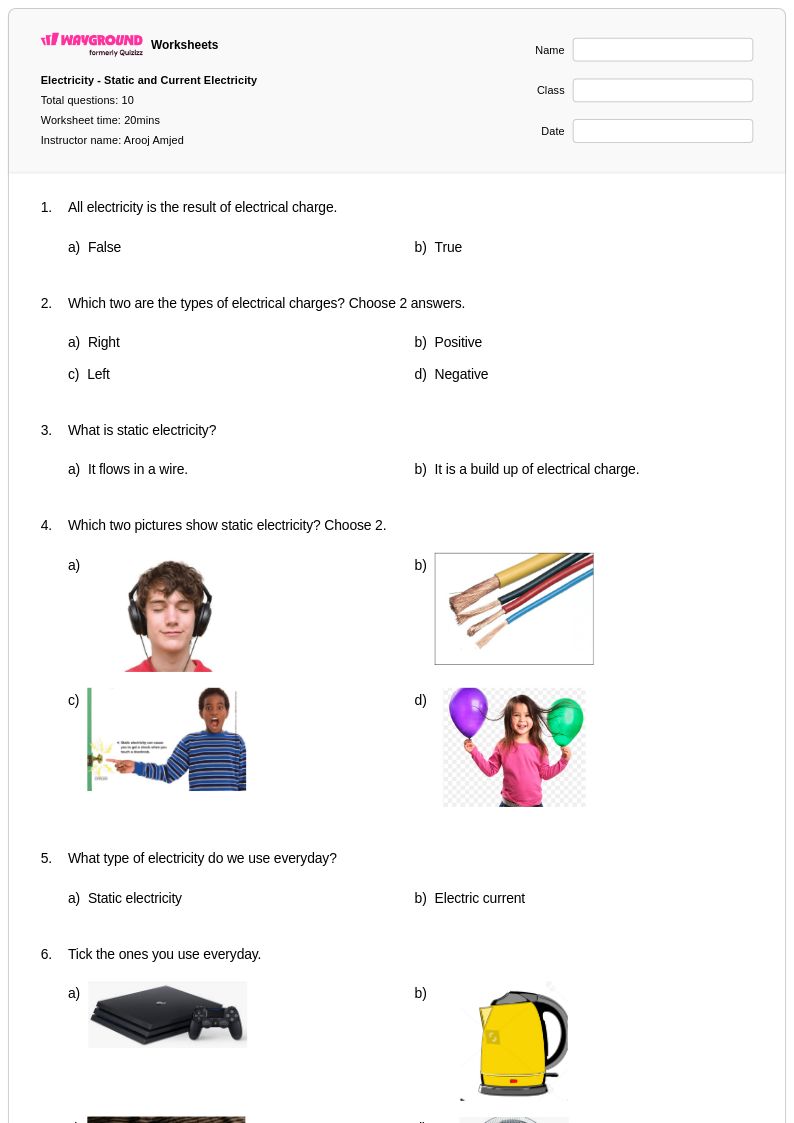
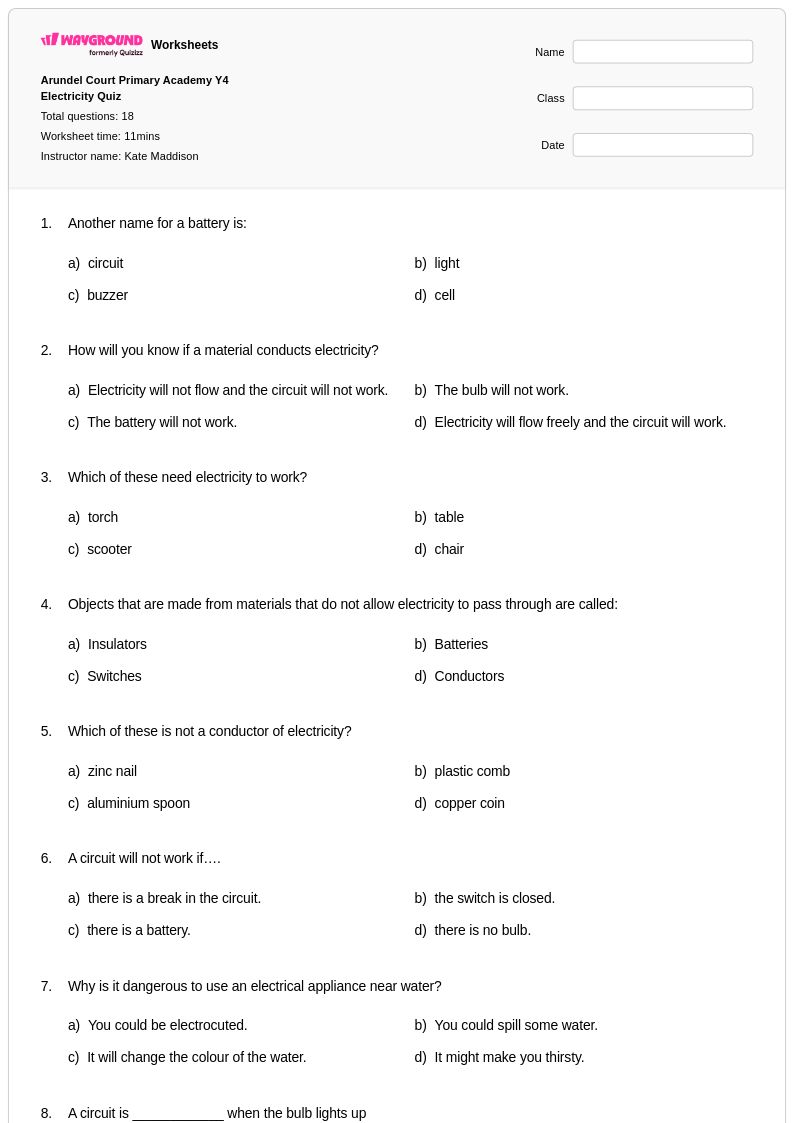
Explore free Year 3 insulator worksheets and printables from Wayground that help students learn to identify materials that block heat and electricity through engaging practice problems with answer keys.
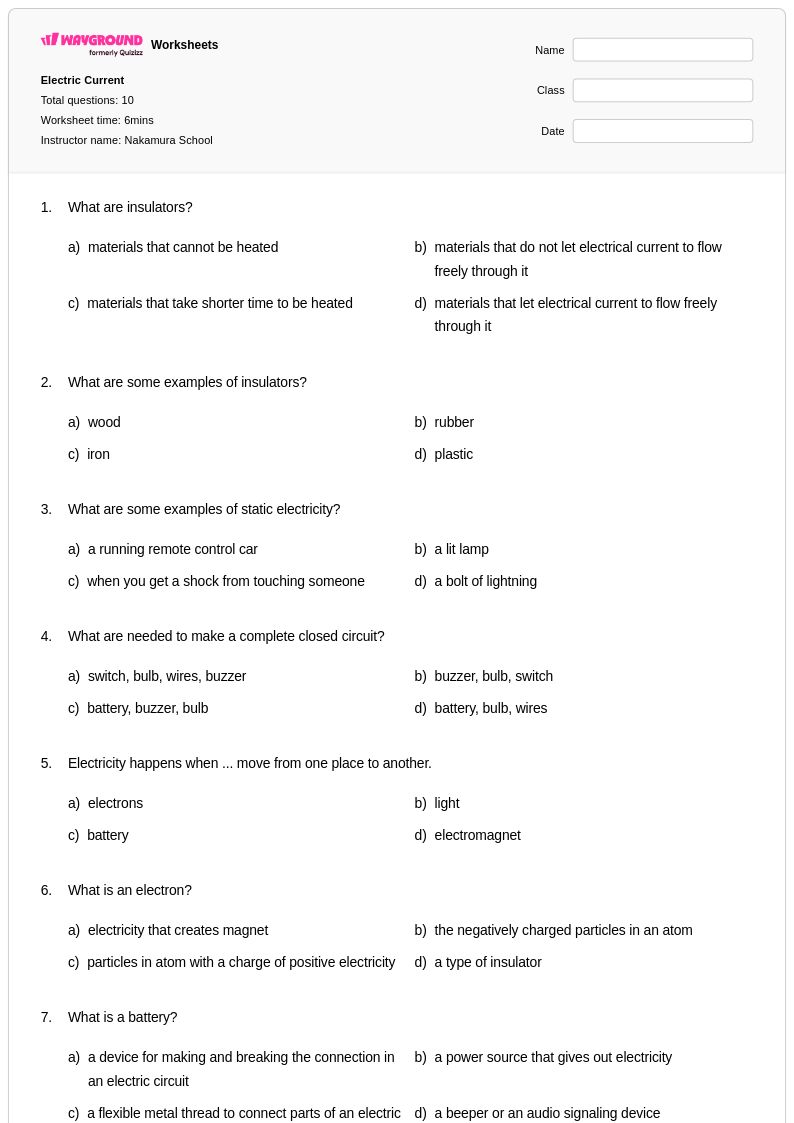
Insulator worksheets for Year 3 students available through Wayground (formerly Quizizz) provide essential foundational learning in understanding how different materials behave with heat, electricity, and sound. These carefully designed educational resources help young learners identify common insulators like wood, plastic, rubber, and fabric while developing critical thinking skills about material properties and their practical applications in everyday life. The comprehensive collection includes engaging practice problems that challenge students to categorize materials, predict outcomes in simple experiments, and explain why certain objects feel warm or cool to the touch. Teachers can access complete answer keys alongside these free printables, ensuring accurate assessment and meaningful feedback during instruction about thermal and electrical insulation concepts.
Wayground (formerly Quizizz) empowers educators with millions of teacher-created insulator worksheets specifically tailored for Year 3 science instruction, featuring robust search and filtering capabilities that align with state and national science standards. The platform's differentiation tools allow teachers to customize content complexity, vocabulary level, and visual supports to meet diverse learning needs within their classrooms. These versatile resources are available in both printable pdf formats for traditional paper-based learning and digital formats for interactive classroom displays or remote instruction. Whether supporting initial concept introduction, providing targeted remediation for struggling learners, offering enrichment challenges for advanced students, or facilitating regular skill practice, these insulator worksheet collections streamline lesson planning while ensuring comprehensive coverage of essential physical science concepts that build toward more complex material property studies in later grades.
FAQs
How do I teach students the difference between insulators and conductors?
Start by anchoring the distinction in molecular behavior: insulators have tightly bound electrons that resist the flow of heat or electrical charge, while conductors allow that flow freely. Use hands-on comparisons with everyday materials like rubber, wood, and metal to make the concept tangible before moving into formal classification exercises. Building from concrete examples to abstract principles helps students internalize why certain materials insulate and others conduct.
What types of practice problems help students understand insulators?
Effective practice ranges from material classification tasks, where students sort substances by their insulating or conducting properties, to scenario-based problems that require analyzing heat transfer or electrical resistance in real-world contexts. Problems involving thermal conductivity comparisons push students to apply conceptual knowledge rather than simply recall definitions. Varied problem types across both thermal and electrical insulation ensure students build a well-rounded understanding of the concept.
What misconceptions do students commonly have about insulators?
A frequent misconception is that insulators completely block energy transfer rather than simply slowing it down. Students also tend to conflate thermal and electrical insulation, assuming that a material that blocks heat will automatically block electricity. Addressing these errors explicitly, through targeted problems that test both dimensions separately, prevents students from overgeneralizing and builds more precise understanding.
How can I differentiate insulator instruction for students at different ability levels?
For students who need additional support, start with basic material classification exercises and use read-aloud features to reduce barriers for struggling readers. Advanced learners benefit from complex thermal conductivity comparison problems that require multi-step reasoning. On Wayground, teachers can apply accommodations such as reduced answer choices or extended time to individual students, allowing the same worksheet to serve the full range of learners in one class without singling anyone out.
How do I use Wayground's insulator worksheets in my classroom?
Wayground's insulator worksheets are available as printable PDFs for traditional classroom use and in digital formats for technology-integrated or remote learning environments. Teachers can also host worksheets as a live quiz directly on Wayground, making them suitable for formative checks, homework assignments, or whole-class review sessions. The included answer keys support both teacher-led correction and independent student self-assessment.
How do insulators relate to heat transfer, and how should I sequence that instruction?
Insulators are most meaningfully taught within the broader context of heat transfer, specifically conduction, since they function by resisting the movement of thermal energy between molecules. Introduce the three modes of heat transfer first, then position insulation as a practical mechanism for controlling conductive heat flow. This sequencing gives students the conceptual framework they need before they analyze why specific materials insulate effectively.