Free Printable Intersectionality Worksheets for Year 11
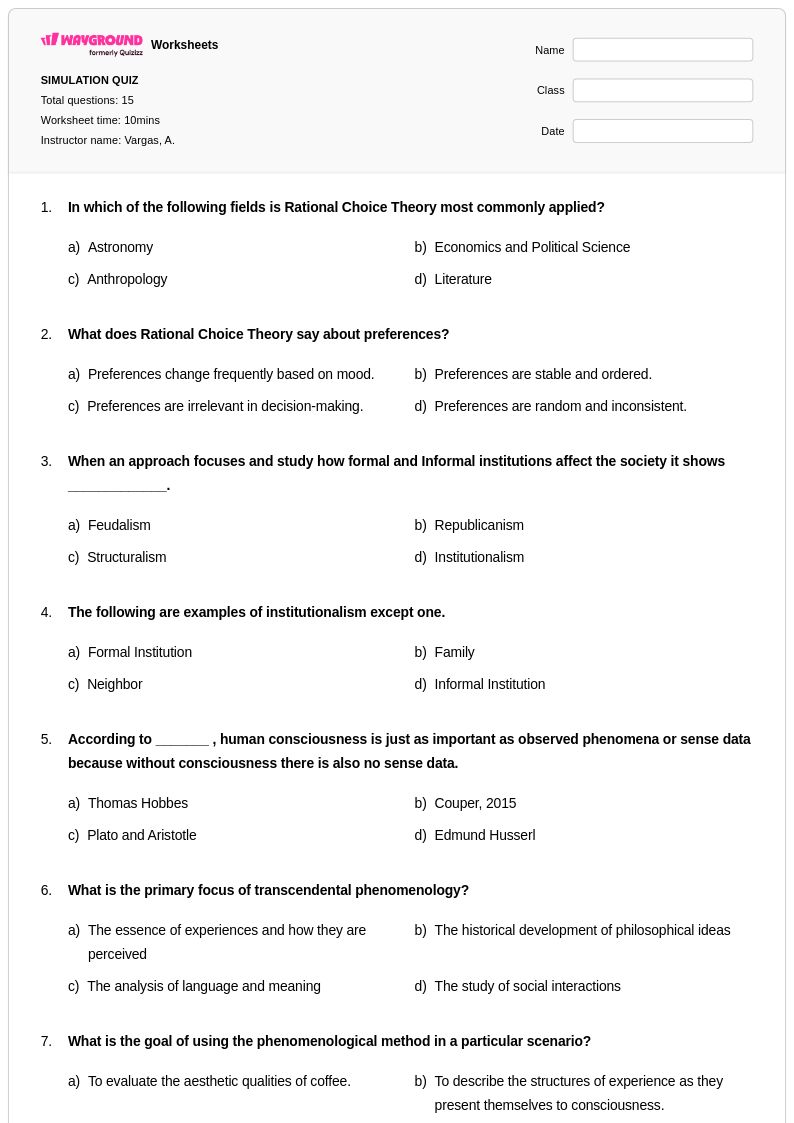
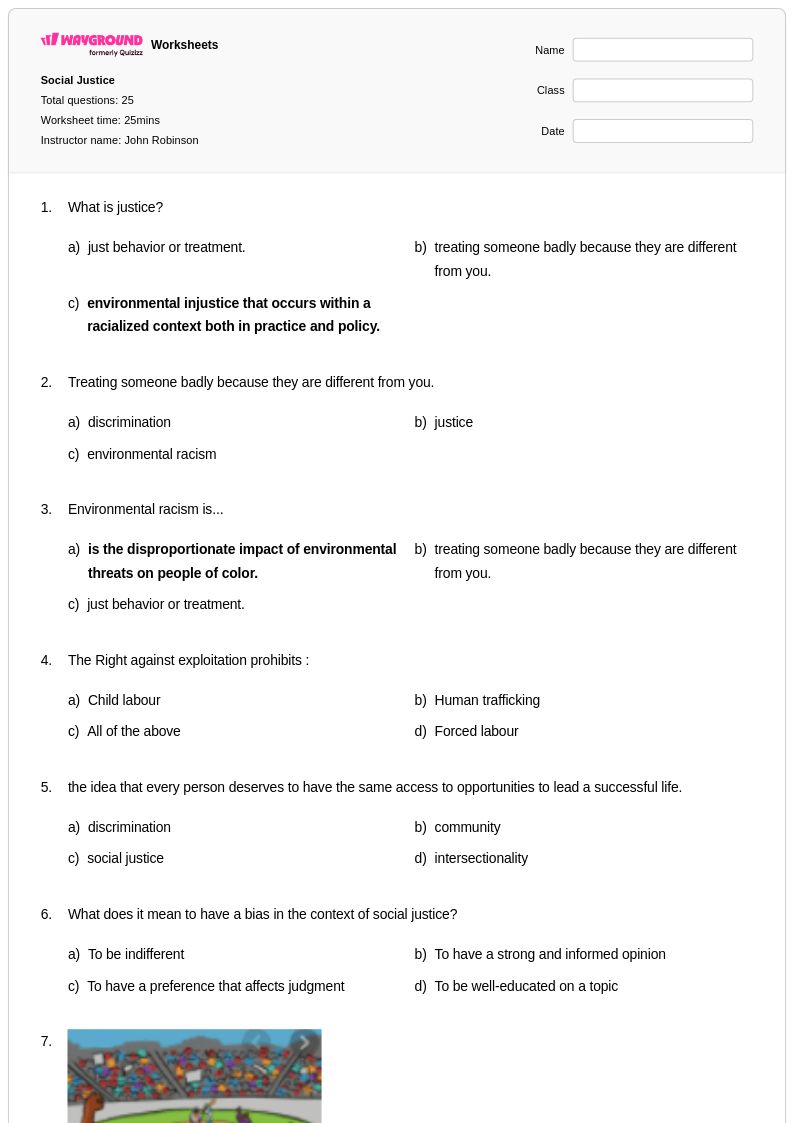
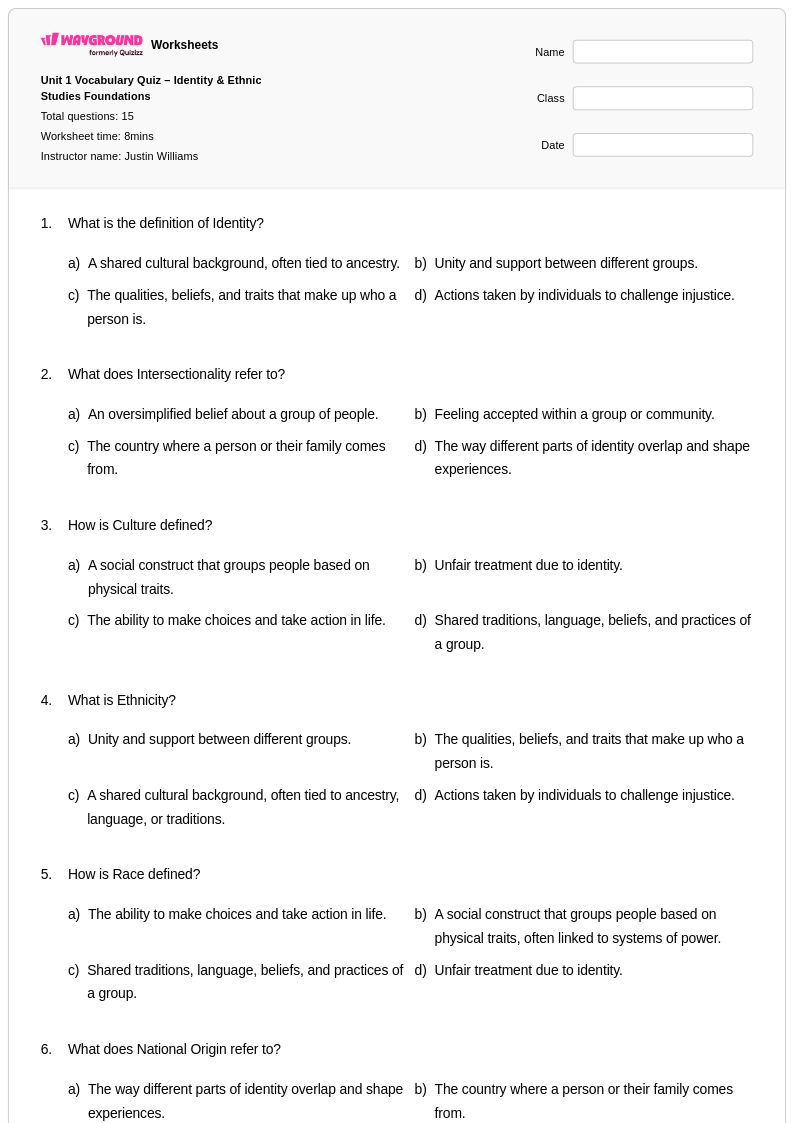
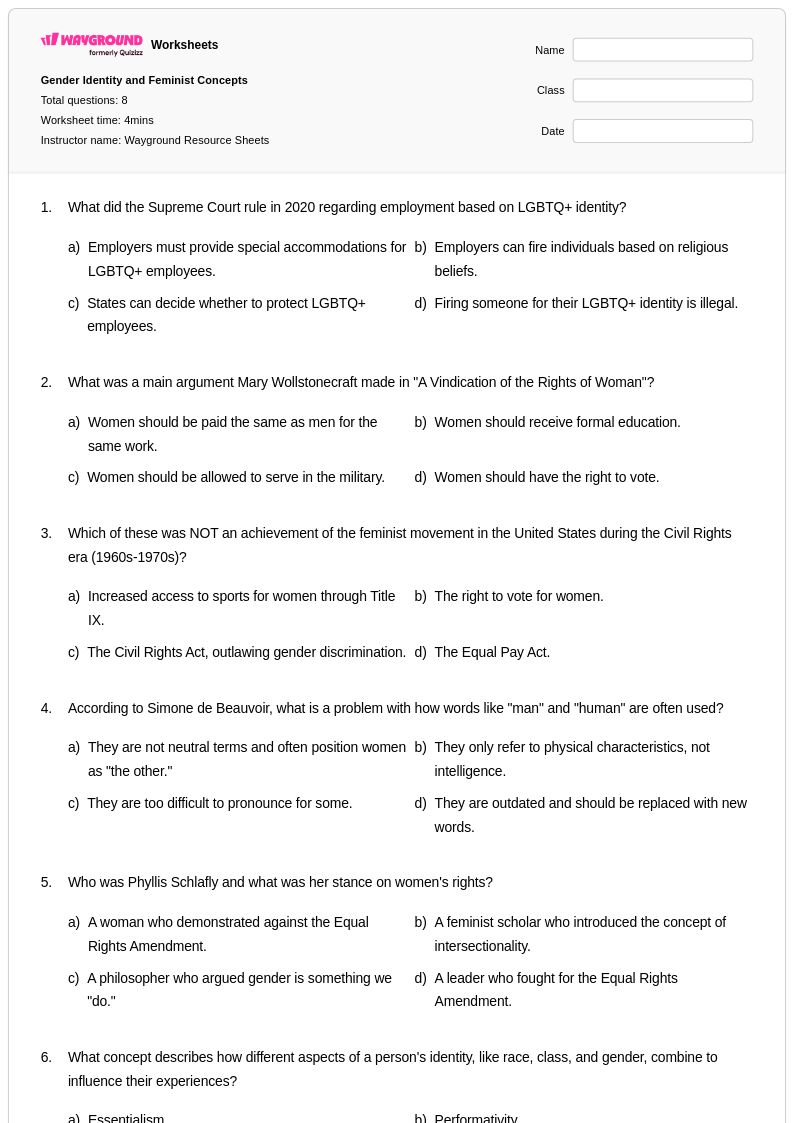
Year 11 intersectionality worksheets help students explore how multiple identities overlap within communities and cultures through engaging printables, practice problems, and comprehensive answer keys available as free PDF downloads.
Explore printable Intersectionality worksheets for Year 11
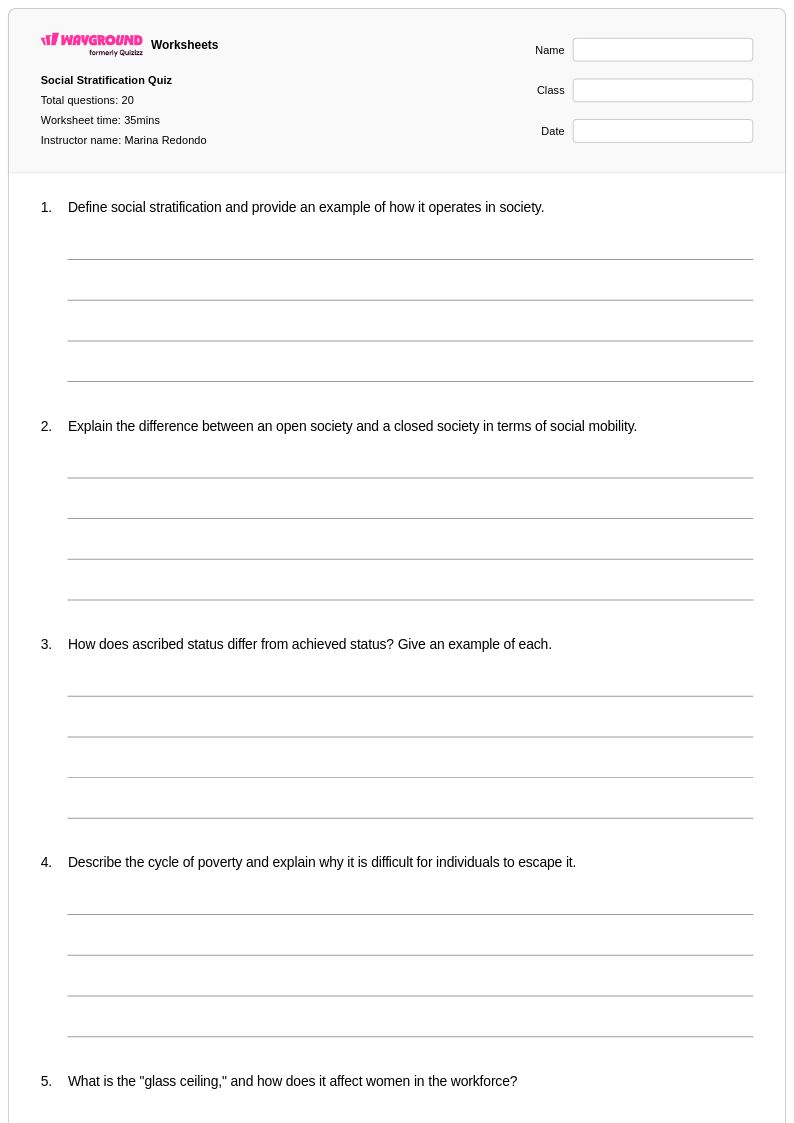
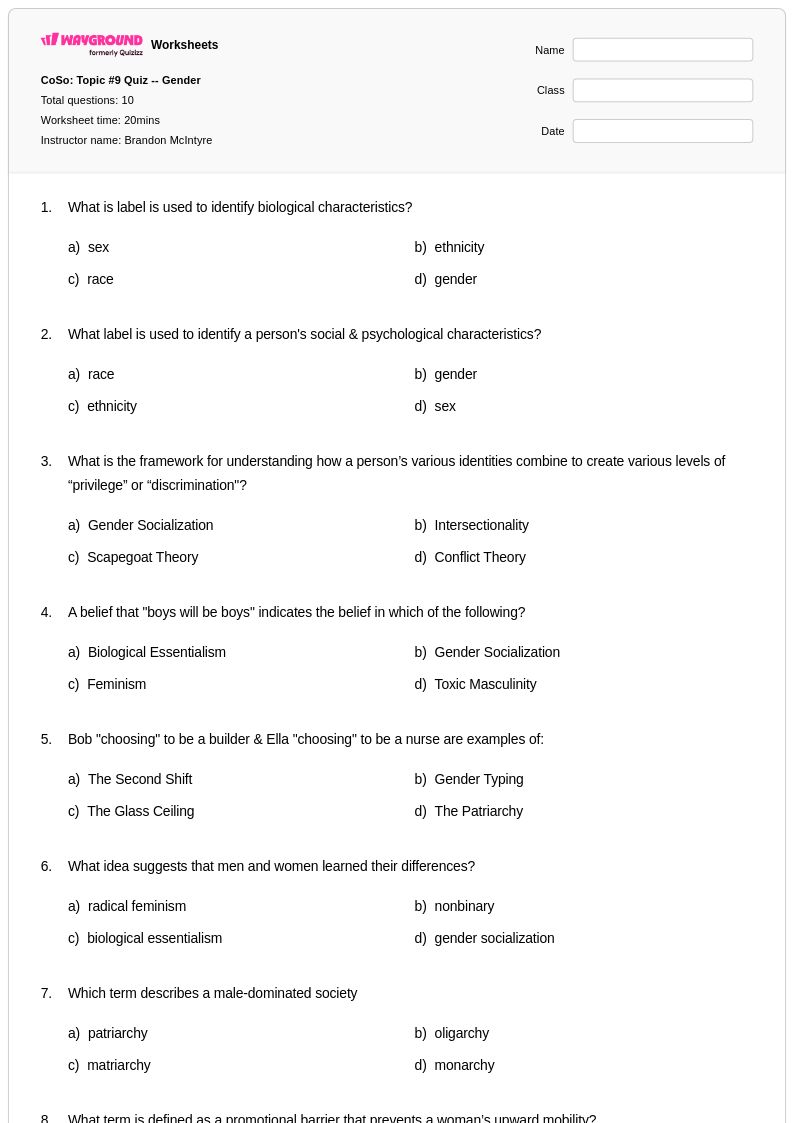
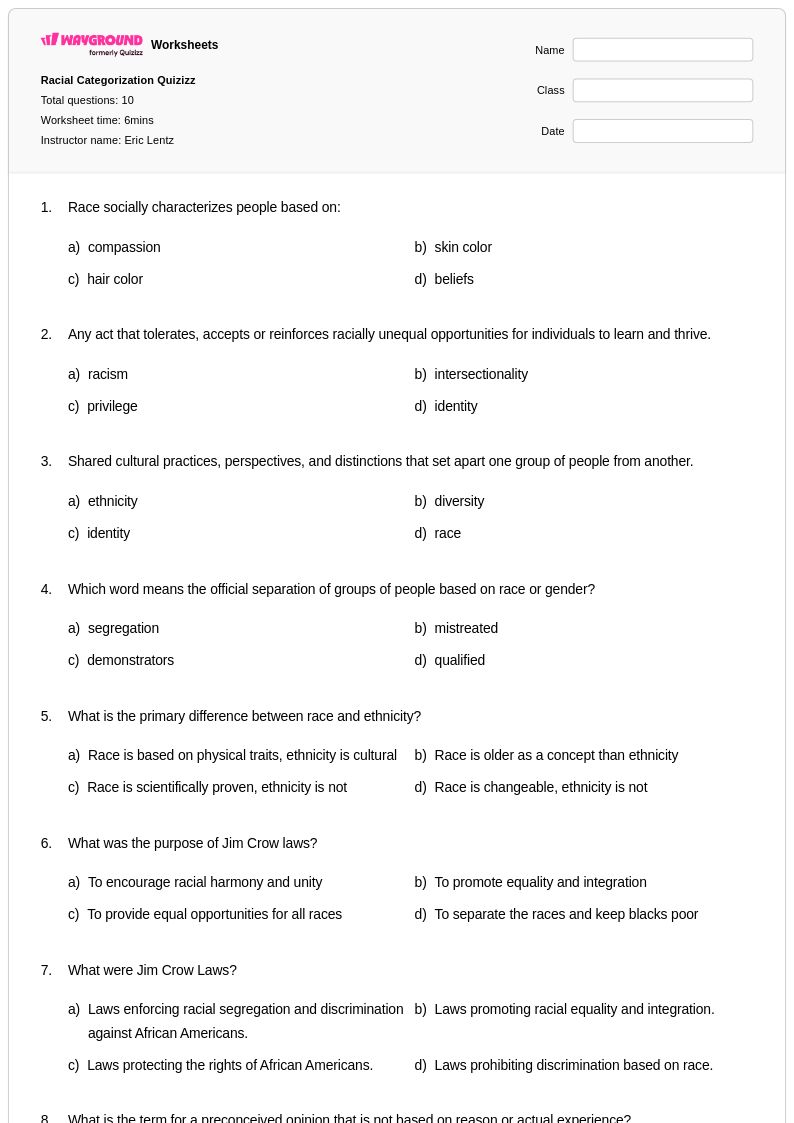
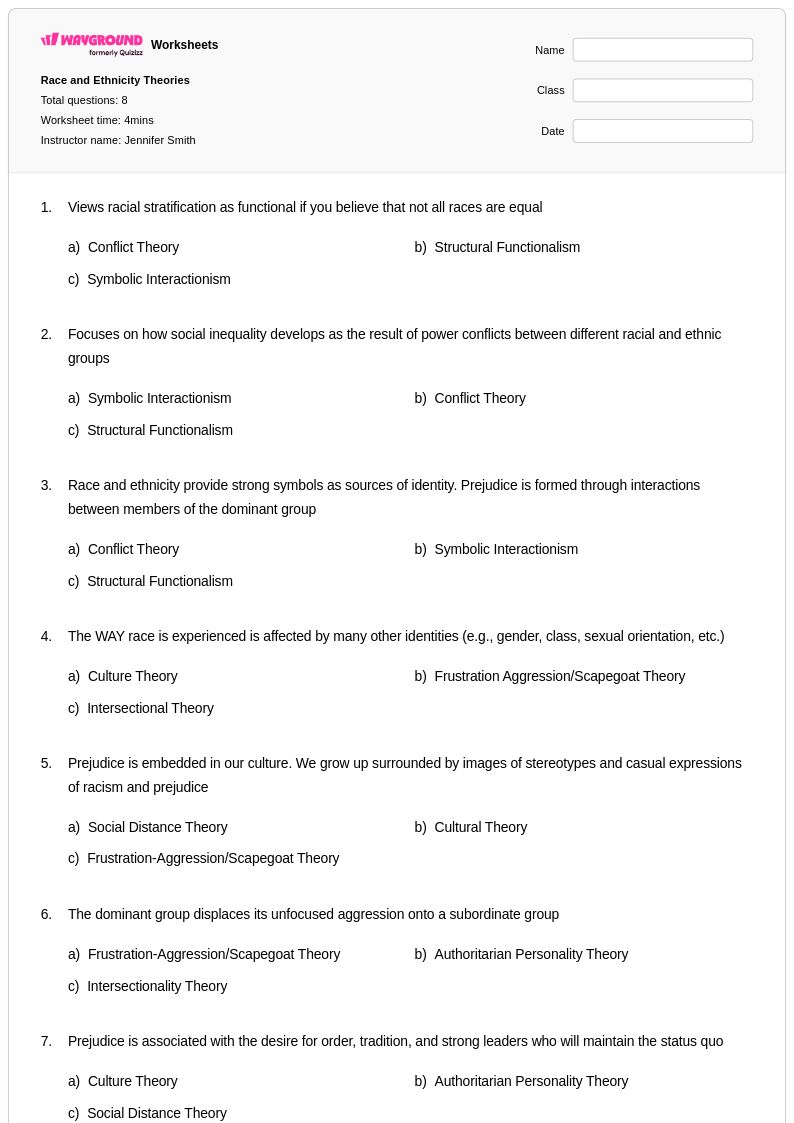
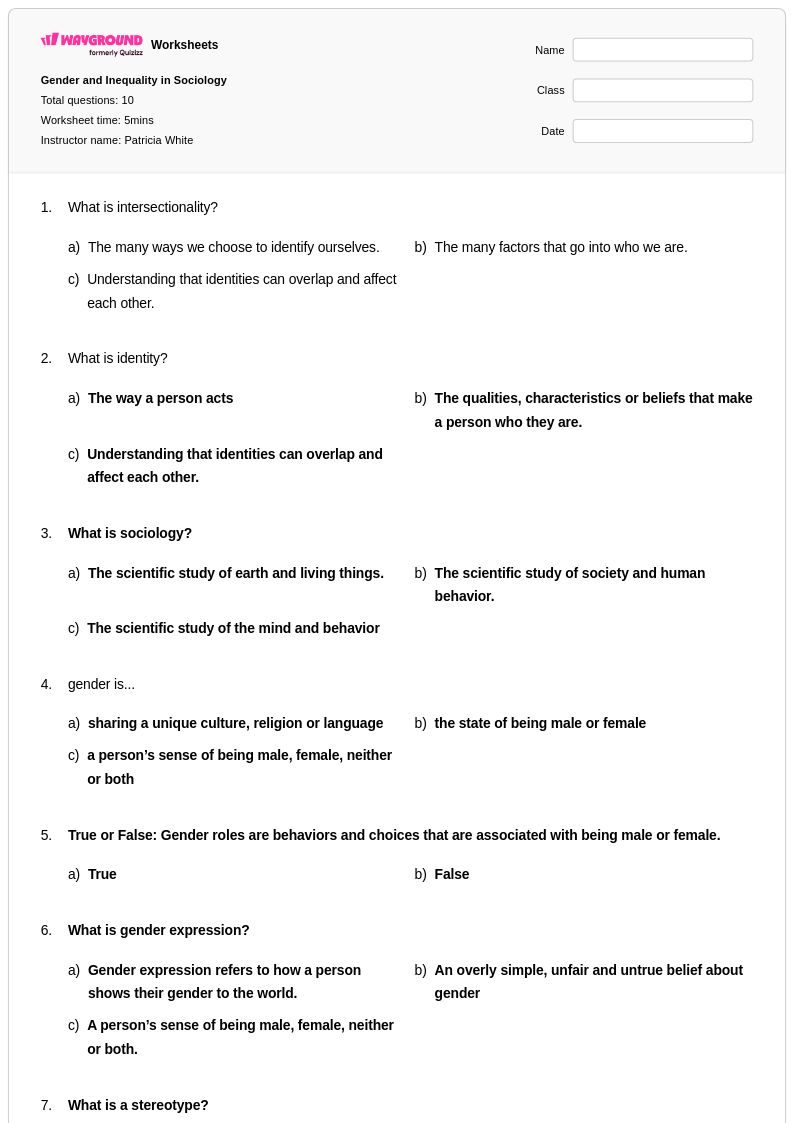
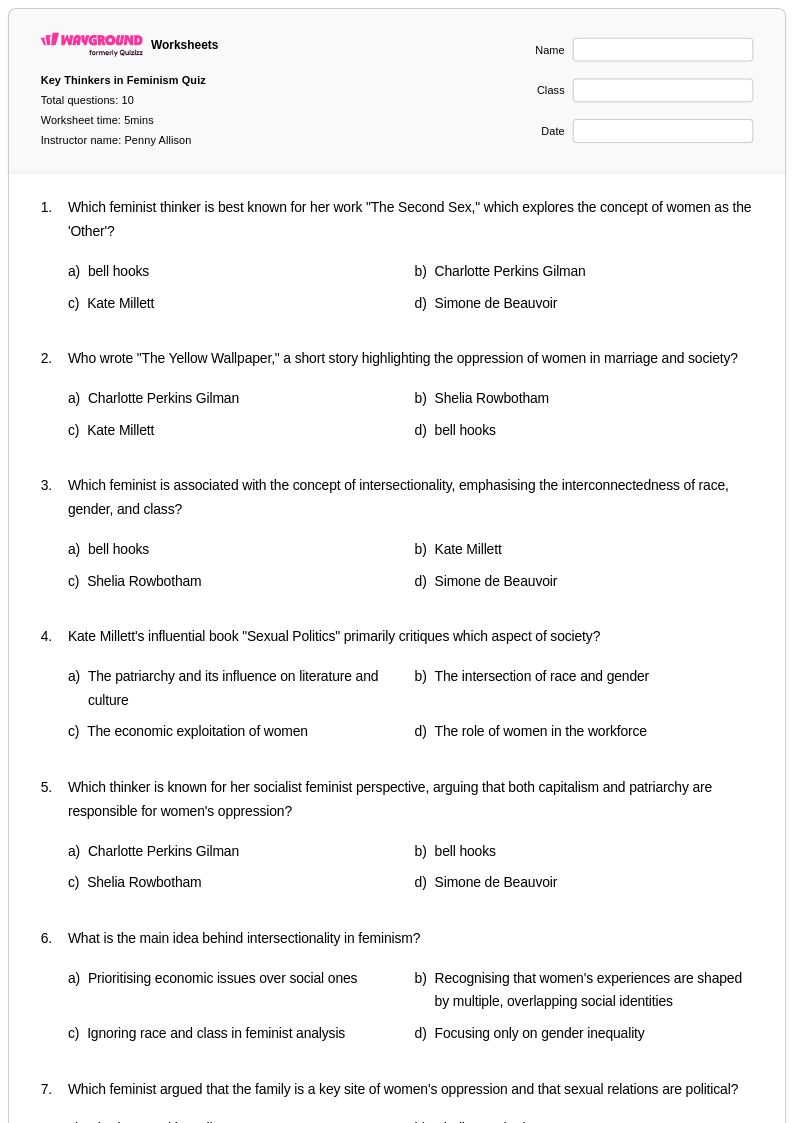
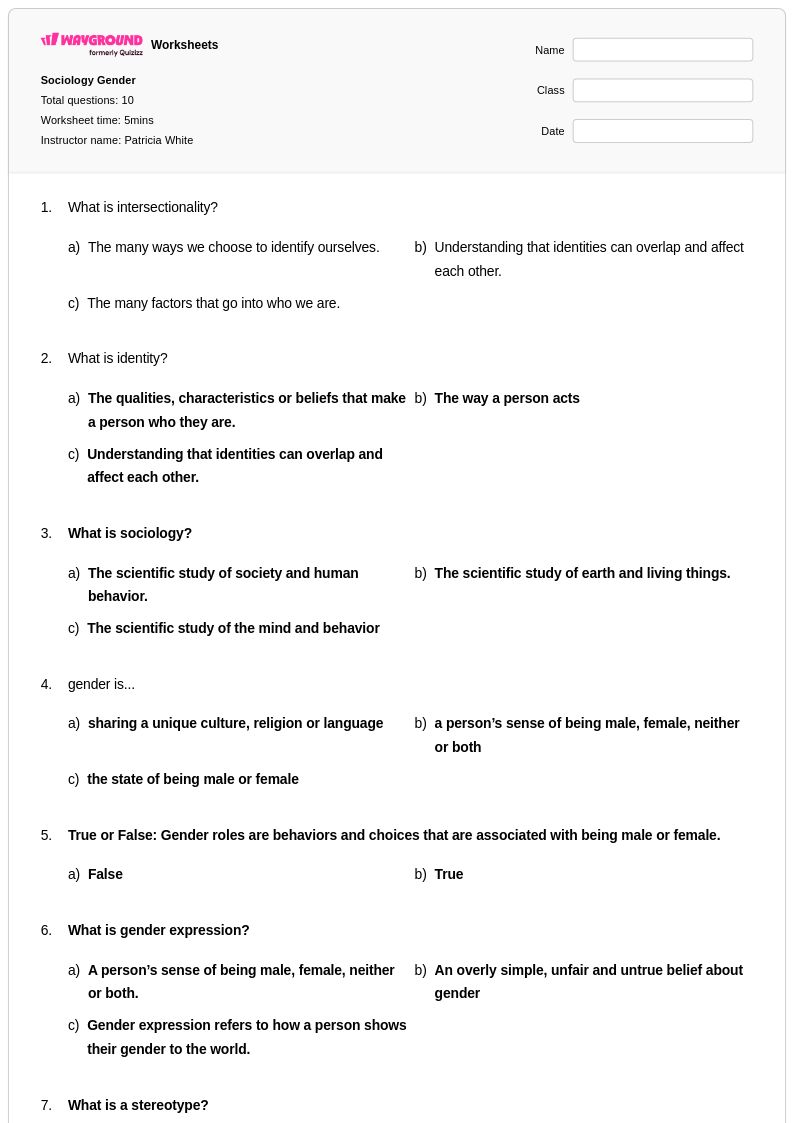
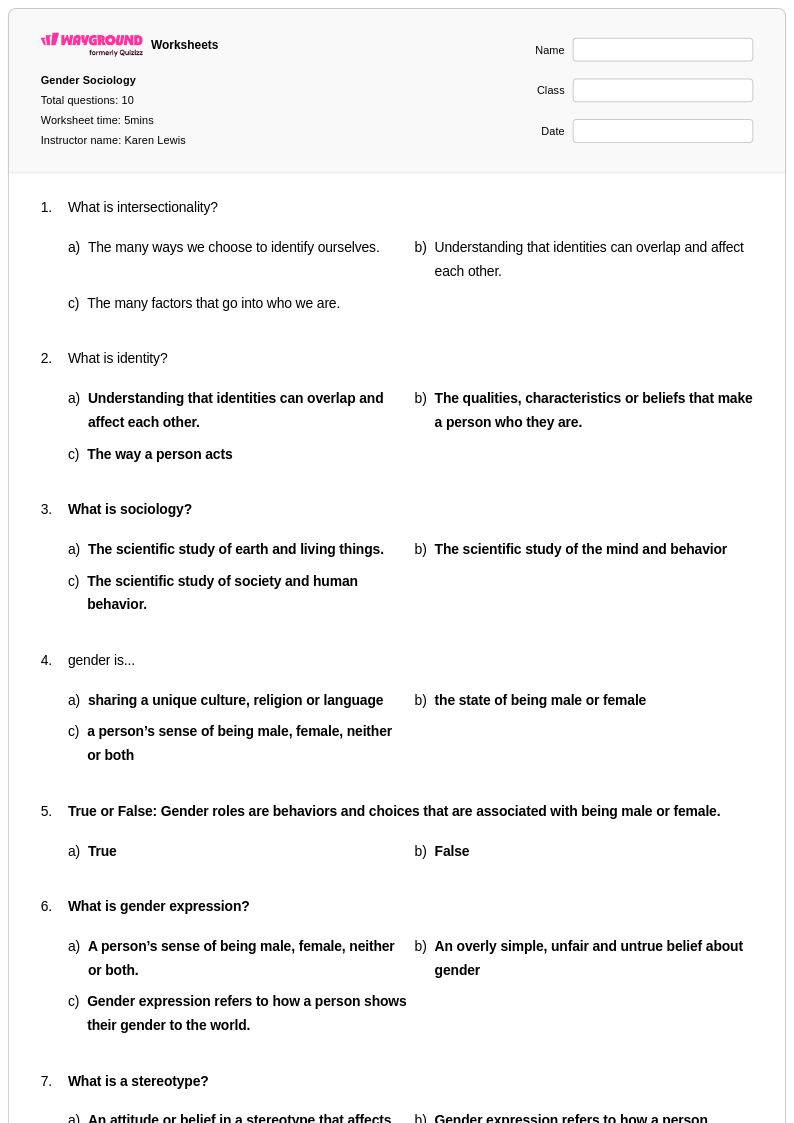
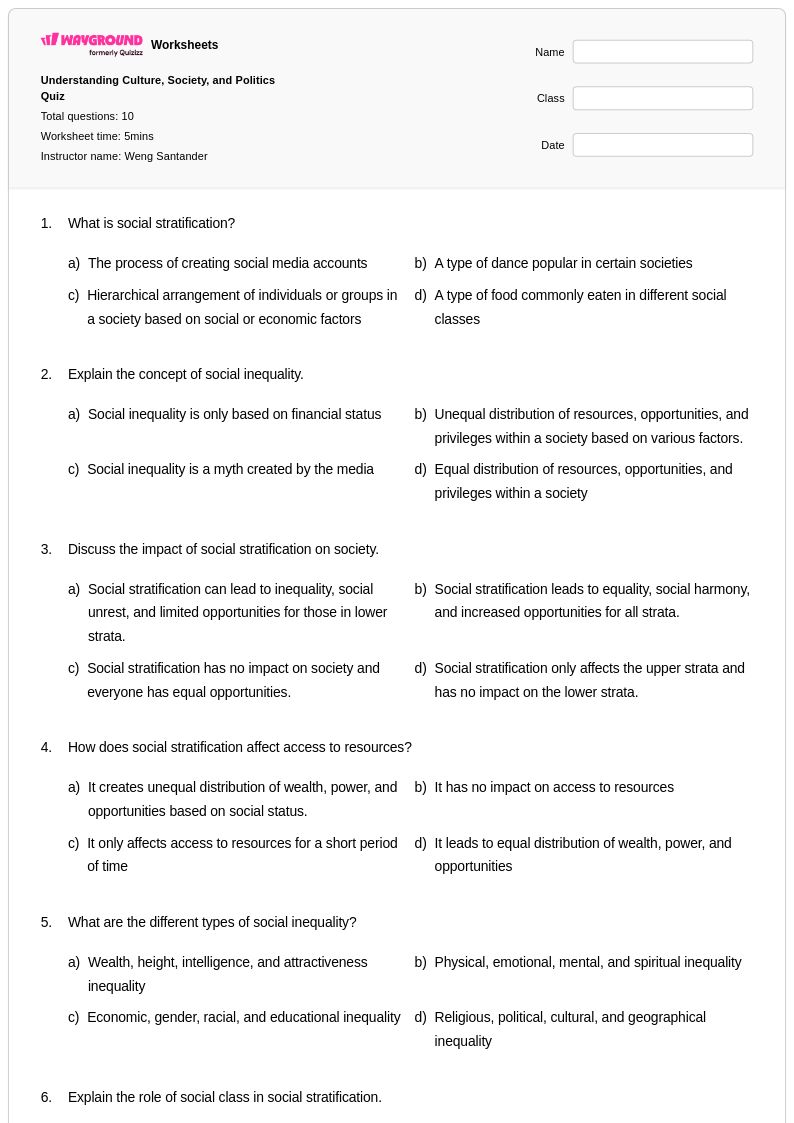
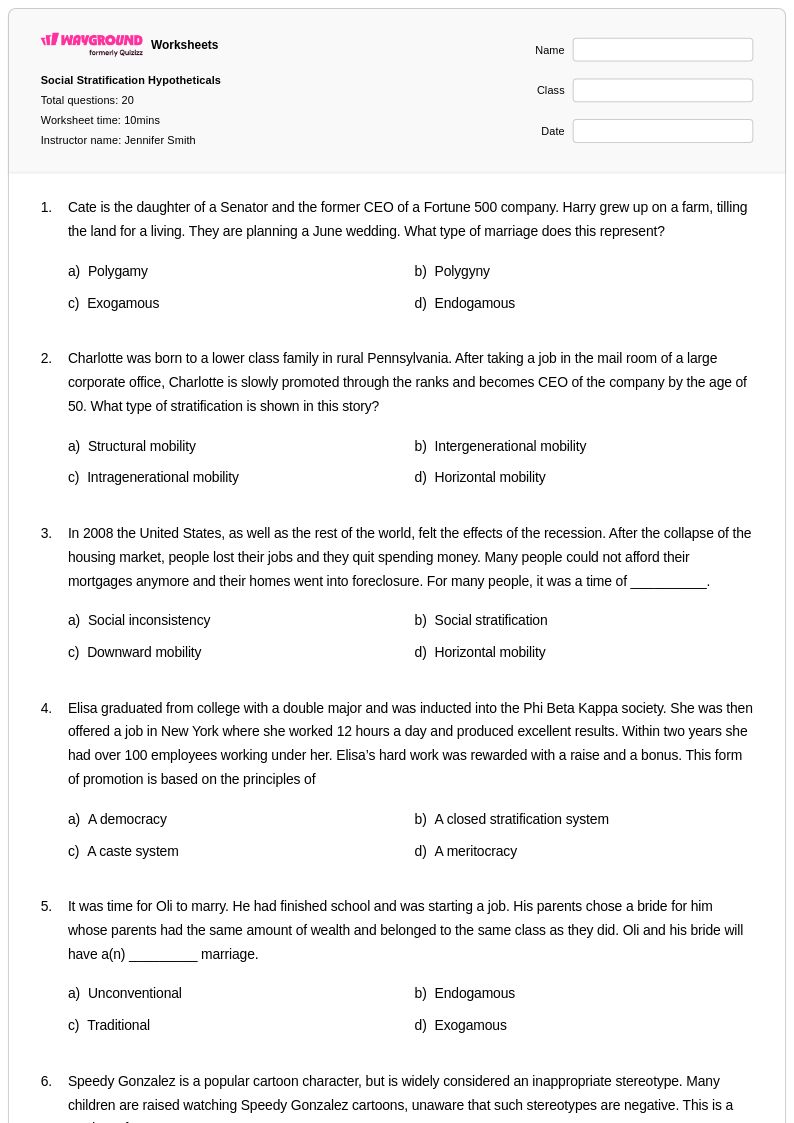
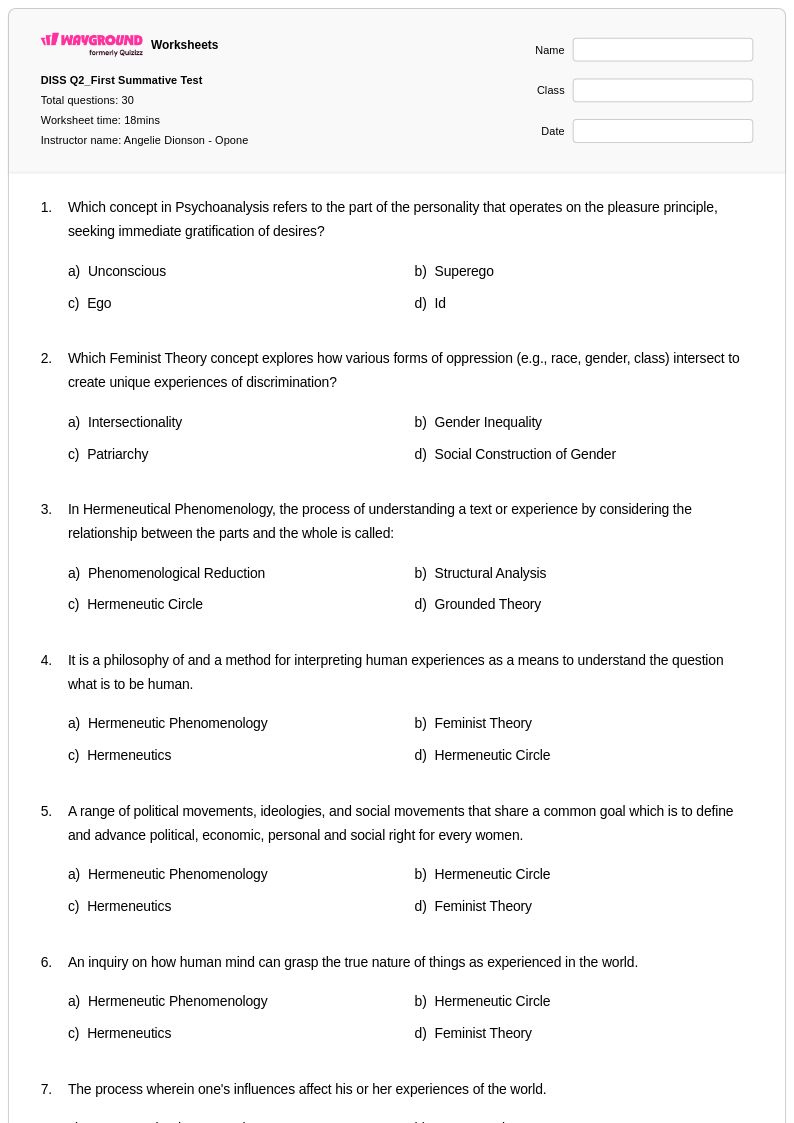
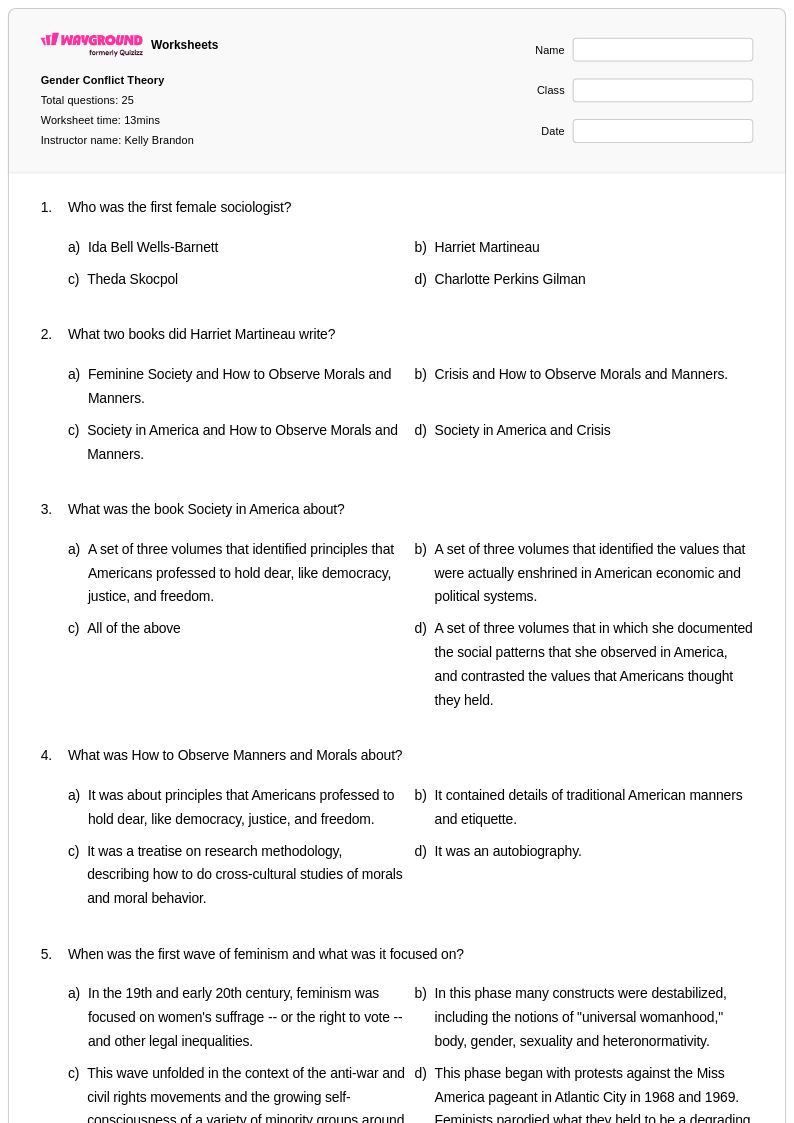
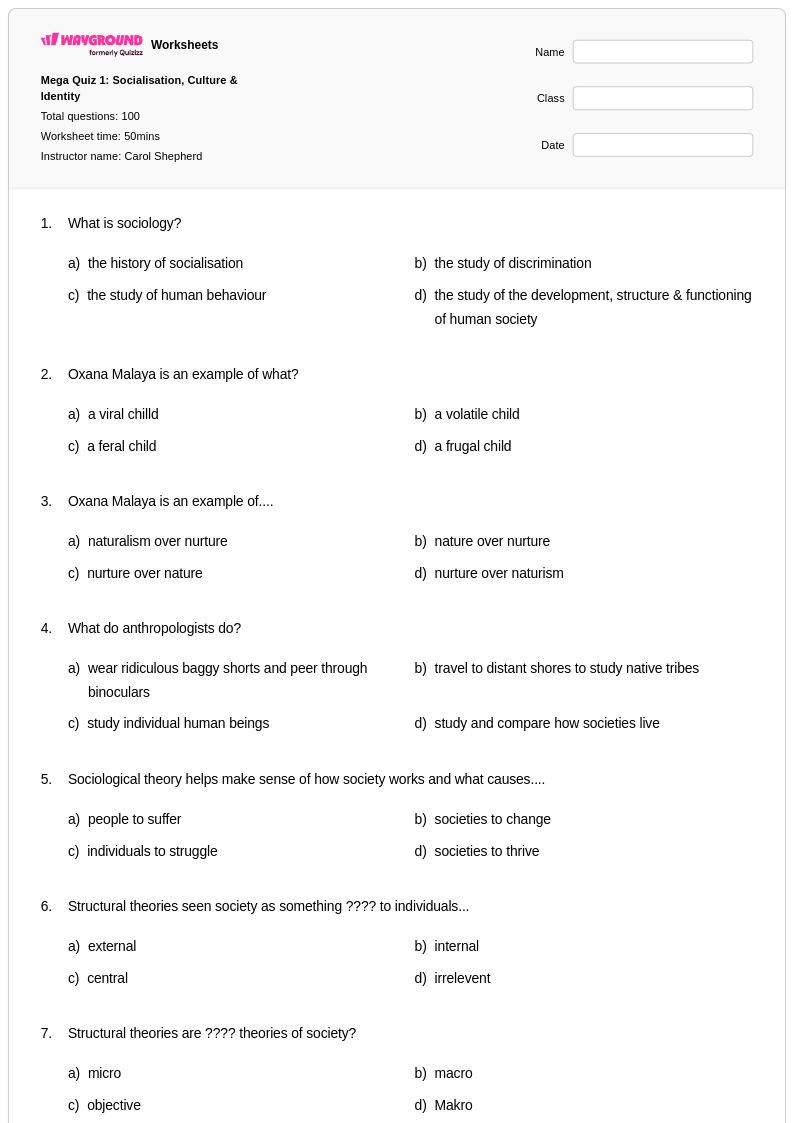
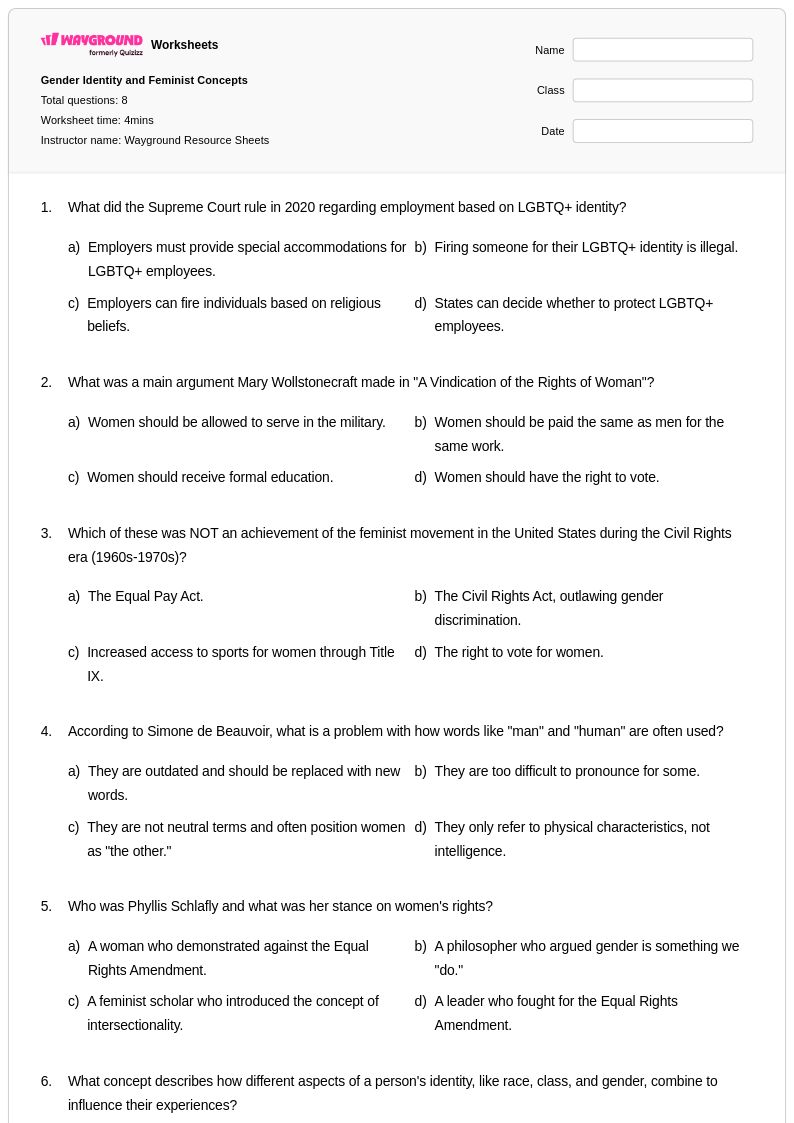
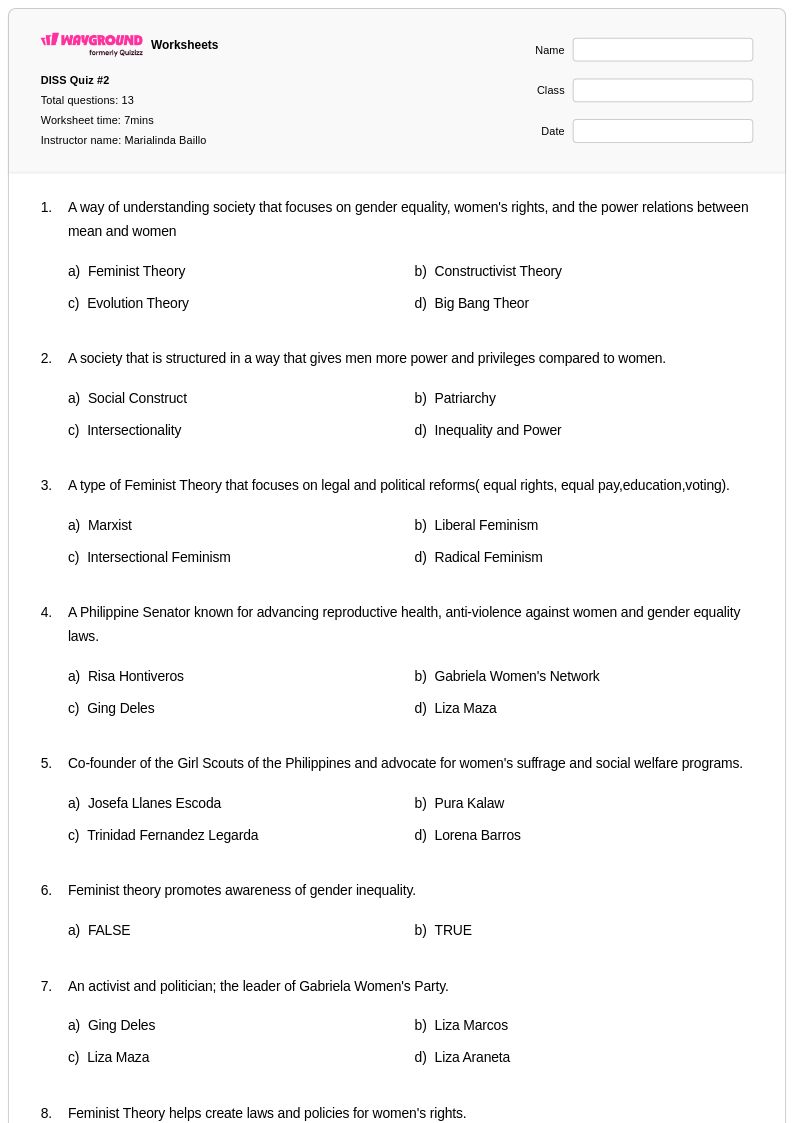
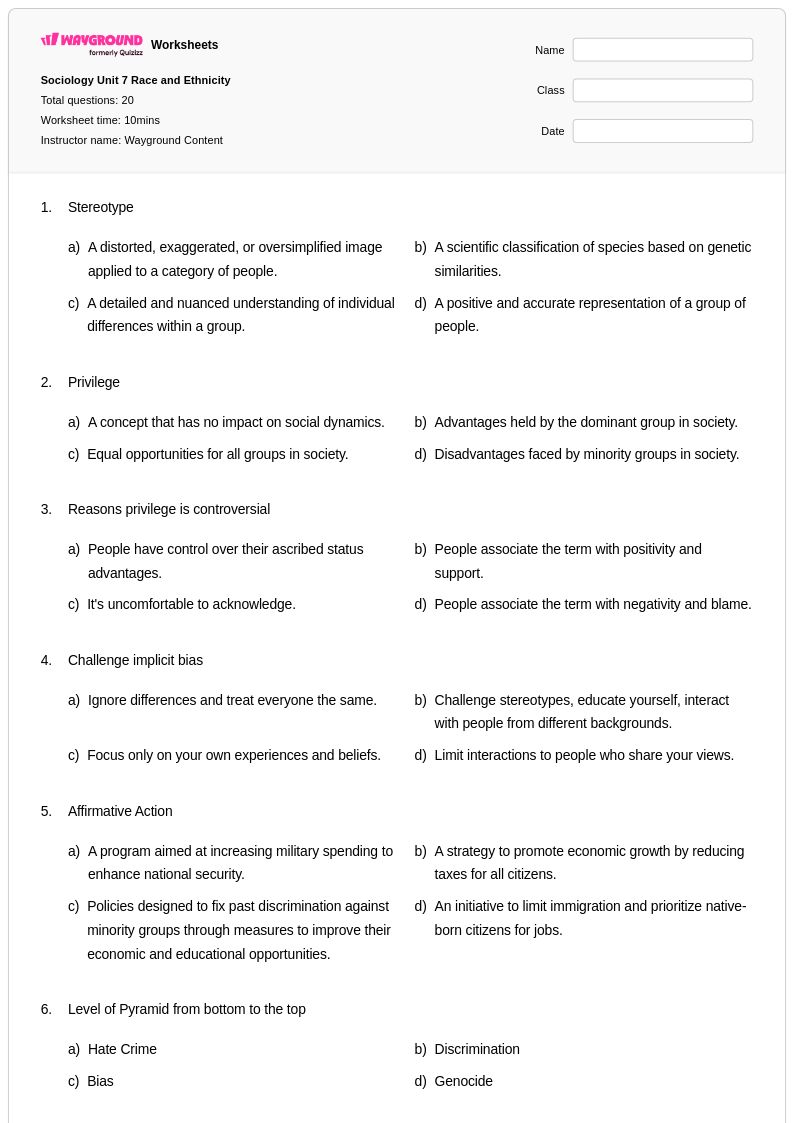
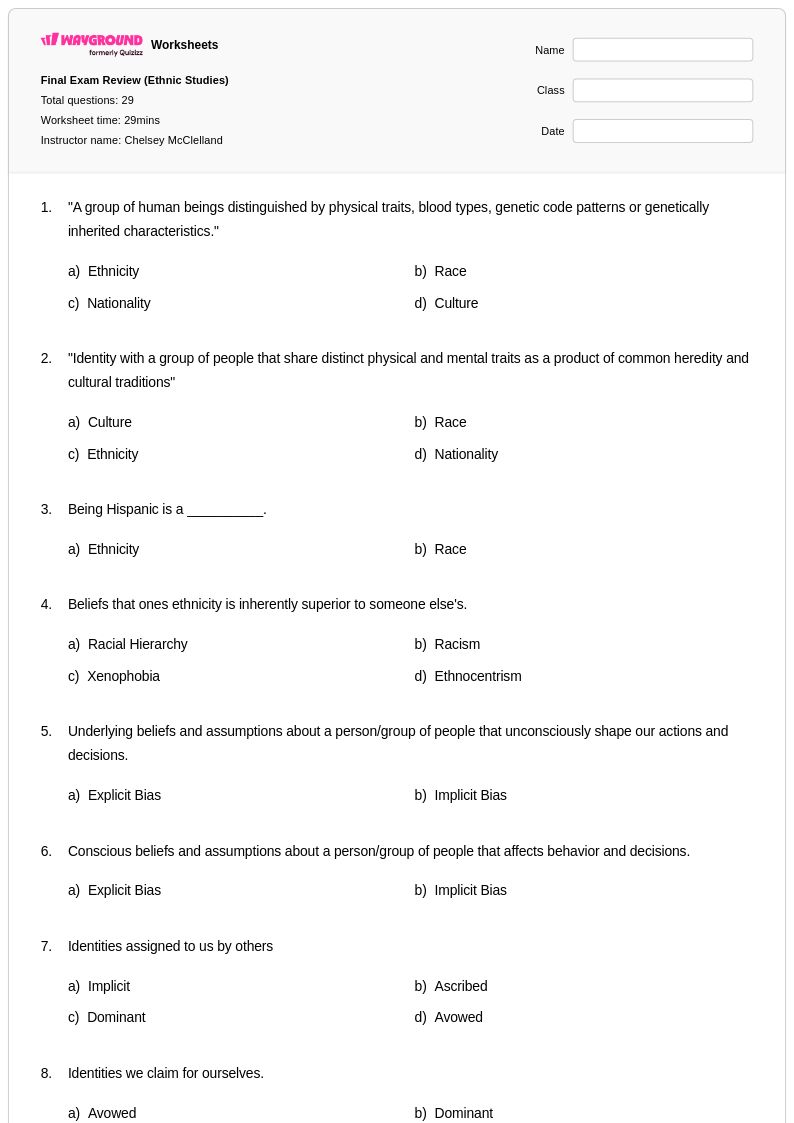
Intersectionality worksheets for Year 11 students available through Wayground (formerly Quizizz) provide comprehensive exploration of how multiple social identities interact to create unique experiences of privilege and discrimination. These academically rigorous resources guide students through critical analysis of overlapping systems of oppression, examining how factors such as race, gender, class, sexuality, and ability intersect to shape individual and community experiences. The worksheets strengthen analytical thinking skills through practice problems that challenge students to identify intersectional dynamics in historical and contemporary contexts, while answer keys support both independent study and classroom instruction. These free printables and pdf resources enable students to develop sophisticated understanding of social justice frameworks and their applications across diverse cultural contexts.
Wayground (formerly Quizizz) supports educators with an extensive collection of teacher-created intersectionality worksheets drawn from millions of available resources across social studies curricula. The platform's robust search and filtering capabilities allow teachers to locate materials specifically aligned with Year 11 standards and learning objectives, while differentiation tools enable customization for diverse student needs and learning styles. These resources are available in both printable and digital pdf formats, providing flexibility for various classroom environments and instructional approaches. Teachers can effectively utilize these materials for lesson planning, targeted remediation of complex social concepts, enrichment activities for advanced learners, and ongoing skill practice in critical thinking about community and cultural dynamics, ensuring students develop nuanced perspectives on social identity and systemic inequality.
FAQs
How do I teach intersectionality to students?
Teaching intersectionality works best when students examine real-world scenarios and historical examples that show how overlapping identities such as race, gender, class, and ethnicity shape individual experiences differently. Start by grounding students in concrete case studies before moving to abstract analysis, so they can see how privilege and discrimination operate simultaneously across multiple identity categories. Structured discussion prompts and guided reflection activities help students move from recognition to critical analysis of social dynamics.
What exercises help students practice understanding intersectionality?
Effective practice exercises include analyzing contemporary case studies where multiple identity factors interact, mapping privilege and discrimination across overlapping social categories, and comparing historical examples that illustrate how intersecting identities influence group experiences. Worksheet activities that ask students to examine a single scenario through multiple identity lenses build the analytical reasoning and cultural awareness intersectionality requires. These structured practice problems scaffold complexity so students can engage with nuanced social concepts without becoming overwhelmed.
What misconceptions do students commonly have about intersectionality?
A common misconception is that intersectionality is simply about listing identity categories rather than understanding how those categories interact to produce distinct, compounded experiences. Students often treat race, gender, and class as independent variables rather than recognizing that their overlap creates qualitatively different social realities. Another frequent error is conflating intersectionality with general diversity awareness, missing the framework's focus on how systems of power and privilege operate simultaneously across multiple axes of identity.
How can I use intersectionality worksheets to support diverse learners in my classroom?
Intersectionality worksheets on Wayground are available in both printable PDF and digital formats, making them accessible across traditional and technology-integrated classroom environments, and they can be hosted as a quiz directly on Wayground. For students who need additional support, Wayground's accommodation tools allow teachers to enable read-aloud functionality so complex text and prompts are audio-accessible, reduce answer choices to lower cognitive load, or extend time for individual students working through dense social analysis questions. These settings can be assigned per student and carry over across future sessions without disrupting the rest of the class.
How do intersectionality worksheets help students develop critical thinking skills?
Intersectionality worksheets build critical thinking by requiring students to analyze how multiple social systems operate on a single individual or group simultaneously, rather than evaluating identity factors in isolation. Activities that connect privilege, discrimination, and social justice from multiple perspectives train students to recognize complexity and avoid reductive explanations of social experience. Over time, this kind of structured analytical practice strengthens students' capacity to evaluate arguments and evidence about identity and inequality with greater nuance.
Can intersectionality worksheets be used for both classroom instruction and independent study?
Yes, intersectionality worksheets are designed to work in both settings because they include detailed answer keys that allow students to self-check their understanding without teacher facilitation. In a classroom context, teachers can use them for guided discussion, targeted remediation, or enrichment for advanced learners. For independent study, the structured prompts and real-world scenarios give students enough scaffolding to engage meaningfully with complex social concepts on their own.