Free Printable Jobs and Occupations Worksheets for Year 2
Year 2 jobs and occupations printables help students explore different careers and community workers through engaging social studies worksheets with answer keys and free PDF activities that build understanding of how people contribute to their communities.
Explore printable Jobs and Occupations worksheets for Year 2
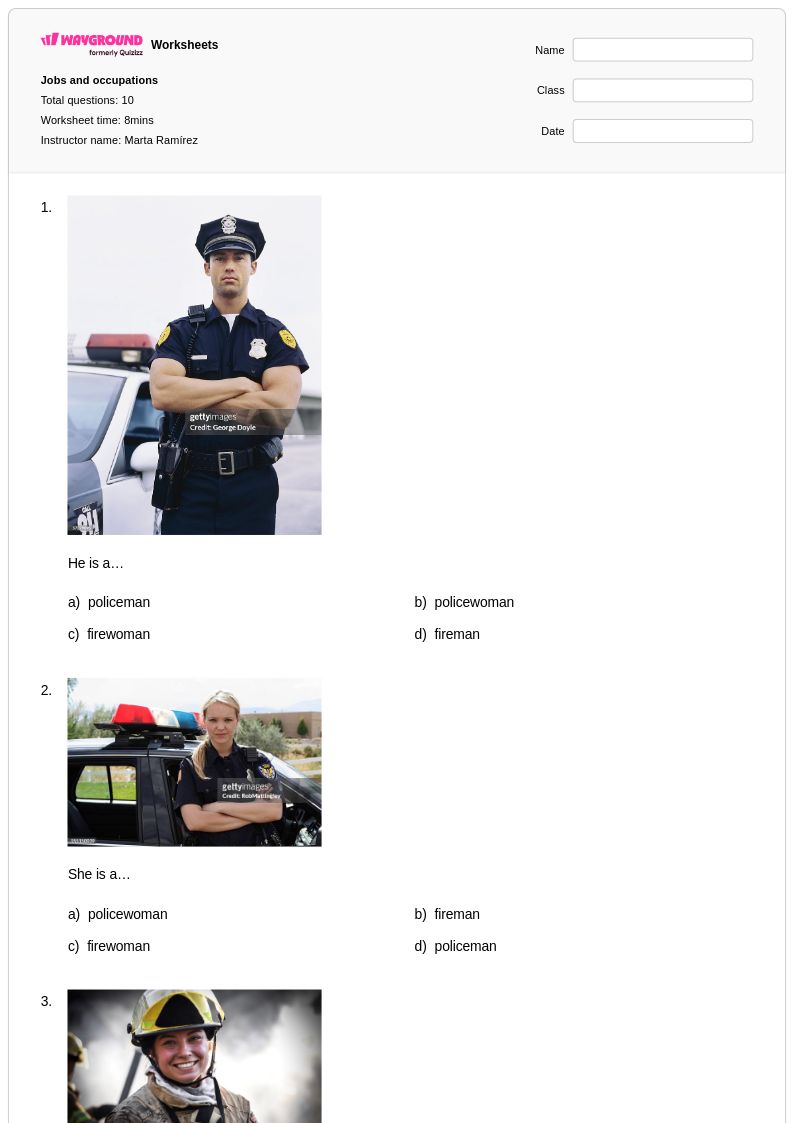
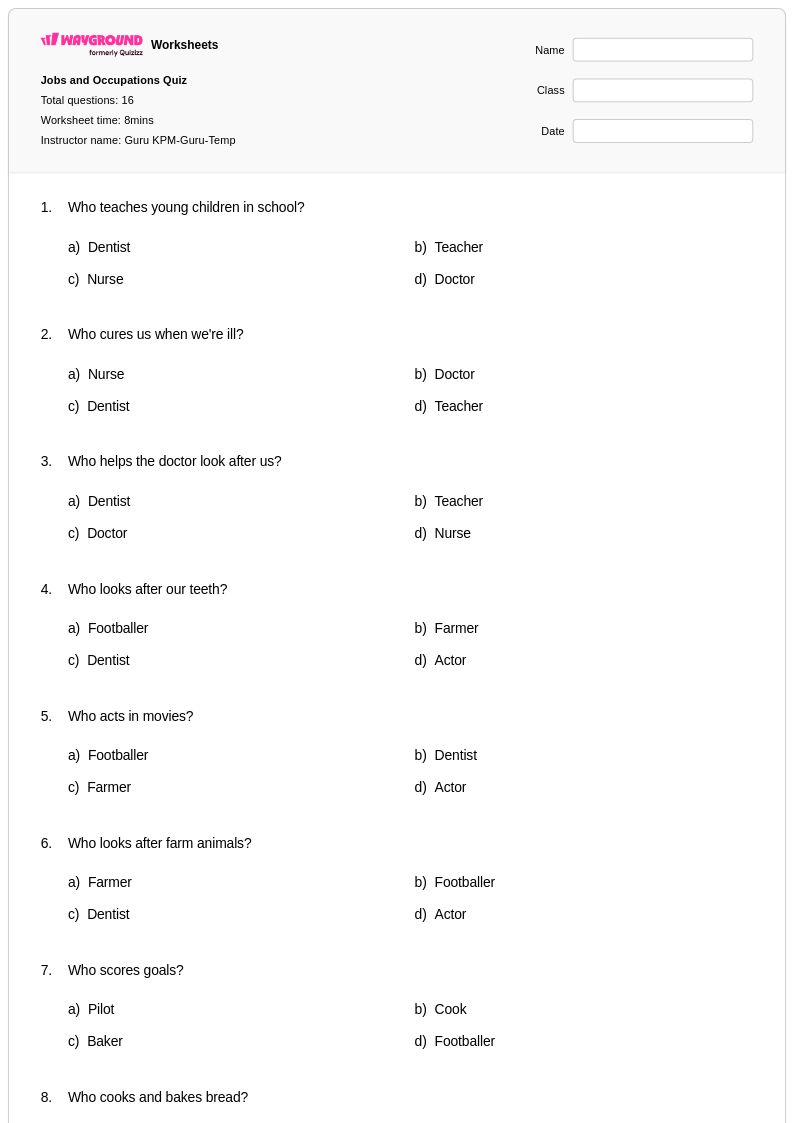
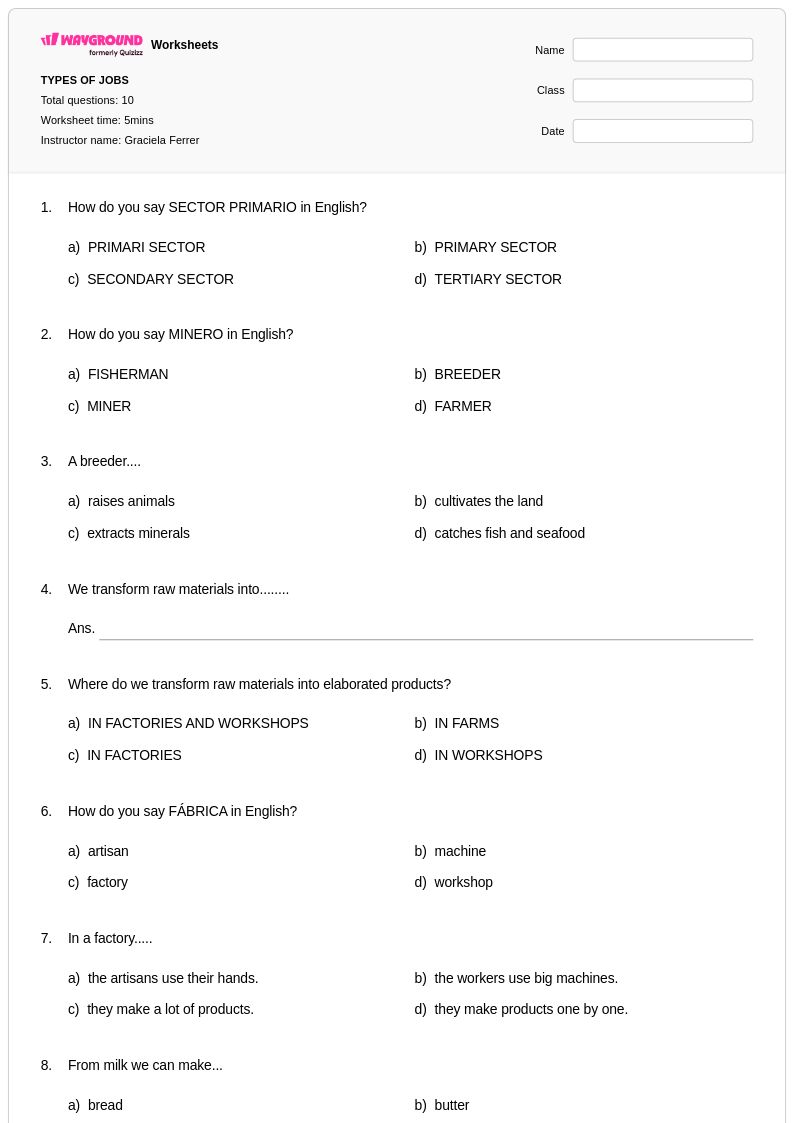
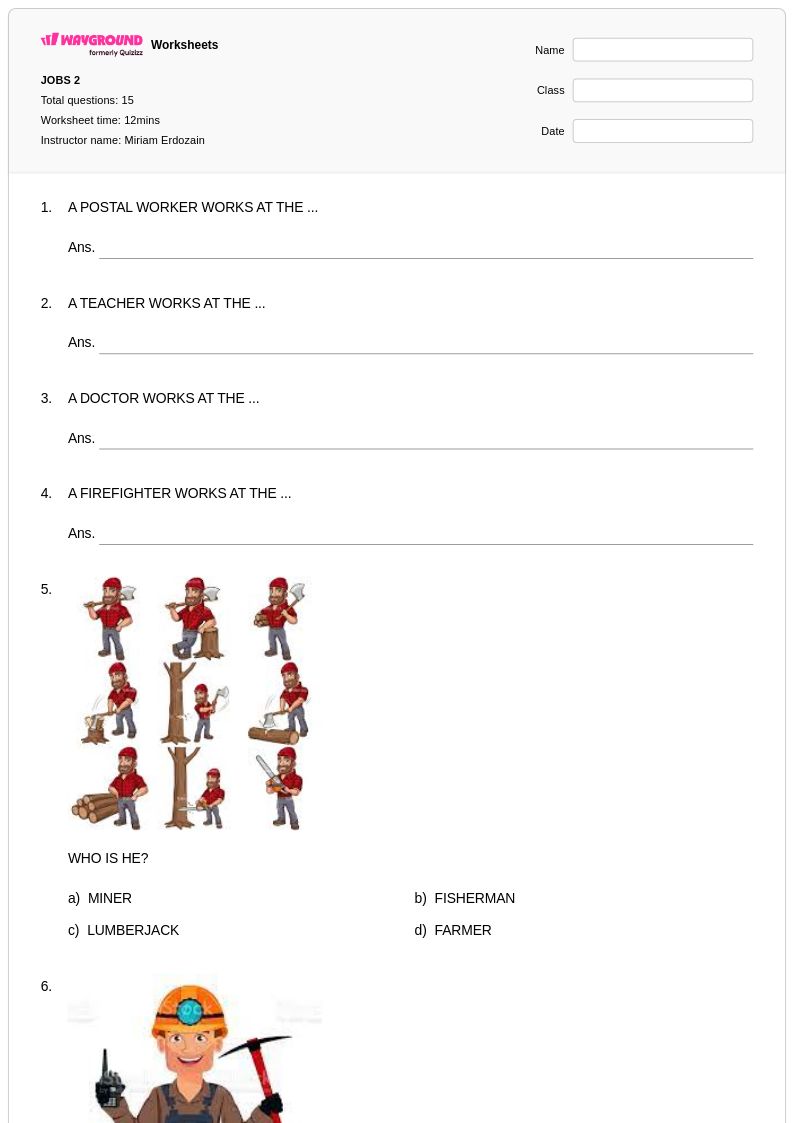
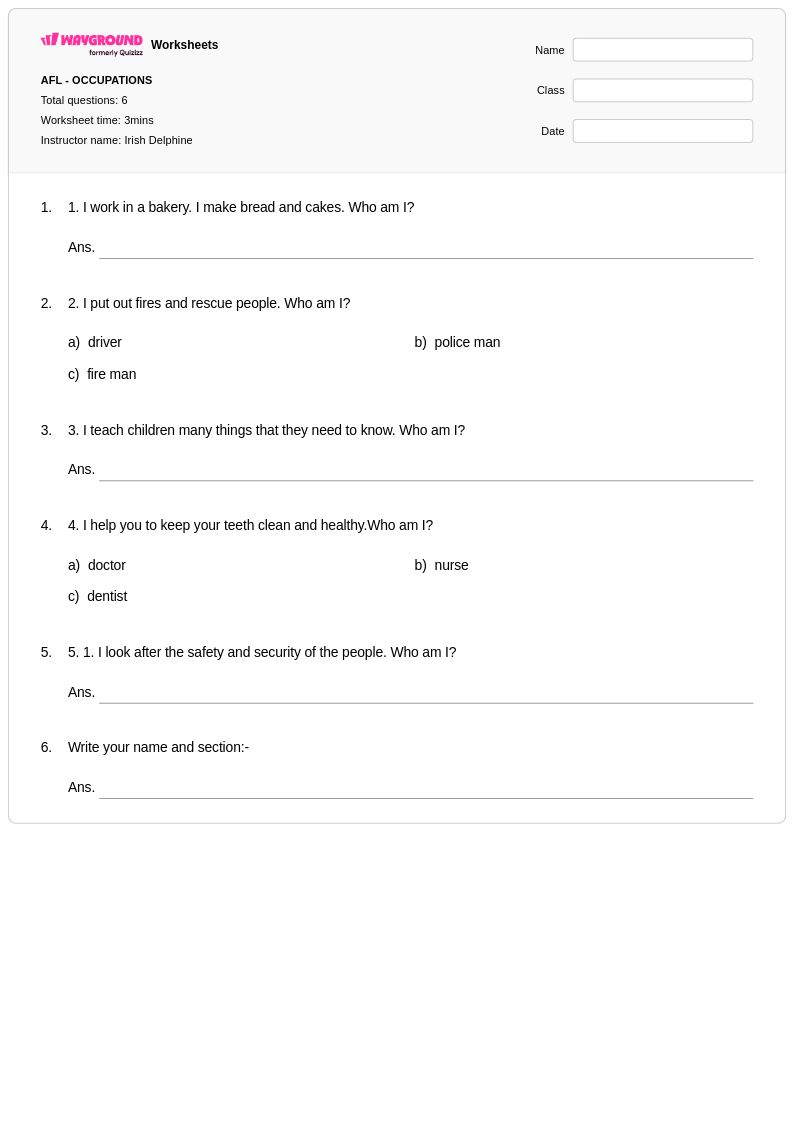
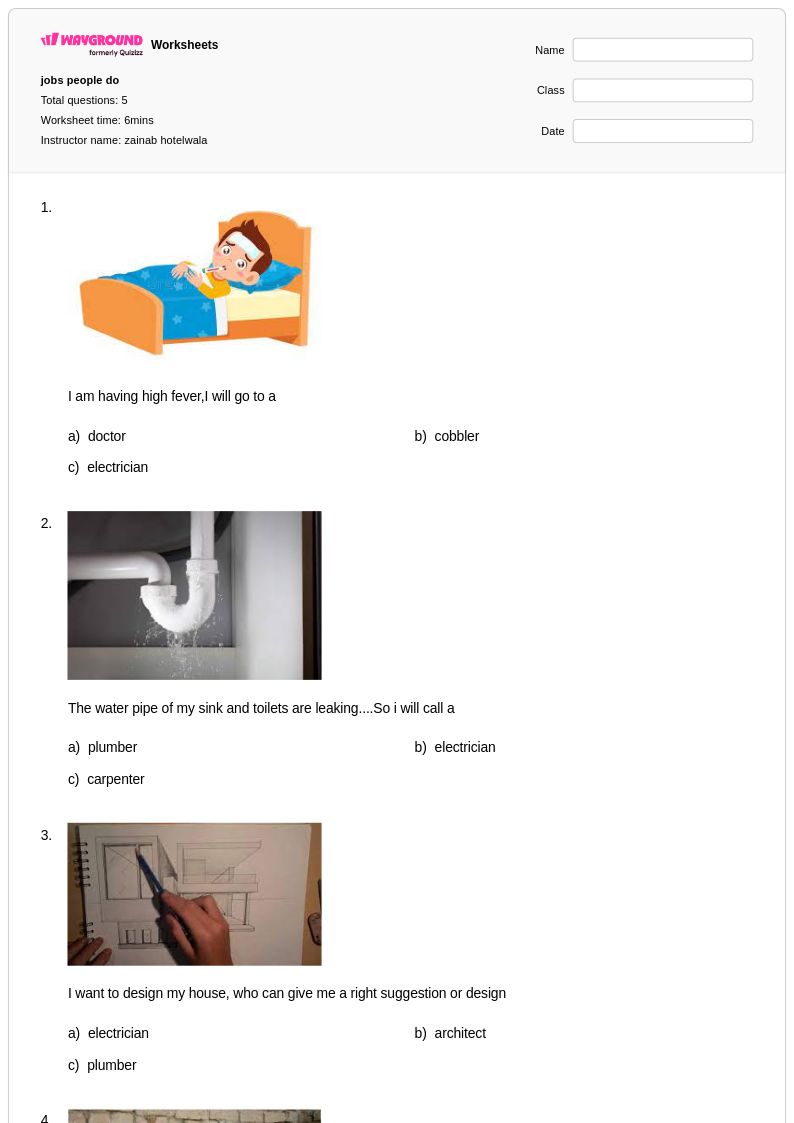
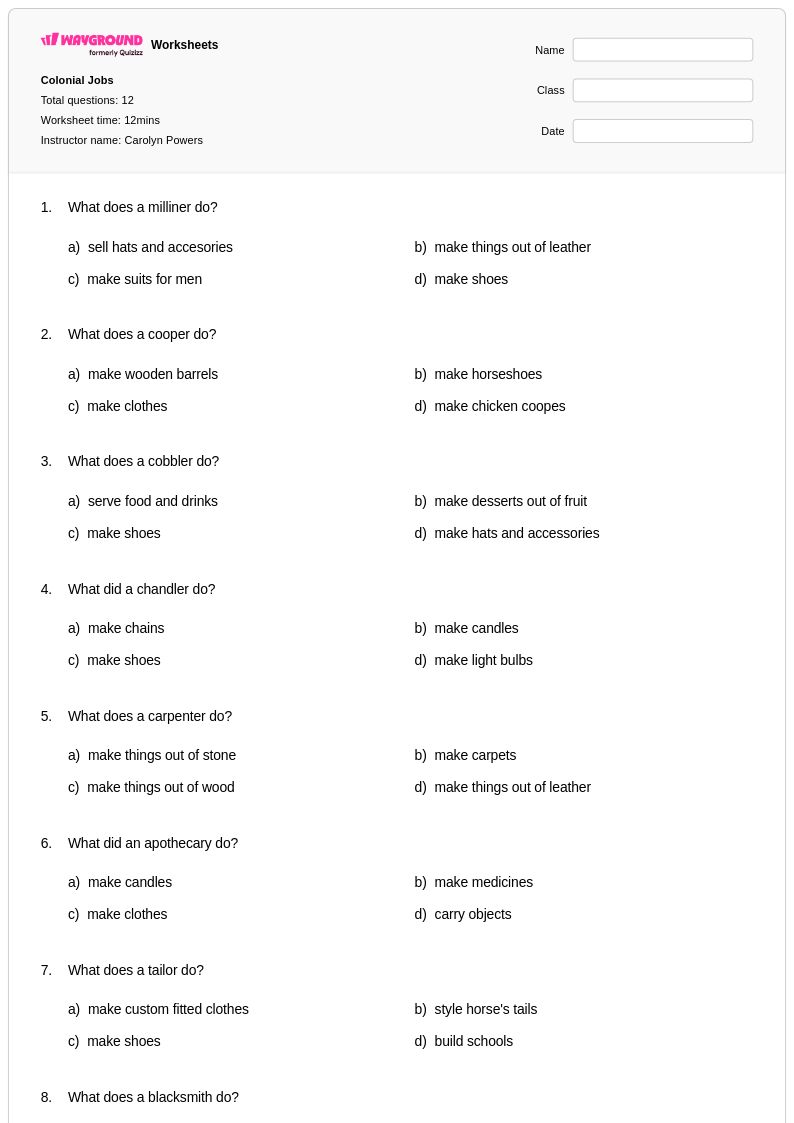
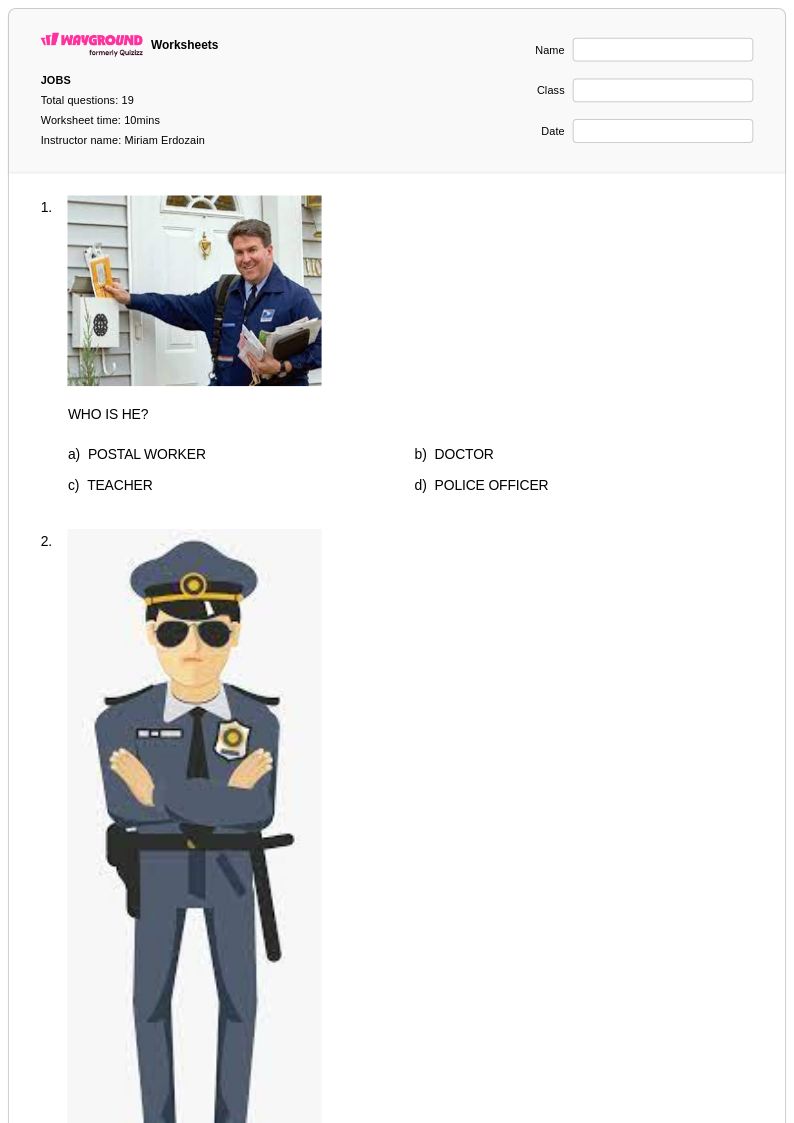
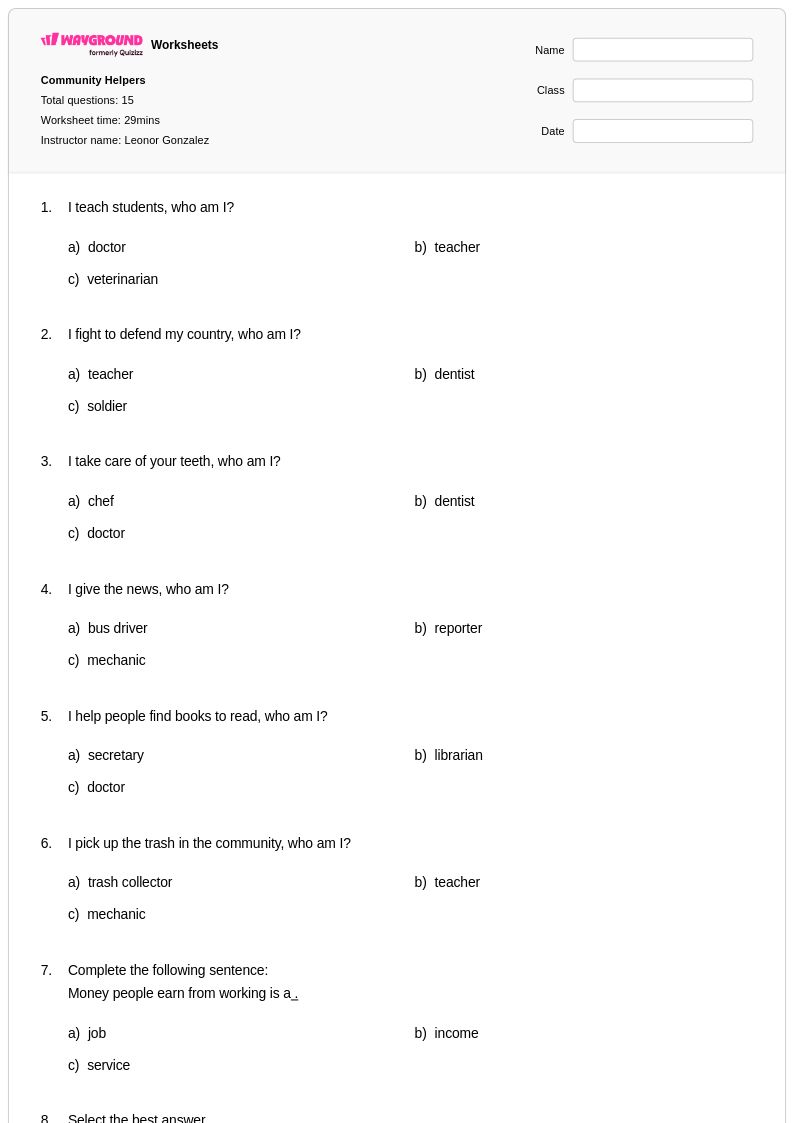
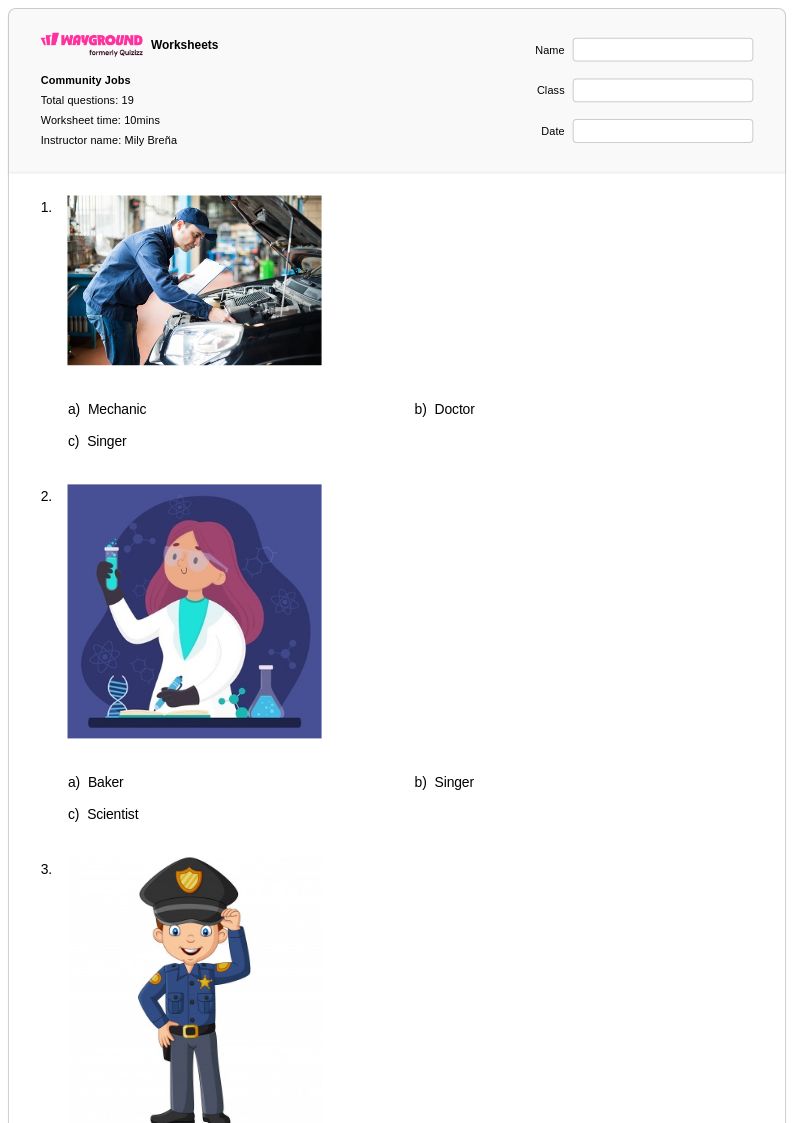
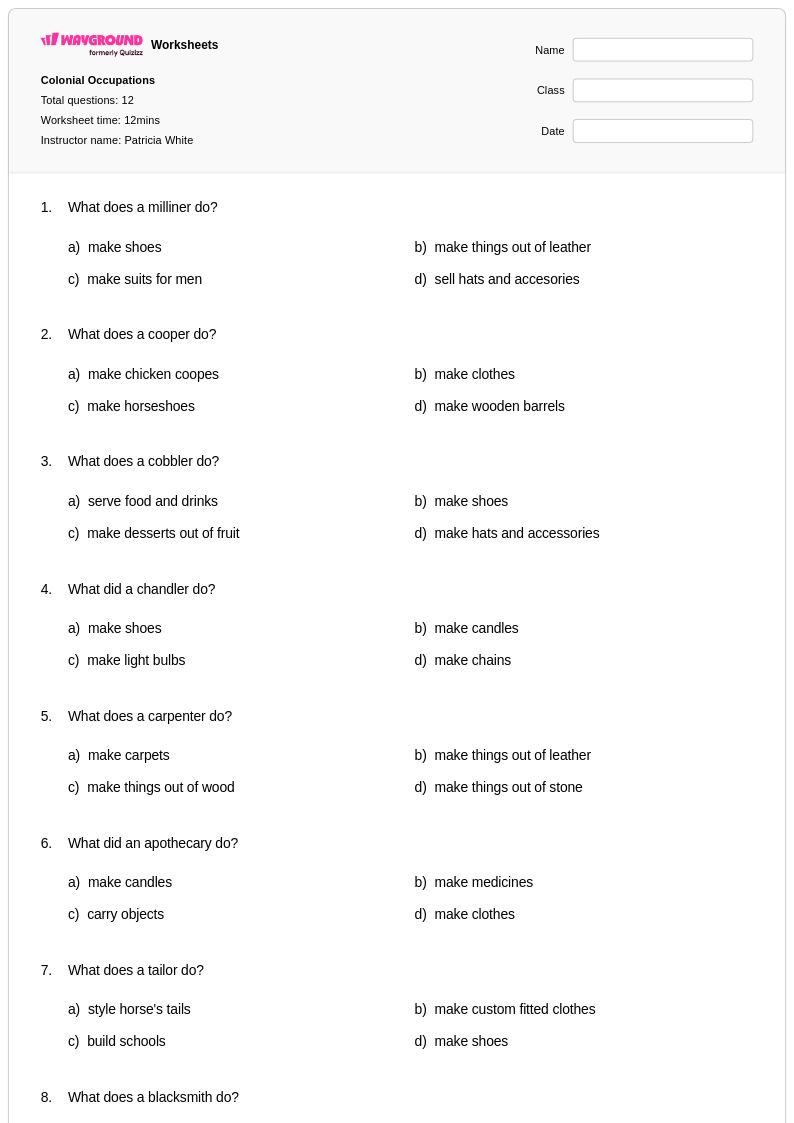
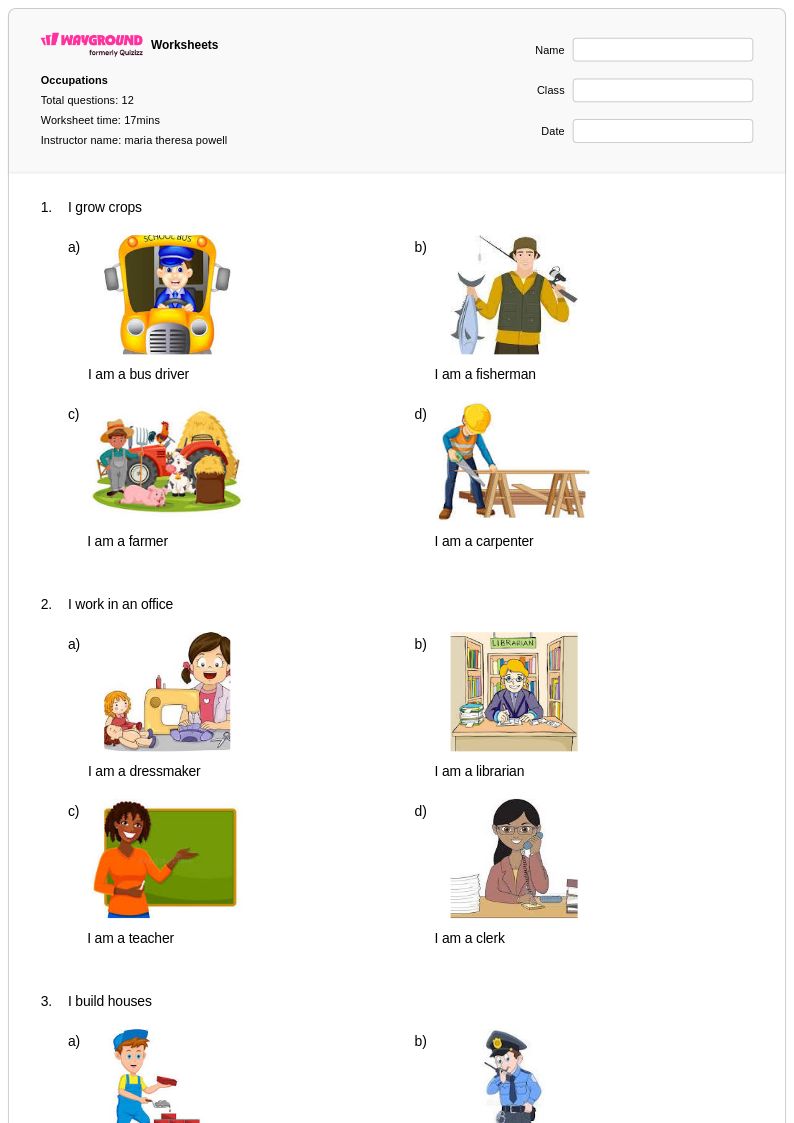
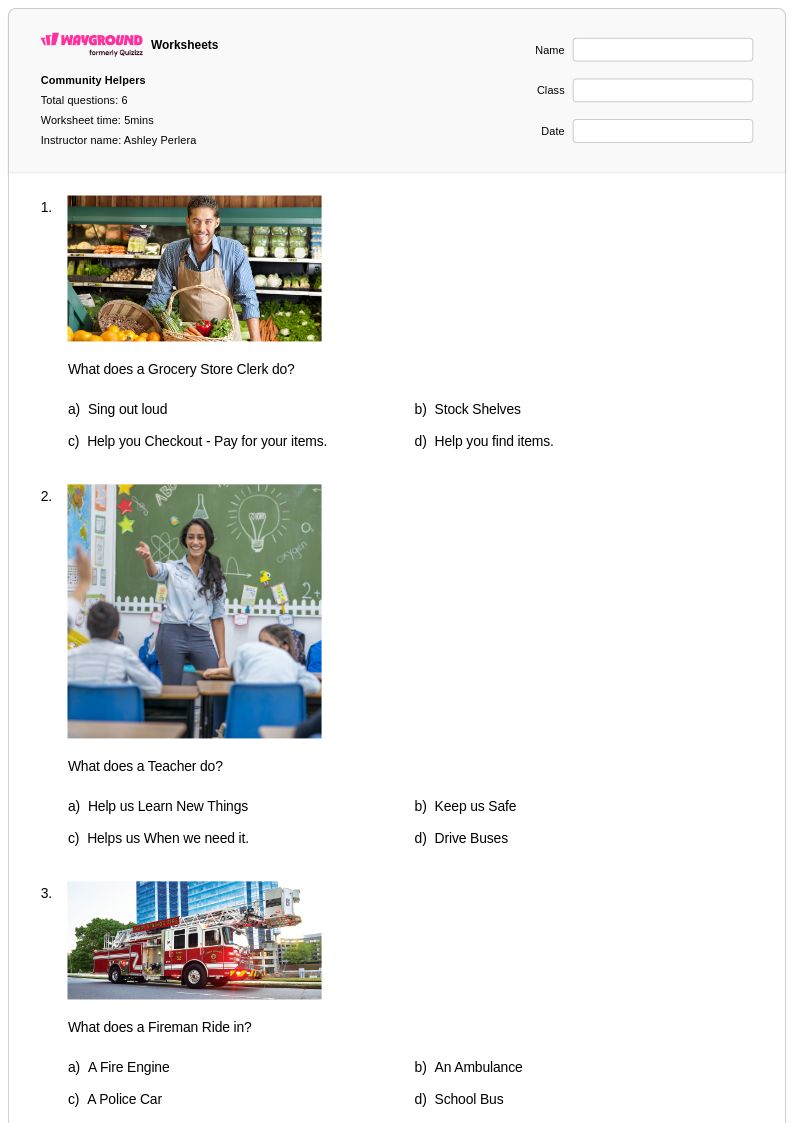
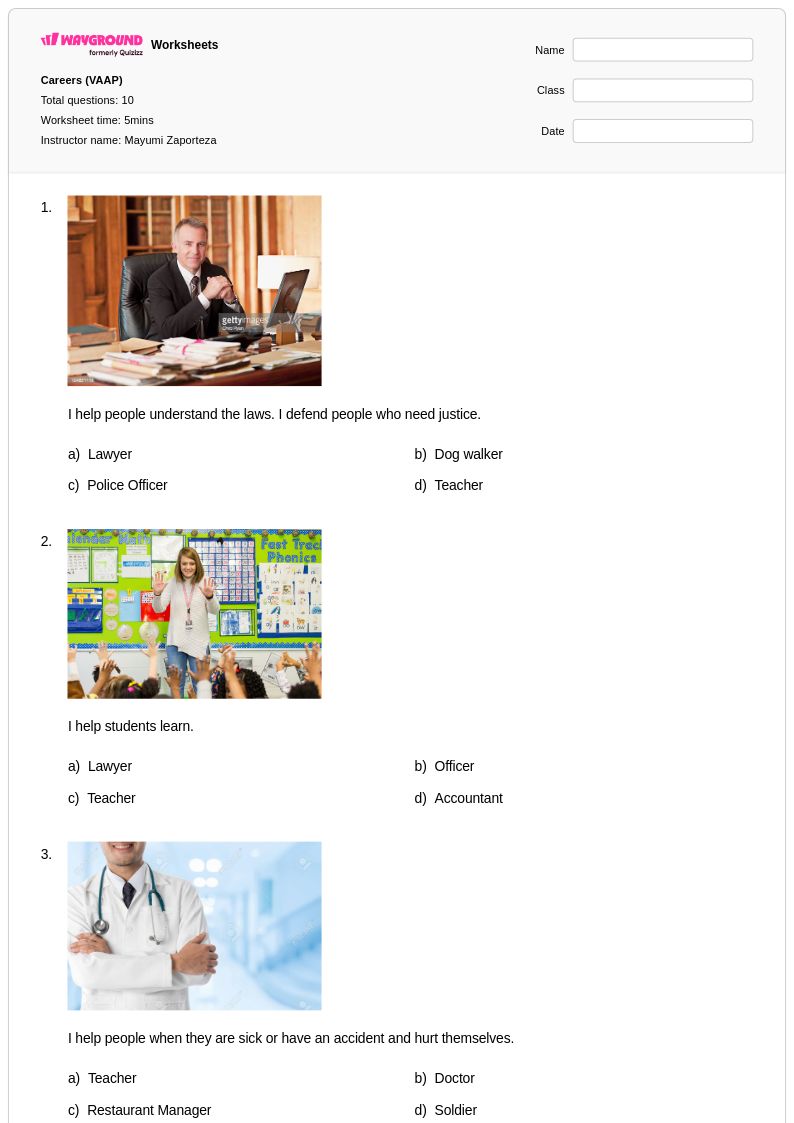
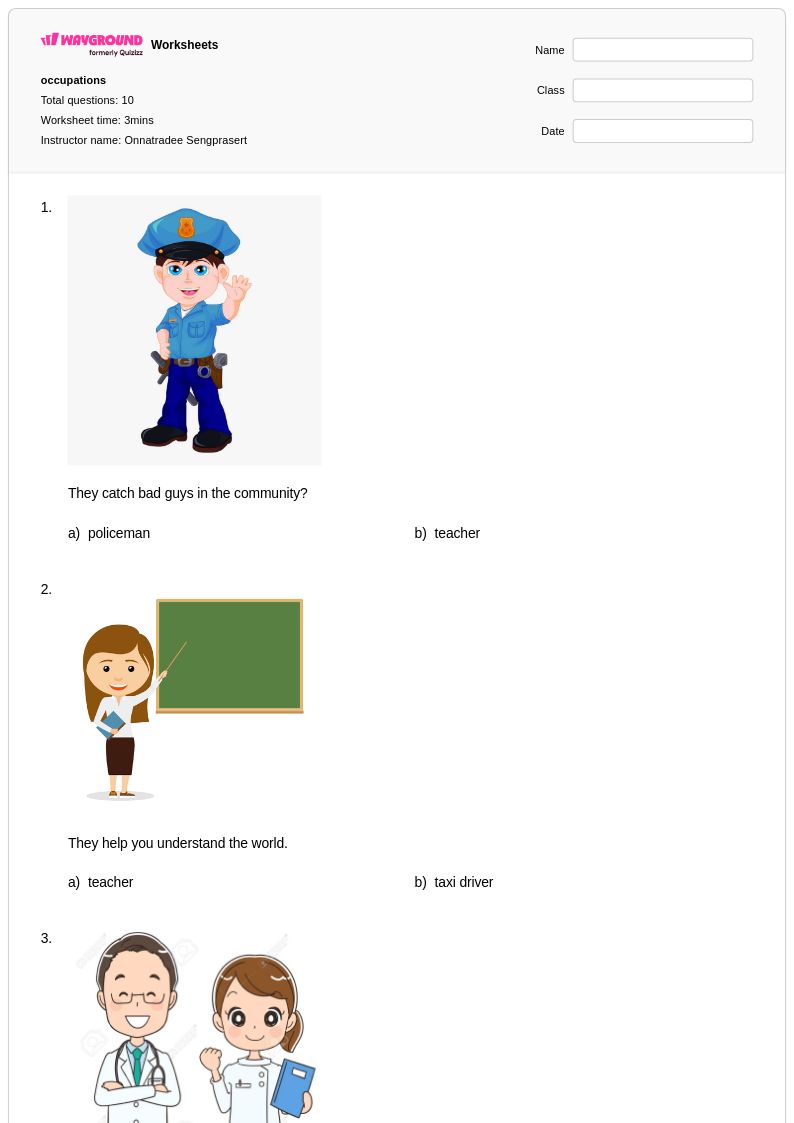
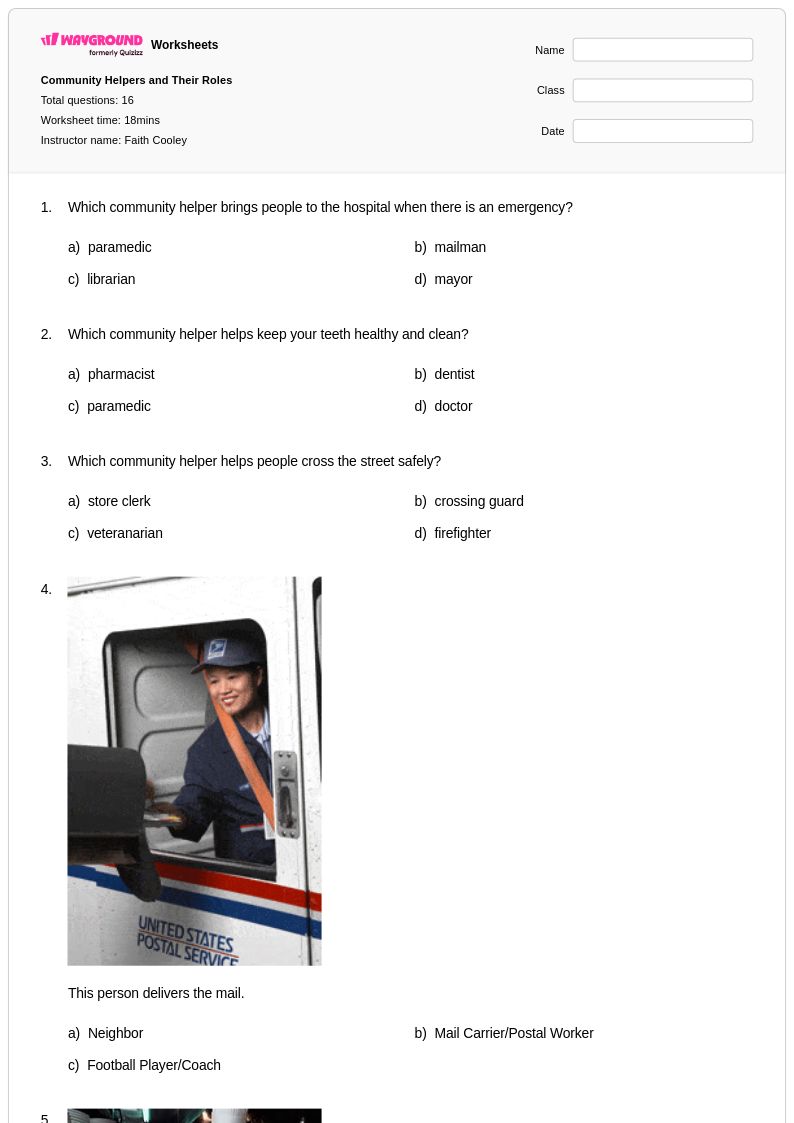
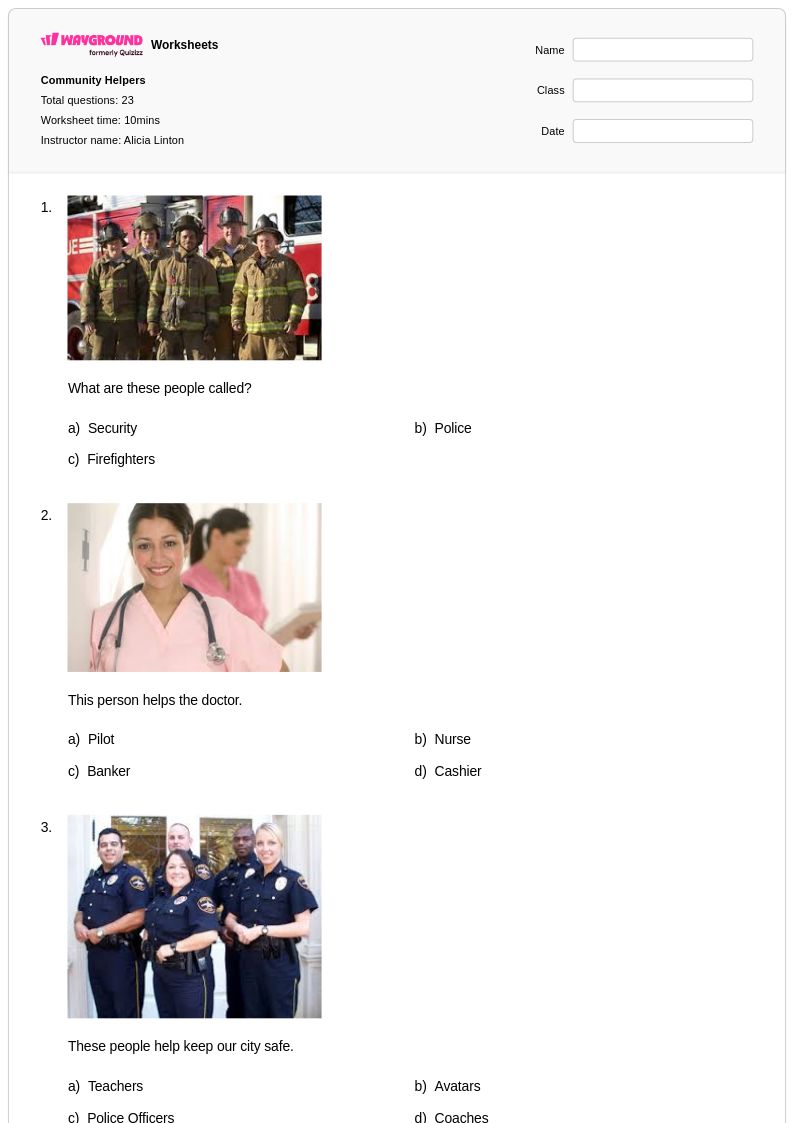
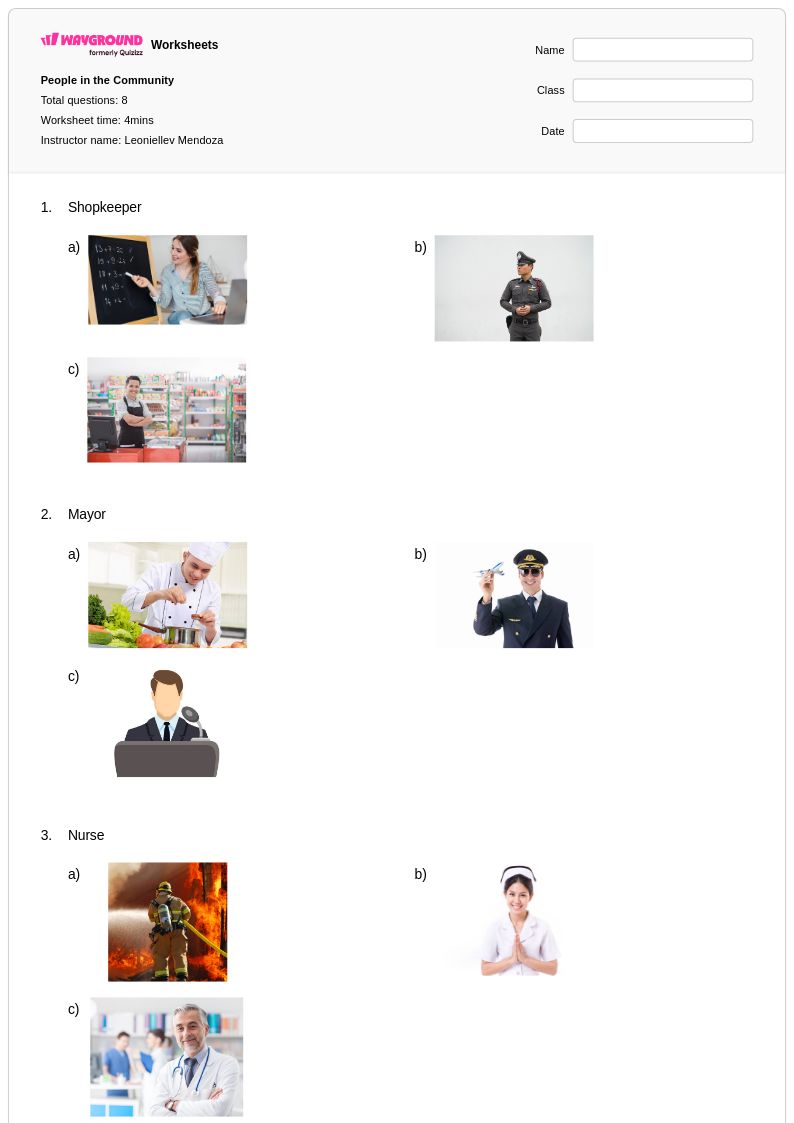
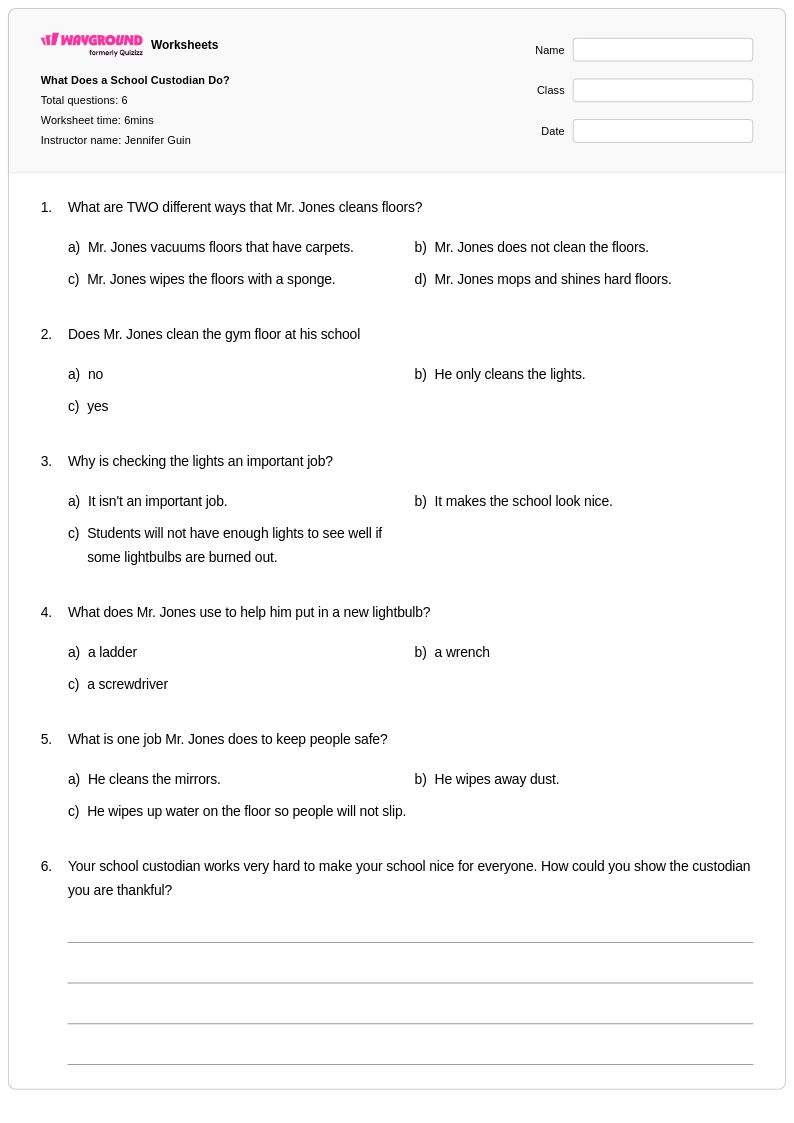
Jobs and occupations worksheets for Year 2 students through Wayground (formerly Quizizz) provide essential foundation-building activities that help young learners explore the diverse world of work within their communities and cultures. These comprehensive social studies resources strengthen critical thinking skills as students identify different types of jobs, match workers with their tools and workplaces, and understand how various occupations contribute to community life. The carefully designed practice problems encourage students to connect classroom learning with real-world experiences, while free printable materials and downloadable pdf formats make these worksheets accessible for both classroom instruction and home learning. Each worksheet collection includes detailed answer keys that support independent learning and allow teachers to efficiently assess student understanding of career awareness and community helper concepts.
Wayground (formerly Quizizz) empowers educators with millions of teacher-created resources specifically focused on jobs and occupations content, featuring robust search and filtering capabilities that help teachers quickly locate grade-appropriate materials aligned with social studies standards. The platform's differentiation tools enable teachers to customize worksheets for diverse learning needs, while flexible formatting options provide both printable and digital versions to accommodate various teaching preferences and classroom technologies. These comprehensive worksheet collections support effective lesson planning by offering ready-to-use materials for skill practice, targeted remediation for students who need additional support, and enrichment opportunities for advanced learners. Teachers can seamlessly integrate these resources into their community and cultures curriculum, ensuring students develop strong foundational knowledge about the working world while building essential social studies vocabulary and analytical thinking skills.
FAQs
How do I teach students about different jobs and occupations?
Start by connecting occupations to students' lived experiences, asking them to identify jobs held by family members or community helpers they interact with daily. From there, build outward into broader categories like healthcare, trades, education, and public service, helping students understand how each profession fills a specific community need. Using sorting and matching activities reinforces vocabulary while giving students a concrete framework for thinking about the world of work.
What worksheets help students practice identifying and categorizing jobs and occupations?
Effective practice worksheets for jobs and occupations ask students to categorize professions by industry, match job titles to their descriptions or responsibilities, and connect occupations to the skills or education they require. These task types move students beyond simple recall toward analytical thinking about how careers function within society. Wayground's jobs and occupations worksheets include diverse practice problems that challenge students to categorize occupations by industry and match job responsibilities with appropriate careers.
What common mistakes do students make when learning about jobs and occupations?
Students often conflate job titles with job functions, for example, assuming a 'manager' always works in an office or that a 'technician' only works with computers. Another frequent error is thinking in rigid hierarchies, undervaluing trades or service roles relative to professional careers. Teachers should explicitly address how cultural values shape perceptions of career prestige and help students examine those assumptions critically.
How do jobs and occupations connect to social studies and community curriculum?
Occupations are a natural entry point for understanding economic interdependence, community structure, and civic roles. When students examine how different workers contribute to a functioning community, they develop economic literacy alongside social awareness. This makes jobs and occupations content highly relevant in early social studies units focused on communities, as well as in career exploration contexts at upper elementary and middle school levels.
How can I use Wayground's jobs and occupations worksheets in my classroom?
Wayground's jobs and occupations worksheets are available as free printable PDFs for traditional classroom use and in digital formats for technology-integrated environments, including the option to host them as a quiz directly on Wayground. All worksheets include detailed answer keys, making them suitable for independent practice, homework assignments, and guided group activities. Teachers can also apply student-level accommodations such as read aloud, extended time, and reduced answer choices to support diverse learners without disrupting the rest of the class.
How do I differentiate jobs and occupations instruction for students with varying skill levels?
For students who need additional support, simplify tasks to matching or recognition-level activities before moving to categorization or analysis. For advanced students, push toward evaluative thinking, such as comparing the education pathways for two different careers or analyzing how automation might affect a specific occupation. On Wayground, teachers can apply individual accommodations like reduced answer choices or read aloud to specific students while the rest of the class works with default settings.