
Recommended Topics for you
- Earned Income
- Economy
- Family Finances
- Food Production and Distribution
- Goods and Services
- Needs and Wants
- Personal Allowance
- Producers and Consumers
- Scarcity
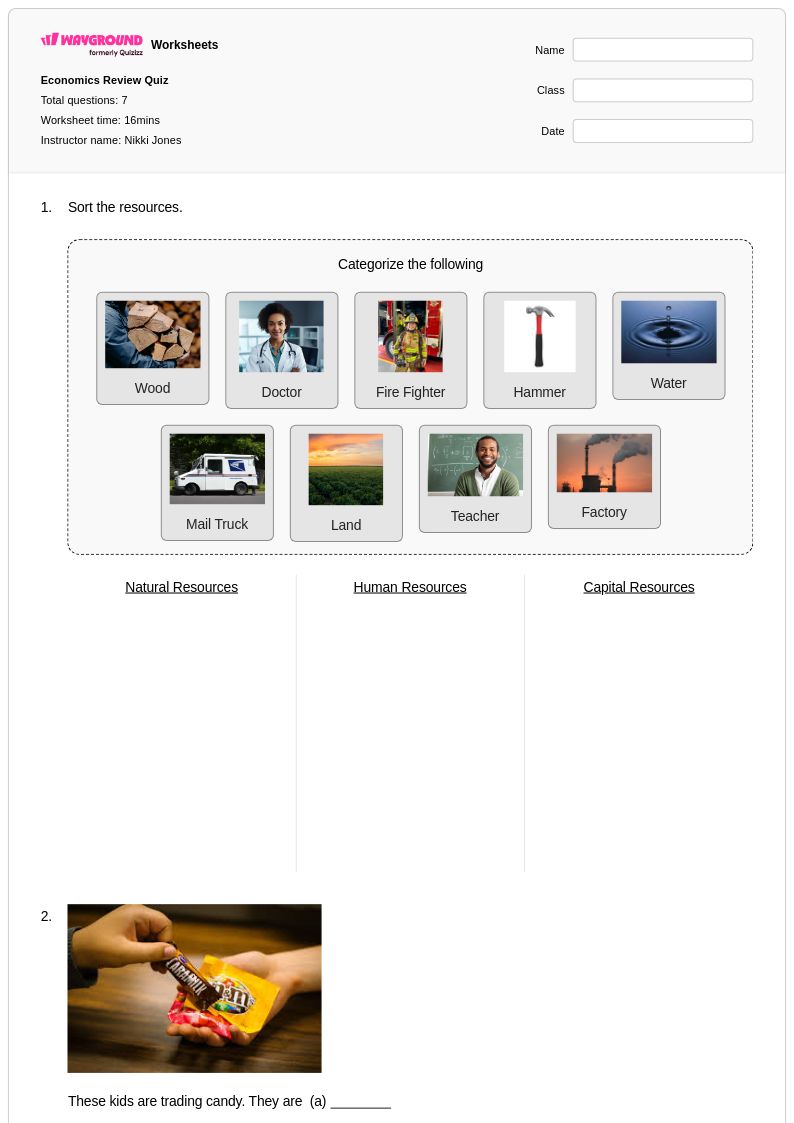
7 Q
2nd
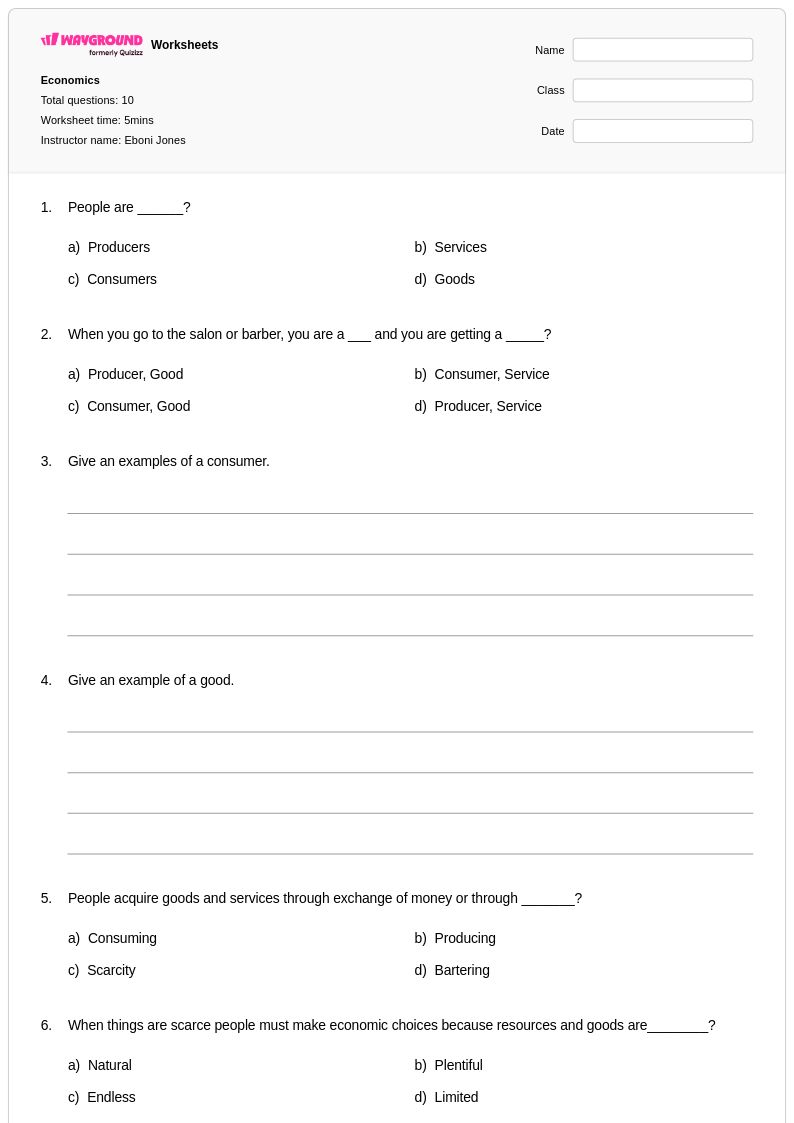
10 Q
KG - 3rd
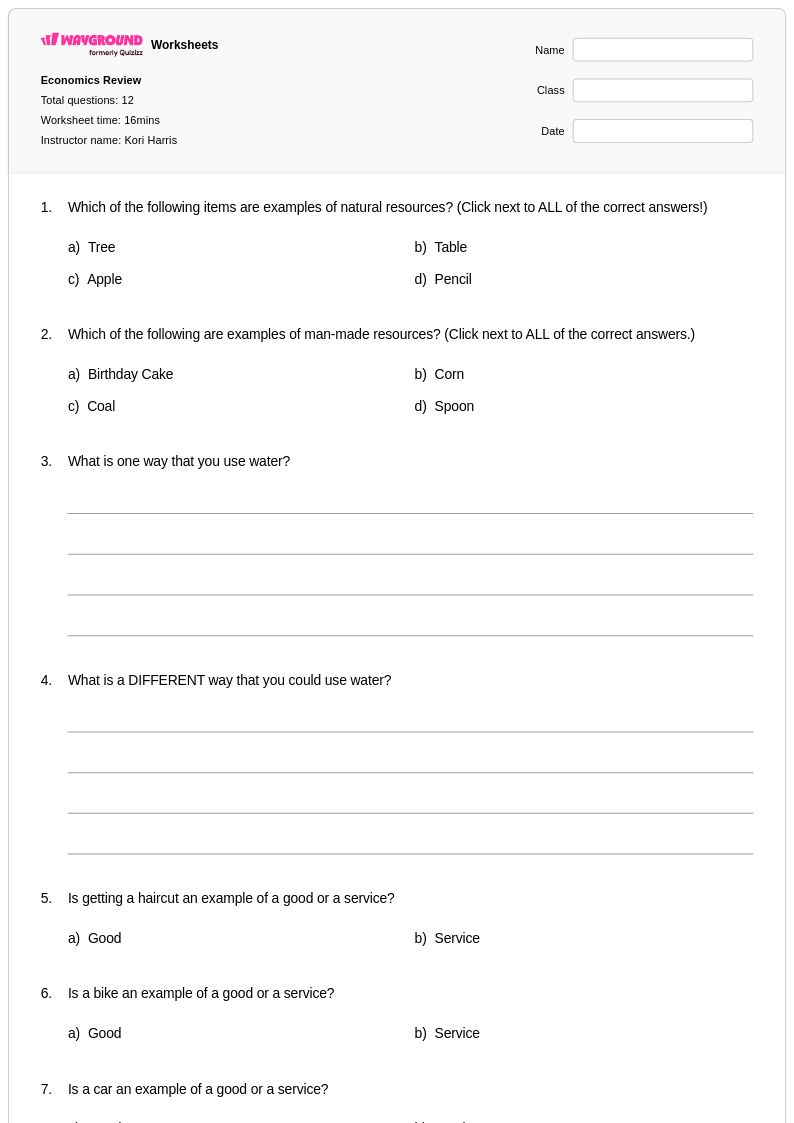
12 Q
2nd
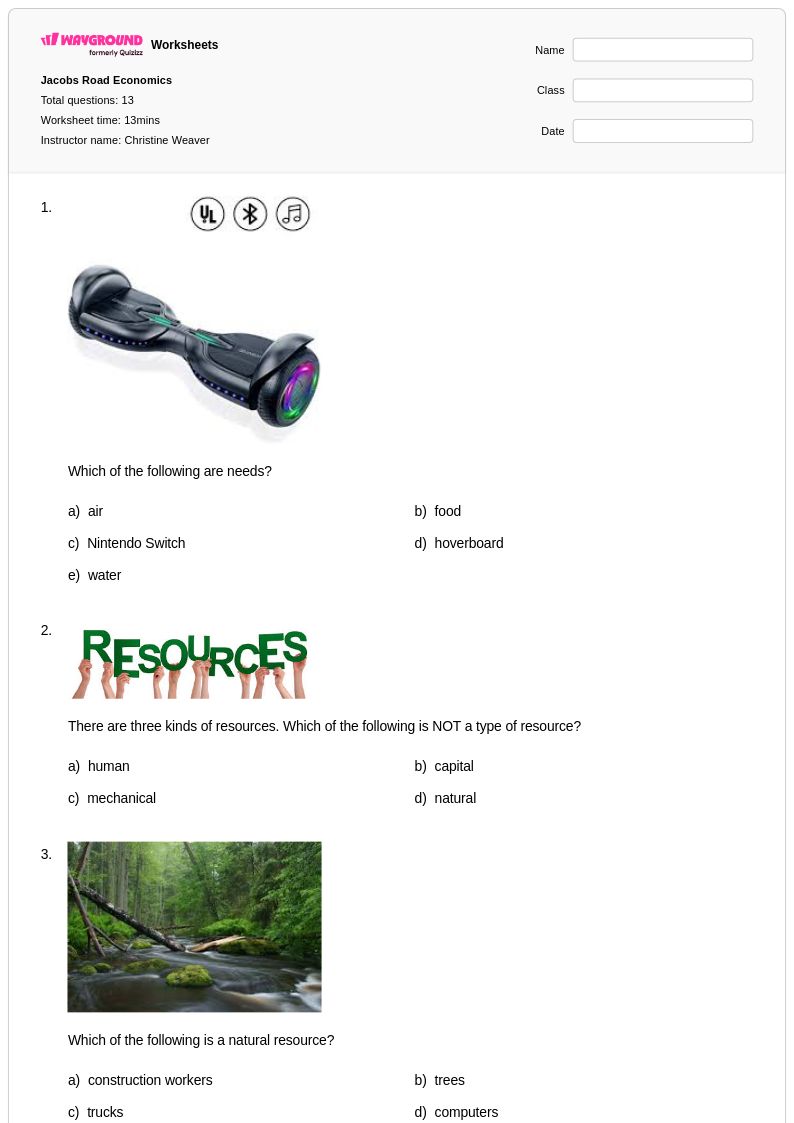
13 Q
2nd
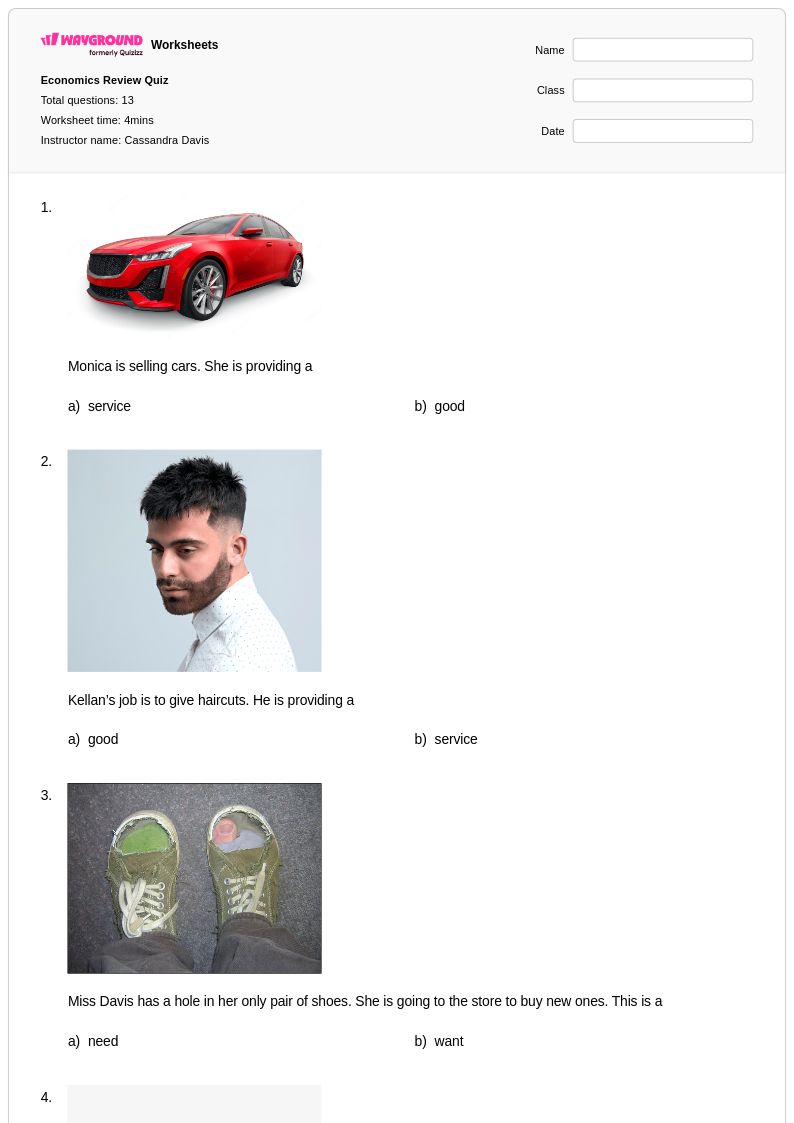
13 Q
2nd
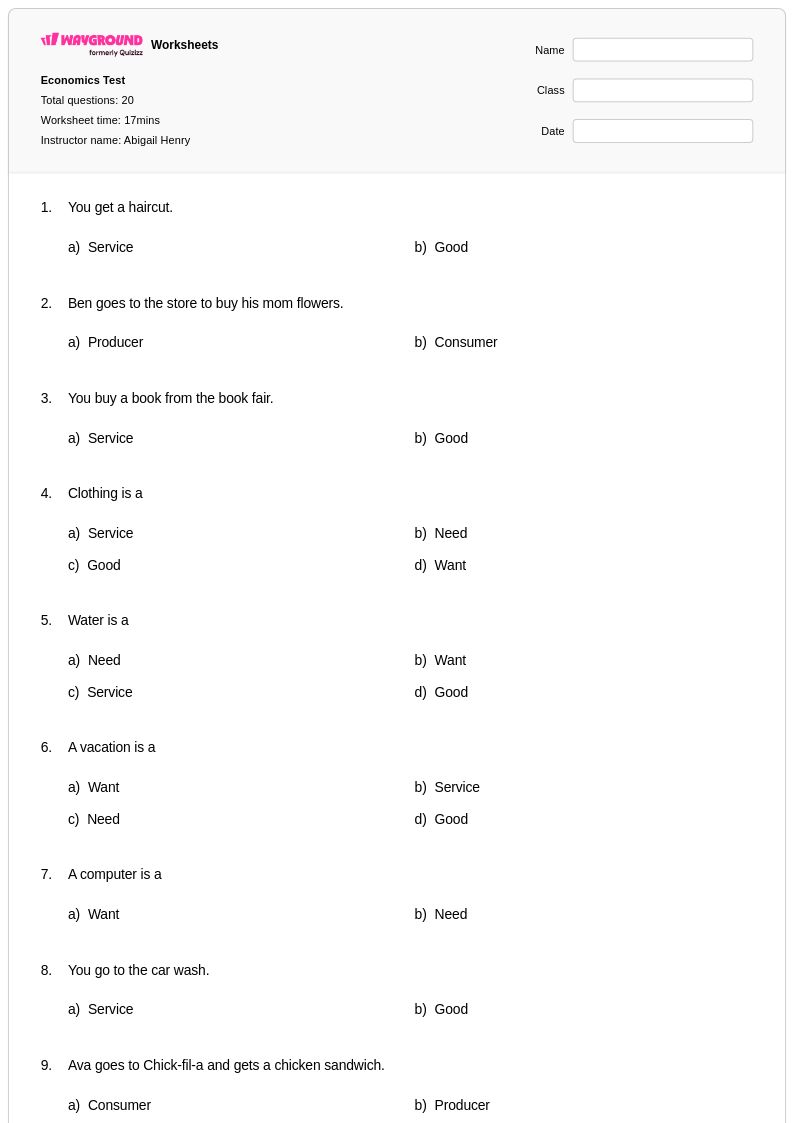
20 Q
2nd
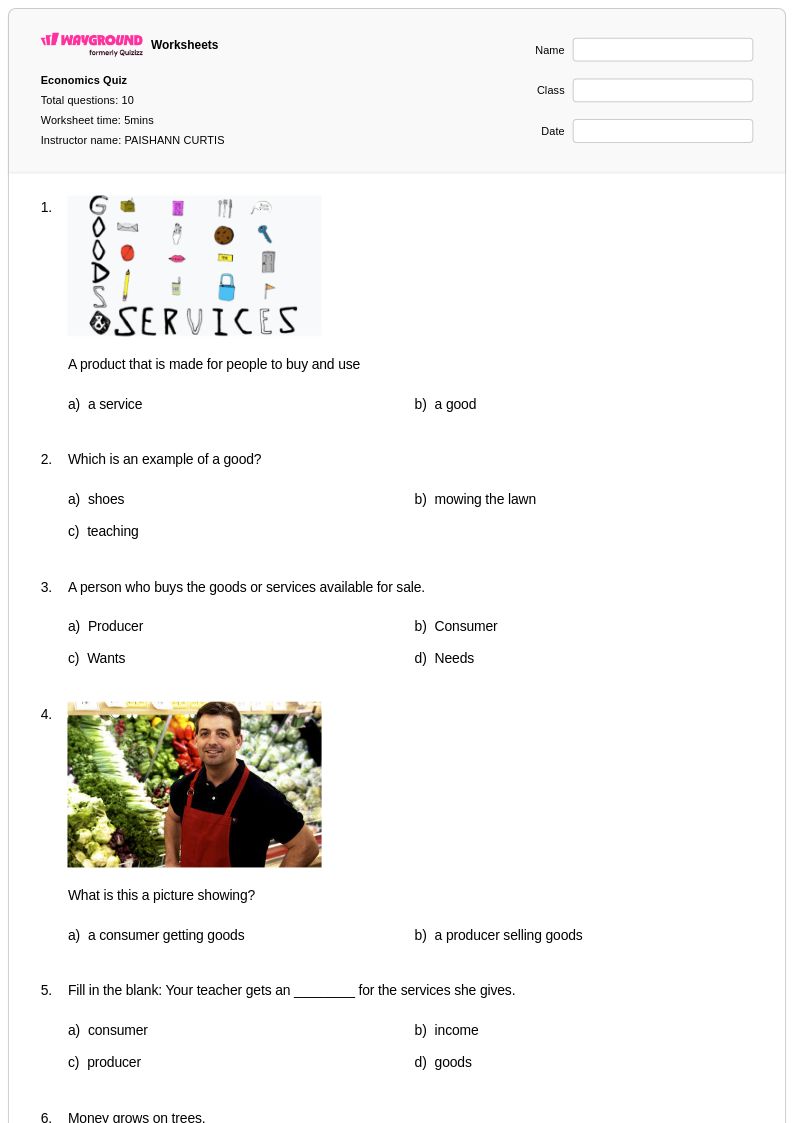
10 Q
2nd
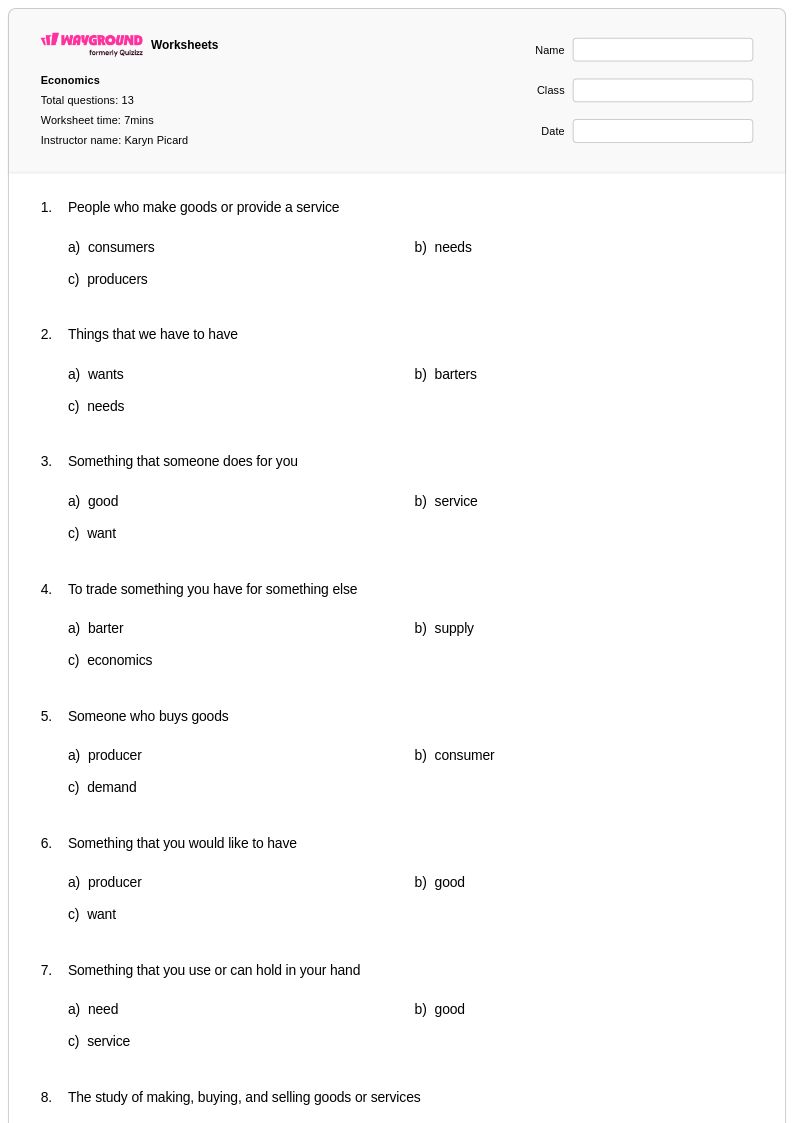
13 Q
1st - 3rd
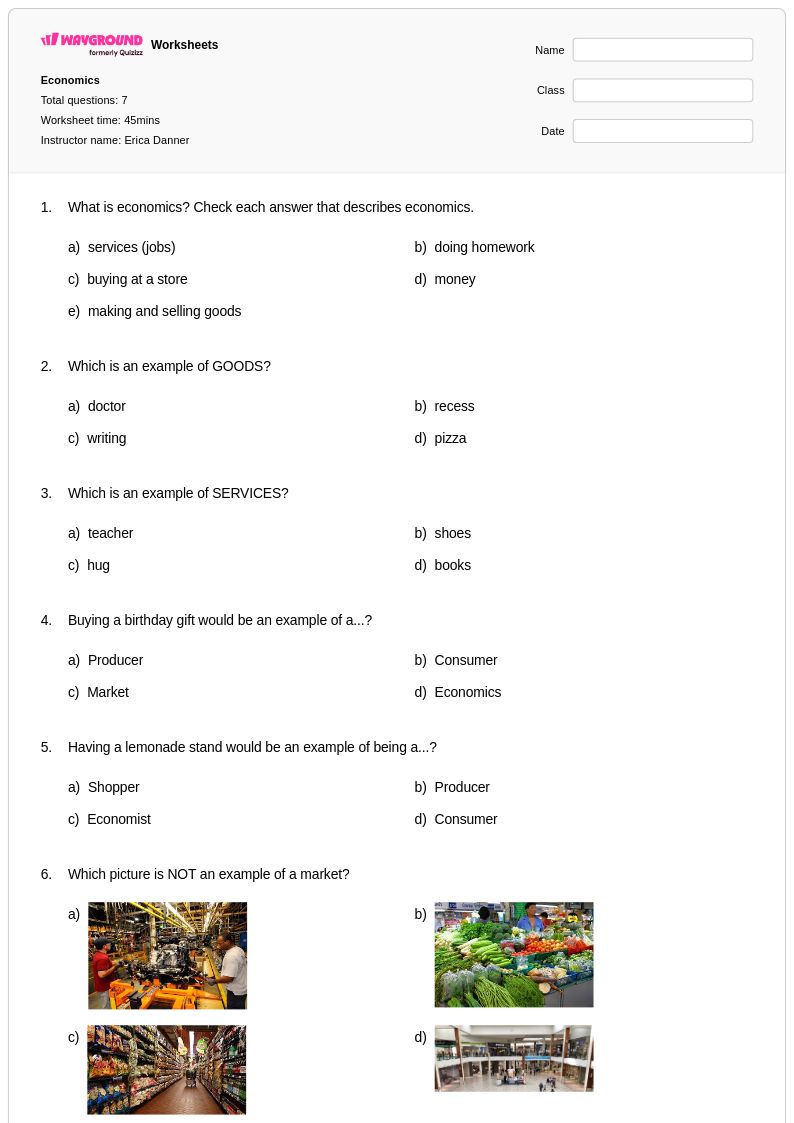
7 Q
1st - 3rd
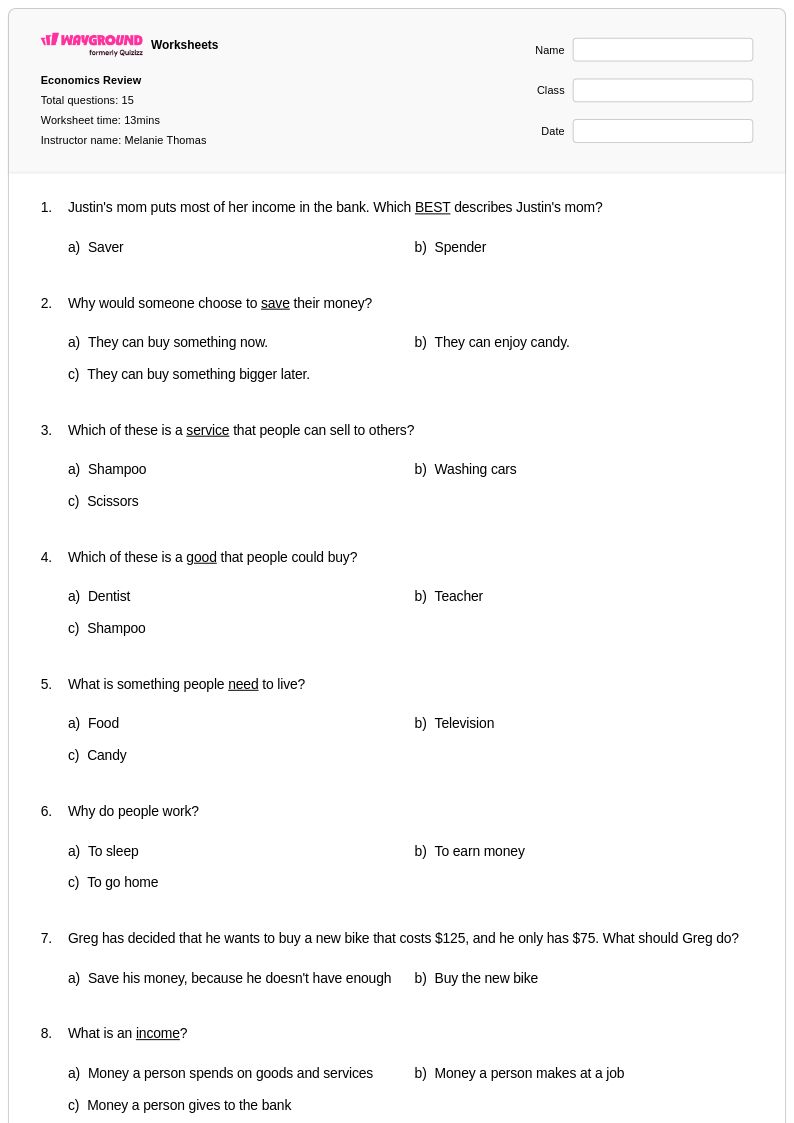
15 Q
2nd
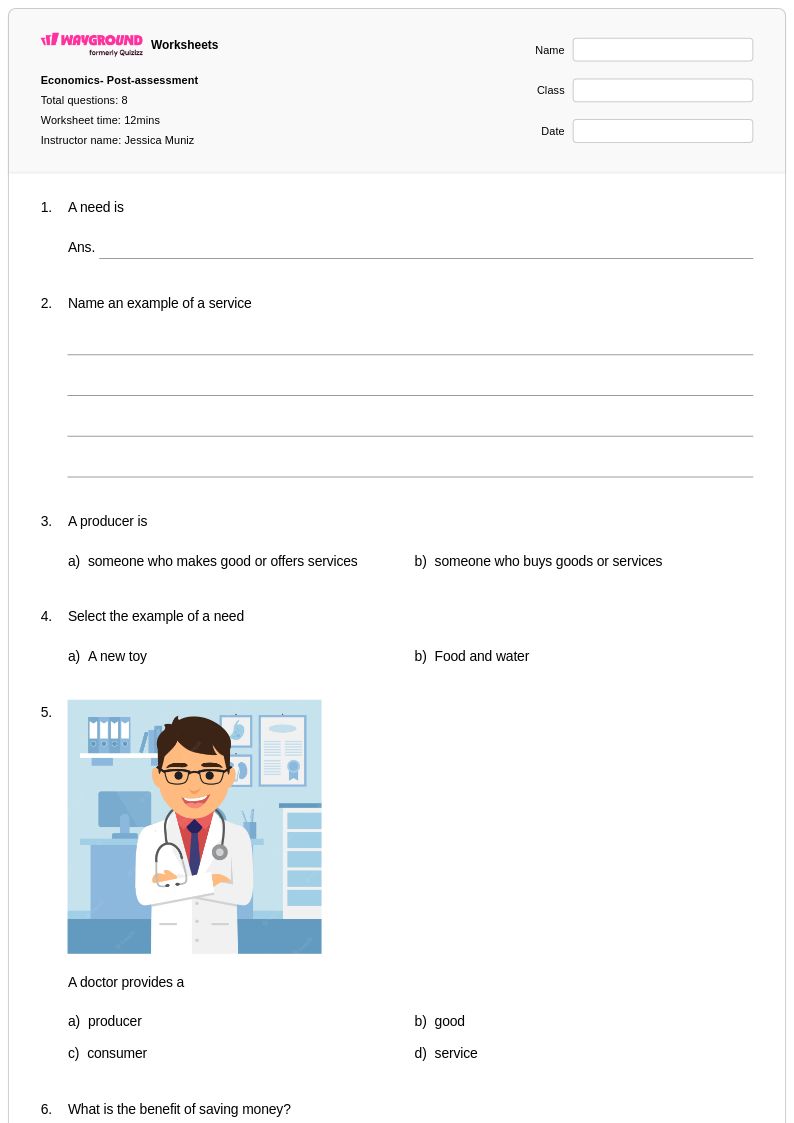
8 Q
2nd
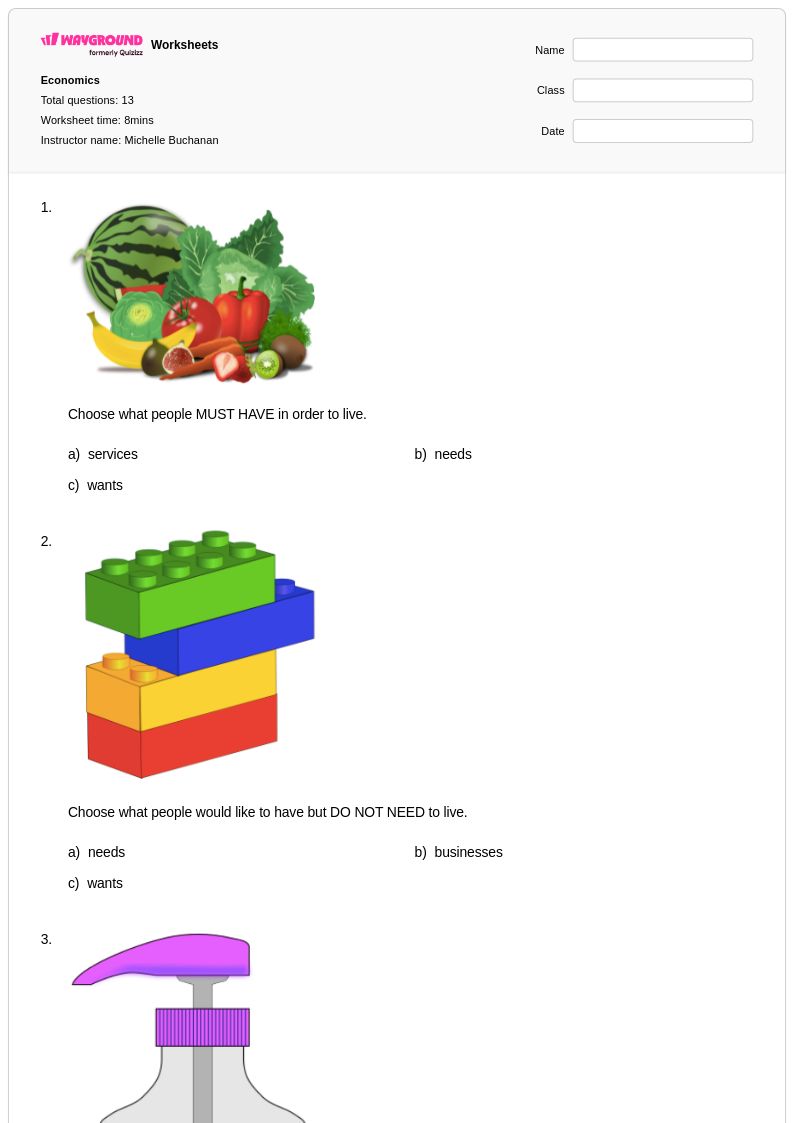
13 Q
2nd
10 Q
2nd
16 Q
2nd
10 Q
2nd
11 Q
2nd
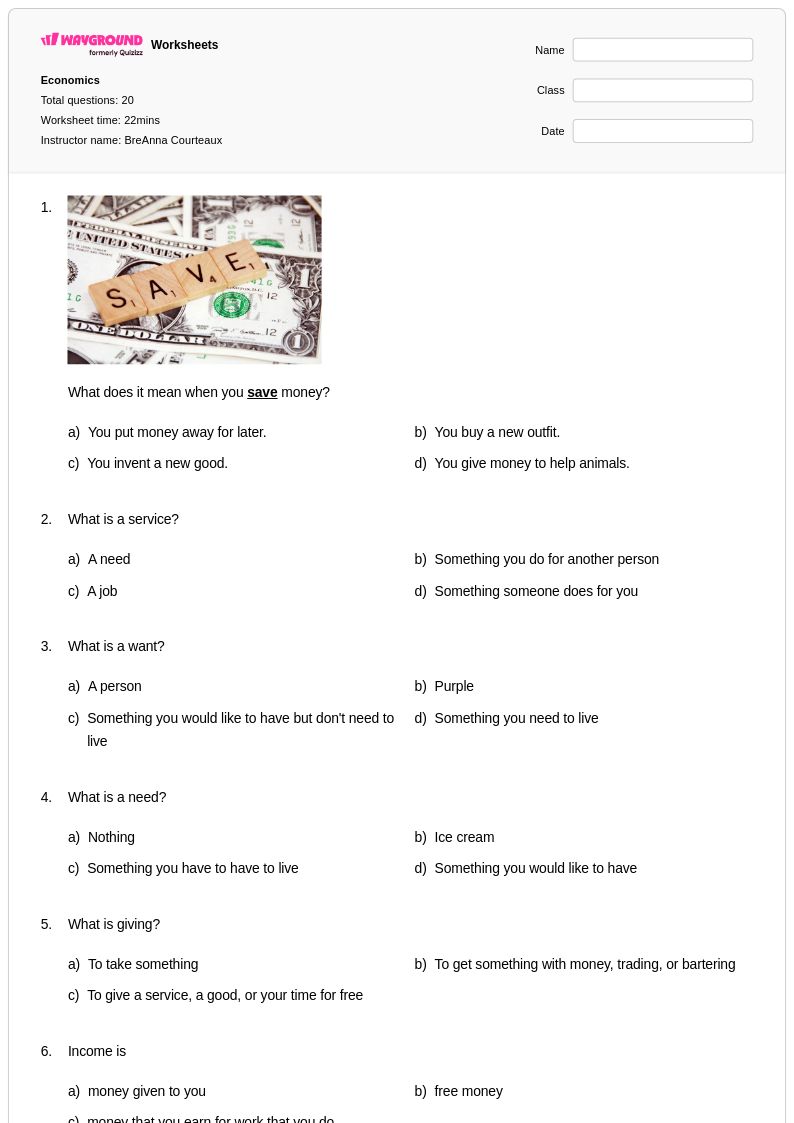
20 Q
2nd
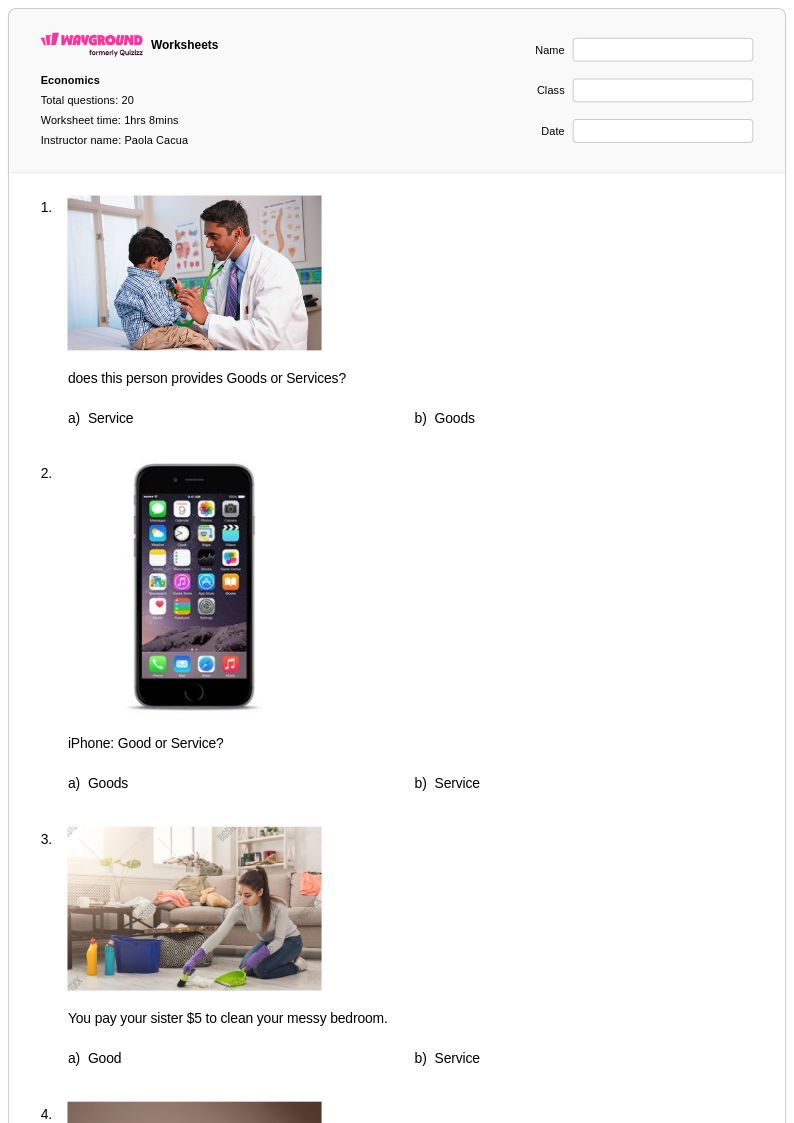
20 Q
2nd
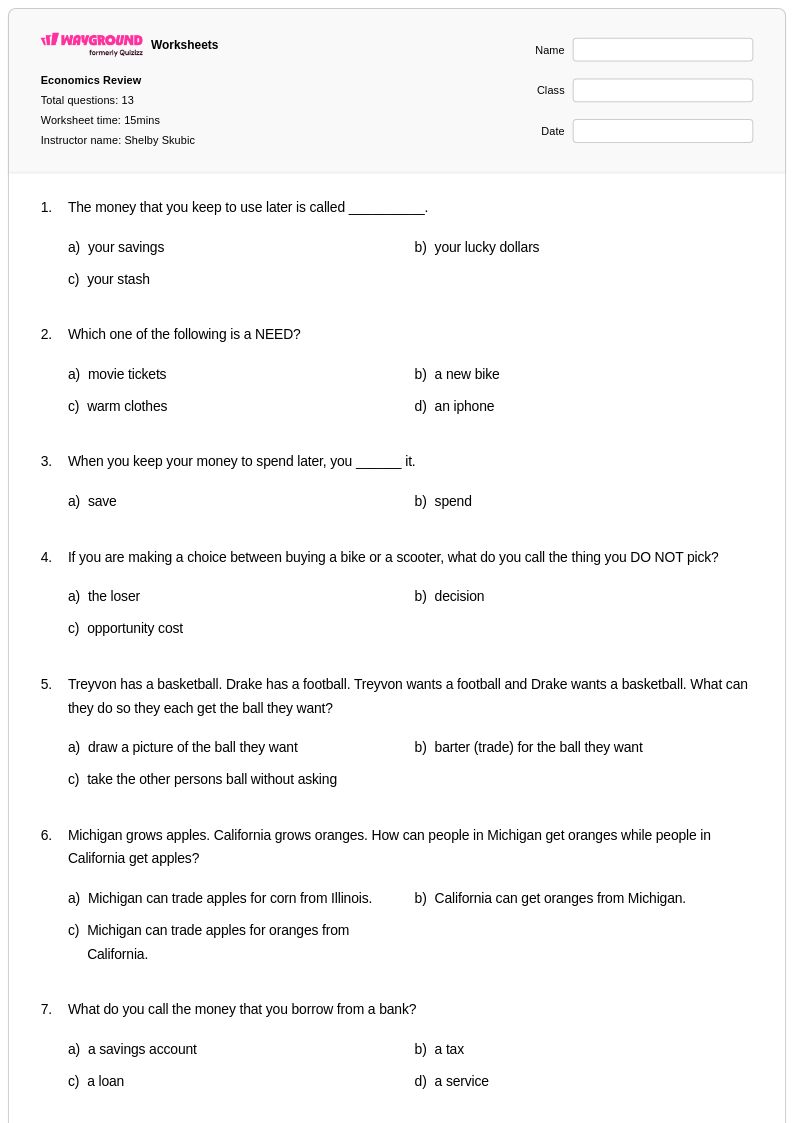
13 Q
2nd - 3rd
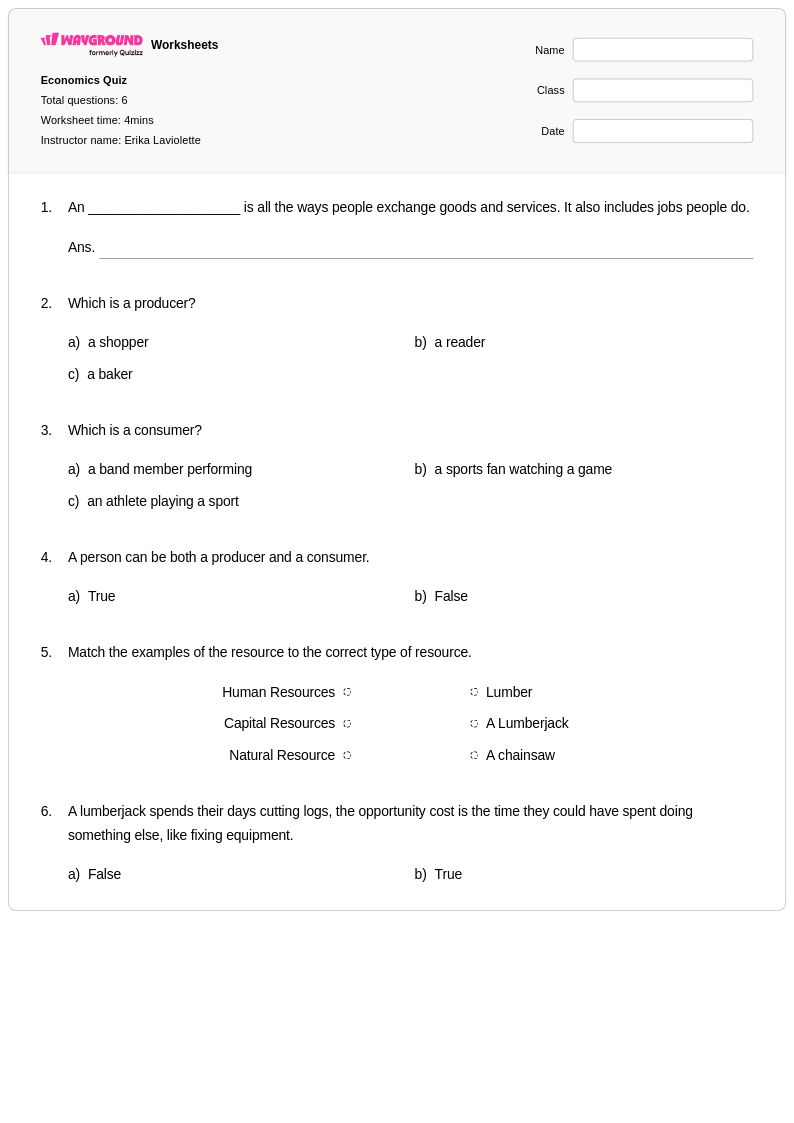
6 Q
1st - Uni
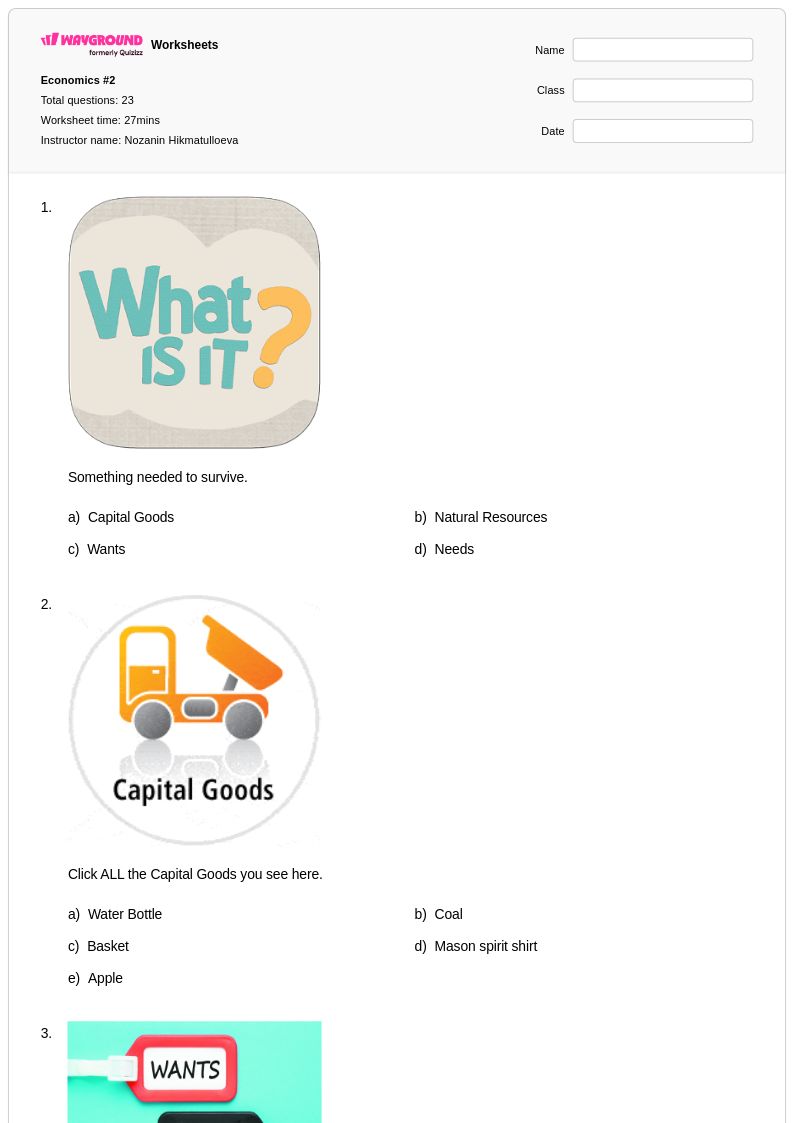
23 Q
2nd - 7th
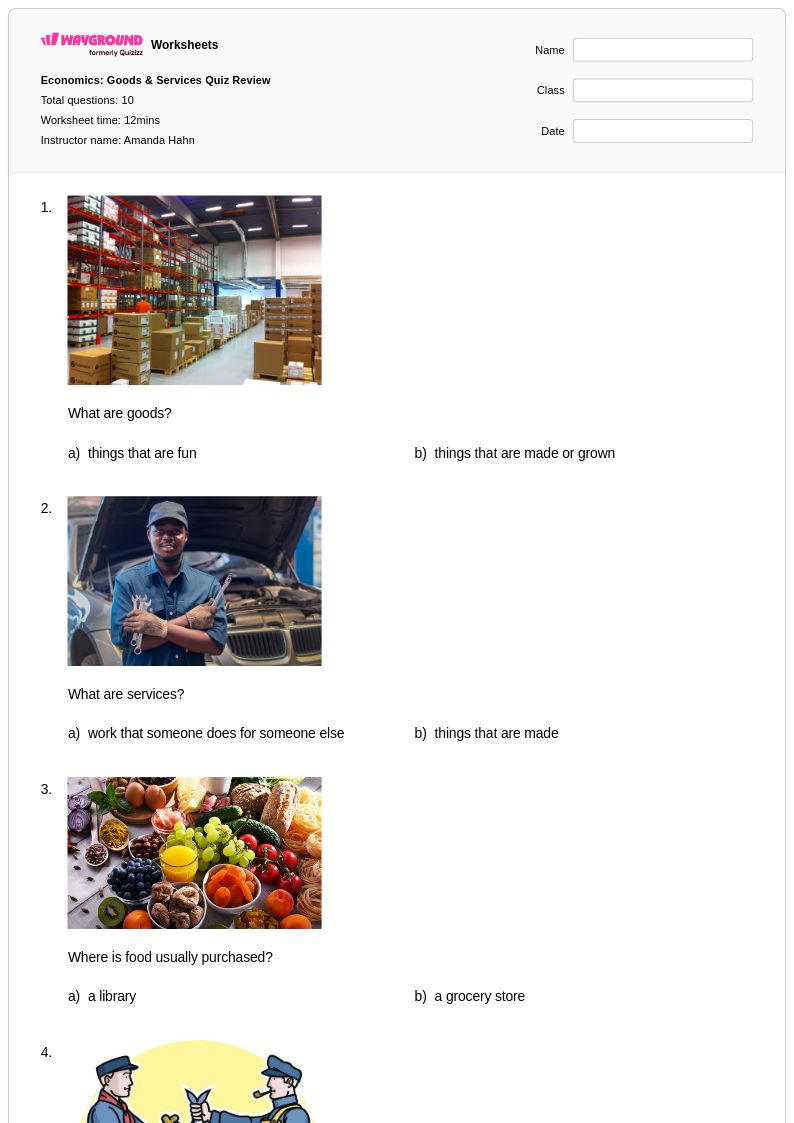
10 Q
2nd
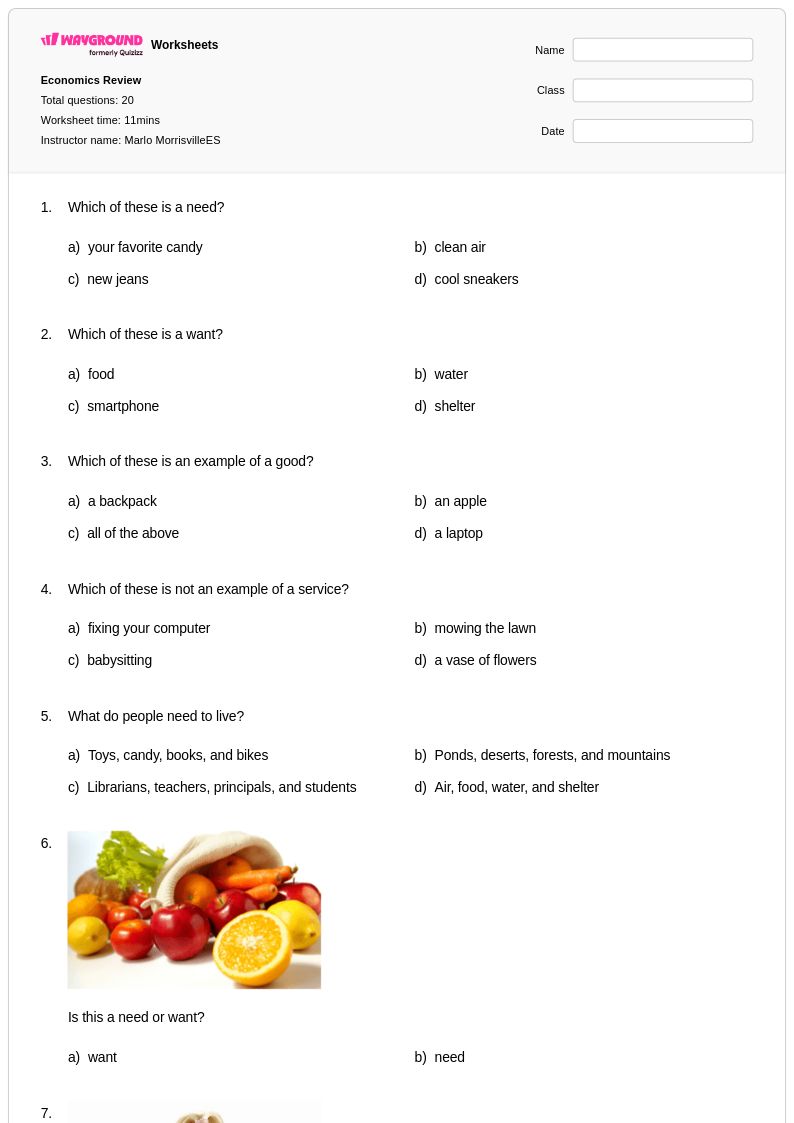
20 Q
2nd
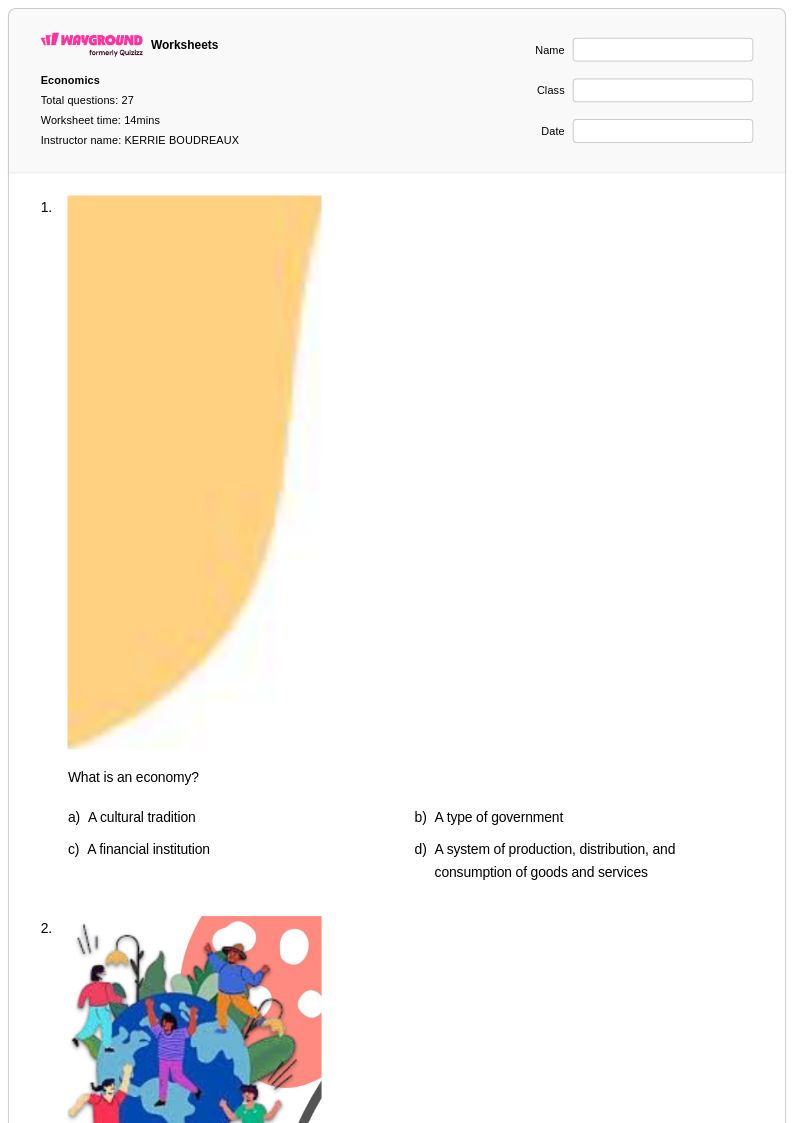
27 Q
2nd
Explore Economics Worksheets by Grades
Explore Economics Worksheets for year 2 by Topic
Explore Other Subject Worksheets for year 2
Explore printable Economics worksheets for Year 2
Economics worksheets for Year 2 through Wayground (formerly Quizizz) introduce young learners to fundamental economic concepts through age-appropriate activities and engaging practice problems. These carefully designed printables help second-grade students develop essential skills in understanding basic needs versus wants, identifying different types of jobs in their community, recognizing how goods and services meet people's needs, and exploring simple concepts about money and spending. Each worksheet collection includes comprehensive materials with answer keys in pdf format, allowing teachers to provide immediate feedback and support student learning. The free resources focus on building foundational economic literacy through interactive exercises that connect abstract economic principles to students' everyday experiences, from understanding why people work to recognizing how families make choices about spending money.
Wayground (formerly Quizizz) supports educators with millions of teacher-created economics resources specifically tailored for Year 2 instruction, offering robust search and filtering capabilities that help teachers quickly locate materials aligned with curriculum standards and learning objectives. The platform's differentiation tools enable instructors to customize worksheets for diverse learning needs, while flexible formatting options provide both printable pdf versions for traditional classroom use and digital formats for technology-integrated lessons. These comprehensive collections facilitate effective lesson planning by offering ready-to-use materials for introducing new economic concepts, providing targeted remediation for struggling learners, and creating enrichment opportunities for advanced students. Teachers can seamlessly incorporate these economics worksheets into their social studies curriculum to build students' understanding of how economic systems function in their daily lives while developing critical thinking skills about resource allocation, community roles, and basic financial literacy.
FAQs
How do I teach economics concepts like supply and demand to high school students?
What worksheets are best for practicing personal finance and financial literacy skills?
What common mistakes do students make when learning about supply and demand?
How do I help students understand macroeconomics concepts like GDP, inflation, and fiscal policy?
How can I use economics worksheets on Wayground in my classroom?
How do I differentiate economics instruction for students at different skill levels?
What exercises help students practice understanding scarcity and opportunity cost?