Free Printable Food Production and Distribution Worksheets for Year 2
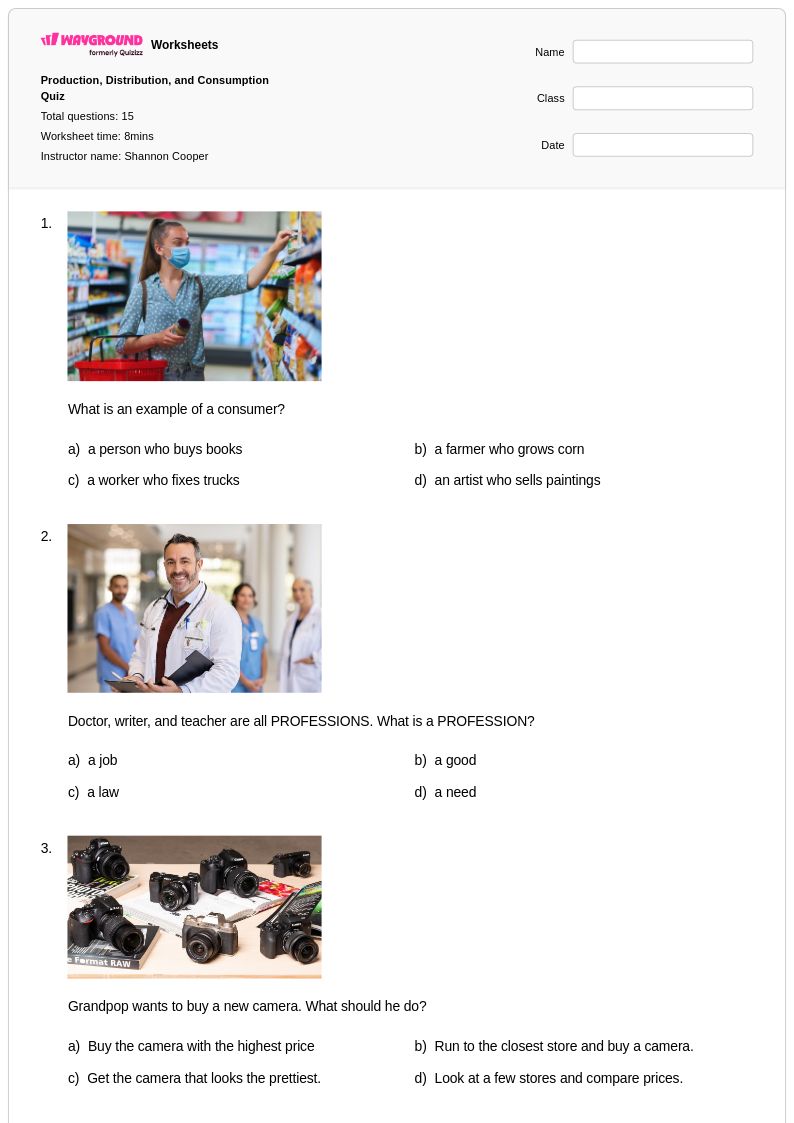
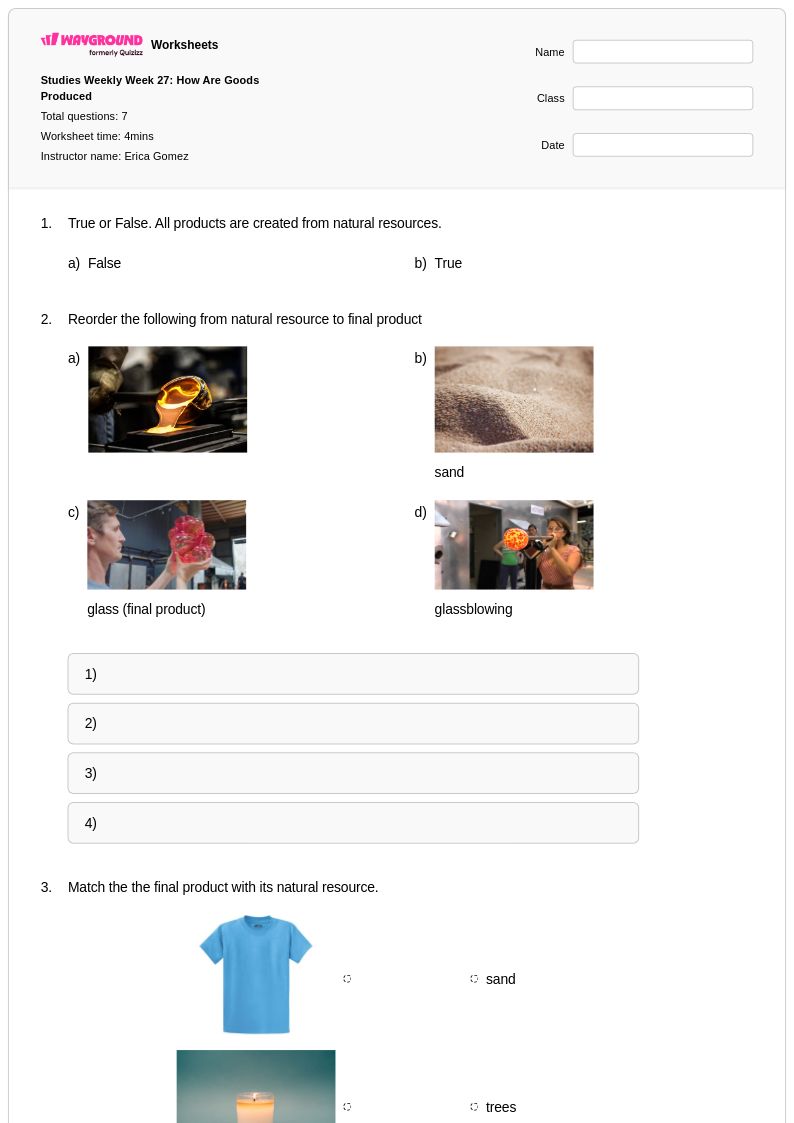
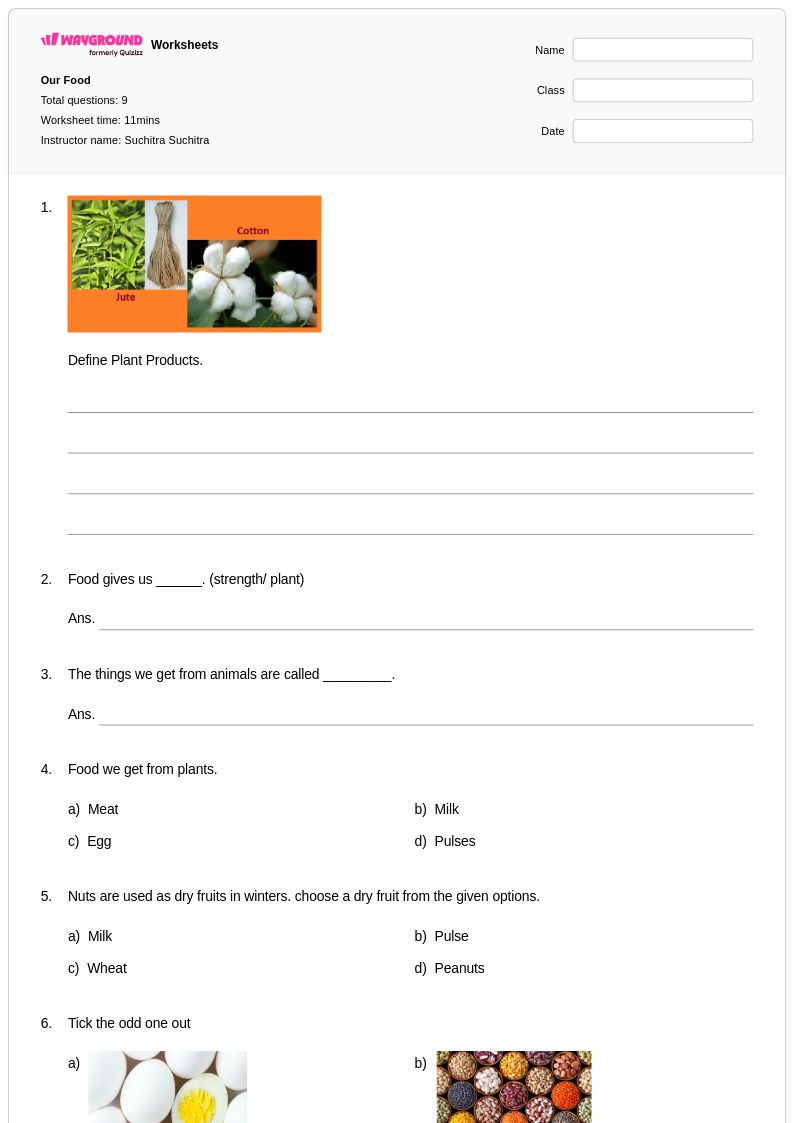
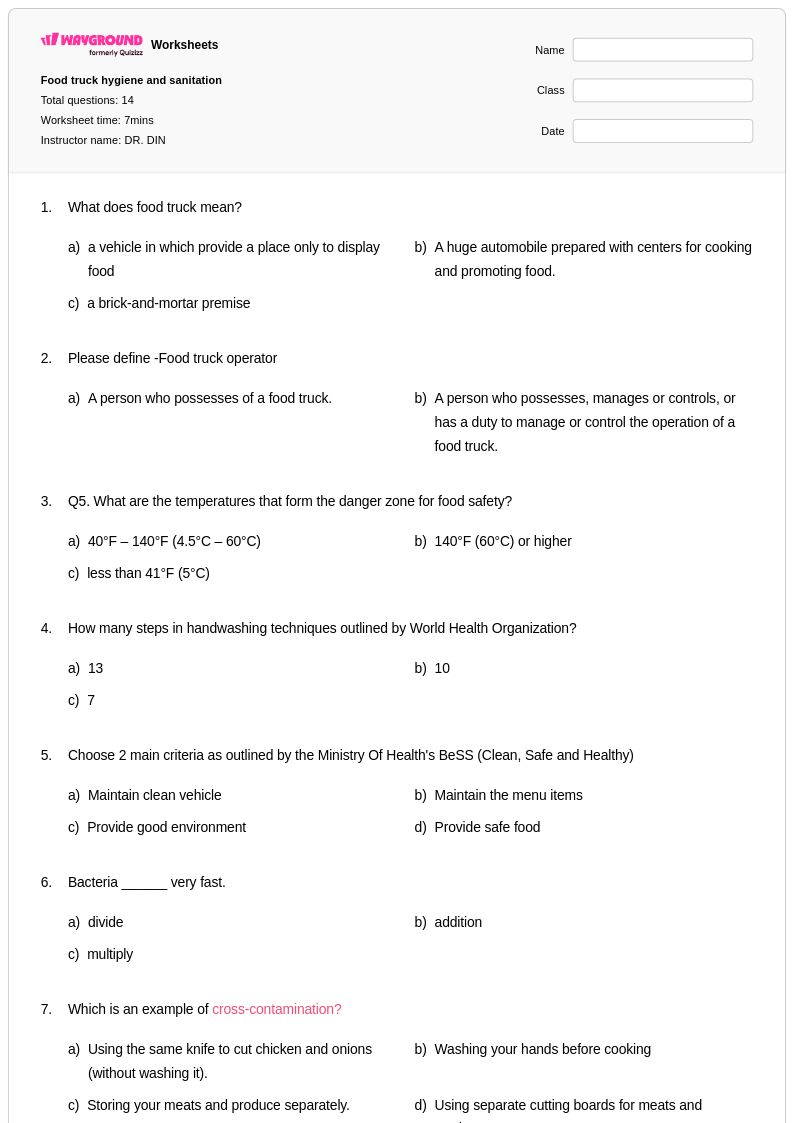
Year 2 food production and distribution worksheets help students explore how food travels from farms to tables through engaging printables, practice problems, and free PDF resources with answer keys.
Explore printable Food Production and Distribution worksheets for Year 2
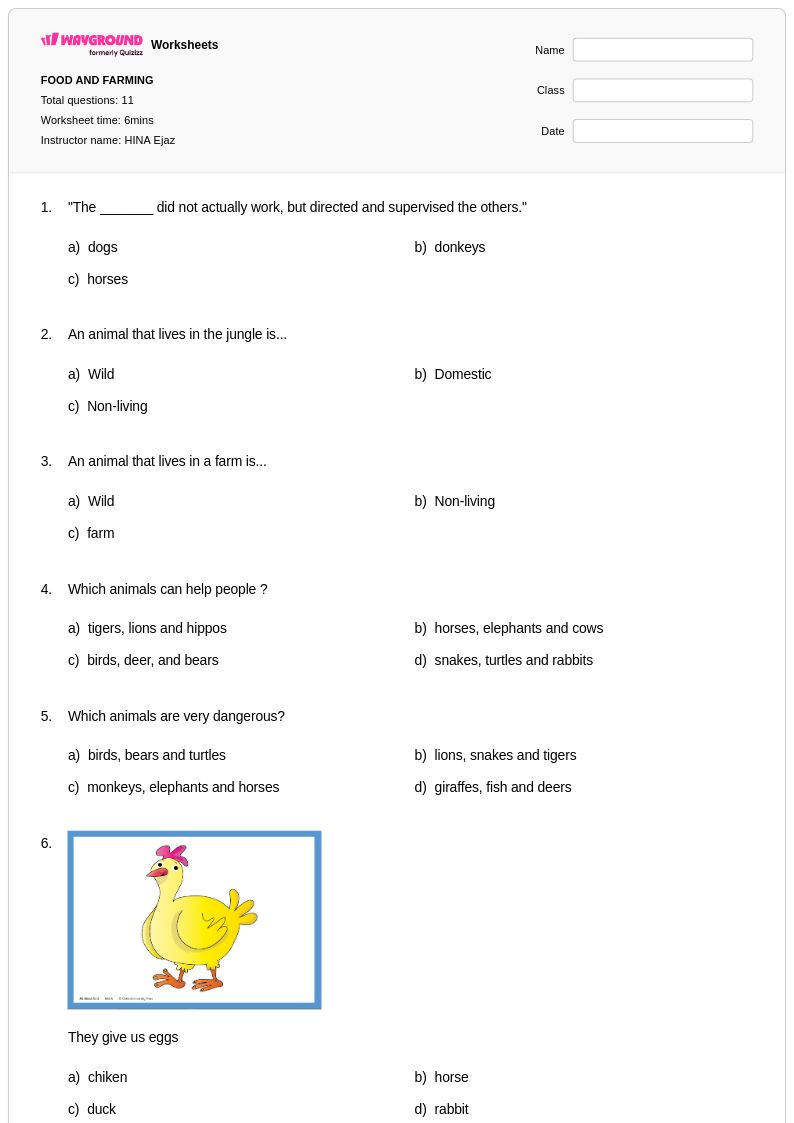
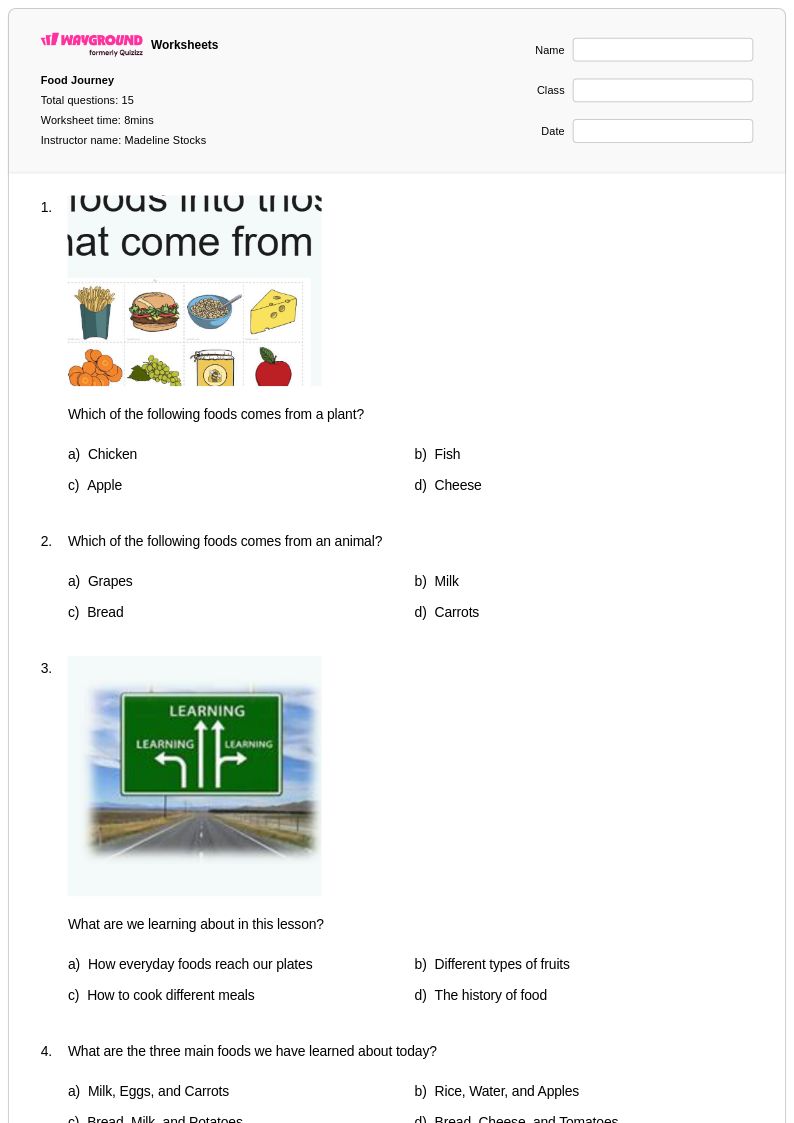
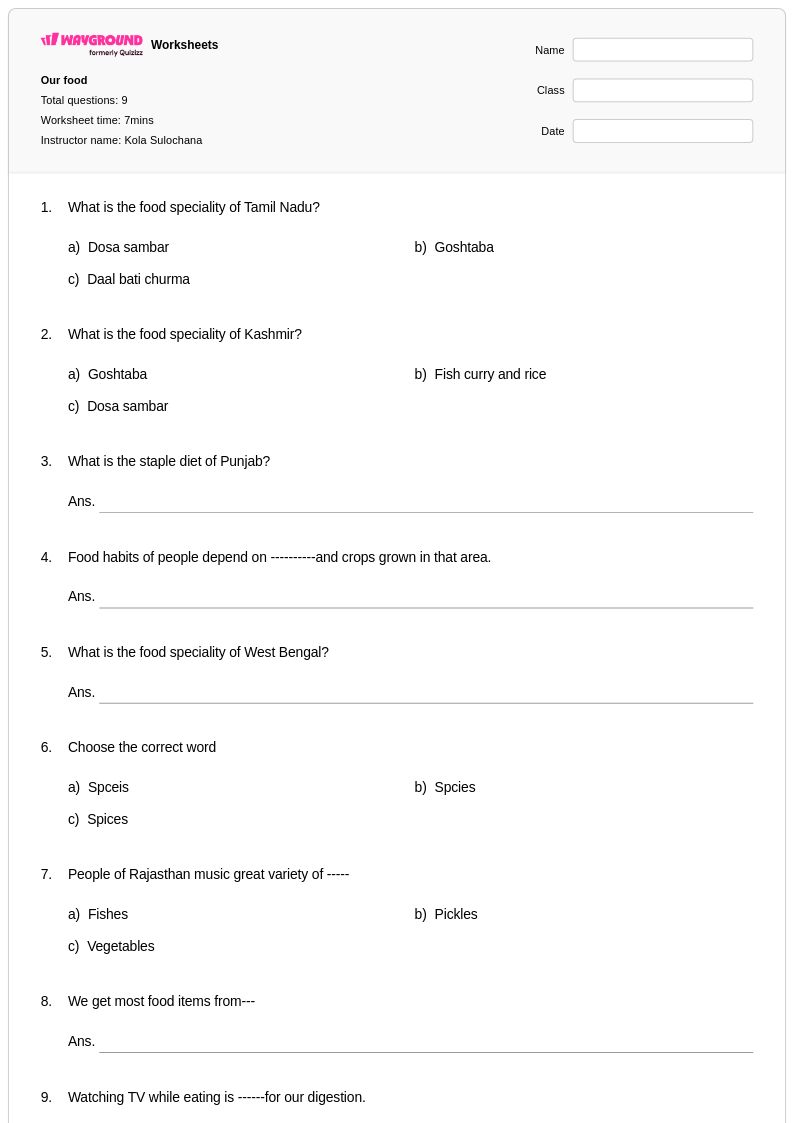
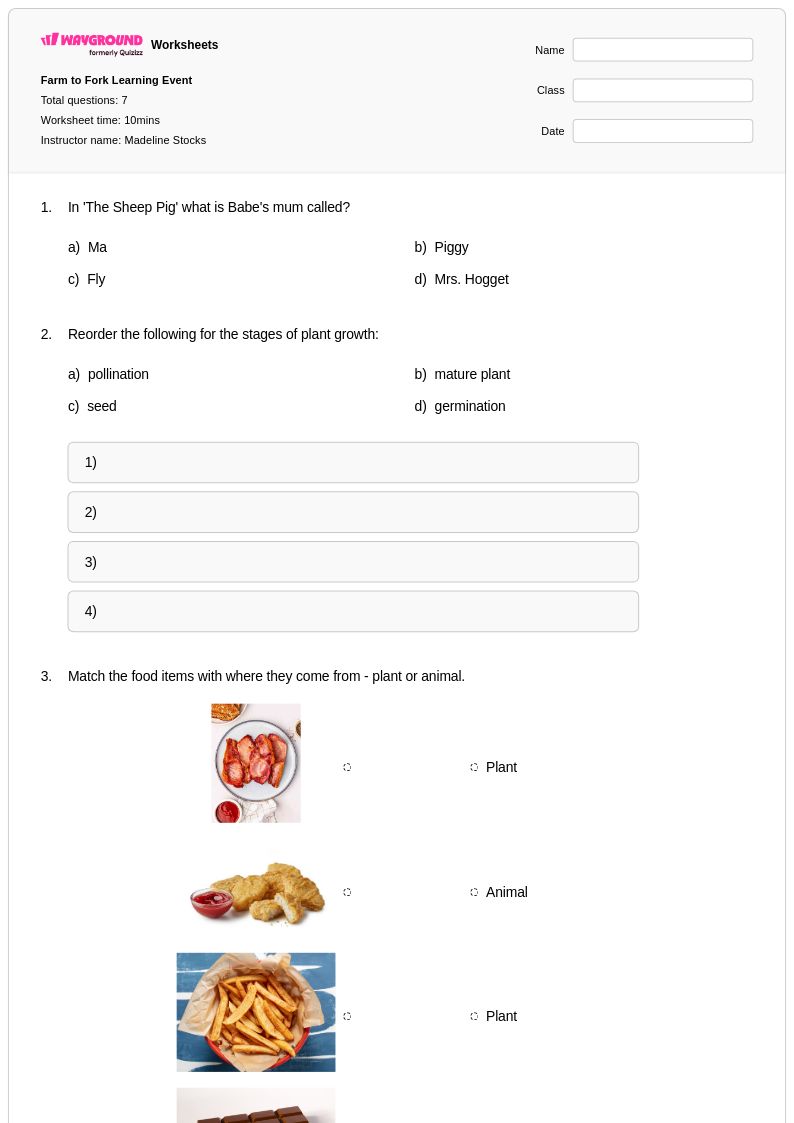
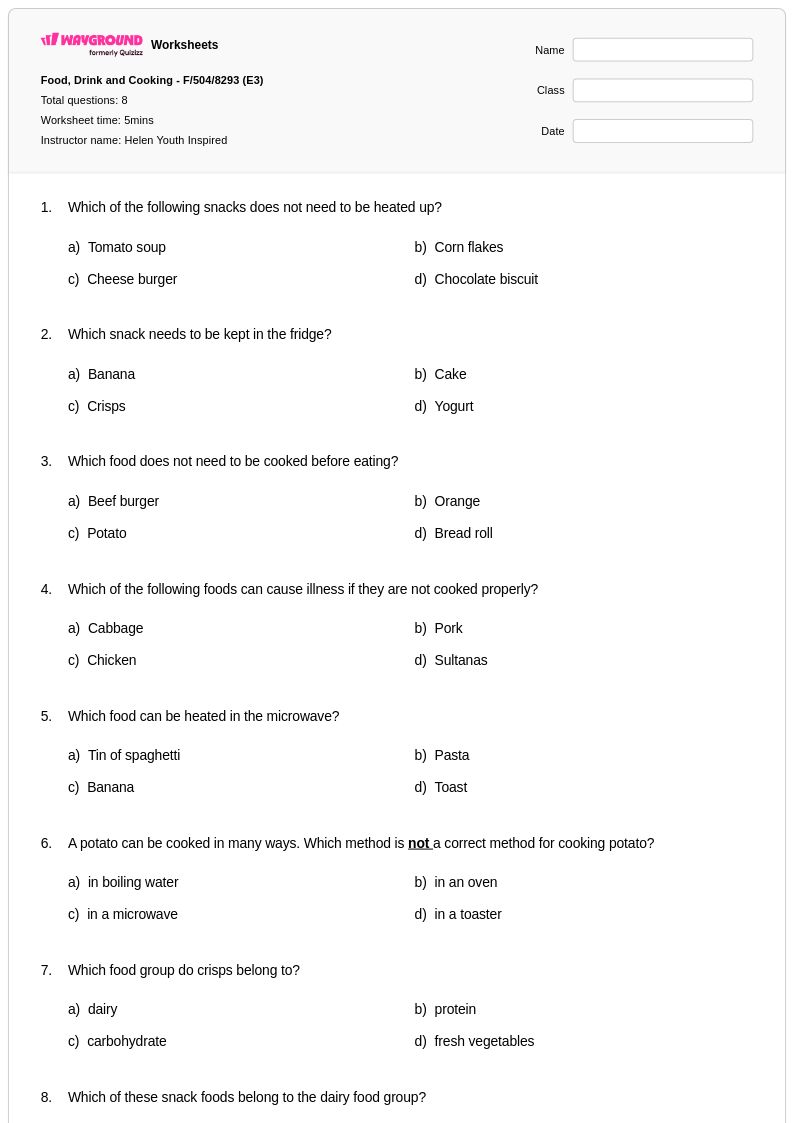
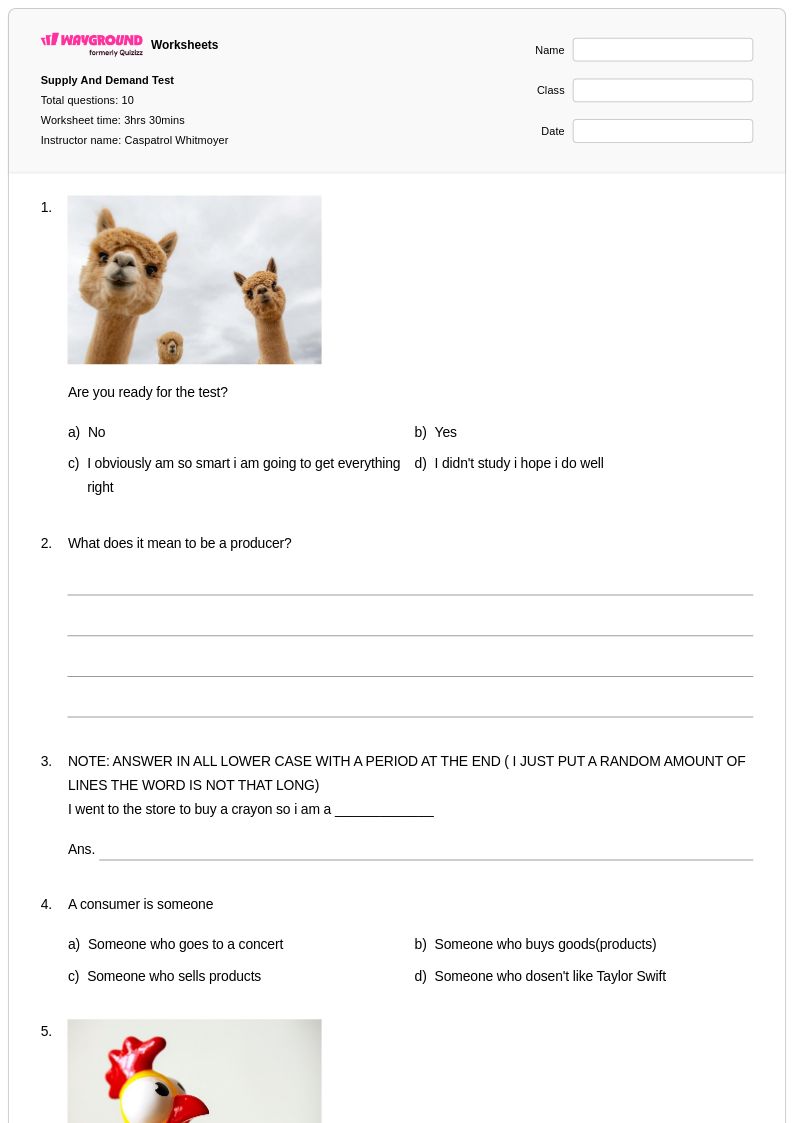
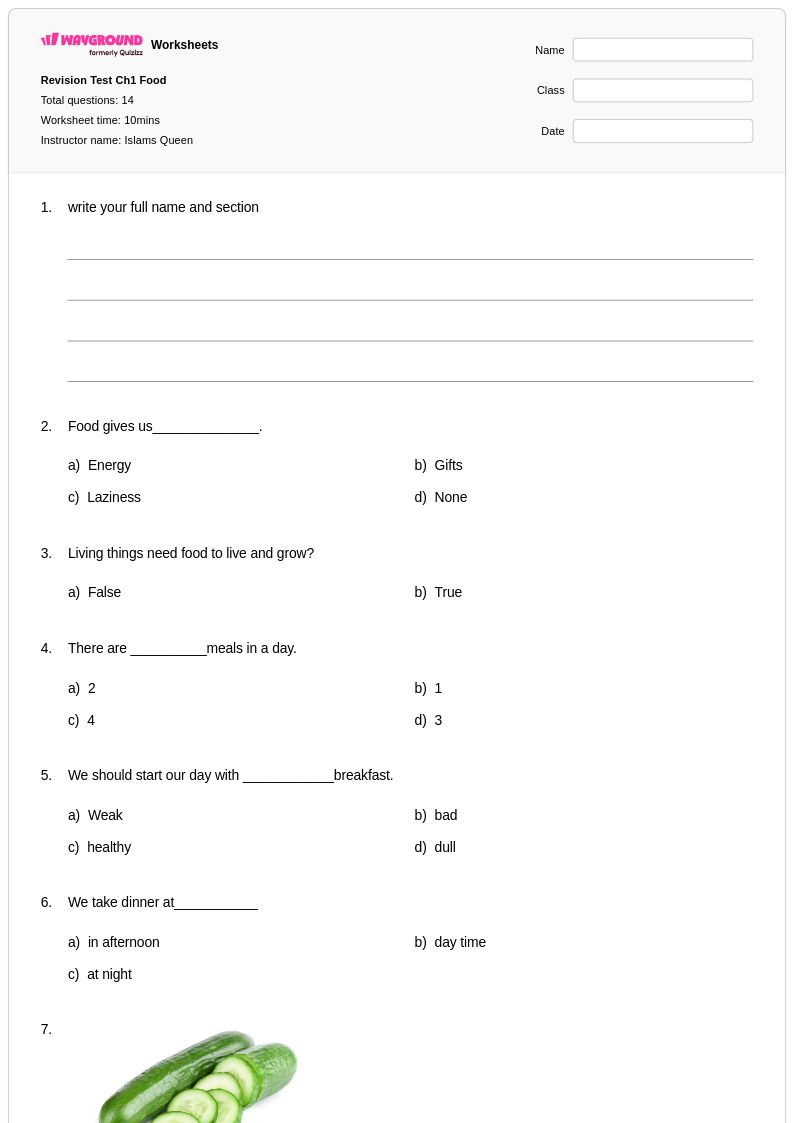
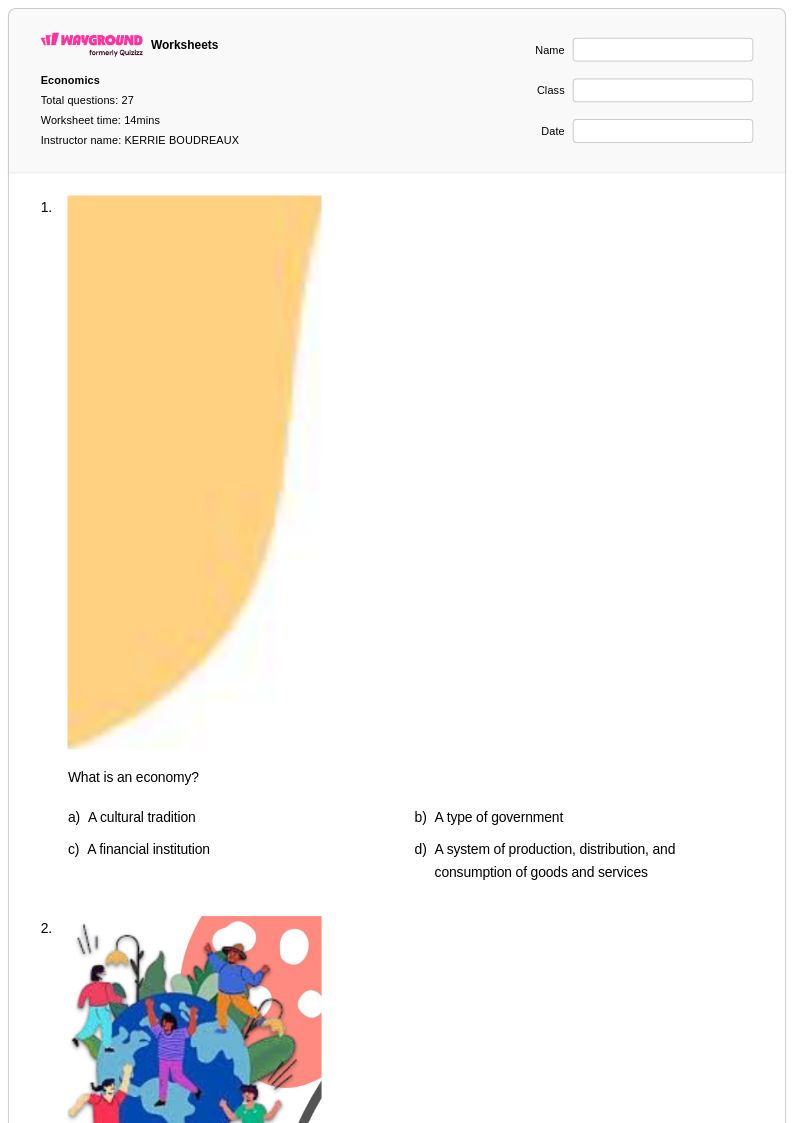
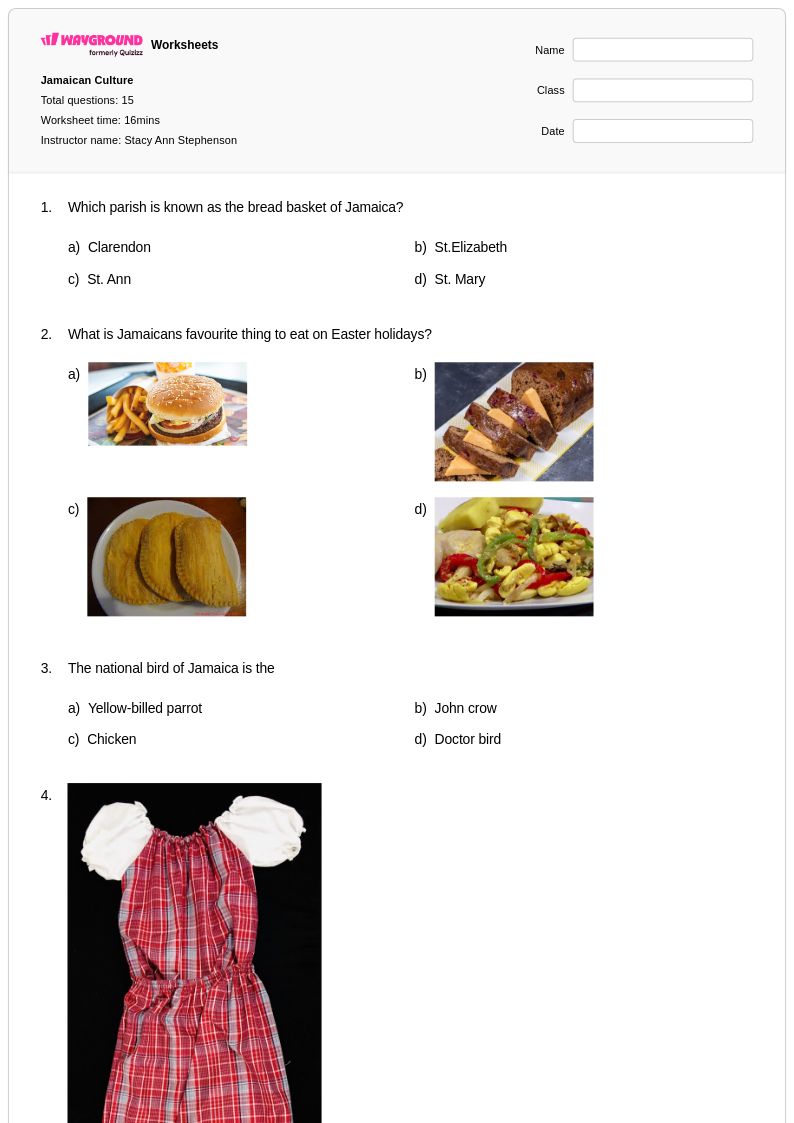
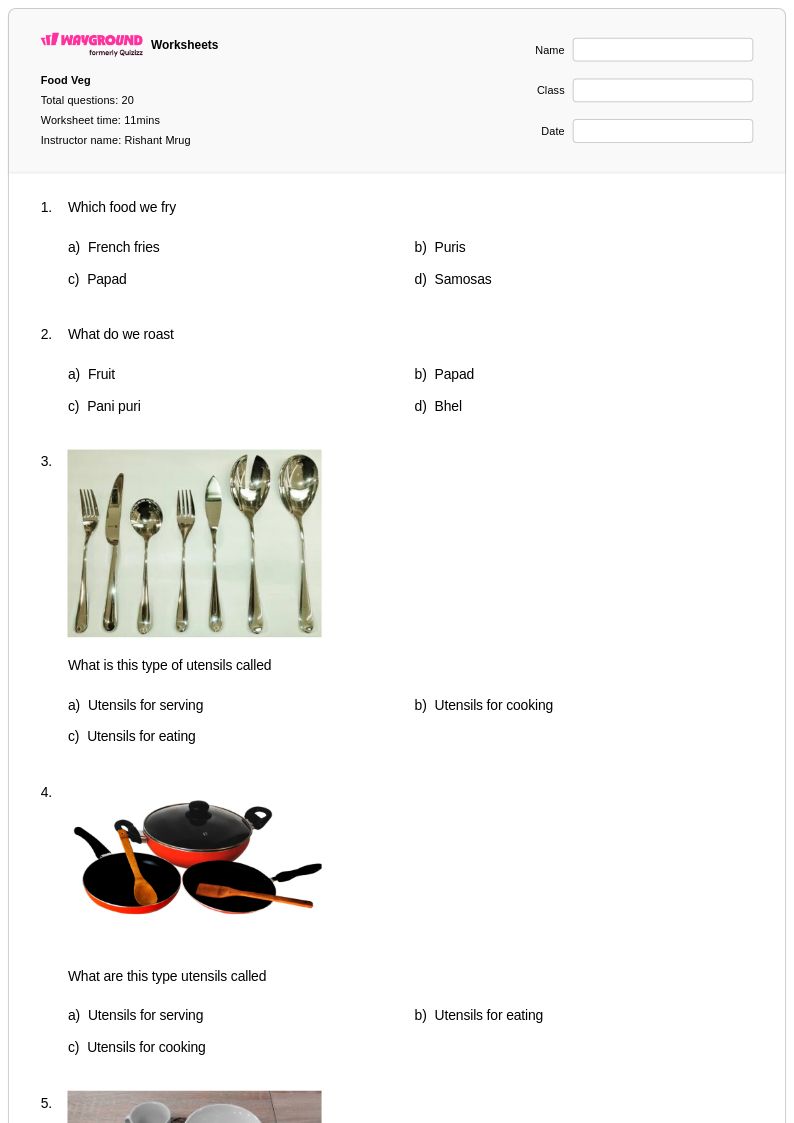
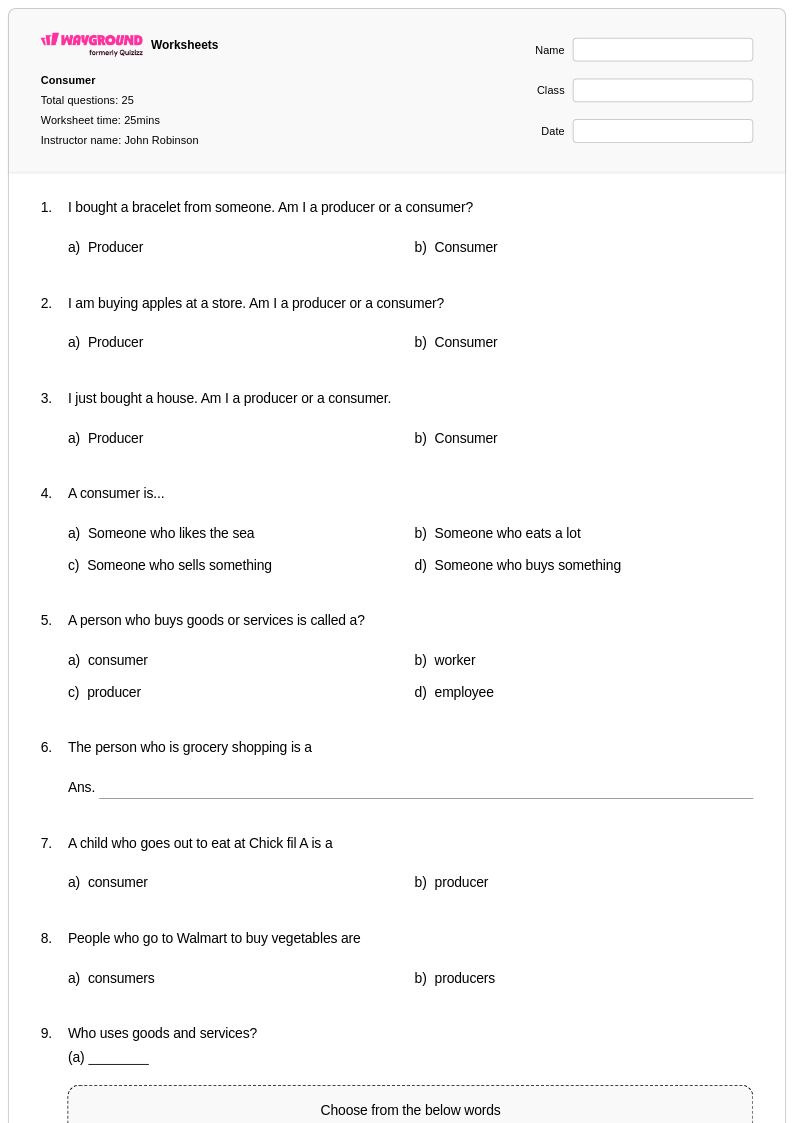
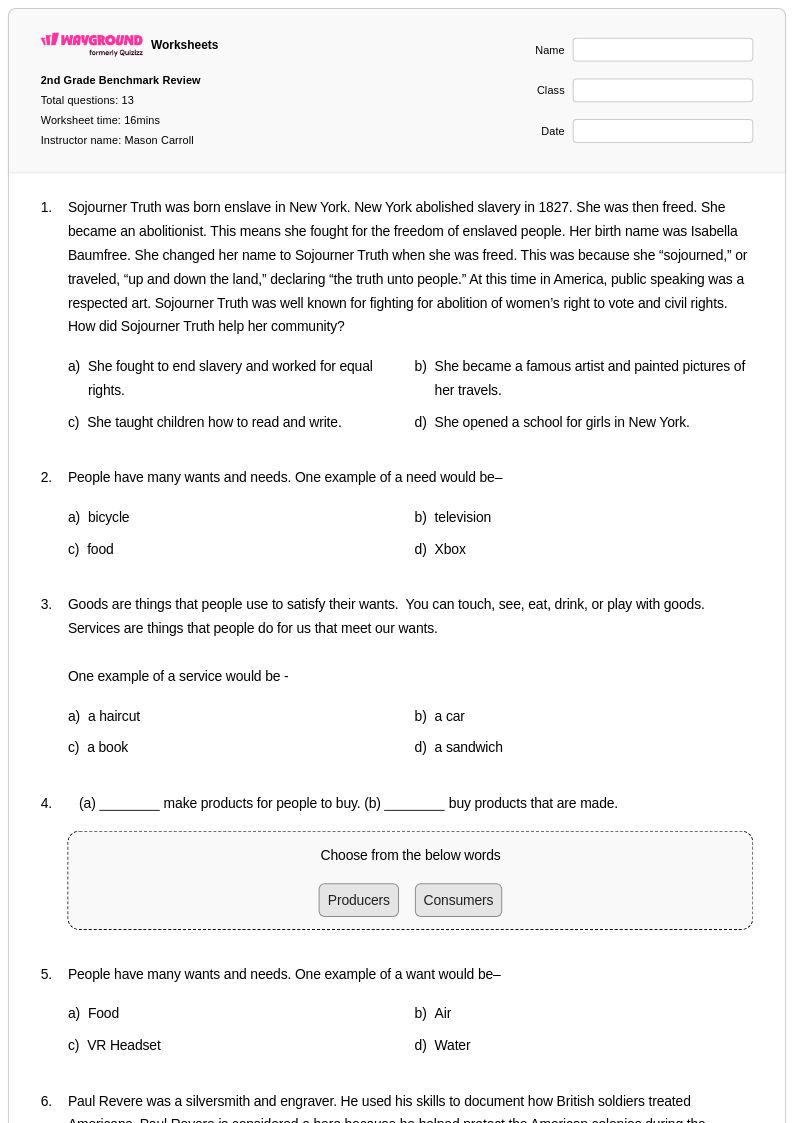
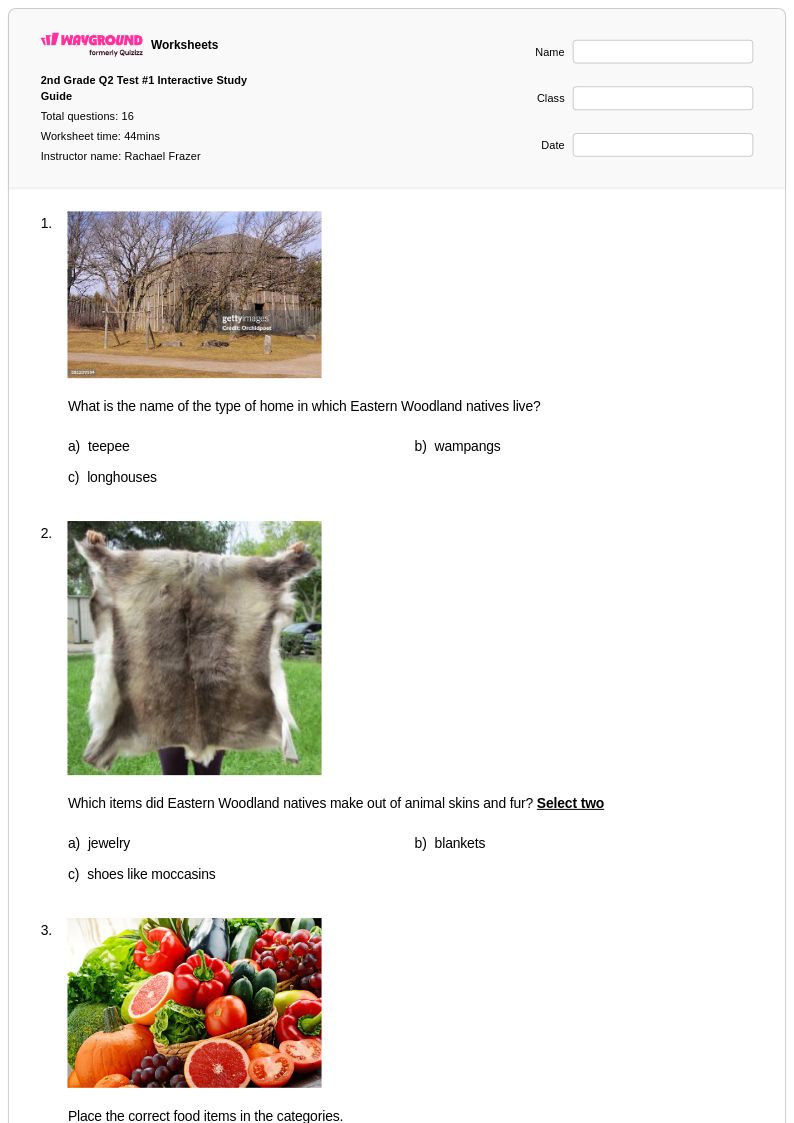
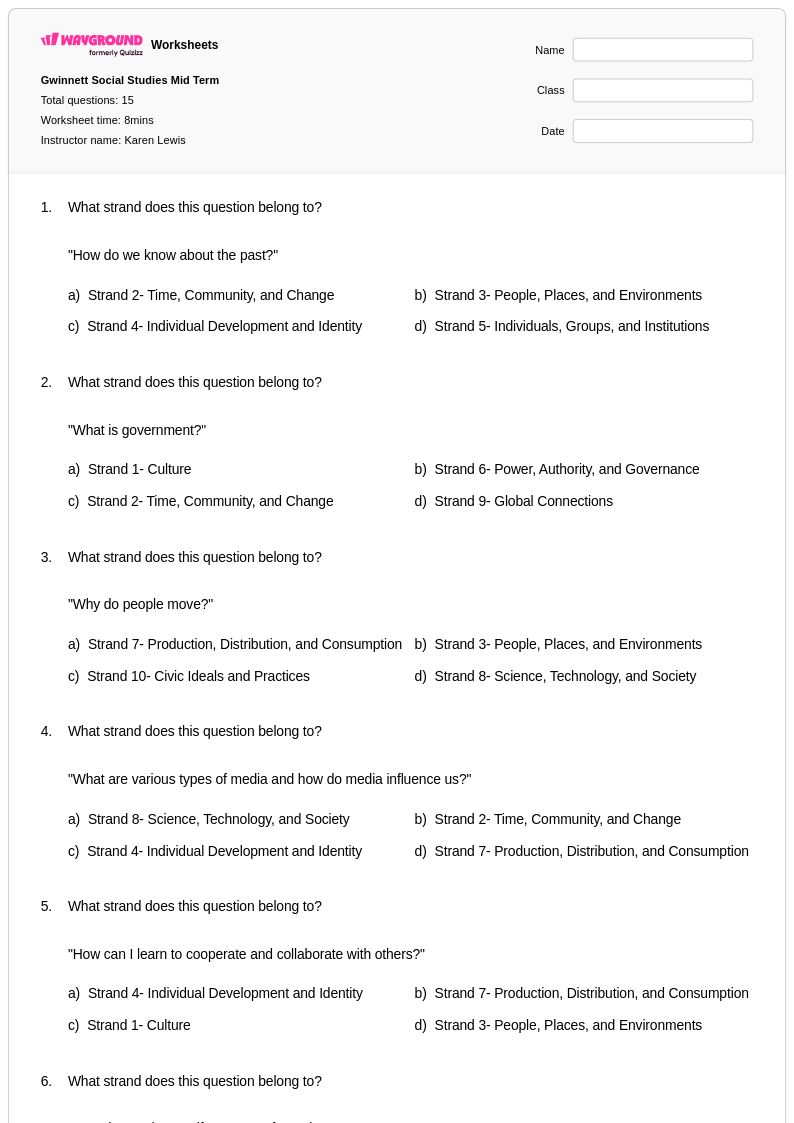
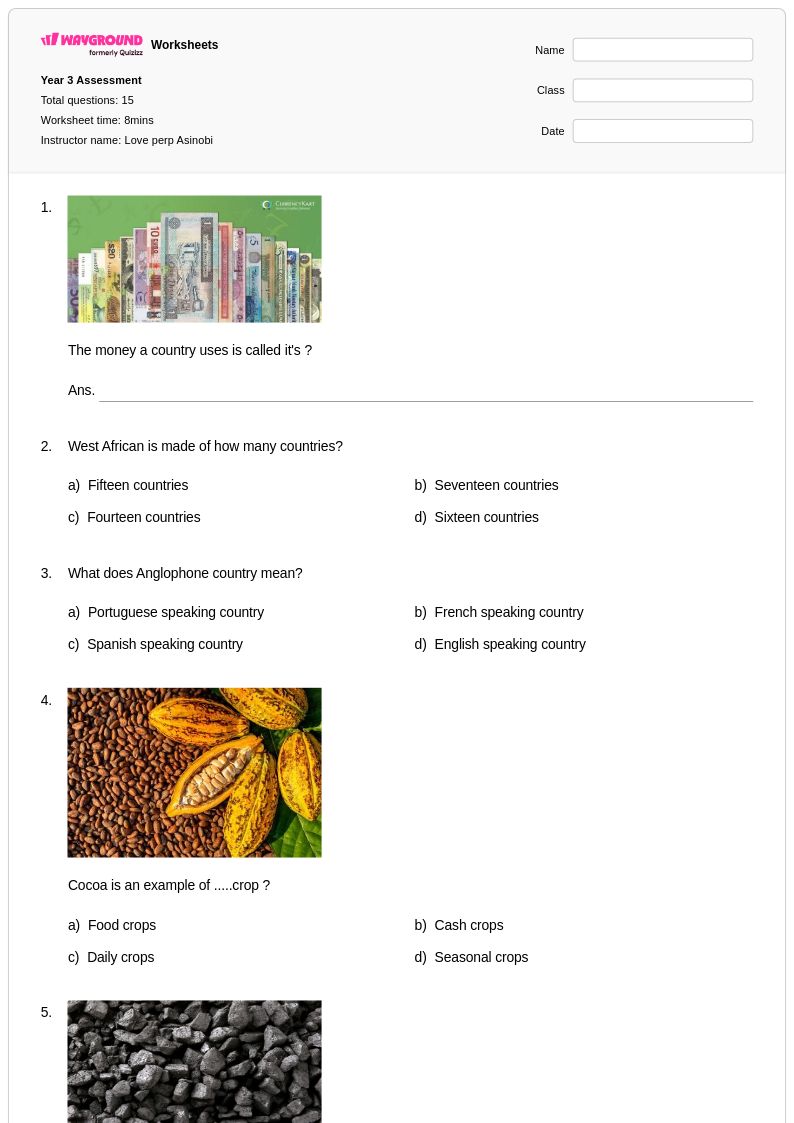
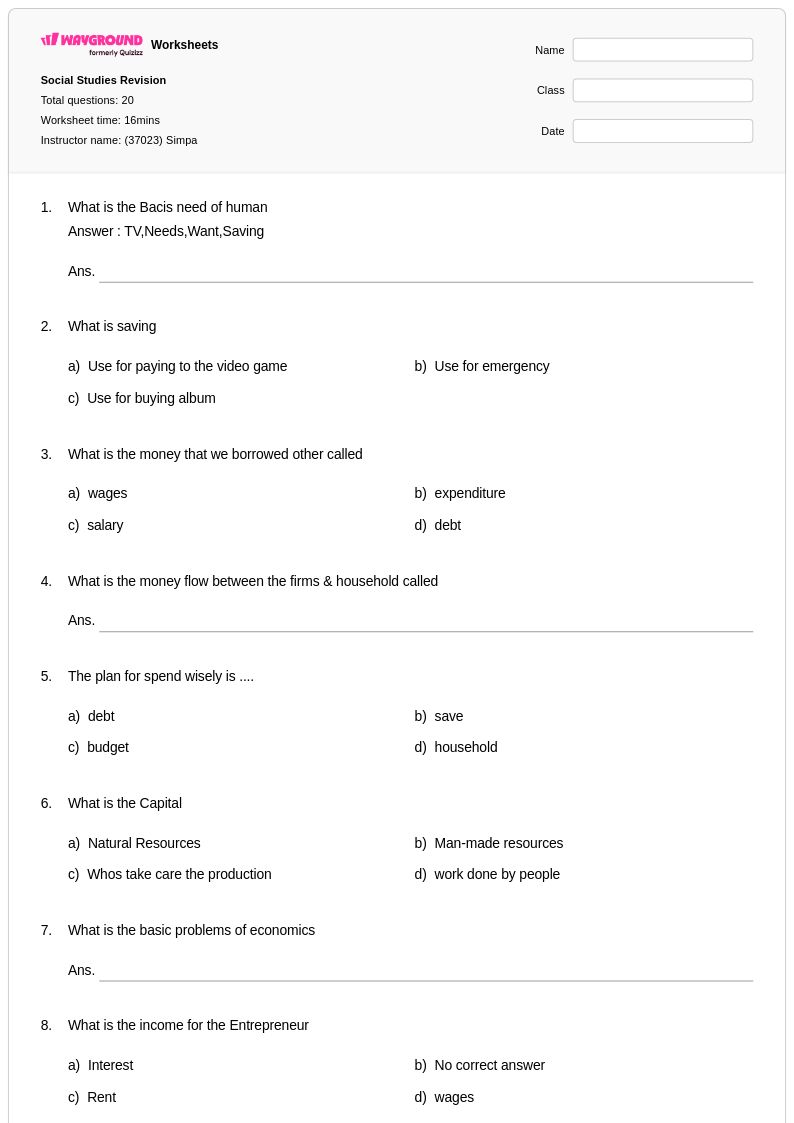
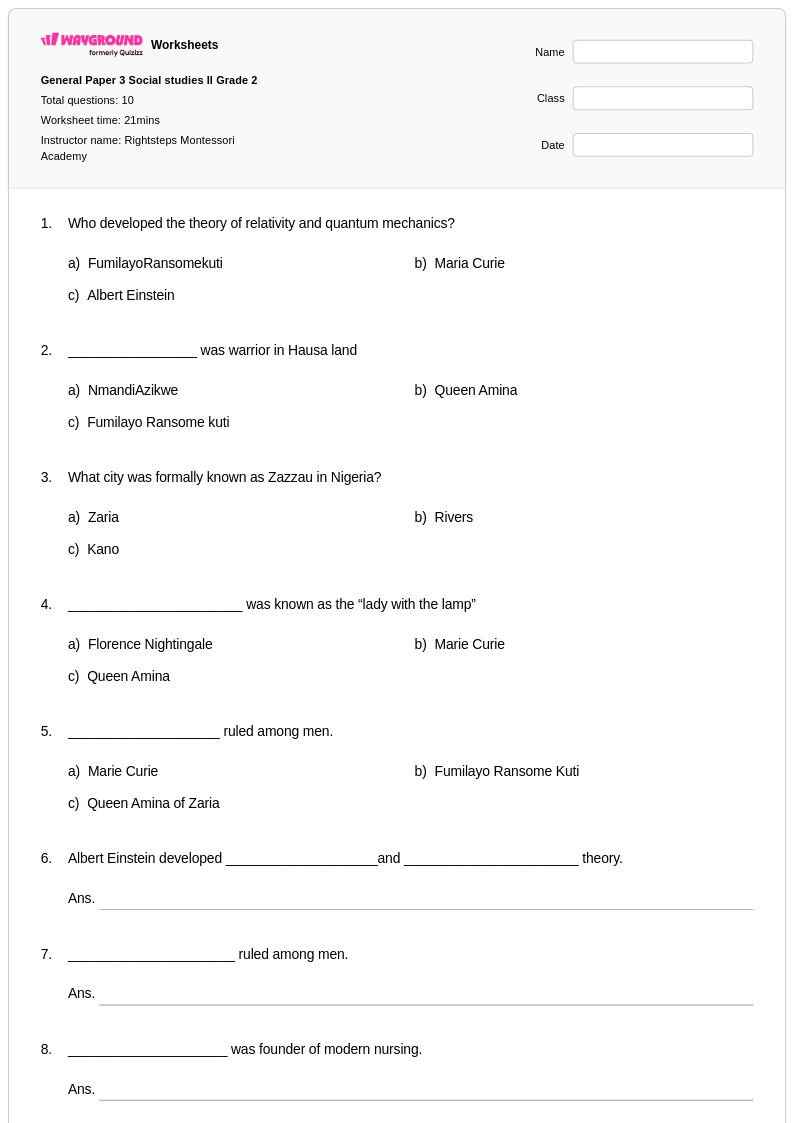
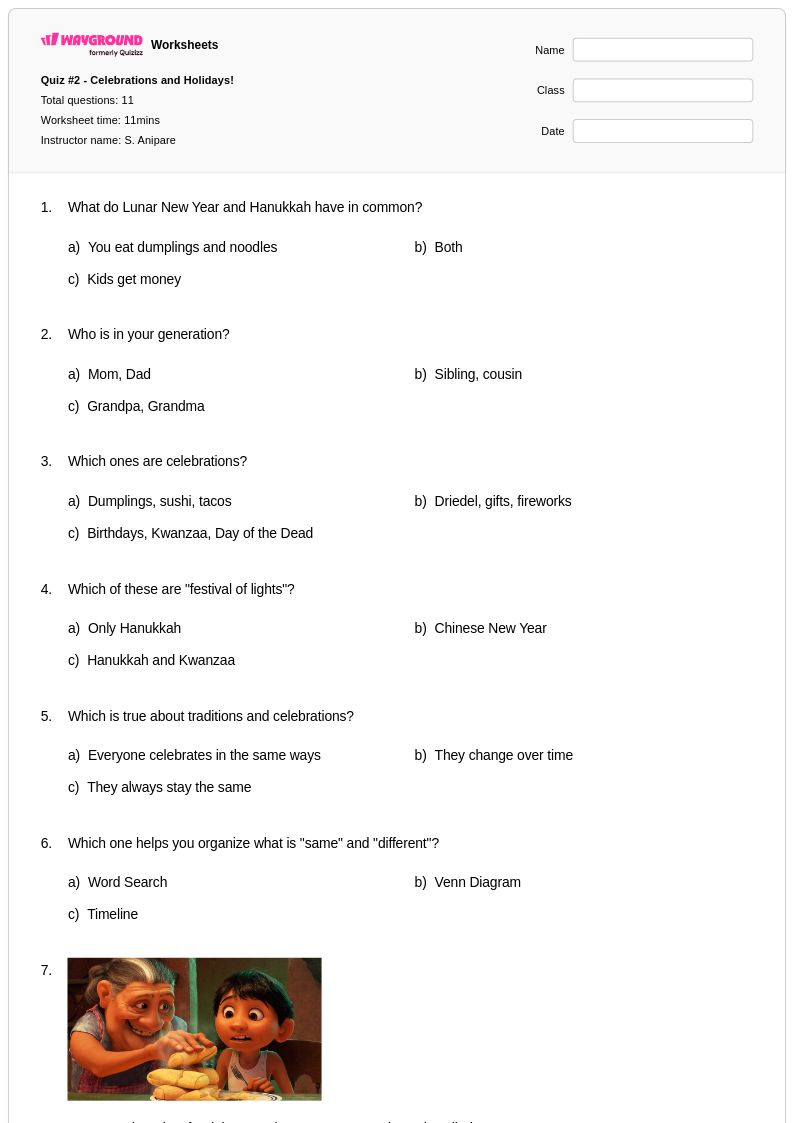
Food production and distribution worksheets for Year 2 students available through Wayground (formerly Quizizz) introduce young learners to the fundamental economic concepts that govern how food travels from farms to their tables. These carefully designed educational resources help second graders develop essential understanding of basic economic principles by exploring how farmers grow crops, how food moves through different stages of transportation and processing, and how it eventually reaches grocery stores and restaurants in their communities. The worksheets strengthen critical thinking skills through engaging practice problems that ask students to sequence the steps of food production, identify different roles in the food system, and recognize the interconnected nature of economic activities. Teachers can access comprehensive answer keys and free printable materials that support classroom instruction while making complex economic concepts accessible to early elementary students.
Wayground's extensive collection of teacher-created resources provides educators with millions of high-quality worksheets specifically designed to meet the diverse learning needs of Year 2 students studying food production and distribution. The platform's robust search and filtering capabilities allow teachers to quickly locate materials that align with curriculum standards and match their specific instructional objectives, whether they need resources for initial skill introduction, targeted remediation, or enrichment activities for advanced learners. These versatile worksheets are available in both printable PDF formats for traditional classroom use and digital formats for interactive learning experiences, giving educators the flexibility to customize content and differentiate instruction based on individual student needs. The comprehensive nature of these resources supports effective lesson planning by providing teachers with ready-to-use materials that can seamlessly integrate into broader social studies units while reinforcing essential economic literacy skills through structured practice opportunities.
FAQs
How do I teach food production and distribution in an economics or social studies class?
Teaching food production and distribution works best when you anchor abstract economic concepts to concrete, real-world supply chains students can trace from farm to table. Start with agricultural production costs and market structures, then build outward to transportation logistics, distribution networks, and global trade agreements. Using case studies — such as how a local farmer prices produce versus how a multinational food company manages international supply chains — helps students connect economic theory to tangible outcomes.
What kinds of practice problems help students understand food supply chains and agricultural economics?
Effective practice problems for this topic ask students to analyze production cost breakdowns, map distribution networks, and evaluate how changes in transportation or trade policy affect food pricing and accessibility. Scenario-based problems — such as calculating the economic impact of a supply chain disruption or comparing market structures in different food industries — build the analytical skills students need to understand how economic principles operate in real food systems.
What misconceptions do students commonly have about food production and distribution?
A common misconception is that food prices are determined solely by production costs, when in reality distribution logistics, market structures, trade agreements, and transportation costs all play significant roles. Students also frequently underestimate the complexity of global supply chains, assuming food moves directly from producer to consumer without intermediary economic actors. Addressing these gaps early with structured analysis tasks helps students build a more accurate mental model of agricultural economics.
How can I differentiate food production and distribution worksheets for students with different learning needs?
For students who need additional support, simplifying supply chain diagrams, reducing the number of variables in economic analysis problems, and providing sentence stems for written responses can lower cognitive barriers without removing rigor. On Wayground, teachers can apply individual accommodations such as read aloud support, reduced answer choices, and extended time on a per-student basis, so advanced learners receive grade-level challenge while struggling learners get targeted scaffolding — all within the same assignment.
How do I use Wayground's food production and distribution worksheets in my classroom?
Wayground's food production and distribution worksheets are available as printable PDFs for traditional classroom use and in digital formats for technology-integrated environments, including the option to host them as a live quiz on the platform. Teachers can use them for initial concept introduction, guided practice, or assessment preparation depending on where students are in the unit. Complete answer keys are included with every worksheet, supporting both self-paced independent study and whole-class instruction.
How does food production and distribution connect to broader economics standards?
Food production and distribution is a rich applied context for core economics standards including supply and demand, market structures, cost analysis, and international trade. Because the food industry spans local markets, national regulatory systems, and global trade networks, it gives teachers a single real-world domain in which students can examine multiple economic principles simultaneously. This cross-cutting relevance makes it useful for economics, social studies, geography, and even environmental science courses.