
15 Q
8th - Uni
20 Q
9th - 12th
30 Q
5th - Uni

7 Q
6th - Uni
10 Q
9th - 12th
10 Q
7th - 12th
13 Q
9th
10 Q
6th - 9th
13 Q
6th - Uni
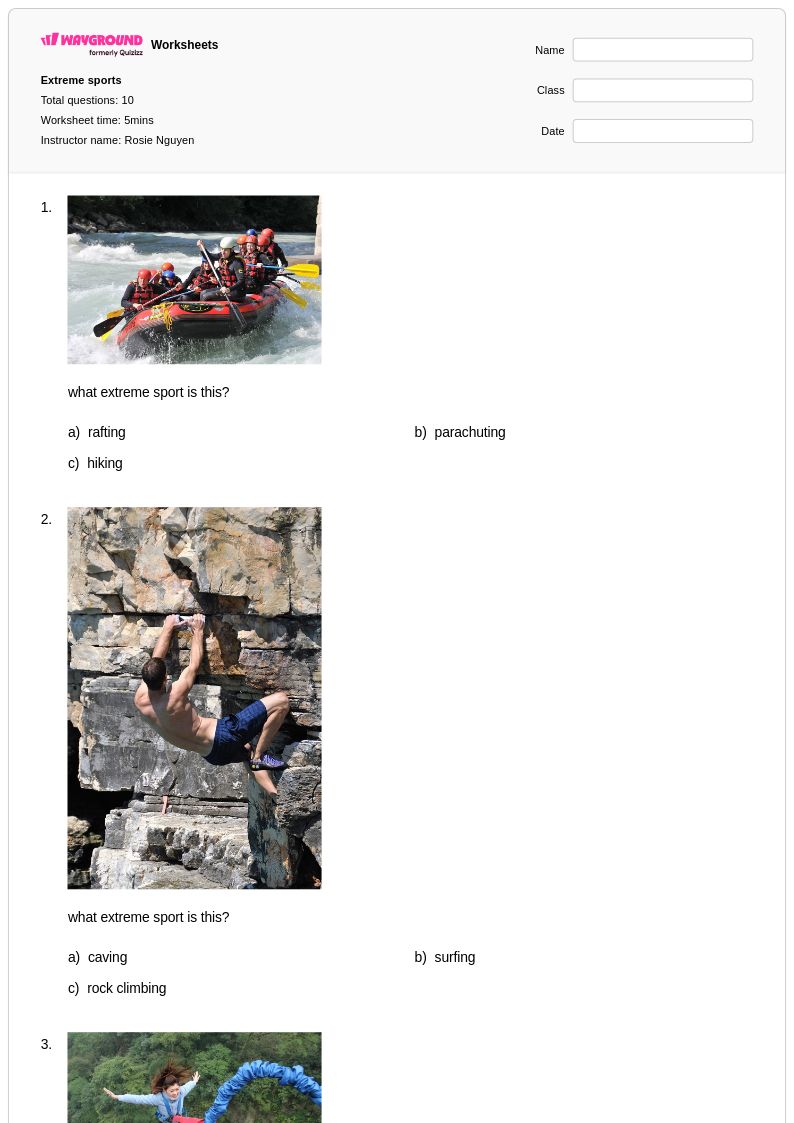
10 Q
9th - Uni
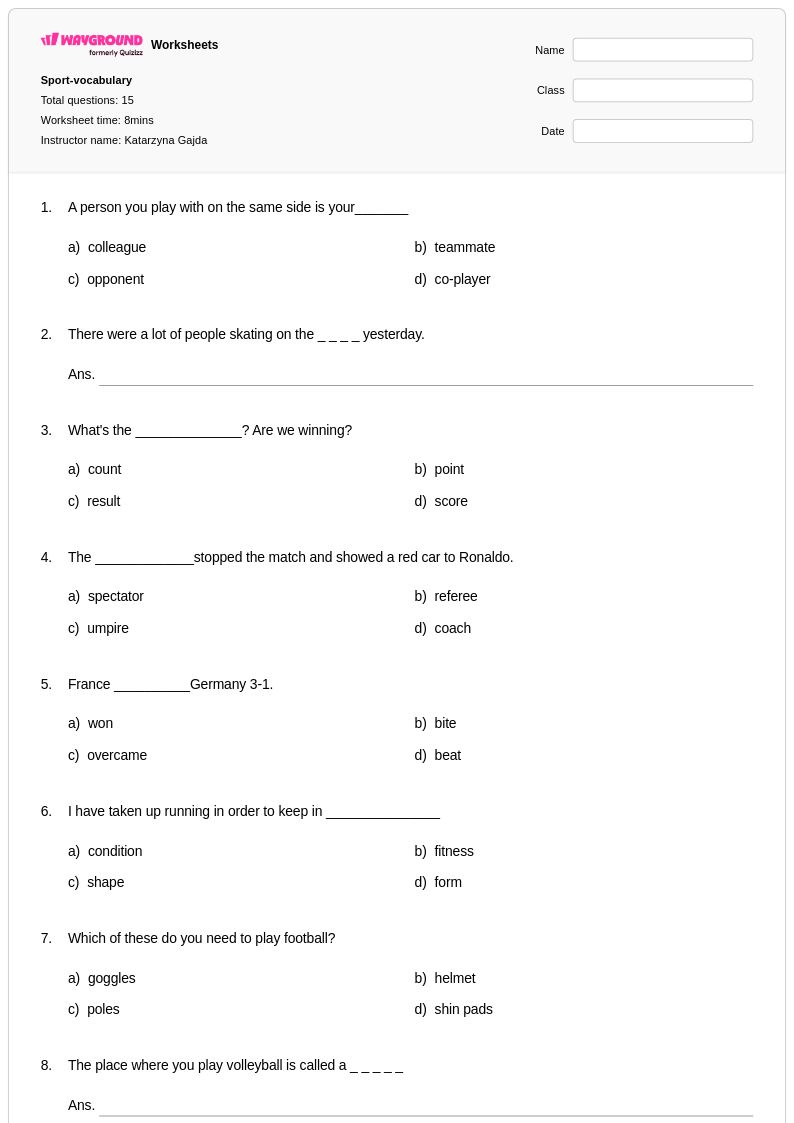
15 Q
8th - 10th
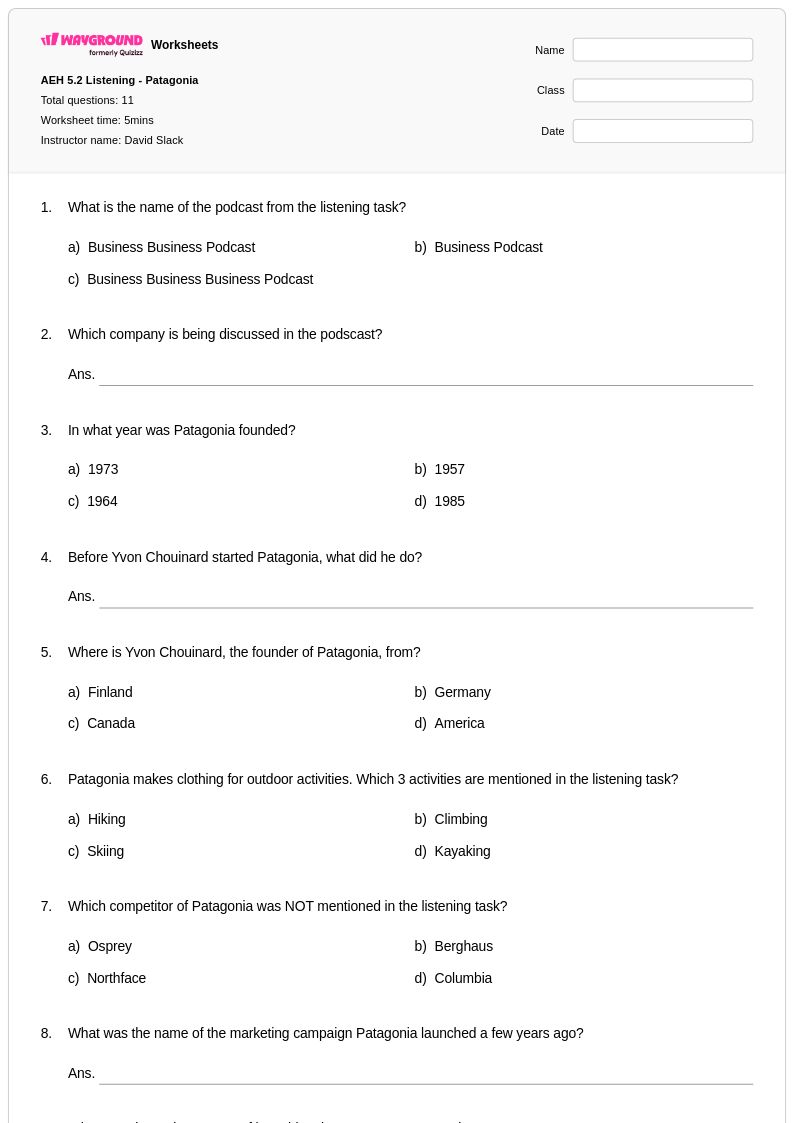
11 Q
9th - Uni
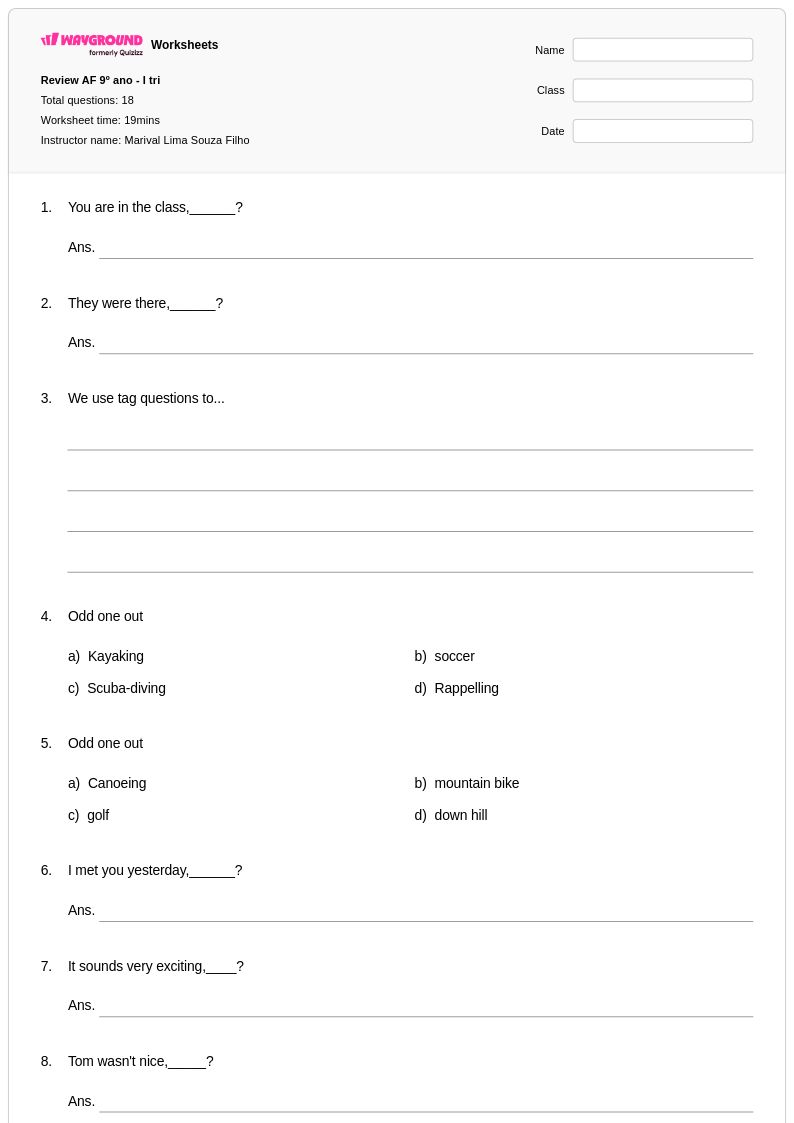
18 Q
9th
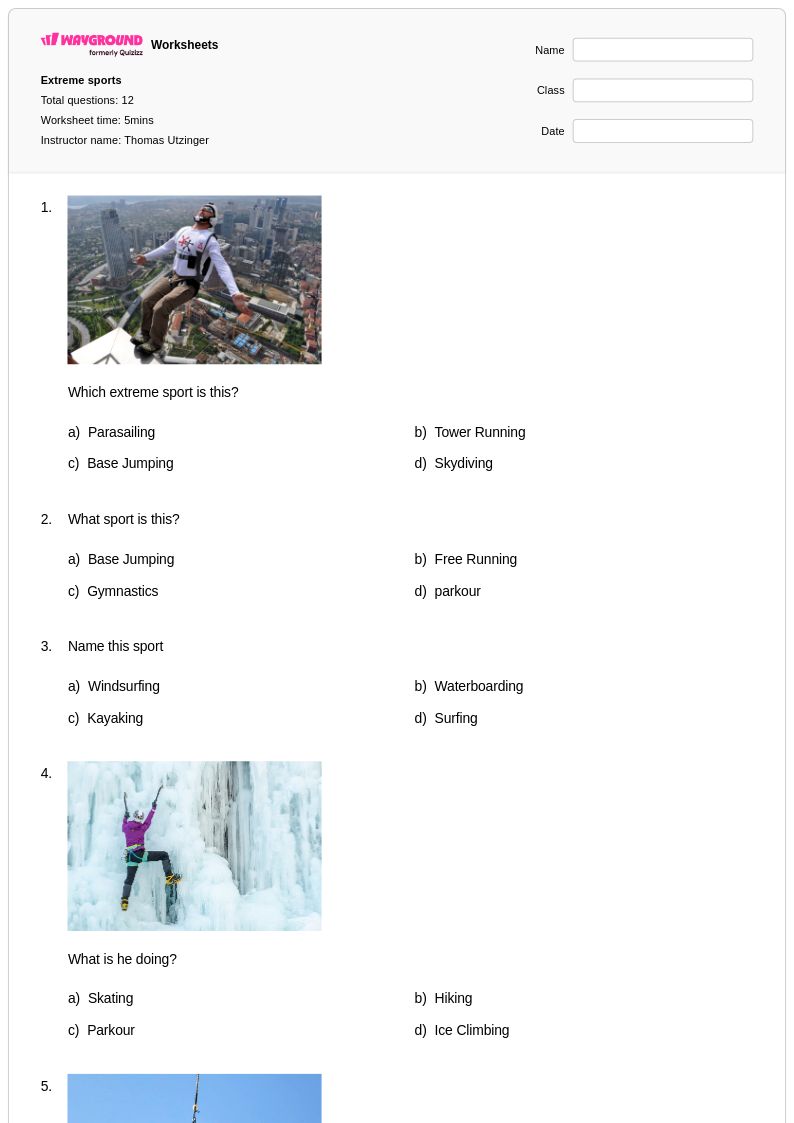
12 Q
6th - 12th
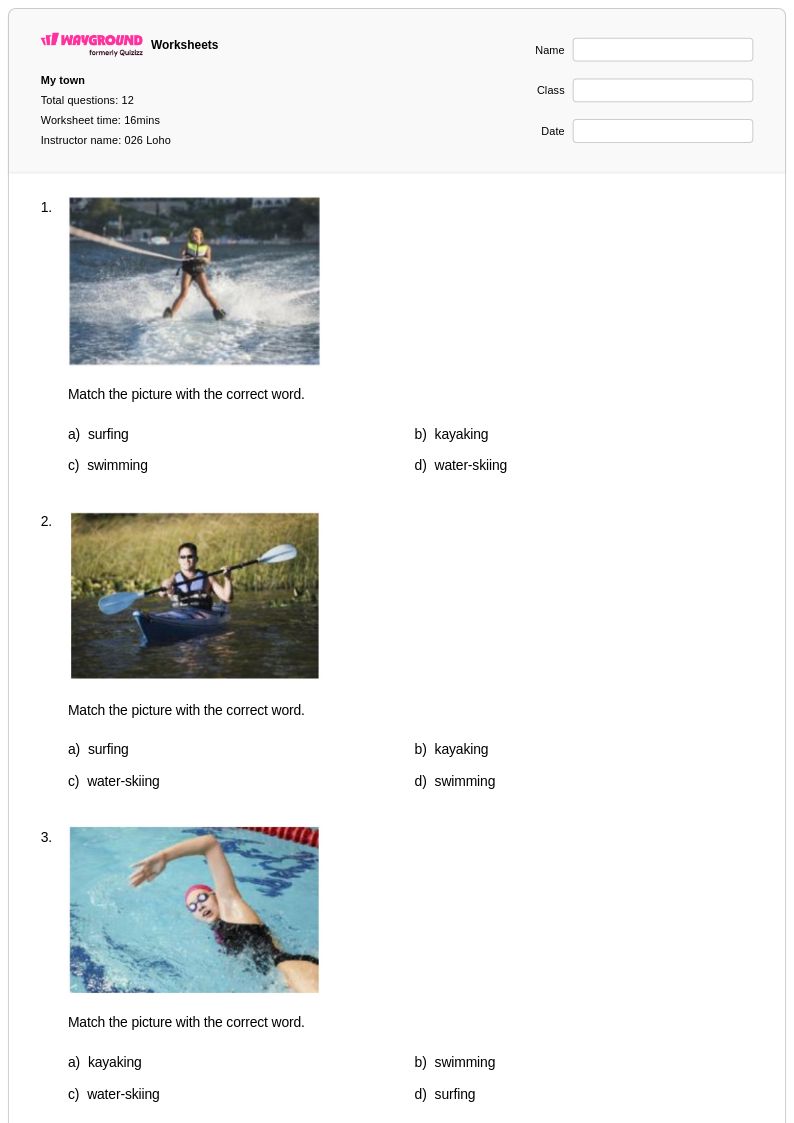
12 Q
9th
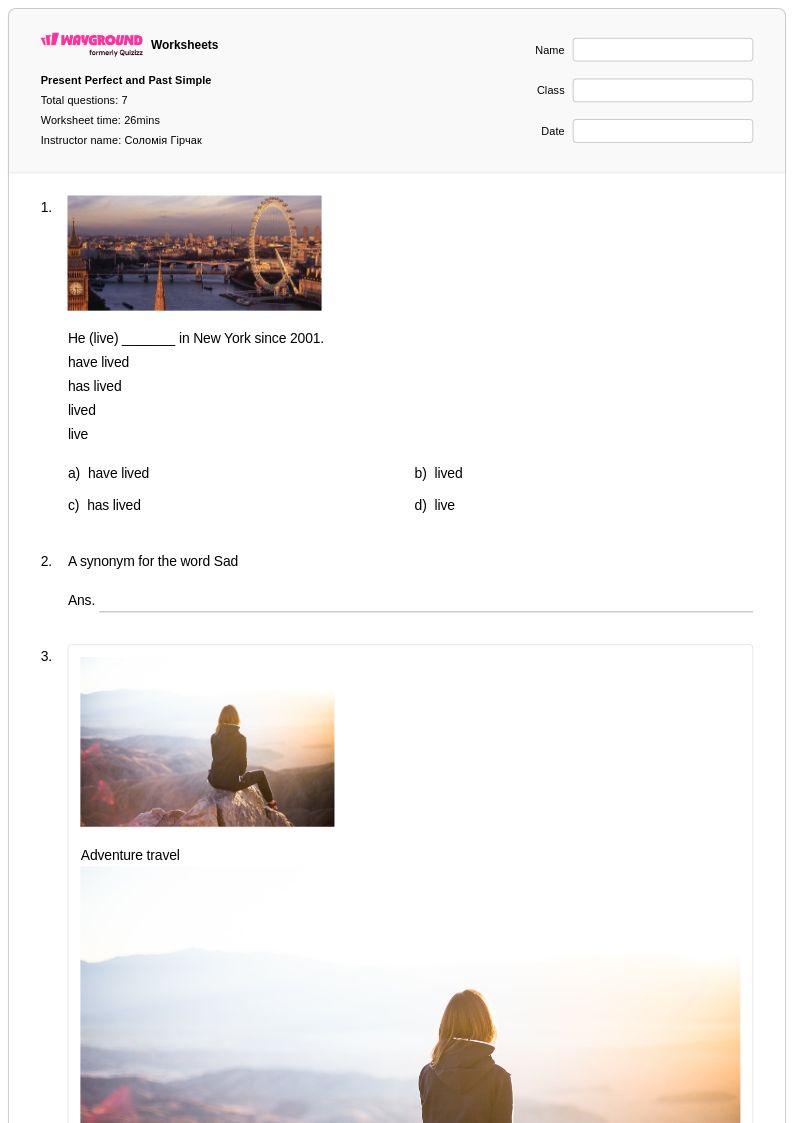
10 Q
9th
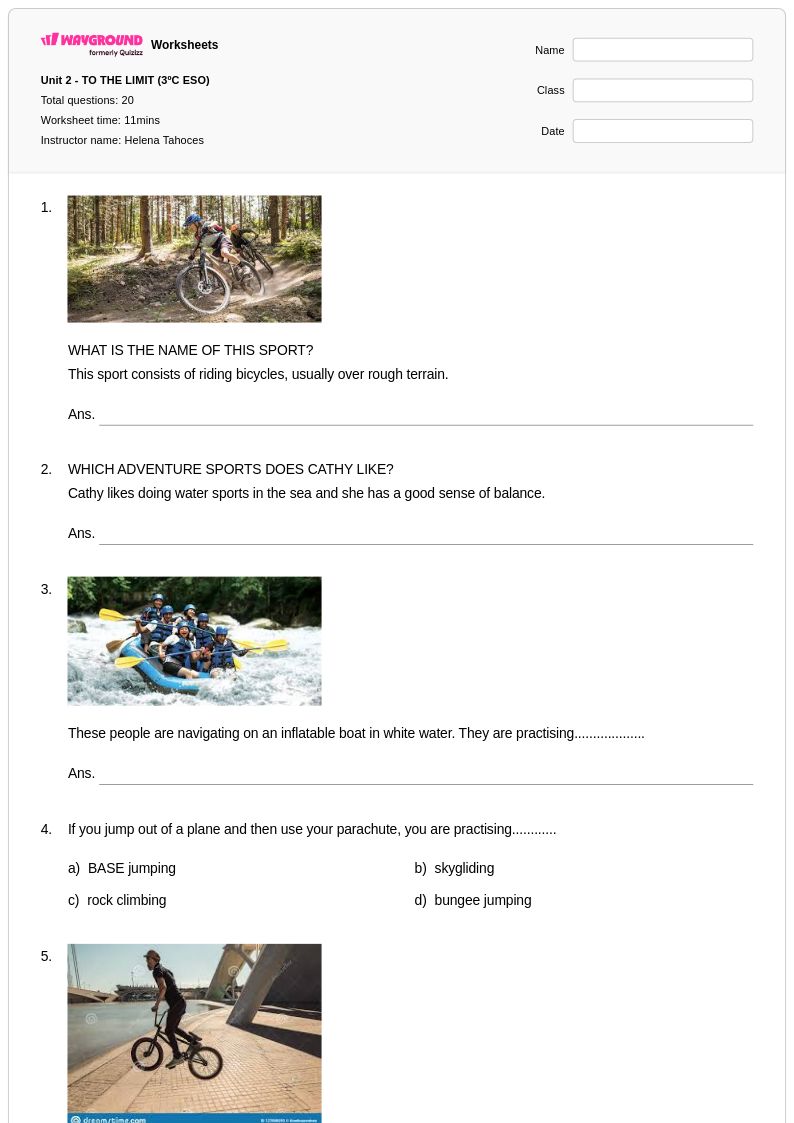
20 Q
9th
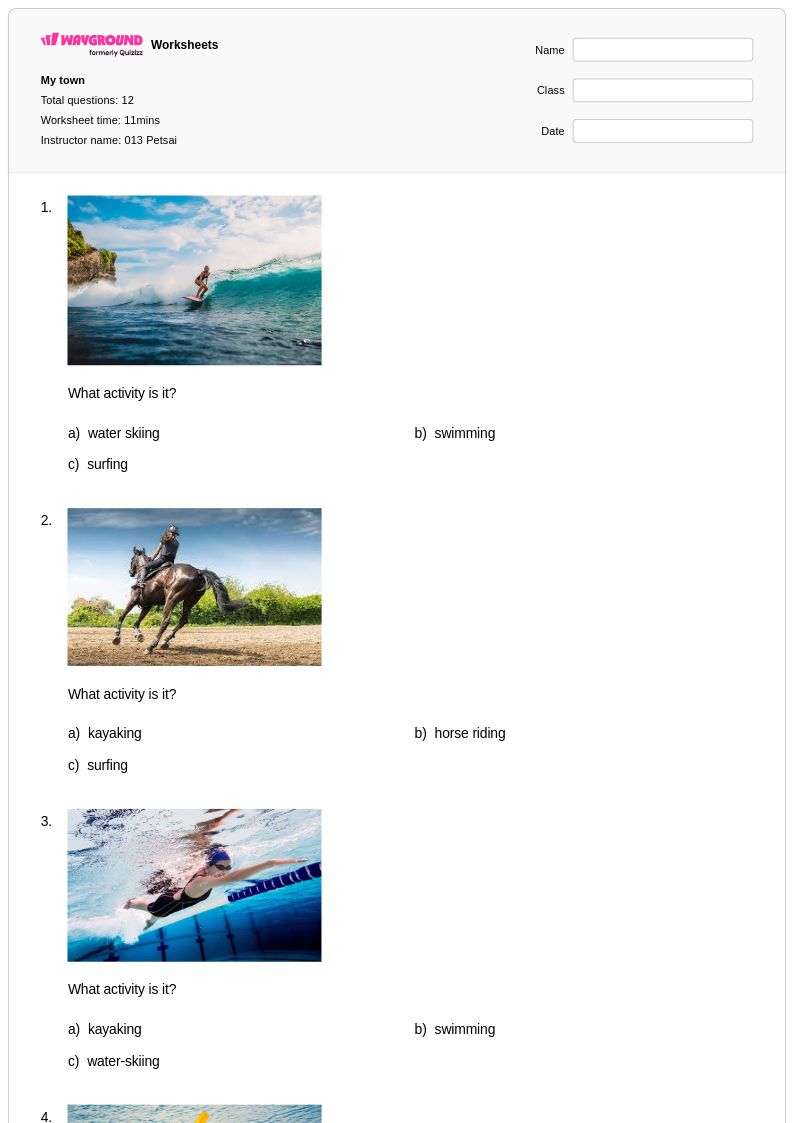
12 Q
9th
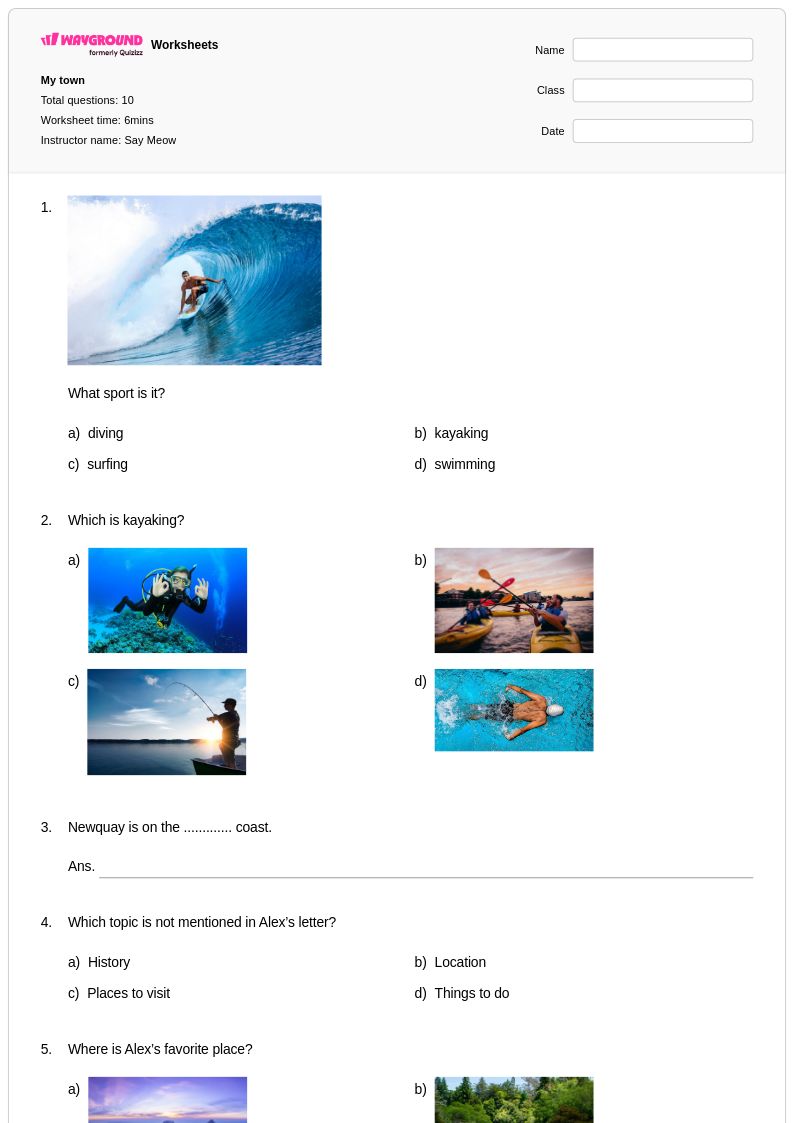
10 Q
9th
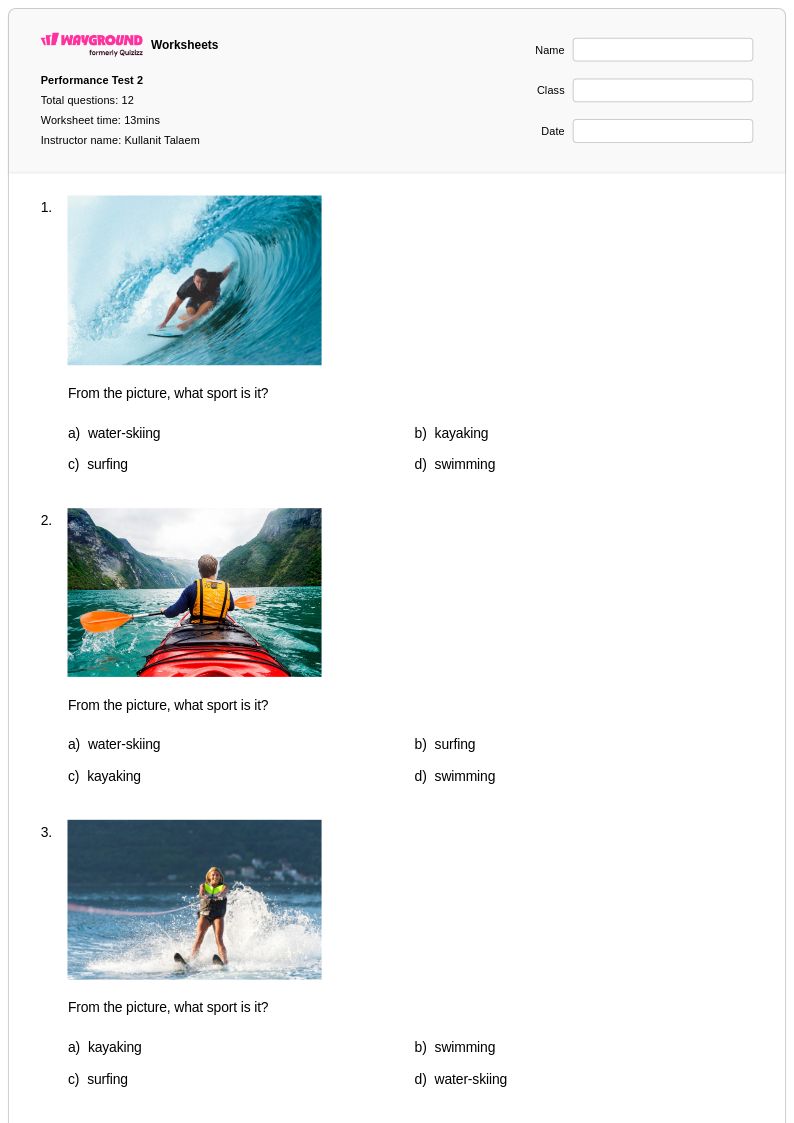
12 Q
7th - 9th
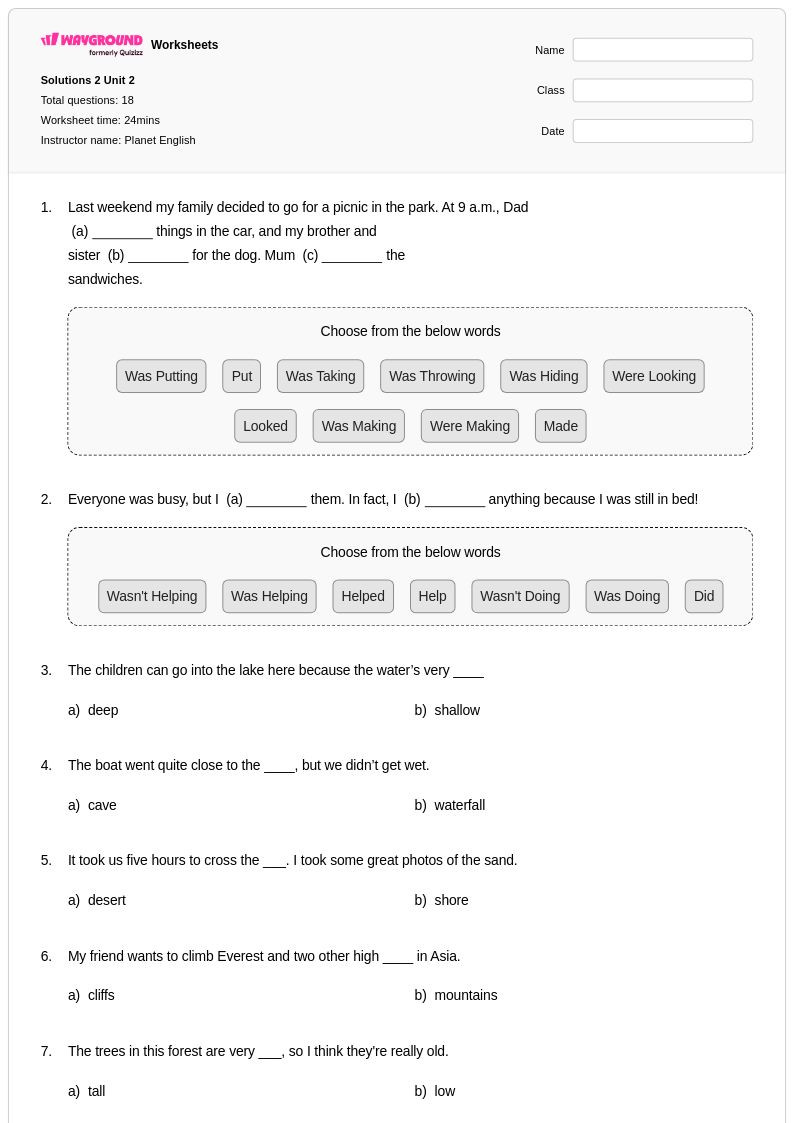
18 Q
7th - Uni
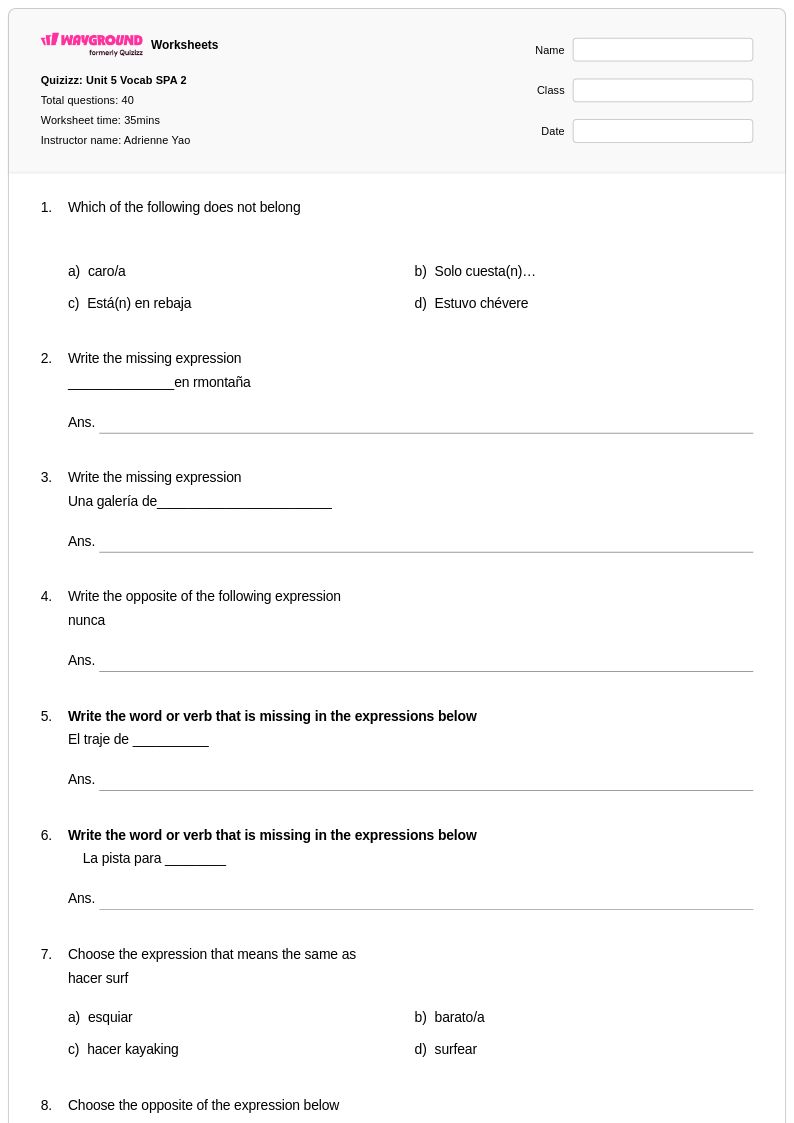
40 Q
9th
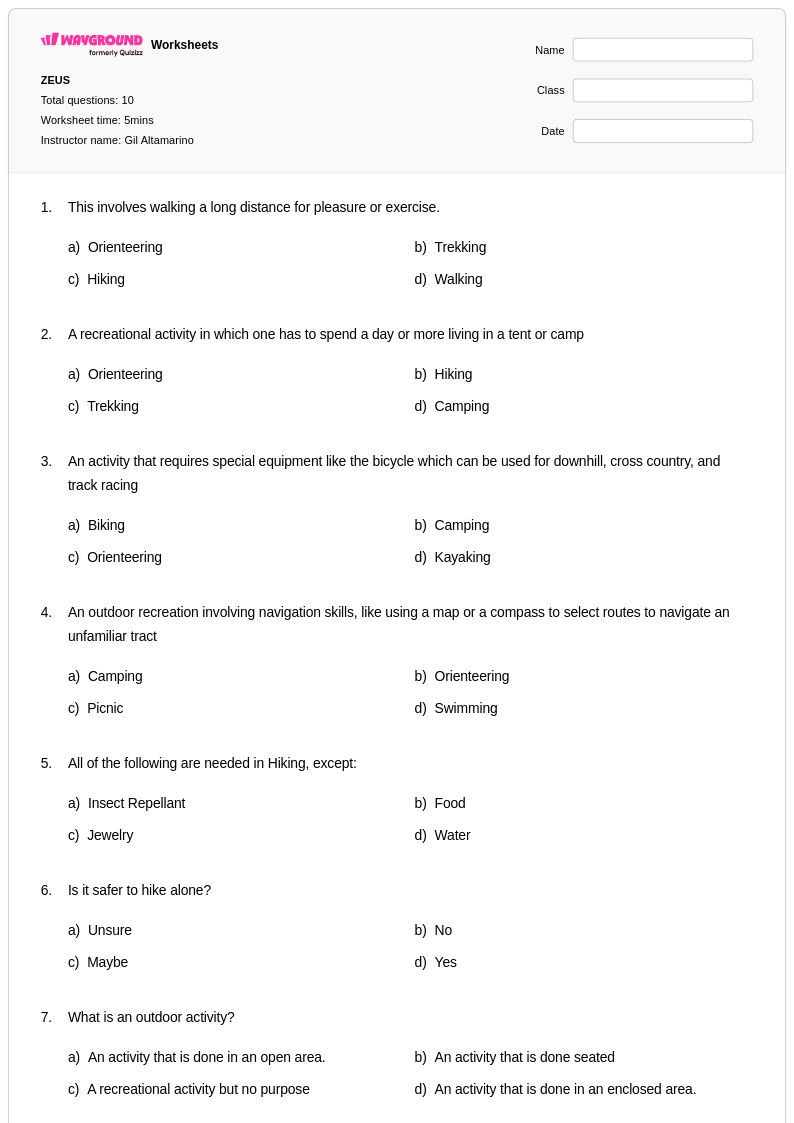
10 Q
9th
Explore Kayaking Worksheets by Grades
Explore Other Subject Worksheets for year 9
Explore printable Kayaking worksheets for Year 9
Kayaking worksheets for Year 9 students available through Wayground (formerly Quizizz) provide comprehensive educational resources that blend physical education theory with practical water sports knowledge. These expertly designed materials help ninth-grade students master essential kayaking concepts including paddle techniques, safety protocols, equipment identification, water reading skills, and environmental awareness. The worksheet collections feature detailed practice problems that challenge students to apply their understanding of stroke mechanics, rescue procedures, and navigation principles, while comprehensive answer keys enable both independent study and instructor-guided review. These free printable resources strengthen critical thinking about water safety, weather assessment, and risk management while building foundational knowledge that supports safe participation in kayaking activities.
Wayground (formerly Quizizz) empowers physical education teachers with access to millions of teacher-created kayaking resources that streamline lesson planning and enhance Year 9 instruction. The platform's robust search and filtering capabilities allow educators to quickly locate materials aligned with specific physical education standards and learning objectives, while differentiation tools enable customization for varying skill levels and learning needs. Teachers can seamlessly adapt these digital and printable pdf resources for remediation of safety concepts, enrichment activities for advanced students, or targeted skill practice sessions. The flexible format options support diverse classroom environments, from traditional gymnasium settings to outdoor education programs, ensuring that kayaking instruction remains engaging, comprehensive, and educationally sound regardless of the learning context.
FAQs
How do I teach kayaking techniques in a physical education class?
What topics should a kayaking worksheet cover for PE students?
What common mistakes do students make when learning kayaking safety concepts?
How can I differentiate kayaking instruction for students with different skill levels?
How do I use Wayground's kayaking worksheets in my class?