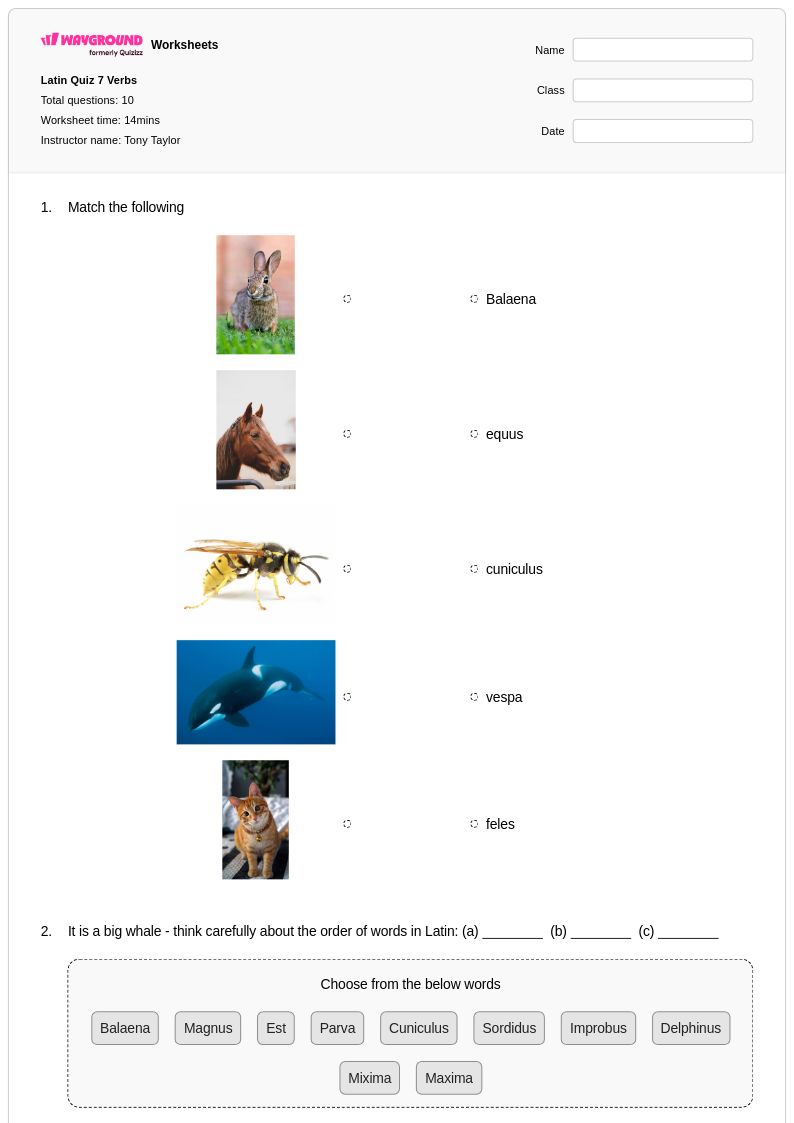
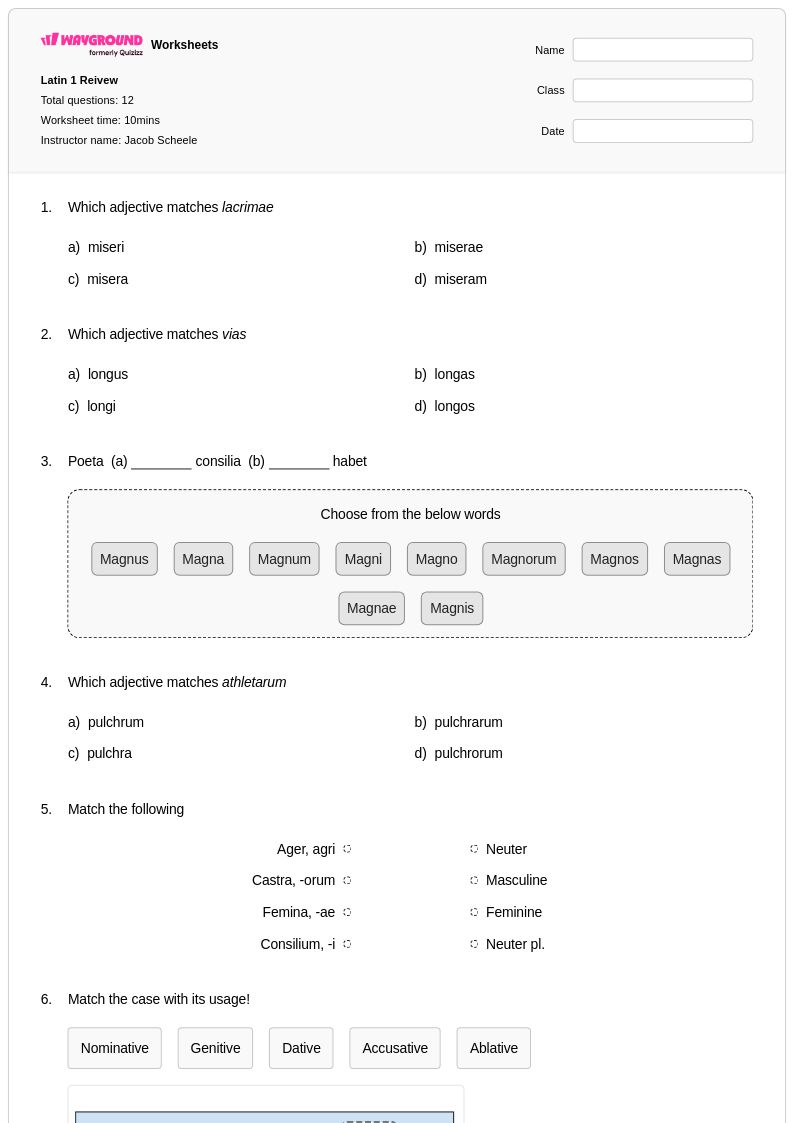
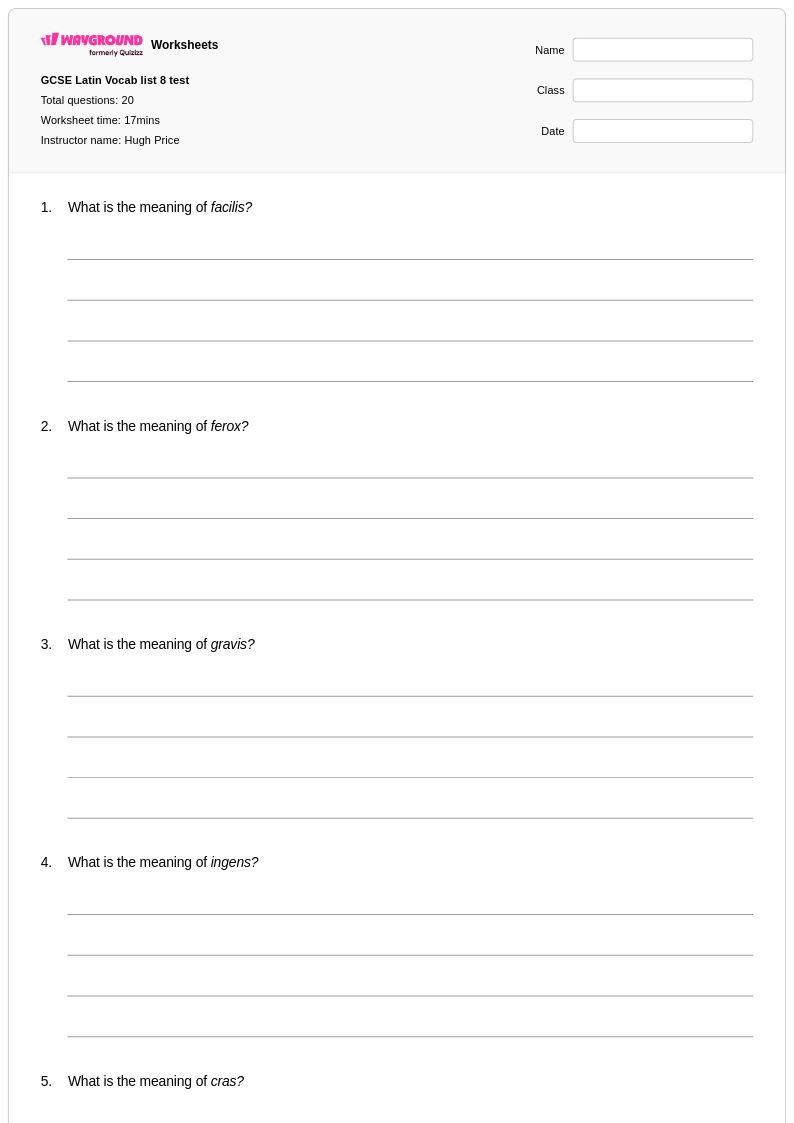
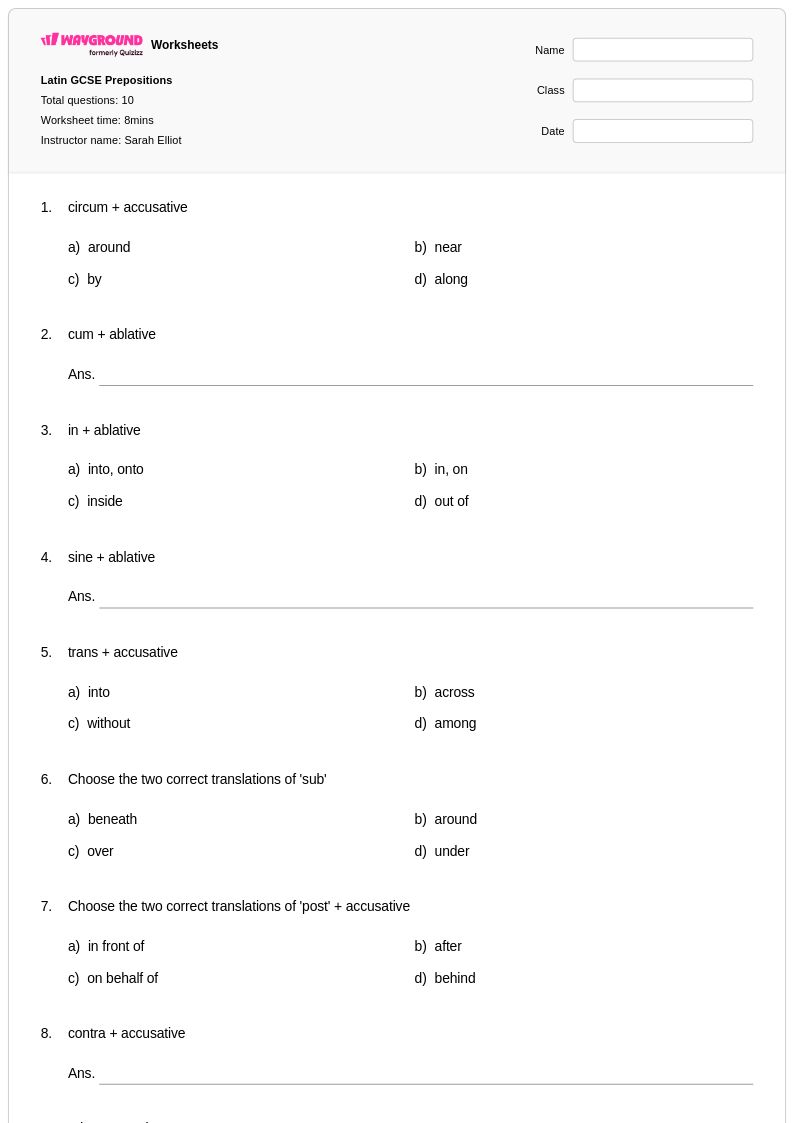
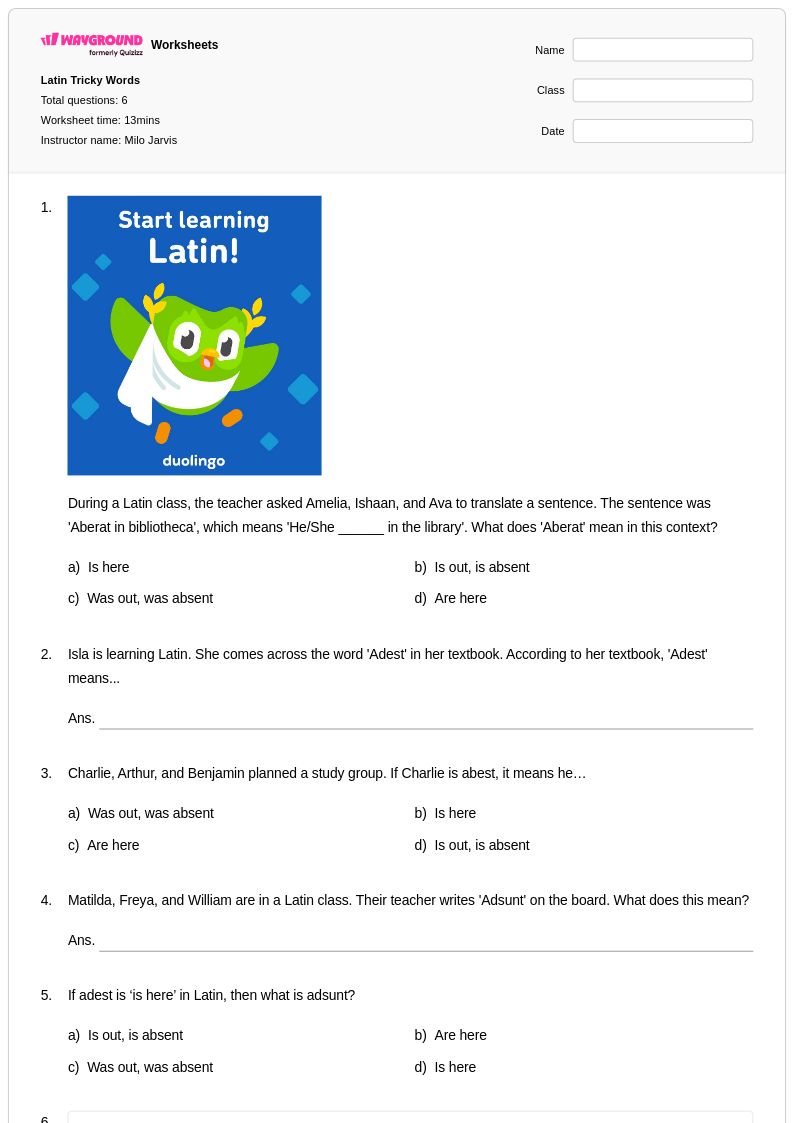
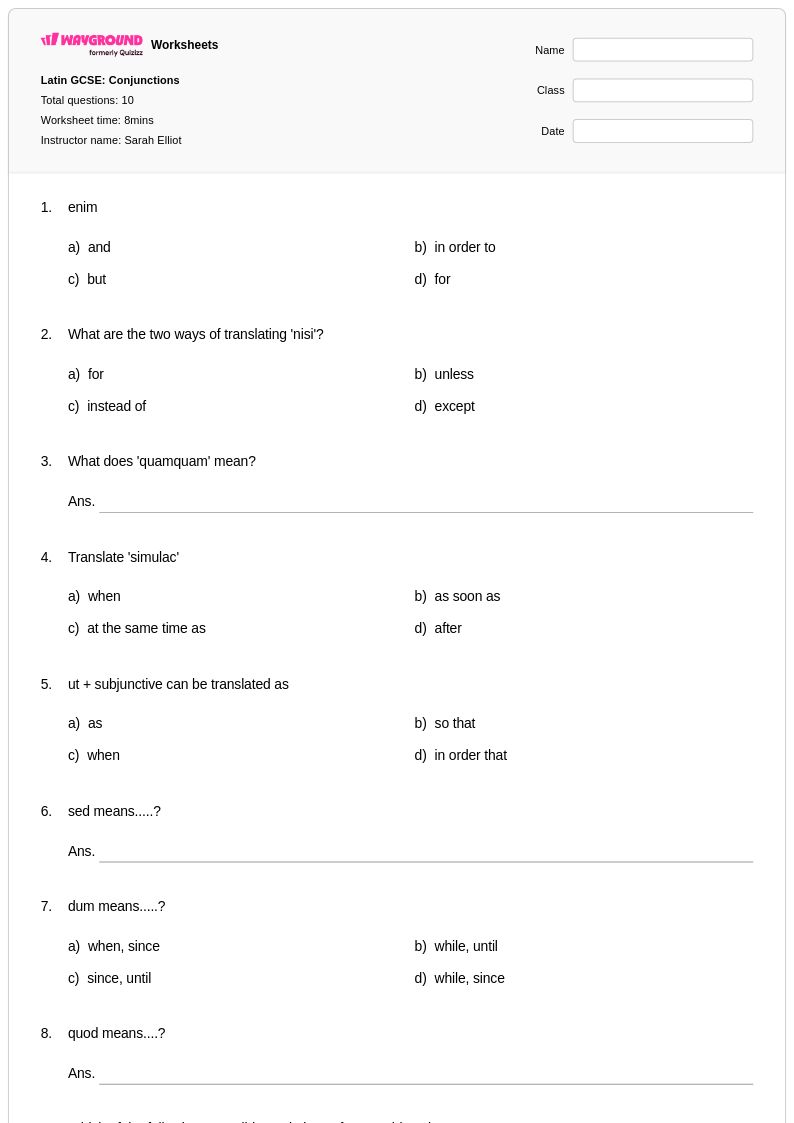
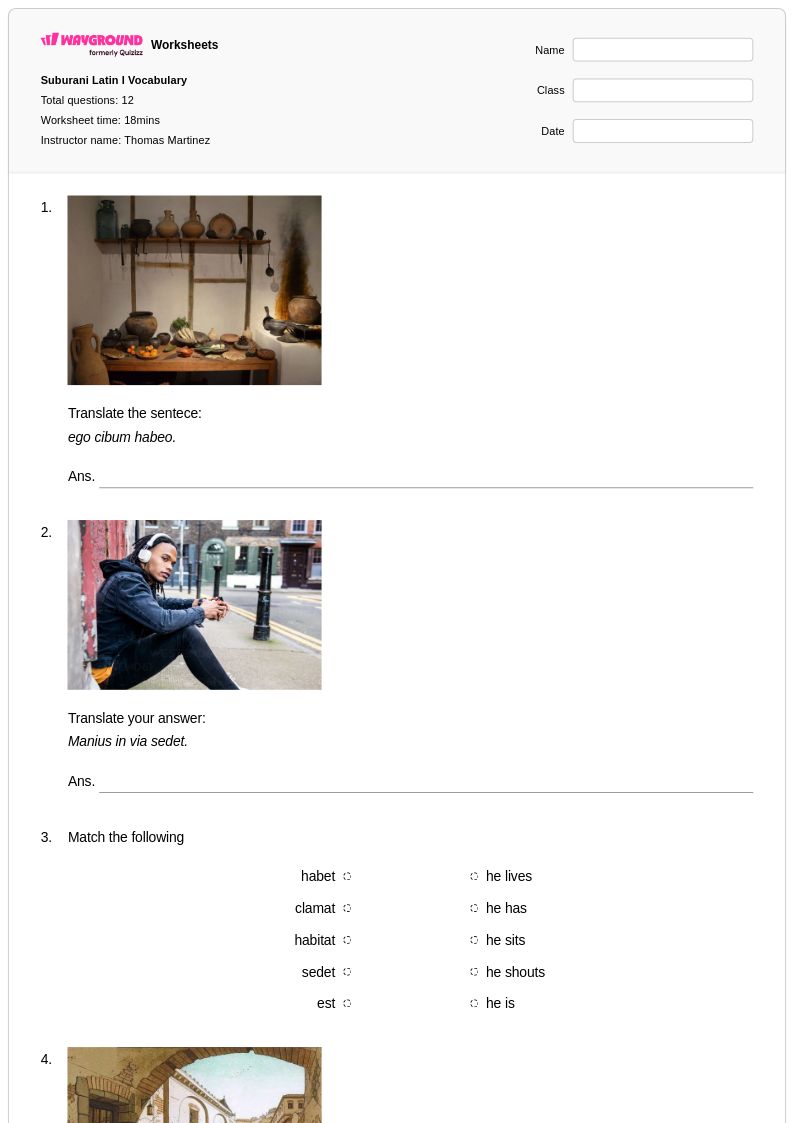
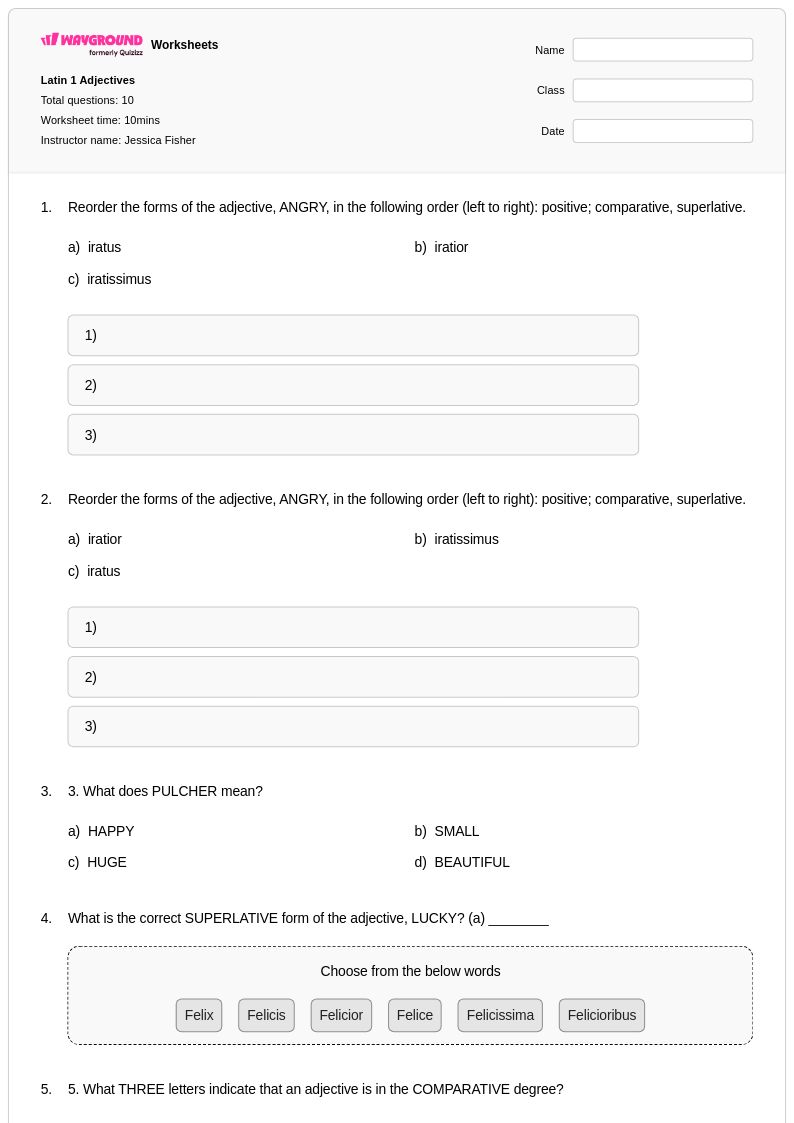
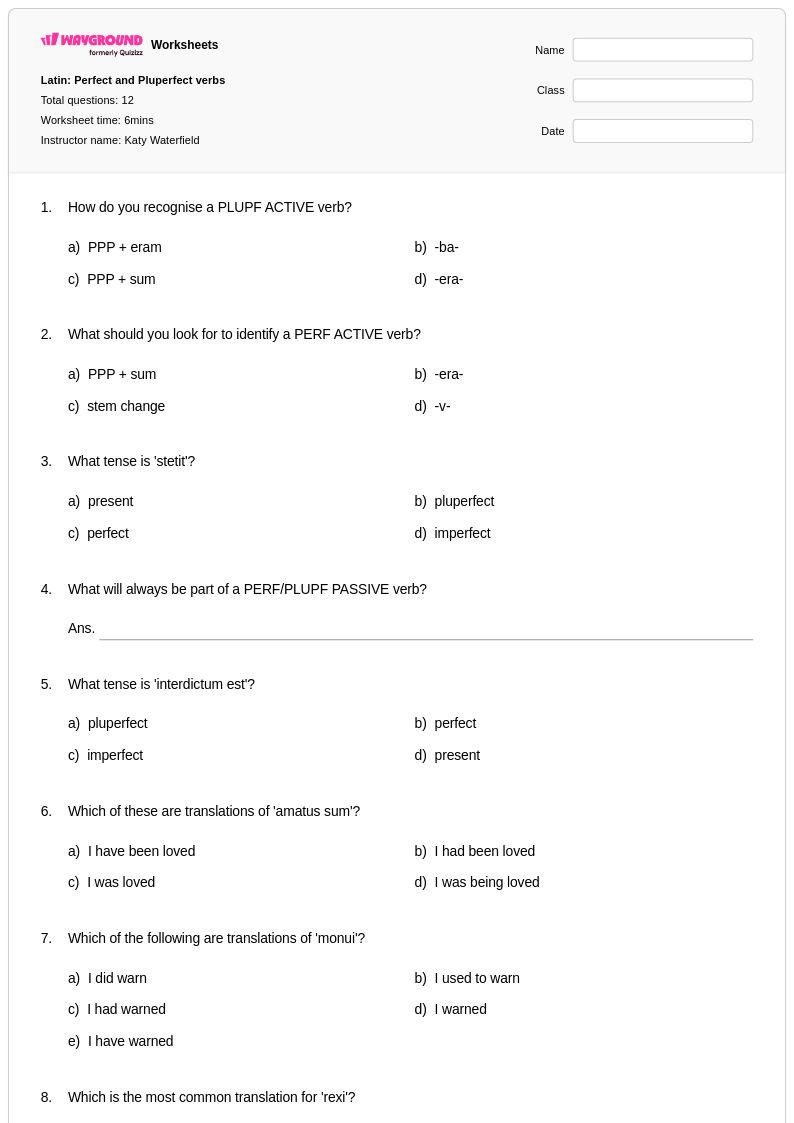
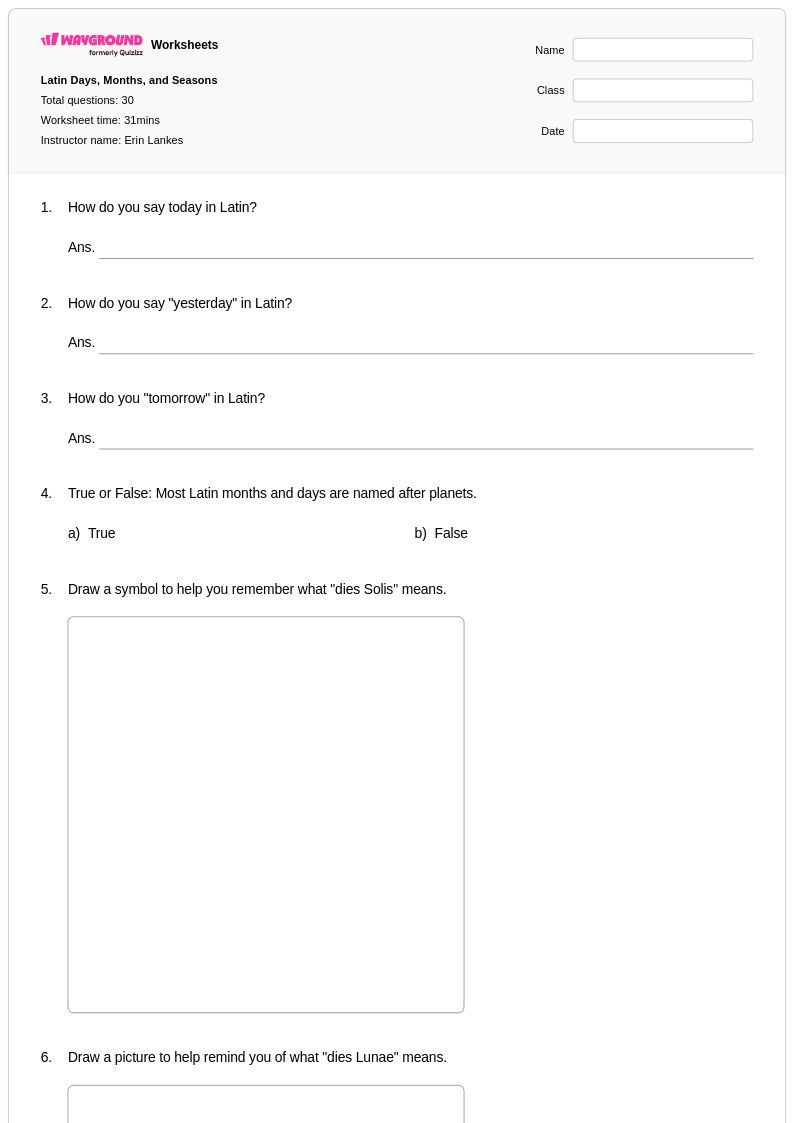
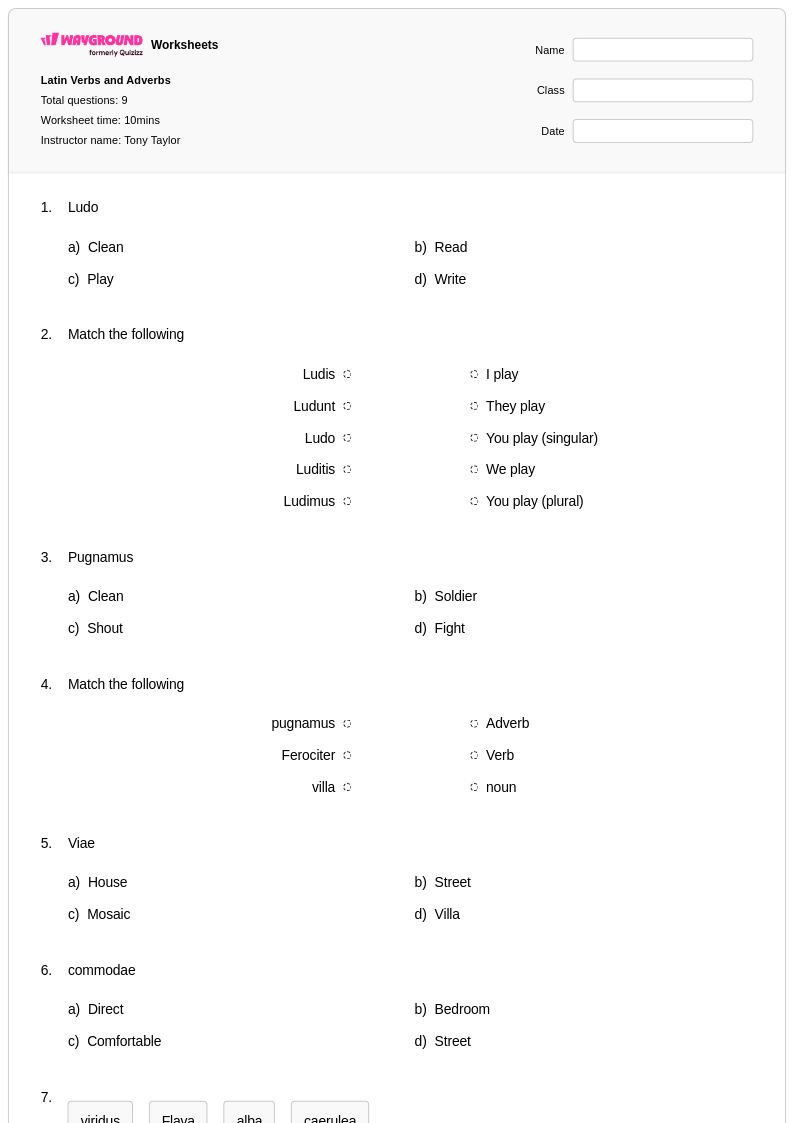
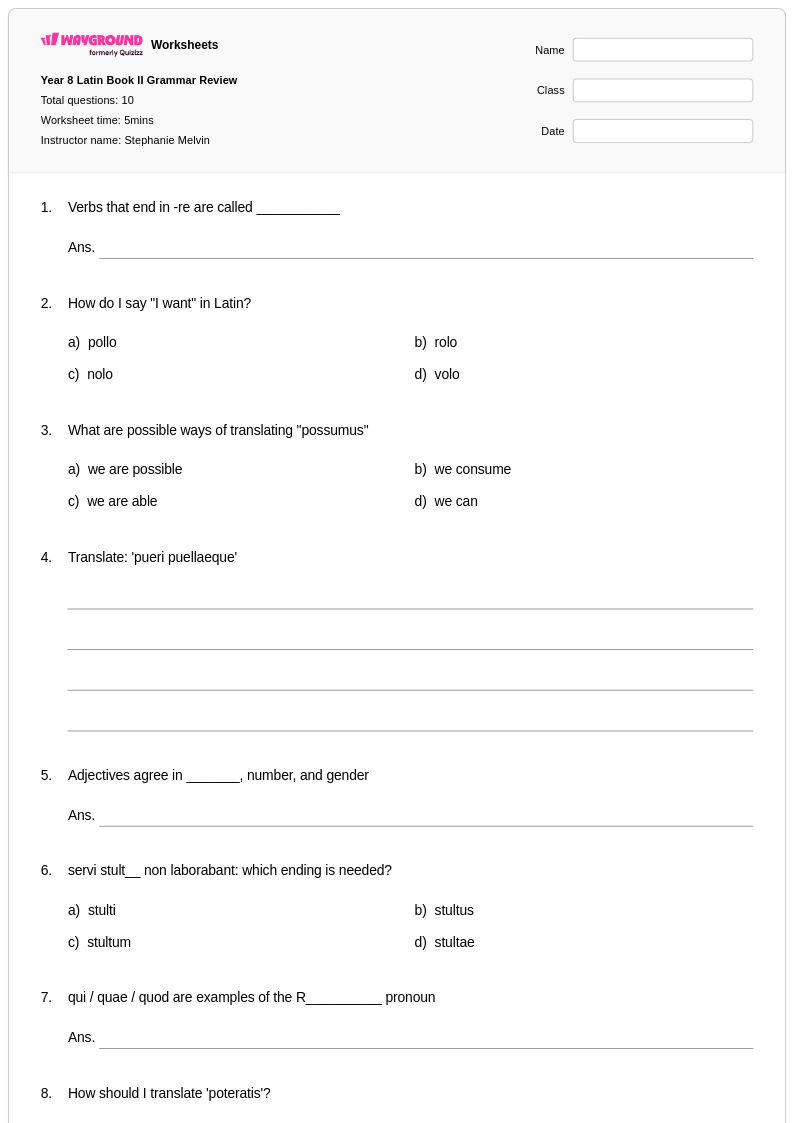
Explore Wayground's comprehensive collection of free Latin worksheets and printables that help students master vocabulary, grammar, and translation skills through engaging practice problems with complete answer keys.
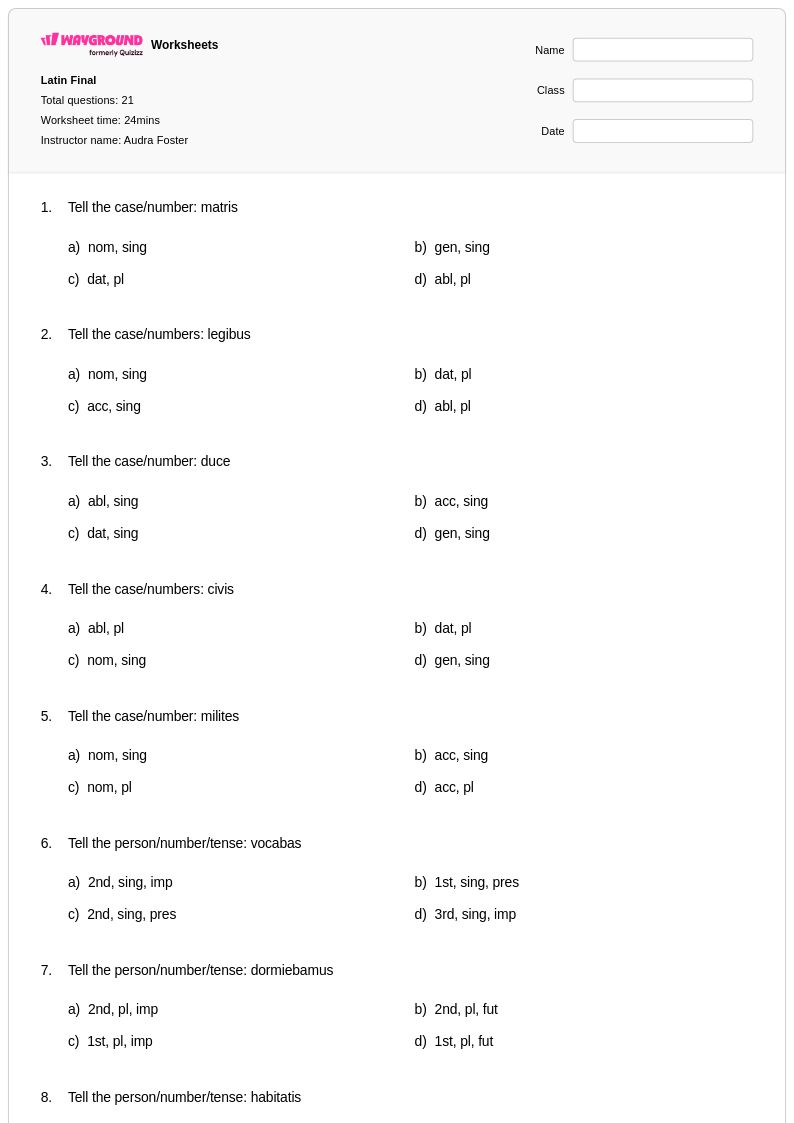
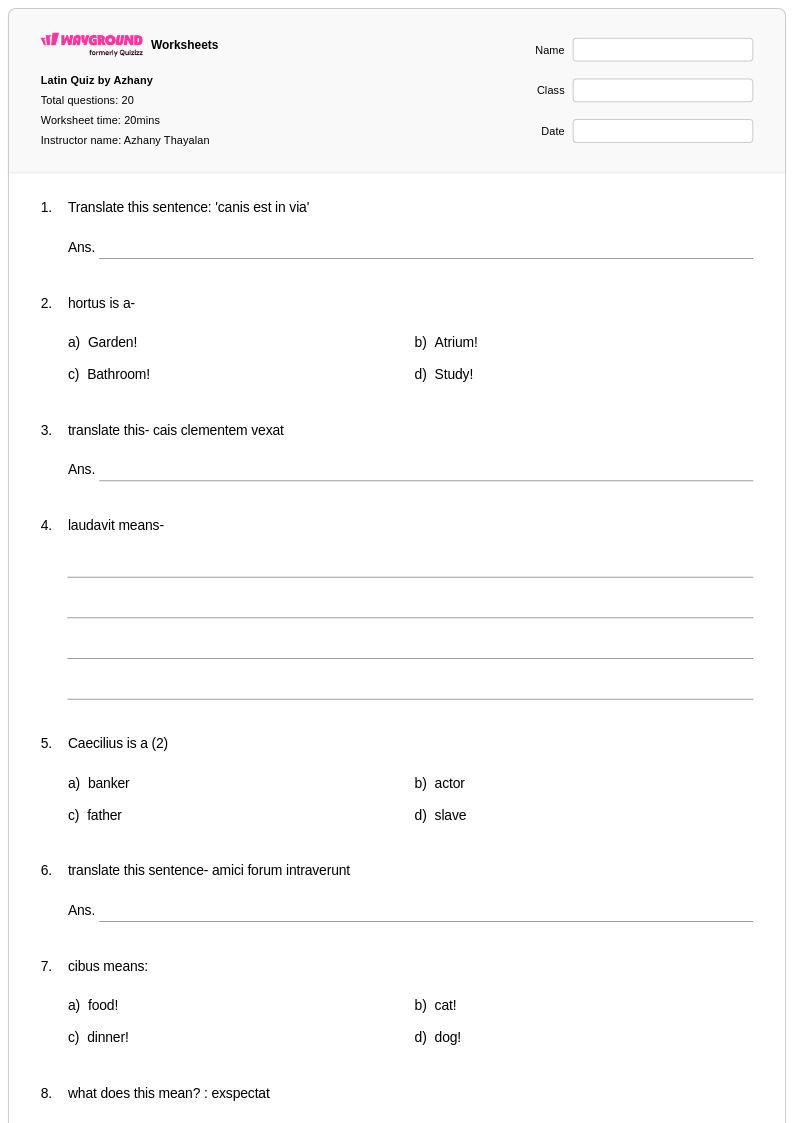
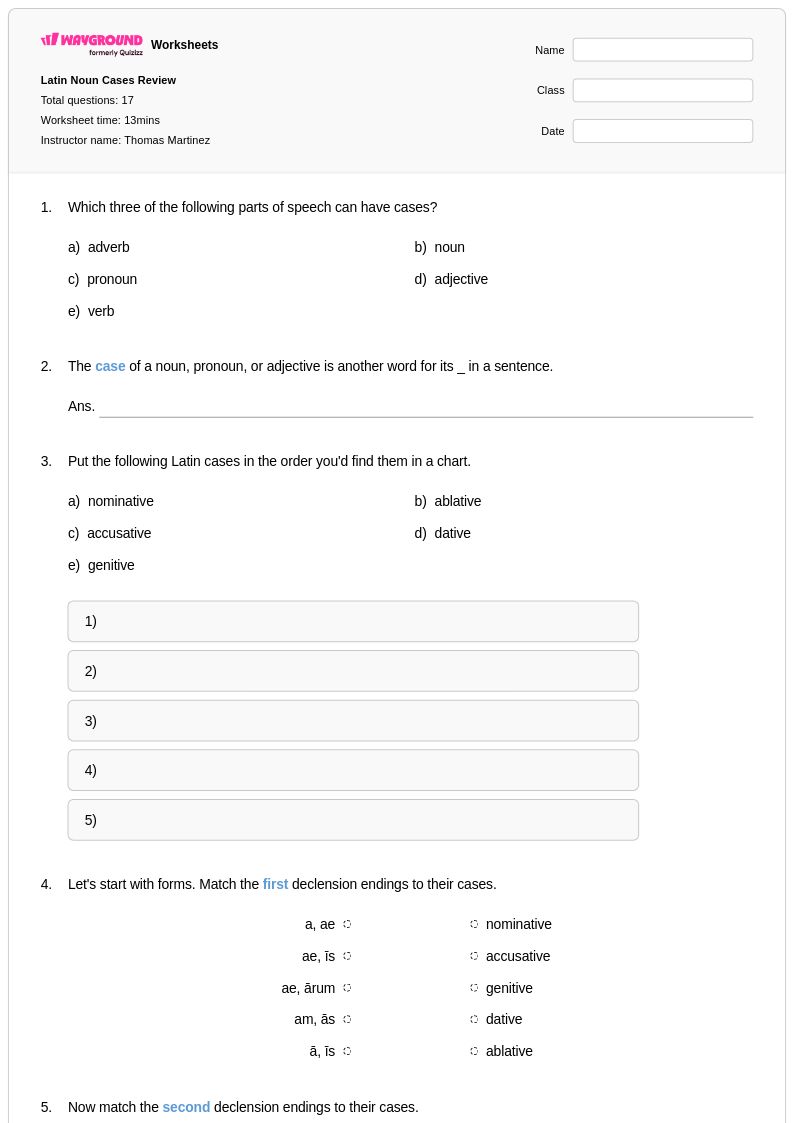
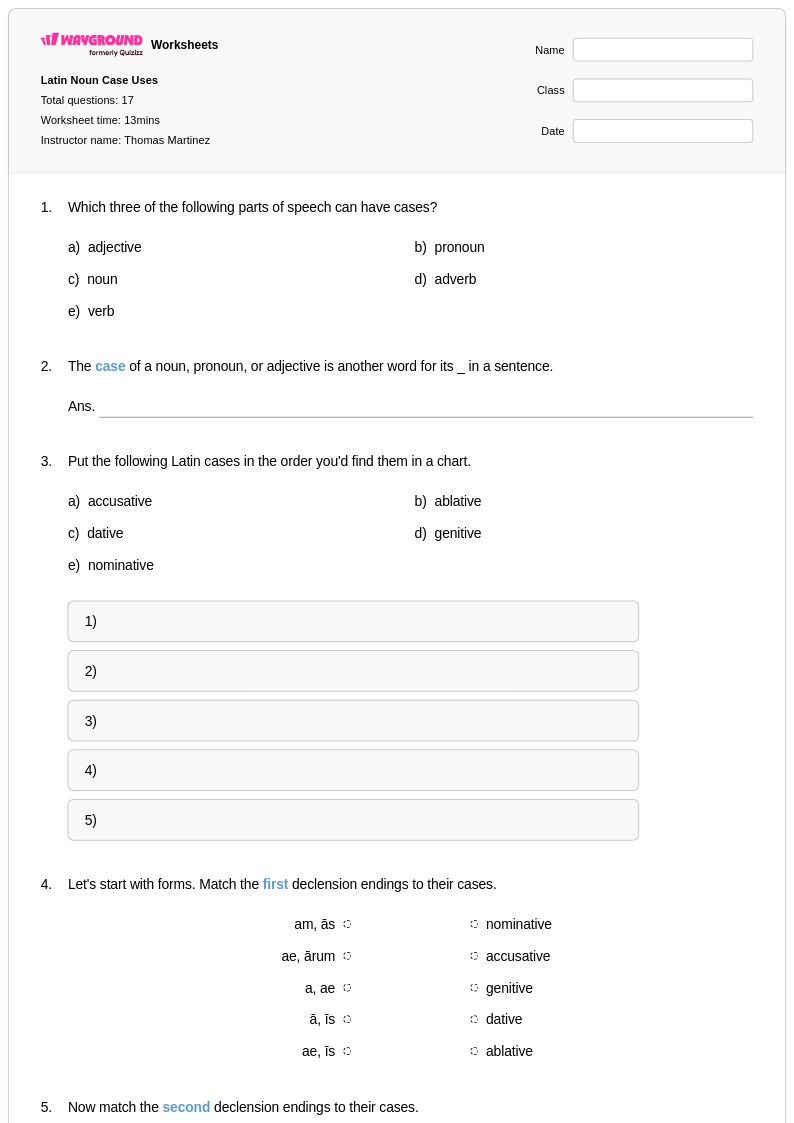
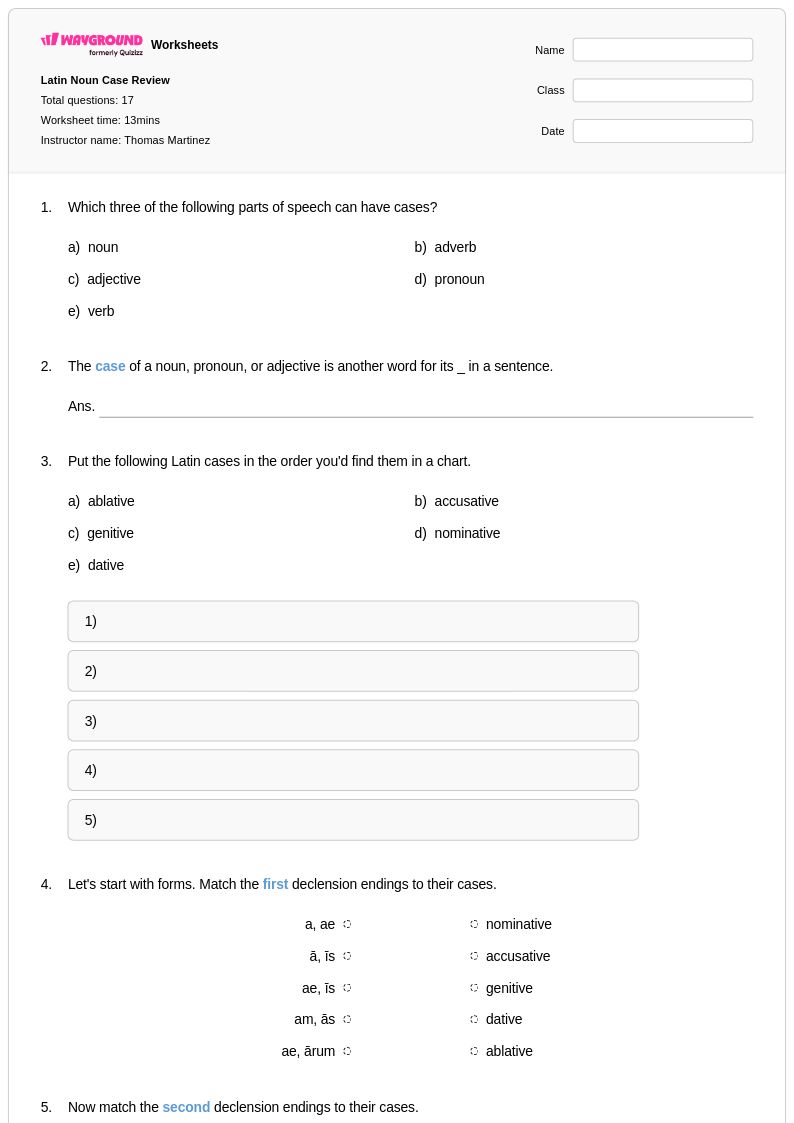
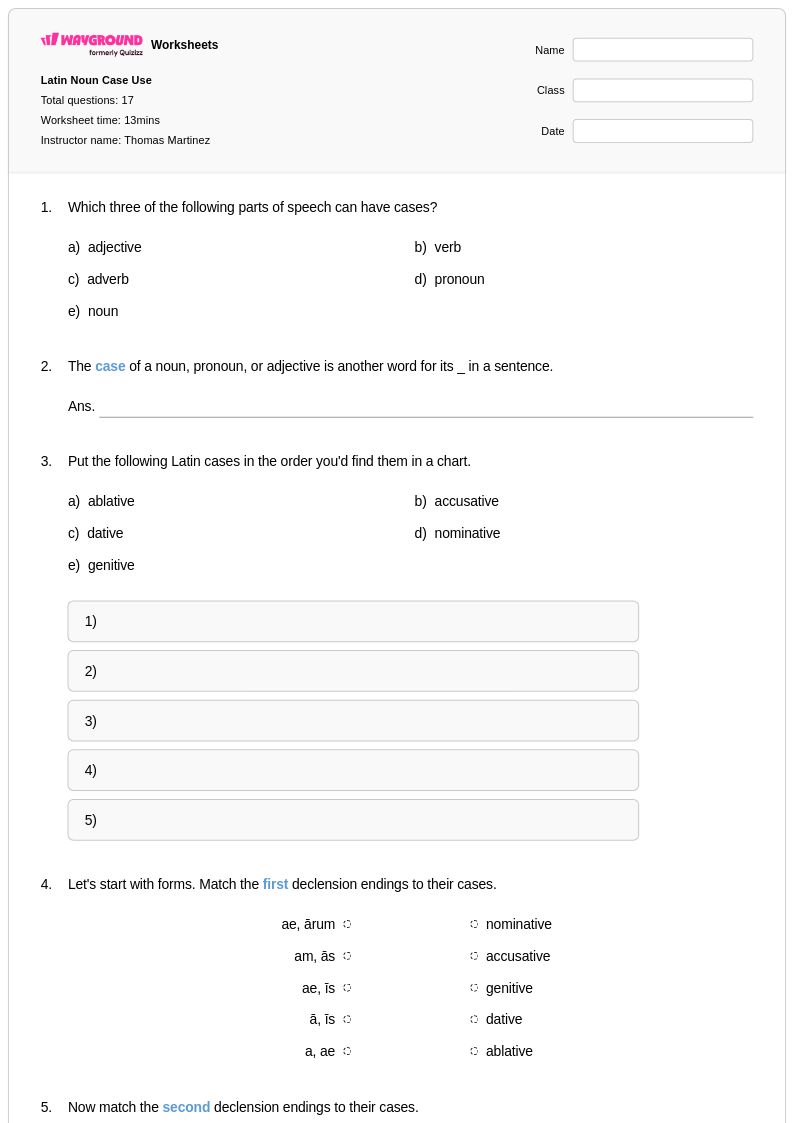
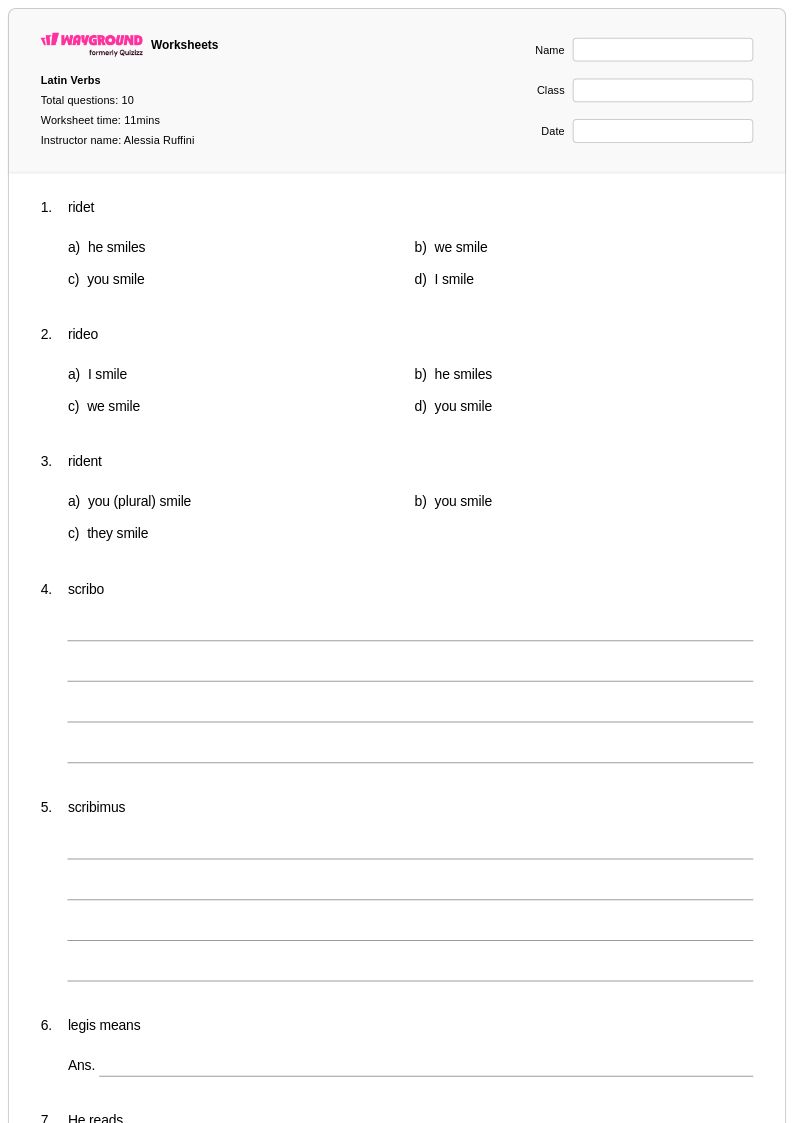
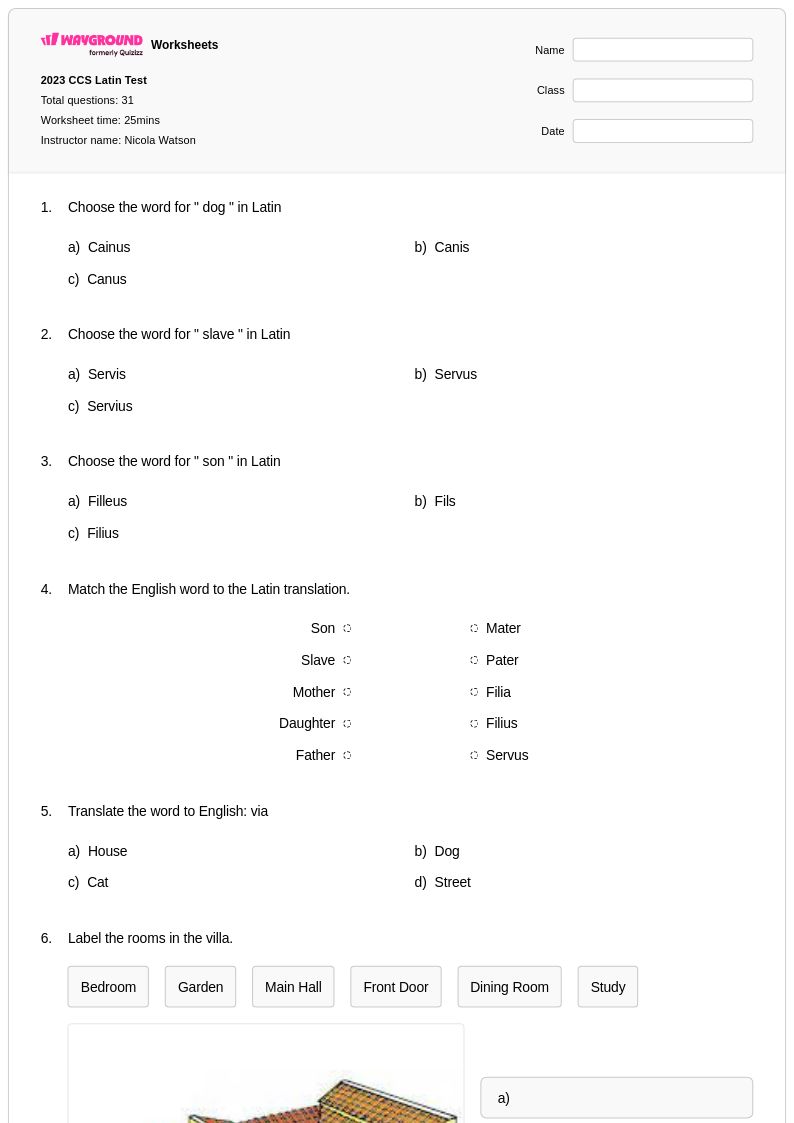
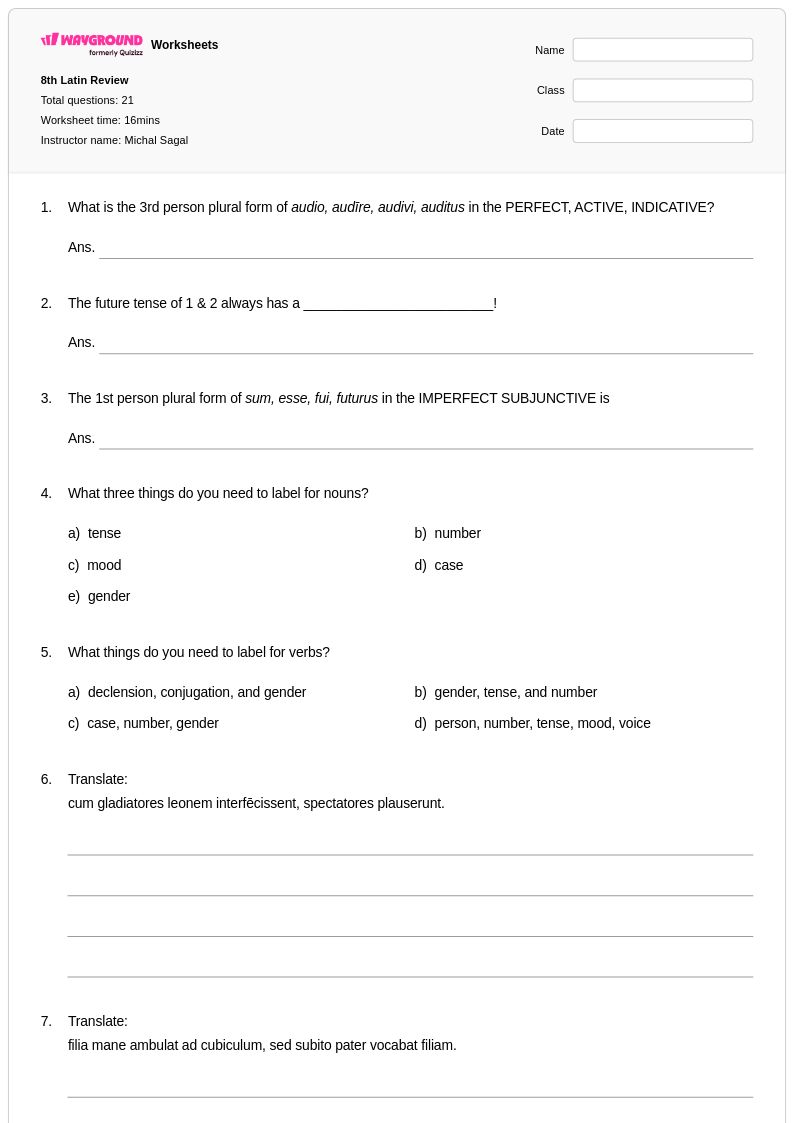
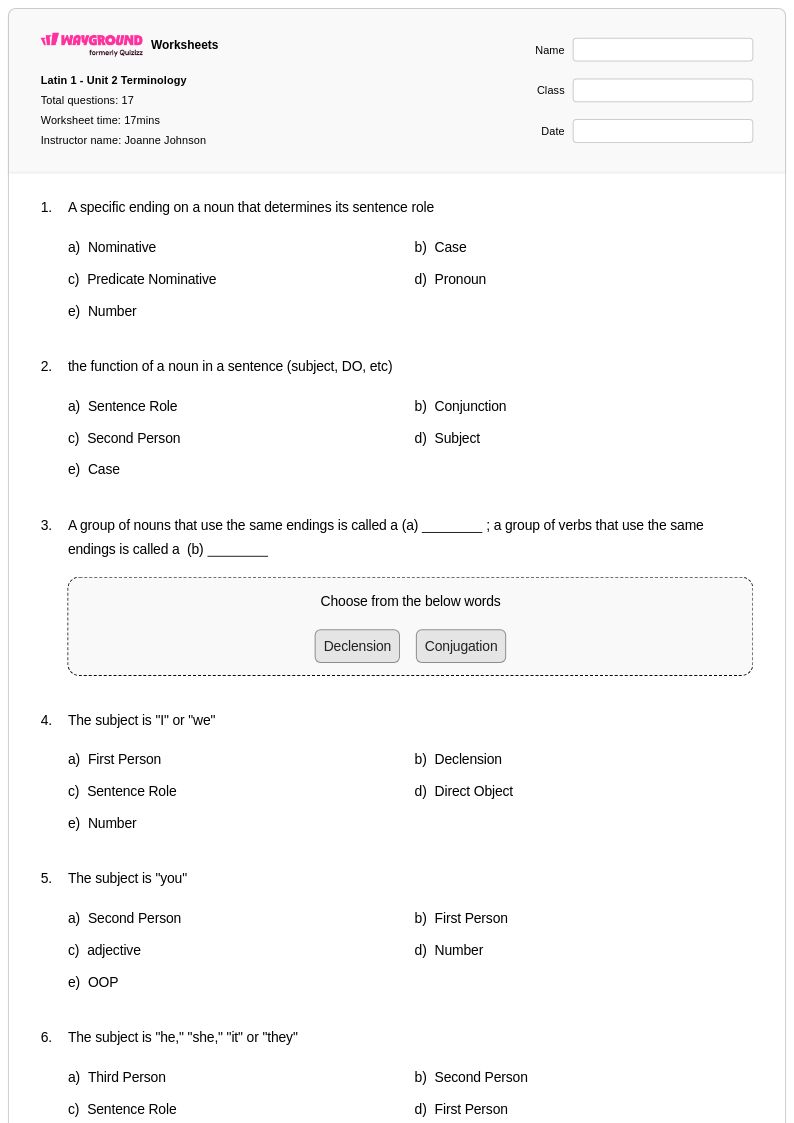
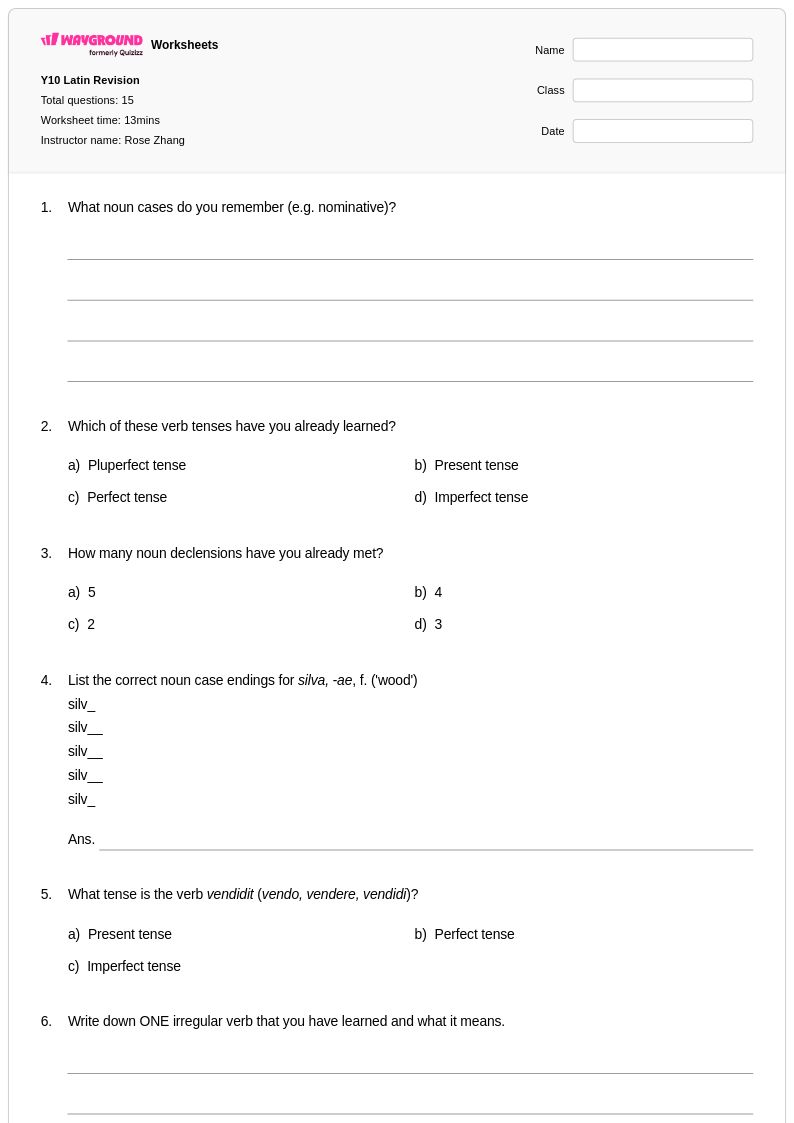
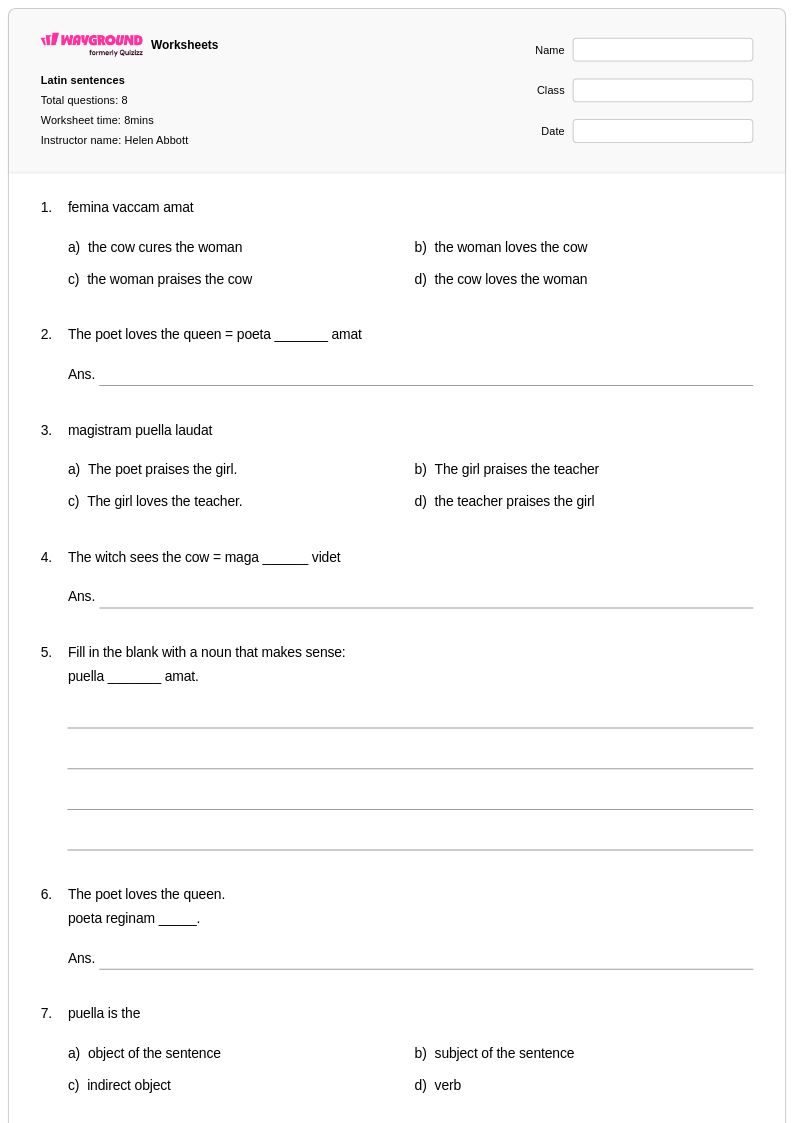
Latin worksheets available through Wayground (formerly Quizizz) provide comprehensive resources for students developing proficiency in this classical language that forms the foundation of Romance languages and academic terminology. These expertly designed materials focus on essential Latin skills including vocabulary acquisition, grammatical structures, declension patterns, conjugation systems, and translation techniques that strengthen students' understanding of linguistic principles and classical literature. The worksheet collection encompasses practice problems covering noun and adjective declensions, verb conjugations across tenses, sentence construction, and passage translation exercises, with each resource including detailed answer keys to support independent learning and assessment. Available as free printables in convenient pdf format, these materials serve as valuable tools for reinforcing classroom instruction and building the systematic knowledge required for Latin mastery.
Wayground (formerly Quizizz) empowers educators with millions of teacher-created Latin resources that streamline lesson planning and differentiate instruction across diverse learning needs. The platform's robust search and filtering capabilities allow teachers to quickly locate worksheets aligned with specific grammatical concepts, vocabulary themes, or classical texts, while customization tools enable modification of difficulty levels and content focus to match individual student requirements. These digital and printable materials support flexible implementation for skill practice, remediation of challenging concepts like the ablative absolute or subjunctive mood, and enrichment activities exploring Roman culture and literature. The comprehensive worksheet library, accessible in both interactive digital formats and downloadable pdf versions, provides teachers with the resources necessary to create engaging Latin learning experiences that build linguistic competency and cultural understanding.
FAQs
How do I teach Latin declensions to beginners?
Start by introducing the five declension families one at a time, anchoring each with a high-frequency model noun students memorize fully before moving on. Use color-coded ending charts so students can visually distinguish nominative, accusative, genitive, dative, and ablative cases. Consistent exposure through short translation exercises reinforces case recognition far more effectively than passive memorization of charts alone.
What exercises help students practice Latin verb conjugations?
Conjugation drills that require students to produce all six persons in a given tense are the most reliable practice format for building automaticity. Targeted worksheets covering individual tenses in isolation — present, imperfect, future, perfect, pluperfect, and future perfect — before combining them force students to identify tense markers deliberately. Translation passages that mix tenses in context then consolidate that recognition into active reading skill.
What are the most common mistakes students make when translating Latin sentences?
The most frequent error is defaulting to English word order rather than using case endings to identify subject, object, and indirect object. Students also routinely confuse the ablative and dative cases, particularly in constructions like the ablative absolute or dative of indirect object. A second common problem is mistranslating verb tense, especially distinguishing the Latin perfect (a completed action) from the imperfect (an ongoing past action).
How do I help students who struggle with the Latin subjunctive mood?
The subjunctive is best introduced through its most common constructions — purpose clauses, result clauses, and indirect commands — rather than as an abstract grammatical concept. Students need repeated exposure to the subordinating conjunctions that trigger the subjunctive (ut, ne, cum) so they learn to anticipate it structurally. Short, focused worksheets isolating a single subjunctive construction at a time, followed by mixed-construction practice, reduce cognitive overload and build reliable recognition.
How can I use Wayground's Latin worksheets in my classroom?
Wayground's Latin worksheets are available as printable PDFs for traditional classroom use and in digital formats for technology-integrated environments, including the option to host them as a quiz directly on Wayground. The collection covers vocabulary, noun and adjective declensions, verb conjugations across tenses, sentence construction, and passage translation, each with complete answer keys. This range makes the materials equally useful for direct instruction support, independent practice, or formative assessment across a full Latin course sequence.
How do I differentiate Latin instruction for students at different proficiency levels?
For students who need additional support, Wayground allows teachers to enable accommodations such as read aloud, reduced answer choices, and extended time on a per-student basis without notifying other students. More advanced students can be directed toward passage translation and cultural enrichment exercises, while students still building foundational skills work through declension and conjugation drills. These settings are saved and reusable across future assignments, making differentiation manageable at scale.