
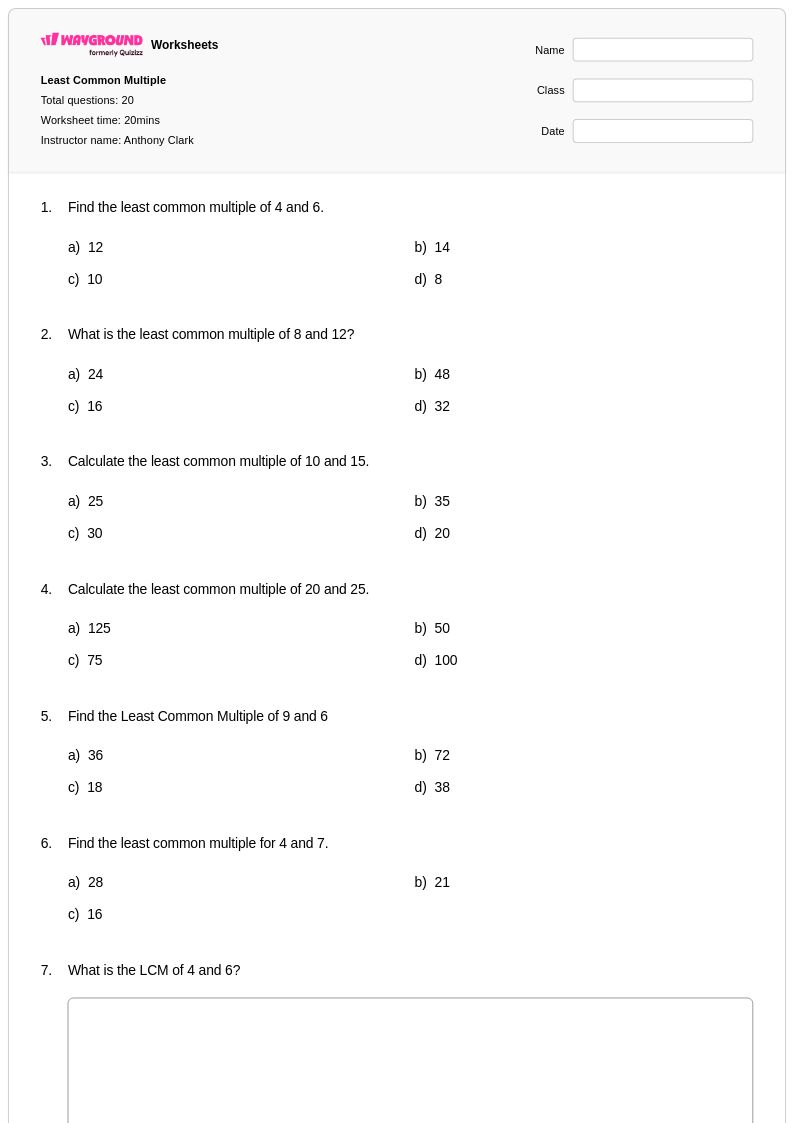
20 Q
5th - Uni
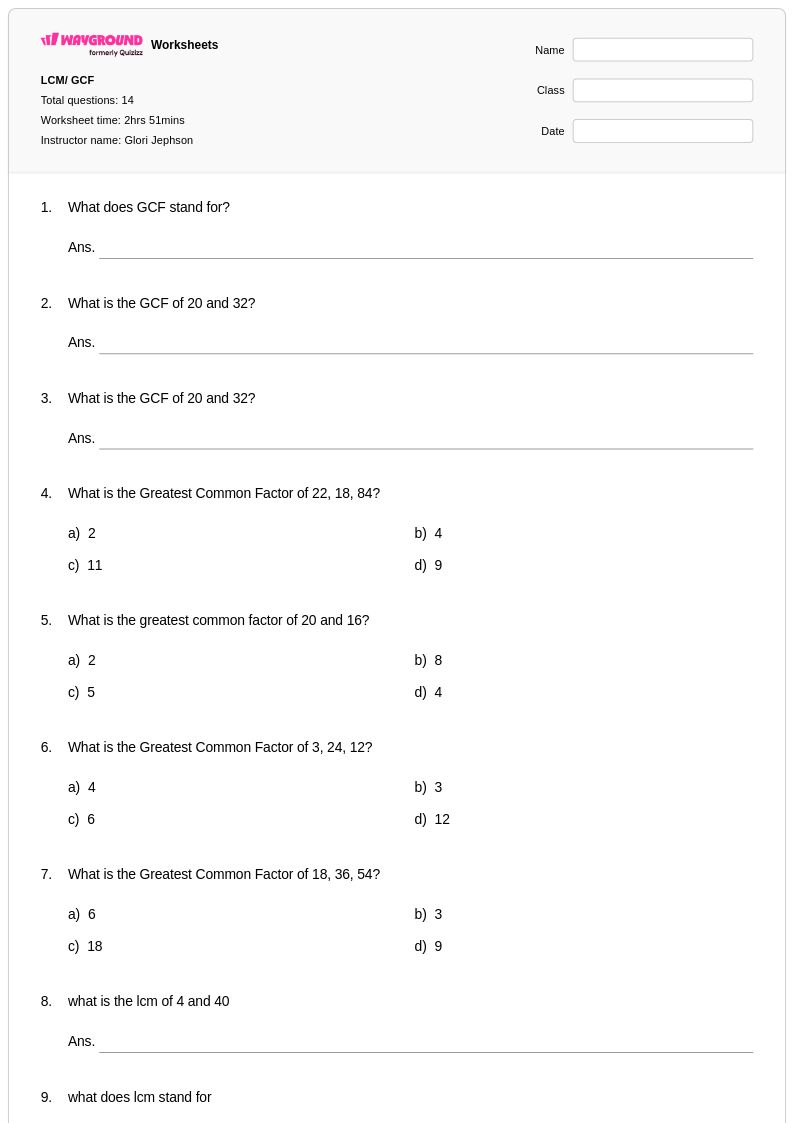
14 Q
4th - Uni
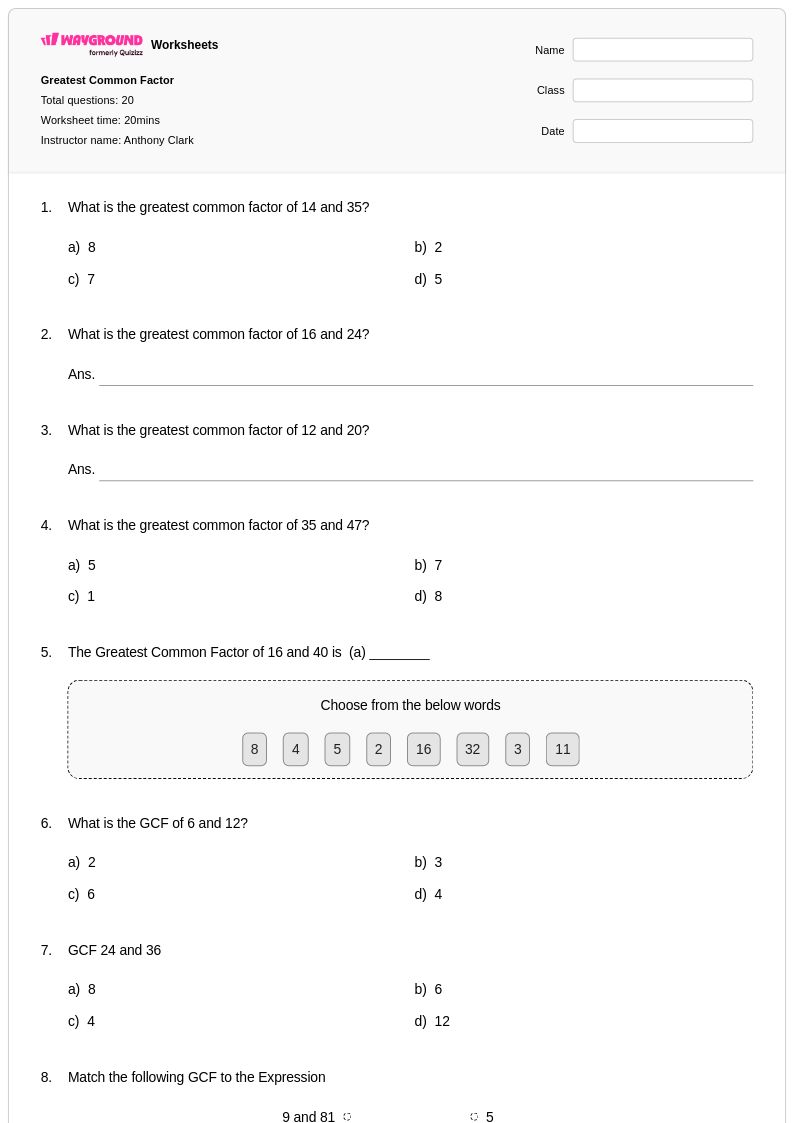
20 Q
6th - Uni
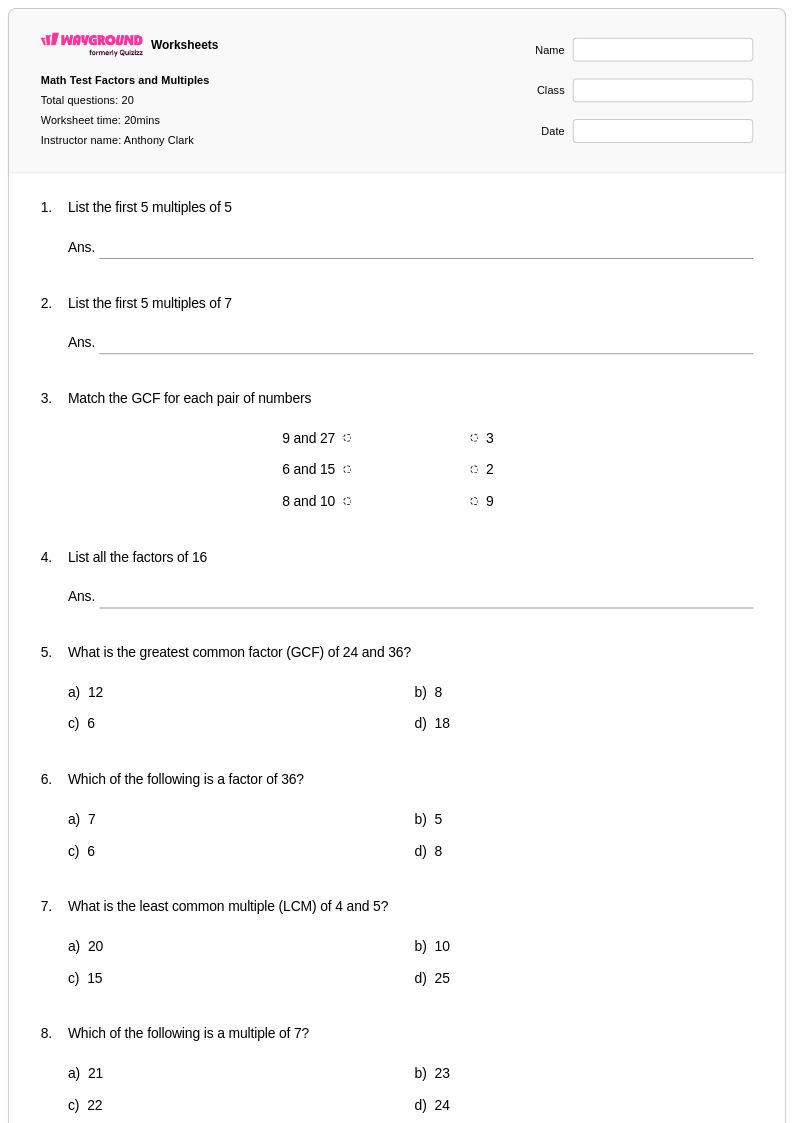
20 Q
5th - Uni
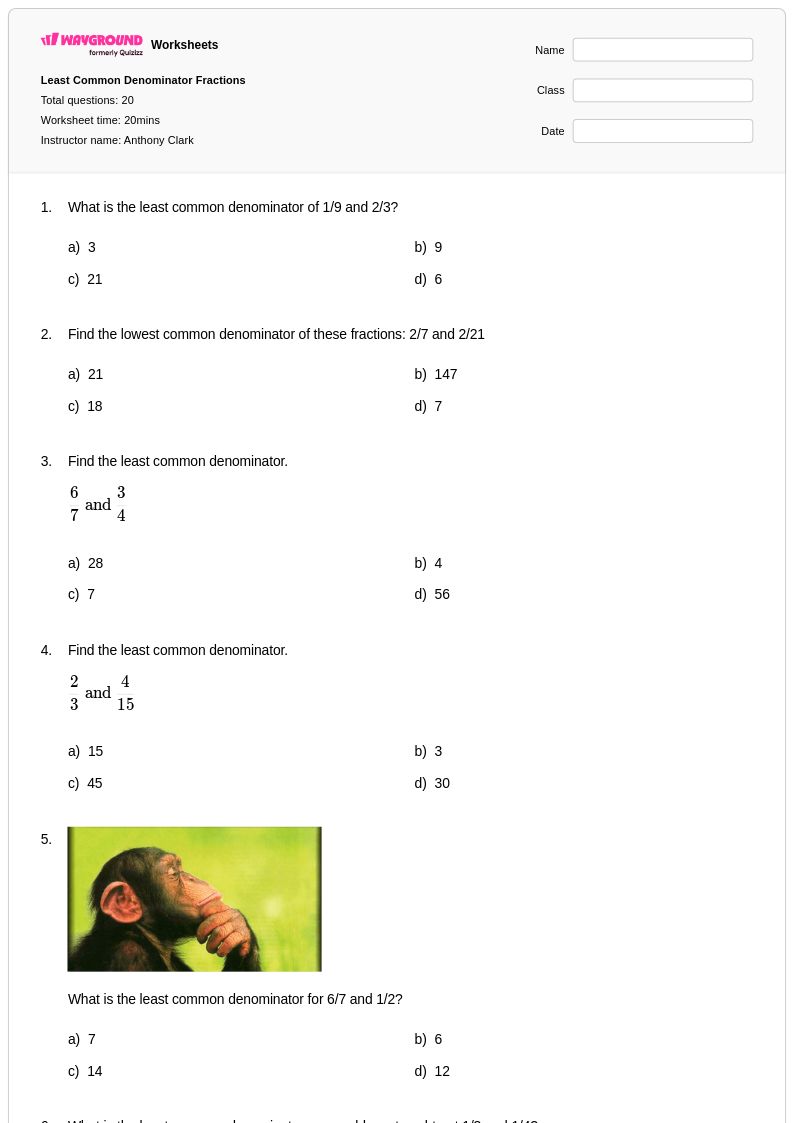
20 Q
5th - Uni
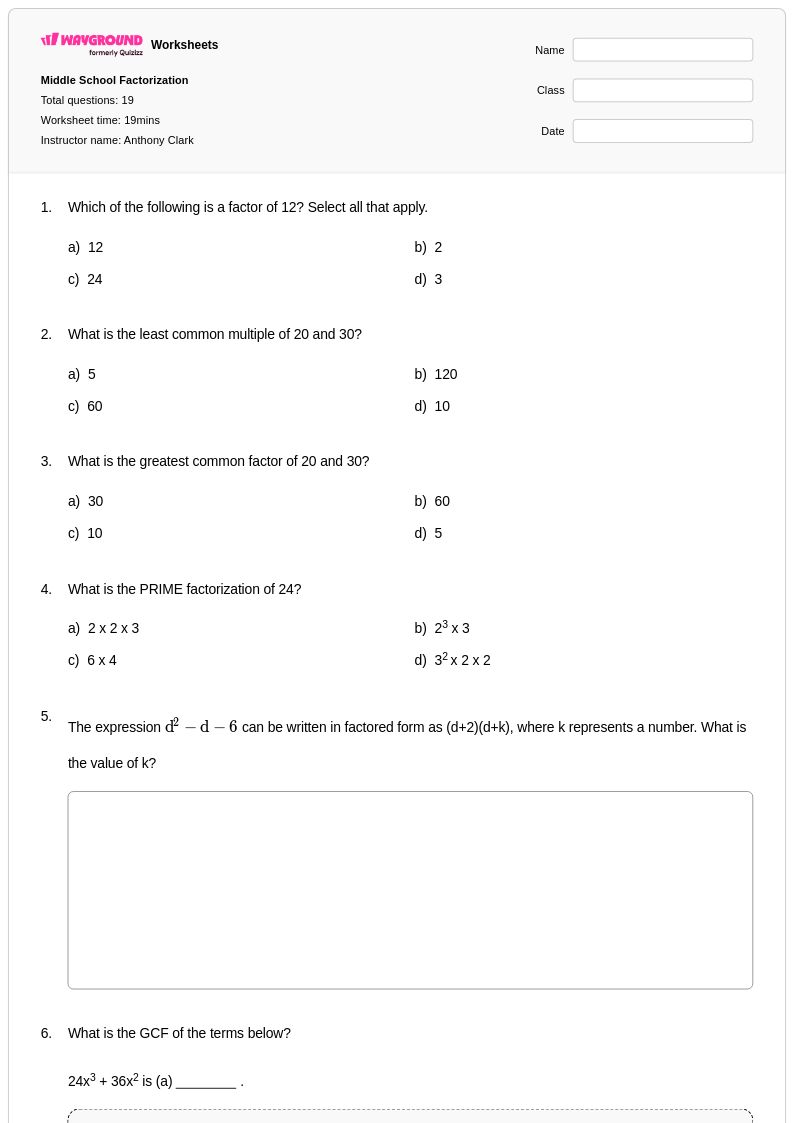
19 Q
6th - Uni
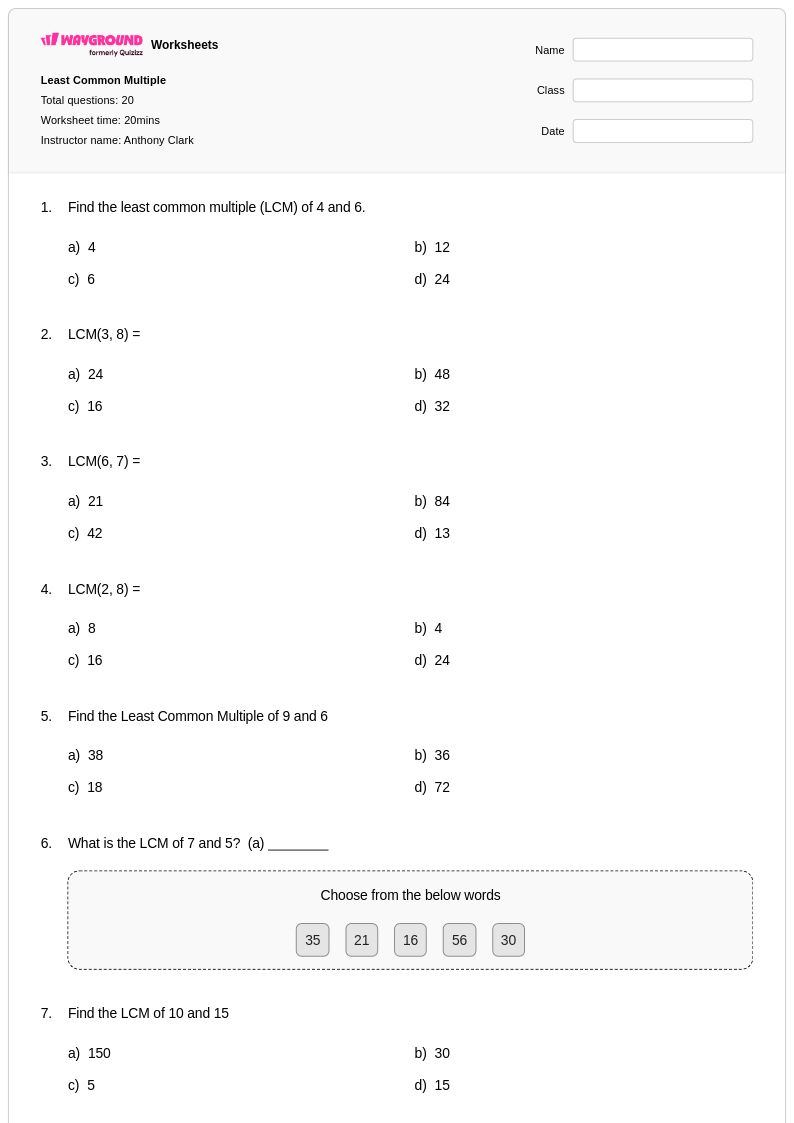
20 Q
6th - Uni
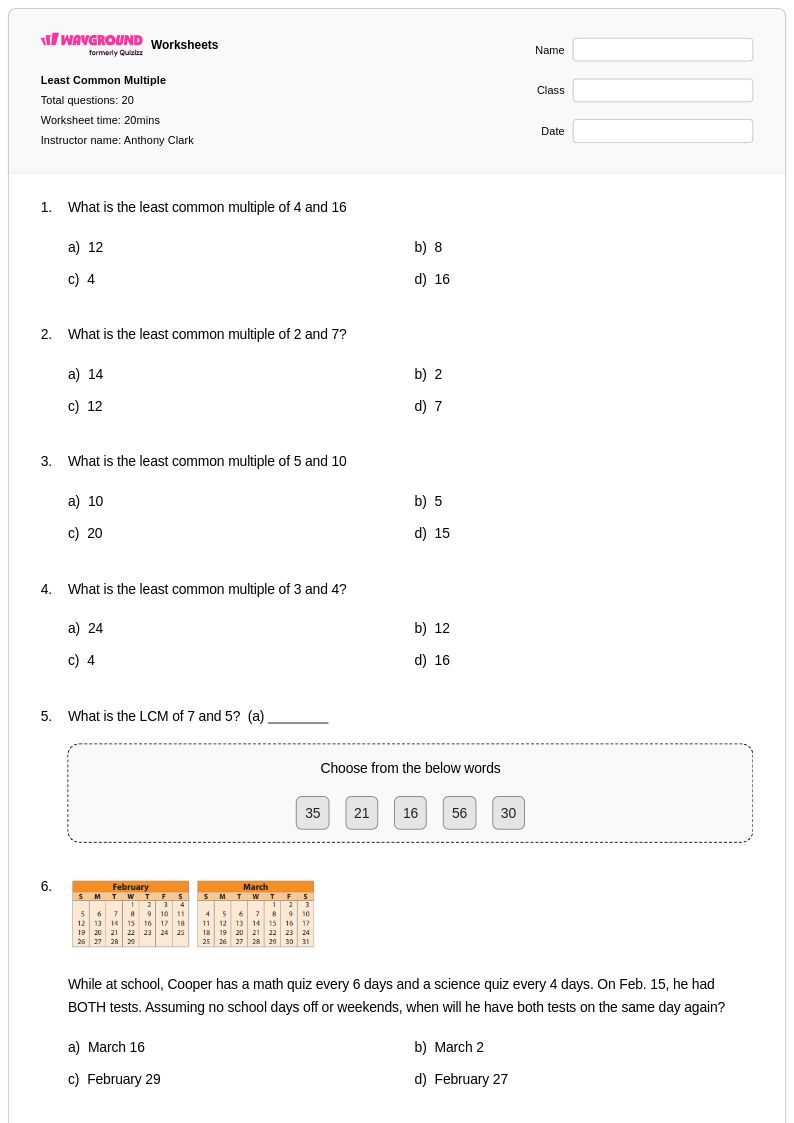
20 Q
6th - Uni
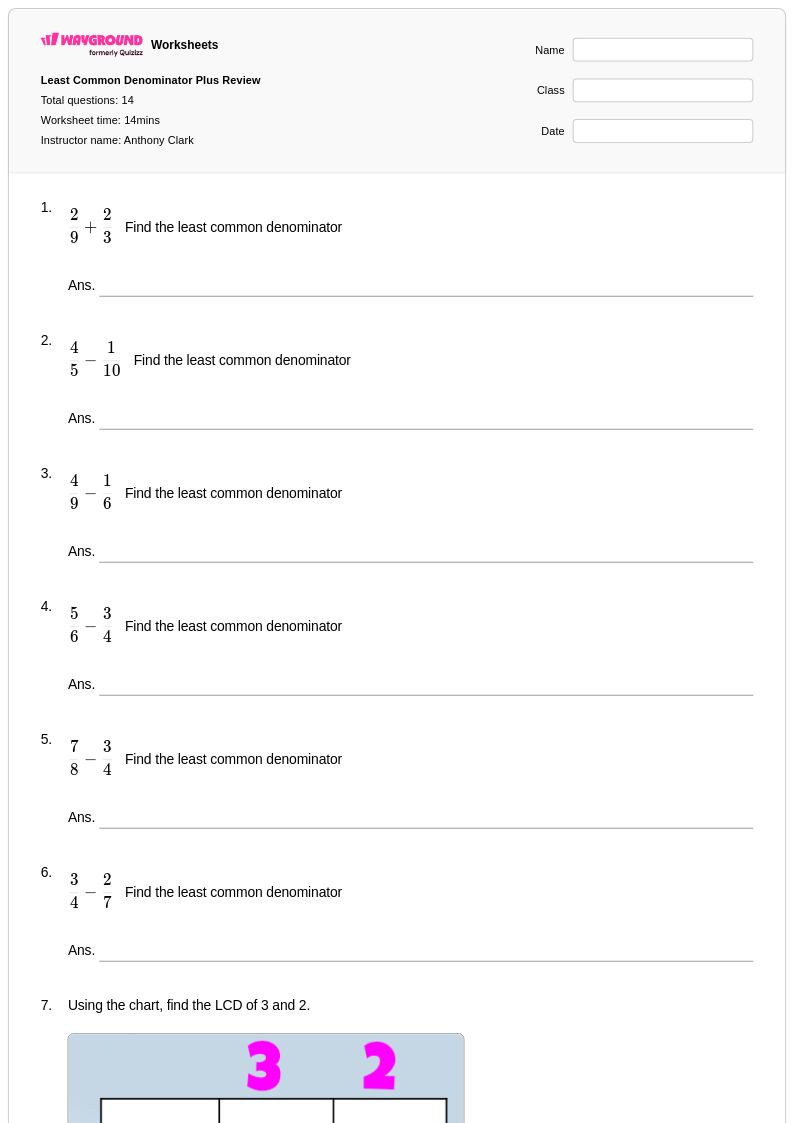
14 Q
5th - Uni
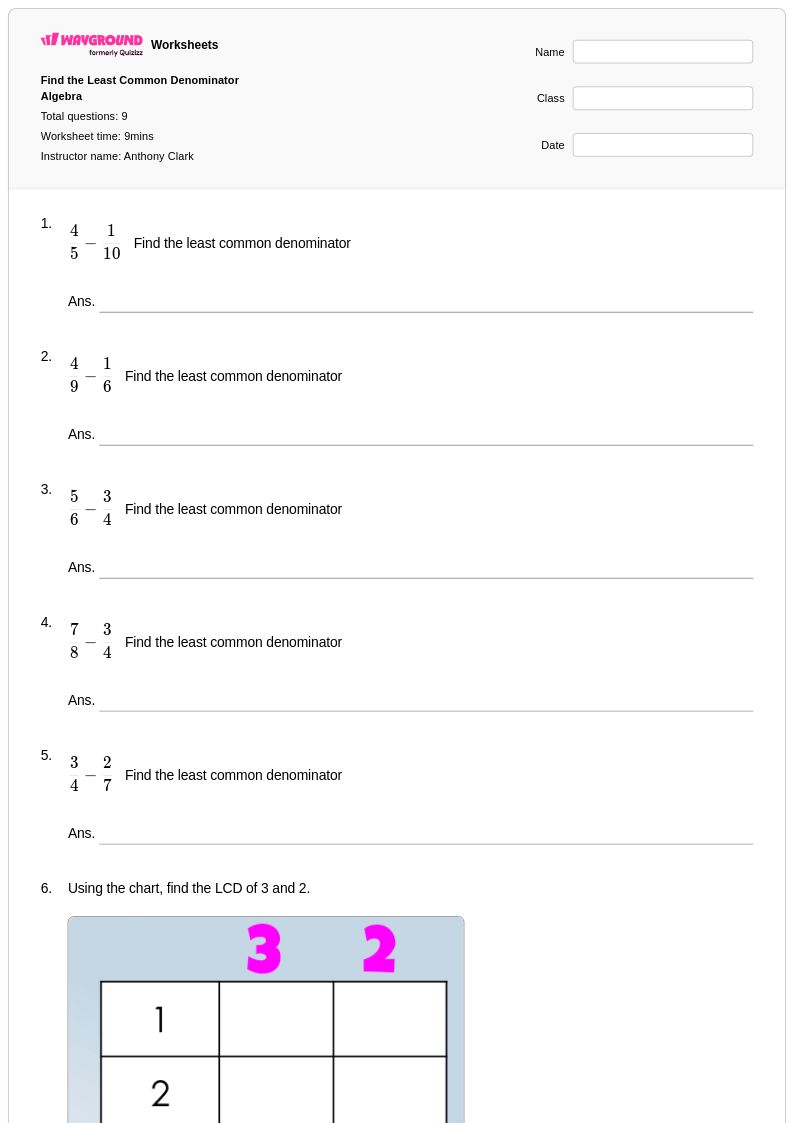
9 Q
5th - Uni
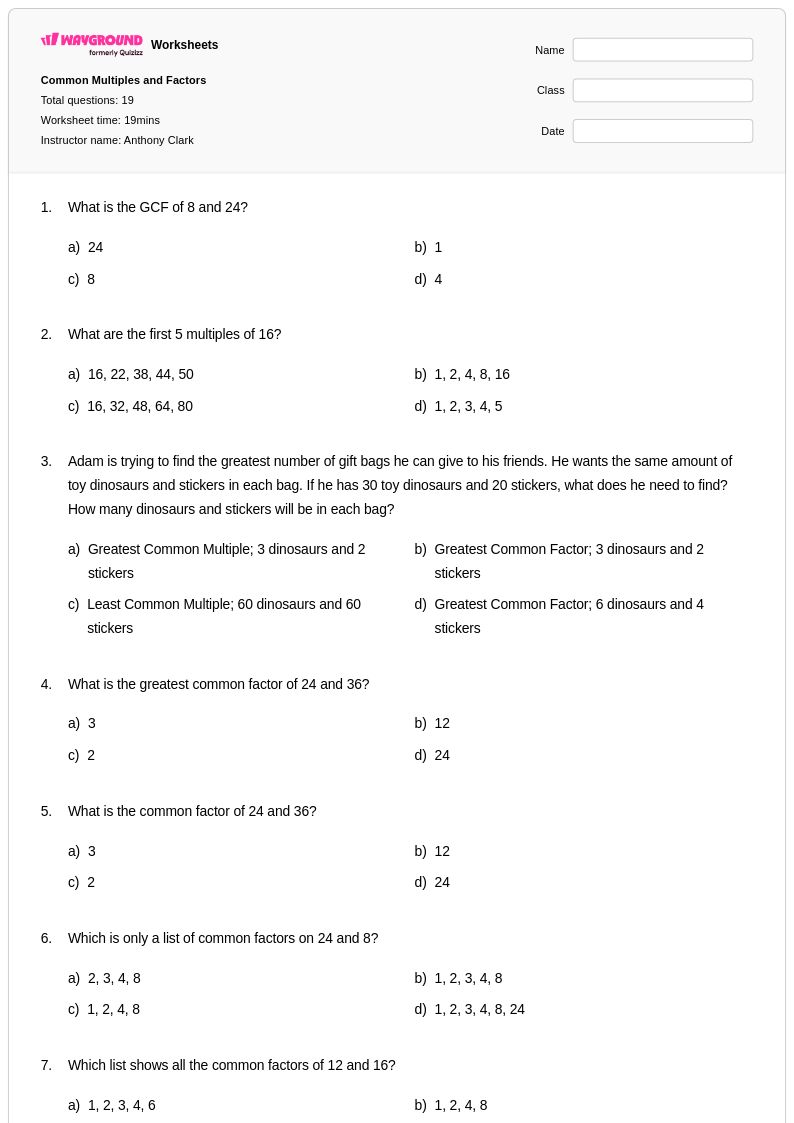
19 Q
4th - Uni
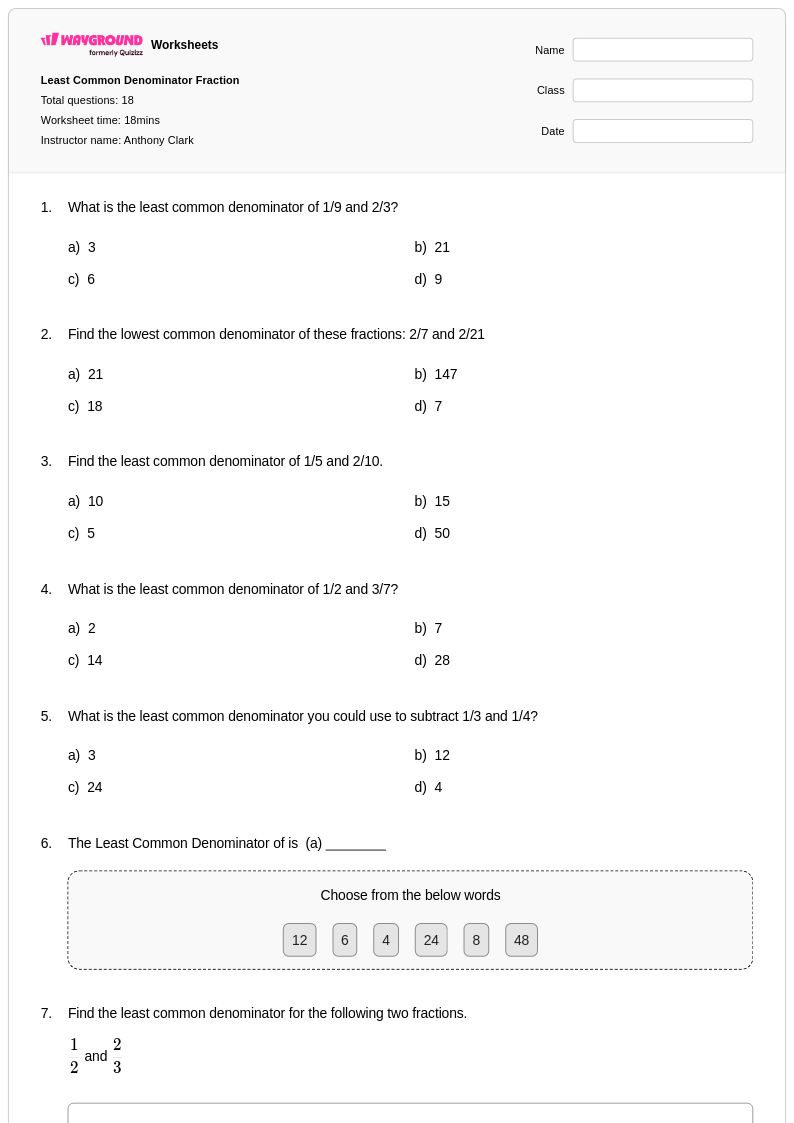
18 Q
5th - Uni
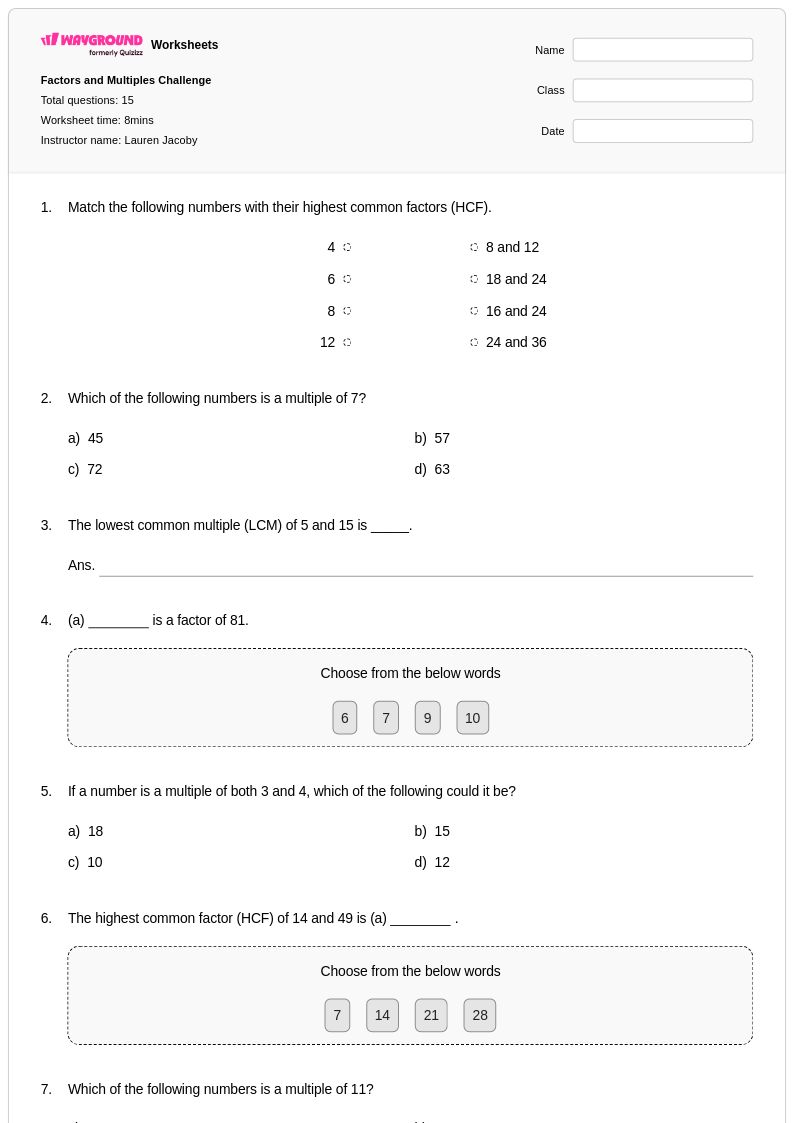
15 Q
8th
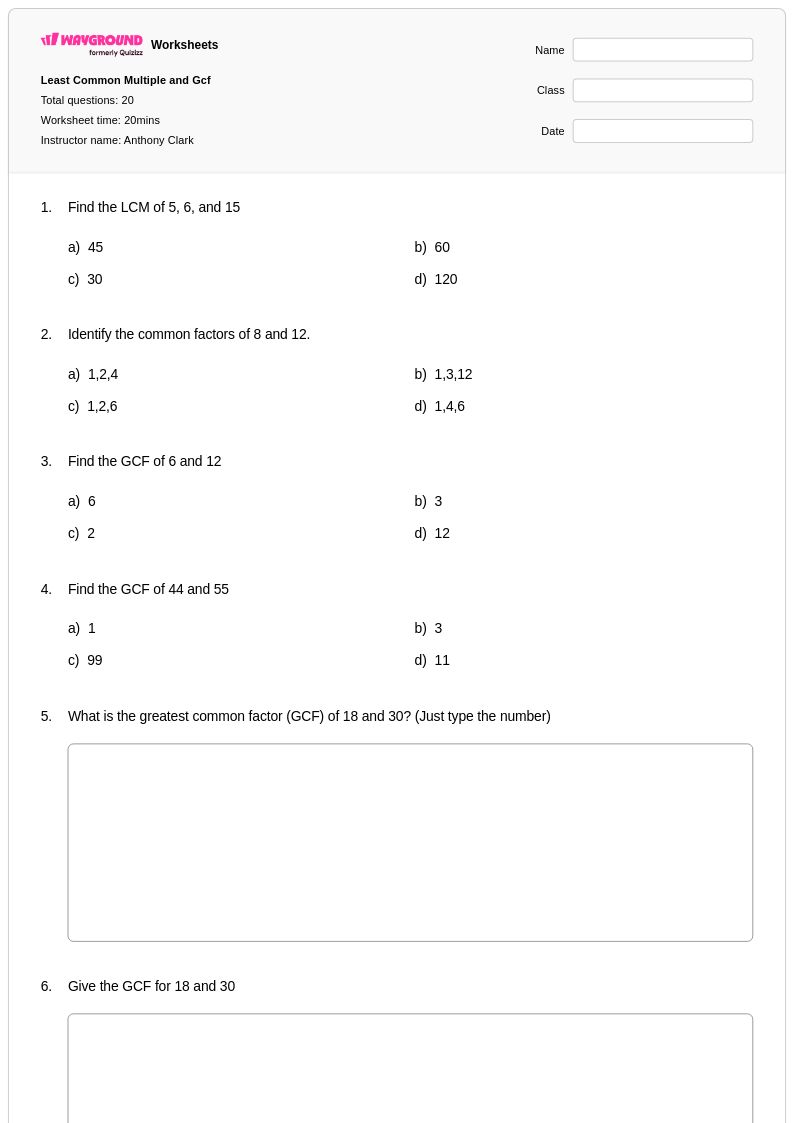
20 Q
6th - Uni
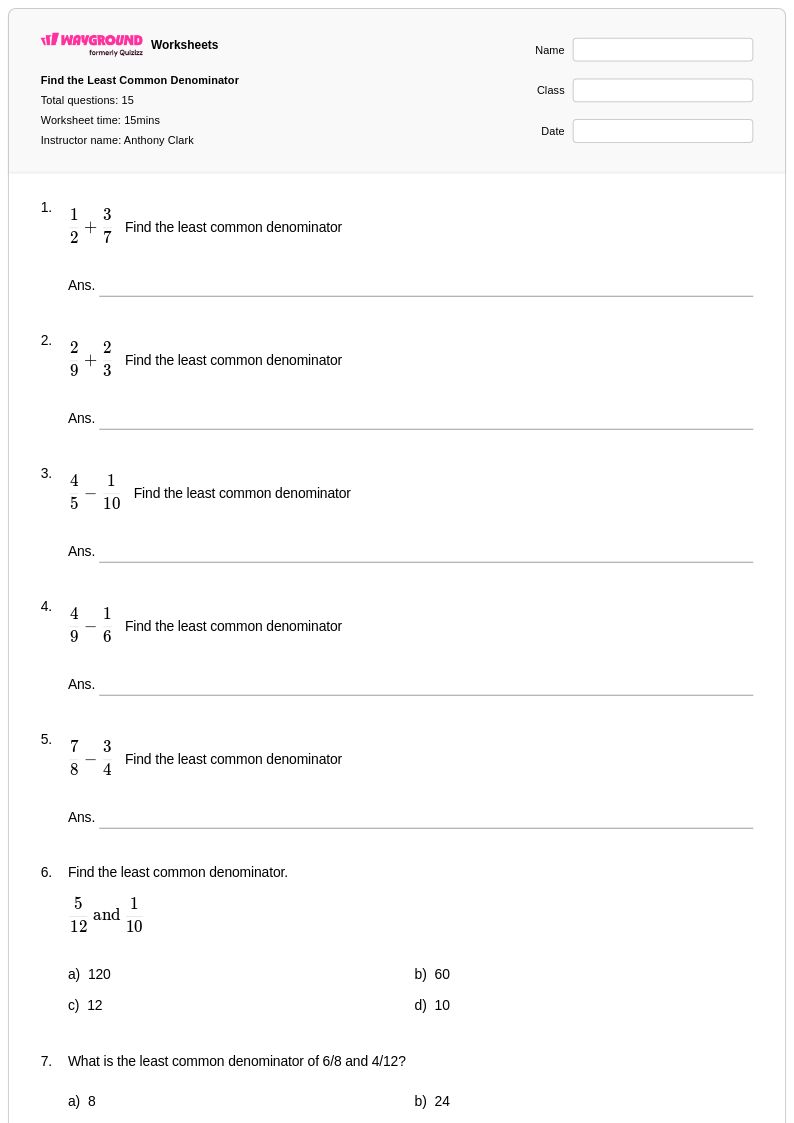
15 Q
5th - Uni
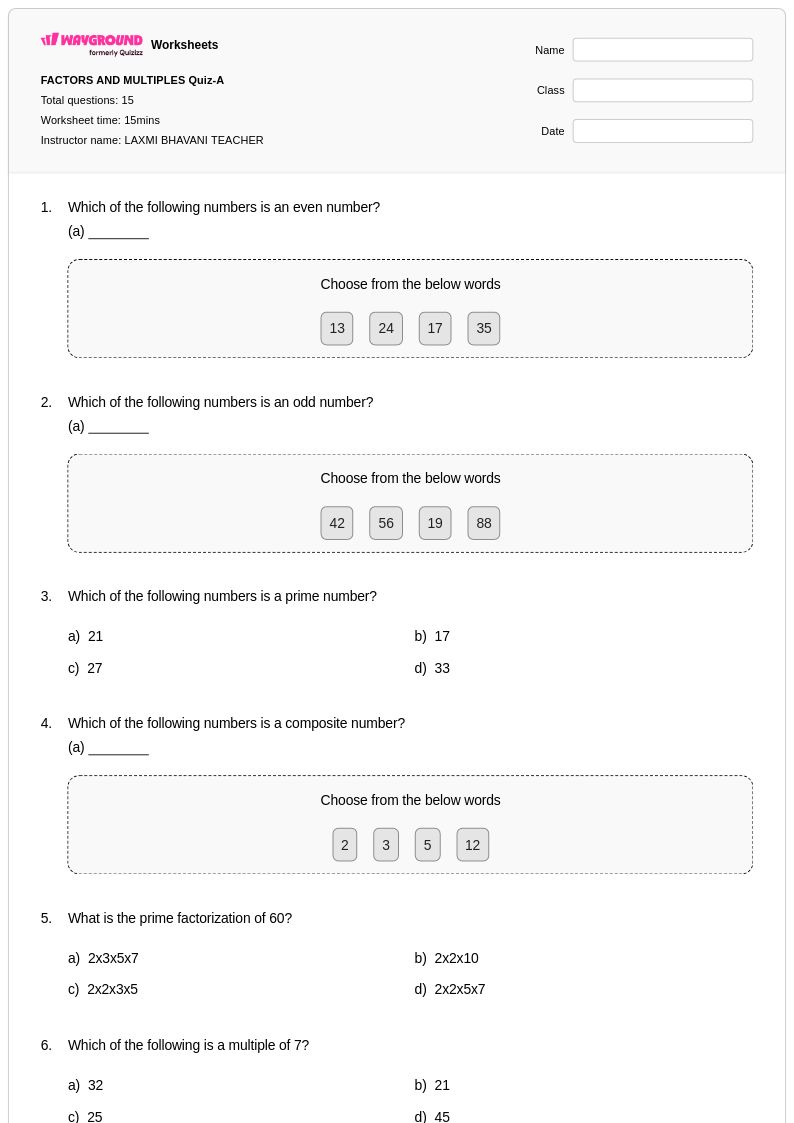
15 Q
6th - Uni
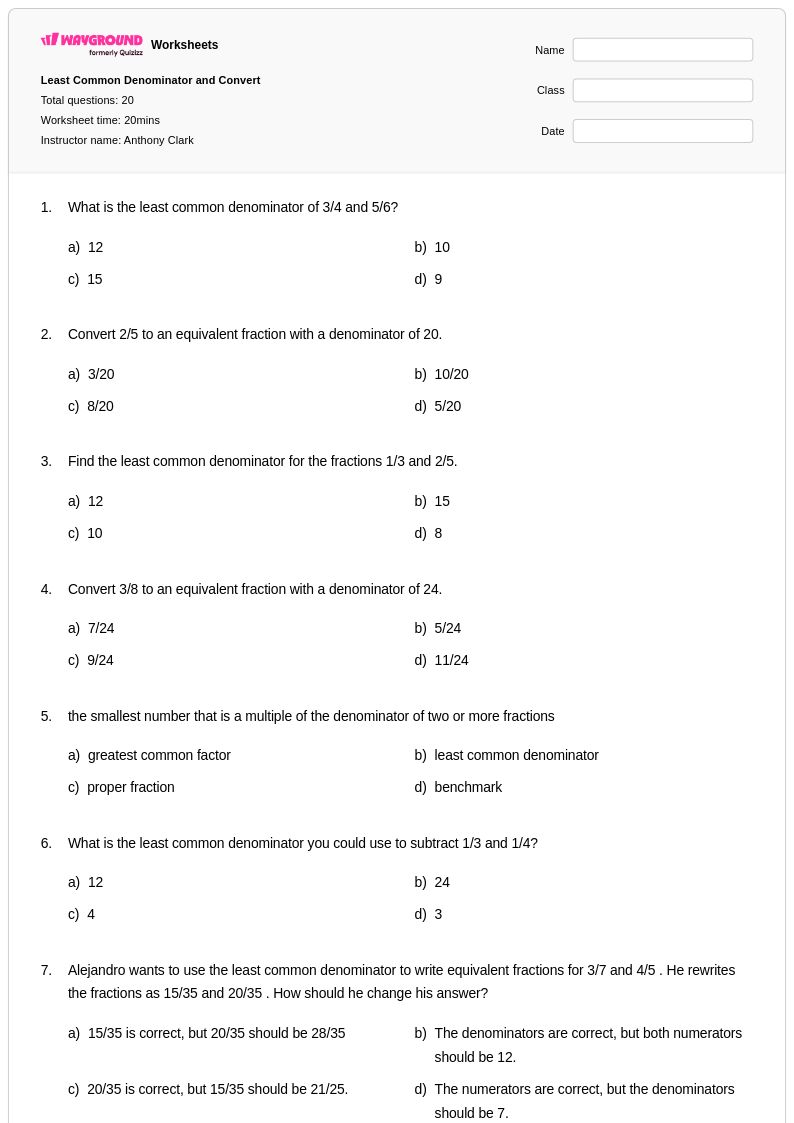
20 Q
5th - Uni
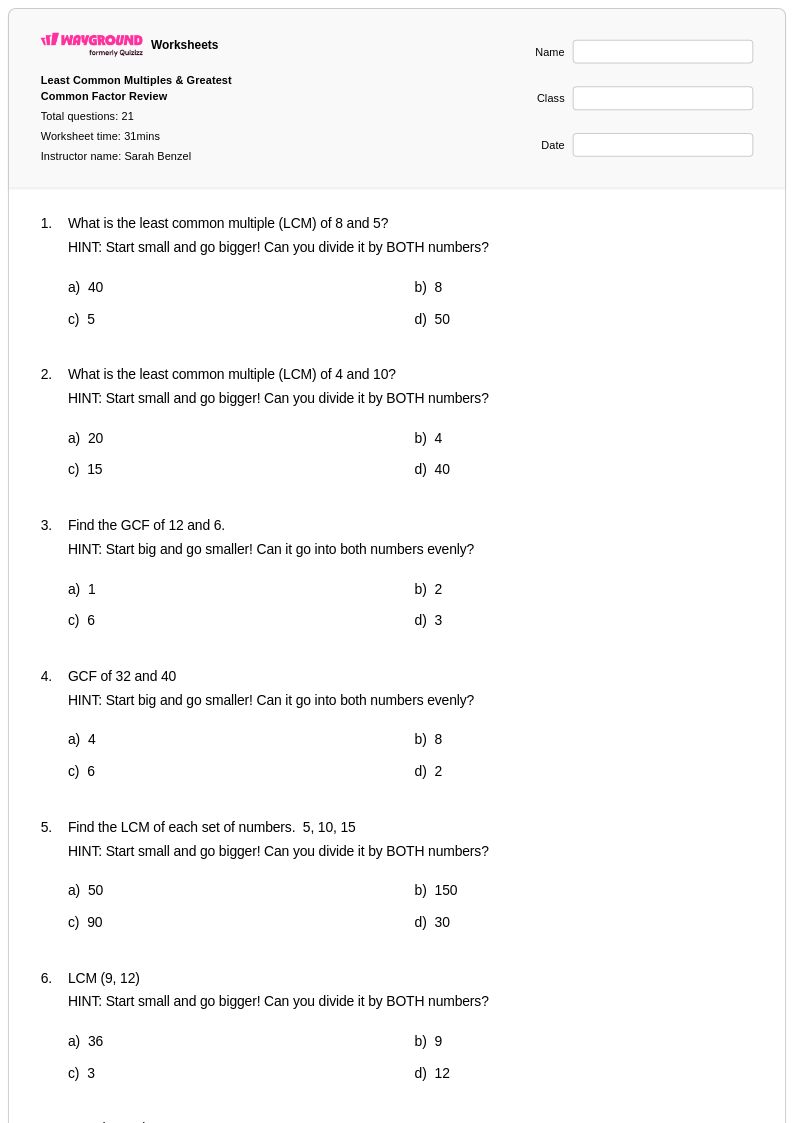
21 Q
6th - 10th
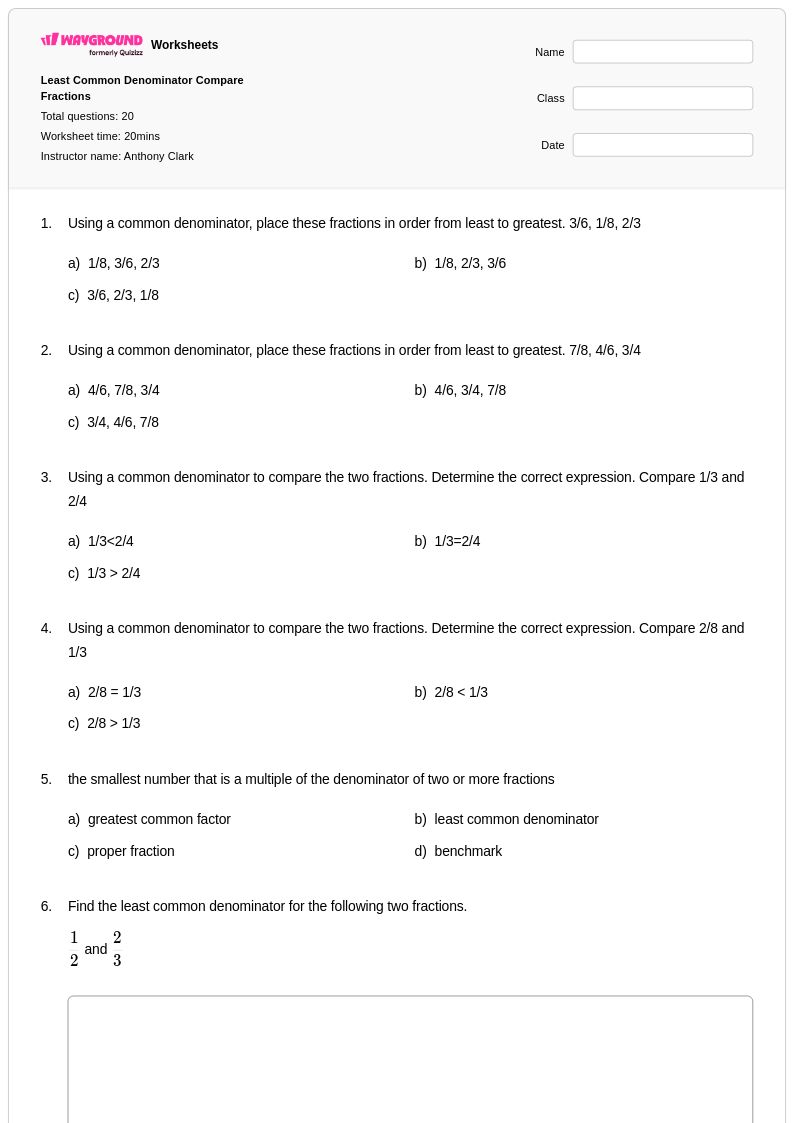
20 Q
6th - Uni
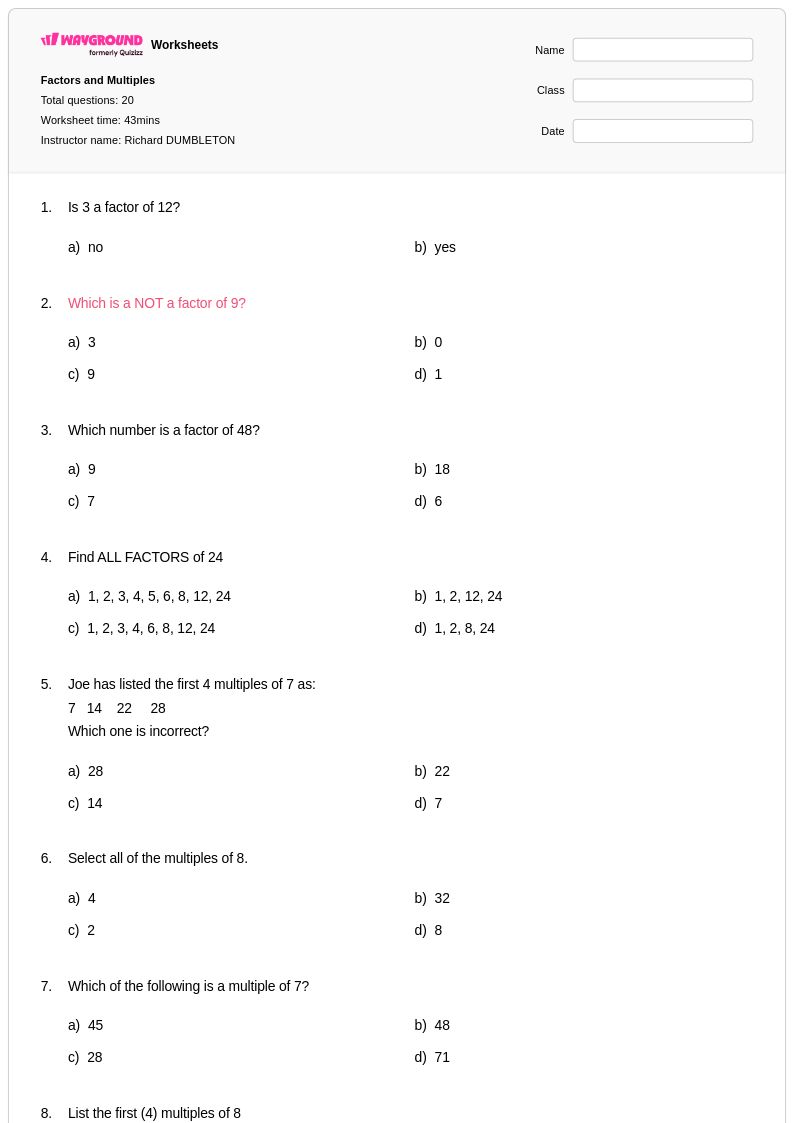
20 Q
8th - 11th
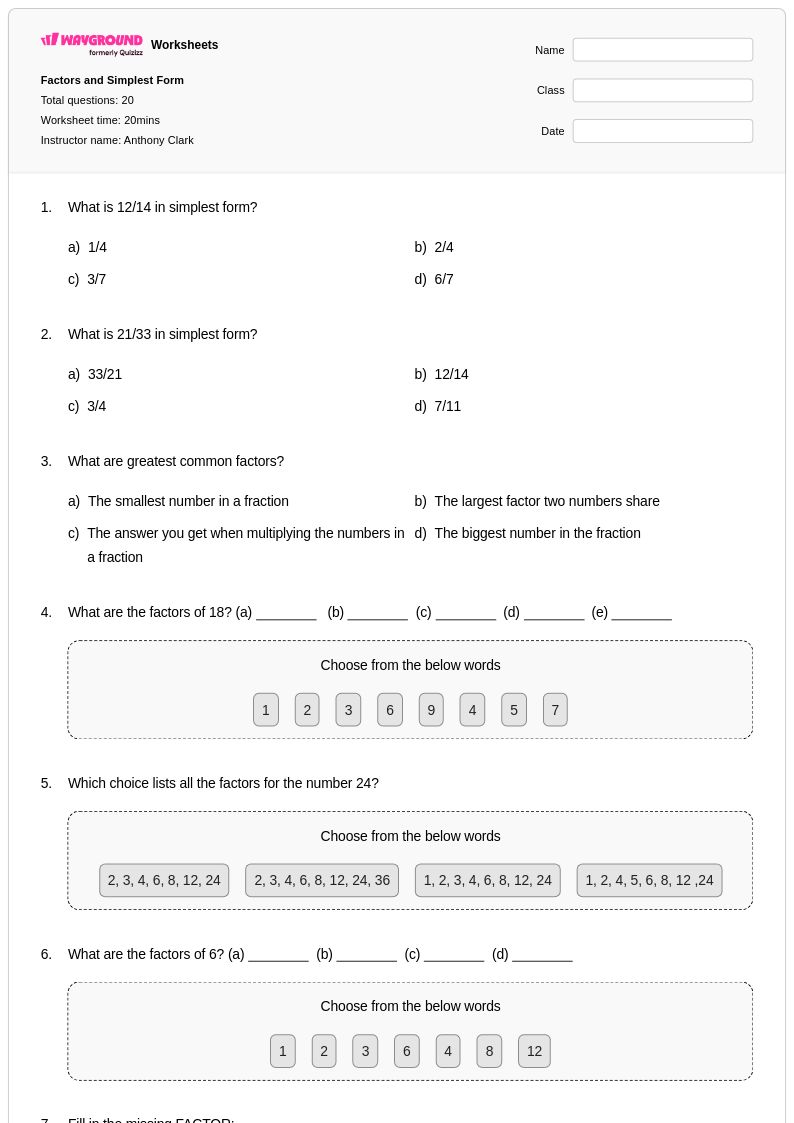
20 Q
4th - Uni
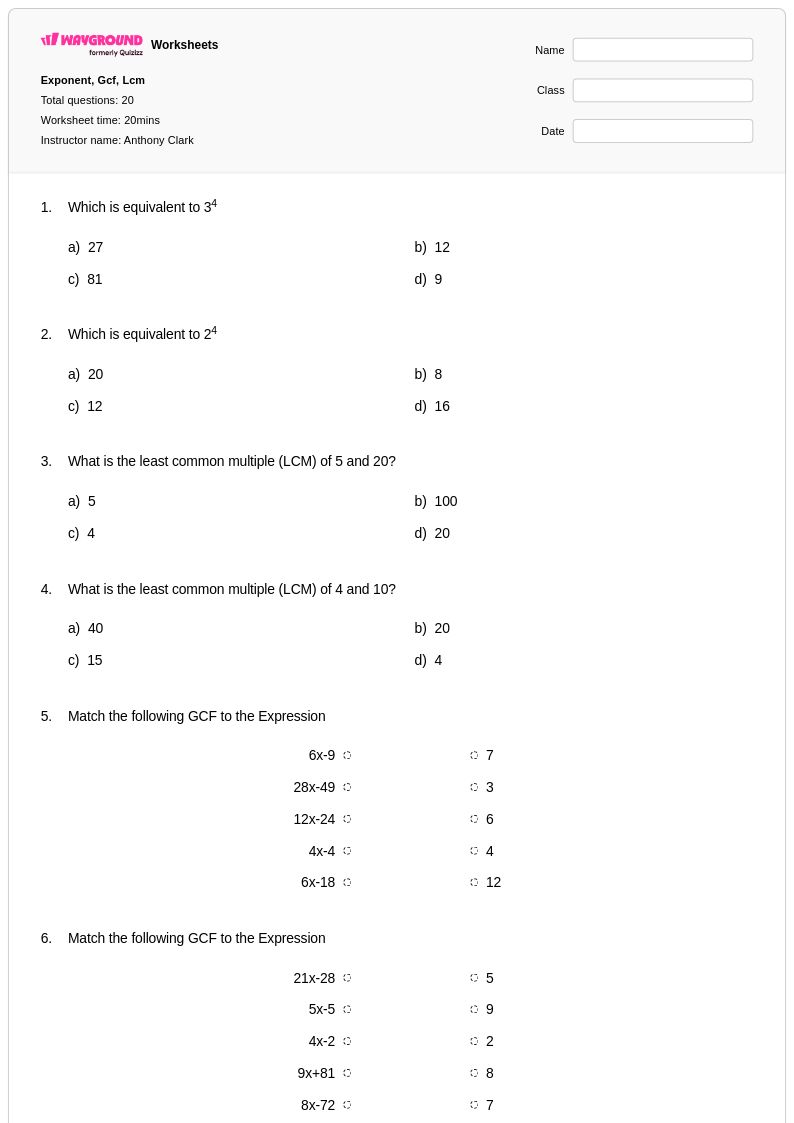
20 Q
6th - Uni
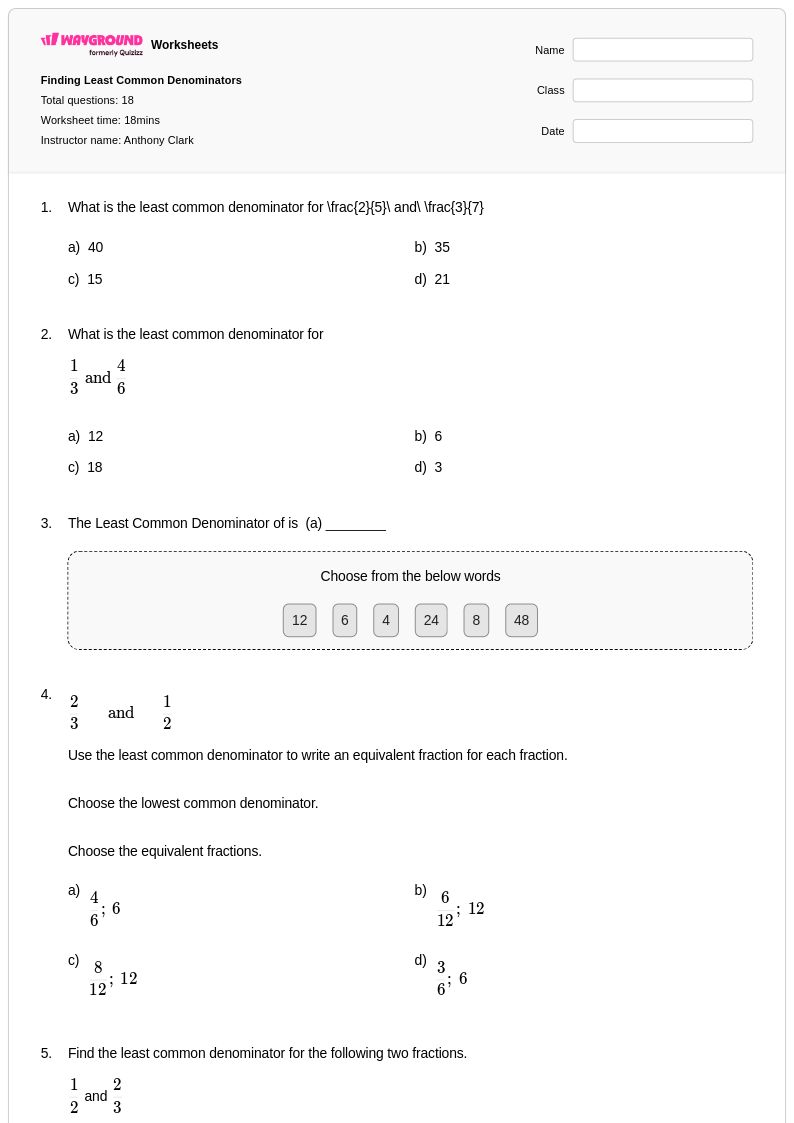
18 Q
5th - Uni
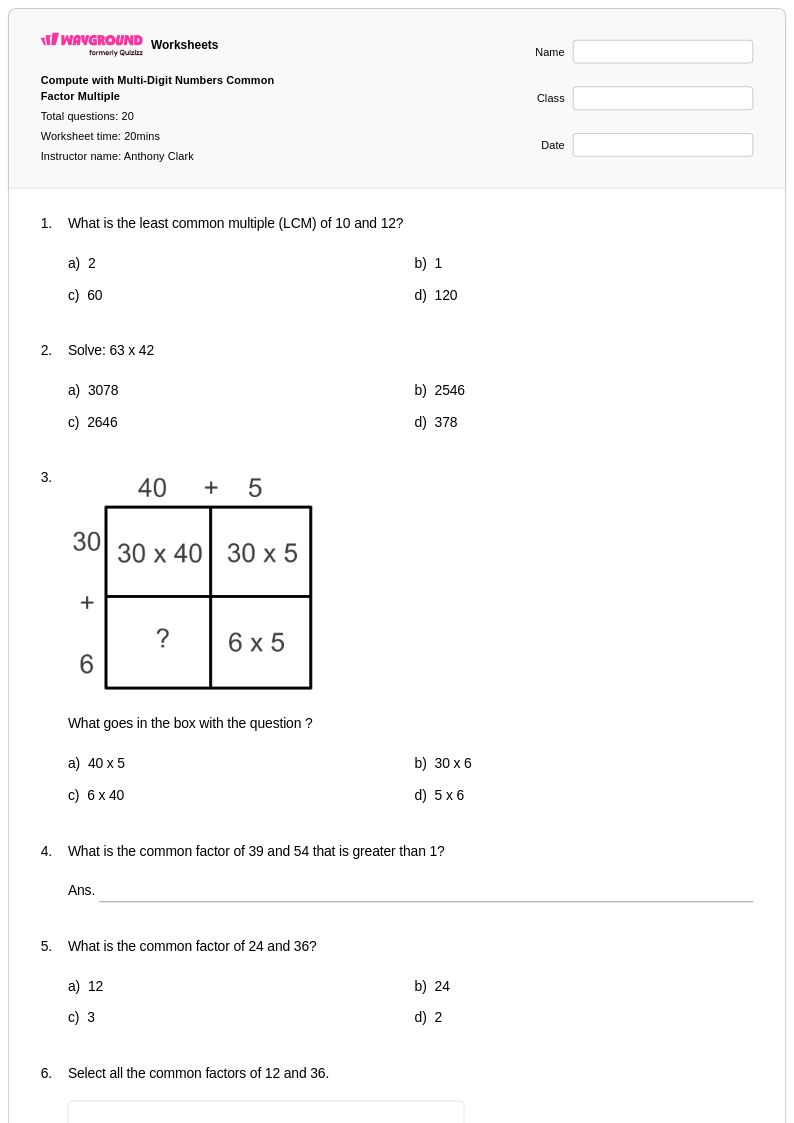
20 Q
6th - Uni
Explore Other Subject Worksheets for year 8
Explore printable Least Common Factor worksheets for Year 8
Least Common Factor worksheets for Year 8 students available through Wayground (formerly Quizizz) provide comprehensive practice in identifying the smallest positive integer that is a common factor of two or more numbers, excluding 1. These carefully designed educational materials strengthen students' understanding of factor relationships and divisibility rules while building foundational skills essential for advanced algebraic concepts. The printable worksheets feature systematically structured practice problems that guide eighth graders through various problem types, from finding the least common factor of simple number pairs to more complex multi-step applications. Each worksheet collection includes detailed answer keys and free pdf downloads, ensuring teachers have complete resources for both instruction and assessment of this critical number sense concept.
Wayground's extensive mathematics worksheet library supports educators with millions of teacher-created resources specifically designed for least common factor instruction at the Year 8 level. The platform's robust search and filtering capabilities allow teachers to quickly locate materials that align with curriculum standards and match their students' specific learning needs. Advanced differentiation tools enable customization of difficulty levels, problem quantities, and formatting options, making it simple to create targeted practice for remediation or enrichment purposes. These versatile worksheets are available in both printable and digital formats, including downloadable pdf versions, giving teachers the flexibility to seamlessly integrate least common factor practice into various instructional settings while supporting diverse learning preferences and classroom management approaches.
FAQs
How do I teach least common factor to Grade 8 students?
What exercises help students practice least common factor?
What mistakes do students make when finding the least common factor?
How can I use these least common factor worksheets in my classroom?
How can I differentiate least common factor practice for mixed-ability students?
What grade level are these least common factor worksheets designed for?