
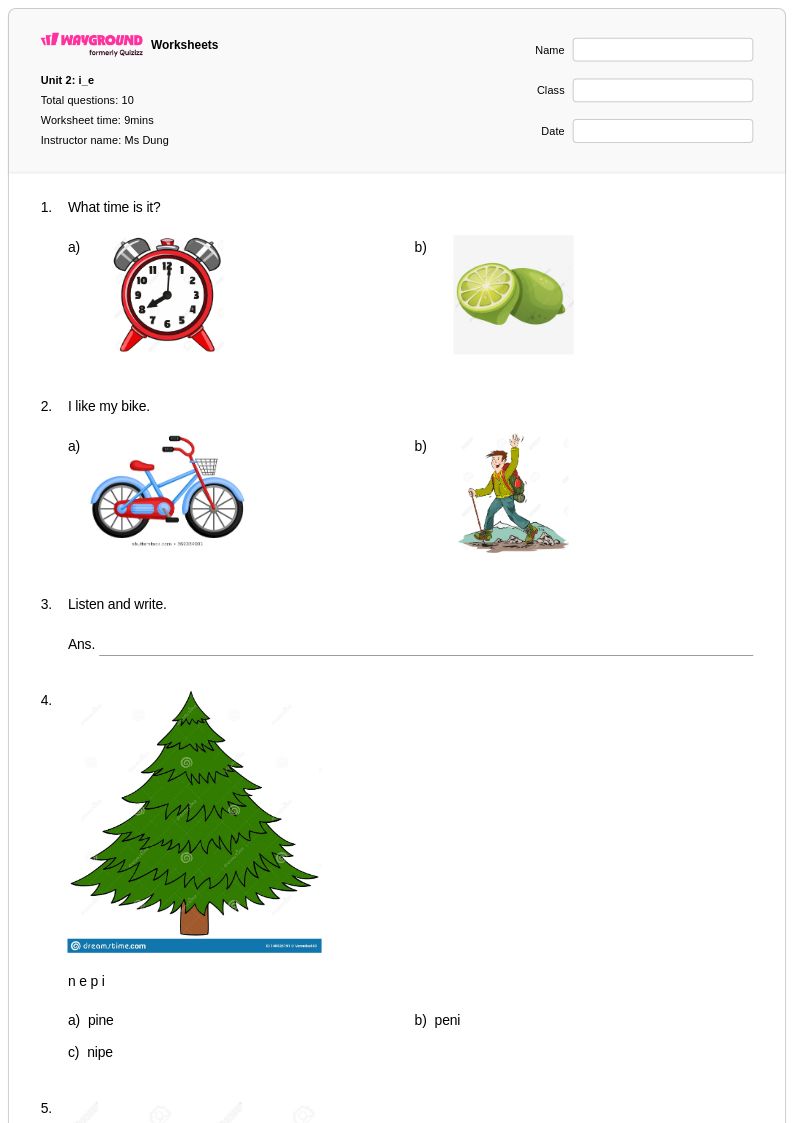
10 Q
1st
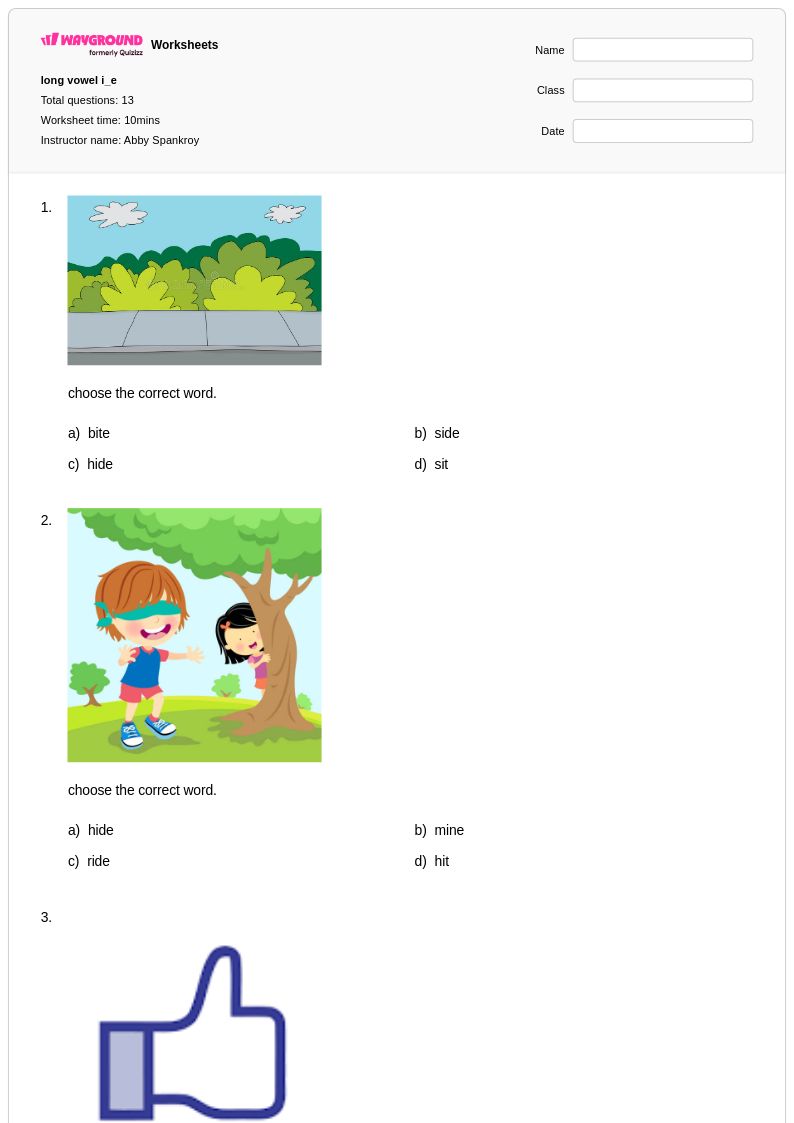
13 Q
1st
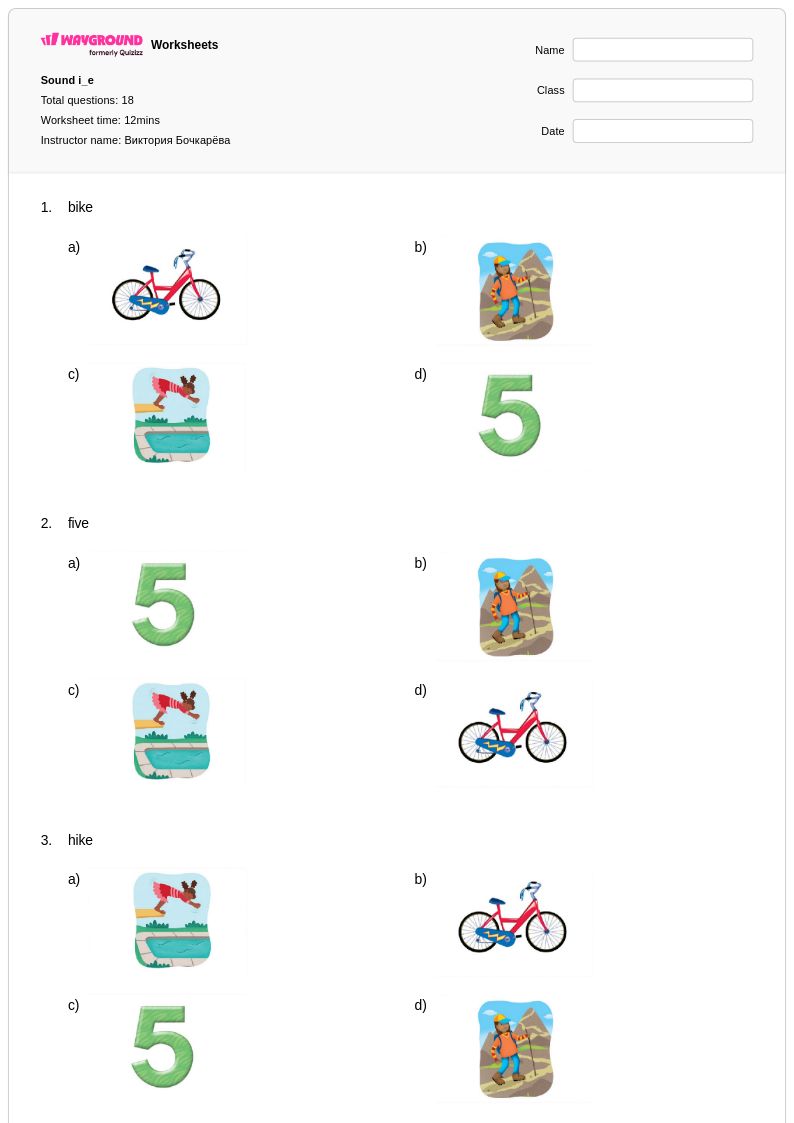
18 Q
1st - 2nd
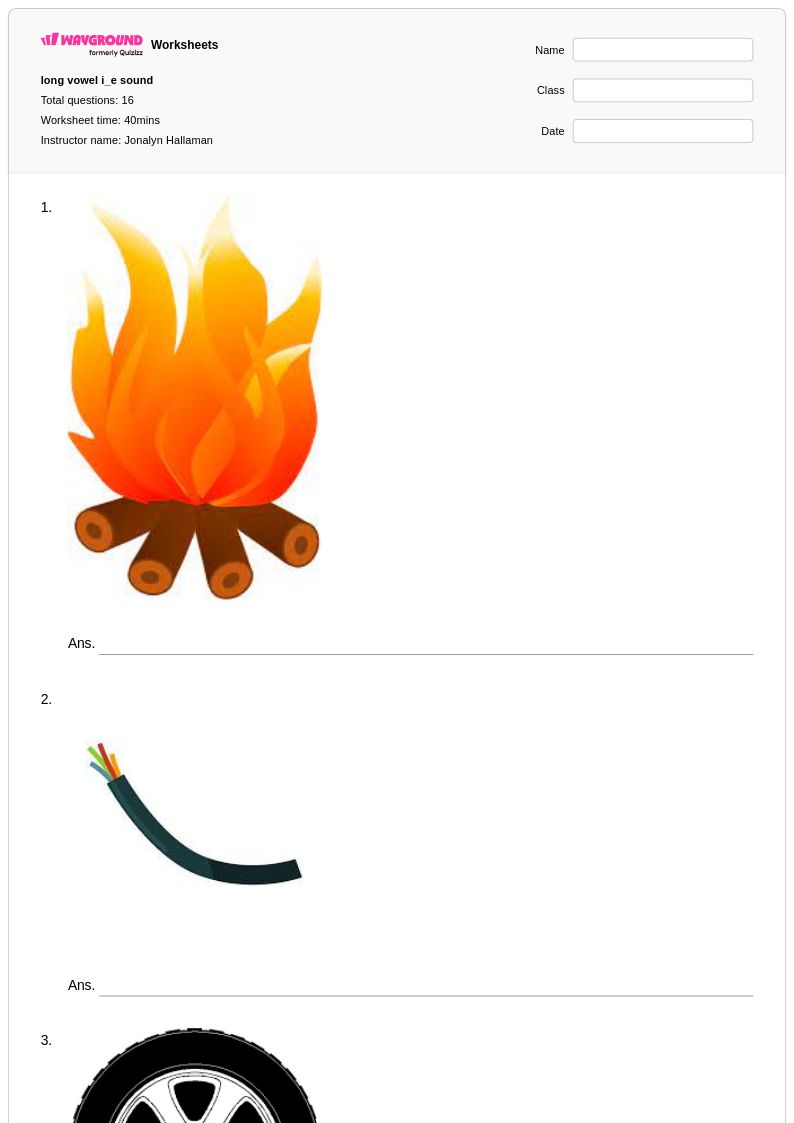
16 Q
KG - 1st
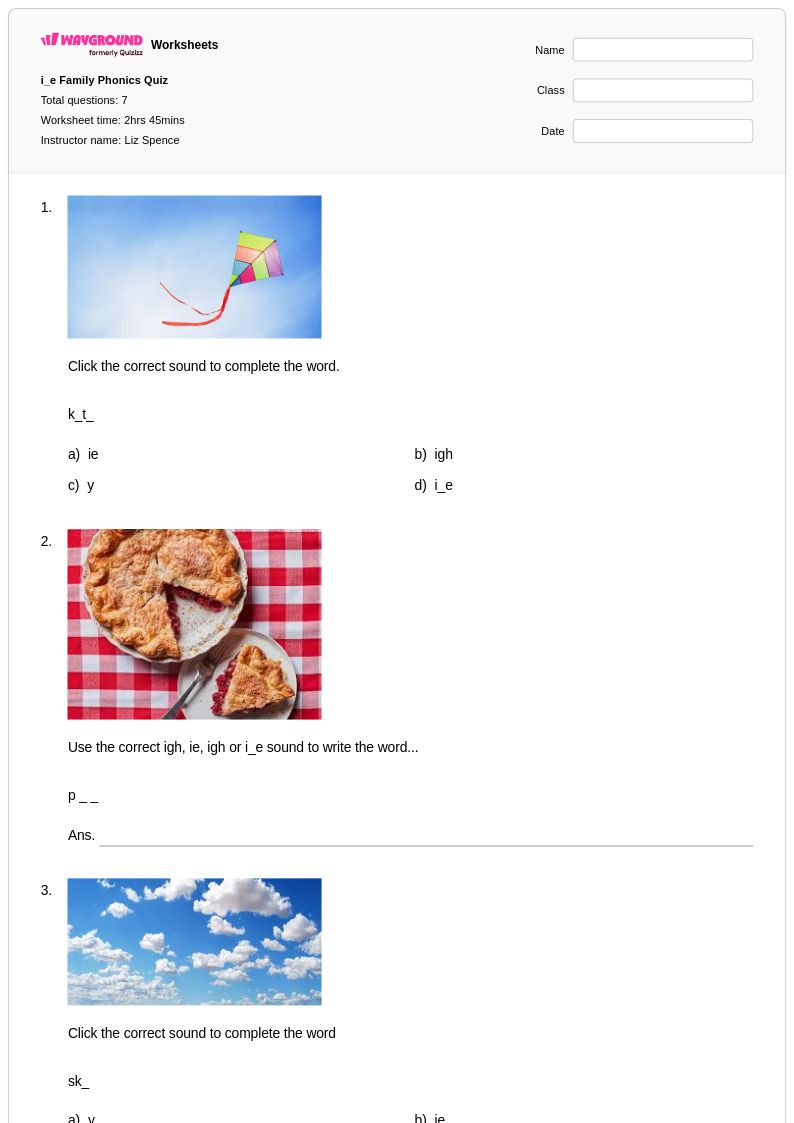
7 Q
1st
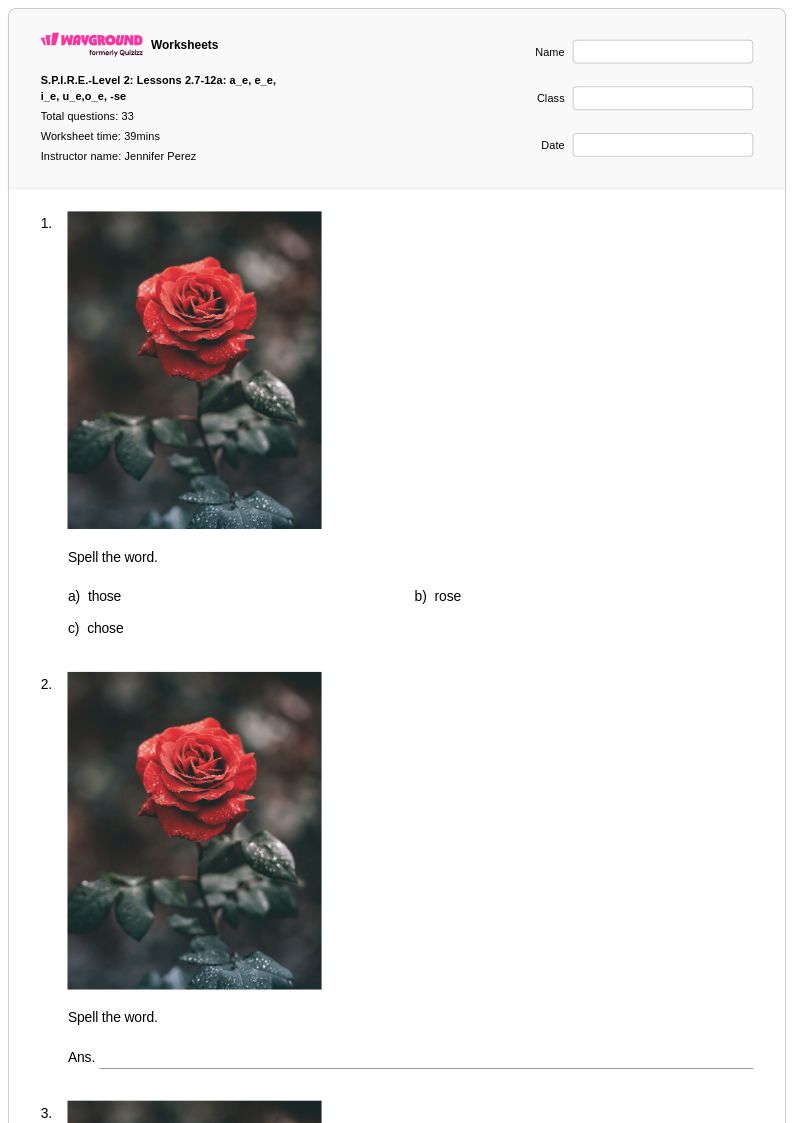
33 Q
1st - 5th
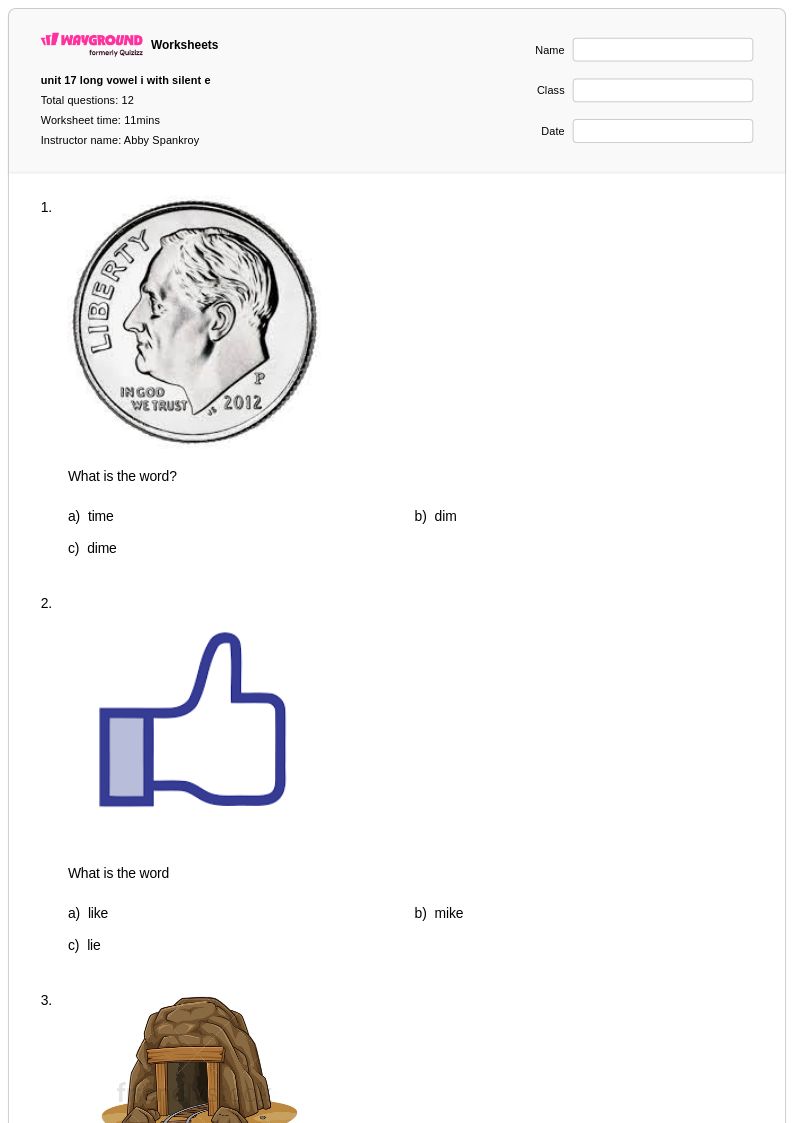
12 Q
1st
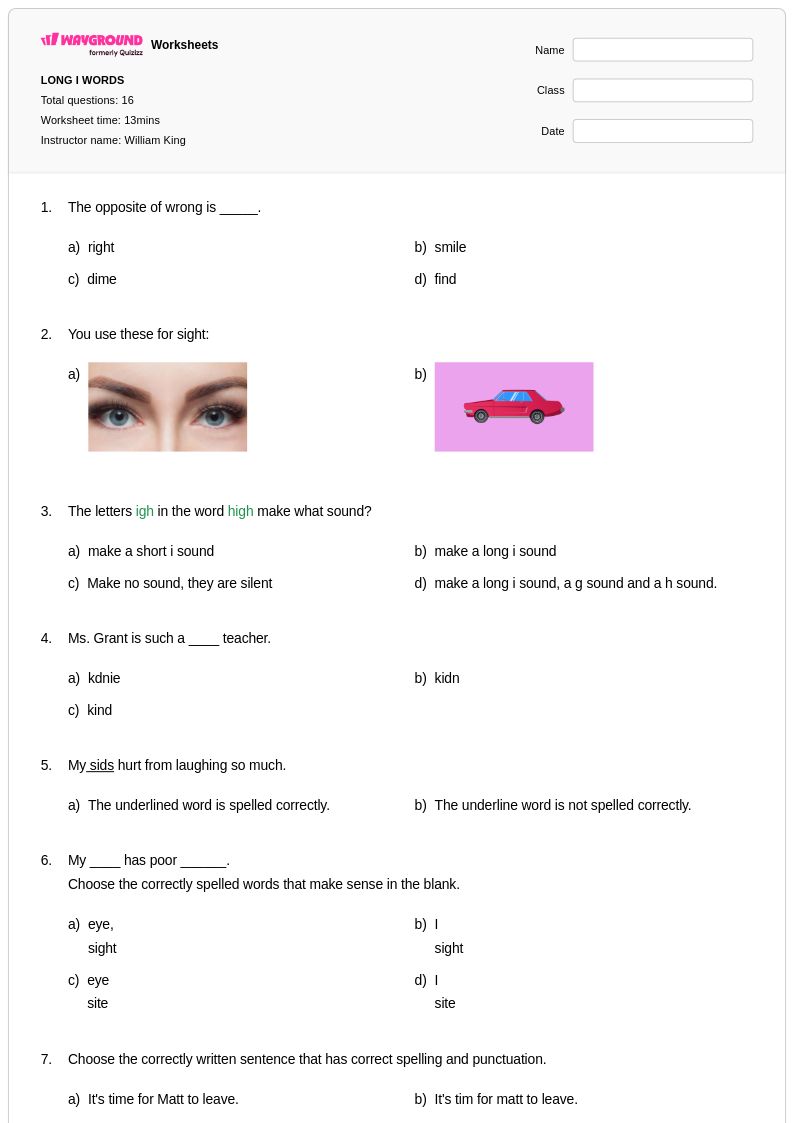
16 Q
1st - 5th
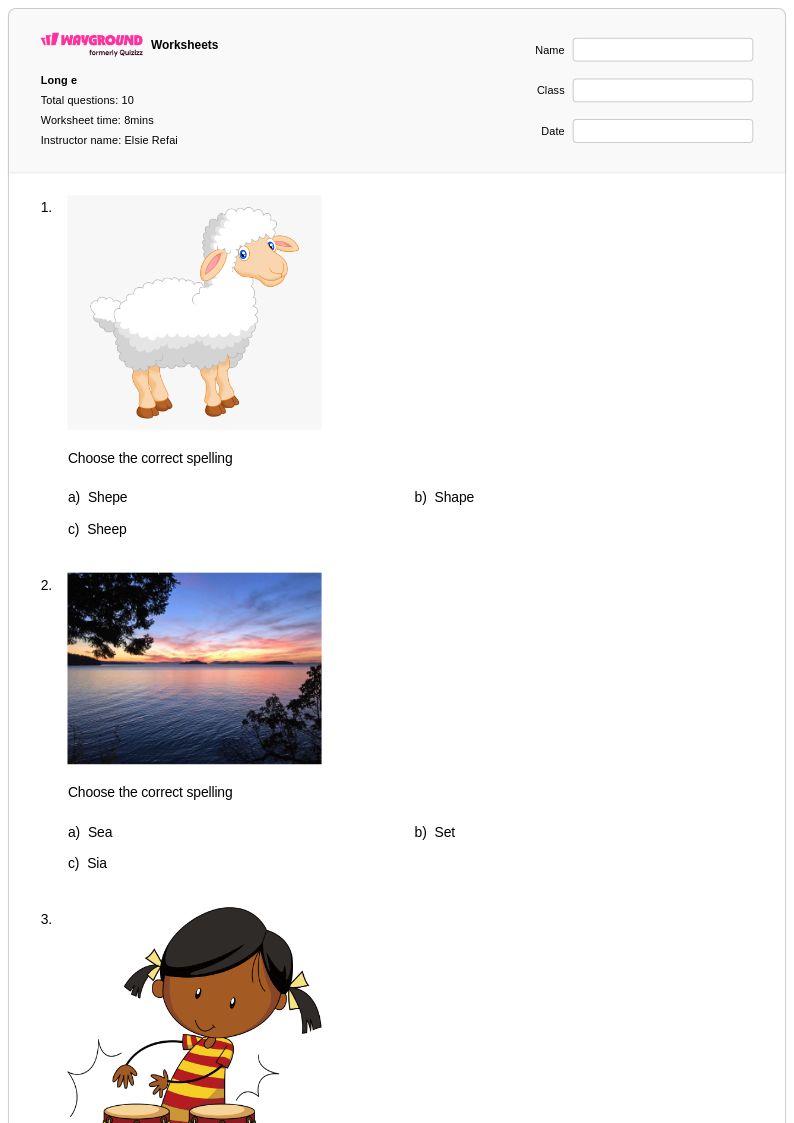
10 Q
1st
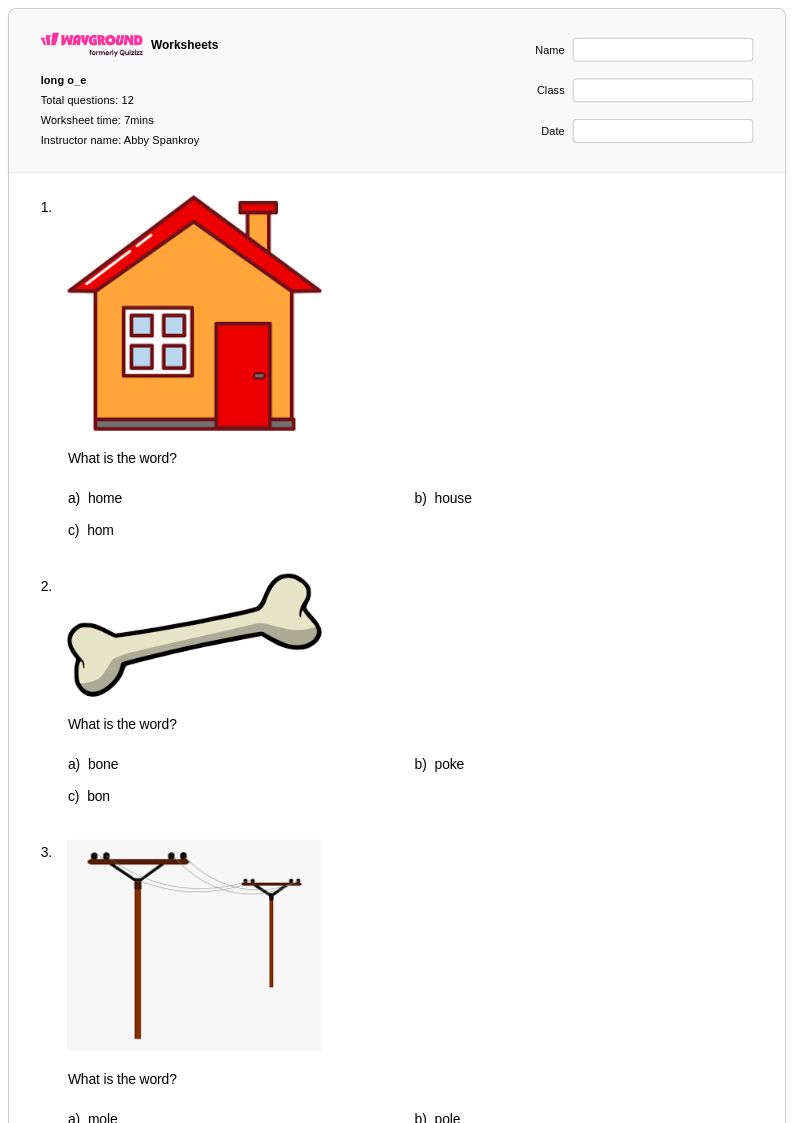
12 Q
1st
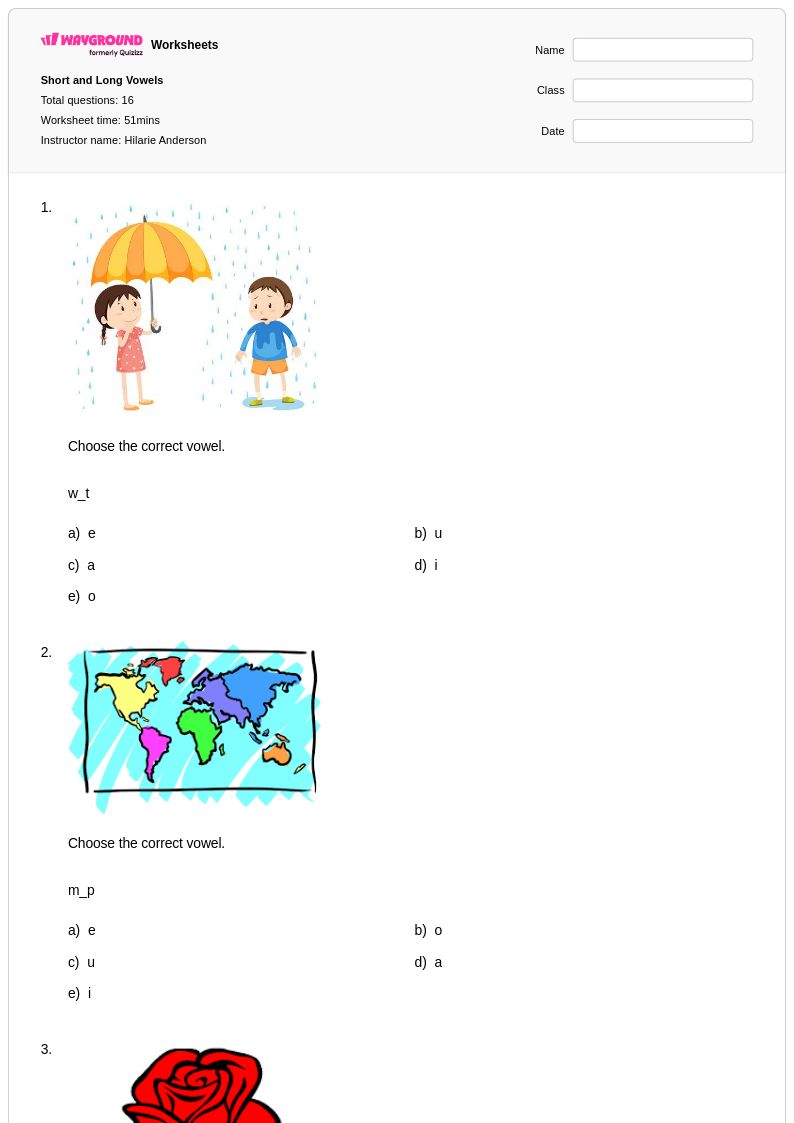
18 Q
1st - Uni
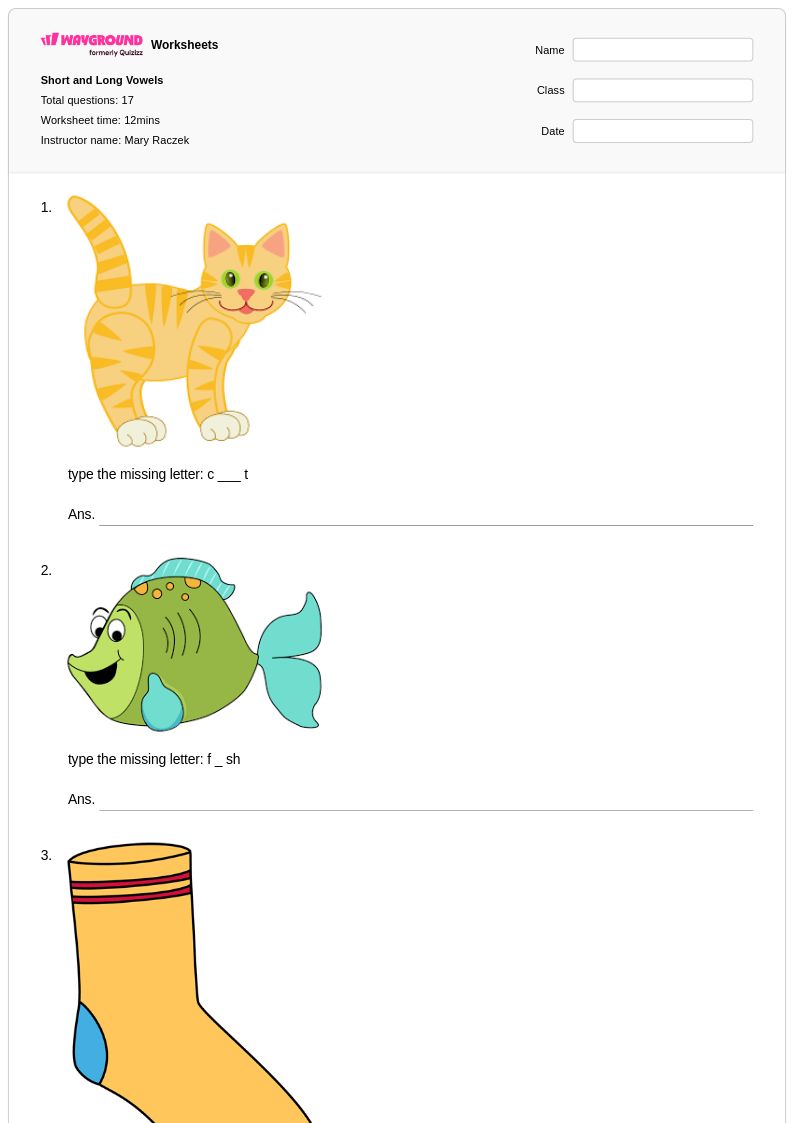
17 Q
1st - 2nd
17 Q
1st - 3rd
10 Q
KG - 2nd
19 Q
1st - 5th
9 Q
1st
10 Q
1st - 6th
50 Q
1st - 3rd
9 Q
1st
14 Q
KG - 5th
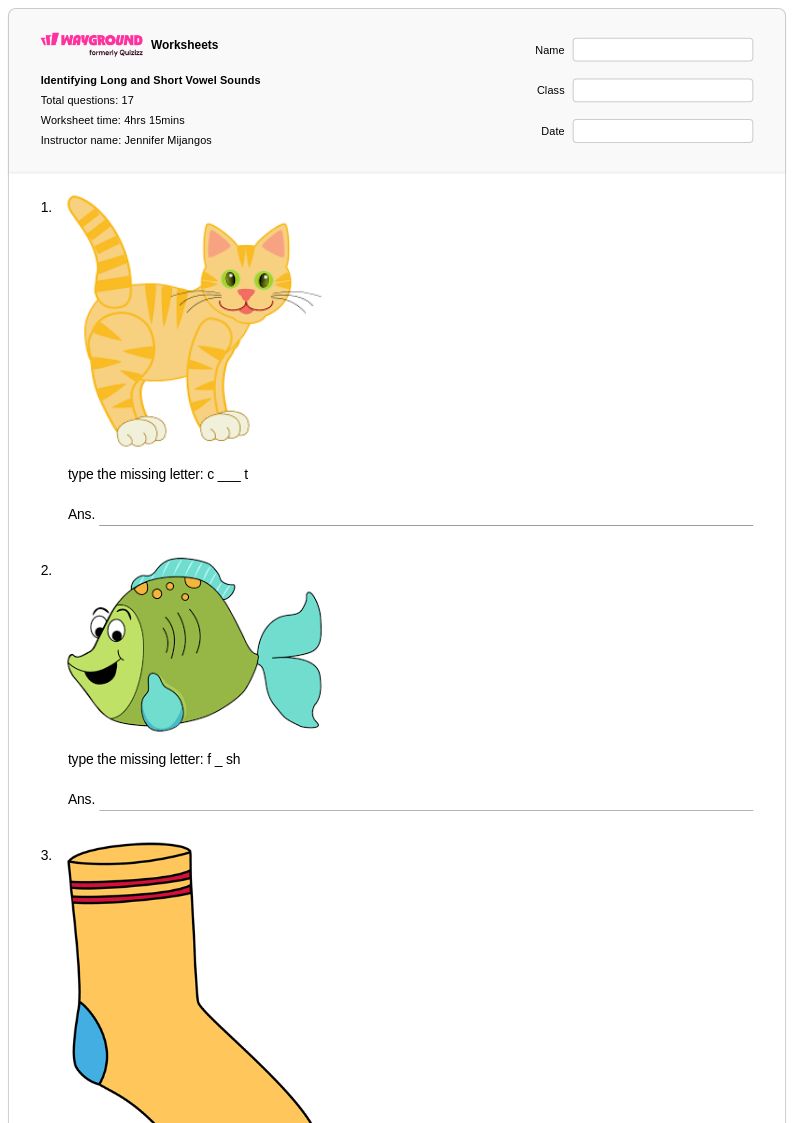
17 Q
1st - 5th
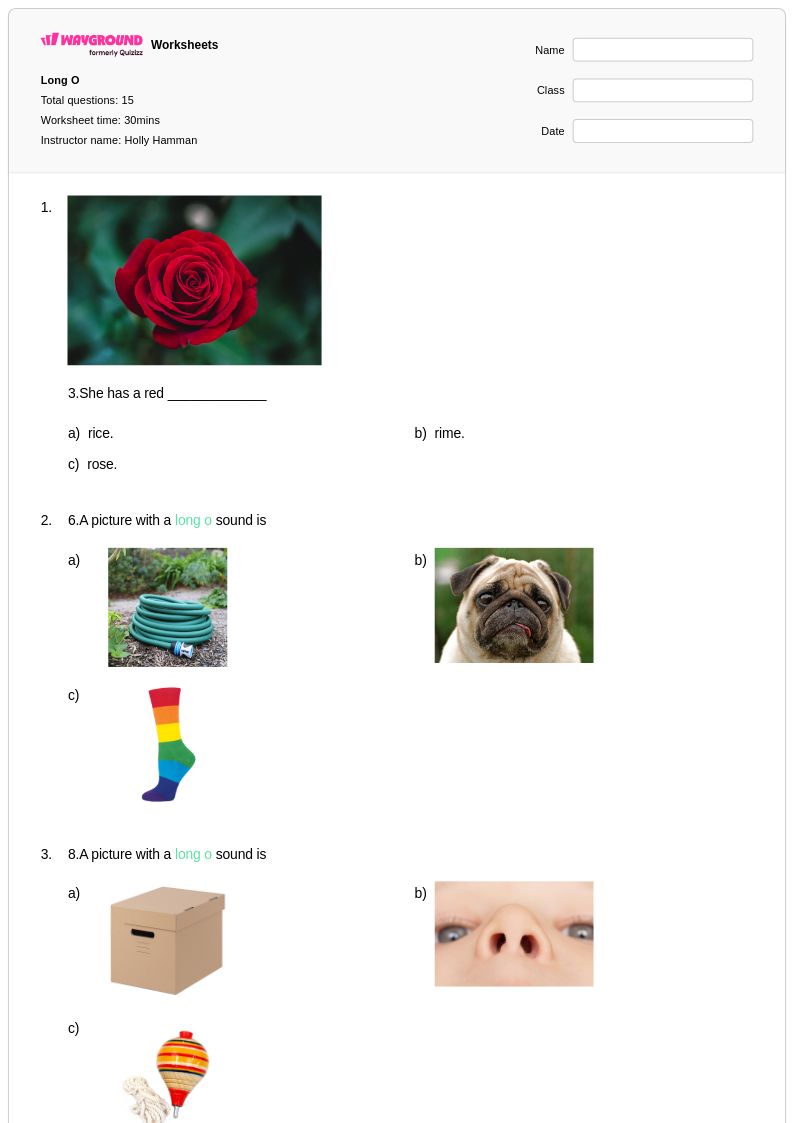
15 Q
1st
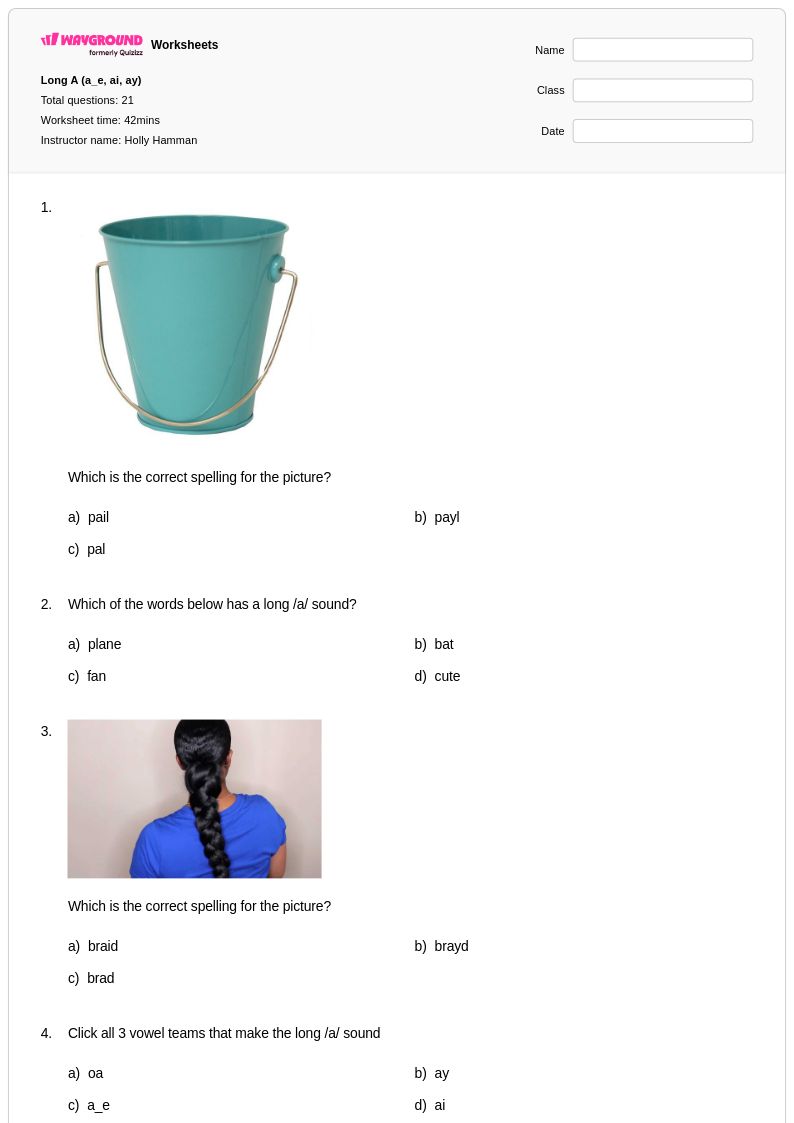
21 Q
1st
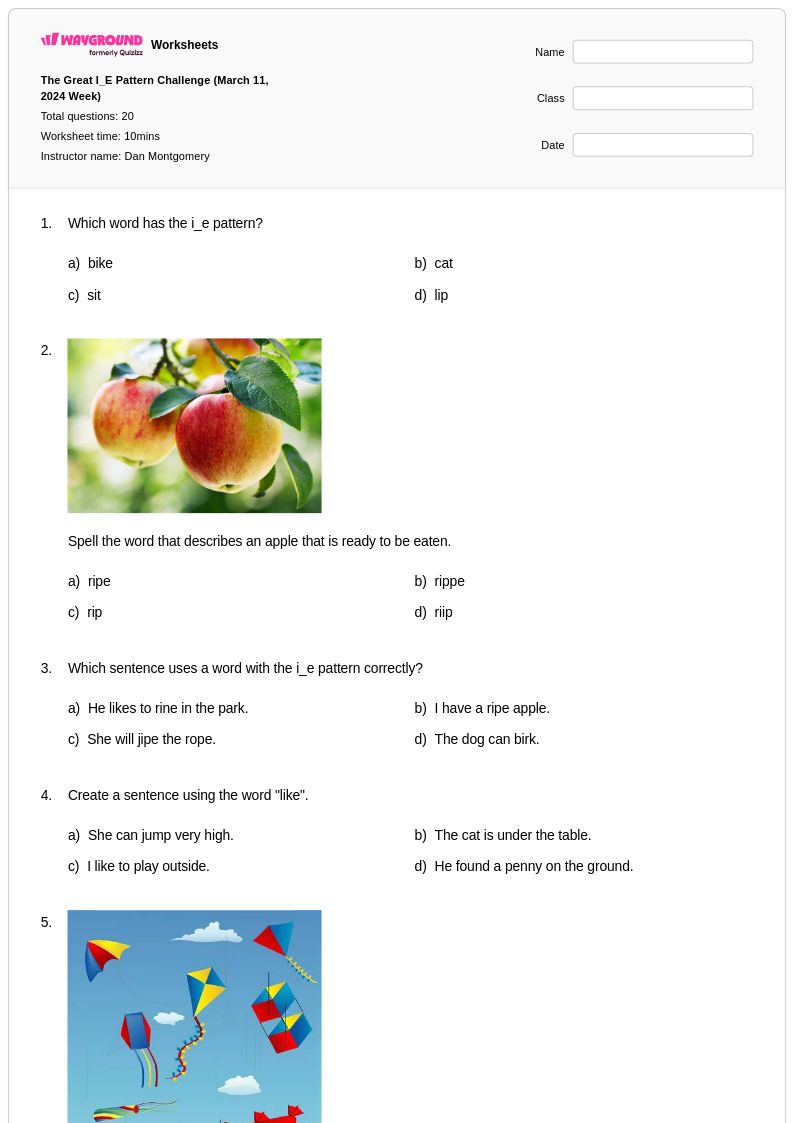
20 Q
1st - 5th
Explore Long I_e Pattern Worksheets by Grades
Explore Other Subject Worksheets for year 1
Explore printable Long I_e Pattern worksheets for Year 1
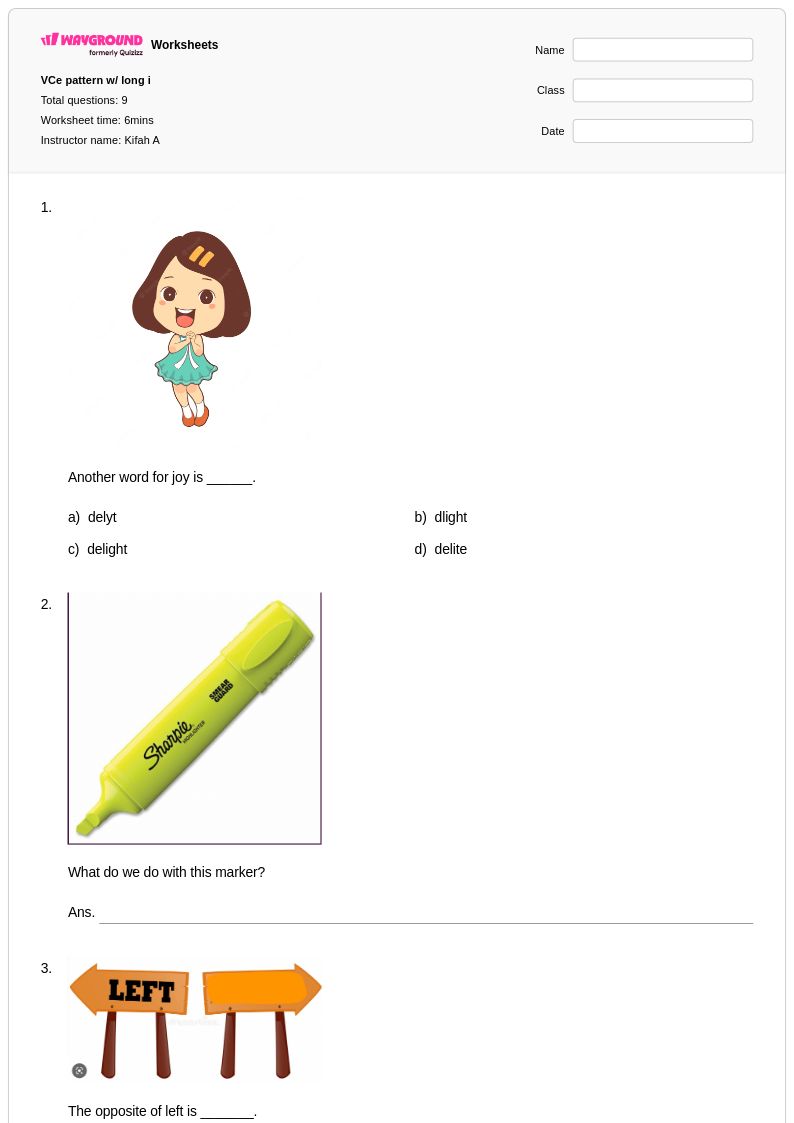
Long I_e pattern worksheets for Year 1 students available through Wayground (formerly Quizizz) provide essential phonics instruction that helps young learners master one of English's most important silent e spelling patterns. These comprehensive practice materials focus specifically on words where the letter i creates a long vowel sound when followed by a consonant and silent e, such as bike, kite, fire, and mine. The worksheets strengthen critical decoding and encoding skills through systematic practice problems that guide students from recognition to independent application. Teachers can access complete collections that include answer keys for efficient grading, and all materials are available as free printables in convenient pdf format for immediate classroom use.
Wayground (formerly Quizizz) empowers educators with millions of teacher-created Long I_e pattern resources that support differentiated instruction across diverse Year 1 classrooms. The platform's robust search and filtering capabilities allow teachers to quickly locate worksheets aligned with specific phonics standards and customize content difficulty levels to meet individual student needs. These versatile materials are available in both printable and digital formats, including downloadable pdf versions that facilitate seamless integration into lesson planning workflows. Whether used for initial skill introduction, targeted remediation for struggling readers, or enrichment activities for advanced students, these Long I_e pattern worksheets provide the systematic practice necessary for phonics mastery while offering the flexibility teachers need for effective differentiated instruction.