Free Printable Louisiana Purchase Worksheets for Year 5
Explore Year 5 Louisiana Purchase worksheets and free printables that help students understand this pivotal moment in U.S. History through engaging practice problems and comprehensive answer keys.
Explore printable Louisiana Purchase worksheets for Year 5
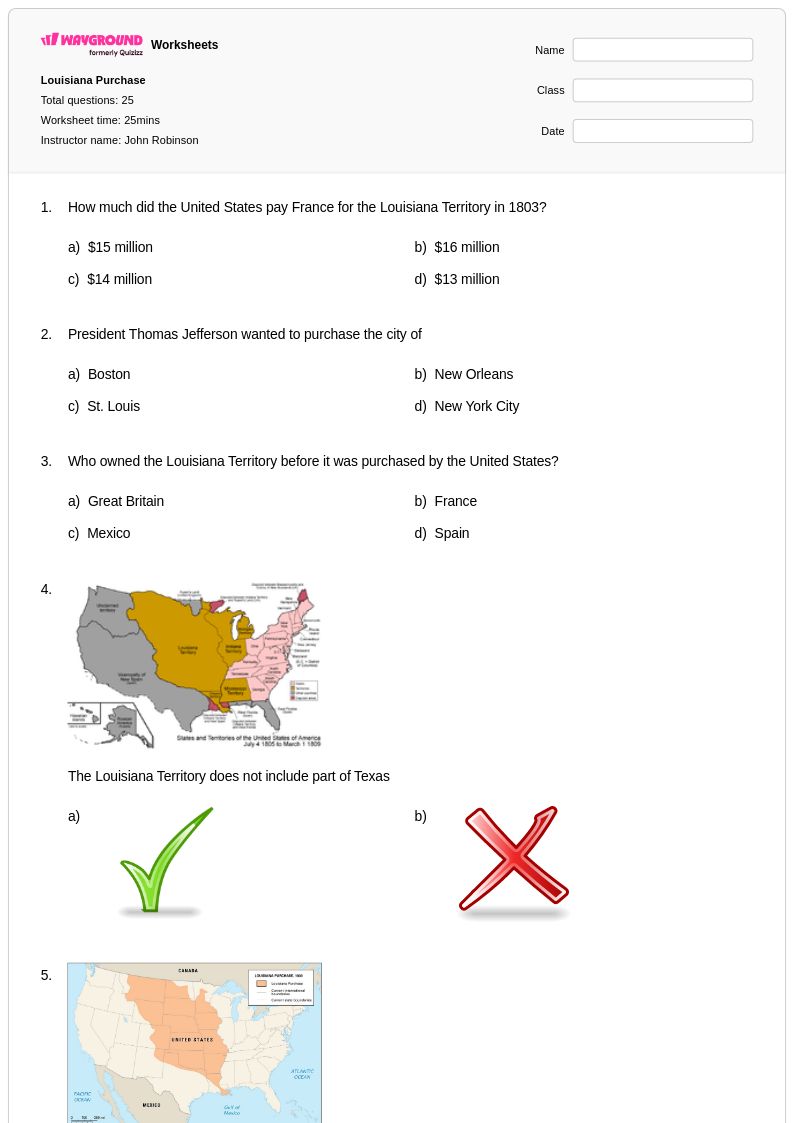
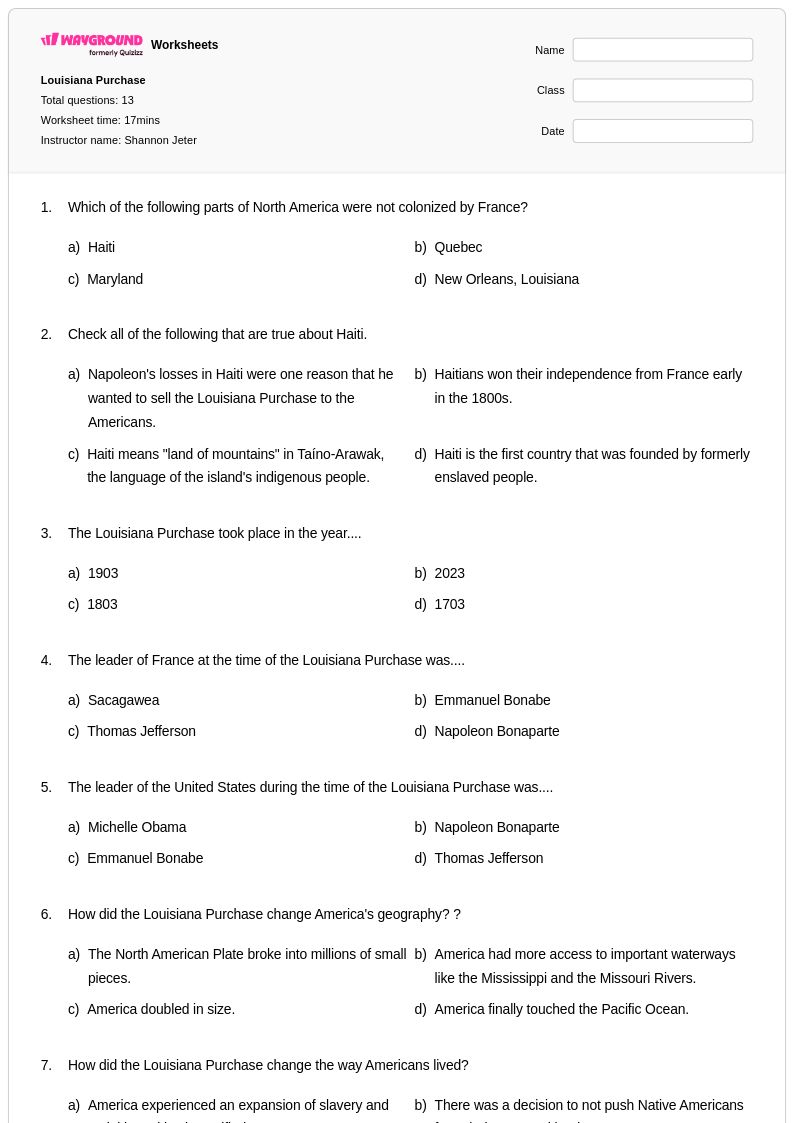
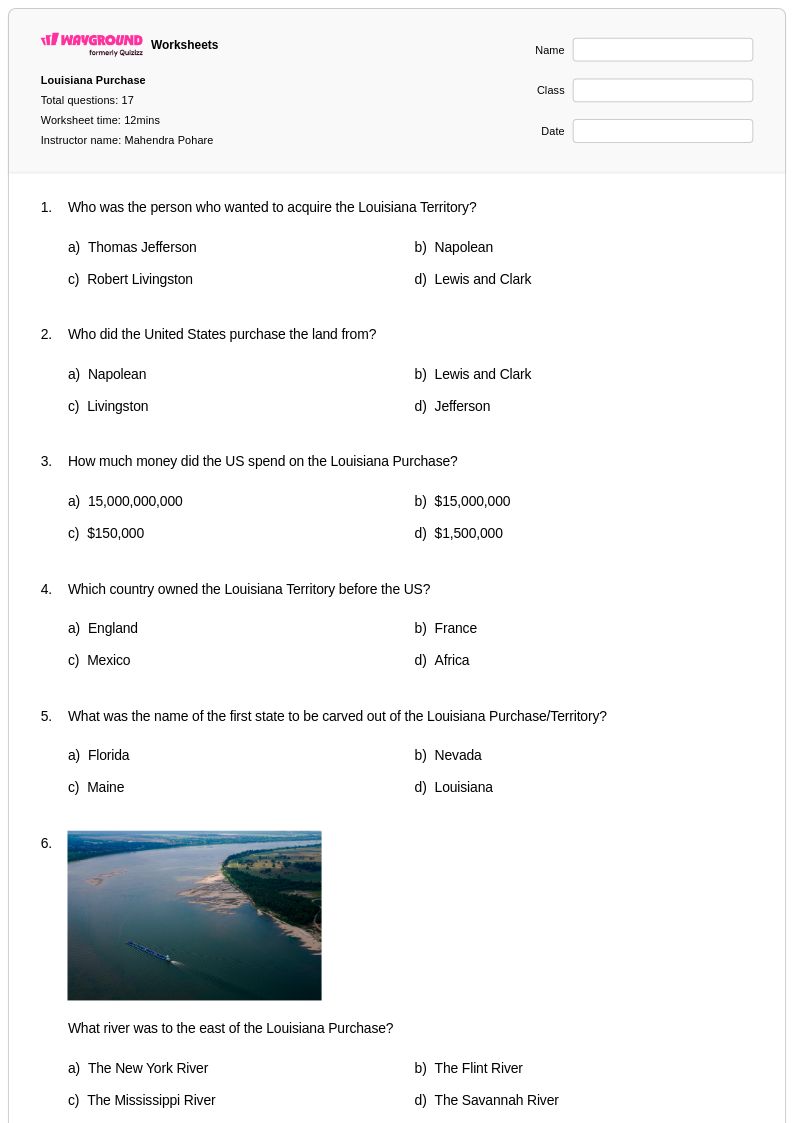
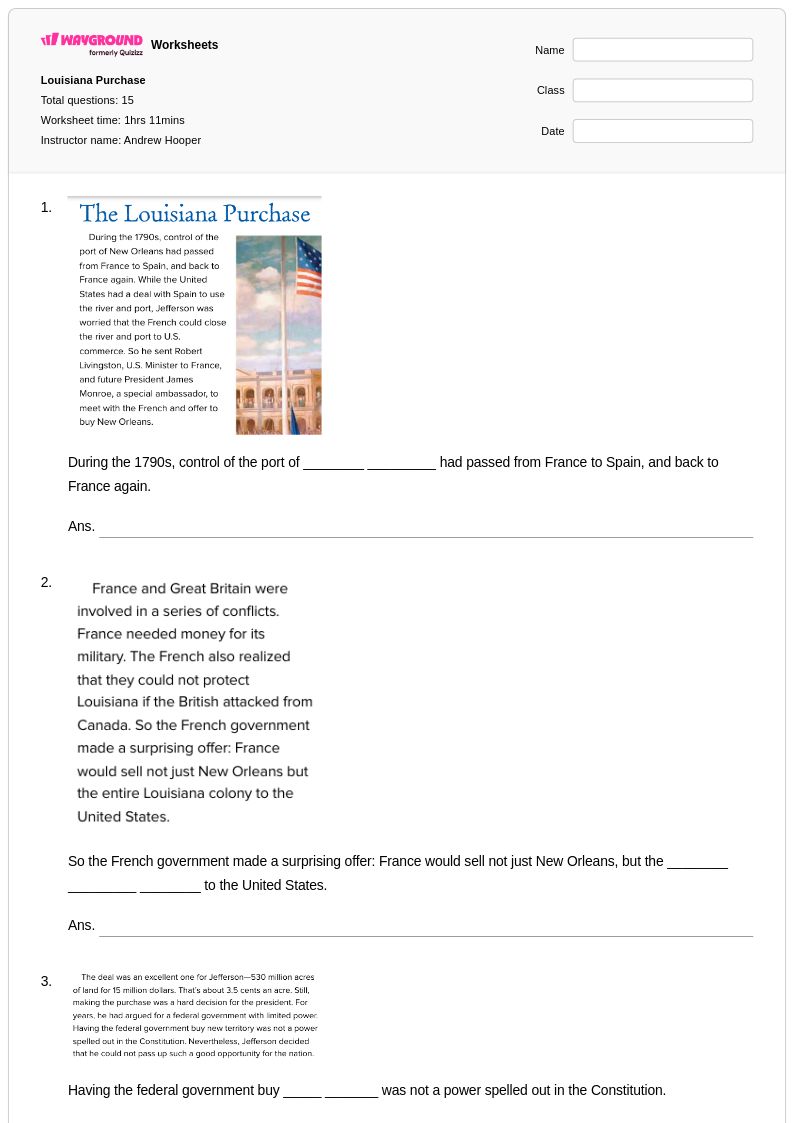
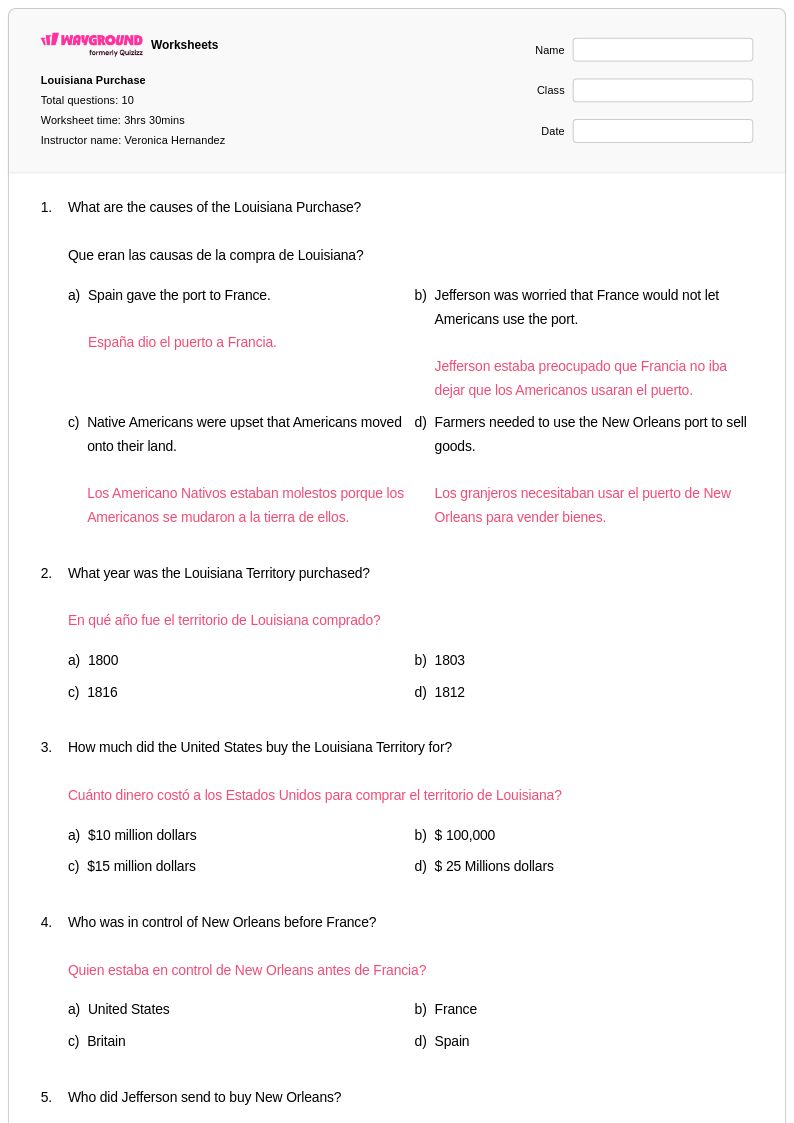
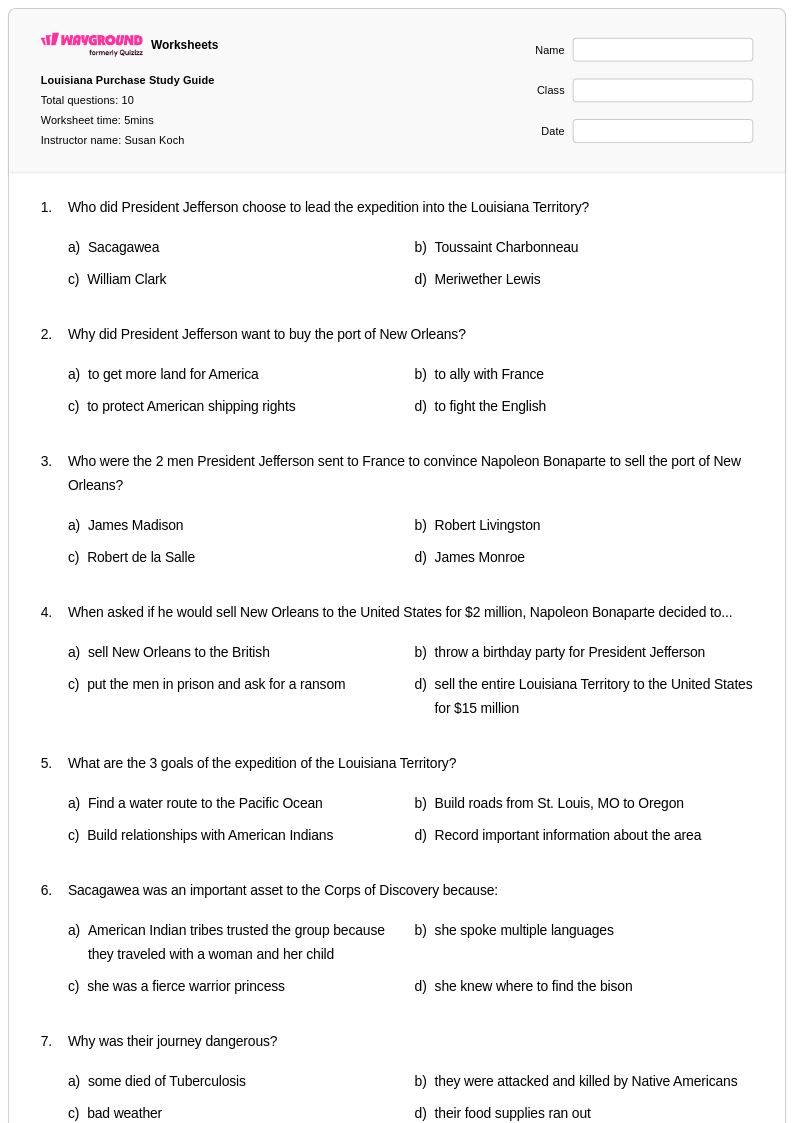
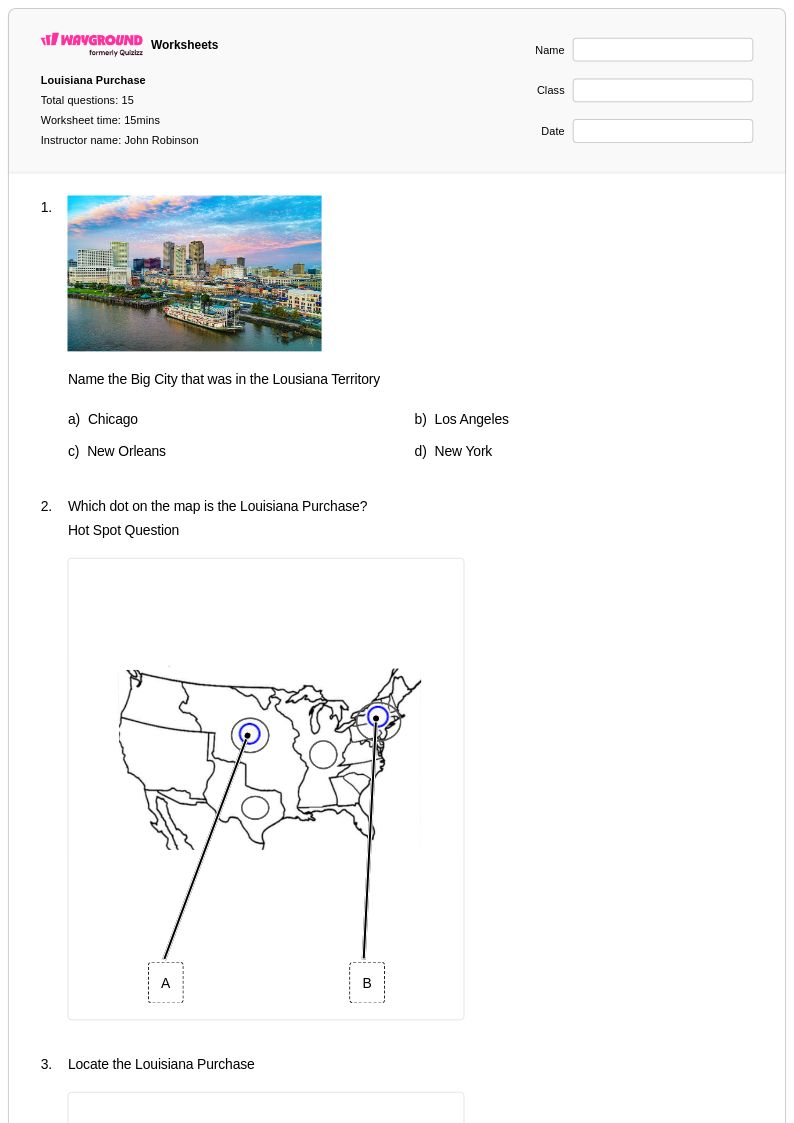
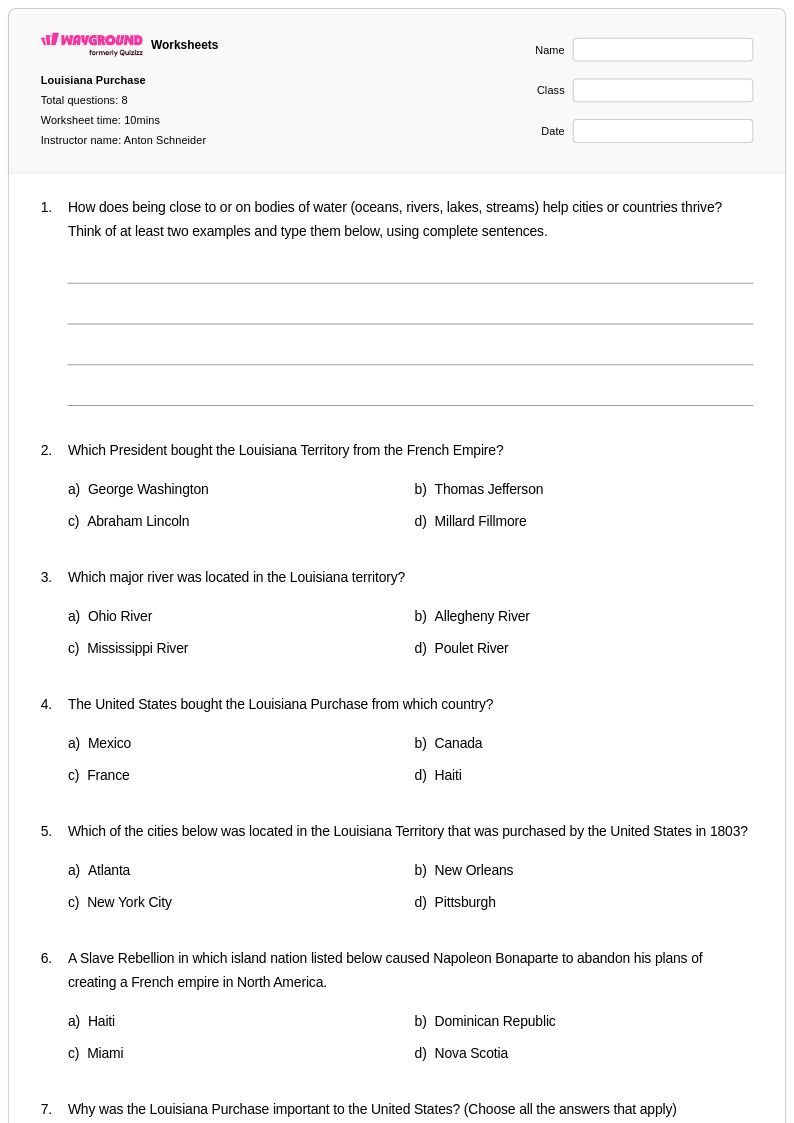
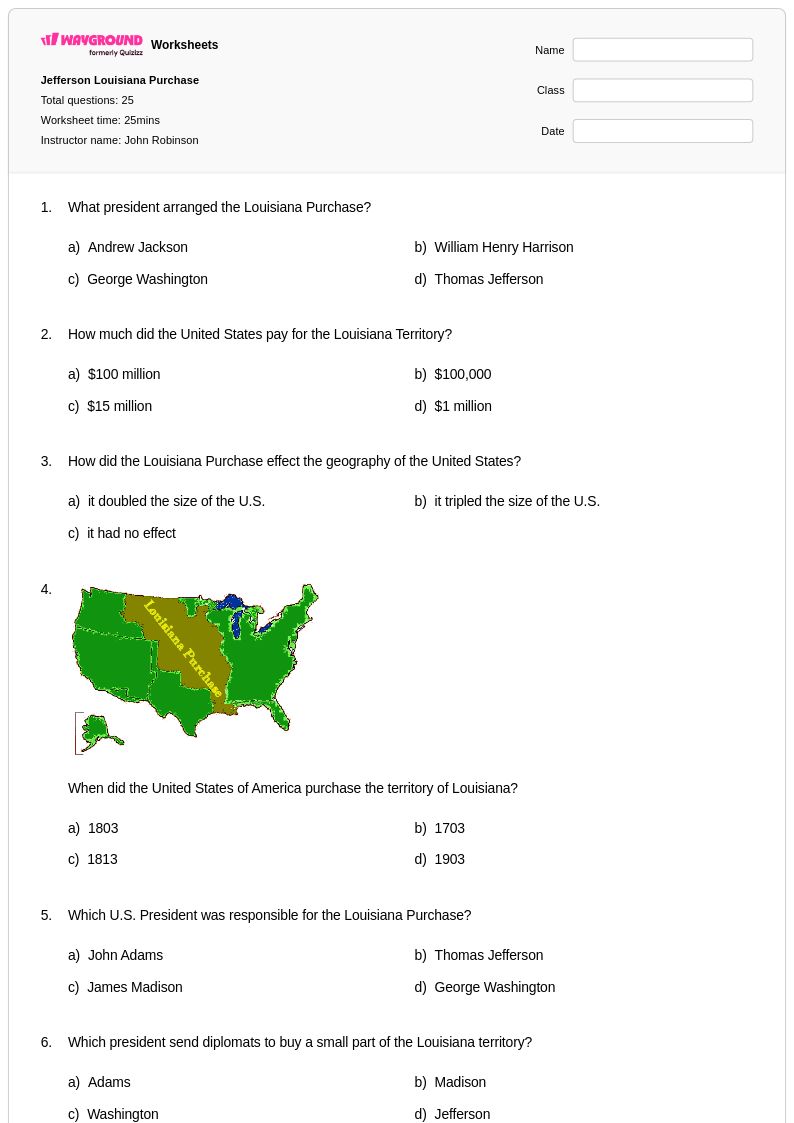
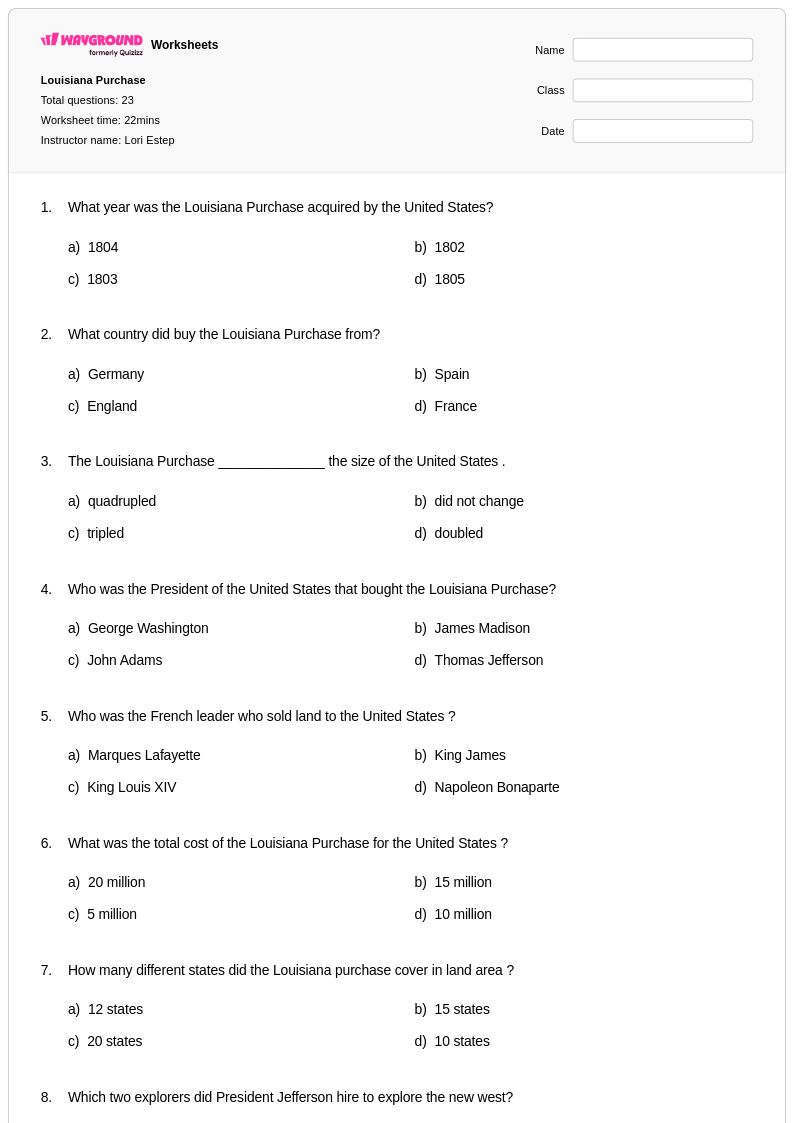
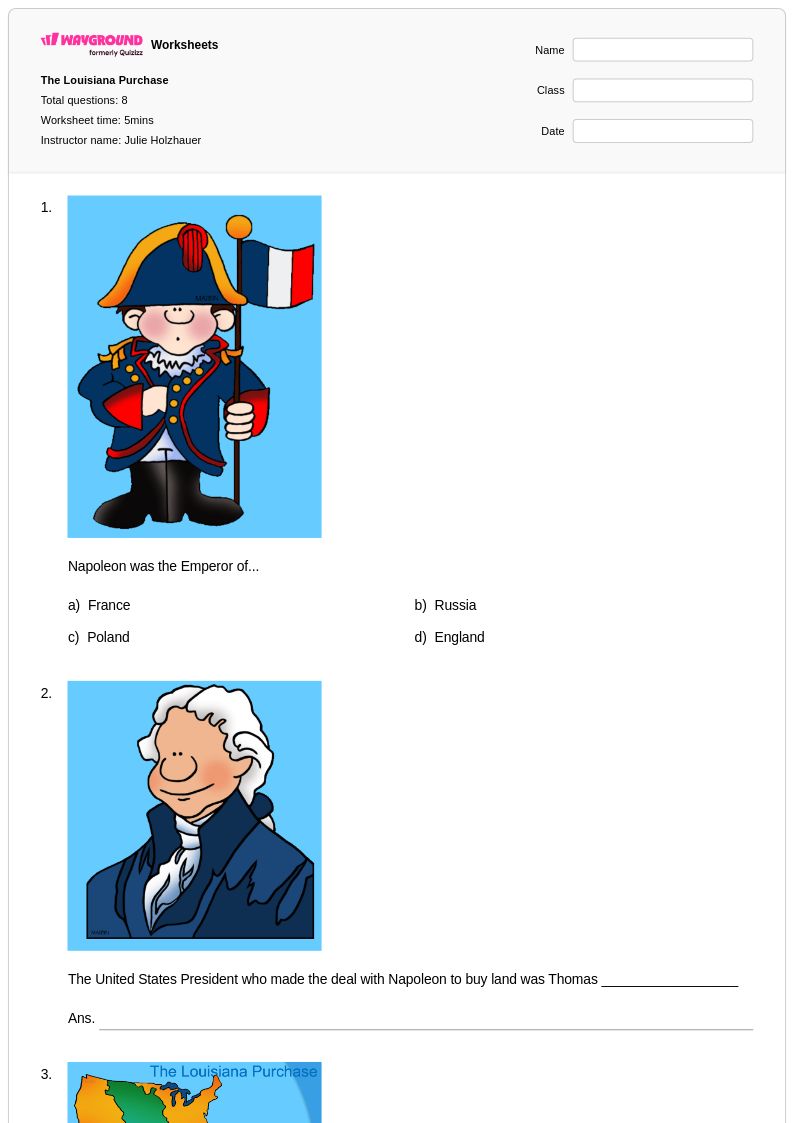
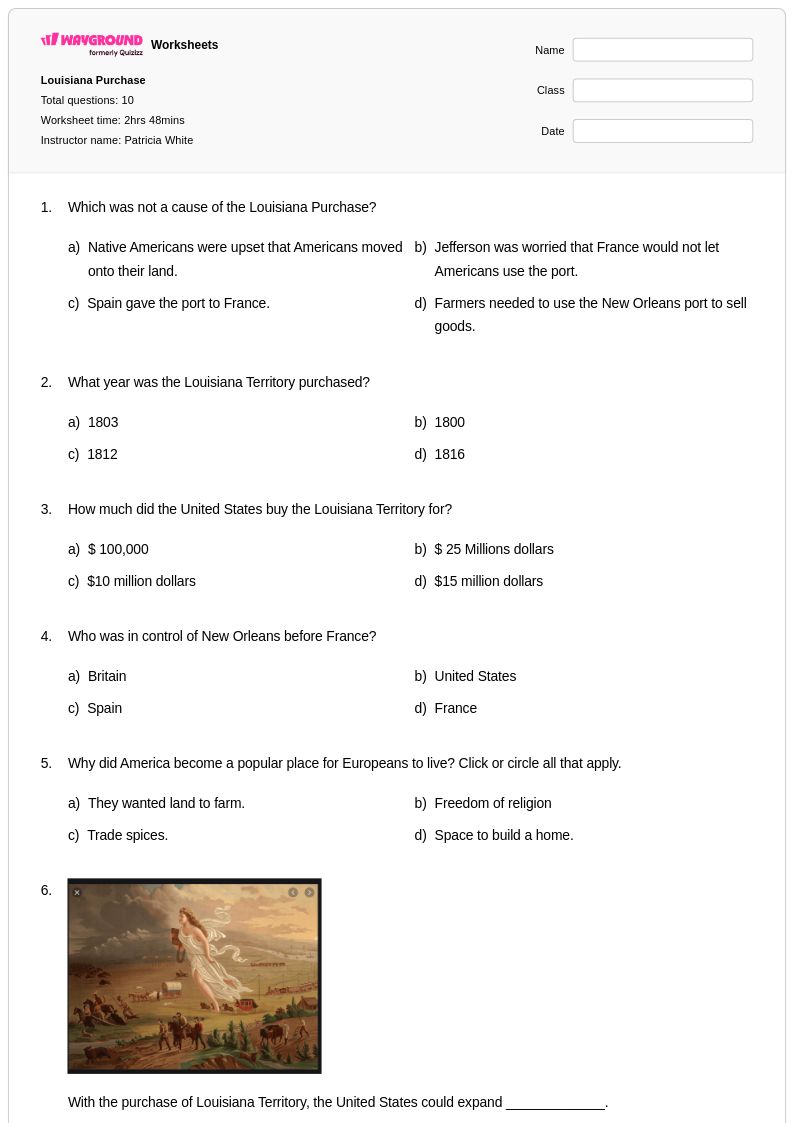
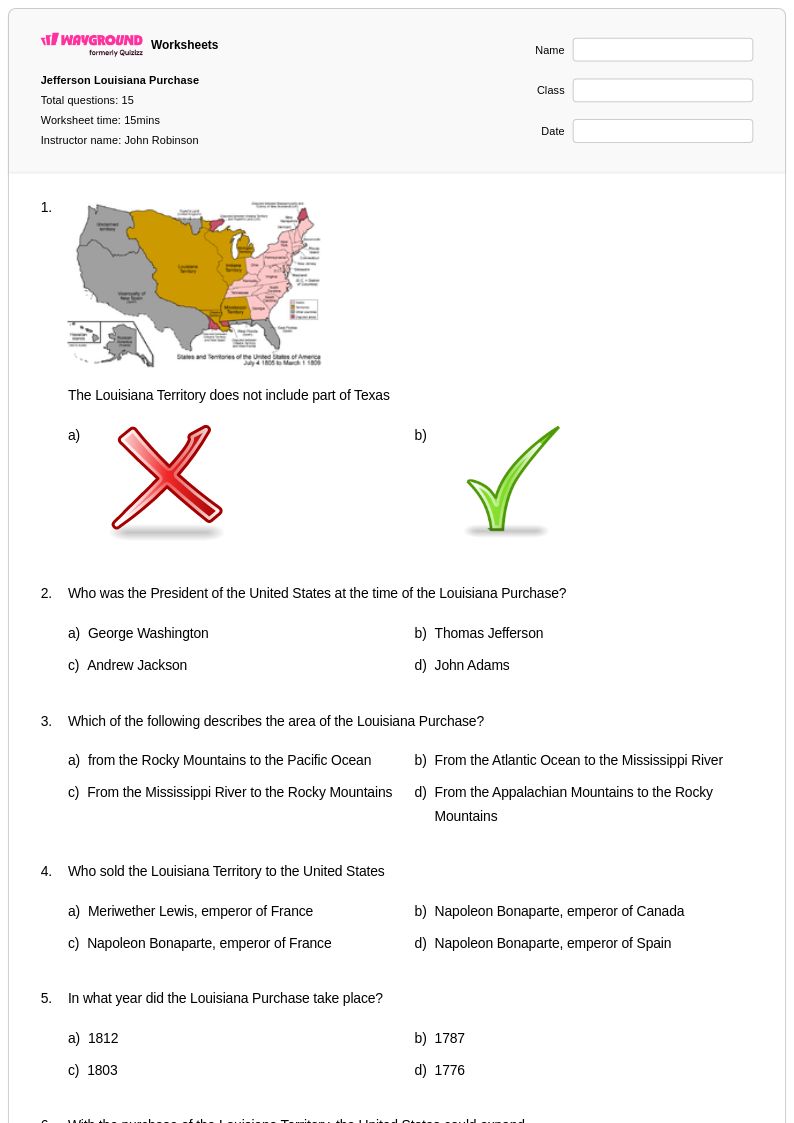
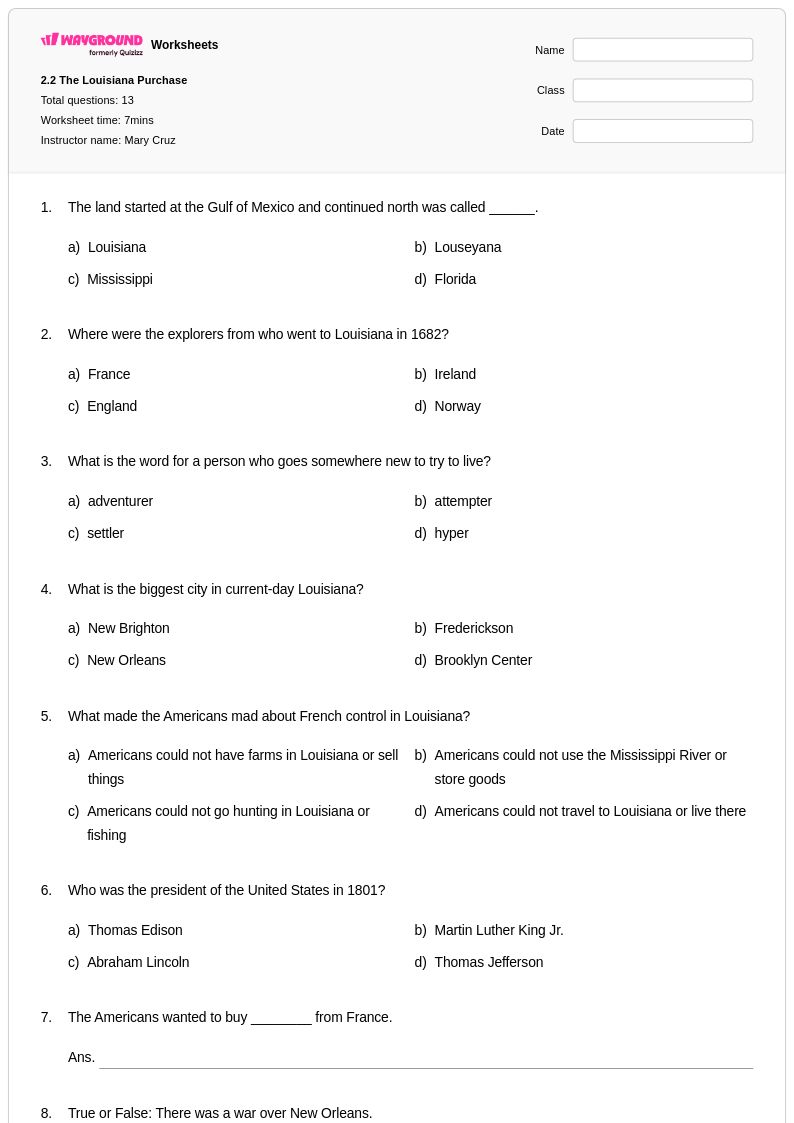
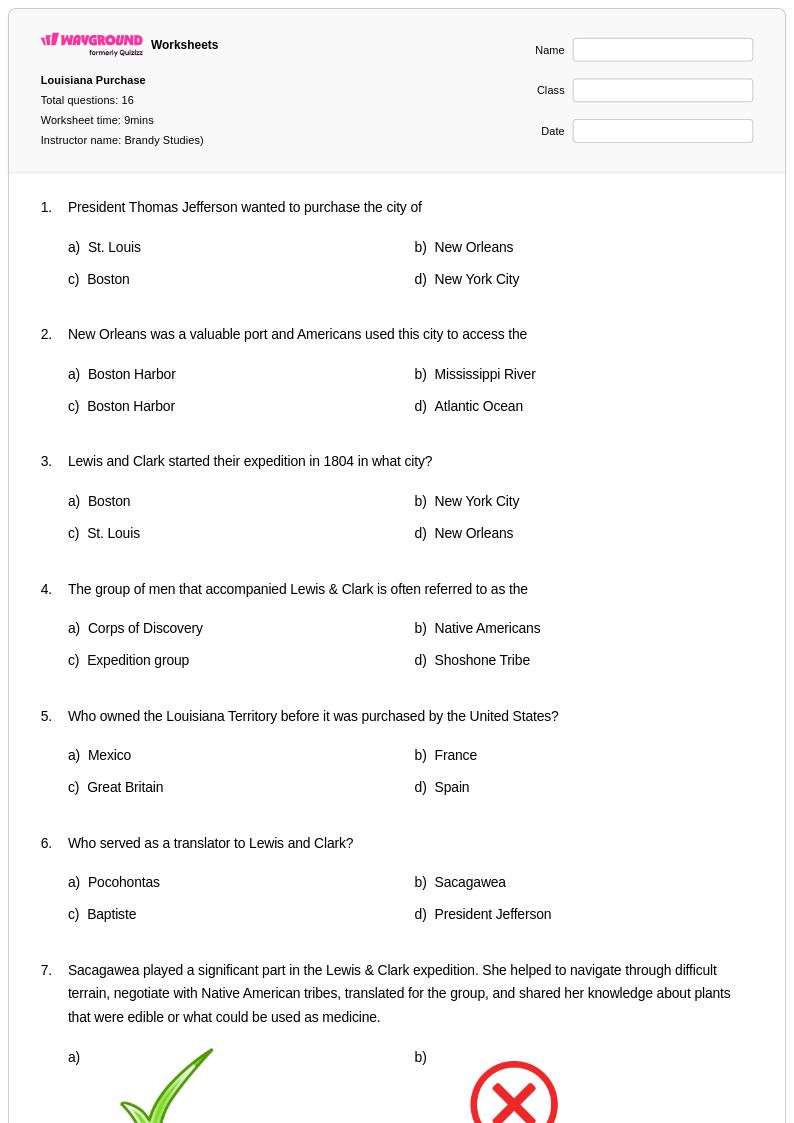
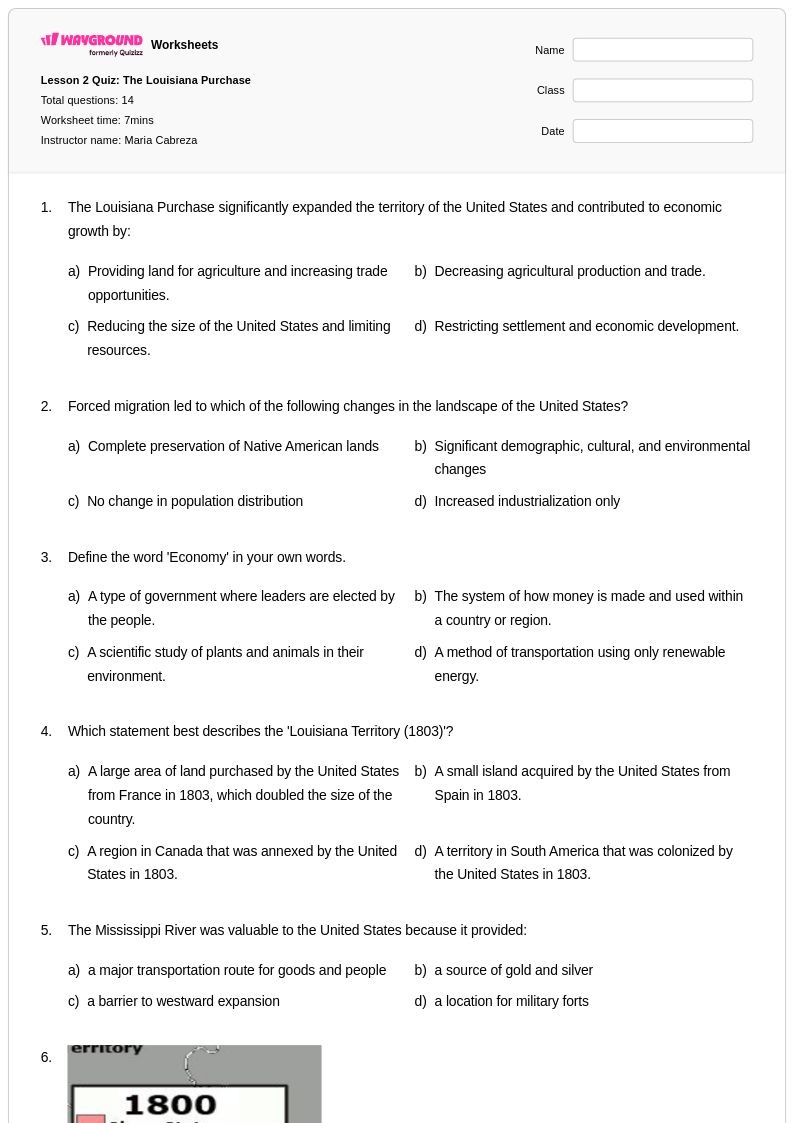
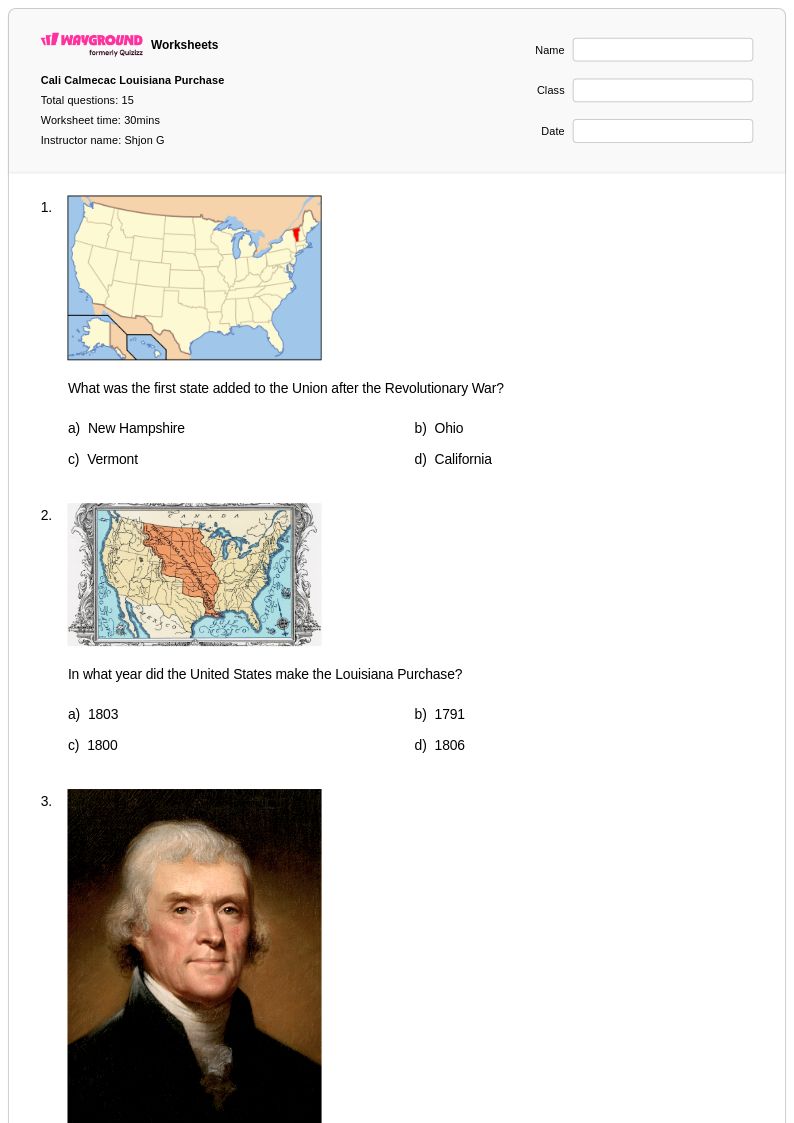
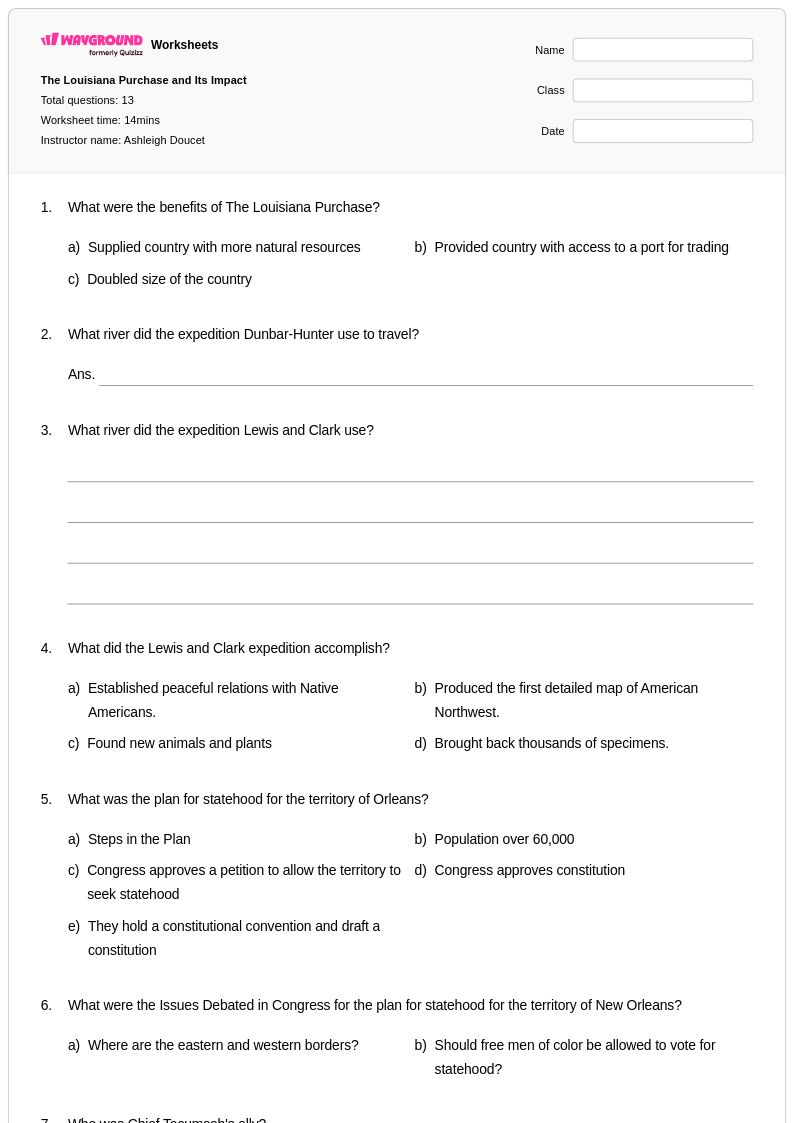
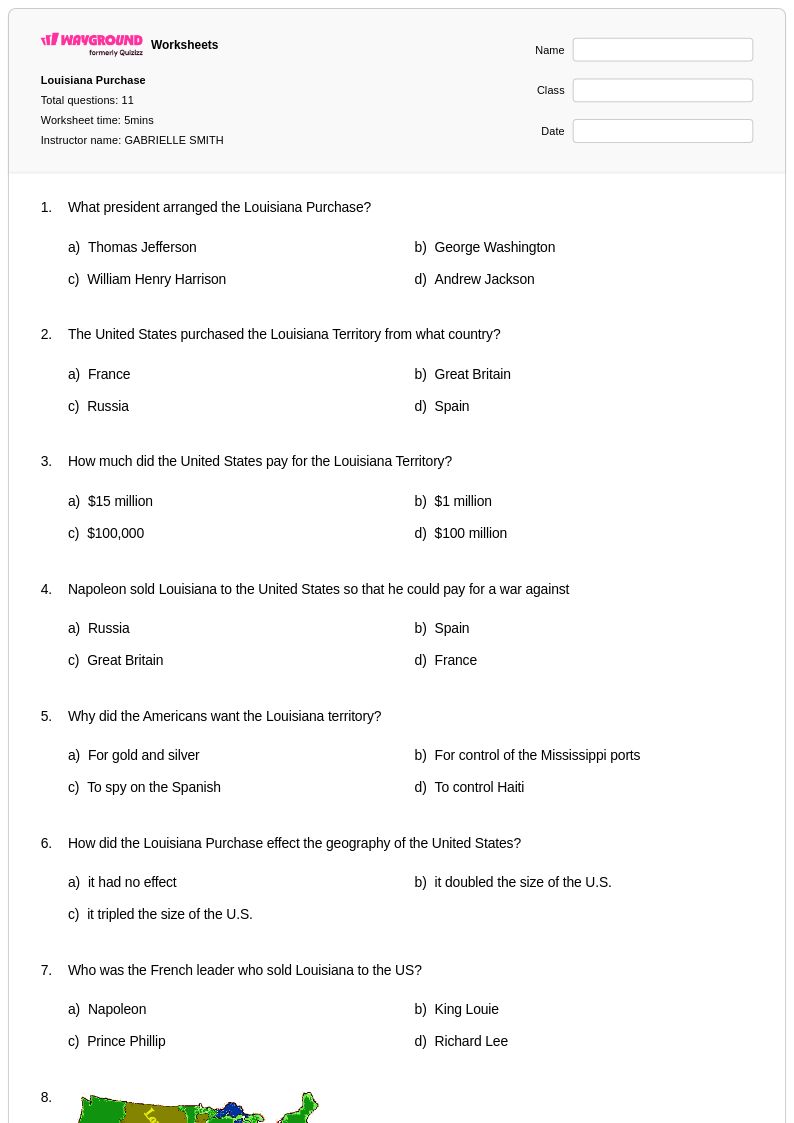
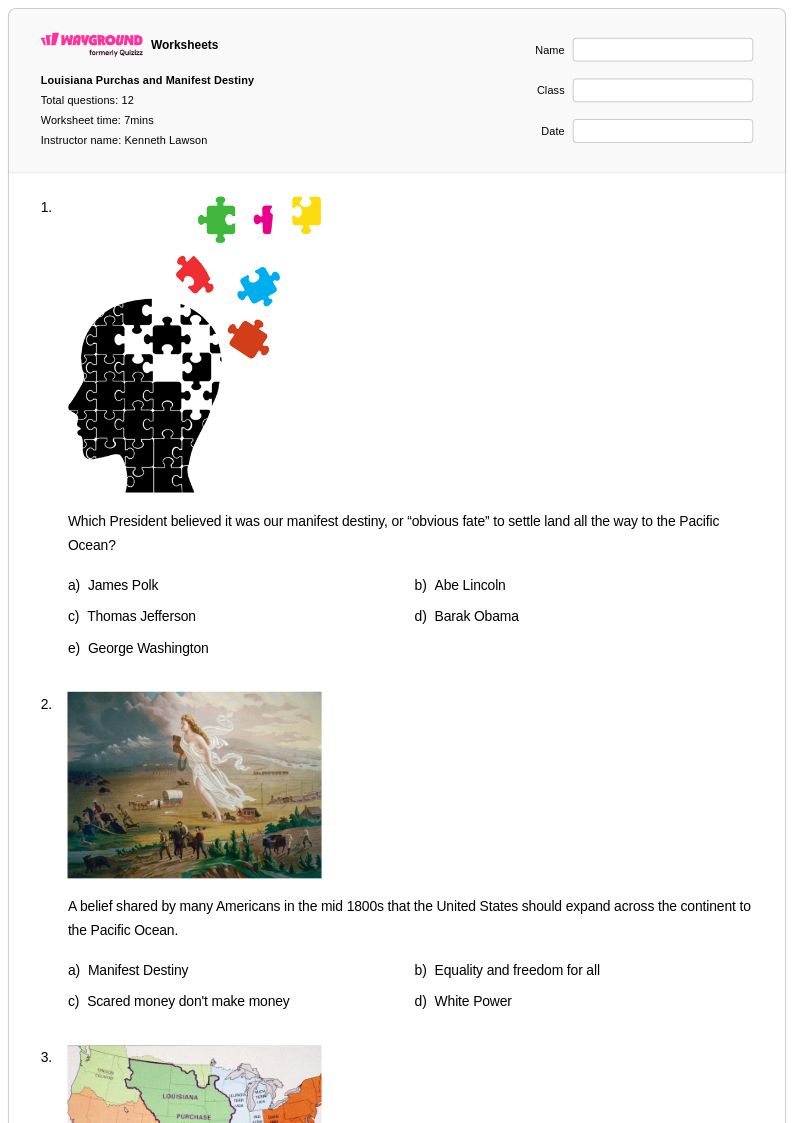
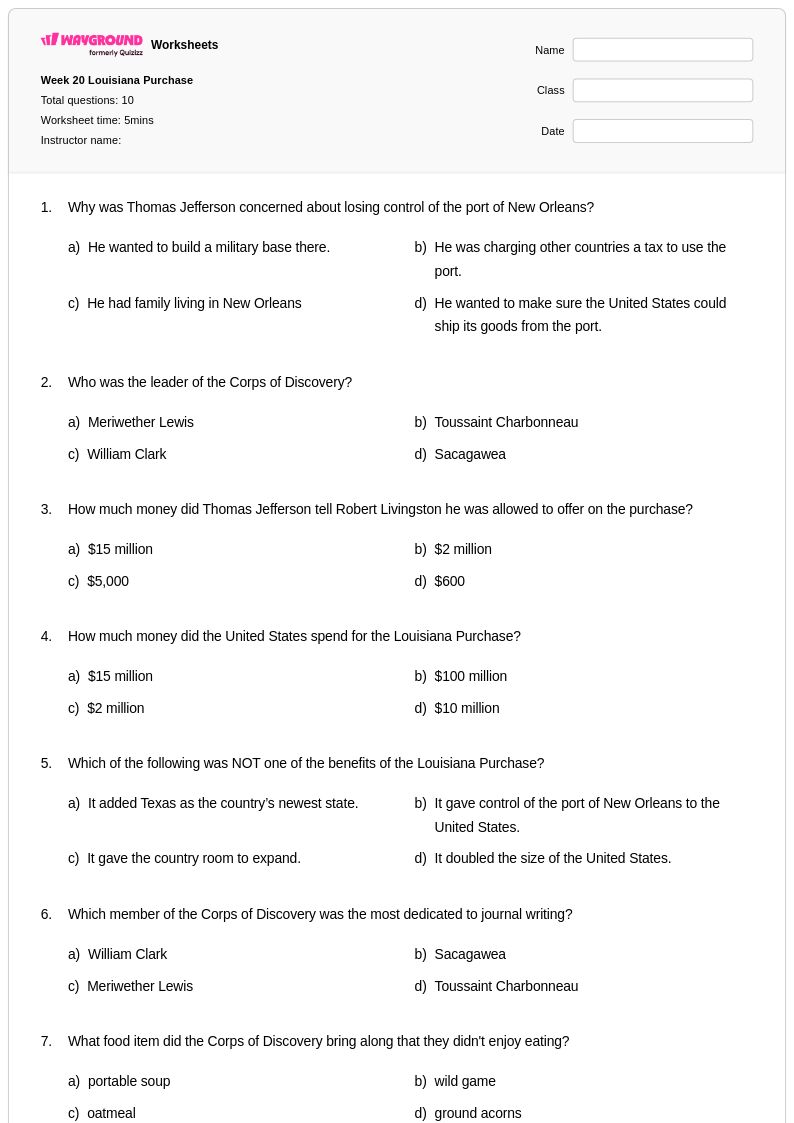
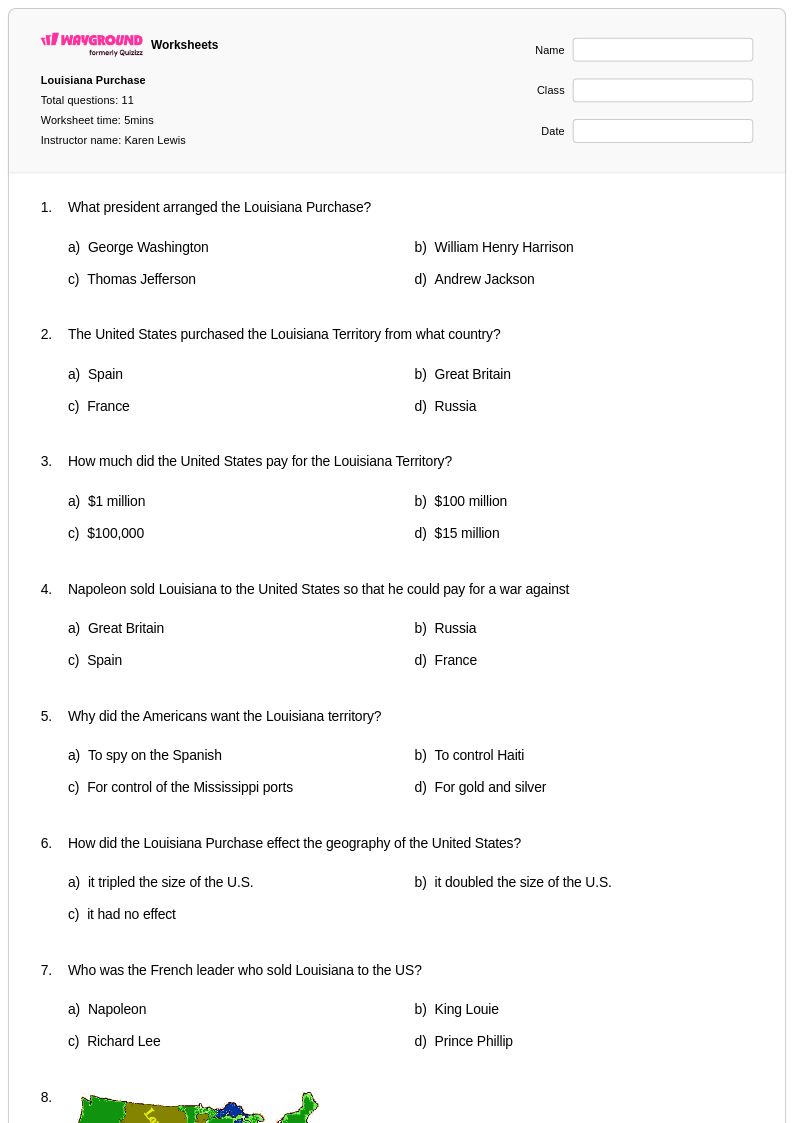
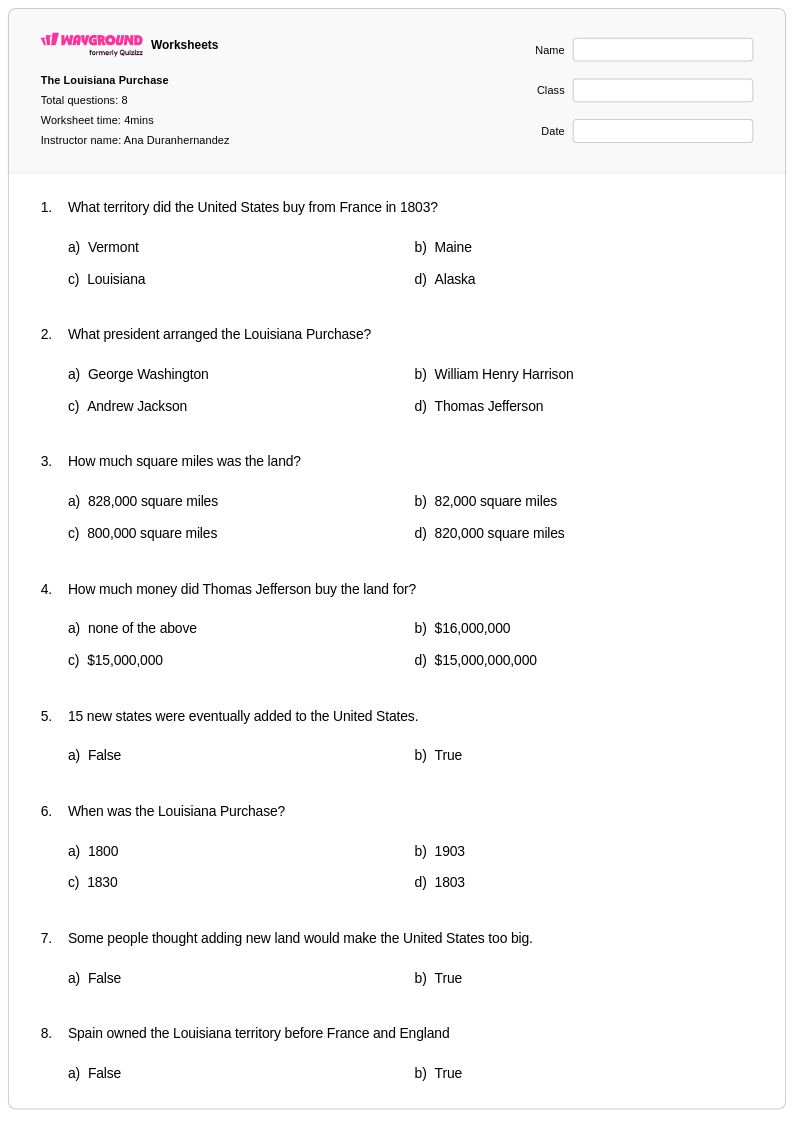
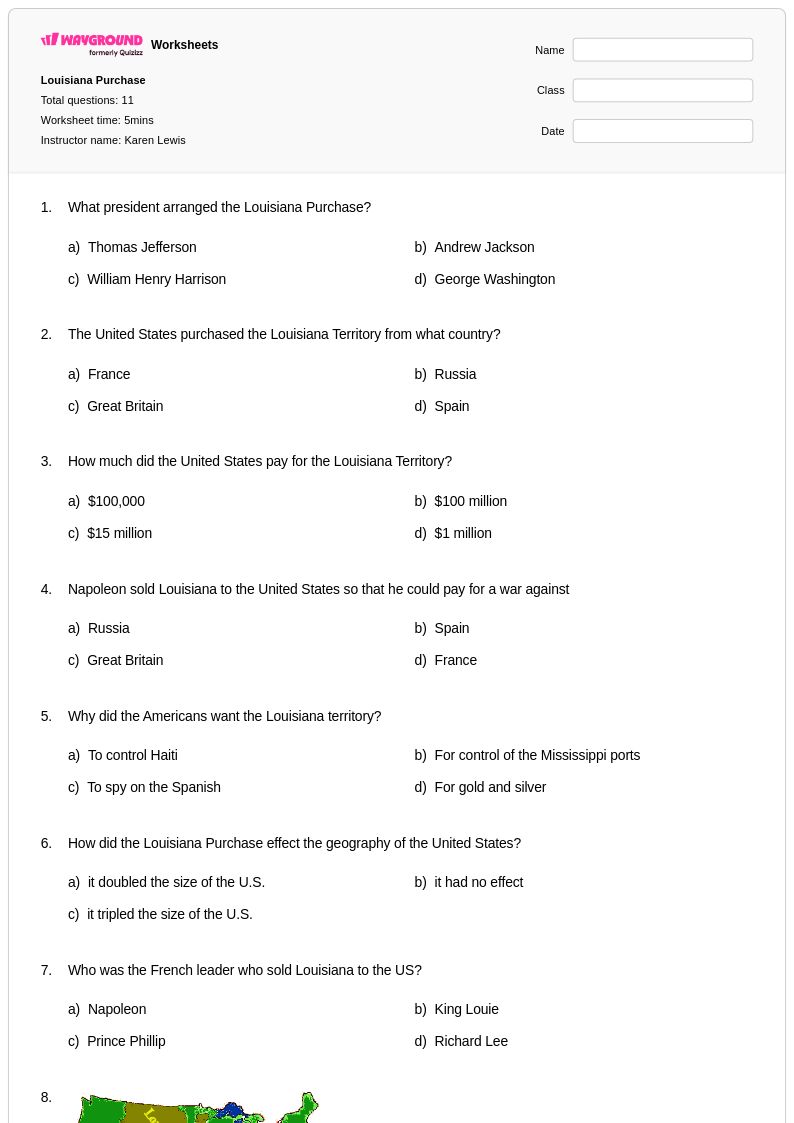
Louisiana Purchase worksheets for Year 5 students available through Wayground (formerly Quizizz) provide comprehensive coverage of this pivotal moment in American expansion history. These educational resources help students understand the complex negotiations between President Thomas Jefferson and France, the constitutional questions surrounding the purchase, and the massive territorial expansion that doubled the size of the United States in 1803. The worksheets strengthen critical thinking skills through practice problems that examine the economic, political, and geographical implications of acquiring 828,000 square miles of territory for $15 million. Students engage with primary source excerpts, map analysis activities, and comprehension exercises that reinforce key concepts about Manifest Destiny and westward expansion. Each printable worksheet includes an answer key and is available as a free pdf download, making them accessible for both classroom instruction and independent study.
Wayground (formerly Quizizz) supports Year 5 Social Studies teachers with an extensive collection of Louisiana Purchase worksheet resources created by millions of educators nationwide. The platform's robust search and filtering capabilities allow teachers to quickly locate materials that align with state standards and match their specific instructional needs for U.S. History units. Teachers can differentiate instruction by selecting from worksheets of varying complexity levels, customize existing materials to address individual student requirements, and access resources in both printable pdf formats and interactive digital versions. These comprehensive tools facilitate effective lesson planning by providing ready-to-use materials for skill practice, targeted remediation for struggling learners, and enrichment opportunities for advanced students studying early American territorial expansion and the constitutional powers of government.
FAQs
How do I teach the Louisiana Purchase to middle or high school students?
Teaching the Louisiana Purchase effectively means grounding students in three interconnected layers: the geopolitical pressure that pushed Napoleon to sell, Thomas Jefferson's constitutional dilemma over whether he had the authority to make the purchase, and the immediate consequences for westward expansion and Native American populations. Start with a map activity showing U.S. territory before and after 1803 to make the scale of the acquisition concrete, then introduce primary sources such as Jefferson's correspondence and the treaty text to build analytical skills. Connecting the purchase to the Lewis and Clark Expedition gives students a narrative thread that sustains engagement across multiple lessons.
What exercises help students practice key concepts from the Louisiana Purchase?
Effective practice exercises for the Louisiana Purchase include map labeling tasks that require students to identify territorial boundaries before and after 1803, document analysis activities using excerpts from the treaty or Jefferson's letters, and calculation problems based on the $15 million purchase price relative to the land acquired. Having students trace the Lewis and Clark Expedition route reinforces geography skills while connecting the purchase to its exploratory aftermath. Evaluating arguments for and against the constitutional validity of the purchase develops higher-order thinking beyond simple recall.
What misconceptions do students commonly have about the Louisiana Purchase?
One of the most persistent misconceptions is that the United States simply "bought" unoccupied land, when in reality the territory was home to dozens of Native nations whose lives were profoundly disrupted by the transaction. Students also frequently misunderstand Jefferson's constitutional concern, assuming the purchase was straightforward, when Jefferson himself doubted he had the presidential authority to acquire foreign territory without a constitutional amendment. Another common error is conflating the Louisiana Territory with the modern state of Louisiana, not recognizing that the purchase encompassed land that became roughly 15 present-day states.
How can I use Louisiana Purchase worksheets to differentiate instruction in my classroom?
Louisiana Purchase worksheets can be layered by complexity to support differentiated instruction: struggling learners benefit from structured tasks focused on key figures, dates, and boundary maps, while advanced students can engage with primary source analysis and constitutional debate prompts. On Wayground, teachers can apply accommodations at the individual student level, including read-aloud support for students who need audio assistance, reduced answer choices to lower cognitive load, and extended time settings, all configurable without other students being notified. These settings are reusable across future sessions, making ongoing differentiation efficient rather than time-consuming.
How do I use Wayground's Louisiana Purchase worksheets in my class?
Wayground's Louisiana Purchase worksheets are available as printable PDFs for traditional classroom distribution and in digital formats for technology-integrated or hybrid learning environments, giving teachers flexibility in how they deploy the materials. Teachers can also host the worksheets as a live or self-paced quiz directly on Wayground, which allows for real-time progress monitoring and automatic grading. Each worksheet includes a complete answer key, so the resources support both initial instruction and independent student review without requiring additional teacher preparation.
How do I assess student understanding of the Louisiana Purchase beyond multiple-choice questions?
Beyond multiple-choice recall, strong assessment of the Louisiana Purchase should ask students to explain Jefferson's constitutional reasoning in their own words, evaluate whether the purchase was justified given its impact on Native populations, or compare the territorial boundaries before and after 1803 using annotated maps. Short constructed-response prompts, such as asking students to argue for or against Jefferson's decision from a Federalist perspective, reveal depth of understanding that fact-based questions cannot. Primary source analysis tasks, where students annotate a treaty excerpt or a Jefferson letter, are particularly effective for measuring critical thinking at higher grade levels.