Free Printable Making Inferences in Fiction Worksheets for Year 8
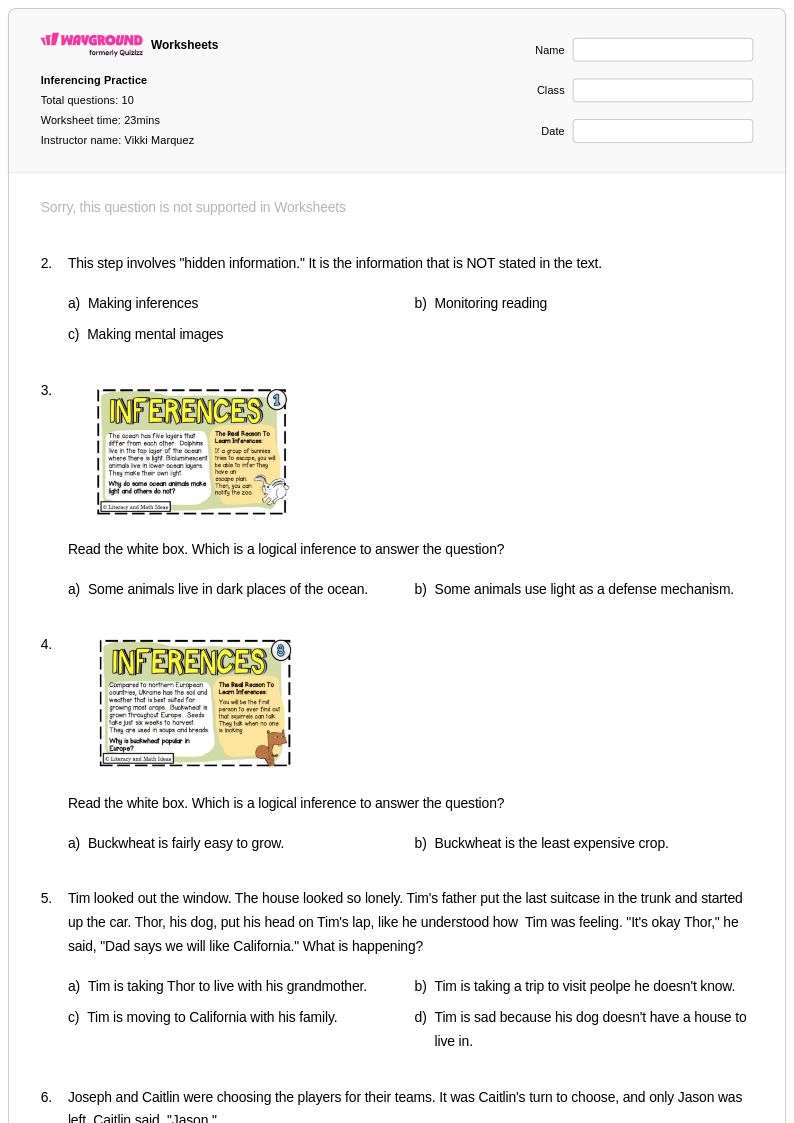
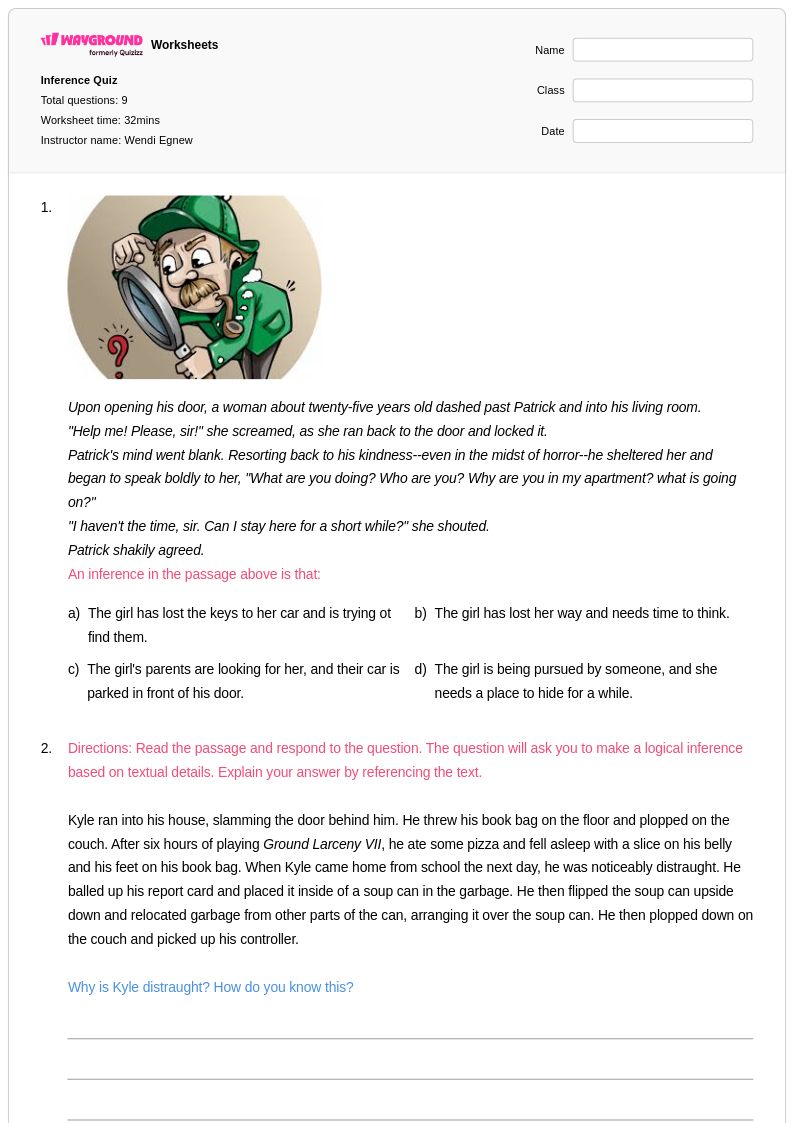
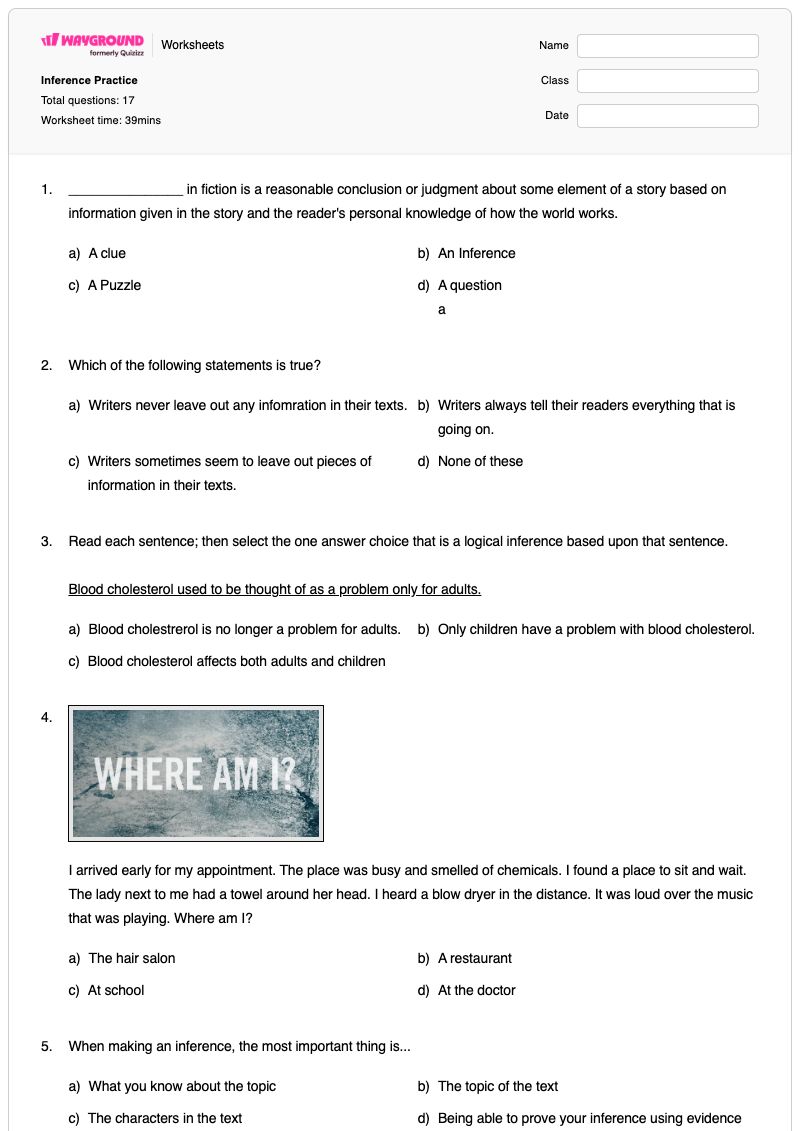
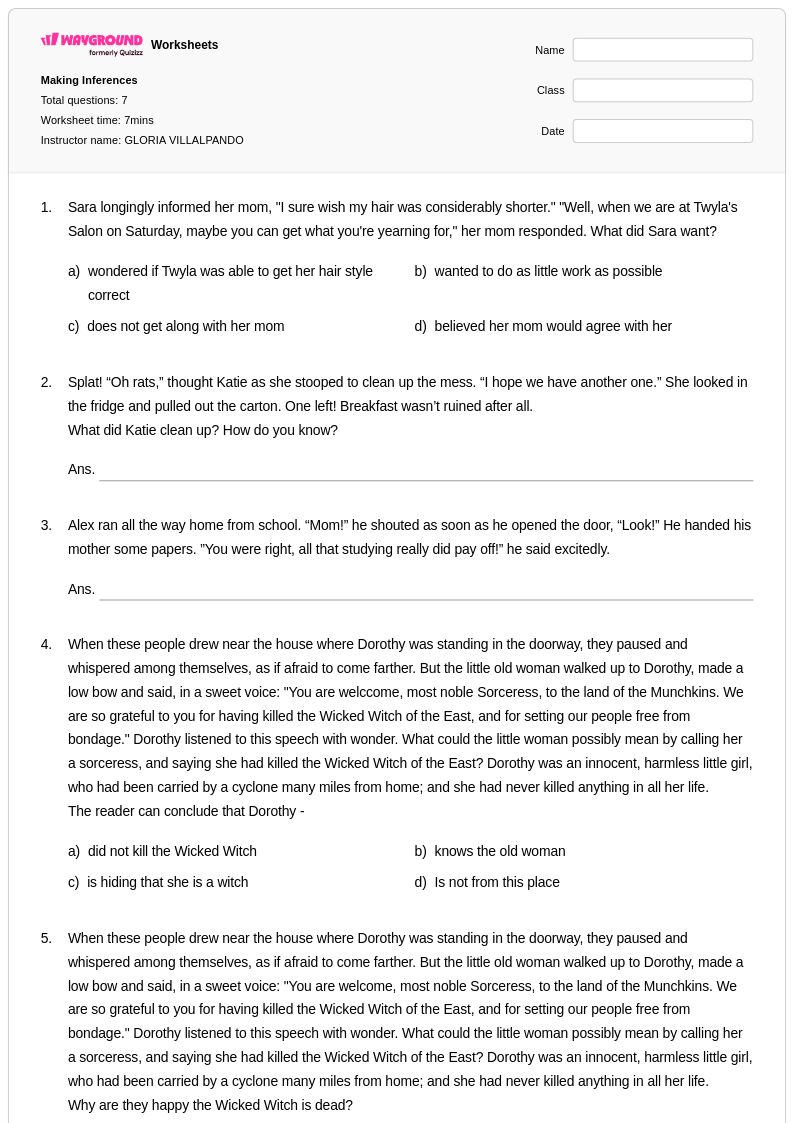
Enhance Year 8 students' reading comprehension with Wayground's free printable worksheets focused on making inferences in fiction, featuring engaging practice problems and comprehensive answer keys in PDF format.
Explore printable Making Inferences in Fiction worksheets for Year 8
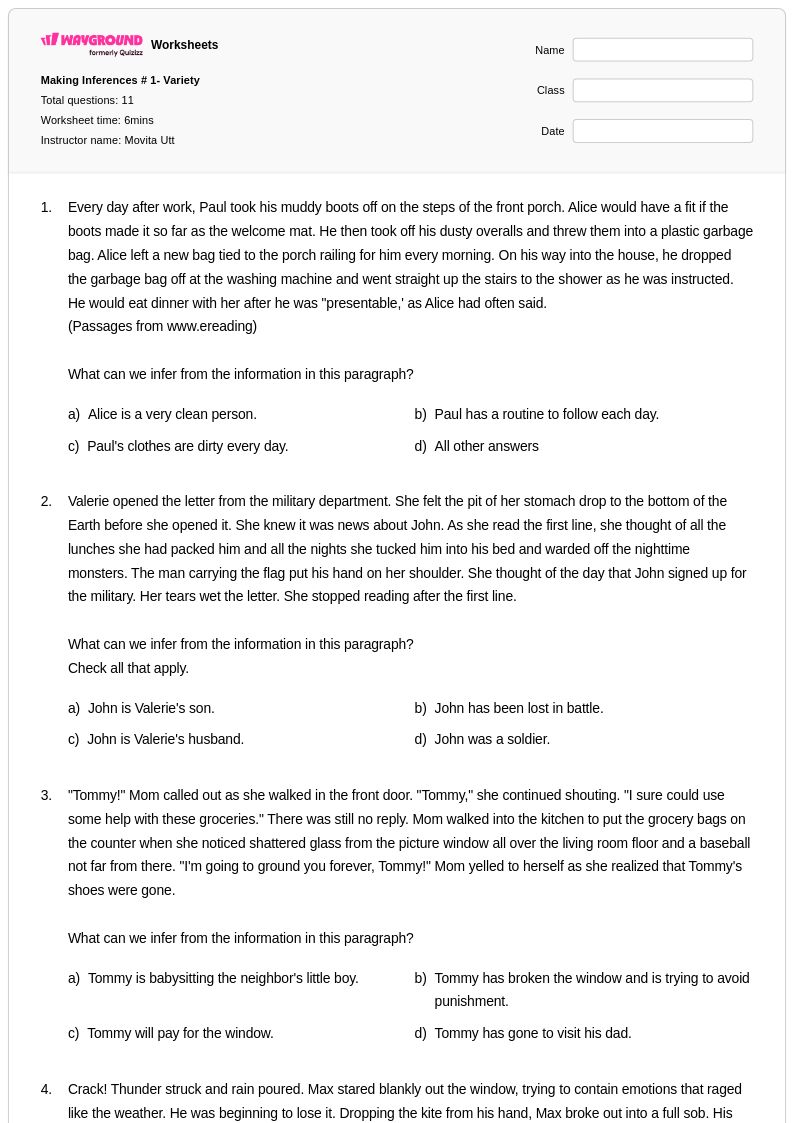
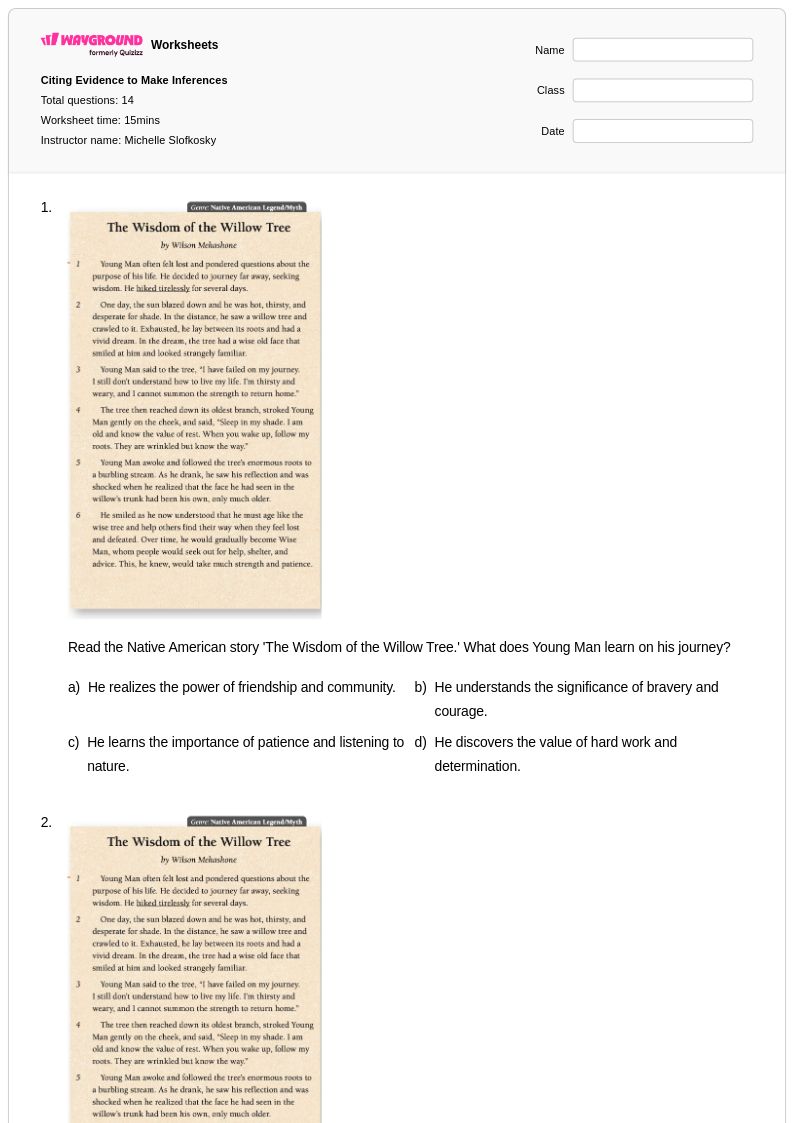
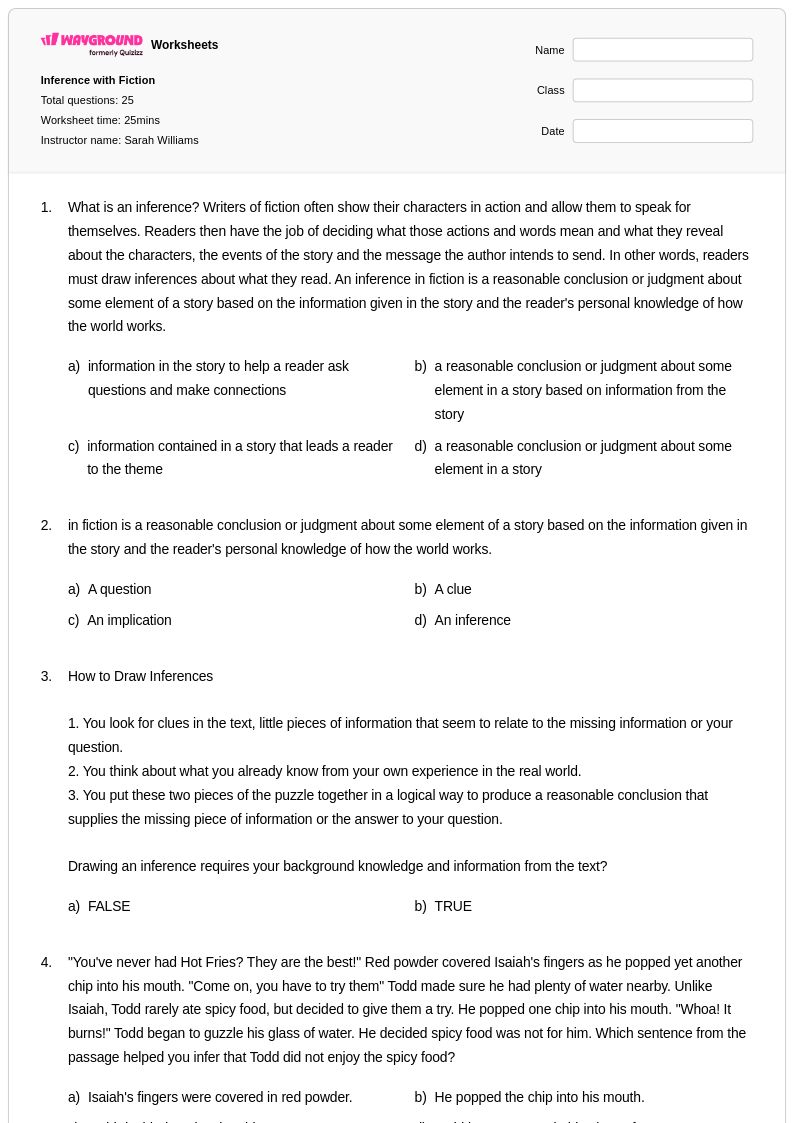
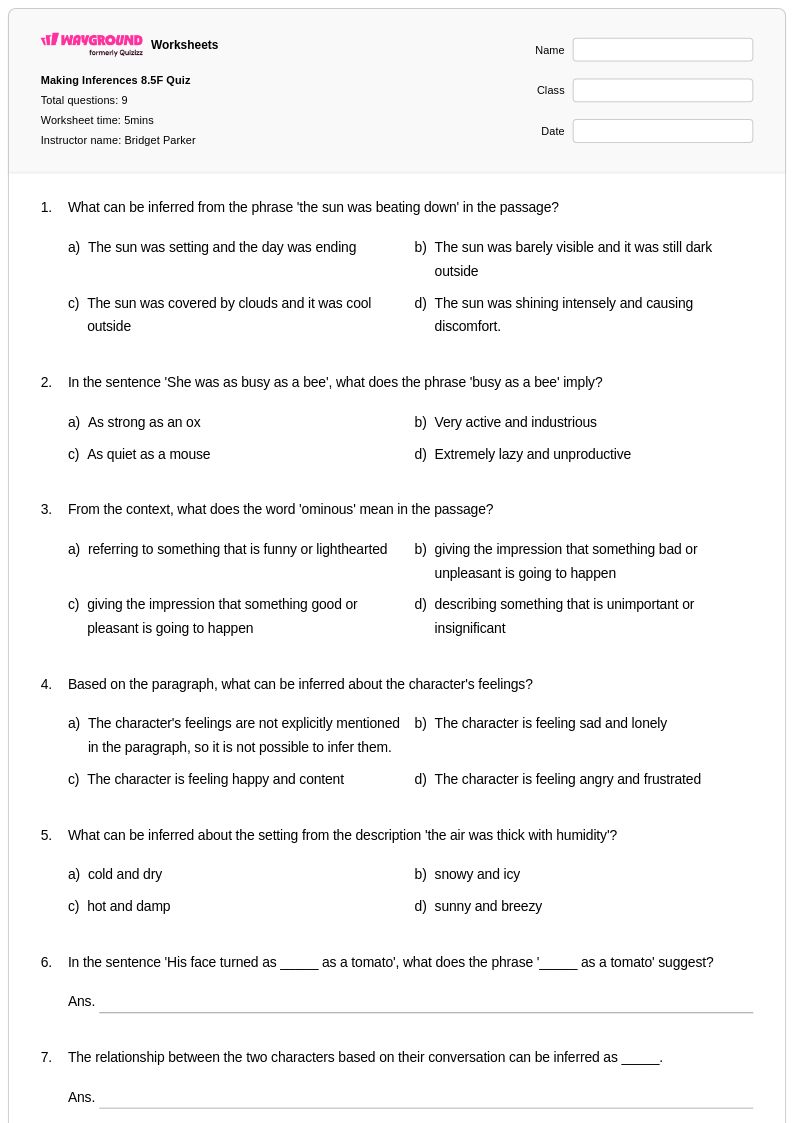
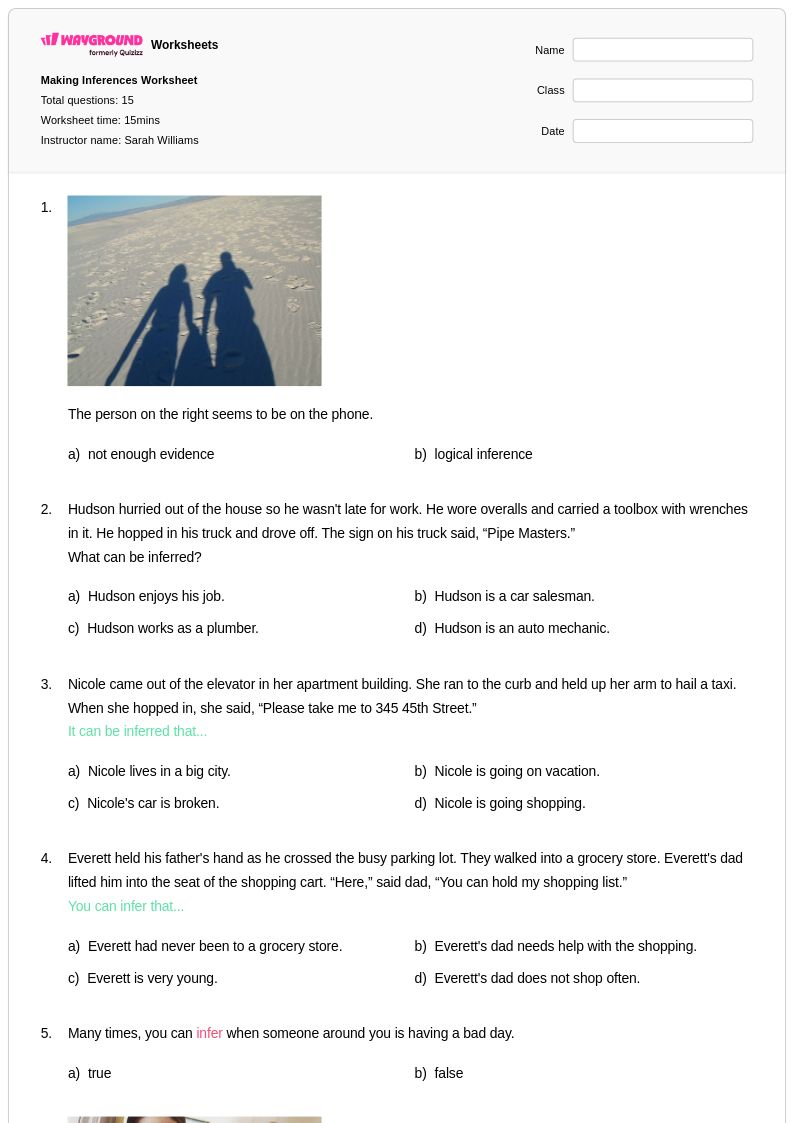
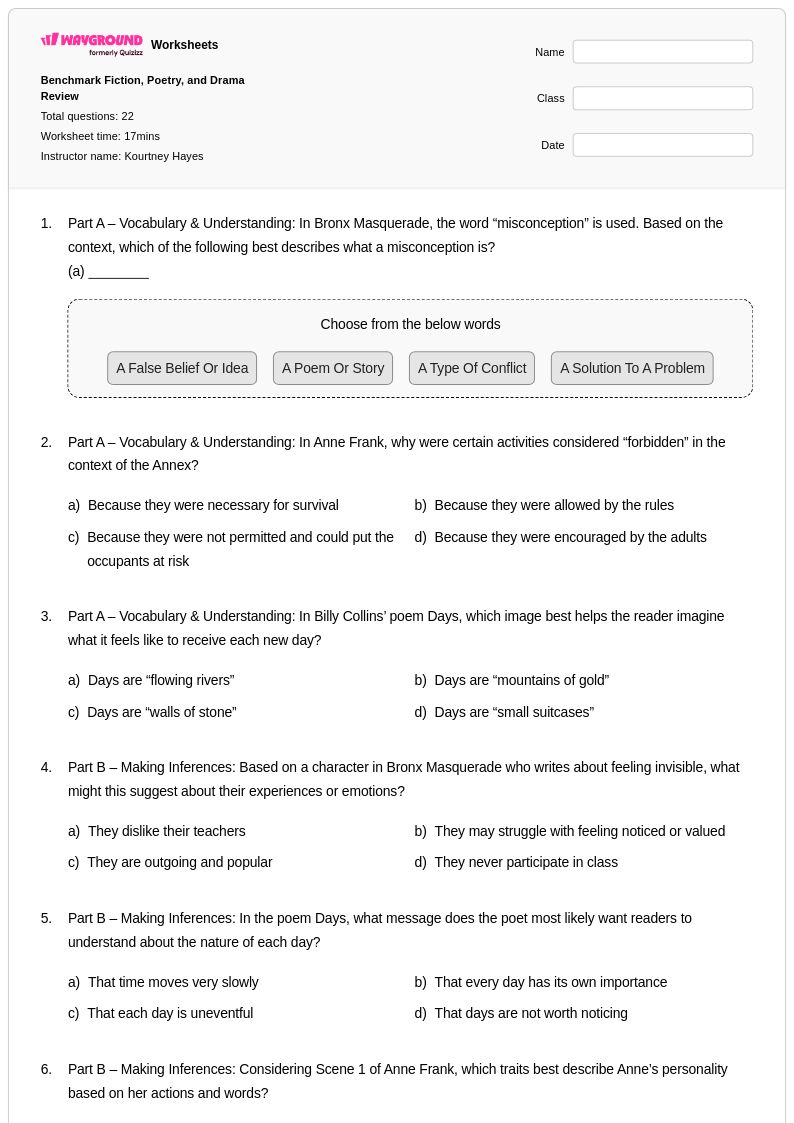
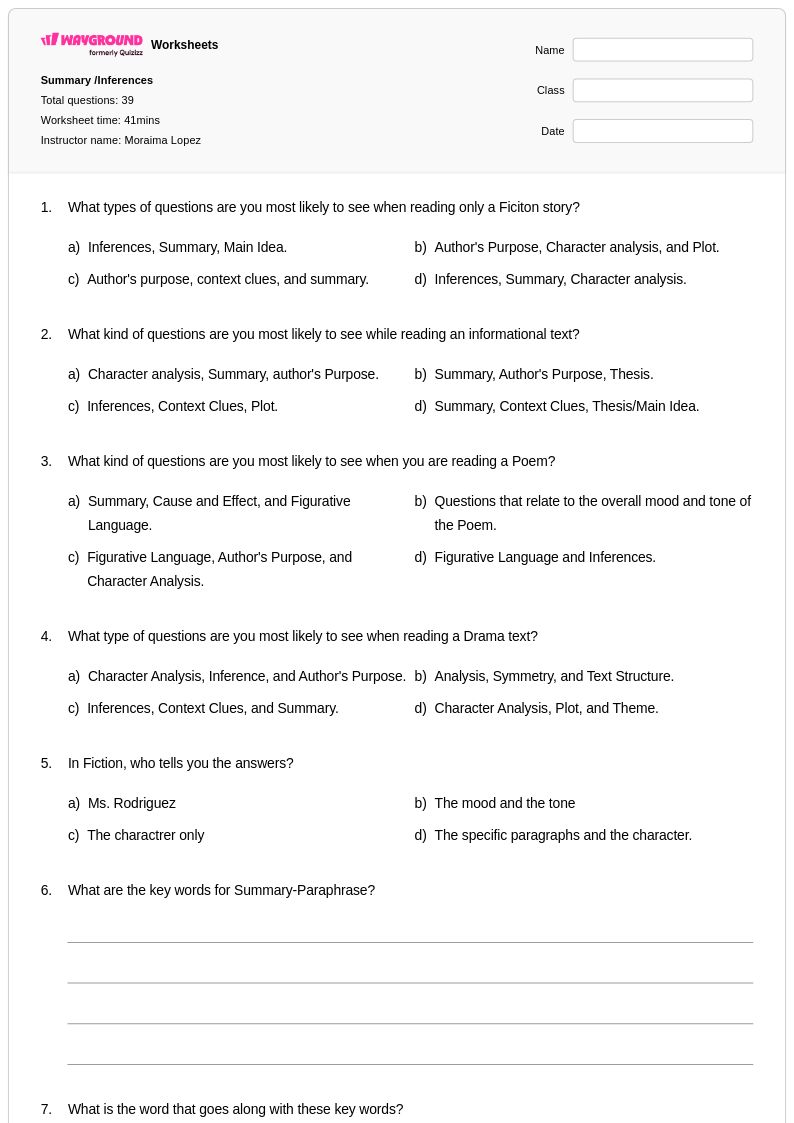
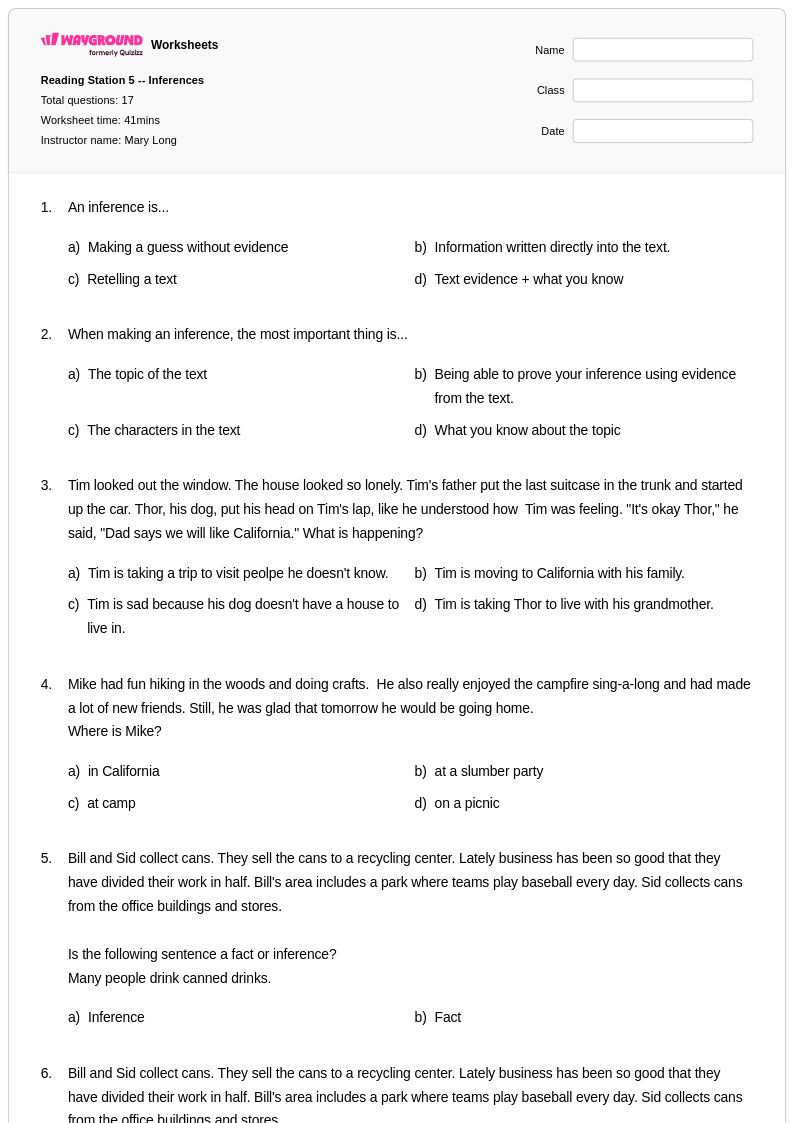
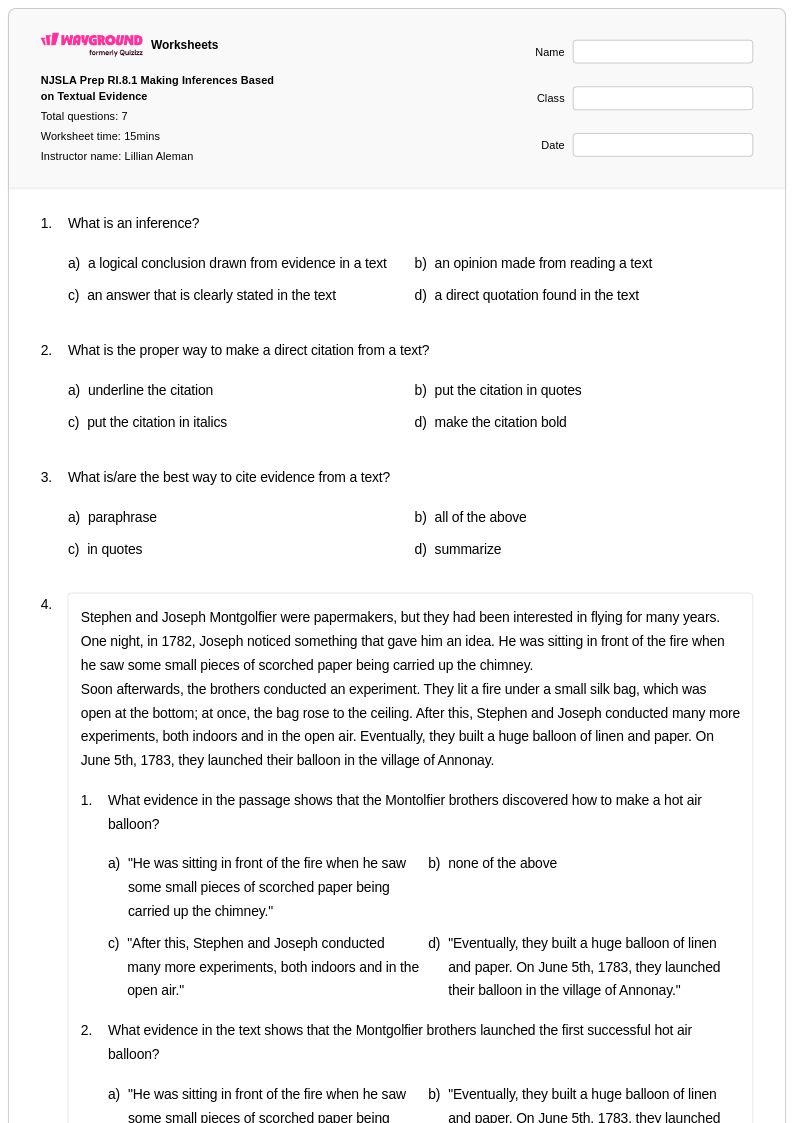
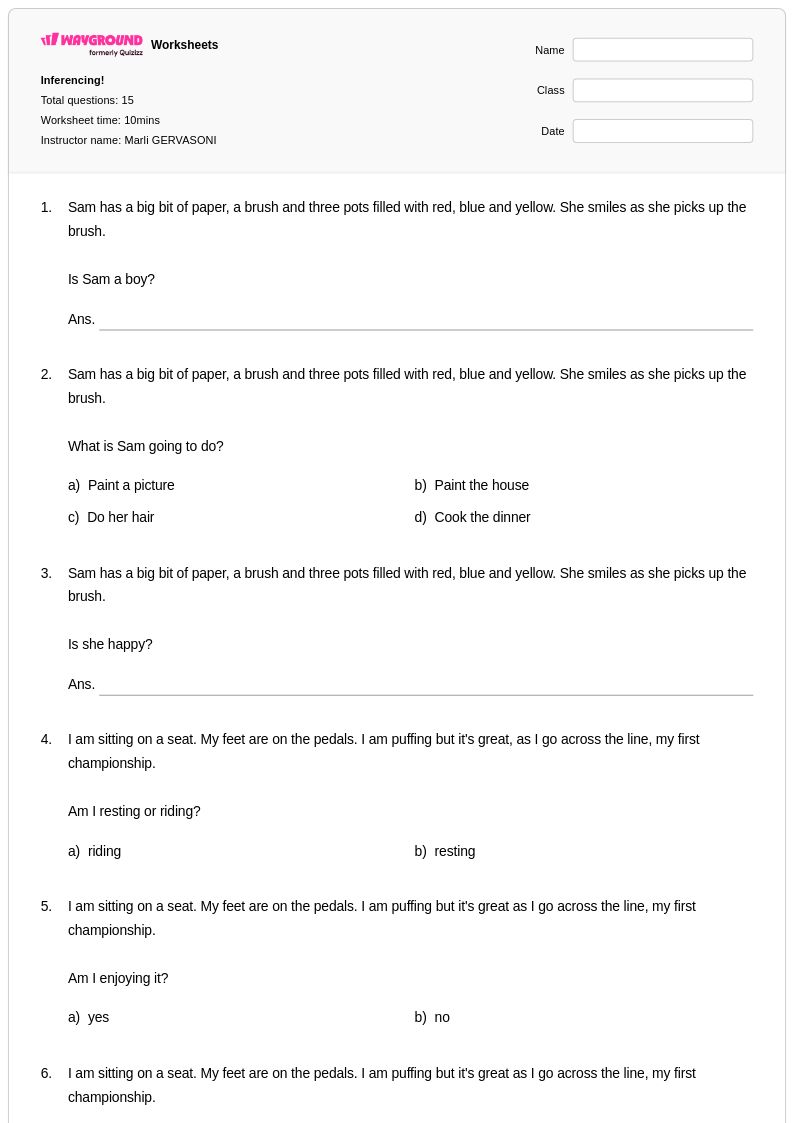
Making inferences in fiction worksheets for Year 8 students available through Wayground (formerly Quizizz) provide comprehensive practice in one of literature's most essential analytical skills. These carefully crafted resources help eighth-grade students develop their ability to read between the lines, using textual evidence and context clues to understand implied meanings, character motivations, and underlying themes in fictional works. The worksheets feature diverse fiction excerpts ranging from classic literature to contemporary stories, challenging students to make logical deductions about plot developments, character relationships, and symbolic meanings that authors embed within their narratives. Each printable resource includes practice problems that progressively build complexity, moving from basic character inference exercises to more sophisticated analyses of mood, tone, and thematic implications, with comprehensive answer keys that explain the reasoning behind correct responses. These free pdf materials strengthen critical thinking abilities while preparing students for advanced literary analysis required in high school coursework.
Wayground (formerly Quizizz) empowers educators with an extensive collection of teacher-created worksheets specifically designed for making inferences in fiction instruction at the Year 8 level. The platform's millions of resources undergo rigorous quality standards and align with key literacy benchmarks, ensuring that teachers can quickly locate materials that match their curriculum requirements and student needs. Advanced search and filtering capabilities allow educators to identify worksheets by difficulty level, fiction genre, or specific inference skills such as predicting outcomes, analyzing character traits, or interpreting figurative language. The platform's differentiation tools enable teachers to customize existing worksheets or create modified versions for diverse learners, while flexible formatting options provide both printable pdf versions for traditional classroom use and digital formats for interactive learning environments. These comprehensive resources support effective lesson planning by offering ready-to-use materials for skill introduction, guided practice, independent work, remediation for struggling readers, and enrichment activities for advanced students ready to tackle more complex literary analysis challenges.
FAQs
How do I teach students to make inferences in fiction?
Start by modeling the process explicitly using a short passage, thinking aloud as you identify what the text says, what you already know, and what conclusion those two pieces of evidence support together. Use sentence frames like 'The text says... and I know... so I can infer...' to give students a replicable structure before asking them to apply it independently. Gradually release responsibility by moving from shared reading to guided practice with fiction excerpts before assigning independent inference tasks.
What are the most effective exercises for practicing making inferences in fiction?
Short fiction passages with targeted follow-up questions work best because they give students enough context to draw conclusions without overwhelming them. Exercises that require students to cite specific textual evidence alongside their inference force the habit of grounding conclusions in the text rather than relying on guesswork. Varying the inference type across character motivation, plot prediction, and theme helps students recognize that inference applies across all dimensions of a story.
What mistakes do students commonly make when making inferences in fiction?
The most common error is confusing an inference with a personal opinion or wild guess, producing conclusions that have no support in the text. Students also frequently conflate literal comprehension with inference, restating what the text directly says rather than reading between the lines. Another frequent mistake is citing evidence that is tangentially related but does not actually support the stated inference, which points to a gap in understanding how evidence and conclusion must be logically connected.
How do I help struggling readers make inferences in fiction?
Struggling readers often lack the background knowledge or vocabulary to fill in gaps left by the author, so pre-teaching key context before reading reduces the cognitive load of inference-making. Pairing these students with shorter, simpler fiction passages and using graphic organizers that separate 'what the text says' from 'what I know' helps scaffold the process visually. On Wayground, teachers can enable the Read Aloud accommodation so students hear the fiction passage read to them, and reduce answer choices to limit the number of competing options a student must evaluate at once.
How do I use Wayground's making inferences in fiction worksheets in my classroom?
Wayground's making inferences in fiction worksheets are available as printable PDFs for traditional paper-based instruction and in digital formats for technology-integrated classrooms, giving teachers flexibility in how they assign and collect student work. Teachers can also host any worksheet directly as a quiz on Wayground, allowing students to complete the activity online while the platform automatically grades responses and surfaces data on which inference questions students found most challenging. The included answer keys explain the reasoning behind correct inferences, making them equally useful for whole-class review, small-group remediation, or independent study.
How do making inferences in fiction worksheets support reading comprehension growth?
Inference is the mechanism through which readers construct meaning beyond the literal text, so regular structured practice with fiction passages directly strengthens overall comprehension. Worksheets that require evidence-based inference push students to read more carefully and analytically rather than skimming for surface details. Over time, this habit of connecting textual clues to reasoned conclusions transfers to standardized assessments, literary analysis writing, and independent reading.