Free Printable Maps and Globes Worksheets for Year 2
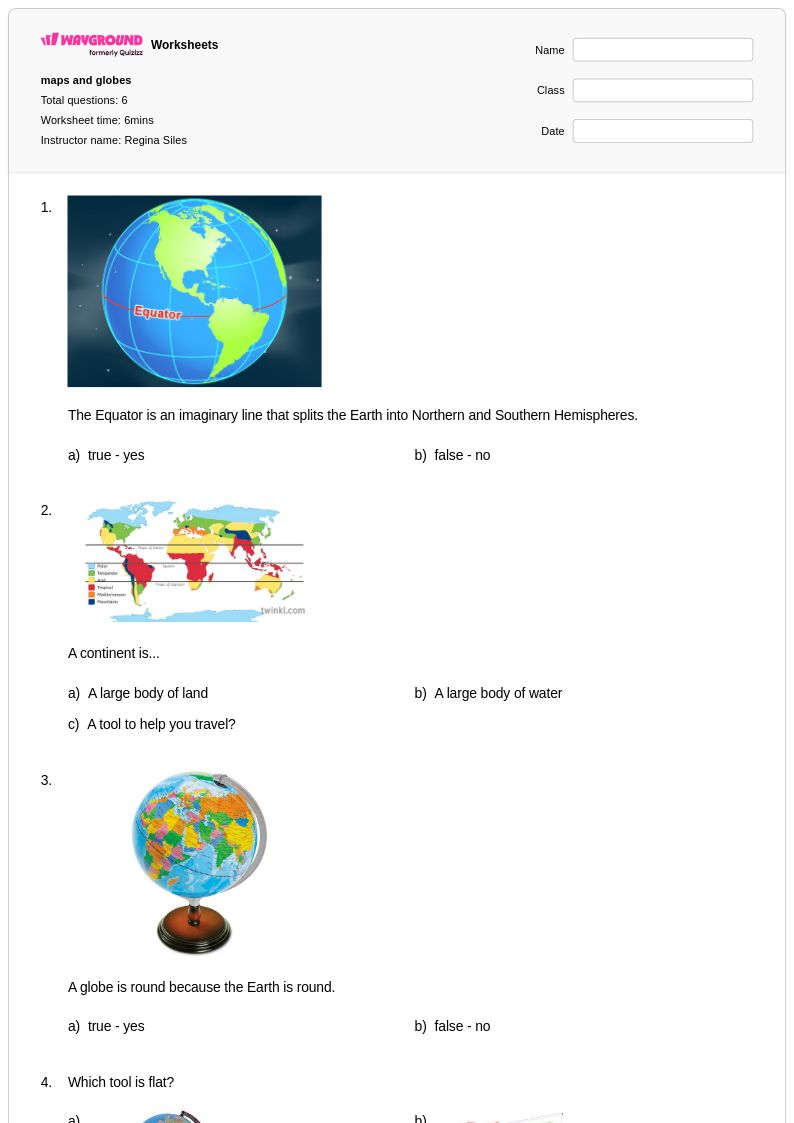
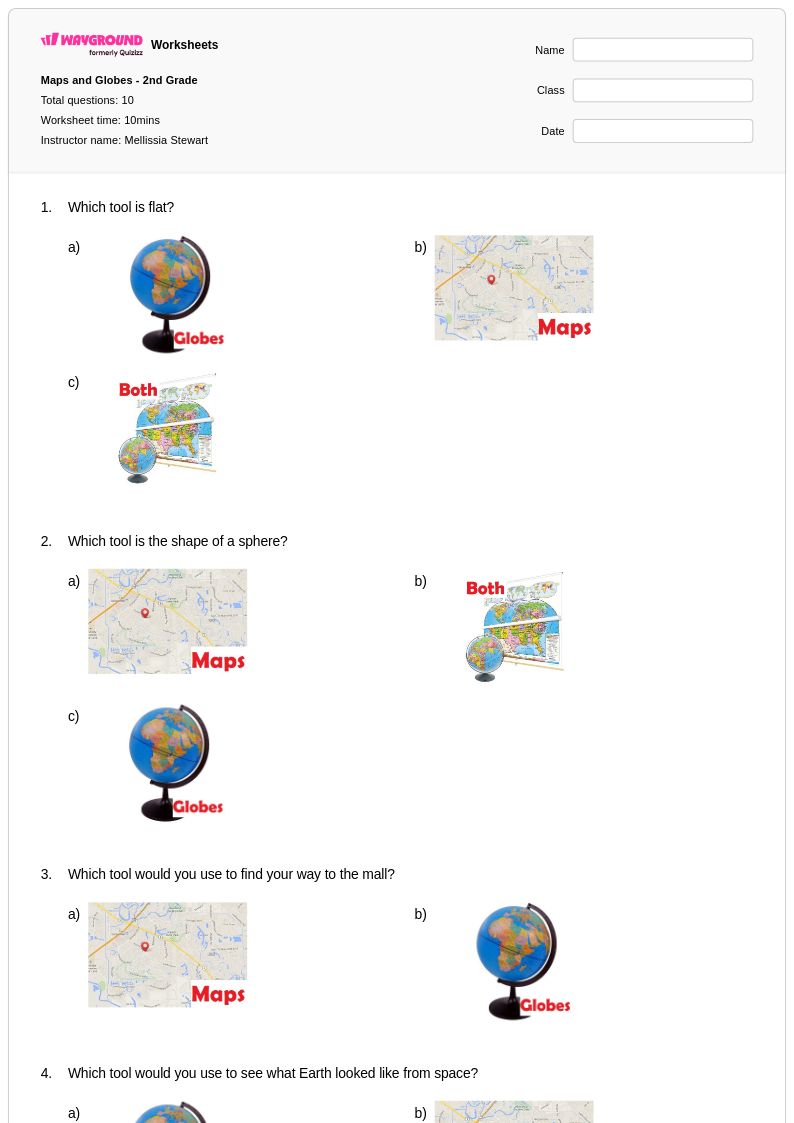
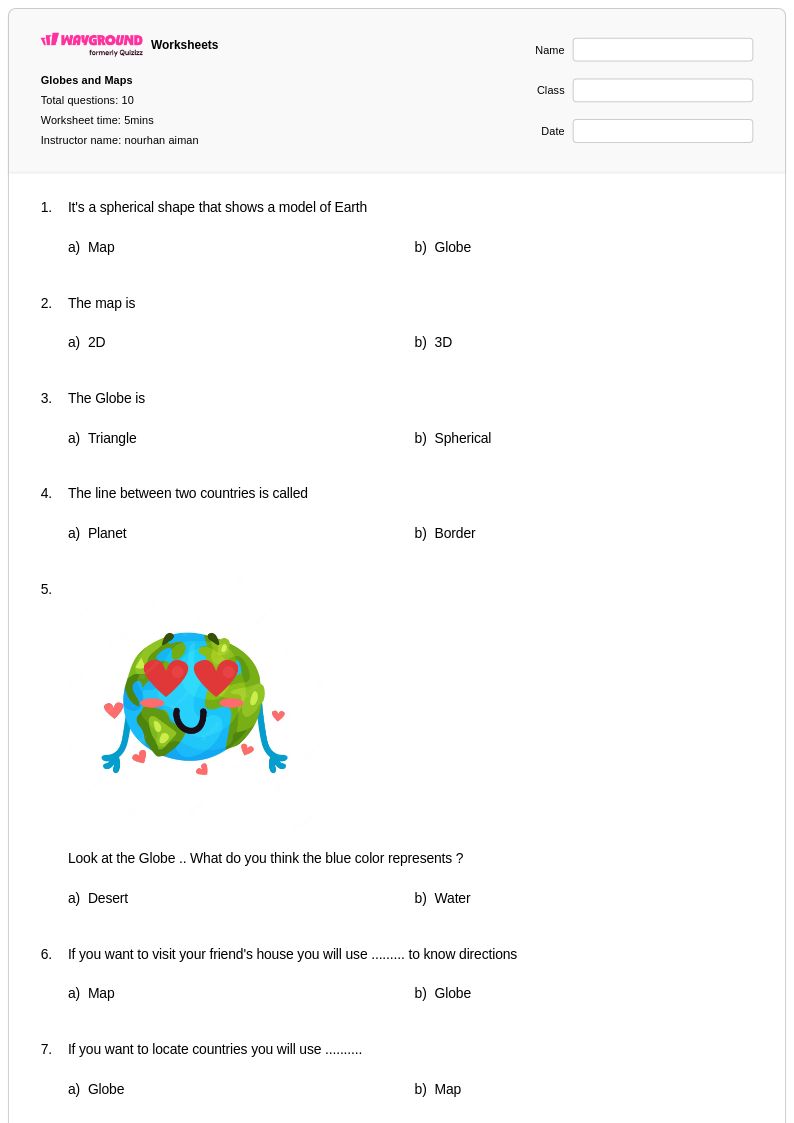
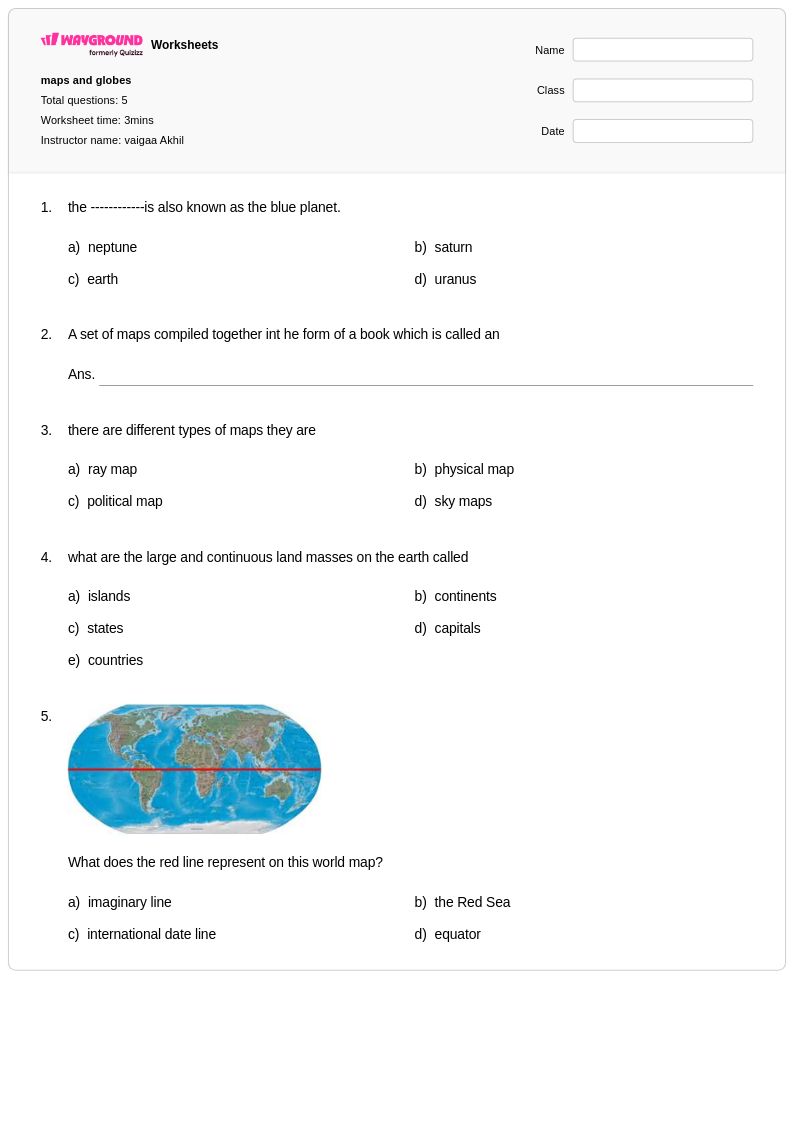
Year 2 maps and globes worksheets from Wayground help young learners explore basic geography concepts through engaging printables, practice problems, and free PDF resources with answer keys.
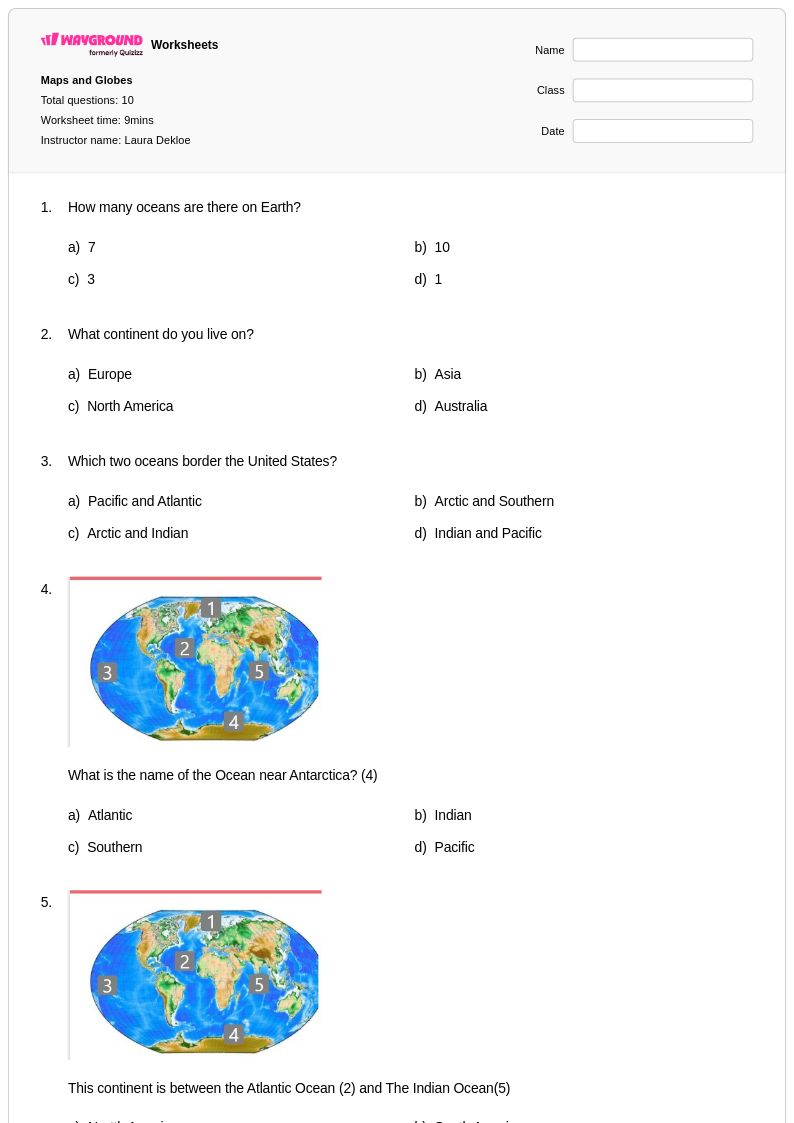
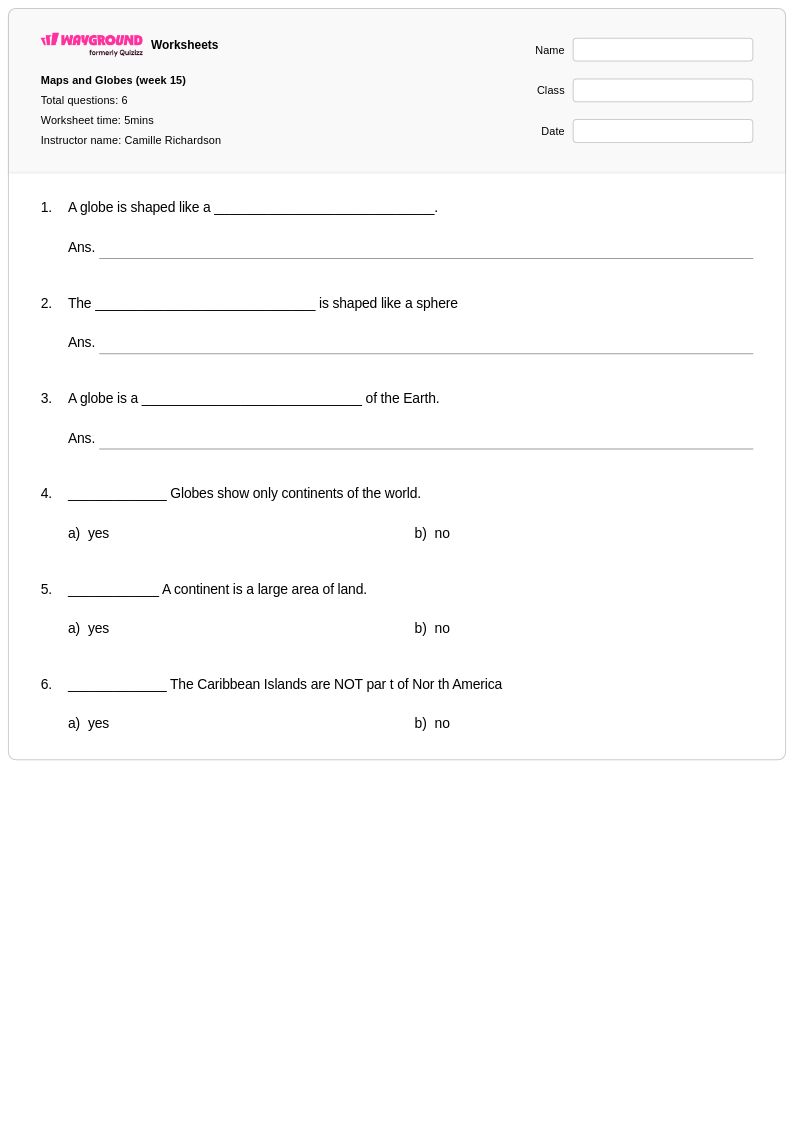
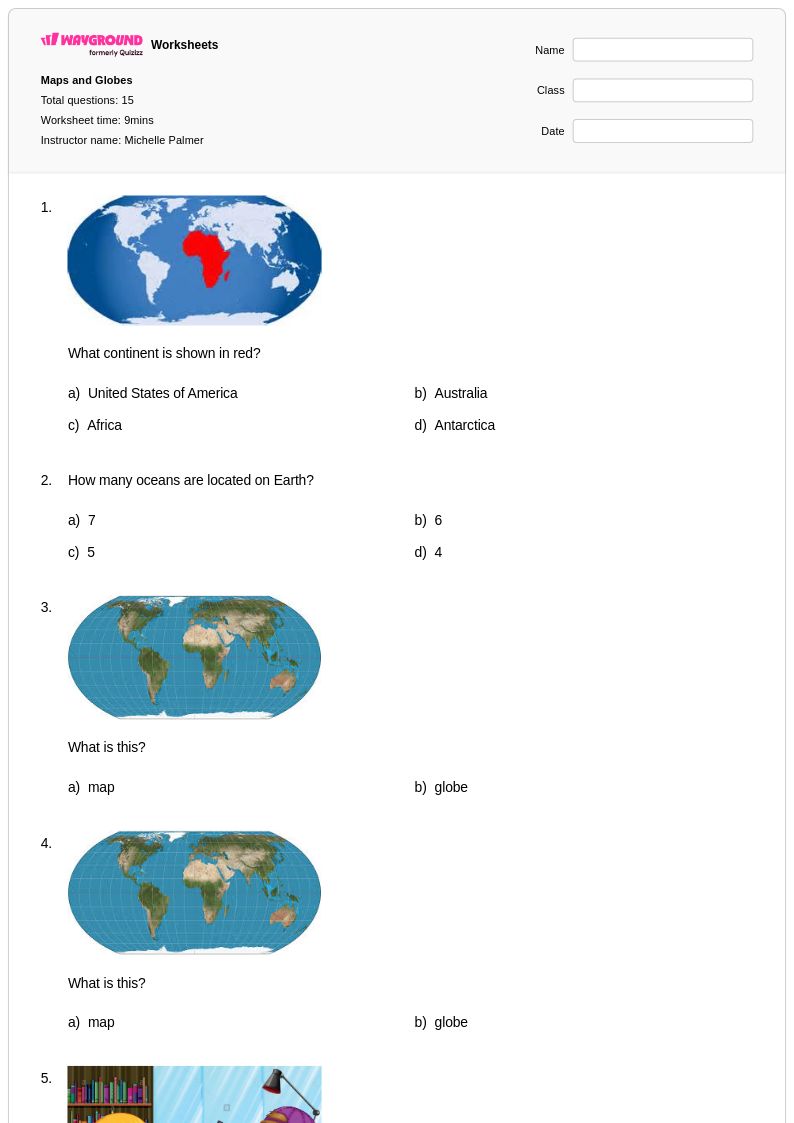
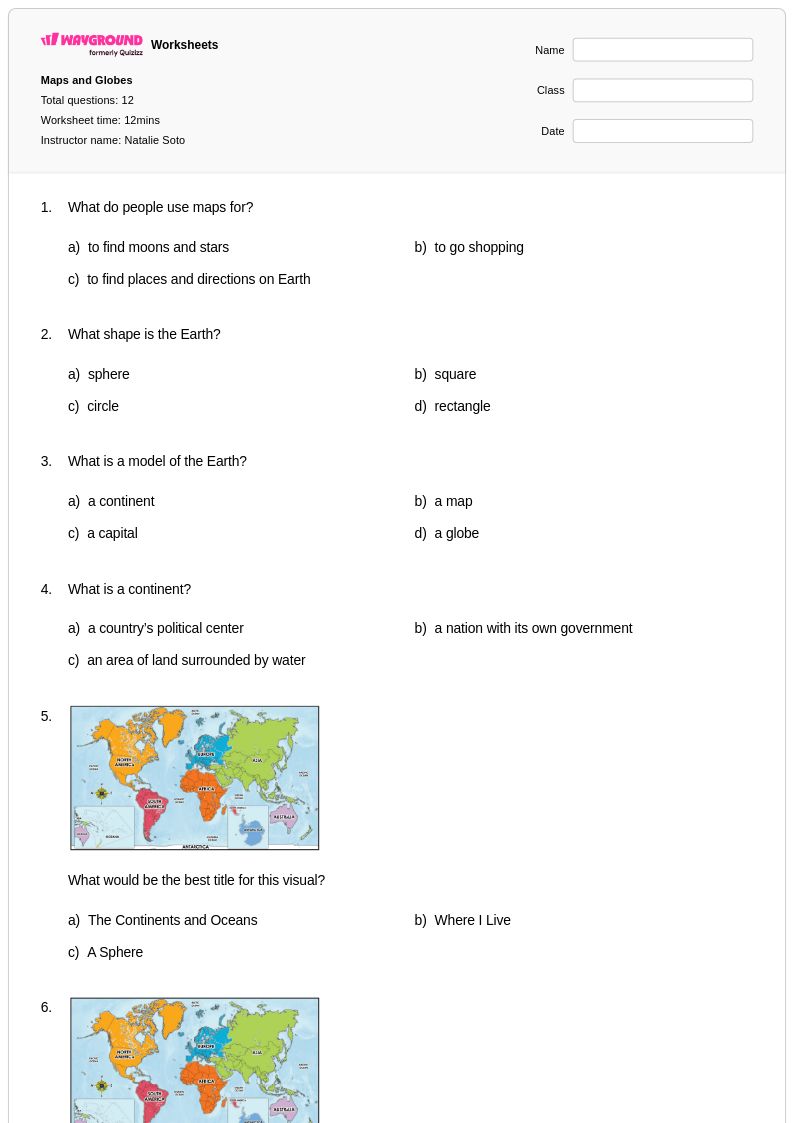
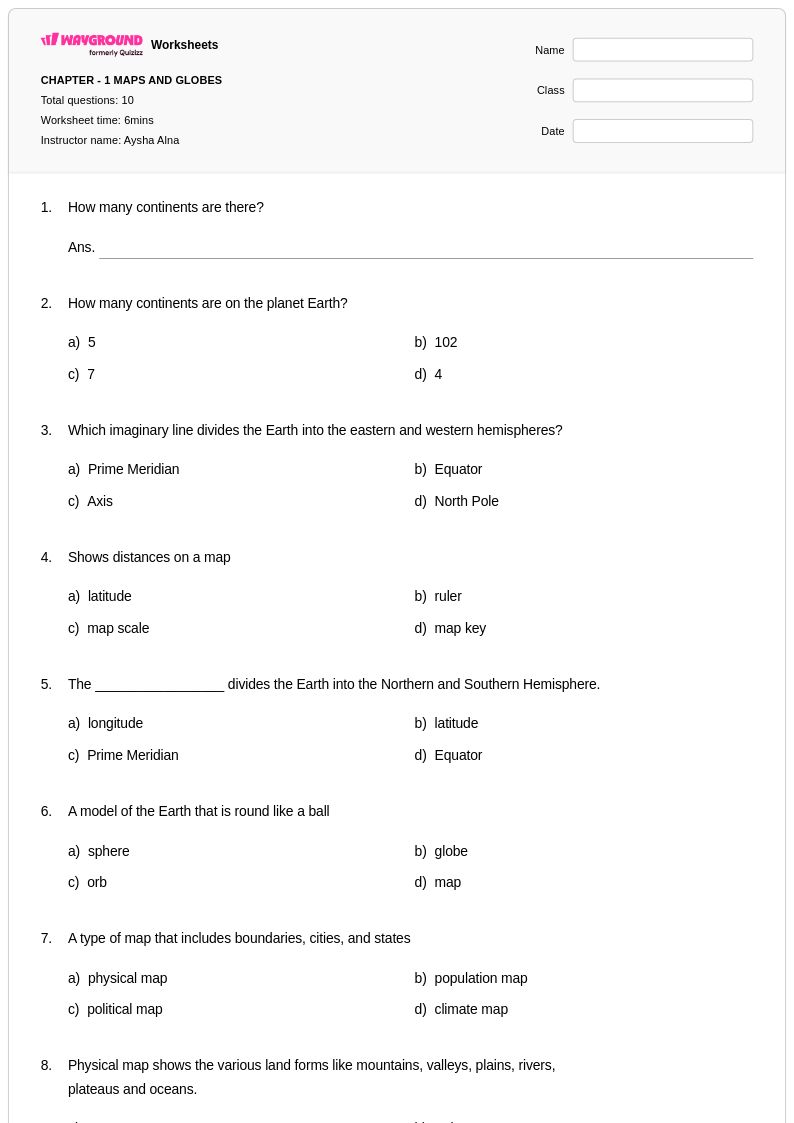
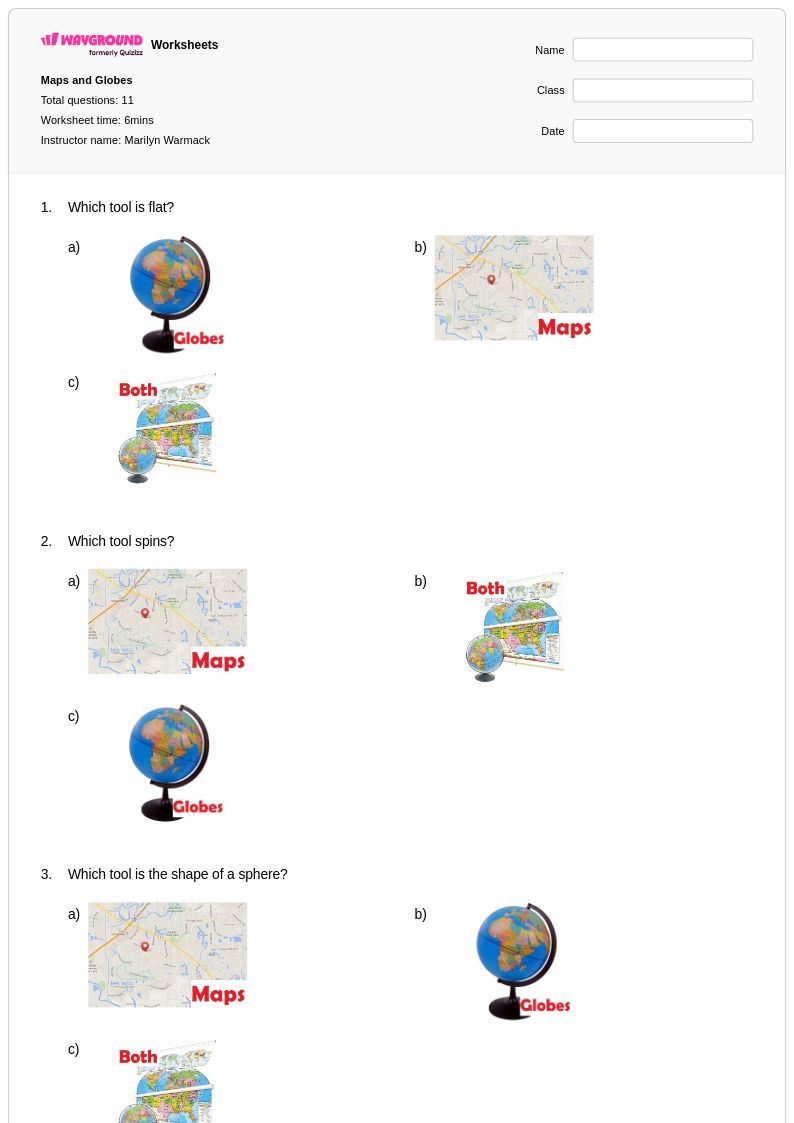
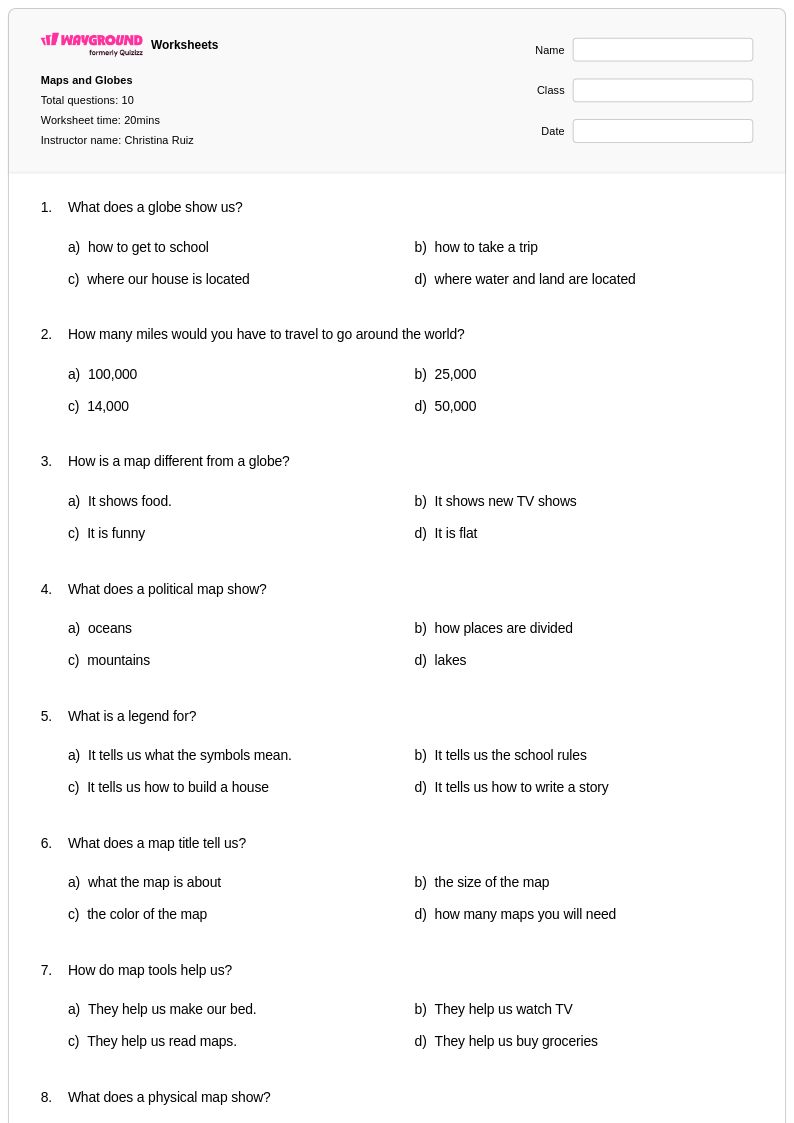
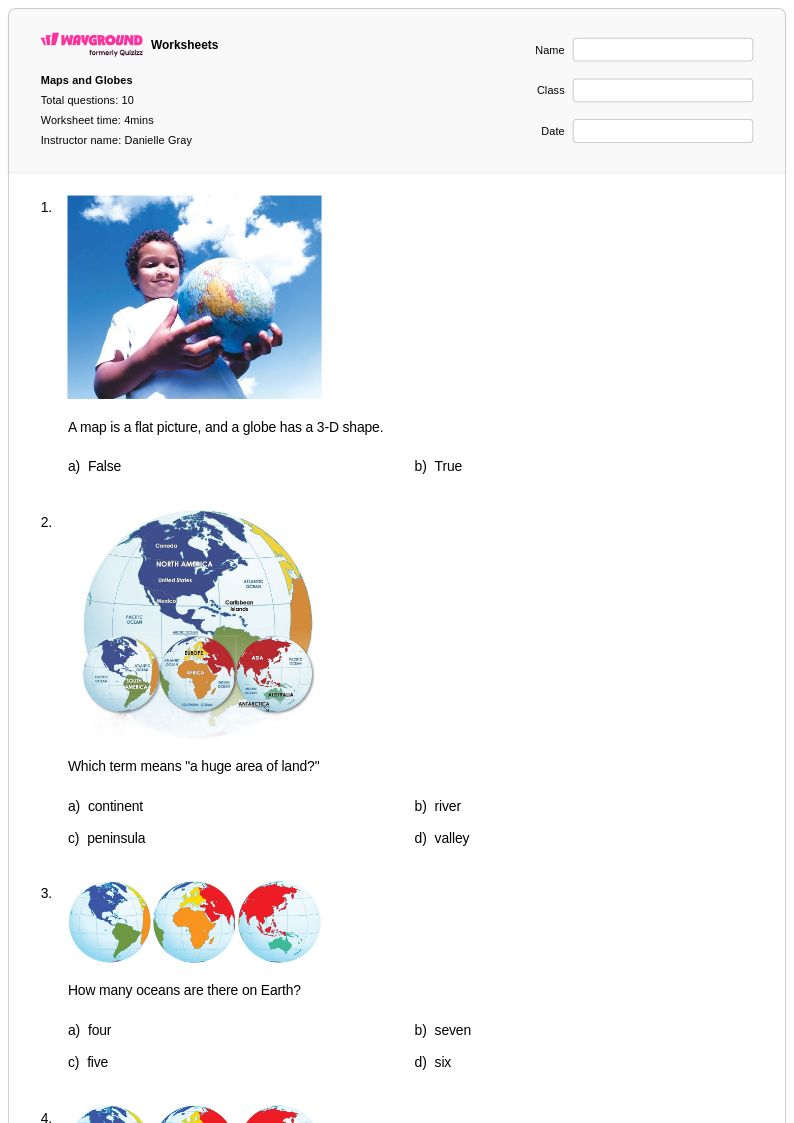
Explore printable Maps and Globes worksheets for Year 2
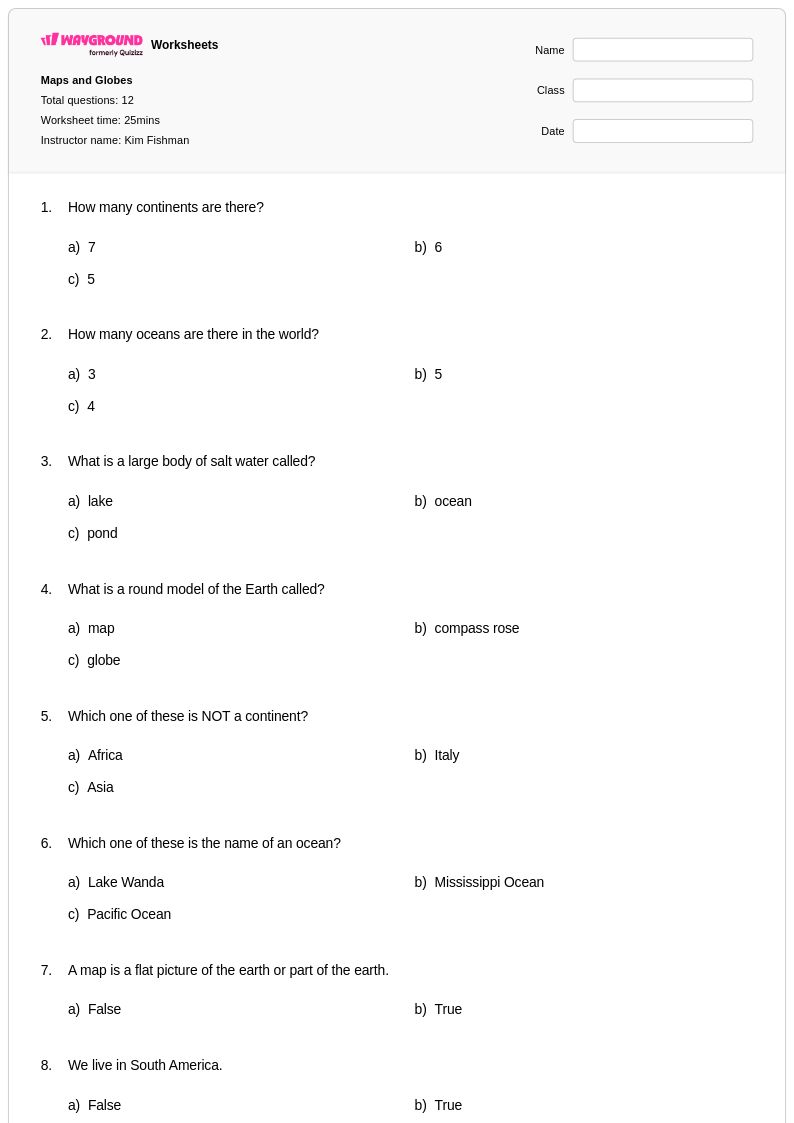
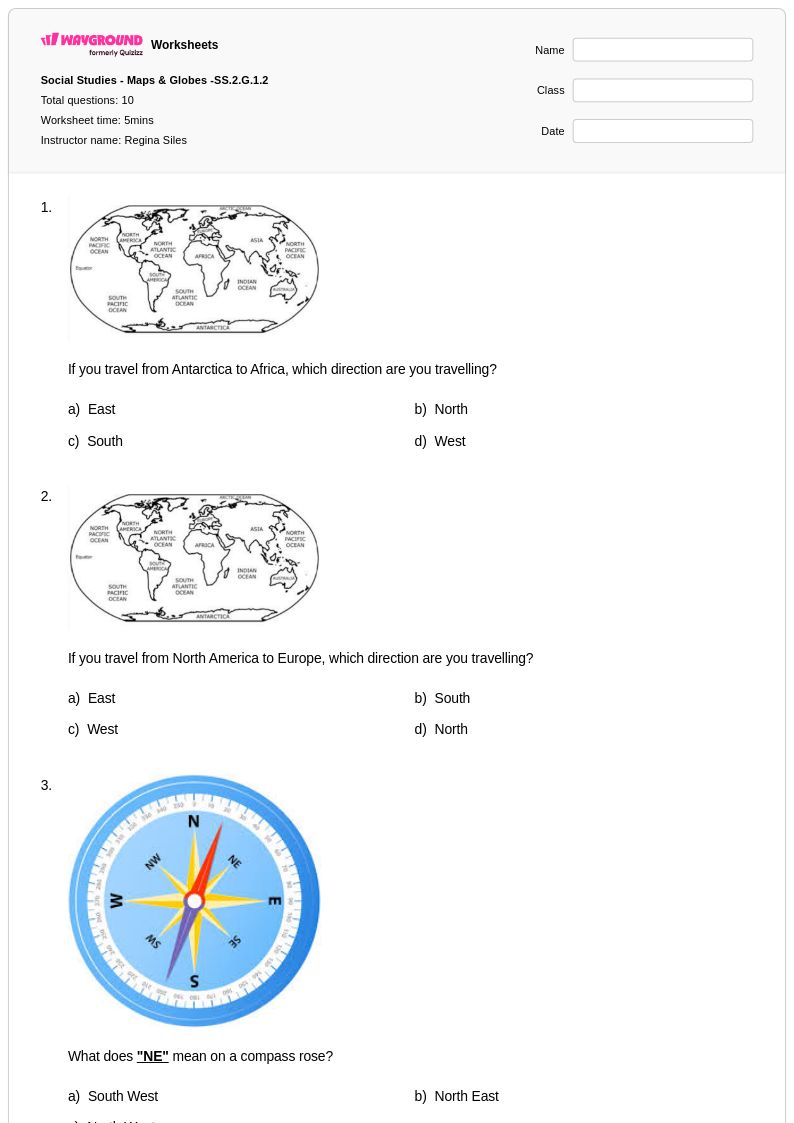
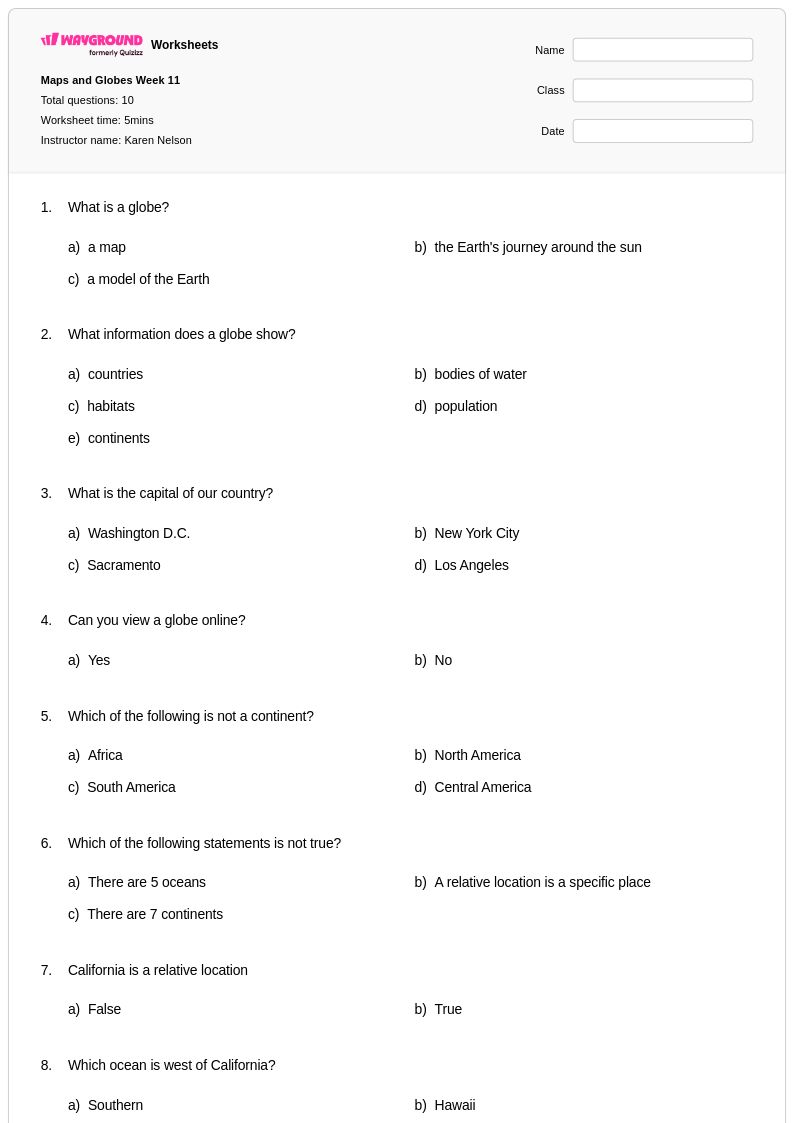
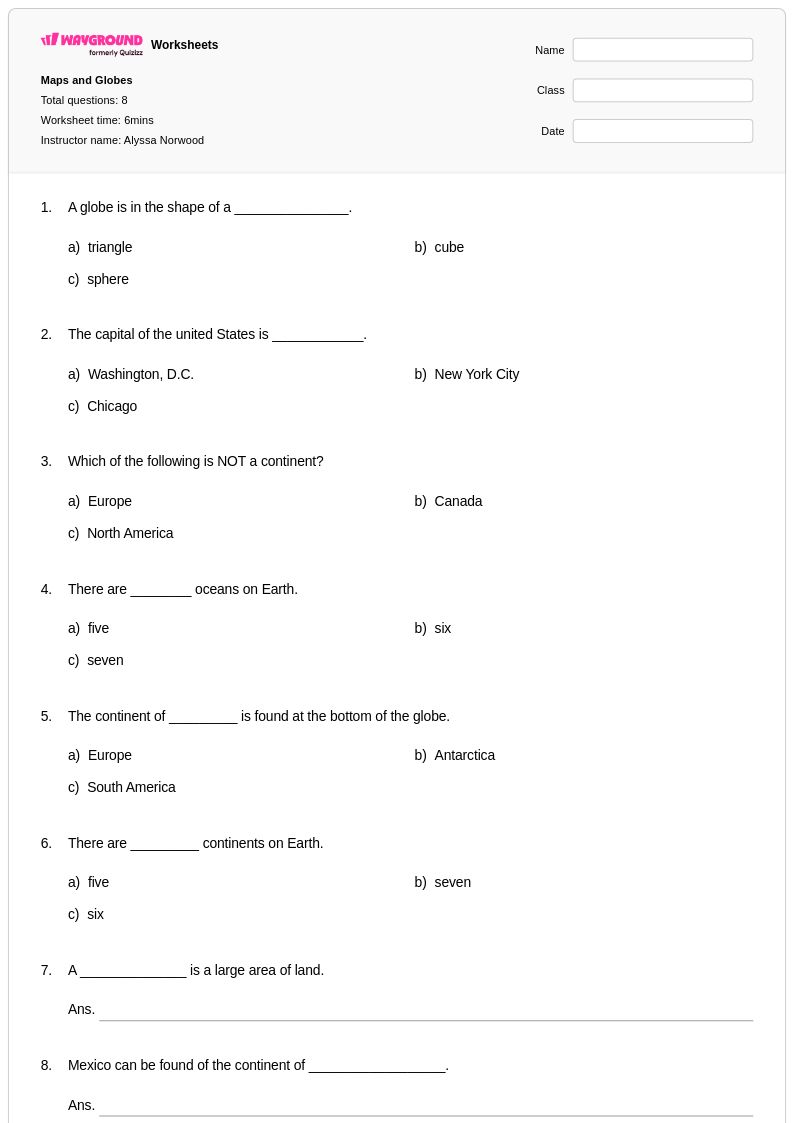
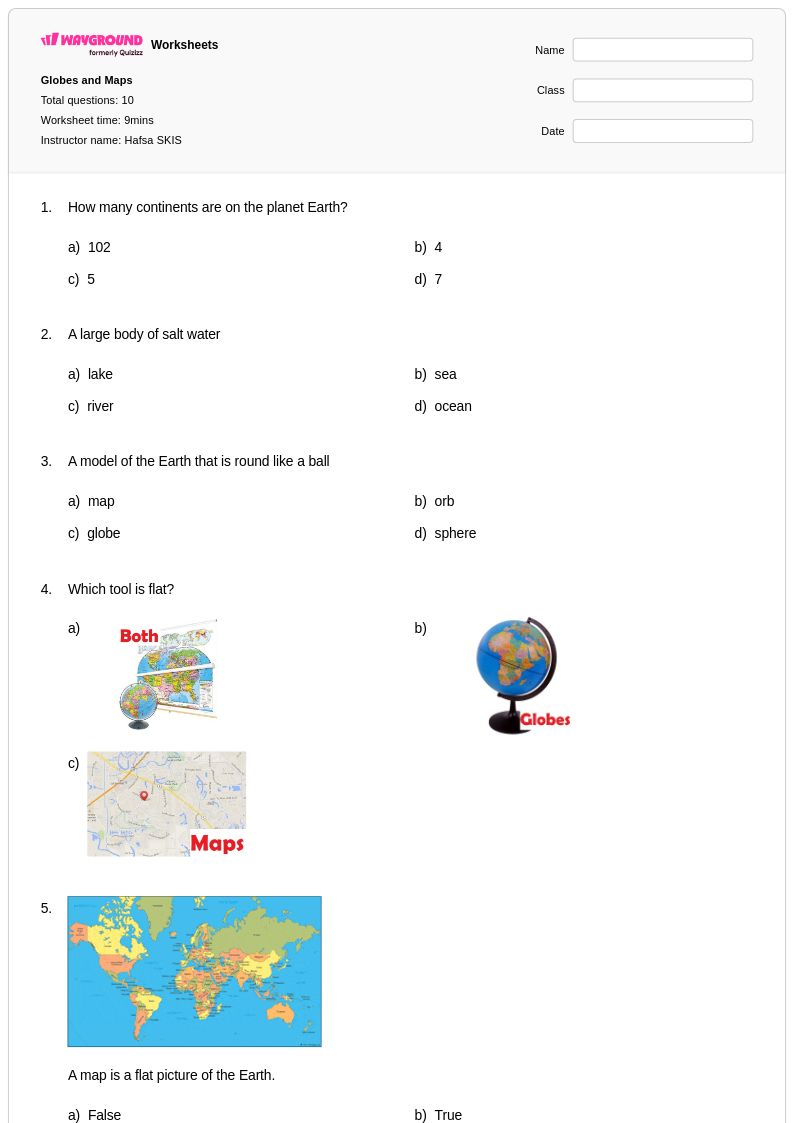
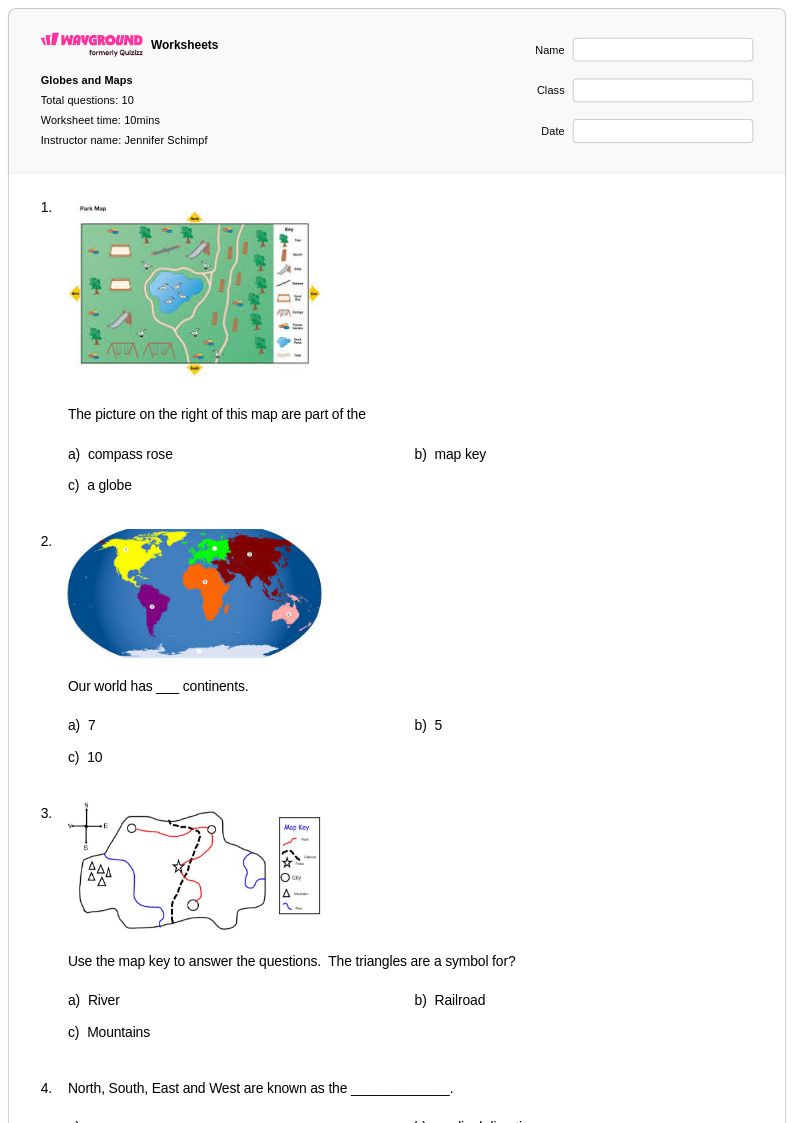
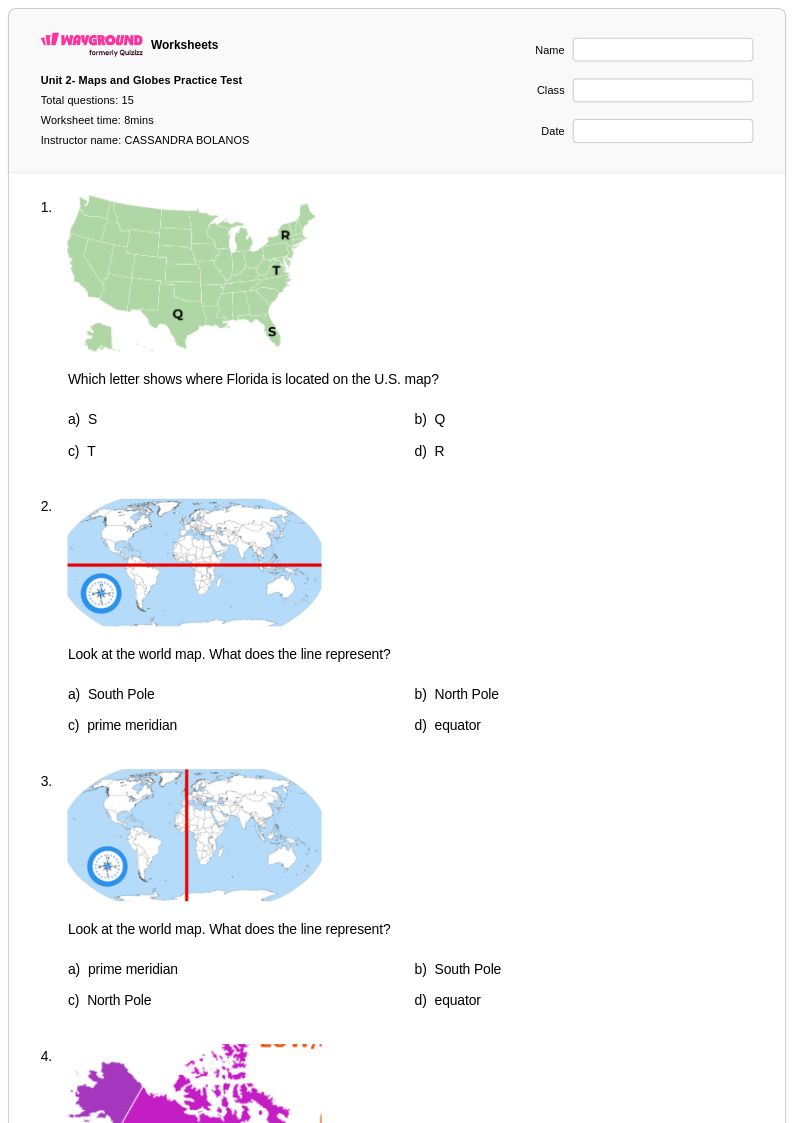
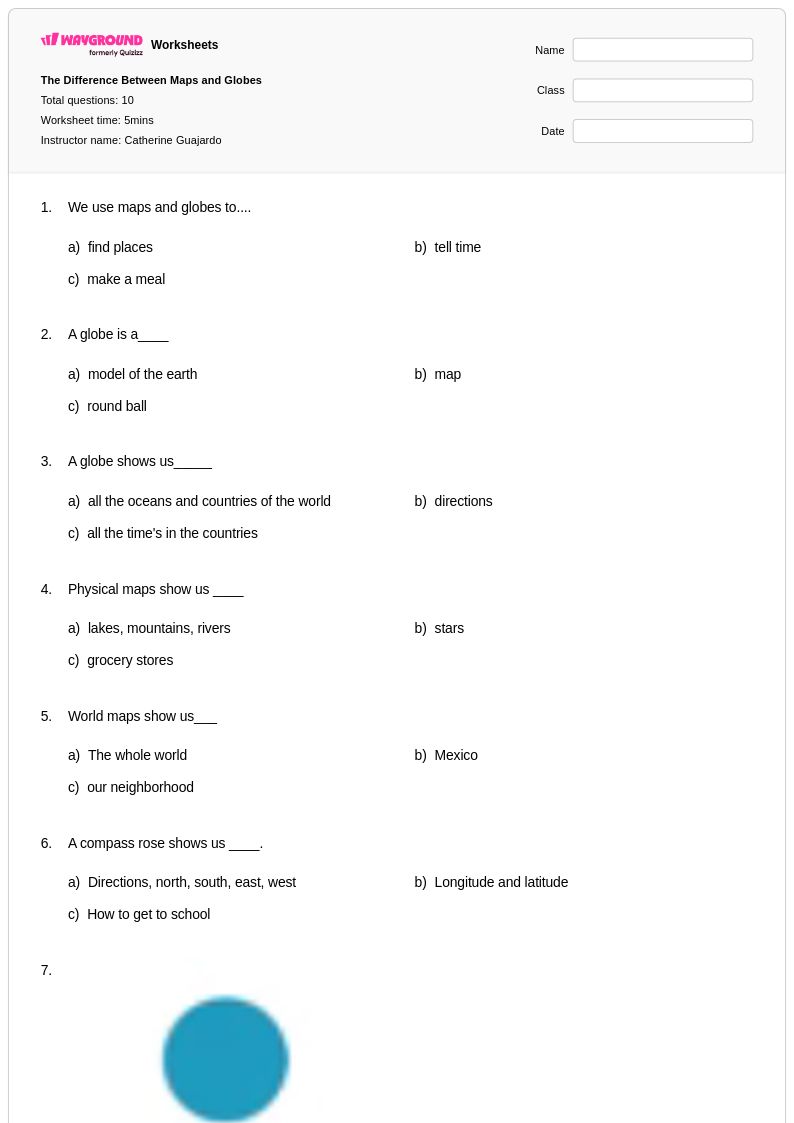
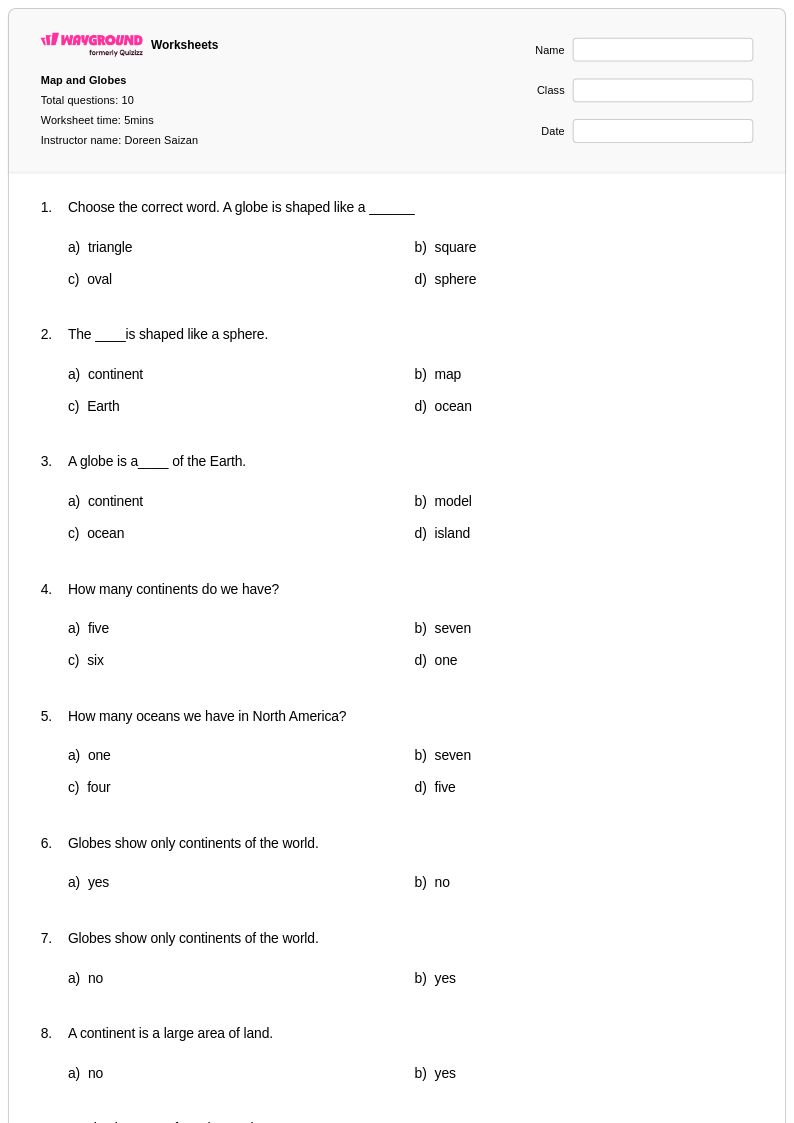
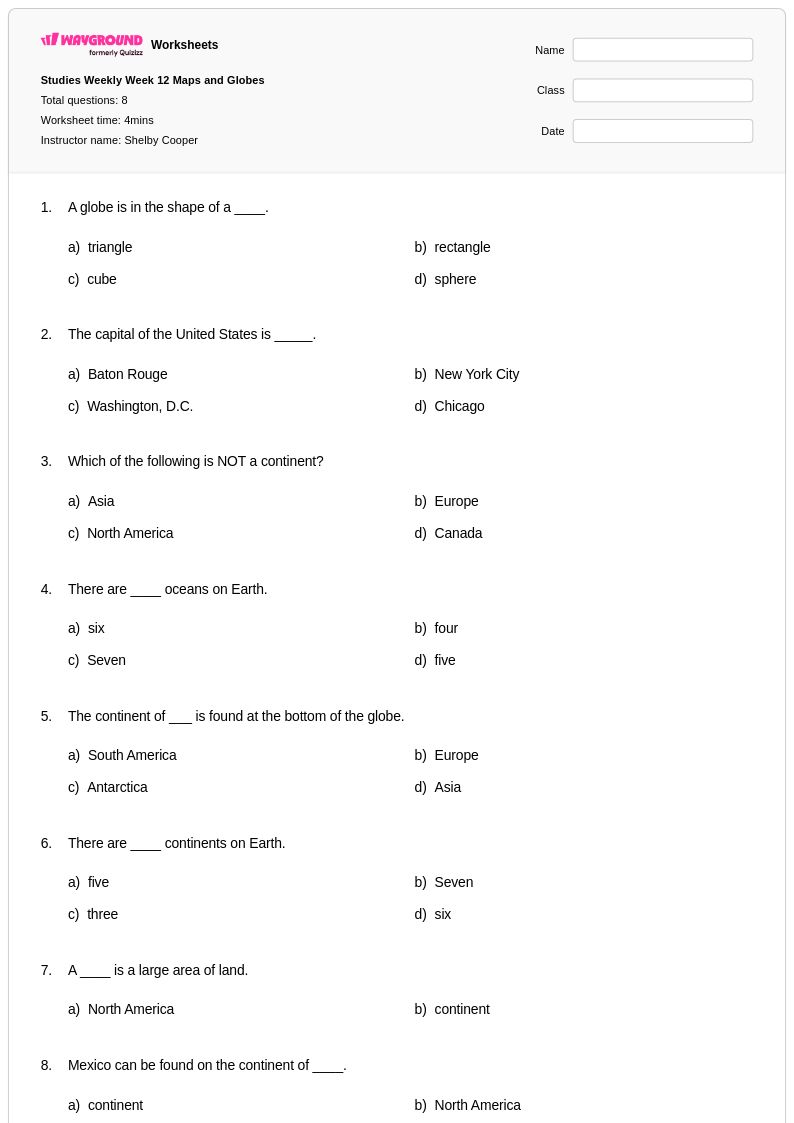
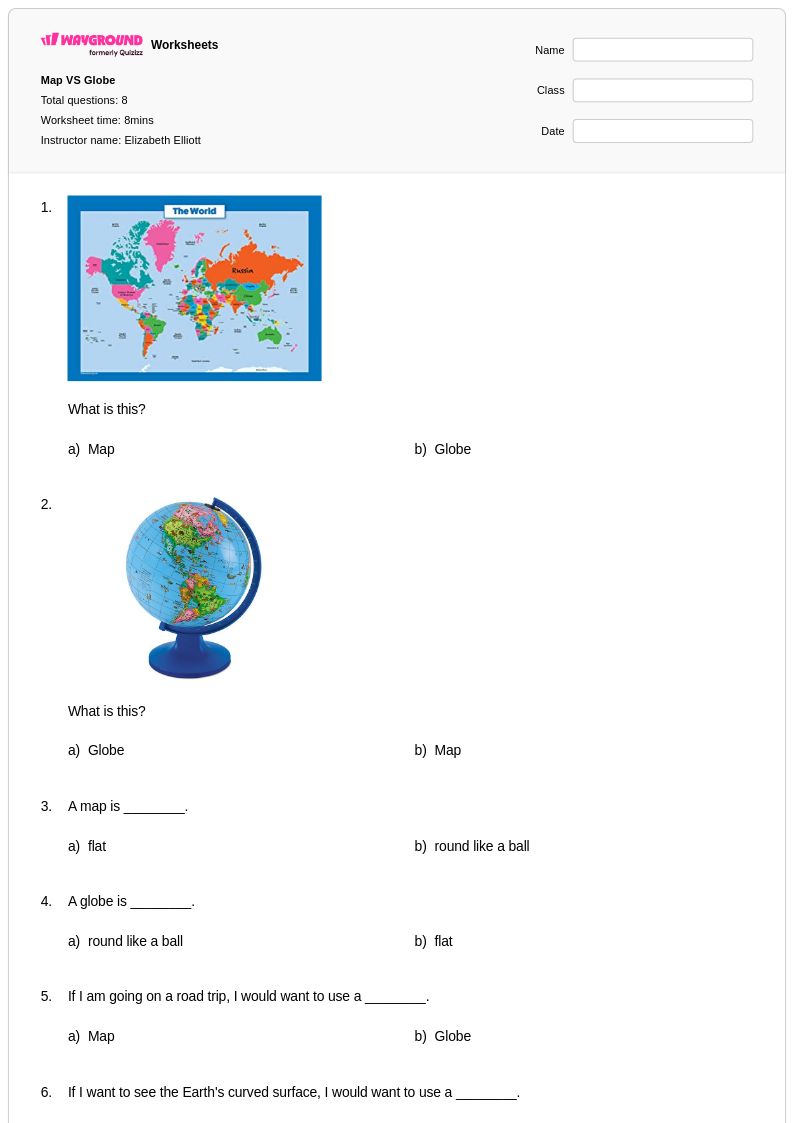
Maps and globes worksheets for Year 2 students available through Wayground (formerly Quizizz) provide essential foundational practice for developing spatial thinking and geographic literacy skills. These comprehensive worksheets guide young learners through fundamental concepts such as identifying continents and oceans, understanding the difference between maps and globes, recognizing basic map symbols and compass directions, and exploring how geographic tools represent our world. Each worksheet collection includes detailed answer keys and is available as free printables in convenient pdf format, allowing students to engage with practice problems that build their ability to read simple maps, locate places using basic coordinates, and understand how three-dimensional Earth appears on flat surfaces.
Wayground (formerly Quizizz) supports educators with an extensive library of millions of teacher-created resources specifically designed for elementary geography instruction, featuring robust search and filtering capabilities that help teachers quickly locate age-appropriate maps and globes materials. The platform's standards alignment ensures worksheets meet curriculum requirements, while differentiation tools allow teachers to customize content for varying skill levels within their Year 2 classrooms. These flexible resources are available in both printable and digital formats, including downloadable pdf options, making them invaluable for lesson planning, targeted remediation for students struggling with spatial concepts, enrichment activities for advanced learners, and consistent skill practice that reinforces geographic vocabulary and map-reading fundamentals throughout the school year.
FAQs
How do I teach students the difference between maps and globes?
Start by having students physically handle or view both a flat map and a globe side by side, then guide them to identify what each one distorts or preserves. Globes accurately represent shape, size, distance, and direction simultaneously, while flat maps must sacrifice at least one of these properties depending on the projection used. Discussing real-world examples, like how Greenland appears disproportionately large on a Mercator map compared to a globe, helps students grasp why both tools are valuable and when to use each.
What exercises help students practice reading latitude and longitude?
Coordinate plotting exercises where students locate cities, landmarks, or mystery points using latitude and longitude pairs are among the most effective practice formats. Reverse tasks, where students identify the coordinates of a labeled location, build the same skill from a different direction and deepen retention. Worksheets that combine both tasks within a single activity reinforce the concept that latitude and longitude form a precise grid system, not just abstract numbers.
What common mistakes do students make when using map scales and calculating distance?
The most frequent error is misreading the scale bar, particularly when students fail to account for the ratio between the bar's unit and the actual measurement they are taking on the map. Students also commonly confuse straight-line distance with travel distance along roads or terrain. A related misconception is assuming all maps use the same scale, which can lead to incorrect comparisons when students work with multiple maps in the same lesson.
How do I help students understand cardinal and intermediate directions on a map?
Anchor instruction in the compass rose and require students to always orient a map before answering directional questions. Many students default to treating 'up' as north regardless of map orientation, so practicing with rotated or non-standard maps builds more flexible directional thinking. Intermediate directions, such as northeast and southwest, are best introduced after students are fluent with cardinal directions, using movement activities or map-based navigation tasks to make the distinction concrete.
How do I use Maps and Globes worksheets from Wayground in my classroom?
Wayground's Maps and Globes worksheets are available as printable PDFs for traditional classroom use and in digital formats for technology-integrated or hybrid learning environments, and teachers can also host them as a quiz directly on Wayground. Each worksheet includes a complete answer key, making them straightforward to use for independent practice, homework assignments, or formative assessment. The platform also supports student-level accommodations such as extended time, read aloud, and reduced answer choices, which can be applied individually so that all learners engage with the same geographic content at an appropriate level of support.
What map skills should elementary students master before middle school?
Before middle school, students should be able to identify and use a map legend, compass rose, and scale bar with confidence. They should understand the difference between political and physical maps, recognize basic landforms and water bodies, and locate places using cardinal and intermediate directions. A solid grasp of these foundational skills makes the transition to coordinate systems, map projections, and thematic maps in middle school significantly smoother.