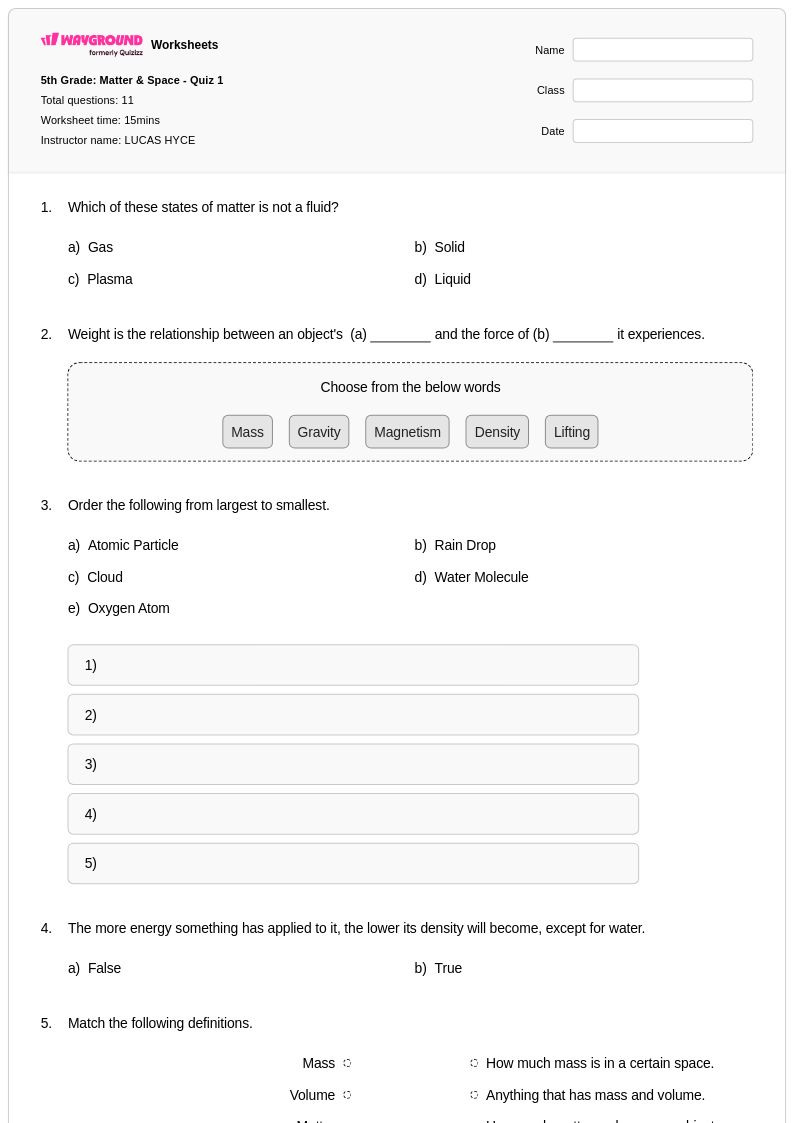
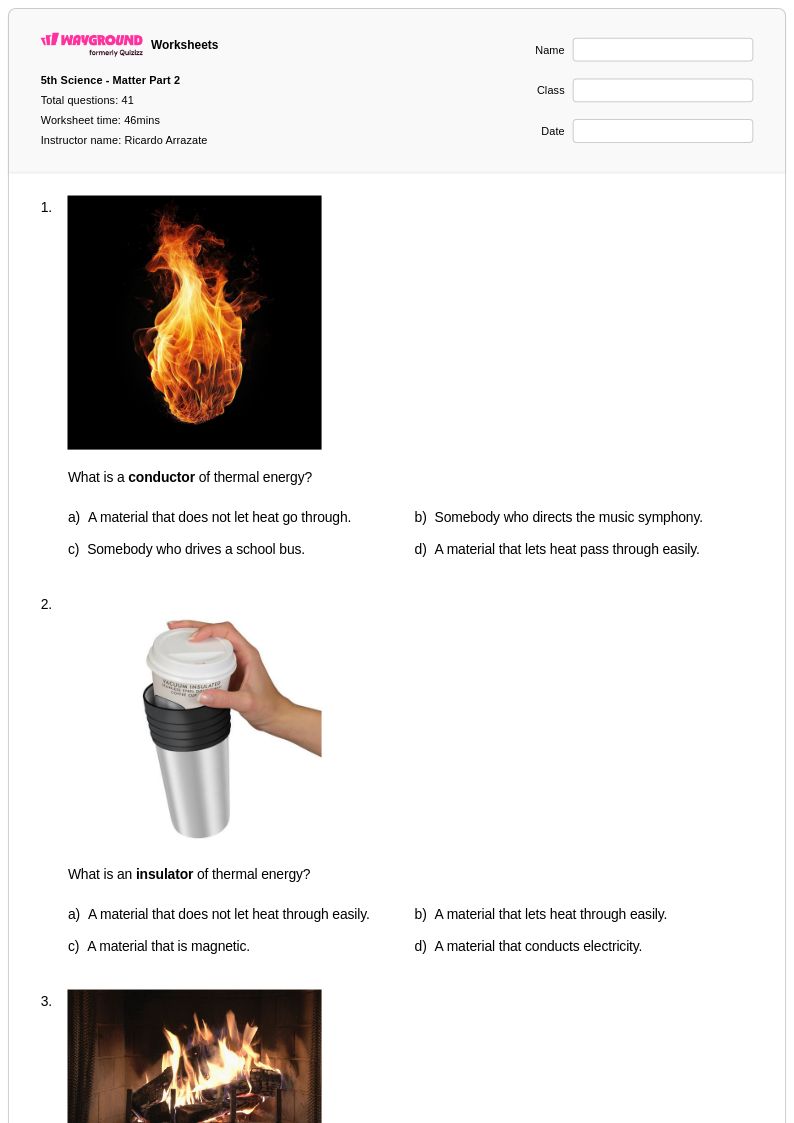
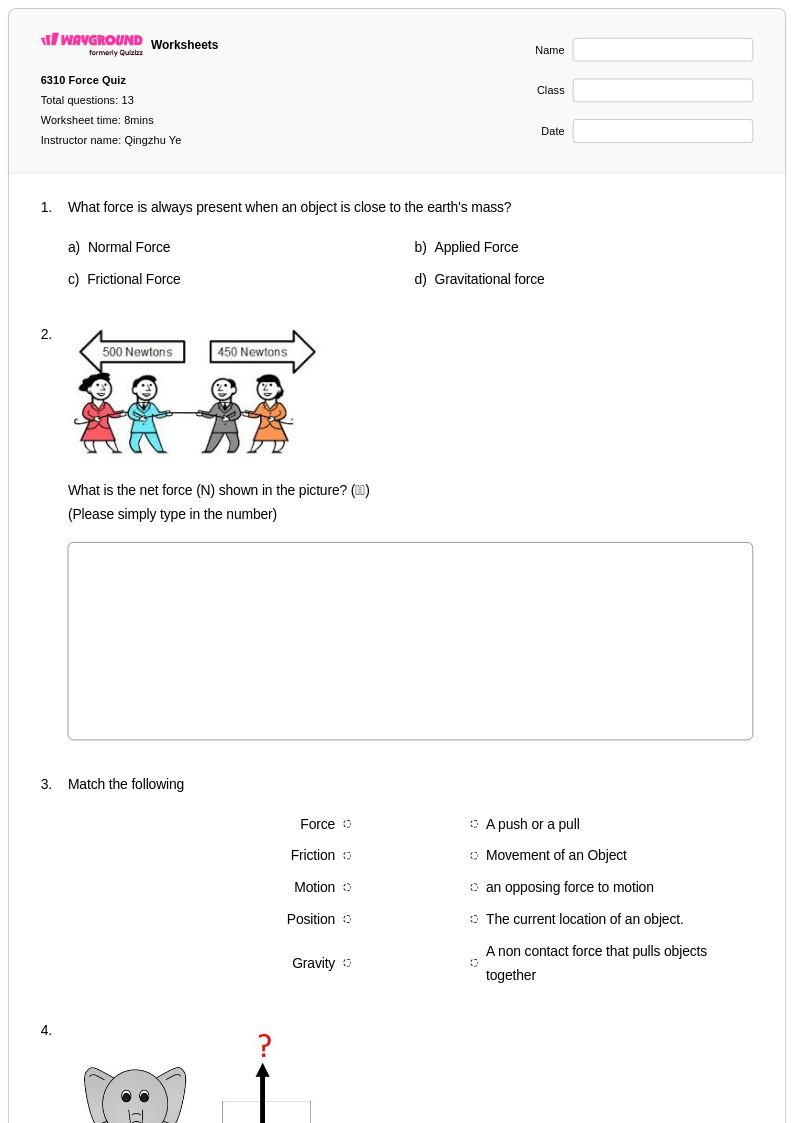
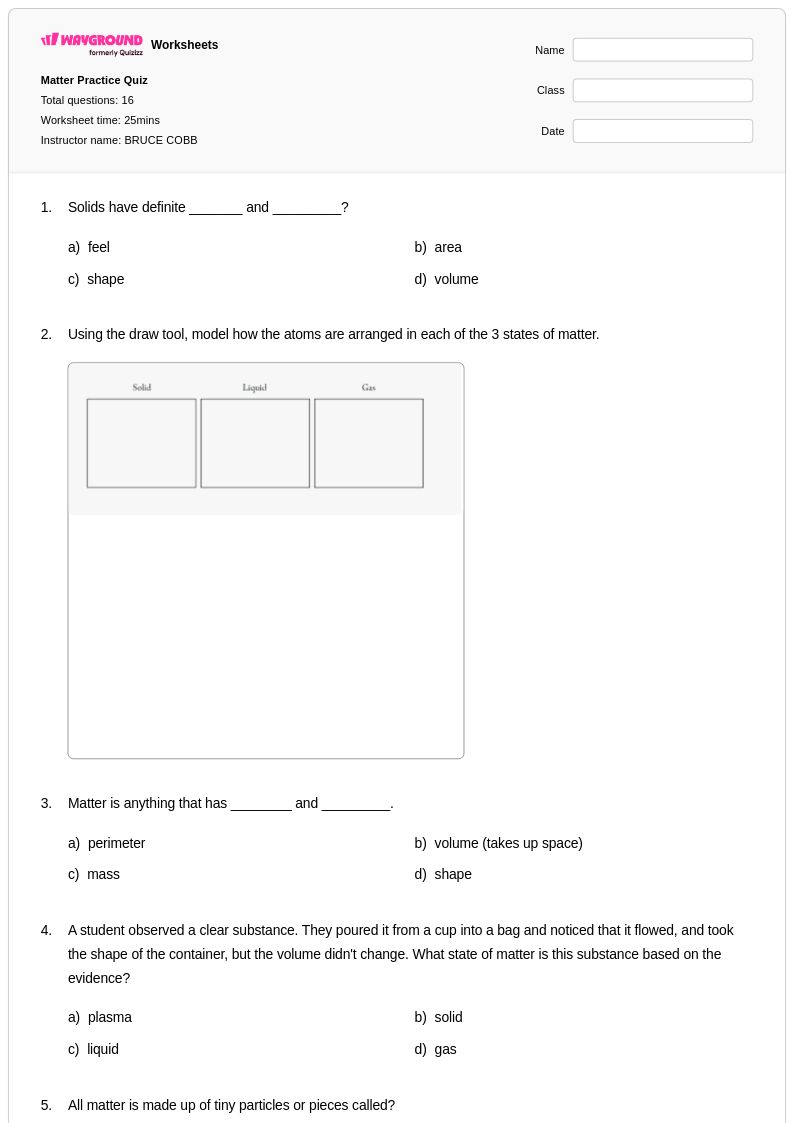
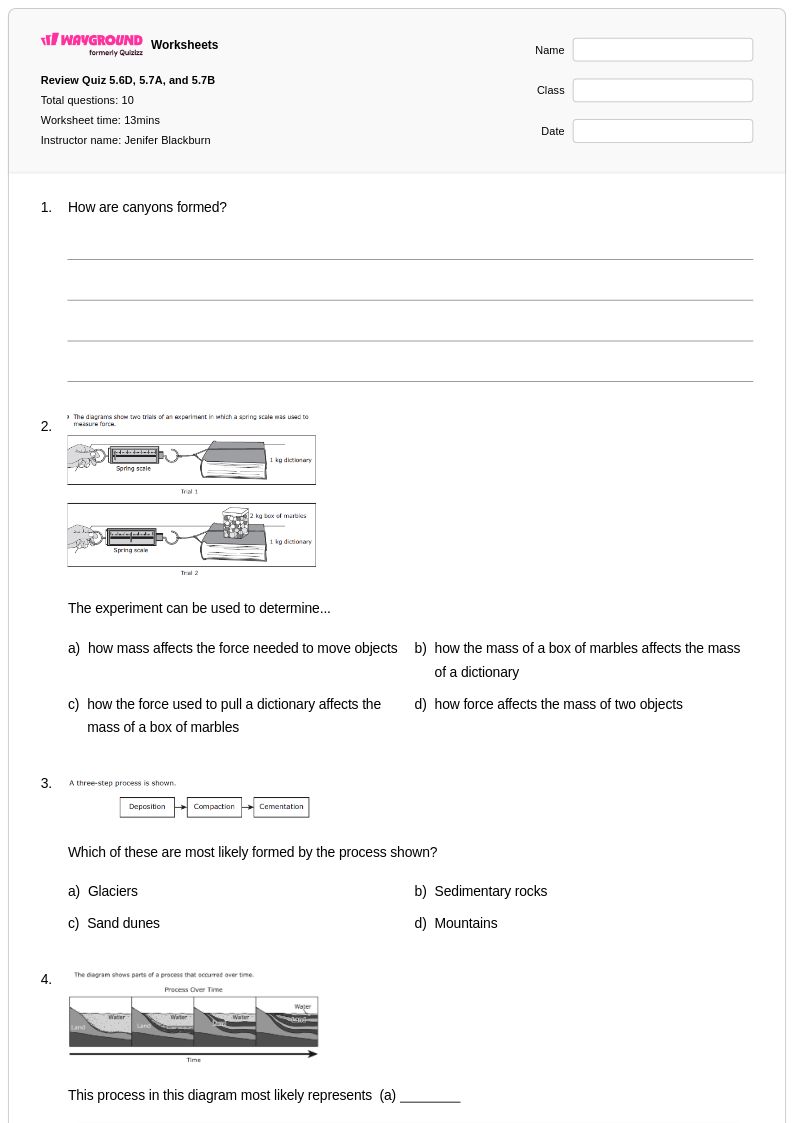
Explore Wayground's free Year 5 mass worksheets and printables that help students understand weight, measurement, and physical properties through engaging practice problems with complete answer keys.
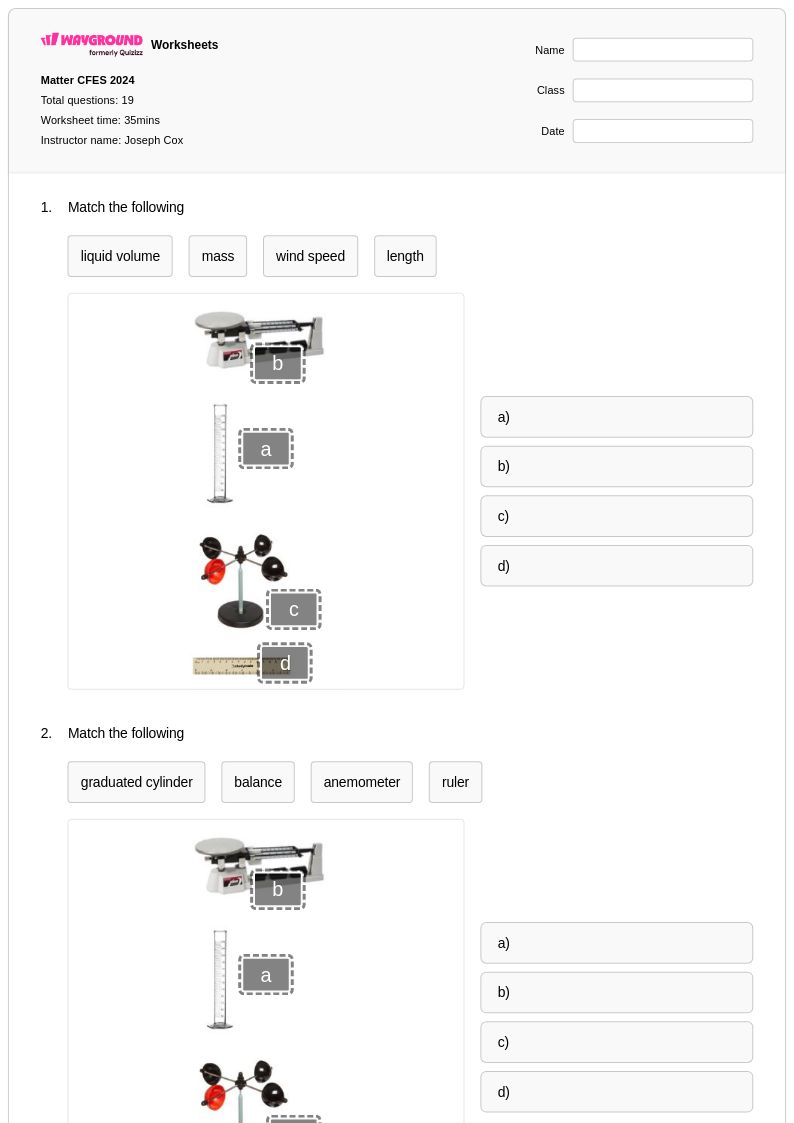
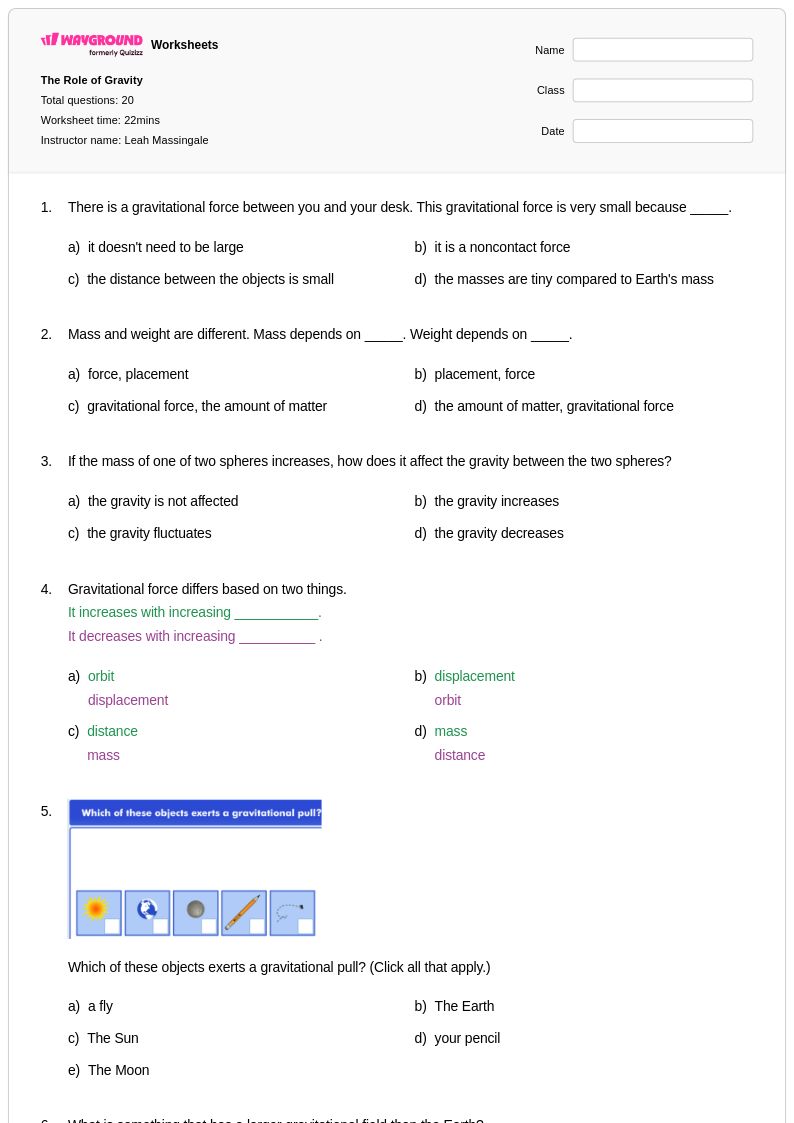
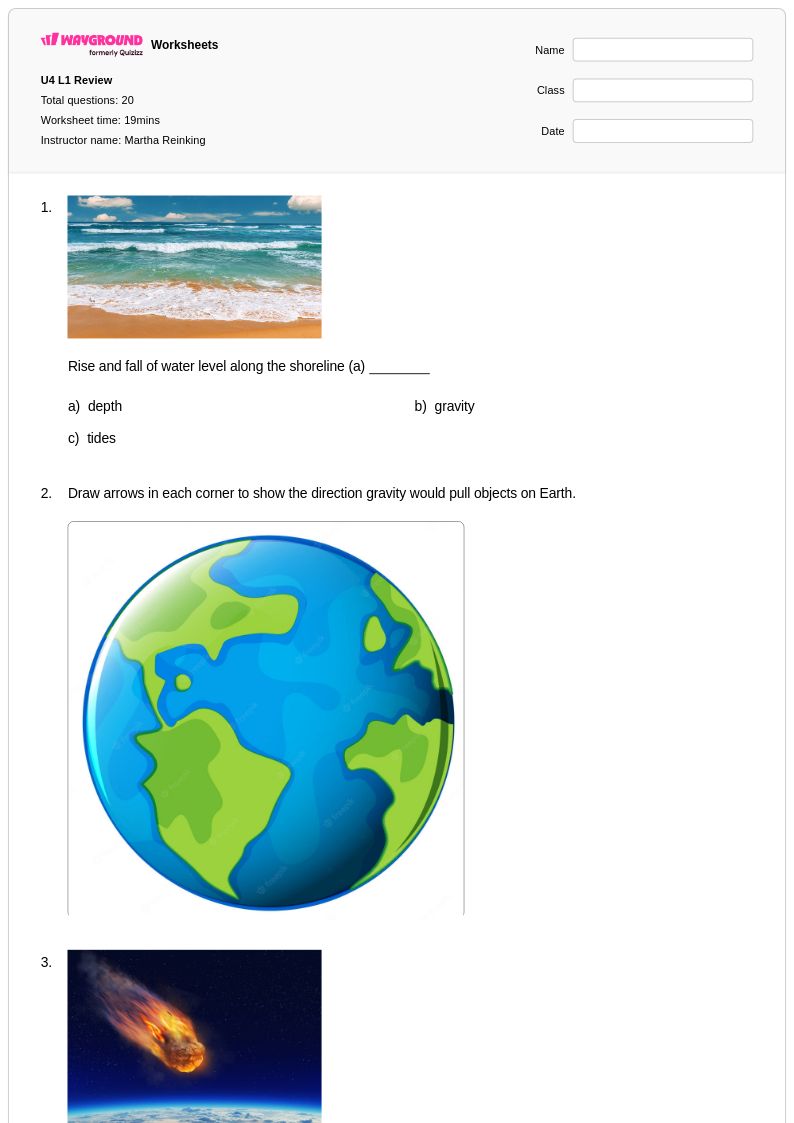
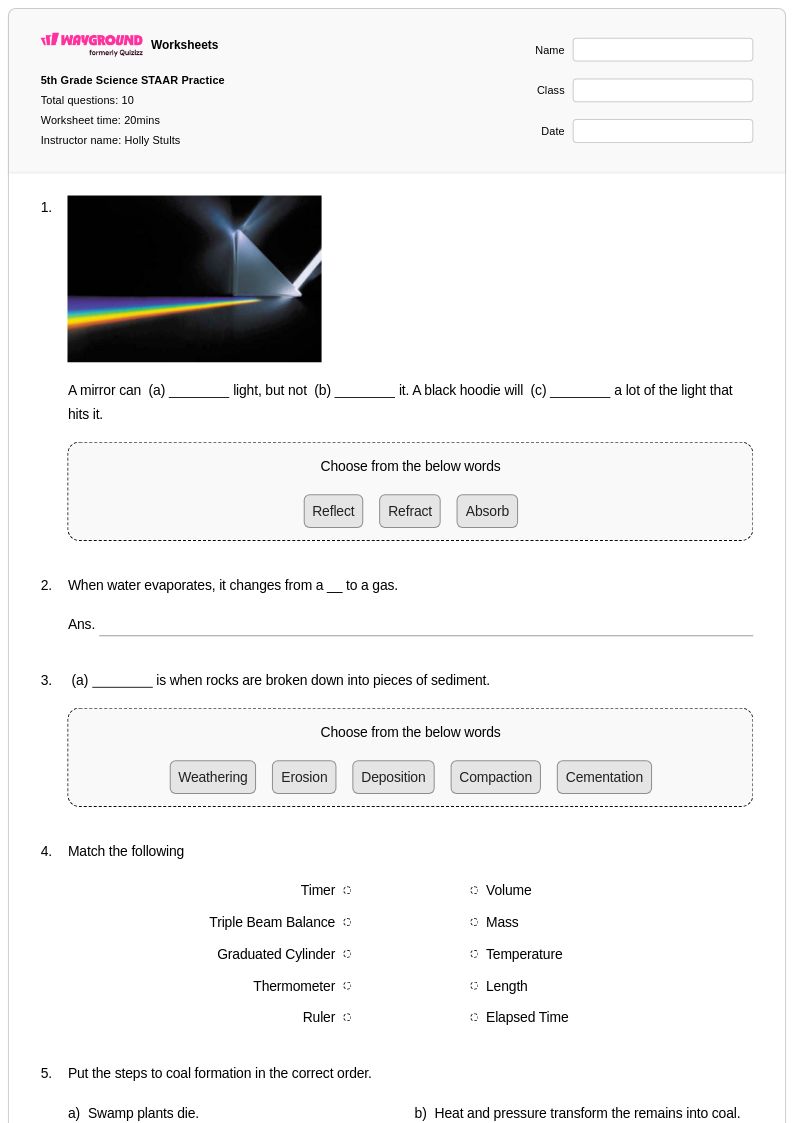
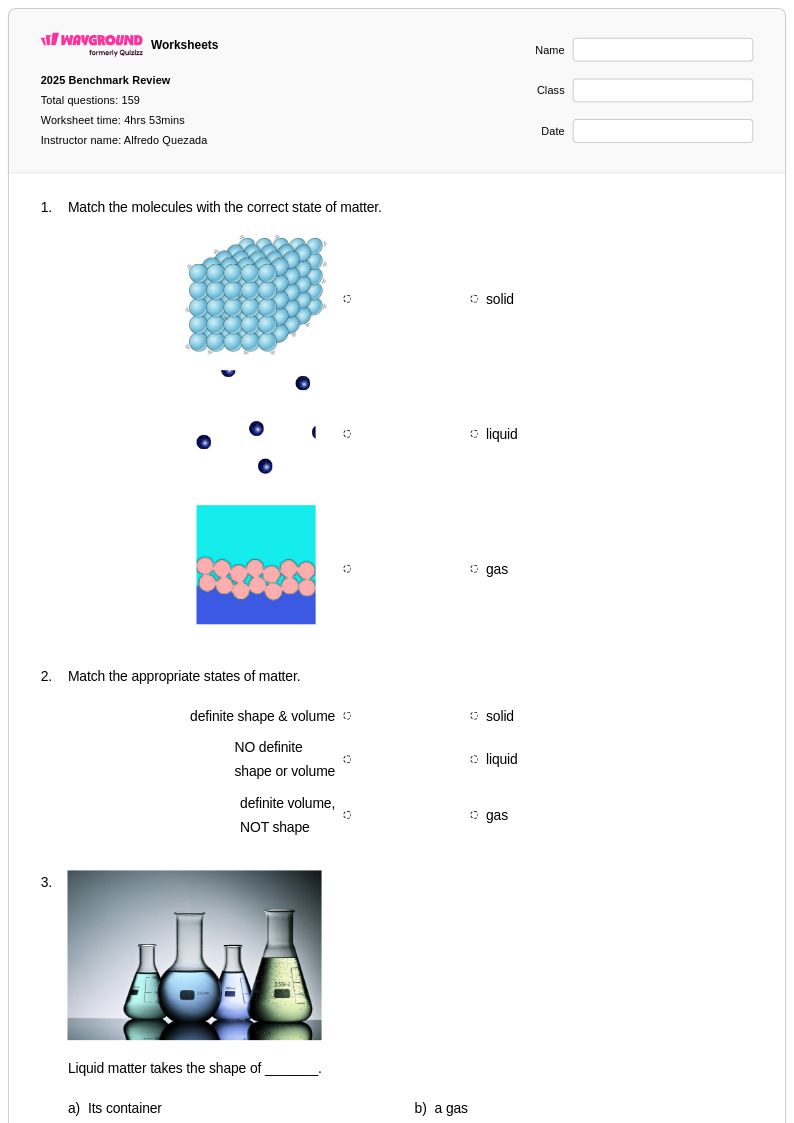
Mass worksheets for Year 5 students available through Wayground (formerly Quizizz) provide comprehensive practice opportunities that strengthen fundamental understanding of this essential physical science concept. These educational resources guide fifth graders through hands-on exploration of mass measurement, comparison activities, and real-world applications that solidify their grasp of how mass differs from weight and volume. The collection includes diverse practice problems that challenge students to use balance scales, identify appropriate measurement units, and analyze everyday objects to determine their mass properties. Each worksheet comes with a complete answer key to support accurate assessment, and the free printables are available in convenient pdf format for seamless classroom integration and home study support.
Wayground (formerly Quizizz) empowers educators with millions of teacher-created mass worksheets specifically designed for Year 5 physical science instruction, featuring robust search and filtering capabilities that allow quick identification of standards-aligned materials. The platform's differentiation tools enable teachers to customize content difficulty levels and modify practice problems to meet diverse learning needs, while flexible formatting options provide both printable pdf versions and interactive digital alternatives. These comprehensive features streamline lesson planning by offering ready-to-use resources for skill practice, targeted remediation for struggling learners, and enrichment activities for advanced students, ensuring that every fifth grader can develop mastery of mass concepts through varied and engaging worksheet experiences.
FAQs
How do I teach the difference between mass and weight to students?
Mass and weight are related but distinct concepts: mass is the amount of matter in an object and remains constant regardless of location, while weight is the gravitational force acting on that mass and changes depending on gravity. A reliable classroom strategy is to use a balance scale to demonstrate mass measurement and contrast it with a spring scale that measures weight. Concrete analogies, such as comparing an object's mass on Earth versus on the Moon, help students internalize why mass stays the same while weight does not.
What exercises help students practice mass measurement and unit conversions?
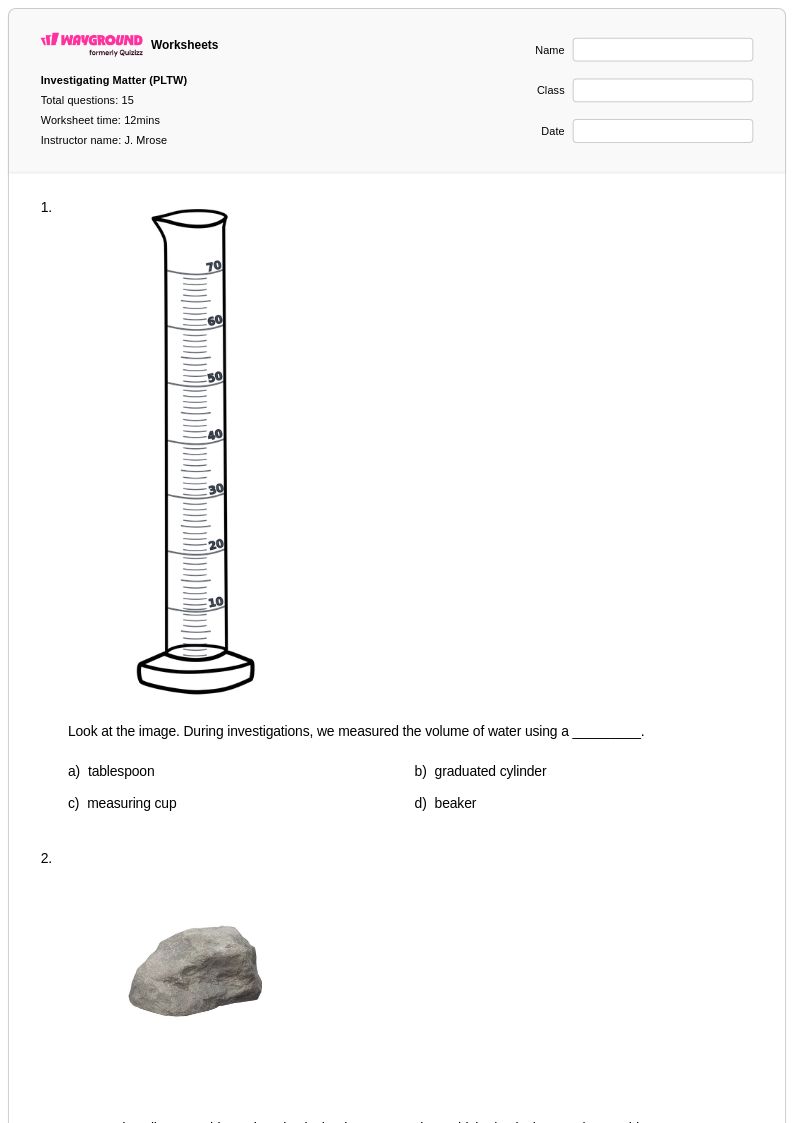
Effective practice for mass measurement includes reading balance scales, converting between grams and kilograms, and solving word problems that require selecting the appropriate unit for a given object. Worksheets that progress from basic identification tasks to multi-step conversion problems reinforce procedural fluency before introducing more complex applications like density calculations. Mixing context-rich scenarios, such as measuring ingredients or comparing object masses, keeps practice meaningful and grounded.
How does mass connect to density and conservation of mass problems?
Mass is a core variable in both density calculations (density = mass ÷ volume) and conservation of mass problems, where students verify that total mass is preserved before and after a physical or chemical change. Teaching these connections explicitly helps students see mass not as an isolated concept but as a foundational measurement that links across physical science topics. Practice problems that integrate mass into density and reaction scenarios build the analytical thinking students need for more advanced chemistry and physics.
What mistakes do students commonly make when working with mass concepts?
The most persistent misconception is conflating mass with weight, leading students to assume an object's mass changes in different gravitational environments. Students also frequently confuse grams and kilograms, either choosing an inappropriate unit or making errors in conversion by multiplying instead of dividing, or vice versa. A third common error is misreading balance scales, particularly when the scale uses incremental markings that require interpolation rather than direct reading.
How can I use mass worksheets to support students at different skill levels?
Mass worksheets work well for differentiation because the topic spans a natural difficulty range, from basic object identification and scale reading to complex density and conservation problems. On Wayground, teachers can apply student-level accommodations such as reduced answer choices to lower cognitive load for struggling learners, or enable Read Aloud so that word problems are accessible to students who need audio support. Advanced students can be directed to multi-step problems involving mass relationships in chemical reactions, while those needing remediation can focus on foundational measurement and unit conversion exercises.
How do I use Wayground's mass worksheets in my classroom?
Wayground's mass worksheets are available as printable PDFs for traditional classroom use and in digital formats for technology-integrated or remote learning environments, giving teachers flexibility in how they assign and deliver practice. Teachers can also host worksheets as a quiz directly on Wayground, enabling real-time student responses and instant feedback. Each worksheet includes a complete answer key, making them efficient for independent practice, guided instruction, or remediation sessions without additional prep work.