
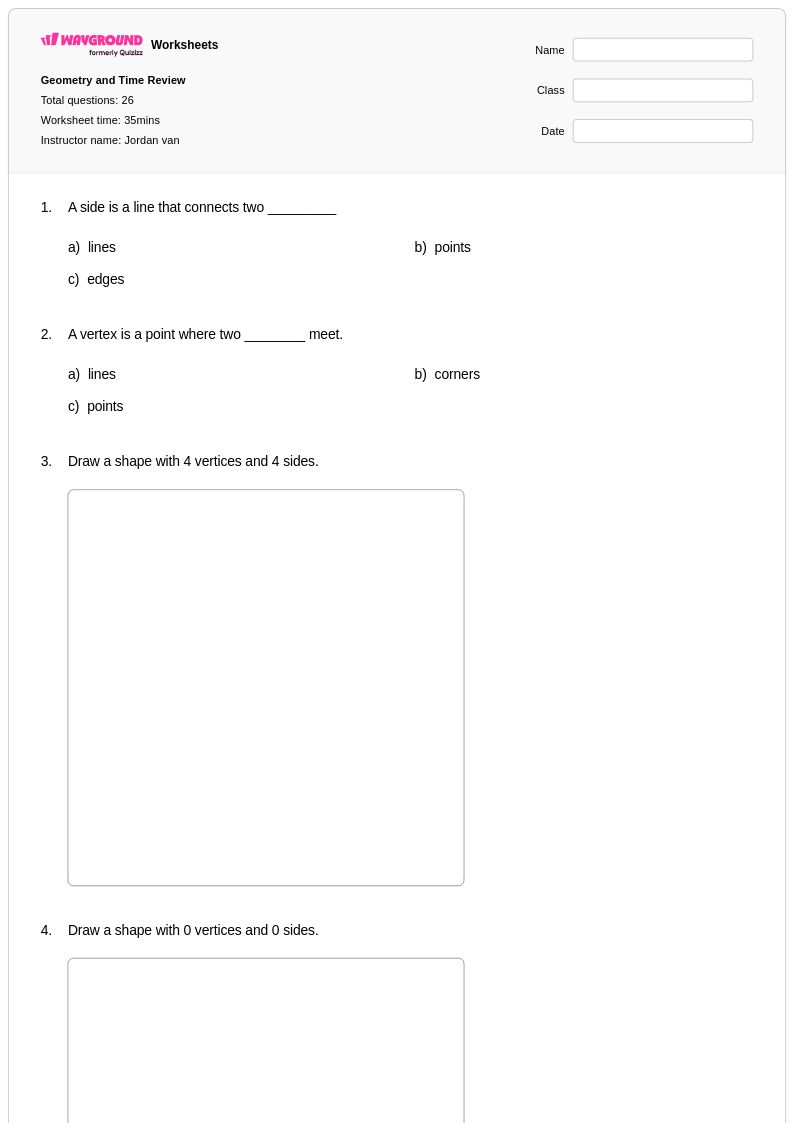
26 Q
1st
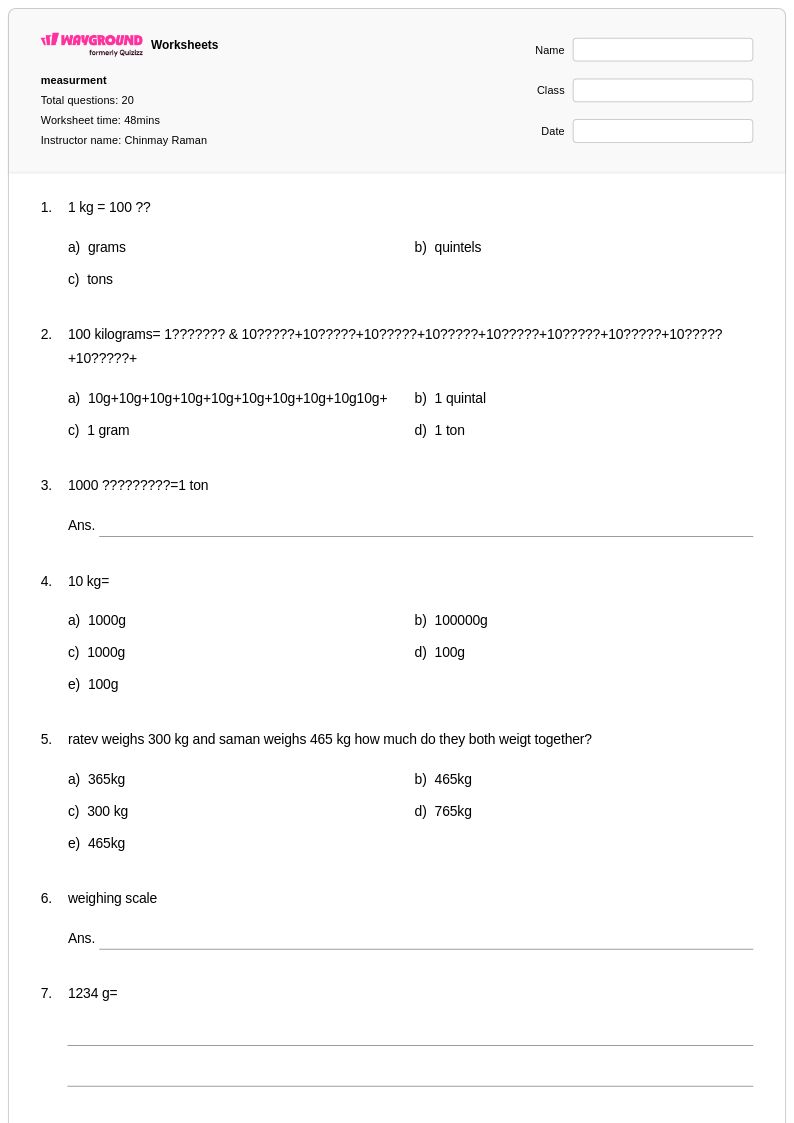
20 Q
1st - Uni
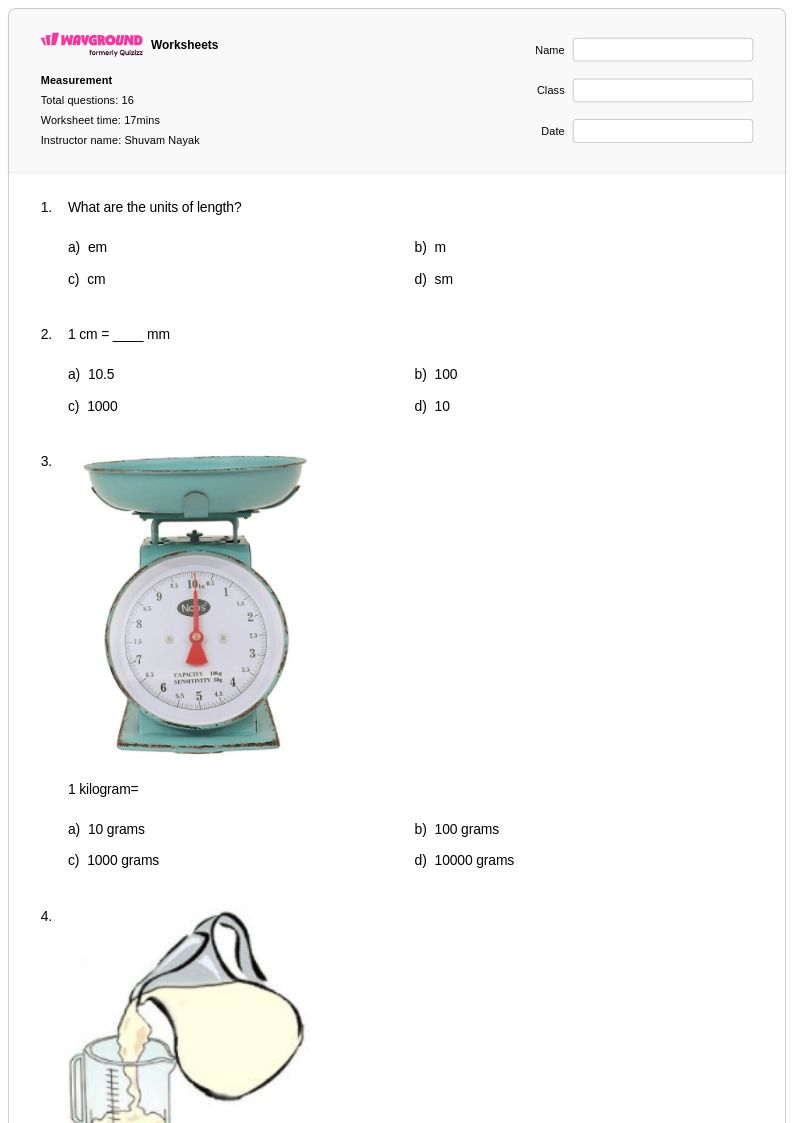
16 Q
1st - 4th
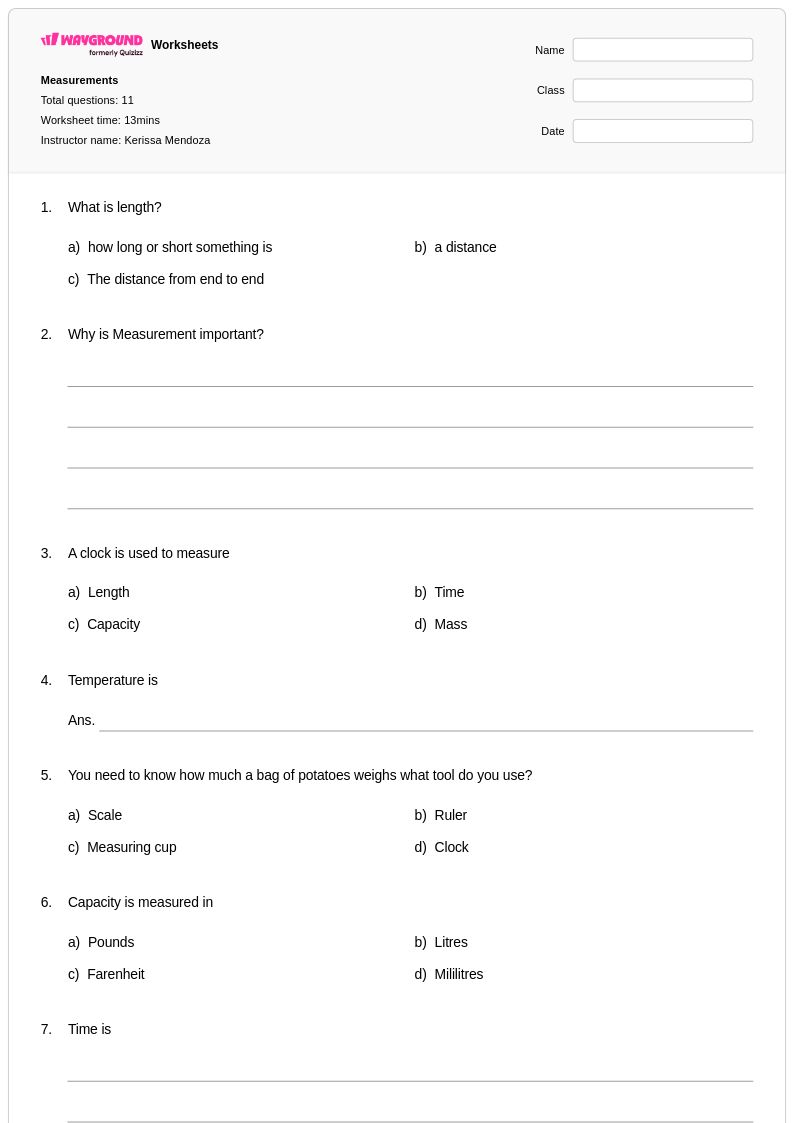
11 Q
1st
20 Q
1st - 2nd
15 Q
1st
9 Q
1st - 5th
10 Q
1st
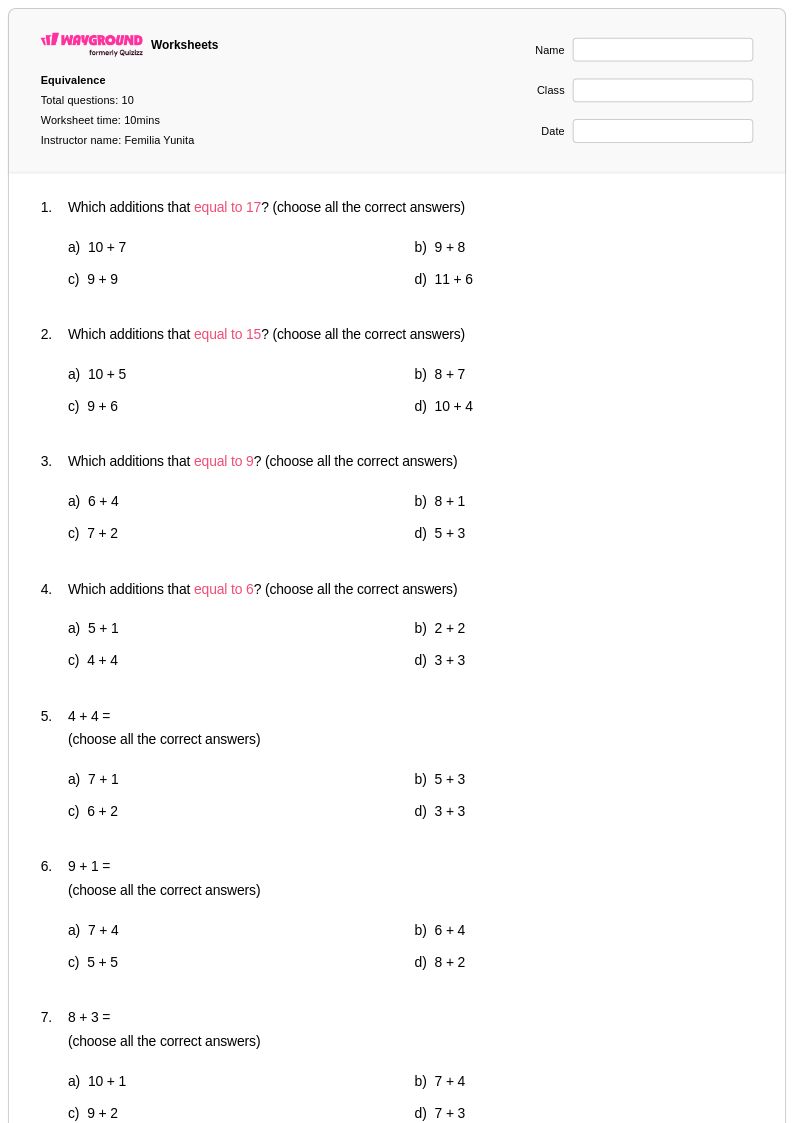
10 Q
1st
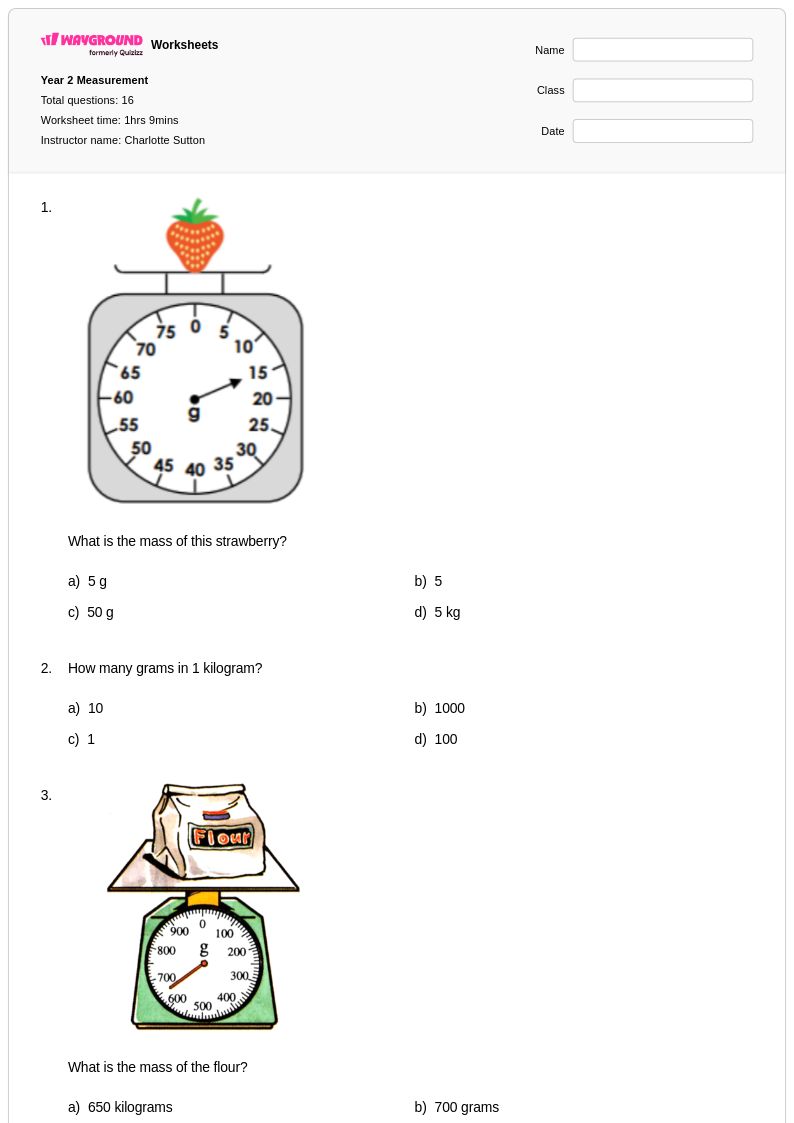
16 Q
1st - 2nd
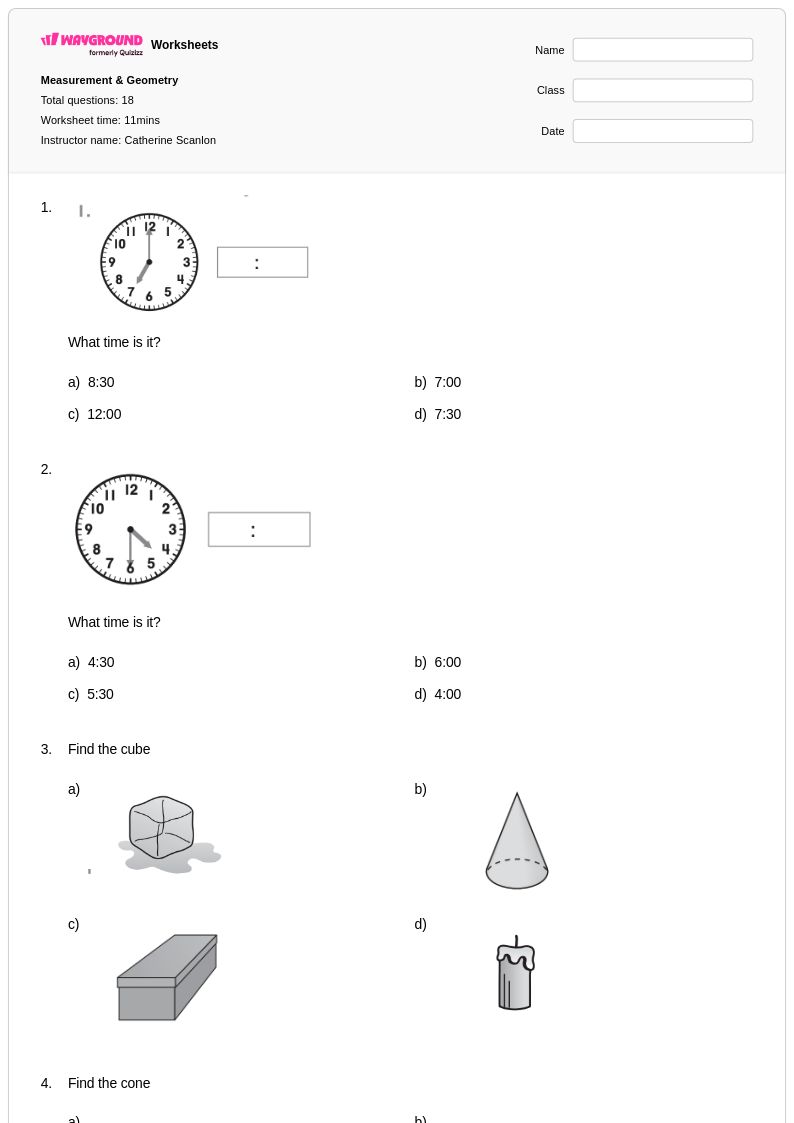
18 Q
1st - 2nd
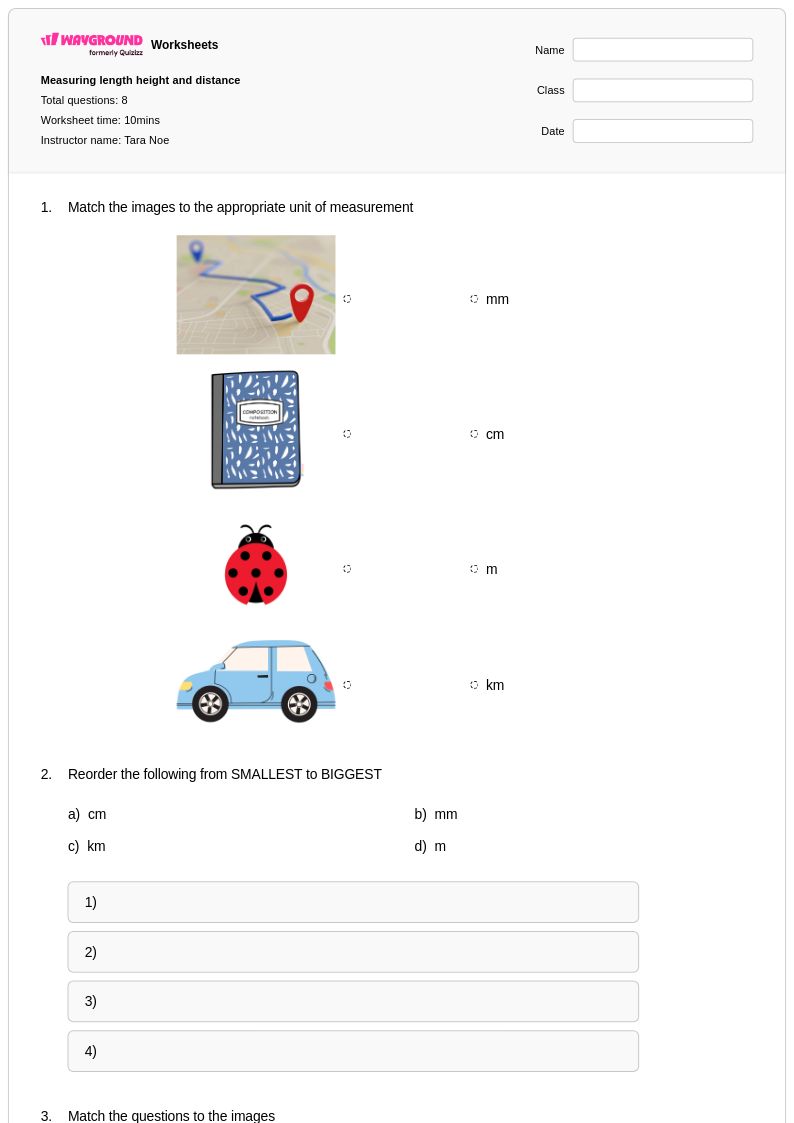
8 Q
1st
8 Q
1st - 5th
10 Q
1st
17 Q
1st
13 Q
1st
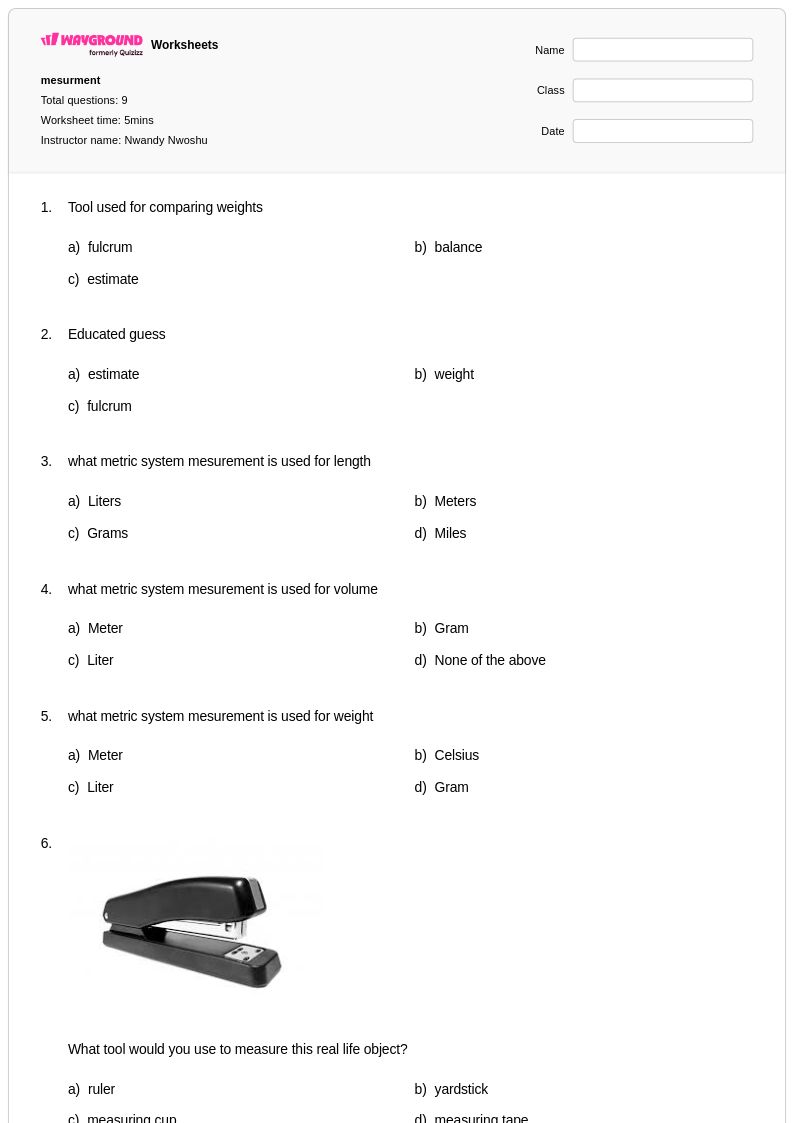
9 Q
1st - 2nd
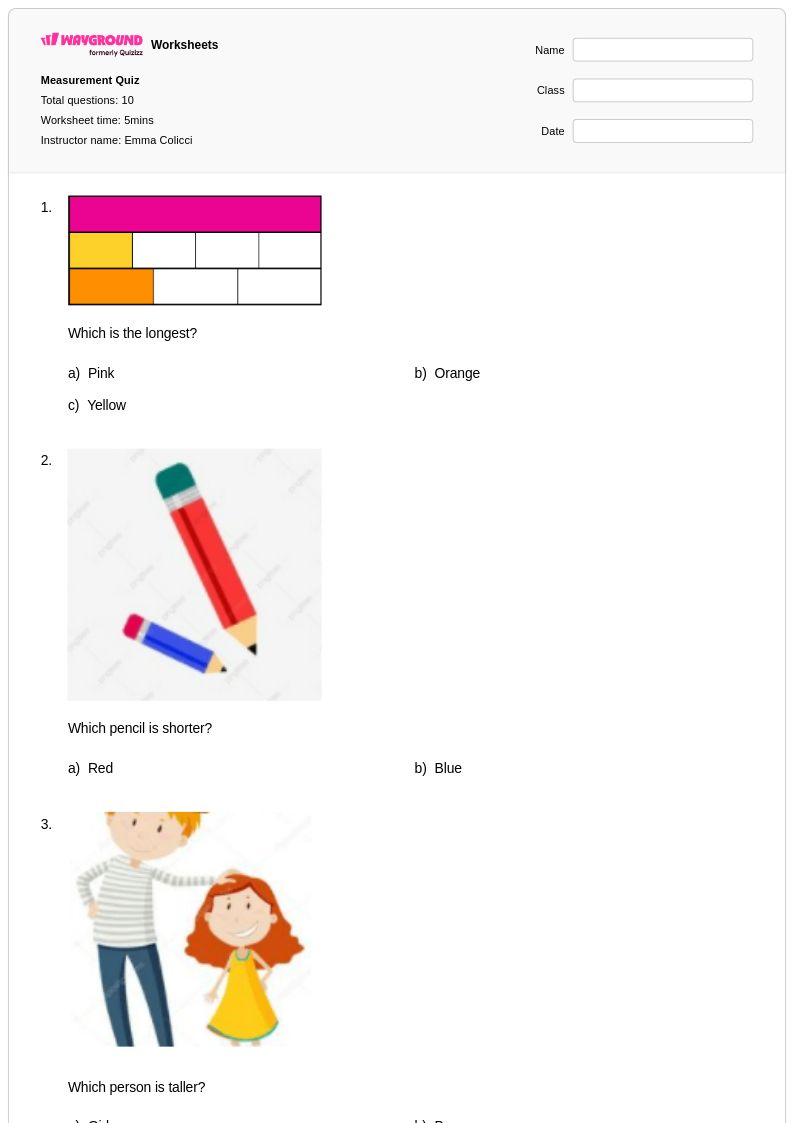
10 Q
1st
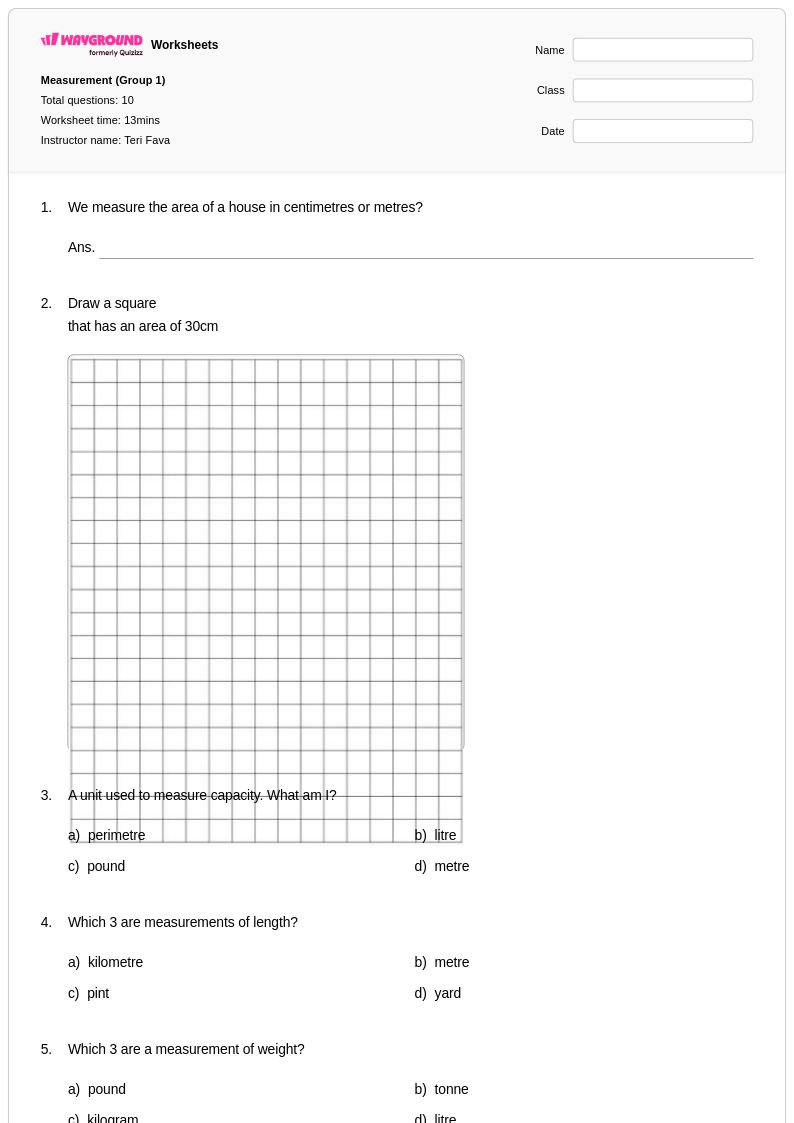
10 Q
1st - 5th
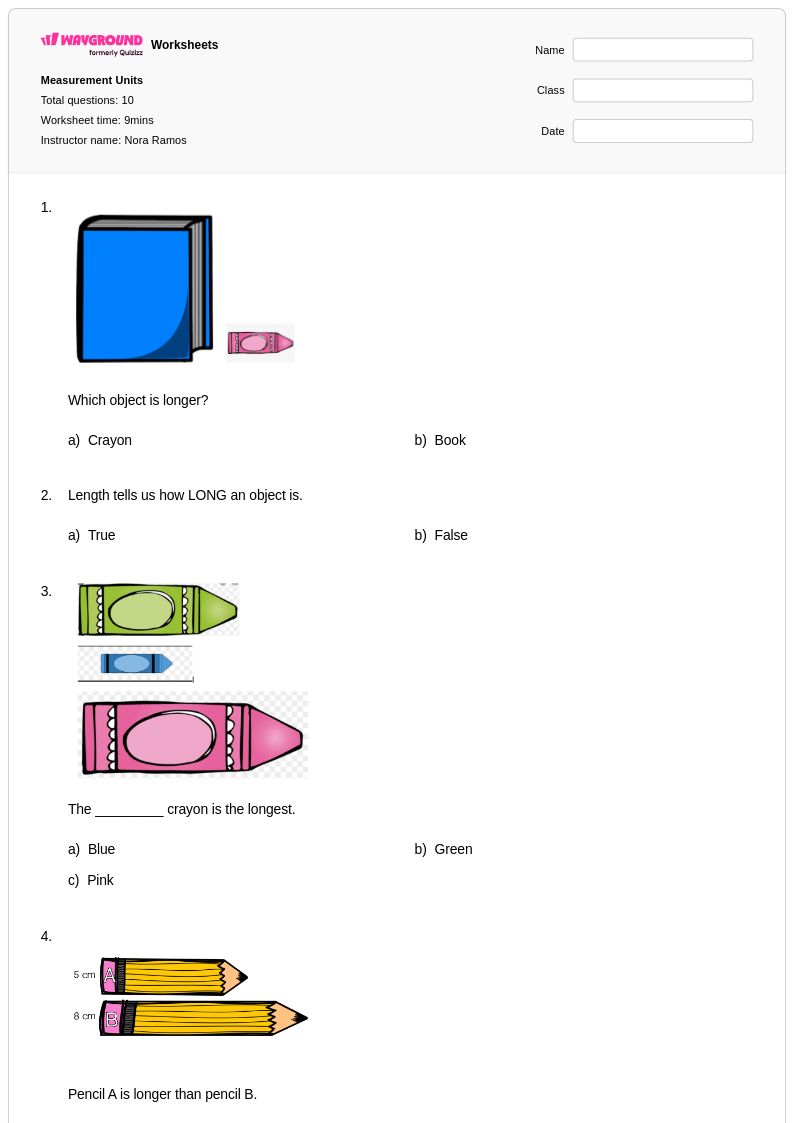
10 Q
1st
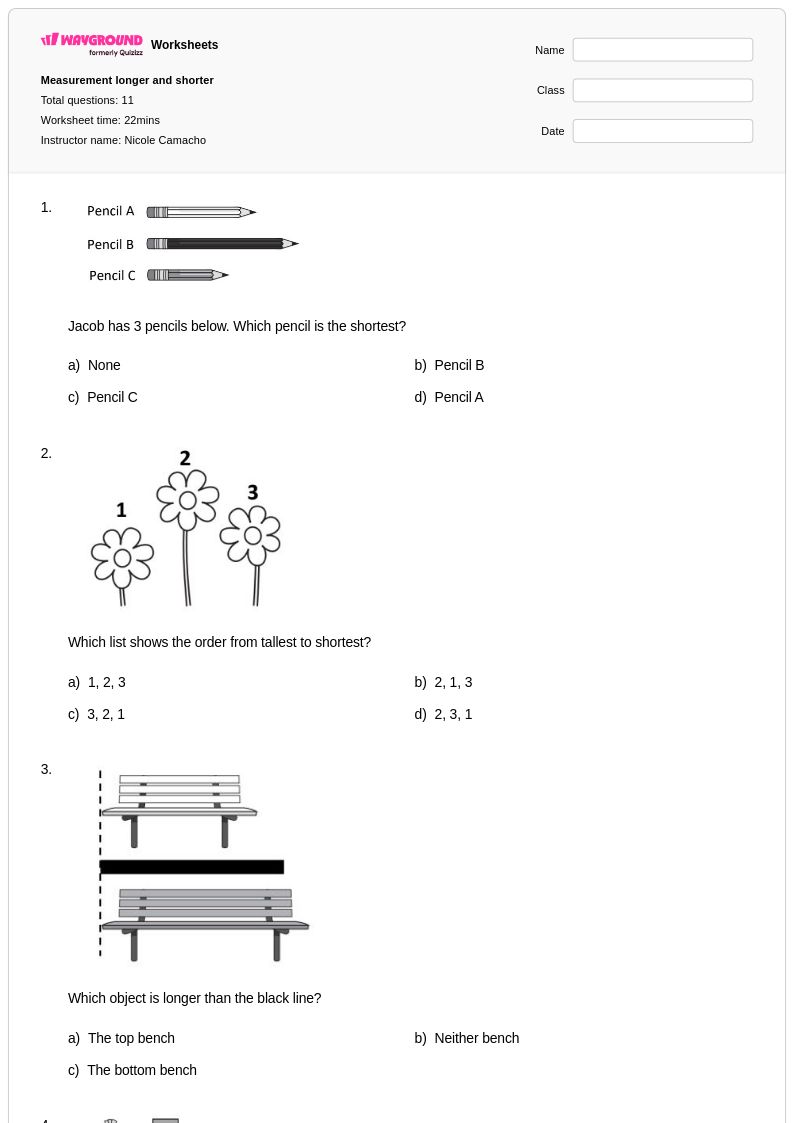
11 Q
1st
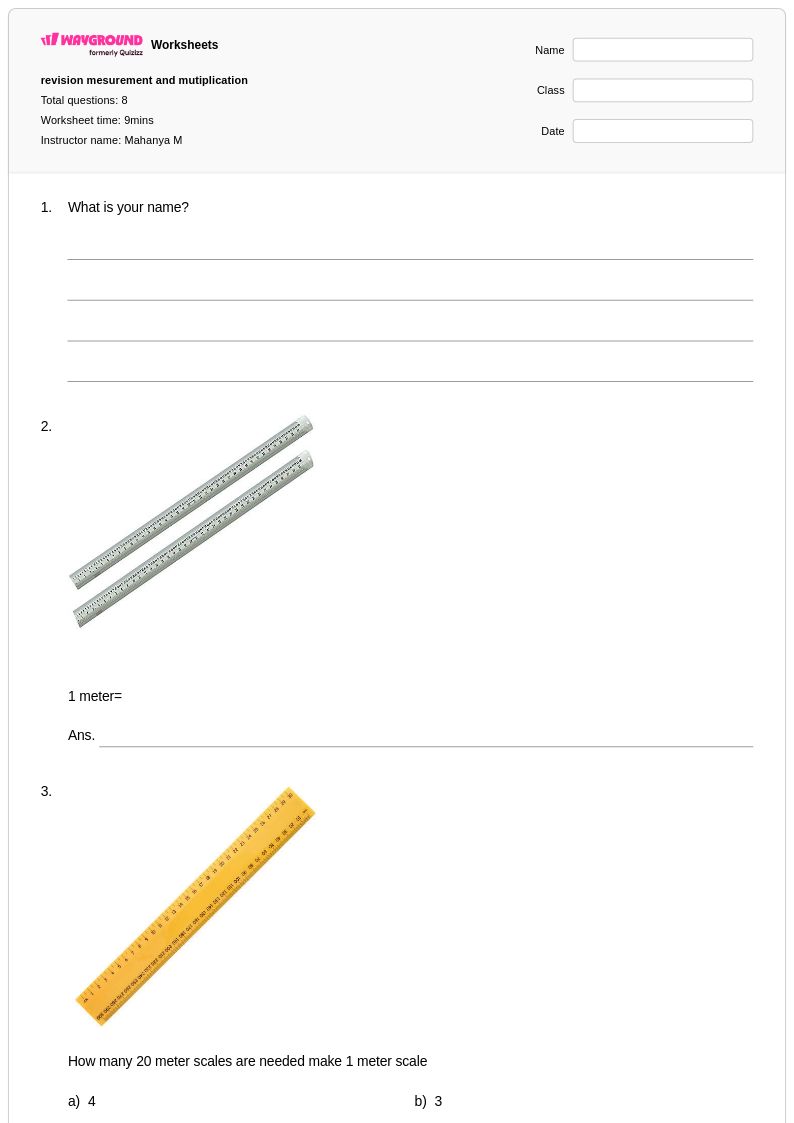
8 Q
1st - 2nd
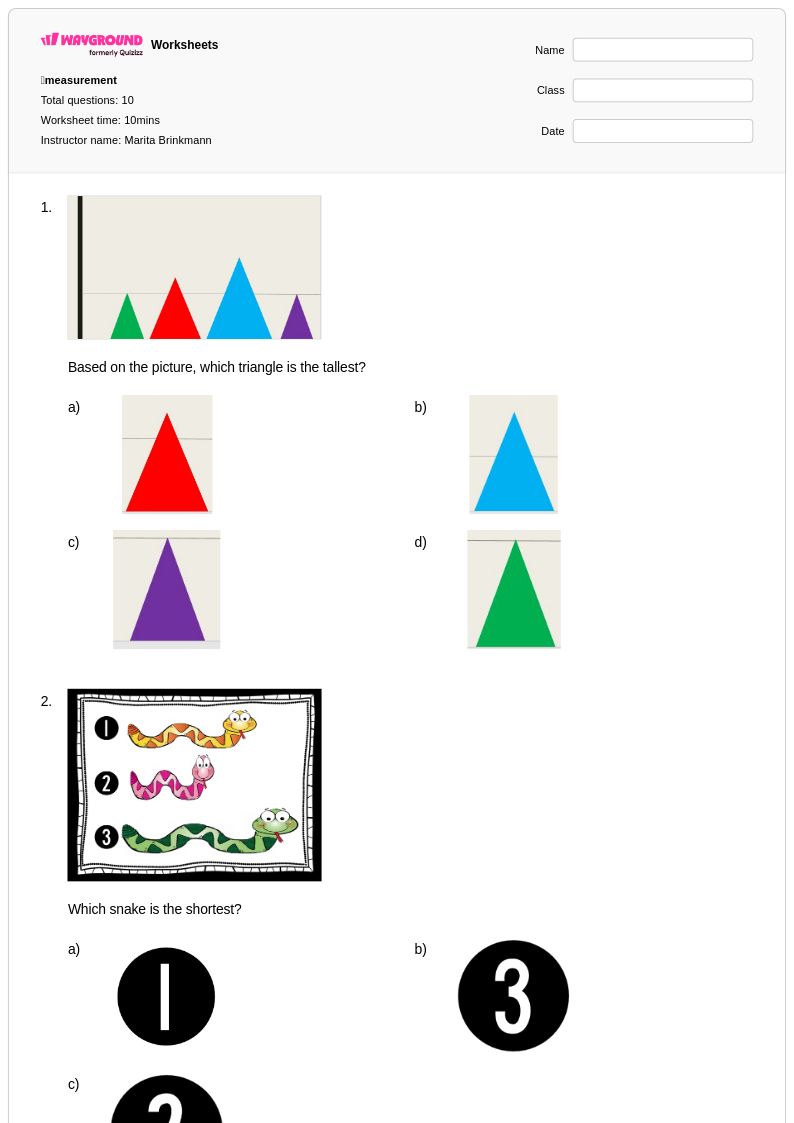
10 Q
1st
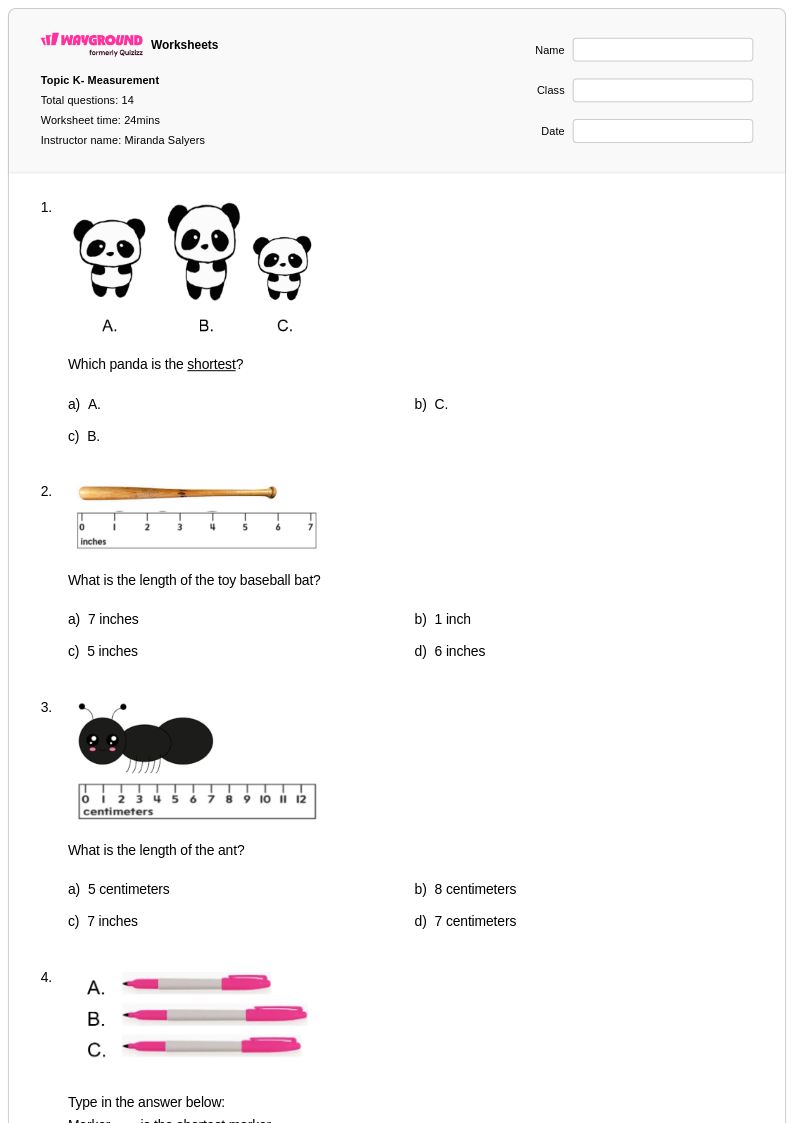
14 Q
1st
Explore Other Subject Worksheets for year 1
Explore printable Measurement and Equivalence worksheets for Year 1
Measurement and equivalence worksheets for Year 1 students through Wayground (formerly Quizizz) provide essential practice in comparing different units of measurement and understanding how various measurements relate to one another. These carefully designed printables help young learners develop foundational skills in recognizing when objects are longer, shorter, heavier, lighter, or hold more or less than others. Students work through practice problems that strengthen their ability to make direct comparisons between objects and understand basic equivalence concepts using non-standard units like paperclips, blocks, or hand spans. Each worksheet comes with a comprehensive answer key, making it easy for educators to assess student understanding and provide immediate feedback on these critical mathematical concepts.
Wayground (formerly Quizizz) supports teachers with an extensive collection of millions of teacher-created measurement and equivalence resources specifically designed for Year 1 mathematics instruction. The platform's robust search and filtering capabilities allow educators to quickly locate worksheets that align with specific curriculum standards and match their students' developmental needs. Teachers can easily customize these materials for differentiation, creating multiple versions to support struggling learners while providing enrichment opportunities for advanced students. Available in both printable pdf format and interactive digital versions, these worksheets seamlessly integrate into lesson planning for skill practice, remediation sessions, and formative assessment activities that build student confidence in comparing and understanding measurement relationships.
FAQs
What measurement skills are taught in Grade 1?
How should I teach measurement in first grade?
What's a common error when first graders learn to measure?
What exercises are best for first-grade measurement practice?
How can I use these Grade 1 measurement worksheets?
How does this align with Grade 1 math standards?