Free Printable Measurement Tools Worksheets for Year 2
Enhance Year 2 students' understanding of measurement tools with Wayground's collection of free science worksheets and printables that provide engaging practice problems and complete answer keys for hands-on learning.
Explore printable Measurement Tools worksheets for Year 2
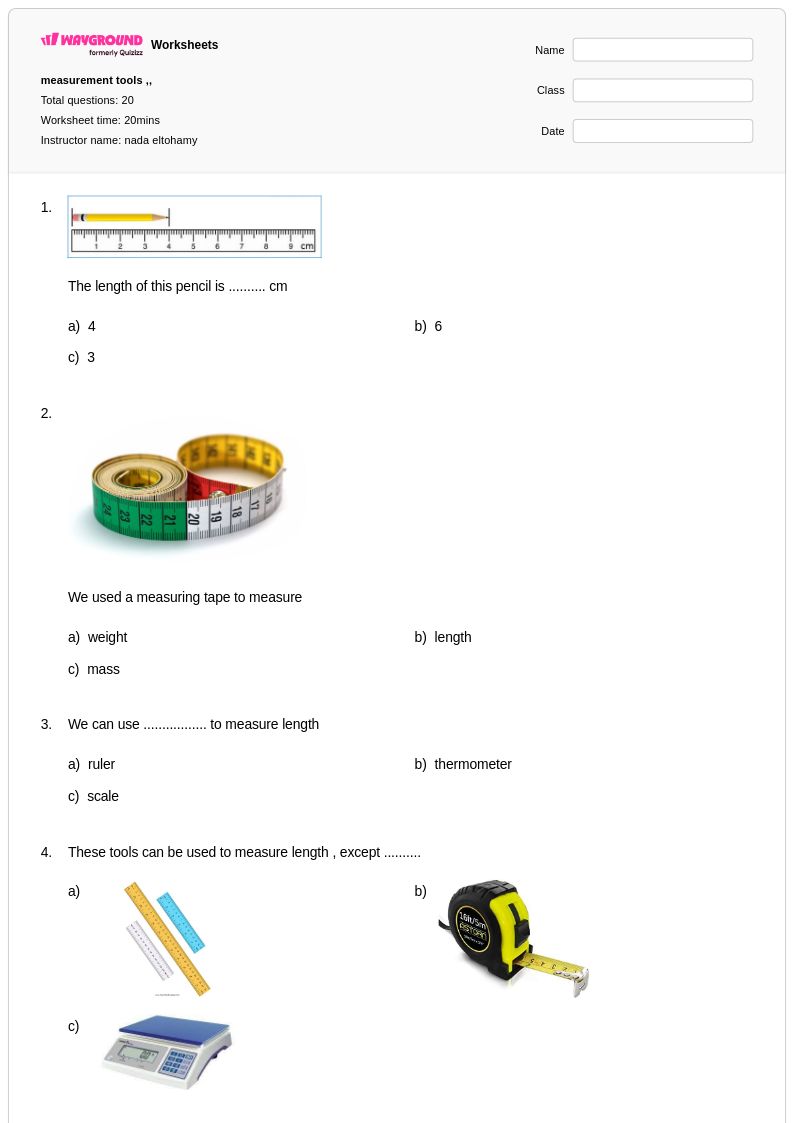
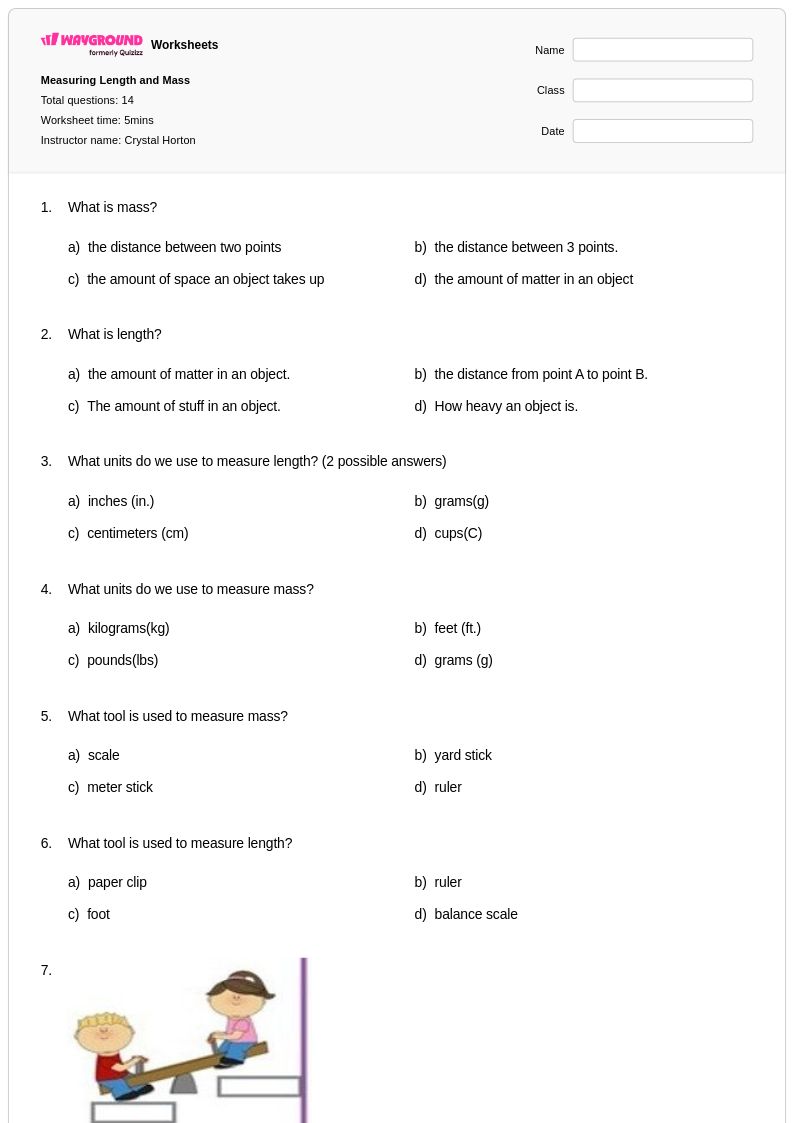
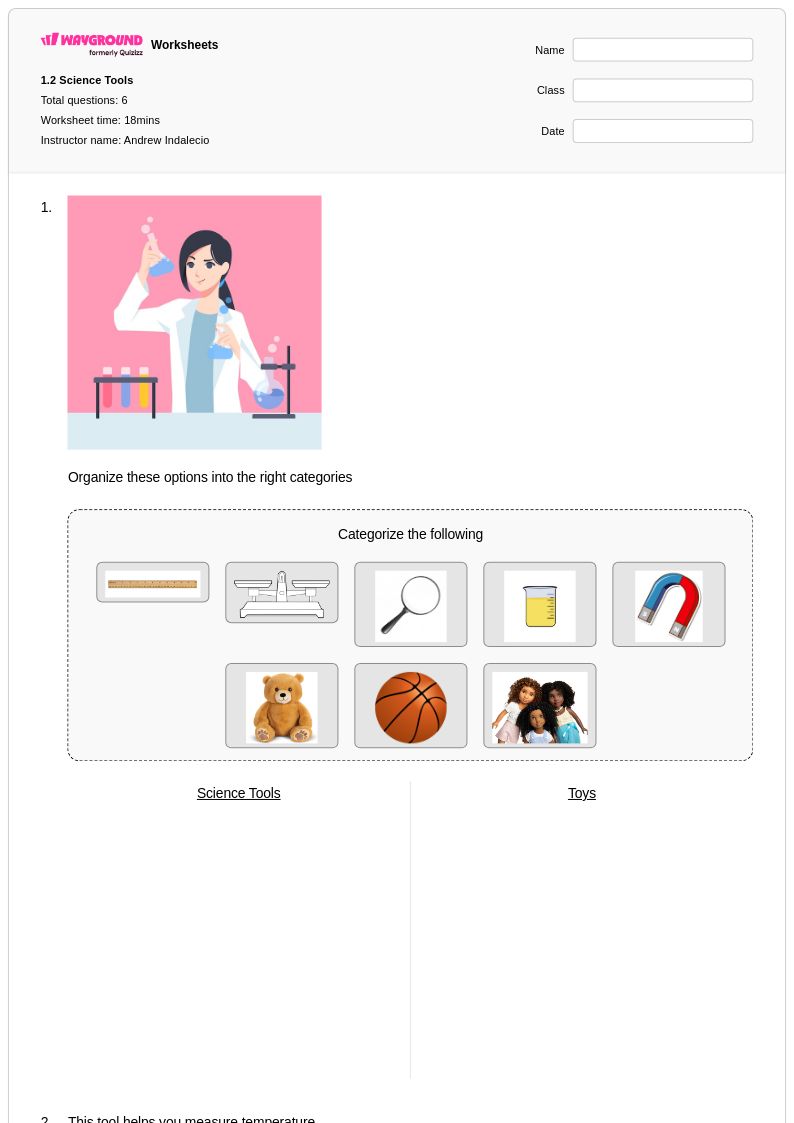
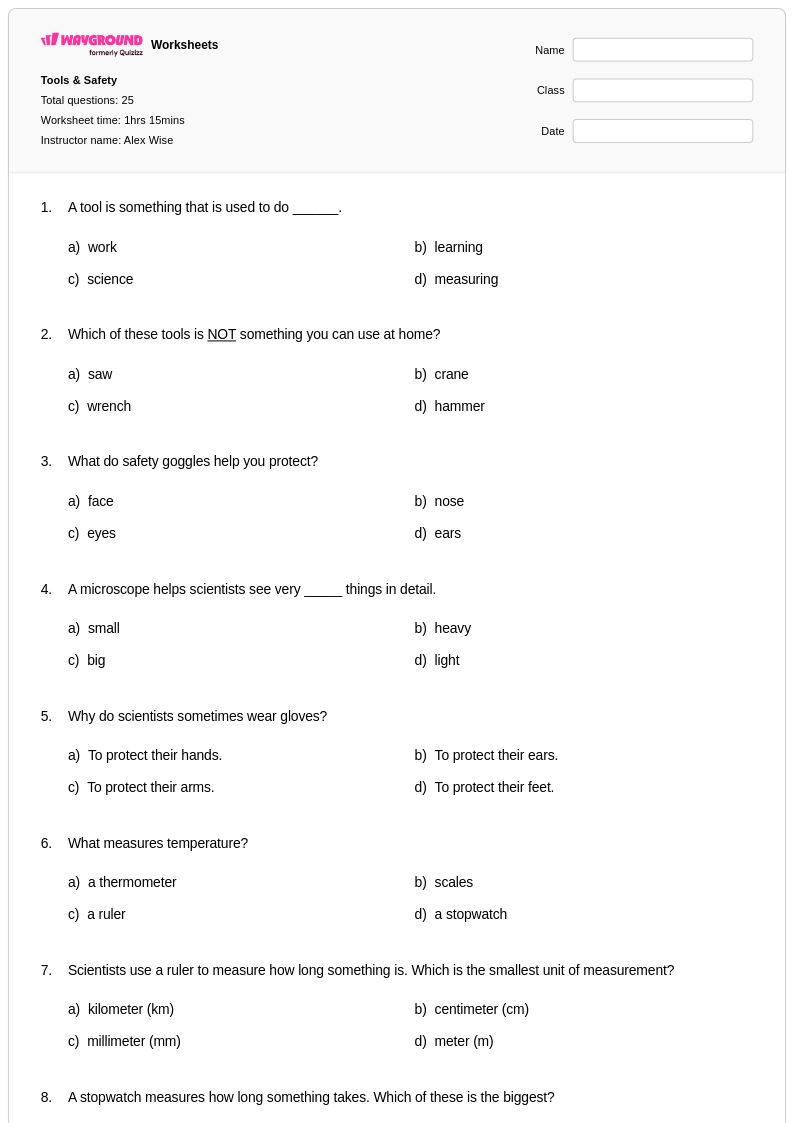
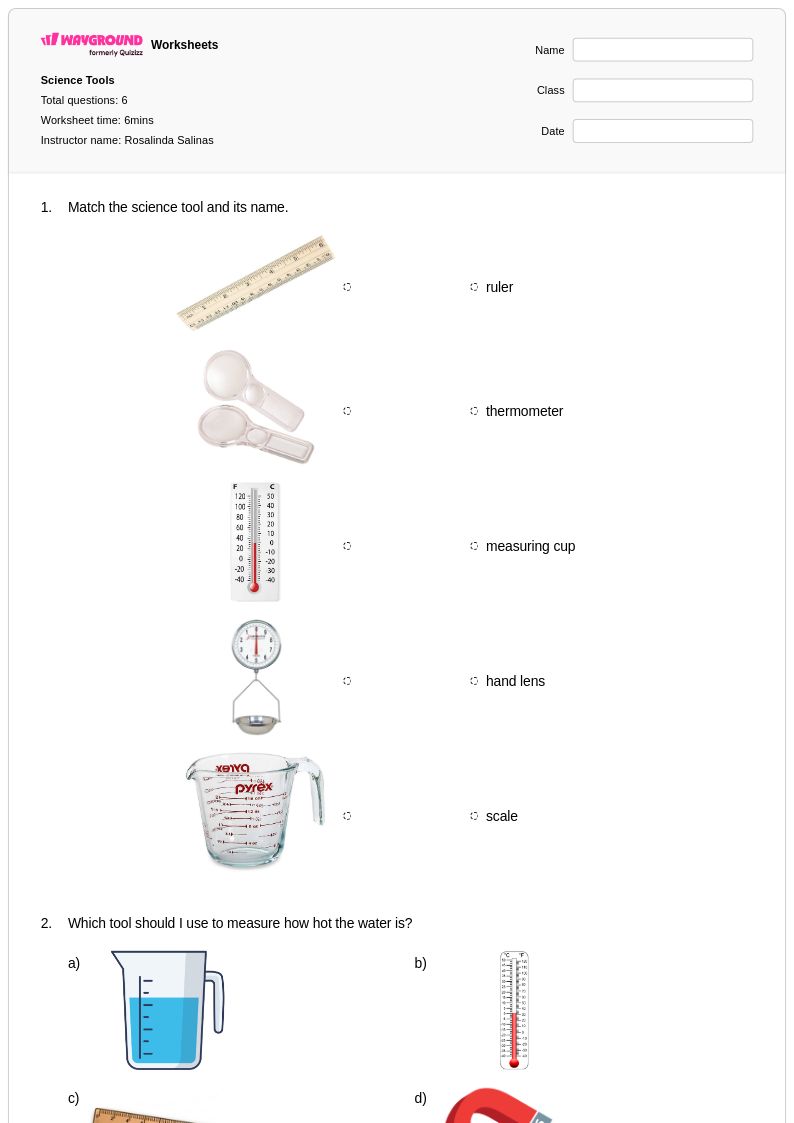
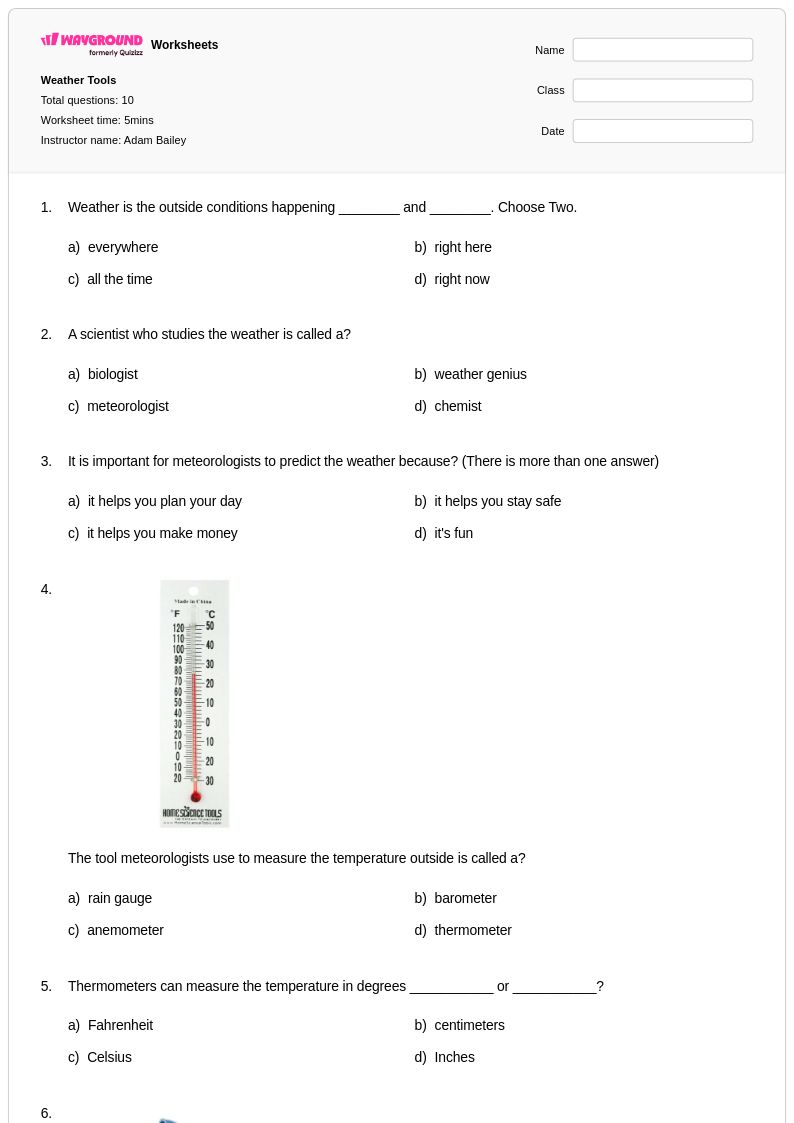
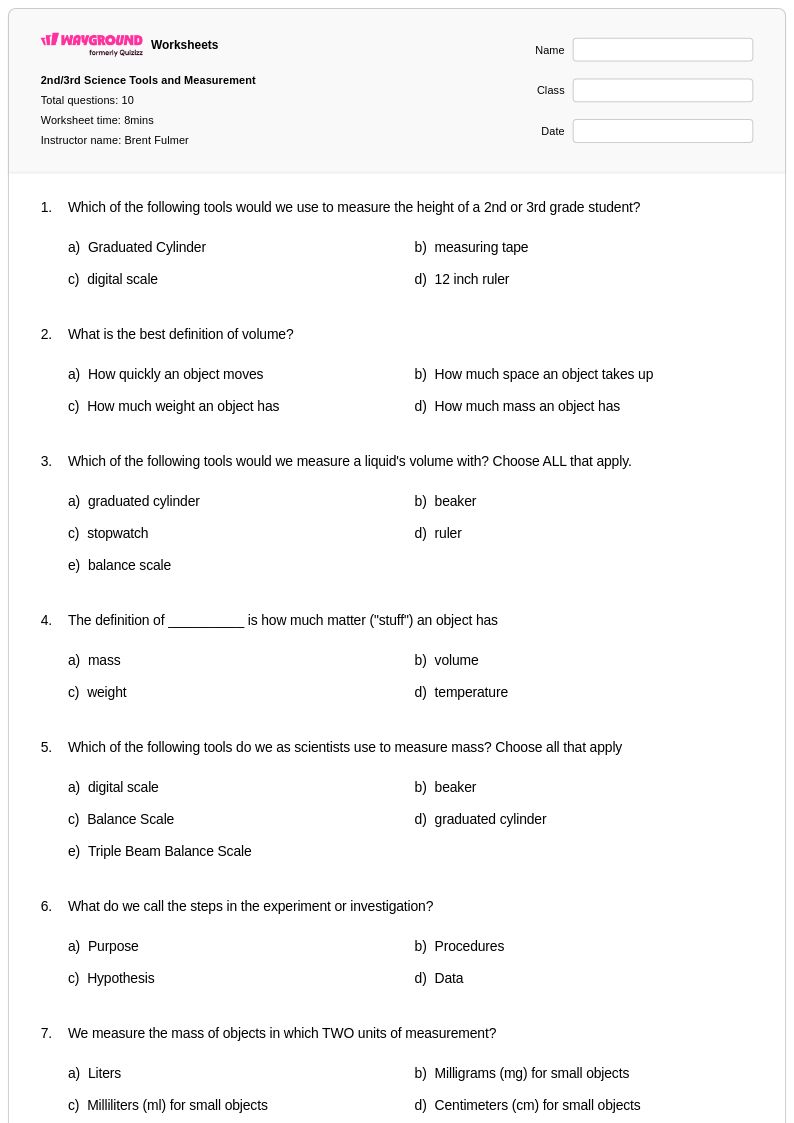
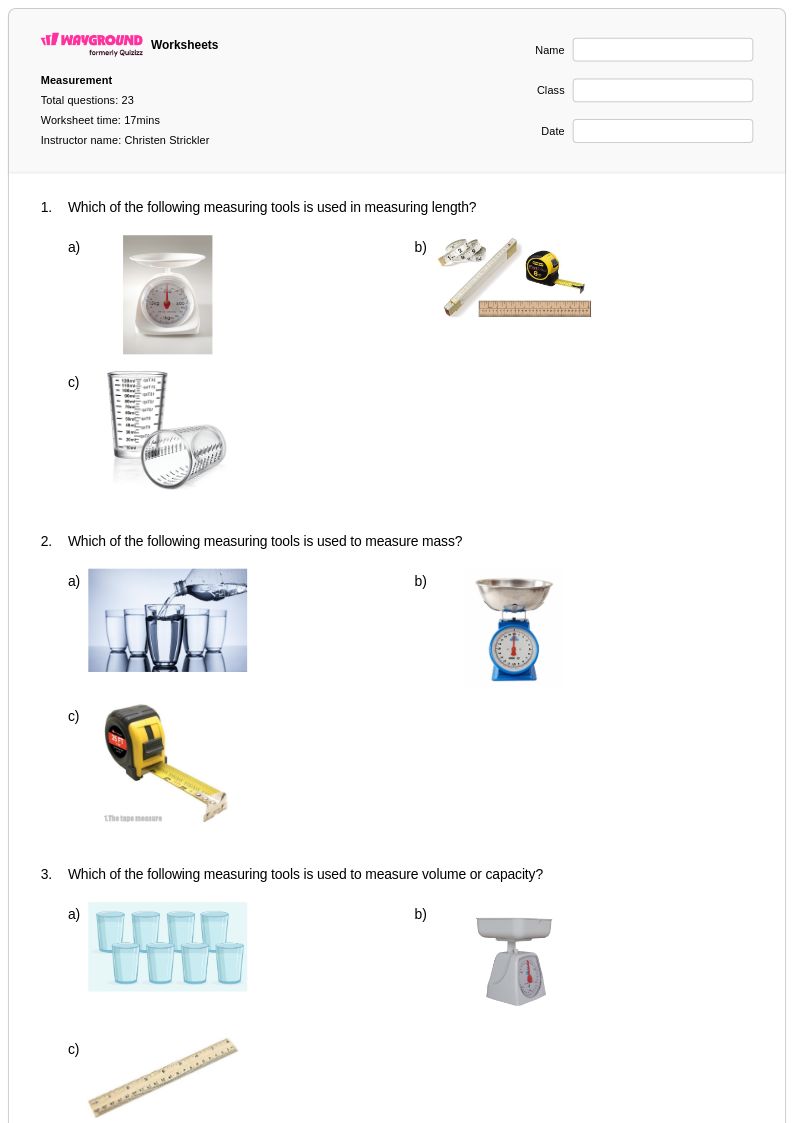
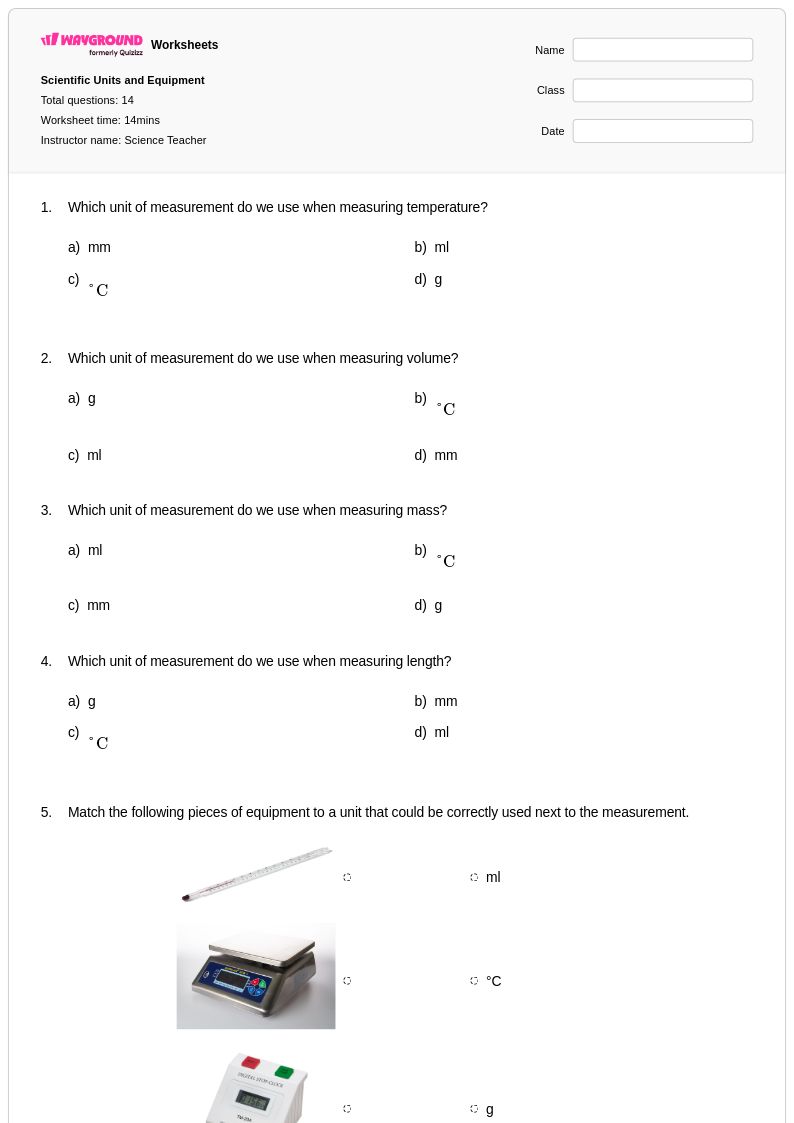
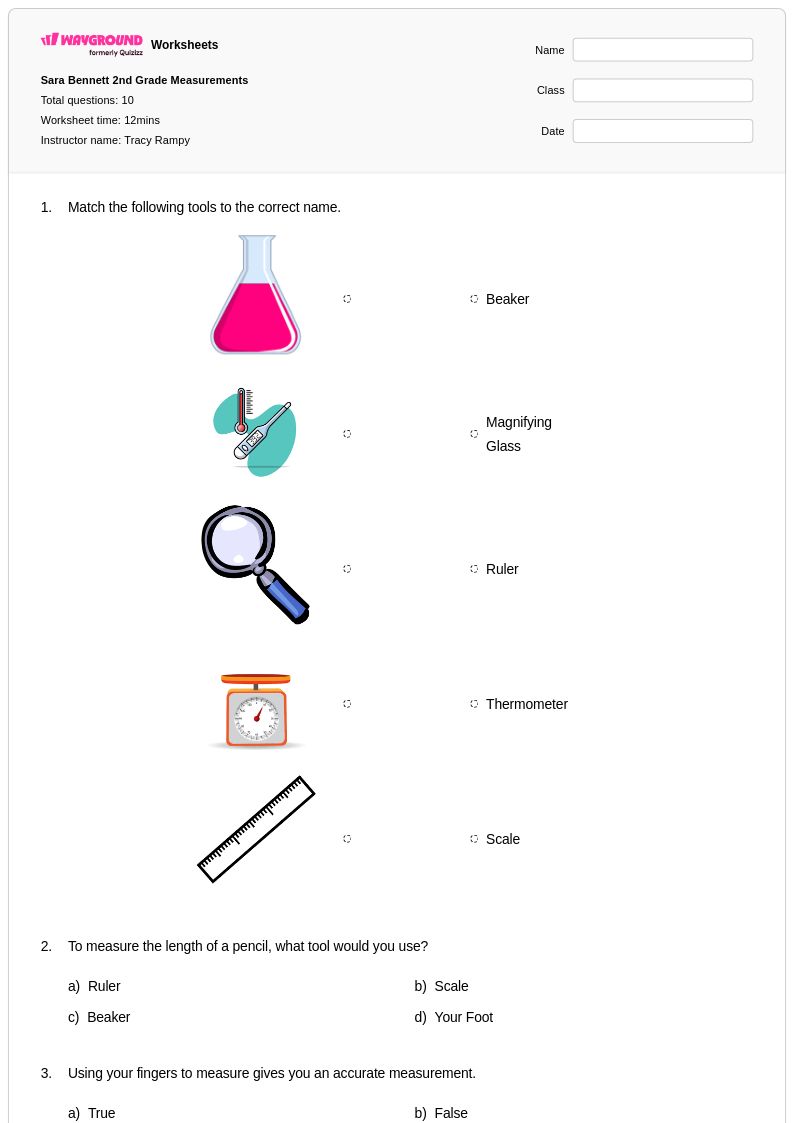
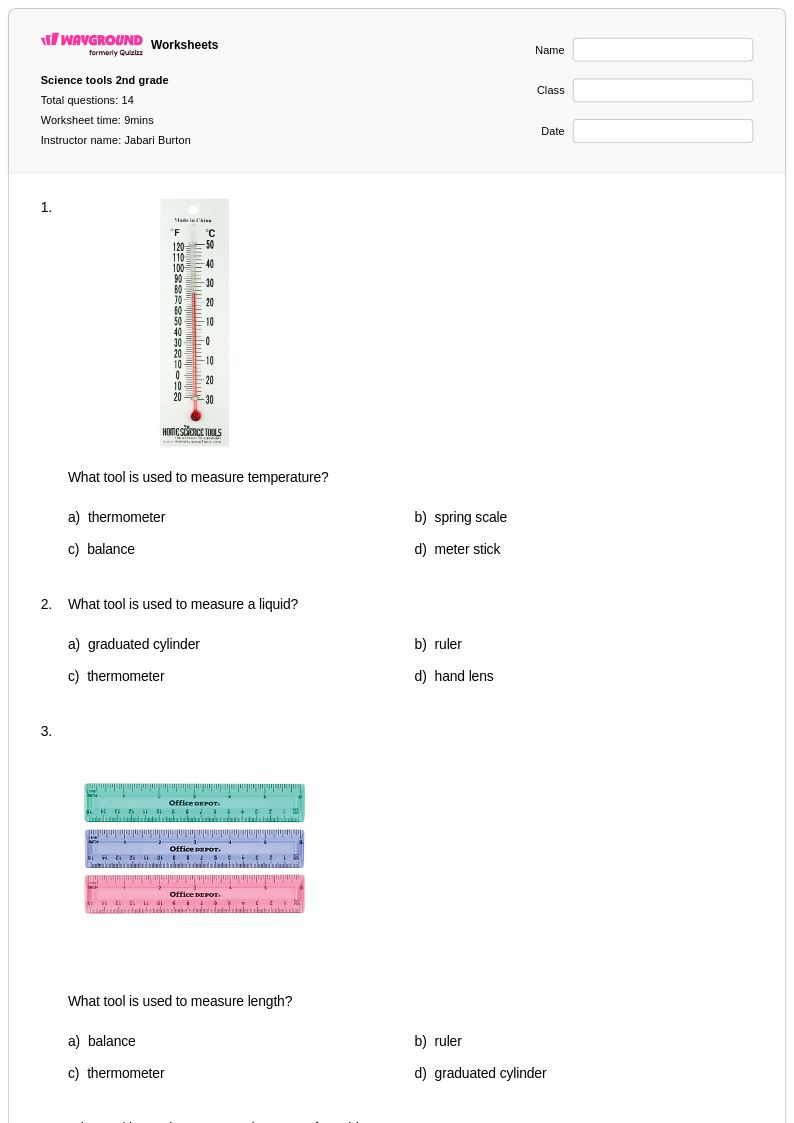
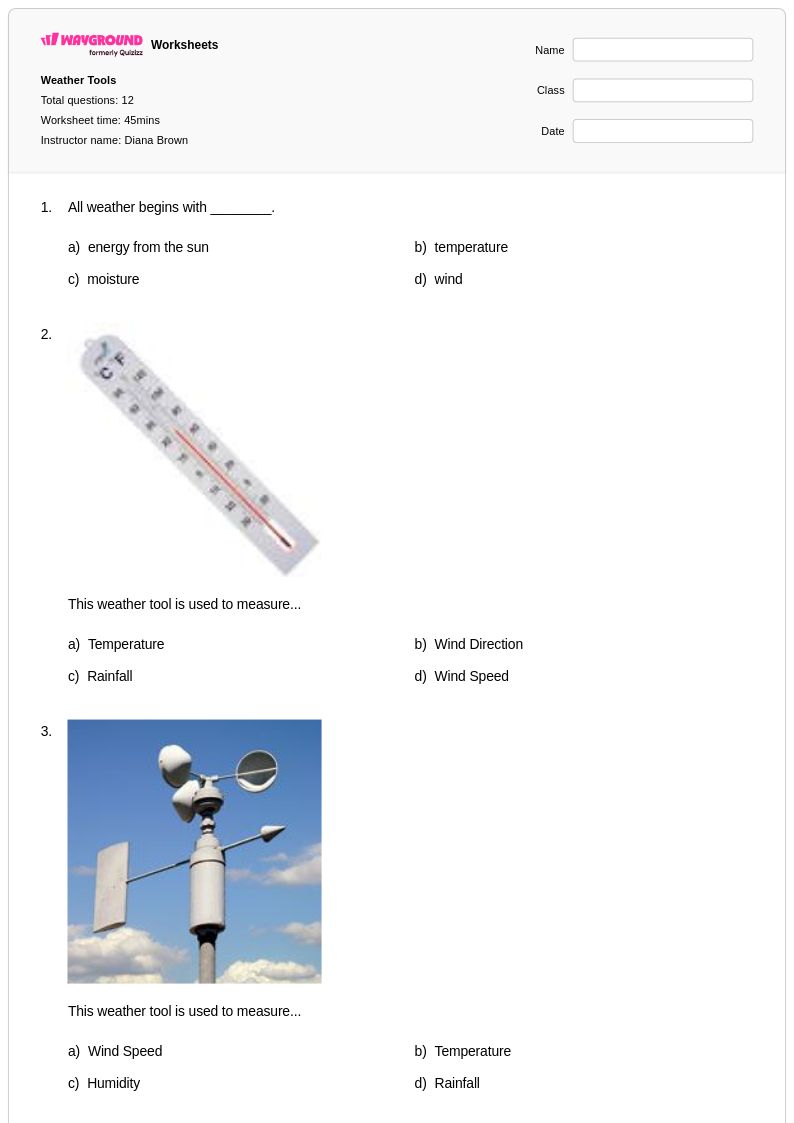
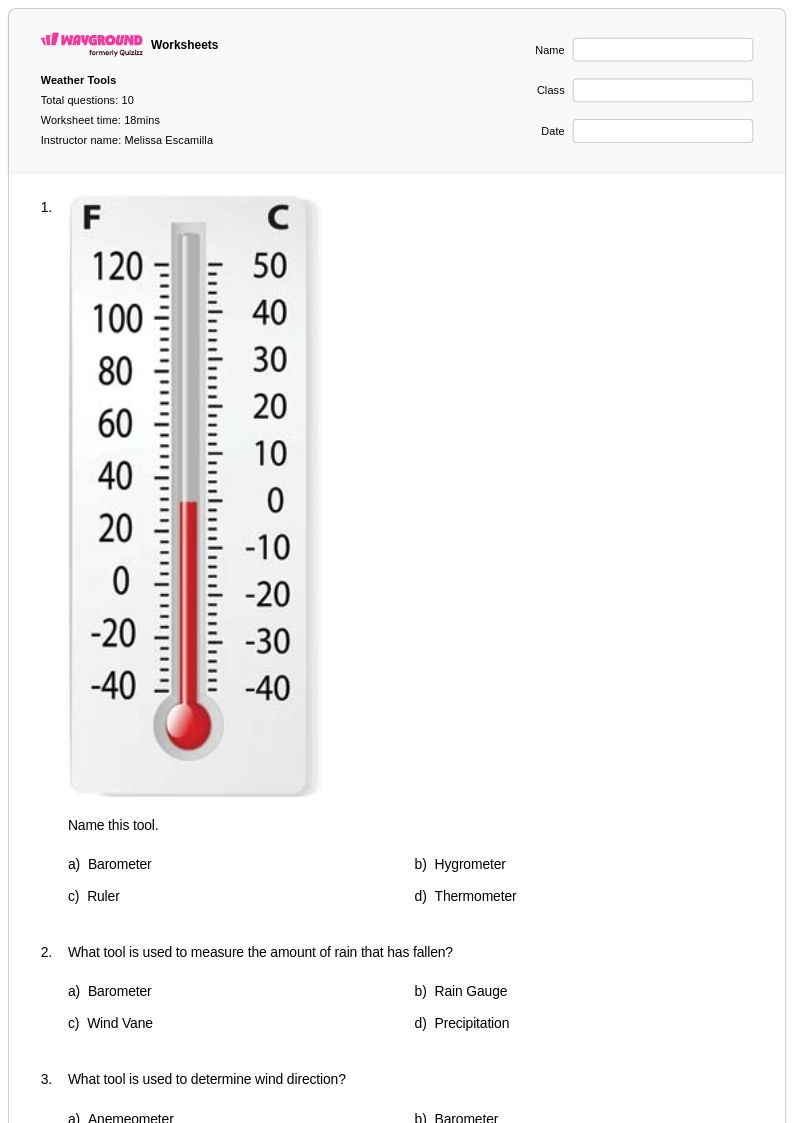
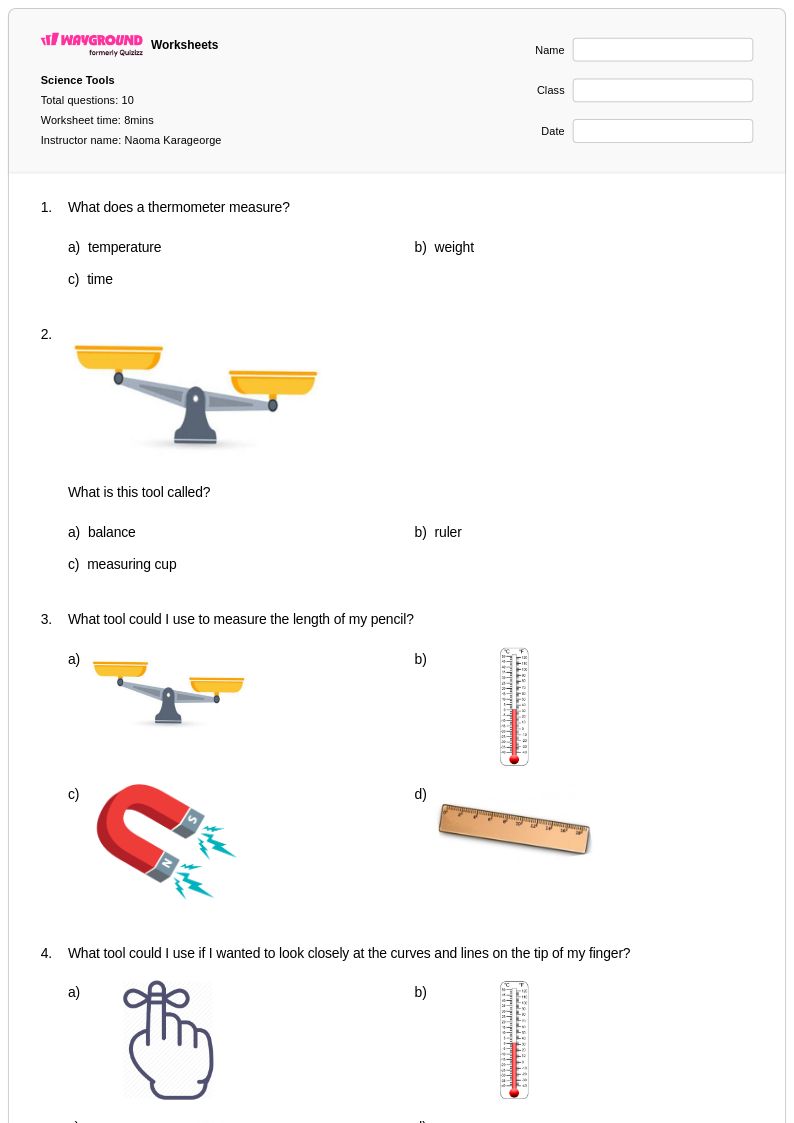
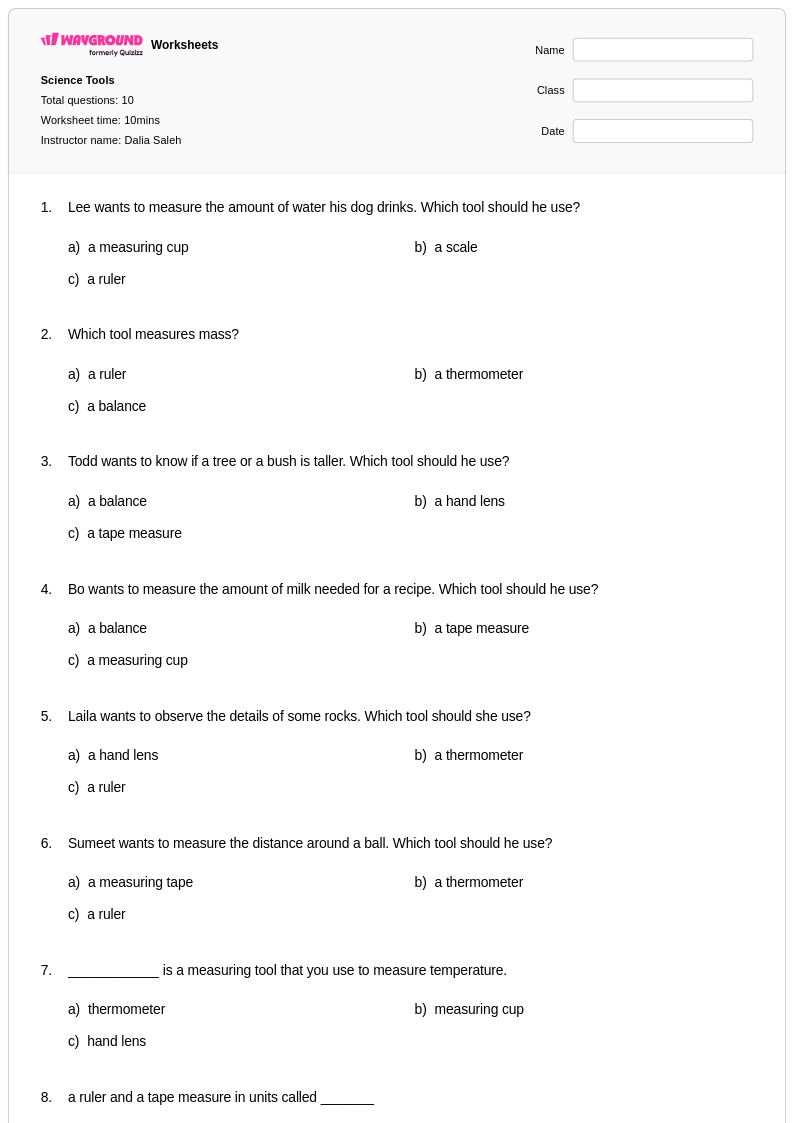
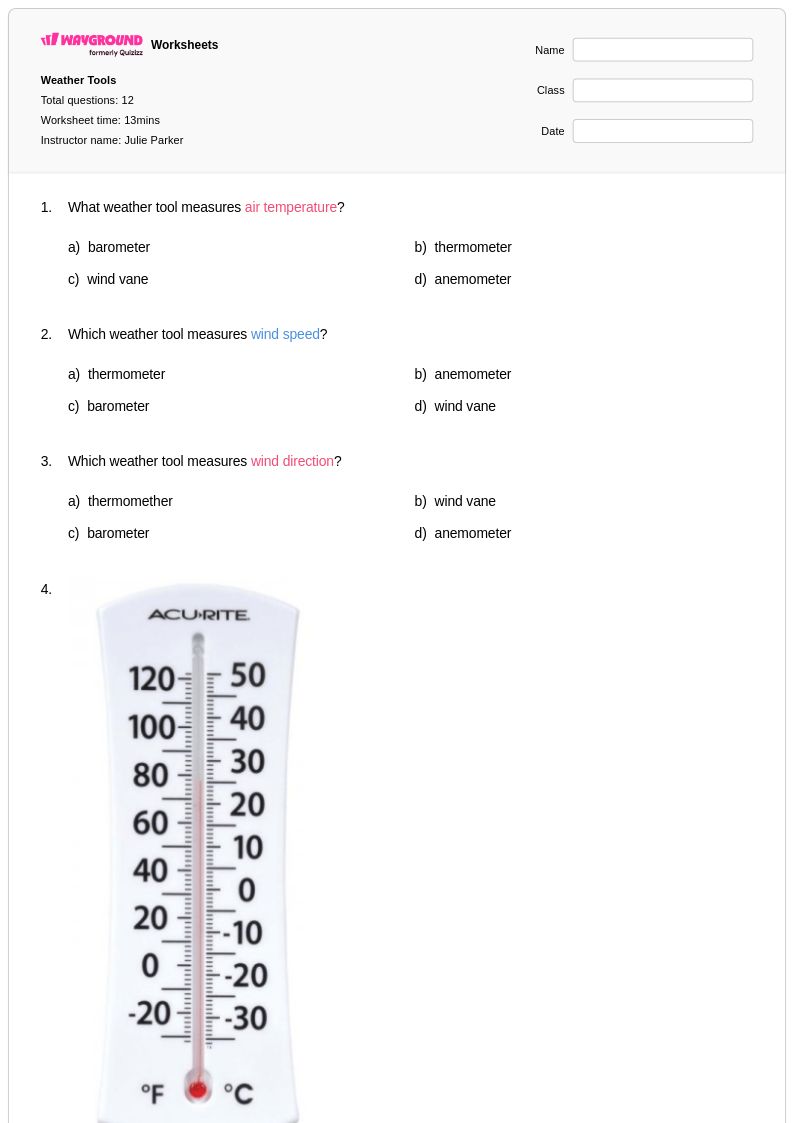
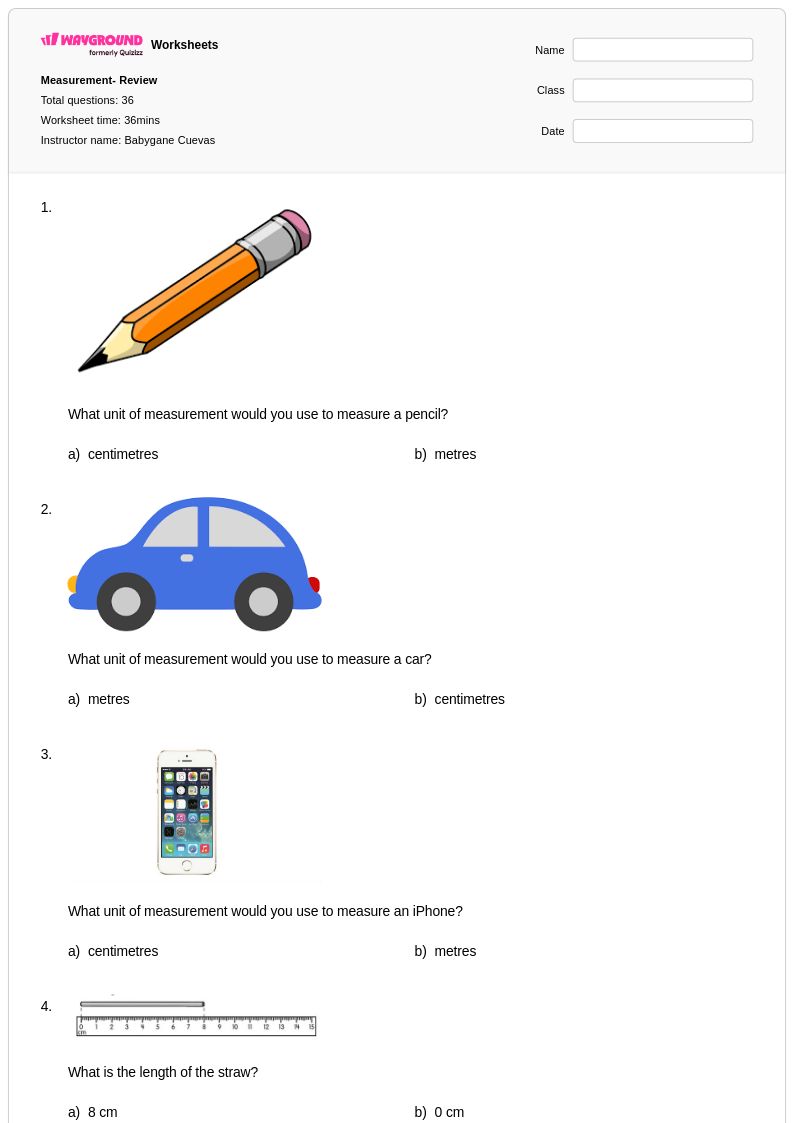
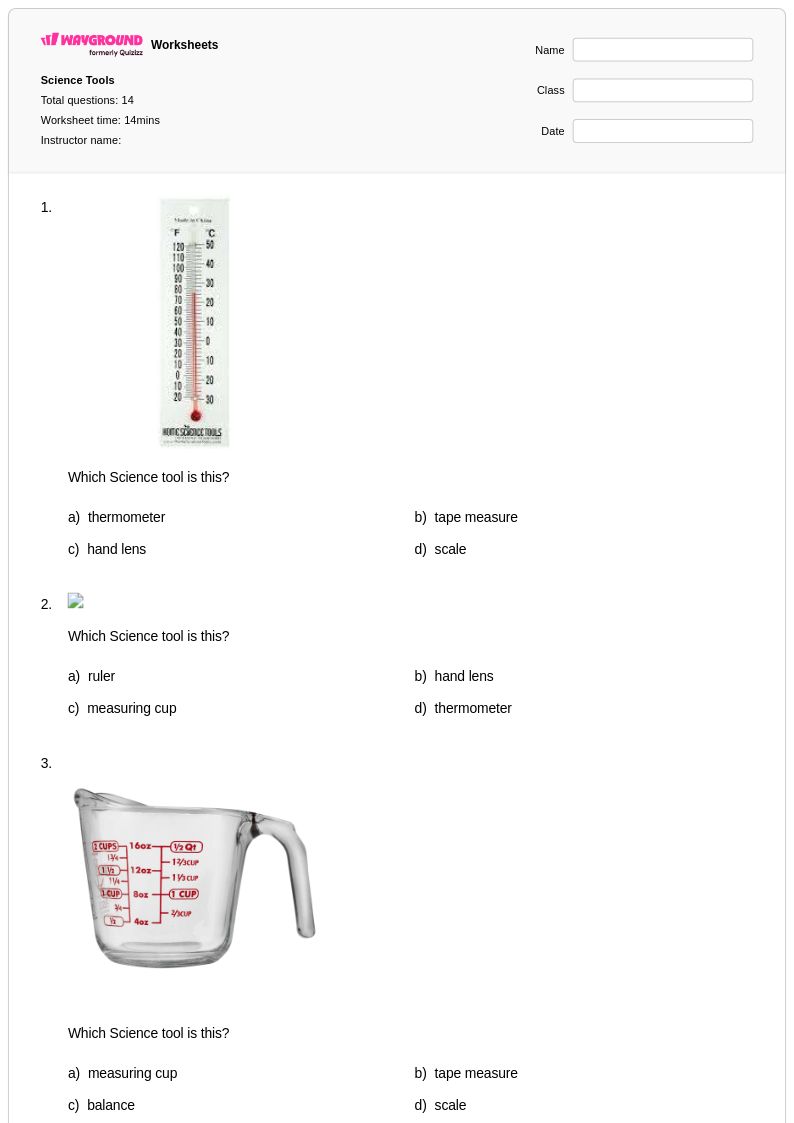
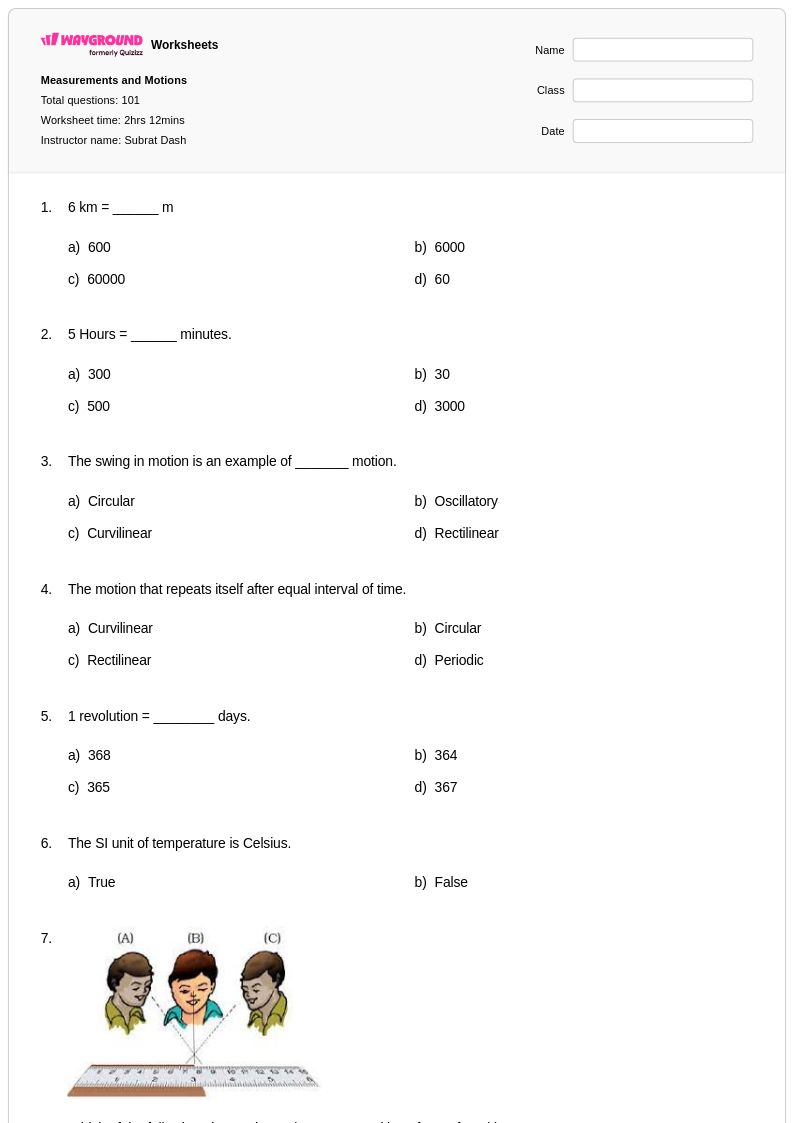
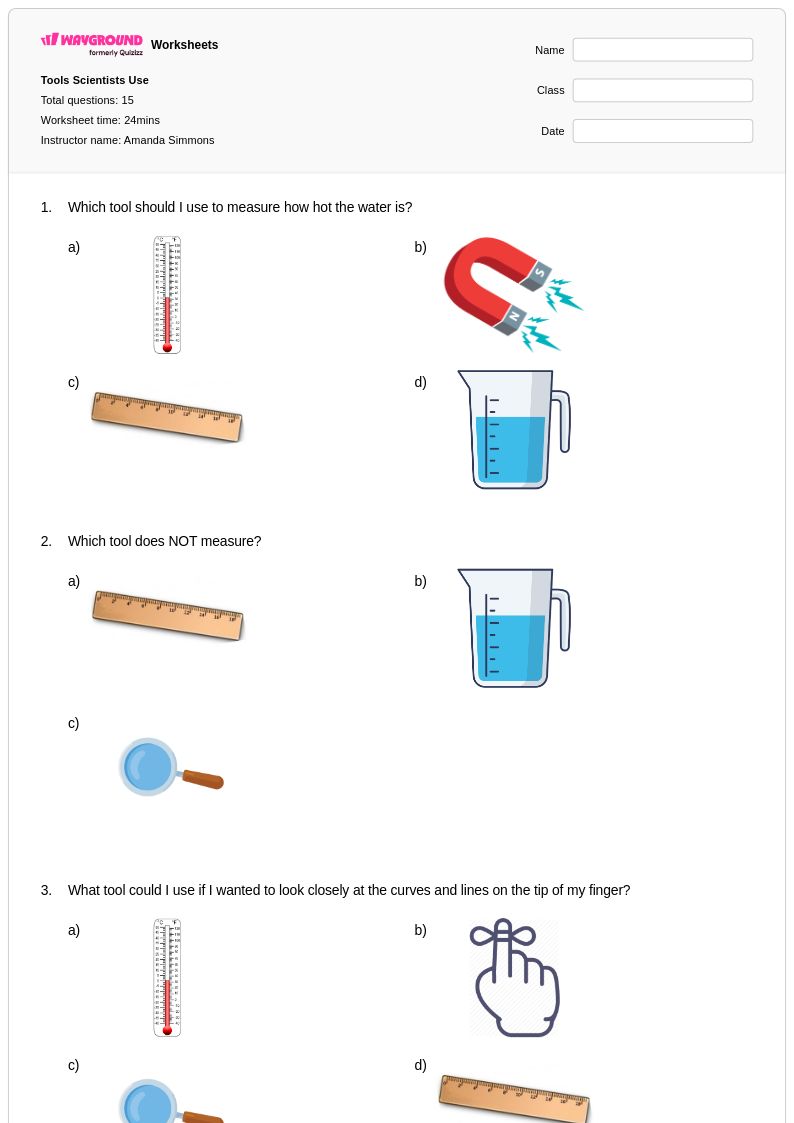
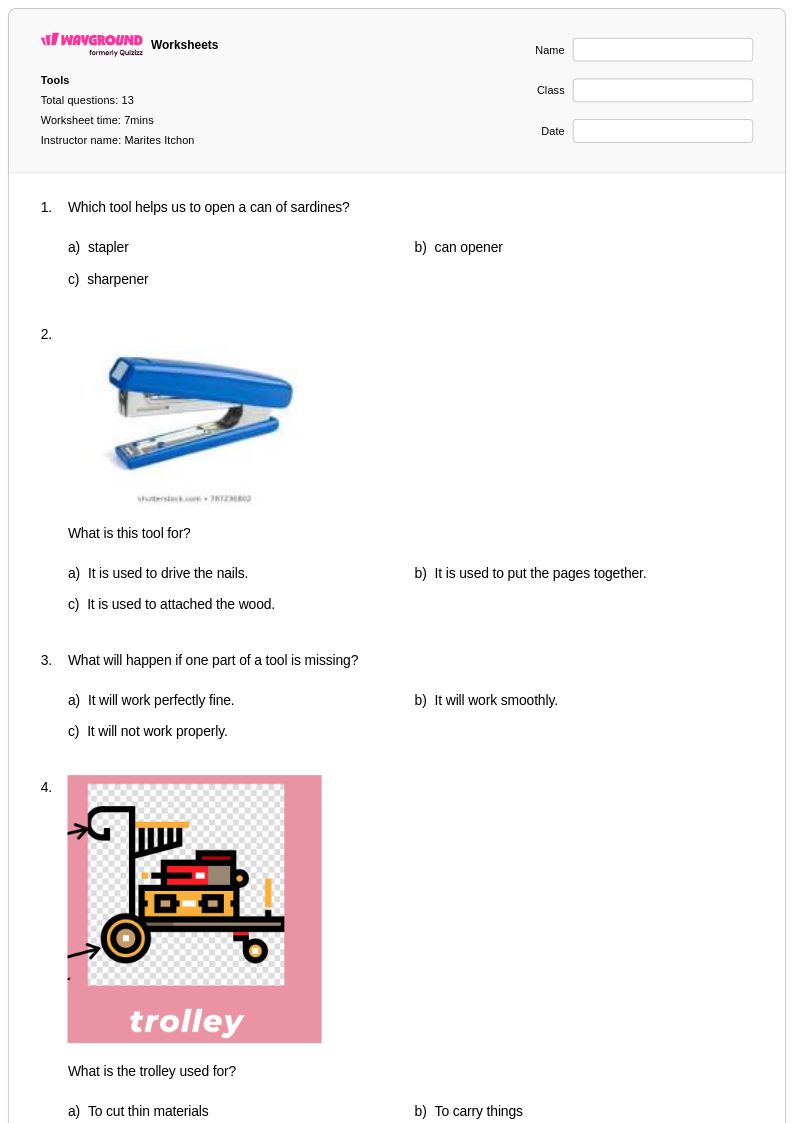
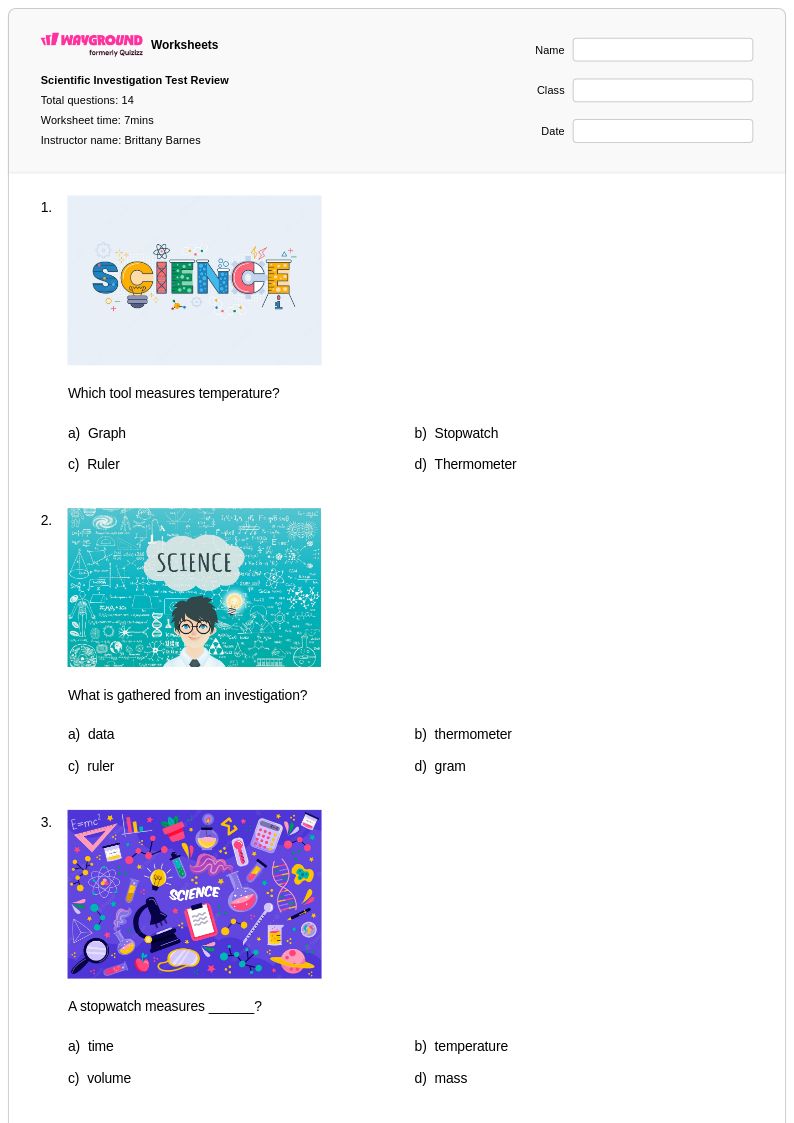
Measurement tools worksheets for Year 2 students available through Wayground (formerly Quizizz) provide essential hands-on practice with the fundamental instruments young learners use to quantify their world. These carefully designed printables introduce second graders to rulers, measuring cups, scales, thermometers, and clocks through engaging activities that build foundational measurement skills. Students develop proficiency in selecting appropriate tools for different measurement tasks, reading basic units on various instruments, and understanding concepts like length, weight, volume, and temperature. The comprehensive collection includes practice problems that progress from simple tool identification to more complex measurement scenarios, with accompanying answer keys that support both independent learning and guided instruction. These free pdf resources strengthen critical thinking skills as students learn to estimate, measure accurately, and compare measurements using standard and non-standard units.
Wayground (formerly Quizizz) empowers teachers with millions of educator-created measurement tools worksheets specifically aligned to Year 2 science standards and learning objectives. The platform's robust search and filtering capabilities allow instructors to quickly locate resources that match their specific curriculum needs, whether focusing on linear measurement with rulers, capacity measurement with cups, or time measurement with analog clocks. Teachers can easily differentiate instruction by selecting from various difficulty levels within the measurement tools topic, customizing worksheets to meet individual student needs, and accessing both printable pdf formats for traditional classroom use and digital versions for interactive learning experiences. These versatile resources support comprehensive lesson planning while providing targeted practice for skill remediation, enrichment activities for advanced learners, and ongoing assessment opportunities that help educators track student progress in mastering essential measurement concepts and tool usage.
FAQs
How do I teach students to use measurement tools correctly in science class?
Start by introducing each tool individually, emphasizing proper technique before moving to accuracy. For rulers, teach students to align the zero mark, not the edge. For graduated cylinders, explicitly address reading at the bottom of the meniscus. For balances and thermometers, have students practice with physical objects before transitioning to diagram-based worksheet problems. Connecting each tool to a real lab scenario helps students understand why precision matters.
What exercises help students practice reading scientific measurement tools?
Worksheet exercises that show labeled diagrams of graduated cylinders, rulers, thermometers, and balances at various readings are highly effective for building fluency. Students should practice identifying the correct unit, reading the scale at the appropriate point, and recording measurements with proper significant figures. Including problems that mix multiple tools in a single worksheet helps students build tool-selection judgment alongside reading accuracy.
What mistakes do students commonly make when reading measurement tools?
The most frequent errors include misreading the meniscus on a graduated cylinder by reading from the top rather than the bottom curve, misaligning a ruler by starting from the physical edge instead of the zero mark, and failing to account for scale increments when the markings skip values. Students also frequently record measurements without units or with the wrong units. Targeted practice with labeled diagrams and answer key feedback helps correct these patterns before they solidify.
How do I differentiate measurement tools instruction for students at different skill levels?
For struggling learners, begin with tools that have simple linear scales, such as rulers and basic thermometers, before introducing graduated cylinders or triple-beam balances. Wayground supports individual student accommodations including reduced answer choices to lower cognitive load and Read Aloud for students who need audio support during digital practice. Advanced learners can be challenged with problems involving unit conversion, estimation, or identifying sources of measurement error.
How can I use Wayground's measurement tools worksheets in my classroom?
Wayground's measurement tools worksheets are available as printable PDFs for traditional classroom and lab use, as well as in digital formats for technology-integrated and remote learning environments. Teachers can also host worksheets as a live quiz on Wayground, making them suitable for formative assessment or whole-class review. Each worksheet includes a complete answer key, so they work equally well for independent student practice, guided instruction, or sub plans.
How do I help students choose the right measurement tool for a given task?
Teach students to match the tool to the property being measured and the precision required: rulers for length, balances for mass, graduated cylinders for liquid volume, thermometers for temperature, and stopwatches for time. Practice problems that present a scenario and ask students to identify the correct tool before taking a measurement build this decision-making habit alongside reading accuracy. Emphasizing that tool selection is the first step in any measurement task reinforces scientific process skills.