Free Printable Mental Health Worksheets for Year 11
Explore Year 11 mental health worksheets and printables that help students understand emotional wellness, stress management, and healthy coping strategies through engaging practice problems with comprehensive answer keys.
Explore printable Mental Health worksheets for Year 11
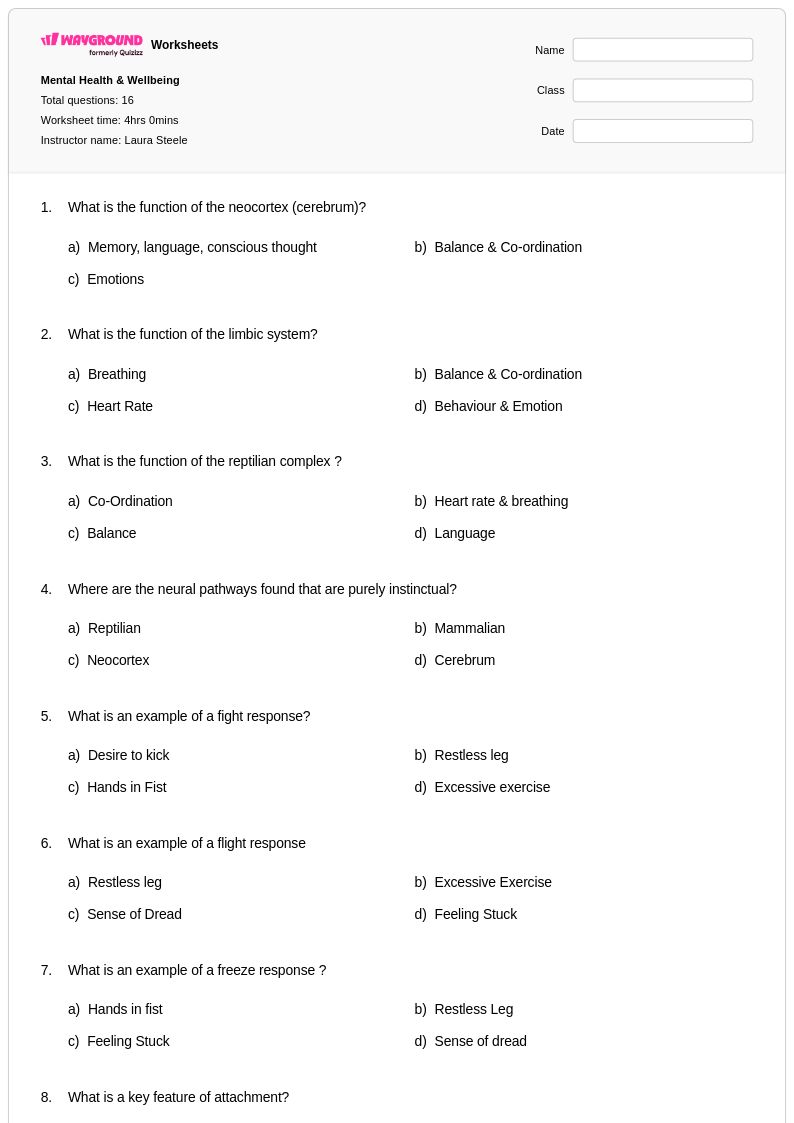
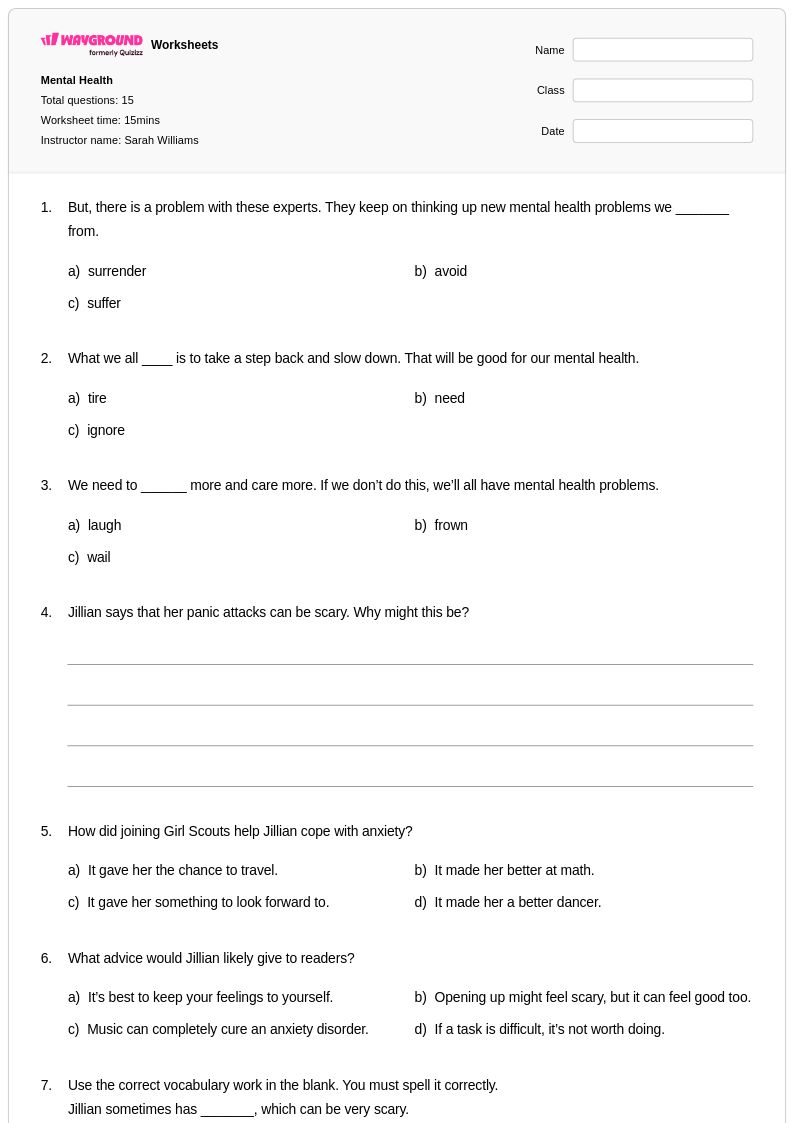
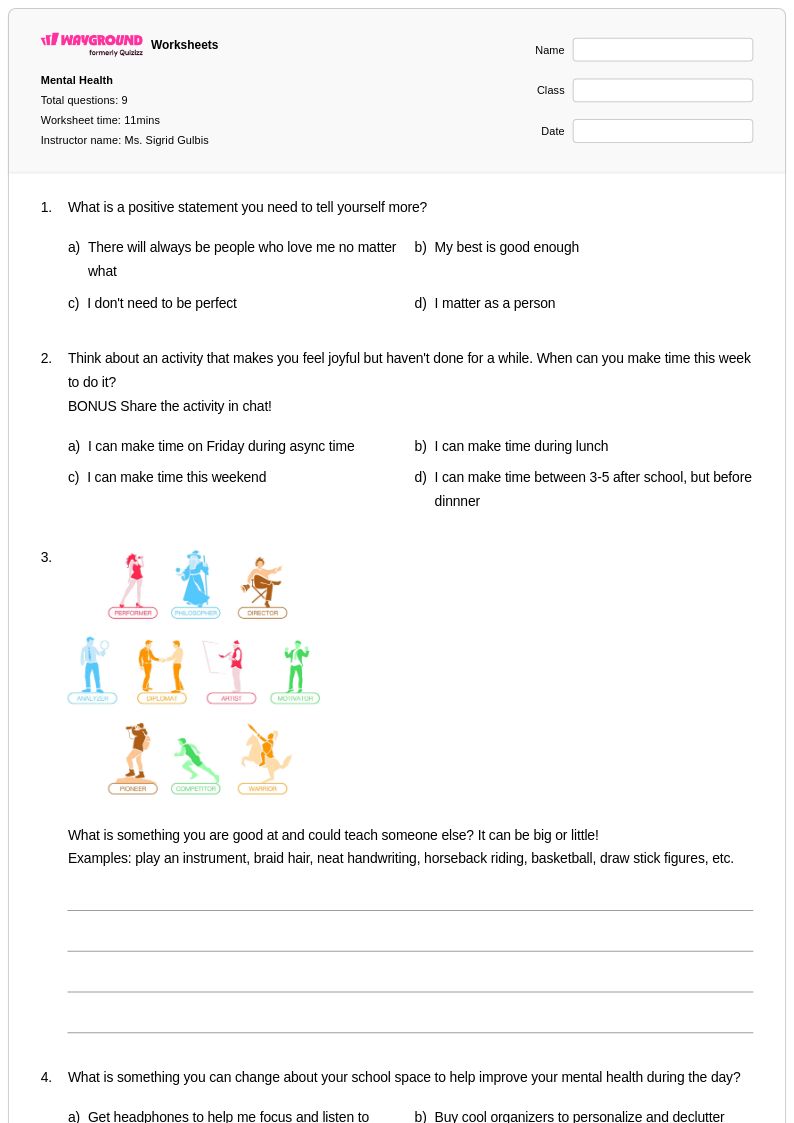
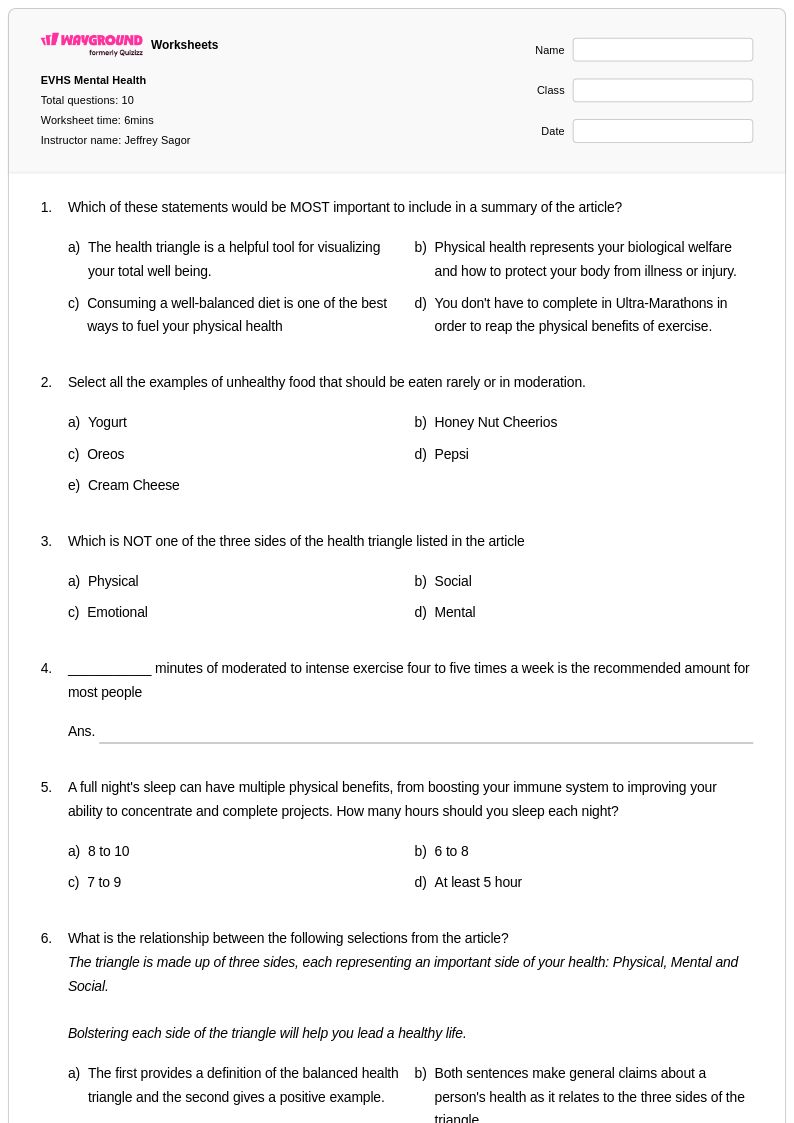
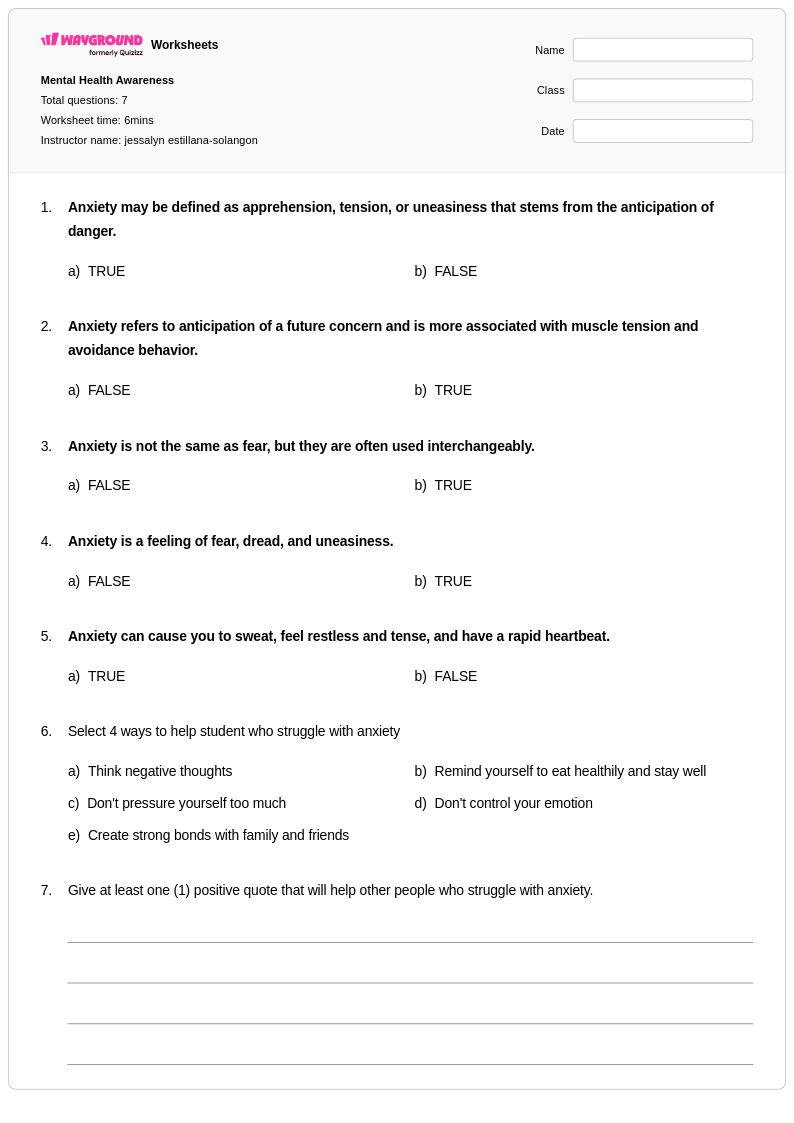
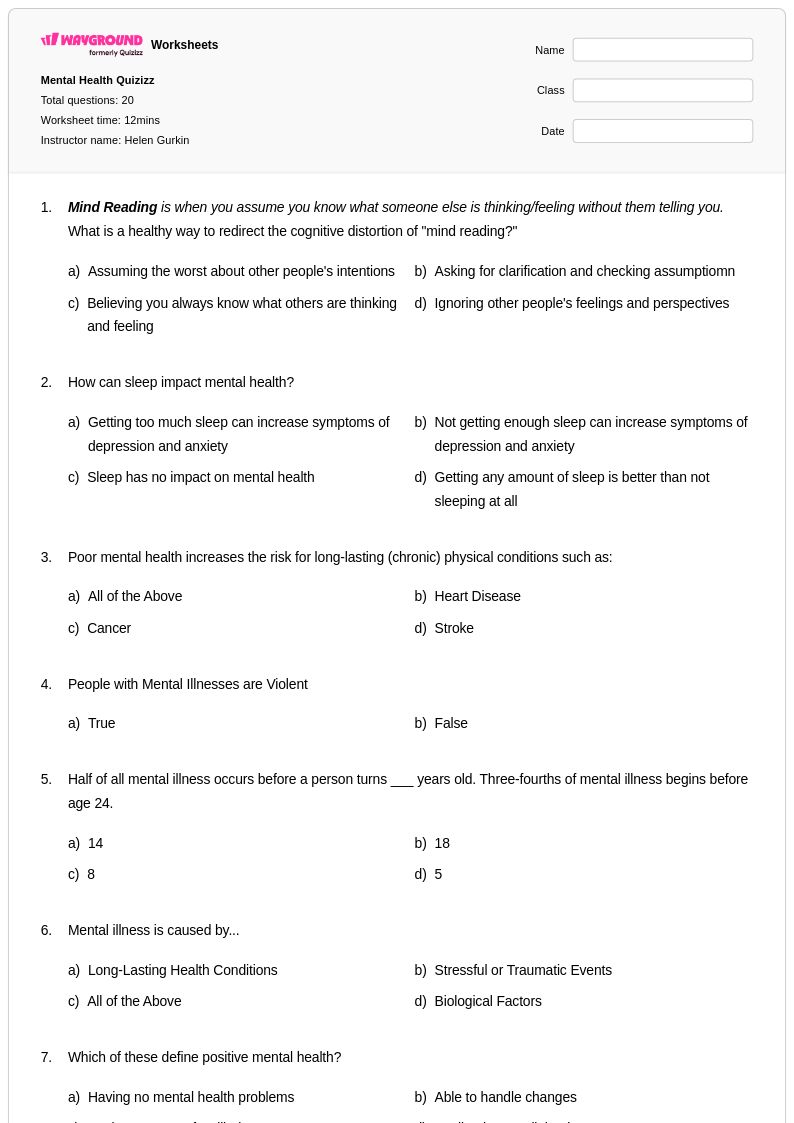
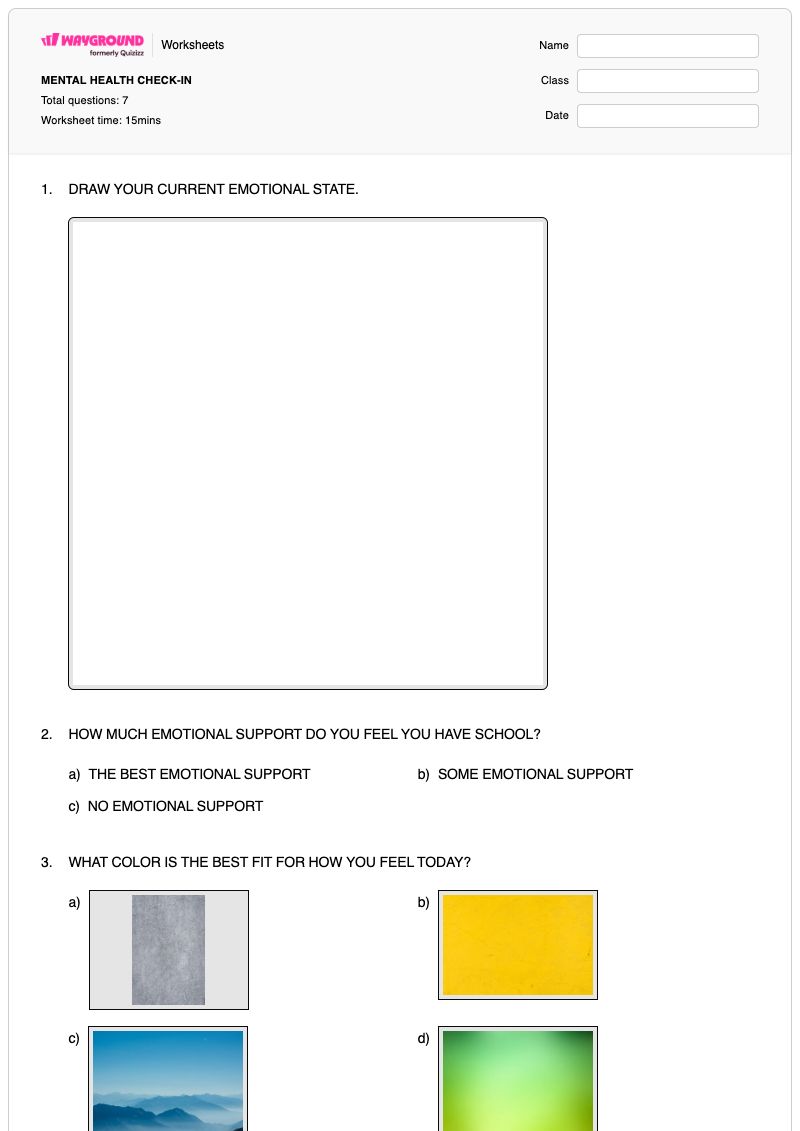
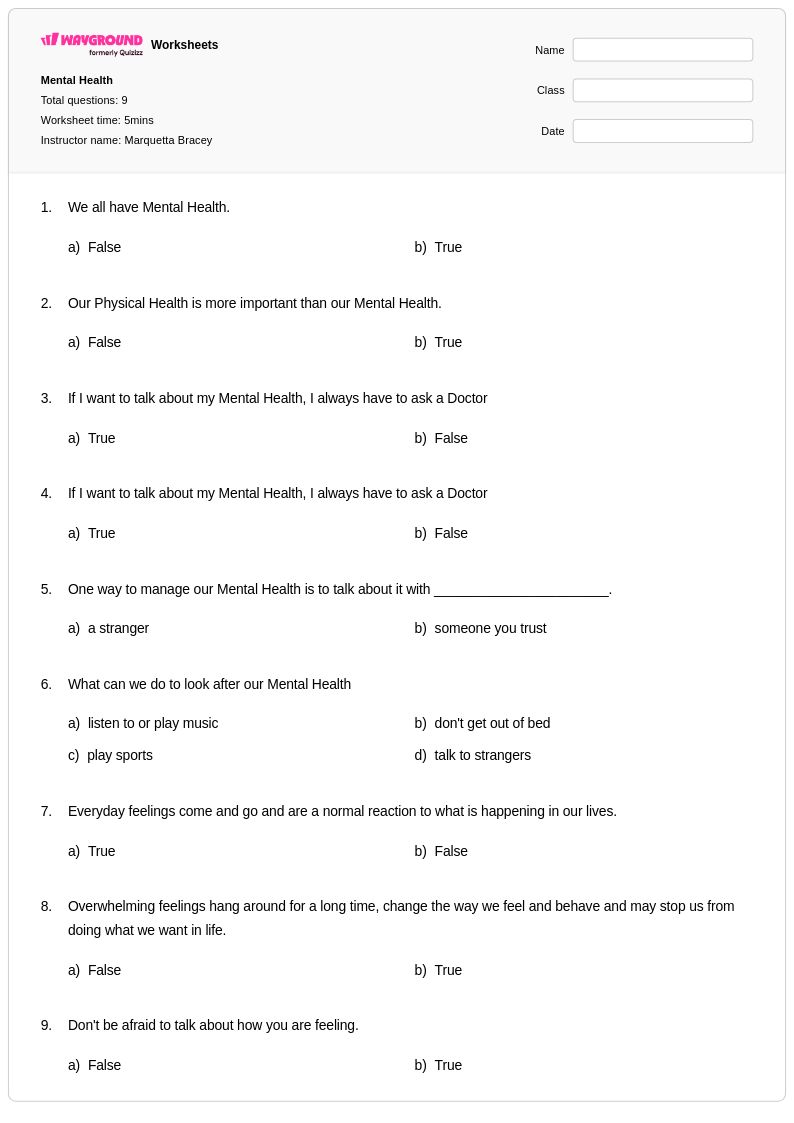
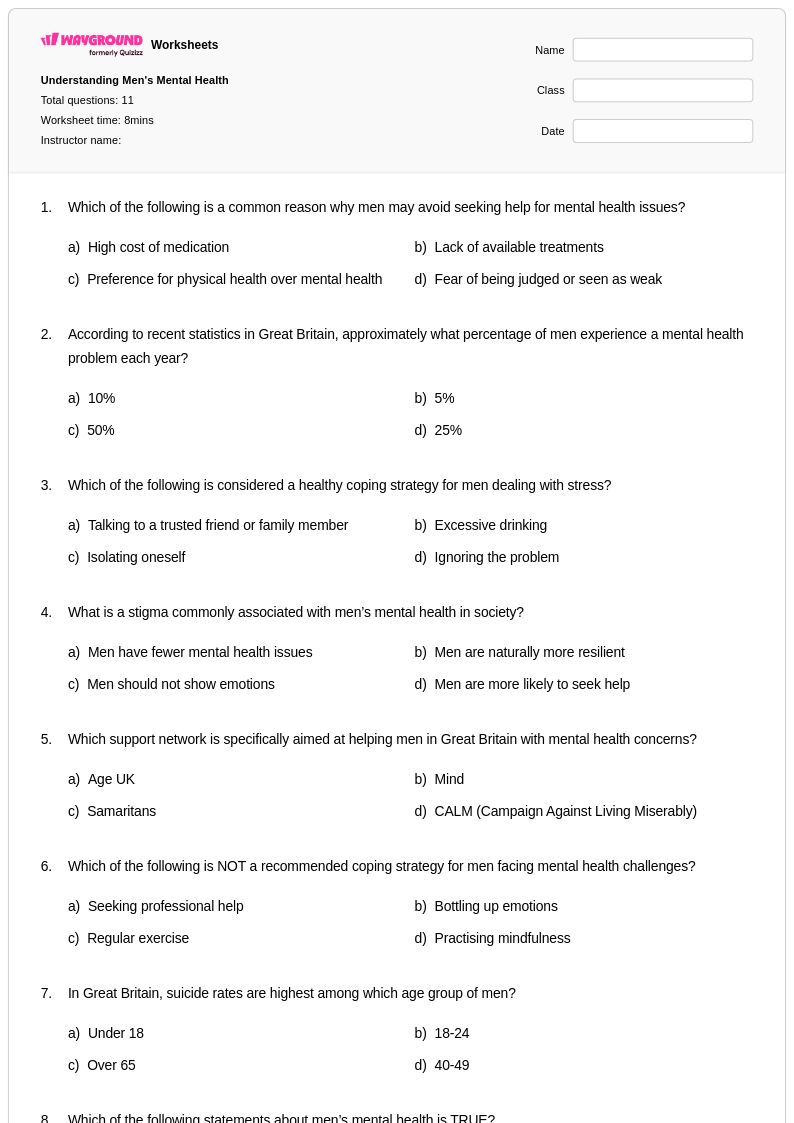
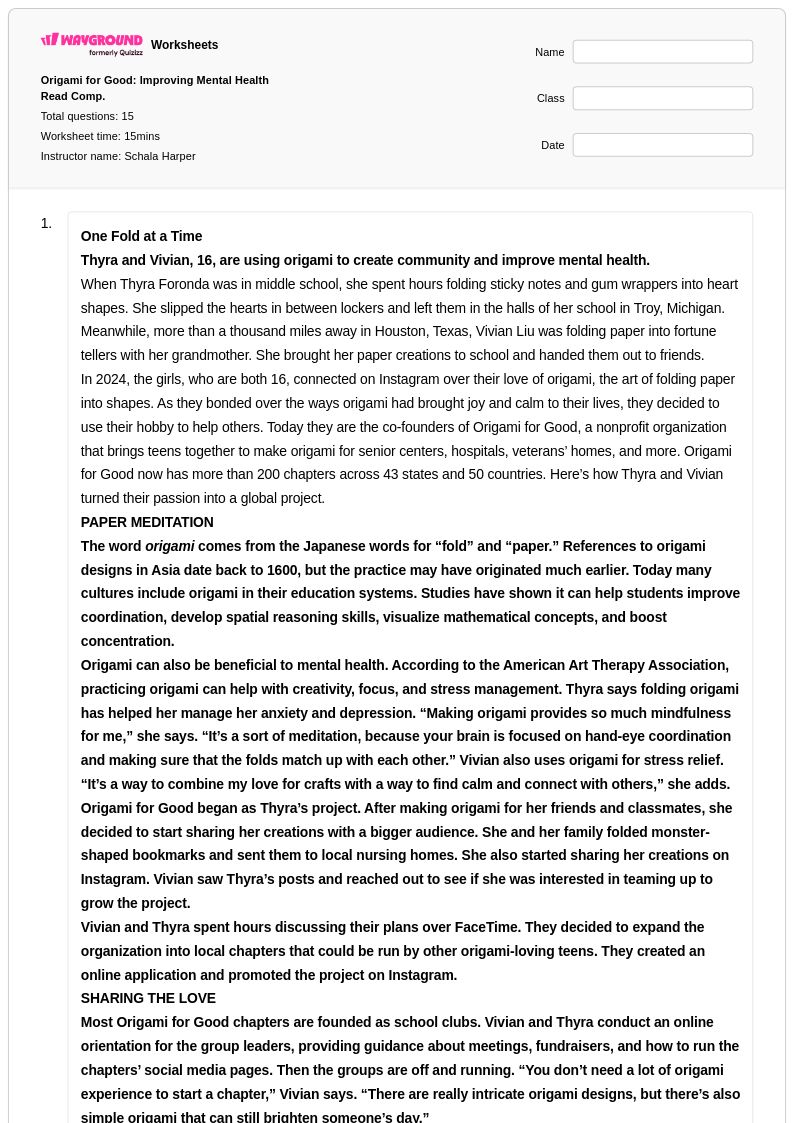
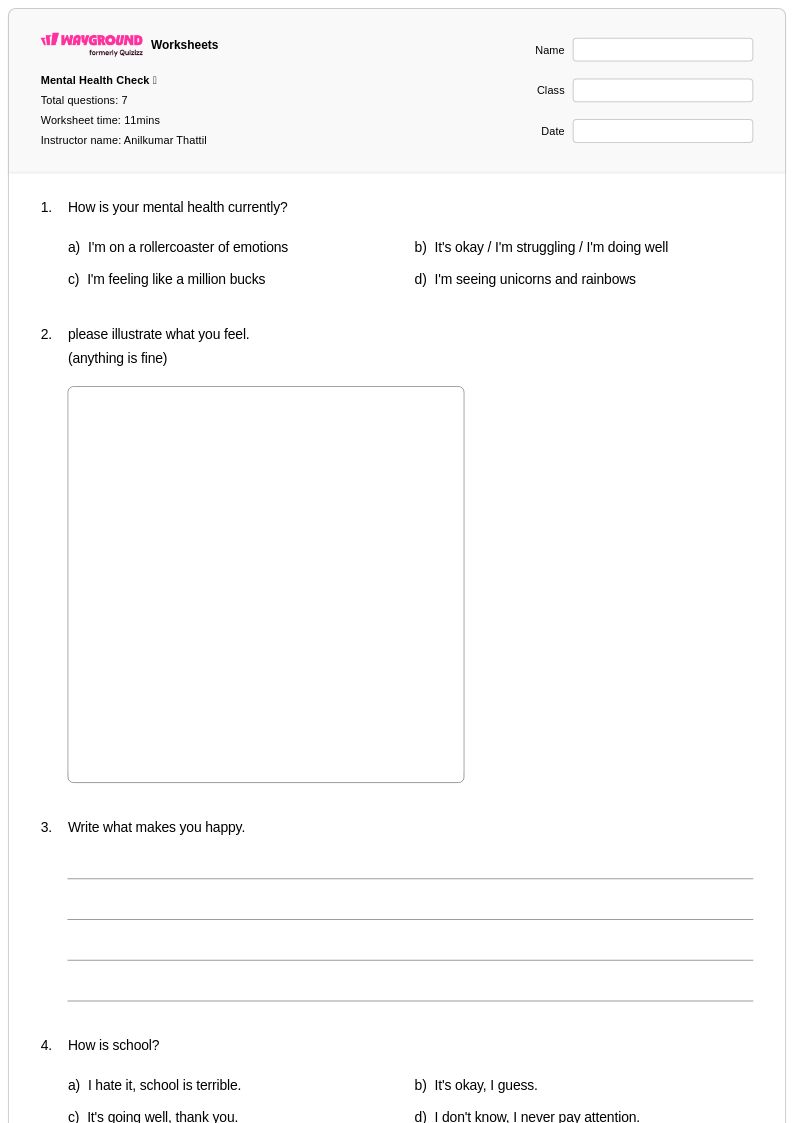
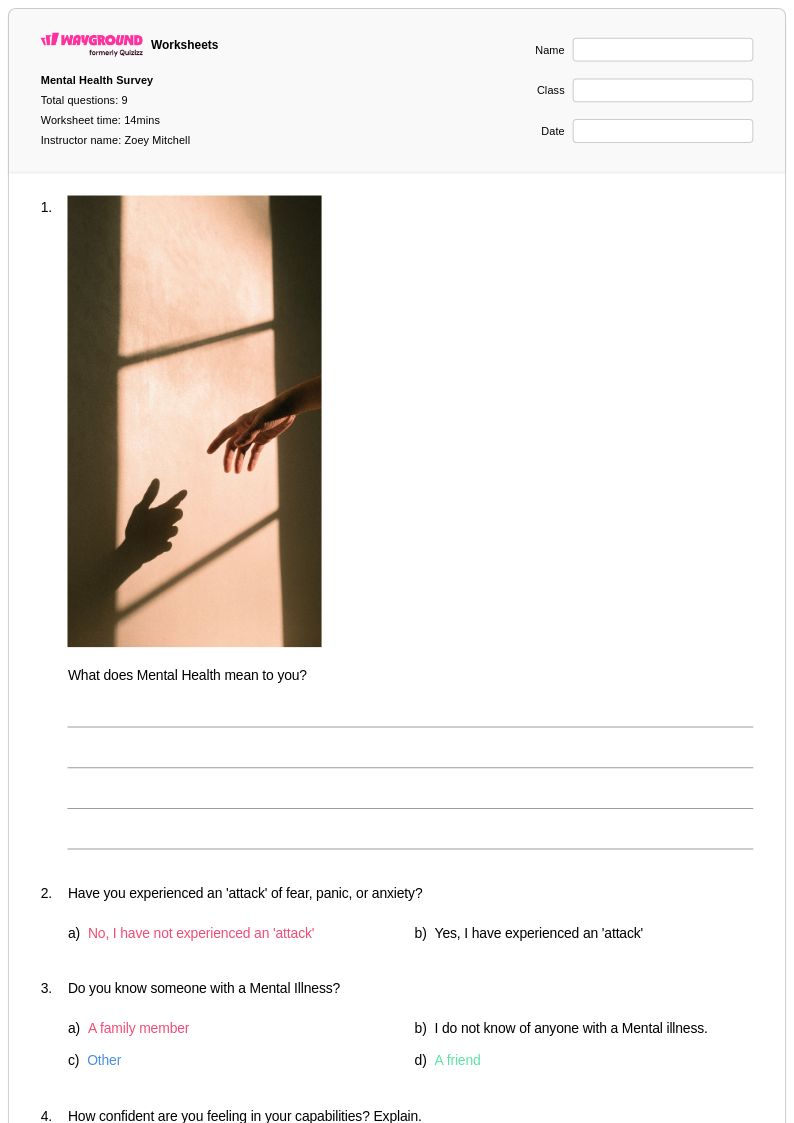
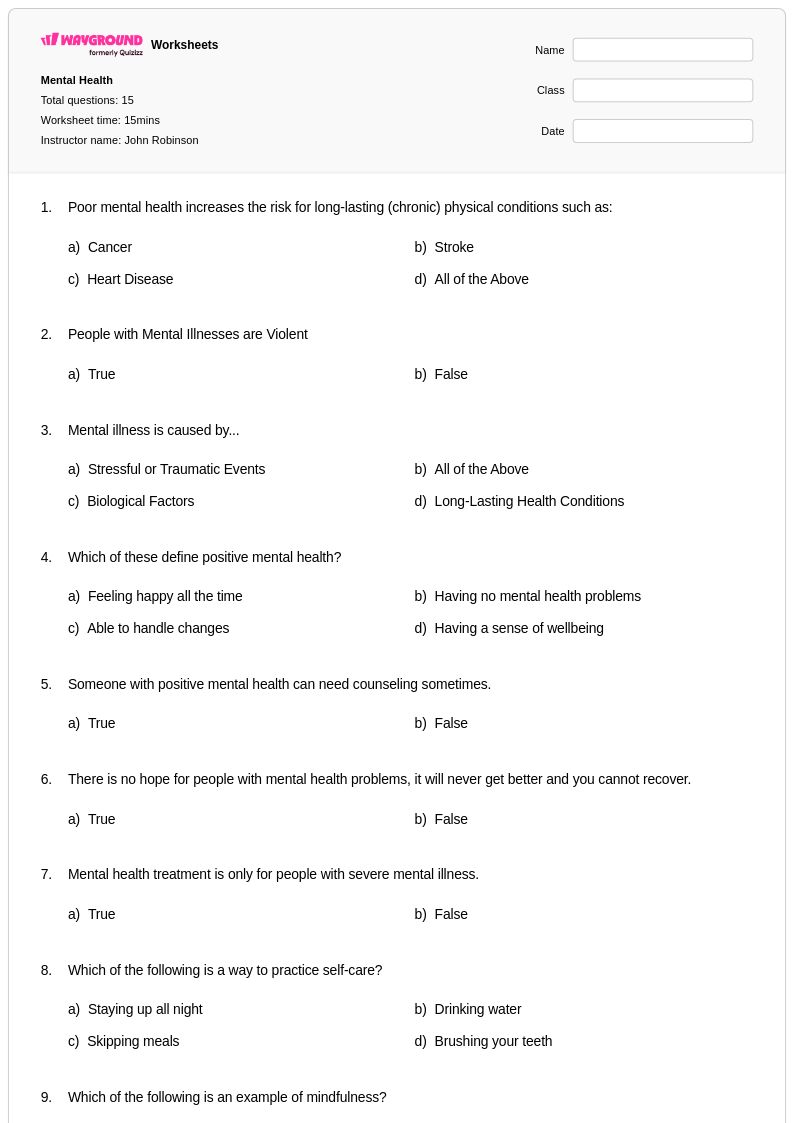
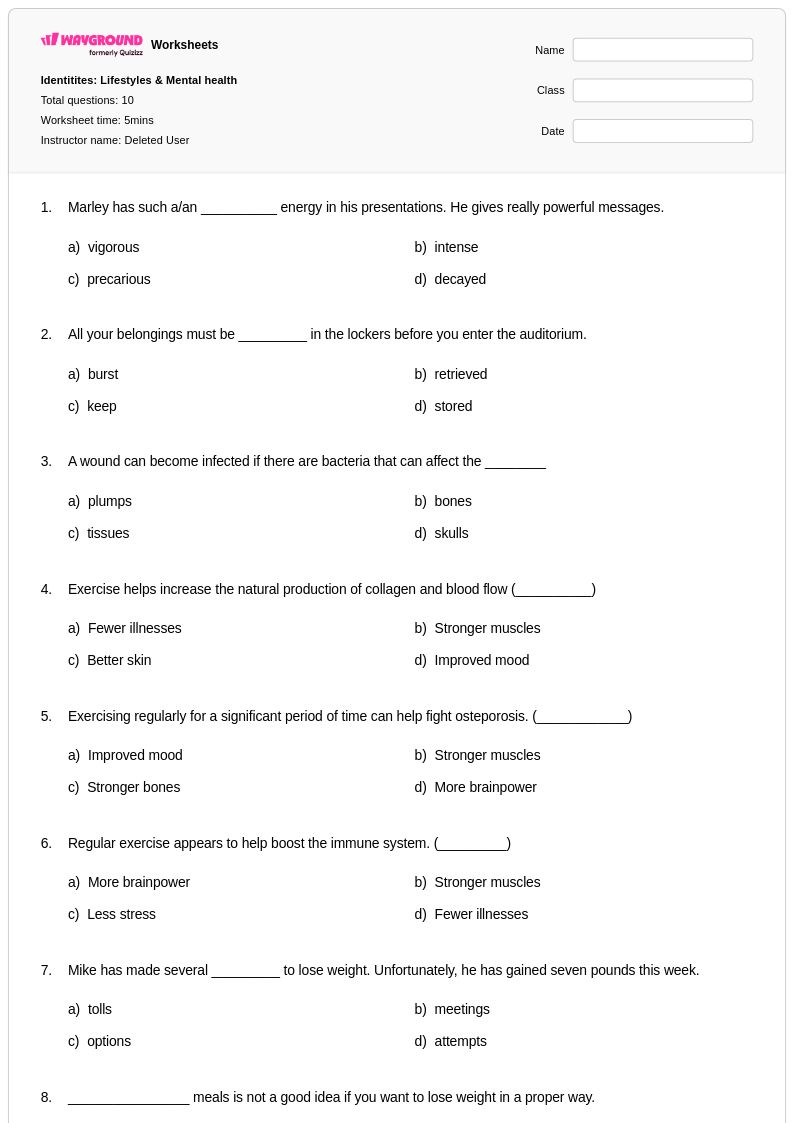
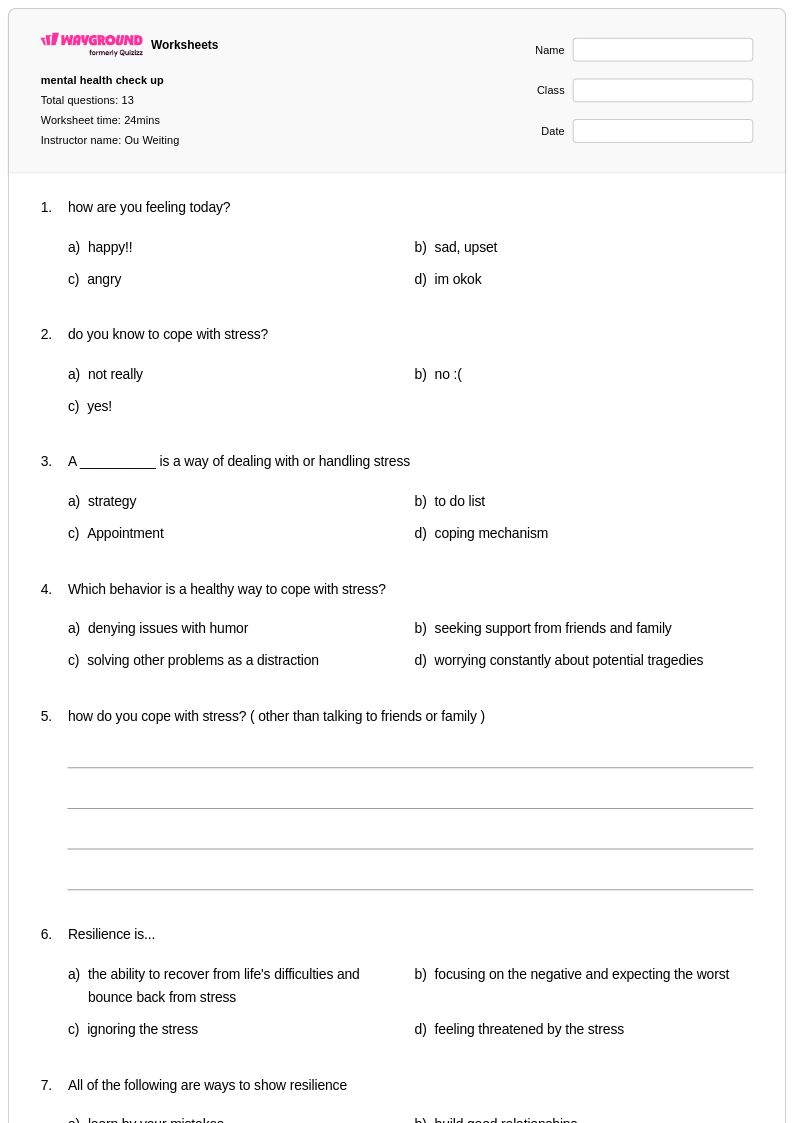
Mental health worksheets for Year 11 students available through Wayground (formerly Quizizz) provide comprehensive resources that address the critical psychological and emotional development needs of high school juniors. These expertly designed materials strengthen essential skills including emotional regulation, stress management, self-awareness, and healthy coping strategies while building students' understanding of mental health conditions, treatment options, and support systems. The worksheet collections feature diverse practice problems that challenge students to analyze case studies, evaluate mental health scenarios, and develop personal wellness plans, with complete answer keys provided to facilitate independent learning and self-assessment. These free printables encompass topics ranging from anxiety and depression awareness to building resilience and maintaining psychological well-being during the demanding junior year of high school.
Wayground (formerly Quizizz) empowers physical education and health teachers with millions of teacher-created mental health resources specifically curated for Year 11 instruction, featuring robust search and filtering capabilities that allow educators to locate materials aligned with health education standards and individual classroom needs. The platform's differentiation tools enable teachers to customize worksheets for varying ability levels and learning styles, while flexible formatting options provide both printable pdf versions for traditional classroom use and digital formats for interactive learning experiences. These comprehensive features streamline lesson planning by offering ready-to-use materials for skill practice, targeted remediation for students struggling with mental health concepts, and enrichment opportunities for advanced learners, ultimately supporting teachers in creating inclusive environments where all Year 11 students can develop critical mental health literacy and personal wellness skills.
FAQs
How do I teach mental health topics to students without making them feel uncomfortable or stigmatized?
Start by establishing clear classroom norms around confidentiality, respect, and non-judgment before introducing any mental health content. Use universal framing — presenting emotional wellness as something that applies to everyone, not just students who are struggling — to reduce stigma from the outset. Structured worksheets that guide students through identifying emotions or recognizing stress responses help normalize the conversation by making the topic academic and skill-based rather than personal or clinical.
What are the best classroom activities for teaching students anxiety management strategies?
Effective anxiety management instruction combines psychoeducation with skill practice: students first learn what anxiety is physiologically, then practice concrete techniques such as diaphragmatic breathing, grounding exercises, and cognitive reframing. Worksheets that walk students through identifying anxiety triggers and rating their intensity on a scale build self-monitoring habits over time. Role-play scenarios and reflection prompts extend this practice by asking students to apply strategies to realistic situations they might actually encounter.
What common misconceptions do students have about mental health that I should address early?
The most persistent misconception is that mental health challenges are a sign of personal weakness or character failure, which prevents students from seeking help or discussing struggles openly. Many students also conflate having a mental health condition with being 'crazy' or dangerous, a stereotype reinforced by media portrayals. Additionally, students often assume that mental health is static — either you have a problem or you don't — rather than understanding it as a spectrum that fluctuates based on stress, environment, and coping resources.
How can I use mental health worksheets to help students build genuine coping skills rather than just complete an assignment?
The key is repetition and personalization: worksheets are most effective when students return to the same skill across multiple sessions, applying it to new scenarios each time rather than treating it as a one-and-done activity. Choose worksheets that require students to generate their own examples — such as listing personal stressors or writing out a specific coping plan — rather than simply identifying abstract definitions. Following up worksheet activities with brief class discussions or partner shares reinforces the content and signals that these are real tools, not just academic exercises.
How do I differentiate mental health worksheets for students with varying emotional literacy levels?
Students with lower emotional literacy benefit from worksheets that use visual aids, emotion word banks, and concrete scenarios rather than open-ended reflection prompts. More advanced students can be challenged with tasks that require analysis — such as evaluating the effectiveness of different coping strategies or examining how social and environmental factors influence mental health. On Wayground, teachers can apply individual accommodations such as Read Aloud support for students who need content read to them, or reduced answer choices to lower cognitive load for students who find complex emotional concepts overwhelming.
How do I use Wayground's mental health worksheets in my classroom?
Wayground's mental health worksheets are available as printable PDFs for traditional classroom use and in digital interactive formats for technology-integrated learning environments, making them adaptable for in-person, hybrid, or remote instruction. Teachers can also host worksheets directly as a quiz on Wayground, enabling real-time student response tracking. Each worksheet includes a comprehensive answer key, so teachers can use them for guided instruction, independent practice, or structured check-ins without additional preparation time.