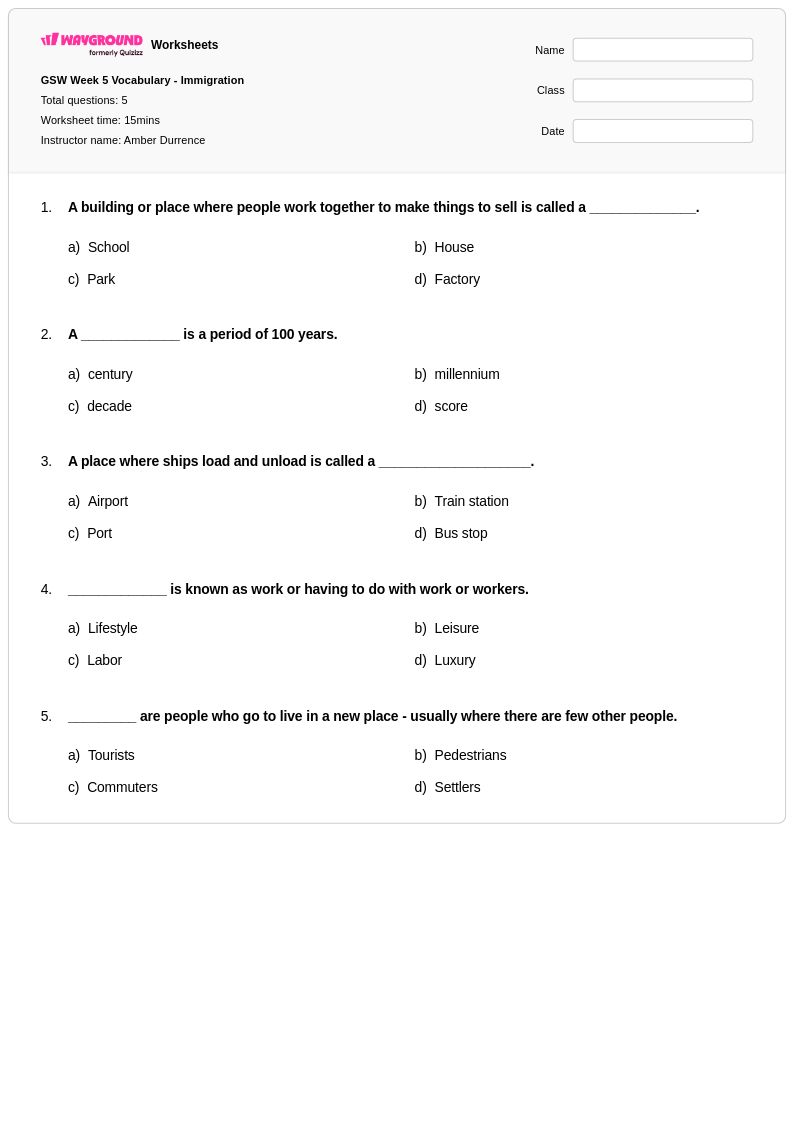
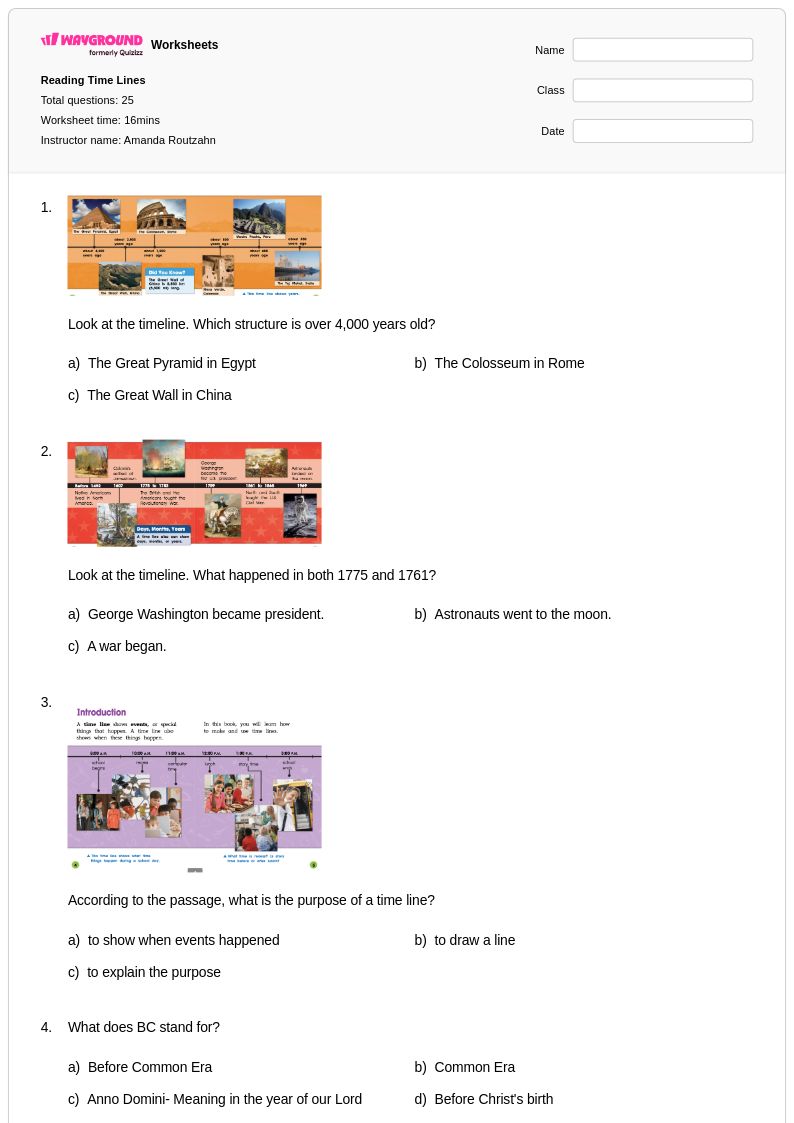
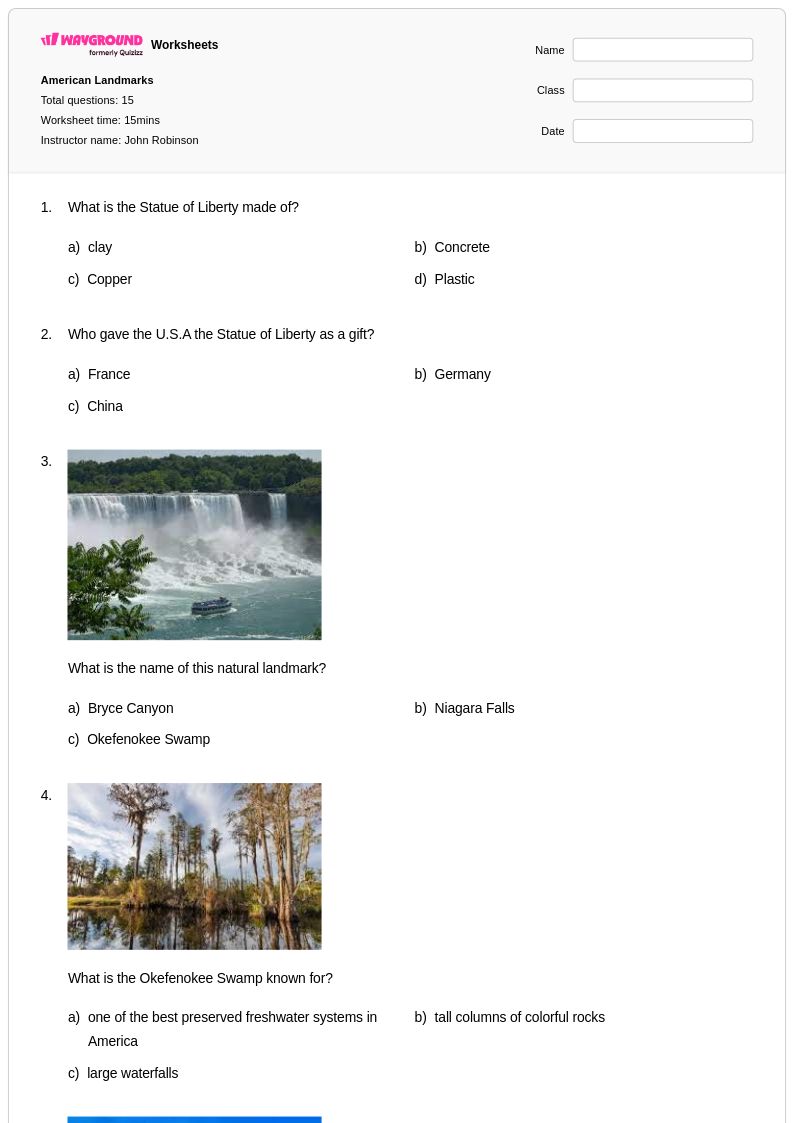
Year 5 millennium history worksheets and printables help students explore significant historical periods and transitions, featuring engaging practice problems and comprehensive answer keys for effective learning.
Explore printable Millennium worksheets for Year 5
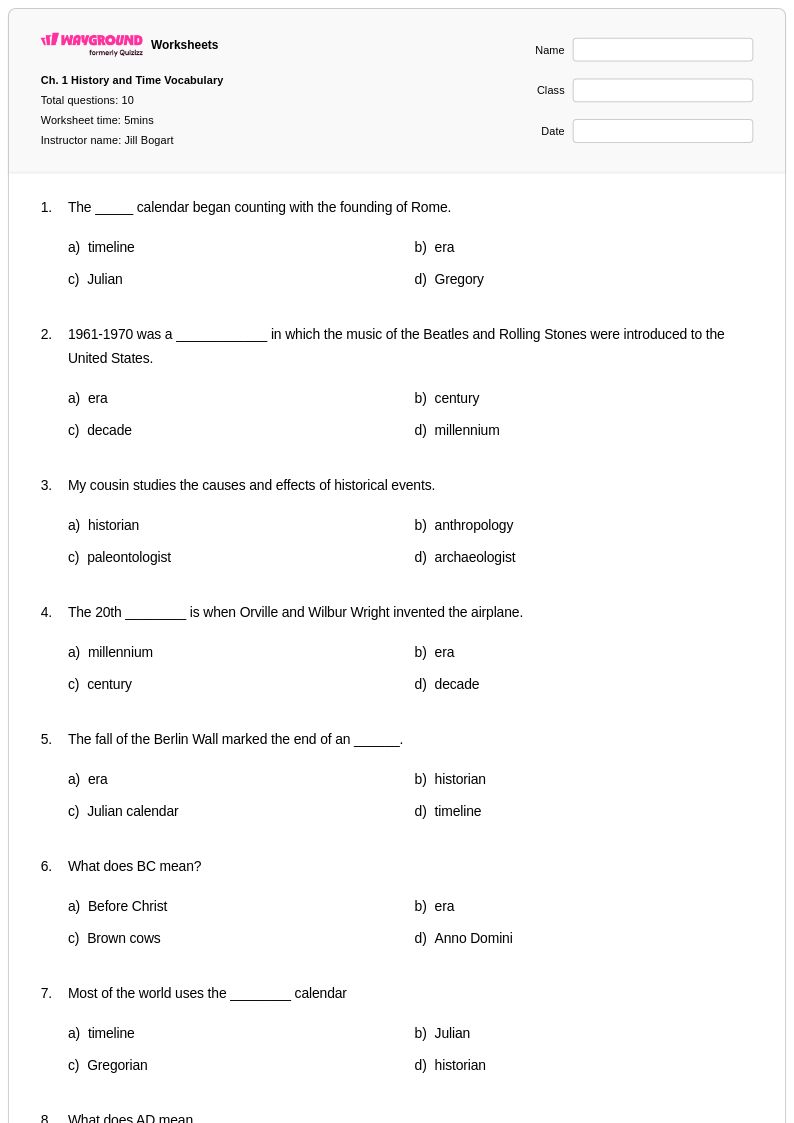
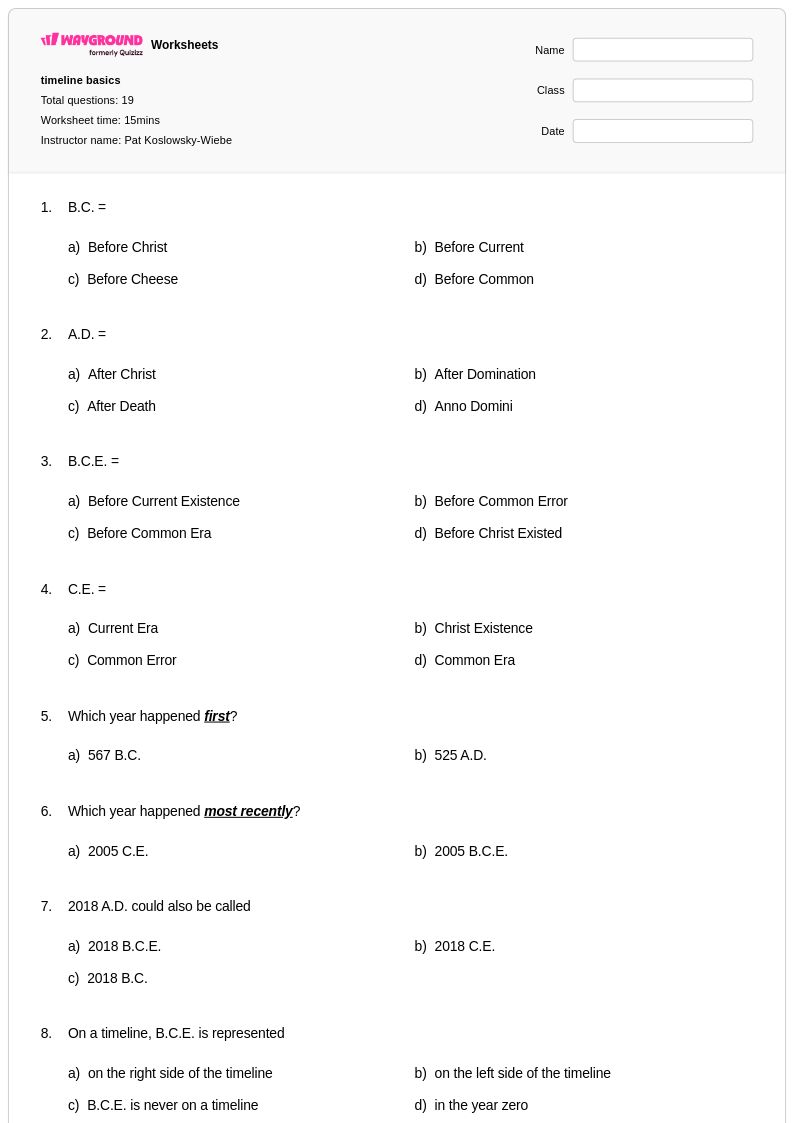
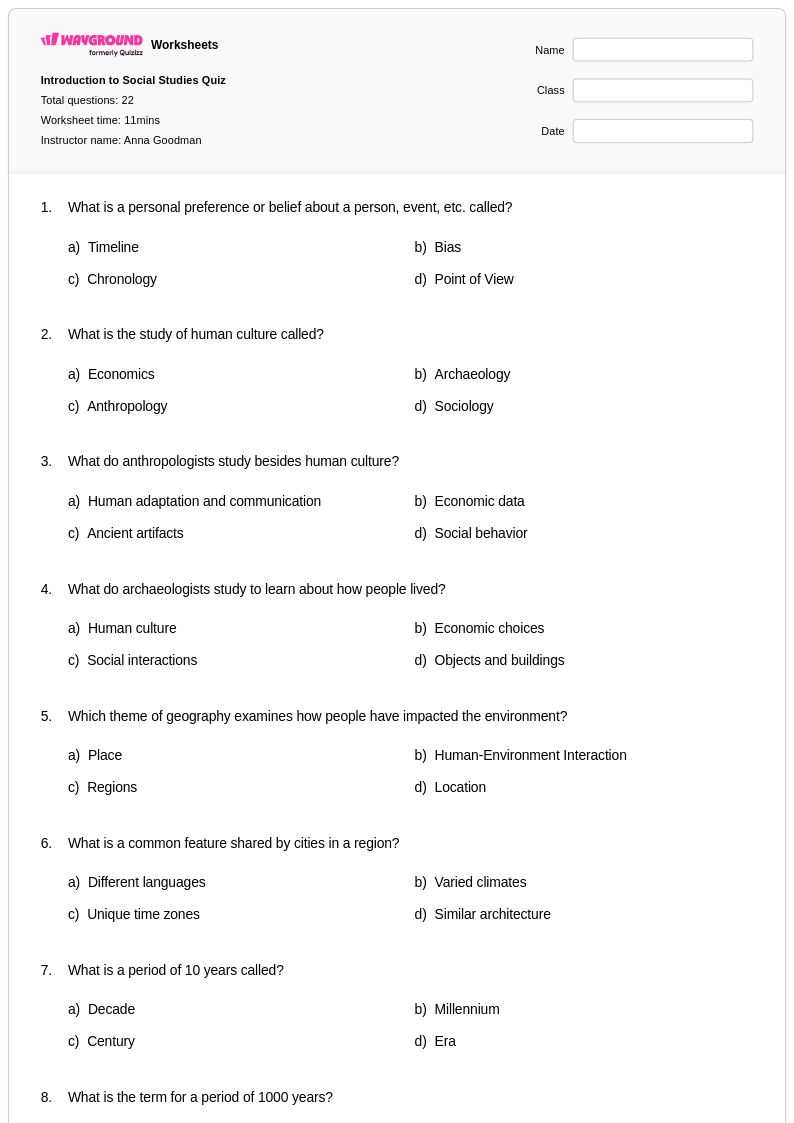
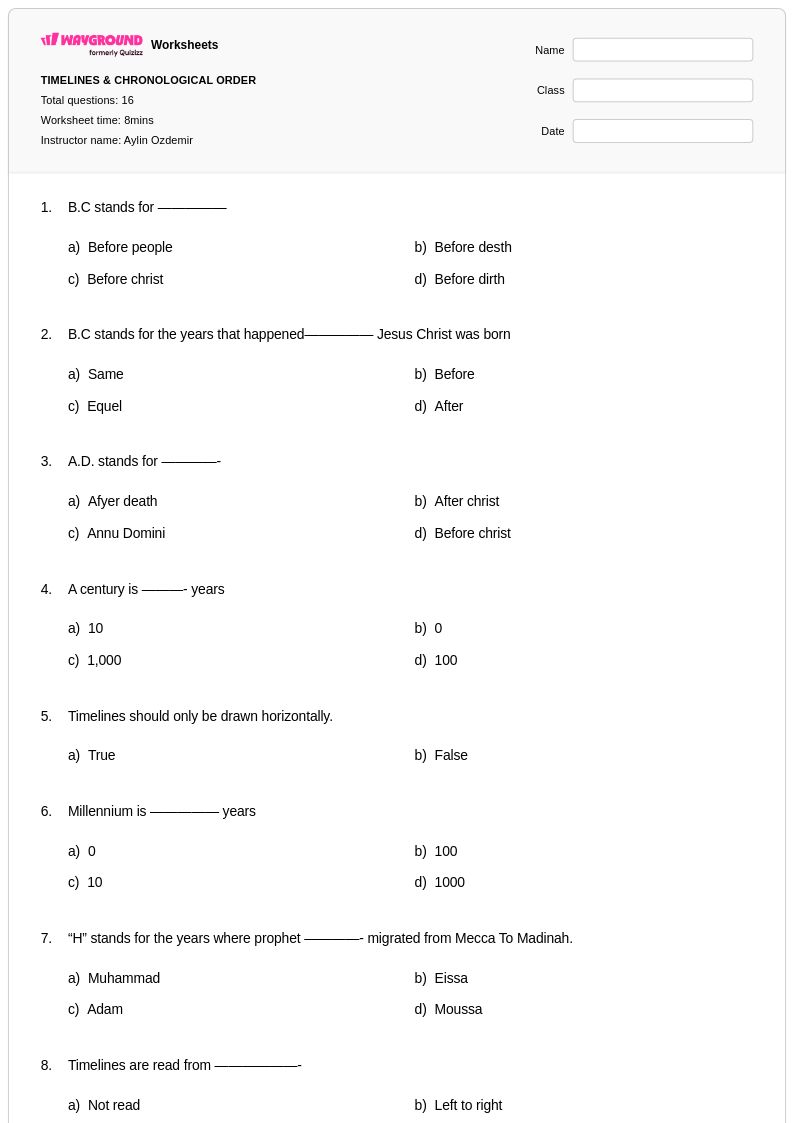
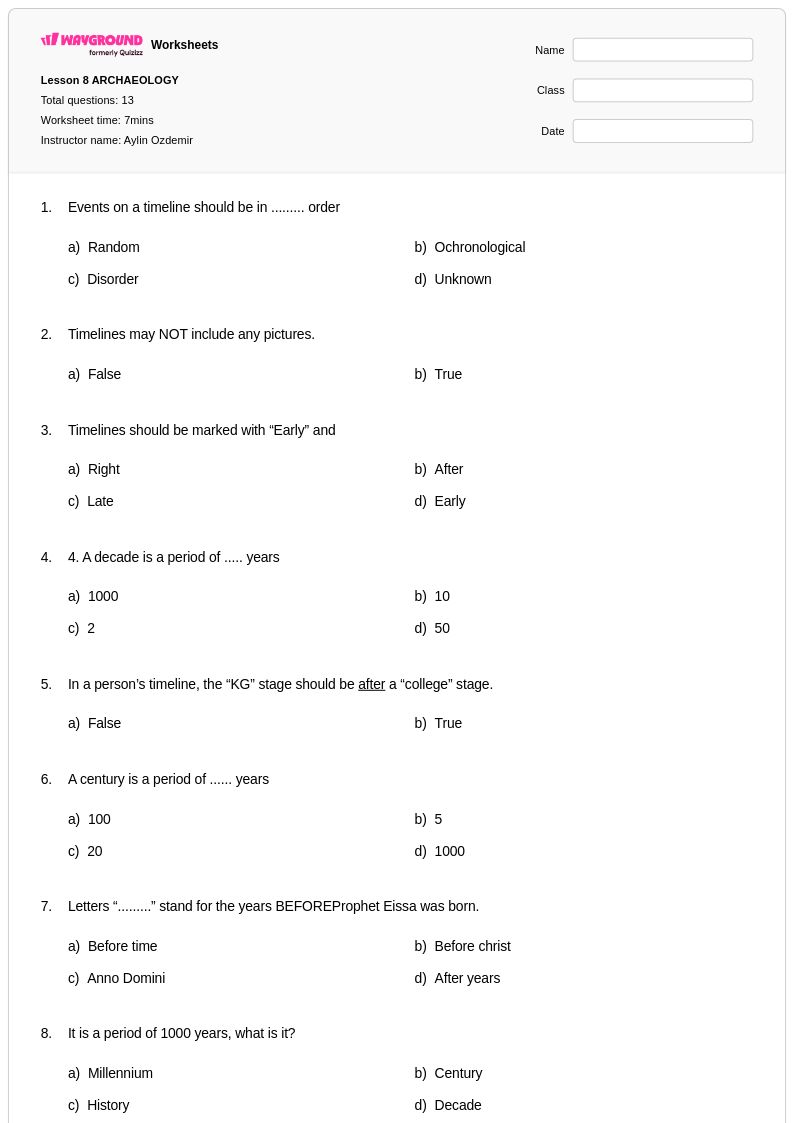
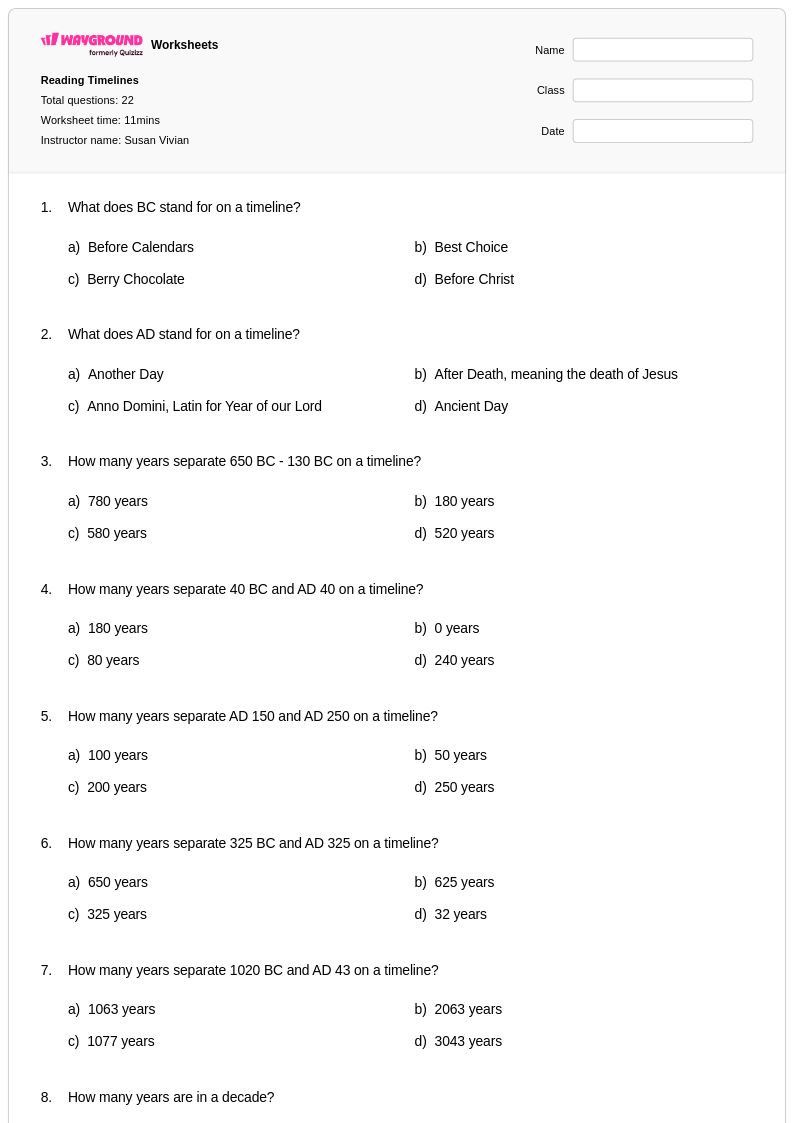
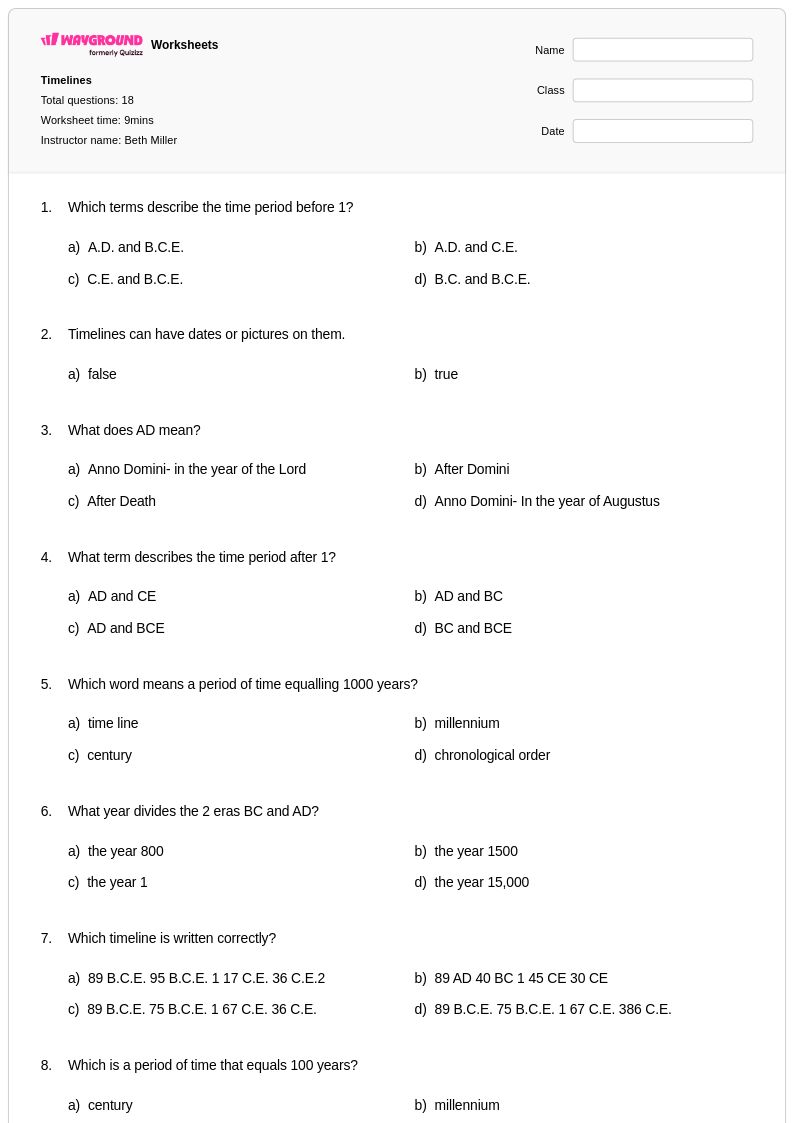
Millennium worksheets for Year 5 students available through Wayground (formerly Quizizz) provide comprehensive exploration of this pivotal thousand-year period in human history, helping students understand the significance of major historical transitions and developments. These educational resources strengthen critical thinking skills as students analyze the changes between the first and second millennium, examine medieval civilizations, and explore how societies evolved during this transformative era. The worksheets include engaging practice problems that challenge students to identify key events, compare different cultures, and understand chronological relationships, while accompanying answer keys support both independent learning and teacher assessment. Each printable resource is designed as a free pdf download, making it accessible for classroom instruction, homework assignments, and supplemental practice that reinforces essential social studies concepts.
Wayground (formerly Quizizz) empowers educators with millions of teacher-created millennium worksheets specifically designed for Year 5 social studies instruction, offering robust search and filtering capabilities that help locate materials aligned with curriculum standards and learning objectives. The platform's differentiation tools enable teachers to customize worksheet difficulty levels, modify content to meet diverse learning needs, and select from both printable pdf formats and interactive digital versions that accommodate various classroom environments. These flexible resources support comprehensive lesson planning by providing materials suitable for whole-group instruction, small group remediation, and individual enrichment activities, while the extensive collection ensures teachers can find appropriate practice materials for skill development, formative assessment, and reinforcement of millennium-related historical concepts throughout their instructional units.
FAQs
How do I teach the concept of a millennium to students?
Teaching the concept of a millennium works best by anchoring the thousand-year span to concrete historical events students already recognize, such as comparing the year 1000 CE to the year 2000 CE. Have students build timelines that mark major civilizational shifts across millennia, which helps them internalize the scale of the unit. Connecting millennial transitions to cultural responses, such as apocalyptic fears or celebration, adds context that makes the concept more meaningful than a simple numeric definition.
What exercises help students practice calculating and comparing millennial periods?
Effective practice exercises include having students calculate the start and end points of specific millennia, identify which millennium a given historical event falls in, and compare societal conditions across two or more millennia. Sequencing activities that ask students to place civilizations or inventions within the correct thousand-year period reinforce chronological thinking. Cross-cultural comparison tasks, such as examining how different societies marked the year 1000 CE, extend practice into historical analysis.
What misconceptions do students commonly have about millennia?
A frequent misconception is that a new millennium begins in a year ending in three zeros, such as the year 2000, rather than the year 2001, because there was no year zero in the common era calendar. Students also often confuse 'millennium' with 'century,' conflating hundred-year and thousand-year spans. Another common error is treating millennia as uniform units of progress rather than recognizing that historical change within a millennium is uneven across regions and civilizations.
How does studying millennia support broader social studies skills?
Studying millennia develops chronological reasoning, which is a foundational skill in social studies because it requires students to situate events in relation to one another across large time spans. Analyzing millennial transitions also builds historical empathy, as students examine how societies interpreted and responded to these temporal markers. This topic naturally connects to cross-cultural comparison and the evaluation of historical sources, both of which are core competencies in social studies standards.
How do I use Wayground's millennium worksheets in my classroom?
Wayground's millennium worksheets are available as printable PDFs for traditional classroom use and in digital formats for technology-integrated learning environments, giving teachers flexibility in how they deploy the material. Teachers can also host the worksheets as a quiz directly on Wayground, which enables interactive student engagement and automatic scoring. Each worksheet includes a complete answer key, supporting both in-class instruction and independent or homework-based practice.
How can I differentiate millennium worksheets for students at different skill levels?
For students who need additional support, focus on foundational tasks such as identifying the correct millennium for a given year or completing guided timelines with scaffolded prompts. Advanced learners can be challenged with open-ended analysis tasks that ask them to evaluate the historical significance of millennial transitions across different civilizations. On Wayground, teachers can apply accommodations such as read aloud, reduced answer choices, and extended time to individual students, ensuring that the same worksheet set can serve a range of learners without requiring separate materials.