Free Printable Mindful Walking Worksheets for Year 2
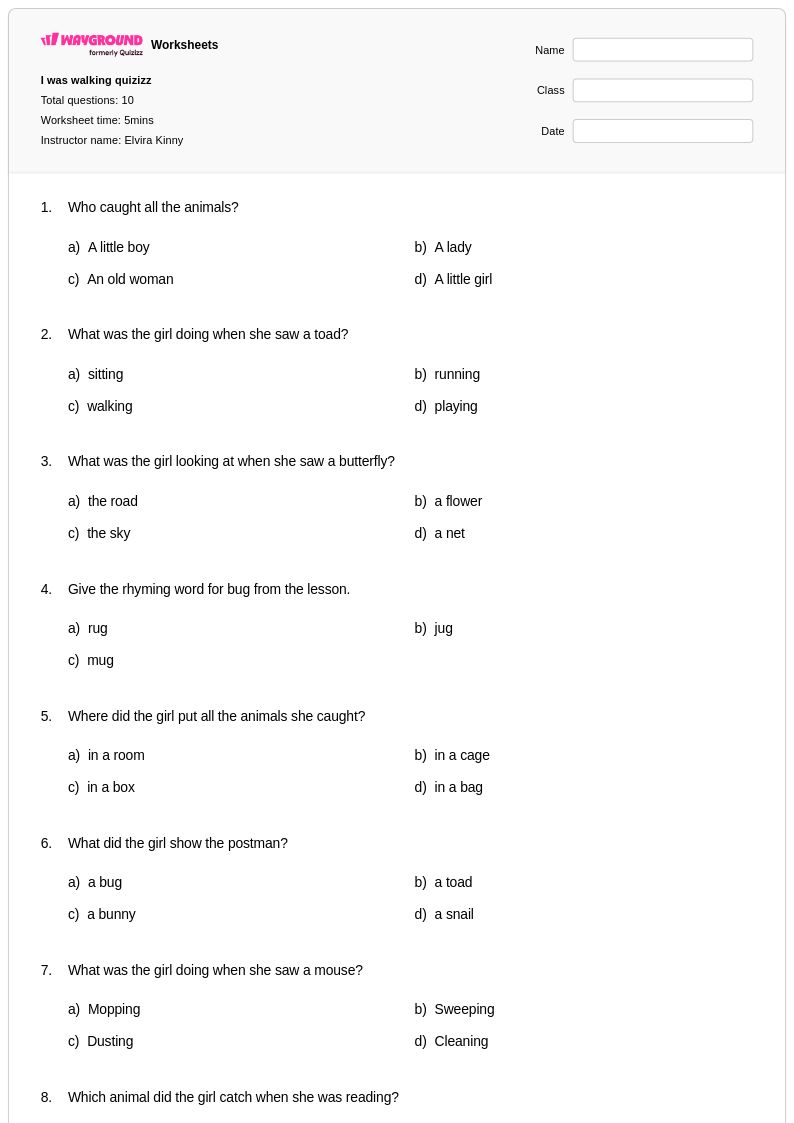
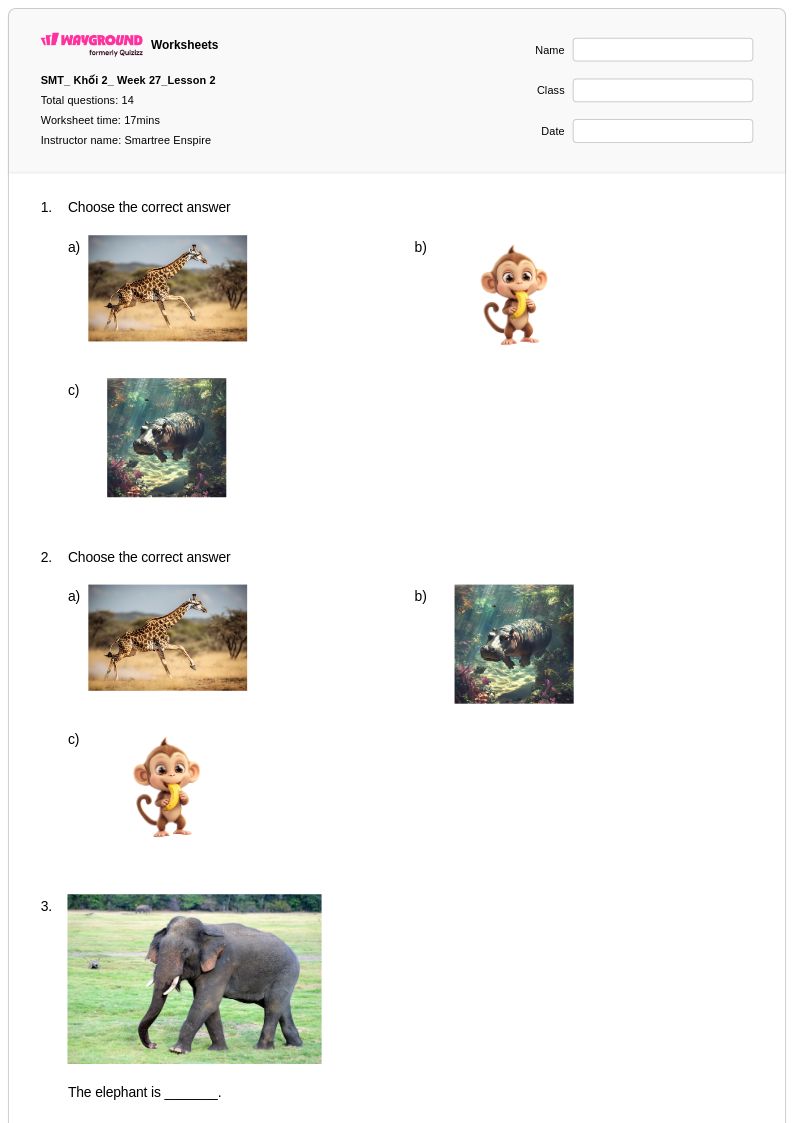
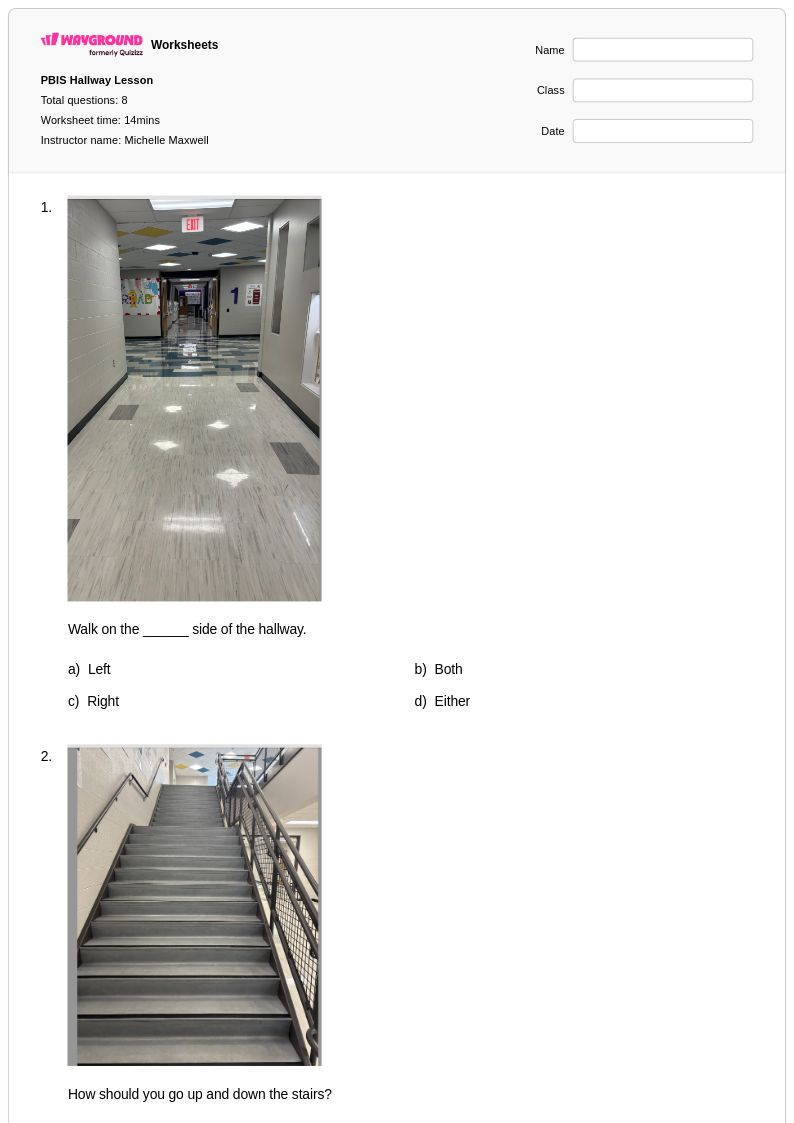
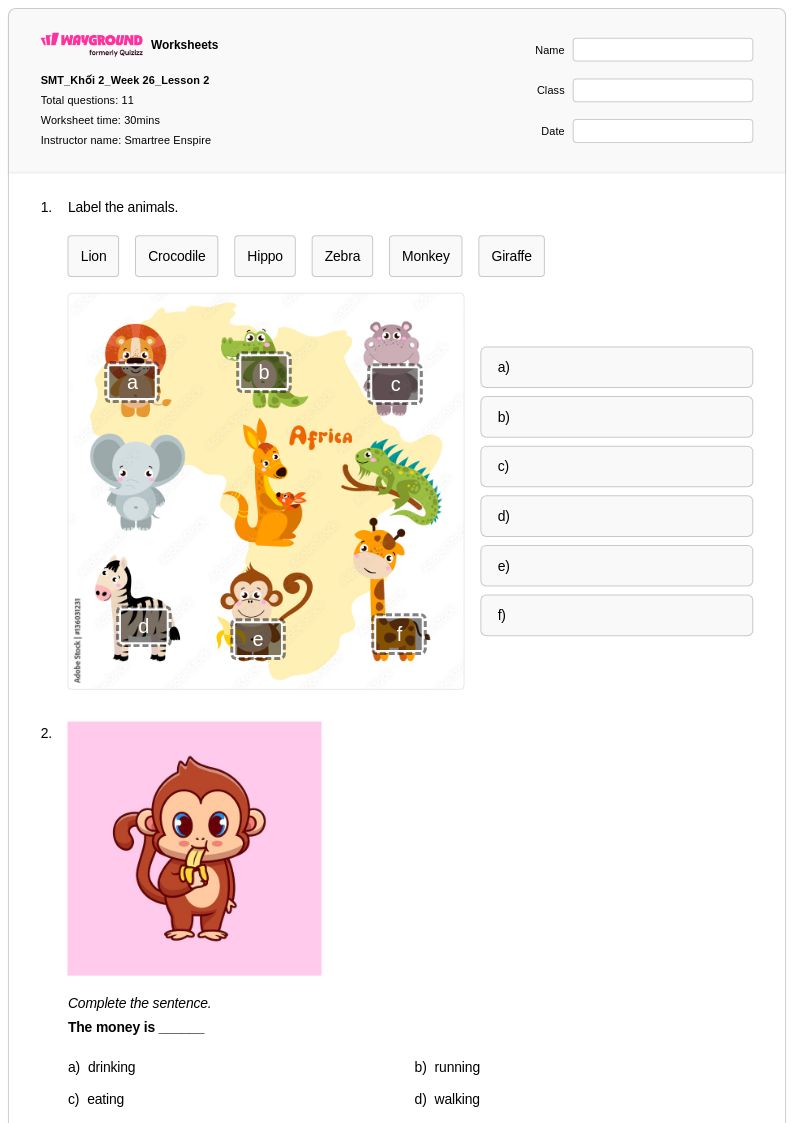
Year 2 mindful walking worksheets from Wayground help young students practice physical education through guided movement activities, featuring free printables, PDF downloads, and answer keys for developing body awareness and focus.
Explore printable Mindful Walking worksheets for Year 2
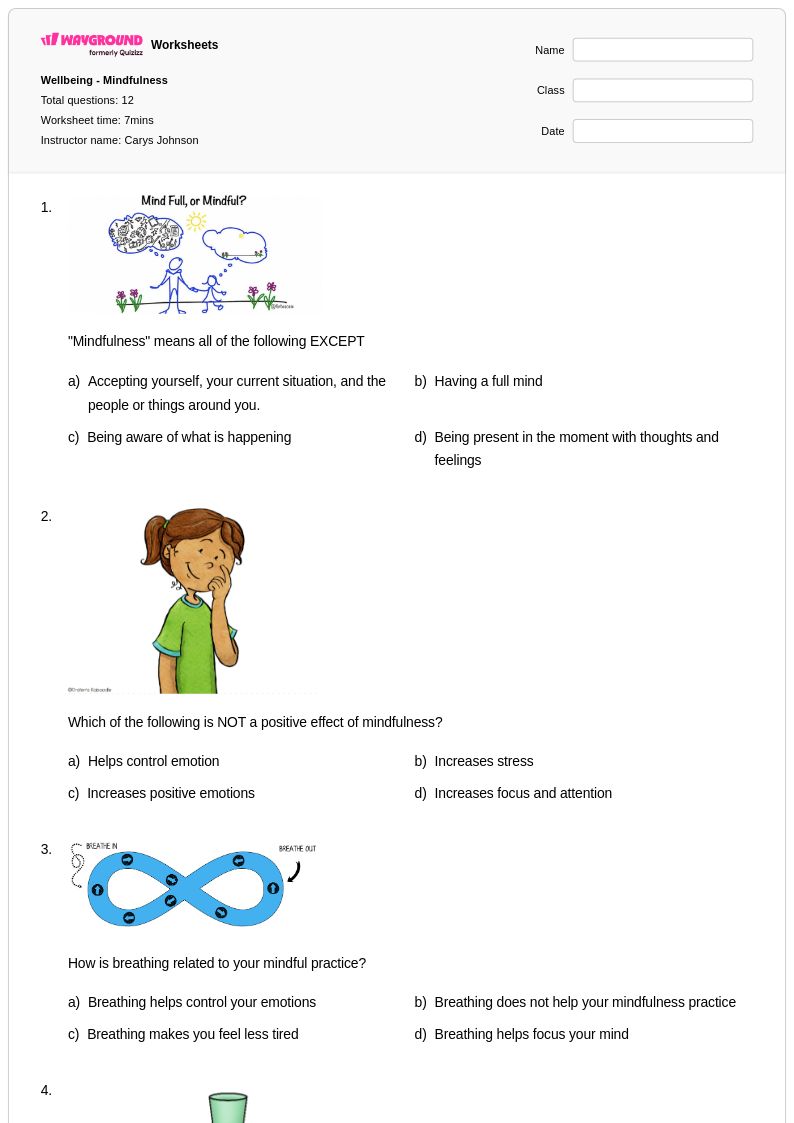
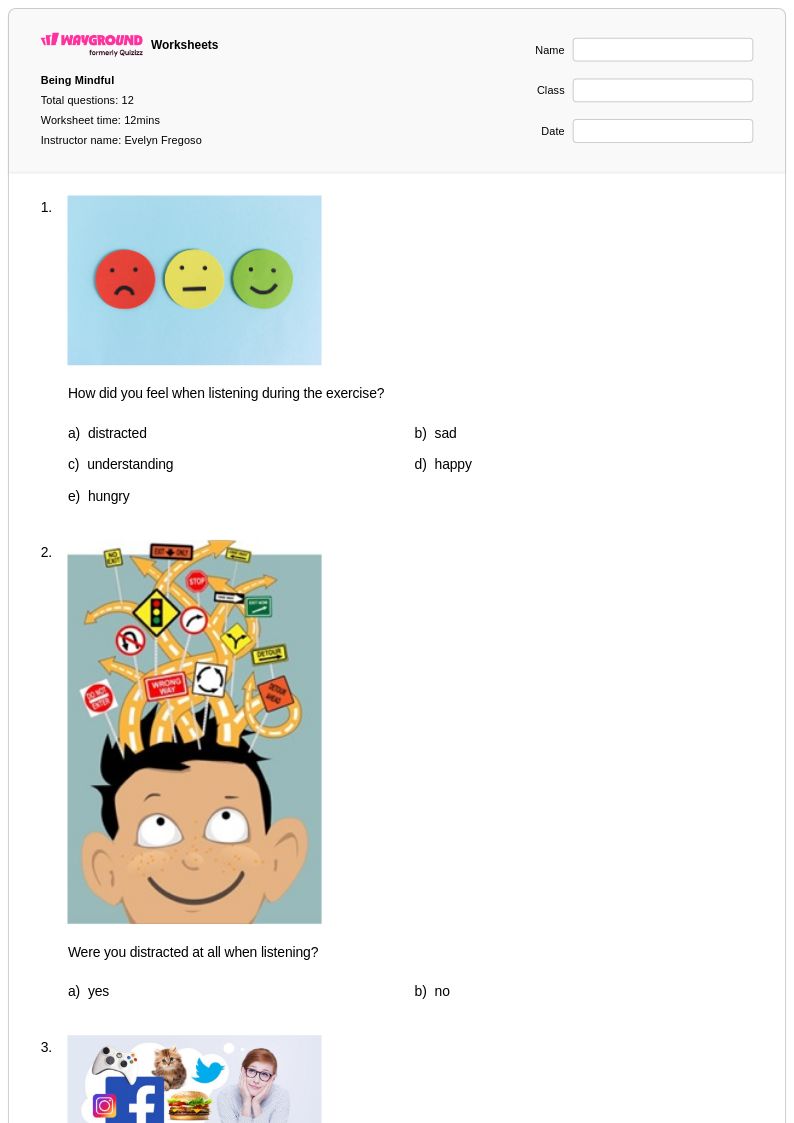
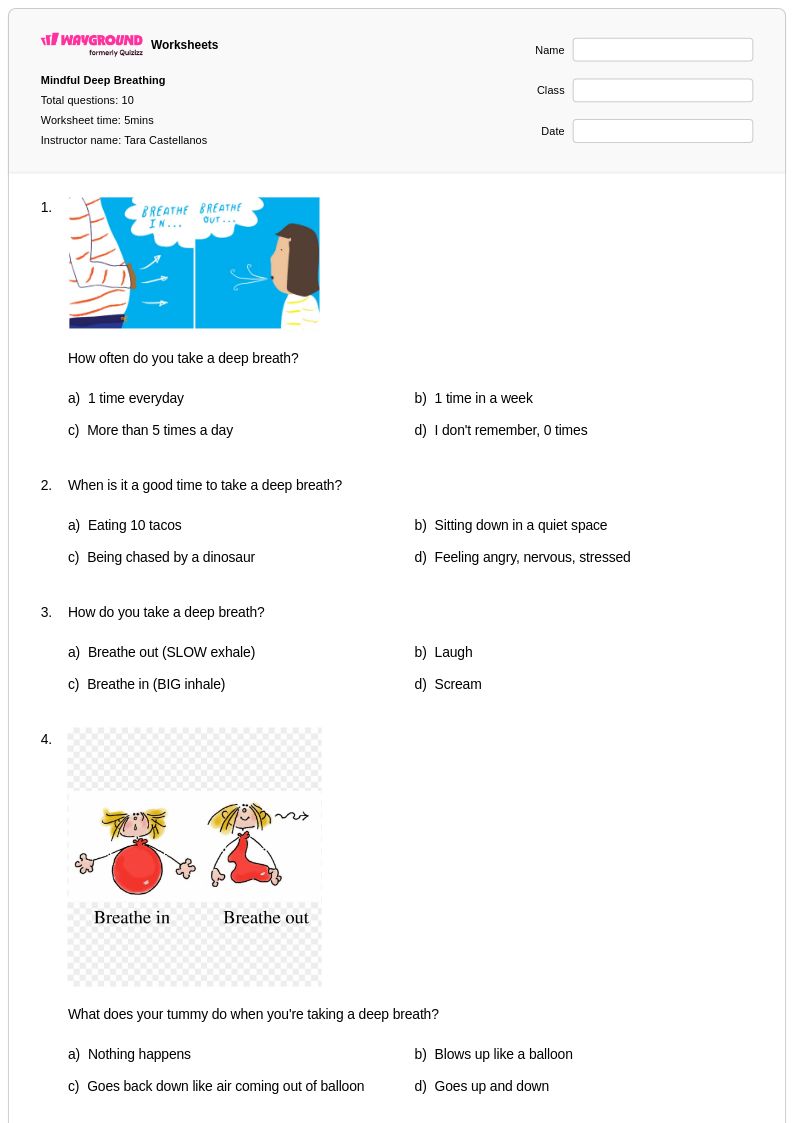
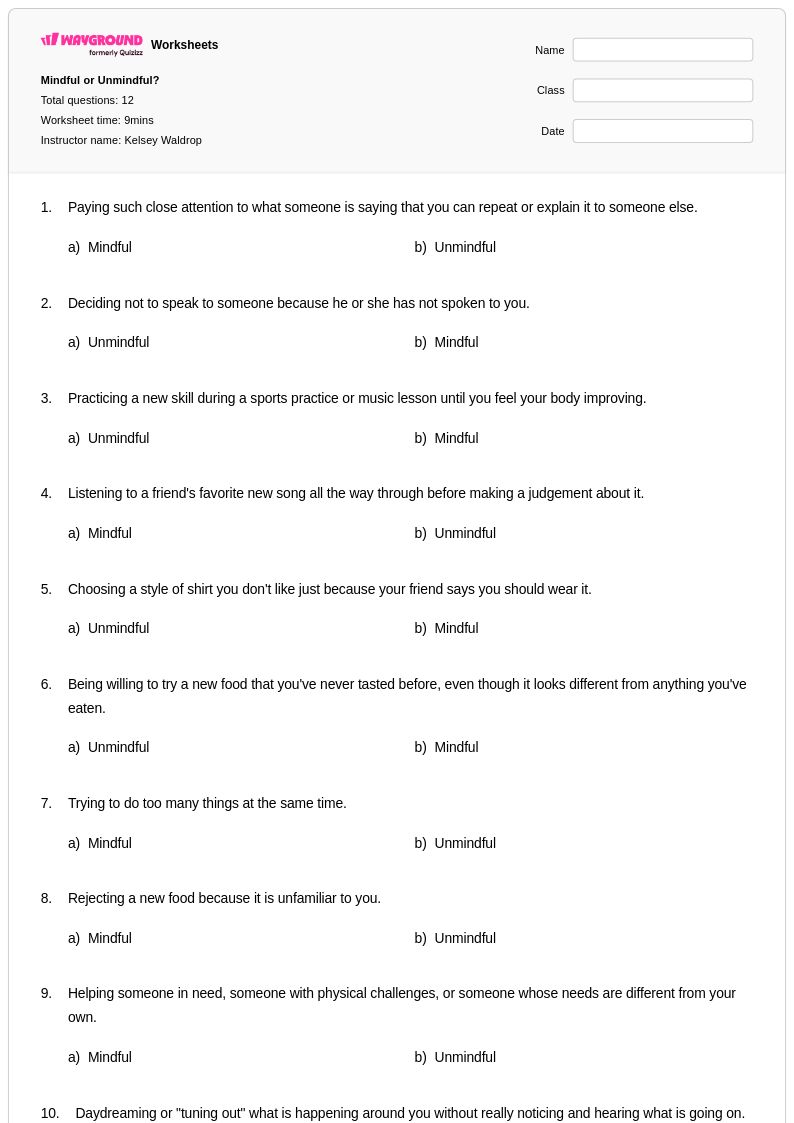
Mindful walking worksheets for Year 2 students available through Wayground (formerly Quizizz) introduce young learners to the fundamental practice of conscious movement and present-moment awareness. These carefully designed educational resources help second-grade students develop essential skills in body awareness, attention regulation, and emotional self-management through structured walking exercises and reflection activities. The worksheets guide students through simple mindful walking techniques, teaching them to notice their breath, footsteps, and surroundings while moving slowly and deliberately. Each printable resource includes clear instructions, observation prompts, and reflection questions that encourage students to practice mindfulness in an accessible, age-appropriate way. Free pdf versions provide teachers with immediate access to answer keys and practice problems that reinforce the connection between physical movement and mental awareness.
Wayground (formerly Quizizz) supports physical education teachers with an extensive collection of mindful walking resources created by millions of educators who understand the unique needs of Year 2 students. The platform's robust search and filtering capabilities enable teachers to quickly locate worksheets that align with specific learning objectives and standards for social-emotional learning and physical wellness. Teachers can easily differentiate instruction by accessing materials at various complexity levels, from basic breathing awareness activities to more advanced mindful movement sequences. The flexible customization tools allow educators to modify worksheets for individual student needs, supporting both remediation for students who need extra practice with focus and attention, and enrichment for those ready to explore deeper mindfulness concepts. Available in both printable and digital formats including downloadable pdfs, these resources seamlessly integrate into lesson planning while providing consistent skill practice that helps young learners develop lifelong mindfulness habits through purposeful physical movement.
FAQs
How do I introduce mindful walking to students who have never practiced mindfulness before?
Start by anchoring the practice in something students already know: walking. Begin with a short guided walk where students focus on a single sensation, such as the feeling of their feet making contact with the ground, before layering in breath awareness and environmental observation. Framing mindful walking as a physical skill rather than a meditative practice helps students who are skeptical of mindfulness engage more readily. Structured reflection prompts after each walk give students a concrete way to process and articulate their experience.
What exercises help students practice mindful walking techniques?
Effective practice exercises include slow-paced walking with breath-counting, sensory check-ins where students name what they see, hear, and feel at regular intervals, and pace-variation drills that connect walking speed to breath rhythm. Mindfulness journals that prompt students to record body sensations and mental states before and after walking are particularly useful for building self-awareness over time. Worksheets that guide students through each of these activities in sequence help reinforce the connection between physical movement and present-moment focus.
What common mistakes do students make when learning mindful walking?
The most frequent mistake is treating mindful walking as passive strolling rather than an active attention practice, which means students often disengage after the first minute. Students also commonly focus narrowly on one sensory input, such as breathing, while ignoring others like posture or environmental awareness, limiting the depth of the practice. Another error is rushing through reflection prompts without genuine introspection, which reduces the wellness benefit. Teachers should explicitly model what sustained attention during walking looks like and use structured check-in questions to keep students engaged throughout.
How does mindful walking support mental wellness goals in physical education?
Mindful walking bridges physical activity and mental health by training students to use movement as a tool for stress regulation and concentration. When students practice pace regulation and breath awareness together, they develop a portable coping strategy they can apply outside of PE class. Research in mindfulness-based interventions supports that regular practice reduces anxiety and improves attentional focus, making it a high-value addition to holistic PE curricula. Structuring mindful walking as a skill with observable, teachable components makes it easier to integrate into wellness standards.
How can I use Wayground's mindful walking worksheets in my classroom?
Wayground's mindful walking worksheets are available as printable PDFs for traditional classroom and outdoor use, as well as in digital formats for technology-integrated learning environments, including the option to host them as a quiz on Wayground. The worksheets include guided practice problems, mindfulness journal prompts, and answer keys so teachers can assess student reflection and provide targeted feedback. For students who need additional support, Wayground's accommodation tools allow teachers to enable features like Read Aloud and extended time on an individual basis, ensuring all learners can engage meaningfully with the material.
How do I differentiate mindful walking activities for students with different needs or ability levels?
Differentiation in mindful walking focuses less on physical ability and more on the depth of reflection and number of sensory anchors a student is expected to manage simultaneously. Struggling learners benefit from single-focus prompts, such as attending only to breath, while advanced students can be challenged with multi-sensory observation tasks and personal movement meditation design. On Wayground, teachers can apply individual accommodations such as Read Aloud for students who need questions read to them, reduced answer choices to lower cognitive load, and adjustable font sizes through Reading mode, all configurable per student without disrupting the rest of the class.