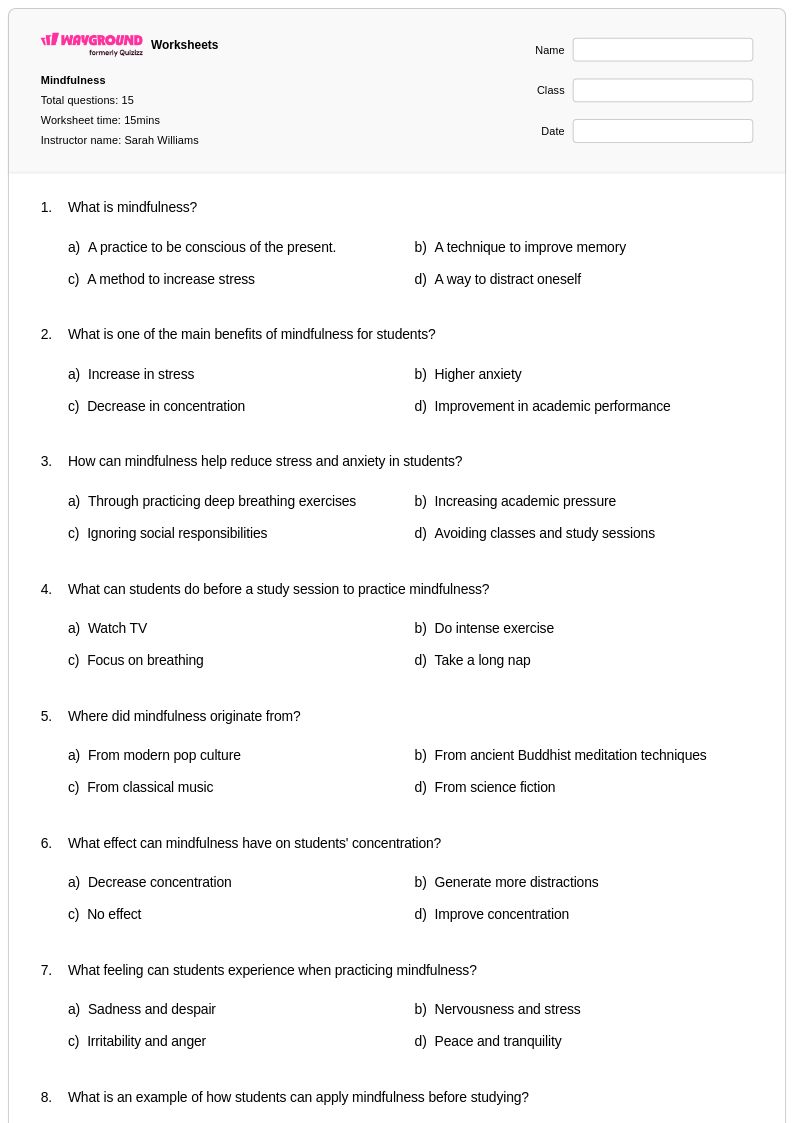
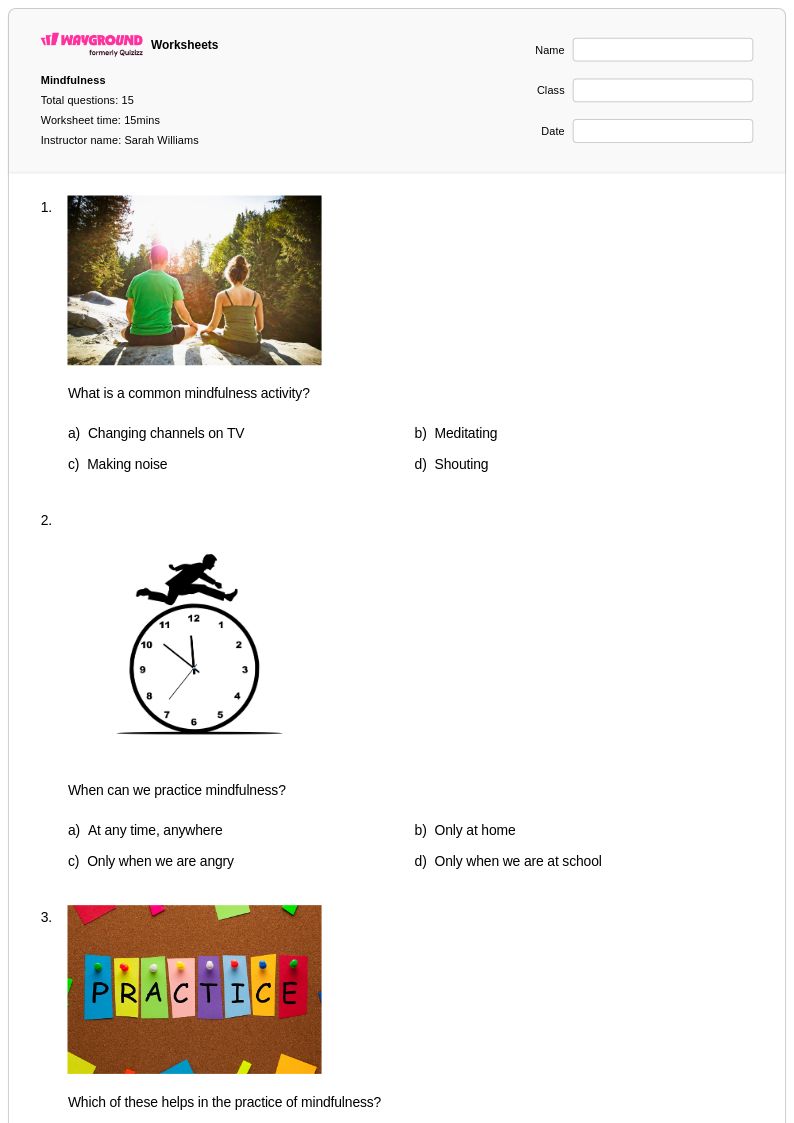
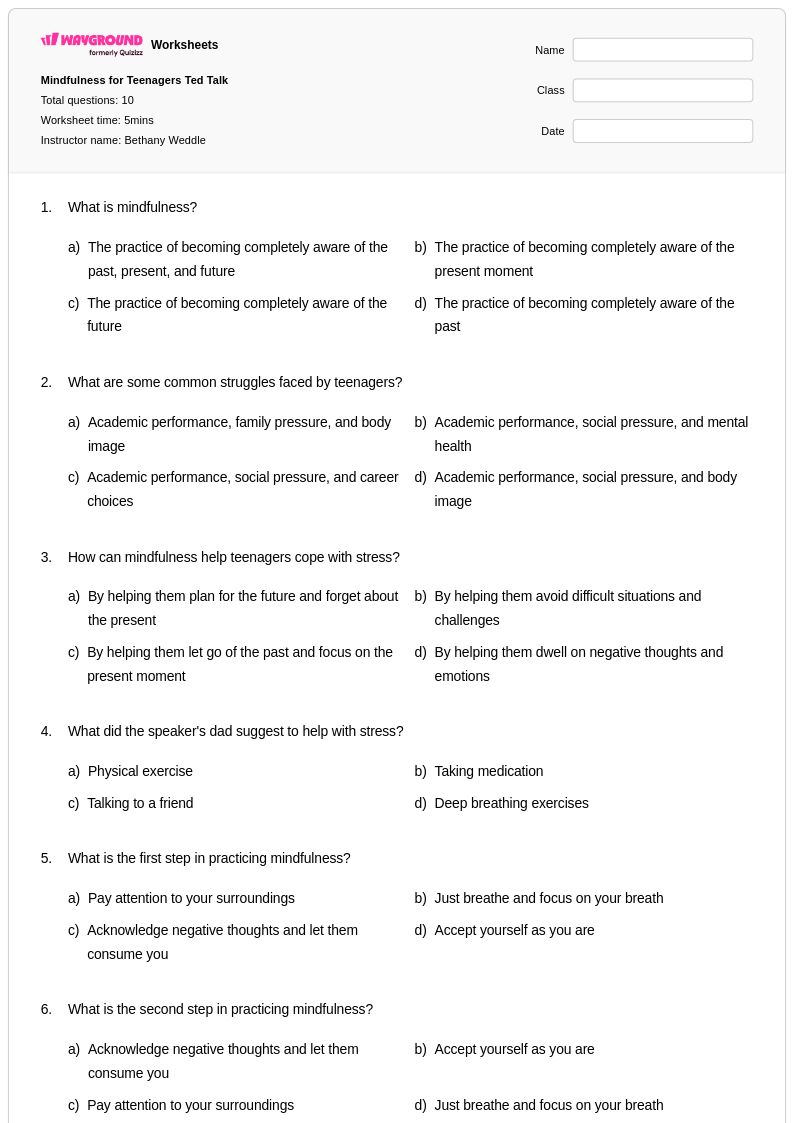
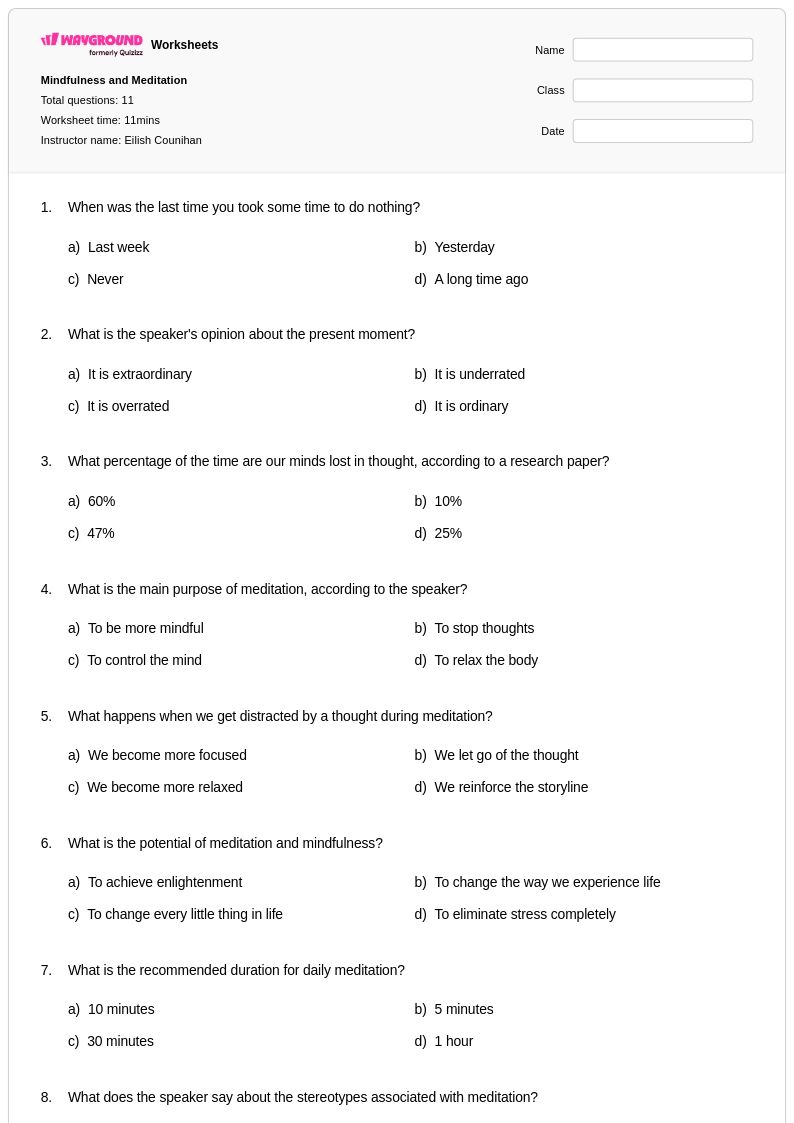
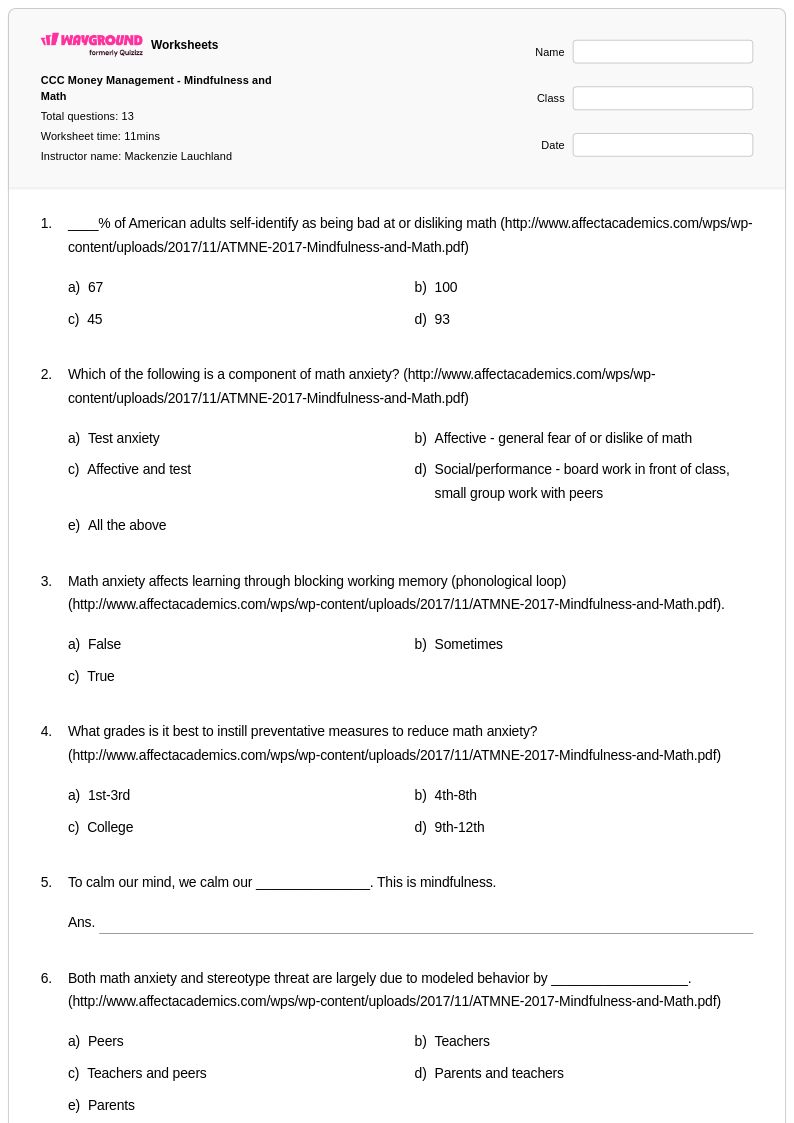
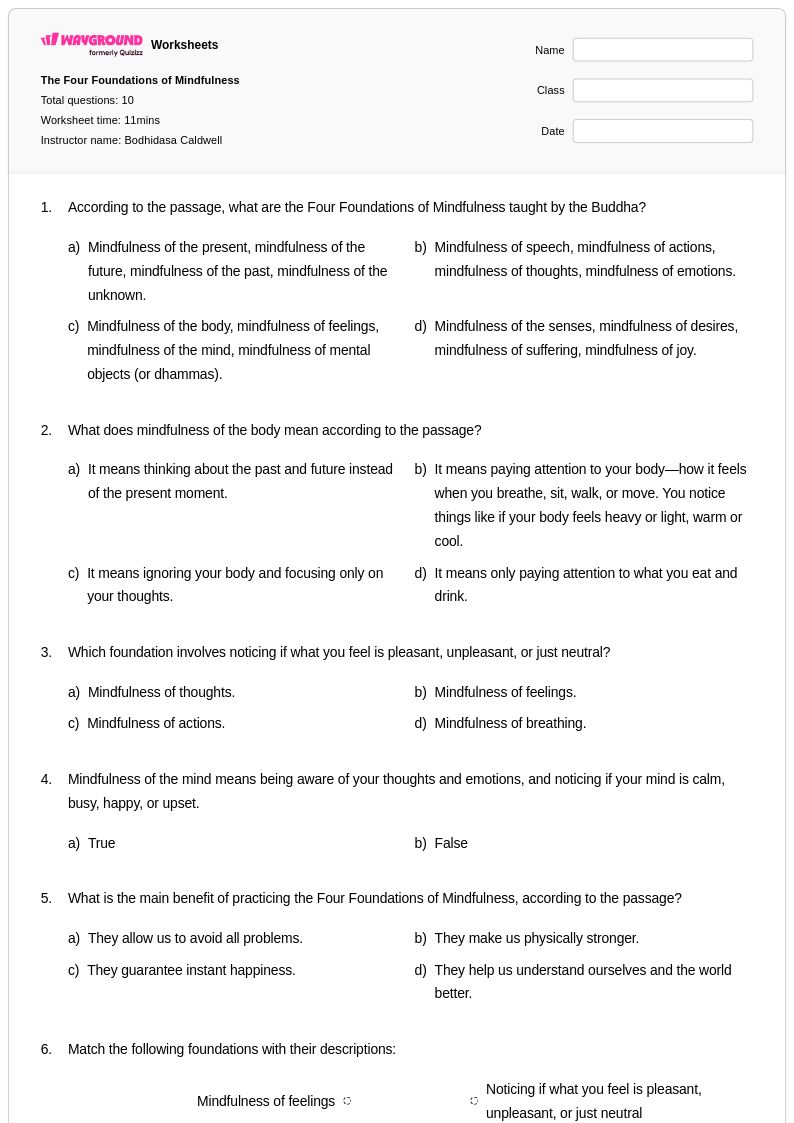
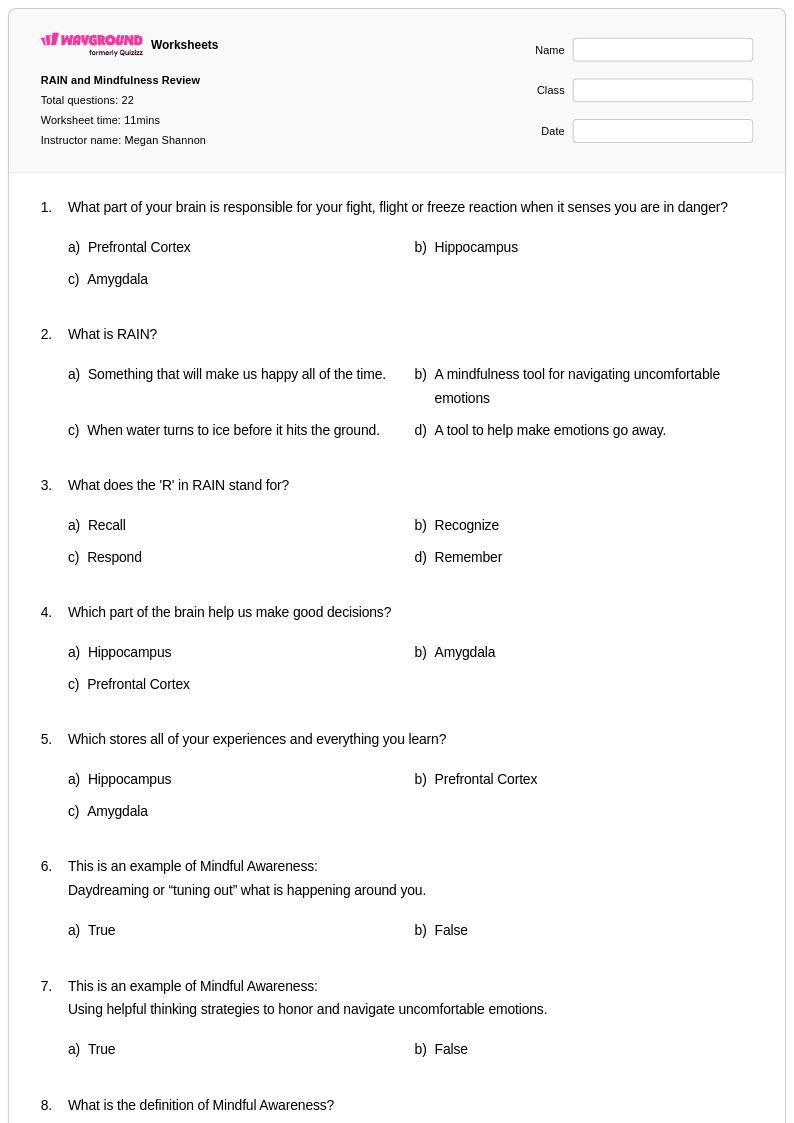
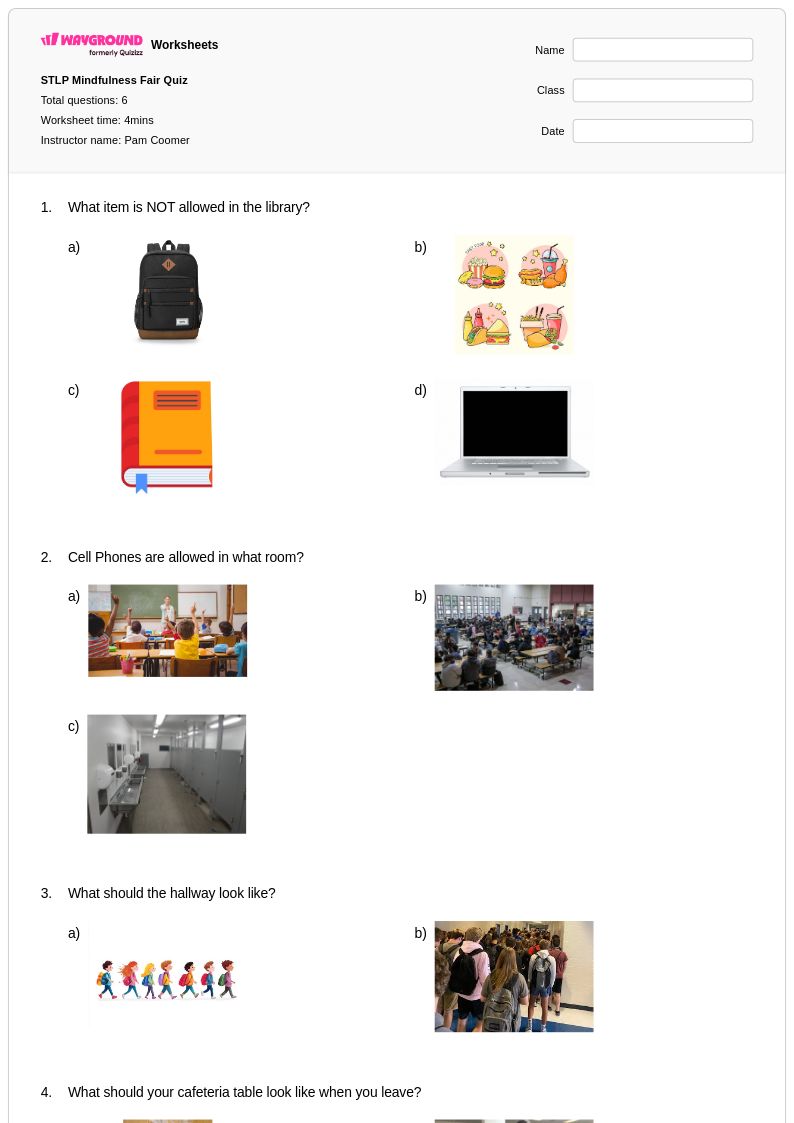
Free Year 12 mindfulness worksheets and printables help students develop mental wellness techniques, stress management skills, and self-awareness practices through engaging PDF activities with comprehensive answer keys.
Explore printable Mindfulness worksheets for Year 12
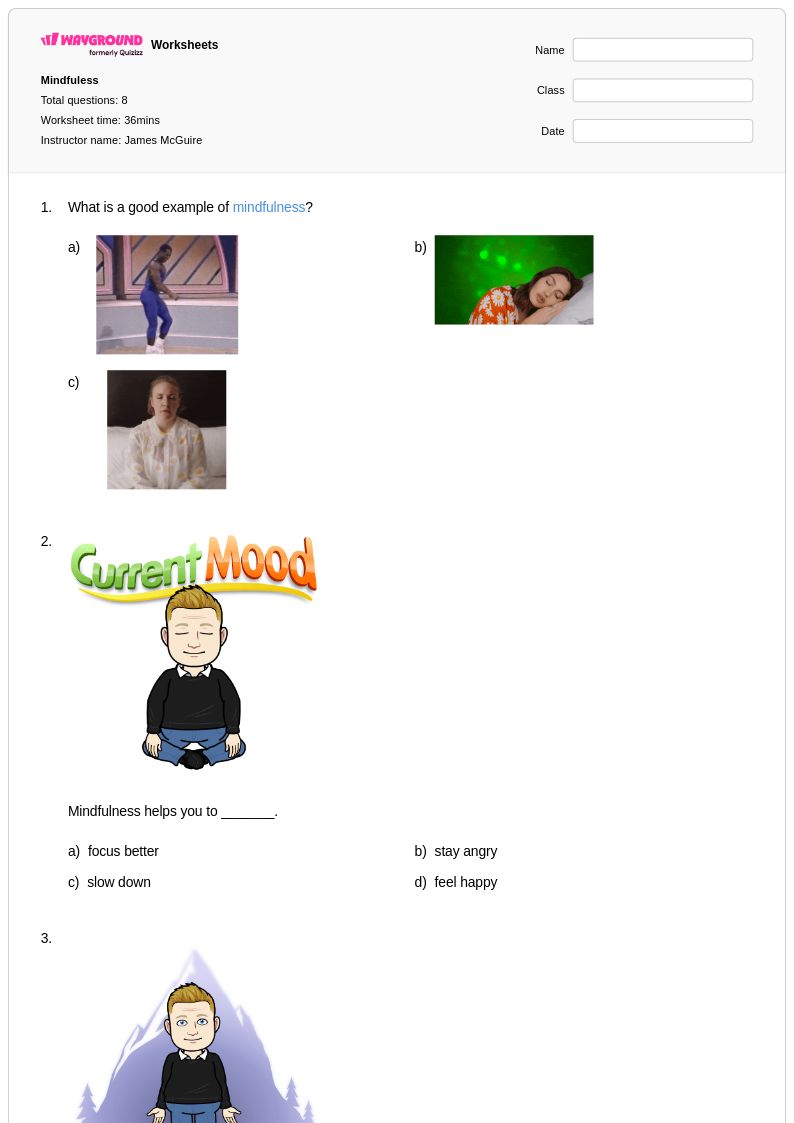
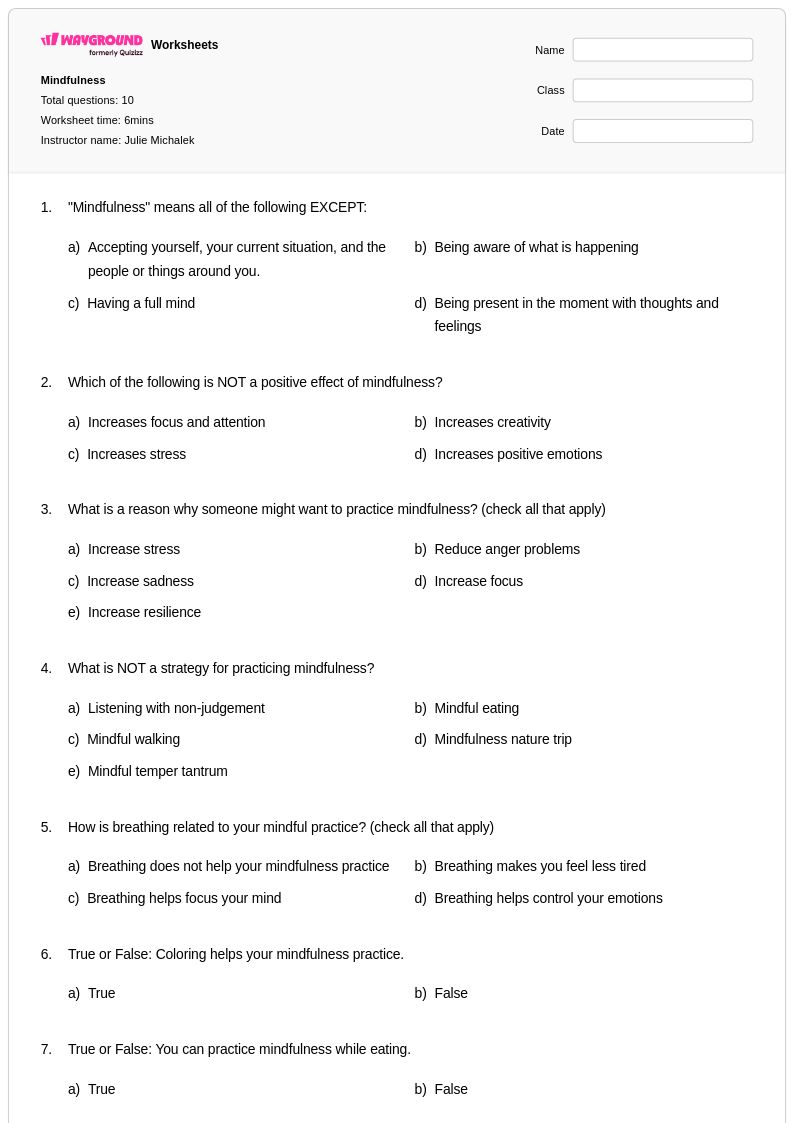
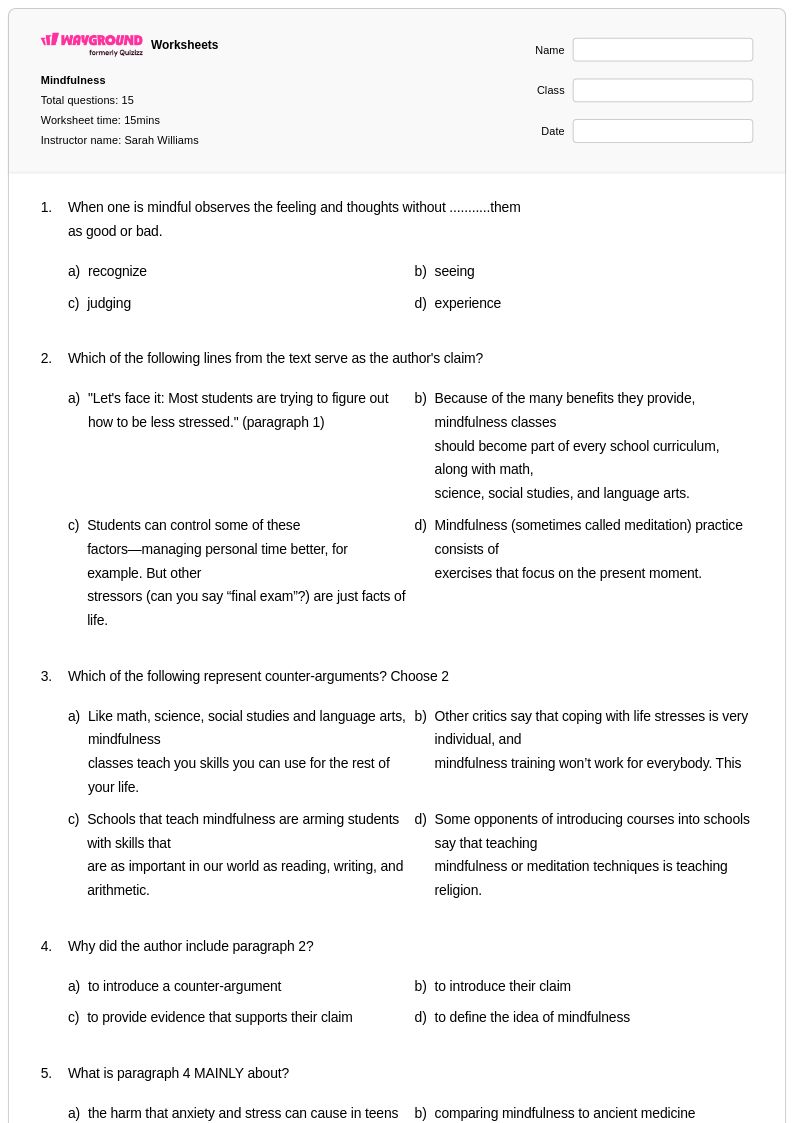
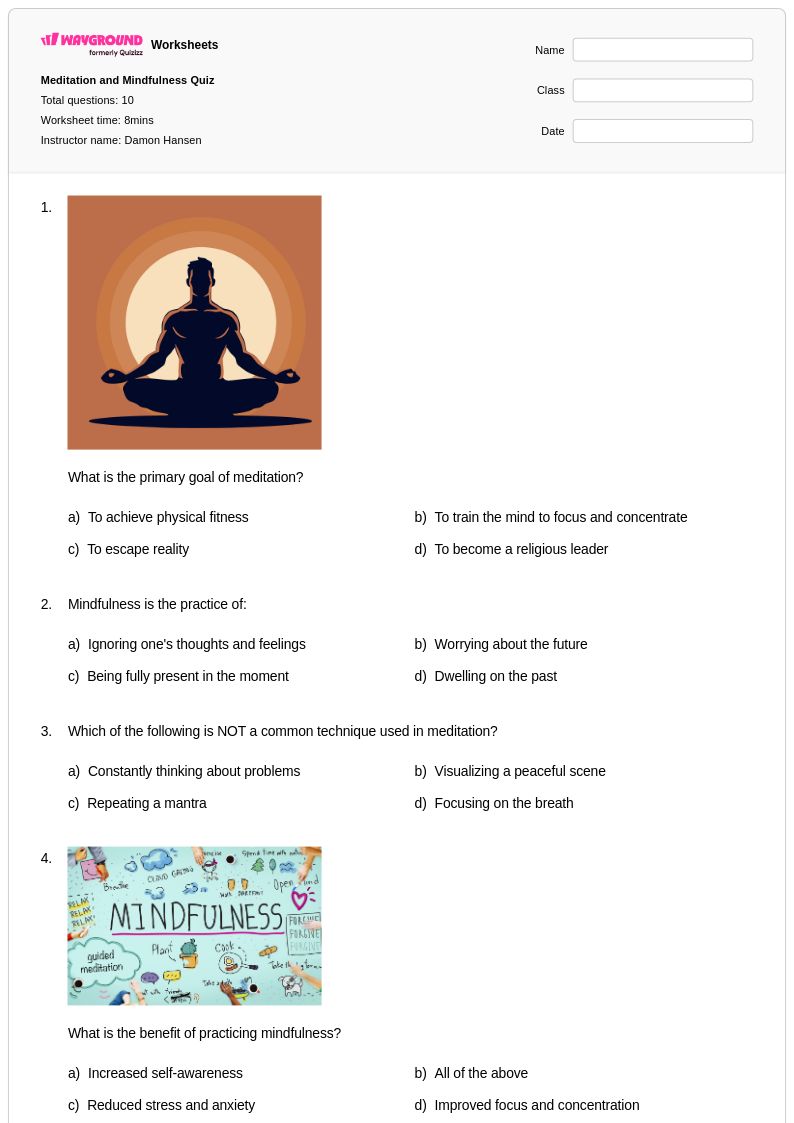
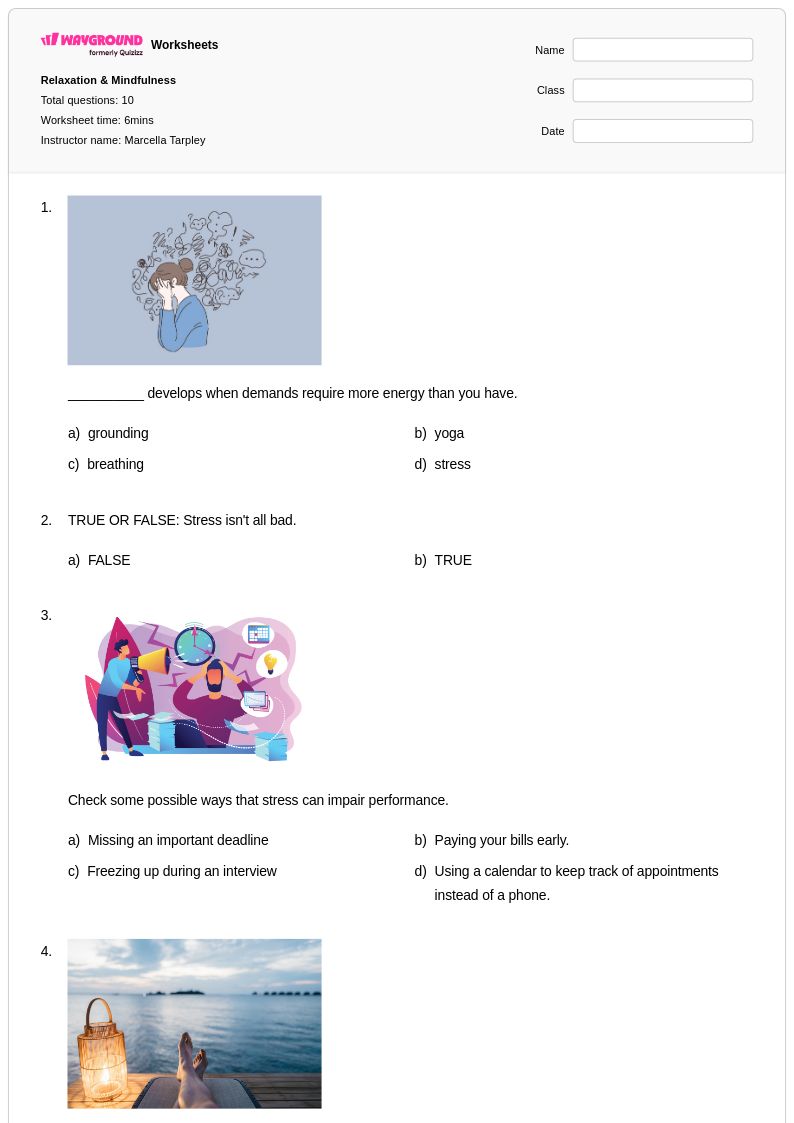
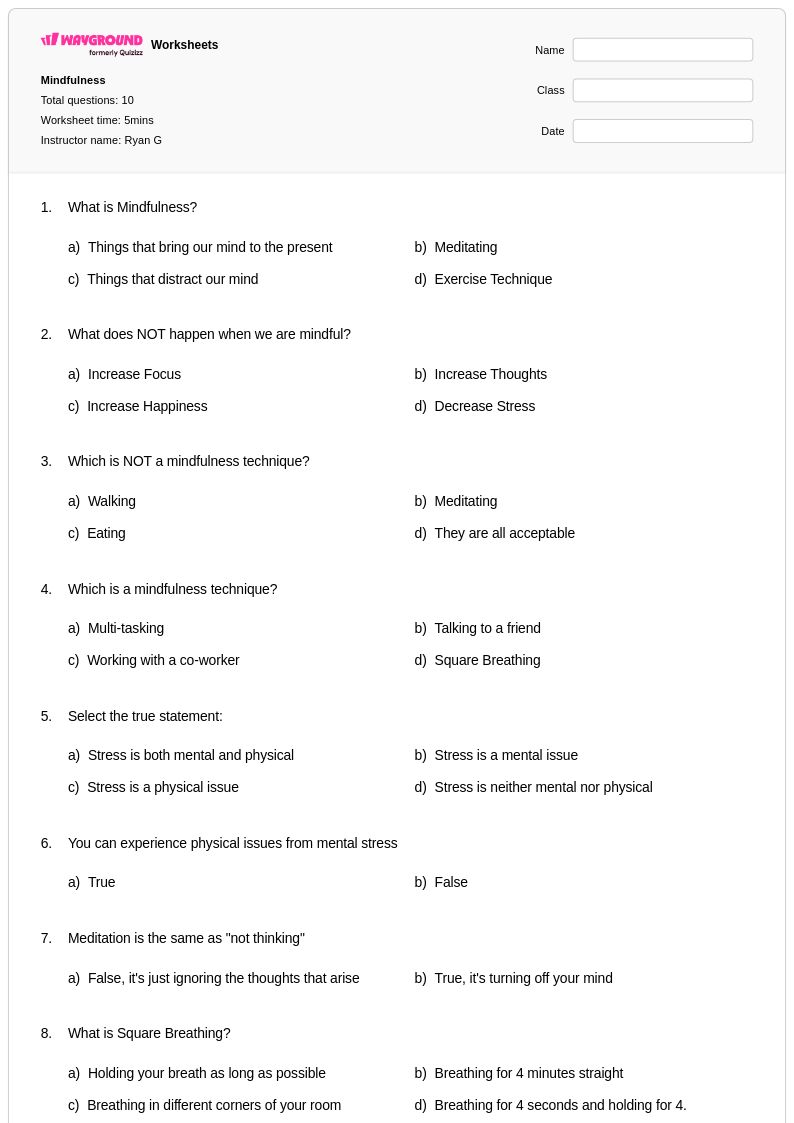
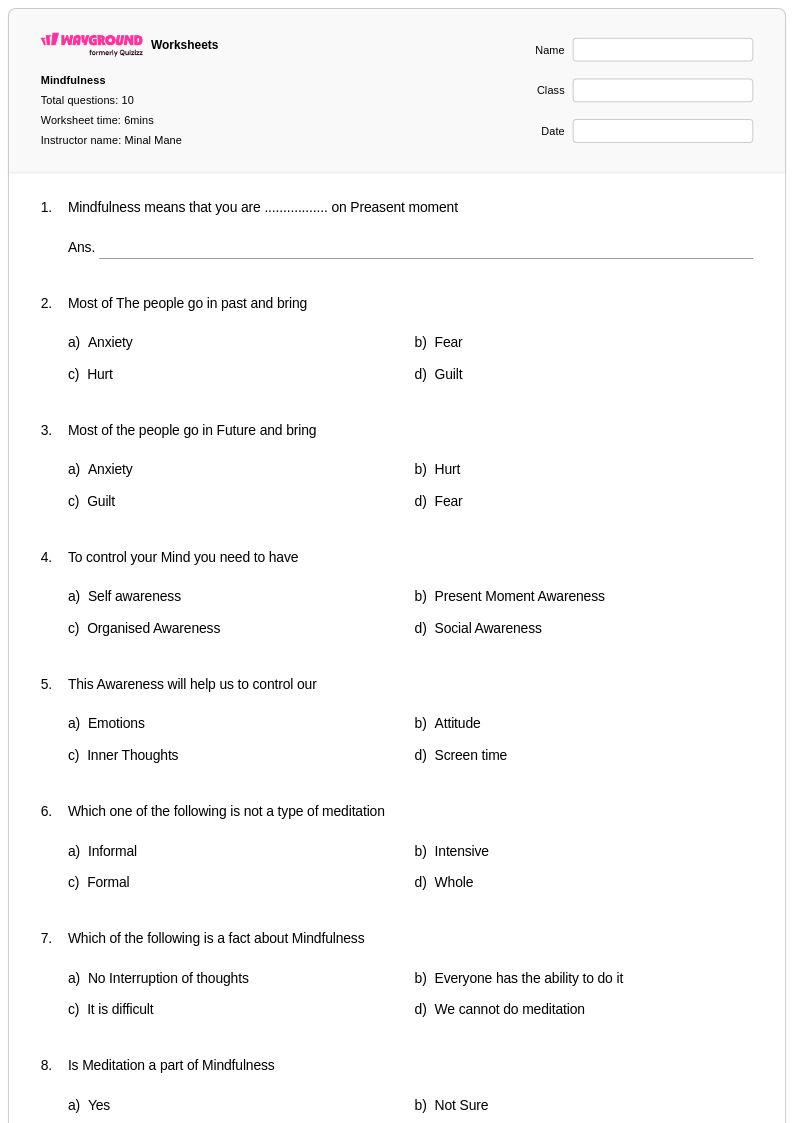
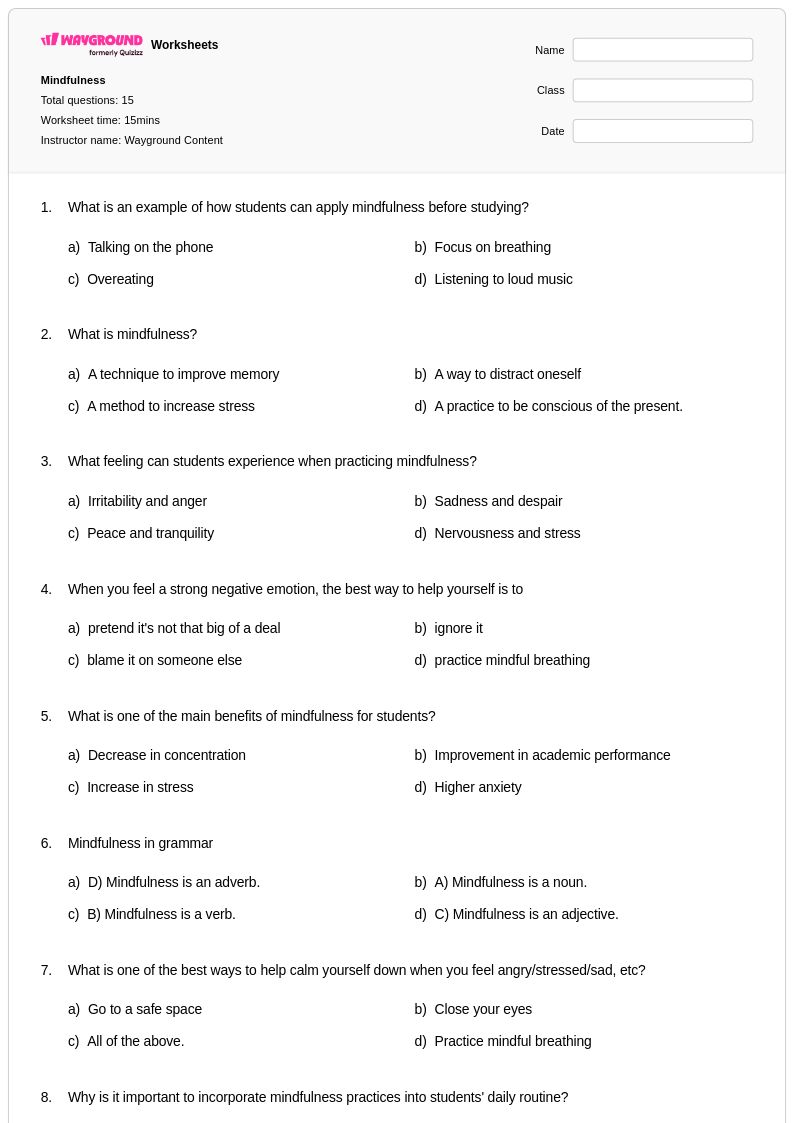
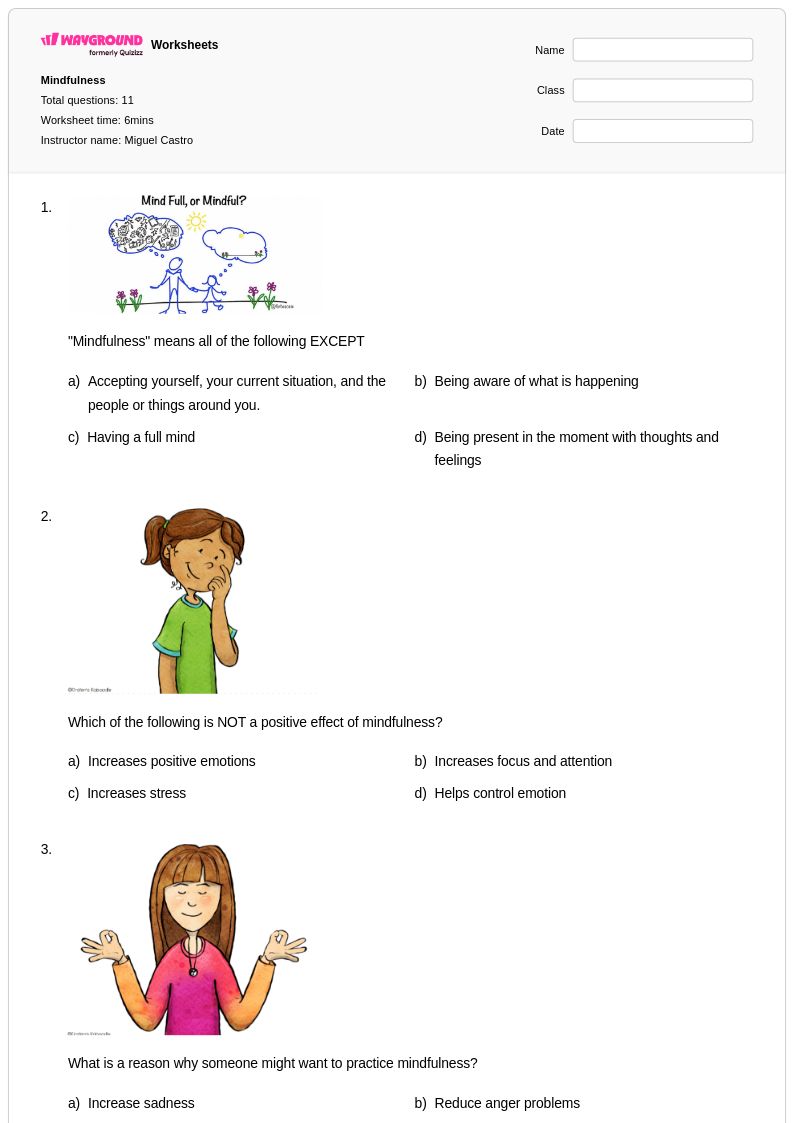
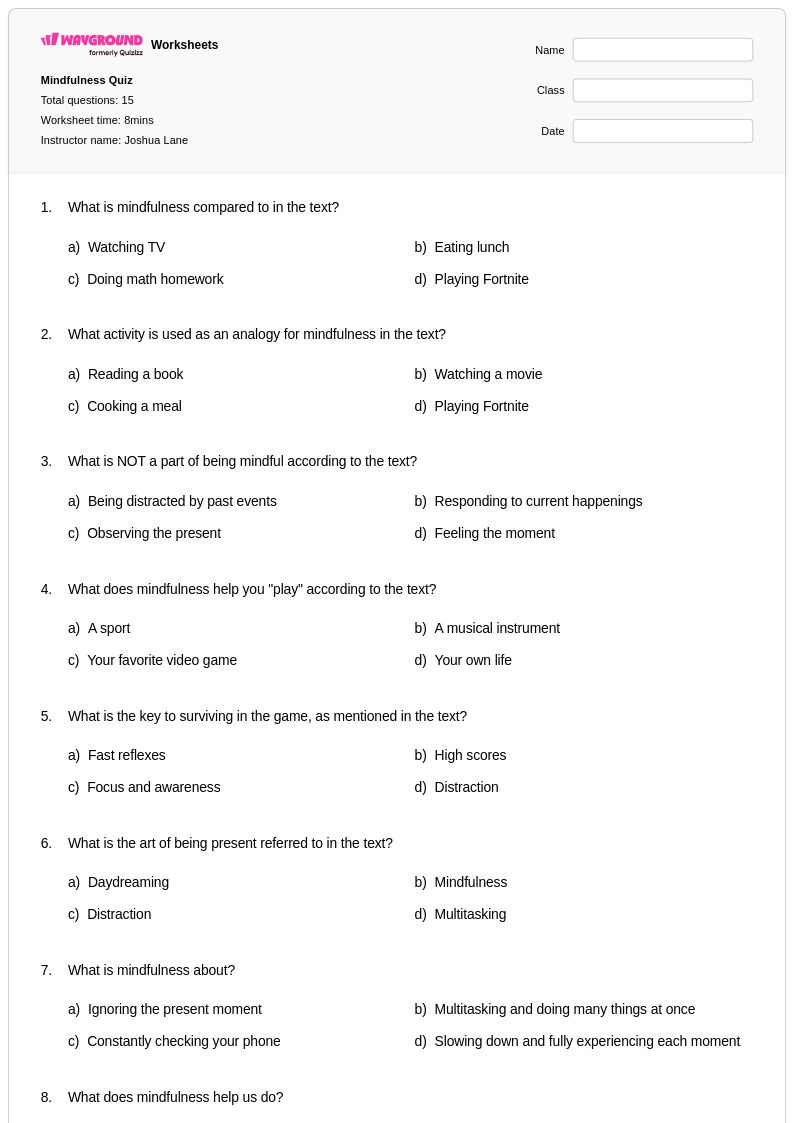
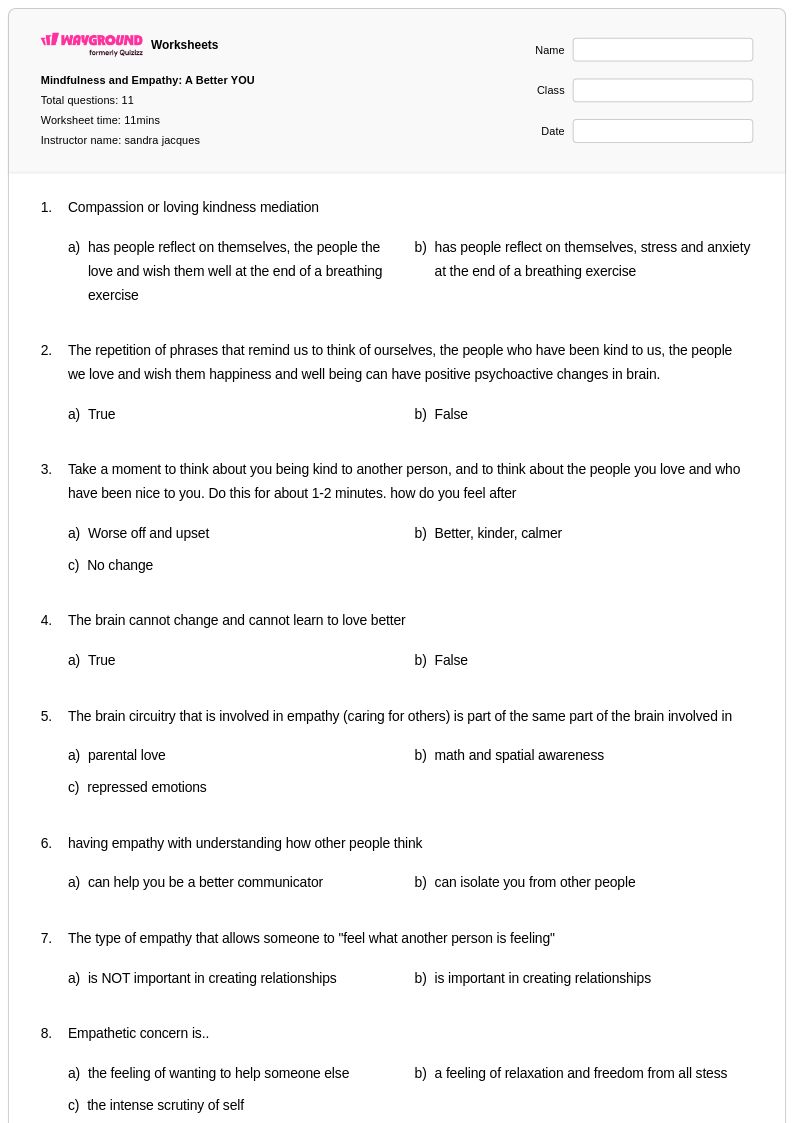
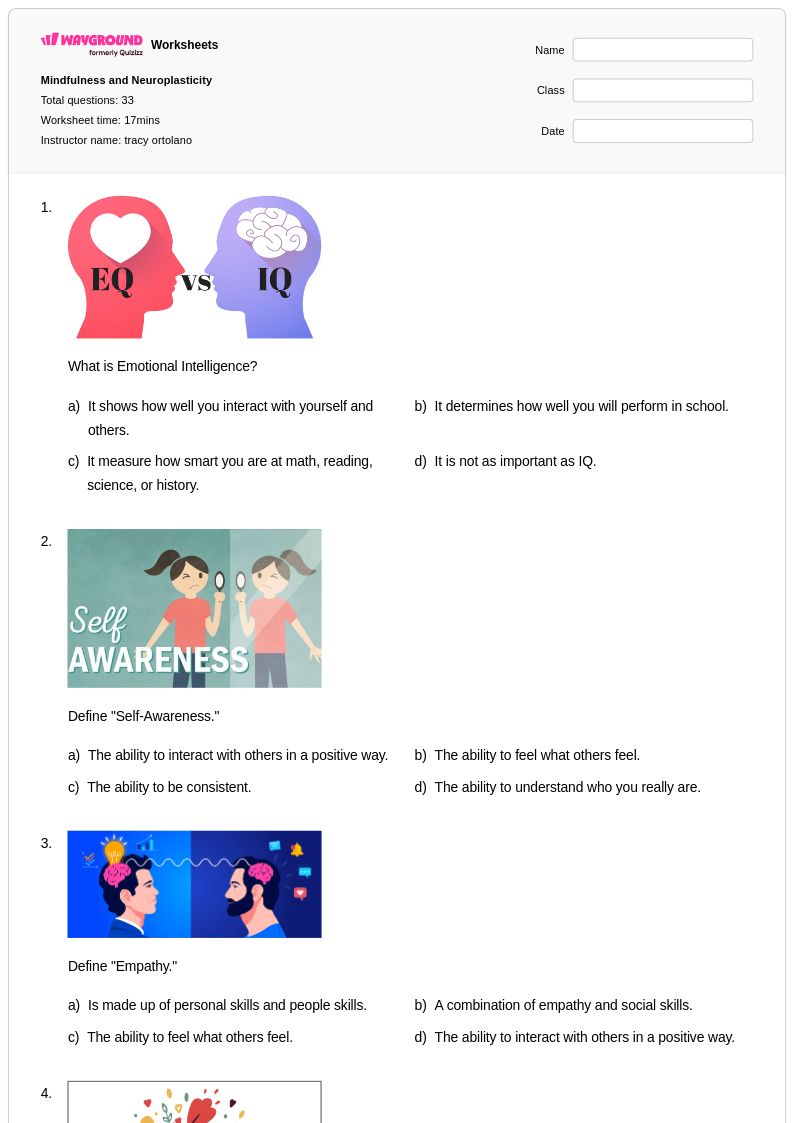
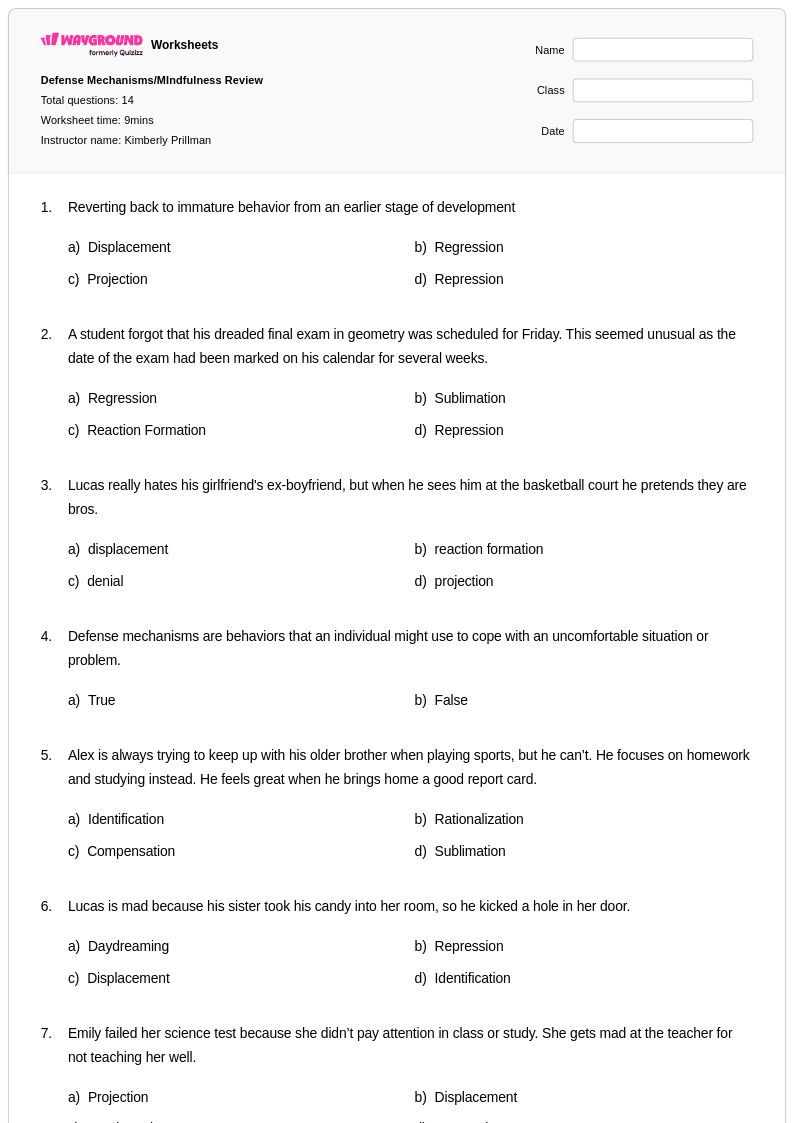
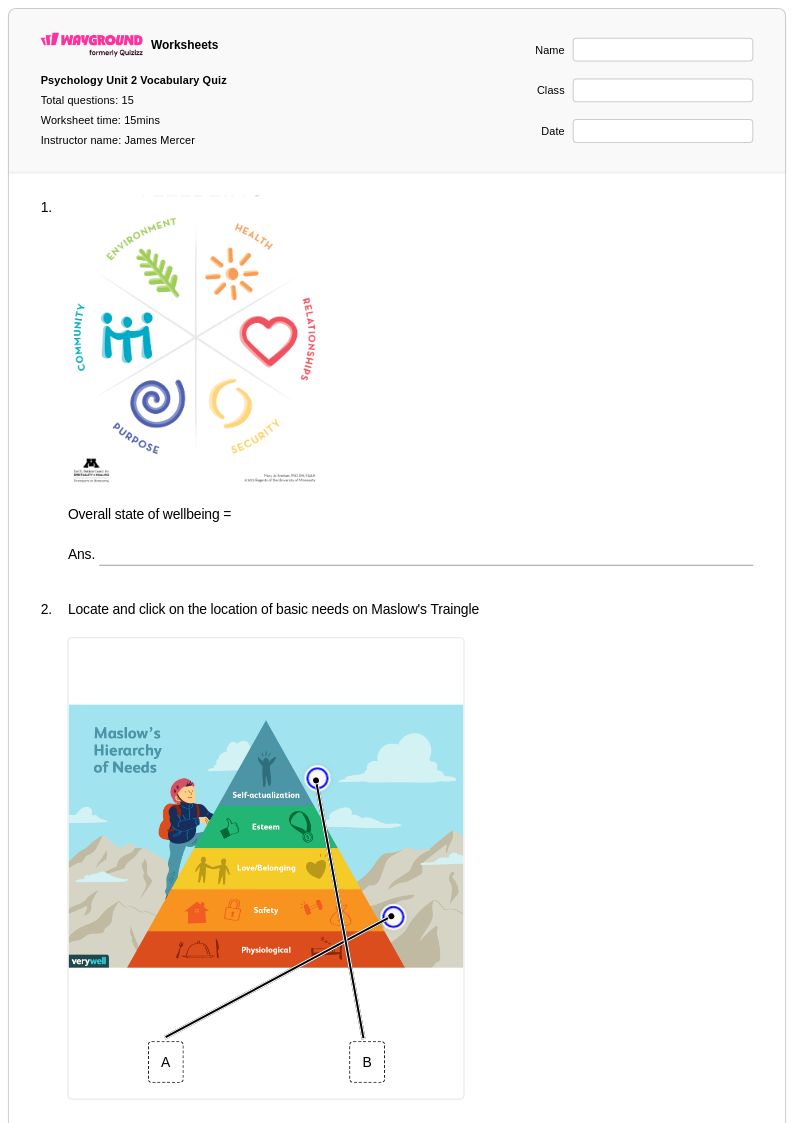
Mindfulness worksheets for Year 12 Physical Education provide students with essential tools to develop mental wellness skills that complement their physical fitness journey. These comprehensive resources from Wayground (formerly Quizizz) focus on teaching advanced mindfulness techniques, stress management strategies, and body awareness practices that are crucial for maintaining lifelong wellness habits. Students engage with practice problems that explore breathing exercises, meditation fundamentals, and emotional regulation techniques while learning to apply mindfulness principles to athletic performance and daily life situations. Each worksheet includes detailed answer keys that help students understand proper mindfulness practices and self-reflection methods, with free printables available in convenient pdf format for both classroom instruction and independent study.
Wayground (formerly Quizizz) empowers Physical Education teachers with access to millions of teacher-created mindfulness resources specifically designed for Year 12 students, featuring robust search and filtering capabilities that allow educators to quickly locate materials aligned with wellness standards and curriculum objectives. The platform's differentiation tools enable teachers to customize worksheets based on individual student needs, whether providing additional support for students new to mindfulness concepts or offering enriched content for those ready to explore advanced stress management techniques. These flexible resources are available in both printable and digital pdf formats, making them ideal for lesson planning, targeted remediation sessions, enrichment activities, and ongoing skill practice that helps students integrate mindfulness into their comprehensive approach to physical and mental wellness.
FAQs
How do I teach mindfulness to students who have never practiced it before?
Start with short, structured activities like guided breathing or a simple body scan, where students focus attention on one body part at a time from head to toe. Framing mindfulness as a mental skill rather than a spiritual practice helps reduce resistance and makes it more accessible in school settings. Consistency matters more than duration, so even five minutes of daily practice builds student familiarity and comfort over time.
What exercises help students practice grounding techniques in the classroom?
The 5-4-3-2-1 sensory grounding technique is one of the most effective classroom exercises, prompting students to identify five things they can see, four they can touch, three they can hear, two they can smell, and one they can taste. Structured reflection worksheets that walk students through each step help anchor the practice and give students a reference they can return to independently. Repeated practice with these techniques builds the habit of self-regulation before anxiety or stress escalates.
What mistakes do students commonly make when learning mindfulness techniques?
The most common misconception is that mindfulness means emptying the mind or stopping thoughts entirely, which leads students to feel they are failing when thoughts arise. Teach students that noticing a thought and returning attention to the breath or body is the actual practice, not a mistake. Students also tend to rush through reflection activities without genuine introspection, so prompts that ask specific questions about physical sensations or emotional states produce more meaningful engagement than open-ended journaling alone.
How does mindful walking work as a classroom or PE activity?
Mindful walking directs students to slow their pace and pay deliberate attention to each step, the sensation of their feet on the ground, their breathing rhythm, and their surroundings. Unlike standard walking exercises, the goal is present-moment awareness rather than physical output, making it accessible for students across a wide range of fitness levels. Guided worksheets with structured observation prompts help students stay focused during the activity and process the experience through written reflection afterward.
How can I use mindfulness worksheets to support students dealing with stress or anxiety?
Mindfulness worksheets that combine breathing exercises, body awareness activities, and reflection prompts give students concrete tools to recognize and respond to stress rather than react impulsively. Body scan worksheets are particularly effective because they help students identify where they hold physical tension, which builds the self-awareness needed for emotional regulation. Used consistently in PE or advisory periods, these materials create a low-pressure routine that students can internalize and apply independently outside the classroom.
How do I use Wayground's mindfulness worksheets in my classroom?
Wayground's mindfulness worksheets are available as printable PDFs for traditional classroom and PE settings, as well as in digital formats for technology-integrated instruction. Teachers can also host worksheets as a live quiz on Wayground, making it easy to track student responses and engagement in real time. Each worksheet includes a complete answer key, so teachers can guide discussion or assess reflection quality without additional preparation. For students who need support, Wayground's accommodation tools, including read aloud and adjustable font sizes, can be applied individually so every student can access the material comfortably.