Free Printable Modern World History Worksheets for Year 9
Explore Year 9 Modern World History worksheets and printables from Wayground that help students master key historical events, analyze primary sources, and develop critical thinking skills through engaging practice problems with complete answer keys.
Explore printable Modern World History worksheets for Year 9
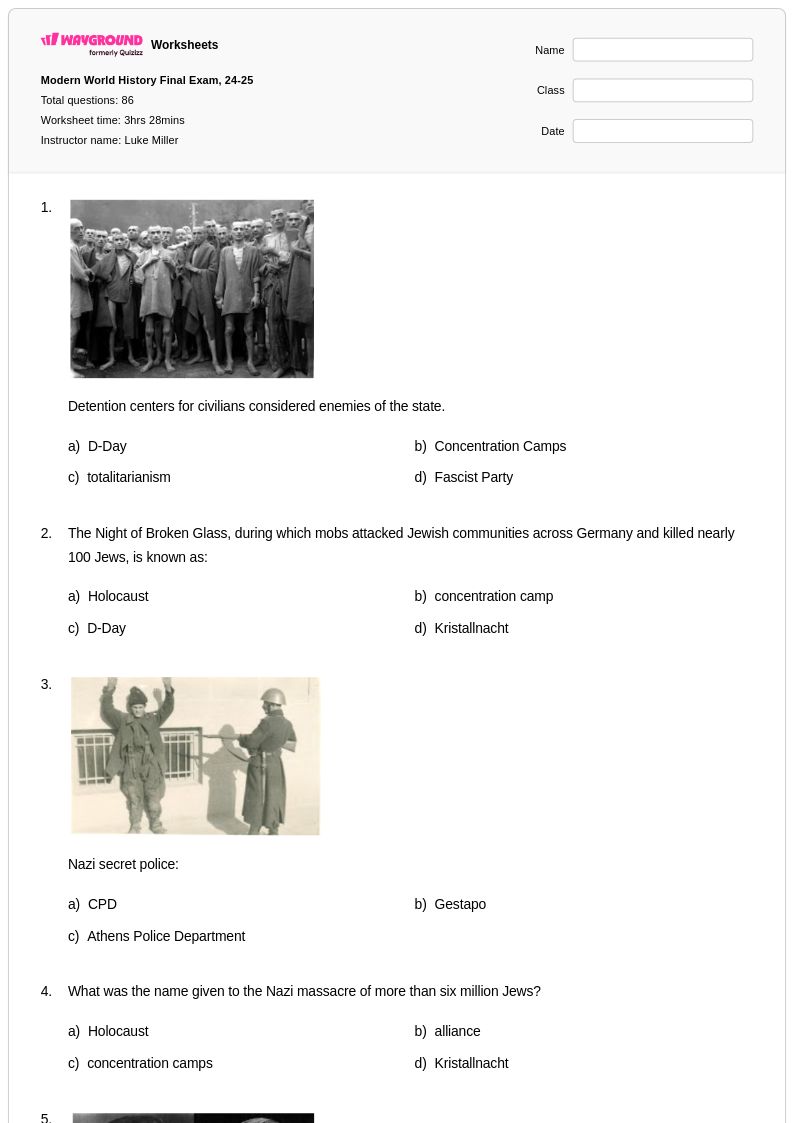
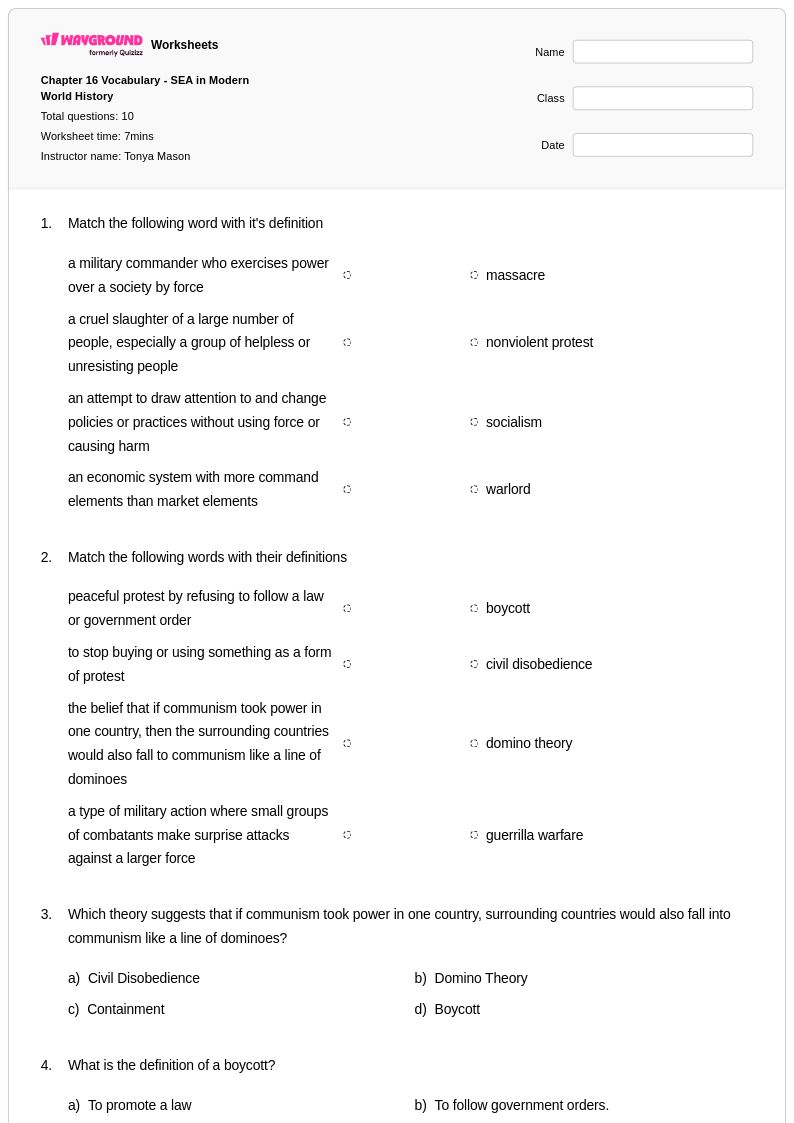
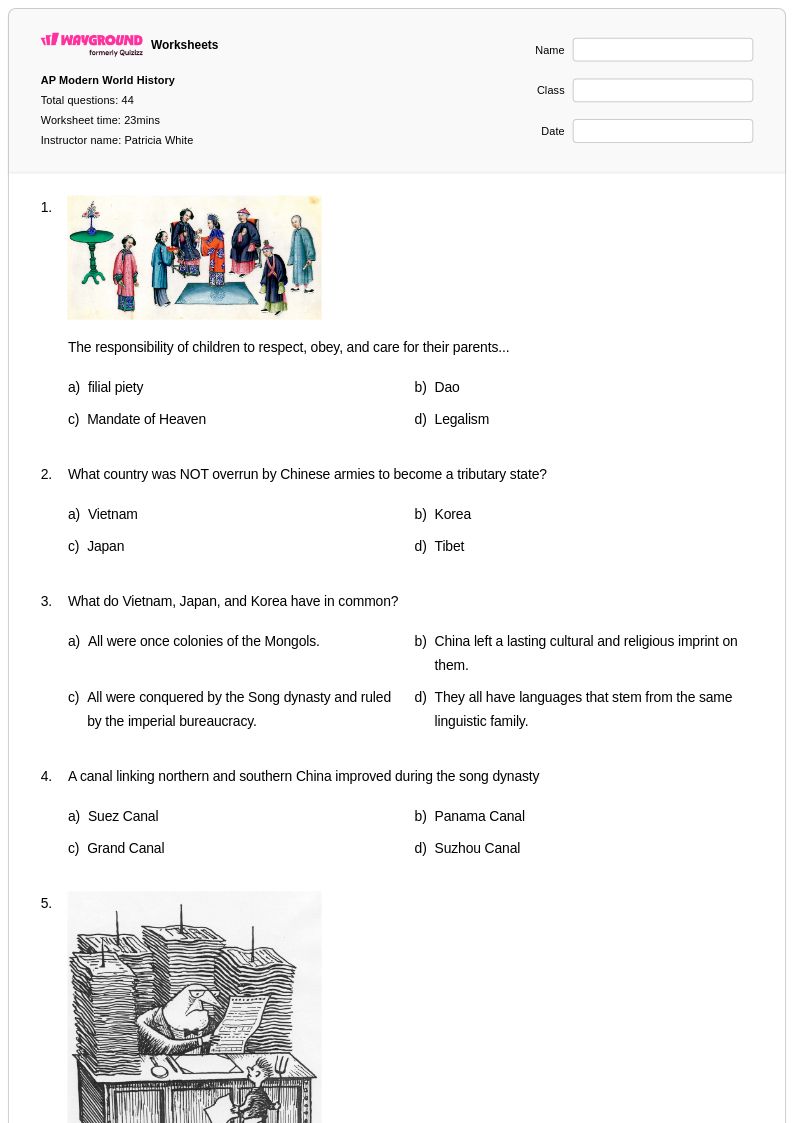
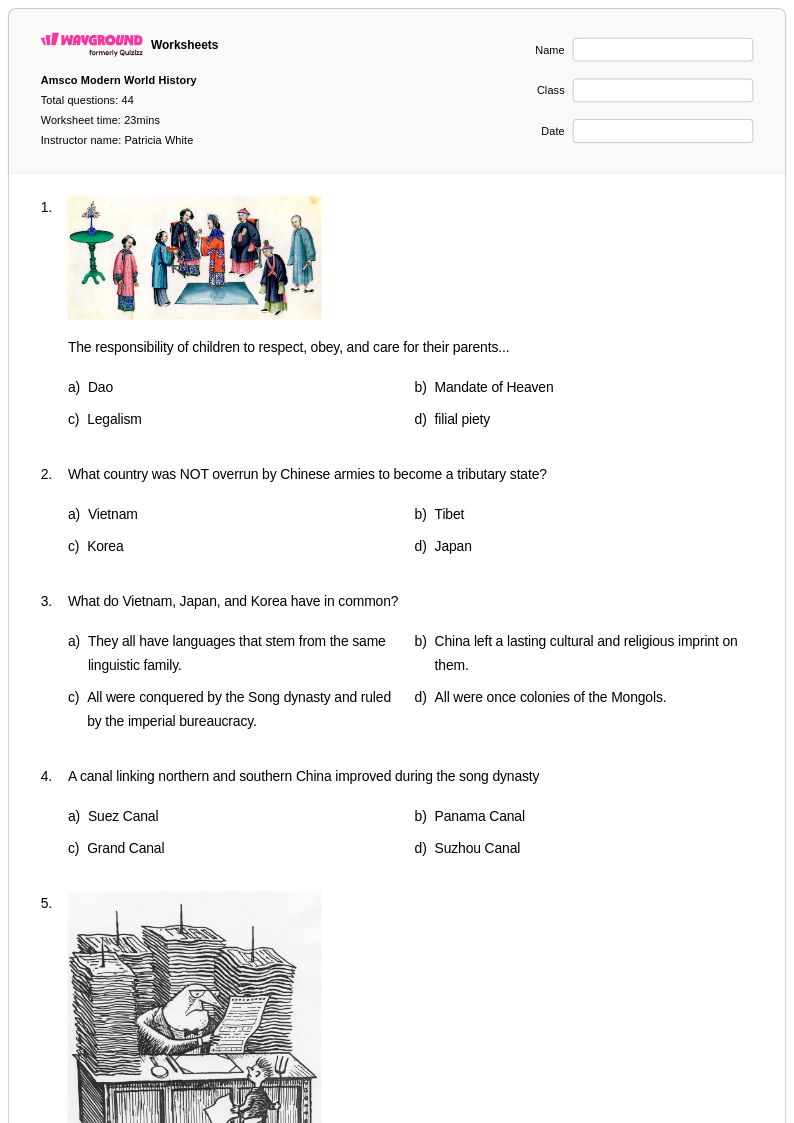
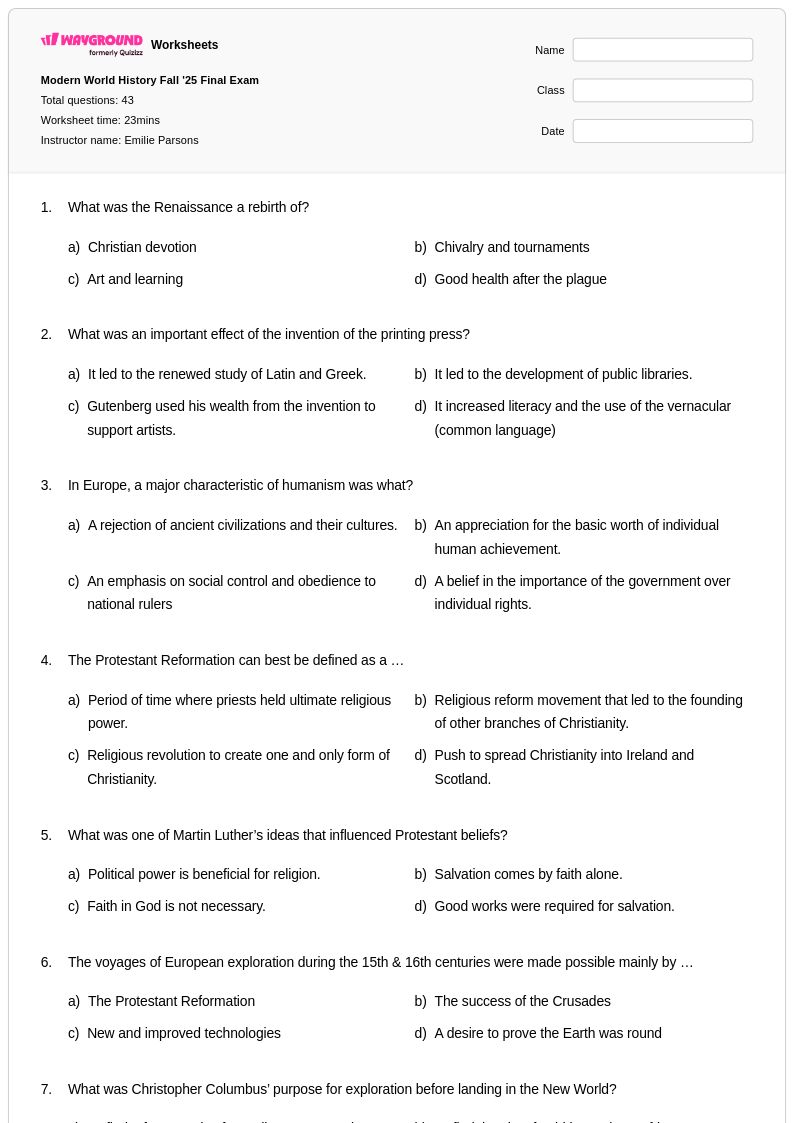
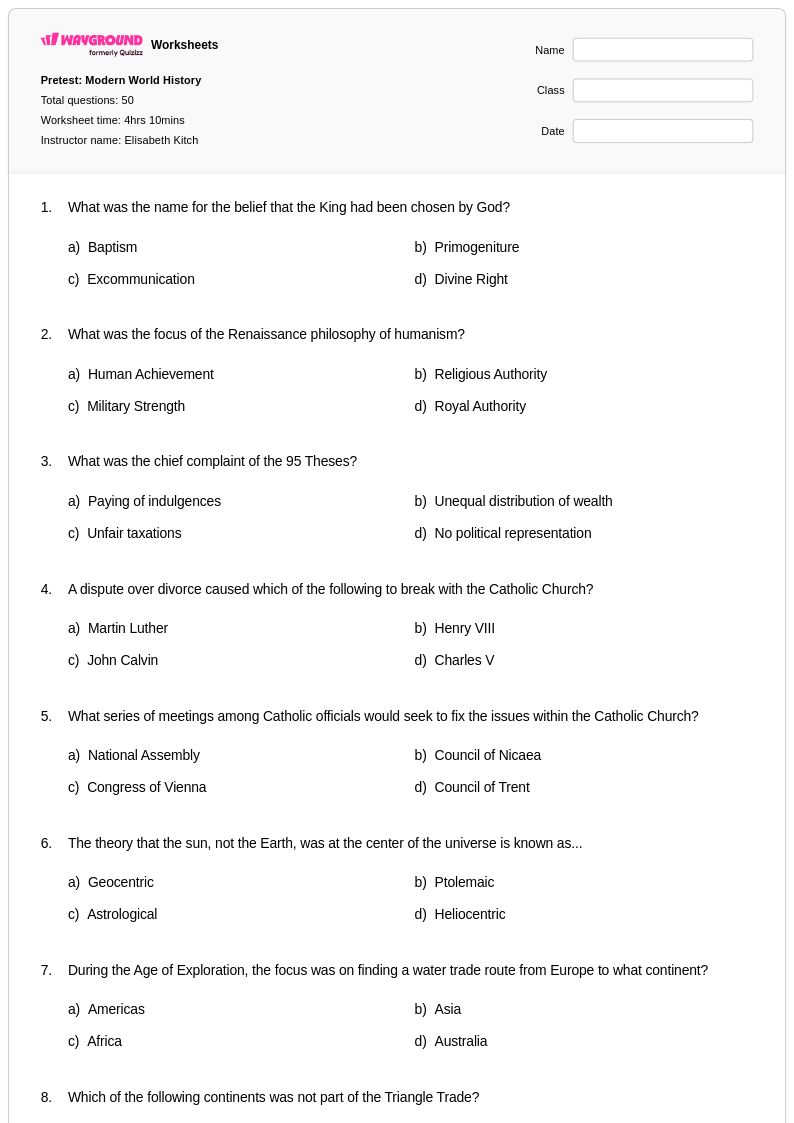
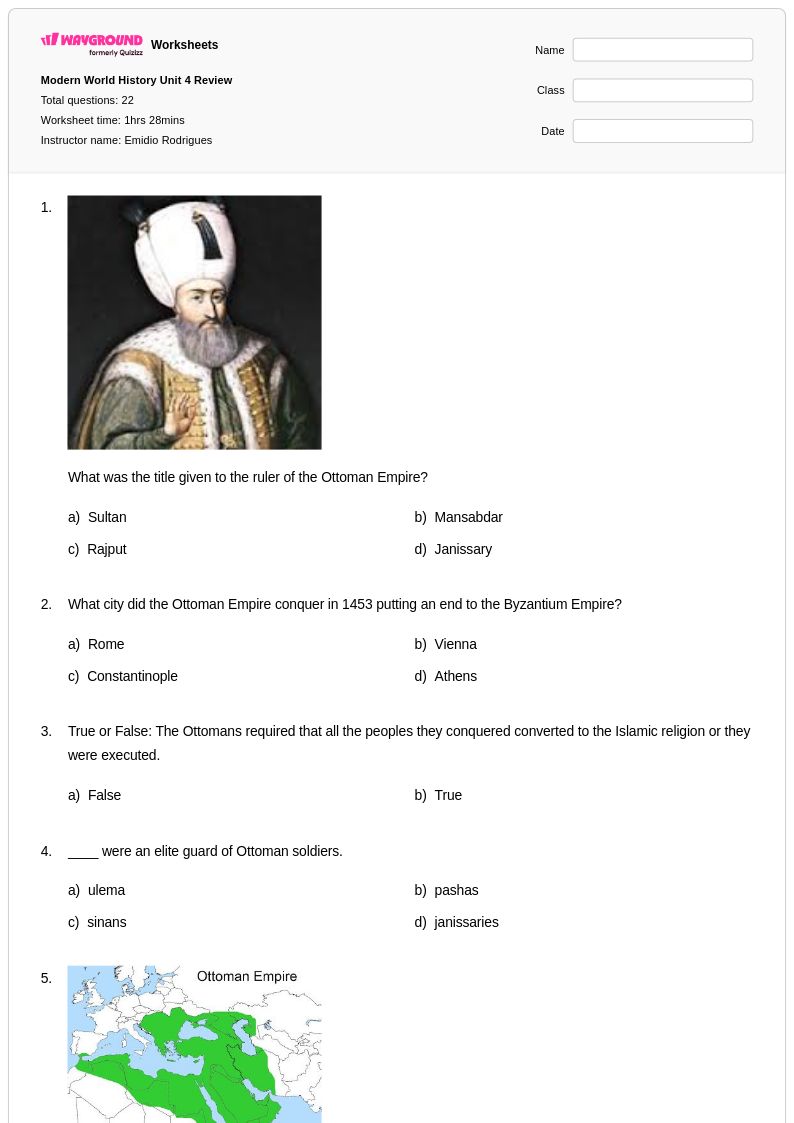
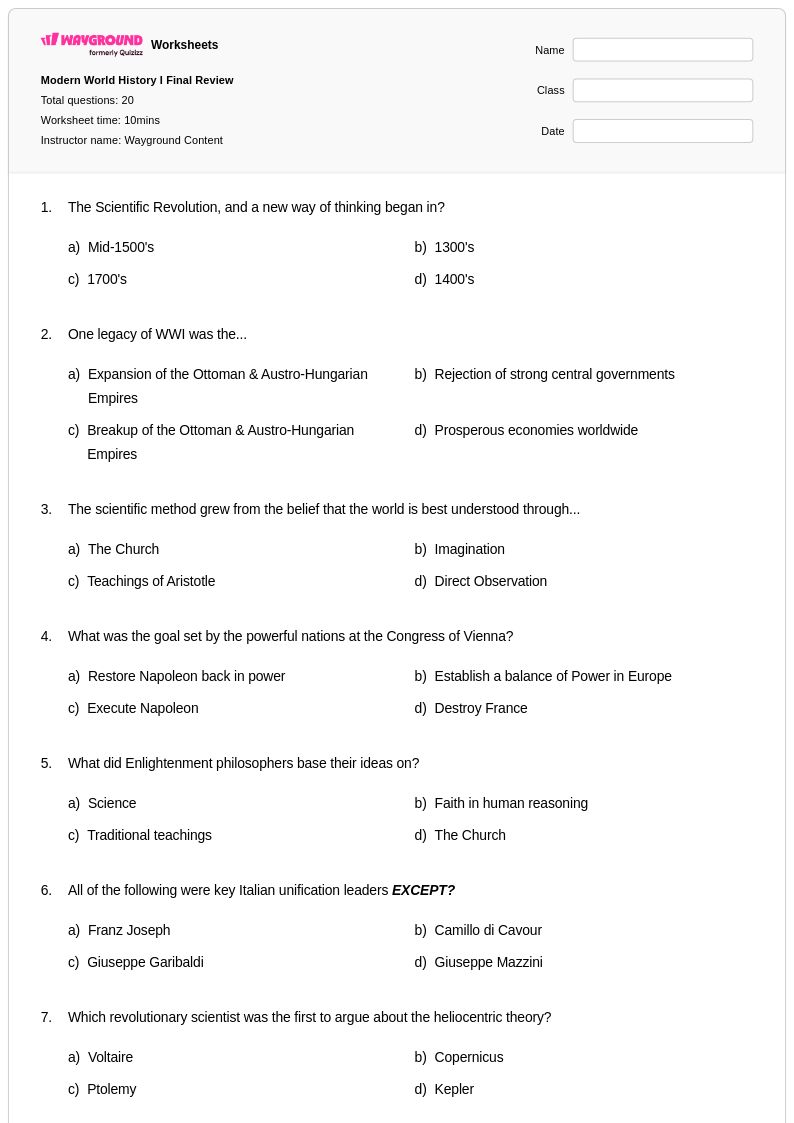
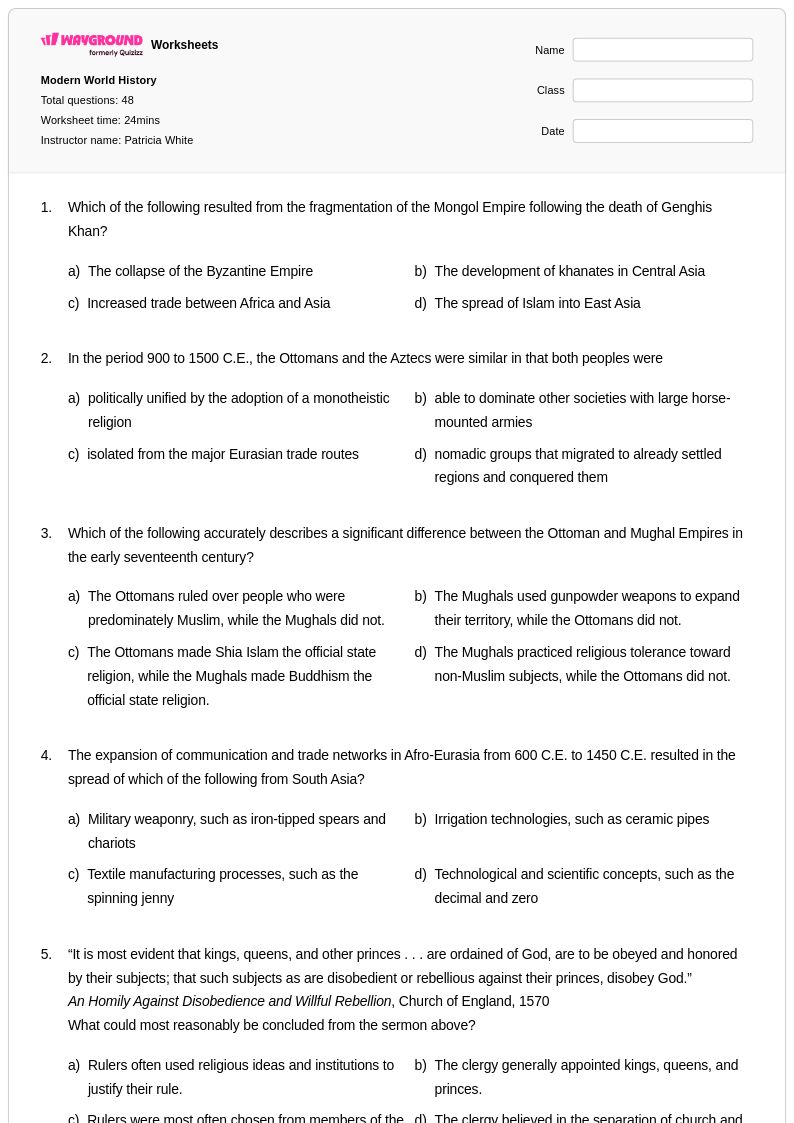
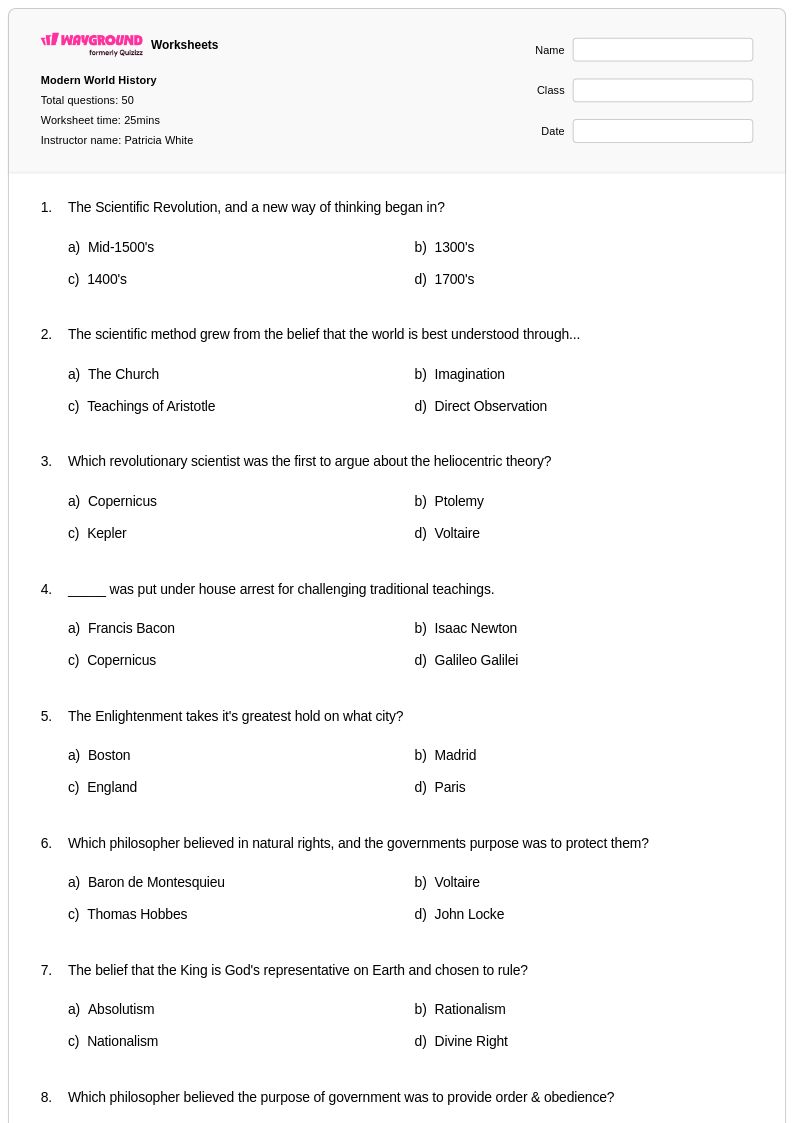
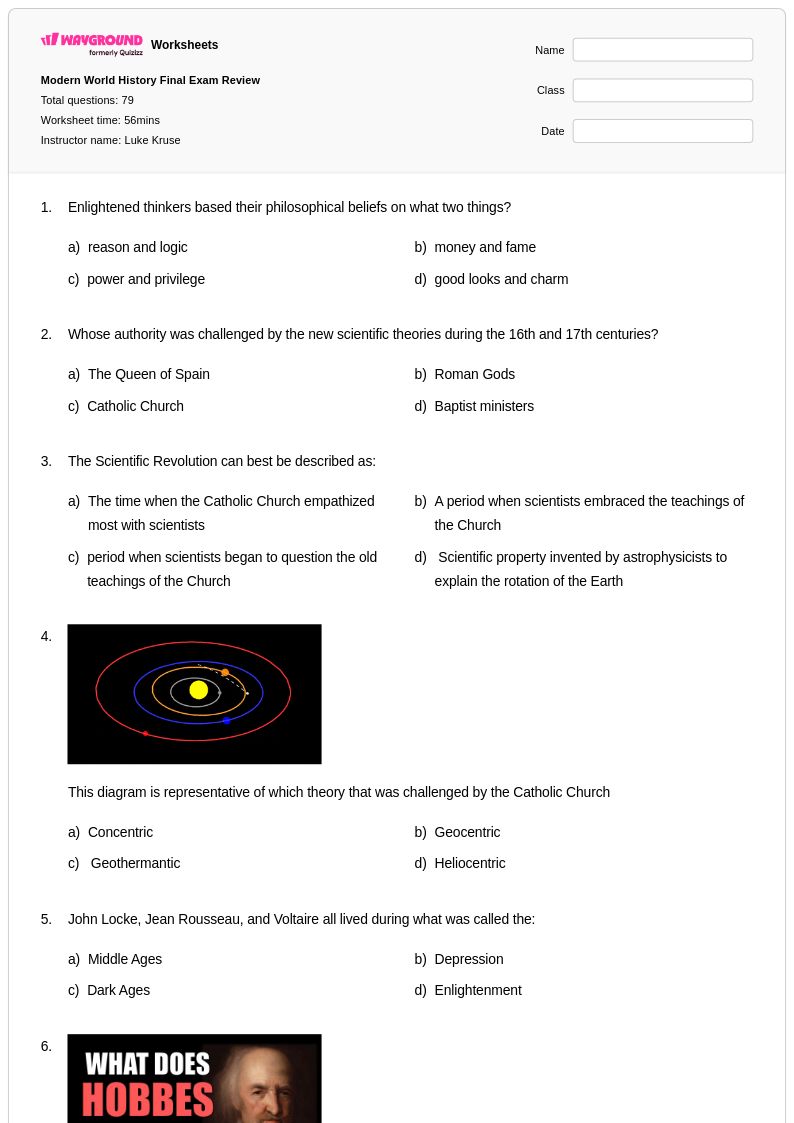
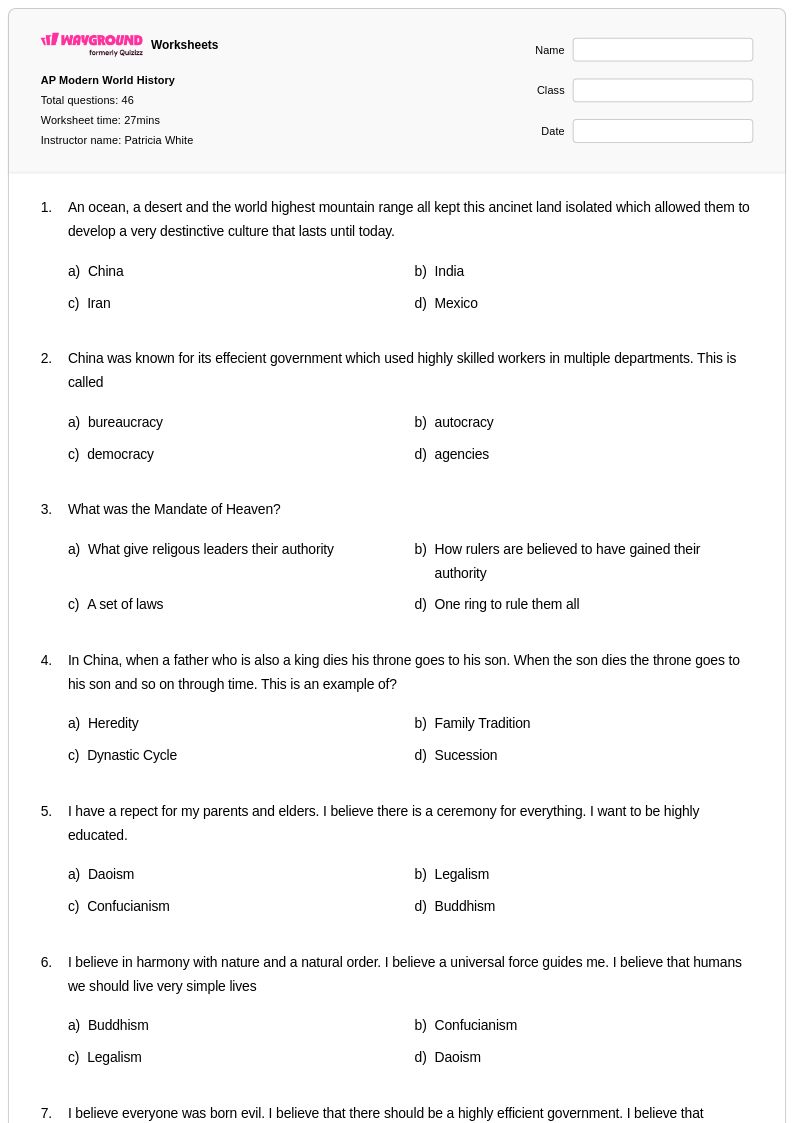
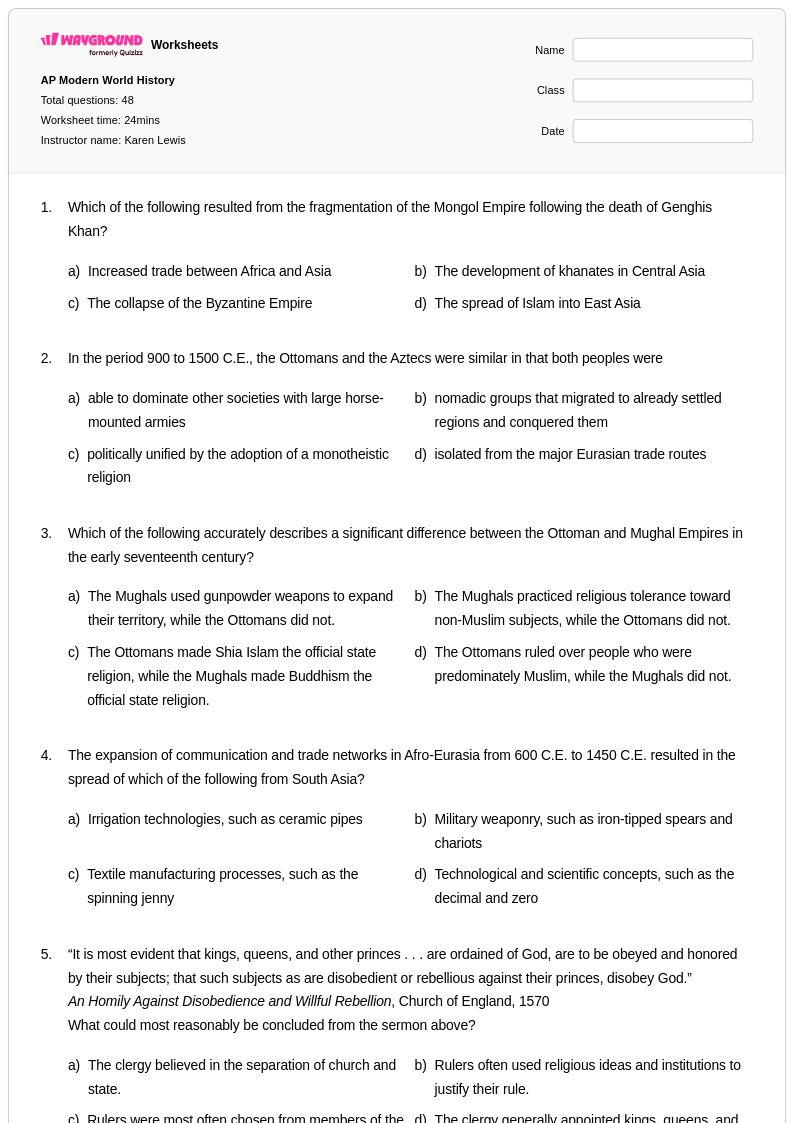
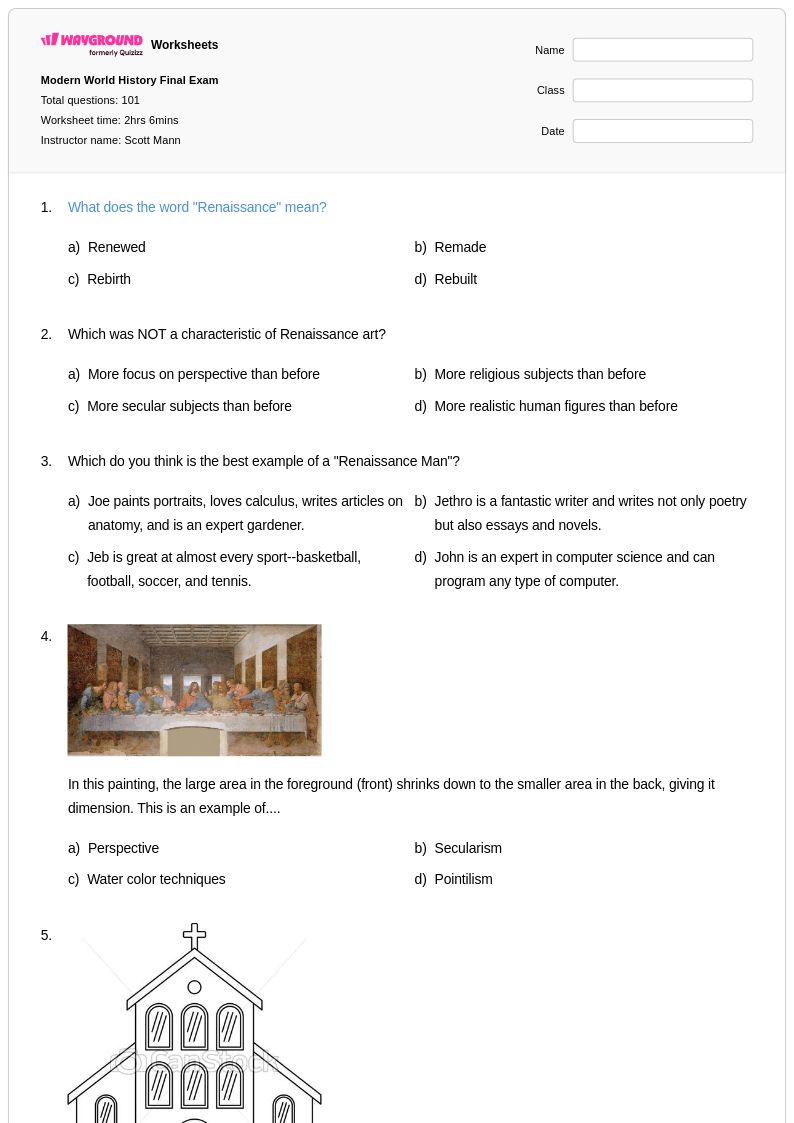
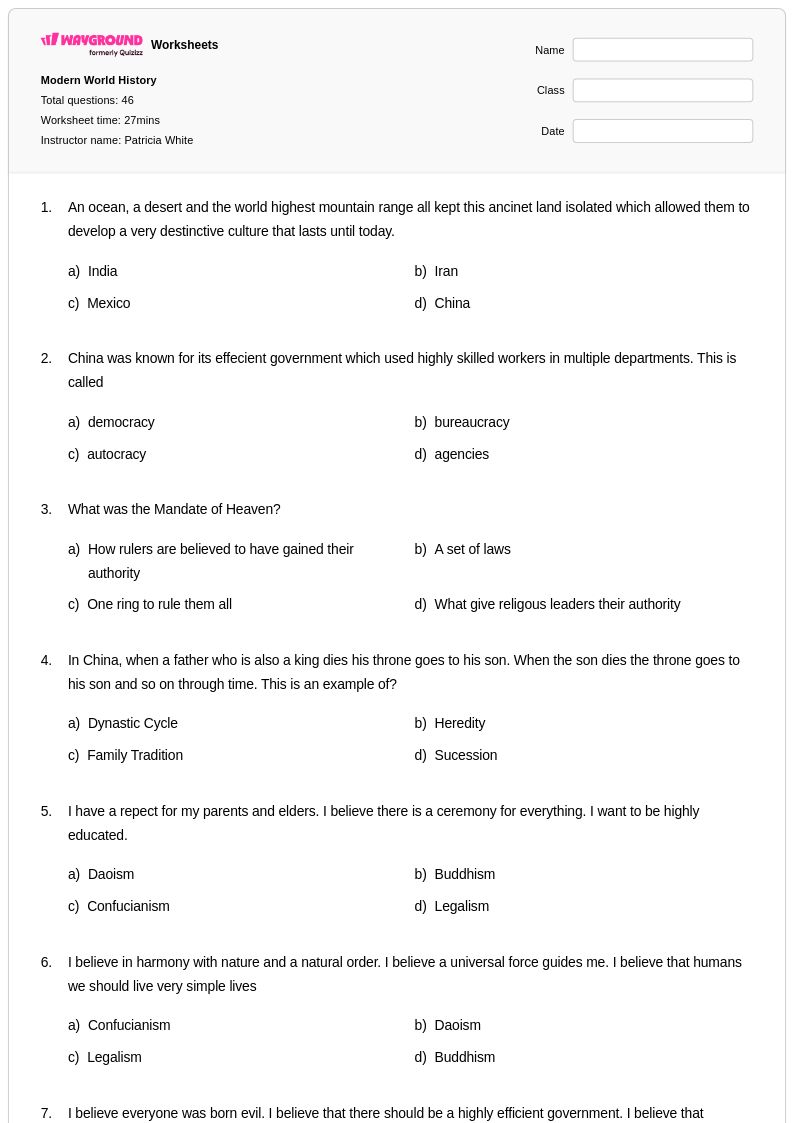
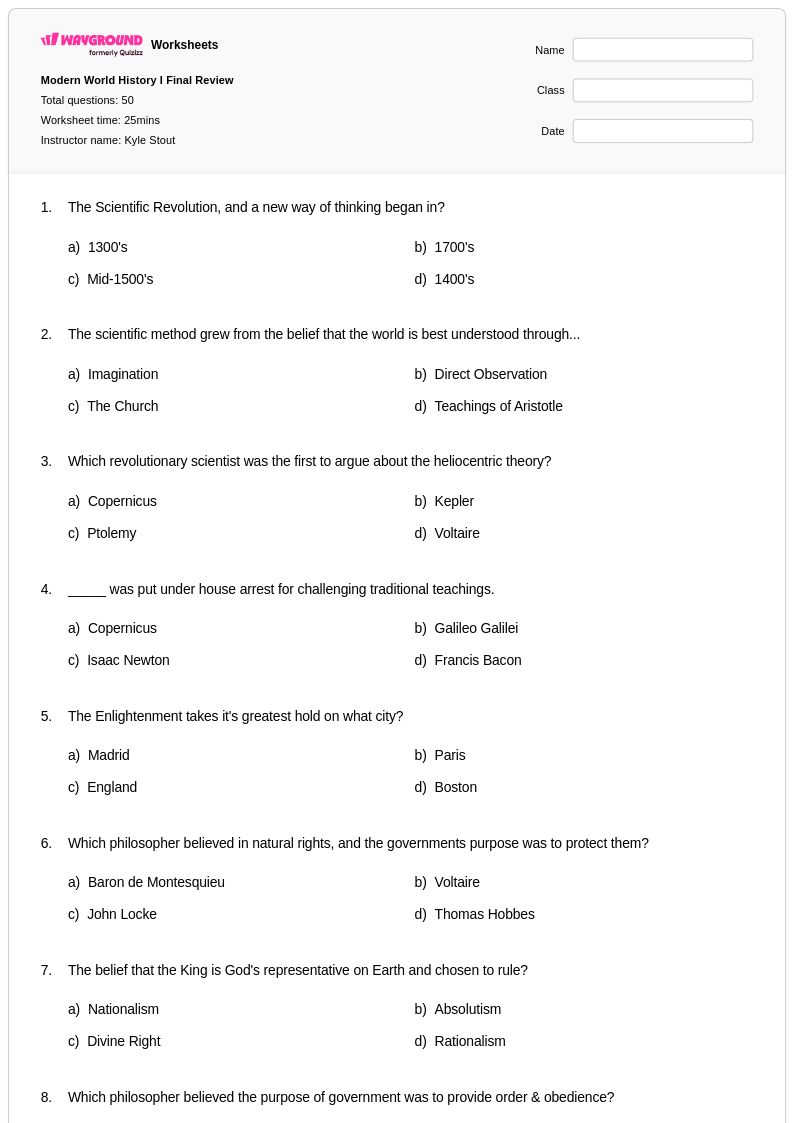
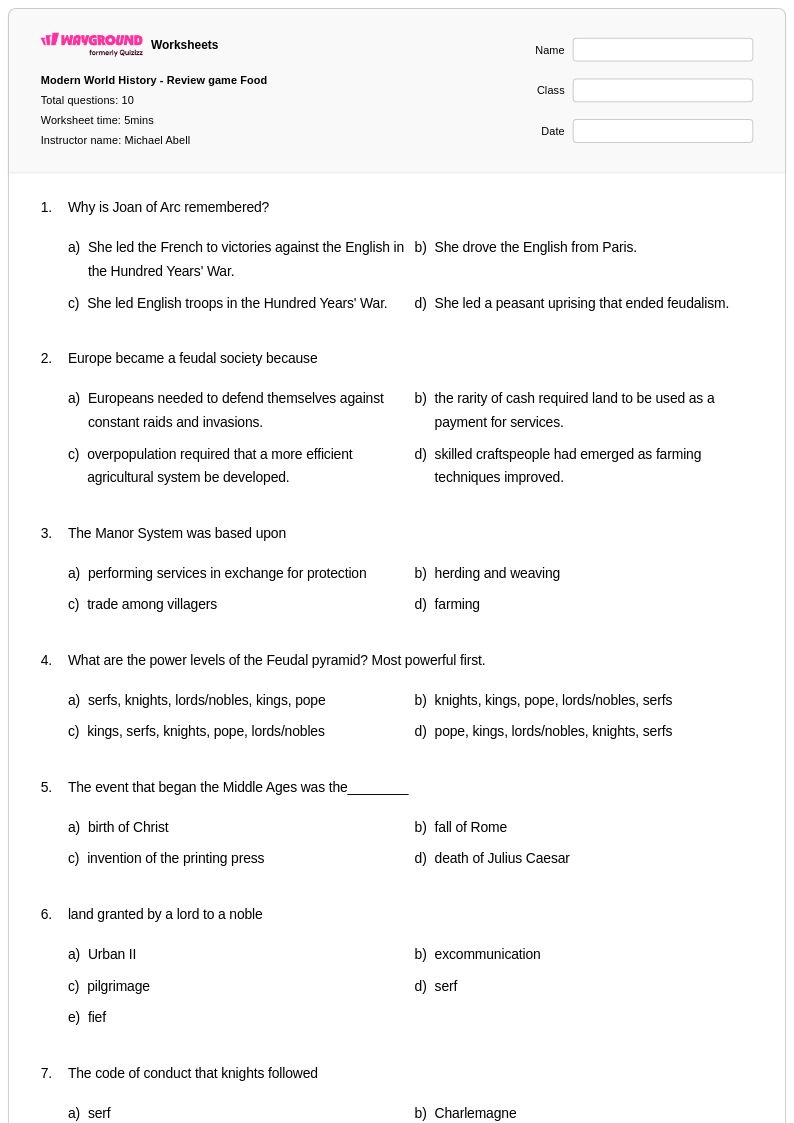
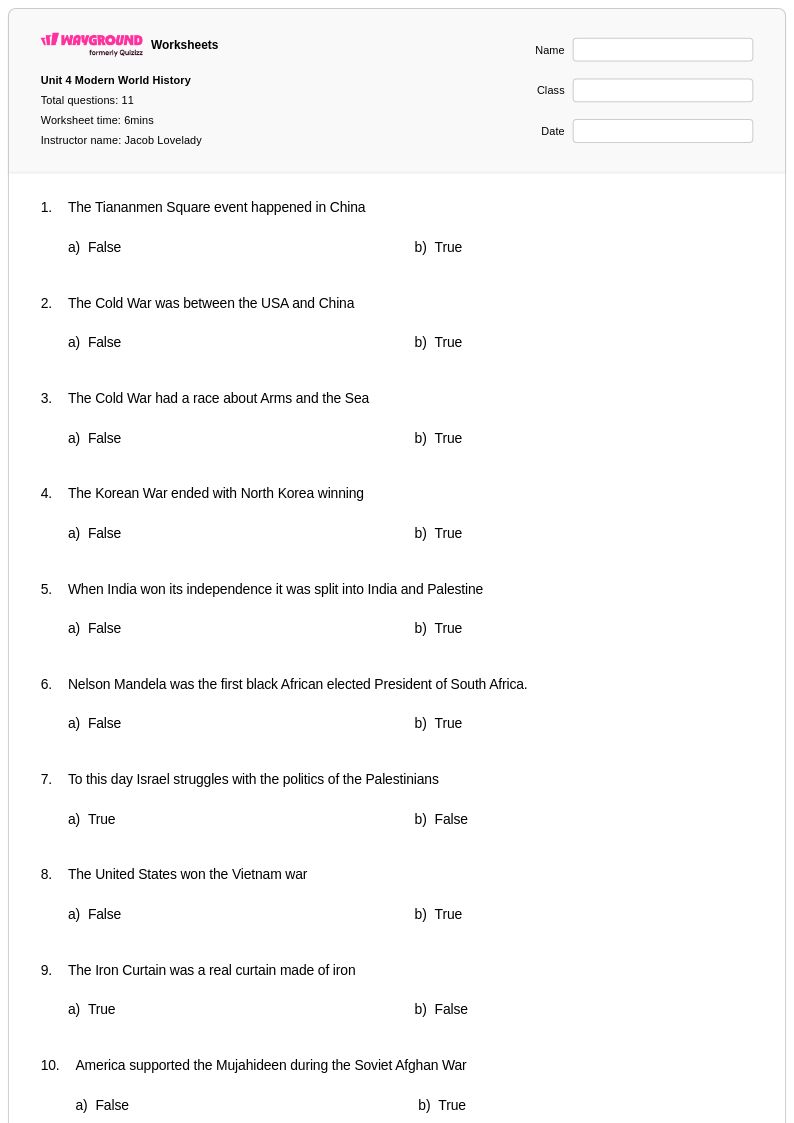
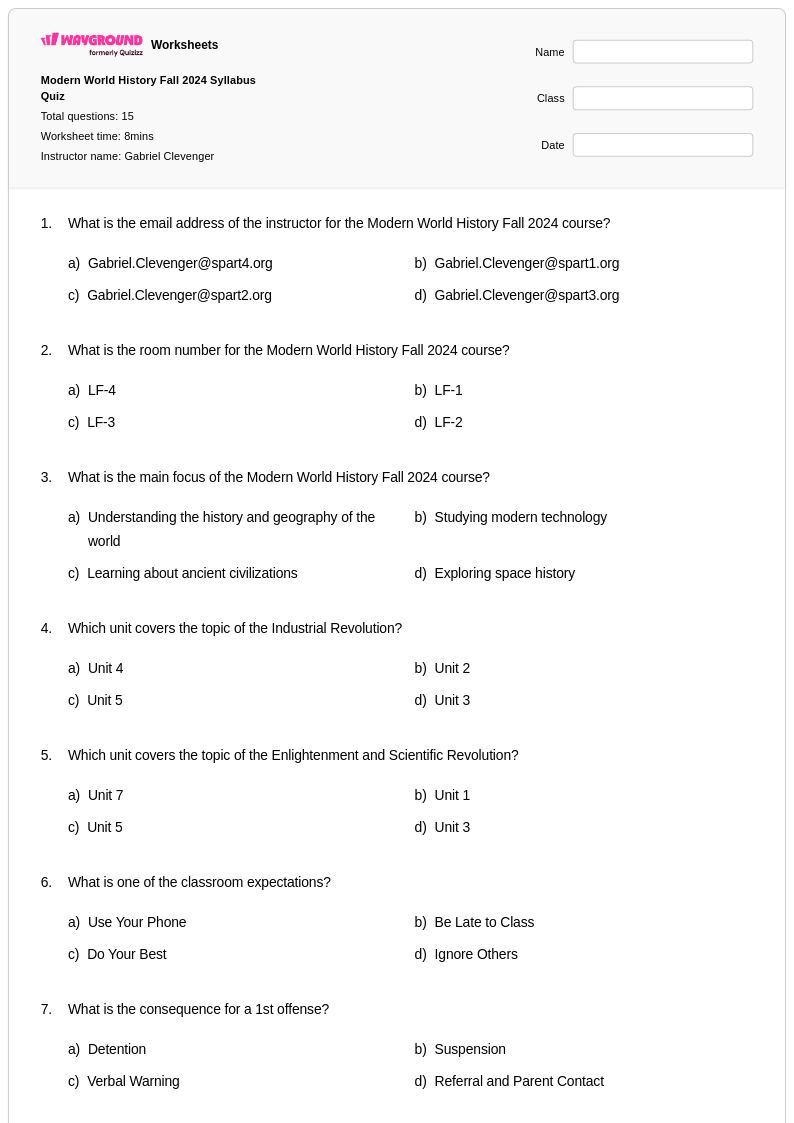
Modern World History worksheets for Year 9 students available through Wayground (formerly Quizizz) provide comprehensive coverage of pivotal events, movements, and transformations that shaped our contemporary global landscape. These educational resources strengthen critical thinking skills by engaging students with primary source analysis, chronological reasoning, and cause-and-effect relationships spanning the Industrial Revolution through the 21st century. The collection includes practice problems that challenge students to examine imperialism, world wars, decolonization, and modern political developments while building essential historical literacy skills. Each worksheet comes with a detailed answer key to support both independent study and classroom instruction, and the free printable pdf format ensures accessibility for diverse learning environments and varied technological capabilities.
Wayground (formerly Quizizz) empowers educators with millions of teacher-created Modern World History resources that undergo rigorous quality standards and alignment with national social studies frameworks. The platform's advanced search and filtering capabilities allow teachers to quickly locate age-appropriate materials that target specific historical periods, themes, or skill sets within the Year 9 curriculum scope. Comprehensive differentiation tools enable instructors to modify worksheets for varying ability levels, supporting both remediation for struggling learners and enrichment opportunities for advanced students. The flexible customization features and dual availability in printable and digital formats, including downloadable pdf files, streamline lesson planning while providing versatile options for in-person instruction, remote learning, homework assignments, and formative assessment of student progress in understanding complex historical concepts and analytical thinking skills.
FAQs
How do I teach Modern World History effectively in a secondary classroom?
Teaching Modern World History effectively means organizing content thematically as well as chronologically, so students can trace cause-and-effect relationships across events like industrialization, the World Wars, decolonization, and the Cold War. Anchoring lessons in primary source analysis and comparative case studies helps students move beyond memorization toward genuine historical thinking. Pairing direct instruction with structured practice on timeline construction and ideological analysis gives students the scaffolding they need to engage with complex, interconnected events.
What are the best exercises for practicing Modern World History concepts?
Effective practice for Modern World History includes timeline construction, primary source analysis, cause-and-effect mapping, and comparative studies between different nations' experiences during the same historical period. Exercises that ask students to evaluate how political ideologies shaped international relations or how technological advancement transformed societies are especially valuable because they develop transferable analytical skills. Worksheets that target specific eras, such as the industrial age, the Cold War, or decolonization movements, allow teachers to align practice directly with the unit being taught.
What misconceptions do students commonly have about Modern World History?
One common misconception is that historical events are isolated rather than interconnected, so students often struggle to see how industrialization, nationalism, and imperialism together set the conditions for the World Wars. Students also frequently misread decolonization as a sudden postwar event rather than a long process shaped by earlier resistance movements and shifting power dynamics. Another persistent error is conflating the Cold War with direct military conflict between the U.S. and Soviet Union, when in fact it was largely a proxy conflict fought through ideology, economics, and regional wars.
How can I use Modern World History worksheets to support students with different learning needs?
Modern World History worksheets can be adapted for diverse learners by adjusting reading complexity, scaffolding primary source tasks, and providing graphic organizers for students who struggle with dense historical text. On Wayground, teachers can apply individual accommodations such as read aloud support, extended time, and reduced answer choices to specific students without affecting the rest of the class. These settings are reusable across sessions, which means once a teacher configures accommodations for a student, they carry over to future assignments without requiring manual adjustments each time.
How do I use Wayground's Modern World History worksheets in my classroom?
Wayground's Modern World History worksheets are available as printable PDFs for traditional classroom use and in digital formats for technology-integrated environments, giving teachers flexibility in how they assign and deliver practice. Teachers can also host worksheets as a live or self-paced quiz directly on Wayground, which allows for real-time progress monitoring. Each worksheet includes a complete answer key, so grading is straightforward whether students are working independently, in small groups, or in a whole-class setting.
How do I align Modern World History worksheets to specific curriculum standards or units?
When planning Modern World History units, it helps to identify the specific time period, geographic region, or thematic focus first, then locate materials that match those parameters. Wayground's search and filtering tools allow teachers to narrow resources by topic, such as World War I, the Cold War, or democratic movements, so alignment with curriculum standards is faster and more precise. This targeted approach reduces planning time and ensures that practice materials reinforce exactly what students are expected to learn.