Free Printable Momentum and Impulse Worksheets for Year 12
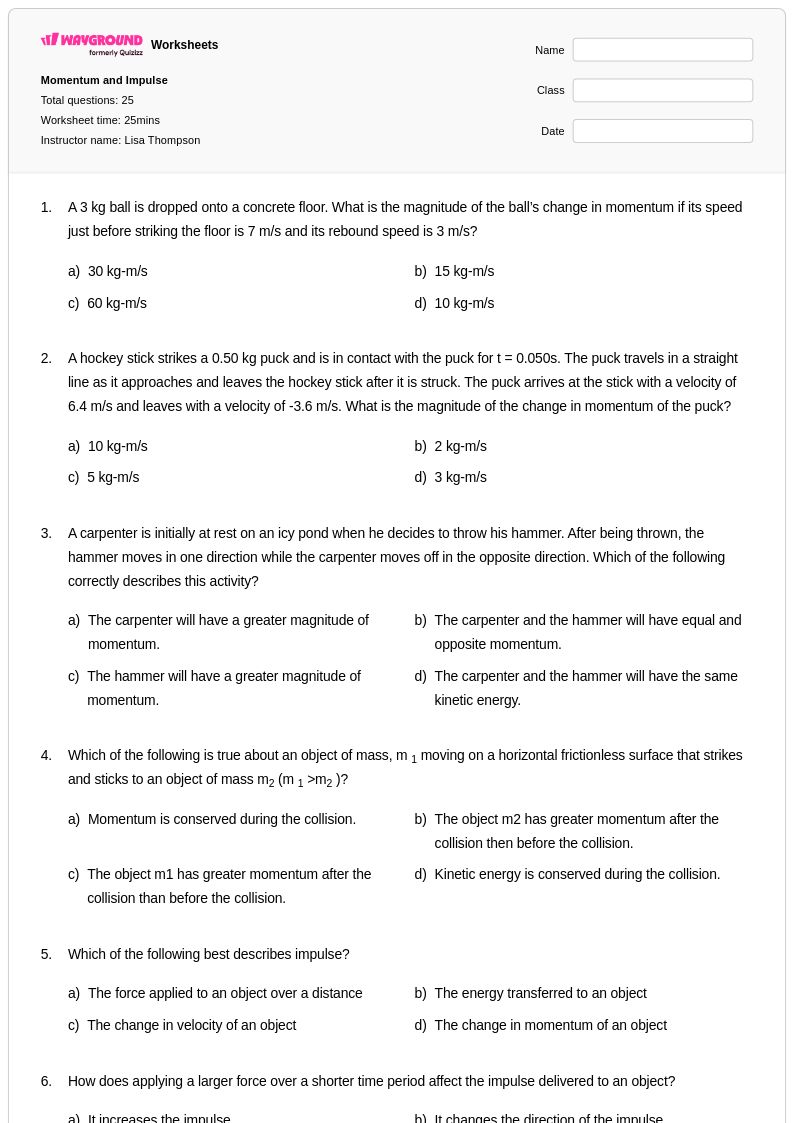
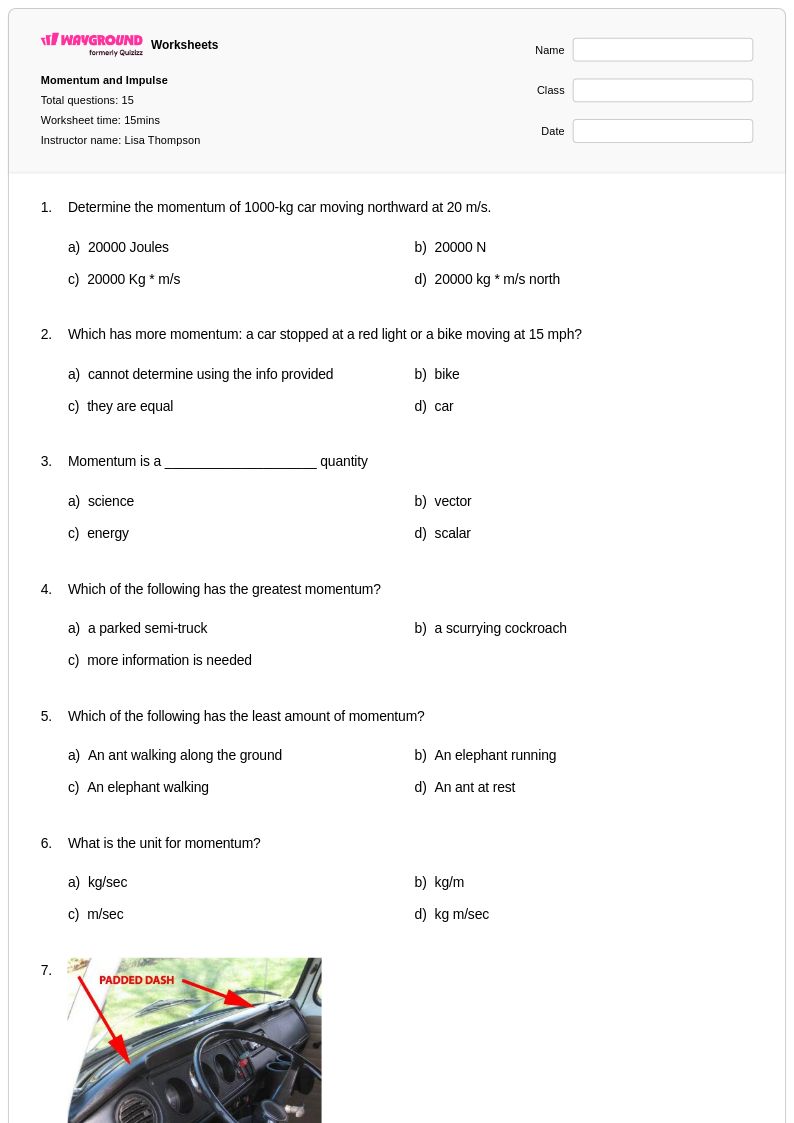
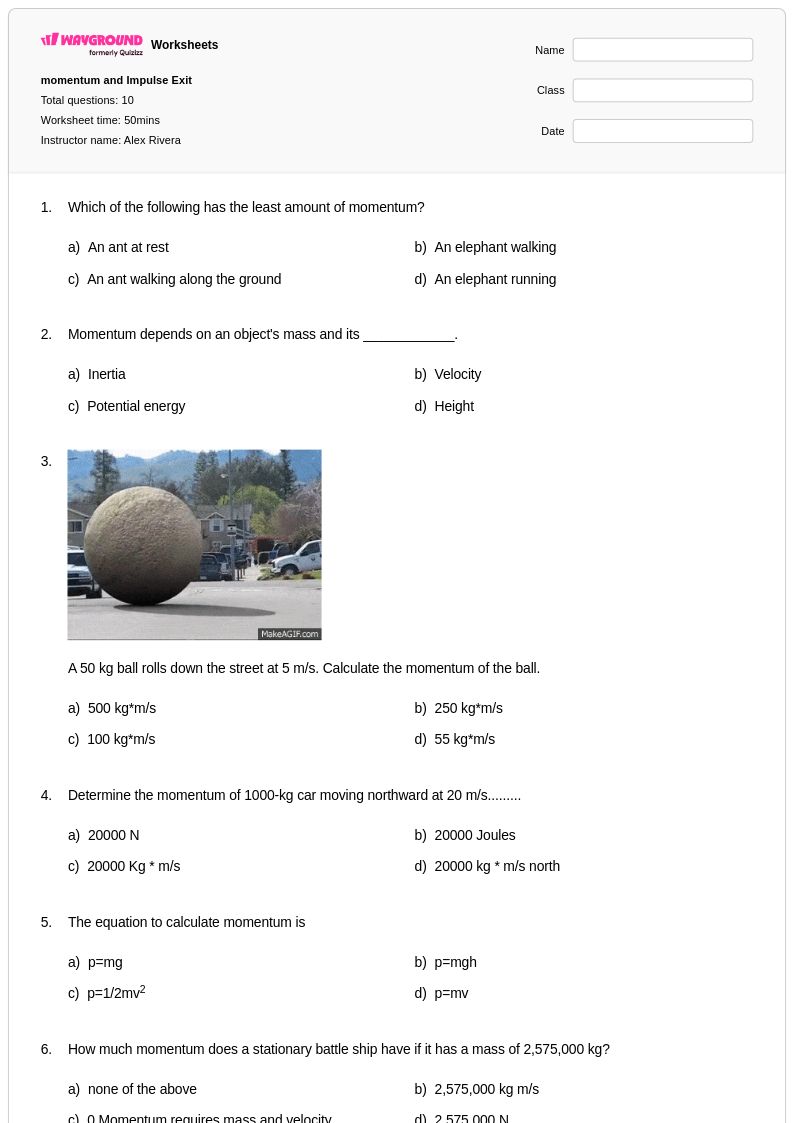
Year 12 momentum and impulse worksheets from Wayground provide comprehensive practice problems and printables with answer keys to help students master physics concepts through free PDF exercises and structured learning activities.
Explore printable Momentum and Impulse worksheets for Year 12
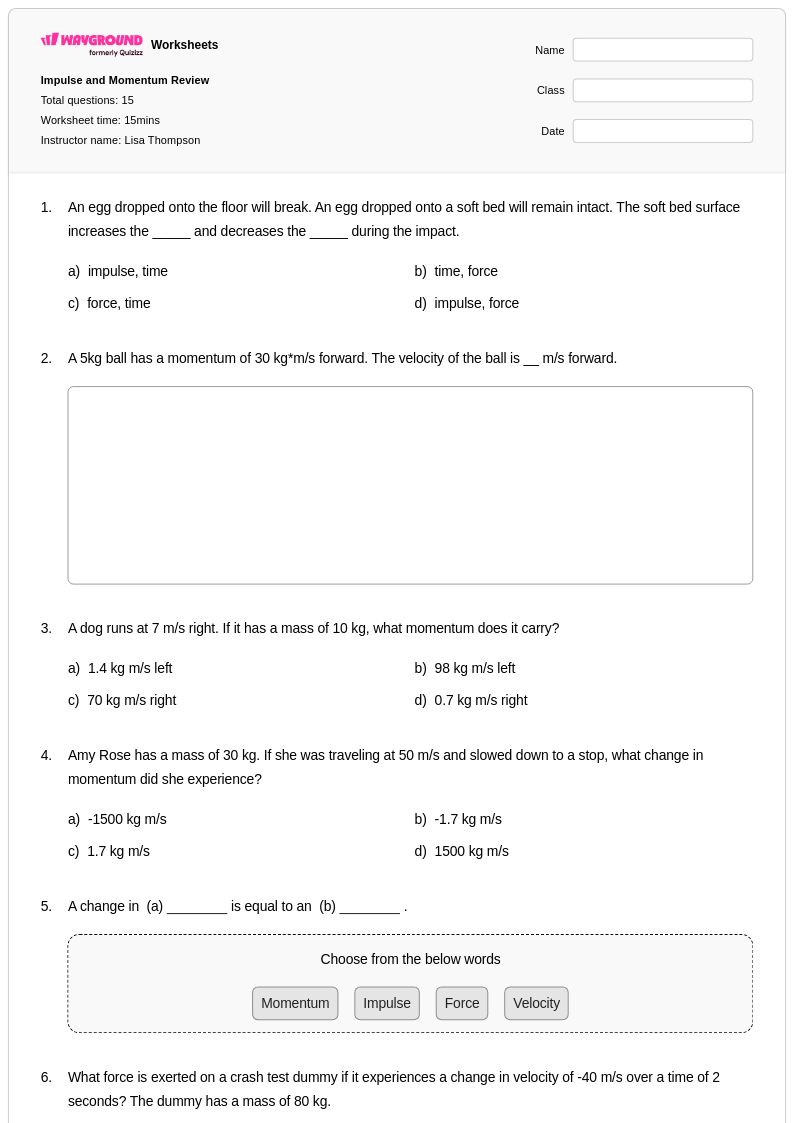
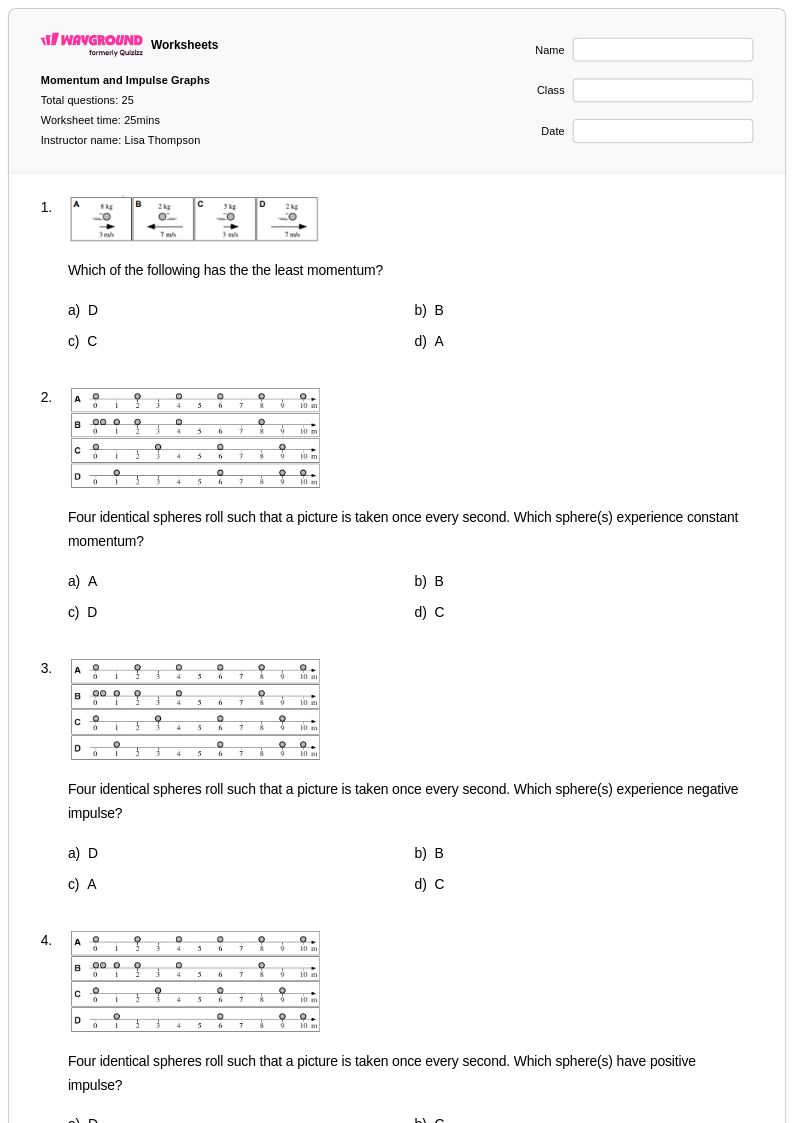
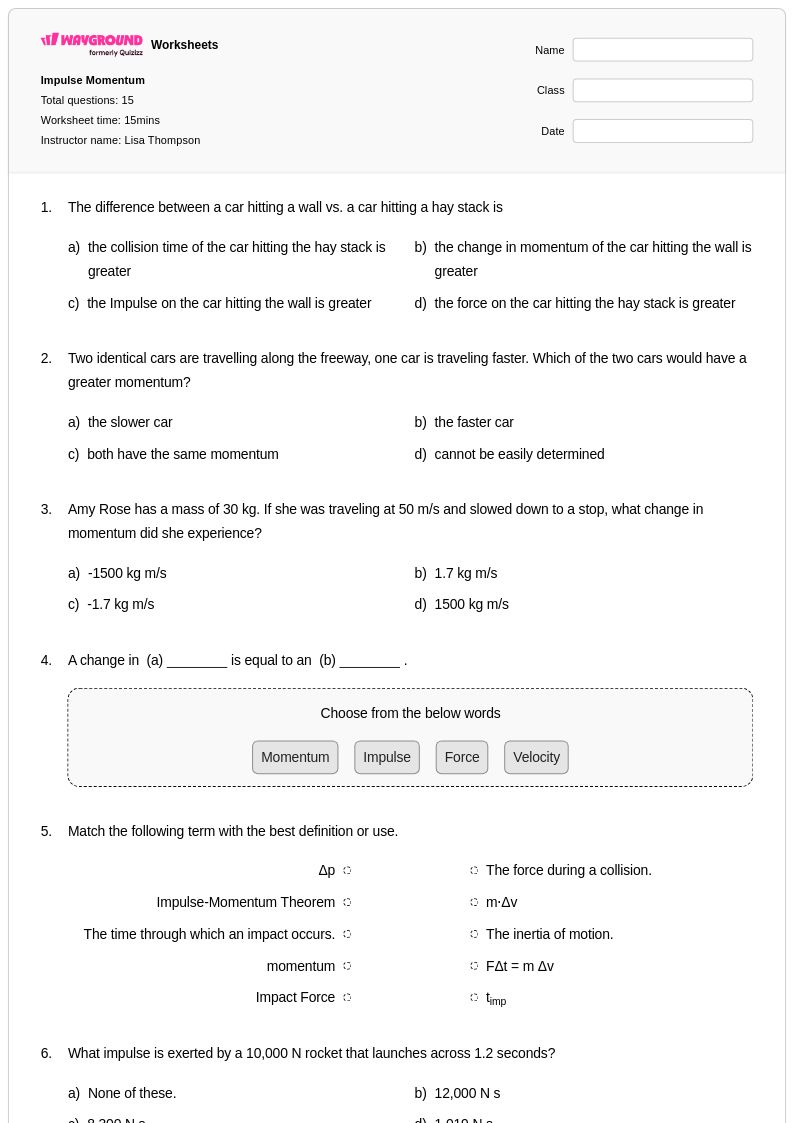
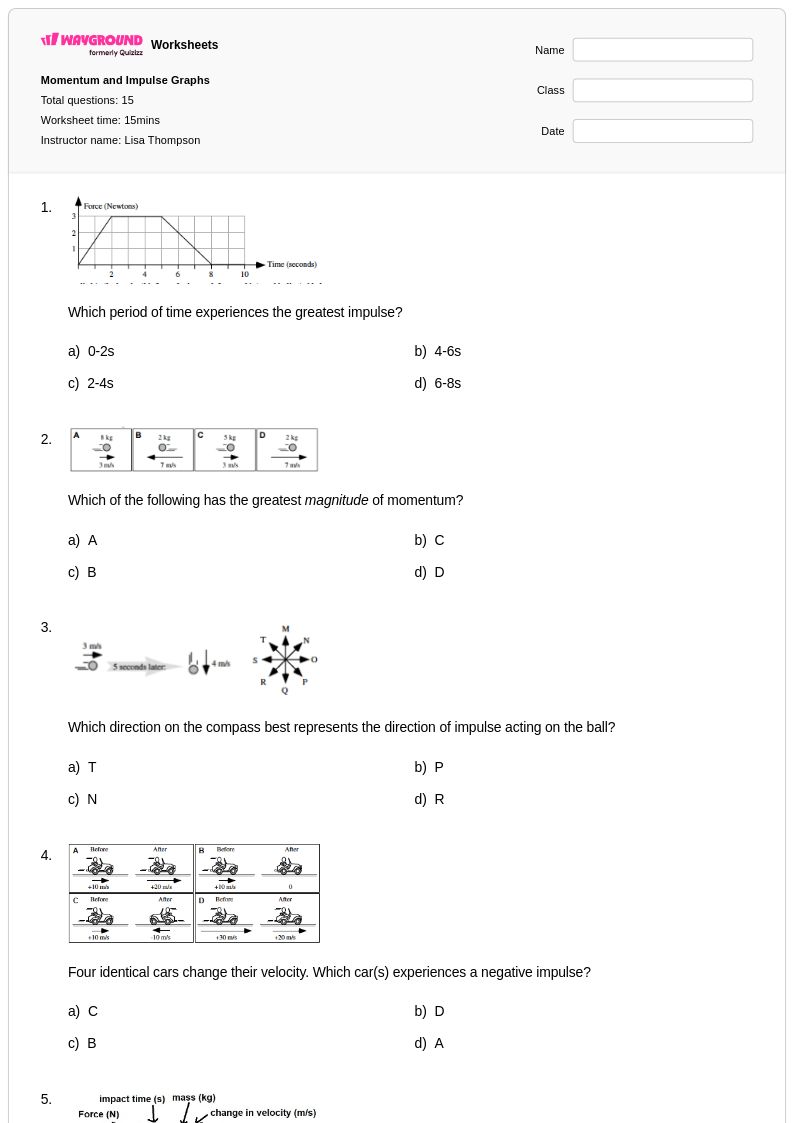
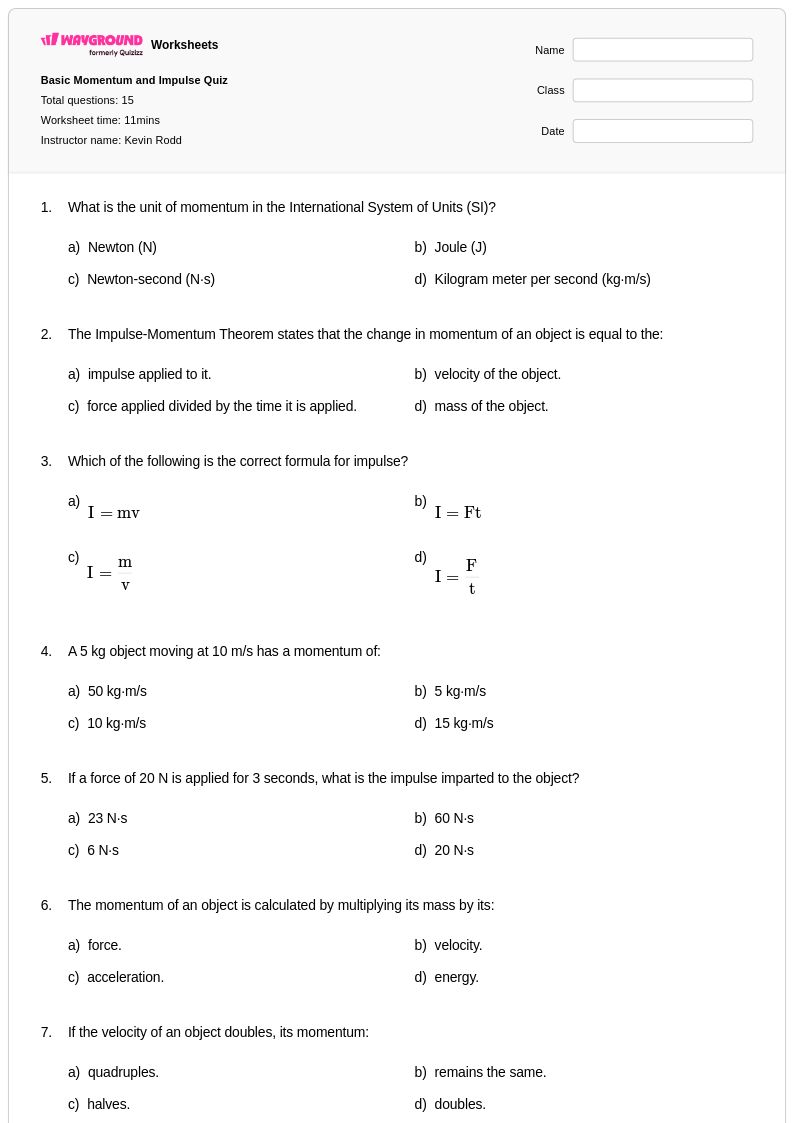
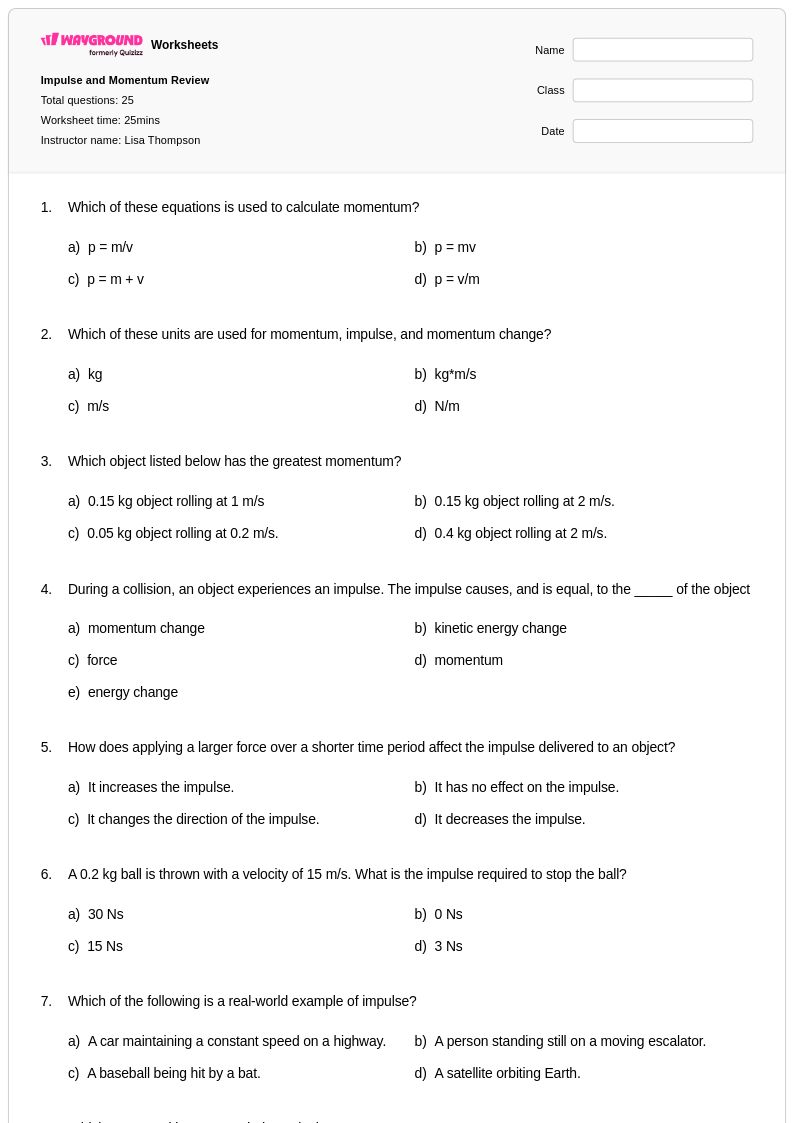
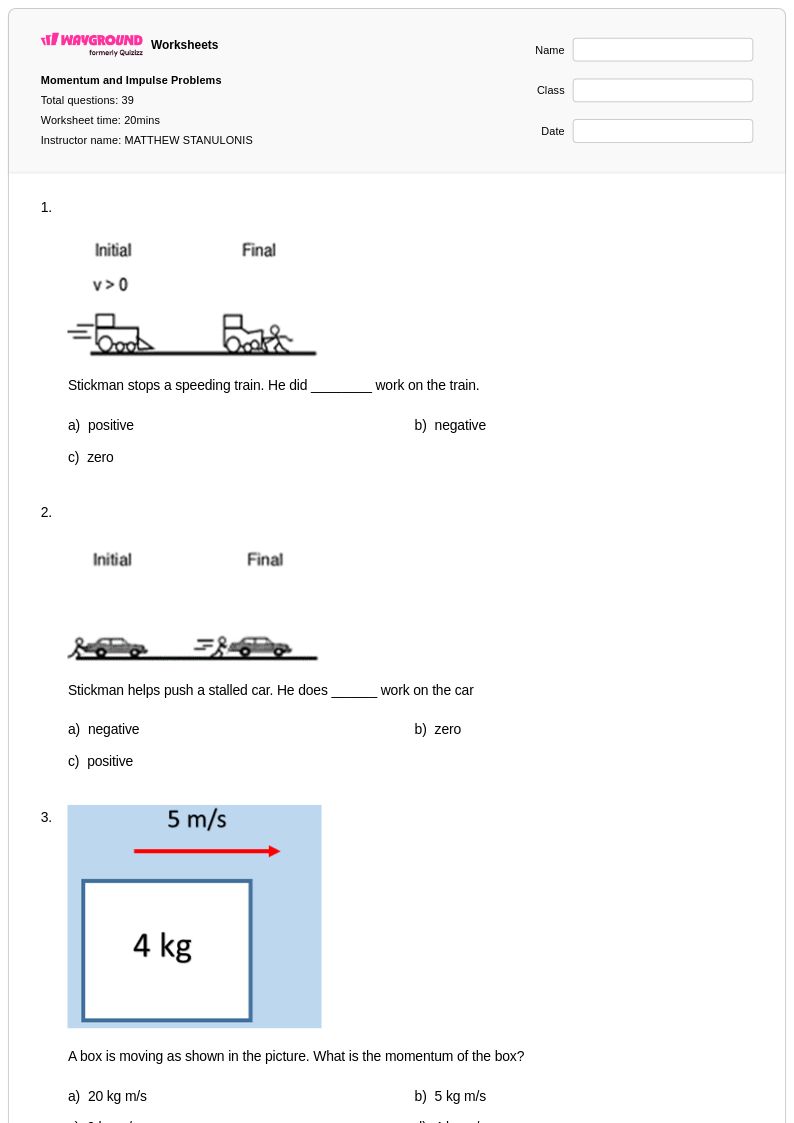
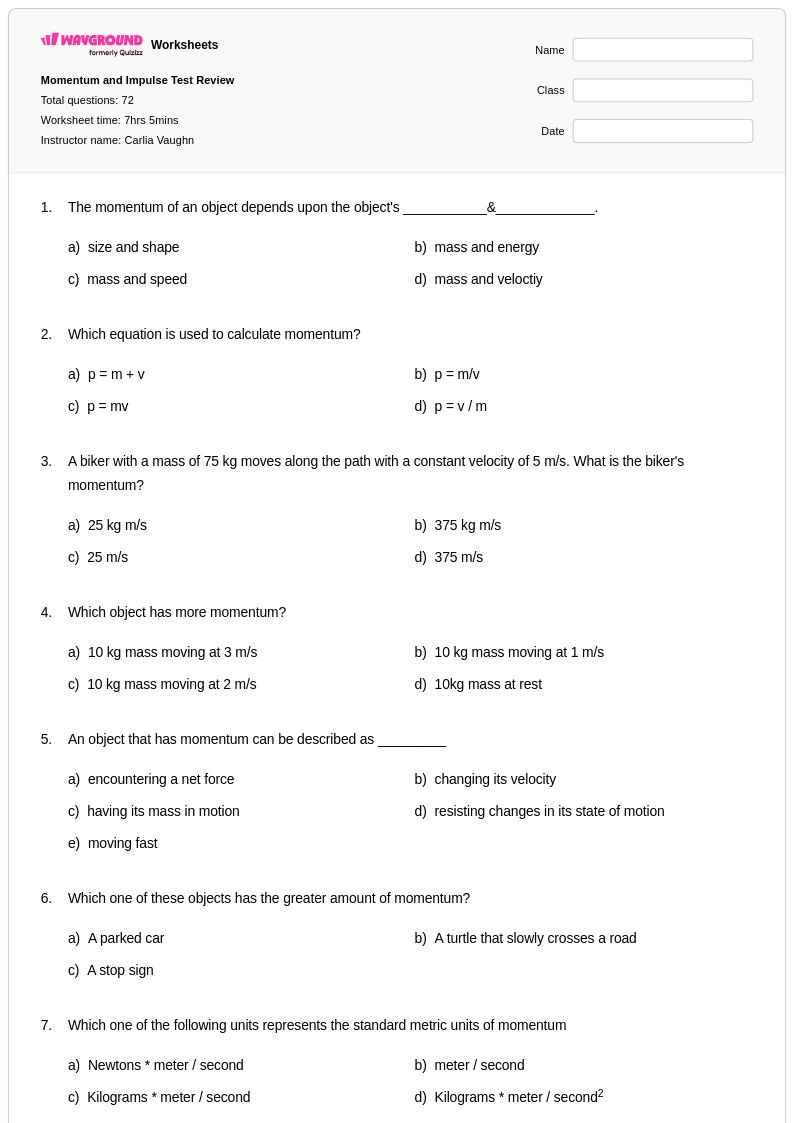
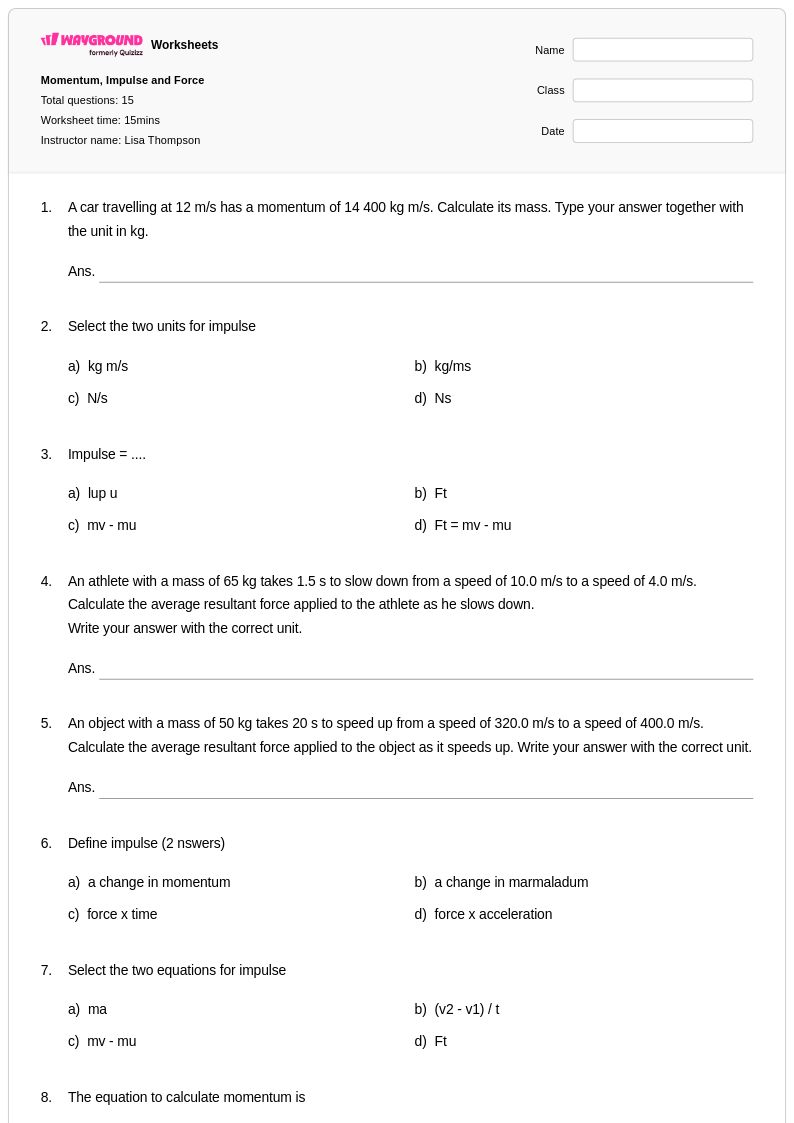
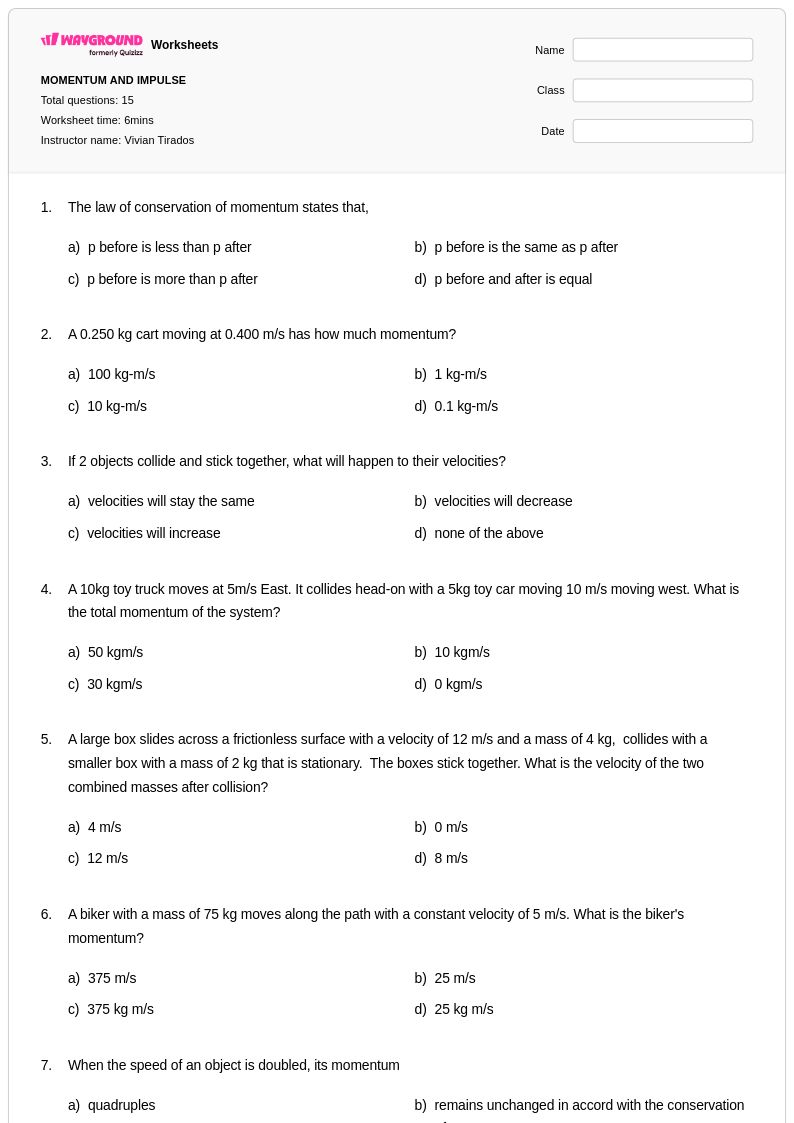
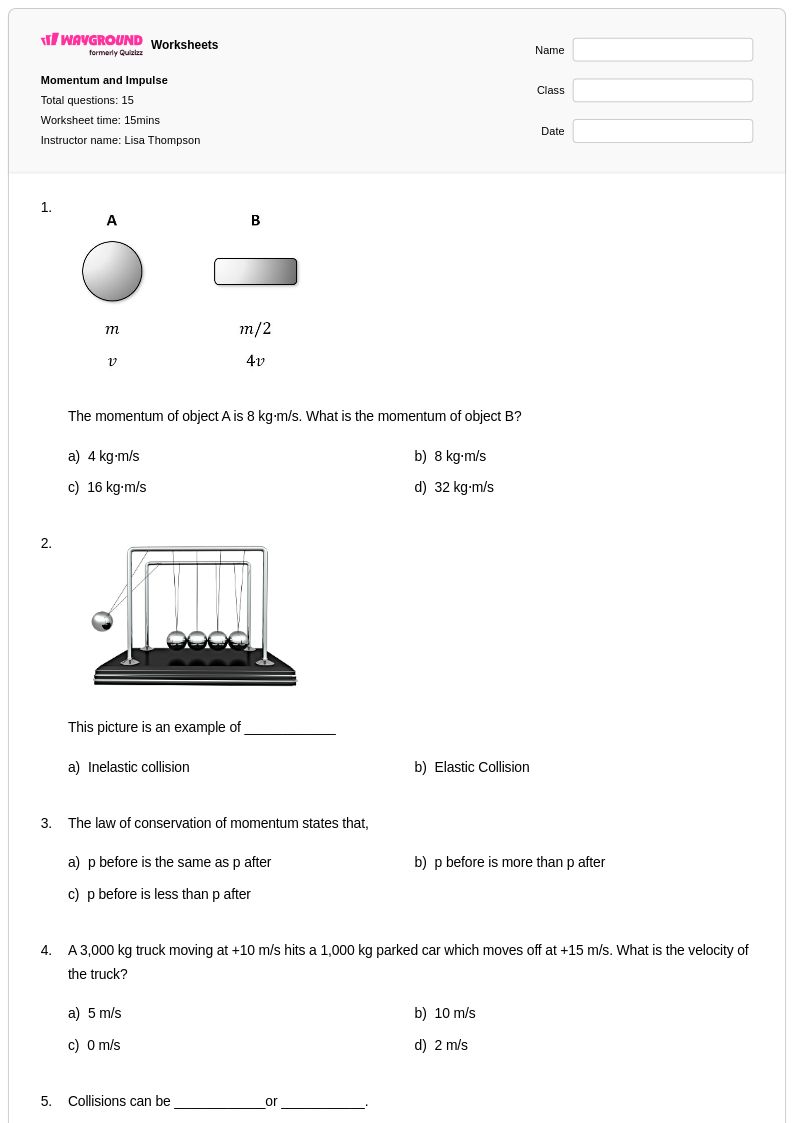
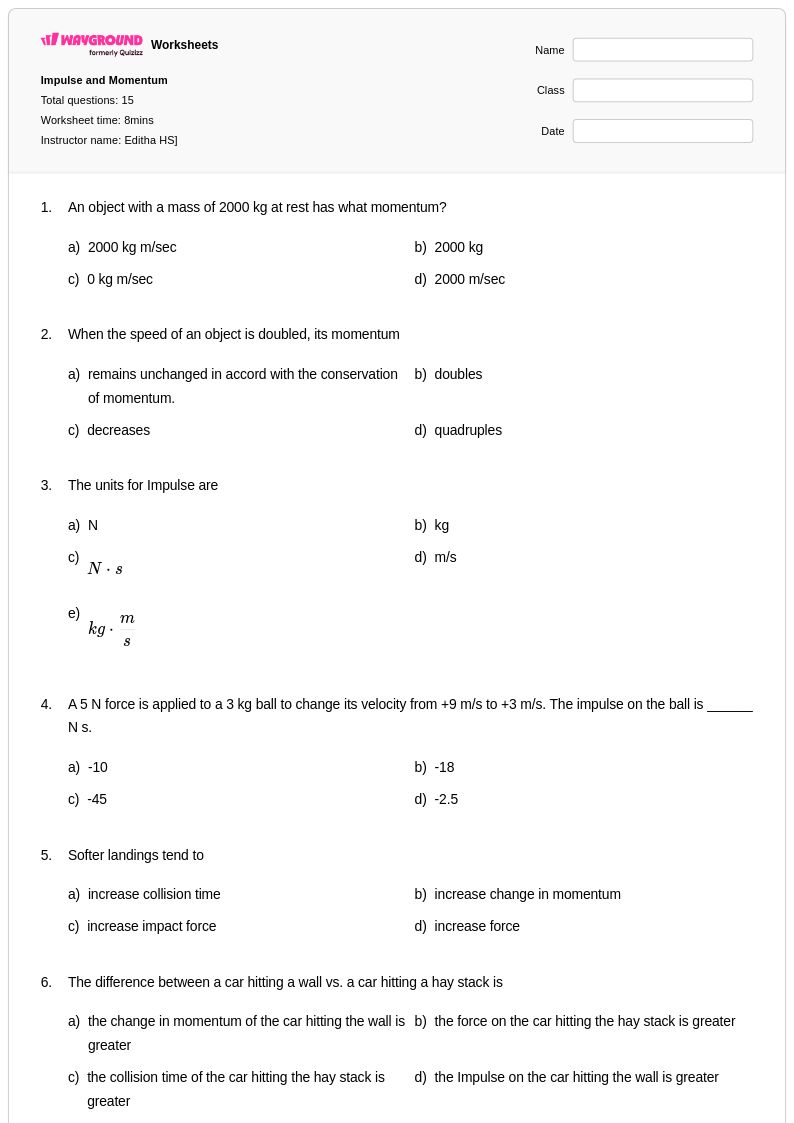
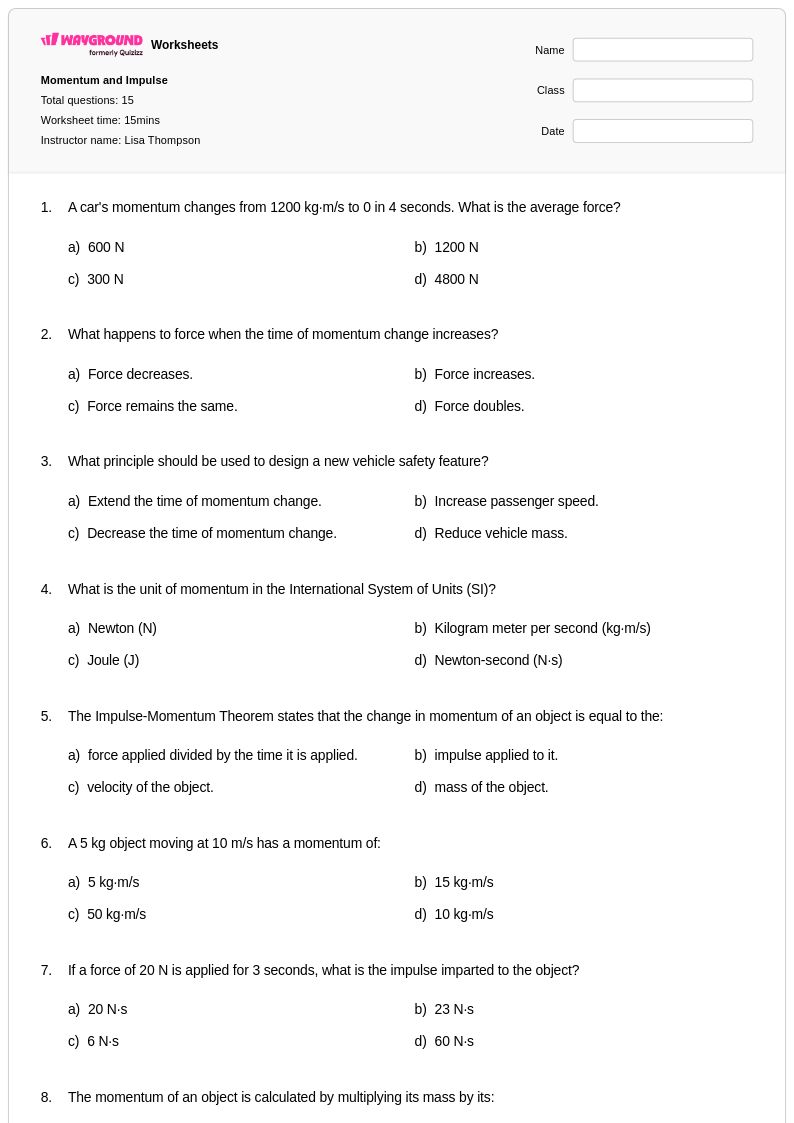
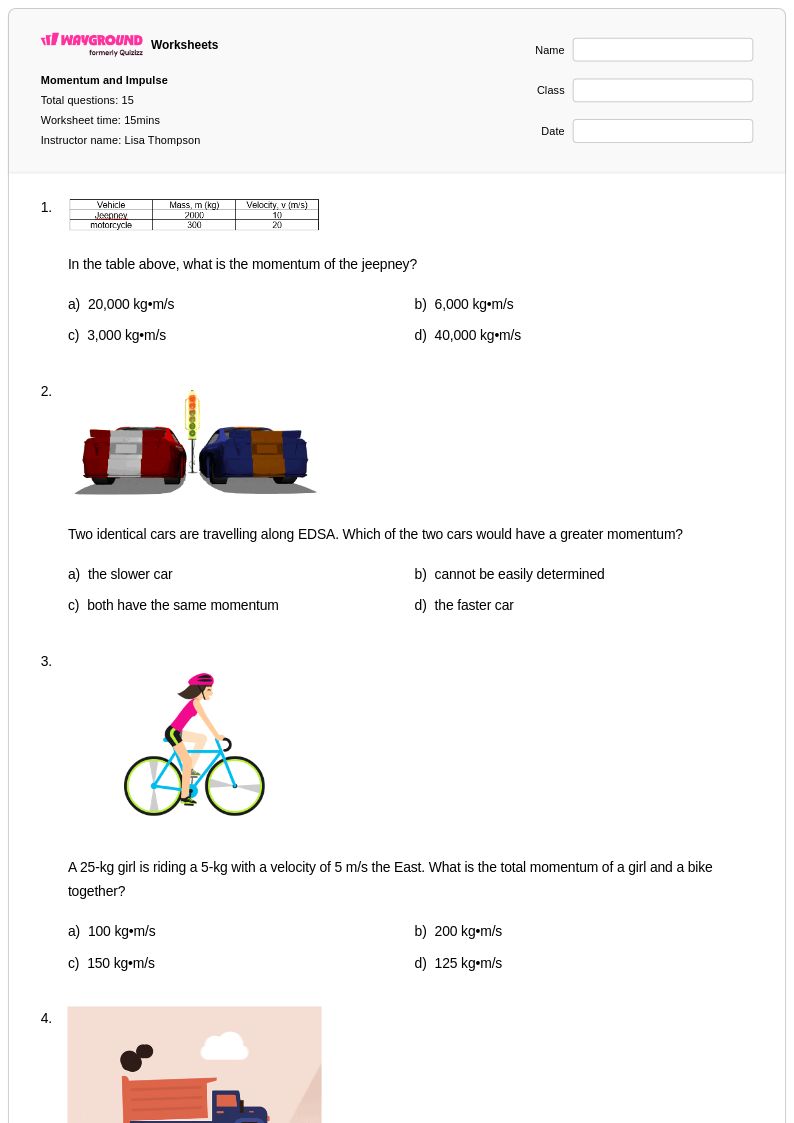
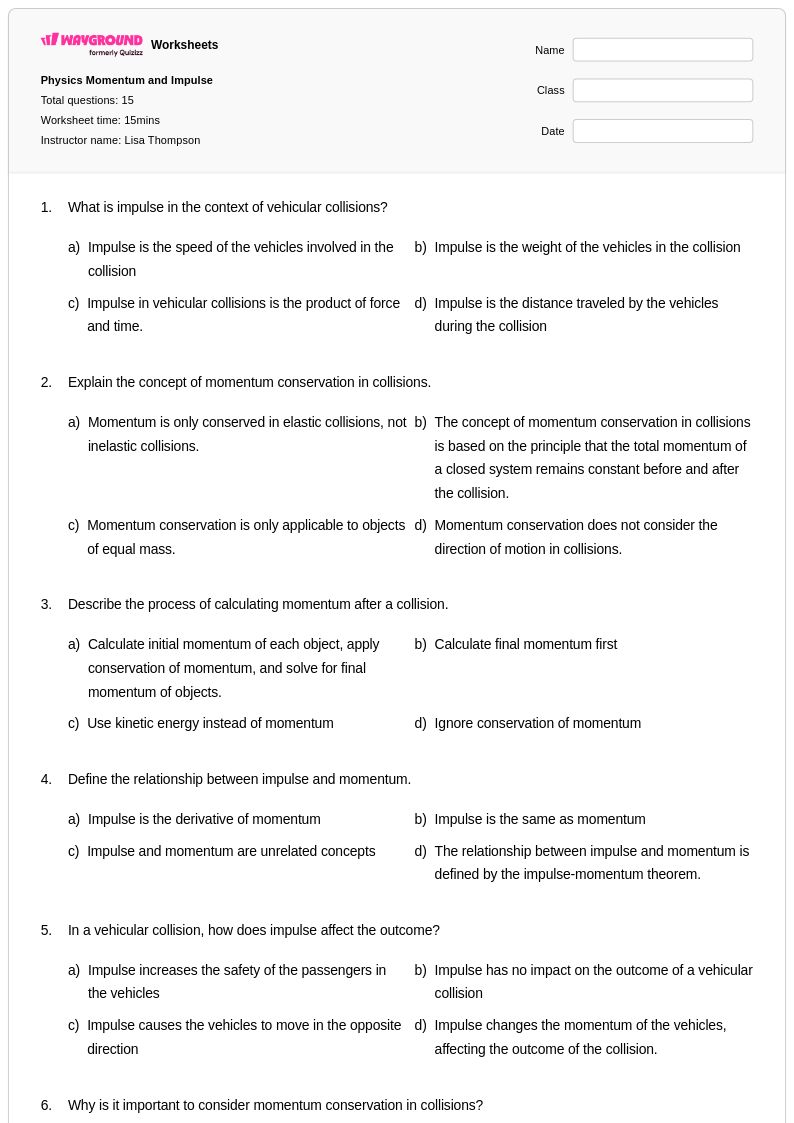
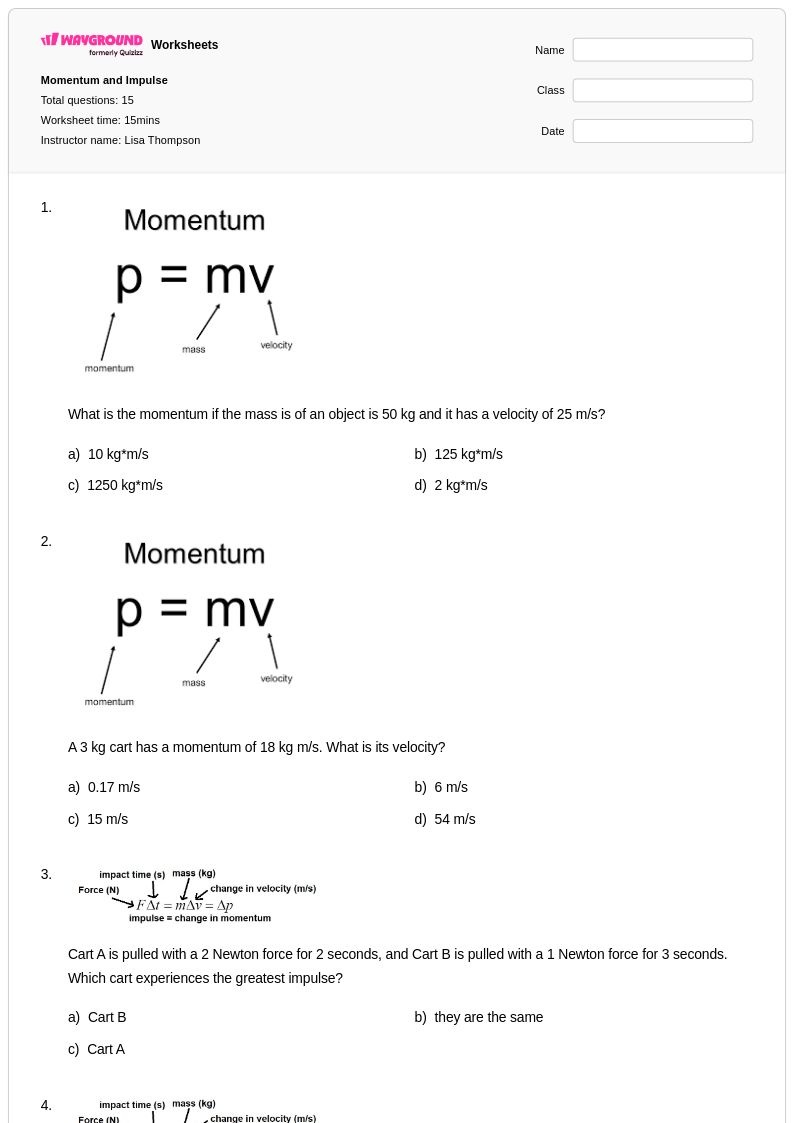
Momentum and impulse worksheets for Year 12 students available through Wayground (formerly Quizizz) provide comprehensive practice with these fundamental physics concepts that bridge Newtonian mechanics and real-world applications. These carefully designed resources strengthen students' abilities to calculate momentum using mass and velocity relationships, apply the impulse-momentum theorem to analyze collisions and force interactions, and solve complex problems involving conservation of momentum in both one and two dimensions. The worksheet collections include detailed practice problems that guide students through elastic and inelastic collision scenarios, rocket propulsion calculations, and sports-related momentum applications, with each resource featuring complete answer keys and step-by-step solutions. Available as free printables and downloadable pdf formats, these materials help students master vector analysis, graphical interpretations of force-time relationships, and the mathematical connections between impulse, change in momentum, and Newton's second law.
Wayground (formerly Quizizz) supports physics educators with an extensive library of millions of teacher-created momentum and impulse resources that streamline lesson planning and enhance student learning outcomes. The platform's advanced search and filtering capabilities allow teachers to quickly locate worksheets aligned with specific physics standards and learning objectives, while built-in differentiation tools enable customization for varying student ability levels and learning styles. These comprehensive worksheet collections are available in both printable and digital formats, including easily accessible pdf downloads, making them ideal for in-class practice, homework assignments, test preparation, and remote learning scenarios. Teachers can efficiently address individual student needs through targeted remediation exercises, provide enrichment opportunities for advanced learners, and implement systematic skill-building progressions that ensure mastery of momentum and impulse concepts essential for success in advanced physics coursework and standardized assessments.
FAQs
How do I teach momentum and impulse to physics students?
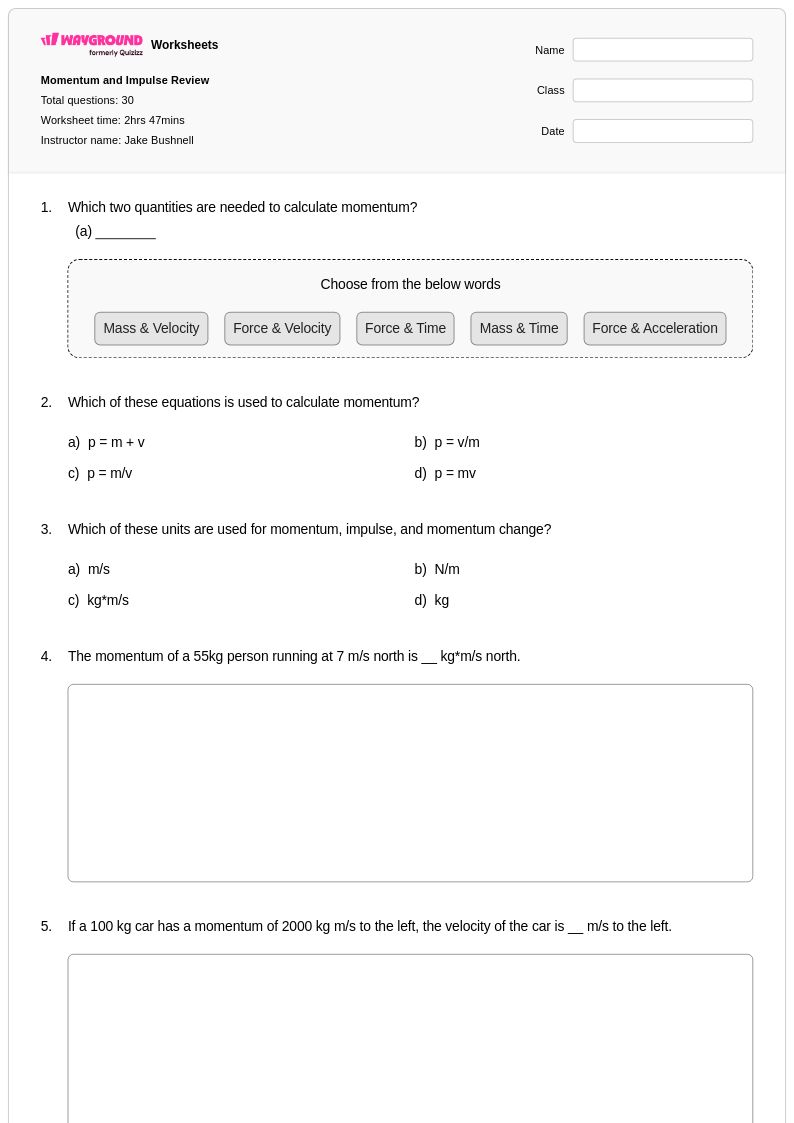
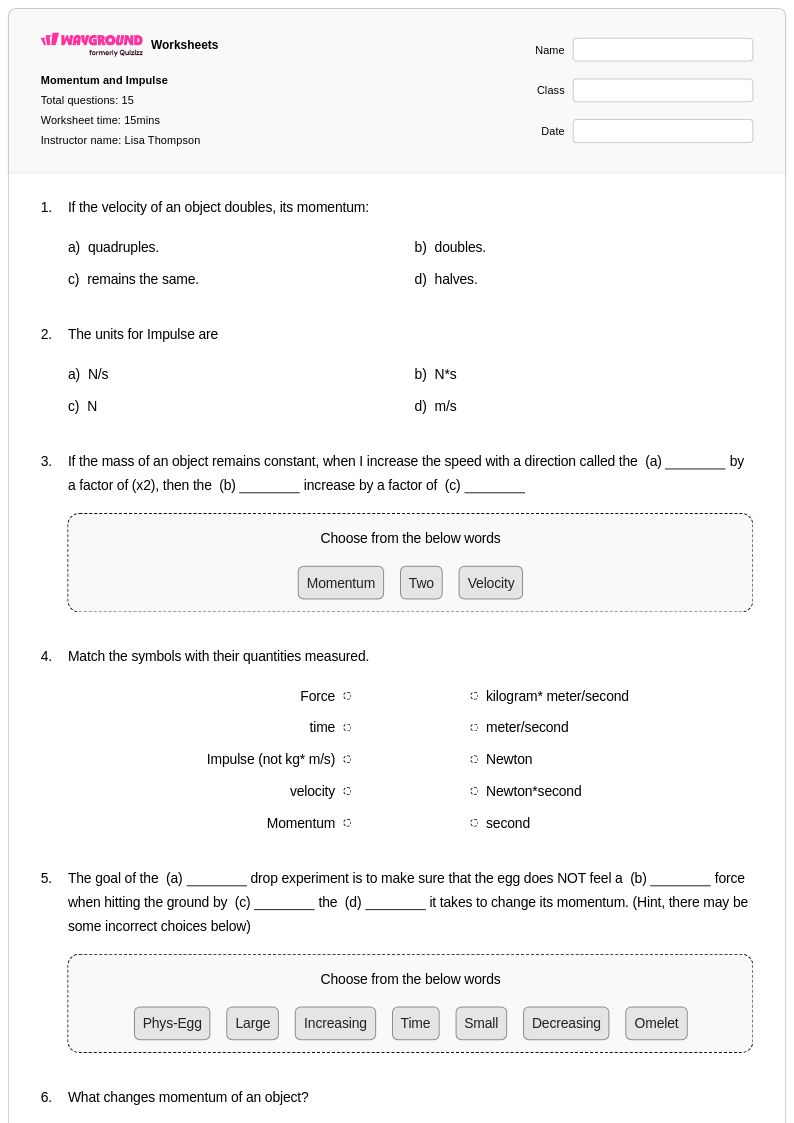
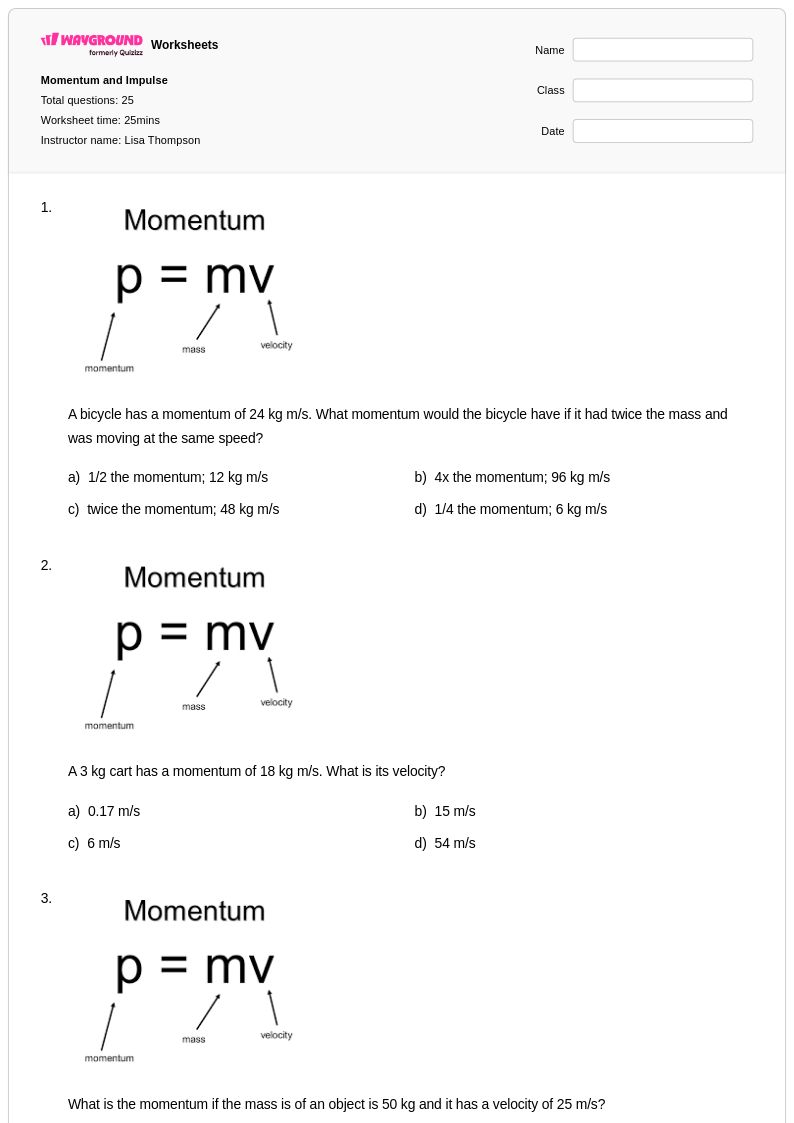
Start by grounding students in the definition of momentum as the product of mass and velocity before introducing impulse as the change in momentum caused by a force applied over time. Use concrete, real-world examples like car crashes, sports collisions, and airbag deployment to make the impulse-momentum theorem tangible. From there, progress students through structured problem sets that move from single-object momentum calculations to multi-body collision scenarios involving conservation of momentum.
What practice problems help students master momentum and impulse?
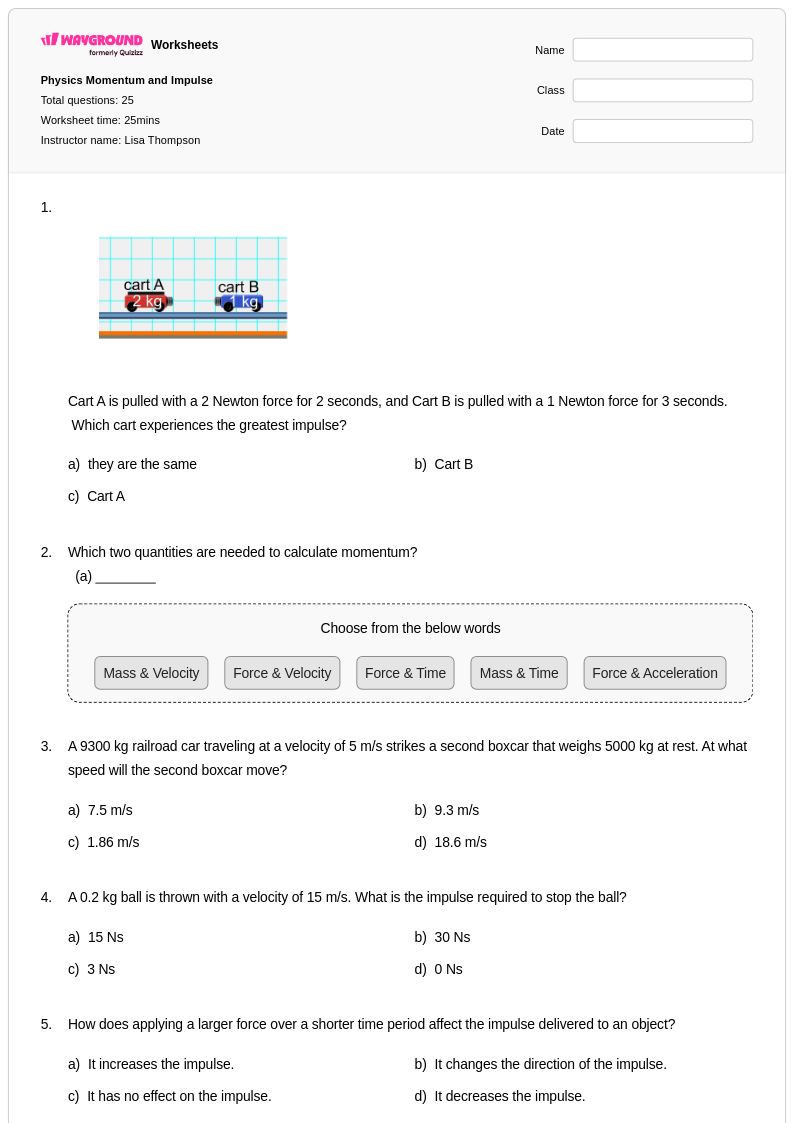
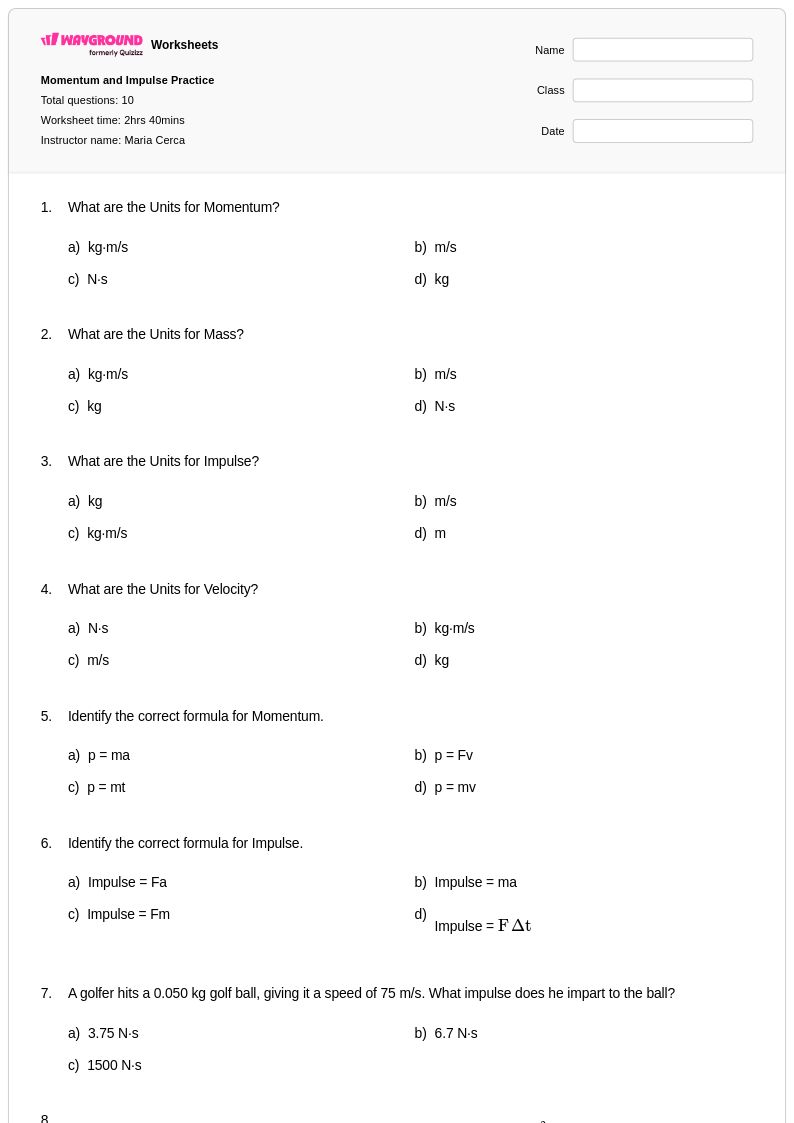
Effective practice should span a range of problem types: basic momentum calculations using p = mv, impulse problems requiring students to apply J = FΔt, and collision problems that distinguish between elastic and inelastic scenarios. Including conservation of momentum problems with two-object systems is essential, as these require students to integrate multiple concepts simultaneously. Problems anchored in real contexts, such as a ball striking a wall or two carts colliding on a frictionless track, help students connect equations to physical reasoning.
What mistakes do students commonly make when solving momentum and impulse problems?
One of the most frequent errors is treating momentum as a scalar rather than a vector, which causes students to ignore direction when objects move toward each other or rebound. Students also commonly confuse impulse with force, failing to account for the time interval over which the force acts. In collision problems, a persistent mistake is assuming kinetic energy is conserved in all collisions rather than distinguishing between elastic and inelastic cases.
How do I help struggling students understand the impulse-momentum theorem?
Struggling students benefit most from a side-by-side comparison of the impulse-momentum theorem (J = Δp = FΔt) and Newton's second law, making the mathematical connection explicit before moving to problem-solving. Using guided worked examples with annotated steps, where each variable is identified before any calculation begins, helps reduce procedural errors. On Wayground, teachers can enable reduced answer choices and read-aloud support for individual students who need additional scaffolding, allowing the rest of the class to work at full difficulty without disruption.
How do I use Wayground's momentum and impulse worksheets in my classroom?
Wayground's momentum and impulse worksheets are available as printable PDFs for traditional classroom or homework use and in interactive digital formats for technology-integrated learning environments. Teachers can also host worksheets directly as a quiz on Wayground, enabling real-time student responses and immediate feedback. All worksheets include complete answer keys, supporting both teacher-led review and independent student self-assessment.
How can I differentiate momentum and impulse instruction for students at different skill levels?
Differentiation in momentum and impulse instruction typically means offering tiered problem sets: foundational problems for students still building fluency with p = mv, standard multi-step collision problems for on-level learners, and open-ended or multi-body scenarios for advanced students. Wayground supports this through filtering tools that help teachers locate materials aligned to specific skill levels, as well as student-level accommodations such as extended time and reduced answer choices that can be applied individually without affecting the experience of other students in the class.