Free Printable Naming Conventions Worksheets for Year 3
Wayground's free Year 3 naming conventions worksheets provide comprehensive printables and practice problems to help students master proper noun capitalization, with detailed answer keys and PDF formats for effective grammar learning.
Explore printable Naming Conventions worksheets for Year 3
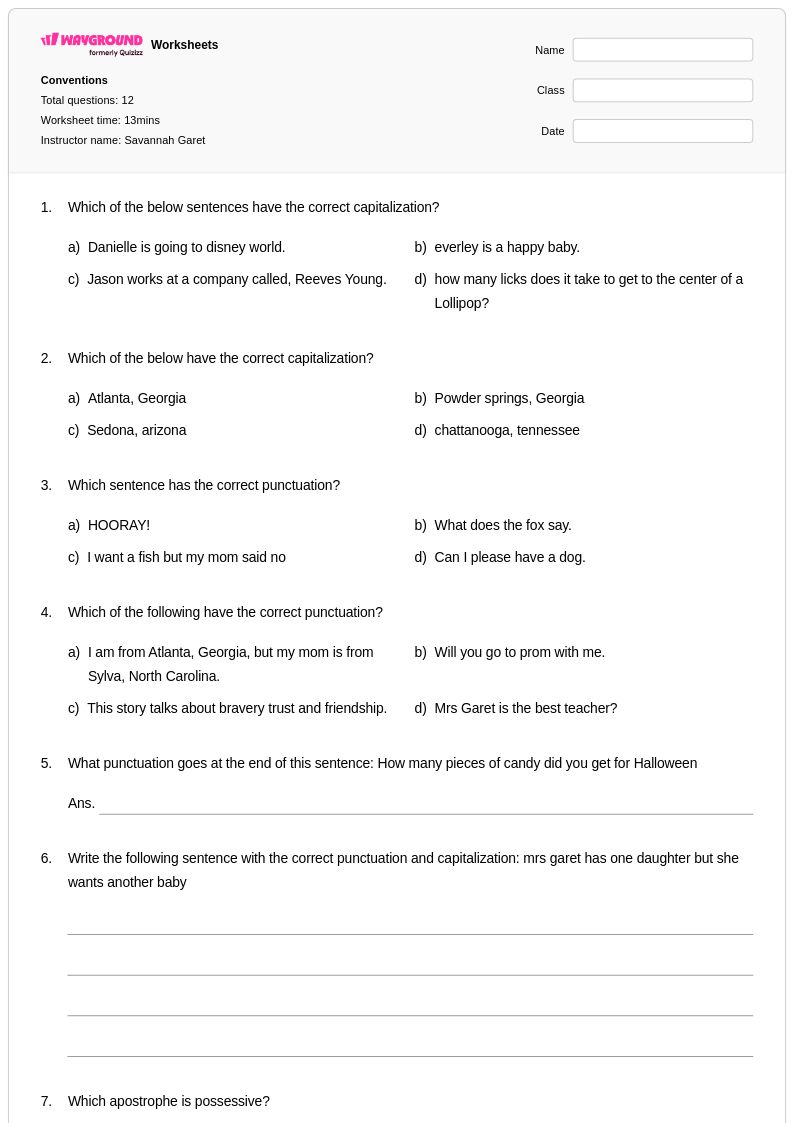
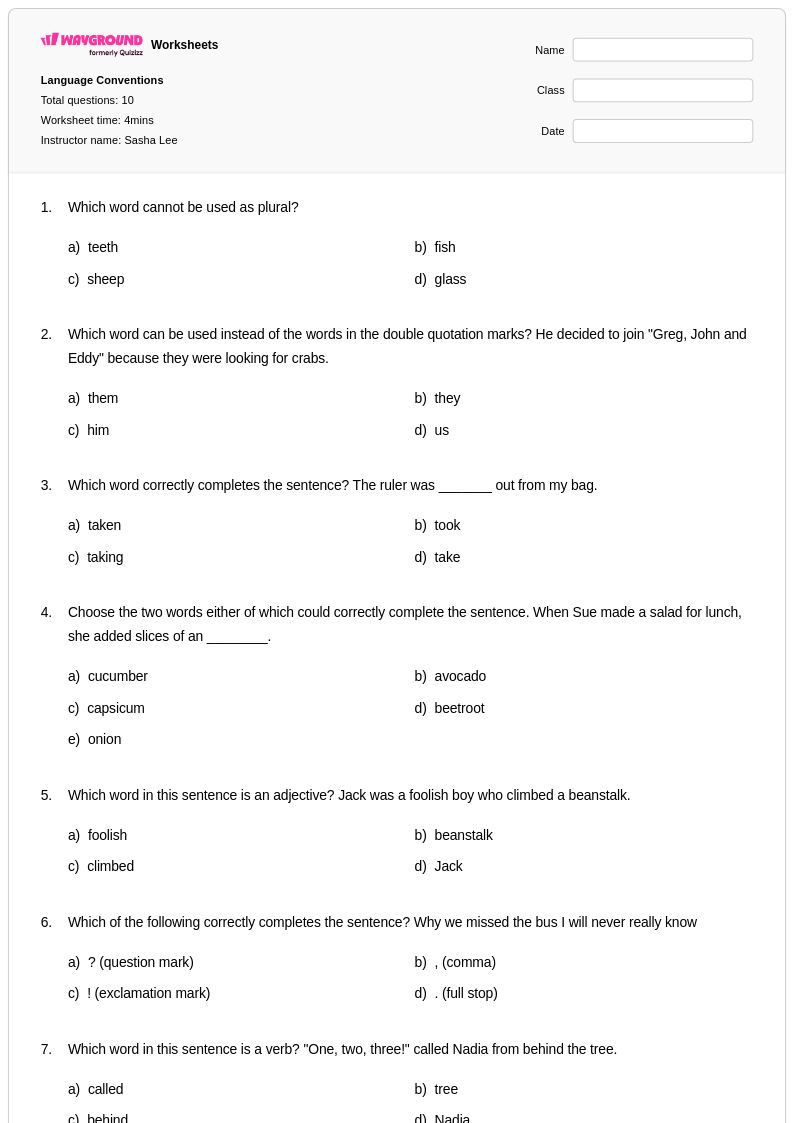
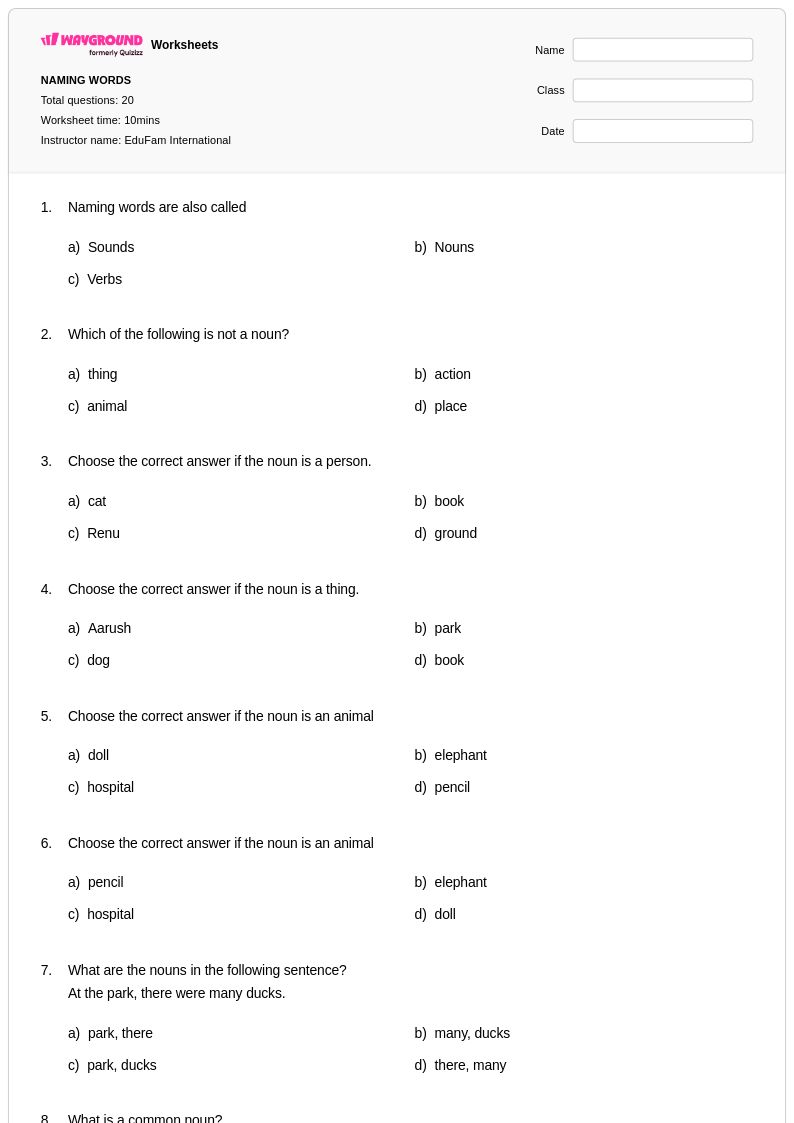
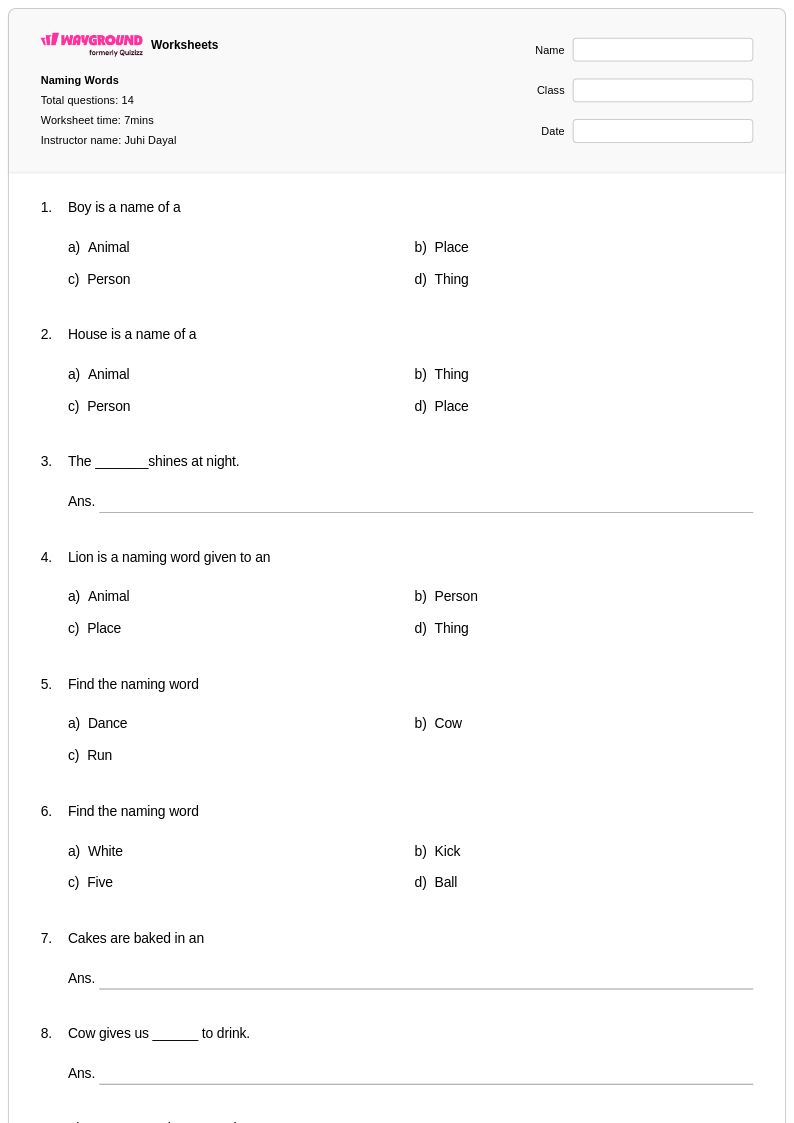
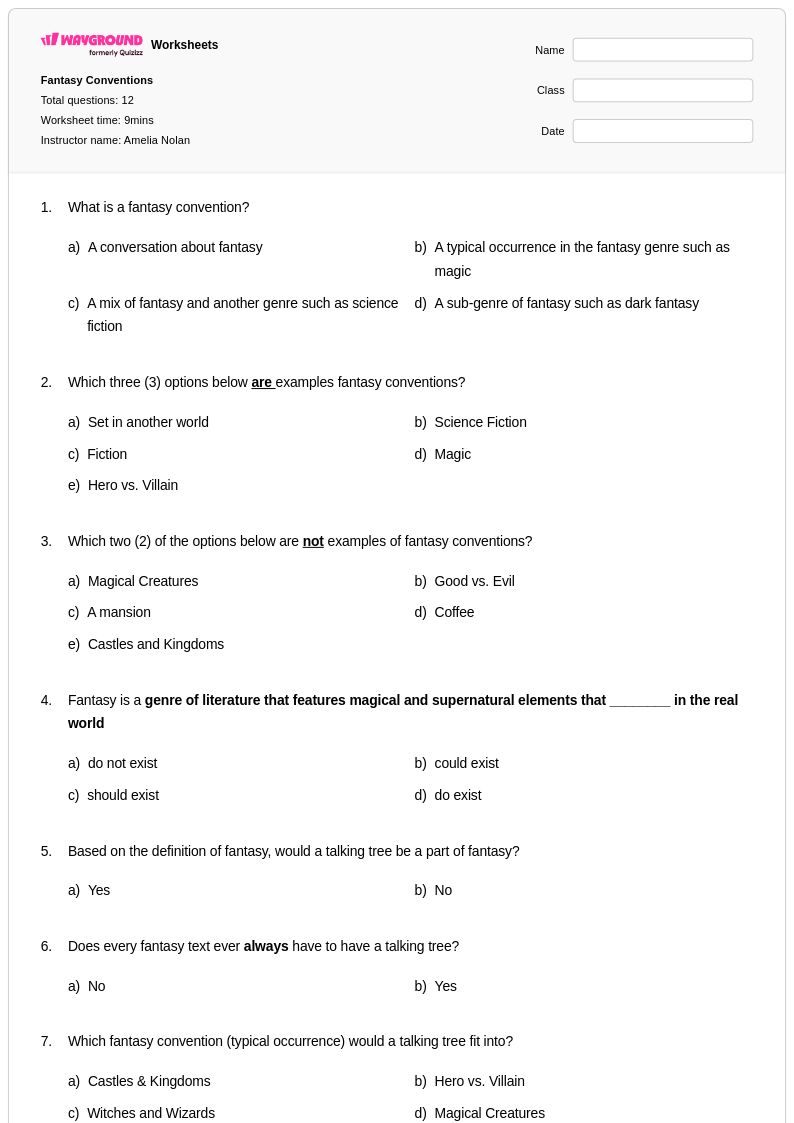
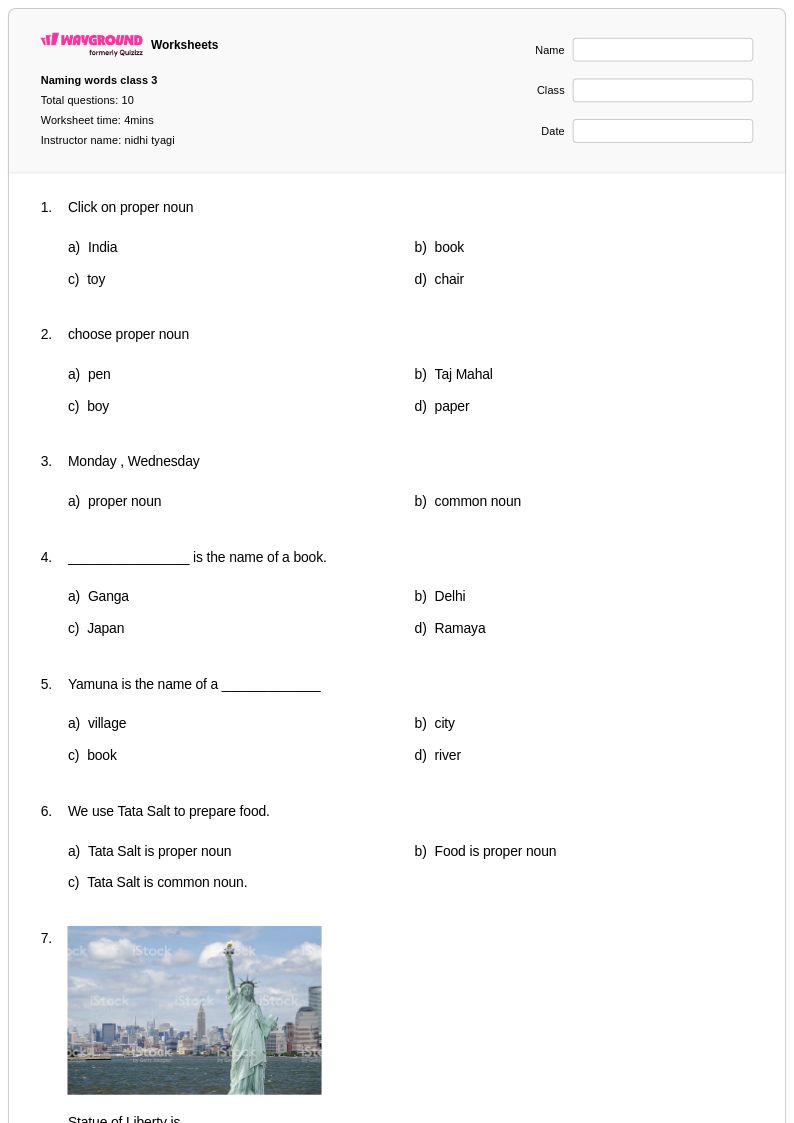
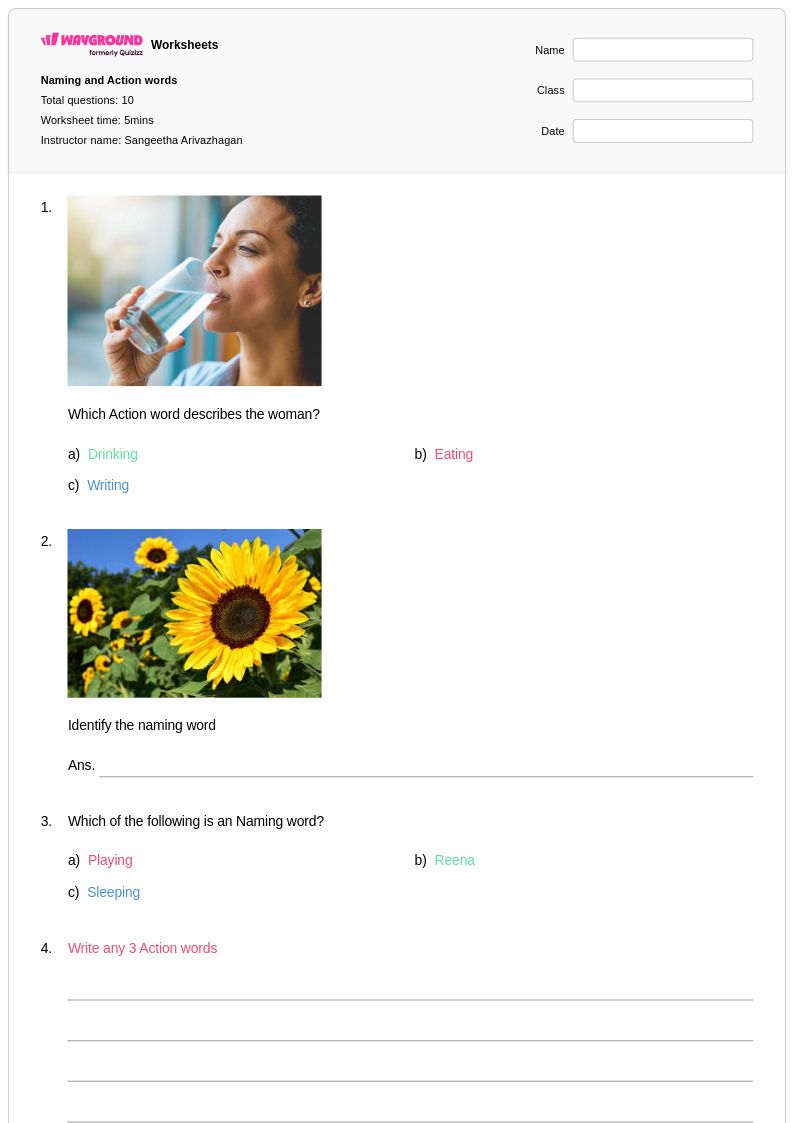
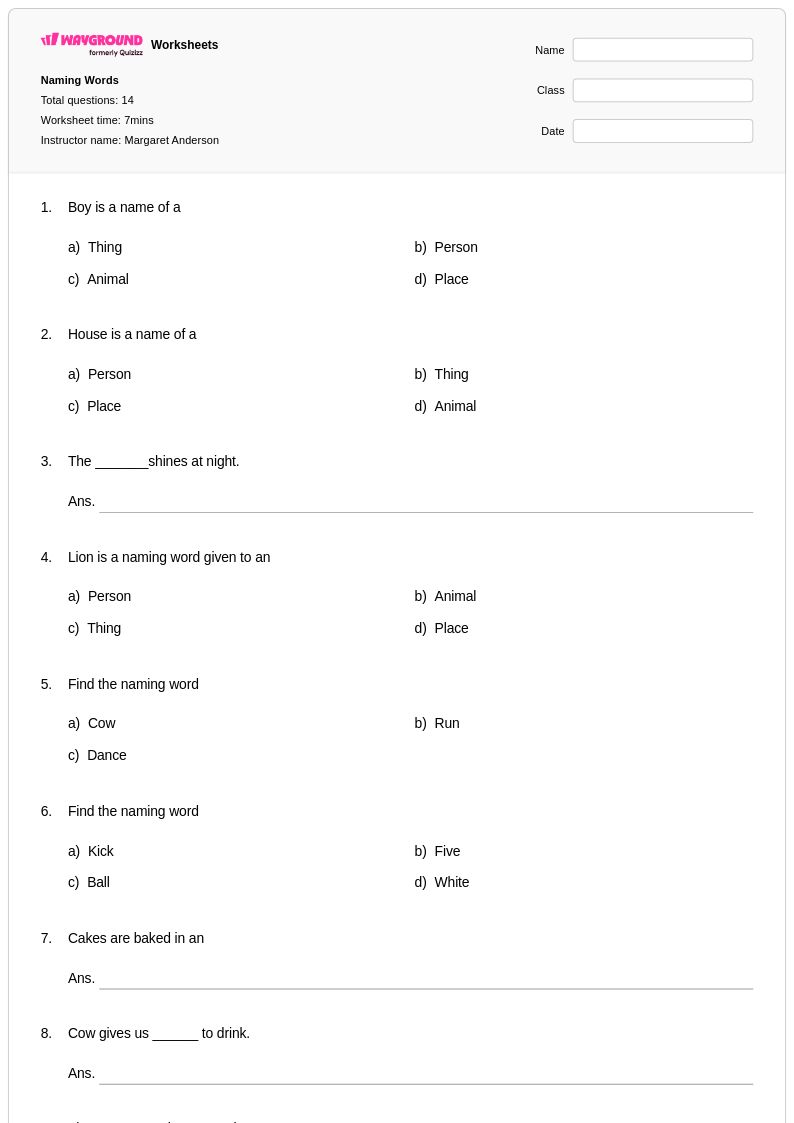
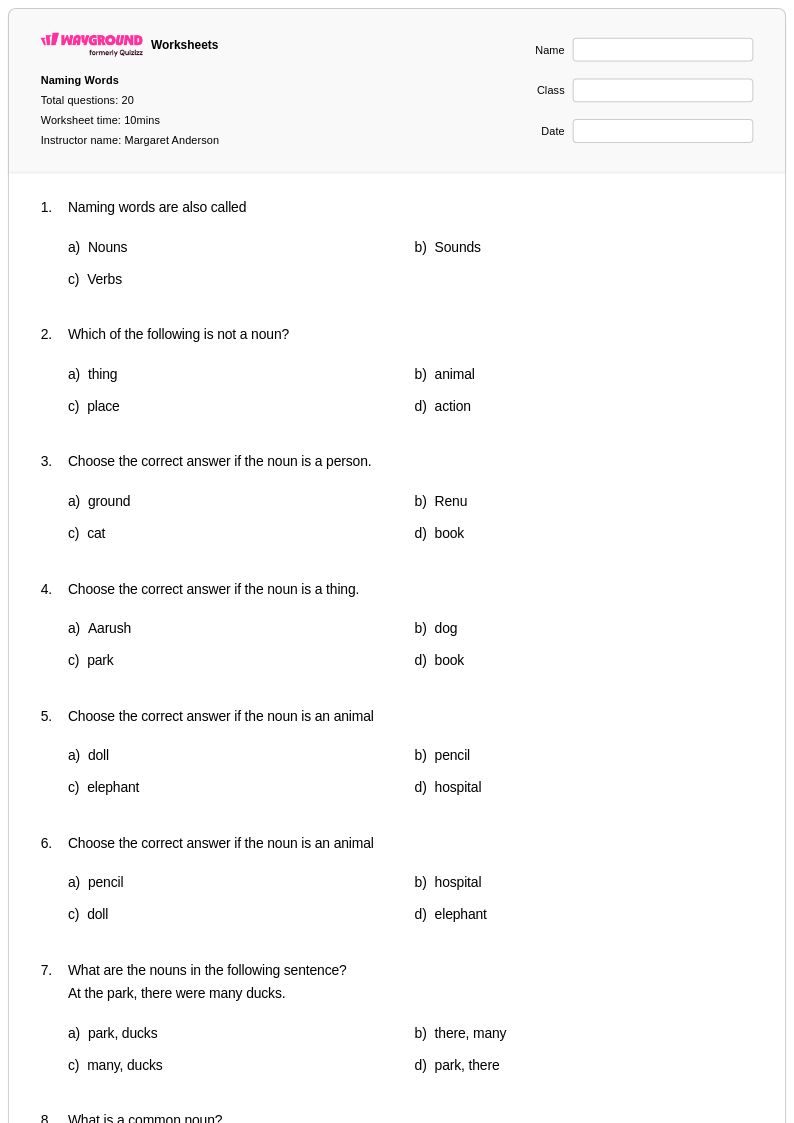
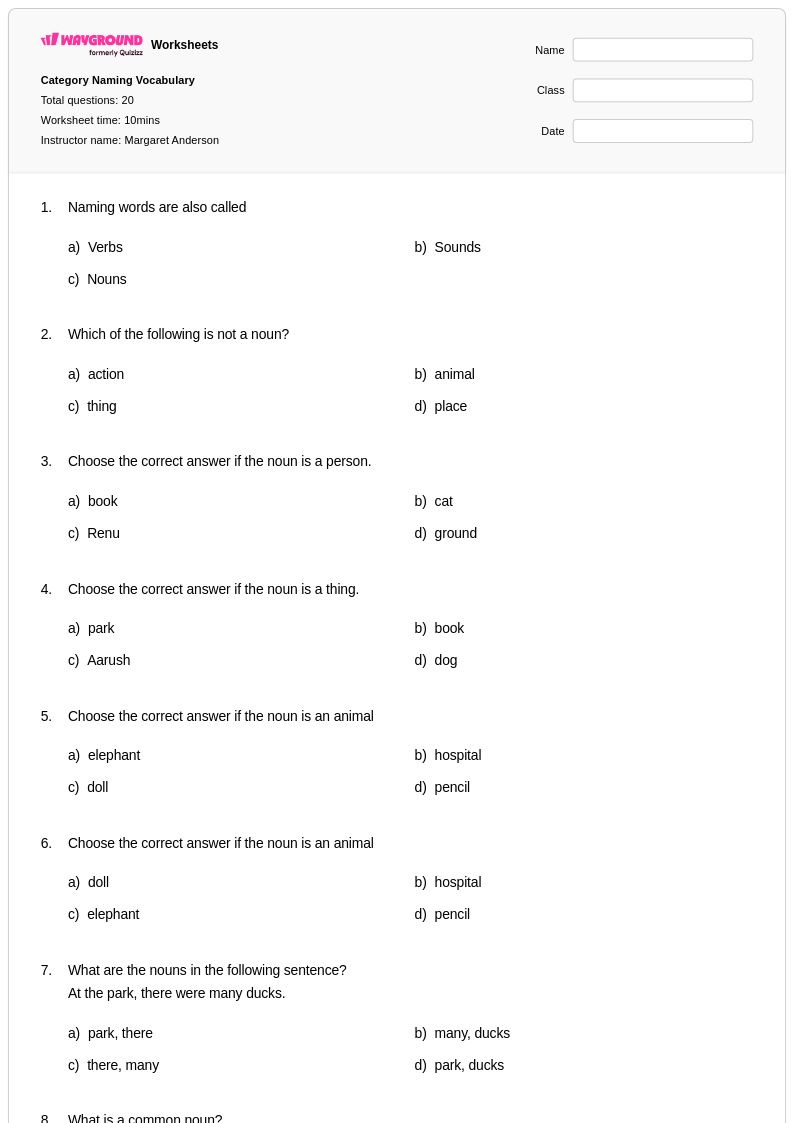
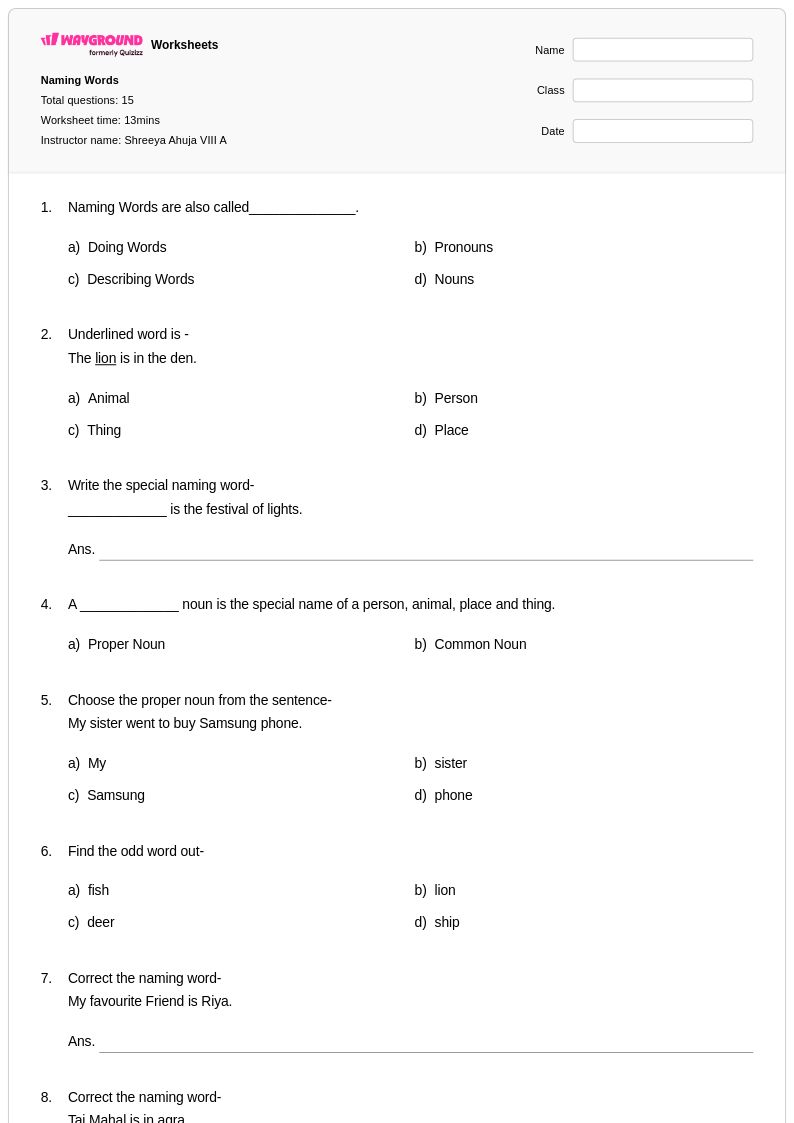
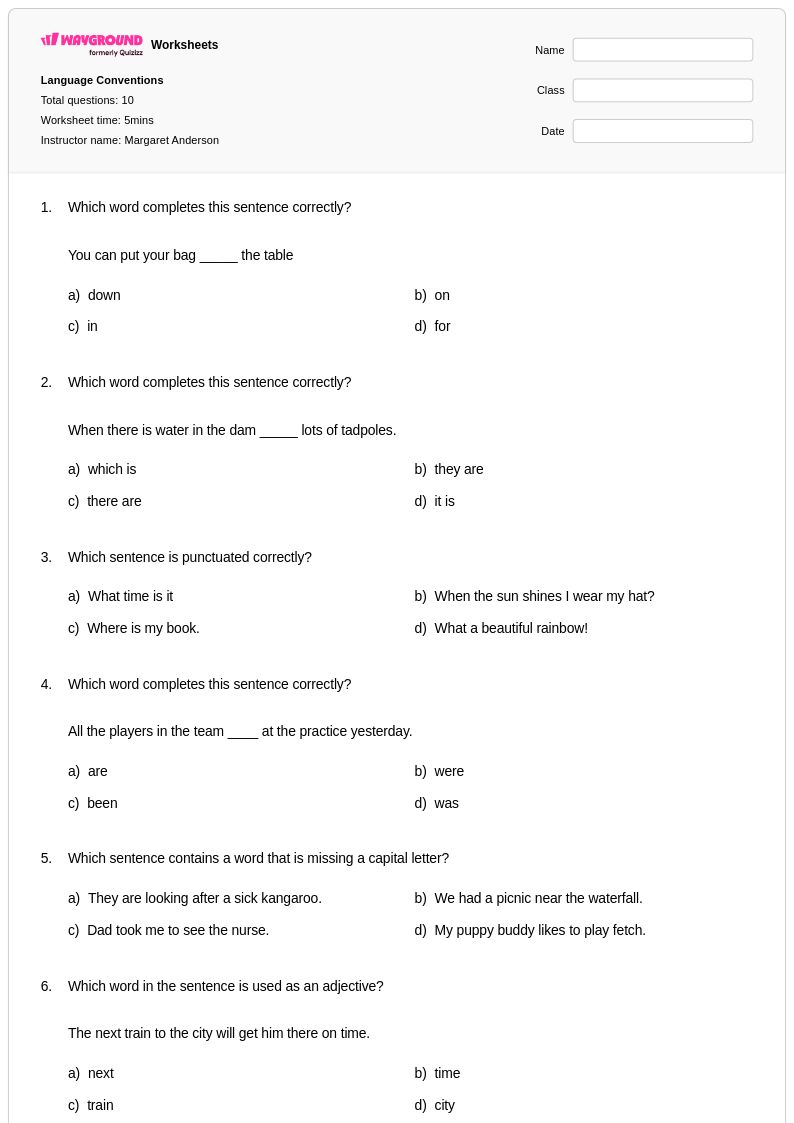
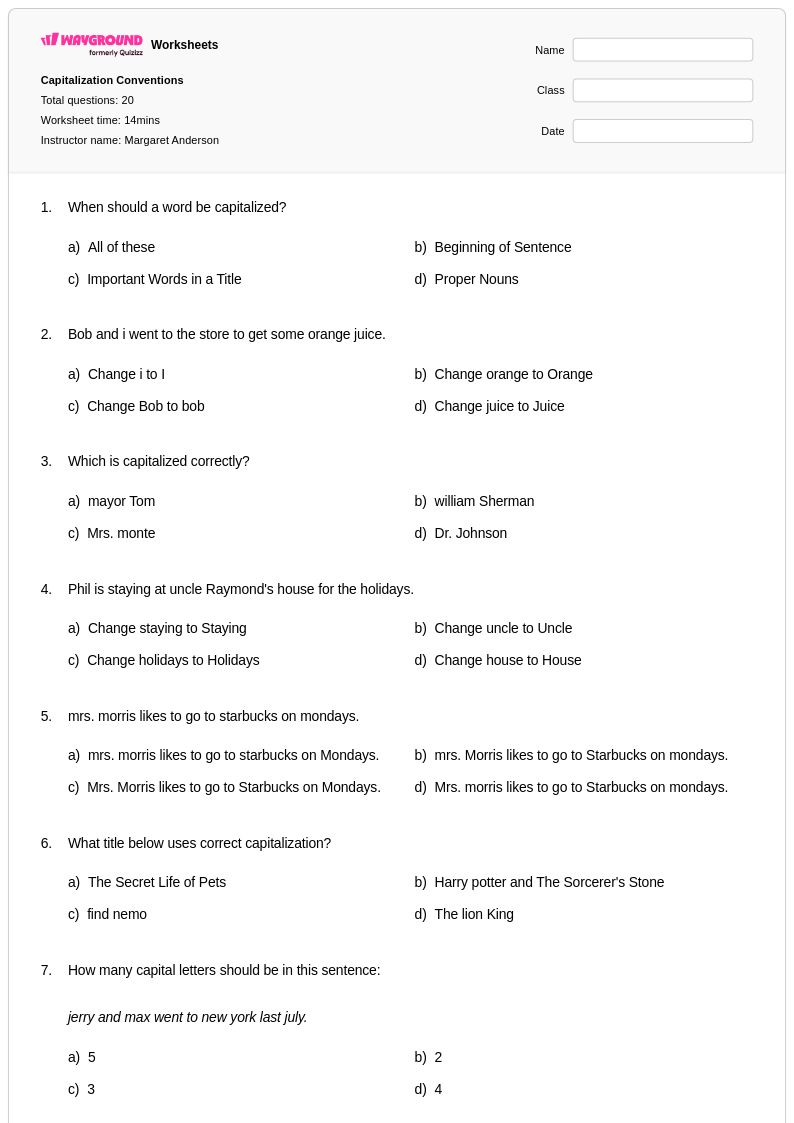
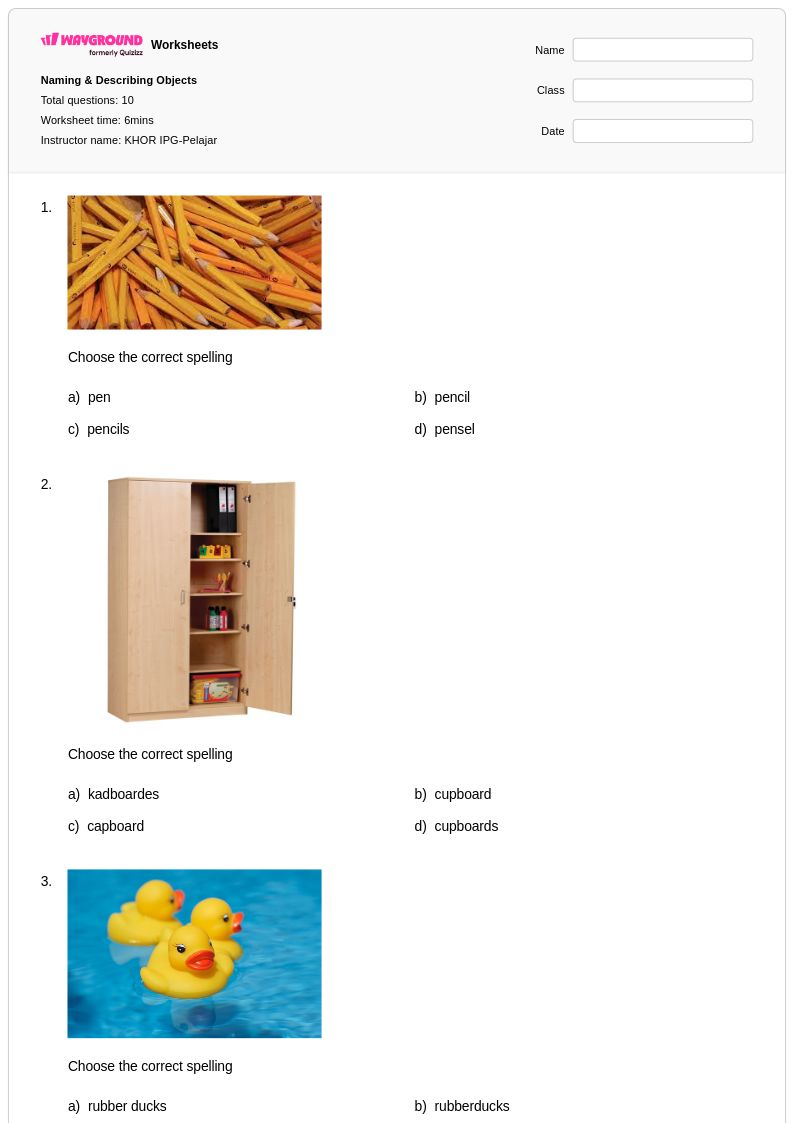
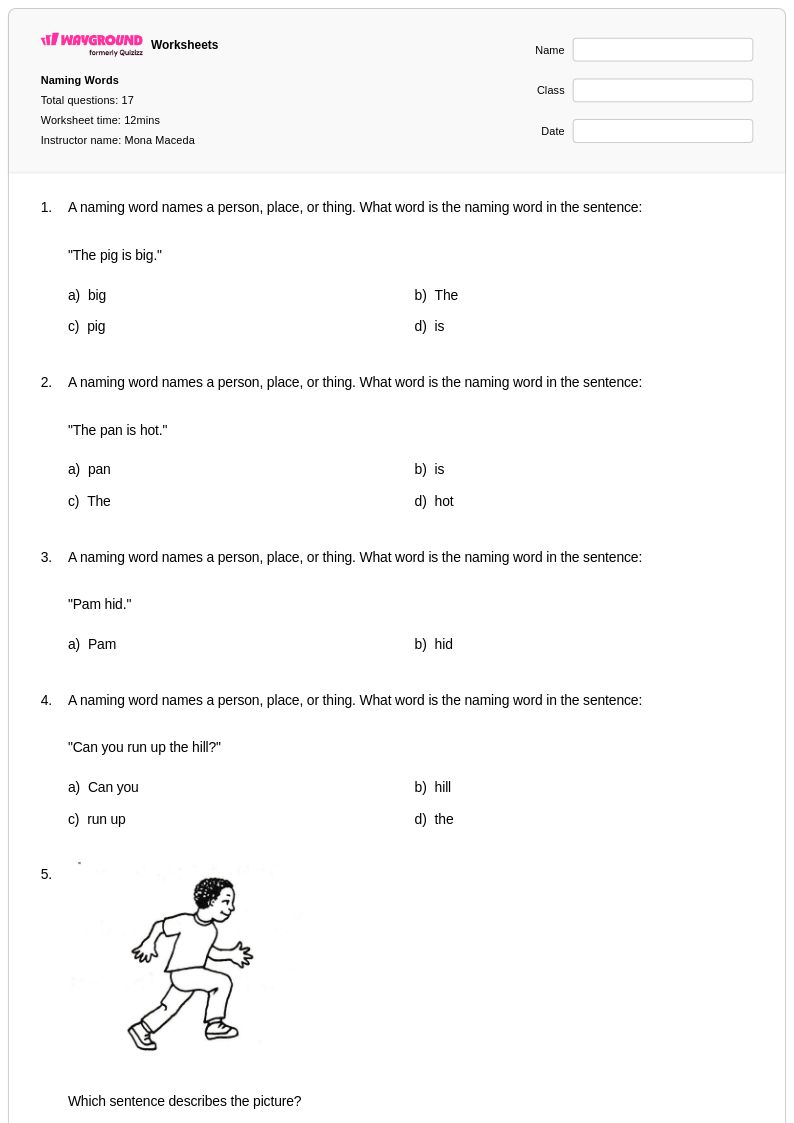
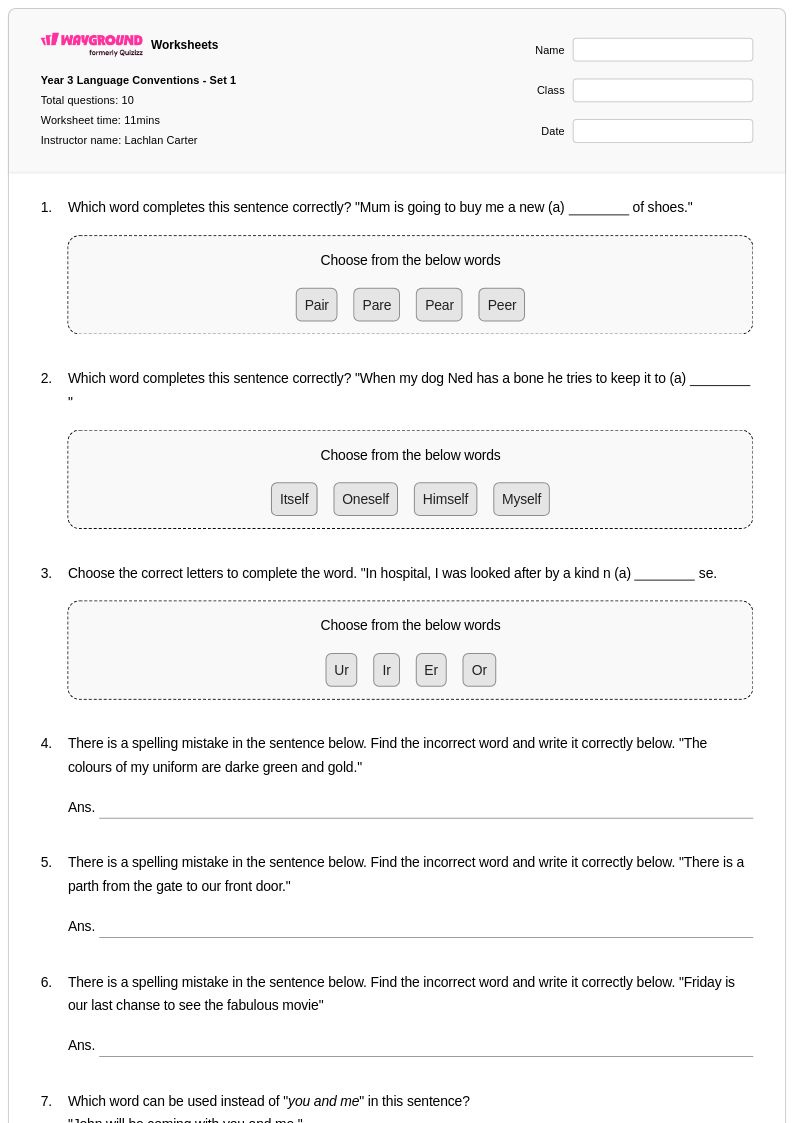
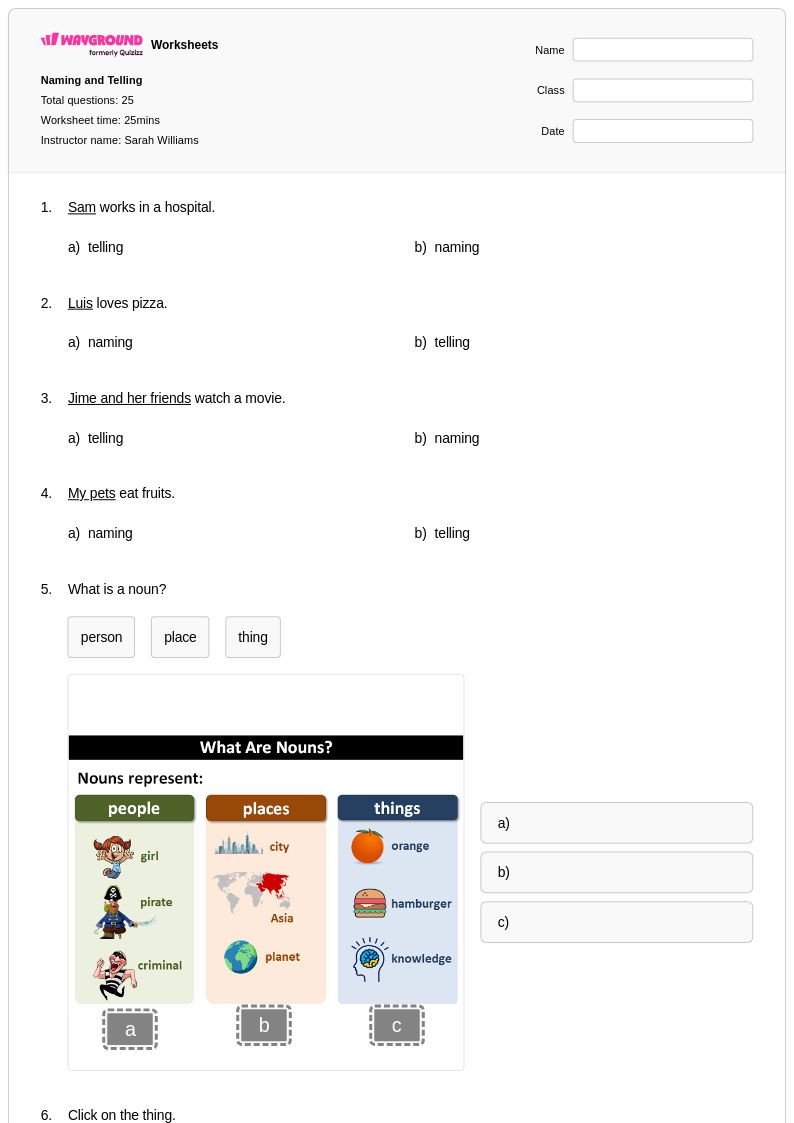
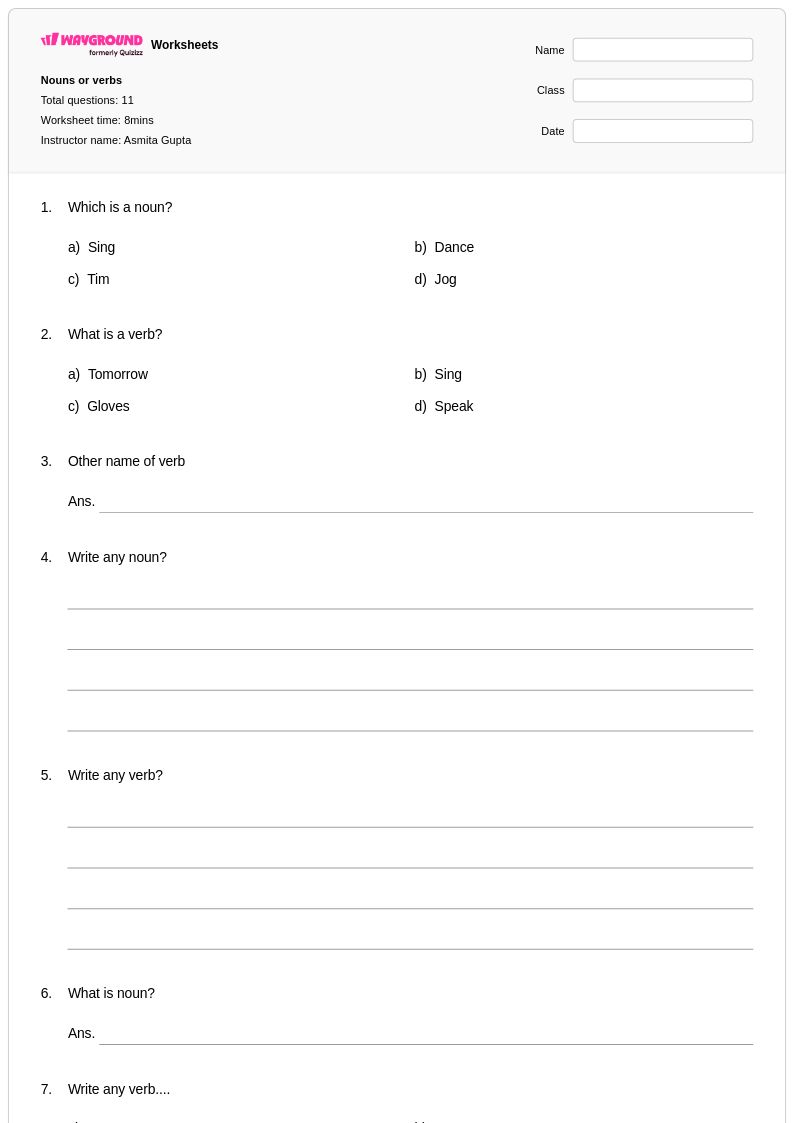
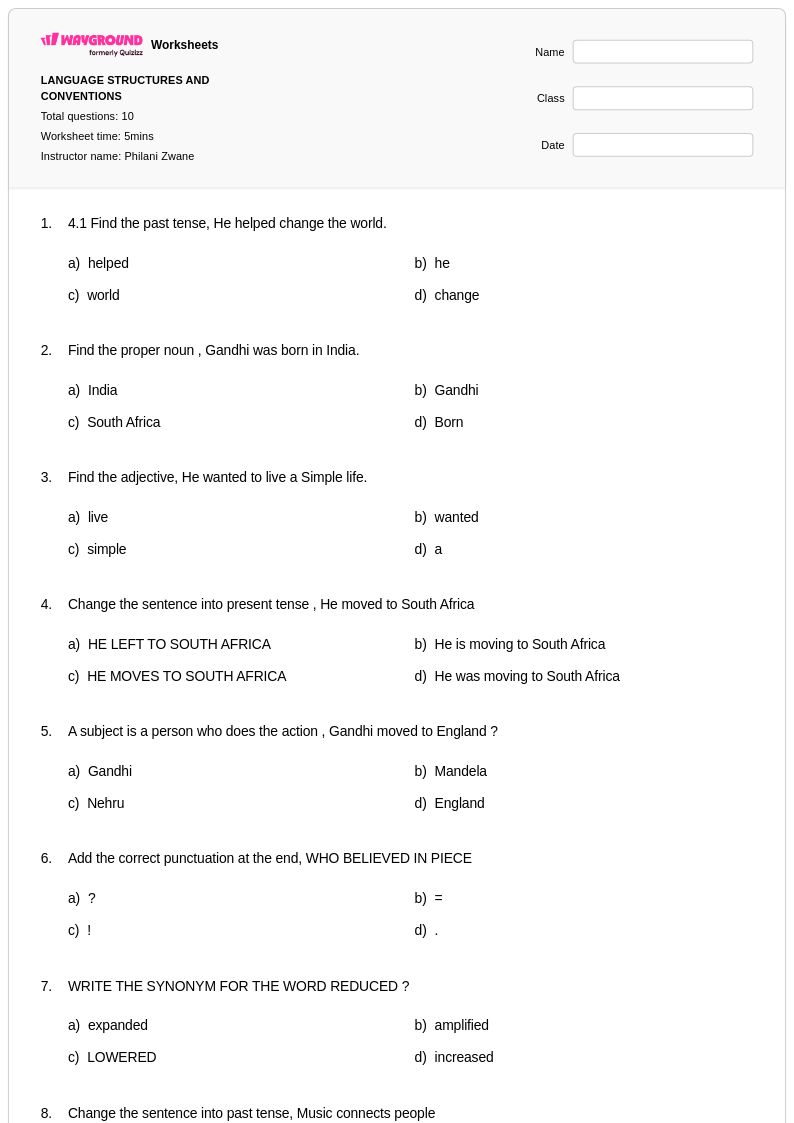
Naming conventions worksheets for Year 3 students available through Wayground (formerly Quizizz) provide essential practice in understanding how proper nouns, common nouns, and capitalization rules work together in written English. These comprehensive printable resources help third-grade learners master the fundamental skill of recognizing when to capitalize names of people, places, days of the week, months, holidays, and specific titles while understanding when common nouns should remain lowercase. Each worksheet collection includes varied practice problems that reinforce these critical grammar concepts, complete with answer keys that allow students to check their understanding independently. The free pdf format makes these naming convention exercises easily accessible for classroom use, homework assignments, or additional skill reinforcement at home.
Wayground (formerly Quizizz) supports educators with millions of teacher-created naming convention worksheets specifically designed for Year 3 grammar instruction, featuring robust search and filtering capabilities that help teachers quickly locate materials aligned with their curriculum standards and learning objectives. The platform's differentiation tools enable instructors to customize worksheets based on individual student needs, whether providing foundational practice for struggling learners or enrichment activities for advanced students ready to tackle more complex naming convention challenges. Available in both printable pdf format and interactive digital versions, these resources seamlessly integrate into lesson planning for initial instruction, targeted remediation sessions, or ongoing skill practice, giving teachers the flexibility to address diverse learning styles and classroom management preferences while ensuring consistent progress in this fundamental area of English grammar and mechanics.
FAQs
How do I teach naming conventions and capitalization rules to students?
Start by distinguishing between common nouns and proper nouns, then systematically introduce categories: personal names, geographical locations, organizations, historical events, and brand names. From there, move into the formatting rules for titles of books, movies, and songs, which follow a different logic than proper noun capitalization. Using mentor texts and real-world examples helps students see these rules as purposeful rather than arbitrary, and practice with varied sentence contexts reinforces when and why each rule applies.
What exercises help students practice naming conventions and capitalization?
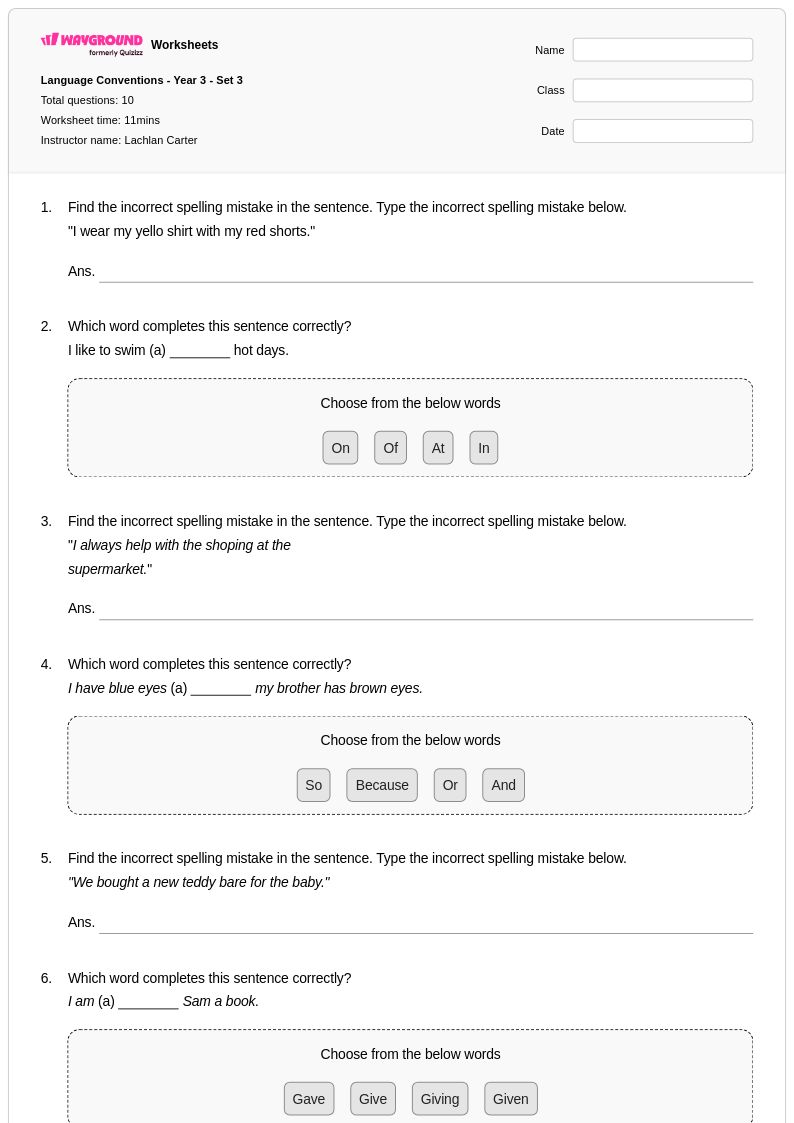
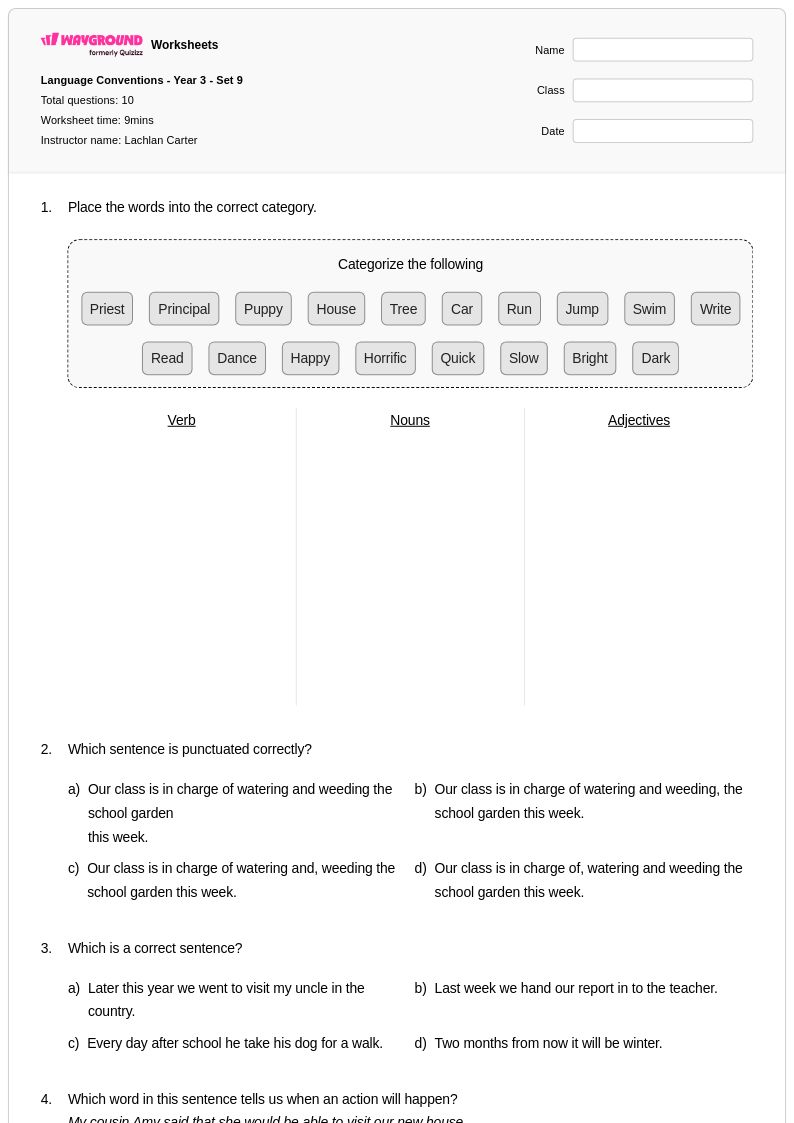
Effective practice includes error-correction exercises where students identify and fix capitalization mistakes in sentences, as well as fill-in-the-blank activities that require students to capitalize proper nouns in context. Sorting tasks that ask students to categorize words as common or proper nouns build conceptual understanding, while rewriting passages with deliberate errors develops editing skills. Varying the exercise format keeps practice productive across multiple sessions.
What mistakes do students commonly make with naming conventions?
One of the most frequent errors is over-capitalizing, where students capitalize common nouns like 'president' or 'river' when they are used generically rather than as part of a specific name. Students also struggle with title formatting, frequently capitalizing prepositions and articles like 'of,' 'the,' and 'a' in the middle of a title. Compound proper nouns and hyphenated names are another common stumbling block, as students are often unsure which elements require capitalization.
How do I use naming conventions worksheets in my classroom?
Naming conventions worksheets on Wayground are available as printable PDFs for traditional classroom use and in digital formats for technology-integrated environments, including the option to host them as a quiz directly on Wayground. Printable versions work well for guided practice, independent seat work, or take-home review, while digital formats support interactive feedback loops in one-to-one device settings. Each worksheet includes a complete answer key, making it easy to use for self-assessment or rapid teacher grading.
How do I differentiate naming conventions practice for students at different skill levels?
For students still building foundational skills, start with straightforward proper noun identification before introducing title formatting rules. On Wayground, teachers can apply student-level accommodations such as reduced answer choices to lower cognitive load for struggling learners, or enable Read Aloud so questions are read to students who need auditory support. Advanced learners can be directed to exercises involving complex scenarios like compound names, brand names, or nested titles, allowing meaningful differentiation within the same topic.
At what grade level should naming conventions and capitalization rules be taught?
Basic capitalization of proper nouns is introduced as early as first and second grade, but the full scope of naming conventions, including title formatting, organization names, and historical event capitalization, is typically addressed across grades 3 through 8 as writing demands increase. Remediation at the middle and high school level is also common, particularly for students who need targeted grammar mechanics support before academic writing assignments.