Free Printable Subject and Object Worksheets for Year 3
Enhance Year 3 students' understanding of subject and object identification with Wayground's comprehensive collection of free grammar worksheets, featuring engaging practice problems, printable PDFs, and complete answer keys.
Explore printable Subject and Object worksheets for Year 3
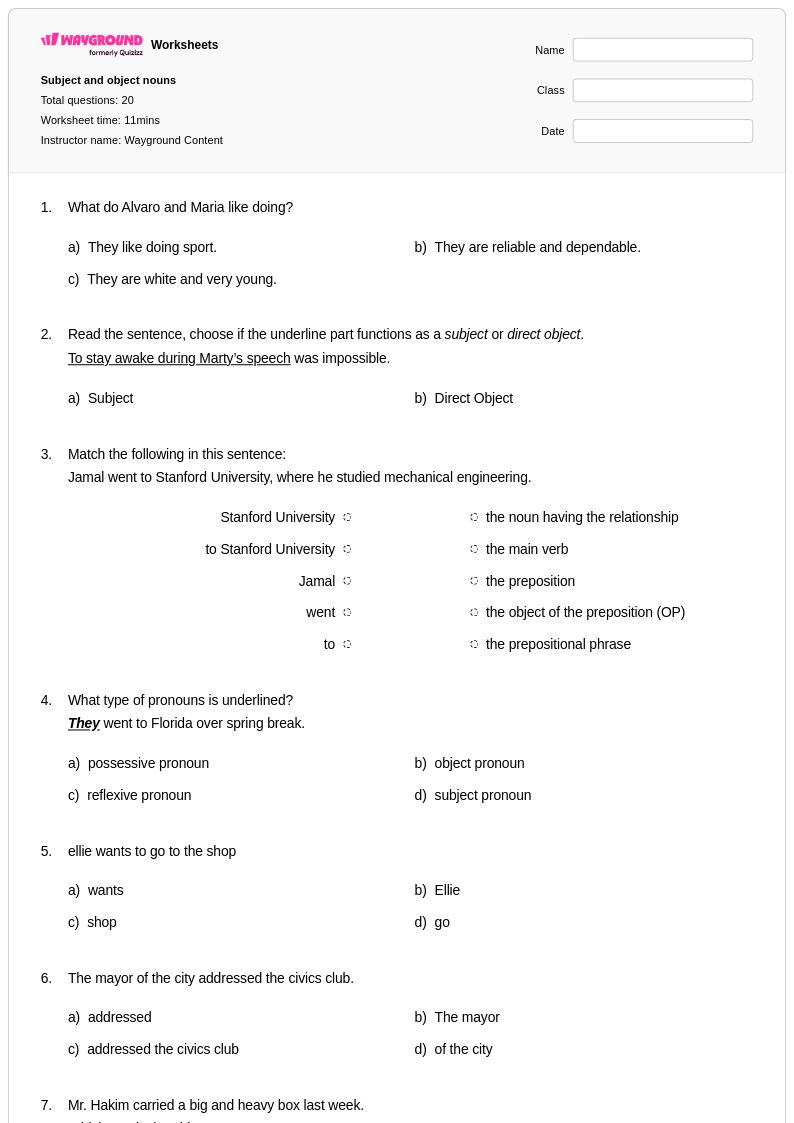
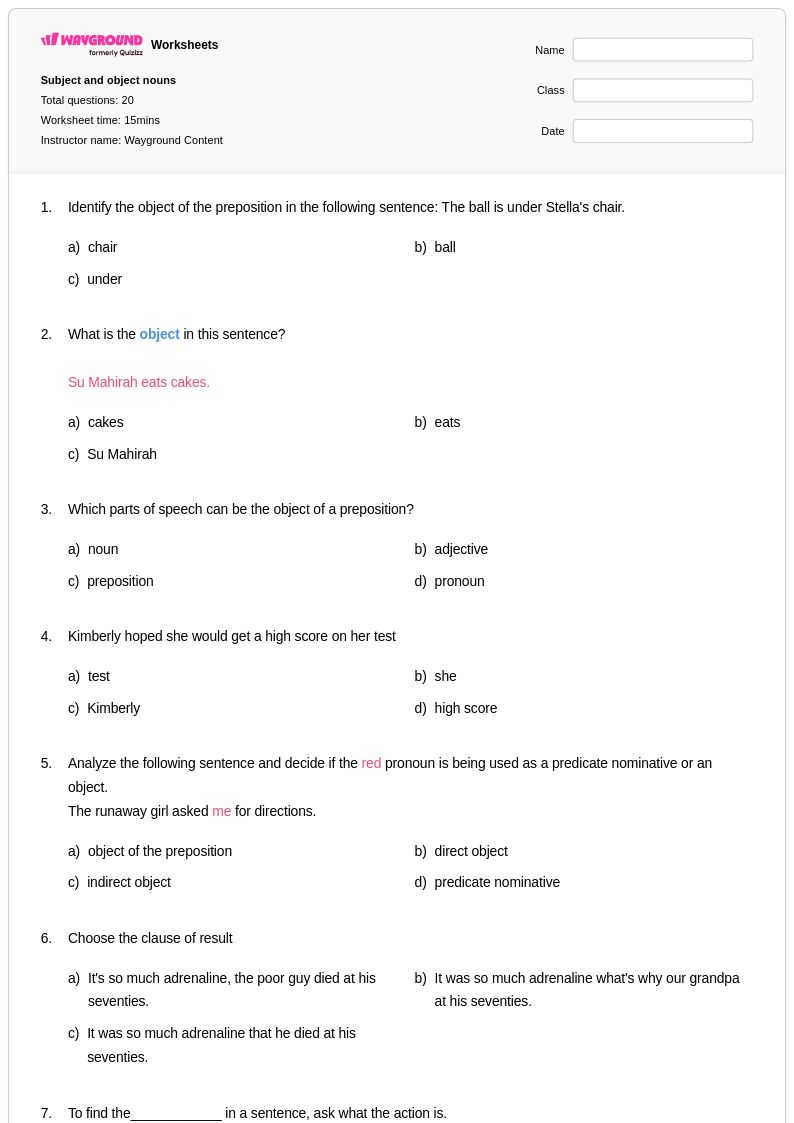
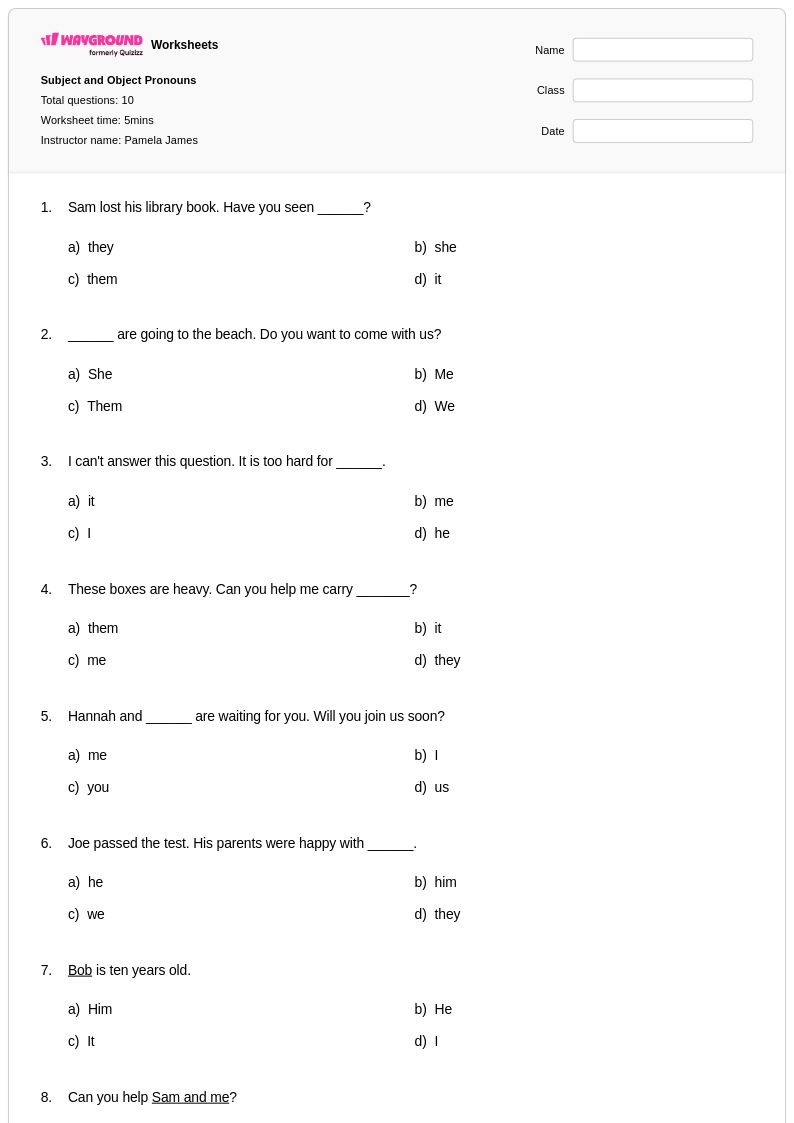
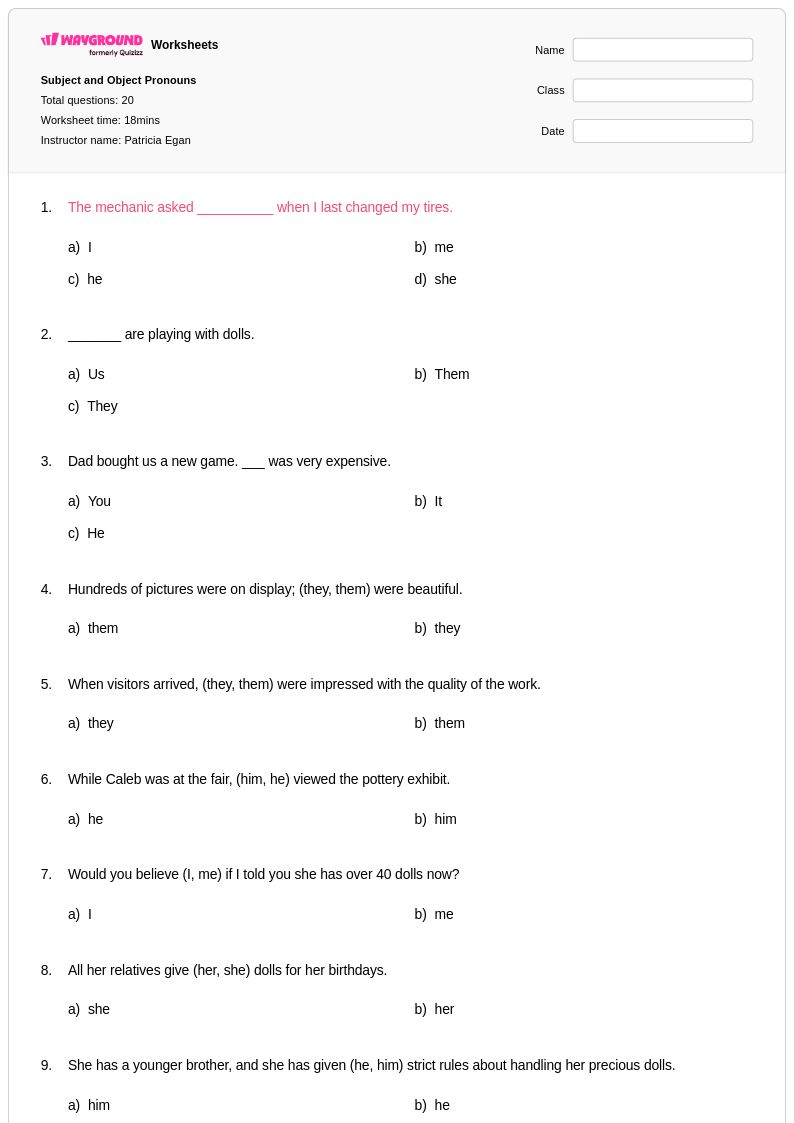
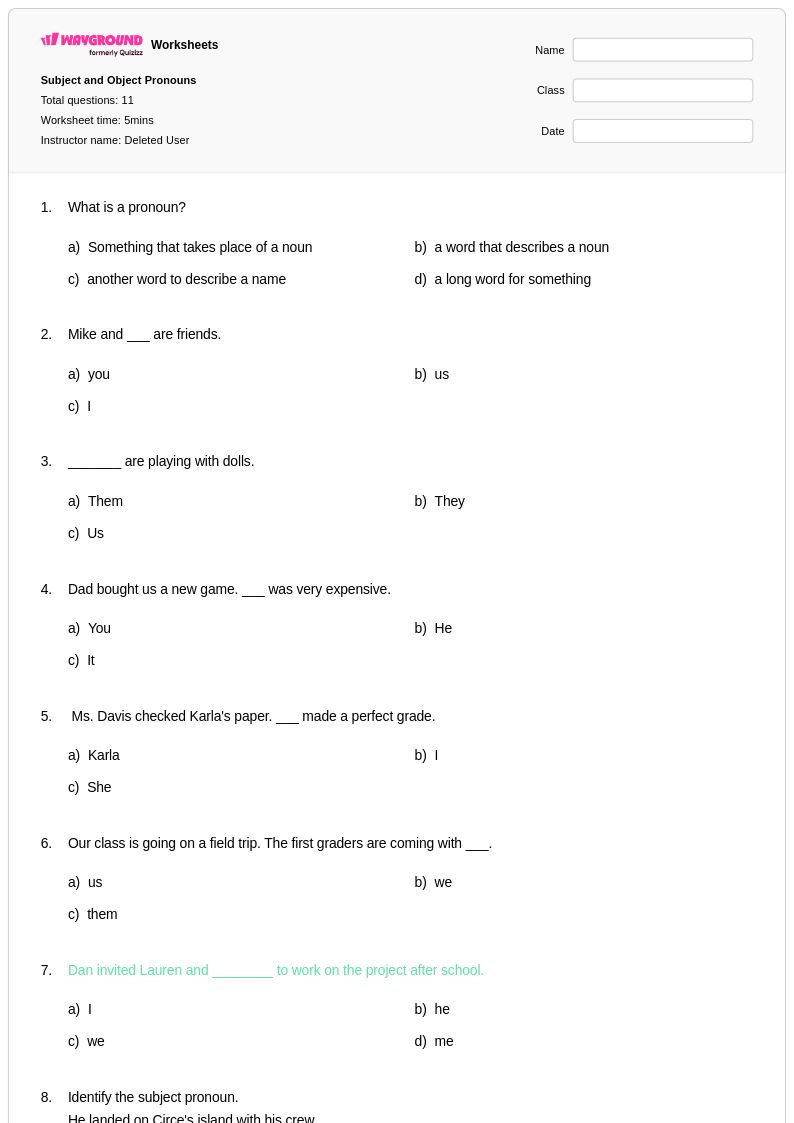
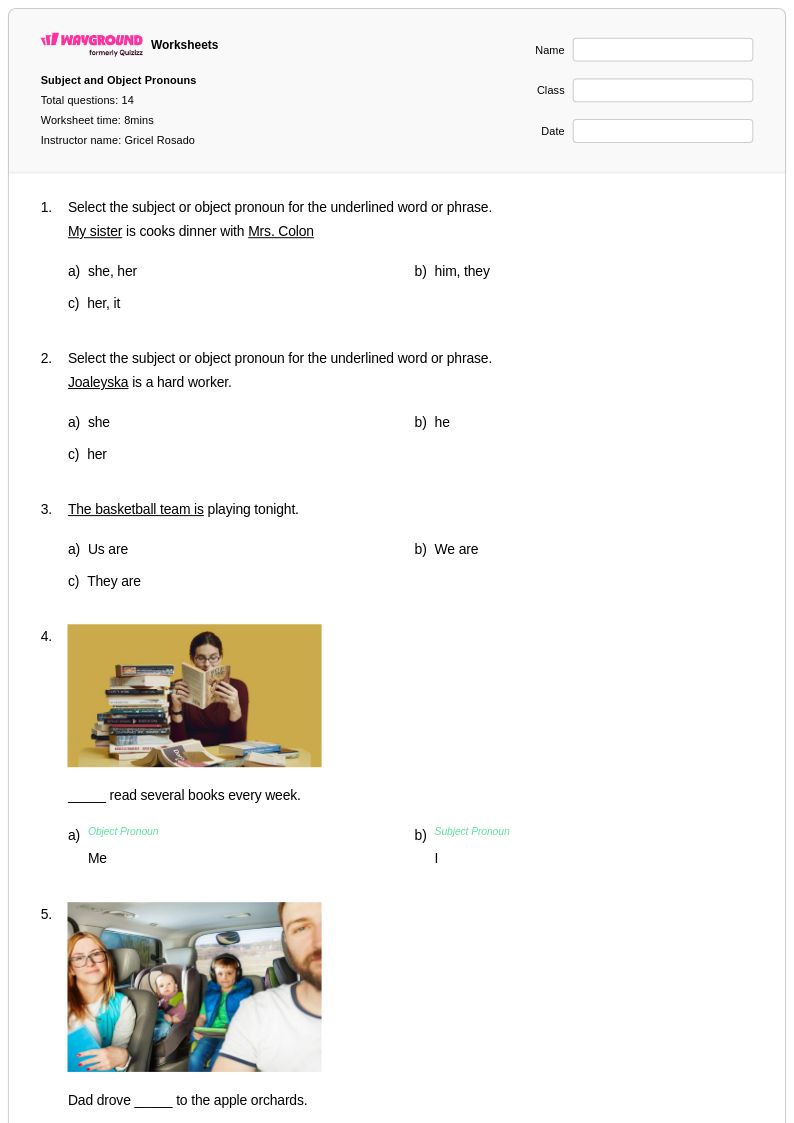
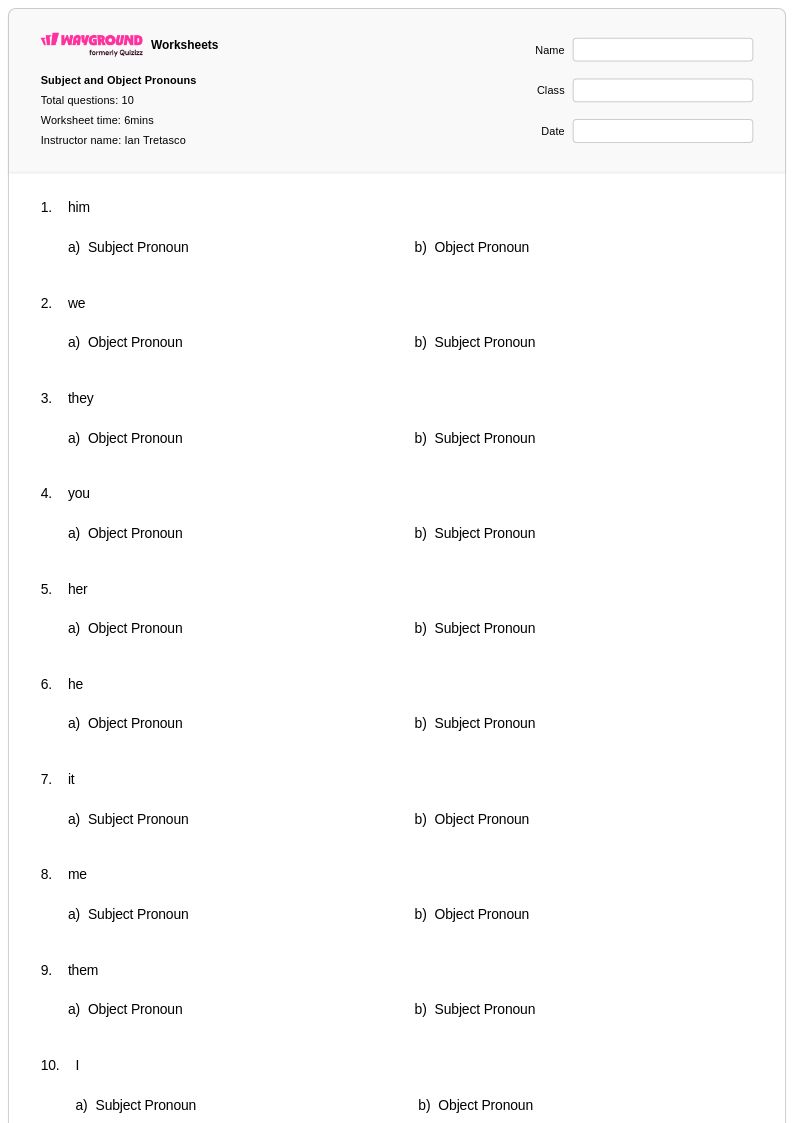
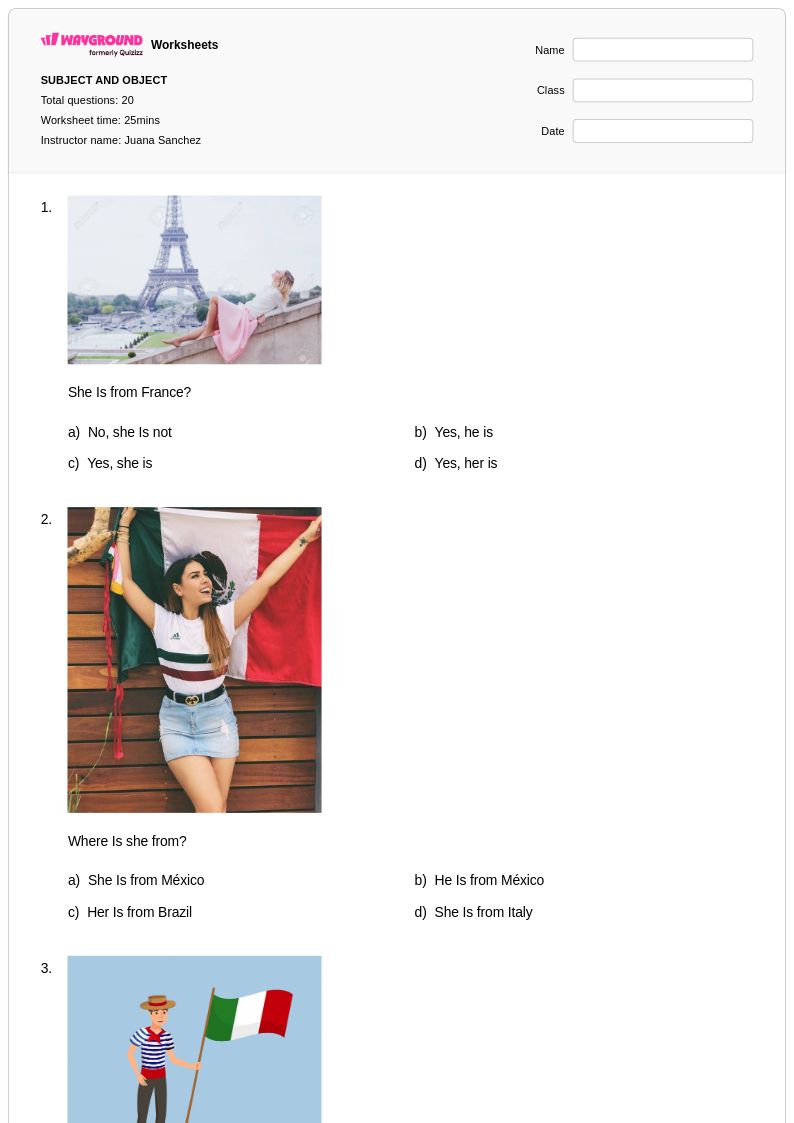
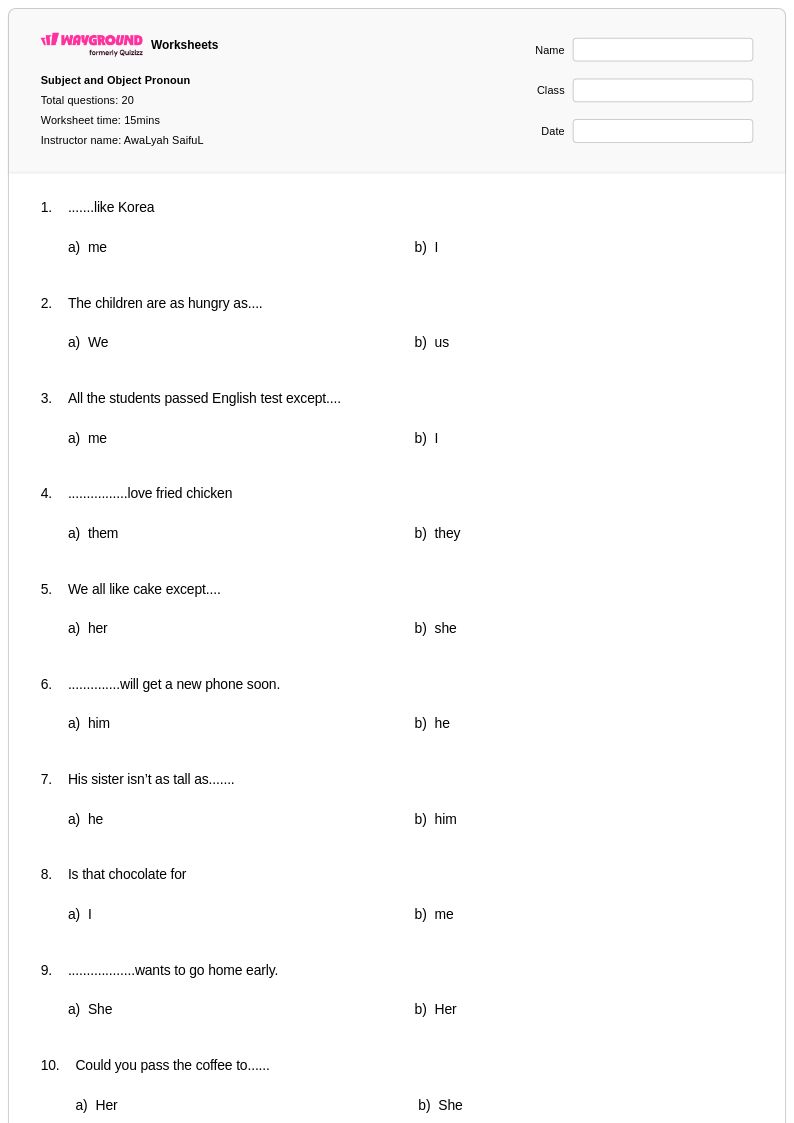
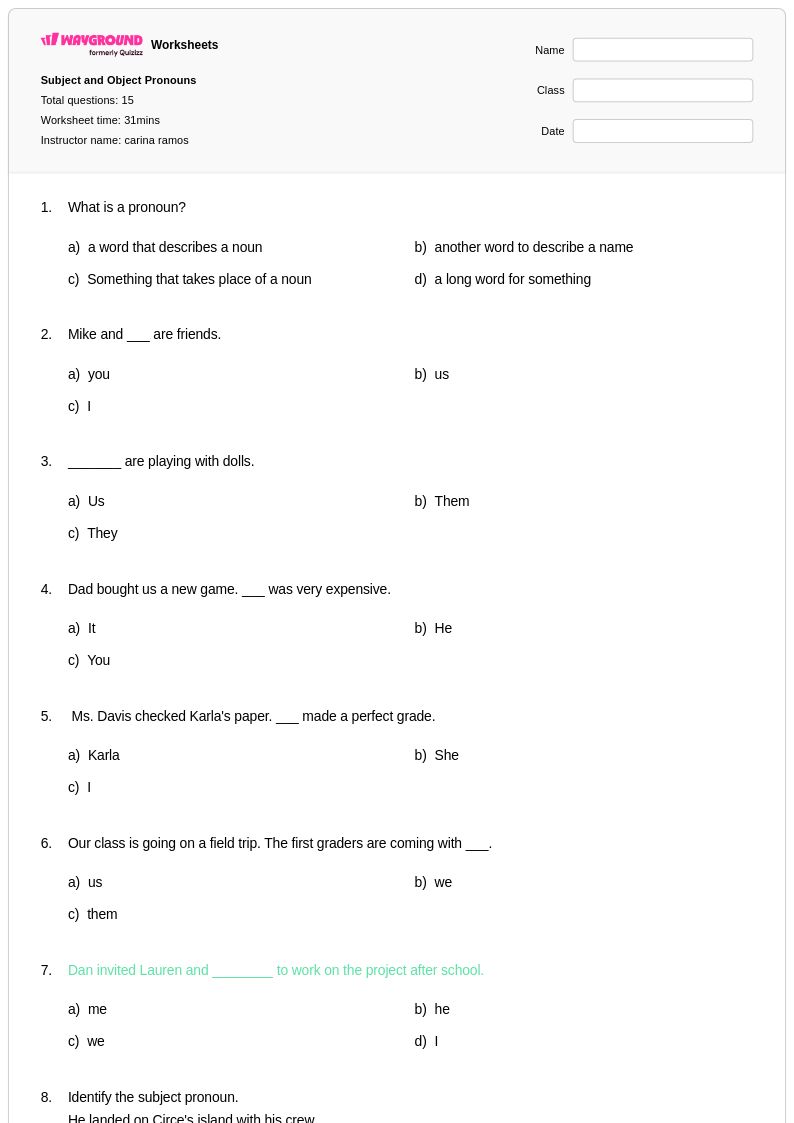
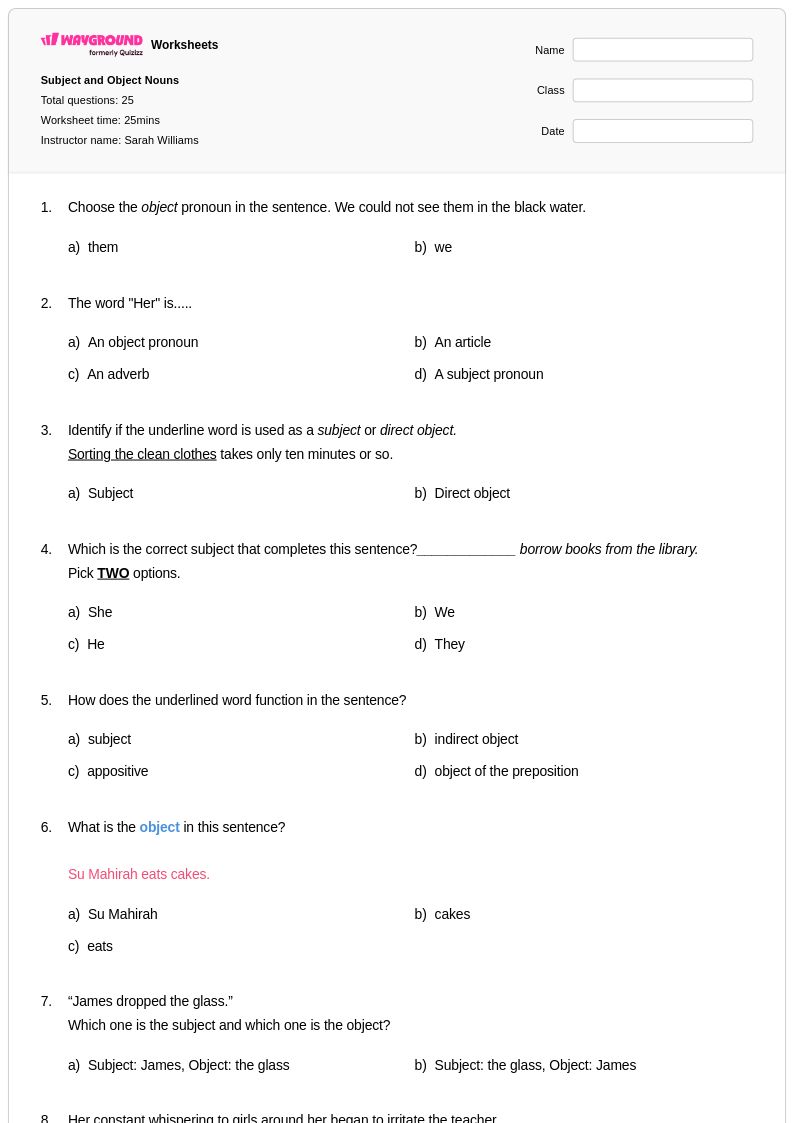
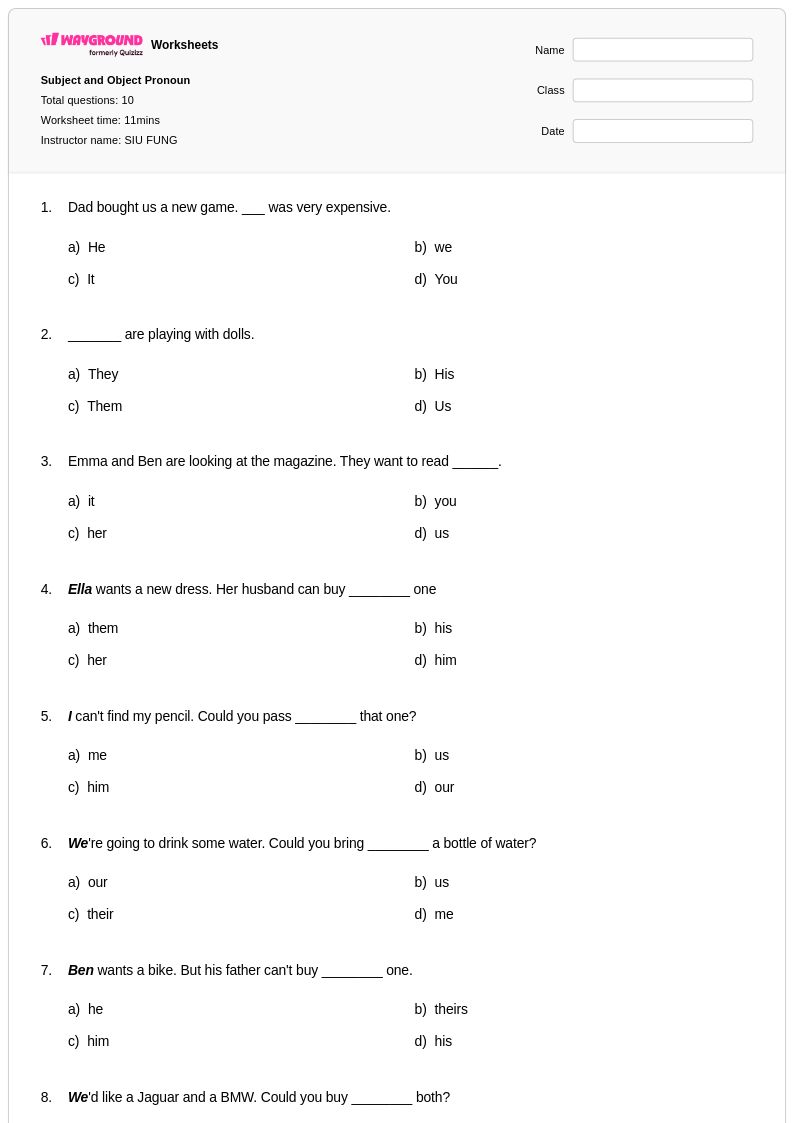
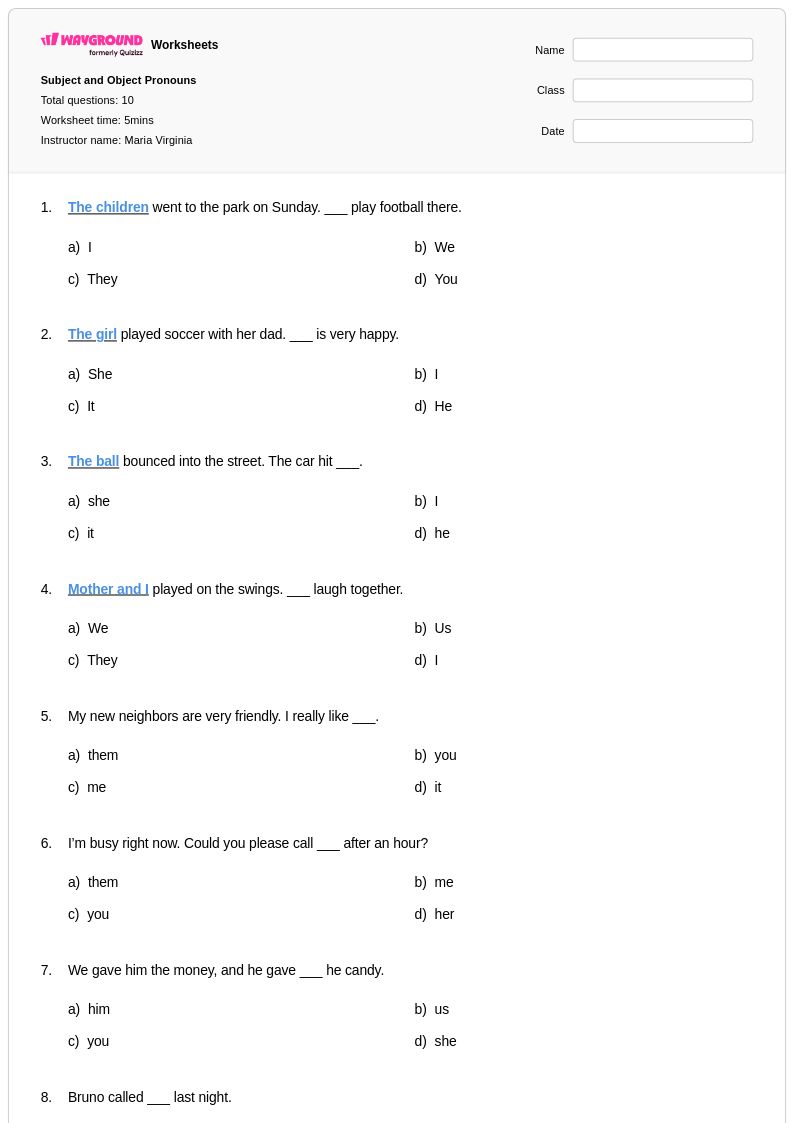
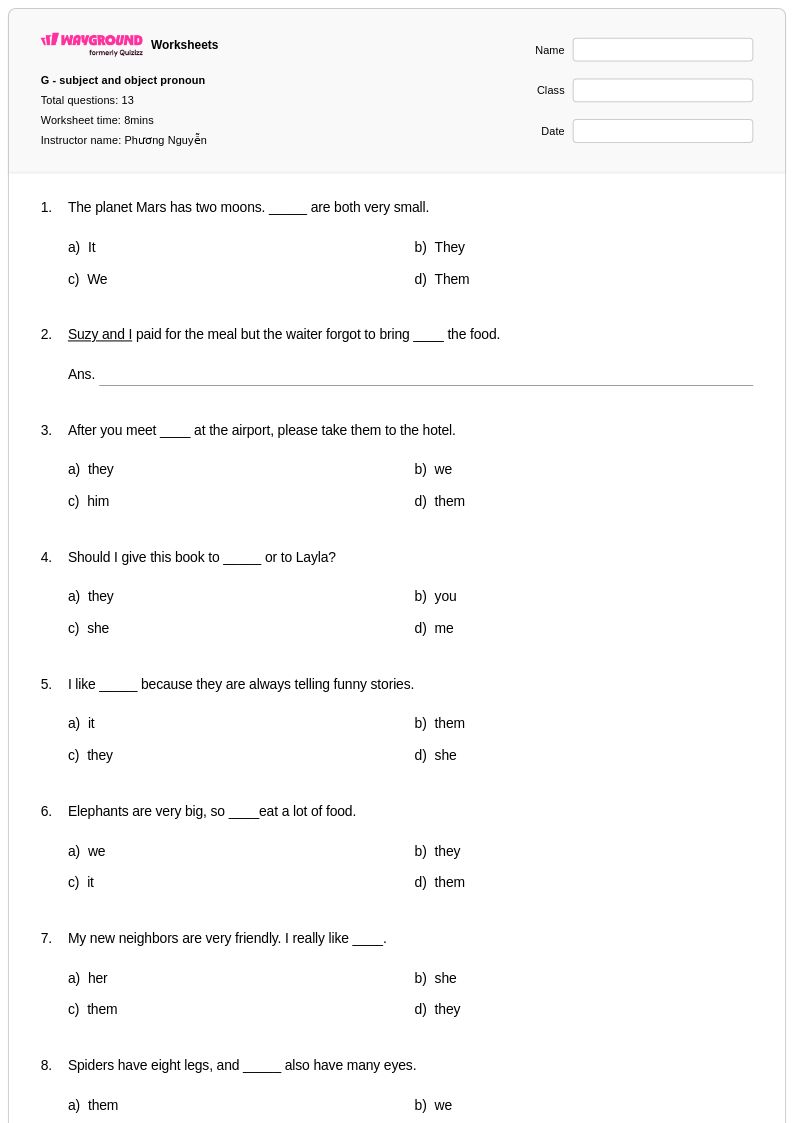
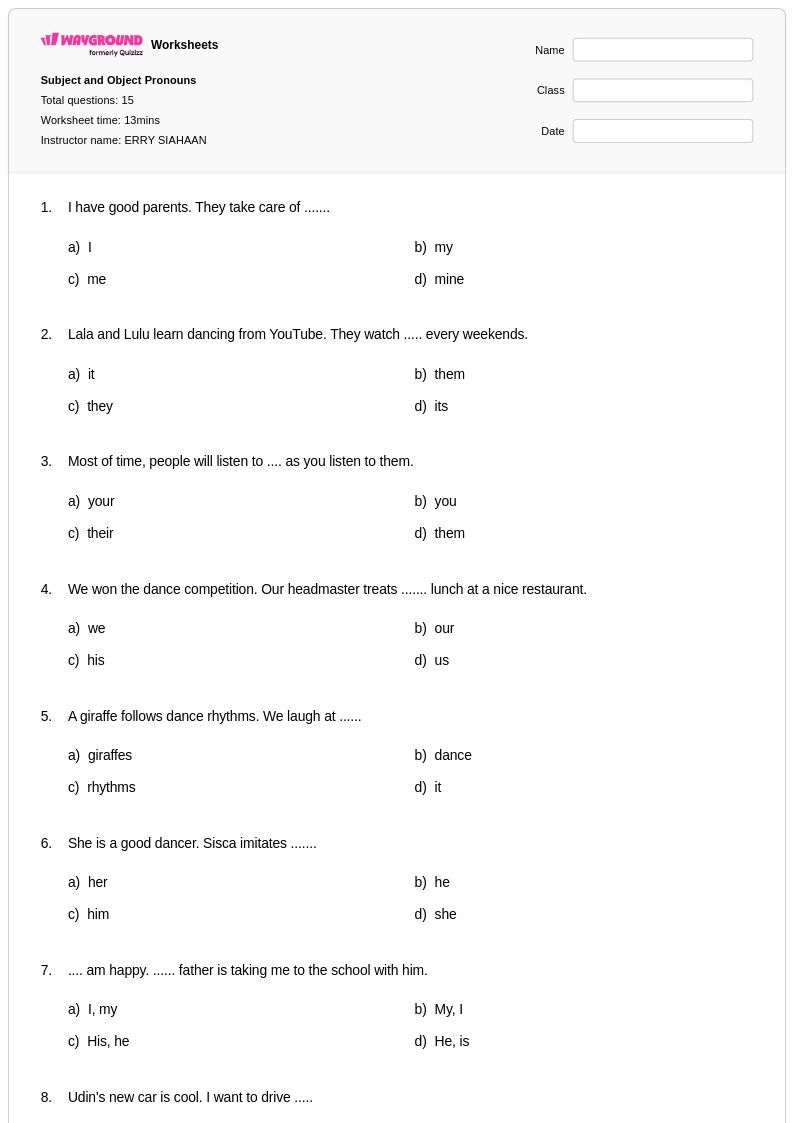
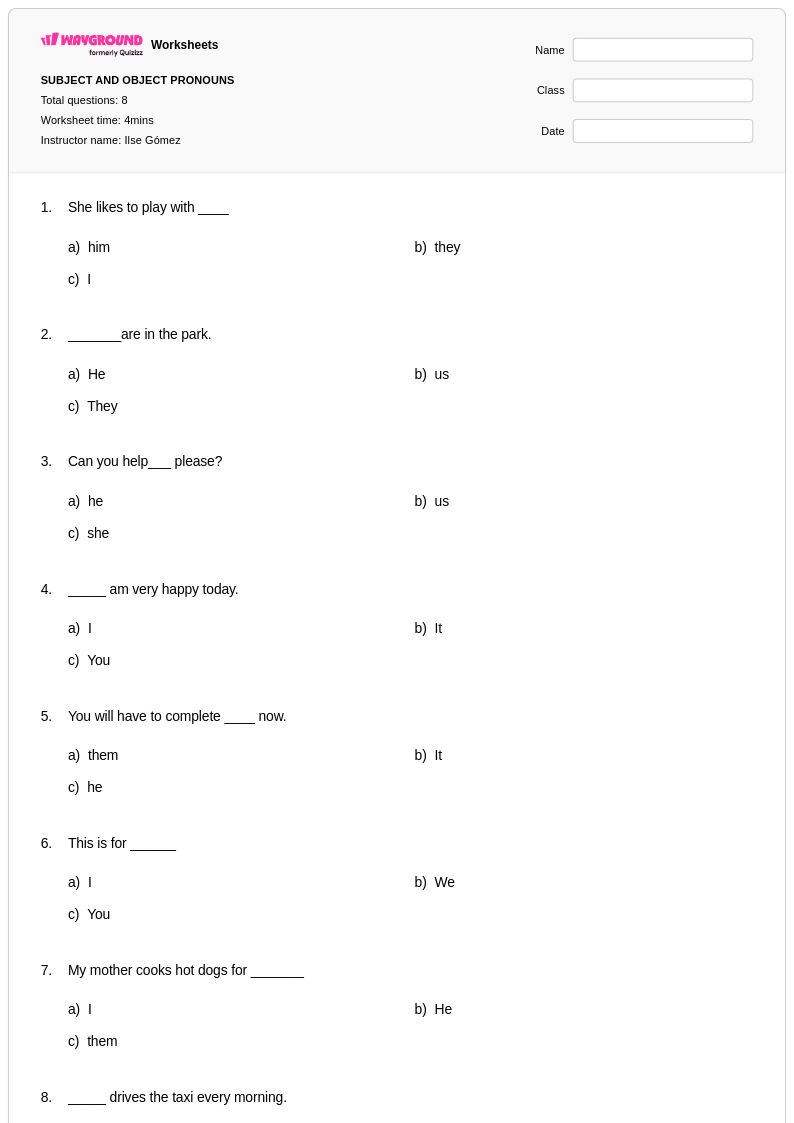
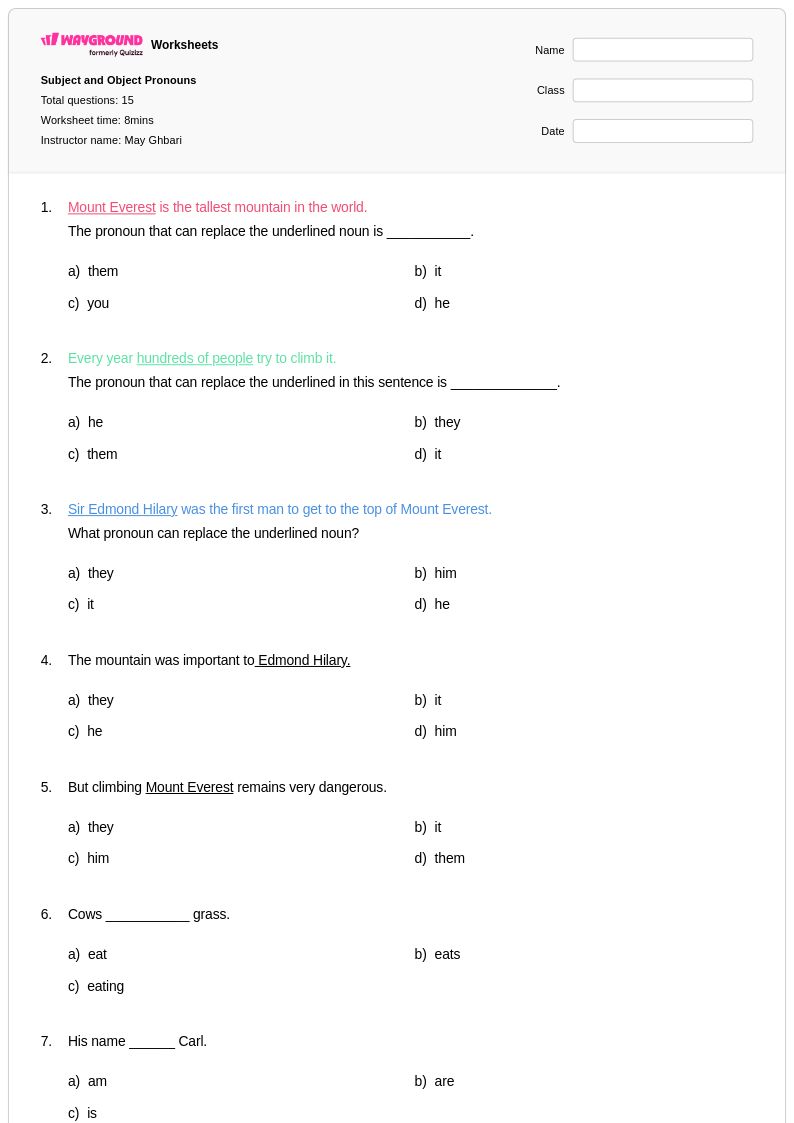
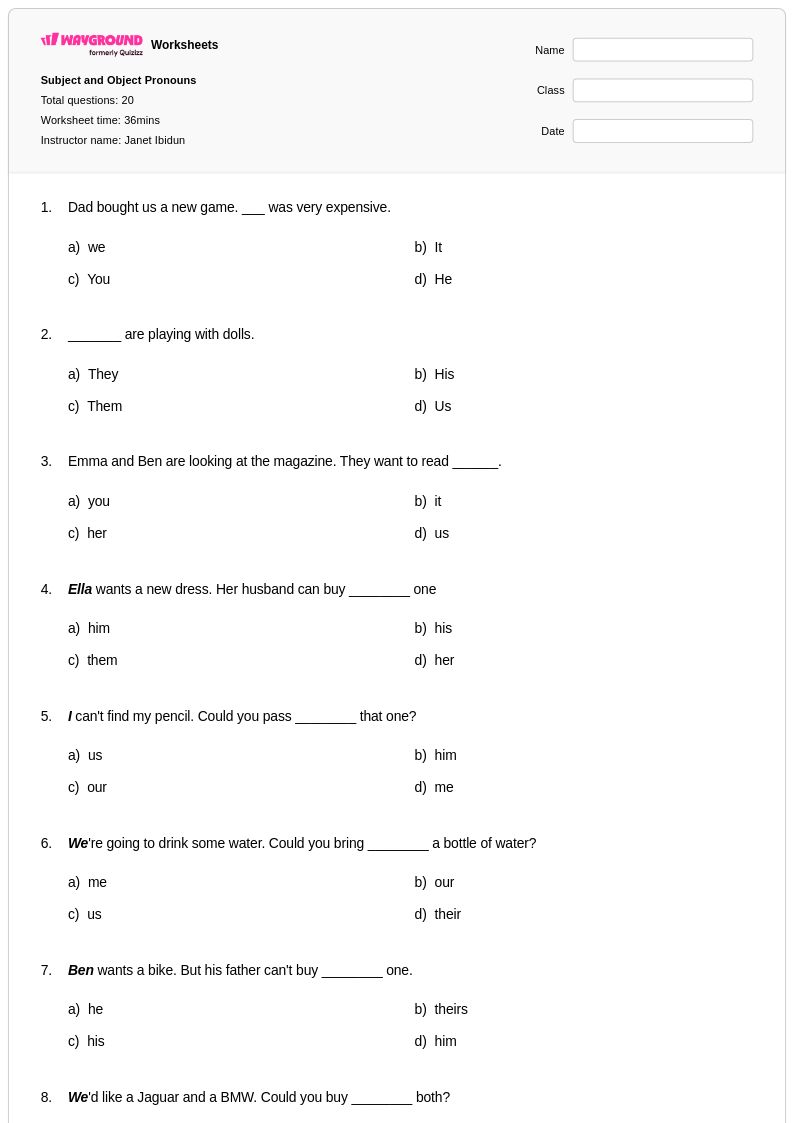
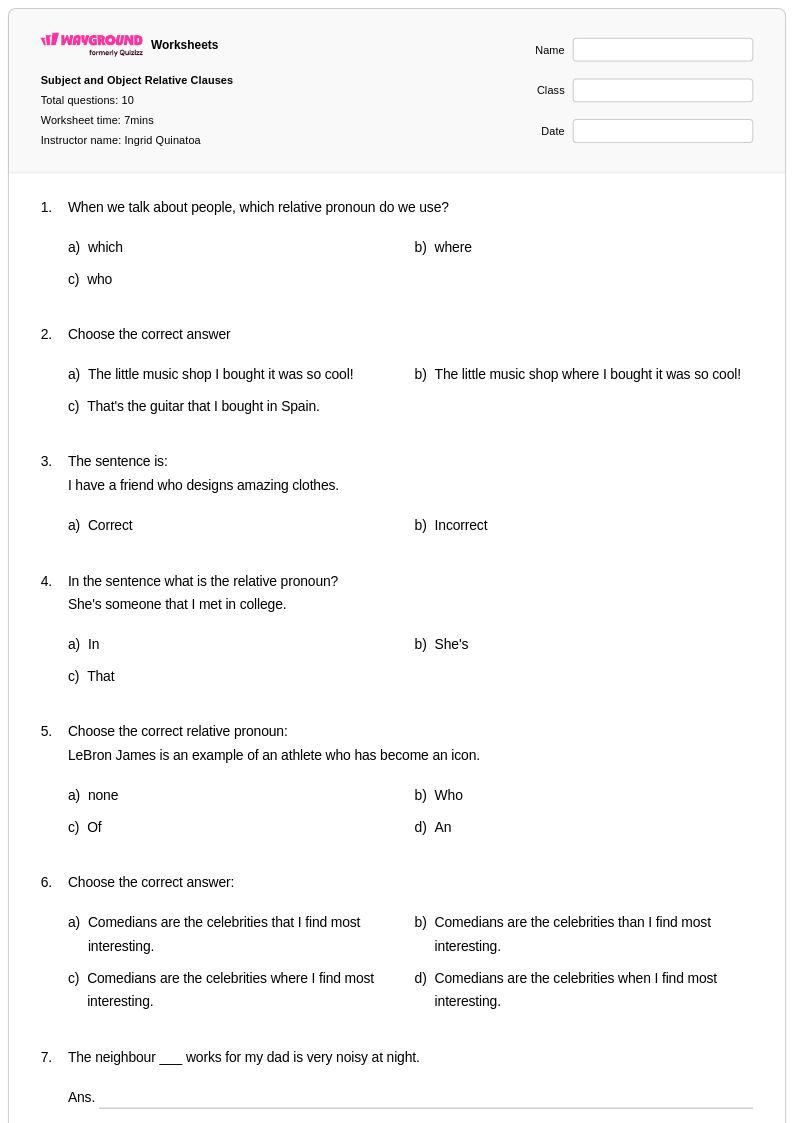
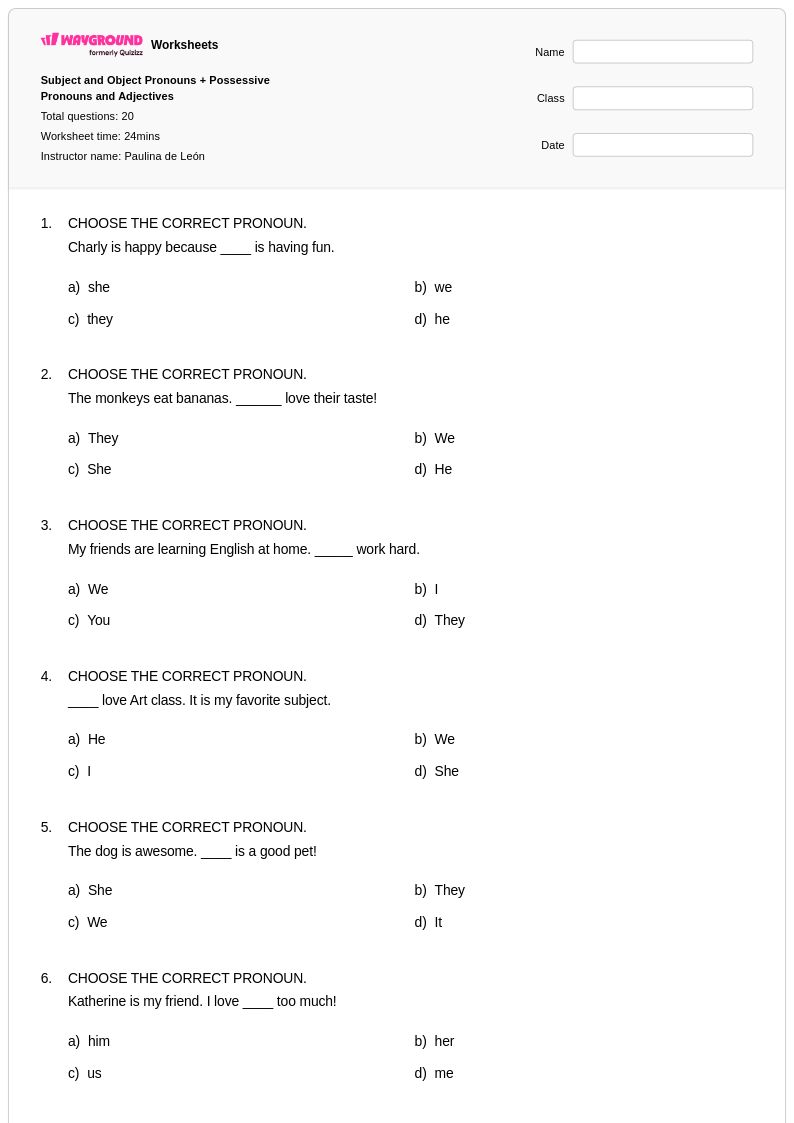
Subject and object worksheets for Year 3 students through Wayground (formerly Quizizz) provide essential practice in identifying and distinguishing between the two fundamental components of sentence structure. These comprehensive worksheets help third-grade learners develop critical grammar skills by teaching them to recognize who or what performs an action (the subject) and who or what receives the action (the object) within sentences. Students work through carefully designed practice problems that progressively build their understanding of how subjects and objects function in different sentence patterns, from simple declarative statements to more complex constructions appropriate for their grade level. Each worksheet comes with a complete answer key, making it easy for educators to assess student progress and provide immediate feedback, while the free printable format ensures accessibility for classroom use and homework assignments.
Wayground's extensive collection of subject and object worksheets draws from millions of teacher-created resources, providing educators with a robust selection of materials that align with Year 3 grammar standards and learning objectives. The platform's advanced search and filtering capabilities allow teachers to quickly locate worksheets that match their specific instructional needs, whether for initial skill introduction, remediation support, or enrichment activities for advanced learners. These differentiated materials are available in both printable pdf format and interactive digital versions, giving educators the flexibility to customize lessons based on their classroom setup and individual student requirements. Teachers can seamlessly integrate these worksheets into their grammar instruction for targeted skill practice, formative assessment, or independent work stations, ensuring that students receive the focused practice necessary to master the distinction between subjects and objects in sentence construction.
FAQs
How do I teach students to identify subjects and objects in a sentence?
Start by anchoring the concept in action: the subject is who or what performs the action, and the object is who or what receives it. A reliable classroom strategy is to have students find the verb first, then ask 'Who is doing this?' to locate the subject and 'Who or what is affected?' to locate the object. Using simple, high-interest sentences before moving to complex constructions helps students internalize the pattern before applying it more broadly.
What exercises help students practice identifying subjects and objects?
Effective practice exercises include sentence labeling tasks where students underline or circle the subject and object, sentence transformation activities where they rewrite sentences and track how subject-object roles shift, and error correction tasks where they fix misidentified grammatical roles. Progressing from simple sentences to those with compound subjects, prepositional phrases, or indirect objects ensures students build skill incrementally rather than hitting a wall when complexity increases.
What mistakes do students commonly make when identifying subjects and objects?
One of the most common errors is confusing the subject with the first noun in a sentence, especially when a sentence begins with a prepositional phrase (e.g., 'In the morning, the dog barked'). Students also frequently misidentify indirect objects as direct objects, or overlook the subject entirely in imperative sentences where it is implied. Explicitly teaching students to locate the verb first and work outward significantly reduces these error patterns.
How can I use subject and object worksheets to support different skill levels in my class?
Subject and object worksheets can be tiered by sentence complexity: struggling students benefit from worksheets using short, active-voice sentences with familiar vocabulary, while advanced learners should work with sentences containing relative clauses, passive constructions, or multiple objects. On Wayground, teachers can apply accommodations such as reduced answer choices for students who need less cognitive load, or enable Read Aloud so questions are read to students who struggle with decoding, ensuring every learner can engage with the grammar content meaningfully.
How do I use Wayground's subject and object worksheets in my classroom?
Wayground's subject and object worksheets are available as printable PDFs for traditional classroom use and in digital formats for technology-integrated environments, giving teachers flexibility across instructional settings. Teachers can also host worksheets directly as a quiz on Wayground, enabling real-time student responses and instant feedback. Each worksheet includes a complete answer key, so they work equally well for guided instruction, independent practice, or homework assignments.
How are subjects and objects different from other grammatical terms like predicate or complement?
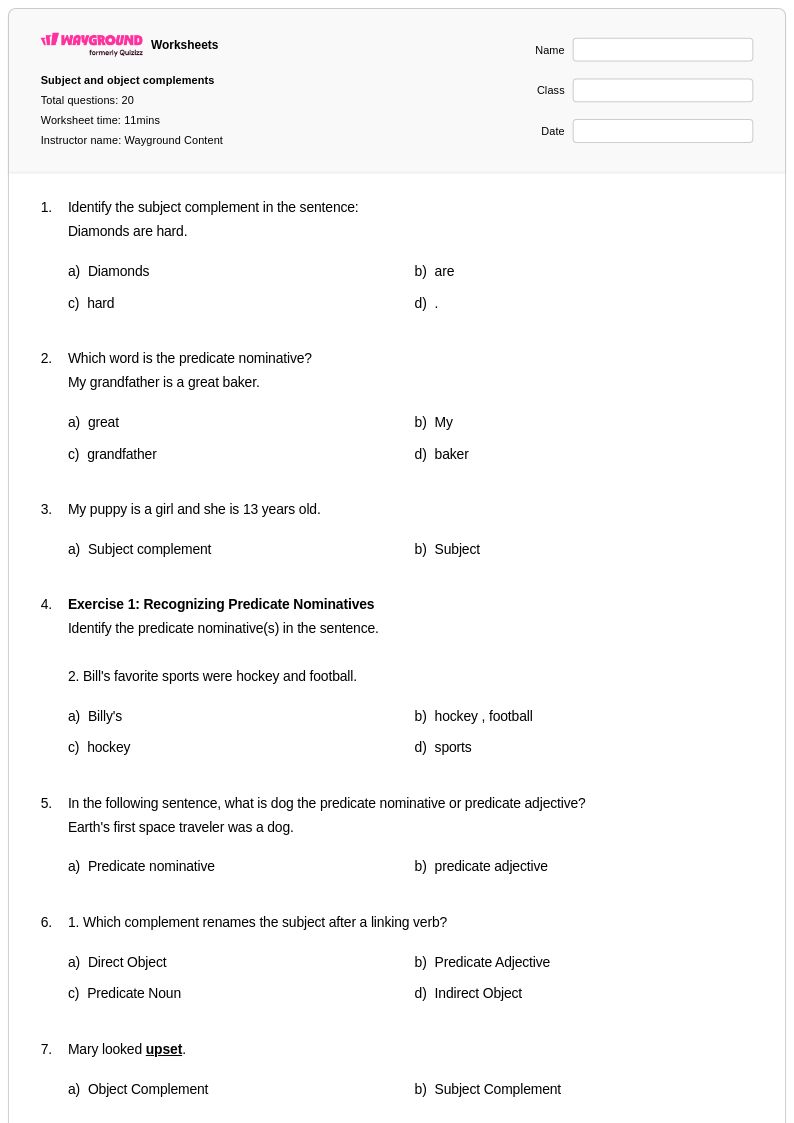
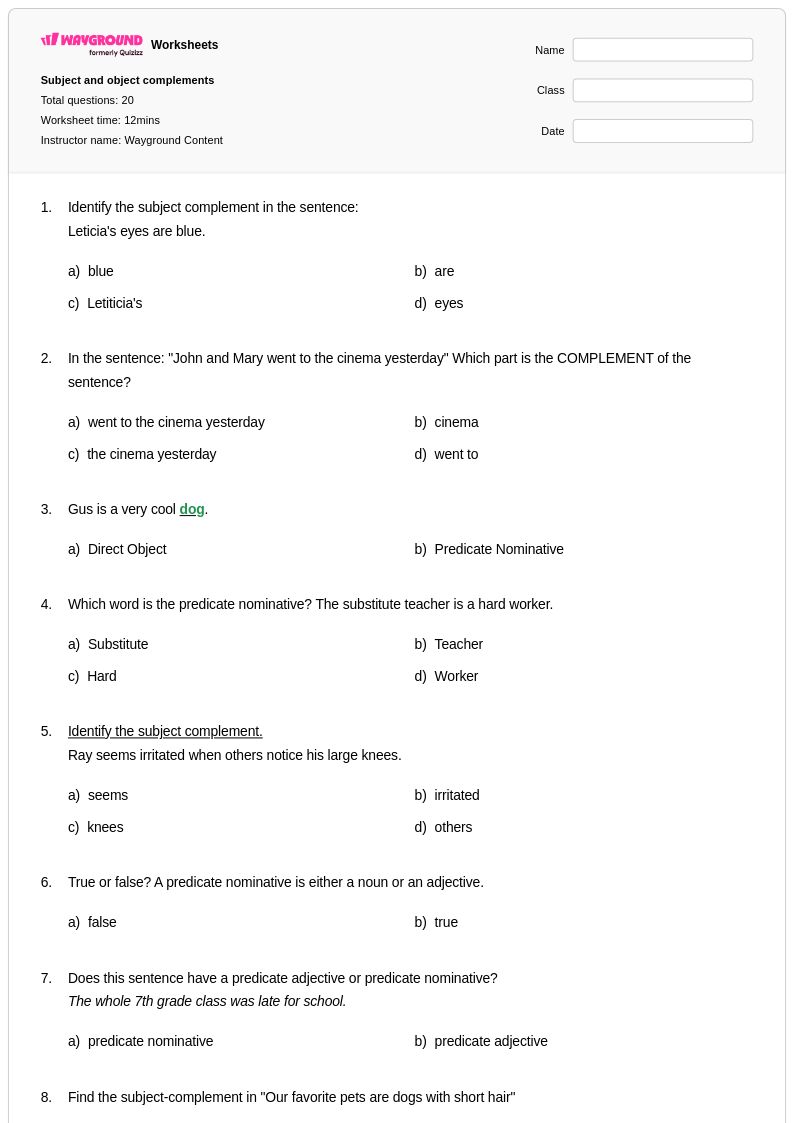
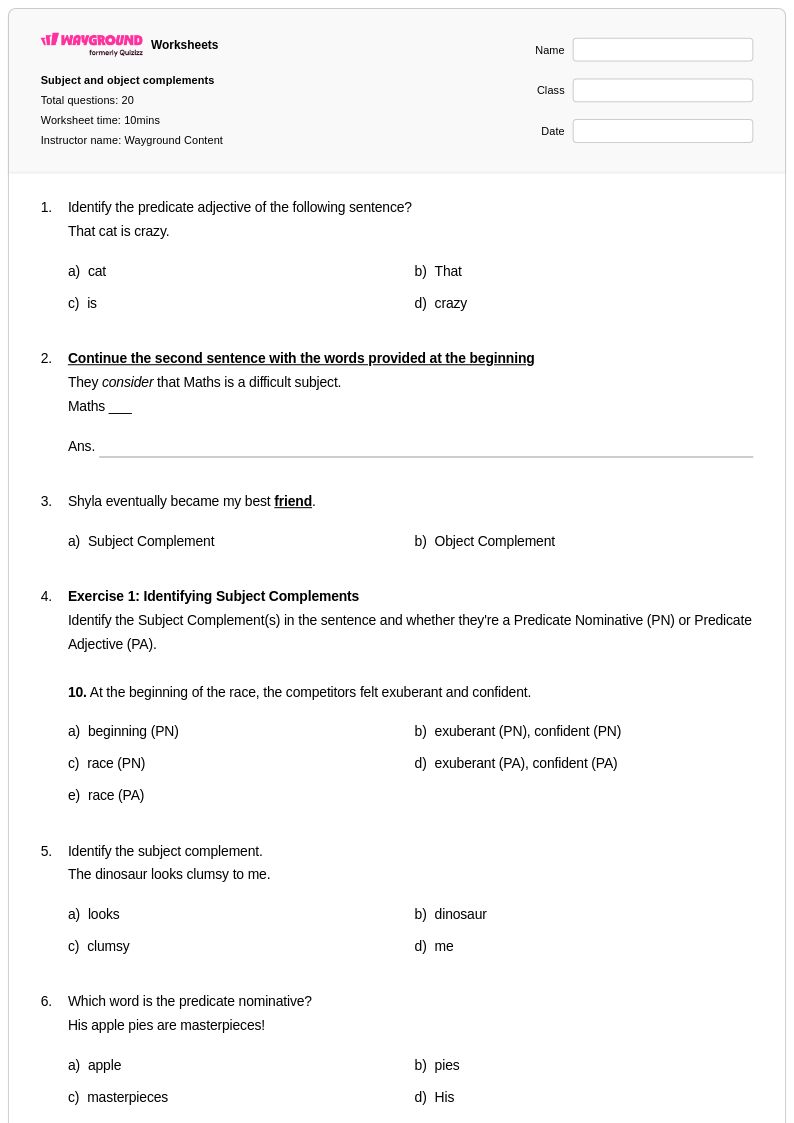
The subject is the noun or pronoun that performs the action, while the predicate is everything else in the sentence, including the verb and its objects or complements. An object is specifically the noun that receives the action of the verb, whereas a complement describes or renames the subject or object rather than receiving action. Keeping these distinctions clear in instruction prevents students from conflating overlapping terms, which is a common source of confusion in grammar units.