Free Printable Narrative Writing Worksheets for Year 2
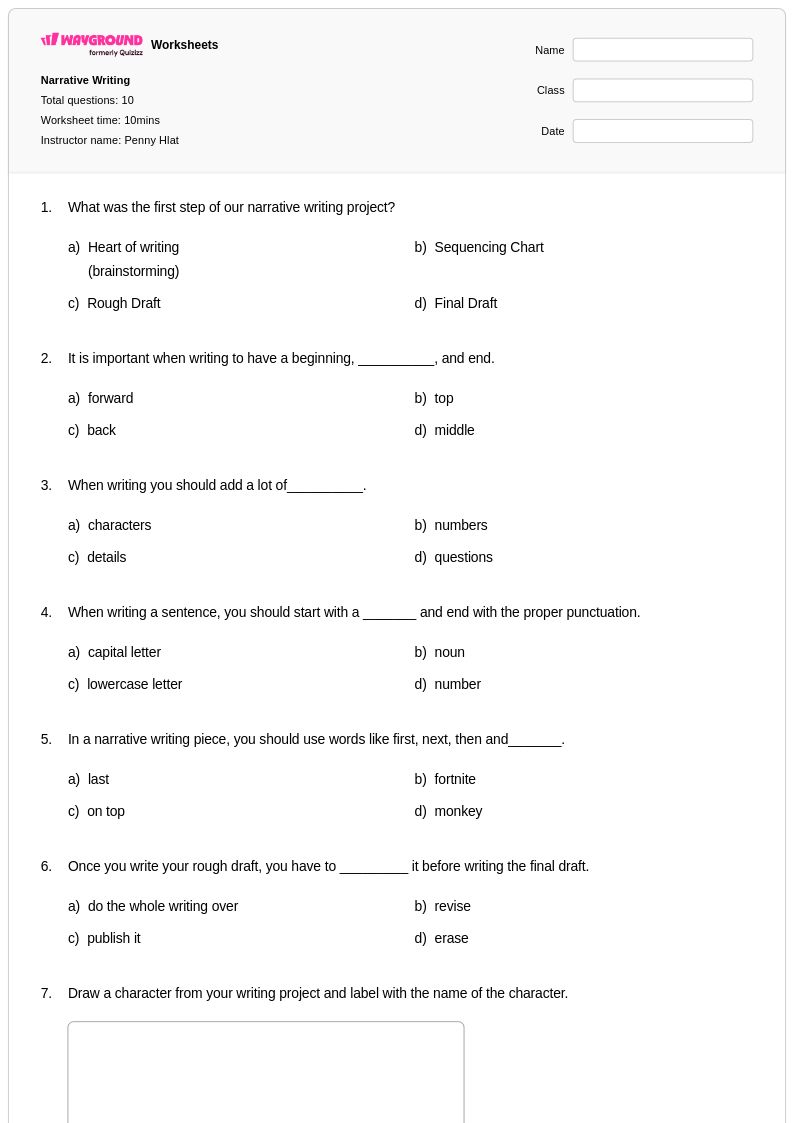
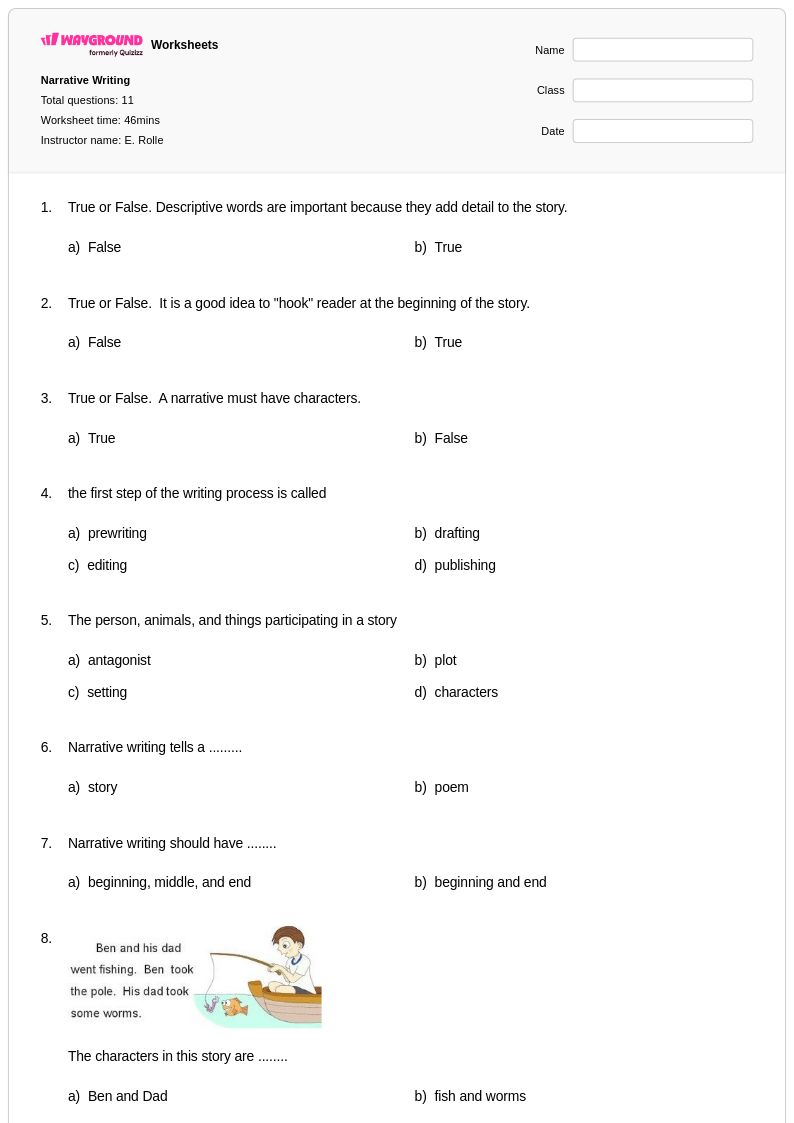
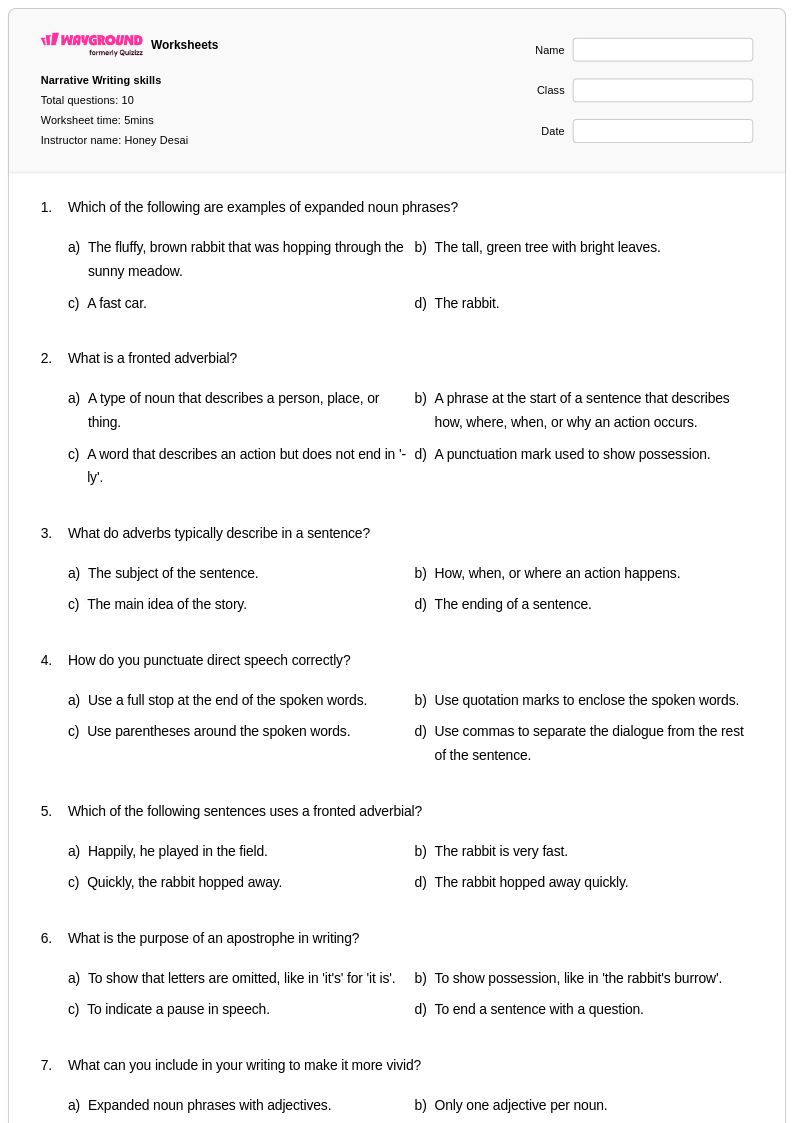
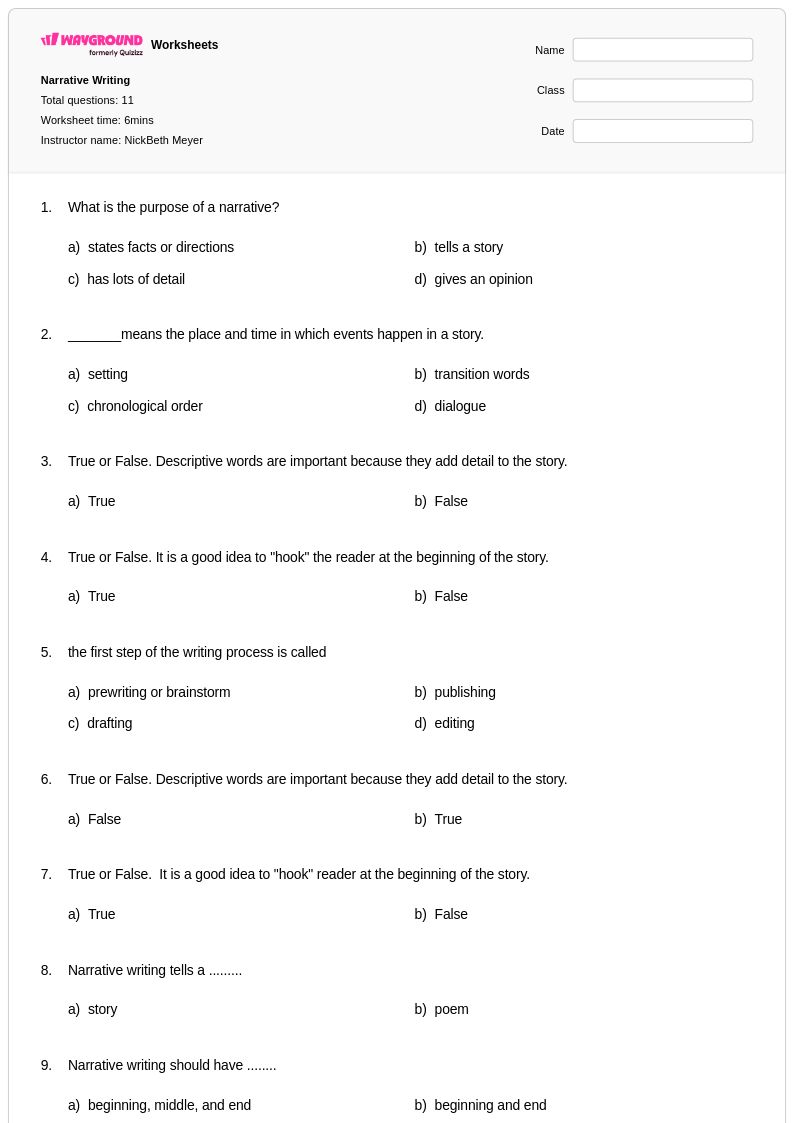
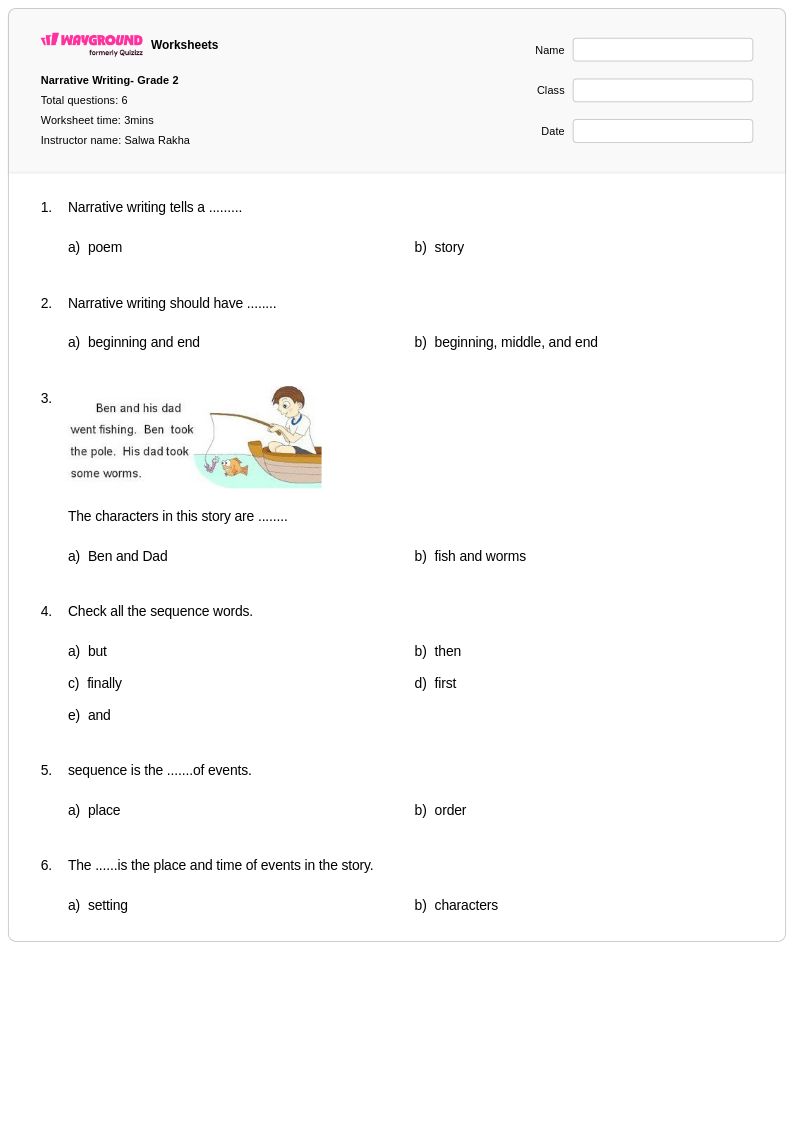
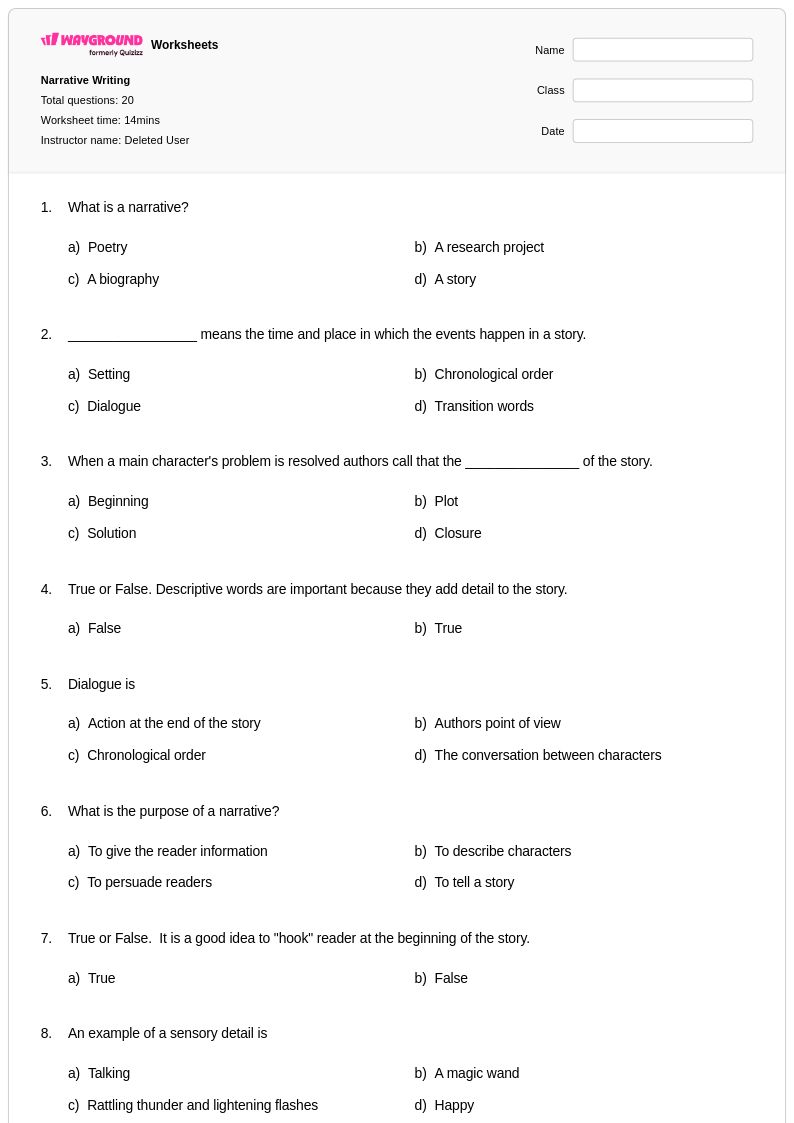
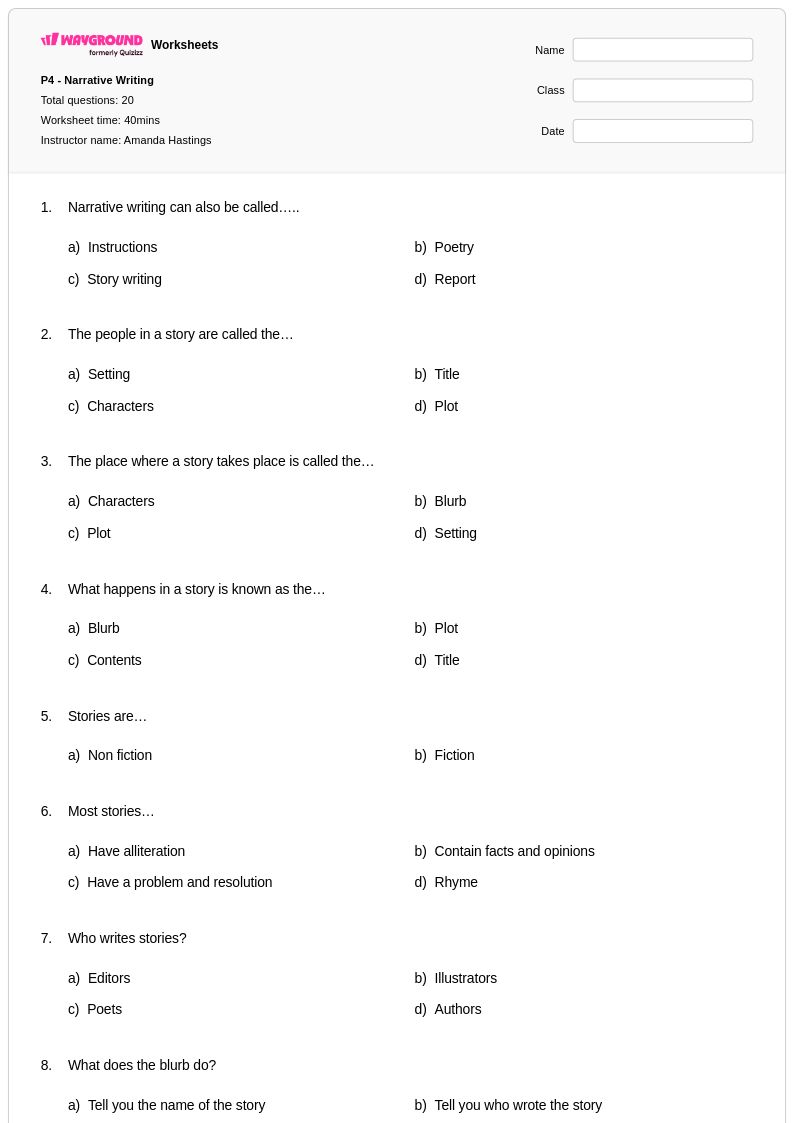
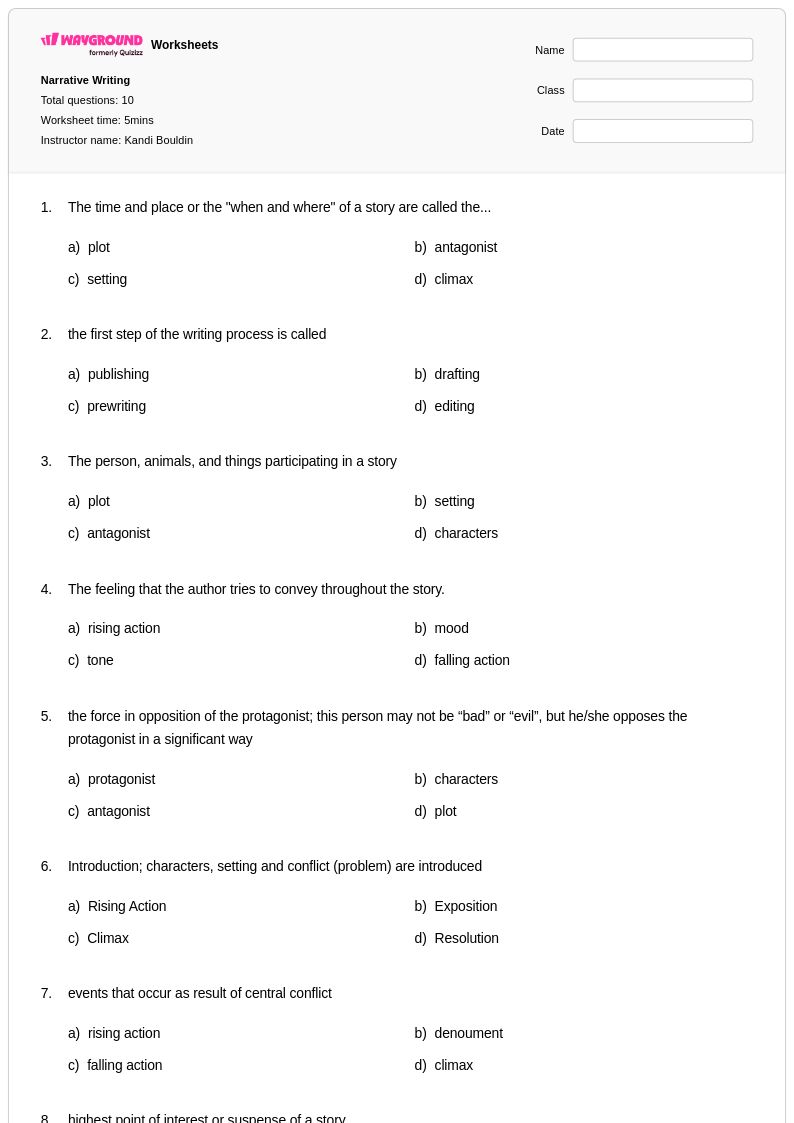
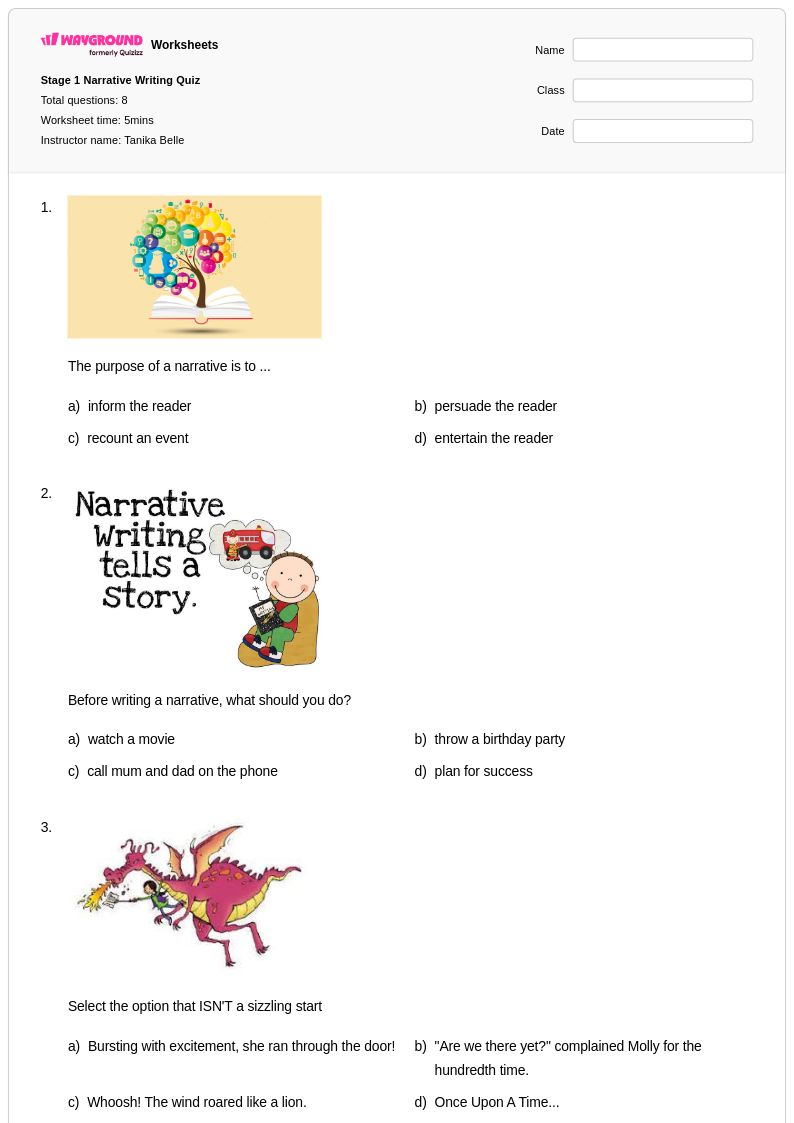
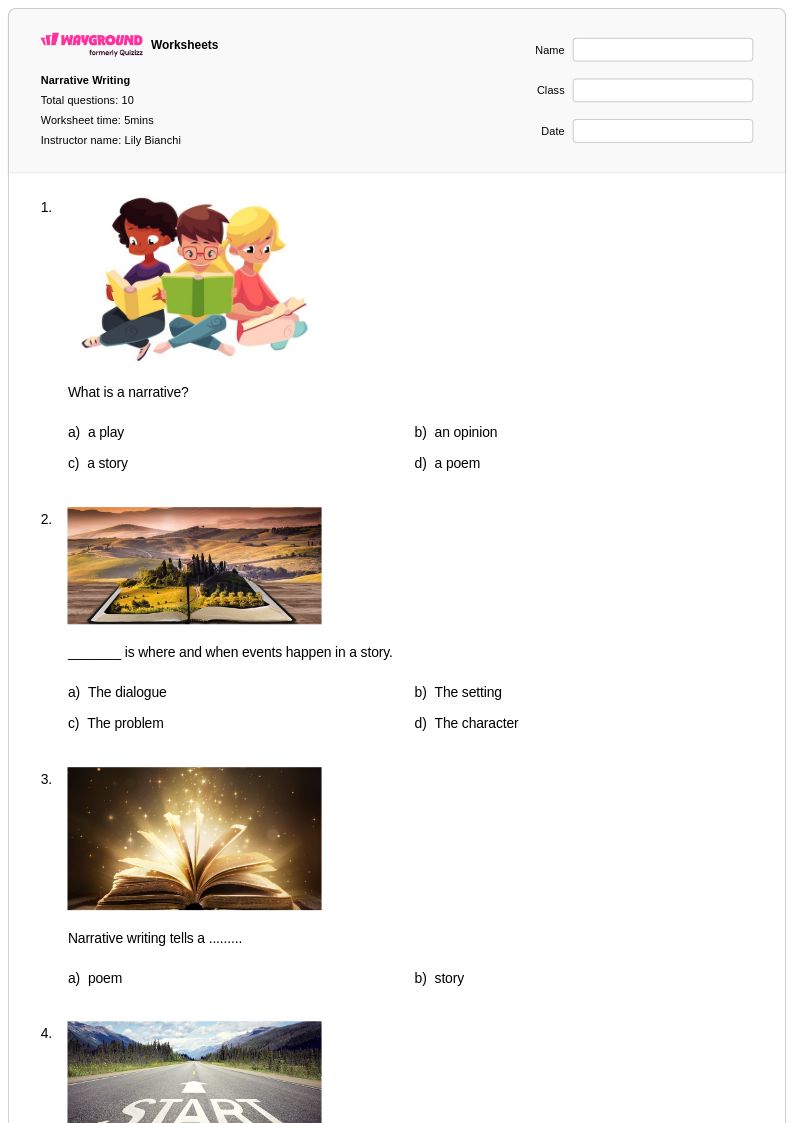
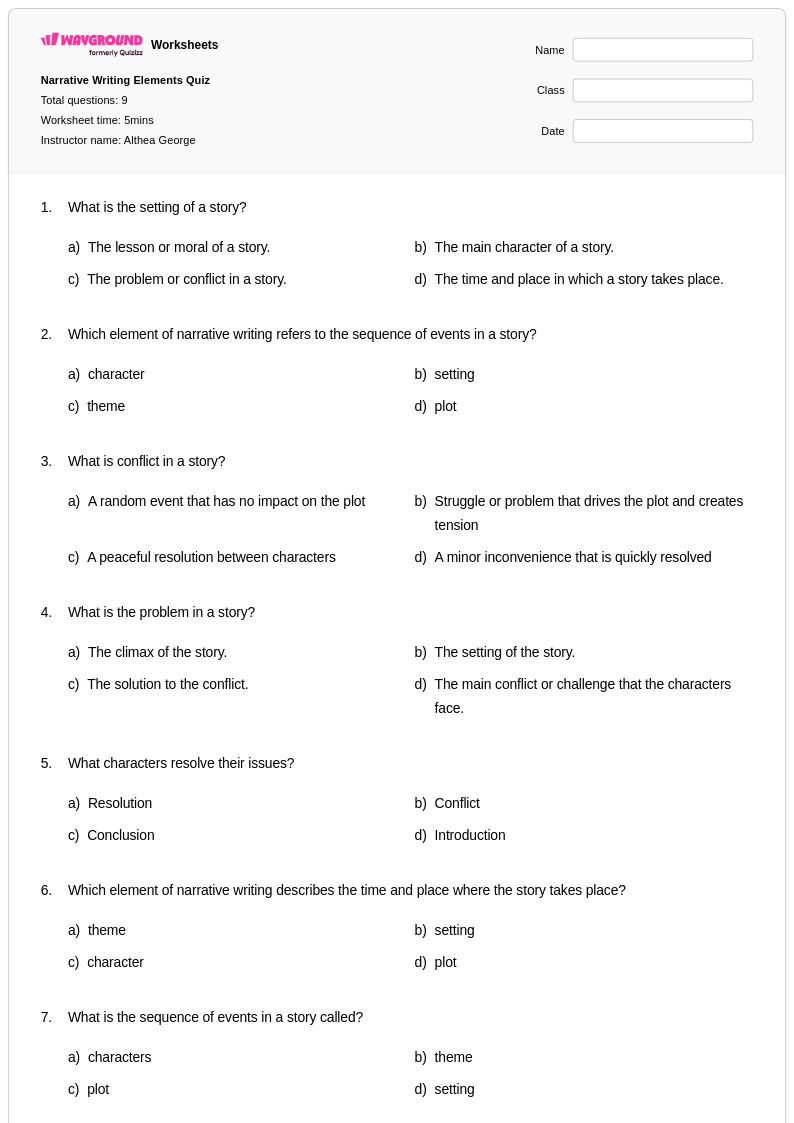
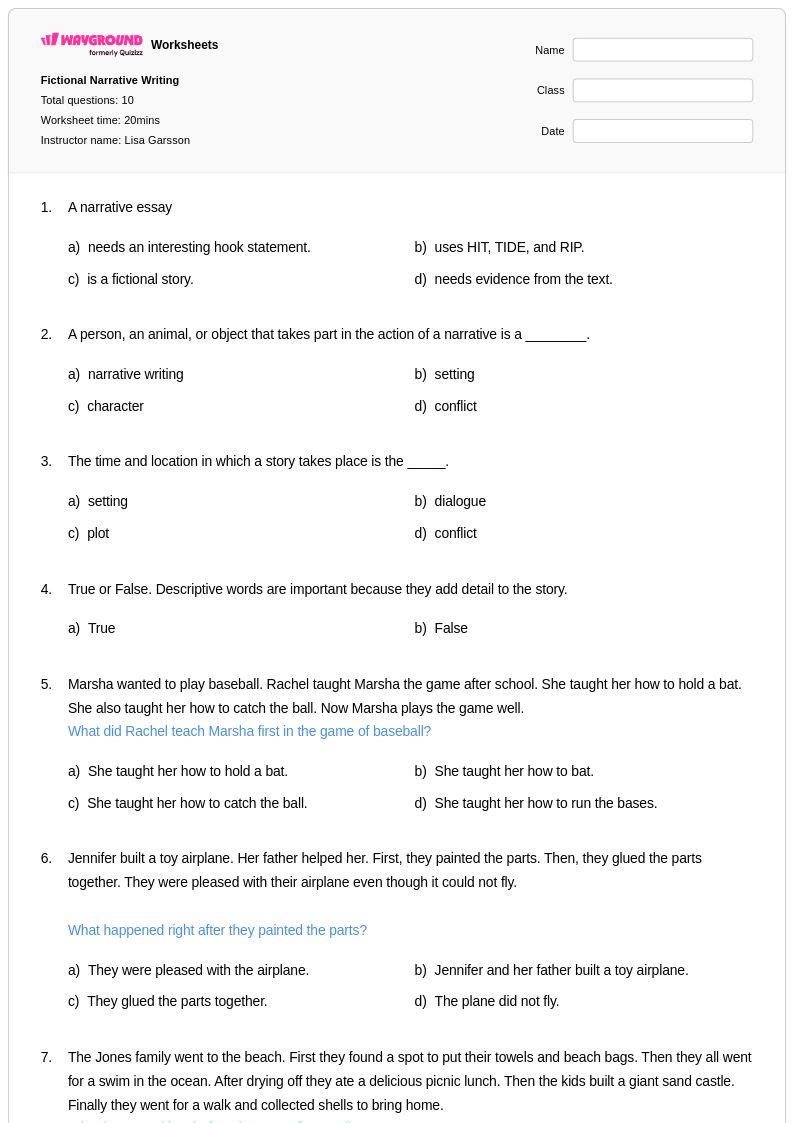
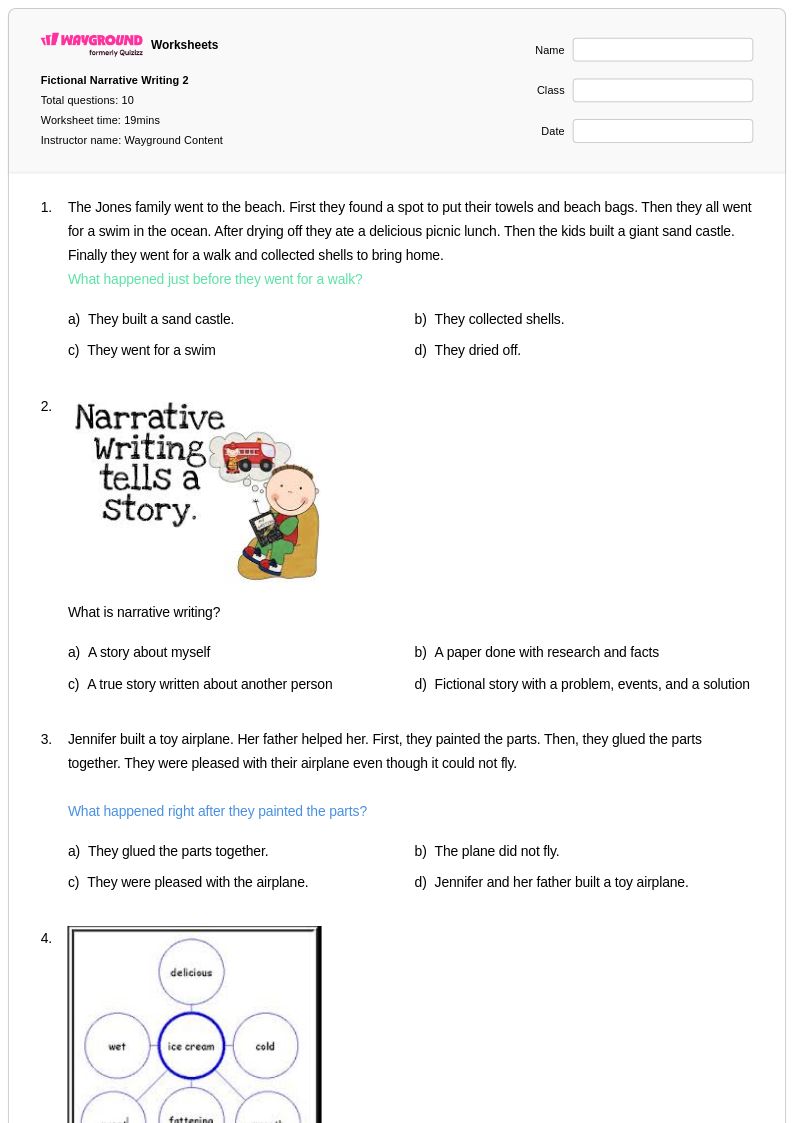
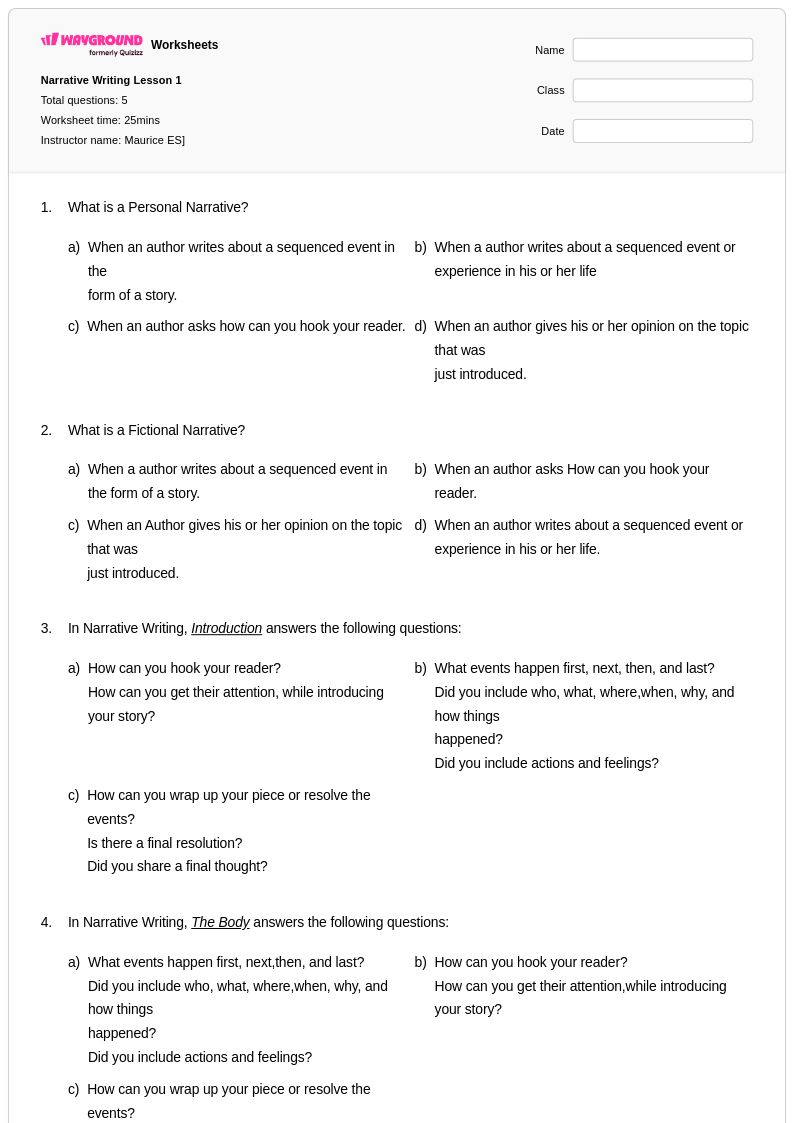
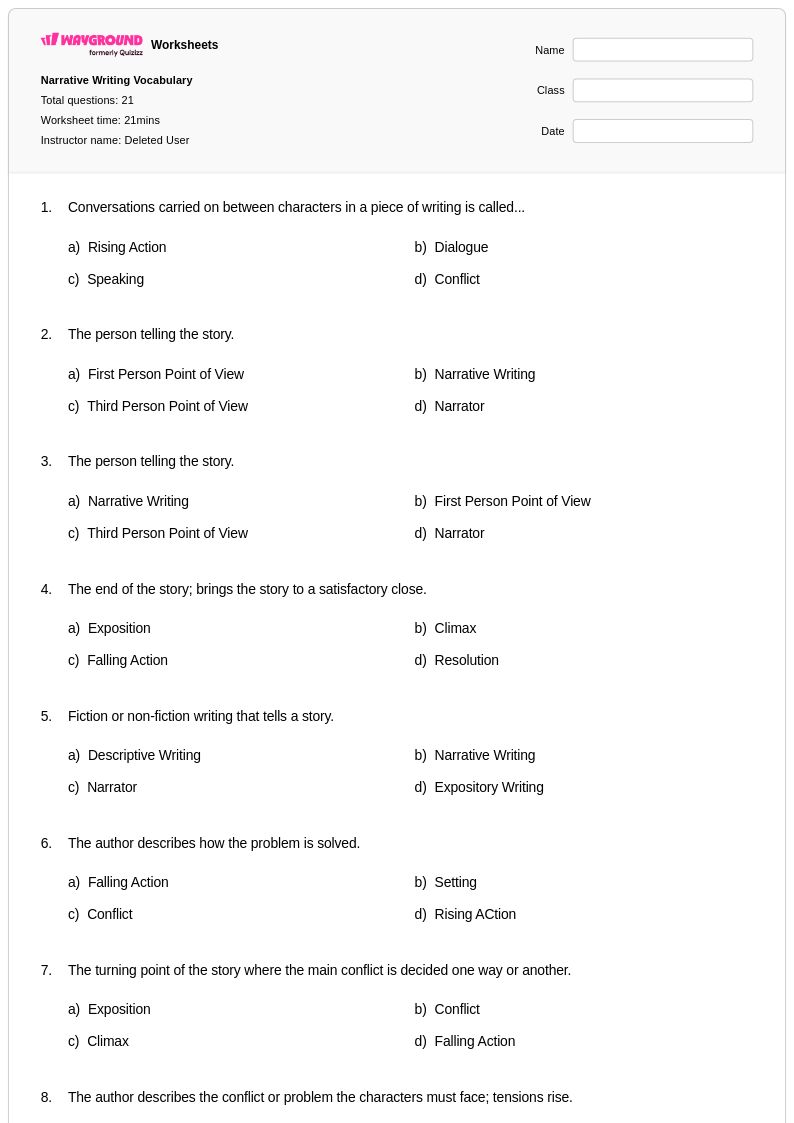
Wayground's free Year 2 narrative writing worksheets and printables help young students practice storytelling skills through engaging exercises, complete with answer keys and downloadable PDFs.
Explore printable Narrative Writing worksheets for Year 2
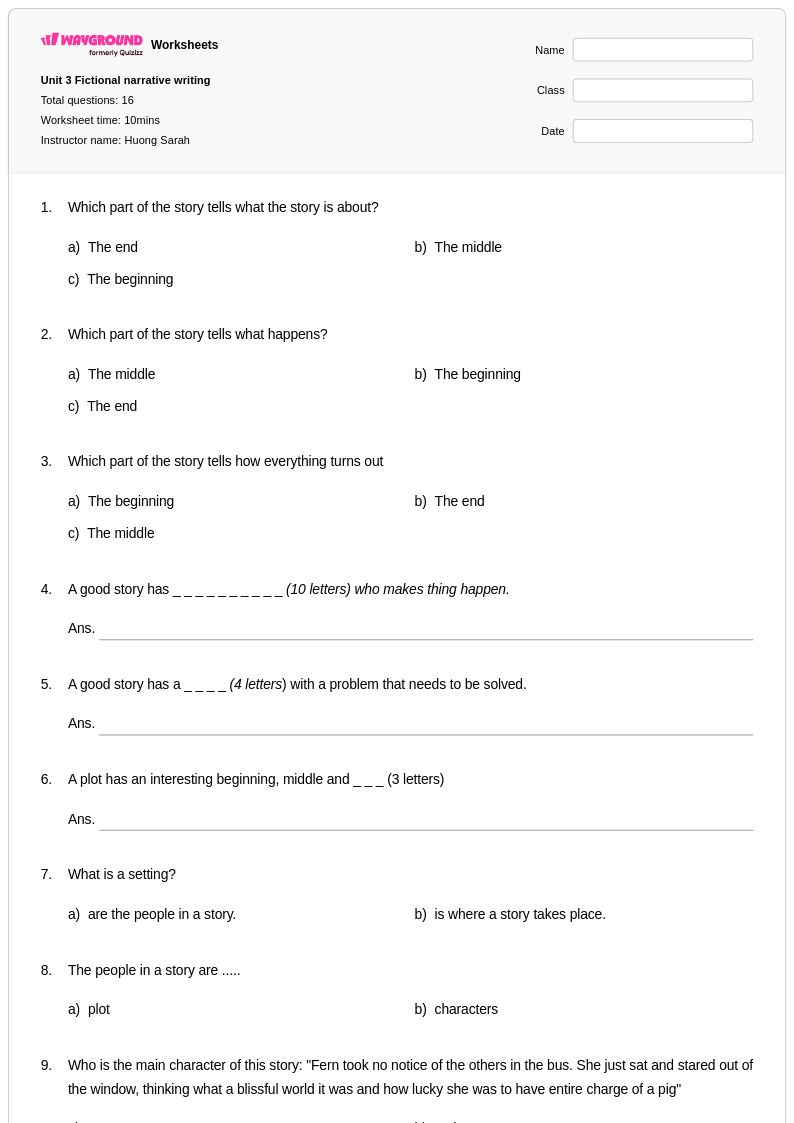
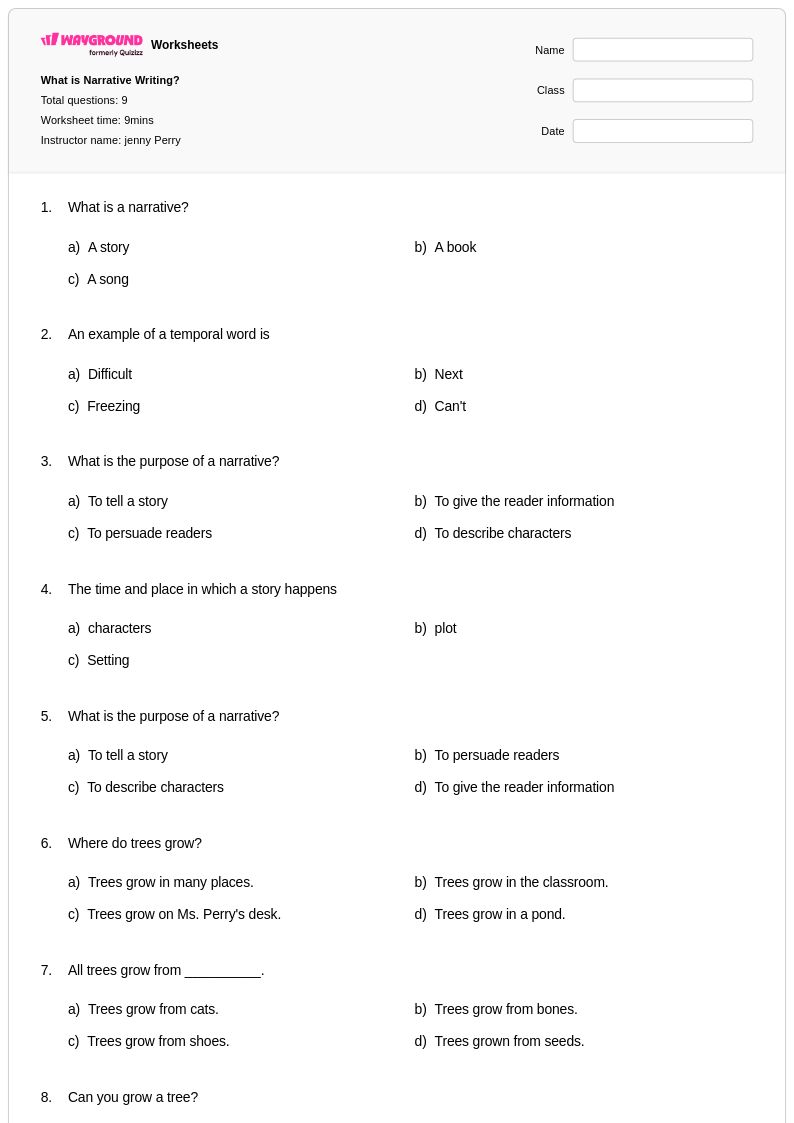
Year 2 narrative writing worksheets available through Wayground (formerly Quizizz) provide young students with structured opportunities to develop their storytelling abilities within nonfiction contexts. These carefully designed resources help second graders master essential skills including sequencing events chronologically, incorporating factual details into personal narratives, and using descriptive language to engage readers. Students practice writing about real experiences such as family traditions, school events, or community observations while learning to organize their thoughts with clear beginnings, middles, and endings. Each worksheet includes comprehensive practice problems that guide students through the narrative writing process, complete with answer keys that allow teachers to provide targeted feedback. These free printables emphasize age-appropriate writing conventions including proper sentence structure, basic punctuation, and grade-level vocabulary development.
Wayground (formerly Quizizz) empowers educators with millions of teacher-created narrative writing resources specifically aligned to Year 2 standards and developmental expectations. The platform's robust search and filtering capabilities enable teachers to quickly locate worksheets that match their students' skill levels and curricular requirements, whether for whole-class instruction, small group remediation, or individual enrichment activities. Flexible customization tools allow educators to modify existing materials or create differentiated versions that accommodate diverse learning needs within their classrooms. These comprehensive worksheet collections are available in both printable pdf formats for traditional paper-and-pencil activities and digital formats for technology-integrated lessons, supporting seamless lesson planning and implementation. Teachers can confidently use these resources to provide consistent skill practice, assess student progress in narrative writing development, and ensure their second graders build strong foundations in nonfiction storytelling techniques.
FAQs
How do I teach narrative writing to students who struggle with story structure?
Start by breaking narrative writing into discrete, scaffolded stages: brainstorming a personal experience, establishing a setting, introducing a conflict, building toward a climax, and writing a reflective conclusion. Anchor each stage with mentor texts so students can see how published writers handle transitions and pacing. Graphic organizers that map the narrative arc help visual learners internalize structure before they begin drafting. Teaching each component explicitly before asking students to integrate them reduces overwhelm and builds confidence.
What exercises help students practice narrative writing skills?
Structured practice exercises that walk students through individual narrative elements one at a time are most effective, such as writing only the setting paragraph, then only the dialogue exchange, then only the reflective conclusion. This isolates the skill so students can focus without juggling the entire piece simultaneously. Prompts grounded in personal experience tend to lower the barrier to entry because students already have content to draw from. Regular short writing bursts followed by peer feedback reinforce specific techniques like descriptive language and point of view consistency.
What mistakes do students commonly make in narrative writing?
The most common errors are chronological inconsistency, telling rather than showing, and weak or absent reflection at the end of a personal narrative. Students often recount events in a flat list without slowing down for the emotionally significant moments, which flattens the impact of the story. Point of view shifts mid-narrative are another frequent issue, especially when students are writing from first person and accidentally drift into second. Dialogue punctuation and formatting errors are also widespread at the middle school level.
How do I assess student progress in narrative writing beyond just grading a final draft?
Formative assessment works best when tied to individual narrative components rather than the whole piece, so consider collecting and giving feedback on isolated sections such as the opening hook, a single descriptive paragraph, or the concluding reflection. Rubrics that score chronological organization, descriptive language, point of view consistency, and dialogue separately give students specific, actionable feedback. Answer keys that model strong examples of each element let students self-assess against a clear benchmark, which also reduces the time teachers spend on written commentary.
How can I differentiate narrative writing instruction for students at different skill levels?
For struggling writers, reduce the complexity of the prompt by providing a partially completed graphic organizer or sentence starters that scaffold the opening and conclusion. Advanced writers benefit from enrichment tasks that push beyond structure, such as experimenting with non-linear timelines or unreliable narrators. On Wayground, teachers can apply individual accommodations such as read aloud support, reduced answer choices, and extended time to specific students, while the rest of the class works under default settings without any disruption or notification.
How do I use Wayground's narrative writing worksheets in my classroom?
Wayground's narrative writing worksheets are available as printable PDFs for traditional classroom use and in digital formats for technology-integrated environments, giving teachers flexibility depending on their setting. Teachers can also host worksheets as a quiz directly on Wayground, making it easy to assign, collect, and review student work in one place. Each worksheet includes a detailed answer key, so teachers can assess student responses efficiently and share clear examples of effective narrative techniques with the class.