Free Printable Nerve Impulse Worksheets for Year 11
Explore Wayground's comprehensive Year 11 nerve impulse worksheets and printables that help students master action potentials, synaptic transmission, and neural communication through engaging practice problems with complete answer keys.
Explore printable Nerve Impulse worksheets for Year 11
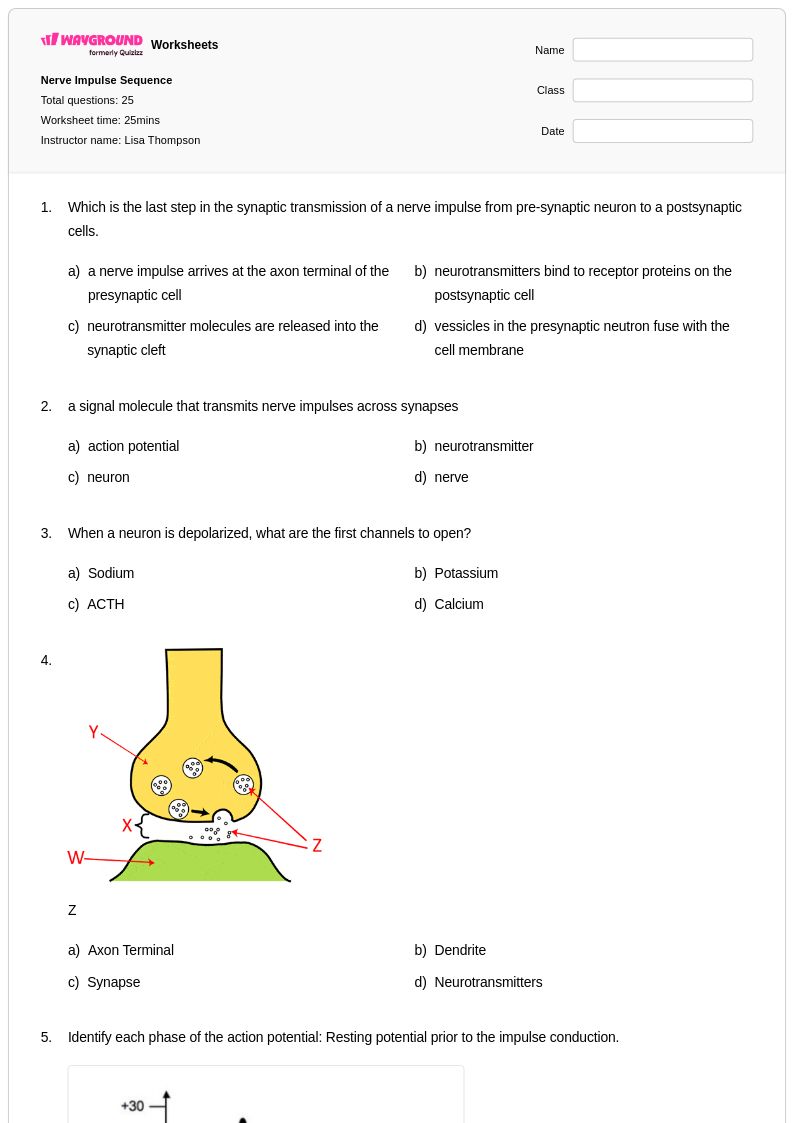
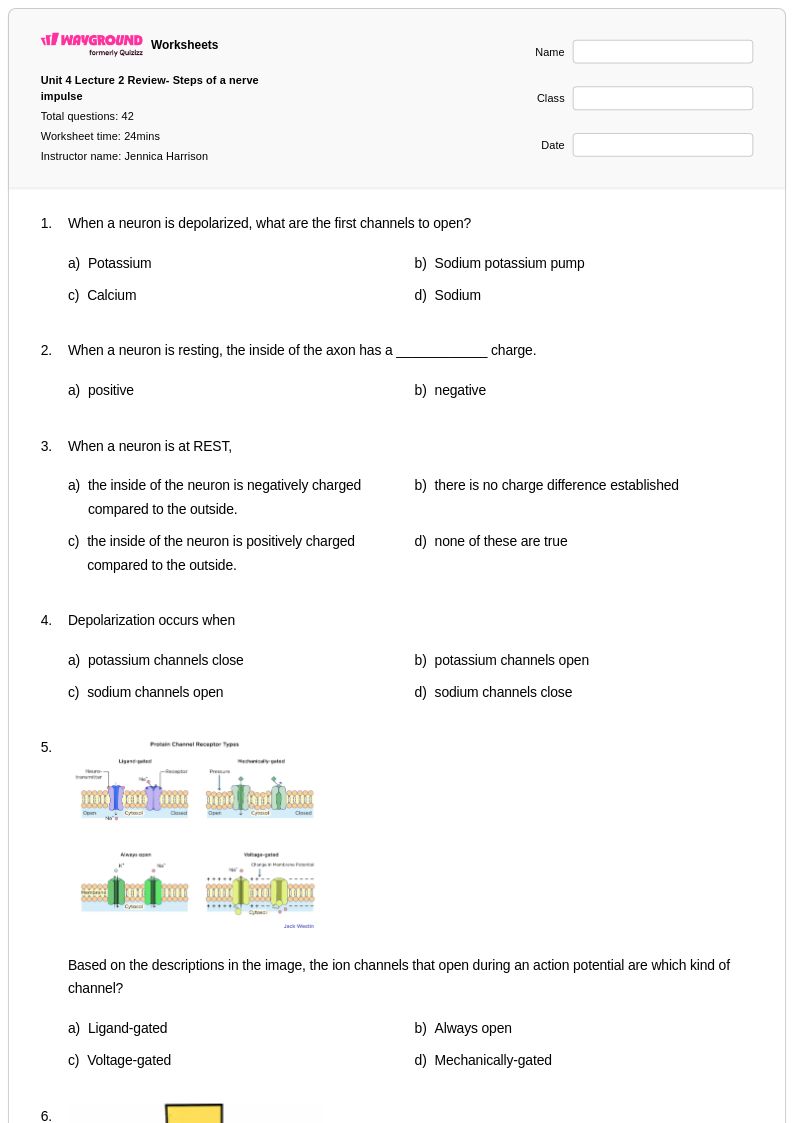
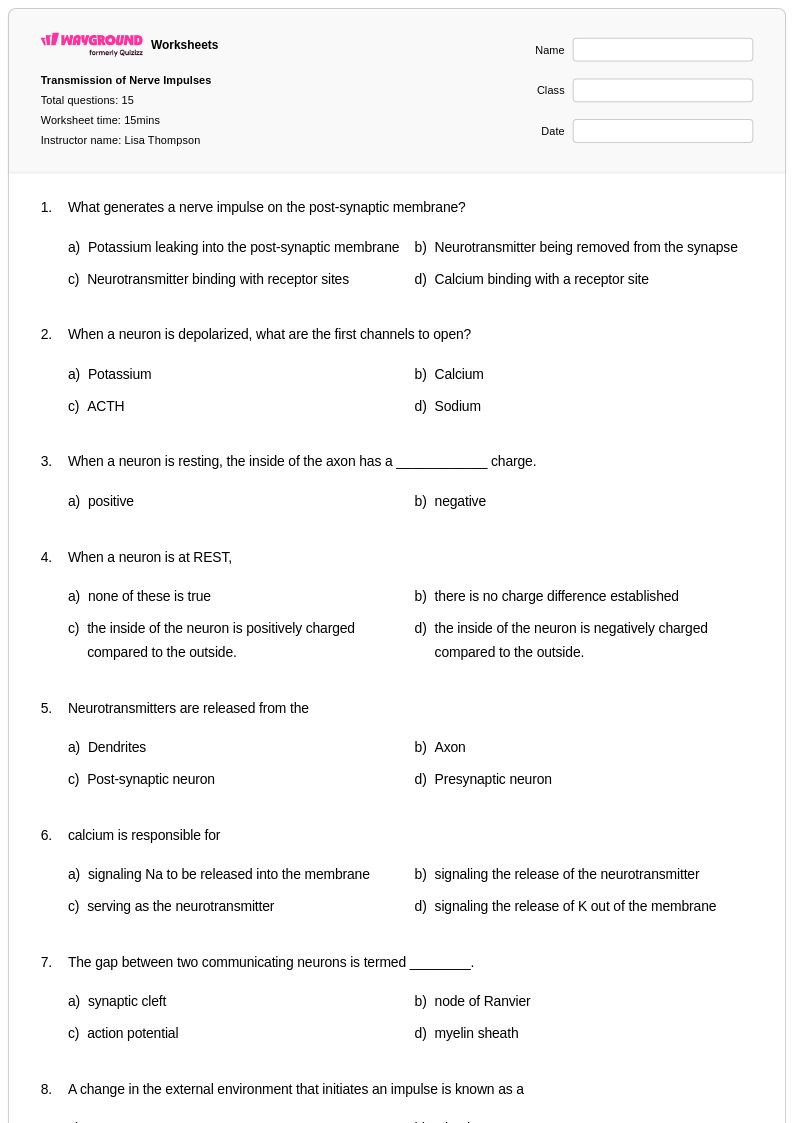
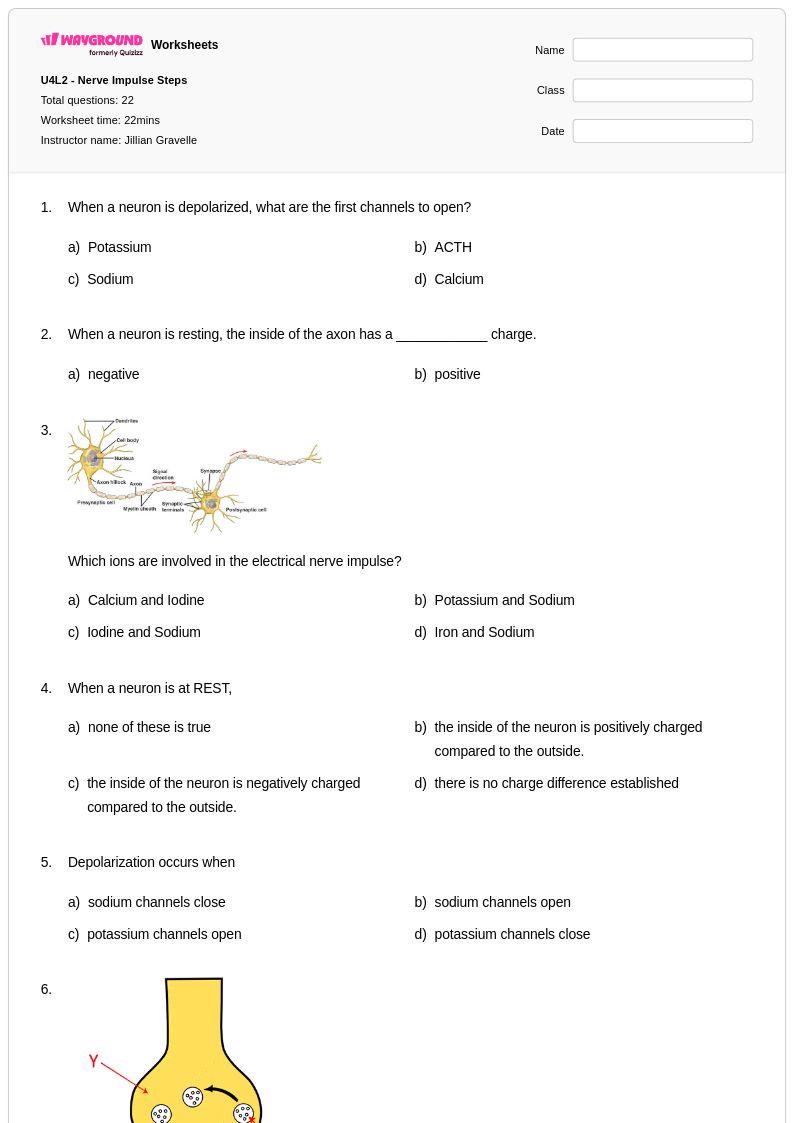
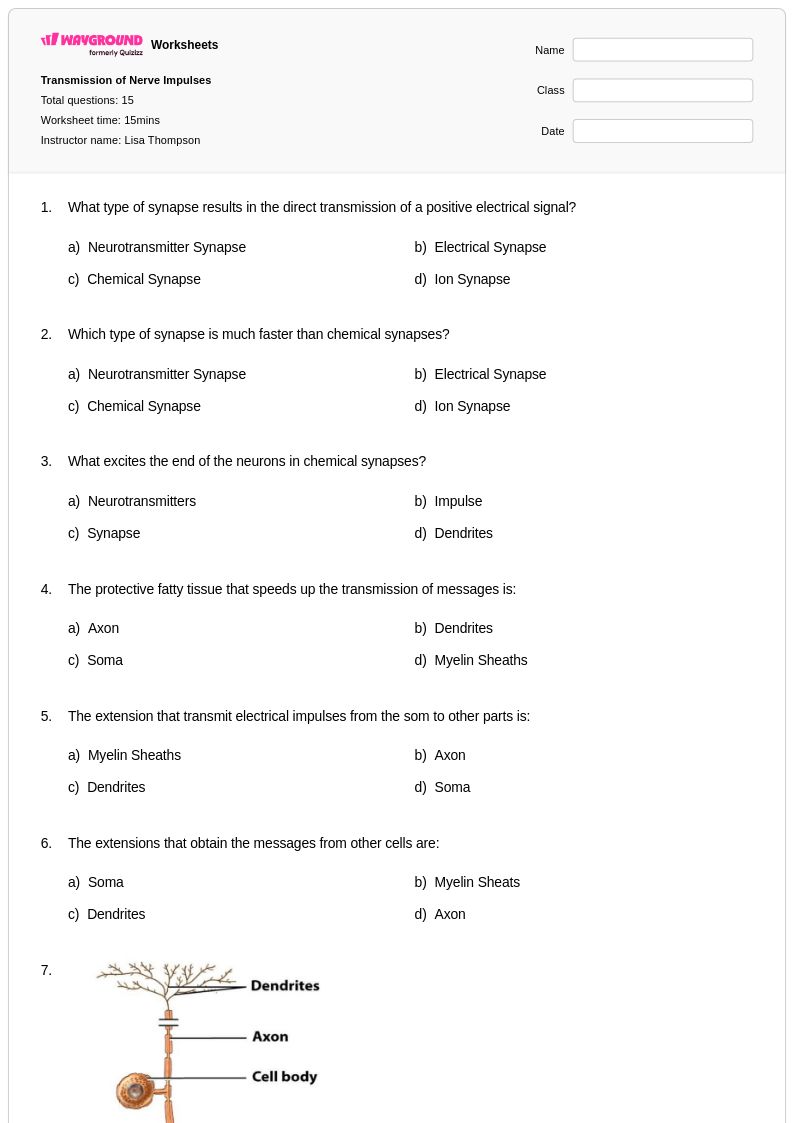
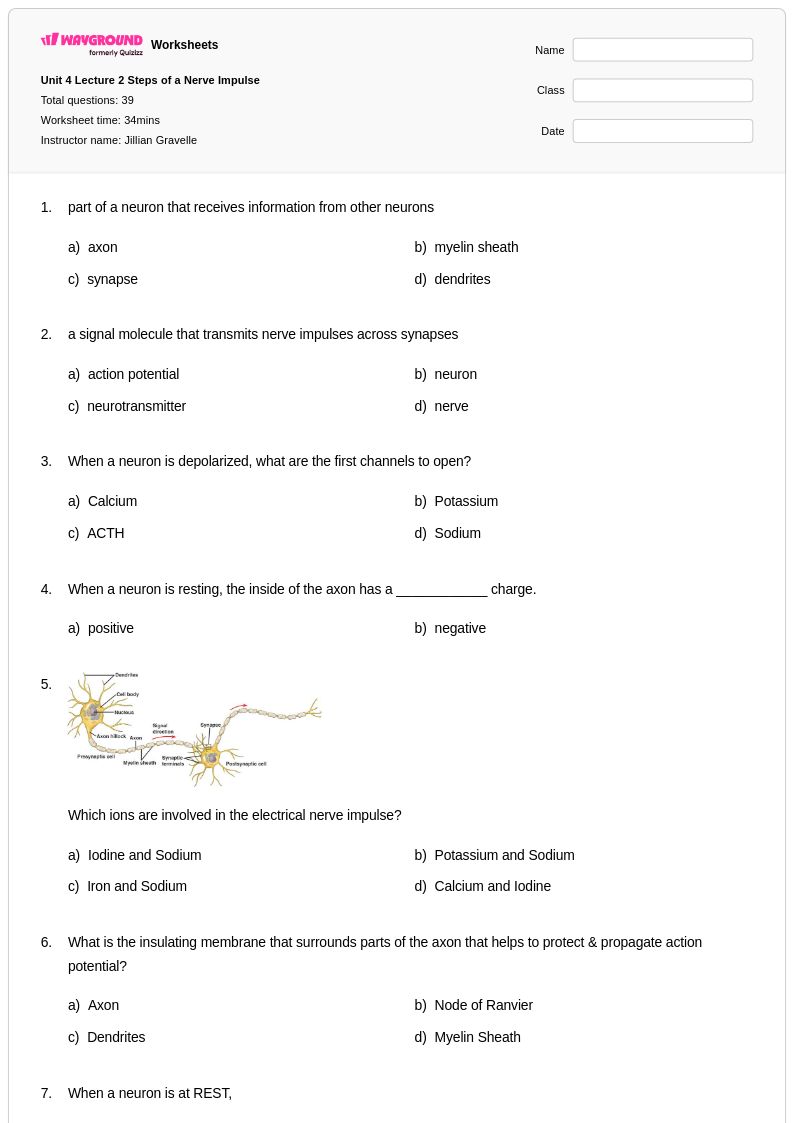
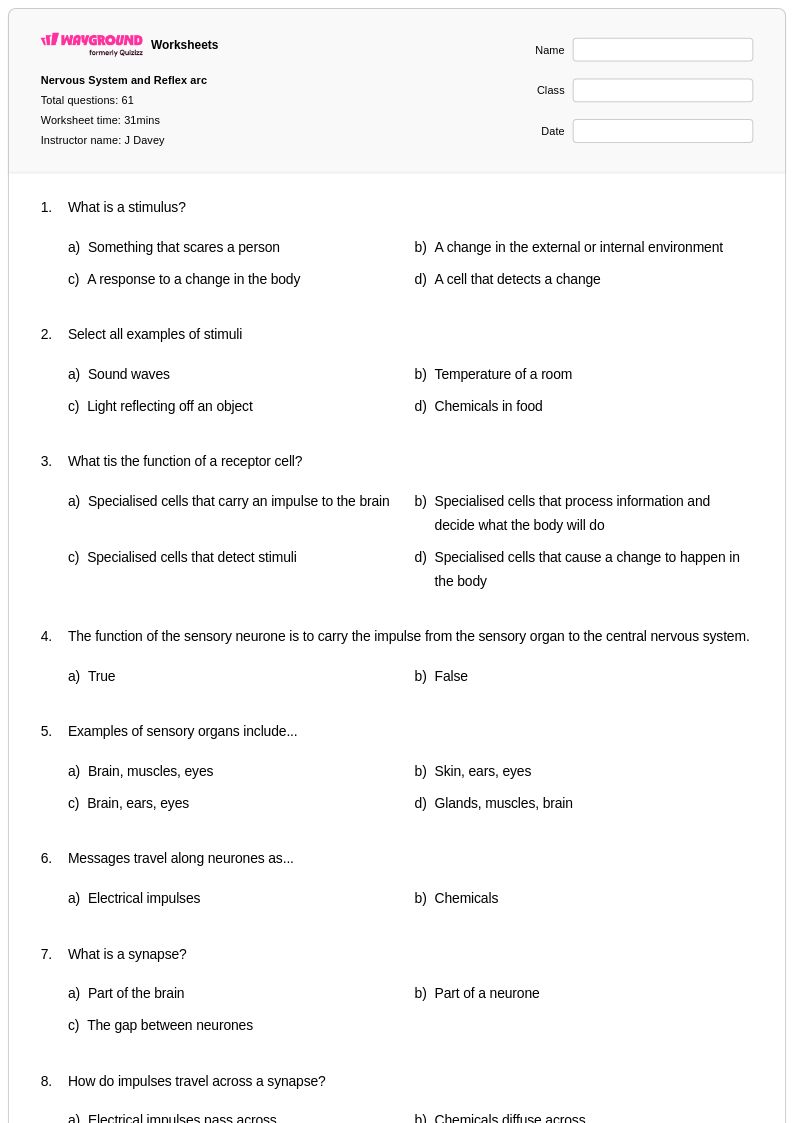
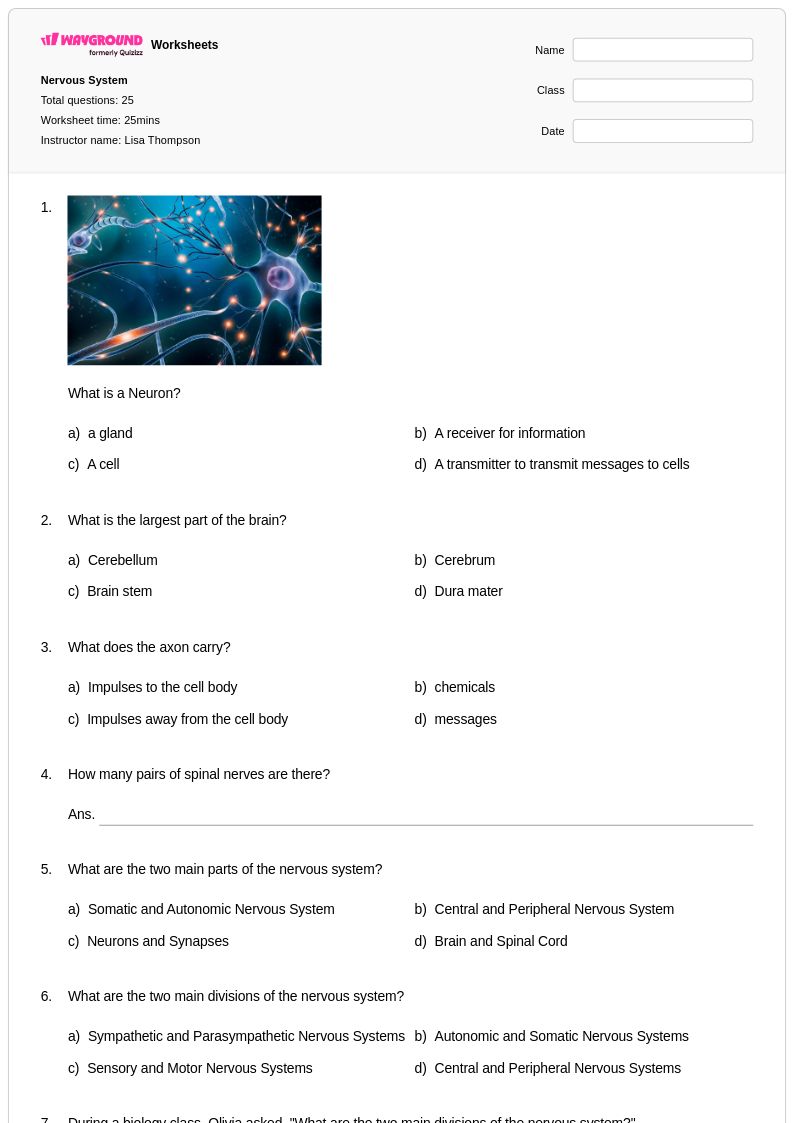
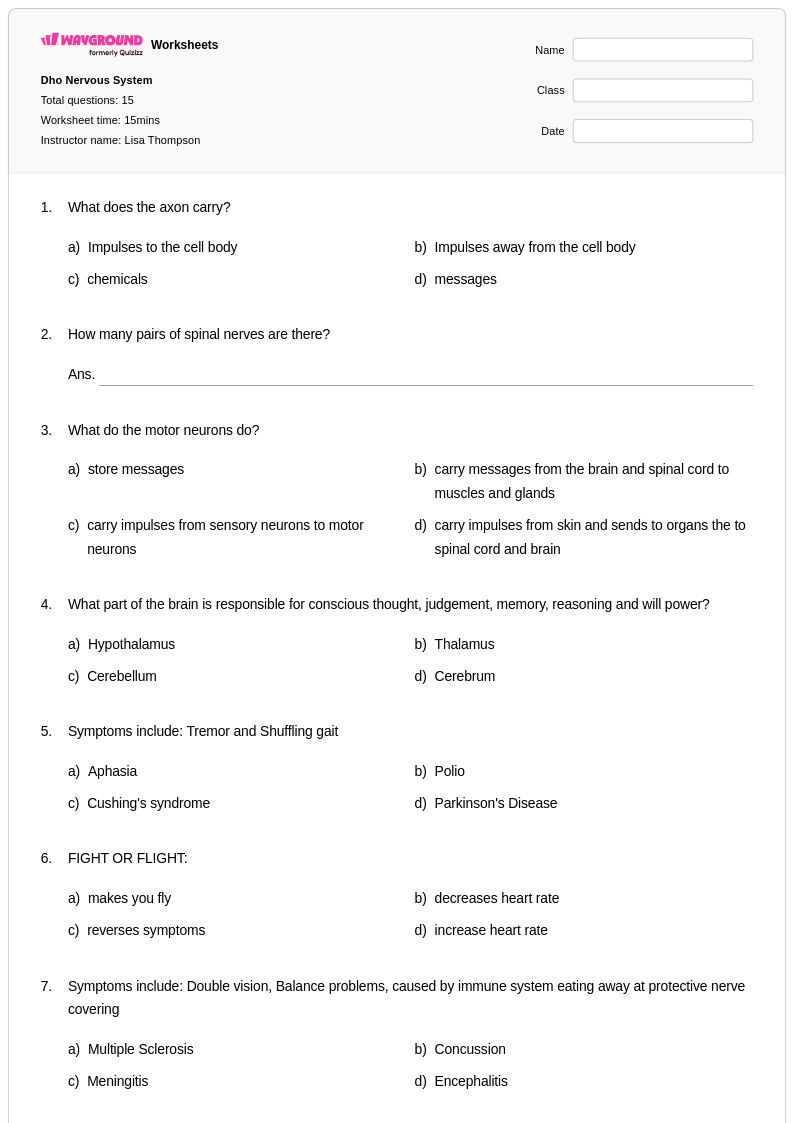
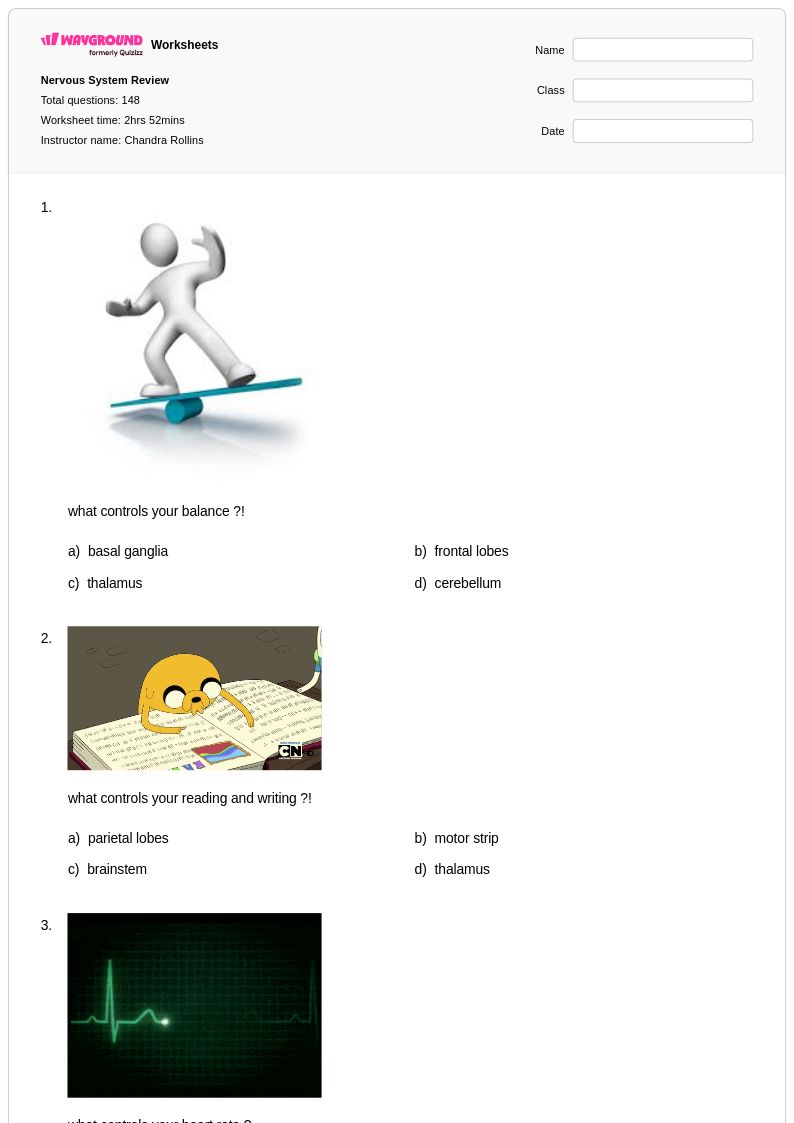
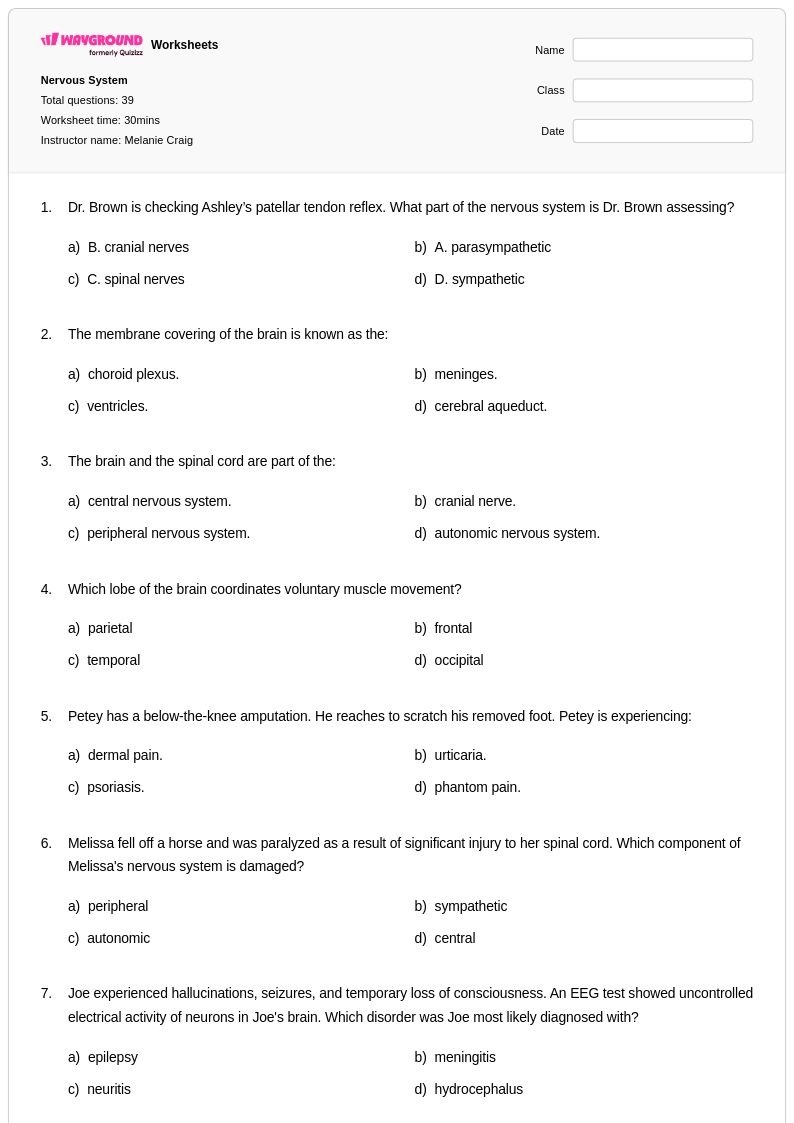
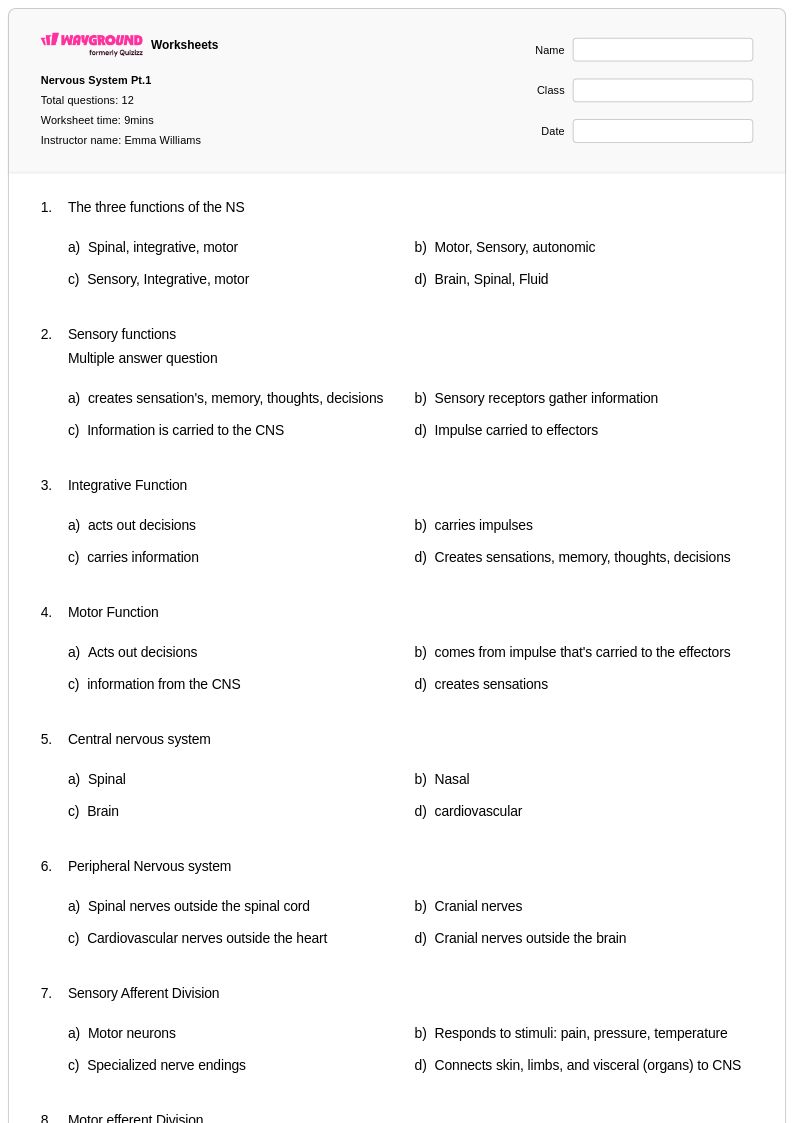
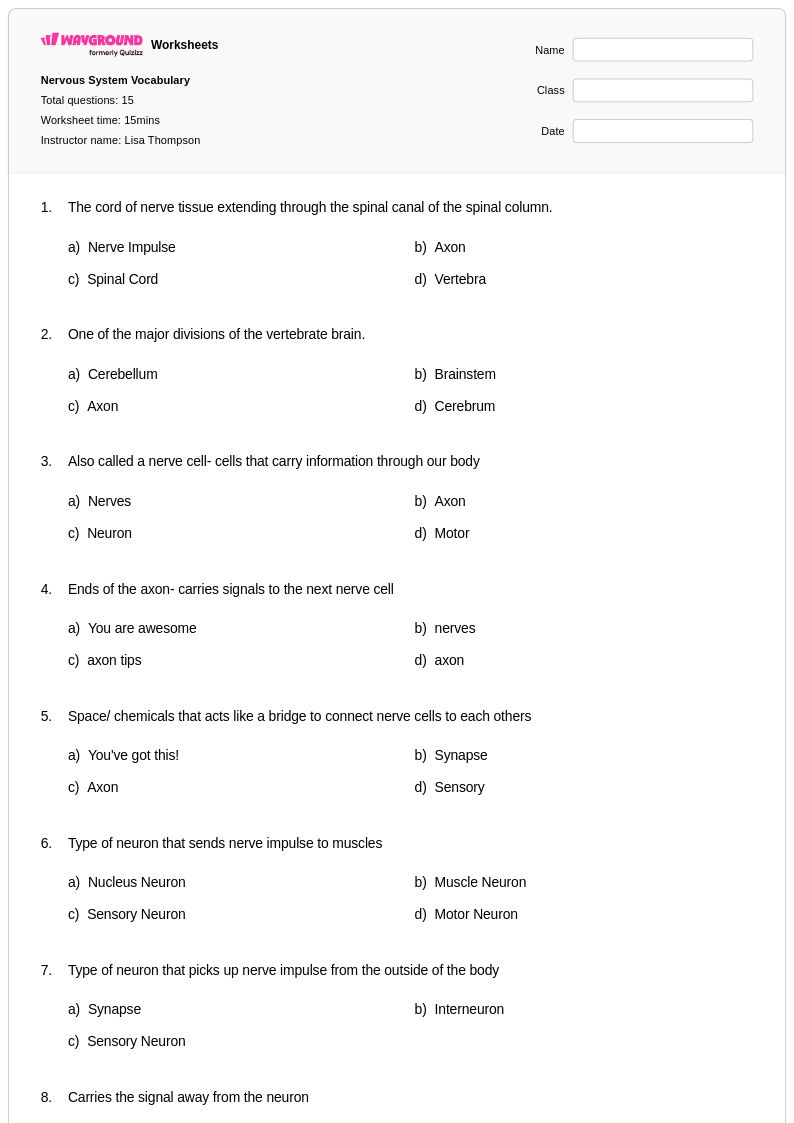
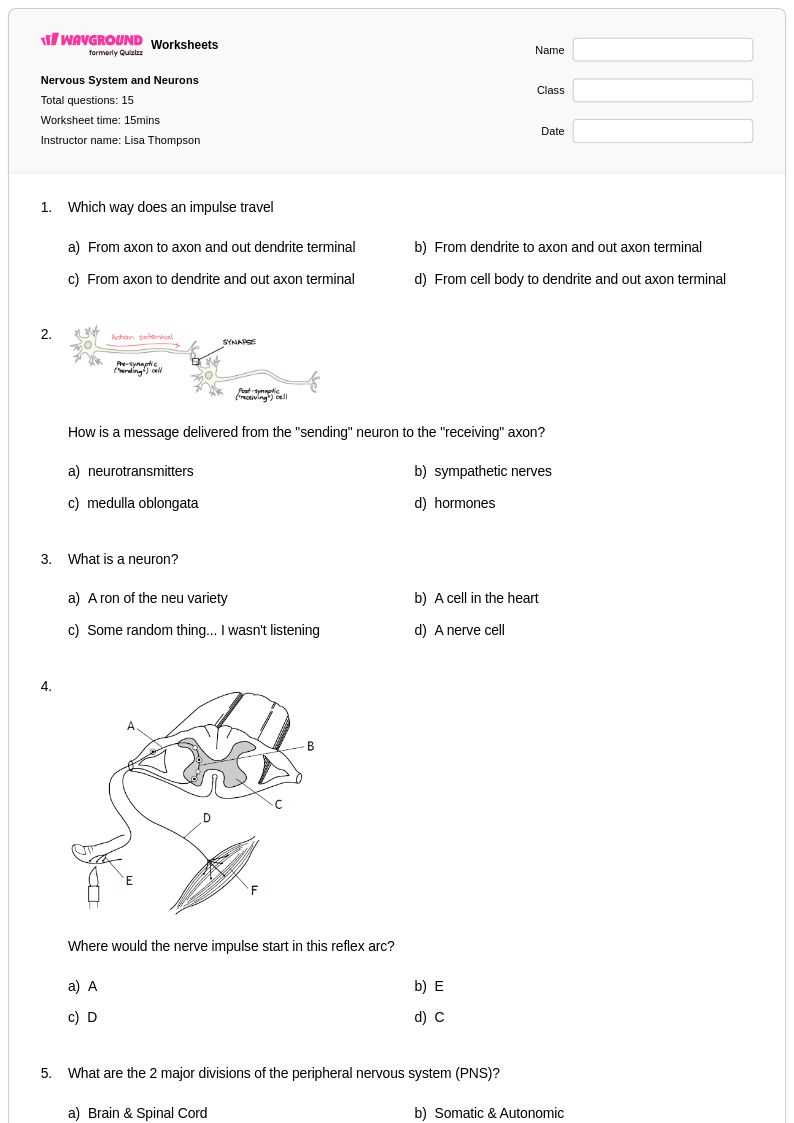
Nerve impulse worksheets for Year 11 students available through Wayground (formerly Quizizz) provide comprehensive coverage of how electrical signals transmit information throughout the nervous system. These expertly designed resources strengthen students' understanding of action potentials, synaptic transmission, and the electrochemical processes that enable rapid communication between neurons. The worksheets feature detailed practice problems that guide students through the sequential stages of nerve impulse generation and propagation, from resting potential through depolarization, repolarization, and the refractory period. Each printable resource includes a complete answer key to support independent learning and self-assessment, while the free pdf format ensures accessibility for diverse learning environments. Students develop critical analytical skills by examining voltage-gated ion channels, sodium-potassium pumps, and myelin sheath function through carefully scaffolded exercises that connect molecular mechanisms to physiological outcomes.
Wayground (formerly Quizizz) empowers educators with millions of teacher-created nerve impulse worksheets specifically aligned to Year 11 science standards and curriculum requirements. The platform's advanced search and filtering capabilities enable teachers to quickly locate resources that match their students' specific learning needs, whether for initial instruction, targeted remediation, or advanced enrichment activities. Comprehensive differentiation tools allow educators to customize worksheet difficulty levels and modify content to accommodate diverse learners, while the dual availability in printable and digital pdf formats provides maximum flexibility for classroom implementation and remote learning scenarios. These robust features streamline lesson planning by offering immediate access to high-quality practice materials that reinforce complex neurophysiological concepts, support standards-based instruction, and provide essential skill practice opportunities that prepare students for advanced study in neuroscience and related fields.
FAQs
How do I teach nerve impulse transmission to high school biology students?
Start by grounding students in neuron anatomy before introducing the concept of resting membrane potential, since students cannot understand depolarization without first understanding why a charge difference exists across the membrane. From there, walk through the sequential steps of an action potential: sodium channel opening, depolarization, potassium channel opening, repolarization, and the refractory period. Using annotated diagrams alongside practice problems helps students map terminology to process, which is critical for topics as step-dependent as nerve impulse transmission.
What exercises help students practice understanding action potentials and nerve signals?
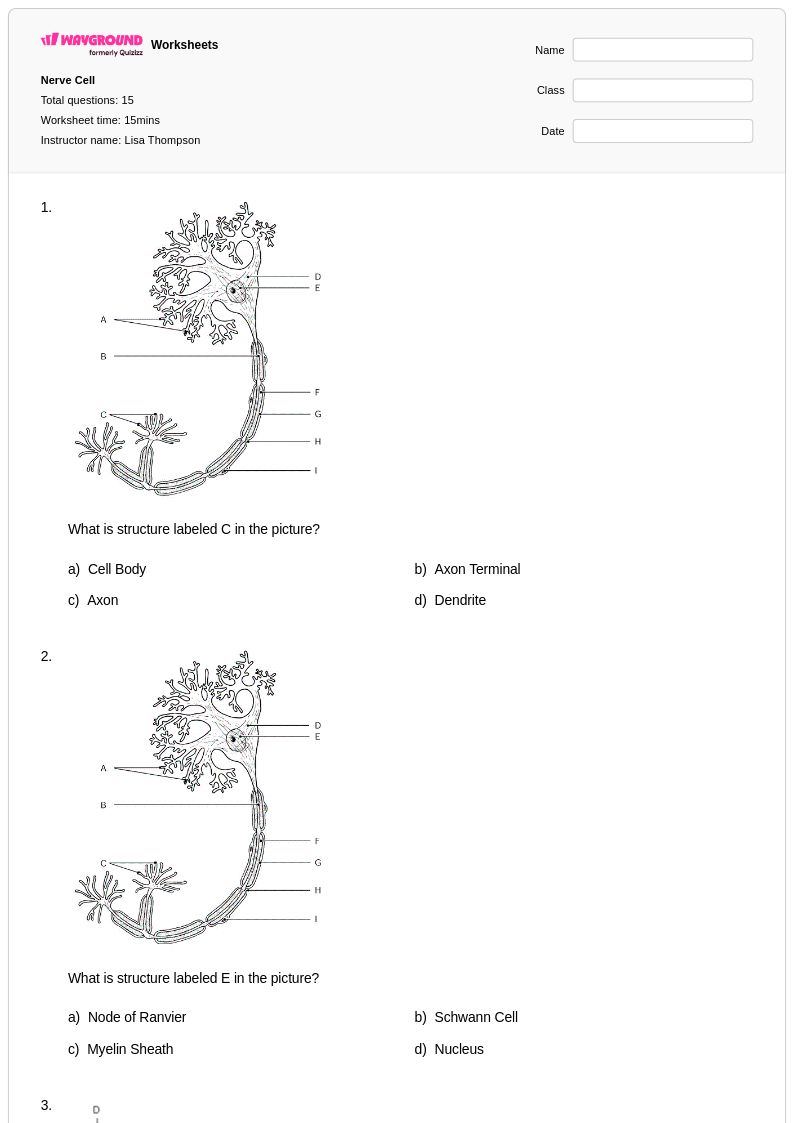
Sequencing exercises work particularly well for nerve impulse topics because the mechanism is strictly ordered — students must correctly arrange the stages of depolarization and repolarization rather than simply recall isolated facts. Labeling diagrams of sodium-potassium pump activity and synaptic cleft structure reinforces the spatial logic of signal transmission. Practice problems that ask students to predict what happens when a specific ion channel is blocked or a neurotransmitter is absent also build deeper mechanistic understanding beyond memorization.
What mistakes do students commonly make when learning about nerve impulses?
A very common misconception is that nerve impulses travel like electricity through a wire — students often miss that the signal is a wave of electrochemical change moving along the membrane, not a flow of electrons. Students also frequently confuse depolarization with the action potential itself, when depolarization is only one phase of it. Another persistent error is conflating neurotransmitter release with the electrical signal, not recognizing that synaptic transmission is a distinct chemical step that bridges two neurons.
How do I differentiate nerve impulse instruction for students with different learning needs?
For students who struggle with the density of neurophysiology content, reducing the number of answer choices on practice questions can lower cognitive load while still assessing core understanding. Wayground supports per-student accommodations including read aloud, which is especially useful when students need to process complex question stems about ion channel behavior or synaptic pathways. Extended time settings can be applied individually so students who need more processing time receive it without disrupting the rest of the class.
How can I use Wayground's nerve impulse worksheets in my classroom?
Wayground's nerve impulse worksheets are available as printable PDFs for traditional classroom use and in digital formats for technology-integrated environments, giving teachers flexibility depending on their setup. Teachers can also host the worksheets as a live or self-paced quiz directly on Wayground, making it straightforward to collect and review student responses. The included answer keys make these materials practical for formative checks, independent practice, or structured review sessions without additional preparation.
How does synaptic transmission differ from the nerve impulse itself?
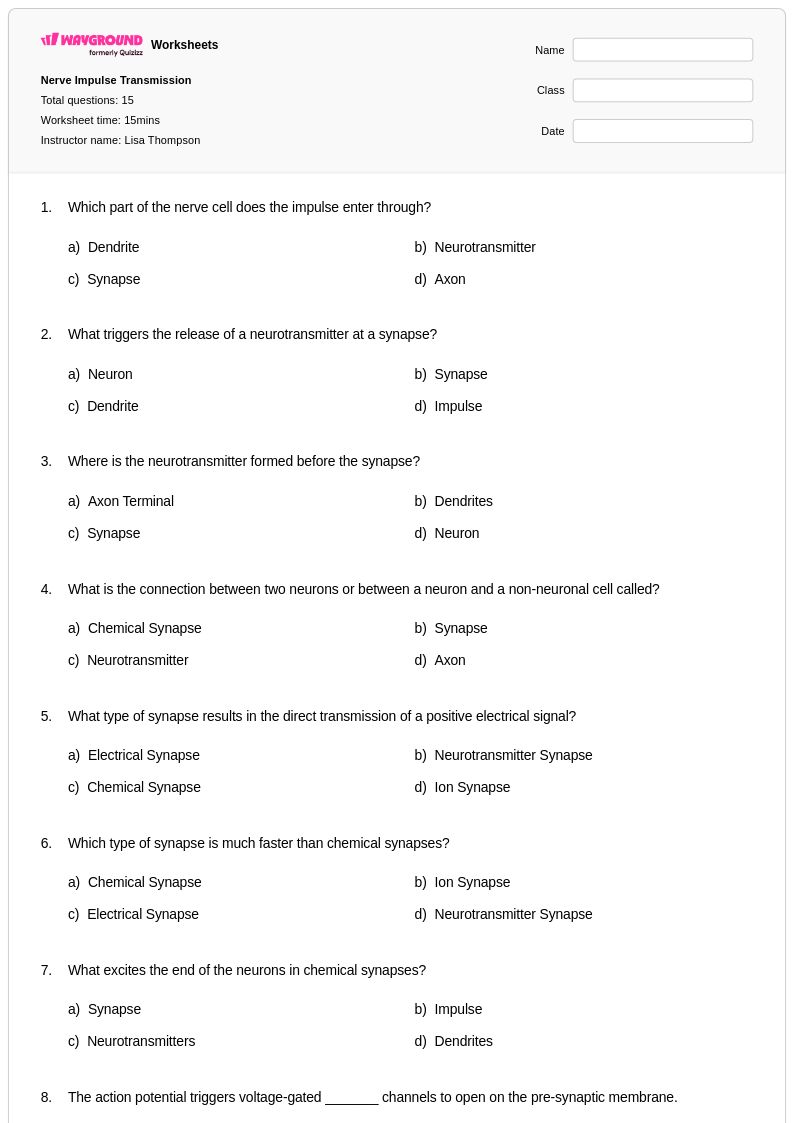
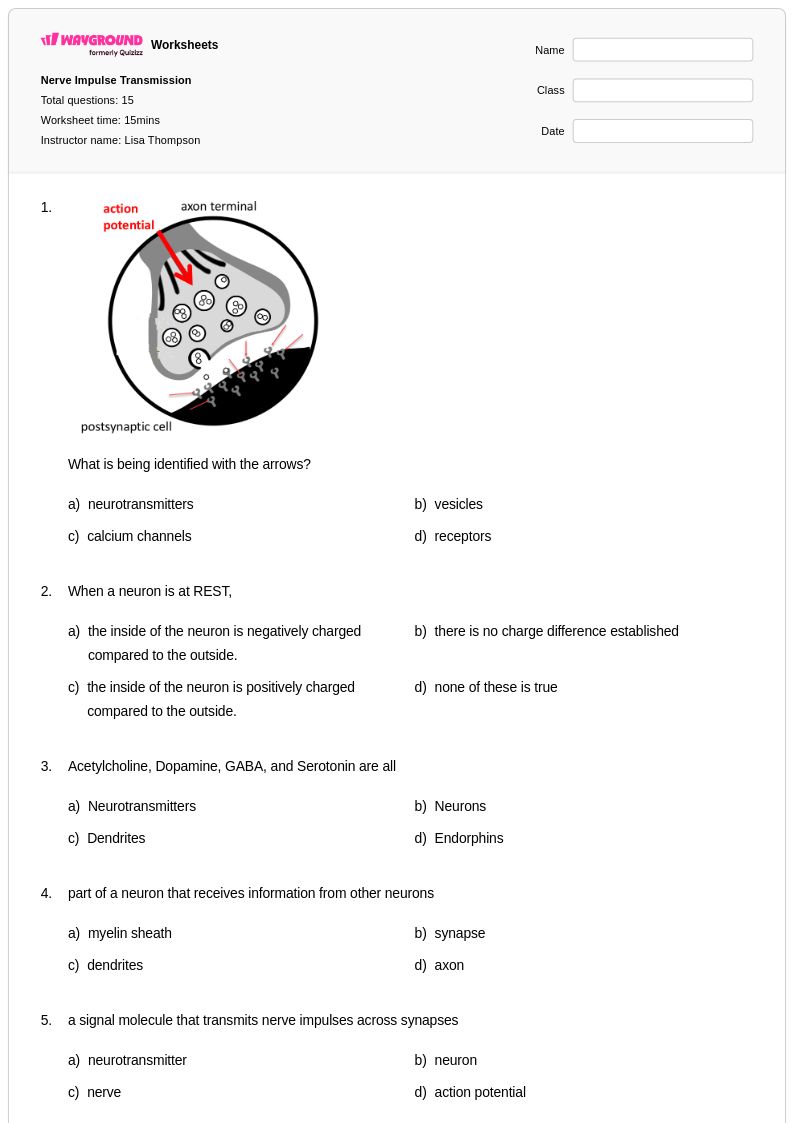
The nerve impulse refers specifically to the action potential traveling along a single neuron's axon as an electrochemical wave, while synaptic transmission is the process by which that signal crosses the gap between two neurons via chemical messengers. When an action potential reaches an axon terminal, it triggers the release of neurotransmitters into the synaptic cleft, which then bind to receptors on the postsynaptic neuron to initiate a new electrical event. Teaching students to distinguish these two processes is essential because they involve different mechanisms, different structures, and different points of failure.