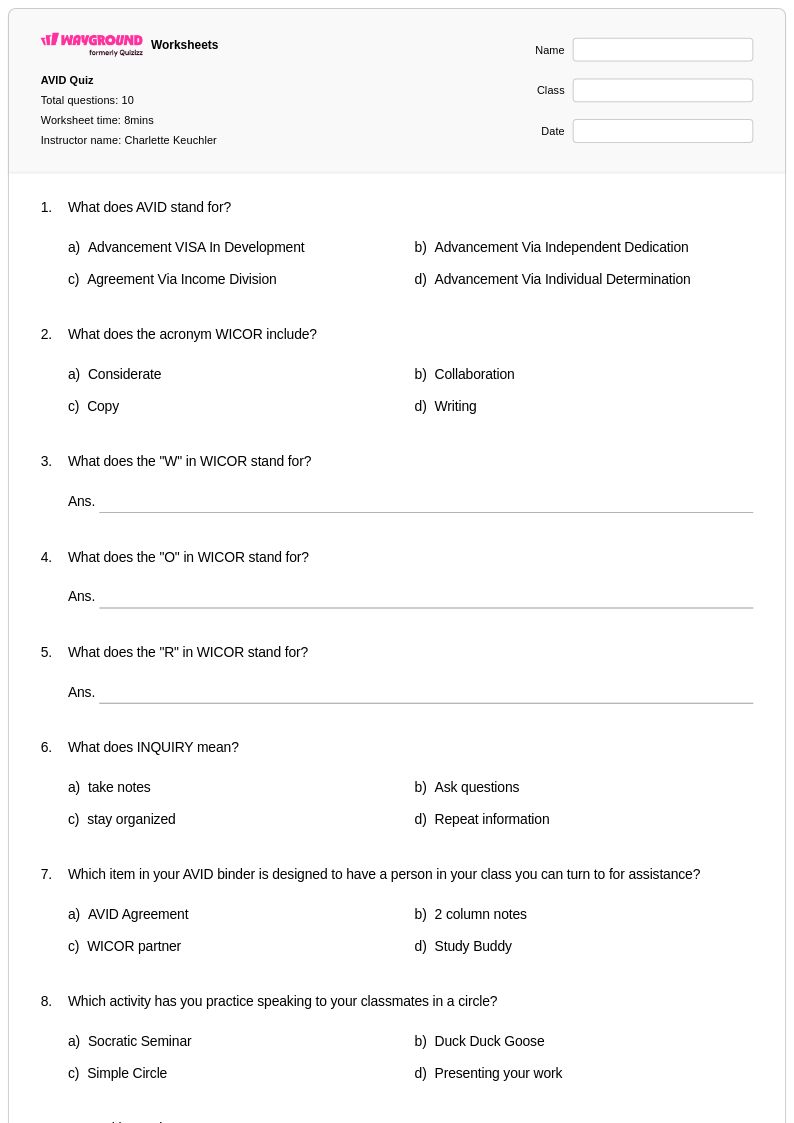
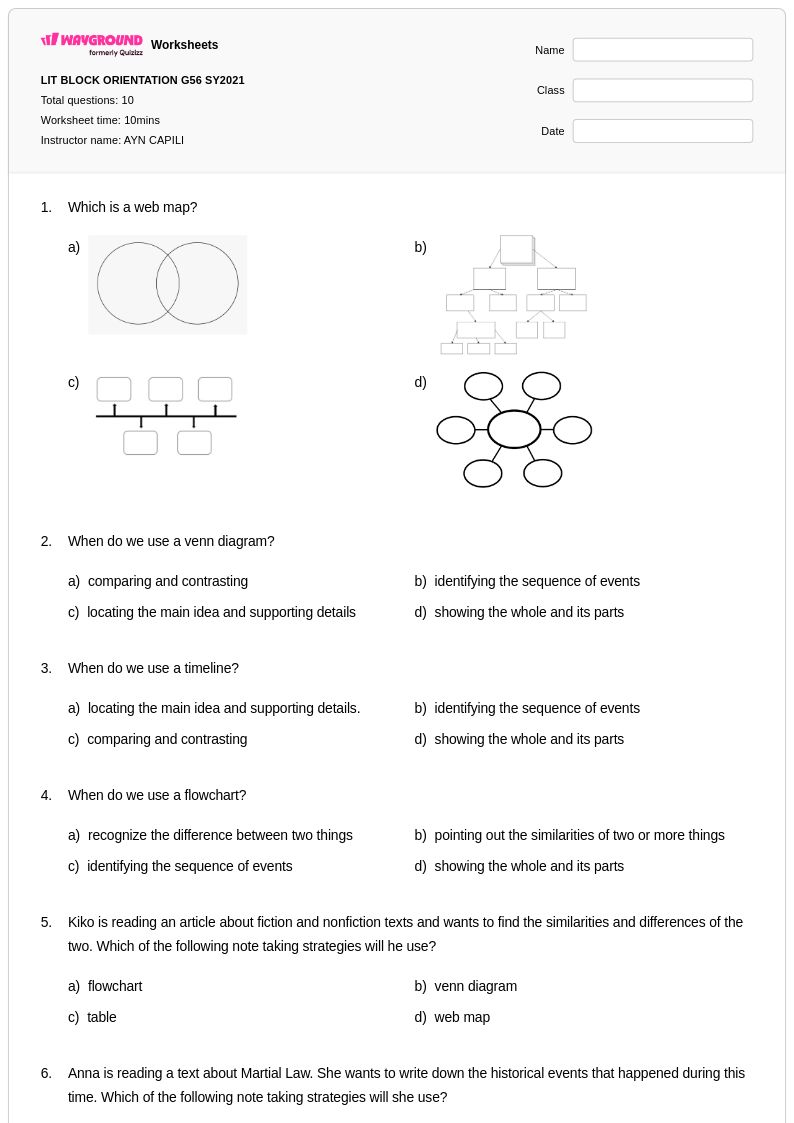
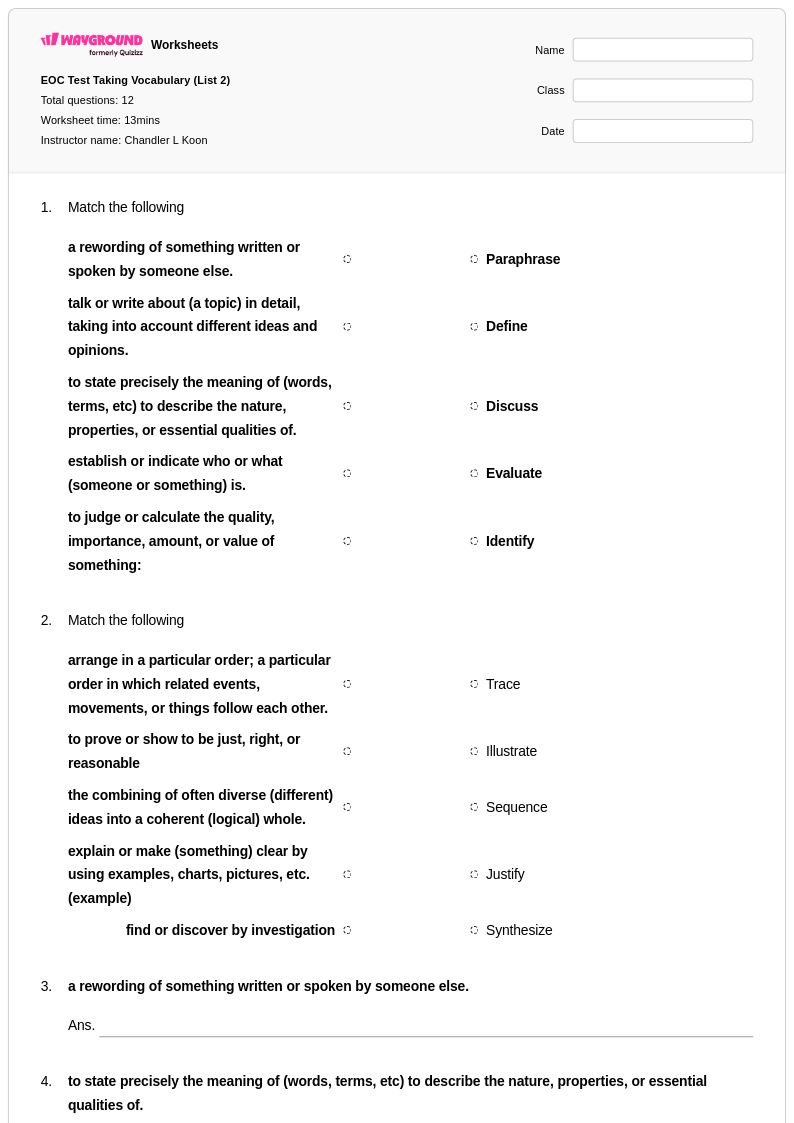
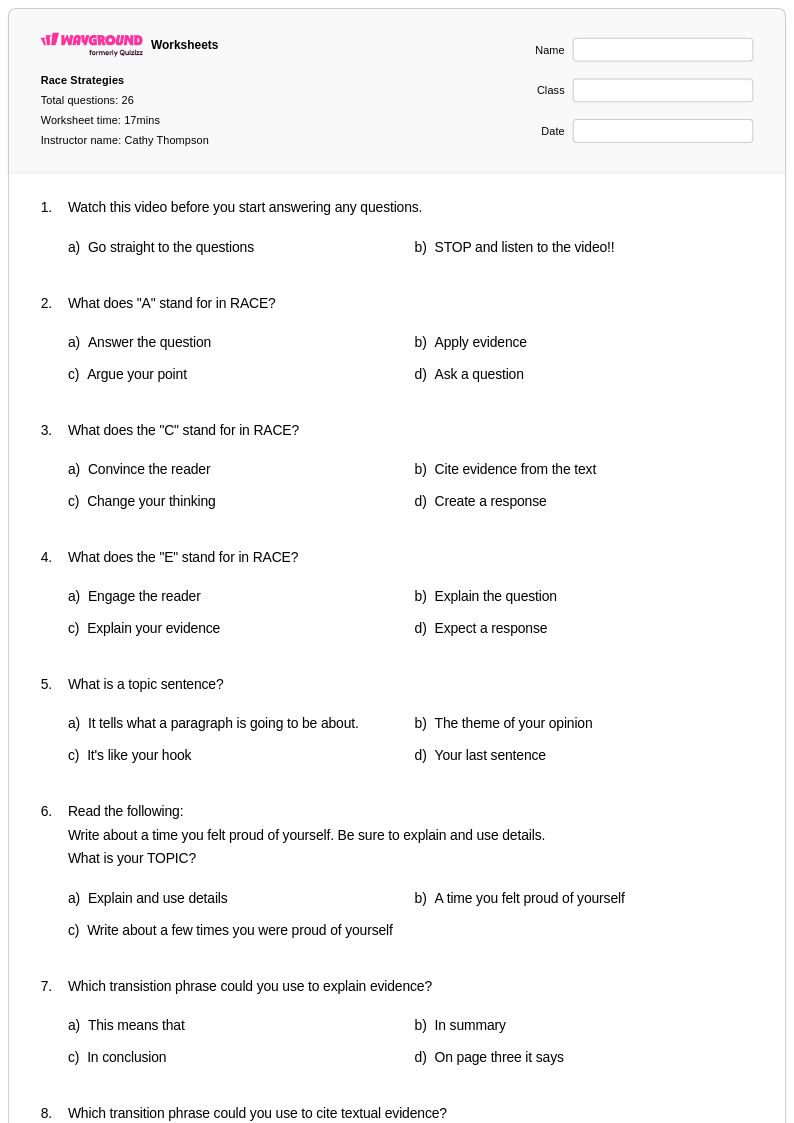
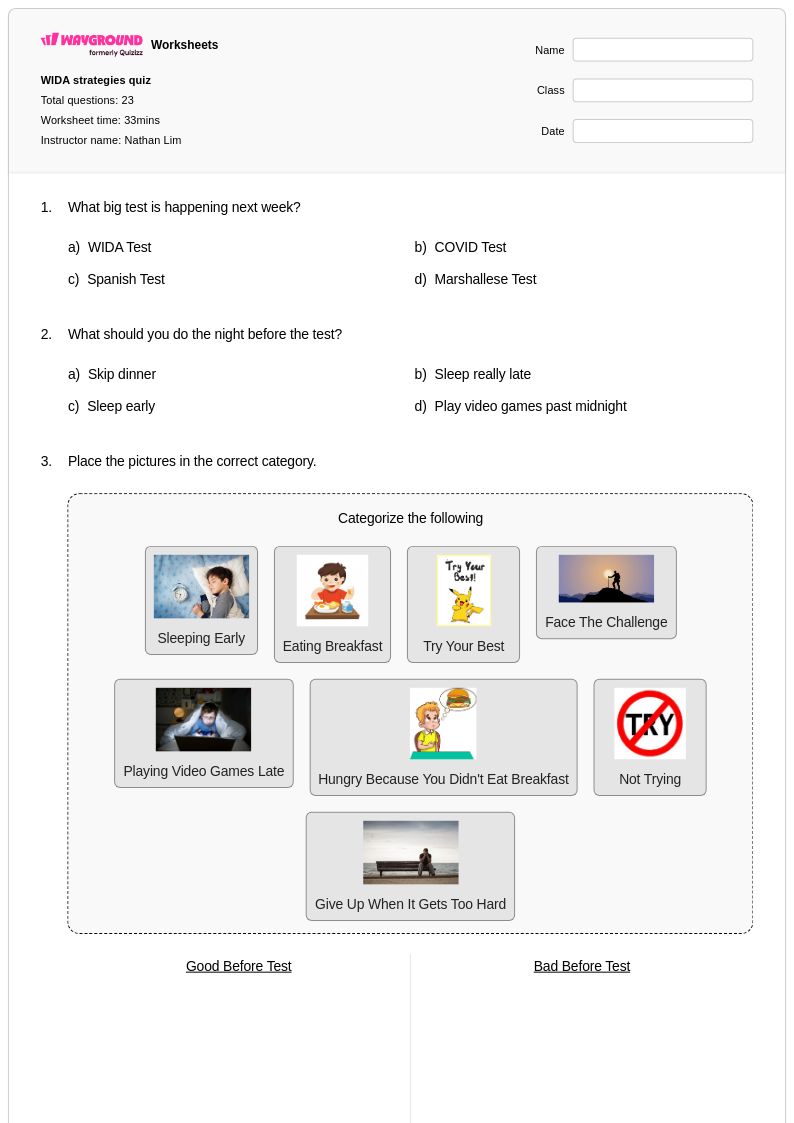
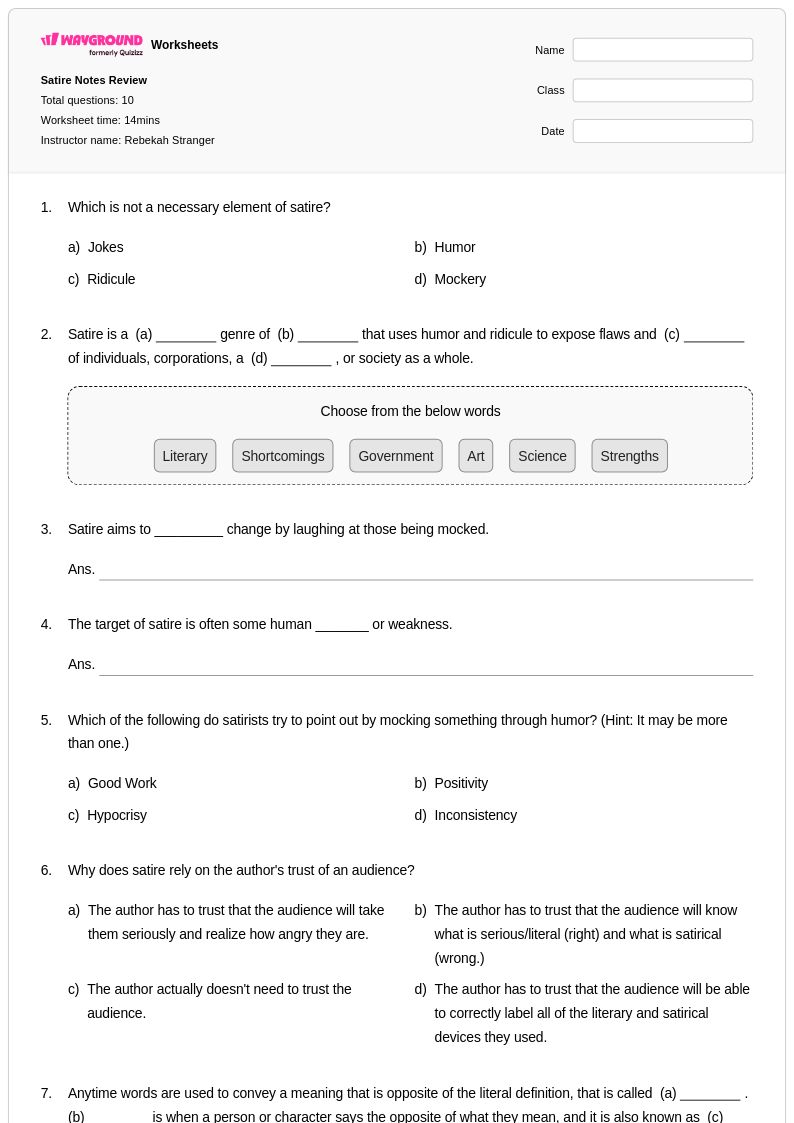
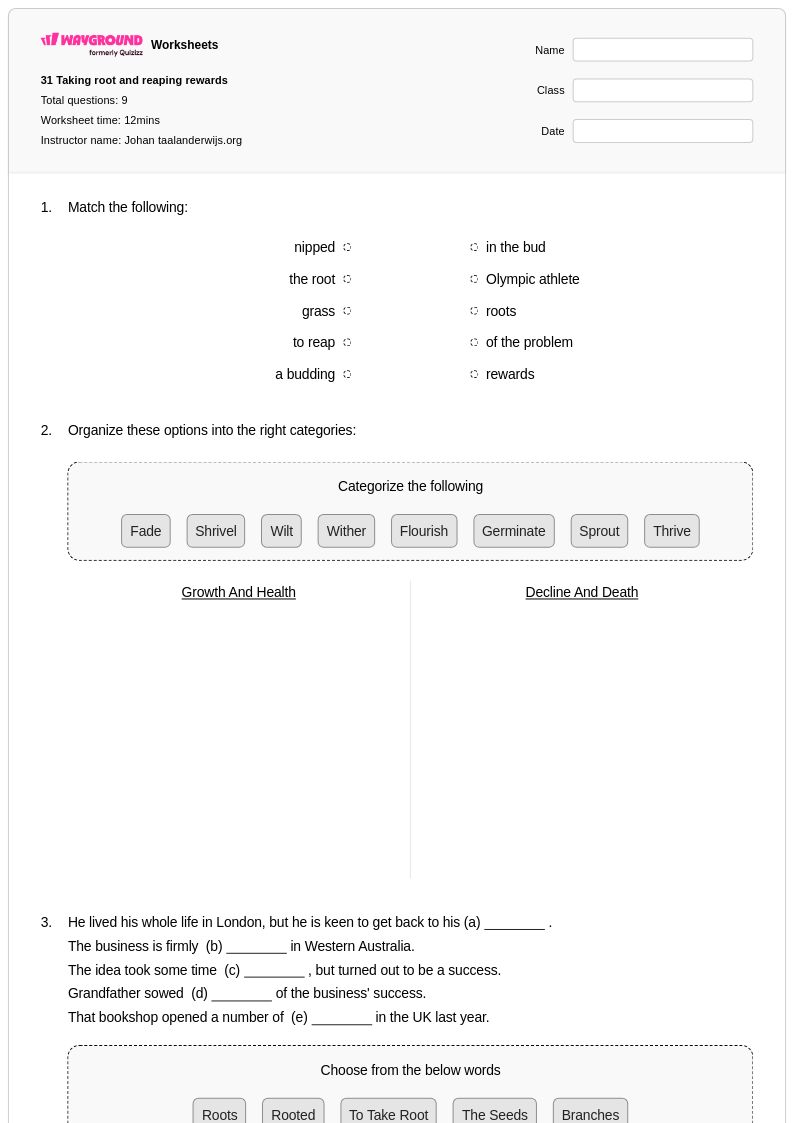
Enhance your note taking strategies with Wayground's comprehensive collection of free worksheets and printables, featuring practice problems and answer keys to help students master effective information recording techniques.
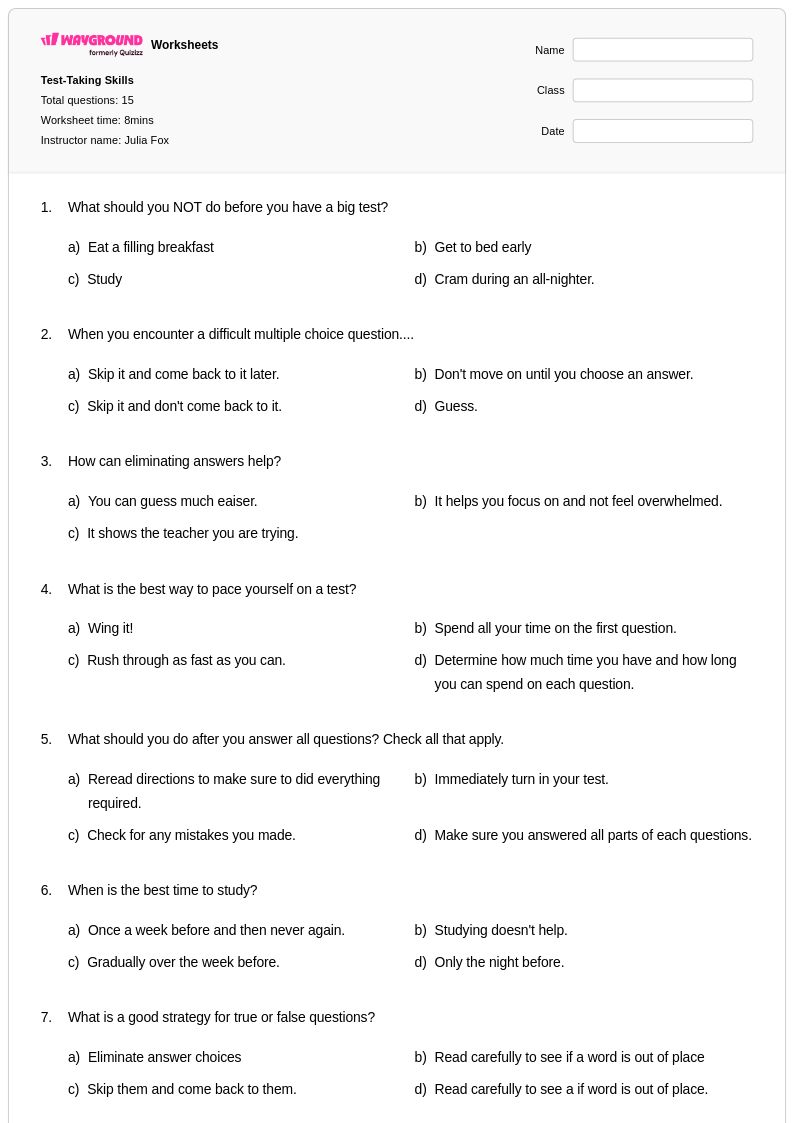
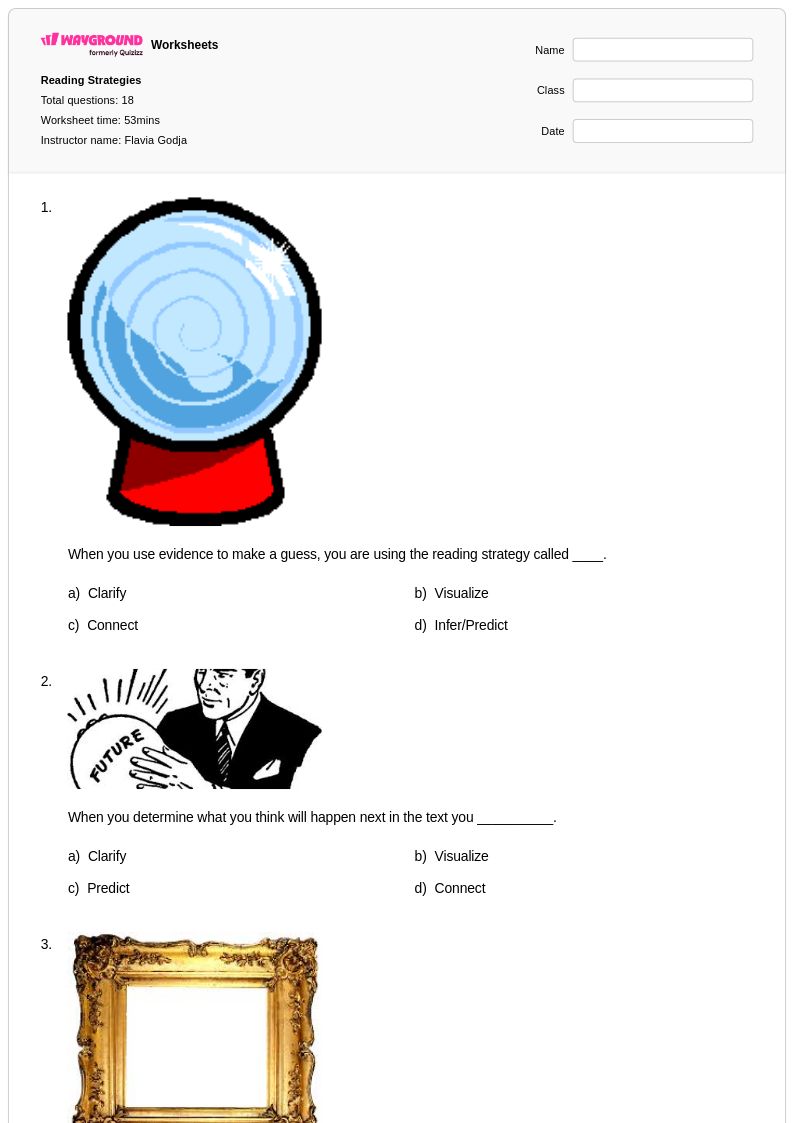
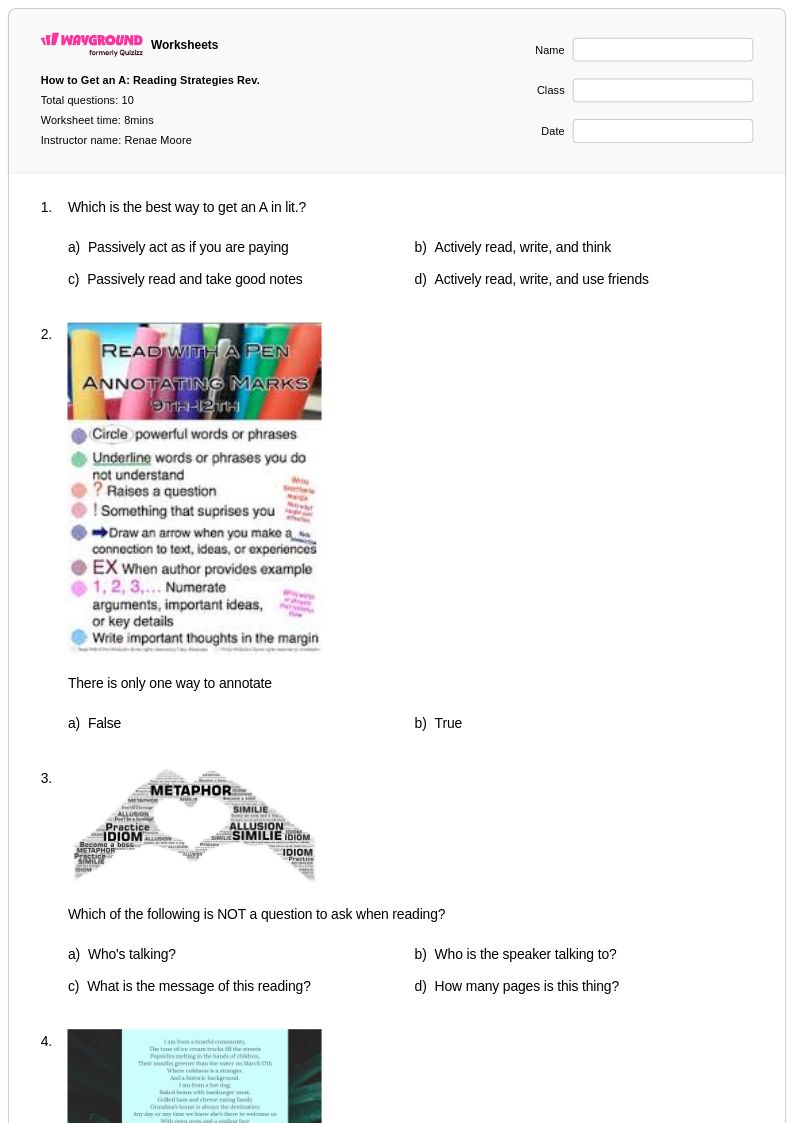
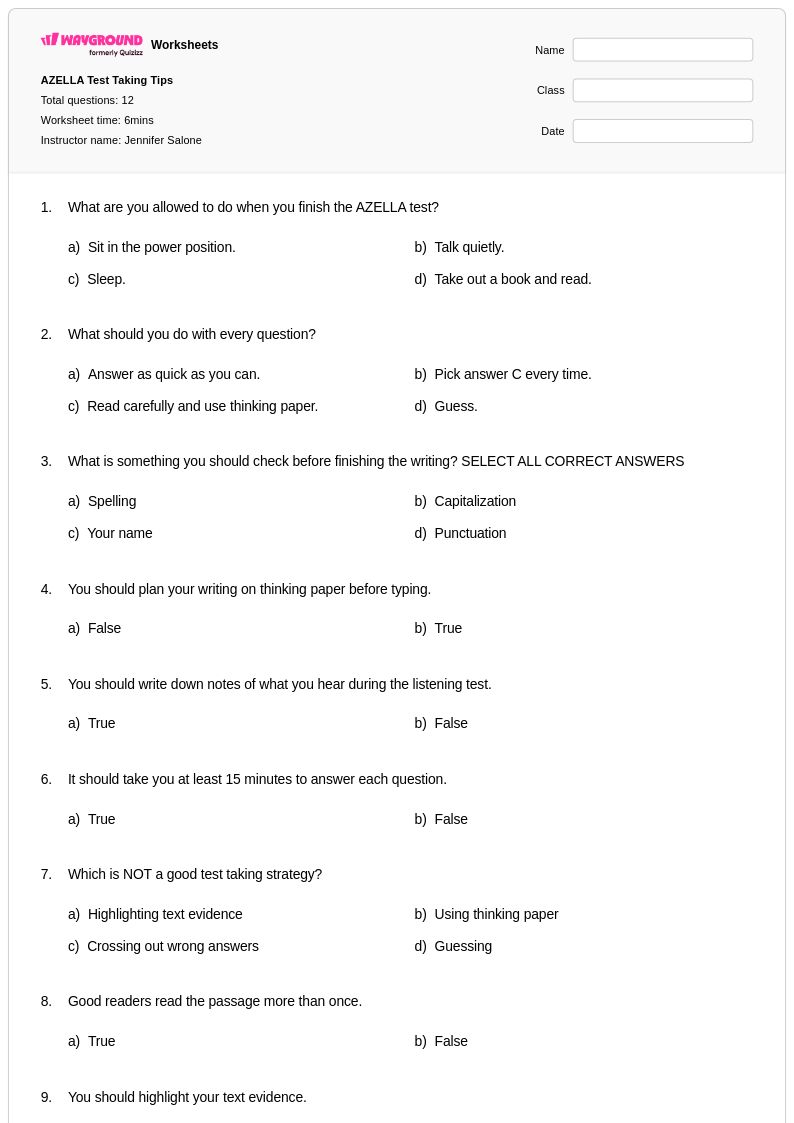
Note taking strategies worksheets available through Wayground (formerly Quizizz) provide comprehensive practice materials designed to develop students' critical organizational and information processing skills across all academic levels. These expertly crafted resources focus on teaching essential techniques such as the Cornell note-taking method, outlining strategies, graphic organizers, and abbreviation systems that help students effectively capture, organize, and retain information from lectures, textbooks, and multimedia sources. Each worksheet collection includes structured practice problems that guide students through different note-taking formats, complete with answer keys and assessment rubrics that allow for immediate feedback and self-evaluation. The printable pdf formats ensure easy classroom distribution, while the free accessibility of these resources makes them valuable tools for reinforcing study habits that directly impact academic success across all subject areas.
Wayground (formerly Quizizz) supports educators with an extensive library of millions of teacher-created note taking strategy resources that can be seamlessly integrated into any curriculum planning approach. The platform's robust search and filtering capabilities allow teachers to quickly locate worksheets that align with specific learning objectives and academic standards, while differentiation tools enable customization based on individual student needs and reading levels. These versatile materials are available in both printable and digital pdf formats, providing flexibility for traditional classroom instruction, remote learning environments, or hybrid teaching models. Teachers can utilize these comprehensive worksheet collections for targeted skill practice, remediation sessions for struggling learners, or enrichment activities that challenge advanced students to refine their organizational techniques and develop more sophisticated approaches to information management and academic note-taking.
FAQs
How do I teach note taking strategies to students?
Effective note-taking instruction begins with explicit modeling of specific methods such as the Cornell system, outlining, and graphic organizers before asking students to apply them independently. Teachers should introduce one method at a time, demonstrate it using real lecture or reading content, and give students guided practice before moving to independent use. Building in regular reflection time — where students evaluate which method worked best for a given task — accelerates skill transfer across subject areas.
What are the most effective note-taking methods to teach students?
The Cornell method, linear outlining, the boxing method, and graphic organizers are among the most research-supported note-taking formats for K-12 learners. Cornell notes are particularly effective because they build in a cue column and summary section that prompt students to process and review information rather than passively transcribe it. Abbreviation systems and symbol shorthand are also worth teaching explicitly, as they help students keep pace with spoken or fast-moving content.
What exercises help students practice note-taking strategies?
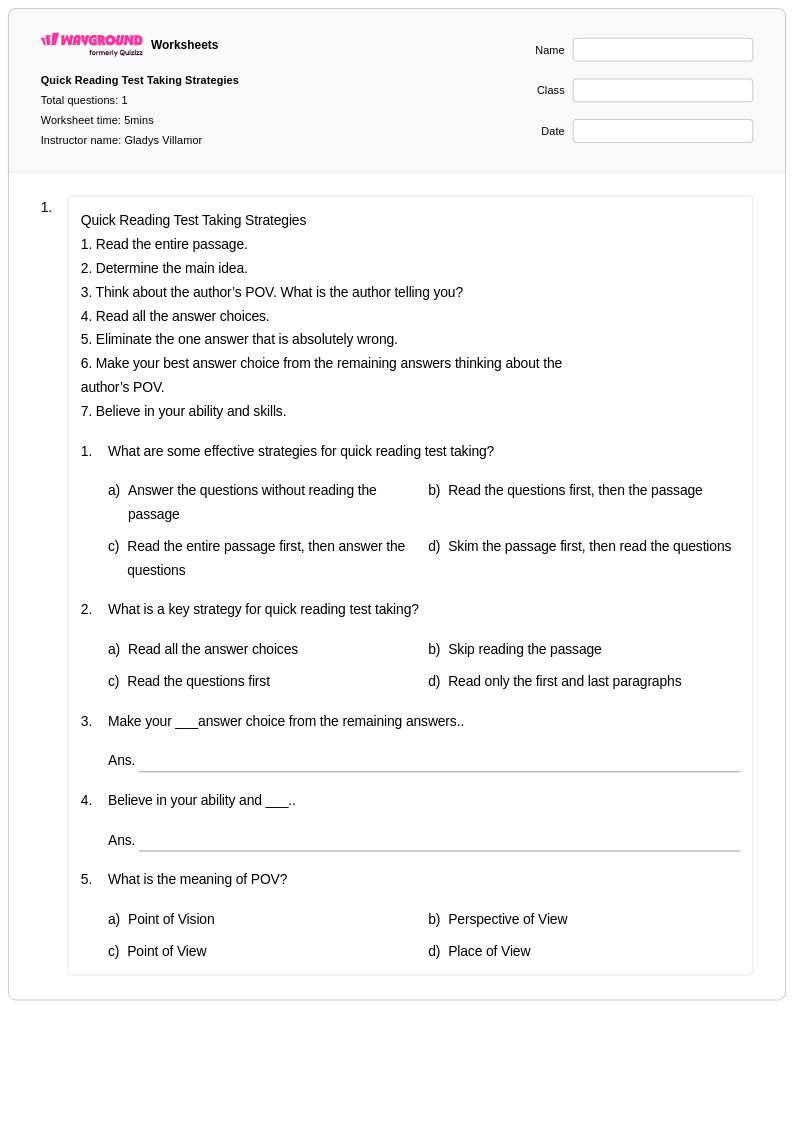
Structured worksheet practice is one of the most efficient ways to build note-taking fluency because it isolates the format from the pressure of a live lecture. Exercises that ask students to reorganize scrambled notes, convert a passage into Cornell format, or complete a partially filled graphic organizer all develop format familiarity without overwhelming beginners. Practice problems paired with answer keys allow students to self-assess their organizational choices against a model.
What mistakes do students commonly make when taking notes?
The most common error is verbatim transcription — students copy text word-for-word rather than paraphrasing or identifying key ideas, which limits retention and comprehension. Students also frequently omit organizational structure, producing a flat list of facts with no hierarchy or visual distinction between main ideas and supporting details. Teaching students to use headers, indentation, and abbreviation systems directly addresses both of these patterns.
How can I differentiate note-taking instruction for struggling or advanced students?
For struggling learners, providing partially completed note templates or graphic organizers reduces cognitive load while still requiring students to identify and record key information. Advanced students benefit from more open-ended formats that challenge them to develop personal abbreviation systems or synthesize notes from multiple sources into a single organized document. On Wayground, teachers can apply accommodations such as read aloud, reduced answer choices, and extended time to individual students, allowing the same worksheet to serve the full range of learners in a single class session.
How do I use Wayground's note-taking strategies worksheets in my classroom?
Wayground's note-taking strategies worksheets are available as printable PDFs for traditional classroom distribution and in digital formats for technology-integrated or remote learning environments. Teachers can also host worksheets as an interactive quiz directly on Wayground, making it easy to assign, track, and review student responses in one place. Each worksheet includes answer keys, so students can self-evaluate immediately, and teachers can use the materials for initial instruction, targeted practice, or remediation depending on where students are in their skill development.