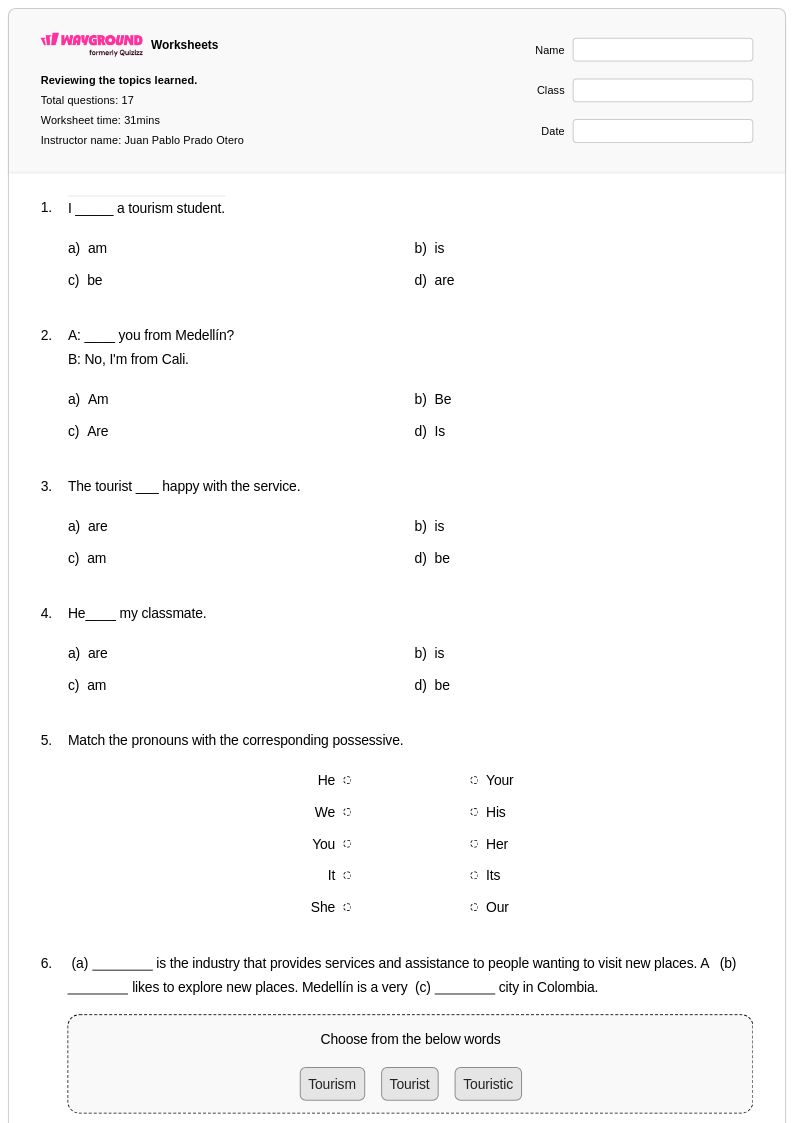
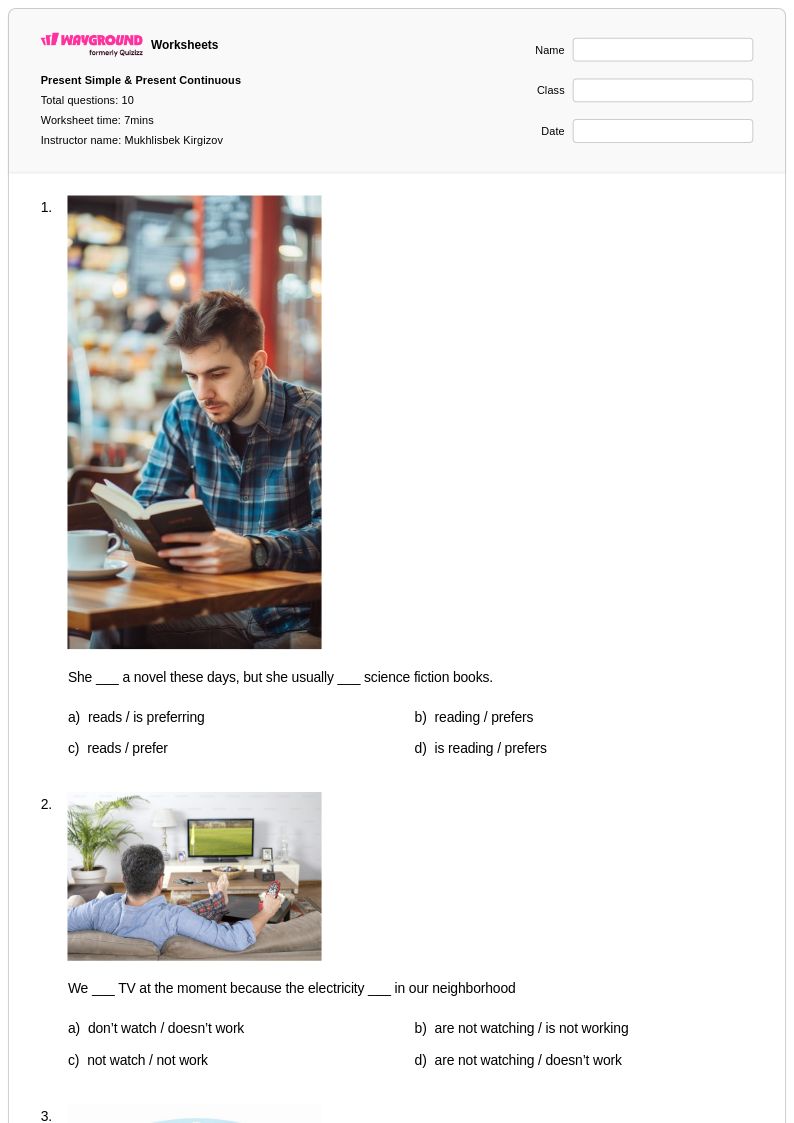
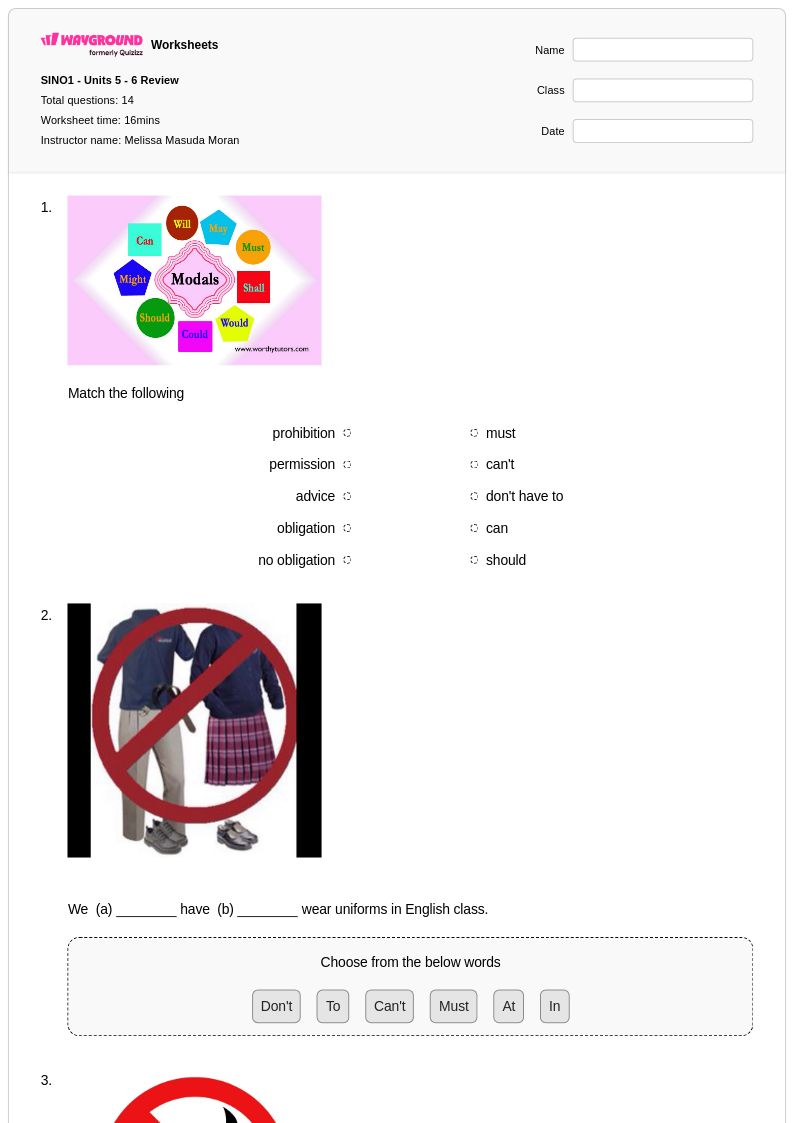
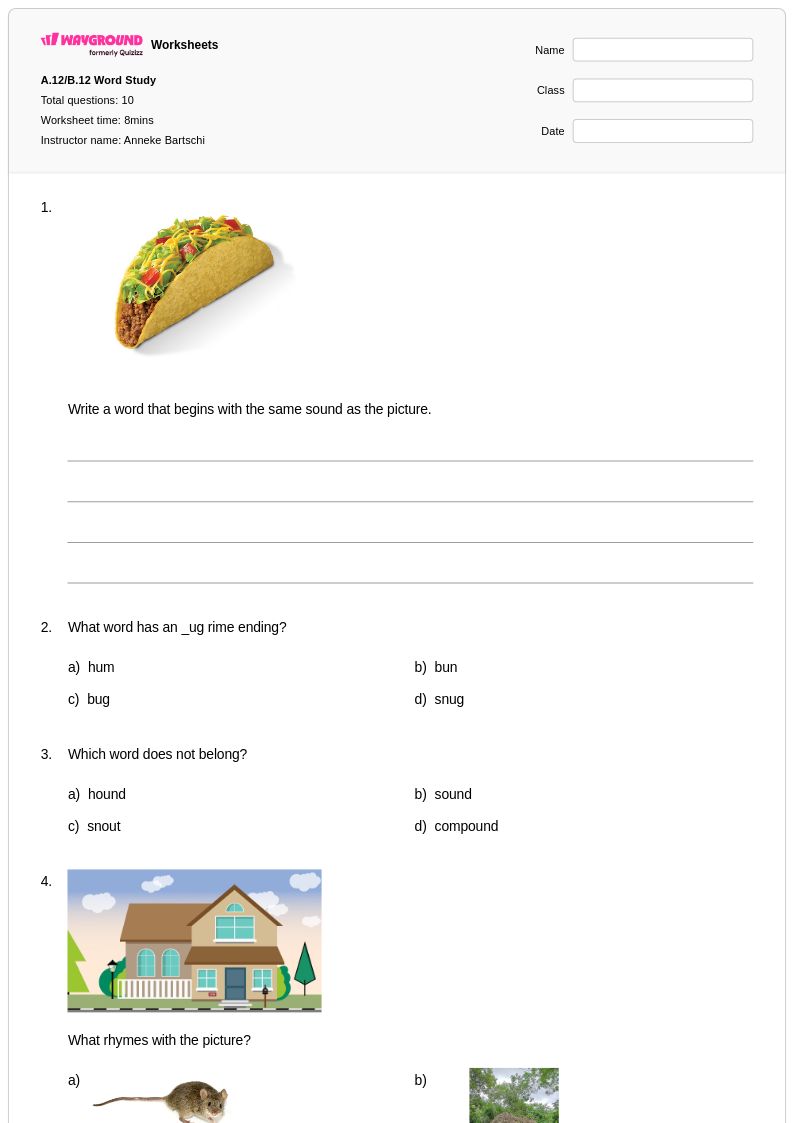
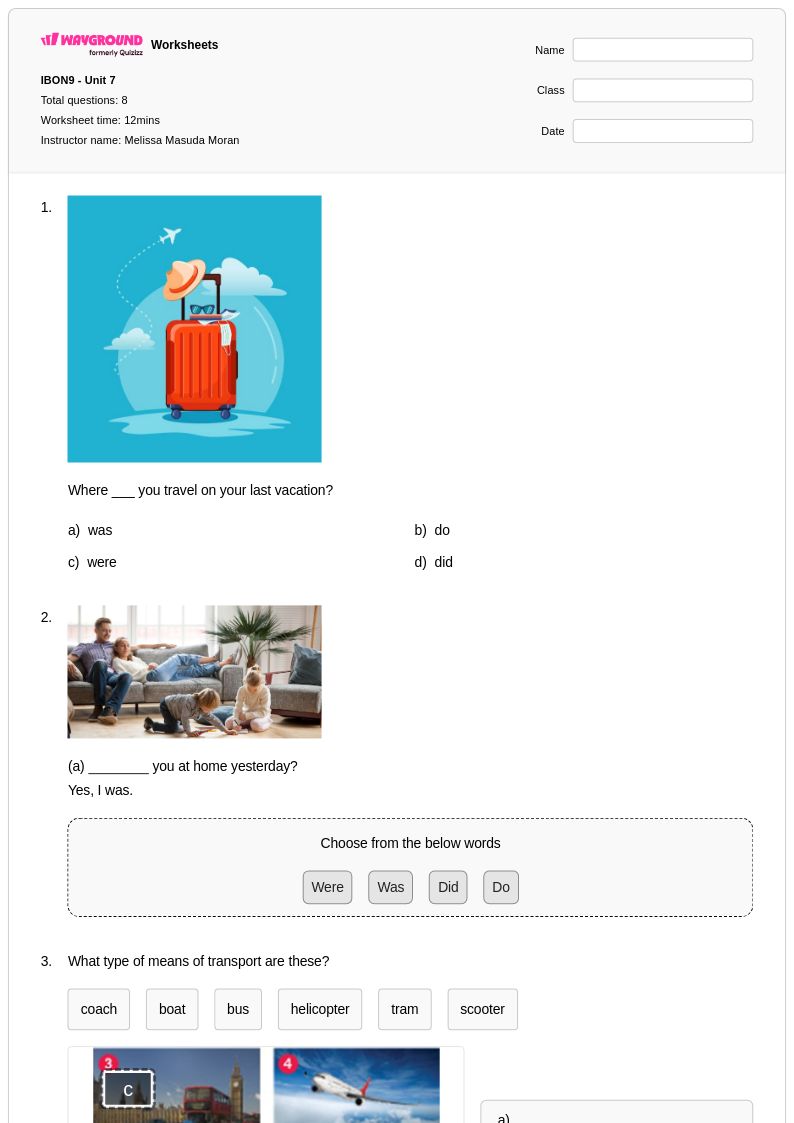
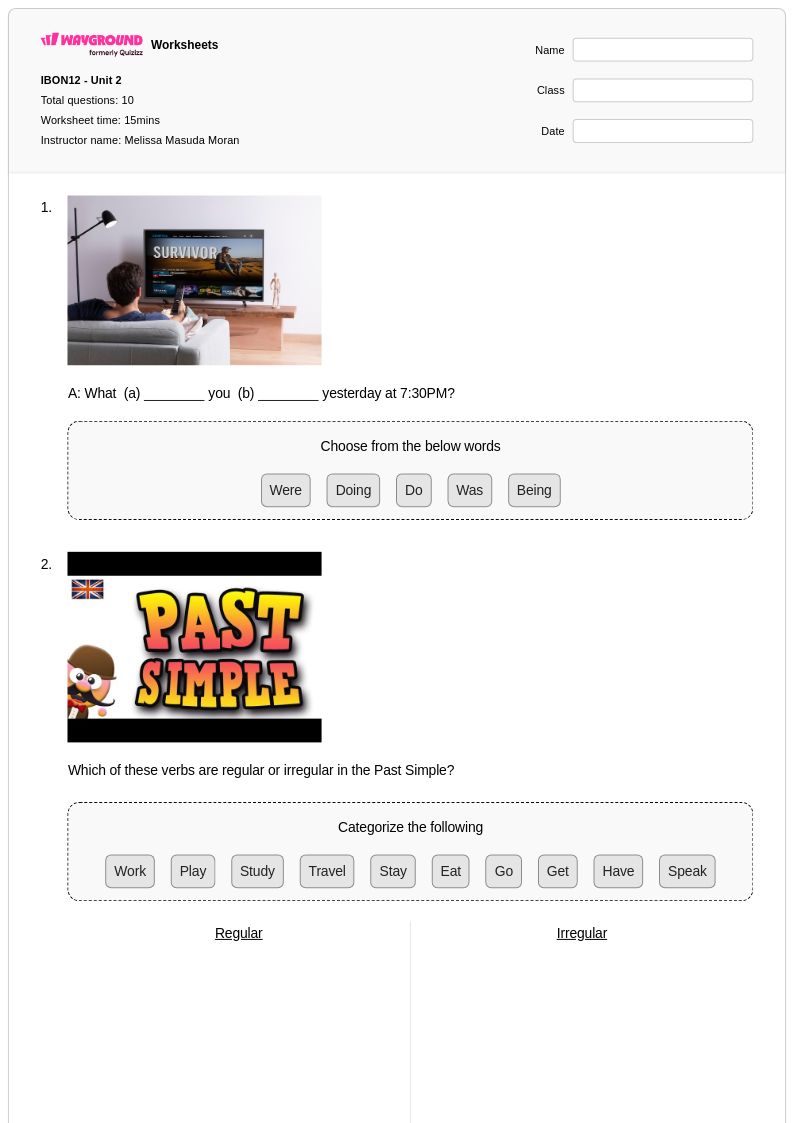
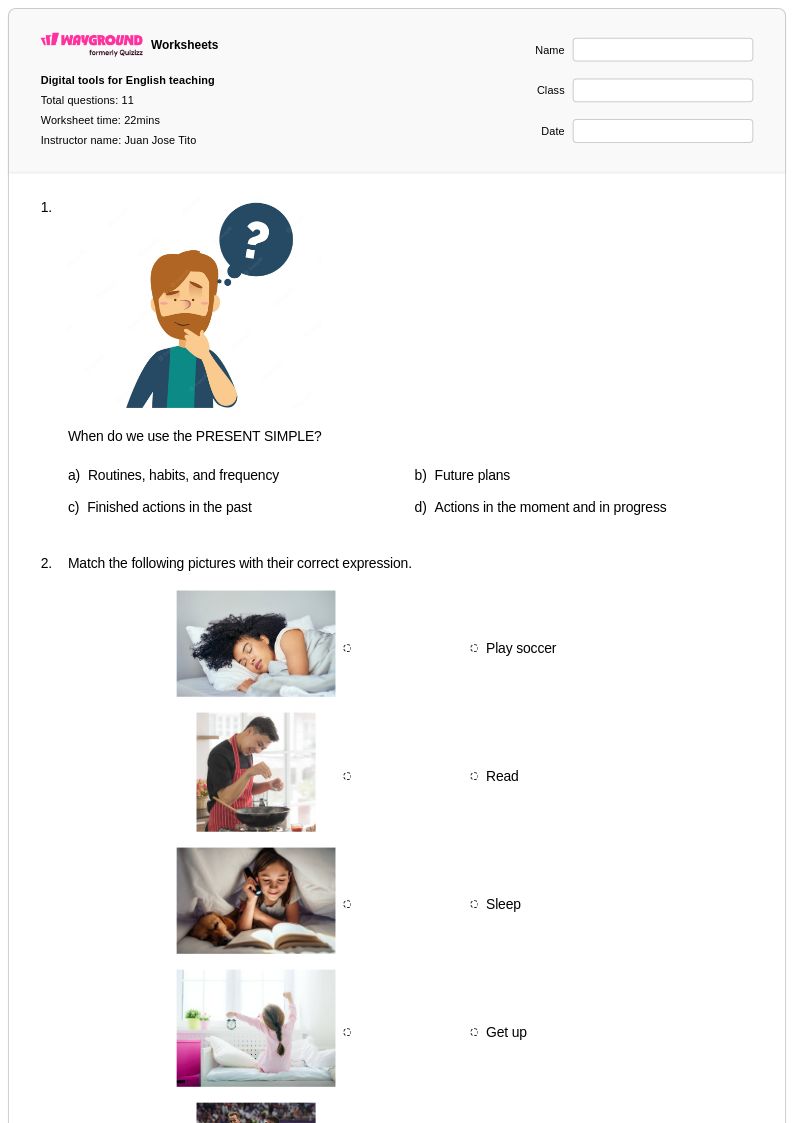
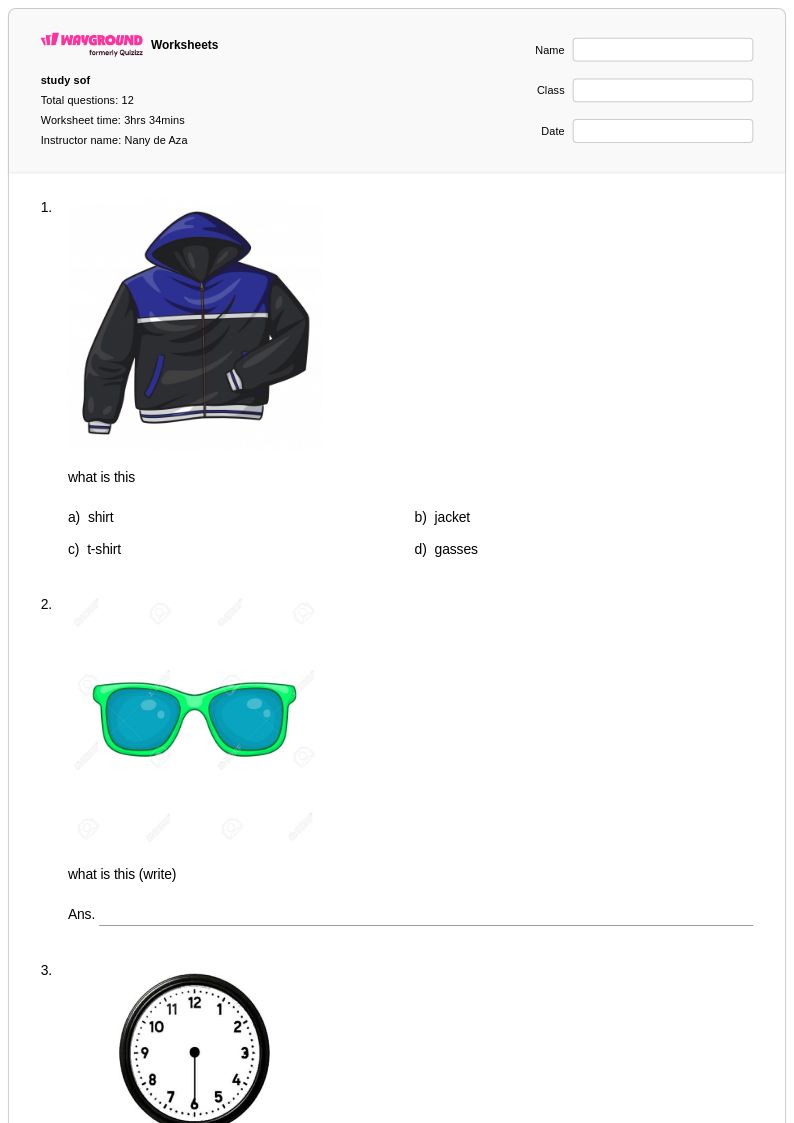
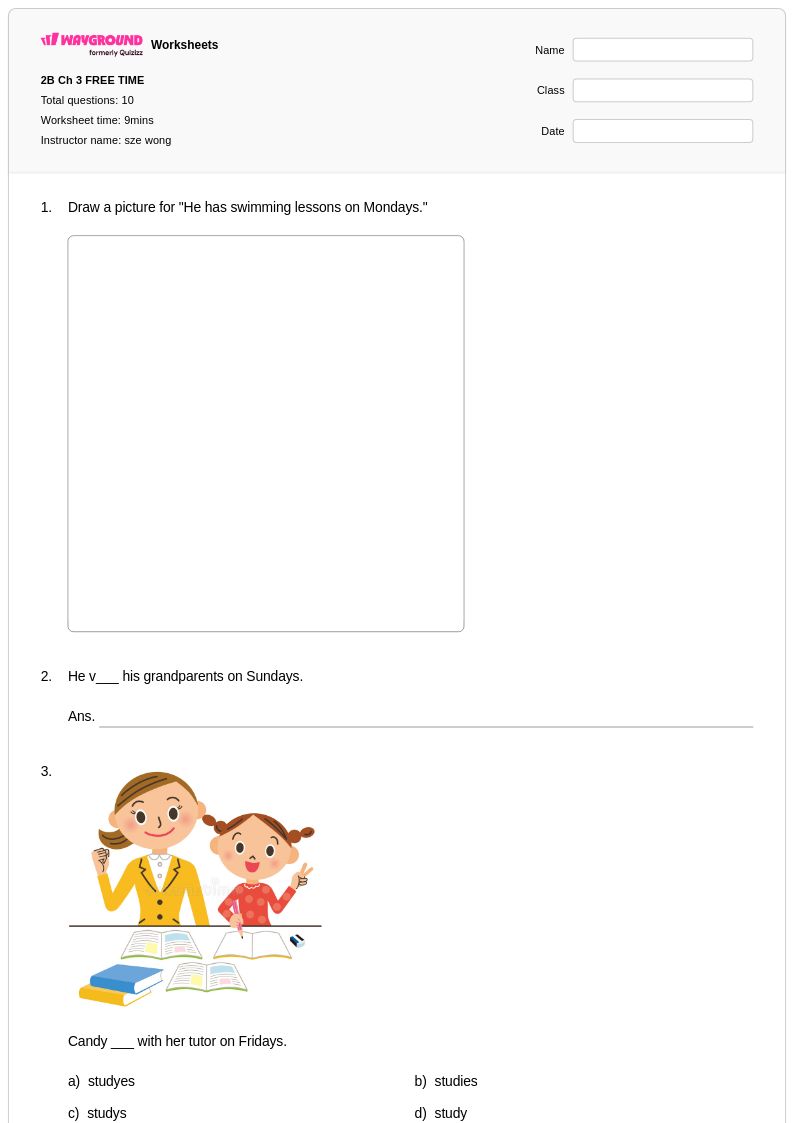
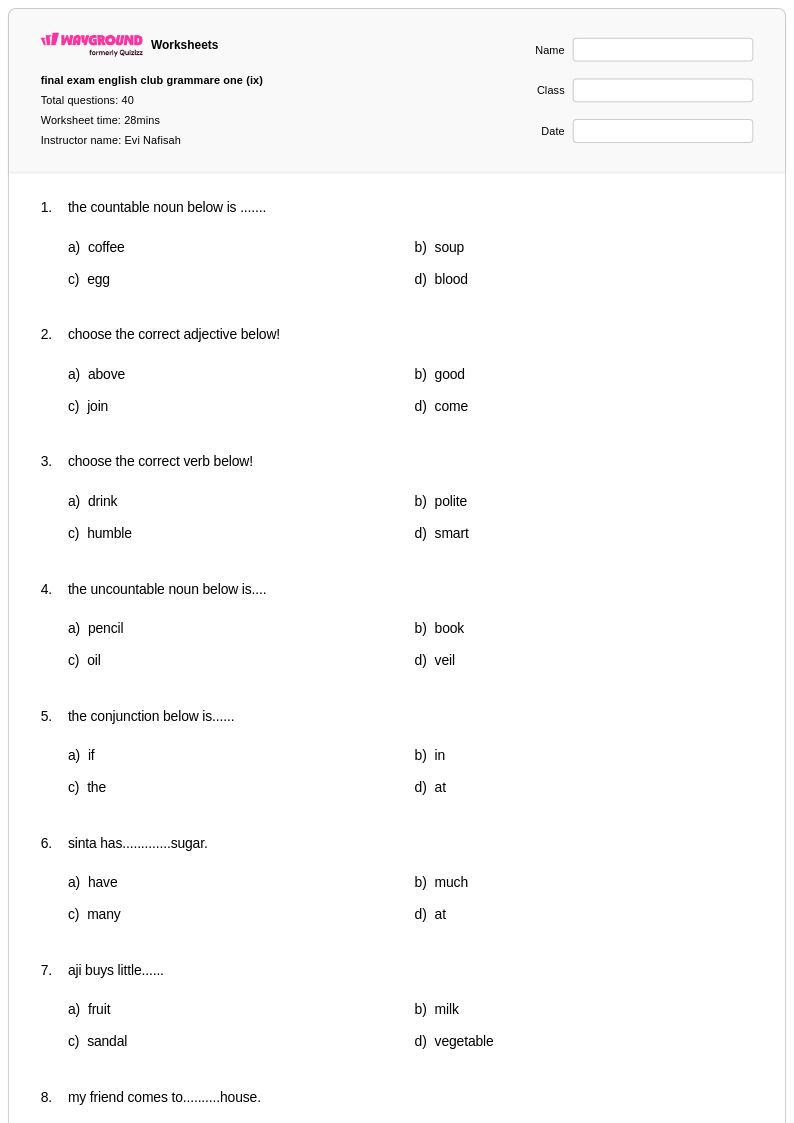
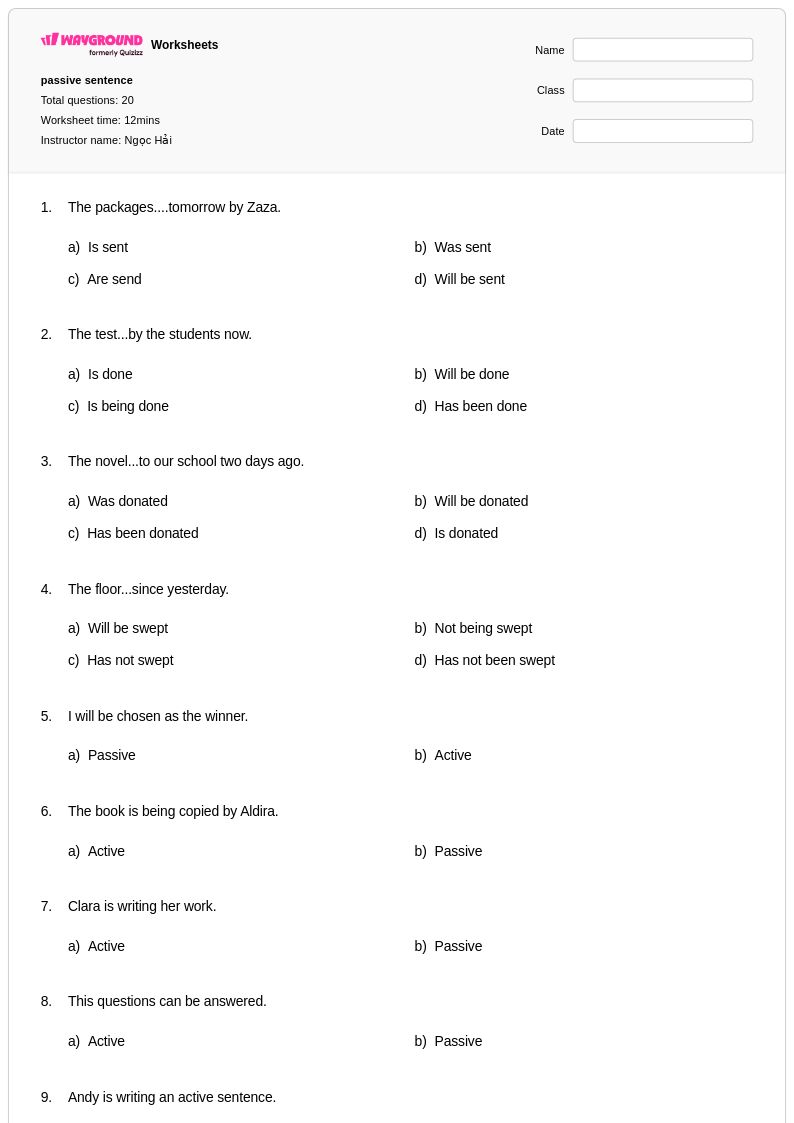
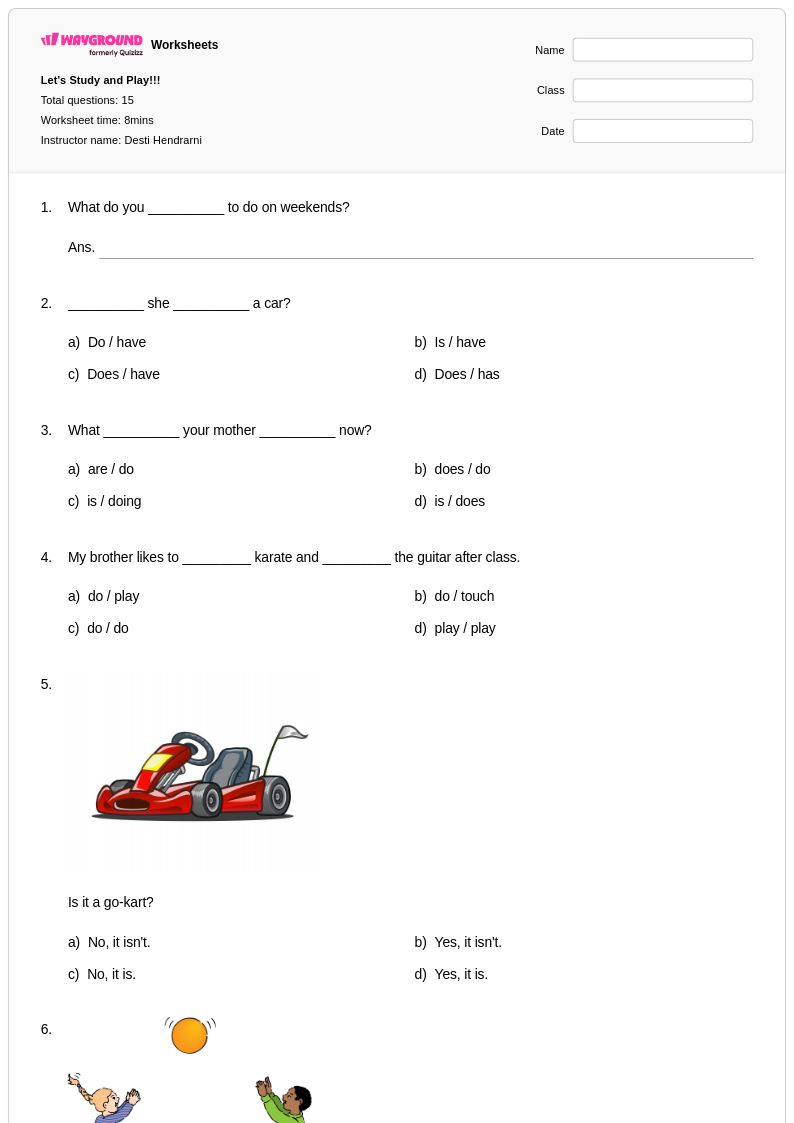
Year 1 novel study worksheets from Wayground help young readers explore story elements through engaging printables and practice problems, complete with answer keys for effective learning assessment.
Explore printable Novel Study worksheets for Year 1
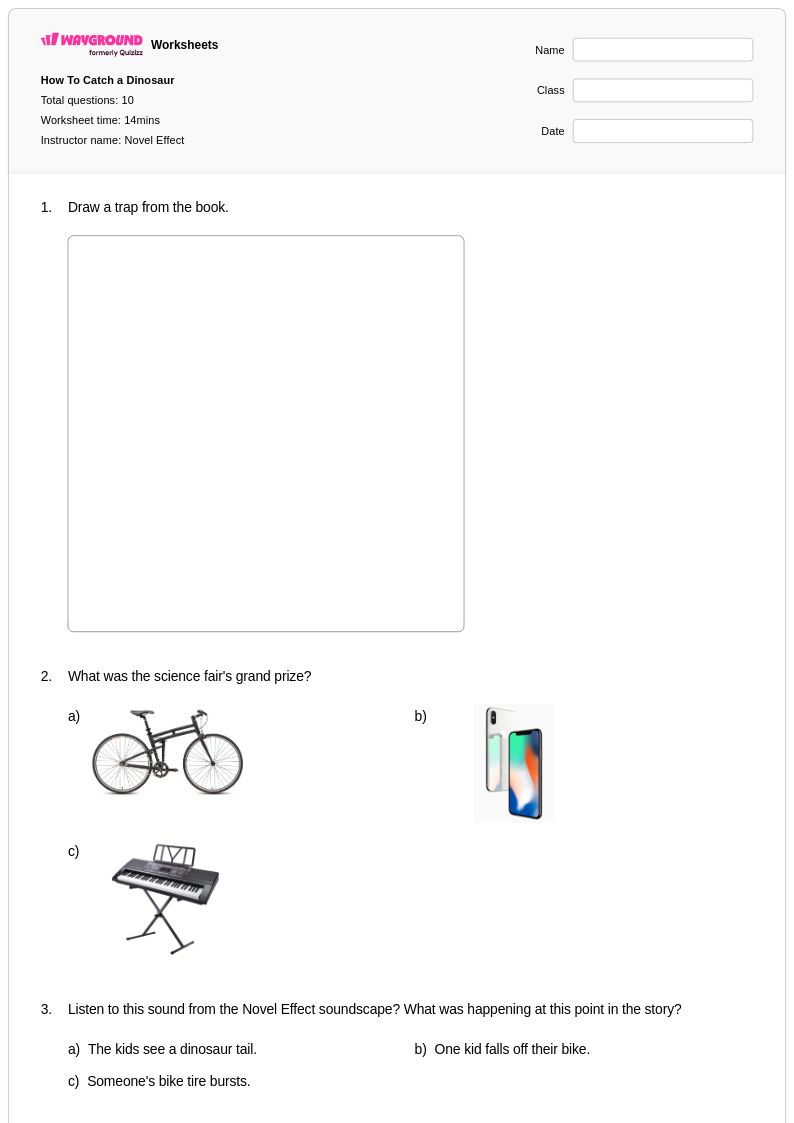
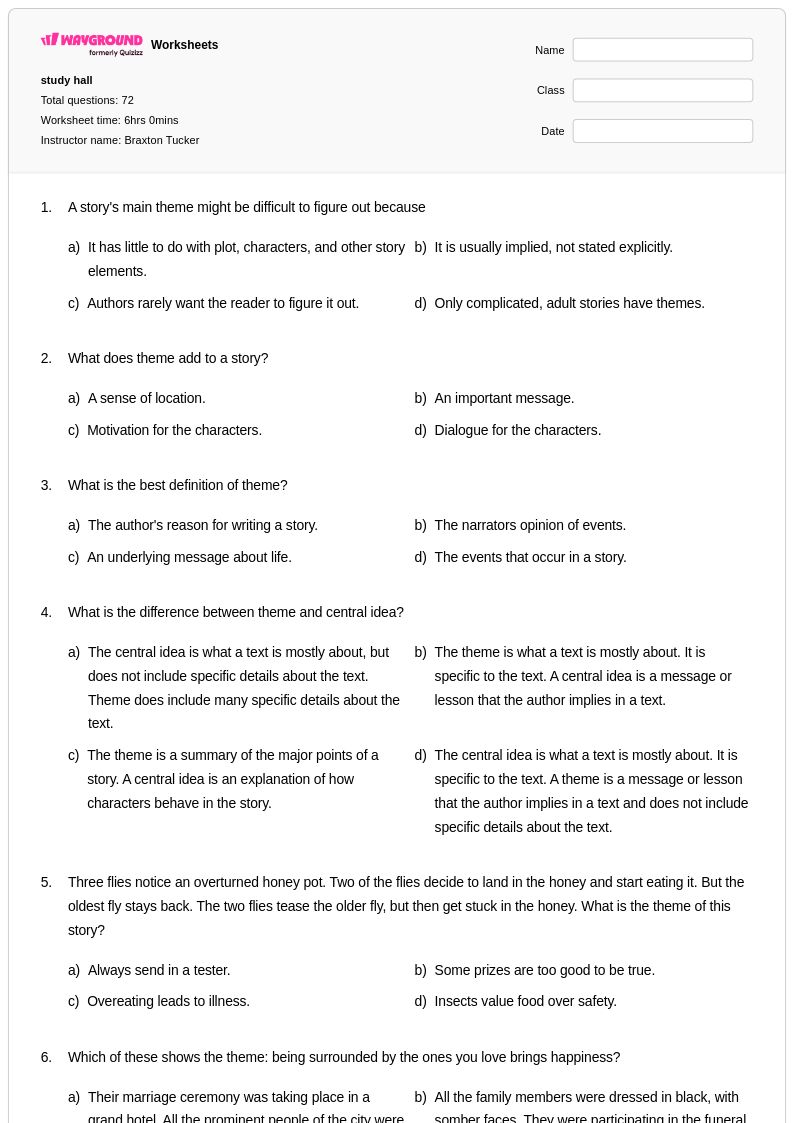
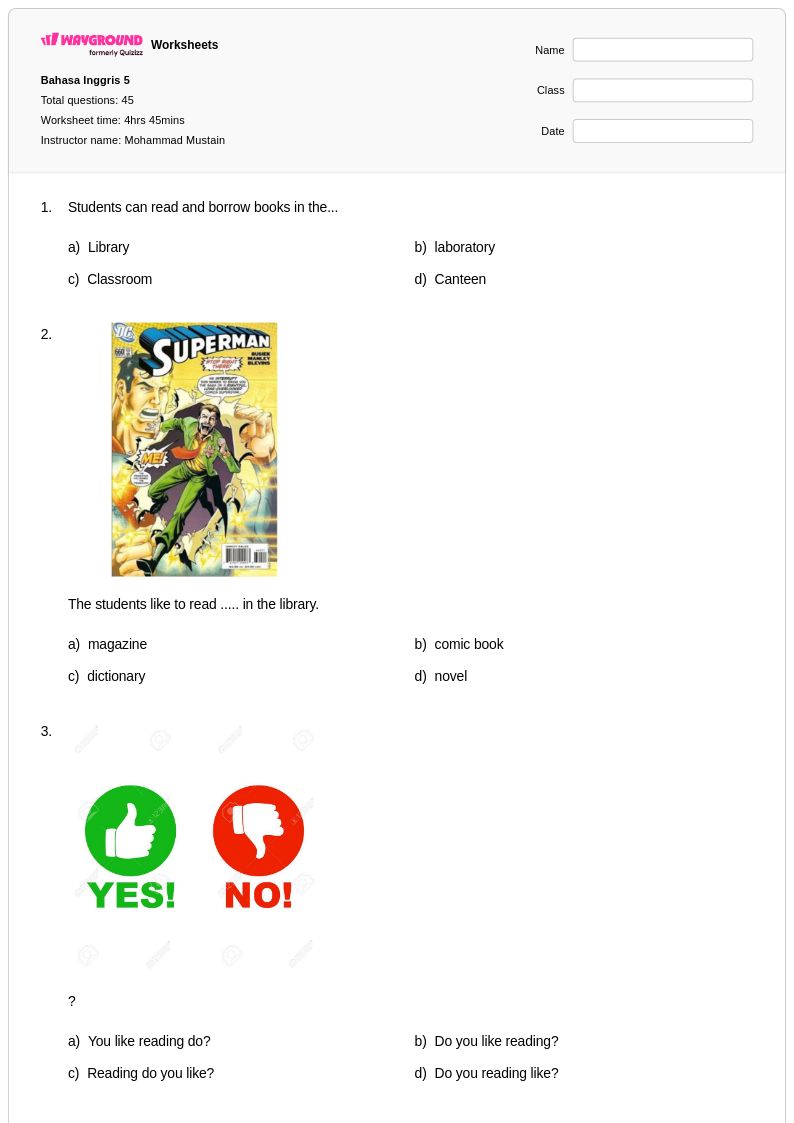
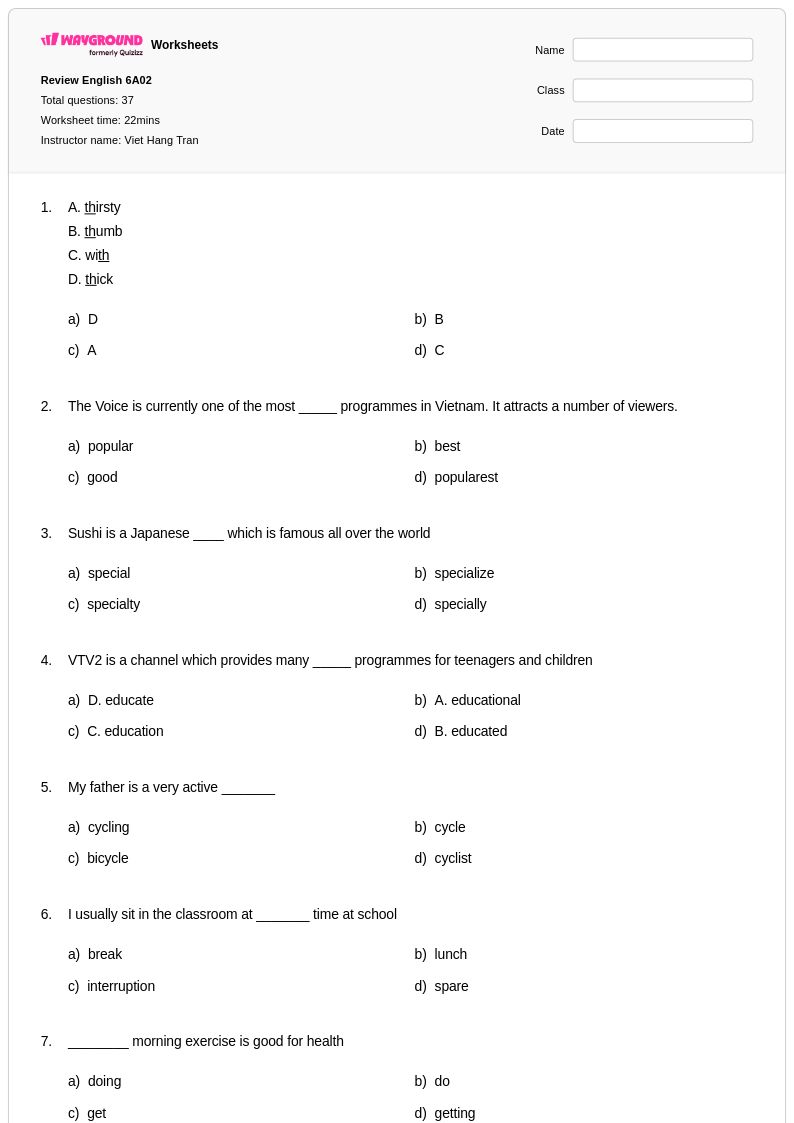
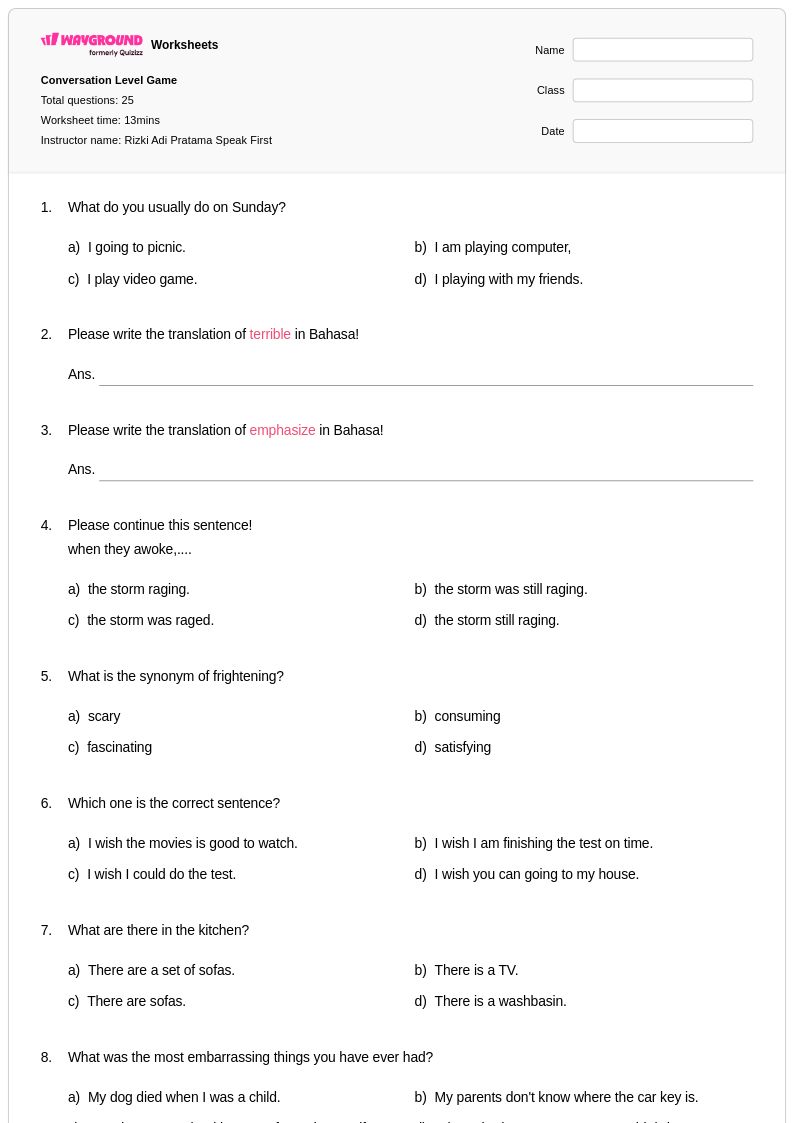
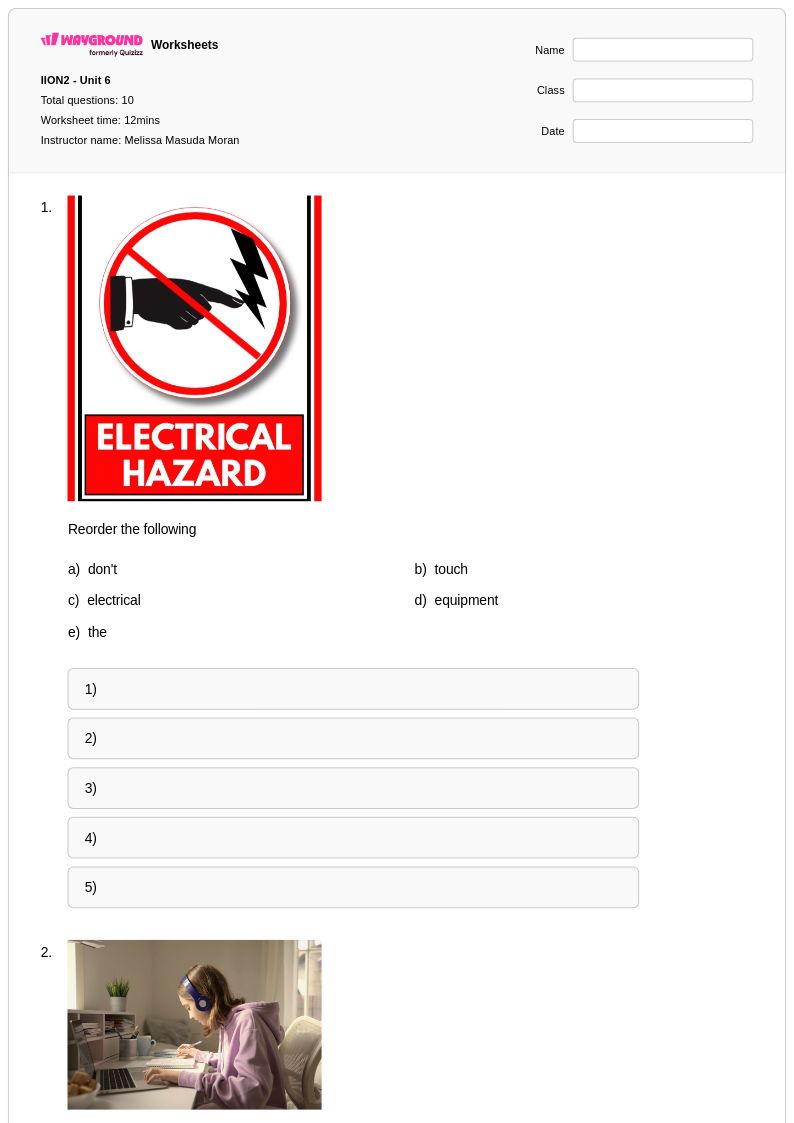
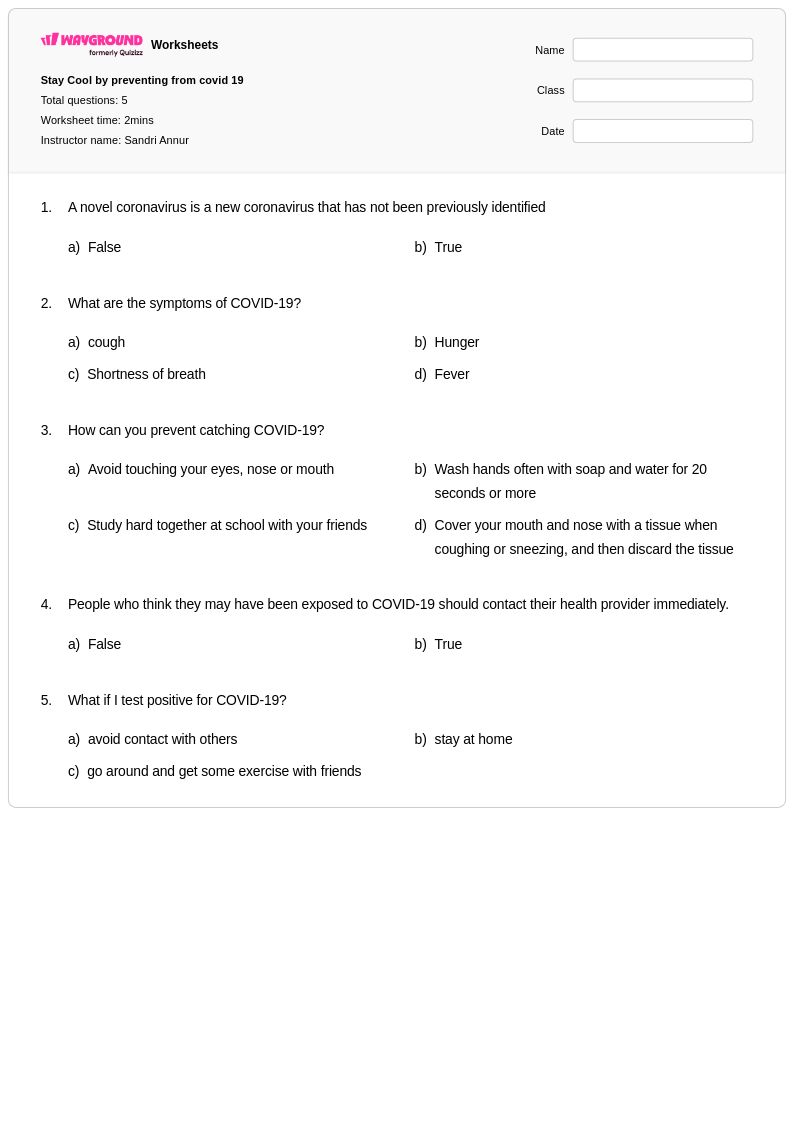
Year 1 novel study worksheets available through Wayground (formerly Quizizz) provide young readers with structured activities that build foundational literacy skills through engaging story exploration. These carefully crafted printables focus on developing essential reading comprehension abilities including character identification, plot sequencing, and basic story elements recognition. Students practice connecting with age-appropriate novels while strengthening vocabulary development, prediction skills, and reading fluency through targeted exercises that make literature accessible and enjoyable. Each worksheet collection includes comprehensive answer keys and free pdf resources that support independent learning and allow teachers to efficiently assess student progress in understanding narrative structure and literary concepts appropriate for beginning readers.
Wayground (formerly Quizizz) empowers Year 1 educators with millions of teacher-created novel study resources that streamline lesson planning and support differentiated instruction across diverse learning needs. The platform's robust search and filtering capabilities enable teachers to quickly locate standards-aligned materials that match specific novels, reading levels, and instructional objectives. Flexible customization tools allow educators to modify worksheets for remediation or enrichment purposes, ensuring every student receives appropriate challenge and support during novel studies. Available in both printable and digital formats including downloadable pdfs, these resources facilitate seamless integration into classroom instruction, independent practice sessions, and take-home assignments that reinforce critical thinking skills and foster a lifelong love of reading through meaningful literary engagement.
FAQs
How do I teach a novel study unit in middle school?
A structured novel study unit typically moves students through pre-reading context, chapter-by-chapter comprehension checks, and cumulative analysis of character development, plot structure, theme, and literary devices. Teachers often anchor each stage with guided questions that shift from literal recall to interpretive and evaluative thinking. Pairing reading with focused worksheets at each stage helps students track their thinking across a longer text rather than relying on memory alone.
What exercises help students analyze characters and themes in a novel?
Effective practice exercises include character-mapping activities that trace how a character changes across key plot points, evidence-based response prompts that ask students to support thematic claims with textual citations, and comparative tasks that connect a novel's themes to real-world contexts or other texts. For novels like The Giver or Flowers for Algernon, prompts that ask students to track a single character's internal conflict across chapters are particularly effective at building analytical depth.
What mistakes do students commonly make when analyzing a novel?
The most frequent errors include summarizing plot instead of analyzing meaning, identifying a theme as a single word like 'friendship' rather than as a complete arguable statement, and confusing character traits with character motivations. Students also commonly misattribute the narrator's perspective to the author. Targeted worksheet prompts that explicitly require evidence and reasoning can interrupt these patterns before they solidify.
How do I differentiate novel study for struggling readers or students with accommodations?
Differentiation in novel study can include tiered questioning that scaffolds from literal to inferential, reduced answer choices on assessment items to lower cognitive load, and read-aloud support for students who process text more effectively through audio. On Wayground, teachers can enable individual accommodations such as read aloud, extended time, and reduced answer choices for specific students without flagging those settings to the rest of the class, making discreet support straightforward to implement.
How do I use Wayground's novel study worksheets in my classroom?
Wayground's novel study worksheets are available as printable PDFs for traditional classroom use and in digital formats for technology-integrated environments, giving teachers flexibility depending on their setup. Teachers can also host the materials as a live or assigned quiz directly on Wayground, which allows for real-time progress monitoring. The worksheets cover novels including A Wrinkle in Time, Charlotte's Web, Hatchet, The Giver, and others, so teachers can select resources aligned to the specific text their class is reading.
How do I assess whether students truly understood a novel versus just following along?
Shallow reading typically surfaces in responses that retell events without connecting them to larger meaning. Assessment tasks that require students to explain why a plot event matters, predict how a theme is developed across multiple chapters, or compare two characters' responses to the same conflict reveal genuine comprehension. Including open-ended analytical writing prompts alongside multiple-choice comprehension checks gives a fuller picture of each student's actual engagement with the text.