
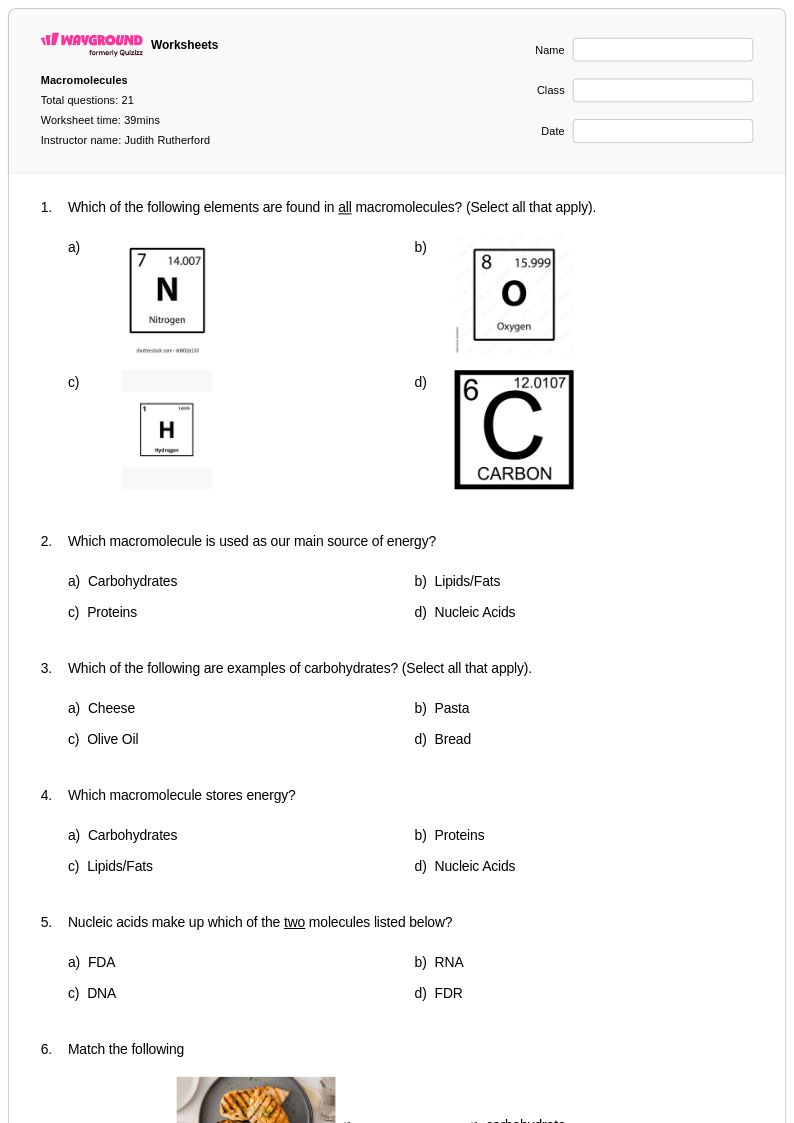
21 Q
9th - 12th
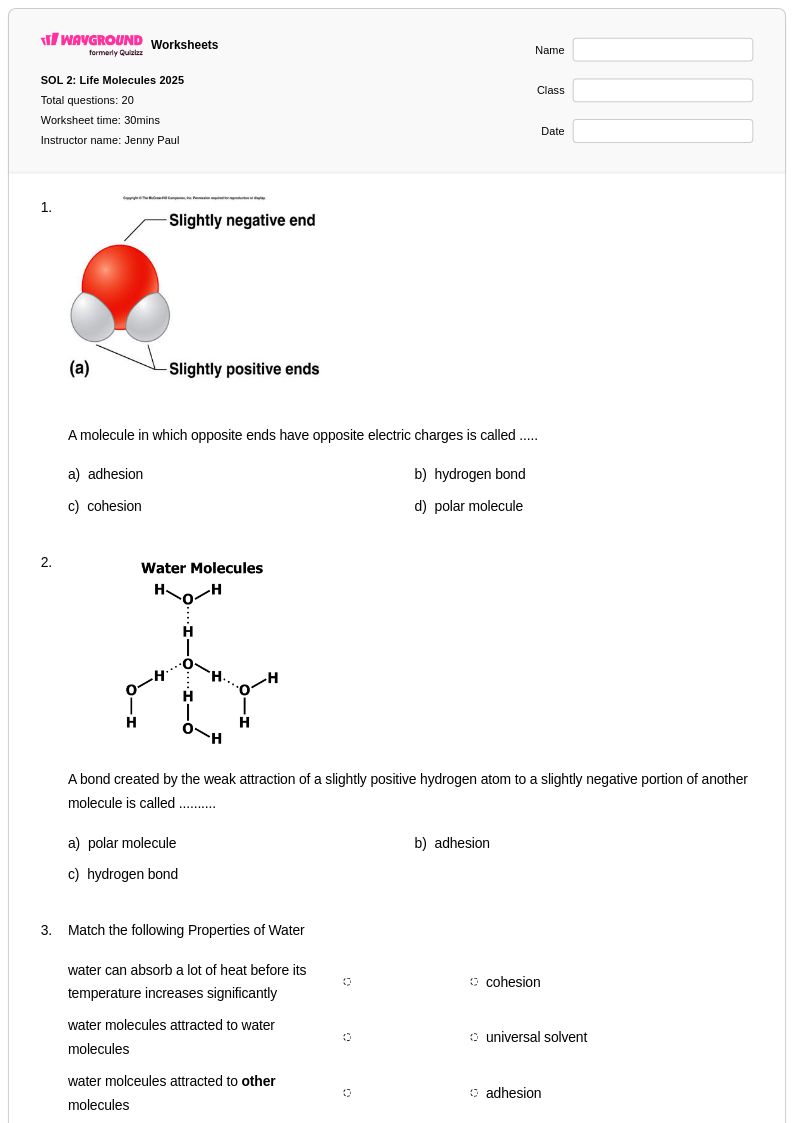
20 Q
9th - 12th
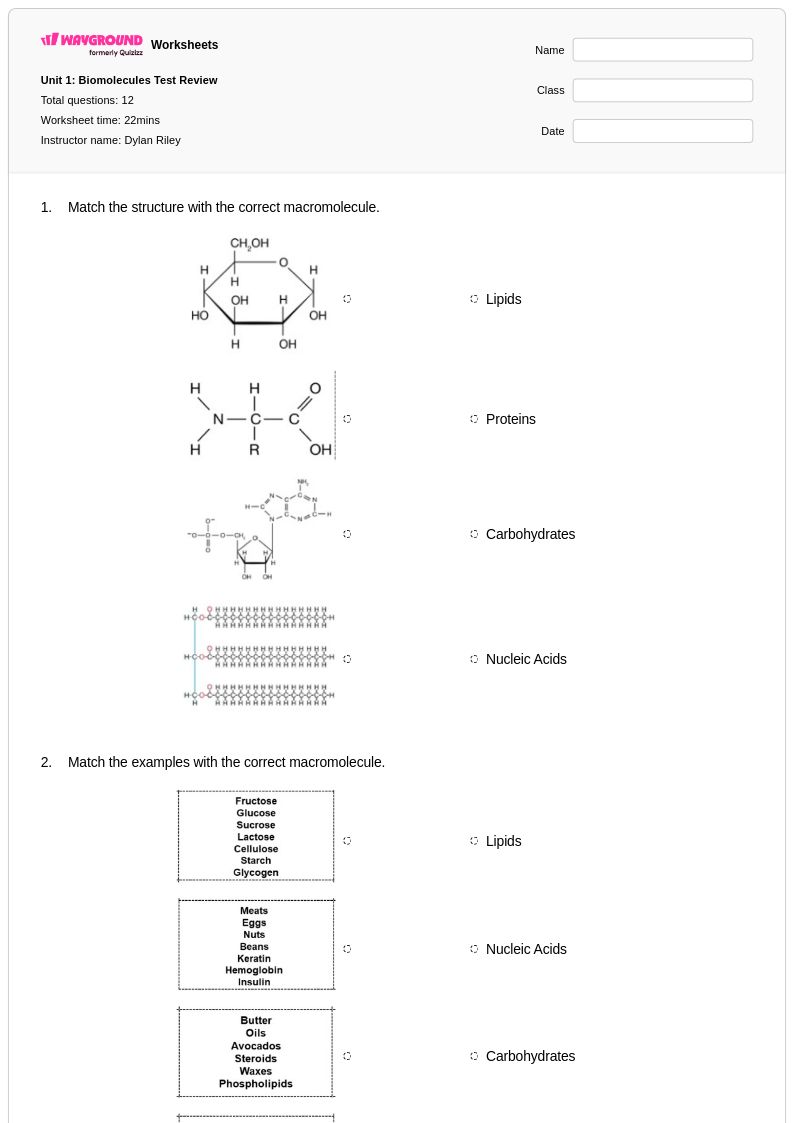
12 Q
9th - 12th
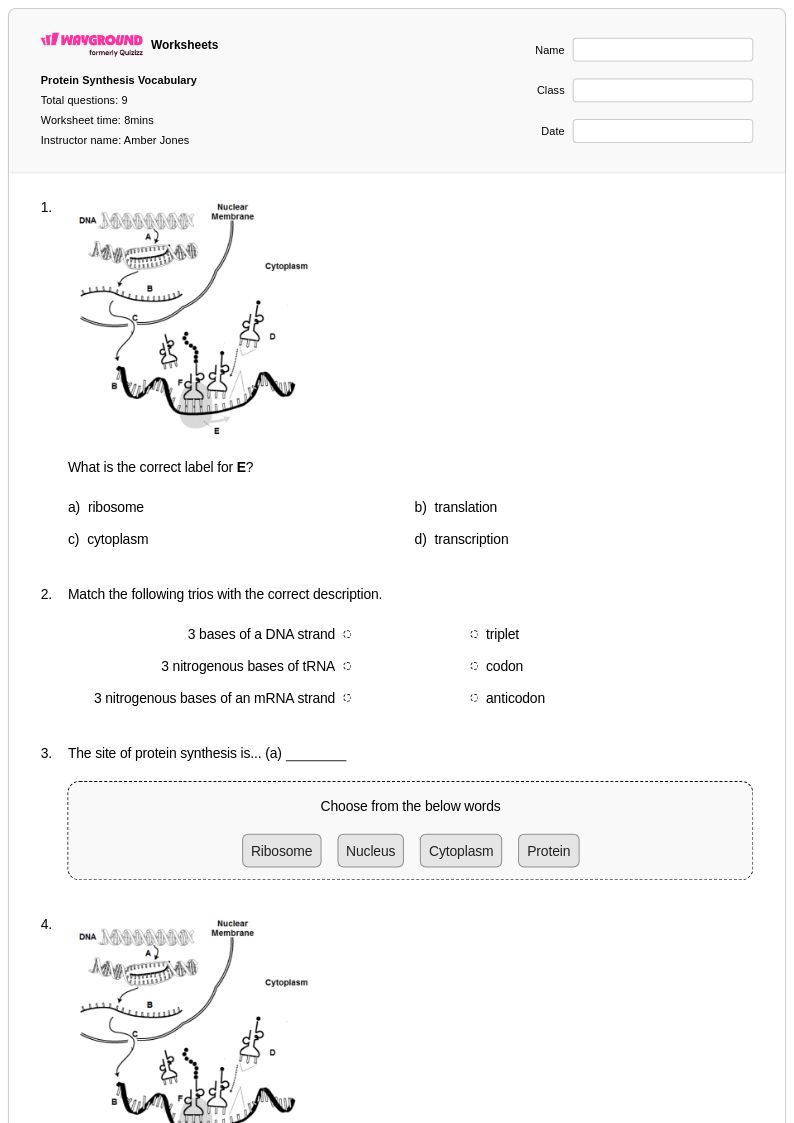
9 Q
9th - 12th
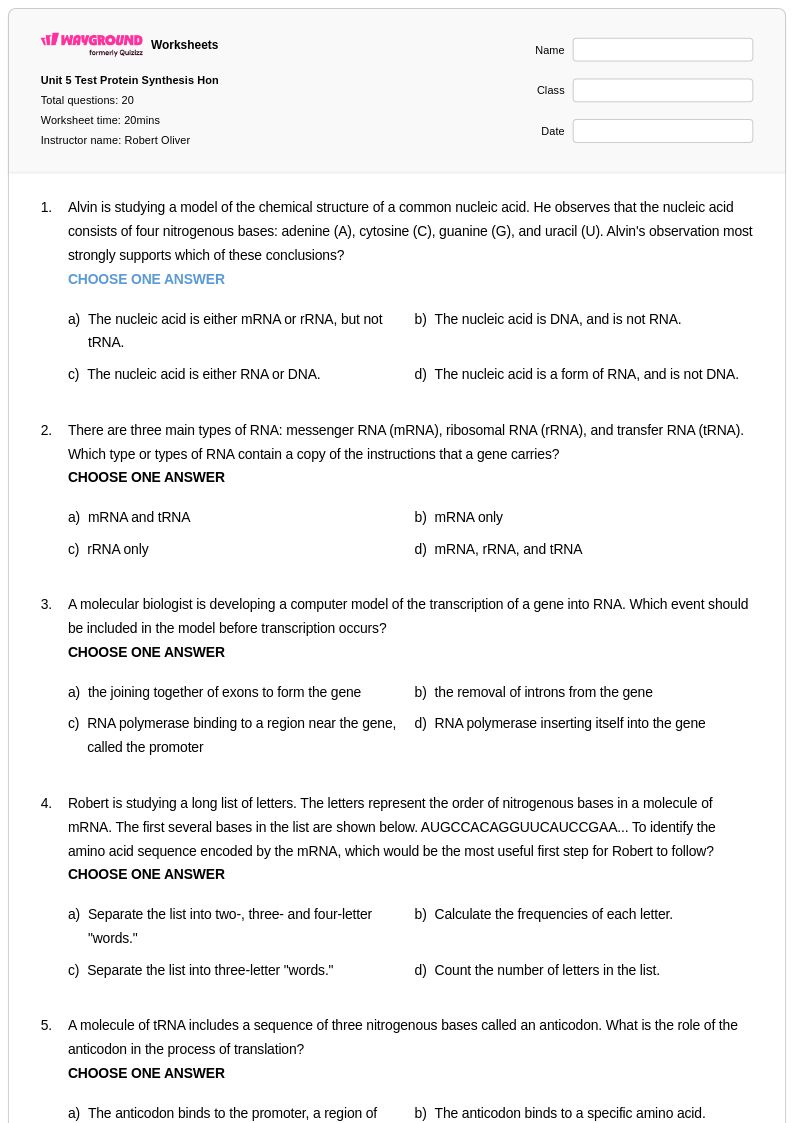
20 Q
10th - Uni
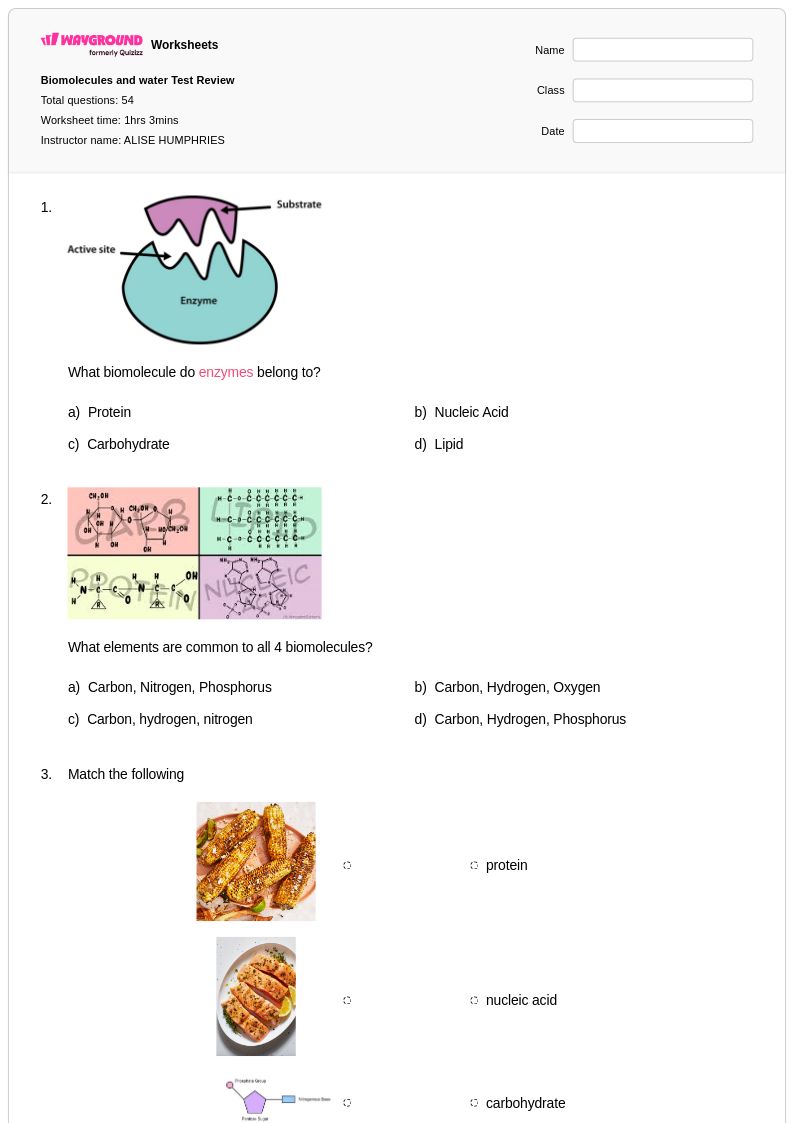
54 Q
9th - 12th
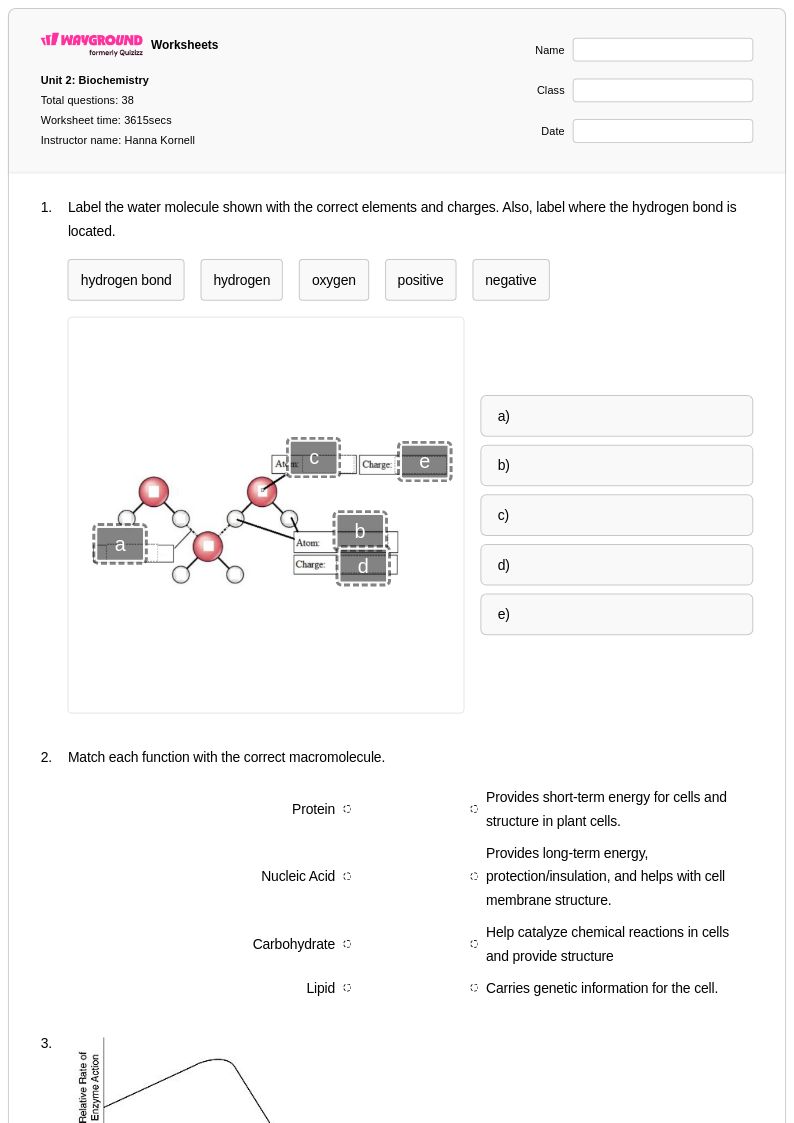
38 Q
9th - 12th
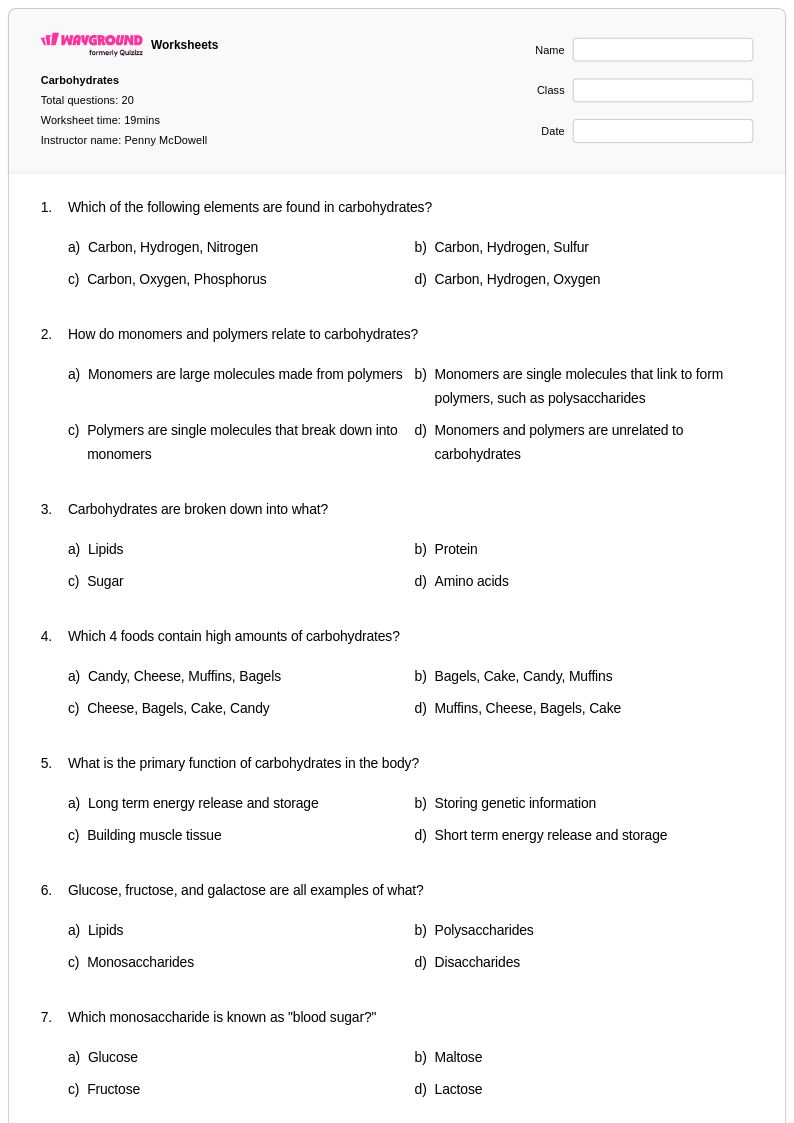
20 Q
9th - Uni
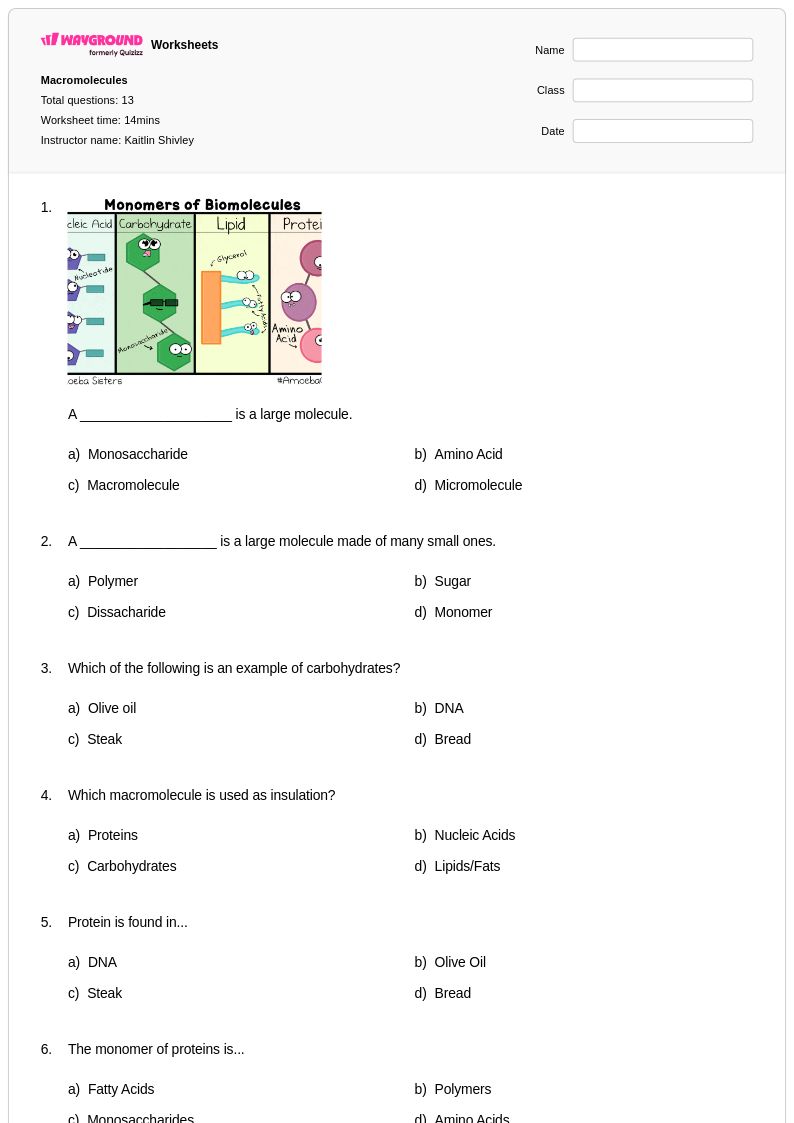
13 Q
9th - 12th
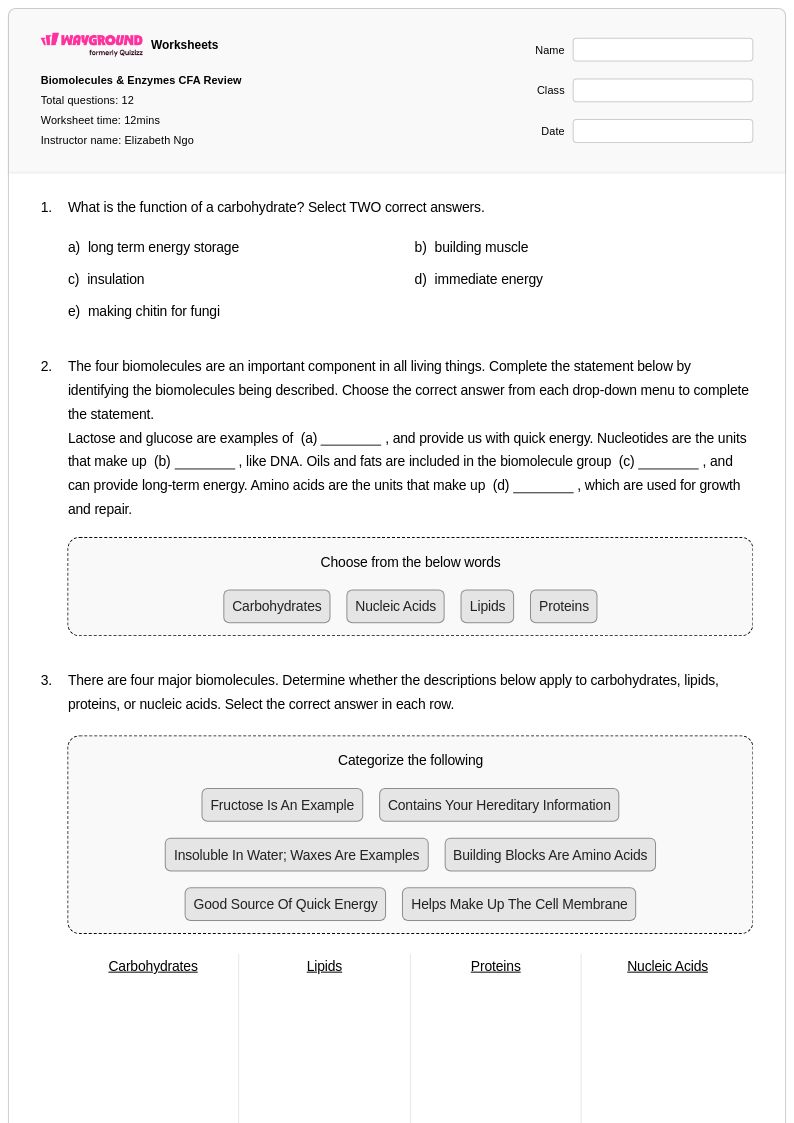
12 Q
9th - Uni
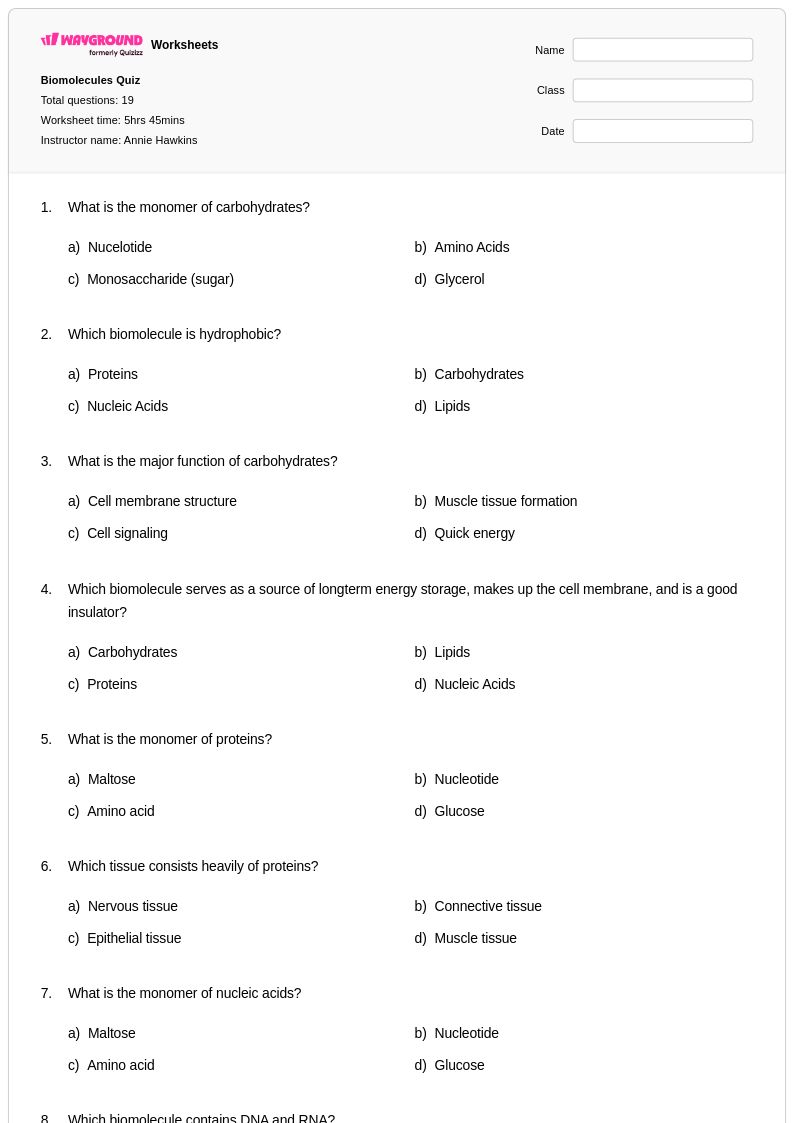
19 Q
11th
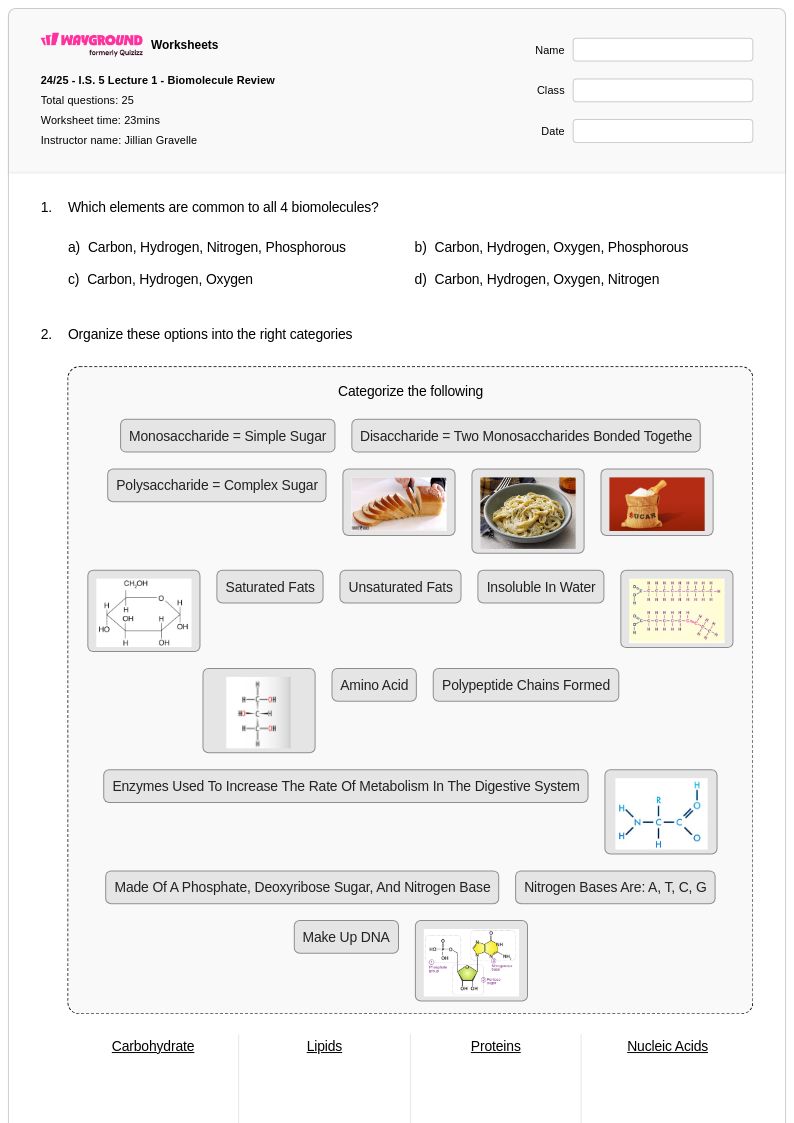
25 Q
9th - 12th
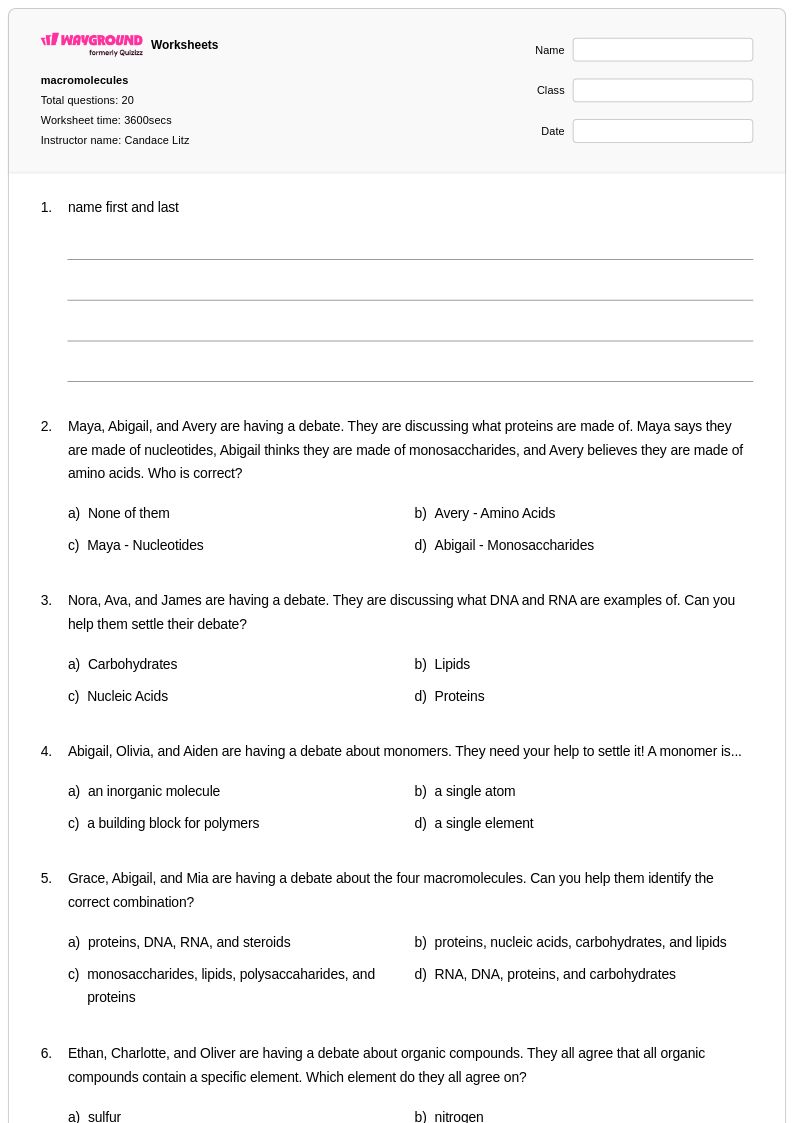
50 Q
9th - 12th
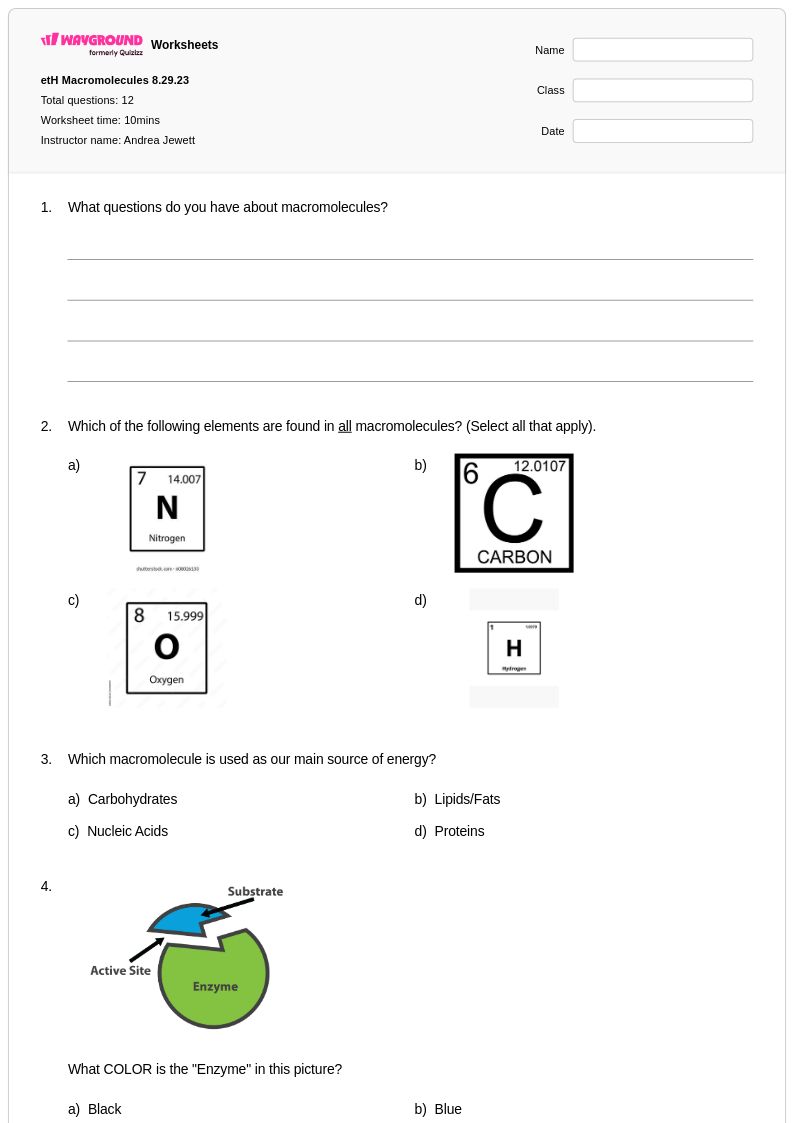
12 Q
9th - 12th
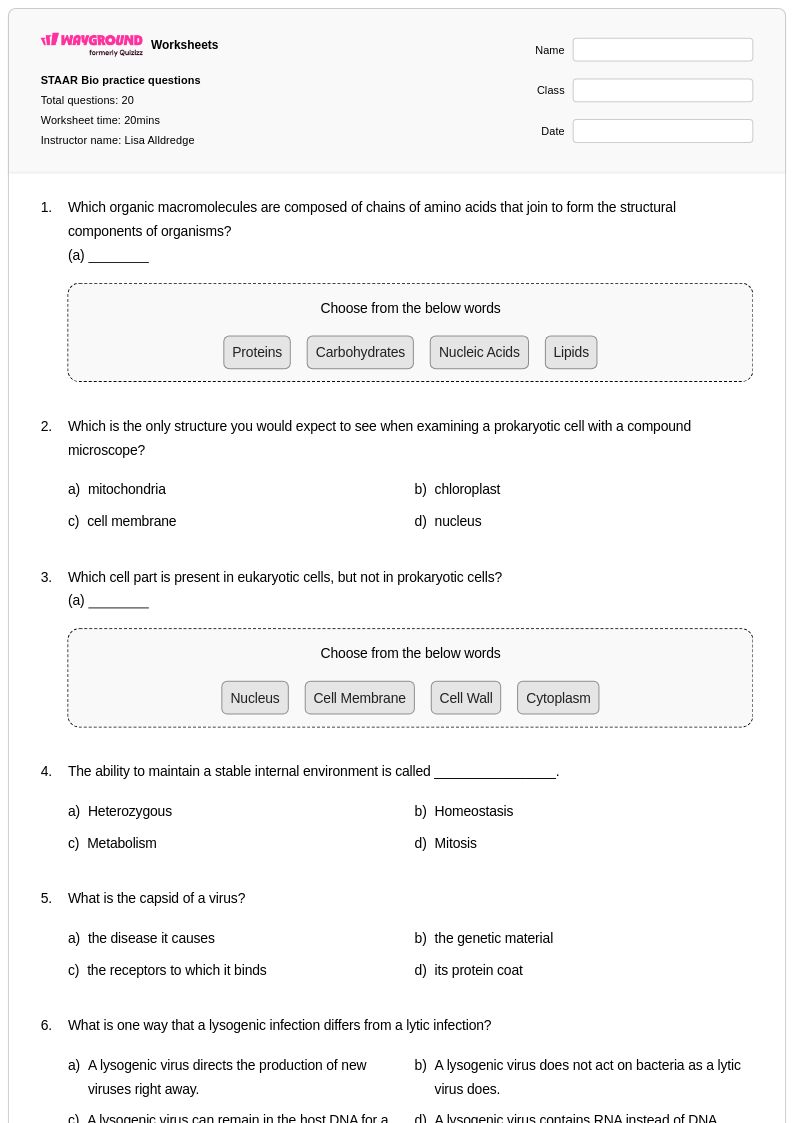
20 Q
9th - 12th
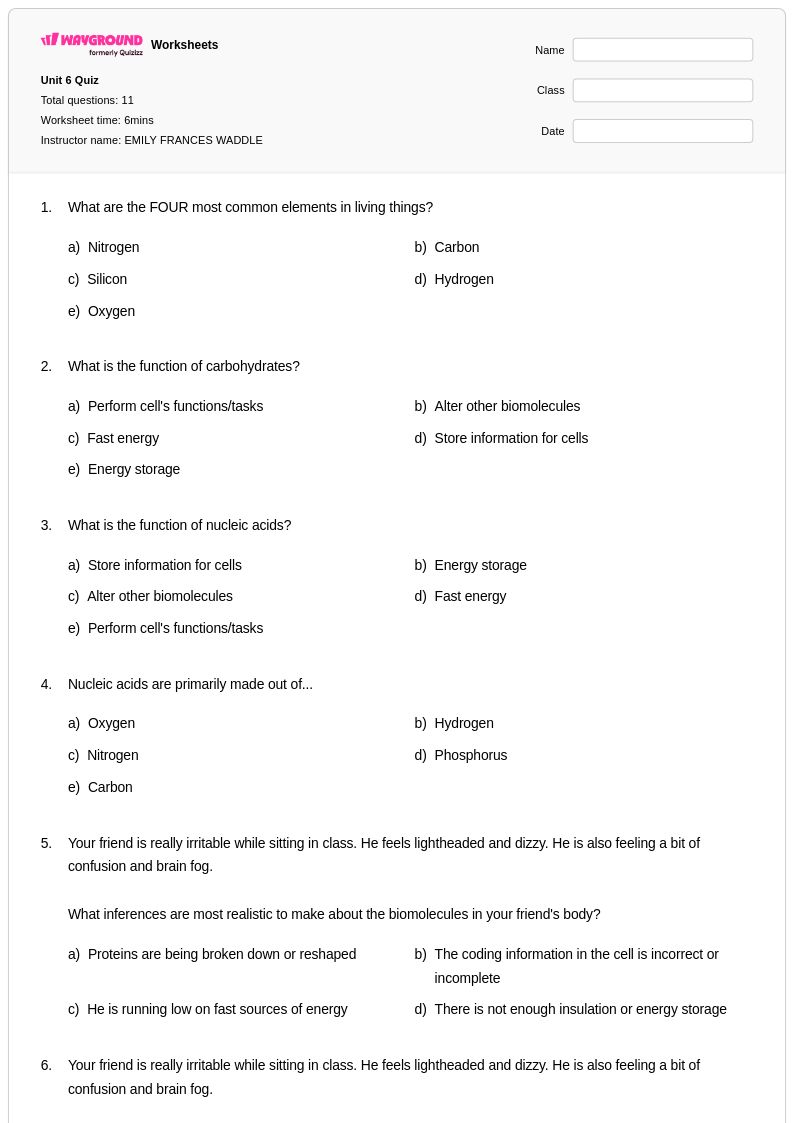
11 Q
9th - 12th
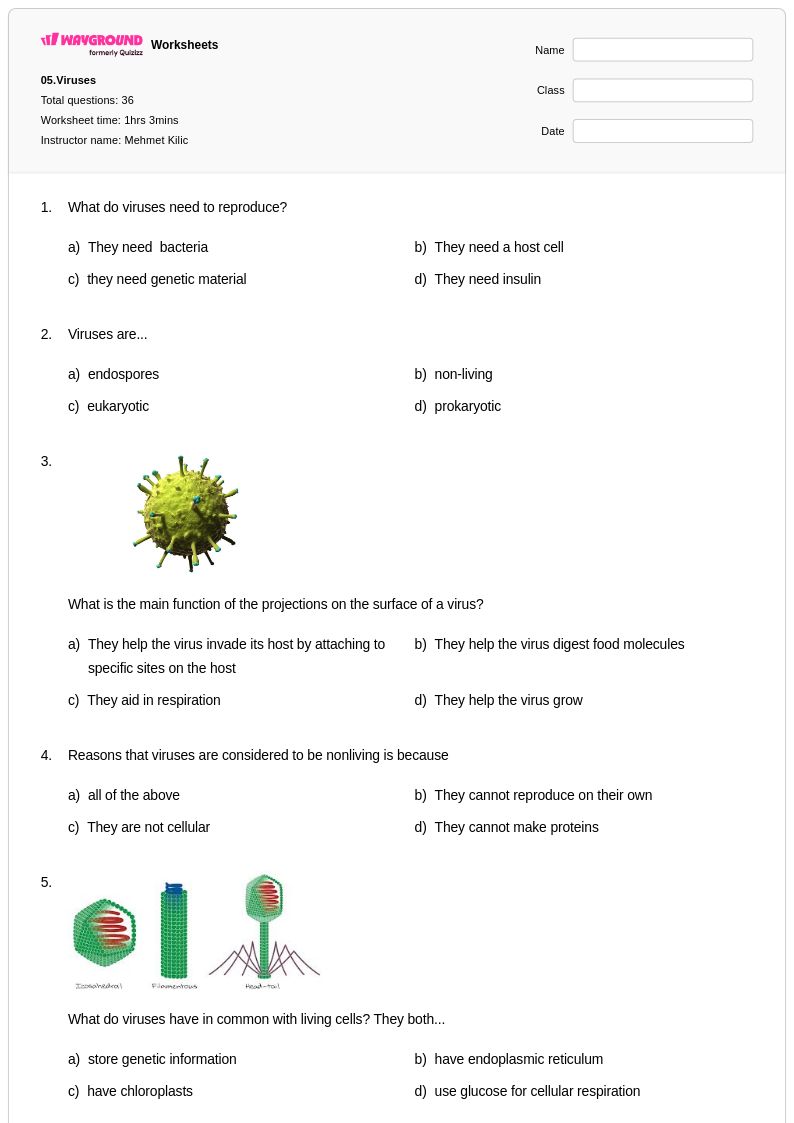
36 Q
9th - Uni
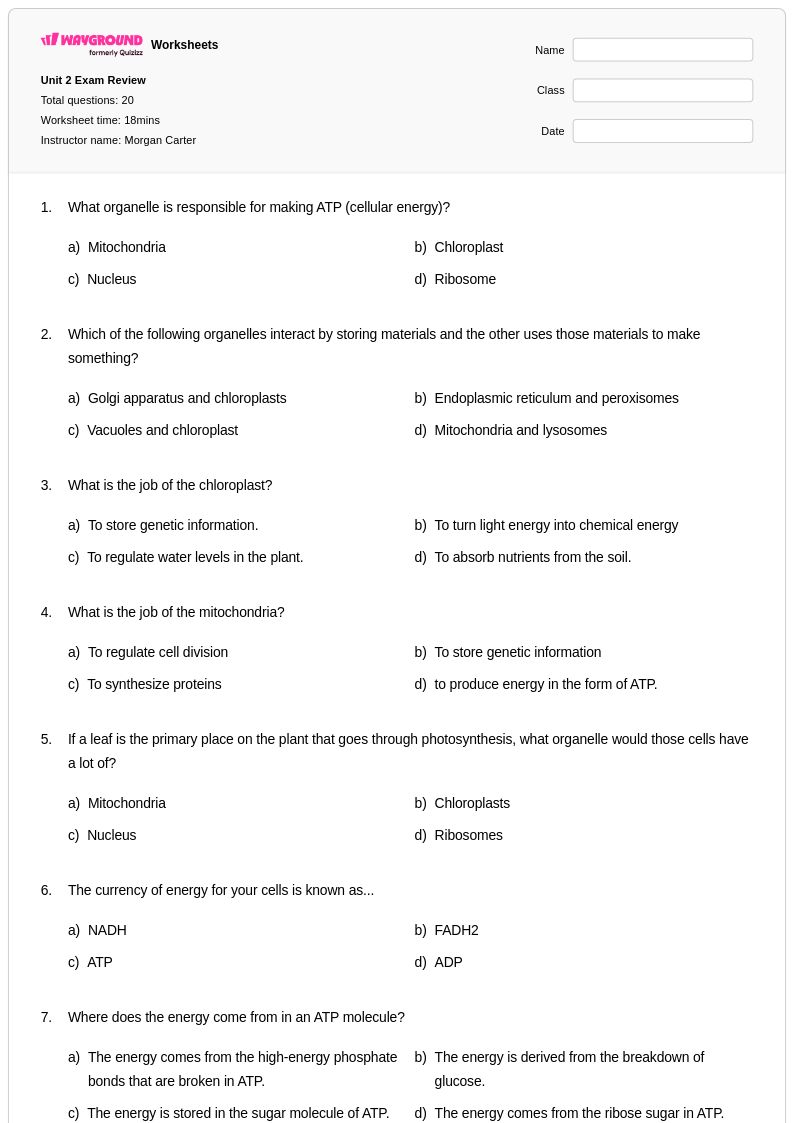
20 Q
9th - 12th
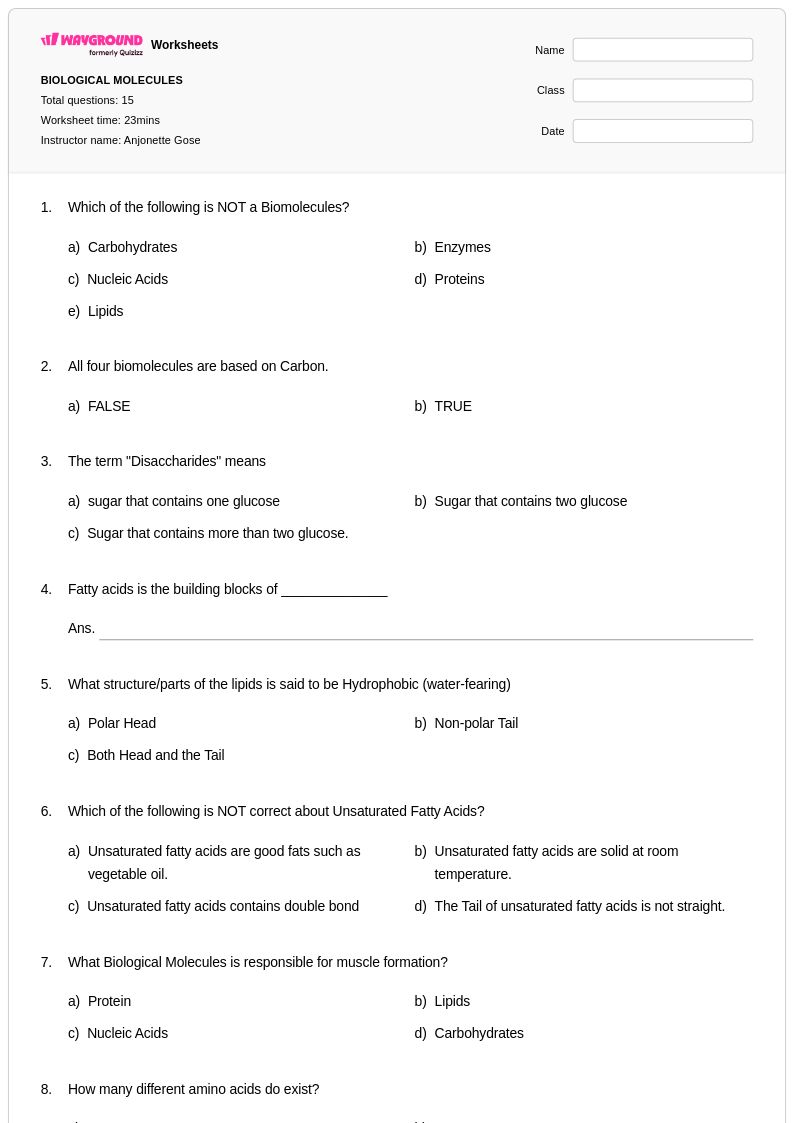
15 Q
10th - 12th
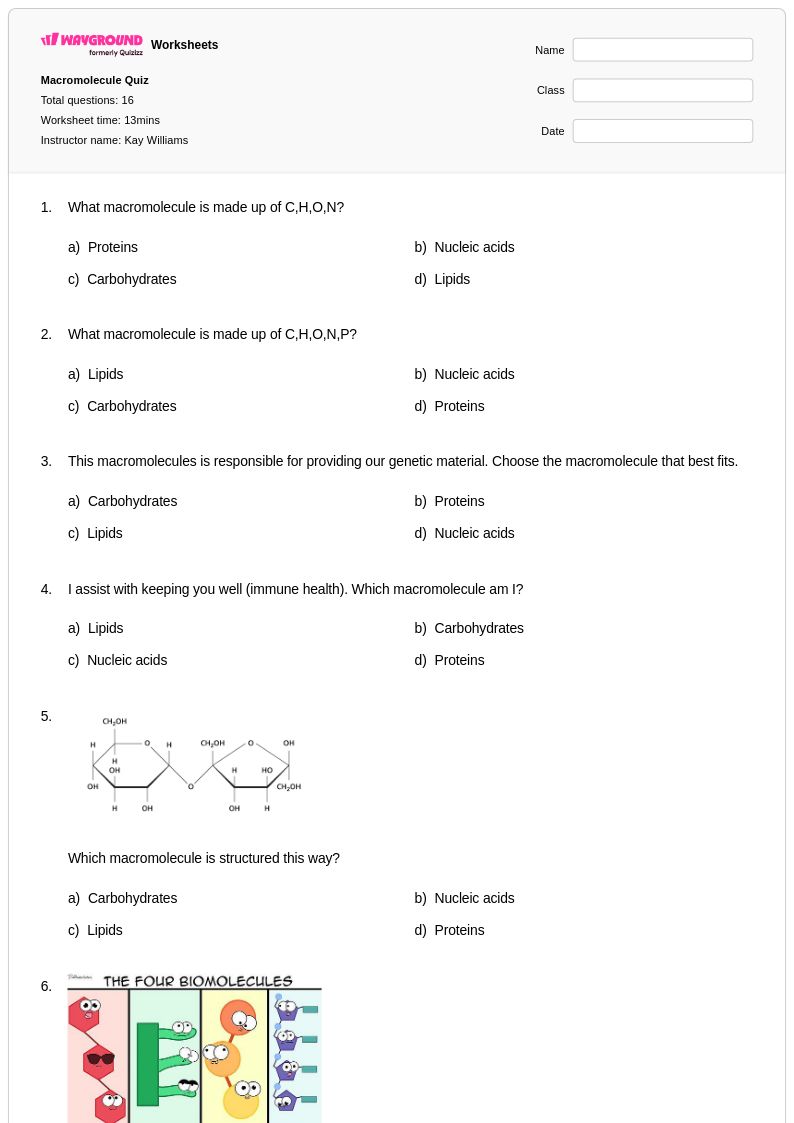
16 Q
11th
10 Q
9th - 12th
20 Q
9th - 12th
24 Q
11th
14 Q
9th - 12th
Explore Other Subject Worksheets for year 11
Explore printable Nucleic Acids worksheets for Year 11
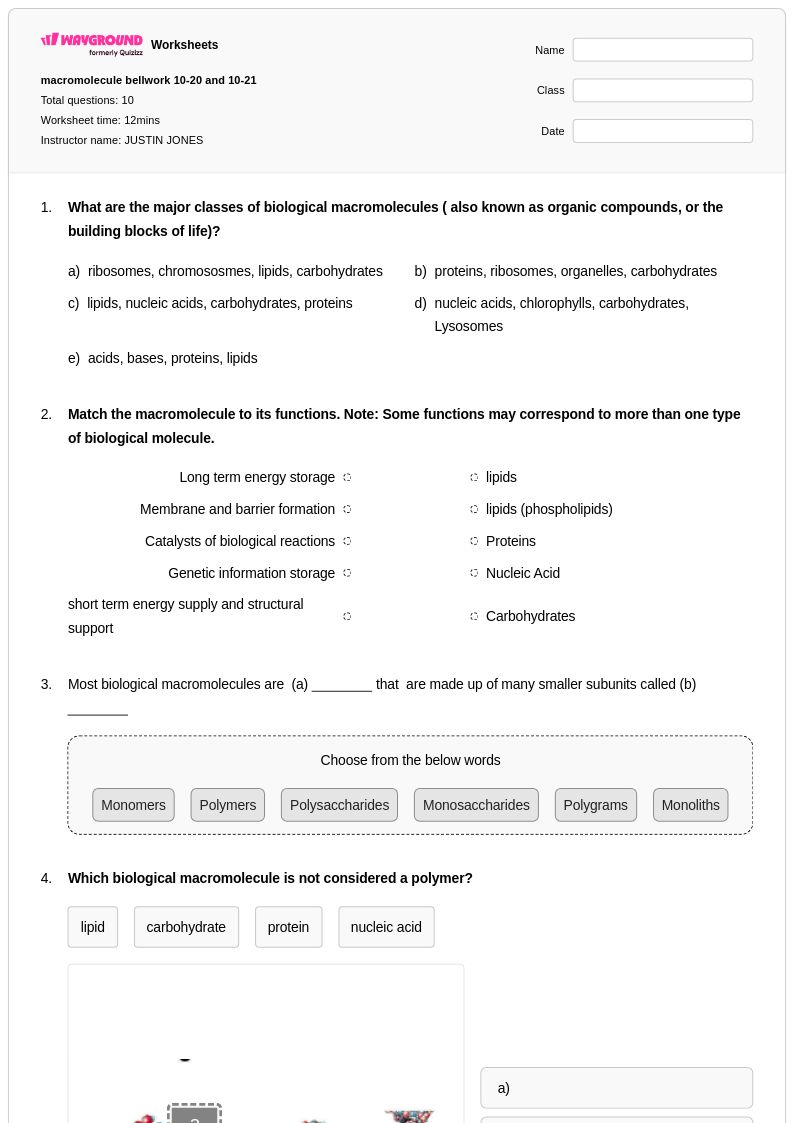
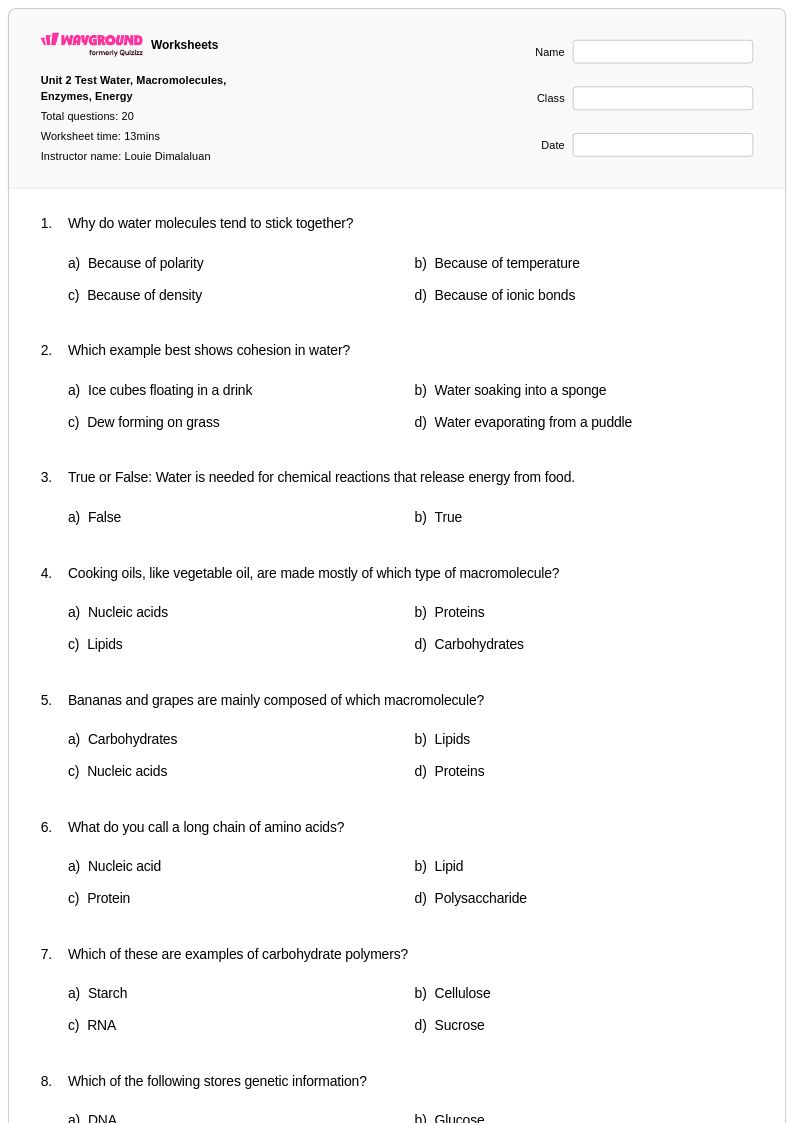
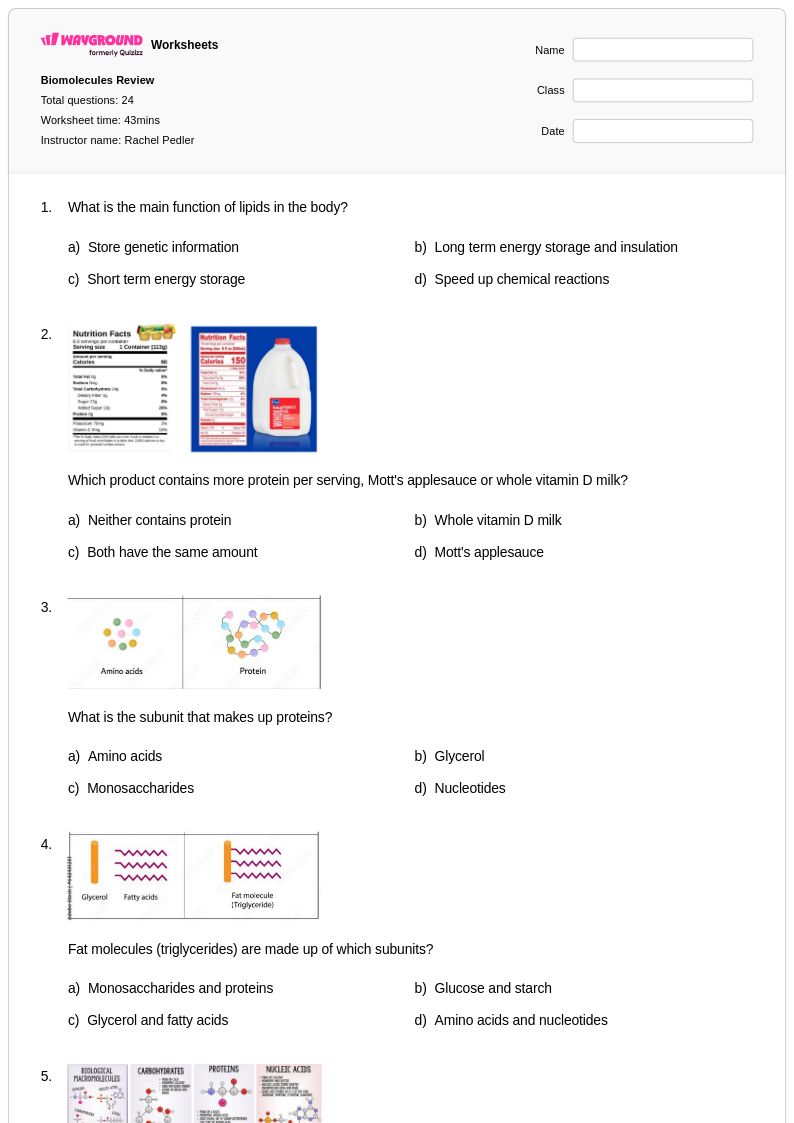
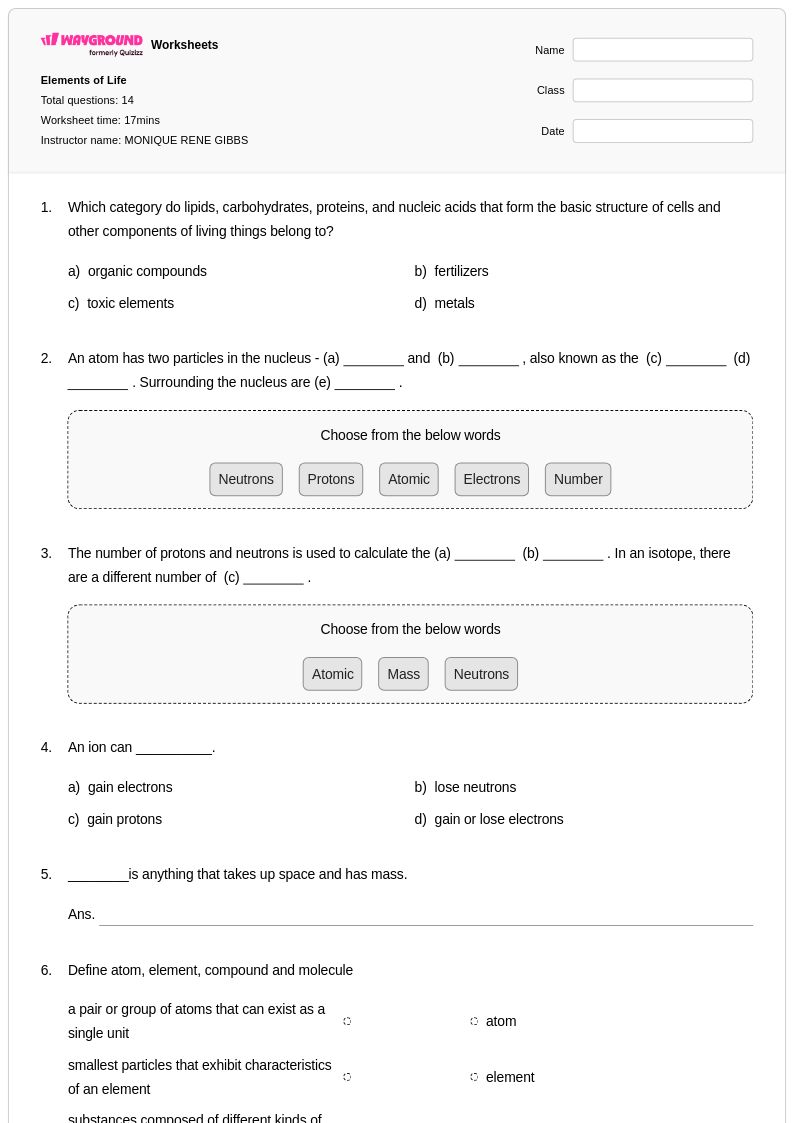
Nucleic acids form the foundation of molecular biology and genetics, making Year 11 nucleic acids worksheets essential tools for developing students' understanding of DNA and RNA structure, function, and replication processes. Wayground's comprehensive collection of nucleic acids worksheets provides students with targeted practice problems that reinforce critical concepts including the double helix structure, base pairing rules, transcription and translation mechanisms, and the relationship between genotype and phenotype. These free printable resources feature detailed answer keys that enable independent study and self-assessment, while the pdf format ensures easy distribution and consistent formatting across different devices and printing scenarios. Students gain proficiency in analyzing nucleotide sequences, predicting protein synthesis outcomes, and understanding how genetic information flows from DNA to RNA to proteins through structured practice exercises.
Wayground's extensive database of teacher-created nucleic acids worksheets offers educators millions of high-quality resources designed specifically for Year 11 biology instruction. The platform's advanced search and filtering capabilities allow teachers to quickly locate materials aligned with specific curriculum standards and learning objectives, while built-in differentiation tools enable customization based on individual student needs and ability levels. These versatile resources are available in both printable pdf formats for traditional classroom use and digital formats for interactive online learning, supporting flexible lesson planning and diverse instructional approaches. Teachers can efficiently address remediation needs for struggling students, provide enrichment opportunities for advanced learners, and ensure comprehensive skill practice through carefully scaffolded worksheet collections that progress from basic nucleic acid identification to complex molecular processes and genetic analysis.
FAQs
How do I teach nucleic acids to high school biology students?
What exercises help students practice DNA and RNA structure?
What mistakes do students commonly make when learning about nucleic acids?
How can I help struggling students understand the central dogma of molecular biology?
How do I use Wayground's nucleic acids worksheets in my classroom?
How can I differentiate nucleic acids instruction for students with different learning needs?